Although Americans know them as “ladybugs,” the beloved red-and-black beetle is better known as a “ladybird” in the United Kingdom — and the entomology world at large.
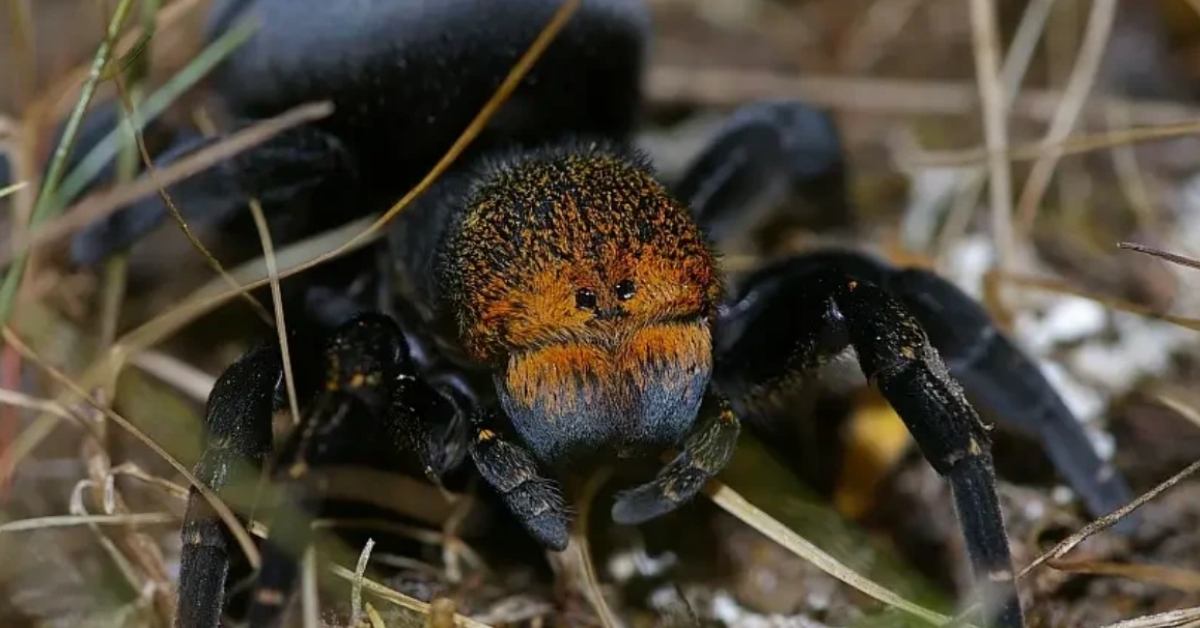
A family of spiders bears an uncanny resemblance to the “ladybird” beetle — earning it the name velvet ladybirds. Their striking appearance has put them on many lists as one of the “most beautiful spiders on the planet.”
There are 38 species of velvet ladybirds, and they can be found across North Africa, southern and central Europe, the Middle East, and Asia.
And now, new research has uncovered a ladybird spider in the wilds of a cork oak forest in southern Morocco — and it’s unlike any previously known to science.
Typically, male ladybird spiders have black heads covered in small black hairs, but the Eresus rubrocephalus has red hairs covering its head, front body, and chelicerae (mouthparts).
In their research, which was published in the scientific journal Animals, János Gál and his peers described the discovery of the “red-colored oddball.”
“After reviewing the available literature, we found no species among those described so far as exhibiting the morphology of the so-called ladybird spider whose pars cephalica was completely red, either in Europe, North Africa, or Asia,” the researchers wrote.
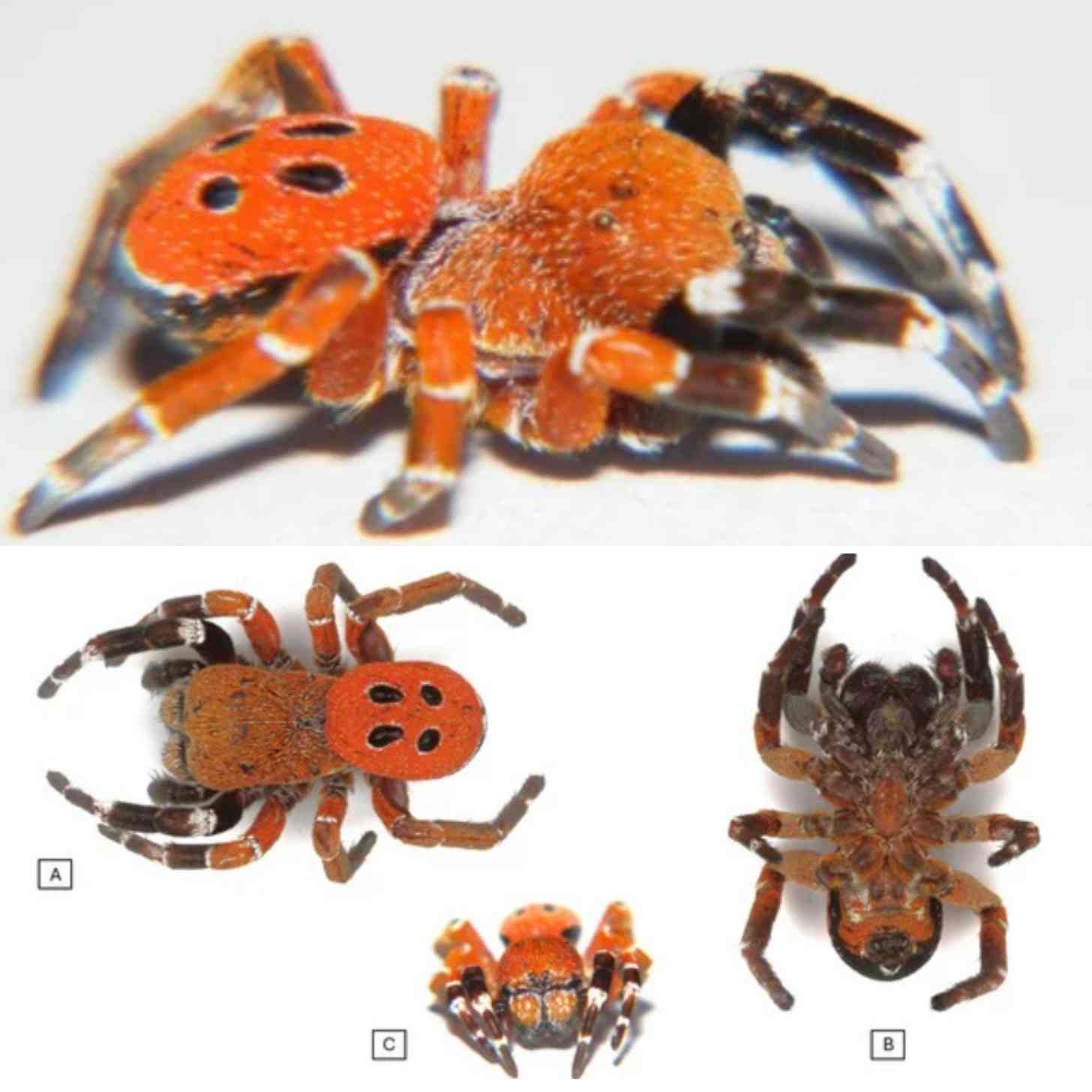
“Our aim was to prove, based on characteristic morphological marks and genetic analysis, specimens found by us belong to a new species.”
As natural predators of beetles and ants, ladybird spiders prevent local insect populations from ballooning out of control by trapping them in vertical silk-lined burrows in lowland heathland ecosystems.
Unfortunately, due to widespread habitat loss, the spiders have suffered population decline in Sweden, Germany, and the United Kingdom.
In the U.K., one ladybird spider — the Eresus sandaliatus — vanished for over 70 years, leaving scientists to assume that they had gone extinct.
After being rediscovered in Dorset, England in 1980, conservationists came together to save the striking spider through the Back from the Brink project.
“The ladybird spider depends on lowland heathland, but so much of this habitat has been lost over the last century, for forestry, farmland or built on … Conservation work means there are now 19 populations and nearly 1,000 individuals, but it is still very vulnerable,” Back from the Brink wrote on their website.
The newly discovered Eresus rubrocephalus now joins a family of spiders that scientists would like to preserve.
“As our study highlighted, the diversity of the Eresus genus justifies further and wider surveillance of variable geographical regions,” Gál and his peers concluded.
You may also like: Scientists discovered thousands of new species in 2025. See 9 that wowed them, from the 'curiously isolated' butterfly to the screaming pika
Header image via Hard To Concentrate / Wikimedia Commons Attribution-ShareAlike License