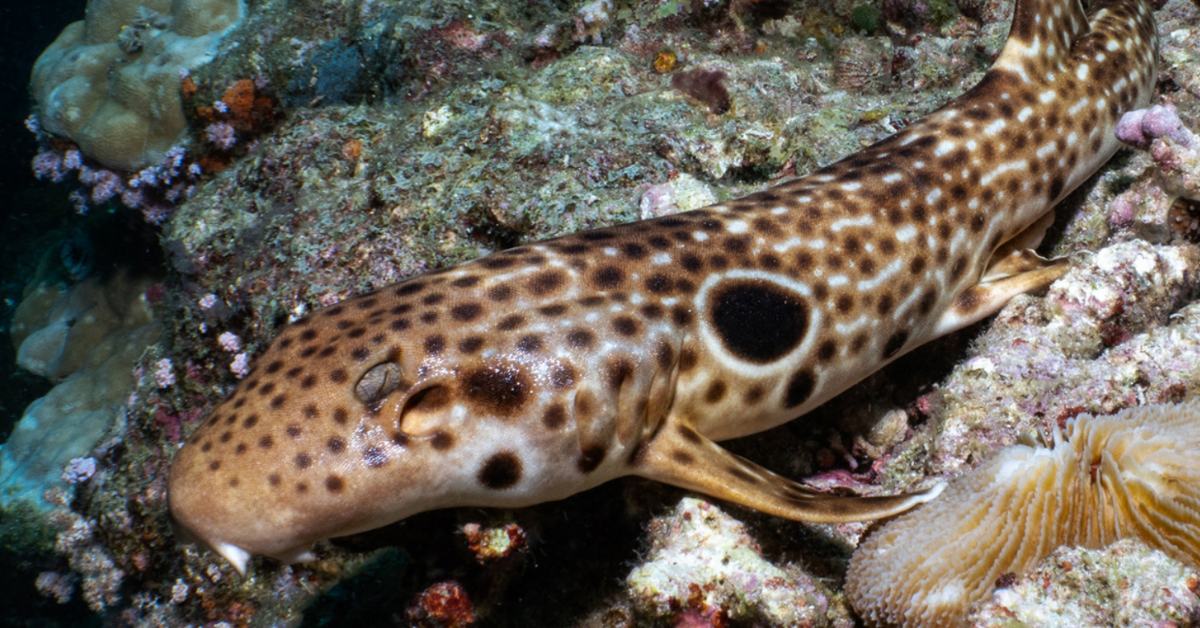
In 2025, researchers from the University of the Sunshine Coast in Queensland, Australia, set off to study the “walking sharks,” or epaulette sharks, at the southeastern tip of Papua New Guinea.
In their mission to better understand the threatened sharks, one sea creature caught the eye of student Jess Blakeway. She immediately brought it to her supervisor, senior research fellow Chris Dudgeon, Ph.D.
It ended up being a new species.
“Straight away I recognized that the color pattern was different from any of the other species I had worked with before,” Blakeway recalled in a press release from the University of Sunshine Coast.
“The first thing that stood out was the white dashes along its brown body,” she explained. “These dashes were quite different to the leopard-like spots we were expecting.”
Immediately after pulling the walking shark from the water, Blakeway and her peers put it in a tub with fresh seawater to measure its blood and obtain tissue samples. Then they continued exploring Papua New Guinea’s Milne Bay.
“Over the next two nights [we] found another 11 individuals with the same patterning,” Blakeway said.
As the importance of their discovery became clear, the research team ramped up their work and completed more than 70 diving, snorkeling, and reef walking surveys at 35 sites.

After months of careful research and taxonomic comparison, the new species was officially recognized on June 15, in a study published in the Journal of the Ocean Science Foundation.
“It wasn’t until genetic analysis of the samples back in Australia that we could confirm a new species,” Blakeway explained. “It’s exciting because this is the first new species described for the genus since 2013.”
The researchers agreed to call the new species the Dudgeon’s walking shark — or Hemiscyllium dudgeonae — after their colleague and teacher, who has been studying the genus for over two decades.
“New shark species don’t come along that often, and it’s most definitely the first one named after me,” Dudgeon said with surprise.
Walking sharks are largely found in the Coral Triangle, also known as the “Amazon of the Seas.” The massive triangular marine area is 2.3 million square miles — roughly half the size of the United States — and encompasses the waters of six countries: Indonesia, Malaysia, the Philippines, Papua New Guinea, the Solomon Islands, and Timor-Leste.
Walking sharks, which are regionally referred to as longtail carpet sharks and bamboo sharks, are much smaller than their great white and hammerhead shark relatives, often stretching just 2.5 to 3.5 feet from nose to tail.
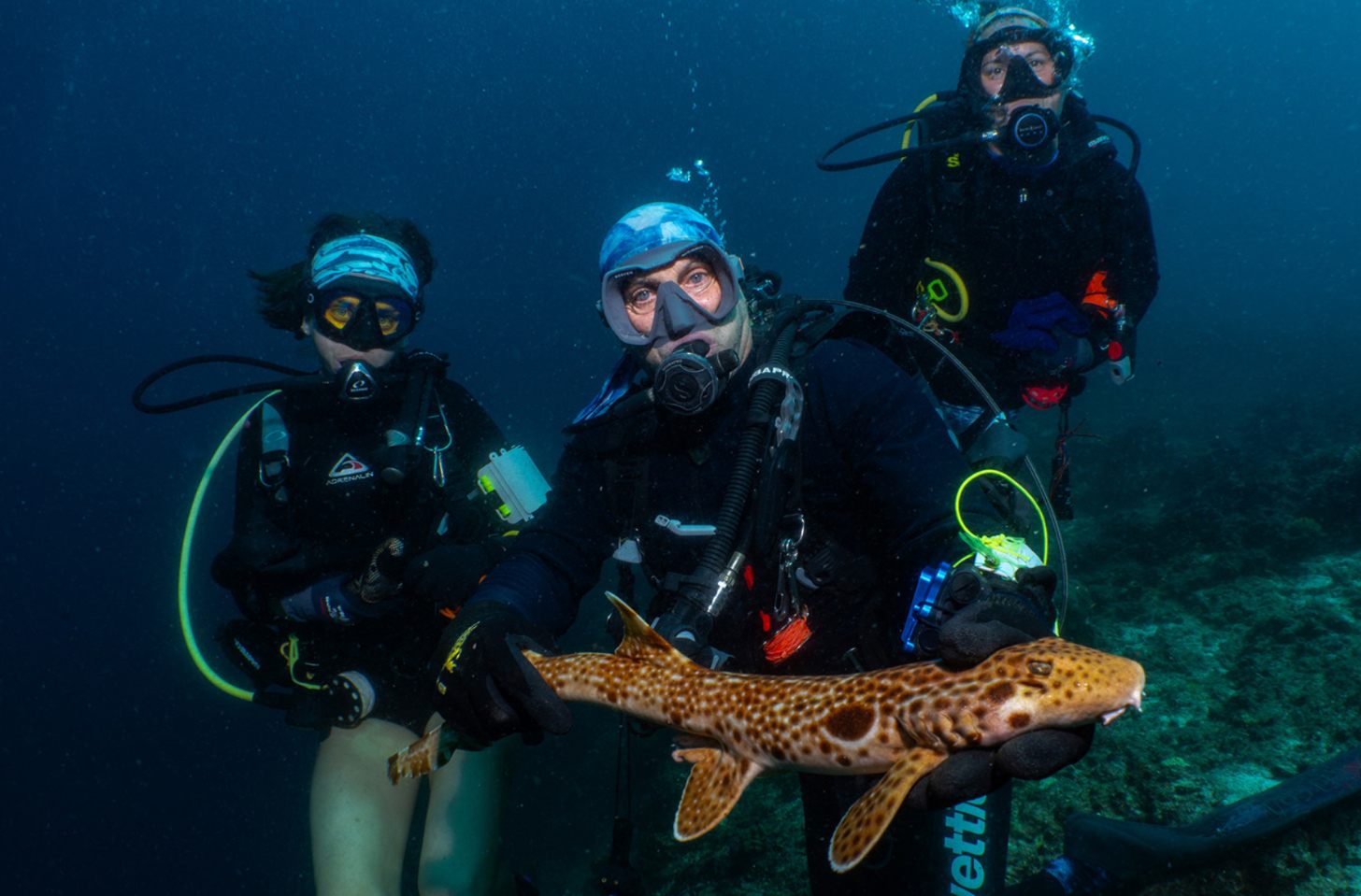
Their nickname comes from the four paddle-shaped fins that they use to navigate the bottom of the seafloor.
The nocturnal sharks play an important part in the marine ecosystem by feeding on bottom dwellers like crabs and shrimp, bristle worms, and small bony fish as they “walk,” and using their snout to dig prey out of hiding places amongst the reef and sand.
Back in Queensland, as researchers at the University of Sunshine Coast celebrated their findings, they knew their work was far from over.
Due to its restricted home range and concerns of habitat degradation and climate change, the researchers are eager to dive back in and better understand the Dudgeon’s walking shark.
“We hope to collect more data on our next research trip in October to help the International Union for Conservation of Nature Red List assess the species as vulnerable or endangered with extinction,” Blakeway explained.
You may also like: New golf-ball sized blue octopus discovered
Header image via Mark Erdmann