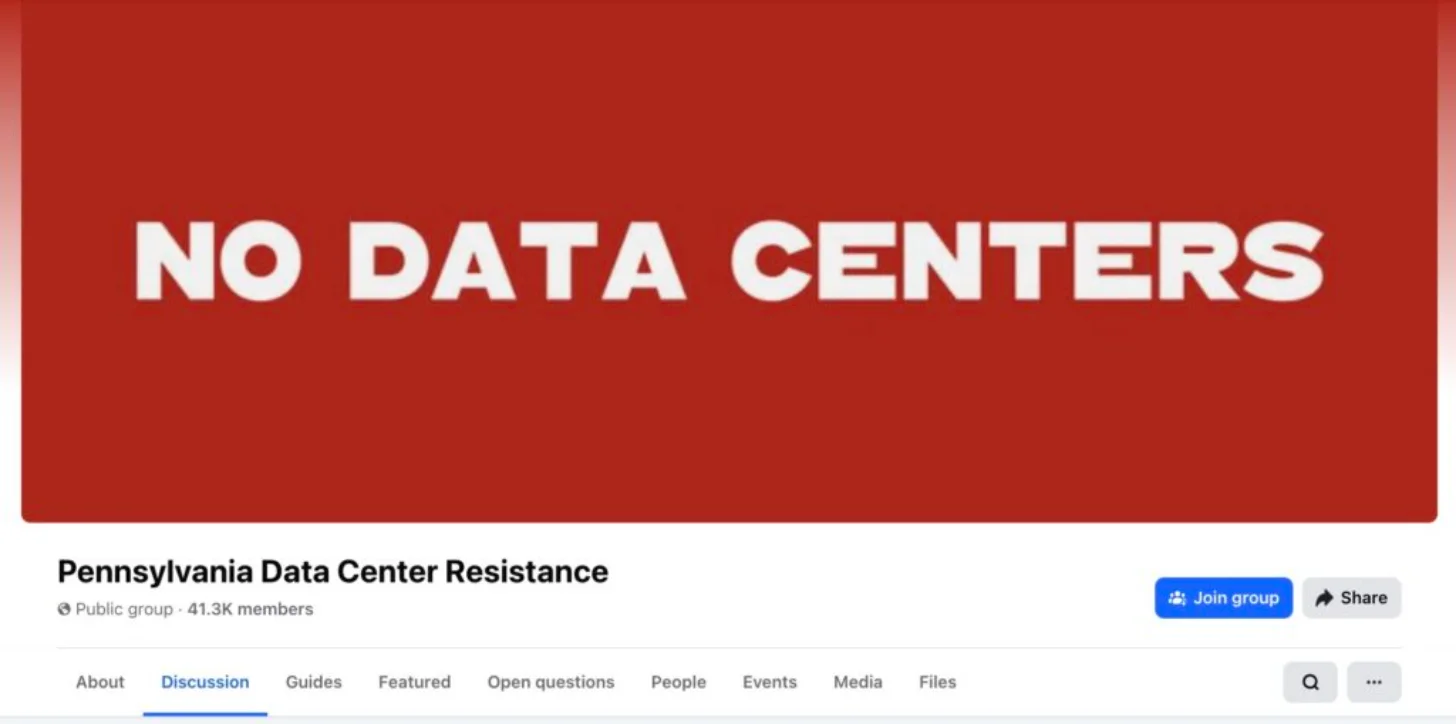
In January, as her curiosity about data centers grew, longtime Pennsylvania environmental activist Karen Feridun turned to Facebook to create a group she hoped would allow those who felt similar to ask questions, too.
Two months later, the group surpassed 500 members. And in the weeks that followed, the numbers continued to grow. During some weeks, more than 1,000 new people signed up.
Today, the Pennsylvania Data Center Resistance Facebook group has more than 41,000 members.
“It really took off in ways that shocked me,” Feridun said. “It’s clearly of interest to people in a way that I’ve never seen an issue be of interest.”
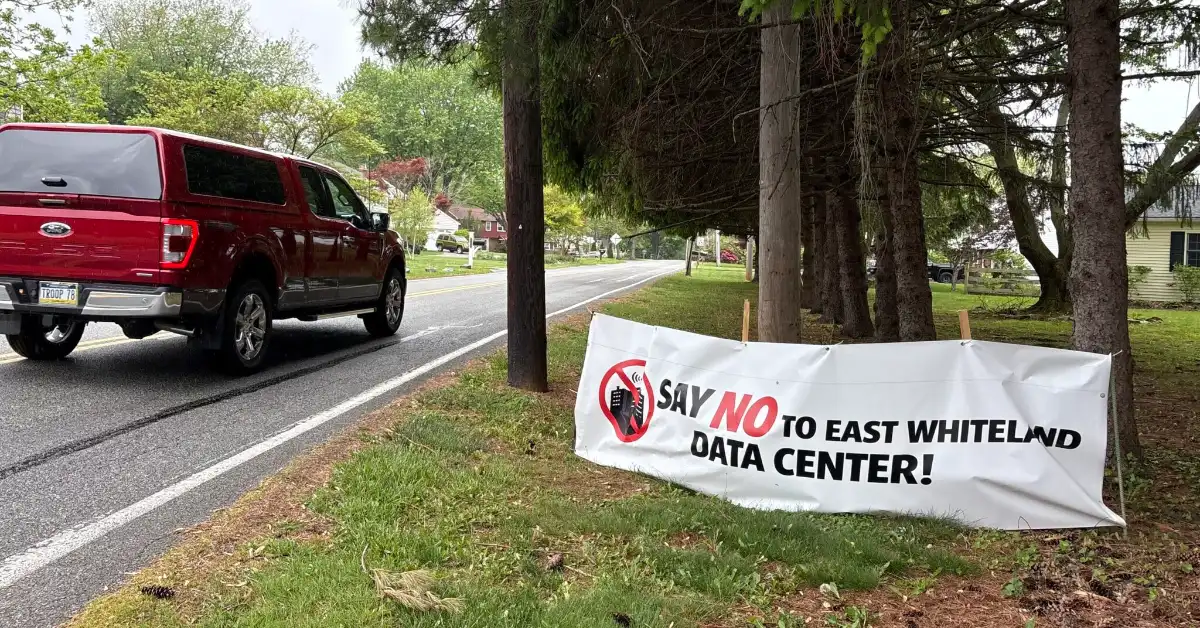
The influx of users to the Facebook group reflects the surging discourse about data centers across the state, seen in grassroots social media groups, internet search traffic, and the flurry of bills sponsored by state lawmakers. It’s all in response to souring public opinion as new projects are proposed across the state.
A Quinnipiac University poll of 895 Pennsylvania voters conducted last month found that 74% opposed having a data center built in their community while 16% said they supported it. Three-quarters of respondents said they were following news about AI data centers either very or somewhat closely.
“The issue’s salience to Pennsylvania voters has seen a rapid increase over the last year,” said Chris Borick, a political science professor at Lehigh University. “Not only is it an issue that Pennsylvanians increasingly said is important to them, it’s an issue that they’re incredibly concerned about in terms of the impact on their lives.”
That “meteoric” increase, as Borick noted, has altered the political landscape in the state. There’s no comparable environmental — or even general political issue — has transcended party lines like this, he added.
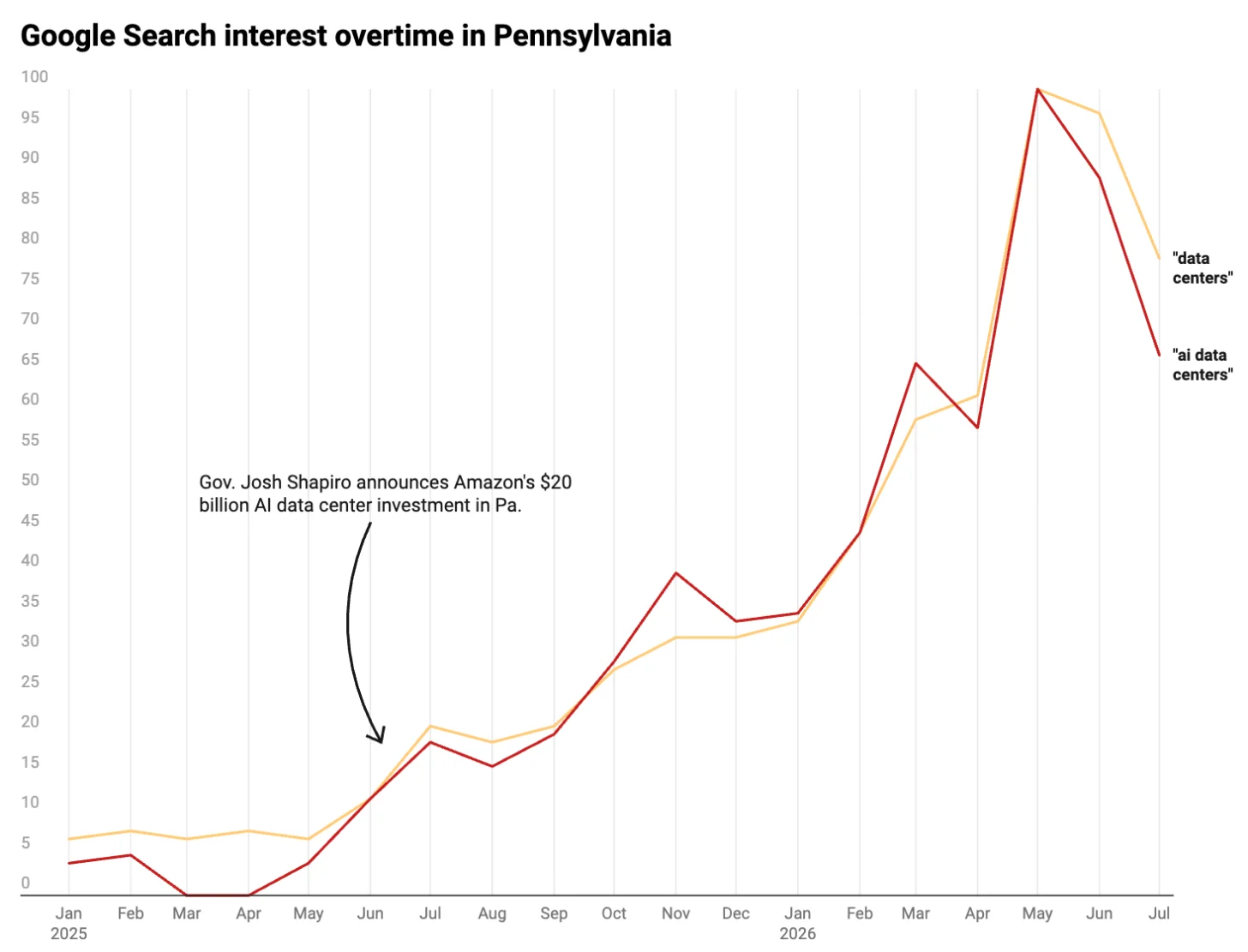
The Pennsylvania Data Center Resistance Facebook group began to rapidly grow this past spring. Gov. Josh Shapiro announced Amazon’s $20 billion investment to build AI data center infrastructure across Pennsylvania in June. Around that same time, Pennsylvanians began searching for information about data centers more often.
Google users from the commonwealth showed a growing interest in the search terms “data centers” and “AI data centers,” throughout 2025 until last month, according to data from Google Trends. It measures search interest relative to a term’s greatest popularity. The relative interest in both terms peaked in May.
Sarah Jackson, a professor of communications at the University of Pennsylvania, said she suspects more people are organizing around the issue not necessarily as a result of shifting public opinion, but because they are directly impacted.
“For many people, [data centers] seemed a far away thing if they knew they existed at all. But the combined economic and political power of the tech and energy industries has increasingly expanded into people’s communities,” she wrote in a statement.
Calls and messages to state legislators from constituents regarding data centers have also ballooned in recent months.
Sen. Katie Muth, (D-Berks), said it’s the number one issue her office is hearing about. Her staff said the office has received 504 emails about data centers so far this year. An additional 182 emails referenced high electricity bills as a concern relating to data centers.
And of the 807 calls her office has answered — encompassing 193 legislative issues — 72 have been about data centers.
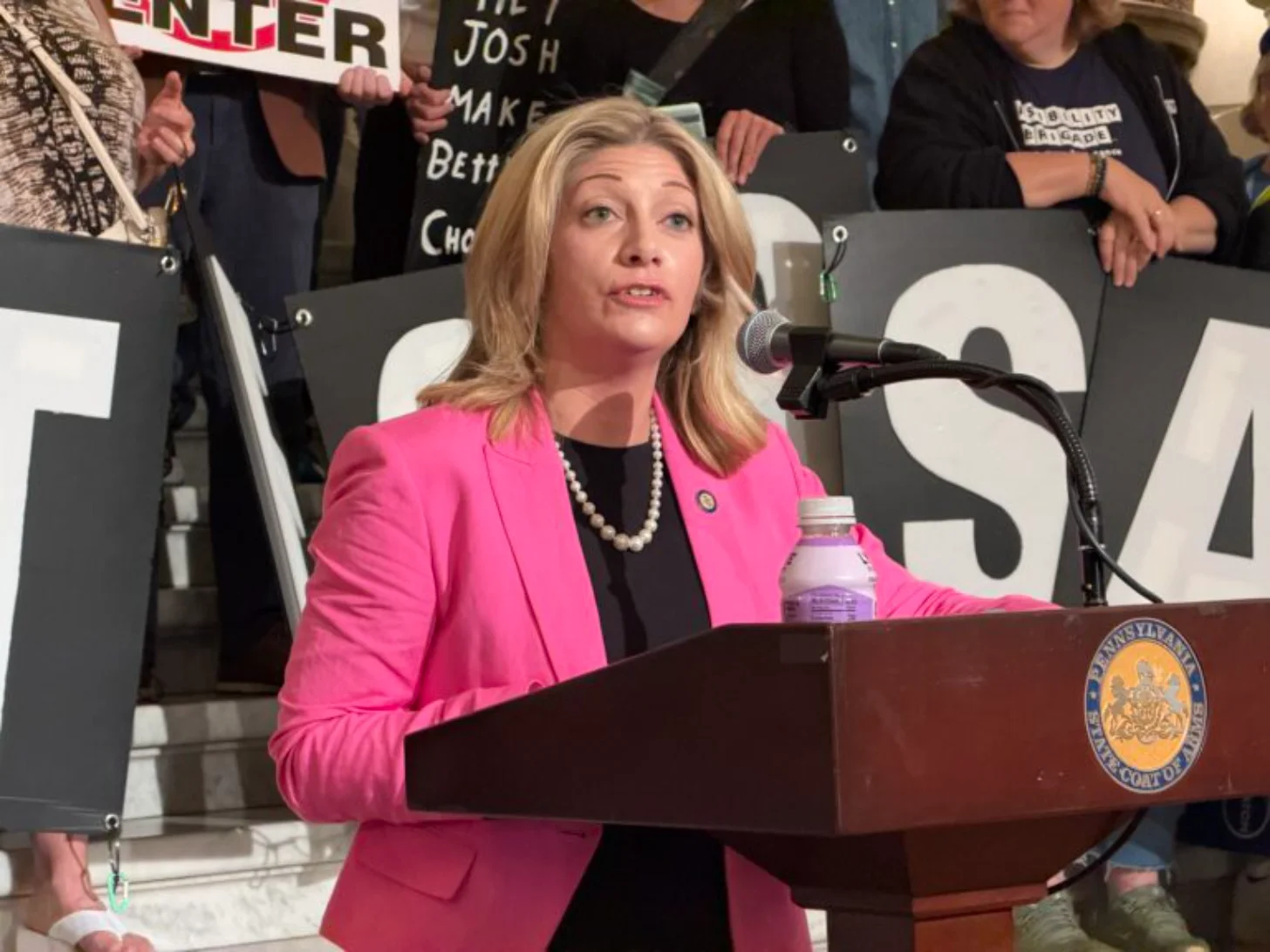
Beth Rementer, a spokesperson for the House Democratic caucus, said that while the feedback expressed to different members varies, data center development has been among the top issues constituents contacted lawmakers about over the last six months.
“Overall, people are strongly opposed to letting data centers operate without any regulation,” she added.
Kate Flessner, a spokesperson for Senate Republicans said in a statement the perspectives of constituents are greatly beneficial to the work of the caucus.
“The issue of data centers is certainly evolving and regional perspectives throughout the Commonwealth are differing and warrant careful examination,” she said.
Borick, the political science professor, said the number of data center bills introduced by lawmakers in recent months is a clear sign they are “absolutely following opinion and concerns.”
“I think in Pennsylvania among other places, legislators in many ways were caught off-guard on how the public would respond to the proliferation of data centers and data center proposals,” he added.
During the current session of the General Assembly — which began in January 2025 and runs until November — lawmakers have introduced at least 30 bills aimed at regulating, or in some cases accelerating, data center development, according to a keyword search of the LegisScan database.
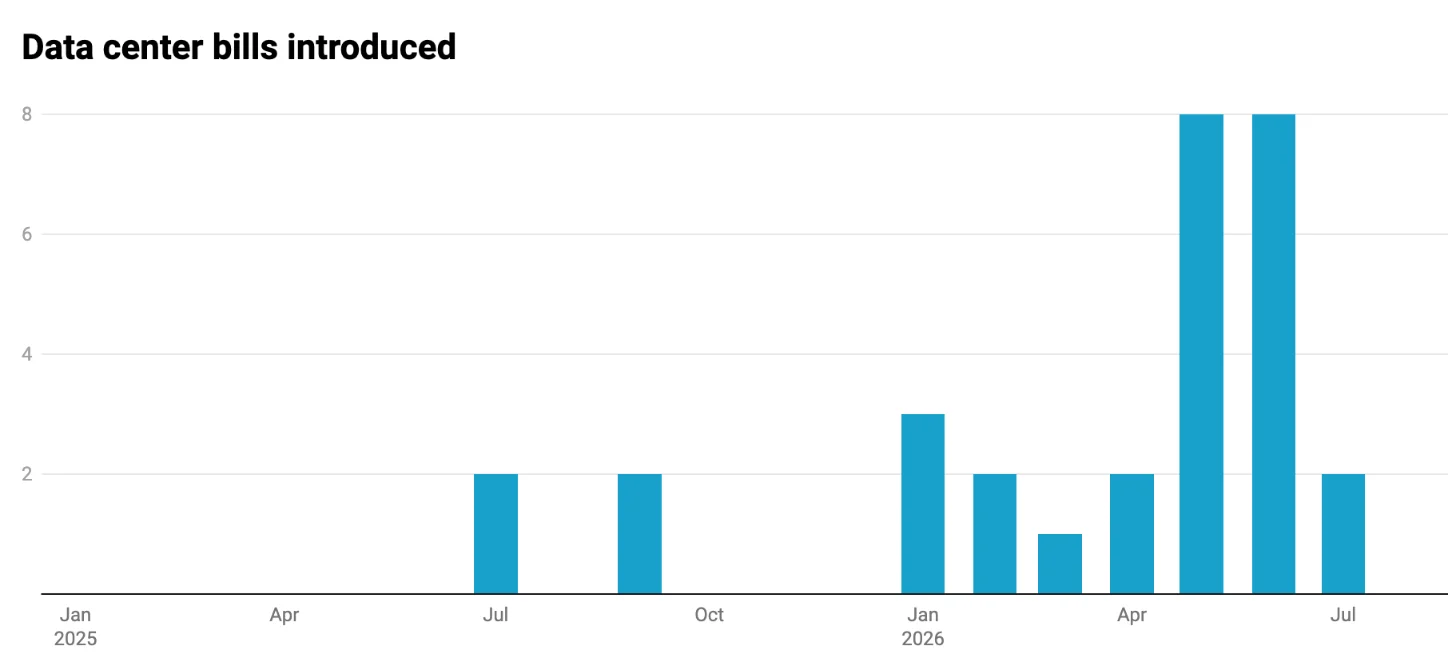
Amid budget negotiations, lawmakers introduced eight proposals on the issue in May and eight more in June.
The legislation introduced encompassed a wide range of proposals, from a three-year statewide moratorium, sponsored by Muth, to a bill sponsored by Sen. Greg Rothman (R-Cumberland) that, in its original form, would have expedited permitting and created a “regulatory sandbox” for data centers.
Several data center regulation bills were advanced by the Democratic-controlled House — including the plan backed by Shapiro — and nearly every lawmaker supported efforts to repeal an existing sales and use tax exemption for data center equipment.
Despite that consensus, the final $50.8 billion budget deal reached by lawmakers in July only included language requiring data centers with electric outputs larger than 10 megawatts to submit information annually about their energy and water usage.
“It’s hard for me to find an easy comparison point in terms of how it’s reordered things in the state in lots of ways — and so quickly,” Borick said of the politics surrounding data centers.
This article was originally published by Pennsylvania Capital-Star.
Featured Image: Peter Hall/Pennsylvania Capital-Star