In 1973, an arsonist started a fire that spread across 750 acres in Ashland, Oregon, consuming thousands of trees in its wake. Several years after the Hillview Fire had spread, its destruction still hung heavy over the forests of the Siskiyou Mountains.
In 1987, landowners Bill and Sarah Epstein purchased 400 acres of land in the region, half of which had been leveled by the disaster. Originally, they purchased it with the intention of turning it into a forest preserve to protect it from potential logging.
But they quickly realized that an extraordinary amount of maintenance was required to prevent another wildfire.
“In 1988, they began implementing forest management activities with the primary goal of reducing both the likelihood of fire ignition and the potential for high-intensity fire behavior,” researchers at Oregon State University observed in a forestry case study.
“This shift in understanding was the result of the realization that almost all the values of importance to the Epsteins, if not the entire Ashland wildland-urban interface area, would be negatively affected by another large, high-severity wildfire.”
In the following decades, the Epstein family worked tirelessly to safeguard the forest by reducing ignition risk on public trails, creating more fire-resistant forests, and implementing prescription burns and thinning techniques.
As a result, the forest itself hasn’t just been fire-free. It has flourished, becoming a safe haven for the hundreds of birds, amphibians, and mammals that roam the land.
The property also sits within the Oregon Conservation Strategy's Siskiyou Crest Conservation Opportunity Area, which is home to 16 rare and threatened animal species.
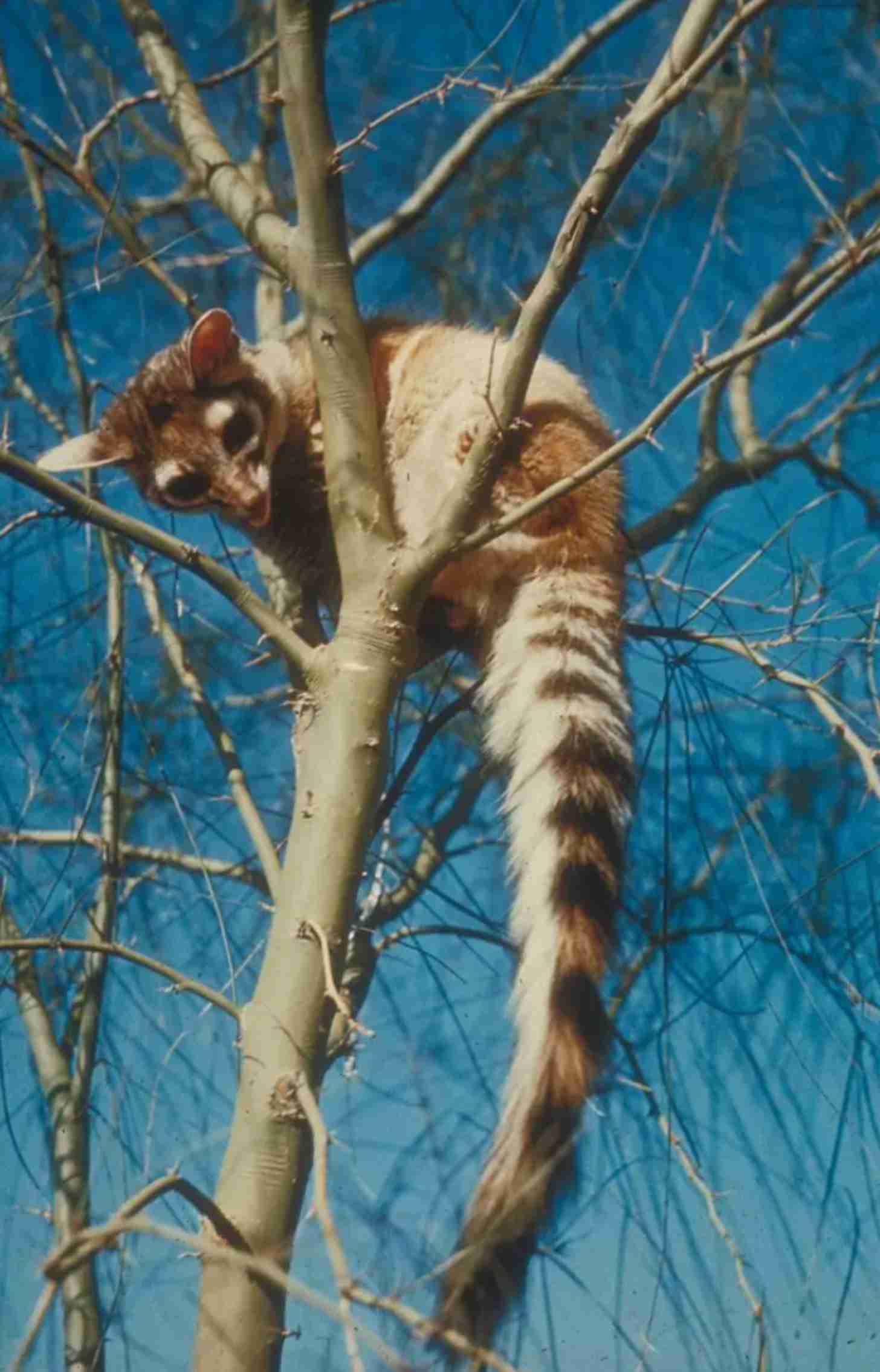
One such species is the North American ringtail, which is listed as “sensitive” on Oregon’s Sensitive Species list. The ringtail is a member of the raccoon family, with a fox-like face and muzzle and a striped tail.
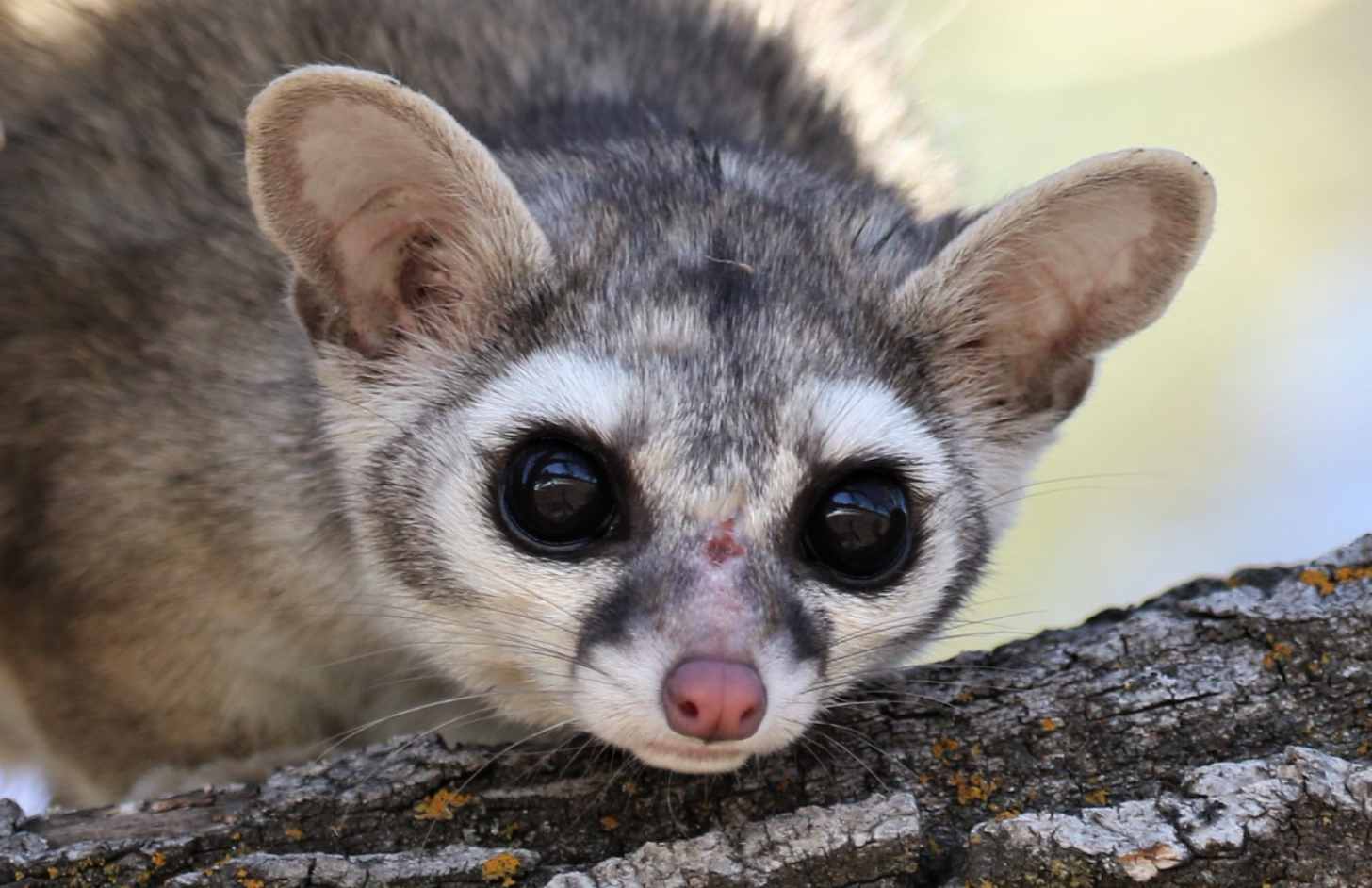
According to mammalogist Lowell Sumner, ringtails were once domesticated as pets by early colonial settlers and coal miners. The ringtails were trained as “mousers” to keep cabins free from rodents, granting them the nickname “miner’s cat.”
Today, little is known about their ecology. Researchers at Oregon State University only recently learned that they use the hollows of living trees — or standing dead ones, called snags — to hide from predators and make dens to raise their young.
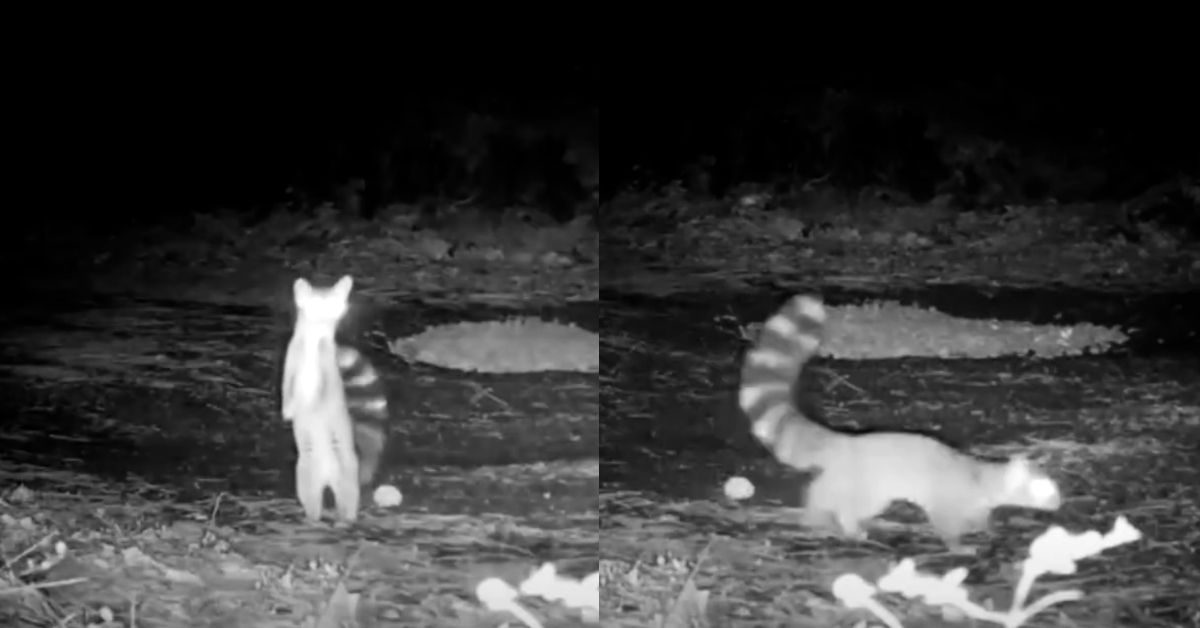
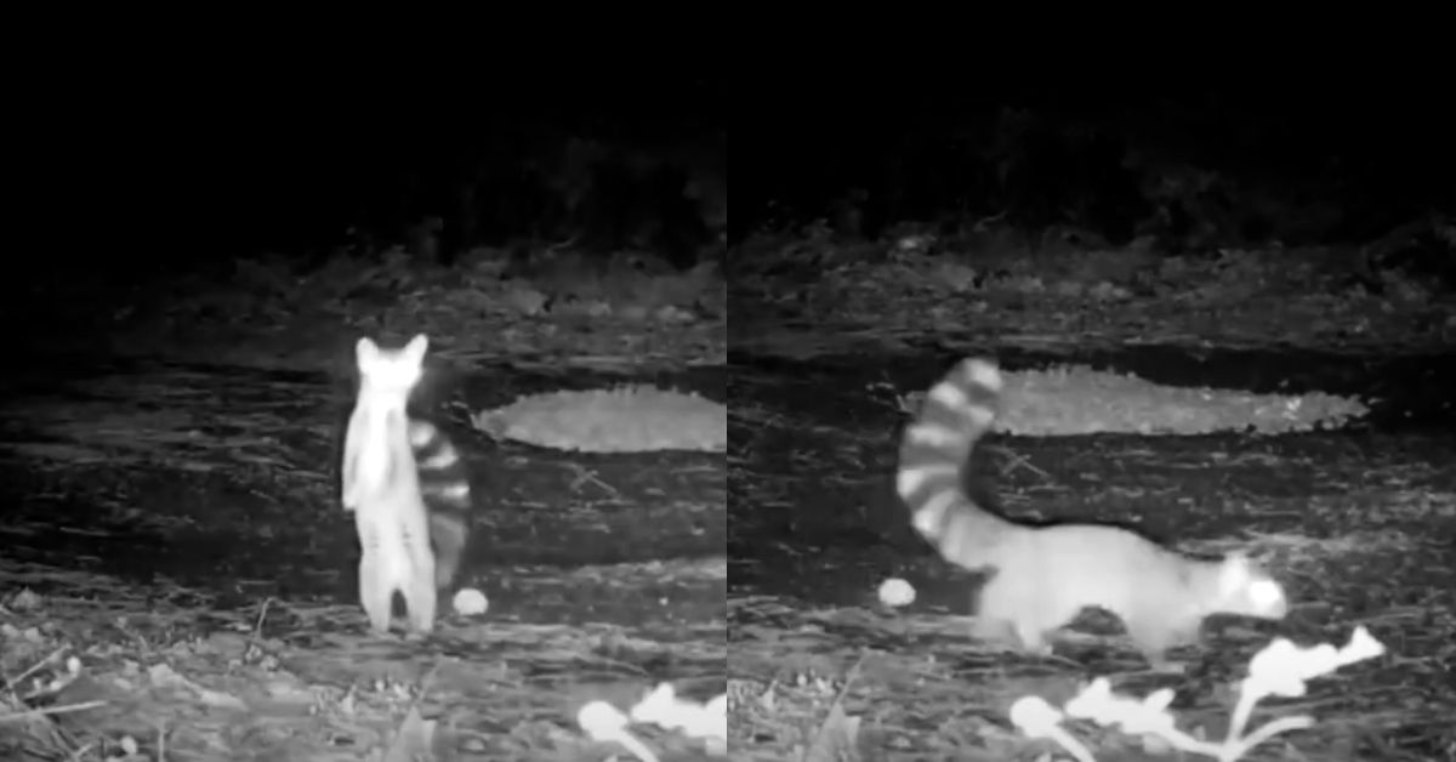
Typically, the nocturnal mammal is notoriously hard to spot in the wild. However, trail cameras across the Epstein Family Forest recently captured footage of a ringtail scurrying through the brush, and poking its head up to look around before traipsing back into a treeline.
The sighting is the Epstein Family’s latest sign that their conservation work has been successful.
After a member of the family received a stage-4 cancer diagnosis, the Epsteins partnered with the Pacific Forest Trust to ensure that the land would be protected forever.
“It is a profound comfort to know the goals we have for our property will be steadfastly managed and protected in perpetuity,” the Epsteins said in a statement. “With this conservation easement, we will be preserving 400 acres of natural carbon sequestering woodland, assuring protection of wildlife habitat and a riparian zone replete in biodiversity.”
You may also like: Researchers have been following this rare 'ghost dog' species for 23 years to better learn how to protect it
Header image via Elster Photography