


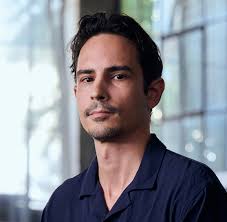
Philip Jacobson
Journalist at Mongabay
Philip Jacobson is a Senior Editor and investigative journalist for Mongabay, based in Chiang Mai, Thailand. His recent reporting has focused on the global shark trade. Working with the Pulitzer Center under a yearlong fellowship on ocean journalism, he built a database revealing widespread Brazilian government purchases of shark meat, including endangered species, to serve in thousands of schools, hospitals, prisons and other public institutions, prompting changes in procurement policies and public debate. Before that, he uncovered a massive illegal shark finning scheme and widespread abuse taking place across the fleet of a major Chinese tuna company, based on dozens of interviews with the company’s former employees; findings from that series were cited in U.S. sanctions against the company, its owner and all of its boats. The series also informed a ban by the WCPFC on gear used to target sharks in much of the Pacific Ocean.
Since joining Mongabay in 2015, Jacobson has also done extensive reporting on the forestry, plantation and mining sectors, especially in Indonesia. Notable recent works include breaking the story that a major coal company was planning to demolish thousands of hectares of rainforest in North Kalimantan to make wood pellets for electricity, and a data-driven piece revealing the extent to which traditional small farmers have been criminally prosecuted and imprisoned as part of a government war on haze and wildfires. With the ability to operate in several different languages, he frequently works with filmmakers, programmers and local reporters to tell hidden and ambitious stories. A broad swath of his work marries investigative and narrative forms. He also serves as a commissioning editor for Mongabay, guiding staff and freelancers in the production of their own stories.
From 2017 to 2019, he co-authored the “Indonesia for Sale” series about the corruption behind Indonesia’s deforestation crisis, working principally with Tom Johnson of The Gecko Project, which co-produced the series with Mongabay. One of the articles won a Society of Environmental Journalism award for investigative reporting; another received a Fetisov Journalism Award for environmental reporting. Jacobson subsequently worked on a joint investigation with BBC News and Gecko about inequities in Indonesia’s palm oil smallholders program, which won the 2023 TRACE Prize for Investigative Reporting, and on a 2020 piece with Al Jazeera’s 101 East program, Gecko and the Korea Center for Investigative Journalism about a suspicious $22m “consultancy” payment made by a palm oil company in Papua, which was named a finalist in two categories of the 2021 Online Journalism Awards.
In 2018, Jacobson tracked down former Asia Pulp & Paper employees for a story that strongly indicated the conglomerate was secretly controlling a forest-clearing operation despite its repeated public denials and its own pledge to stop deforesting; the revelations were a factor in the Forest Stewardship Council terminating APP’s application for membership, which would have let the firm market its products under the FSC’s green label. His feature writing has also been recognized by Longform.org, with multiple awards from the Society of Publishers in Asia (SOPA) and by the Pantau Foundation’s Oktovianus Pogau Award for Courage in Journalism, which he received after being imprisoned on the island of Borneo in 2020.
Why you can trust Good Good Good:
• Good Good Good is fully independent and funded by readers — with no billionaire owners or investors.
• All of our articles are researched and written by professional journalists.
• Our newsroom has a zero AI articles policy. We don’t use AI in our news stories or photos. Humans write every word.
• Good Good Good is committed to the highest newsroom standards and ethics.
→ Read Good Good Good’s Editorial Standards