On May 2, 2026, the Kenya Wildlife Service vet and capture team received reports of an orphaned hippo in Naivasha, which is situated squarely in the Great Rift Valley.
When they arrived on the scene, the days-old hippo was nestled beside his mother’s body. Rangers on the scene surmised that his mother had died the day prior, likely defending her calf with her life.
“After her death, her baby remained by her side, confused and with nowhere else to go,” the Sheldrick Wildlife Trust, a rescue and rehabilitation nonprofit, stated on its website. “He clearly didn't understand the situation; he was calling out to his mother and nudging her with his blunt little nose, desperately hoping for a response.”
After a “logistically challenging water rescue,” the tiny hippo was driven to Nairobi, where he was passed over to the Sheldrick Wildlife Trust for continued care.
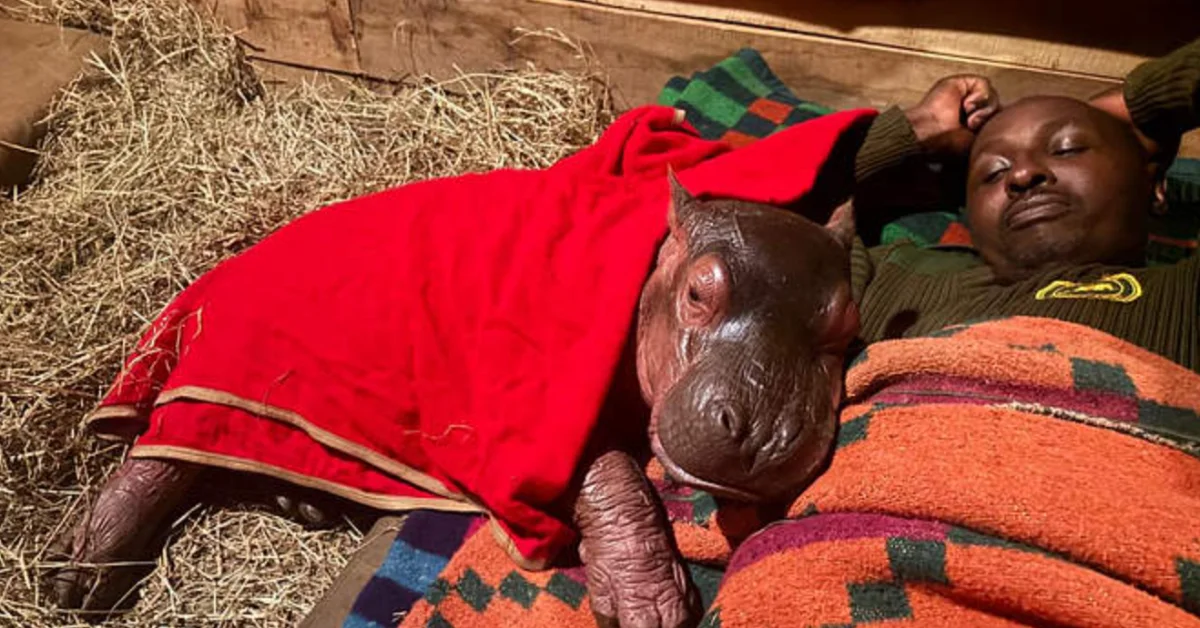
“Bumpy spent his first night at the Nairobi nursery, where he was fed a warm bottle of milk and swaddled in a cherry red blanket,” the nonprofit recounted.
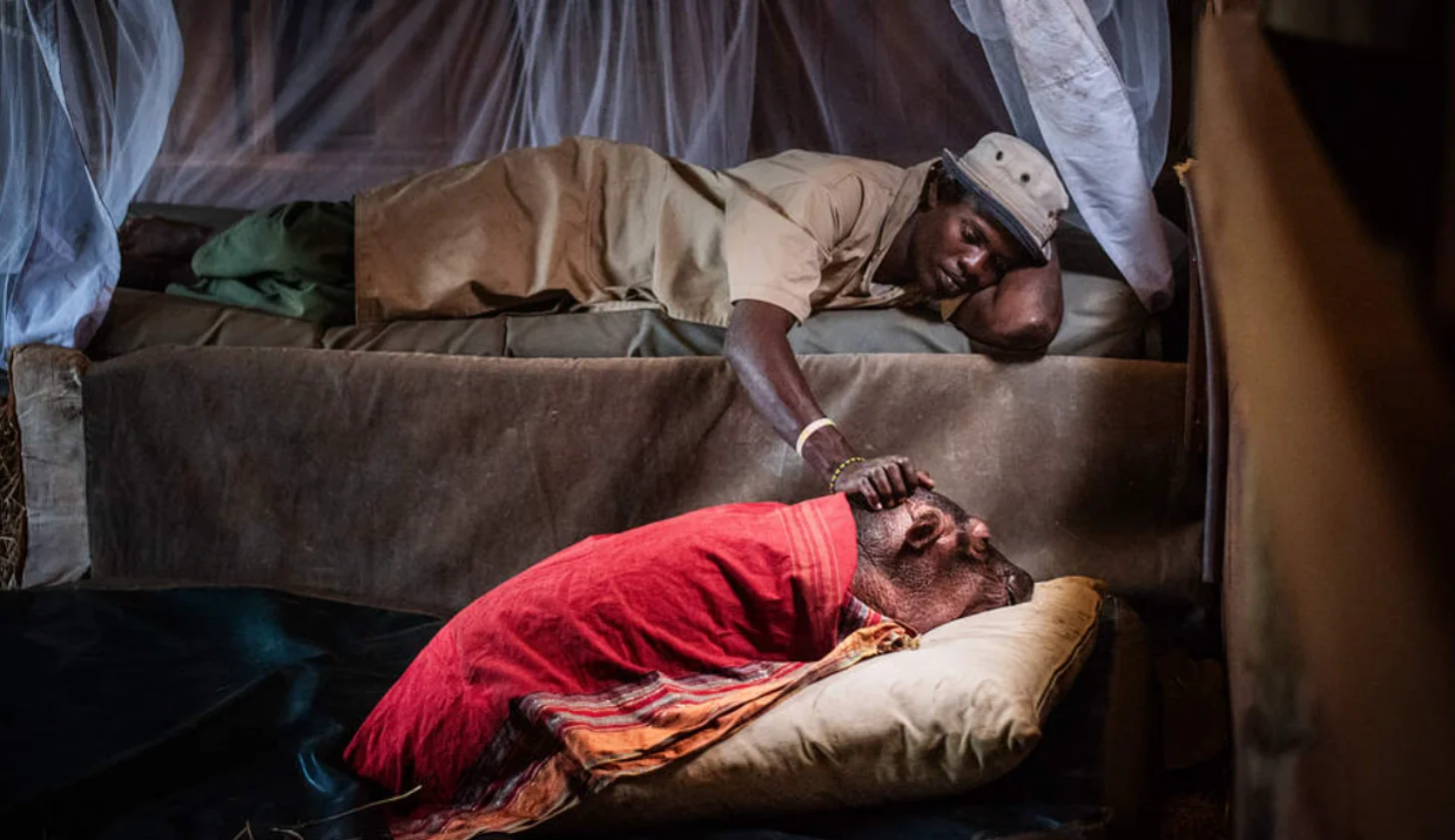
“Keeper Simon put his mattress on the ground and the tiny hippo nestled by his side. After his terrible ordeal, he finally felt at peace and slept soundly in the crook of Simon's arm.”
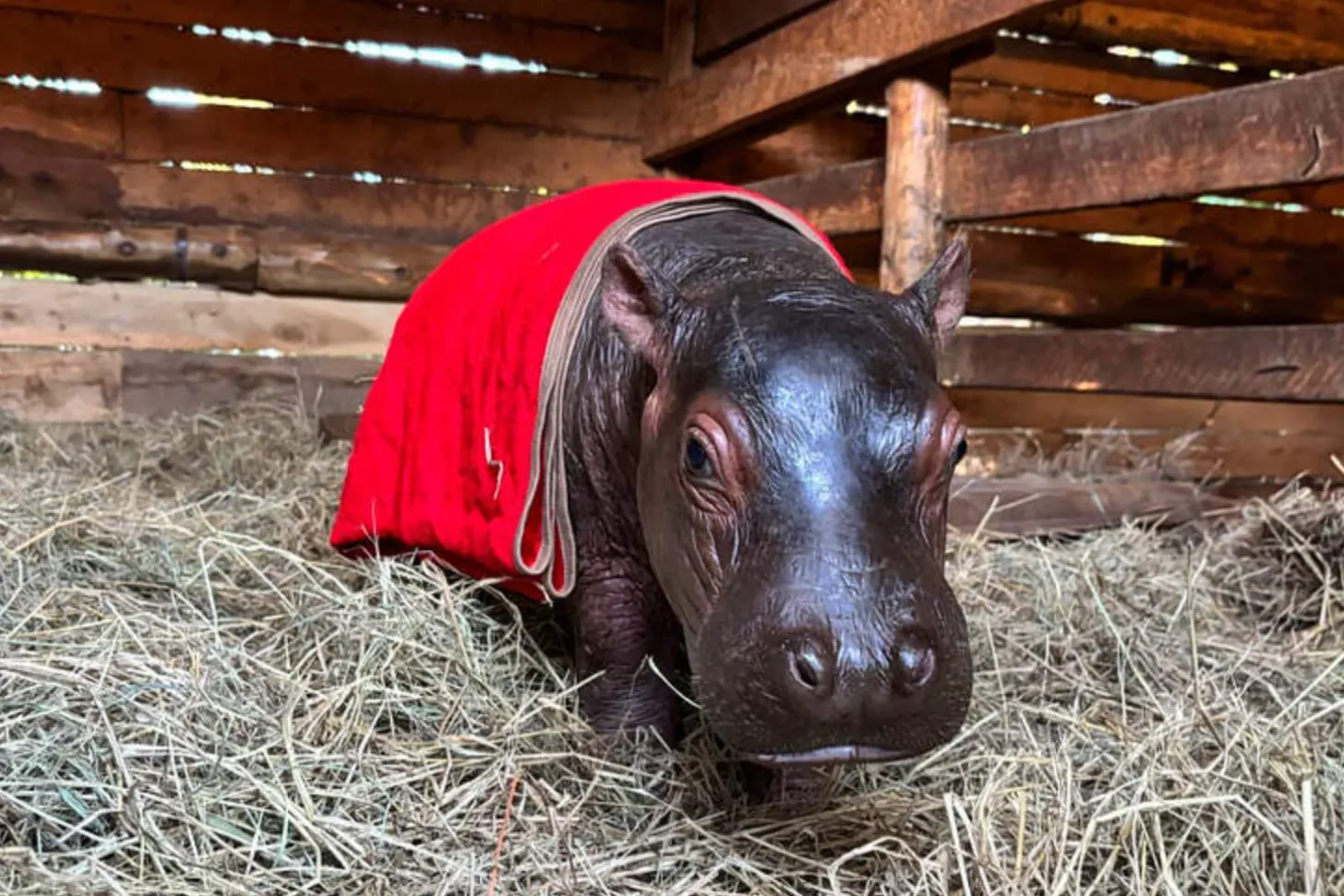
After a short stay in the nursery, Bumpy was transported to the Sheldrick Wildlife Trust’s Kaluku Unit, a sanctuary along the Athi River.
“He was clearly desperate for comfort and connection and remained glued to his keepers from that moment onwards … being such a young baby, he rests plenty and sleeps most soundly when cuddled alongside a keeper.”
Today, Bumpy is 5 months old.
“Given the ordeal he had been through, we wondered if Bumpy would arrive quite wild, but the opposite proved to be true,” recalled Angela Sheldrick, who has led the Sheldrick Wildlife Trust and all its operations in Kenya since 2001.
The conservation organization was established in memory of her father, David Sheldrick, the founder and warden of Tsavo National Park, Kenya’s largest protected wildlife sanctuary.
“He was just happy to be ‘home,’” Sheldrick emphasized, “for he very quickly made us his home.”
According to Sheldrick’s field notes, Bumpy is still “absolutely hooked” on his keepers, Festus and Jackson.
“He follows them like a small, rotund shadow, chattering away in his noisy hippo grunts,” she wrote. “If he's in his pool, he peeks his eyes and ears above the water to closely monitor their movements. If he's outside, he can usually be found nestled between their feet or napping on one of their laps.”
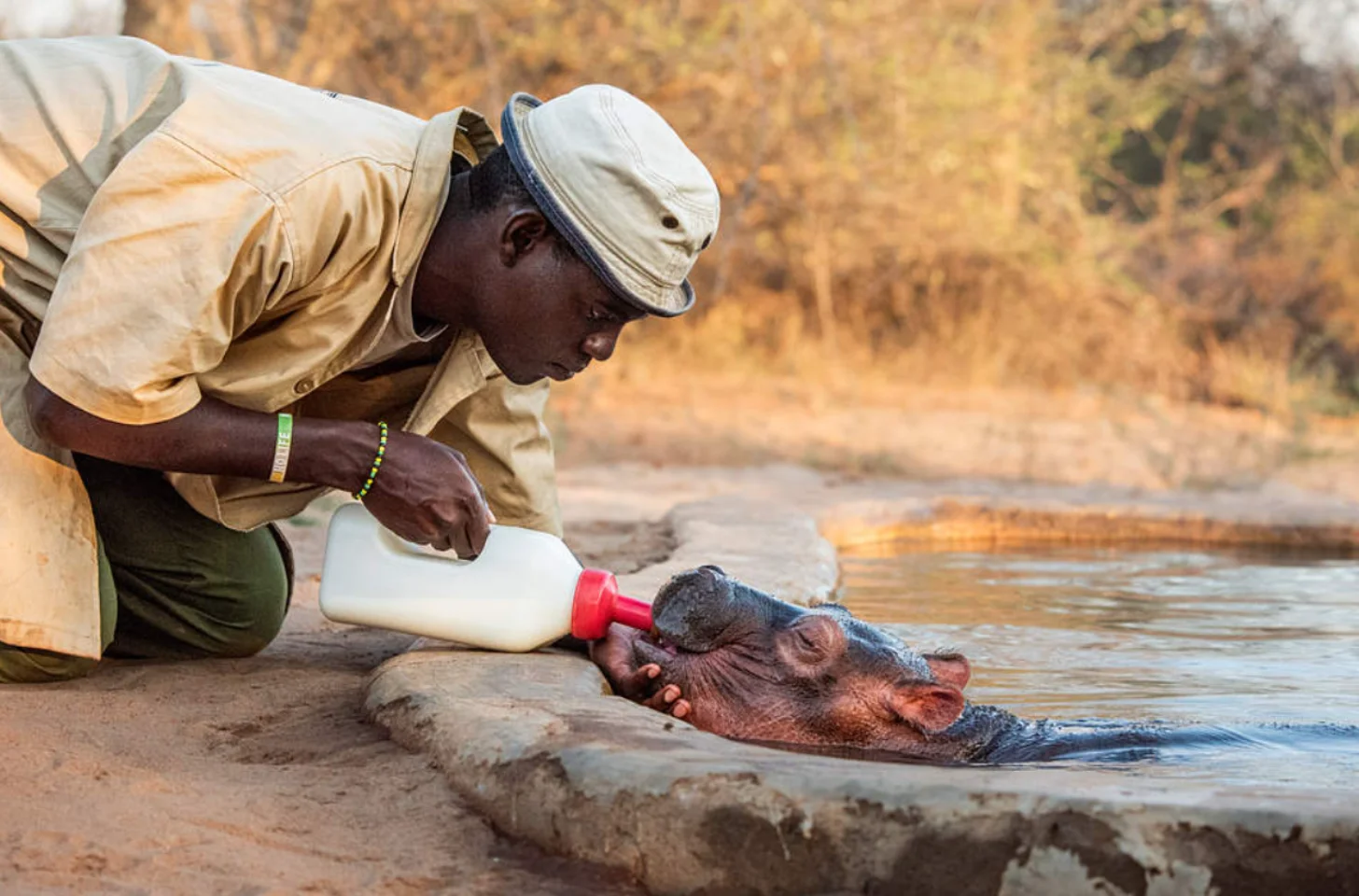
Bumpy isn’t the only hippo at the sanctuary. Musumbi, a rescue 18 months his senior, responded with a polite aloofness to his arrival.
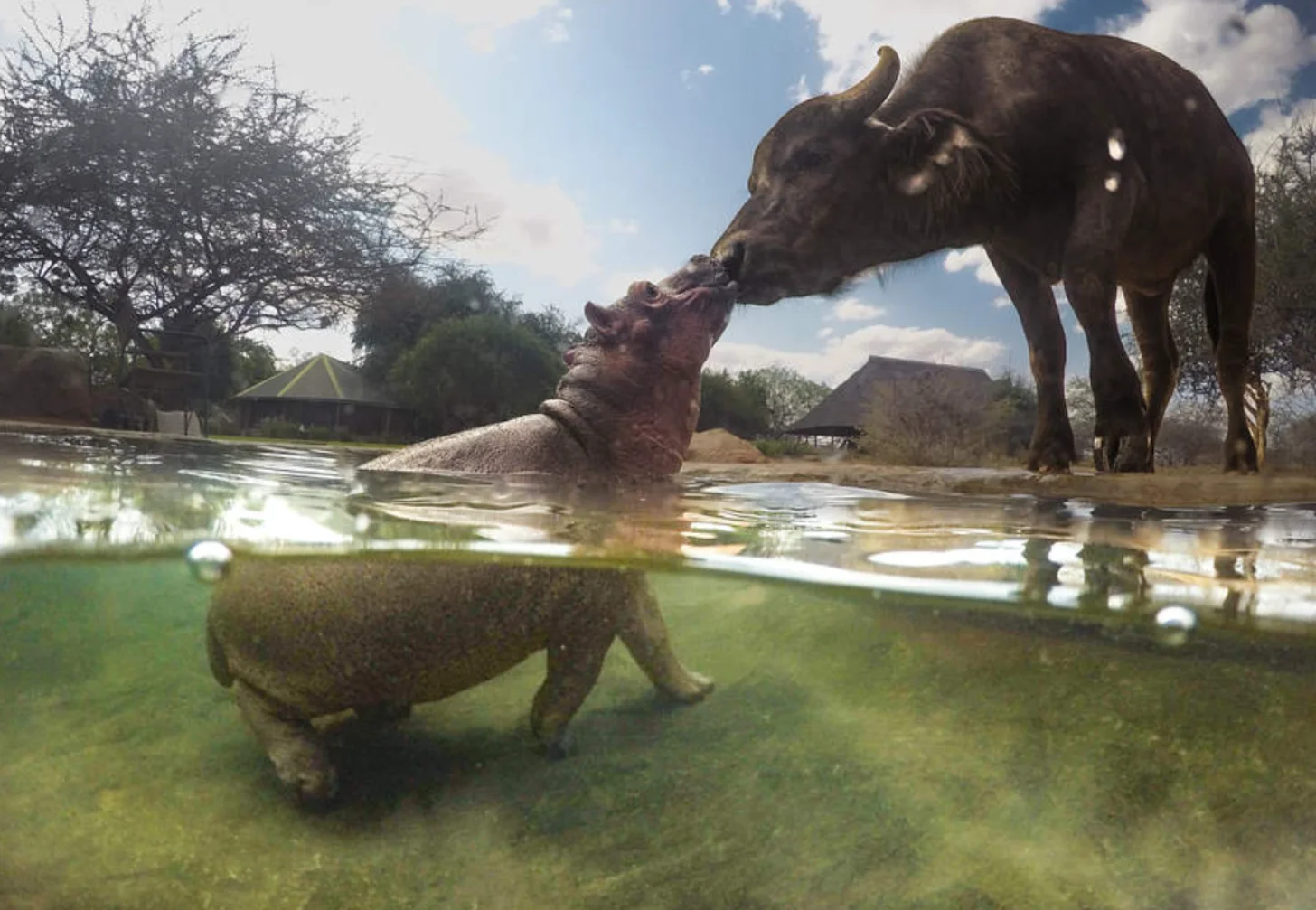
“We have given Bumpy and Musumbi their own personal pools, so as to avoid any territorial tension,” Sheldrick wrote. “While they remain happily separate, they do occasionally boop noses. Unlike elephants, which form multi-generational family herds that raise their young communally, hippo pods are territory-based and can be quite transient.”
Most days, Bumpy can be found hanging out in his respective swimming pool, splashing and performing an “ever-changing dance of porpoise dives, barrel rolls, and ballet across the pool floor.”
Buffaloes Gruff, Bibi, and Moshi often come by the pool to wallow — and have become “thoroughly smitten” with their little hippo friend.
In just a few short months, Bumpy has also formed a fast bond with Wangalla, the youngest elephant resident at the Kaluku Unit. Like Bumpy, Wangalla was orphaned at a young age and was later found hiding among a herd of zebras for protection.
“[Wangalla] usually only has eyes for her keeper, Misheck, but has clearly developed a soft spot for Kaluku’s littlest hippo. They make an absolutely adorable pair,” Sheldrick wrote.
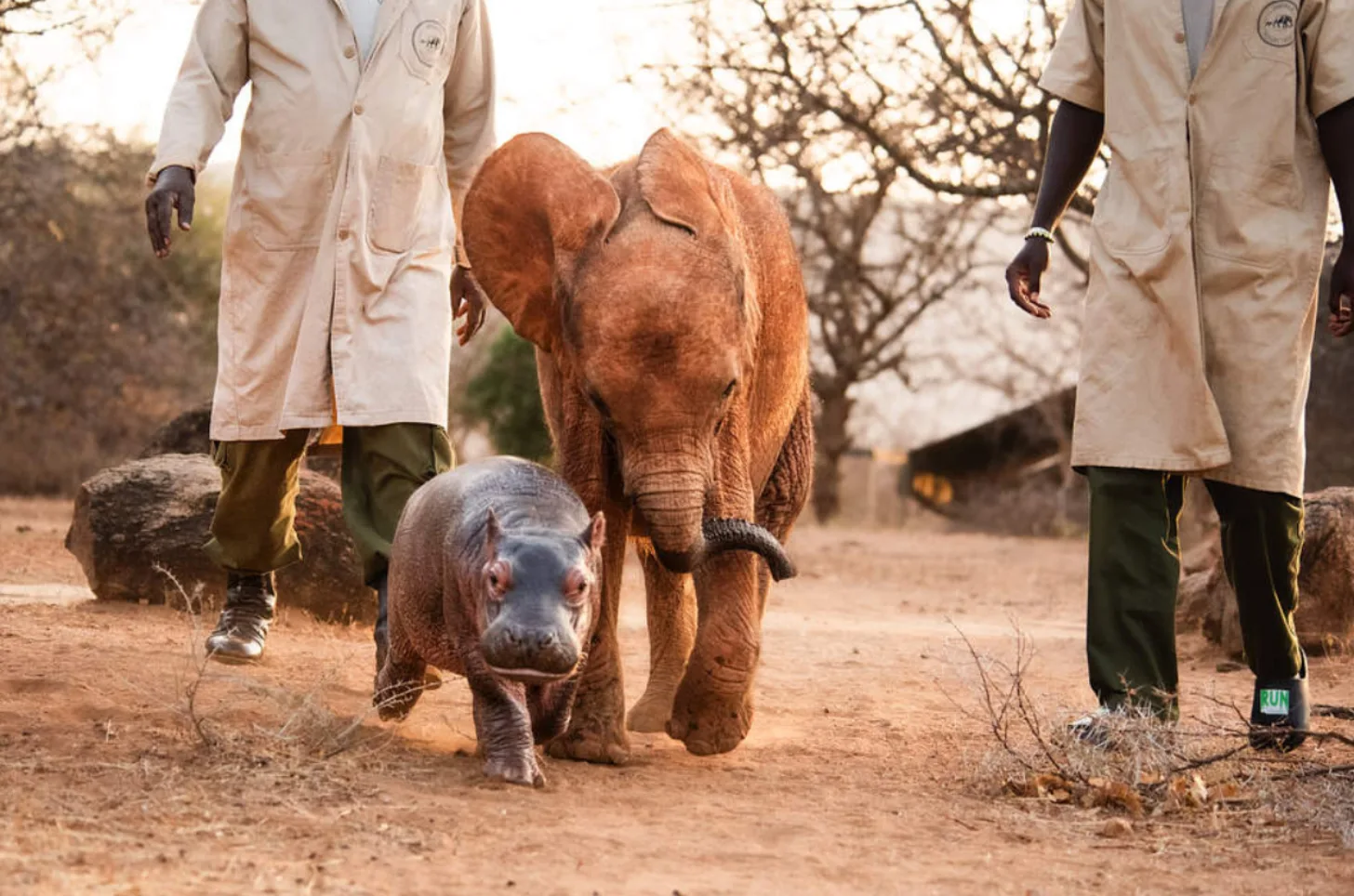
“Wangalla doesn’t quite realise that Bumpy isn’t an elephant. Mimicking how her ‘big sister,’ Korbessa, behaves towards her, she treats Bumpy like a younger sibling to fuss over.”
In May, Bumpy narrowly survived a deadly encounter that left him orphaned. Now, he has a second chance at life — and will eventually return to the wilds of the riverine Tsavo.
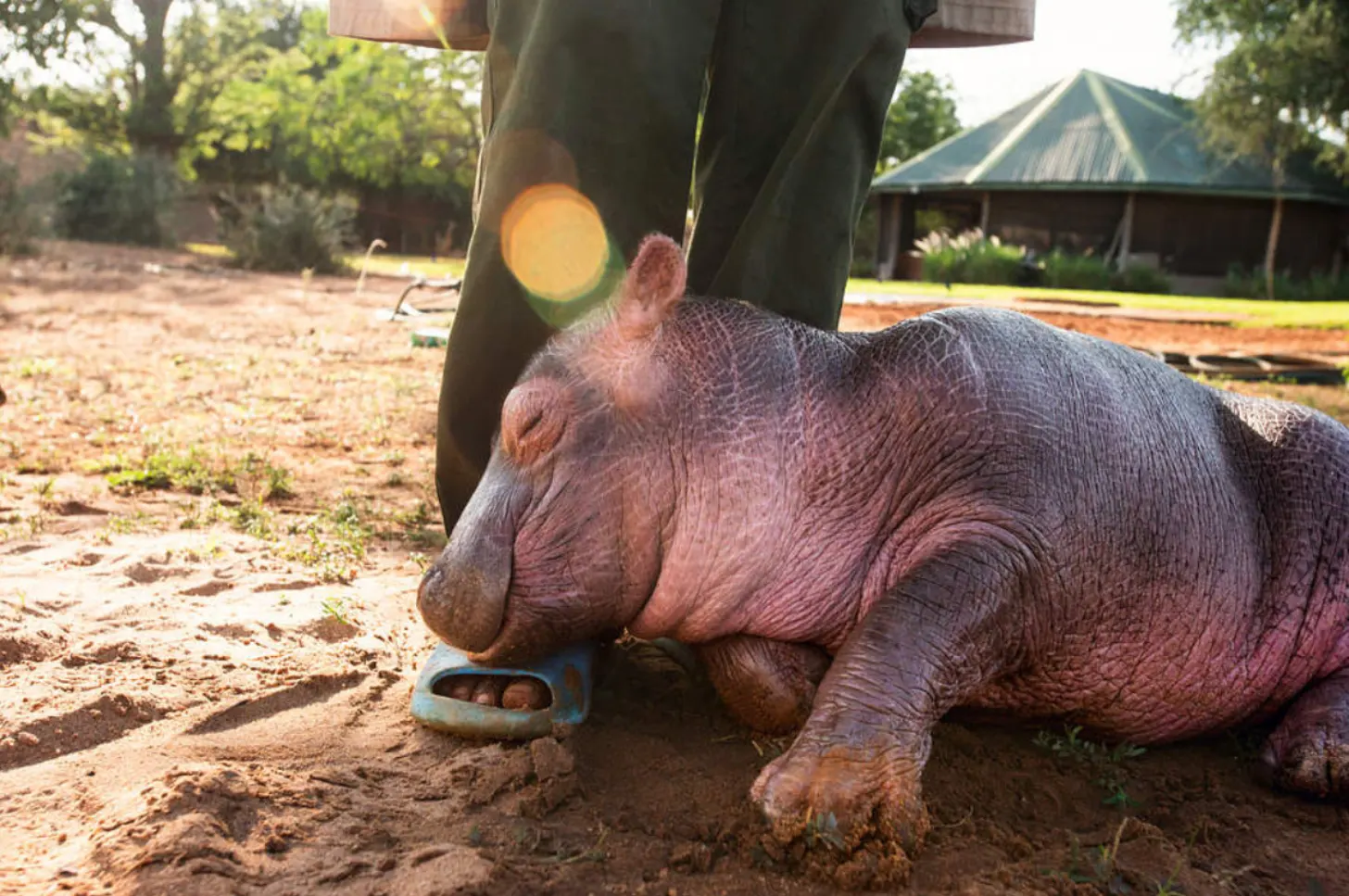
“Today, his days are full — splashing in his pool, sleeping by his Keeper’s side, and drawing an ever-growing circle of friends to his little corner of Kaluku,” Sheldrick wrote. “His story with us is just beginning, but already he has made our lives so much fuller.”
You may also like: A baby elephant survived for a month alone after being mauled by a lion. Now he has a family of his own again
Featured Image: Sheldrick Wildlife Trust