Every day the Good Good Good team collects the best good news in the world and shares it with our community. Here are the highlights for this week!
If you want to get good news in your inbox every day, join the Goodnewsletter — the free daily newsletter designed to leave you feeling hopeful.
The Best Positive News We’re Celebrating This Week —
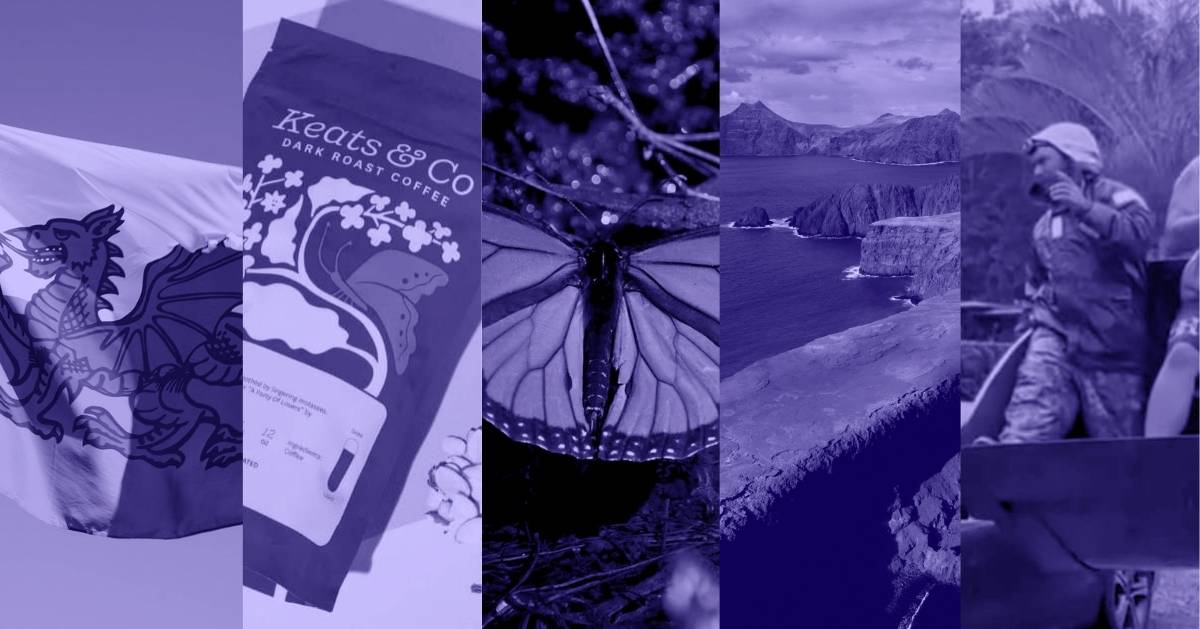
Wales became the first part of the United Kingdom to mandate solar panels on new buildings
When new building regulations come into effect in March 2027, Wales will officially be the first part of the United Kingdom to mandate solar on new buildings.
The new regulations don’t explicitly mandate solar panels, but require “a system for renewable energy generation” to be onsite, and experts believe it will lead to rooftop solar “in virtually every circumstance,” given that it’s the most functional and affordable option.
There are also exceptions to prevent uneconomical and impractical systems from being installed just to be in compliance — for example, systems must be able to generate at least 720 kWh per year, and if that’s not possible, the requirement won’t apply.
Why is this good news? So many buildings being constructed have unused space on top of them that could serve a functional purpose: generating clean energy and helping expedite the clean energy transition. Utilizing clean energy comes with a myriad of benefits.
→ Read more
Trump suggested dyslexic people can’t lead. This famous president contradicts that claim
→ Read more
Inspired by her three autistic siblings, an occupational therapist created a sensory-friendly hijab
When Najma Omar was attending the University of Minnesota to pursue a career in occupational therapy, her professor asked her to imagine tools that hadn’t yet been invented to help people, but should exist.
That’s when Najma thought of her own family. Among the 10 children, three are autistic, and all of them have different sensory and communication needs. In particular, she thought of her younger sister Nasteho, 17, who struggled with wearing her hijab.
So she invented a better one. Designed with lightweight, stretchy fabric and subtle ear padding, Najma’s SereniHijab helps reduce overwhelming sounds while remaining breathable and wearable for everyday use.
→ Read more
To celebrate World Tuberculosis Day, John Green is sending exclusive poetry readings to people
It’s been a year since John Green’s latest nonfiction book, “Everything Is Tuberculosis,” hit shelves, but he’s been a vocal supporter of global efforts to eradicate the disease for years.
Green’s online shop, Good Store, which he runs with his brother, Hank, sells everyday goods, including Keats & Co coffee and tea, which “donates 100% of the profit to fight tuberculosis in impoverished communities.”
In honor of World Tuberculosis Day, Green is sweetening the deal even more by sending anyone who subscribes to Keats & Co ahead of World Tuberculosis Day an exclusive video reading of Green’s favorite Keats poem, “Ode on a Grecian Urn,” and why he likes it so much.
Why is this good news? Tuberculosis is entirely curable; we just, as Green says, “don’t do a good job of getting the cure to people who need it.” Keats & Co and Good Store are changing that, and giving fans and supporters a chance to participate in this life-saving work.
You may also like: John Green announces $1M annual donation to fight his (least) favorite disease
For the first time ever, part of the ocean now has legal personhood. What does it mean for waves to have rights?
→ Read more
Ocean Cleanup has removed 110 million pounds of plastic from the world’s oceans
When he was just 16, Dutch teenager Boyan Slat was scuba diving in Greece and noticed more plastic in the water than fish. Within two years, the Slat founded Ocean Cleanup, a nonprofit dedicated to removing plastic waste from the world’s oceans.
Using massive U-shaped floating barriers and autonomous drones, Ocean Cleanup has collected a record 110 million pounds of plastic from the world’s oceans since 2013, marking a major milestone in efforts to combat marine pollution.
The Ocean Cleanup’s achievement highlights rapid progress driven by improved technology and more strategic deployment in high-density pollution zones. Much of this success stems from better data identifying key sources of ocean plastic, including rivers responsible for the majority of waste entering seas.
→ Read more
Mexico’s monarch butterfly population has increased by 64%
Every fall, millions of monarchs migrate nearly 3,000 miles from Canada, across the U.S., to the forests of western Mexico. Now, new figures from the World Wildlife Fund show that the area occupied by monarchs grew to 7.24 acres of forest, a 64% increase from the 4.42 acres the previous winter and the most extensive coverage since 2018.
Scientists say the remarkable increase offers a glimmer of hope for the insect, which has been considered at risk of extinction. It’s also proof that conservation efforts have been working.
There’s also been a significant reduction in forest degradation within their critical winter habitat.
Why is this good news? Habitat loss from deforestation, the climate crisis, and the use of herbicides have disrupted the monarchs’ breeding and migratory patterns, and led their numbers to plummet in the past three decades, declining by more than 80% since the 1990s. This is a sign that things are headed in a better direction.
The best books, podcasts, and movies that will help you understand the global housing crisis
→ Read more
11-year-old designs color-changing glasses to help others with dyslexia
Millie, an 11-year-old girl from Greater Manchester, has long struggled with dyslexia, a learning disorder that gives her headaches and causes words to move on the page as she reads.
Inspired by her own experience, she created new color-changing glasses designed to help people read more comfortably and reduce visual stress.
Her idea, first imagined at age eight, recently stood out among more than 70,000 entries to win a major engineering competition. Millie hopes to secure enough funding to bring the glasses to market one day.
→ Read more
Neighbors used a tractor to save a 98-year-old Hawaiian woman from her flooding home
The floods have swept homes from their foundations, littered beaches with debris, and covered entire neighborhoods in a thick, volcanic mud. No deaths have been reported, but hundreds have been rescued from their homes.
That includes a 98-year-old woman, who neighbors carefully loaded into the bucket of a tractor as her home was flooding around her.
The rescue was captured in a now-viral video that stopped thousands in their tracks, with comments saying things like, “This is what happens when people move with heart. No waiting, no division, no ego; just love in action.”
Why is this good news? The worst flooding to hit Hawaii in two decades has swept homes from their foundations, littered beaches with debris, covered entire neighborhoods in thick mud, forced thousands to leave their homes, and knocked out power across the islands. So many people need help and relief — and everyday helpers are stepping up to take care of each other.
→ Read more
Local Hawaii divers clean up flood debris on beaches: ‘When the government won’t care for our people, we will’
→ Read more
Cigarette smoking among U.S. adults has dropped to a record low 9.9%
In 2024, the U.S. adult smoking rate fell below 10%. In 1964, smoking in adults hovered at 42% and then began declining after major public health campaigns discouraged the habit.
The steady reduction of smoking is considered one of the most significant public health successes in recent history, marking a historic low once thought impossible.
That decline has also accelerated in recent years, largely driven by younger generations who are less likely to start smoking, and it comes with major health gains. A 2025 report from the American Cancer Society estimated that reduced smoking resulted in nearly four million averted deaths from lung cancer between 1970 and 2022.
Nearly one million square kilometers of ocean are now fully protected in Chile
In a landmark moment for ocean conservation, Chilean President Gabriel Boric signed a decree granting full protection to 360,000 square kilometers of water surrounding the Juan Fernández Archipelago — bringing the total fully protected area in the region to 946,571 square kilometers.
It is now the third-largest fully protected marine area in the world, and means Chile has surpassed 50% protection of its exclusive economic zone.
The new designation came about after residents submitted a proposal to expand conservation areas around the archipelagos, which support an expansive array of marine life.
Why is this good news? As other countries around the world, like the U.S., move to remove protections from its oceans and waterways, Chile is positioning itself as a global leader and example to follow. The new protections will safeguard habitat for whales, dolphins, seabirds, seals, octopus fish species, and so much more.
These boundary-pushing runways show what the fashion industry can achieve when it stops chasing perfection
→ Read more
After a woman realized her DoorDash driver was a senior, she raised $510K to help him retire
When Brittany Smith ordered Starbucks through DoorDash, she wasn’t expecting to see doorbell footage of an elderly driver struggling to climb stairs while delivering her order. Upon seeing the recording, the Tennessee local soon tracked him down to give him a $200 tip in person.
That was when Richard, who is 78 years old, told her he had previously been retired, but was forced to sign up as a delivery driver after the price of his wife’s medication ballooned out of control.
Soon, Smith launched a fundraiser to help ease his financial burden. The campaign quickly gained traction, drawing more than 12,000 donations and surpassing $500,000 in a matter of days.
→ Read more
More good news of the week —
Greece launched an animal airlift program to rescue pets and their owners from the war in Iran and surrounding areas. The government-organized Aegean flight from Abu Dhabi in the United Arab Emirates carried 45 pets and 101 people.
Activists are using sports mascots to fund conservation of real animals. A new study found that 727 professional sports teams across 50 countries use wild animals in their branding. The most popular species — lions, tigers, and wolves — face threats in the wild.
A state-funded program is reducing homelessness in California by allowing people to bring their pets to shelters. The program helped over 4,400 people get off the street — while also offering free veterinary care to their pets.
MIT researchers discovered that communities of ocean bacteria work together to consume biodegradable plastic. The study gives researchers a new understanding of environmental pollutants and the ways we can break them down.
A church in Colorado runs a monthly potluck where immigrant families can share traditional dishes with their neighbors. The “Charlas en la Cocina,” or chats in the kitchen, spotlight different cultures from Latin America and beyond, using food as a bridge between communities.
As ICE tensions rise, young Latinos are bringing social justice to the Catholic Church. New initiatives invite Catholics to practice solidarity by praying and advocating on behalf of migrants.
A new website calculates how many marine animals are saved every time you pick up trash. New research reveals what a “lethal dose” of plastic is for various marine animals, and now can help us better understand the impact of beach cleanup efforts.
A UK-based department store unveiled its adaptive clothing line designed by and for disabled people. The new items from Primark include features like magnetic zippers and buttons, loops that are easy to hold, pants with adjustable zips on the legs, a pouch for stoma bags, and more.
New study reveals that restoring mangroves could remove almost triple the amount of CO2 produced by cars in the U.S. every year. The restoration would also save $800 million in storm damage and protect 140,000 people from flooding.
A slave ship artifact will be returned to South Africa by the Smithsonian. The 33-pound timber piece was from a ship that is among the first known wreckage of such a ship that was recovered, in which enslaved Africans died.
Bruce Springsteen will perform 'Streets of Minneapolis' at St. Paul No Kings protest this weekend. Coming off a campaign with the ACLU in support of birthright citizenship, the rock icon will perform his latest resistance tune in Minnesota on March 28.
Pakistan’s people-led solar energy boom is easing the impact of the global energy crisis. Energy analysts say the country’s solar expansion has so far insulated the power sector from the worst of the energy market disruptions caused by the war in Iran.
A seven-year-old boy with cerebral palsy has become the first in the U.K. to trial a “bionic exoskeleton.” For the first time in his life, Asger was able to walk to school thanks to the wearable, adaptive technology.
Scientists discover hidden water beneath Mars that could have supported life. After analyzing preserved sand dunes on the red planet, researchers found signs that they formed in the presence of water.
The Quapaw Nation brought tribal land back to life in Oklahoma after mining operations turned it into a toxic wasteland. The 40-year effort was led by more than 6,000 tribal members and will likely continue for decades to come.
On a small Hawaiian island with no vet clinic, locals are stepping in to save pregnant cats and kittens from floodwaters. As devastating floods sweep across Hawaii, one small but determined nonprofit is stepping up for the islands’ most vulnerable animals.
Palestinian and Israeli mothers led dozens in a barefoot march for peace in the center of Rome. The mothers called for an end to violence and greater protection for children affected by the Israeli‑Palestinian conflict.
Florida banned Pride crosswalks, so a local chef filled her restaurant’s parking lot with rainbows instead. An Orlando restaurateur is being honored for her efforts to revive Pride-themed street art in honor of the victims of the Pulse nightclub shooting.
A tech entrepreneur used AI and RNA technology to create a personalized cancer vaccine for his dog. Although the vaccine was not a cure, it reduced his dog’s cancer by 75%.
The large tortoiseshell butterfly, once declared extinct, has made a comeback across southern England. Frequent sightings suggest that the species is re-establishing itself as a stable breeding population.
A hero detection dog just joined a police force to sniff out the hard drives of child abusers. Taffy is an electronic storage detection dog trained to detect the chemical compounds commonly found in electronics like cell phones, USBs, hard drives, SD cards, laptops, and other digital media.
An old Los Angeles funeral home was transformed into an apartment complex for homeless seniors. The chapel was listed as a cultural-historic landmark by the city of Los Angeles, and developers worked to ensure the new development would not infringe on the building’s preservation.
A new study suggests routine mammograms could be a tool to protect against a different silent killer. (Gifted link) According to the European Heart Journal, screenings for breast cancer can also flag the risk of heart disease, the leading cause of death in women.
Researchers developed new techniques to recover rare earth elements from mining waste and polluted water. These materials are essential for clean energy technologies such as electric vehicles and wind turbines.
Historical figures like Winston Churchill will be replaced by native wildlife on U.K. currency. Conservationists hope the change will bring attention to Britain’s “least-loved” wildlife – such as pigeons, gulls, and foxes.