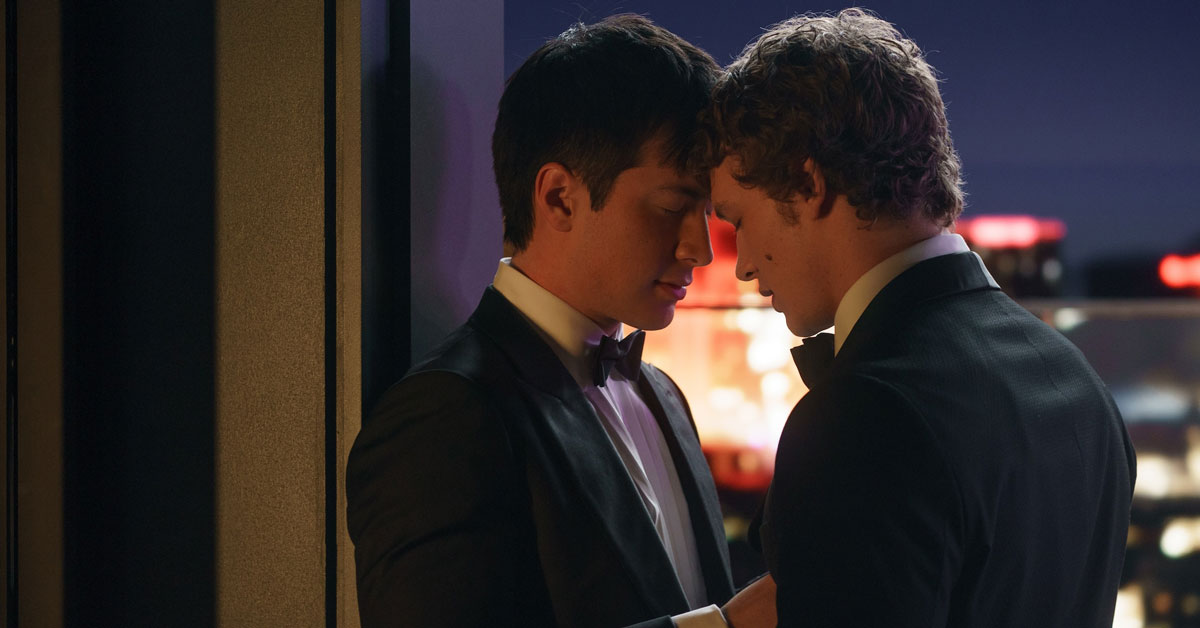
When “Heated Rivalry” became a hit, many chalked up the TV show’s success to the well-choreographed male-on-male sex scenes between all-star hockey rivals-turned-lovers Shane Hollander, played by Hudson Williams, and Ilya Rozanov, played by Connor Storrie.
And while those scenes indeed feature acting, directing, and intimacy coordination applauded by viewers and critics alike, they are just a fraction of what is so compelling about this tiny production.
Initially a $12 million project produced by Canadian company Crave and led by showrunner Jacob Tierney, it was acquired by HBO Max and is now the most-watched scripted acquired title in the streaming platform’s history.
Over 10.6 million U.S. viewers were recorded as of February 2026, with the audience growing 400% between the show’s debut in November 2025 and a mere three months later.
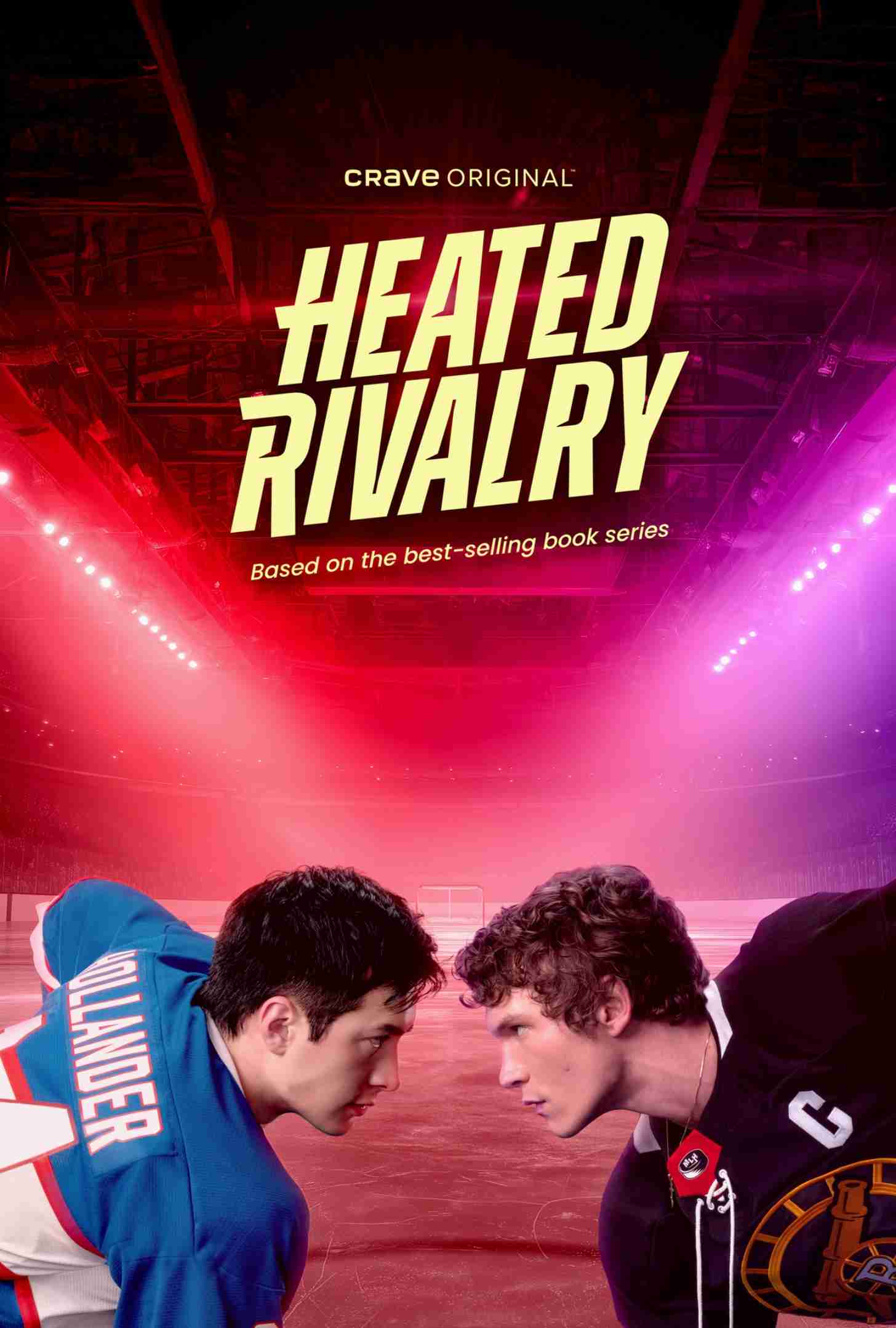
Rachel Reid, the author of the book series that led to the television spinoff, has also seen a surge in book sales, leading publishers to take a chance on LGBTQ+ stories and authors with renewed vigor.
An entire queer publishing company, Pansy, launched after seeing the success of the show and book series on such a mainstream scale.
“The belief still prevailed in the industry that queer books would only appeal to niche audiences and that straight female readers — who make up the majority of the market — would be turned off by gay sex,” co-founder of Pansy, Matt Cain, told PinkNews.
“The ‘Heated Rivalry’ novels have blown both of those beliefs apart. But outrageously, those books weren’t published in print in the U.K. until the launch of the hit TV series. I think that’s indicative of the industry’s disinterest and disengagement in mainstream queer fiction. Pansy is here to make sure that doesn’t happen again.”
Ongoing discourse about the story continues to dominate social media, collective effervescence radiates from sports bars where crowds gather to re-watch episodes (a “reheated rivalry,” the most devout call it), and tattoo ink permanently marks fans with the memory of how the show made them feel.
But “Heated Rivalry” isn’t just a capitalistic success story, or a case study in the growing interest in LGBTQ+ romance novels.
It is a rare and wonderful example of what happens when stories about LGBTQ+ people go beyond tragedy.
How ‘Heated Rivalry’ has encouraged equality in sports
One actor who has a small part in “Heated Rivalry” is Harrison Browne, a trans man who played for the then-National Women’s Hockey League for years. In 2016, Browne came out as trans in an article for ESPN and said he found a surprising amount of acceptance.
“I was voted into the then-NWHL All-Star Game. The year I came out, my jersey was the third most-sold in the entire league. Even the color commentators switched between she/her pronouns for everyone and he/him for me, and they never slipped up,” Browne told Good Good Good.
It was all a byproduct of the vastly more inclusive culture in the women’s league compared to the men’s side of professional hockey, Browne said. But still, he could not medically transition and still play for the women’s league.

Though he had a storied career, including competing with Team Canada, it was time to hang up the skates for his own safety and sanity. It was then that Browne decided to turn to acting.
“I heard from a lot of people that they watched me play a game and seeing them reflected in me made them feel less alone,” Browne said. “I didn't know any transmasculine actors [at that time] and I was like, maybe I could try that.”
The call for a small role in “Heated Rivalry” came like any other, with a self-tape and audition process. He got the role of Connors, a member of Rozanov’s team. He said he believes he was one of the only actors on the show who had a professional hockey background, and of course, the added dynamic of his queerness brought another layer to the whole experience.
“When I watched it, I was just like I was engulfed by it as an audience member,” Browne said of the show. “I cry every time I watch it. It really brought up a lot for me, having to hide my identity because I was afraid of losing a scholarship, afraid of losing the opportunity to represent my country, just keeping a lot of things under wraps because of the love of this sport that I had.”
While trans participation in both youth and professional sports is a hot topic these days, “Heated Rivalry” has inspired curious queer athletes to take to the ice for the first time — or to make their return to it.
NBC News reported a surge in LGBTQ+ hockey leagues in both the U.S. and Canada following the show’s debut. And some professional athletes, like hockey player Jesse Kortuem, even said he decided to finally come out as gay this year as a result of the show.
These strides mean a lot to Browne.
“These are people that gave up hockey and are finding their way back to the sport,” he said. “They felt like they couldn’t play because they were gay, and now people are coming into adulthood, and coming back to it and finding the joy in it.”
Real-life men’s hockey culture remains less-than-welcoming to players, Browne said, though he has enthusiastically collaborated with professional leagues over the years to bring greater diversity and inclusion to the ice.
He goes into further detail in his book, “Let Us Play: Winning the Battle for Gender Diverse Athletes,” which he wrote with his sister and published in 2025. He said it’s about embracing that “both things can be true:” wanting accountability for institutions that have excluded LGBTQ+ athletes — and “wanting better” for the future.
And nowhere was that better future more in reach than at a recent hockey game at Madison Square Garden, where Browne waded through a sea of Hollander and Rozanov jerseys.
“When you wear a Hollander or Rozanov jersey, you’re actually walking around with a Pride flag on your back,” Browne said.
“It’s a symbol that says ‘this whole place is for you.’ And seeing that, it makes me think, ‘“Heated Rivalry” is actually making men’s hockey a safer environment.’”
What queer love stories like ‘Heated Rivalry’ mean to frontline activists fighting for LGBTQ+ youth
LGBTQ+ fans of “Heated Rivalry” have found a special kind of reprieve in the show. While it includes plenty of plot points and character arcs that grapple with pain and loss, ultimately, the show is not a tragedy.
And while the timing of its release seems pointed, it was not created in response to adversity faced by the LGBTQ+ community — but simply to tell a love story: Joy for the sake of joy.
This, on its own, provides a level of hope and optimism mainstream media rarely affords to LGBTQ+ characters. And it feeds a hungry audience of viewers desperate to know that happy endings are theirs to imagine.
For Raelee Sweet, the education manager at It Gets Better, a nonprofit dedicated to uplifting LGBTQ+ youth, the show is especially meaningful. Sweet leads storytelling initiatives for queer youth, helps build digital tools on LGBTQ+ mental health, conducts workshops around the country, and has supported grantmaking projects for over 170 youth-led programs nationwide.
The work is rewarding, but not without its challenges.

“Like most nonprofits working with the LGBTQ+ community, we’ve seen a dip in major funding over the last couple of years,” Sweet told Good Good Good.
“But deeper than that is the safety and morale of the youth that we work with. Some have had to pull out of projects or even ask to have their names removed from past projects, for fear of retaliation. How do you tell young people ‘it gets better’ when the world looks so bleak?”
The young people continue to give them hope, Sweet said, and their team has been resilient in facing challenges, but “Heated Rivalry” has been one of the best motivators to keep going.
“I’ll be honest, I don’t watch a ton of queer content these days. You get tired of seeing the same tropes over and over that don’t reflect the experiences of the people you work with every day,” Sweet said. “But ‘Heated Rivalry’ filled a hole in my heart that I didn’t know was there.”
Their favorite scene is one that many find themselves returning to, when (spoiler alert) another of the show’s gay couples — Scott and Kip — finally kiss on live television after one of them wins a championship game.
The scene cuts to the show’s leads, Shane and Ilya, watching the events unfold, the universe finally giving them permission to love out loud in the same way.
“I sobbed, thinking of the young people I work with every day, and how they might get to have more and more moments like that,” Sweet said.
They said they’ve re-watched the show twice, calling it a “warm blanket,” that makes them feel “rejuvenated to get back to work the next day — despite what’s happening in the news.”
The real-world psychological impact of hopeful stories about LGBTQ+ people
Dana Ménard, Ph.D. and associate professor of psychology at the University of Windsor in Ontario, Canada, studies wellbeing and resilience as they relate to sex, sexuality, and gender identity.
This has made her something of an expert in “Heated Rivalry” in recent months.
While she said the show’s happy ending provides an escape during a particularly difficult time for LGBTQ+ people, the characters and plot lines within the story also serve as a blueprint, especially for our closest relationships, whether between romantic partners, family members, friends, or teammates.
“I found the parental relationships on this show particularly touching. All of the parents have their own challenges, but they rise to the occasion, even if they struggle at first,” Ménard told Good Good Good.
“The show models that growth, and the honest communication that it requires. I think there are a lot of good examples here of how to parent a queer child, and also how to parent an adult child: Be available, be clear in your support, be affectionate.”
Regardless of what role viewers might play in the lives of LGBTQ+ people, or whether viewers are queer themselves, Ménard sees “Heated Rivalry” as an artifact of the moment that provides real support to people most in need of the promise of a better tomorrow.
“I think hope and joy can change our lives. I’m reminded of a story by Ray Bradbury from 1984, ‘The Toynbee Convector,’ where a man claims to have traveled into the future and seen a world where all the major problems were addressed: poverty, environmental catastrophe, cancer — all gone,” Ménard said.
“Over a hundred years later, on his deathbed, when that beautiful civilization has been brought to pass by the people who believed in his vision, he confesses that he never made the trip he claimed to have made but instead invented the whole story from scratch and fabricated records to support the lie. He knew that by sharing this illusion, he would give everyone hope, and from there, the confidence to make the necessary changes because we already knew it was going to happen.”
The world where “Heated Rivalry” takes place, she said, is a place “where love is accepted, where one can be authentic, where people strive to understand one another better.”
“We could collectively make that world a reality off the screen,” Ménard concluded. “And lots of people are working towards that vision every day.”
A version of this article was originally published in The 2026 Pride Edition of the Goodnewspaper.
You may also like: This NHL team is selling 'Heated Rivalry' jerseys. The proceeds will be donated to a queer and trans hockey league
Header image by Sabrina Lantos/HBO Max