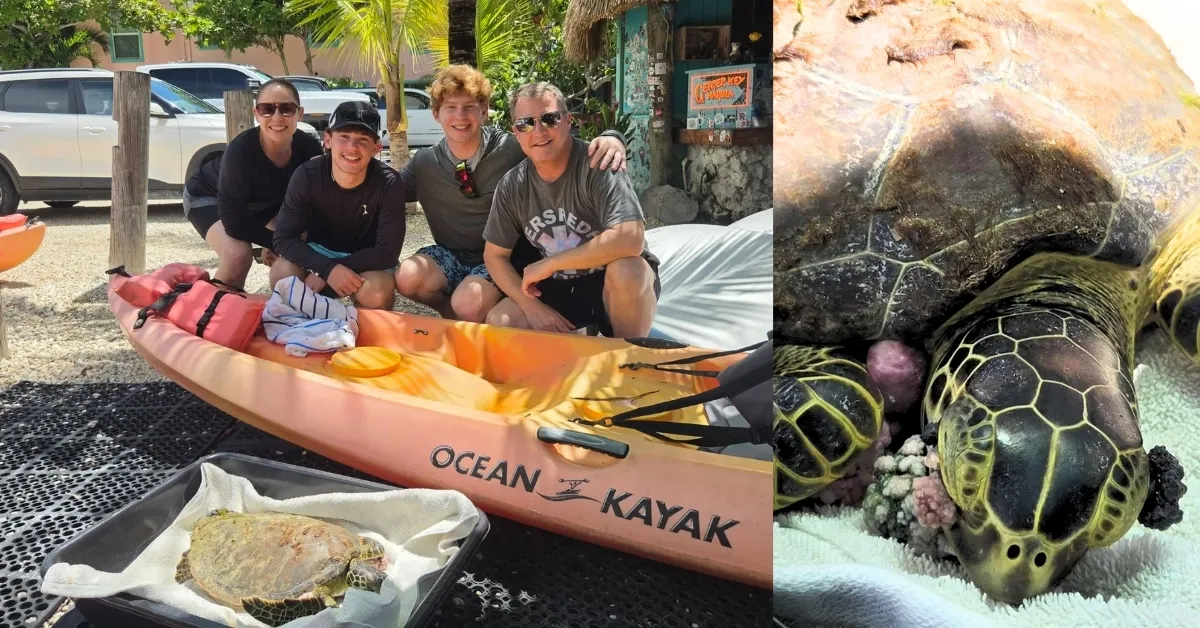
On August 8, Allison Calhoun, a tour guide with Florida’s Geiger Key Paddle Hut, was leading a kayak excursion in the Florida Keys when she got a phone call asking if she could help “a little guy” in need.
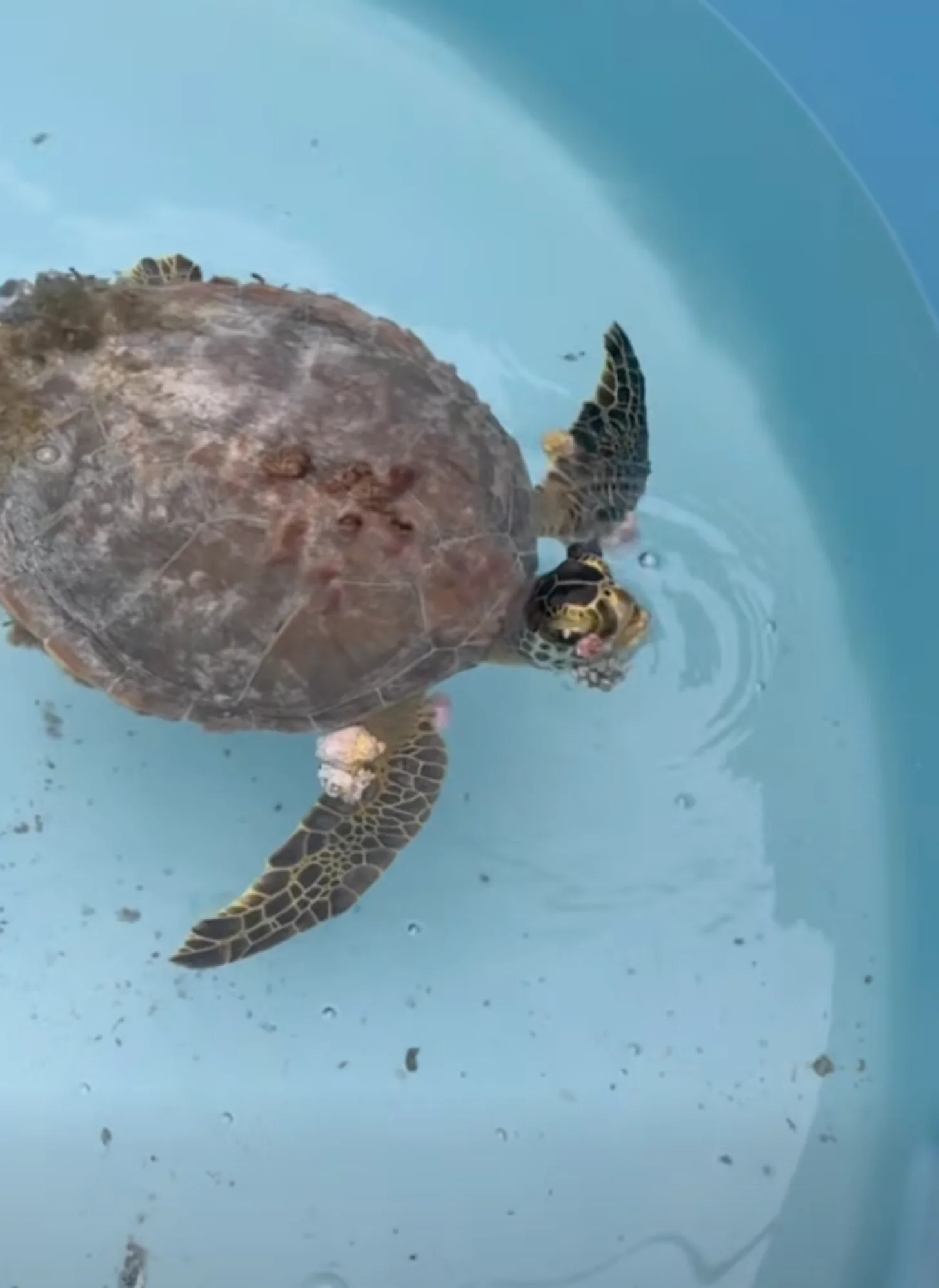
When she paddled out to the location in question, she found a juvenile green sea turtle covered in tumors on its eyes and flippers.
“Thankfully we were able to get ‘Logan’ onto my kayak, to shore, and now in the care of Marathon’s Turtle Hospital,” Calhoun recounted in a Facebook post. “Our kayaking guest ‘Logan’ is here celebrating his birthday, so we decided to name the sea turtle 'Logan.’”
“Thank you to the staff at The Turtle Hospital,” she added. “They are amazing!”
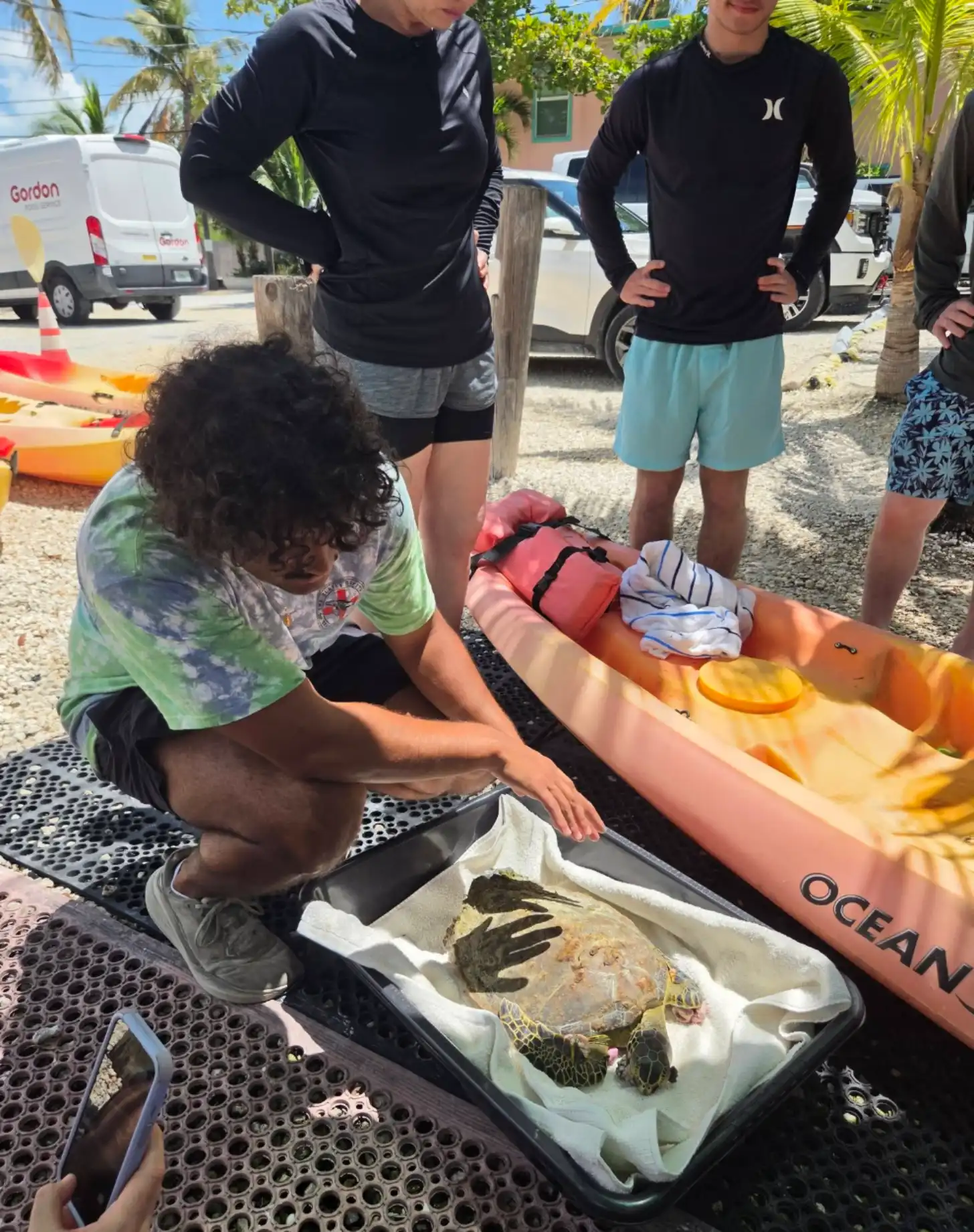
From there, The Turtle Hospital continued posting updates on Logan’s rescue.
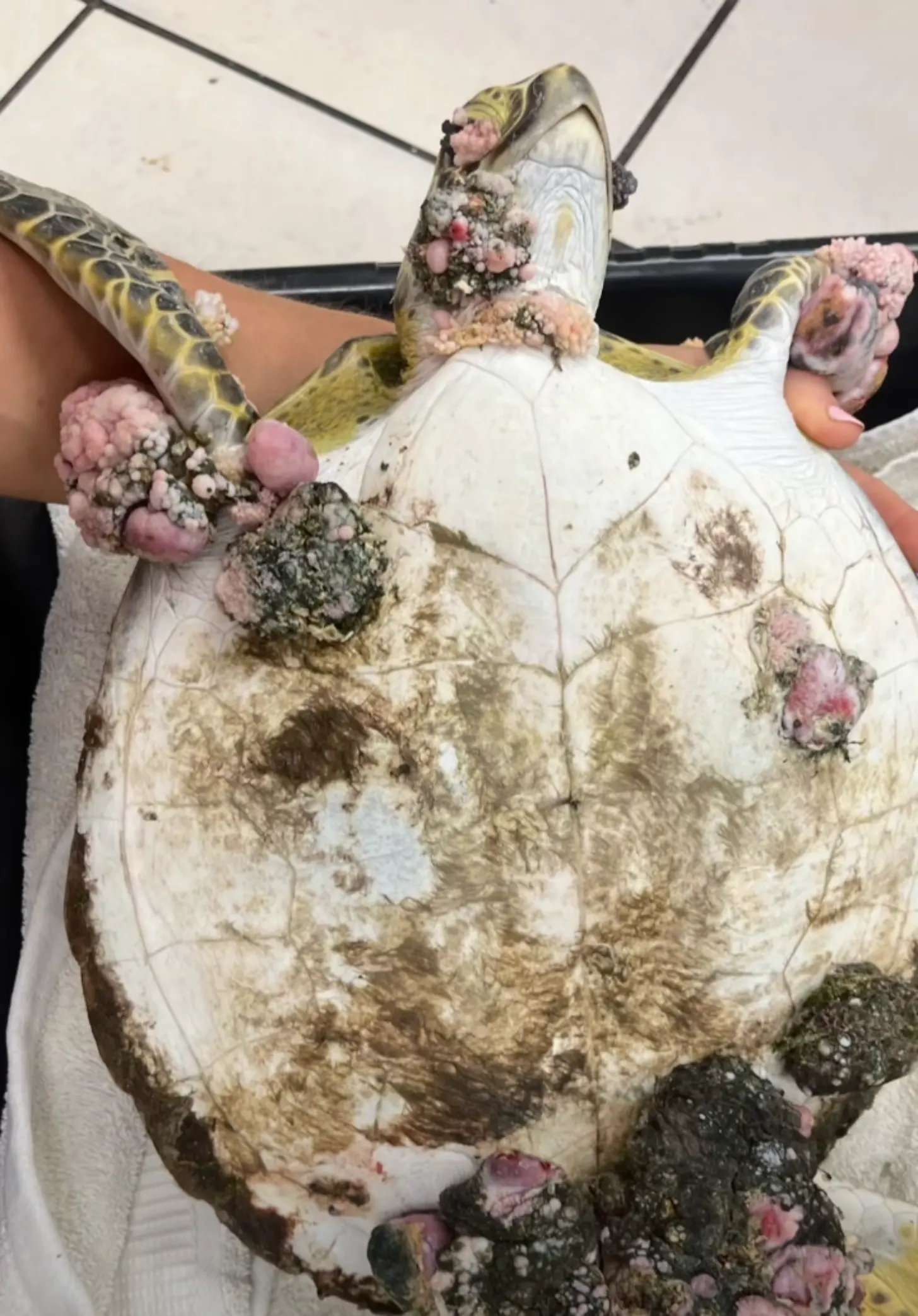
“Meet Logan,” the rescue center wrote in a Facebook post dated August 10. “This juvenile green sea turtle arrived yesterday with a heavy load of fibropapilloma tumors. Our first step will be a CT scan at the human hospital to make sure there aren’t any internal tumors we can’t see.”
Fibropapillomatosis — which can be found in all sea turtles, but most notably in green sea turtles — is a disease that causes benign, cauliflower-like tumors.
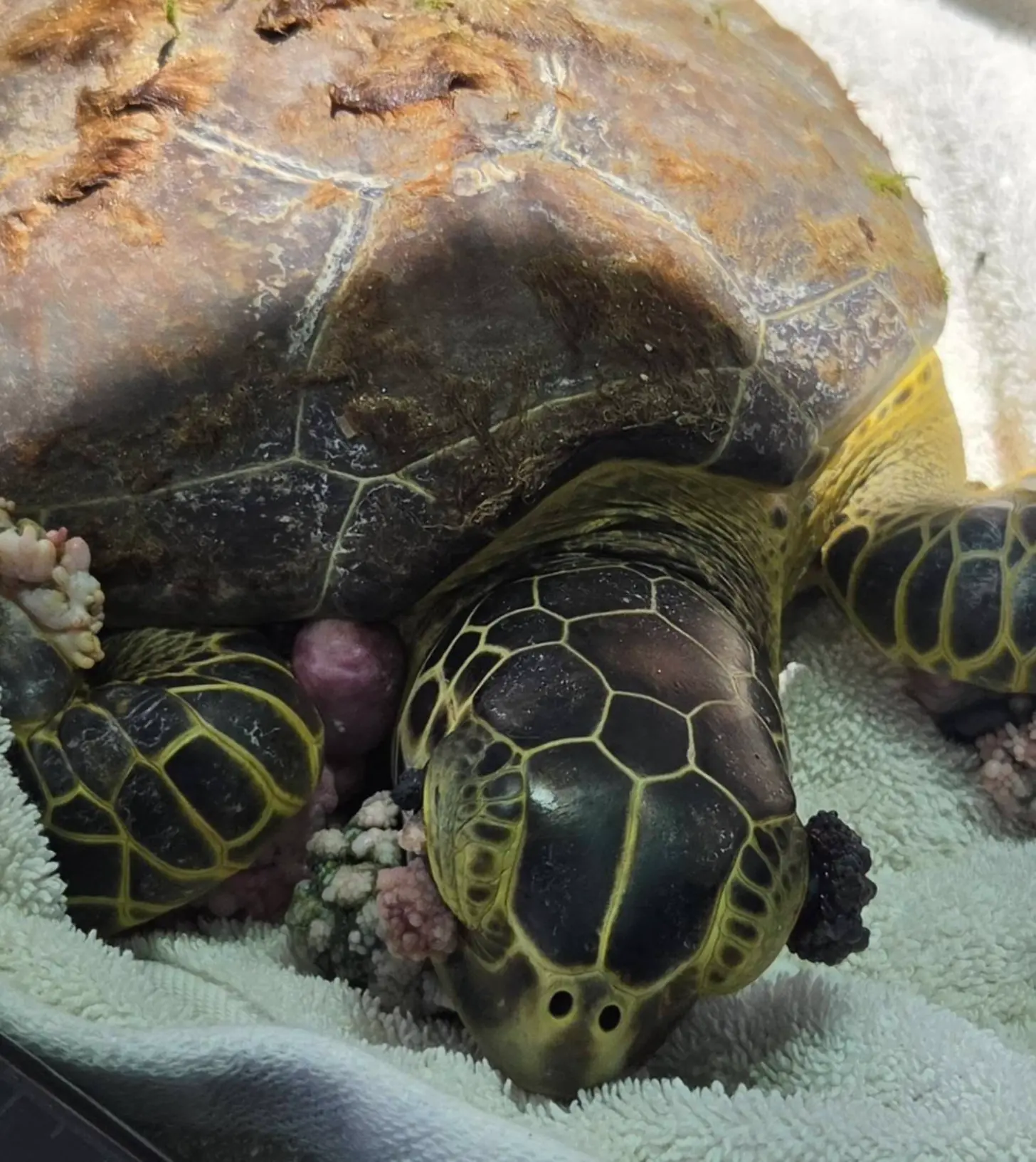
In some cases, small tumors can be relatively harmless to a sea turtle’s health. But the size and placement of debilitating tumors have been known to cause blindness or interfere with other vital functions.
After Logan is cleared for any urgent concerns, his treatment will center on making sure he’s fit enough to return to the wild.
“A healthy immune system is one of his best defenses against these tumors, so we’ll monitor his blood levels and work on getting him to a healthy place before we remove the tumors to help prevent regrowths,” the rescue center explained.
Although Logan’s future is uncertain, The Turtle Hospital remained optimistic about his outlook.
“We have a lot of work ahead,” the staff wrote, “but Logan is in good hands.”
The Turtle Hospital has been a staple in Marathon, Florida for decades. In April, they celebrated 40 years of rescuing, rehabilitating, and releasing sea turtles.
“I talk frequently about resilience, because that’s … used a lot to describe sea turtles,” hospital manager Bette Zirkelbach told Keys Weekly. “They’re amongst the oldest animals known to man, and they were in our oceans when dinosaurs were on our land.”
“I often think about the resilience of the Turtle Hospital itself. Forty years is a long time, and we’ve gone through a lot of changes in the Florida Keys,” she said. “I’m just so glad to be a part of this amazing organization.”
You may also like: Fisherman's quick thinking saves critically endangered sea turtle in the Philippines
Featured Image: The Turtle Hospital/Facebook