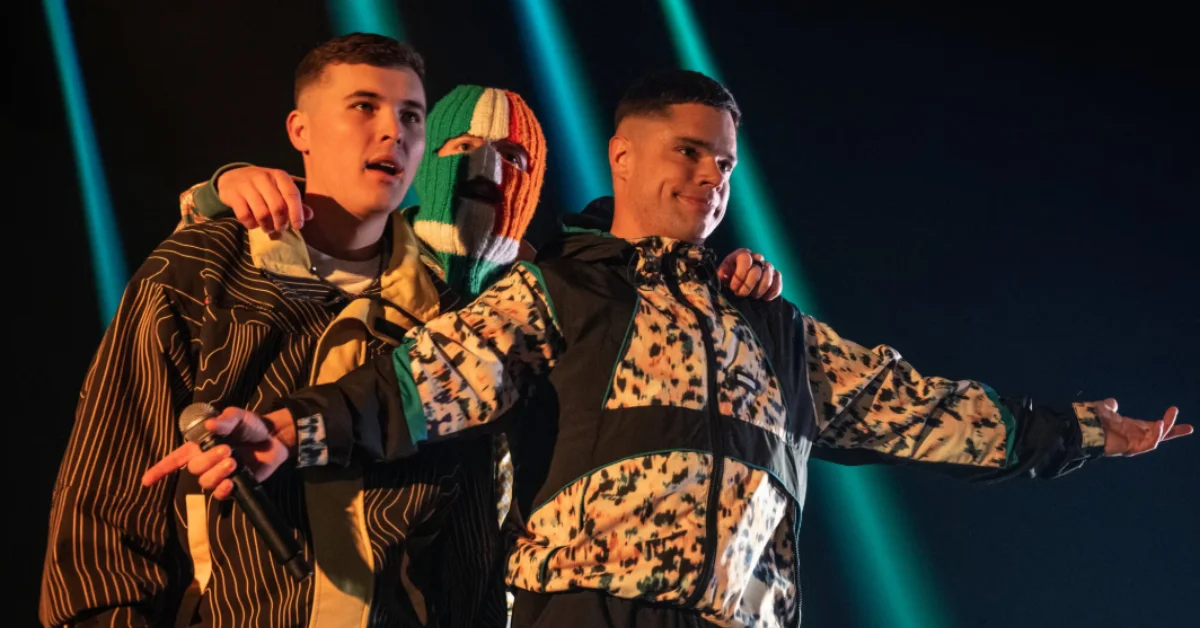
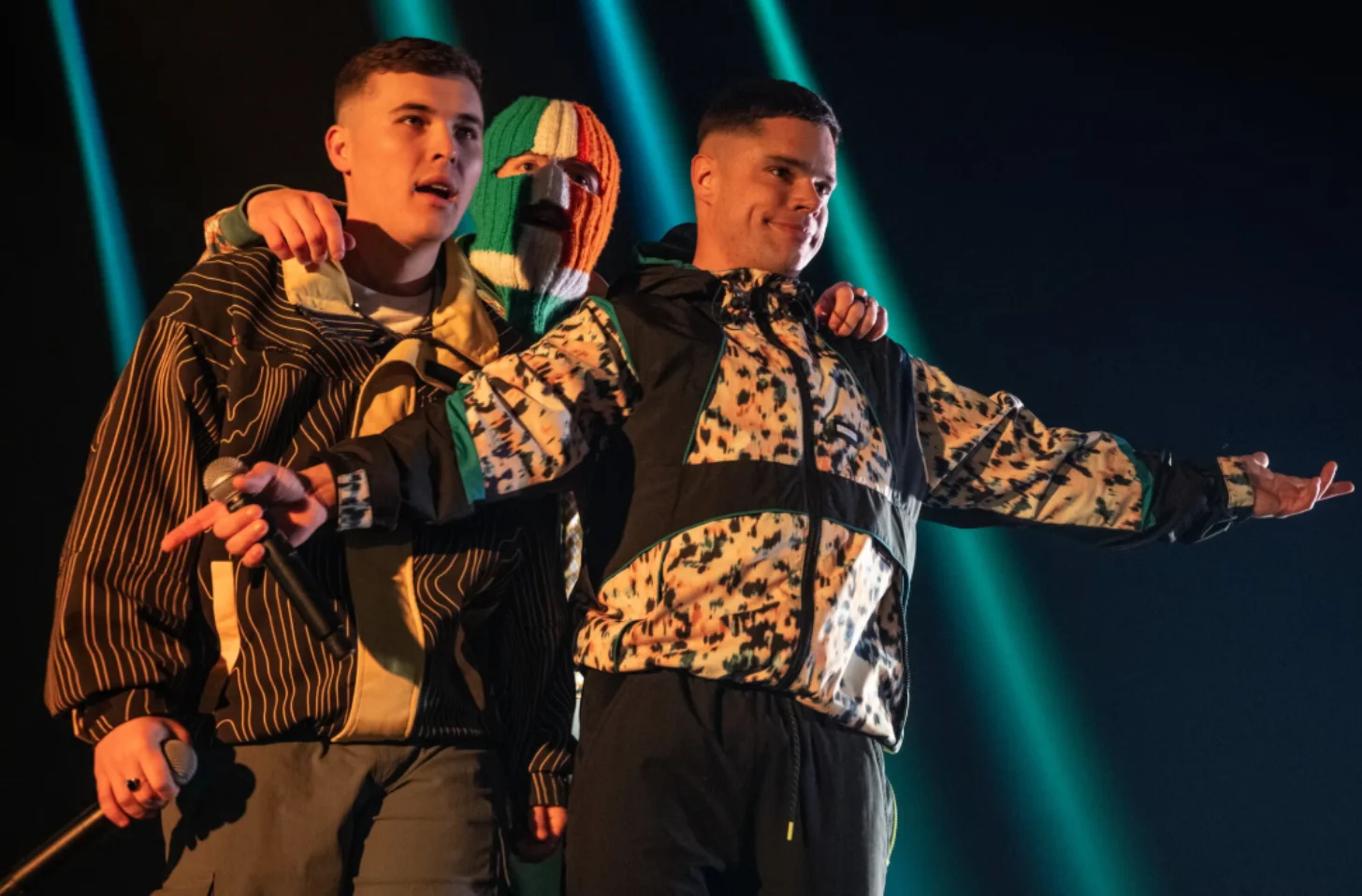
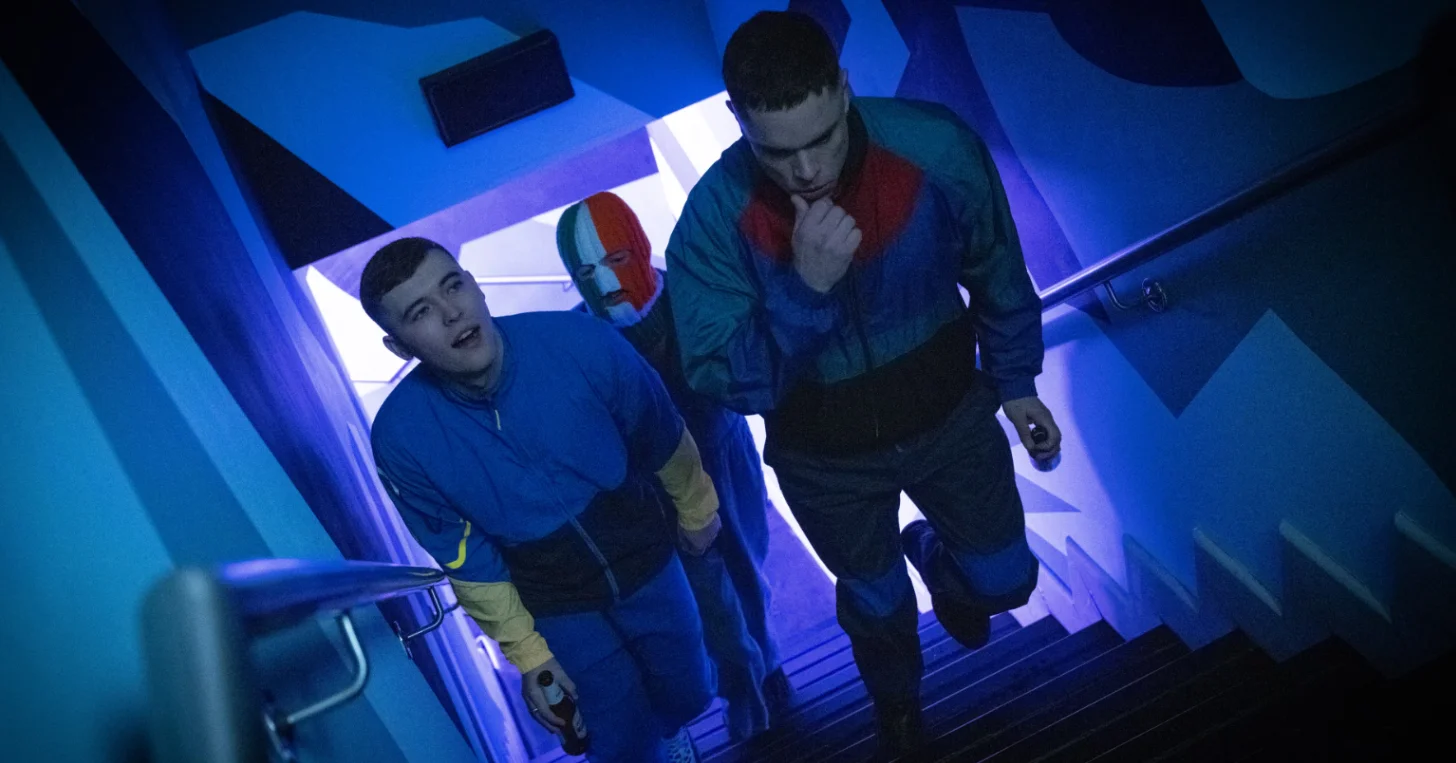
The film “Kneecap” is a “mostly true” retelling of how three musicians — Liam Óg Ó Hannaidh, Naoise Ó Cairealláin, and JJ Ó Dochartaigh — formed the hip-hop group Kneecap in Belfast, Northern Ireland under the stage names Mo Chara, Móglaí Bap, and DJ Próvaí.
The trio plays themselves in the movie, rapping against governmental tyranny and oppression. But it’s not just the content of their songs that’s radical.
It’s their decision to sing in their native Irish language.
In 1737, during British rule in Ireland, the government passed a law that required all court proceedings to be conducted in English. Until 2025, it was considered a criminal offense to speak in any language other than English in court or government.
The impacts of the law were far-reaching and severe, and by the 1990s, English had become the de facto language of Ireland. A decade later, UNESCO officially declared Irish as a “definitely endangered” language.
But Kneecap’s songs have had an undeniable influence on the Irish language. And so has their movie, which became the first Irish-language film to premiere at the Sundance Film Festival.
“Hip-hop draws much of its power from the self-mythologizing impulses of its artists, and ‘Kneecap’ most definitely heeds this call,” Beatrice Loayza wrote for The New York Times. “In this gleefully chaotic quasi-biopic, the members of the hip-hop group of the film’s title are tall-tale heroes, the children of I.R.A. freedom fighters continuing the battle for Irish independence by other means: the reclamation of the Irish language, once actively suppressed, and only recently recognized by the United Kingdom as an official language in Northern Ireland.”
“That might not sound like a very punk endeavor, but the film — based on the pioneers of Irish-language rap who broke out in 2017, and written and directed by Rich Peppiatt — makes a solid case, connecting the struggles of Irish speakers to American civil rights and Palestinian resistance movements.”
Calling it the “Kneecap effect,” scholars credit the trio with driving younger generations’ interest in the language, both in Ireland and abroad.
“If you lose the language of a place, you lose everything that goes with that,” Ó Dochartaigh, or DJ Próvaí, told The New Yorker. Before he became a musician, he worked as an Irish language teacher at a Catholic secondary school. Now, he raps about police corruption and unifying Ireland in the same language he used to teach.
“Basically, we’re just trying to give the diaspora something besides leprechauns to think about,” he joked.
A version of this article originally appeared in The 2026 Storytelling Edition of the Goodnewspaper.
You may also like: Two musicians are paving the way for queer representation in Portuguese Fado music
Featured Image: Helen Sloan/Sony Pictures Classics