New York City resident dogs and cats, rejoice. It appears Mayor Mamdani’s affordability agenda has officially extended to the furry friends of the city.
On June 30, the Mamdani administration and the New York City Council announced their agreement on the 2027 fiscal budget.
Along with things like a $54 million increase to fund a Fair Fares expansion for public transit, $175 million allocated to expand housing vouchers, and an additional $79.1 million set aside to restore funding for parks, libraries, and cultural institutions, one line item stood out.

It reads: “Pet Food Pantry for Low-Income New Yorkers and Free or Low-Cost Spay and Neuter Services: $750,000.”
For a total investment of $1.5 million, the city will grow its existing spay and neuter program with a $750,000 infusion in 2027, up about $250,000 from the prior year. And a separate $750,000 will be allocated to launch the city’s first-ever pet food pantry pilot program, according to the council’s animal welfare caucus.
“This year’s budget demonstrates a commitment to equity, affordability, and community. I’m grateful to Speaker Menin and Mayor Mamdani for working together to secure historic victories,” Council Member Harvey Epstein said in a statement.
“Additionally, we secured funding for pet food pantries and spay and neuter services for pets across the five boroughs. This budget reflects what we can accomplish when we work together to protect essential services and invest in the well-being of all New Yorkers.”

These expanded pet services will be distributed through a network of community partners, local animal shelters, and nonprofit organizations across the city, Secret New York reported.
The pet food pantries, for instance, will operate out of existing community food networks and neighborhood hubs, with eligibility generally aligning with established low-income public assistance guidelines.
Expanded spay and neuter initiatives will utilize mobile clinics traveling through specific low-incoming neighborhoods, as well as voucher programs that are redeemable at participating local veterinarians.
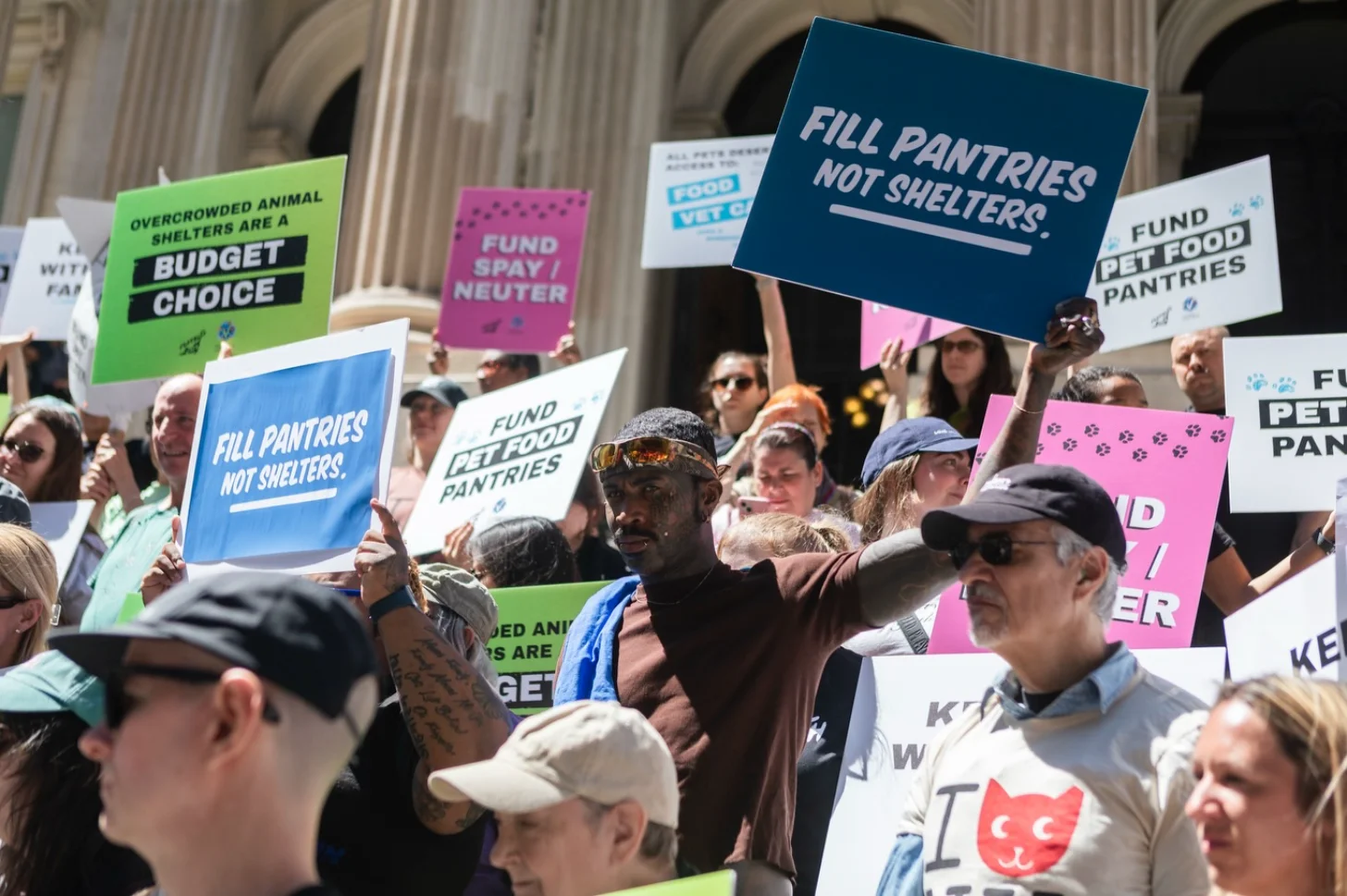
The new allocations were praised in an Instagram post by advocacy group Voters for Animal Rights, shared by Council Member Epstein and the council’s animal welfare caucus.
“This budget recognizes that keeping families and pets together, preventing animals from ending up on the streets or in shelters, and supporting the rescuers who care for our city’s most vulnerable animals are all part of NYC’s affordability agenda,” the caption reads.
“The funding is $1 million more than last year, and it’s a starting point we’ll build from. Our long term goal is to have publicly funded pet food pantries plus low-cost spay/neuter and veterinary clinics accessible in every borough, for any rescuer or pet parent who needs them.”
The New York City 2027 budget — which was approved with a $125.8 billion total for the upcoming year — took effect on July 1, 2026, aligning with the start of the city’s new fiscal cycle.
Specific details surrounding the pet food pantry and spay and neuter program will be shared by the city’s official partners as the rollout begins. New Yorkers can check with their local Council Member’s office or the city’s Department of Health and Mental Hygiene for updates.
You may also like: Zohran Mamdani's favorite children's book represents what he wants for all NYC kids (Exclusive)
Featured Image: Michael Appleton / Courtesy of NYC Mayoral Photography Office