From the top of Pigeon Butte in western Oregon’s William L. Finley National Wildlife Refuge, the full width of the Willamette Valley fits into a gaze. Slung between the Coast Range and the Cascades, the valley is checkered with farmland: grass-seed fields, hazelnut orchards, vineyards. In the foreground, however, grassy meadows scattered with wildflowers and occasional oaks trace the land’s contours.
Upland prairie landscapes like these once covered 685,000 acres of the Willamette Valley. By 2000, only a 10th of 1% remained. Their disappearance has meant the decline of countless species that once thrived here; some are endangered, others have disappeared. Among the nearly lost is a nickel-sized butterfly called Fender’s blue.
Endemic to this valley, Fender’s blue was first collected in 1929. Shortly thereafter, it vanished, and, for 50 years, no one could find the sapphire-winged insect; it was presumed extinct. But in 1988, a 12-year-old boy netted a few in a meadow outside Eugene, and a lepidopterist officially rediscovered the butterfly the following year. It was added to the endangered species list in 2000, when fewer than 3,400 remained.
Now, the butterfly’s population has quadrupled and the species is slated to be downlisted from endangered to threatened. If this status change is finalized, as is expected to happen this year, Fender’s blue will become only the second insect to have recovered in the history of the Endangered Species Act.
I’d come to the Pigeon Butte prairie one May morning in search of Fender’s blue because I wanted to see firsthand the particular beauty of this rare butterfly. But also, at a time when an estimated half-million insect species worldwide face extinction and butterfly populations are shrinking at unprecedented rates, I wanted to witness the thing this creature represented — proof that amid such overwhelming loss, recovery, too, remains possible.
It wasn’t until I’d given up and started back down the hill that I saw them: two blue butterflies circling near my knees. When one landed, I peered at the underside of its wing and found the double arc of black spots that differentiate Fender’s blue from its more common look-alike, silvery blue.
My first thought was one of wonderment: How had this delicate creature, with its tissue-thin wings and sunflower-seed sized body, come to be flitting about on this spring morning nearly 90 years after it was declared lost forever? My second thought was less romantic: So what? In the face of an ecological crisis of such grand scale, it was hard to imagine what difference the survival of one small blue butterfly might make.
A few years after the rediscovery of Fender’s blue, a graduate student named Cheryl Schultz found herself just outside Eugene, slogging through blackberry brambles taller than her head.
Here, at what is now a Bureau of Land Management area called Fir Butte, pockets of remnant prairie persisted among a snarl of woody invasives. In these openings a few dozen Fender’s blues resided. Today, much has changed, and the site hosts more than 2,000.
Schultz, now a Washington State University professor, has helped lead Fender’s conservation for nearly three decades. But as a kid, she didn’t carry around a butterfly net. Instead, she came to butterflies by way of her interest in something else.
She started her career in the years following the fiercely divisive debate over the addition of the northern spotted owl to the endangered species list. The fight pitted environmentalists against the timber industry and framed the issue as an either/or battle of good versus evil, jobs versus owls.
Schultz grew wary of such dichotomies. She wanted to explore how science could help wildlife and people better share a landscape.
“Recovery takes three things. Science, time and partnerships.”
Trying to save Fender’s blue offered a challenge well-suited to this line of inquiry. Biologists knew the butterfly’s limited habitat would need to be expanded to prevent its extinction, but its range overlaid a landscape dominated by the human endeavors of agriculture, urban development and private land ownership.
Schultz began by observing Fender’s blues to better understand their particular ecology: How far will a Fender’s travel? How much nectar is needed to support a population? How do fires and herbicides affect the species?
Then, she and her colleagues used their findings to help develop the U.S. Fish and Wildlife Service Fender’s blue recovery plan. But science alone, Schultz told me, cannot enact conservation.
“Recovery takes three things,” she said. “Science, time and partnerships.”
Perhaps this story of recovery begins not with an insect but with a plant: Kincaid’s lupine, a perennial wildflower with palm-shaped leaves and spikes of muted purple blossoms.
Like many butterflies, Fender’s blue exists in tight relationship with a particular host plant. From the moment a Fender’s caterpillar hatches in early summer until it unfurls from its chrysalis as an adult butterfly the following spring, the host plant — almost always Kincaid’s lupine — provides its sole source of food and shelter.
“They’re a species pair,” Tom Kaye, the executive director of the Corvallis-based nonprofit Institute for Applied Ecology, told me. “To conserve the butterfly, you have to conserve the lupine.”
After the butterfly’s rediscovery in 1989, researchers began searching for Kincaid’s lupine. Like the insect, the plant was exceedingly rare. It grows in upland prairies, ecosystems comprised of grasses and forbs that build soil and, unless something interrupts the process, eventually give way to shrubs and trees. To remain prairie-like, a prairie requires disturbance.
In the Willamette Valley, that disturbance historically came in the form of fires managed by the Kalapuya people, who burned the prairies regularly to facilitate hunting and sustain plant communities that provided crucial foods, including camas and acorns.
When settlers displaced the Kalapuya via disease, genocide and forced removal, burning ceased. The long-tended prairies, invitingly flat and graced with a mild climate and plentiful water, were swiftly plowed under for agricultural fields and turned into settlements.
“To conserve the butterfly, you have to conserve the lupine.”
Without fire, what little prairie habitat remained began to transform: Hawthorn and poison oak encroached, fir and ash trees took root, and the diversity of grasses and flowering plants that had once flourished — including Kincaid’s lupine — withered.
Researchers at the Institute for Applied Ecology have been studying Kincaid’s lupine in an effort to reverse that trend since the organization’s founding in 1999. Many of the conservation strategies they’ve developed have to do with the ways the lupine interacts with its environment, such as the symbiotic relationships it forms with mycorrhizal fungi and rhizobium bacteria.
Rhizobium live in nodules attached to the lupine’s roots, where, in exchange for nutrients, they provide the plant with a steady supply of fixed nitrogen.
In new restoration sites where these fungal and bacterial partners are scarce, inoculation with soil from areas currently supporting robust lupine populations can bolster the new plants’ chances of success.
On a June afternoon, Kaye and I stood amid rows of flowering plants at the organization’s seed production farm.
The lupine was nearly ready to harvest, and Kaye lifted a pod and held it skyward. Sunlight flooded the husk to reveal the dark orbs of just two seeds cupped inside.
Kincaid’s lupine, he said, produces scant seeds, especially in the wild, where predators such as weevils abound. That made it nearly impossible to collect enough for restoration.
“I could hold in my hand the entire seed output of a population,” Kaye told me. “Meanwhile, from a production field I could fill bags.”
So he and his colleagues sought ways to boost the cultivated supply. In collaboration with the Sustainability in Prisons Project, the organization established a seed production field inside the Oregon State Correctional Institution.
Through this program, incarcerated people have produced tens of thousands of Kincaid’s lupine seeds, and, by extension, adult plants that now host Fender’s caterpillars in restored prairies across the Willamette Valley.
One late May morning, I met Soledad Diaz, an ecologist with the Institute for Applied Ecology, at Baskett Butte in the Baskett Slough National Wildlife Refuge.
Here, in one of the Willamette Valley’s largest restored Fender’s prairies, I found her crouched with a crew of sun-hatted researchers, counting flowers to estimate available nectar resources.
Diaz gestured to my shoulder. I spun around to watch the flicker of a Fender’s blue as it flitted off and landed upon a nearby lupine.
“Looks like an old one,” Diaz said, pointing out the tattered edges lacing the butterfly’s wings. In the life of a Fender’s blue, “old” means just nine or 10 days.
On the slopes around us, knee-high grasses rippled and flowers bloomed: checkermallows, mariposa lily, Oregon iris, plenty of host lupine.
Blue butterflies flew from plant to plant with such carefree buoyancy it was hard to remember they were urgently attending to the task of finding nectar and a mate under the ticking clock of their brief lifespan.
Most remnant populations of Kincaid’s lupine are found on hills like Baskett Butte, explained Graham Evans-Peters, the Baskett Slough Refuge manager. Because steeper terrain makes farming difficult, landowners historically used these uplands for livestock rather than crops. Grazing cattle, like fires, keep woody encroachment at bay and mow down tall grasses. And, Evans-Peters told me, “They don’t like lupine.”
The Fish and Wildlife Service began restoring Fender’s habitat at Baskett Slough in the mid-1990s. The agency removed encroaching weeds from the existing lupine patches on the butte, then controlled invasive species on the adjacent slopes and replanted them with native vegetation. As the populations of these plants grew, so did that of Fender’s blue.
Today, high-quality Fender’s habitat covers over a hundred acres at Baskett Slough. But the work isn’t done; the prairie must be actively managed.
“One of the most important tools for holistic prairie management,” Evans-Peters said, “is fire.”
While burning kills some Fender’s larvae, it keeps meadows open and leads to such significant leaps in vigor of both nectar and host plants that the butterfly’s numbers, too, rise in ensuing years.
Burning also benefits another species interaction, this one between Fender’s caterpillars and their caretakers: ants. Fender’s caterpillars produce nectar several ant species eat. In exchange, the ants stand guard against predators and parasites. These ant-tenders, however, don’t always show up.
When dense grass surrounds the caterpillars’ host plants, it cools the soil, reducing ant activity, and creates a maze that prevents ants from finding the caterpillars in the lupine above. Burning cleans up this accumulated thatch, which researchers suspect is one of the reasons fire increases ant-tending.
Studies show that the caterpillars’ survival rates can be three times higher when the caretakers are present than when they’re not.
“The momentum is ripe right now to get that good fire on the ground.”
At Baskett Slough, the Fish and Wildlife Service burns sections of the prairie annually in partnership with the Confederated Tribes of Grand Ronde, which include bands of the Kalapuya.
Over the past two decades, the tribes’ fire program has increasingly focused on reintroducing cultural burning practices to manage land and enhance traditional food sources.
Now, due to growing interest in using fire as a tool for restoration, many agencies are seeking the tribes’ expertise.
“We want to get to the point where we’re conducting cultural burns that have the restoration effort behind them,” Colby Drake, burn boss and natural resources manager for the Confederated Tribes, explained at a forestry summit in 2021. “The momentum is ripe right now to get that good fire on the ground.”
Ninety-six percent of the Willamette Valley is privately owned. Partnerships with private landowners such as Jim and Ed Merzenich of Oak Basin Tree Farm are crucial to conservation efforts.
At the Merzenichs’ farm outside of Brownsville, a population of Fender’s blues resides in a series of open meadows that spill down the southwest slope of an otherwise forested hillside. These meadows were once overrun with blackberry and isolated by surrounding stands of firs. But Jim Merzenich, working with the Fish and Wildlife Service and the Institute for Applied Ecology, has removed blackberries and cleared connecting corridors through the forest. He’s now working with the Greenbelt Land Trust to establish a conservation easement to permanently protect the area.
“A lot of landowners have a fear of government interference,” Merzenich told me. “But we’ve had no conflicts.”
On the contrary, partnerships with federal agencies have provided the funding and expertise to restore oak and prairie habitats on Merzenich’s farm even as timber harvests continue.
When I visited Merzenich’s prairie in early July, it was too late in the year to see Fender’s blues flying, but Kincaid’s lupine bloomed purple amid grassy meadows splashed pink with clarkia and ribboned with bands of yellow tarweed. New blackberry canes, too, were abundant, already resprouting and reaching into the open space of the recently cleared corridors.
“The population here is precarious,” Merzenich said. “The worst thing that could happen to these meadows is for people to just turn around and ignore them. You’d lose your lupine, lose your butterflies.”
Even the most robust Fender’s populations remain dependent upon humans. To keep at bay the myriad plants ready to rush into the open space, people — restoration technicians, landowners, fire crews — must regularly mow or spray or burn the butterfly’s habitat.
At first glance, this can appear to undermine the significance of the species’ recovery. Despite decades of conservation, the butterflies are far from self-sufficient.
“People respond to butterflies in a way that doesn’t always happen with insects.”
But this relationship is nothing new. Without the fires tended by the Kalapuya, the prairies of the Willamette Valley, along with Fender’s blue, would have vanished long ago. Nor is the entanglement unique when examined in light of the other partnerships surrounding the species — those entwining butterfly and host-plant, rhizobium bacteria and Kincaid’s lupine, caterpillars and ant-tenders.
Self-sufficiency, it seems, is irrelevant: Survival is a collaborative process.
Butterflies, despite their poster-child fame, are not great pollinators. Their long, slender tongues often reach nectar without touching pollen or stigma. If not pollination, what ecological purpose do they serve? Their niche is to turn plant material into food for animals like the western meadowlark, also a species of conservation concern. But Fender’s most significant function might be its ability to evoke the attention, and care, of humans.
“People respond to butterflies in a way that doesn’t always happen with insects,” Schultz said.
It’s hard to imagine a coalition of scientists, farmers, incarcerated adults, government agencies, nonprofits and tribal nations coming together with such resolve on behalf of, say, a modest ant or lupine.
But in the course of Fender’s conservation, these organisms too — and the suite of other prairie species whose survival is bound up with the butterfly’s — have benefited.
So while Fender’s owes its recovery to the prairie community, one could also argue that the butterfly, by recruiting the assistance of humans, has saved the prairie. The truth, I suspect, contains no such dichotomies, only a tangle of relations binding each to the rest.
This story is part of the SoJo Exchange from the Solutions Journalism Network, a nonprofit organization dedicated to rigorous reporting about responses to social problems. It was originally published by High Country News.
Header photo courtesy of the U.S. Fish and Wildlife Service Headquarters.
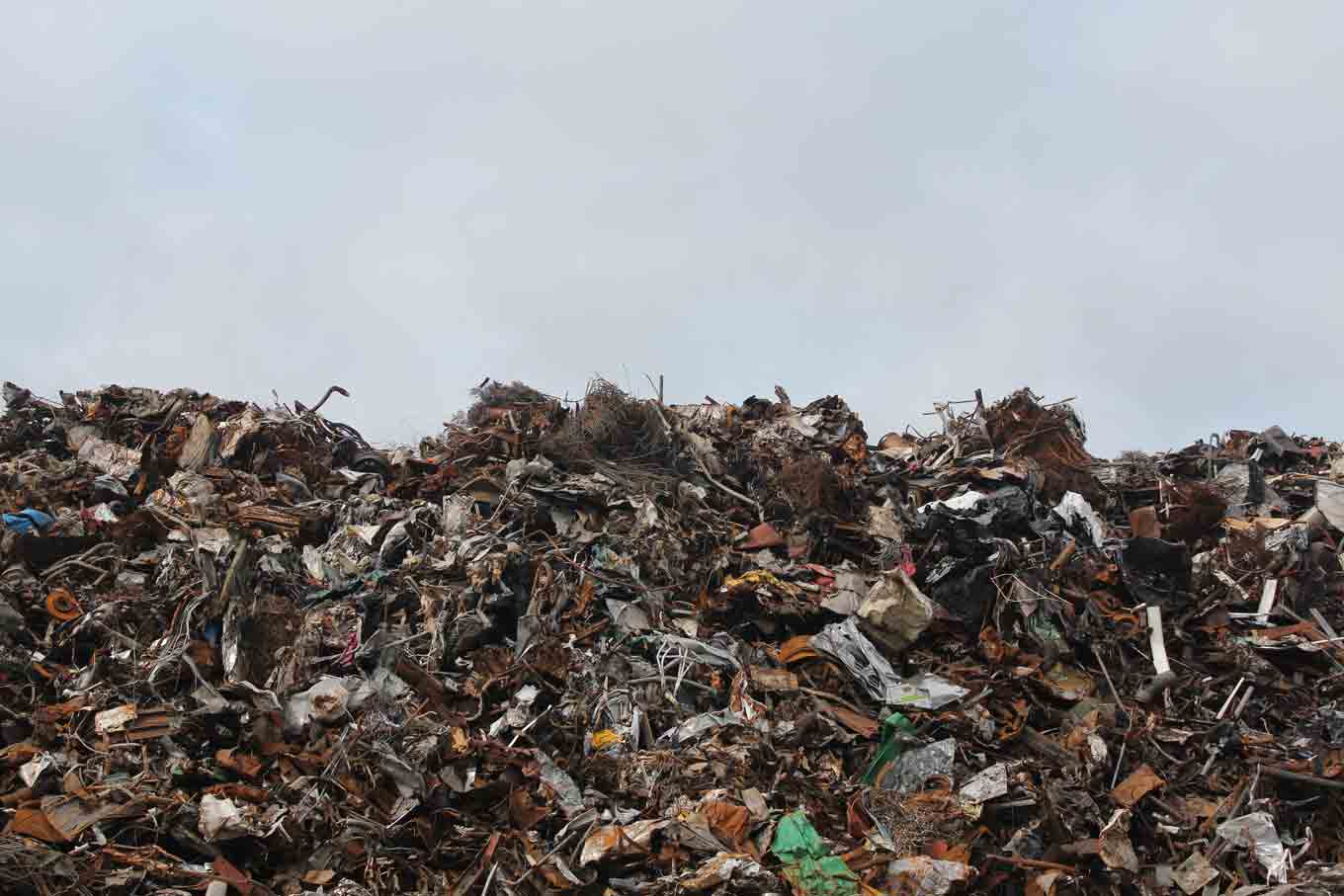
Nashville is growing, and so are its piles of trash.
The Middle Point Landfill, in nearby Murfreesboro, collects most of the solid waste in Middle Tennessee, but it could be full by the end of the decade, sending Nashville and other communities scrambling for a place to put their garbage.
Republic Services, one of the largest waste management companies in the country, owns the Murfreesboro landfill and wants to expand it by nearly 100 acres, extending its life by decades. But neighbors and local elected officials are almost uniformly opposed to the expansion, and the city is suing the company over claims that the landfill is contaminating air and water.
This is not an unusual challenge. The number of active landfills in the United States has decreased steadily in recent decades, and those that remain are not being expanded.
An increasing number of states see an answer in an innovative regulation that tackles trash on the front end, incentivizing manufacturers to make their product packaging more easily recyclable or else pay to recycle it on the back end. The laws, known collectively as Extended Producer Responsibility, or EPR, could, some experts say, be a partial solution to the problem of diminishing landfill capacity.
The main target is plastics pollution. A study released last week by Greenpeace USA, an environmental advocacy group, found that the United States recycled only 5%-6% of its plastic waste last year, down from a high of 9.5% in 2014 and 8.7% in 2018.
In the past two years, four states — California, Colorado, Maine, and Oregon — have enacted EPR laws, and at least a dozen other states, including Tennessee, have considered EPR bills.
Scott Cassel, founder, and CEO of the Product Stewardship Institute, a nonprofit that has pushed Extended Producer Responsibility legislation around the country, said fast-filling landfills such as Nashville’s are driving the effort, along with the overall environmental benefits of reducing the emissions and waste that comes from producing plastic packaging.
EPR laws are increasingly common in Europe and Canada, and Cassel hopes recent state legislative action will bring a significant change to waste management in the United States.
Maine Democratic Gov. Janet Mills signed the nation’s first EPR law in July 2021. The Maine measure, which takes effect in 2026, doesn’t ban any type of packaging. Instead, it levies a fee on producers based on their packaging choices and the net amount of packaging they sell in the state. The law defines a producer as the brand owner of a packaged product or, if the brand is from overseas, the importer of the product into Maine.
Producers will pay a higher fee for packaging that is toxic and a lower fee for packaging that is readily recyclable. The money will be funneled into a fund, operated by an outside “stewardship organization” selected by the state, to be distributed to local governments for waste management and recycling.
Oregon’s law, enacted a month after Maine’s, will require most producers to join a so-called producer responsibility organization. Starting no later than 2025, Oregon governments will use fees paid by the producers to upgrade recycling facilities, expand collection services and pay for contamination reduction programs.
The Colorado law requires companies that sell packaged products, paper products or foodware to cover the cost of a statewide system to recycle those materials. Like Oregon, Colorado will require producers to join an organization that will pay for and oversee the recycling program.
The California law also creates a mandatory producer responsibility organization and levies a fee on all single-use plastic packaging and plastic foodware. The money collected would go to the California Natural Resources Agency, CalRecycle and local governments. In the next decade, California expects to raise $5 billion from industry sources to help address plastics pollution.
Ultimately, the state hopes to make all single-use packaging and foodware recyclable, reusable, refillable or compostable. Currently, about 85% of plastic waste in California ends up in landfills.
“Our kids deserve a future free of plastic waste and all its dangerous impacts, everything from clogging our oceans to killing animals — contaminating the air we breathe, the water we drink, and the food we eat,” California Democratic Gov. Gavin Newsom said in signing the bill.
Numerous environmental groups, including Californians Against Waste, the Nature Conservancy, Environment California, EnviroVoters and the Ocean Conservancy, praised the new law. But not all environmentalists were pleased.
Judith Enck, president of the nonprofit Beyond Plastics and a former U.S. Environmental Protection Agency regional administrator, criticized the California law because it “hands over almost total responsibility to the packaging industry — the very companies that have created the problem,” she wrote in an email.
In general, environmental groups, waste management companies, and municipalities supported the proposals in the four states, while producer groups such as the American Forest and Paper Association and the Flexible Packaging Association offered at least qualified opposition.
Abigail Sztein, director of government affairs for the American Forest and Paper Association, said that variation is expected from state to state and that her organization “is most concerned about getting the policy right.”
Specifically, she said, Extended Producer Responsibility policies should not disrupt existing paper recycling programs, should provide credit for earlier investments made in recycling, and should not require the paper industry “to subsidize other less-recycled materials.”
Even before California approved its broad EPR law, it had applied similar rules to mattresses, mercury thermostats, and carpet fibers.
Other states also have used EPR principles for some products. In Connecticut, for example, EPR policies apply to mattresses, electronics and a few other products. Cassel, of the Product Stewardship Institute, pointed to Connecticut as one of a handful of states where the prospects for a broad EPR law are brightest this year.
“A lot of what I do is important, but it’s small potatoes,” said Kim O’Rourke, who has been recycling coordinator in Middletown, Connecticut, for three decades. “I want to do something impactful, and EPR for packaging would be.
“Our municipal governments are scrambling to try to handle waste and recycling,” O’Rourke added. “It’s more expensive, more complicated and harder to manage. Producers need to come in and take responsibility for the waste that they’re generating.”
Earlier this year, Tennessee state Sen. Heidi Campbell, a Democrat, worked with the state chapter of the Sierra Club on an Extended Producer Responsibility bill, which they plan to refine before she reintroduces it next year. The proposal likely will require every Tennessee producer who uses packaging to join a producer responsibility organization.
The Tennessee Department of Environment and Conservation would oversee it, and a board comprised of waste management industry representatives, environmental justice advocates, or other stakeholders would serve as advisers.
The powerful Tennessee Chamber of Commerce and Industry will closely watch the legislative push. Chamber President and CEO Bradley Jackson said his organization has been watching Extended Producer Responsibility proposals in other states and recognizes that fast-filling landfills are a problem for his members.
“Tennessee really needs to look at the issue overall as a state to figure out how we work to address this,” Jackson said.
Dan Firth of the Sierra Club, who is working with Campbell on the bill, said the goal was to take “a less regulatory approach than some other states might take,” in part to assuage pro-business legislators in the Republican-dominated Tennessee legislature.
The producers would pay into the program, with their payments reduced if they prove they are using less packaging or more easily recycled packaging. The funds would then be disbursed to municipal governments and other entities that handle waste so they can buy advanced recycling technology and improve their procedures.
“We have no dreams at this point that this is going to happen overnight,” said Scott Banbury, a lobbyist and conservation program coordinator for the Tennessee chapter of the Sierra Club. “It’s going to be a multiyear process.”
This fall, when parents dropped off their children at De Leertrommel, a school about 10 miles northwest of Brussels, the young pupils began their studies as they had for many years before.
But while the U-shaped, seven-room school constructed in the 1960s looked much like any other, it represents a major leap forward in sustainable construction: it had been completely renovated in a $1.9 million project to become the first Flemish school to ever be built with hemp.
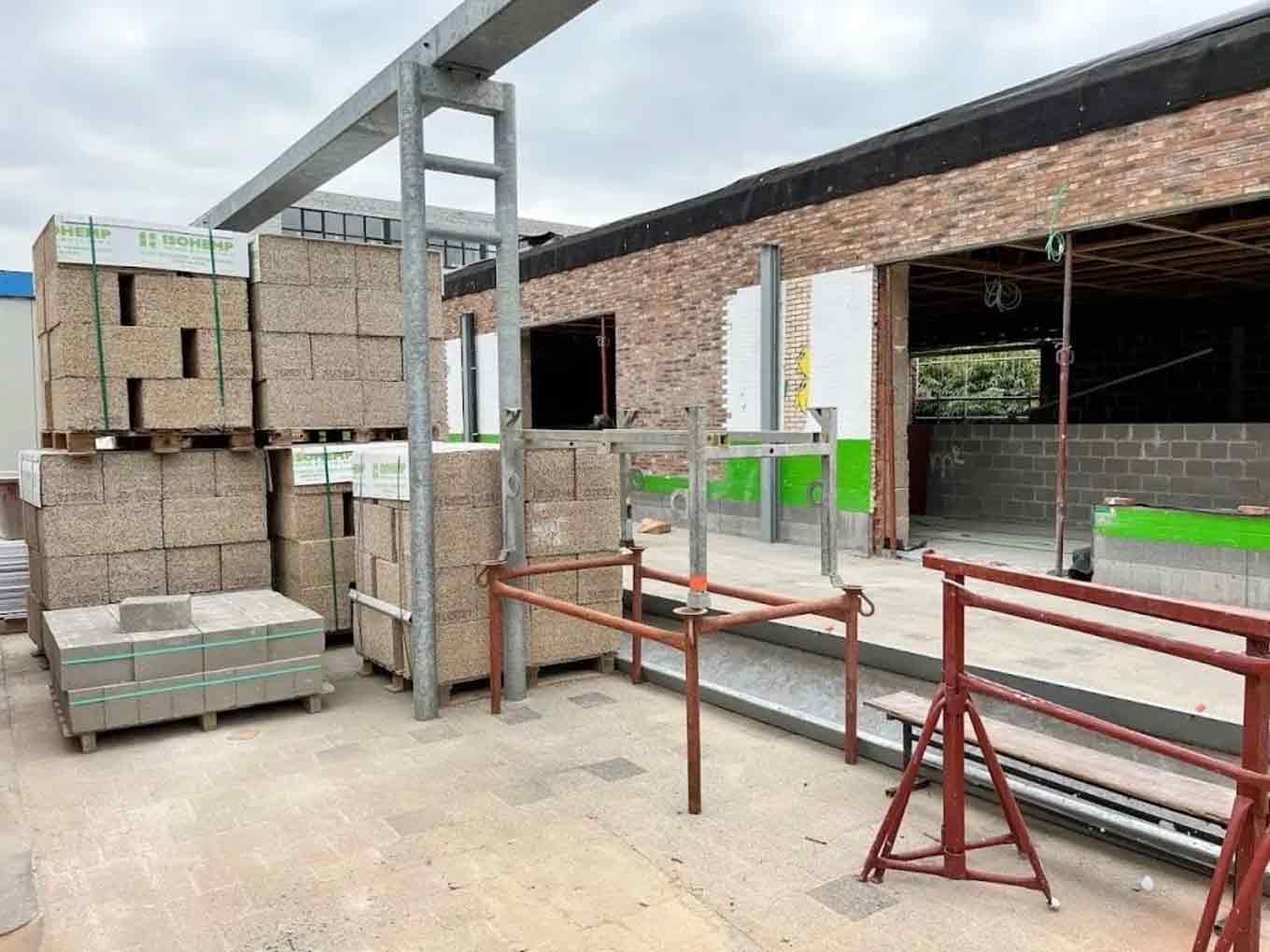
“The project was to build well-ventilated classrooms where pupils can be comfortable and healthy throughout the year,” says Charlotte De Bellefroid, a spokesperson for IsoHemp, the Belgian company that fabricated the school’s hemp-based construction materials.
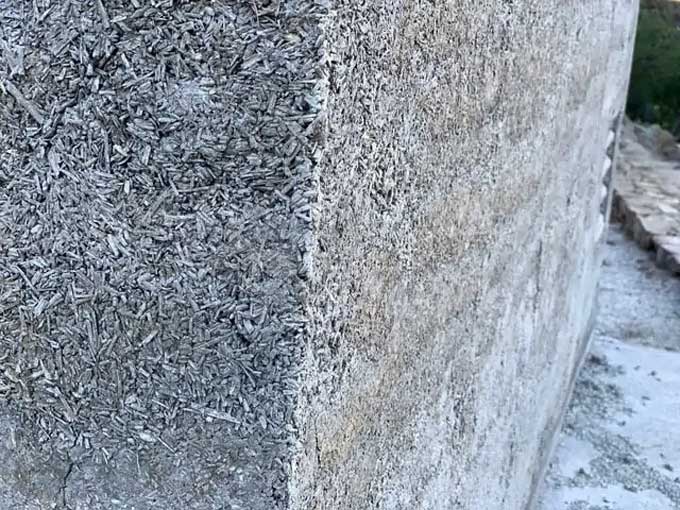
IsoHemp’s blocks, and alternatives made by many others, are made of hempcrete, a mix of hemp fibers, water, and lime or clay, which acts as a binder.
Despite the simplicity of those natural ingredients, hempcrete — which consumers, businesses and governments around the world are growing to view as a sustainable building block of the future — has a dizzying array of benefits: it is fire resistant, provides soundproofing, insulates or stores heat (depending on external temperatures), repels mold and pests, and is malleable enough to allow for various aesthetic styles.
Plus, hemp itself is a sustainable crop that needs few pesticides, is ideal for rotation, and has quick-growing roots that prevent soil erosion.
But most importantly of all, hempcrete has a very low carbon footprint. It requires three times less heat to create than concrete, weighs about one-eighth as much as concrete (leading to fewer transport-related emissions), and actively sequesters CO2 — according to one Cambridge University researcher, hemp absorbs between eight to 15 metric tons of carbon per hectare, significantly more than the two to six metric tons typically captured by forests.
Research by IsoHemp found that a single cubic meter of its hempcrete removes 75 kilograms of CO2 from the atmosphere over its lifetime — worth a few years of car use, depending on home size.
It also has approximately as much thermal resistance as a double-glazed window (1-5 W/m²•K), and its honeycombed structure offers about enough soundproofing to block out the noise of a washing machine (44 decibels).
“Zero carbon buildings are a possibility,” says De Bellefroid. “But we have to act really quick.”
In the struggle to slow climate change, experts say that decarbonizing construction can have an enormous impact. The construction industry is responsible for 39 percent of global carbon emissions.
Concrete is one of the worst offenders, wreaking vast damage from air pollution to sand mining. If the industry behind cement — an ingredient of concrete — were a country, it would be the world’s third largest emitter.
That unsustainability is fueling an explosion in interest for green concrete alternatives, demand for which is reaching heady highs. Last year IsoHemp, which was founded in 2012, opened a $5.9 million factory capable of producing up to five million hempcrete blocks annually.
The Belgian company is growing about 30 percent a year in capacity, and is working on several key projects across Europe, including the renovation of 900 homes on a public housing estate in the center of Brussels.
While hempcrete has been used in Europe for decades, the US could soon follow suit. For many years, industrial hemp was illegal in the US due to hemp’s association with drug use, despite the fact that it does not contain more than 0.3 percent THC, the active ingredient in marijuana that makes users high.
Building residential homes with hempcrete was therefore effectively outlawed until 2018, when the Farm Bill distinguished between hemp and cannabis plants.
Then, in September 2022, hemp building materials were added to the model US residential building code, paving the way for legal use in 2024.
“As the world wakes up to the seriousness of the situation with regards to climate change and resource limits, the search for alternatives is bound to grow,” says Steve Allin, director of the International Hemp Building Association. “Which is a relief after feeling as if we were shouting in the wilderness for so many years.”
According to Allin, author of the book Hemp Buildings: 50 International Case Studies, hempcrete has been used in everything from a renovation of a 15th century oak-frame building in northern France, to the extension of a Nepalese hospital, a pioneering design project in North Carolina from 2010, and even a British grocery chain.
“We can build in a better way for a cleaner, more sustainable future,” he says.
Katie MacDonald, director of Virginia University’s Before Building Laboratory, which experiments with low-carbon building material systems, is developing hemp panels similar to plywood and assessing whether hemp could be a sustainable crop grown in the state as a replacement for the waning tobacco industry.
“There’s an incredible opportunity in the natural material space,” she says. “It’s exciting that there is a broader public adoption. But there are challenges ahead. Can we get construction industry adoption? Is it easy to assemble and use? Is the product price competitive? How do we make an assembly that’s really advancing the cause?”
The problem, for now, is the waiting time for supply to ramp up, with backorders in some cases taking several months. IsoHemp is already exporting blocks to the United States, Australia, South Africa and several other European countries.
“We need many more centers for processing in order to make it worthwhile for farmers growing it and for architects and builders to be able to use it,” says Allin.
But hemp is one of the fastest growing plants in the world, alongside bamboo, and can grow 50 times faster than wood, meaning that enough biomass to build a small single-family house will grow in five months on one hectare of land.
One of the few aspects where there is room for improvement is hempcrete’s inability to work as a load-bearing material.
While it can be formed to surround timber or other types of framework, or made into blocks, bricks or panels, it cannot, for now, be used entirely alone. But MacDonald believes even that will eventually be solved.

In the meantime, eager practitioners aren’t waiting around. After Matthias Bank lost his family home and office in the largest wildfire in Los Angeles County’s history in 2018, he wanted to “turn the tragedy into an opportunity to rebuild our home as a living laboratory of best practices in sustainable, disaster resistant, healthy building.”
Research quickly pointed him towards hemp. “Hempcrete is very hard to burn, while also being low in embodied carbon, healthy, and when used correctly, superior from a seismic safety point of view as well,” says Bank.
That led to Bank becoming a member of US Hemp Building Association and his family have been using hempcrete to build their chicken coop — with the hope of constructing their main house with it too, pending permits.
The process hasn’t always been smooth. The first set of blocks fell apart because they were made with the wrong binding material. But eventually, he was able to source better quality hempcrete and the results have put a grin on his face.
“I am glad to say the chicken coop looks great,” says Bank.
“The hempcrete is so lovely, my wife is not even sure she wants to plaster over it. We joke that the chickens have a better house than we do.”
Let’s be real: All of us wish we had our very own magical Mary Poppins bag to summon any item we might need at a moment’s notice. Unfortunately, that goes a bit above and beyond what most of us are capable of.
What we all need is a way to quickly access our myriad of coping skills, grounding items, and safety blankets.
And isn’t that the hardest part of taking care of yourself? Planning and executing the smallest tasks that seem way too complicated? Current You needs to be able to take care of Future You with all the tools you might need.
Enter: A self-care kit.
What is a self-care kit?
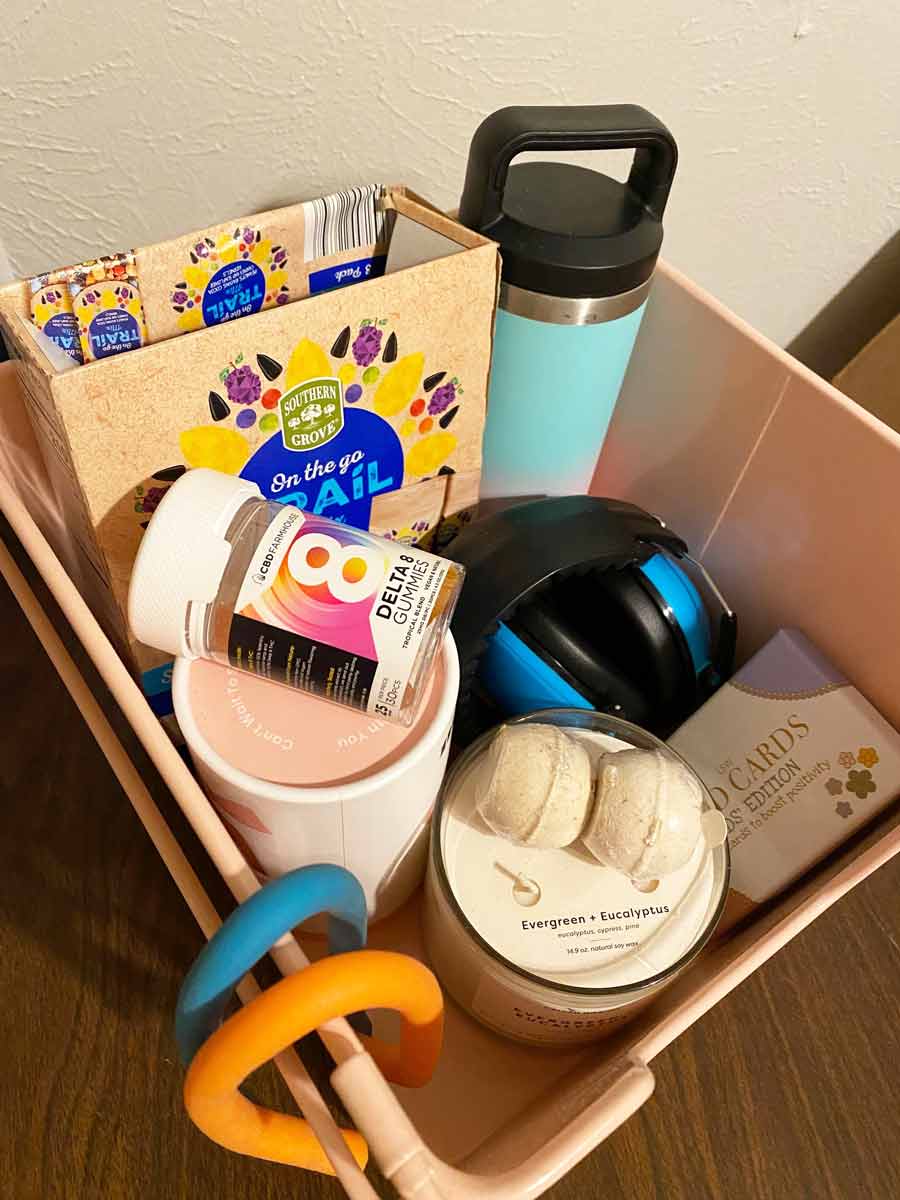
Self-care kits are pre-curated collections of items you can turn to during a difficult mental health period. These are typically things that help you feel grounded, relaxed, and relieved — but these kits can be anything that fits your unique needs.
While they are obviously not a substitute for other methods of mental health support, self-care kits take the guesswork out of situations that can be hard to read (uh, a dissociative panic attack, anyone?) and give you tools to cope with difficult experiences with very little thinking and planning on your part.
Although each person’s self-care kit will be totally unique to the person creating it, here are some examples of what you can include in yours to get you started.
Some of our links are affiliate links, which means that we may earn a commission if you buy something via this list. We’ve linked to Amazon for convenience and accessibility, but be sure to check out our favorite Amazon alternatives, too. Thanks for supporting Good Good Good’s mission at no extra cost to you!
By the way, you might also like these self-care resources: 101 Self-Care Ideas | The Best Self-Care Apps | Self-Care Quotes | How To Practice Proactive Self-Care | How To Cheer Yourself Up | Self Care Journals & Planners | Self-Care Affirmations | International Self-Care Day | Self-Care Gifts
What should I put in a self-care kit?
Immediate Needs
Medication
If you take any medications that you might need in a mental health crisis, be sure to have some readily accessible! You can also add over-the-counter medicines like ibuprofen and antacids to soothe any physiological symptoms, too.
Mental health resources
Consider including a self-care “menu” full of different ideas and activities you can try, depending on your energy level.
It’s also helpful to include a list of important contact information and resources if you need additional support. This could include phone numbers for loved ones, contact information for your therapist or counselor, or a list of hotlines and organizations you can easily access.
We’ll even get you started! Check out our database of mental health resources.
Harm reduction tools
If you are someone who has a history of self-harm, you might consider including some harm-reduction tools in your kit. This could include rubber bands or markers, or any other self-harm safety techniques.
Sensory Comforts
Stress ball
Sometimes you need to put your stress somewhere else. Maybe you need to punch a pillow or stomp around, but you can also start with a stress ball.
We recommend:
Fidget toys
Fidget toys are wonderful devices for folks who need somewhere to put their anxious energy. Whether you’re stimming, looking for a soothing item to ground you, or just need something to do with your hands, here are a few options.
We recommend:
Sensory aids
Similar to fidget items, sensory toys are helpful tools that specifically target a sensory experience. Get in tune with your five senses and find a soothing or stimulating outlet to help you through a tough mental health moment. (An ASMR video on TikTok can also do the trick, too!)
We recommend:
- Sensory stickers
- Chewable sensory necklaces
- Kinetic Sand
- Sound tubes
- Liquid motion bubblers
- Palm board
- Textured noodles
Tissues
Sometimes you just need a good cry. Let the tears flow and let yourself have an emotional release. While you definitely need some tissues, be sure to drink some water to avoid that post-cry headache afterward.
We recommend:
Noise-canceling headphones or earplugs
Being overstimulated can lead to a meltdown or panic attack, so having resources to deal with too much sensory input is a must! Whether you want to invest in fancy noise-canceling headphones to use every day, or you want to start with some handy (and more affordable) earplugs, we support your choices.
We recommend:
Hygiene items
Sometimes freshening up is just what we need. However, during a difficult mental health day, you might not have the energy or executive functioning available to you to have a full-on spa day.
This self-care kit is a great opportunity to incorporate smaller, easy-to-use hygiene items that make you feel better without the hassle of a bubble bath.
We recommend:
- Mini disposable toothbrushes
- Travel mouthwash
- Cleansing wipes
- Hydrating hand sanitizer
- Soothing sheet masks
- Lip balm
- Dry shampoo
- Good-smelling deodorant
Candy
Did you know that sour candies and ginger chews are helpful for regulating your nervous system? Yeah! When your nervous system is overwhelmed and you’re having trouble getting out of those twisting tummy feelings, using candy to shock your senses is a great way to ground you and bring you back to the present.
But you can also just include your favorite candies or chocolates in your kit, too.
We recommend:
Calming tea
Another tasty tool for your nervous system? A hot cup of tea! A number of botanicals have healing properties, like chamomile and lavender — just be sure not to burn your tongue!
We recommend:
Hot cocoa
If you’re not a big fan of tea, you can also enjoy a warm treat with a mug of hot cocoa. Marshmallows are optional but encouraged.
We recommend:
Scented candle
Soothing scents from essential oils and candles also provide great sensory relief at a moment’s notice. If you already have a favorite candle, consider buying one to keep at the ready for days when you need a little boost.
If you’re in the market for a new favorite scent, check out our guide to the best eco-friendly candles!
Dried lavender
If you don’t want to keep a big candle or a few bottles of essential oils in your kit, a little sachet of dried lavender would make a great aromatherapy option, too!
We recommend:
Cozy socks or slippers
Is there any better feeling than slipping on your favorite pair of socks or slippers and cozying up to your heart’s content? Yeah, we didn’t think so. Let some cozy footwear be the gateway to your grounding practice.
We’re sure you already have some favorite socks, but if you want to get some specifically for your self-care kit, we have a whole guide to socks that give back!
Sleep mask
Another good relief item to consider adding is a sleep mask or eye pillow. If you need to block out the light or give yourself a sensory break while you practice meditation or take a nap, these are a great way to go. Of course, you can also use a washcloth or towel in this case, too.
We recommend:
- Weighted eye mask (great for pressure)
- Silk eye mask (great for a cooling effect)
Plush Toy
Nothing says “I’m safe” than a soft plushie that comforts your inner child. Plush toys offer a great tactile sensation or can be a helpful weighted comfort to rest on your chest or stomach.
We recommend:
Heating pad
For more pressurized comfort, a heating pad is a great way to feel grounded and cozy. This is also a great solution for pain relief!
We recommend:
Ice Pack
Similarly, an ice pack is a sensory support item that can help shock your nervous system and get you back on your way to feeling regulated and calm. Just place it on the back of your neck, in the crook of your elbows, on your wrists, or on your forehead.
If you get tension headaches, this is also a great item to have on hand (though, you’ll probably want to keep it in the freezer and not in a cute basket in your room).
We recommend:
Things To Do
Journal or notebook
Journaling or doodling can provide an outlet for the big feelings that come up on our bad days. Whether you stick with a therapeutic prompt or prefer to “brain dump,” it’s helpful to have some spare paper for your musings.
We recommend:
Art supplies
Art can provide major healing and therapeutic benefits. Just ask Amelia Hutchison; our favorite art therapist TikToker! Check out a few of Amelia’s videos for inspiration, or just grab some supplies and channel your feelings into any medium that feels right for you.
We recommend:
Coloring book
Would you rather color inside the lines? That’s also a soothing avenue! Grab a coloring book to keep your mind busy and tuck that baby into your self-care kit.
We recommend:
Activity book
For those of us who might get bored easily, a more in-depth activity book could be a better fit.
We recommend:
A favorite book
Just like a comfort TV show or movie, many of us have favorite books we can turn to when we need to revisit a trusted tale.
Need a new favorite? Check out our roundup of books about hope to add some titles to your TBR!
The Goodnewspaper
We might be a little biased here, but the Goodnewspaper is an amazing source of hopeful information that would make a great addition to any self-care kit!
Use an old edition of the paper you already have on hand, or subscribe to get good news delivered to your mailbox every month.
Notes from loved ones
It’s time to bust out the stationery! When you assemble your self-care kit, ask a few of your closest loved ones to write you some encouraging notes. You can keep them sealed in an envelope for a rainy day and refer to them when you need the support of someone you love.
Affirmation cards
While it’s always helpful to get a boost from your loved ones, sometimes when you’re by yourself, you need some affirmations to choose at random. Decks of affirmation cards can provide exactly that!
We recommend:
Meditation accessories
All you need to meditate is a spot to sit and breathe, but sometimes tools like beads or cushions can help you find your zen even better.
We recommend:
Photos
When your family and friends provide encouraging letters, also see if you can snap a photo with them to keep in your self-care kit! You can take a Polaroid photo, print out one you have already taken together, or keep a special album saved on your phone.
Gratitude list
Using your fancy little self-care journal, make a place to create a gratitude list when you visit your self-care kit. You can start with just one thing you’re grateful for, and then challenge yourself to write as many things as you can within three minutes.
Science proves it: Gratitude changes our brains.
QR code to a soothing playlist
Each of us likely has a song or a handful of songs that can lift us up from any bad mood — or at least get us on our way to maybe, possibly, perhaps considering the good in the world.
Take those songs (and maybe even take suggestions from friends with similar taste!) and compile them in a playlist. Then, have that ready and accessible the next time you need a hand out of a thought spiral.
More Ideas
The box, bag or container itself
A self-care kit can live in any sort of container that works best for you! Ideally, you’ll use something you already own, like a basket that’s lying around, a tote bag you can take on the go, or even an old shoe box. However, if you’re still looking for the right thing, here are a few options.
We recommend:
Pre-made self-care kits
The DIY self-care option is a great way to personalize your toolkit, but it’s also a big task (that can get expensive, if you’re buying new supplies!). So, if it’s more accessible for you to buy a pre-made self-care kit, all power to you!
Here are a few options you can find immediately online.
We recommend:
- Panic Attack Survival Kit
- Harm Prevention Kit
- Curated Self Care Kit
- Therabox Subscription
- Expressive Arts Therapy Kit
A version of this article was originally published in The 2023 Mental Health Edition of the Goodnewspaper.
Get your own Goodnewspaper by becoming a good news subscriber today.
This year’s Super Bowl might seem like a battle between the Kansas City Chiefs and Philadelphia Eagles, but the real story is an unlikely trio teaming up to fight a different opponent: Food waste and food insecurity.
Pete Davidson, Jon Hamm, and Brie Larson star in the Hellmann’s Mayonnaise Super Bowl commercial, and while the ad is entertaining, it actually has an even deeper meaning.
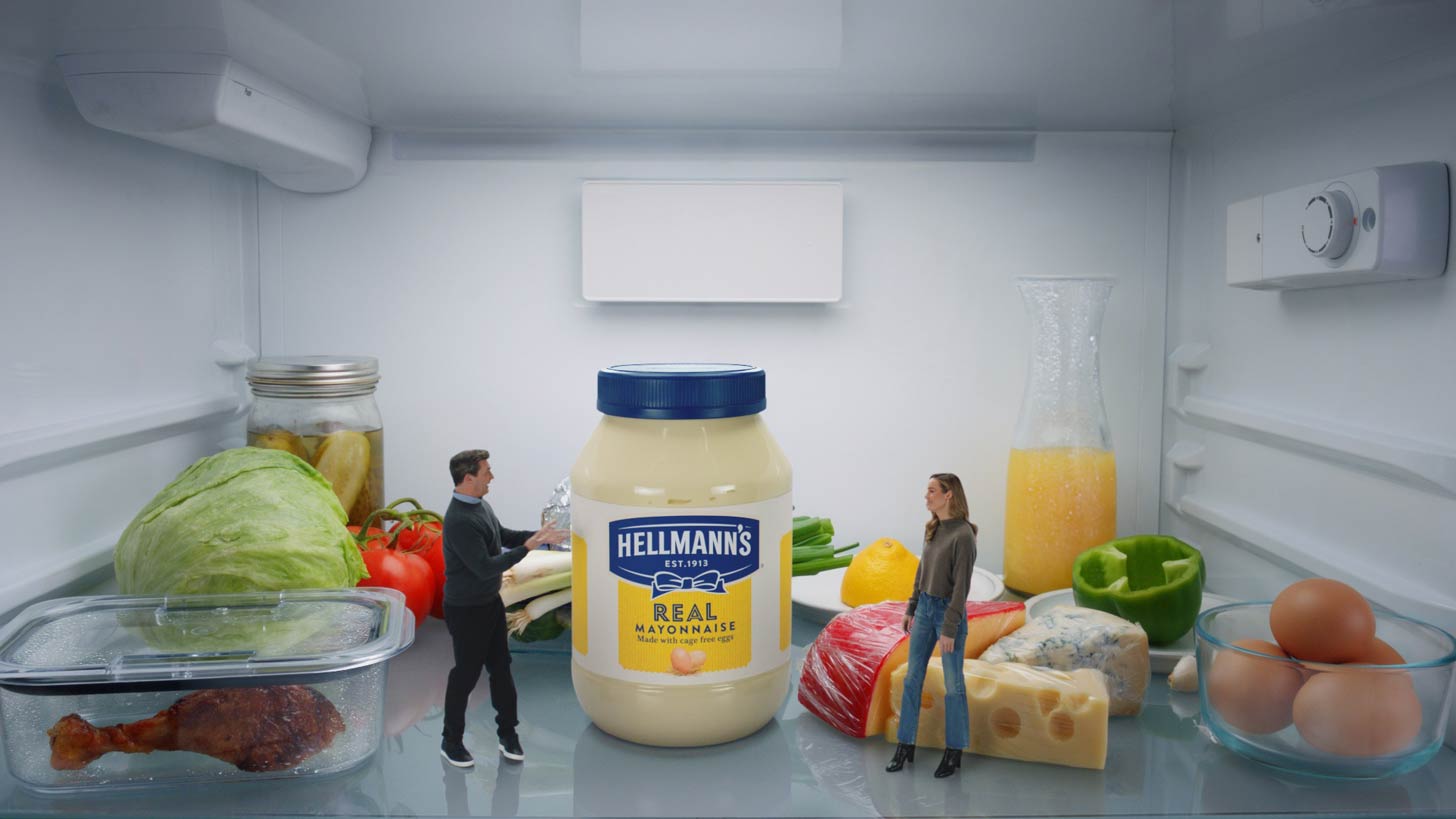
In the ad, tiny versions of Larson and Hamm are seen inside a refrigerator, beside a myriad of leftovers and a giant jar of mayonnaise, riffing about being “ham” and “brie.” Davidson opens the fridge to proclaim: “I’m gonna eat you guys” and makes a sexy-looking sandwich with the leftovers in the fridge.
The commercial ends with big letters: “Make taste, not waste.”
Although we can all debate who is the biggest celebrity in the commercial, the real star is the giant jar of Hellmann’s, which has embarks on a journey called #MayoForMeals.
The giant jar of mayo (legit, it’s a 7-foot-6-inch jar of mayo in a truck) is traveling from Phoenix to New Jersey from now until April 15, on a cross-country tour benefiting Feeding America.
The jar will visit locations with close ties to the commercial, including St. Louis (Jon Hamm’s hometown), Cheese Castle in Wisconsin, and Toast, North Carolina. And here’s the kicker: For every social media post of the giant jar, and for every mile it travels, Hellmann’s will donate meals to Feeding America.
Each photo shared on Instagram, Twitter, or TikTok using the hashtag #MayoForMeals will help provide the equivalent of 500 meals, while each mile the jar travels will donate 100 meals to the organization. In total, Unilever (the company that makes Hellmann’s) aims to donate one million meals to Feeding America.
Who else has seen the @Hellmanns Mayo truck in Phoenix? If you see it post a photo and help donate meals 🍽️#Mayoformeals pic.twitter.com/JRiY3LebIa
— St. Mary's Food Bank (@StMarysFoodBank) February 10, 2023
“With nearly 34 million people facing hunger across the country and Hellmann’s products reaching the homes of millions of people, we have a responsibility to raise awareness about this issue and help people become more resourceful with their food,” Unilever’s Dressings North American marketing director, Chris Symmes said.
Using a Super Bowl ad to fight food waste
In addition to supporting those who face food insecurity, this project also aims to decrease food waste across the country.
In America, nearly 40% of all food is wasted, according to Feeding America, equating to nearly 130 billion meals each year. In fact, the Super Bowl is the second most food-wasted day in America, just behind Thanksgiving.
What if we could cut down on that waste at home — and use the food we don’t use to help those who don’t have access to their next meal?
According to Symmes, the “Make Taste, Not Waste” campaign is designed to inspire people around the world to be more resourceful with their food. Supporting the United Nations’ sustainable development goal of reducing food waste by 50% by 2030, brands like Hellmann’s and Unilever must do their part to change the food systems that harm our planet.
“To reach this goal, we’re helping to educate, inspire action, and change people’s behavior to combat food waste at home, while working to help enact policy change at the federal level,” Symmes said.
And the #MayoForMeals ad is just one way to get the ball — or jar — rolling.
“After the game, we wanted to bring this life-size mayo jar back to our headquarters in New Jersey and felt this was the perfect opportunity to continue spreading awareness about food waste — in a fun, interactive way,” Symmes said. “It’s not every day you see a big yellow truck on the highway with a glassed-in, gigantic jar of mayo!”
Why is this good news?
As we continuously work to unravel systems of greed and extraction that harm our planet and our communities, it’s also important to embrace the nuance and celebrate the wins of companies that choose to do more good with what they have.
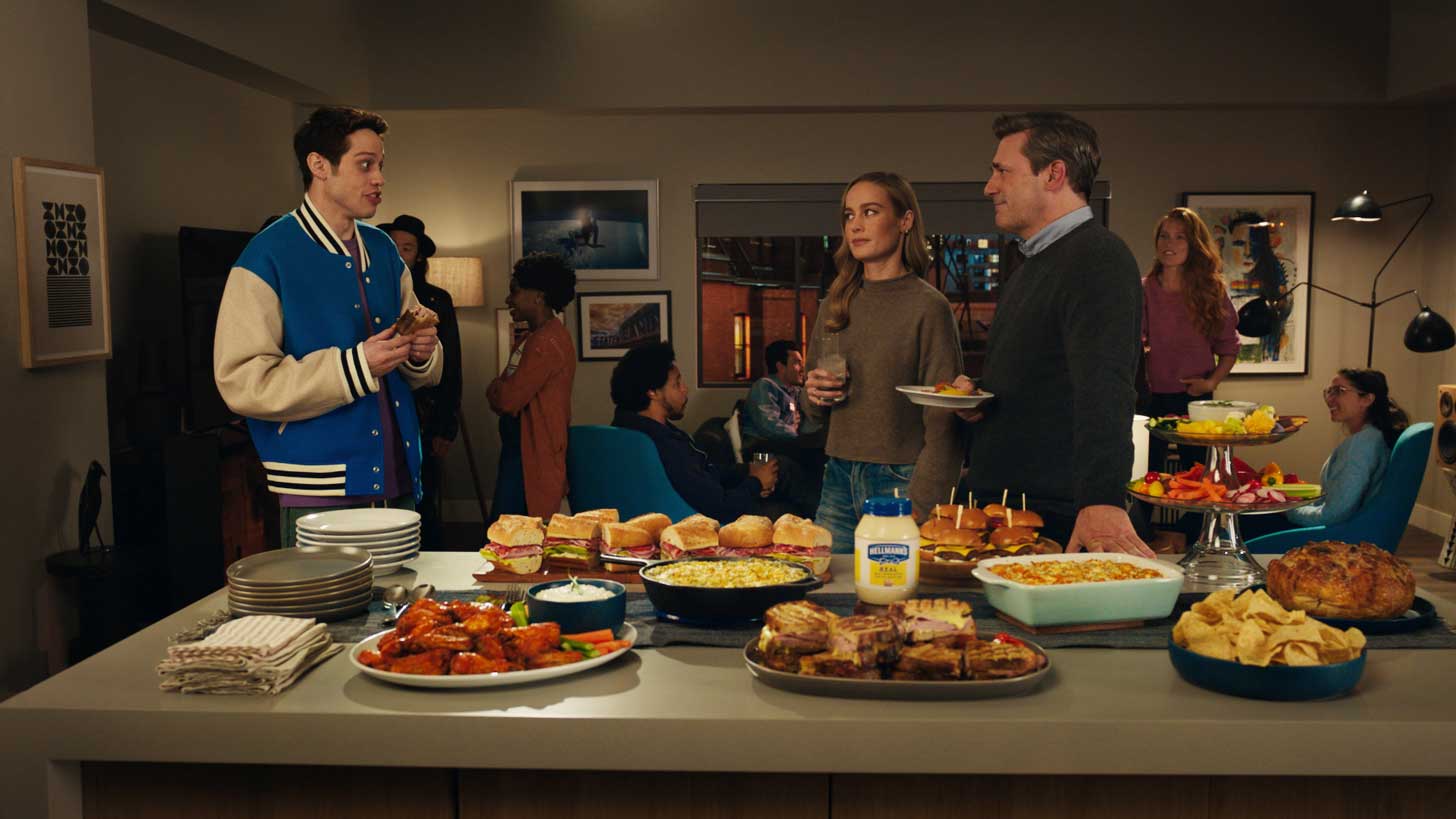
While no single act of philanthropy can solve the systems that cause food insecurity or perpetuate waste, we can help individuals and communities one meal at a time.
Feeding America’s work reaches millions of people in need of food, and Hellmann’s using a platform as enormous as the Super Bowl to elevate this work is commendable.
What can you do to prevent food waste?
Food waste is something we can all prevent. Whether it’s planning our meals, properly storing our food, using leftovers more effectively, or even sharing with friends, we can all do better when it comes to keeping those greens from going bad in the crisper drawer.
(We even have a whole guide to preventing food waste to help you!)
On a larger scale, you can also stay up-to-date on policies that will help reduce food waste, and contact your representatives to advocate for these planet-forward ideas.
And of course, if you see the #MayoForMeals truck make a stop in your area, feel free to snap a photo and do your part on social media. You can also directly donate to Feeding America, too.
March is Women’s History Month, an annual celebration in the United States that recognizes and celebrates the contributions of women all throughout the nation’s history.
Although gender is a socially constructed concept that changes and evolves personally throughout each of our lives, there is no shortage of nuanced and dynamic conversations to be had about women, gender, inequality, and injustice.
Throughout history, women have been erased and excluded, and women of color, transgender women, and queer women have been subjected to even more harmful oppression than their white, cisgender sisters.
To truly embrace and understand the value of Women’s History Month, we must approach our celebrations with intersectionality and intention.
And it is especially important to do so in 2026, as our leaders make blatantly misogynistic remarks, survivors of sexual abuse and trafficking face ongoing injustice, and immigrant women across the U.S. are subject to violence and authoritarianism.
With that in mind, Women’s History Month is both a time to confront the ongoing injustices that plague women around the world — and an invitation to celebrate and rejoice in our shared humanity as women.
While it’s important to learn more about and uplift the experiences of all women every single day, it’s helpful to have somewhere to start. We’ve created a guide on how to celebrate Women’s History Month this year.
By the way, some of the links in this article (like books!) are affiliate links, which means if you make a purchase after clicking a link, we may earn a commission at no extra cost to you. Thank you!
Activities and Ideas: How To Recognize Women’s History Month
Learn
Watch a documentary about women’s rights.
Who doesn’t love a good documentary? The diverse and expansive stories of women span all industries, continents, and experiences, but if you want to learn a bit more about gender inequality, check out some of these films:
- Feminists: What Were They Thinking? (Netflix)
- Reversing Roe (Netflix)
- Period. End of Sentence. (Netflix)
- The Janes (HBO)
- A Secret Love (Netflix)
- Audrie & Daisy (Netflix)
- She’s Beautiful When She’s Angry (Amazon Prime)
- Miss Representation (Kanopy)
- He Named Me Malala (Amazon Prime)
- Saudi Women’s Driving School (HBO)
Read books about women’s rights.
Get your gender studies syllabus started with a few essential reads on women’s liberation. Here are a few of our favorites:
- “Abolition. Feminism. Now.” by Angela Y. Davis, Gina Dent, Erica R. Meiners, and Beth Richie (Bookshop) (Amazon) (Libro.fm)
- “Bad Feminist” by Roxane Gay (Bookshop) (Amazon) (Libro.fm)
- “A Room of One’s Own” by Virginia Woolf (Bookshop) (Amazon) (Libro.fm)
- “We Are Each Other’s Liberation: Black and Asian Feminist Solidarities” by Jaimee A. Swift, Td Tso, and Rachel Kuo (Bookshop) (Amazon)
- “Feminism is for Everybody: Passionate Politics” by bell hooks (Bookshop) (Amazon) (Libro.fm)
- “Know My Name: A Memoir” by Chanel Miller (Bookshop) (Amazon) (Libro.fm)
- “Untamed” by Glennon Doyle (Bookshop) (Amazon) (Libro.fm)
- “Transgressive: A Trans Woman on Gender, Feminism, and Politics” by Rachel Anne Williams (Bookshop) (Amazon) (Libro.fm)
Add some new podcasts to your queue.
We know it seems like everybody has a podcast these days, but we promise: There are absolutely some gems you’re missing out on. If you’re looking for some new listening material this March, try these on for size:
- Under the Sisterhood
- Woman’s Hour
- Diabolical Lies
- Pretty Private with Eboné
- Womanica
- Boy Problems with Liz Plank
You may also like: 9 Best TED Talks To Watch During Women's History Month
Learn about the history of Women’s History Month.
Women’s History Month can trace its roots back to 1857. During this time, women from various New York City factories protested poor working conditions. The first formal Women’s Day celebration in the U.S. wasn’t until 1909, also in New York City.
And then decades later, Women’s History Week began as a local weeklong celebration in Santa Rosa, California. In 1978, the Education Task Force of the Sonoma County Commission on the Status of Women planned a celebration that corresponded with International Women’s Day, and the movement took off across the country.
Finally, by 1987, Congress designated the entire month of March Women’s History Month.
Take a virtual museum tour.
The National Women’s History Museum is an innovative online museum that uncovers, interprets, and celebrates women’s diverse contributions to society.
Check out inspirational events, online exhibits, countless digital resources, and articles about all kinds of women in history.
Explore the Library of Congress.
The national Women’s History Month website has a number of great resources, but one in particular worth visiting is the Library of Congress’s research guides.
These guides offer a number of amazing materials on women’s history, including geography and map collections, manuscripts, recorded sound collections, and more.
Learn more about the history of women’s health.
Currently, so much of the injustice women face around the globe is associated with their access to healthcare and the right to their own bodies. Hauntingly, this battle has been waged for most of history, despite the cultural role many women play in raising families and having children.
The history of American gynecology and obstetrics is truly disturbing and harmful, and while it’s certainly not the most fun way to celebrate Women’s History Month, it is vital information that informs how we confront the issues of the day.
Consider reading “Medical Bondage: Race, Gender, and the Origins of American Gynecology” by Deirdre Cooper Owens to learn more.
Read good news about women.
While there are certainly challenges women across the globe are confronting, there are also countless solutions. We’re all about good news at Good Good Good, so here are some of our favorite stories about women to inspire you and help you learn something new.
- Zimbabwe’s Women-Only Rangers Fight Poachers and Poverty
- An All-Women Coral Conservation Group is Reviving Coral Reefs
- Finally, Black Women are Getting Credit for Starting the Nail Art Trend
- Enduring Years of Endometriosis Pain, This Engineer Developed an App to Help Others Like Her
- This Rural N.C. Farm Helps Formerly Incarcerated Women Build Back Their Lives
- North Carolina Woman Runs State Senate Campaign 'Built to Lose' to Shine a Light on Gerrymandering
- How Chappell Roan Leveraged Her Meteoric Rise to Break Fundraising Records
- Topless Marathon Runner Becomes Guinness World Record Holder on Her Journey to 'Normalize Mastectomies'
- Over the Last 30 Years, Dolly Parton Has Donated 270 Million Books to Children in Need
- Latinas Are Wearing Colorful Ribbon Braids in Their Hair to Protest ICE: ‘Fashion Has Always Been Political’
Plus: Even more good news about women
Take Action
Support women-owned businesses.
Women founded 49% of all new businesses in 2024 and maintained strong momentum in 2025, driven by a 69% increase in female entrepreneurship since 2019. It’s fair to say that more women are becoming entrepreneurs than ever before.
However, around the globe, men still outnumber women three to one when it comes to business ownership.
That said, it’s always important to uplift and support women-run businesses and organizations in your community! Mindfully shop for goods you need, find a new women-owned restaurant to enjoy in your area, or start planning ahead with some holiday gift cards.
Explore our ultimate guide to ethical, sustainable, and do-good brands led by women.
Donate to organizations in your community that support women and girls.
Do your part to support women and girls in your community by making a donation.
Any amount you can give is meaningful, and if you can, setting up a recurring donation can make a huge impact, all while saving you time in the long run.
We highly recommend finding a small and local grassroots organization to support in your area, but here are a few other organizations you can fund during Women’s History Month:
- Malala Fund
- Girls Inc.
- She Should Run
- National Network of Abortion Funds
- Girls Who Code
- National Women’s Law Center
- Black Mamas Matter Alliance
- National Indigenous Women’s Resource Center
- Justice for Migrant Women
Fight for reproductive freedom.
As access to reproductive healthcare is threatened and removed in states across the country, we all have a duty to stand up for the bodily autonomy and safety of all Americans.
There are so many things we can all do. To get you started, check out our guide to protecting abortion and reproductive freedom.
Do your part to change policy.
There are still countless, antiquated policies on local and national levels that harm women and girls.
Whether it’s supporting women candidates, ensuring you’re registered to vote, contacting your representatives, protesting for change, or even staying up-to-date with local policy initiatives, it’s up to all of us to make this world safer and more welcoming to women of all backgrounds.
Prevent gender-based violence by taking a bystander intervention training.
According to the United Nations, 30% of women ages 15 and older around the globe have experienced physical or sexual violence at least once in their life. Gender-based violence like sexual abuse or intimate partner violence pervade our culture and impact us all in some way.
Do your part for the women in your life by taking a bystander intervention training.
Right To Be has a number of training courses available online. Some are specific to types of harassment or targeted attacks on specific groups of people, but all are equally as helpful and meaningful.
Celebrate
Attend Women’s History Month events.
Check out local event calendars for Women’s History Month events, parades, fundraisers, or service projects near you.
You can also look into some various virtual events to help celebrate this exciting month!
The National Women’s History Museum has loads of thoughtful events on the calendar for March 2026, and you can even join some commemorative and educational events through the National Park Service in observance of this special month.
Have a dance party to an all-woman playlist.
If you don’t listen to “Run The World (Girls)” by Beyonce at least once this month, you may need to reevaluate your celebrations. Lucky for you, nearly every women’s empowerment playlist includes this song.
Check out Spotify, Apple Music, or TIDAL for a playlist to use as your Women’s History Month soundtrack.
Watch movies by women filmmakers.
Heat up the popcorn, throw on your PJs, and rent or stream a movie made by a woman filmmaker. Here are some of our favorites!
- Hamnet, directed by Chloé Zhao
- Little Women, directed by Greta Gerwig
- Lady Bird, directed by Greta Gerwig
- Barbie, directed by Greta Gerwig
- The Farewell, directed by Lulu Wang
- Booksmart, directed by Olivia Wilde
- Portrait of a Lady on Fire, directed by Céline Sciamma
- Sorry, Baby, directed by Eva Victor
- KPop Demon Hunters, directed by Maggie Kang
Write a thank-you note to the women in your life.
Grab the stationery and a glitter gel pen, and harness the power of gratitude. Whether it’s your mom, your spouse, your sister, your best friend, or a teacher who inspired you years ago, write a heartfelt thank-you to a woman who has made a difference in your life.
At Work
Invest in DEI.
In an age of cuts to DEI programming, making a commitment to improving your workplace takes real effort.
Consider hiring a DEI specialist, or check out the resources from The Diversity Gap, an organization that coaches race-conscious leaders and teams — including their podcast and book.
Ask for a raise (or embrace pay transparency).
Ladies — and anyone in a community that is often underpaid compared to their straight, white, able-bodied, male peers — let this month be your call to action to fight for pay equity.
If you have a manager, start by asking for a raise or just opening a discussion about your pay and benefits. The Cut has a great starting guide for this nerve-wracking action step.
If you are a manager, or you already feel comfortable with your salary, consider learning more about and embracing pay transparency. Reevaluate internal policies regarding conversations about money. Make your executive salaries public record. Look into your state’s pay transparency laws.
Volunteer with or match employee donations to a nonprofit.
Connect with a local women’s empowerment nonprofit or a chapter of a national organization and see how you can volunteer as a team during Women’s History Month (and the rest of the year, too).
Additionally, you can provide a list of nonprofits that your employees can support — and match their donations to make an even bigger impact.
Offer more mentorship opportunities.
According to Forbes, retention and promotion rates for women participating in mentoring programs increased from 15 to 38%. When faced with pay inequality, advancement barriers, and work-life imbalances, women are especially in need of meaningful mentorship opportunities.
Where can you improve these opportunities in your company? How can you connect women with mentors inside and outside your organization? How can you invest in the communal success of all women in your industry?
Improve your parental leave policies.
Did you know that the World Health Organization’s recommendation for minimum parental leave is 18 weeks?
Yet, in America, there is no federal policy on paid family leave, and 40% of women don’t even qualify for the Family Medical Leave Act, which grants 12 weeks of unpaid job leave at the federal level.
With that in mind, it’s no wonder most women struggle to find any sort of balance between work and family life. And parents who don’t give birth are also left behind.
Consider using this month to reevaluate and reshape your company’s parental leave policies. What countries are doing it best? What is the most you can offer your team members? How can you advocate for better policies on a city, state, or nationwide level?
For Kids / Students At School
Read books and poems by women writers — and then discuss them.
Whether you’re circling up for story time or assigning reading to your students, there’s no shortage of books and poems by women writers or about women’s experiences to consider!
Not sure what to add to your reading list? Check out some ideas below for kids and YA books:
- “The Power of Her Pen: The Story of Groundbreaking Journalist Ethel L. Payne” by Lesa Cline-Ransome (Bookshop) (Amazon)
- “Jane Against the World: Roe v. Wade and the Fight for Reproductive Rights” by Karen Blumenthal (Bookshop) (Amazon)
- “Spring After Spring: How Rachel Carson Inspired The Environmental Movement” by Stephanie Roth Sisson (Bookshop) (Amazon)
- “She Persisted: 13 American Women Who Changed The World” by Chelsea Clinton (Bookshop) (Amazon)
Talk about gender.
Unfortunately, across the country, we are seeing widespread attempts to dismantle and suppress comprehensive sex education and gender-affirming policies in schools.
While we can all do our part to advocate for accurate and affirming sex ed, teachers and trusted adults have the opportunity to have helpful and honest conversations about gender, sexuality, and consent with young people.
We know these conversations can be difficult to navigate, but there are loads of helpful resources out there!
The Victorian Equal Opportunity and Human Rights Commission has a great guide to talking to young children about gender, and psychotherapist Esther Perel has created a robust list of sexual and relational health resources for all ages.
Close the gender gap in STEM curriculum.
We’re building the next generation of women in STEM. Let’s give our young women the tools that Marie Curie could only dream of.
Use this month as a catalyst for improving STEM curriculum and building the confidence of your students who are passionate about science and math.
Celebrate the achievements of historical STEM leaders (a viewing of Hidden Figures, anyone?), and help encourage your young people to follow their dreams.
Discuss the importance of women’s access to education.
If your young ones are privileged enough to be learning about International Women’s Day in school, it’s important to discuss the state of girls’ education around the globe.
Be intentional to include lessons and conversations about girls’ global education, why access to opportunities matters, and what people are doing about it.
Malala Fund is a great place to start for resources and initiatives.
On Social Media
Follow & amplify the voices of diverse women creators.
Women’s History Month provides a unique opportunity to find more diverse women creators to add to your feed.
Take an internal audit and find what voices you’re missing, and be sure to share, kindly comment, and support them. (A Venmo payment or newsletter subscription upgrade goes a long way, too!)
Help end the cycle of gender-based harassment online.
Cybermisogyny or cybersexism, according to the Women’s Media Center, is specifically gendered abuse targeted at women and girls online. It incorporates sexism, racism, religious prejudice, homophobia, and transphobia.
From digital sexual harassment and threats, to doxing and identity theft, this cycle of abuse is rampant for women online; especially journalists and women in the public eye. And it must be stopped.
Check out nonprofit Take Back The Tech for resources on personal online safety, supporting survivors, and how we can end gender-based violence online.
At Home
Have important conversations with your loved ones.
We know that activism happens on massive scales, but it also happens in our one-on-one conversations every single day. If there are people in your life who might be making unsavory comments about women, or who don’t understand the extent of systems like patriarchy, misogyny, or capitalism, this is a wonderful opportunity to start a new conversation.
Of course, this often takes a lot of emotional energy, and women are so often expected to do the educating, so we implore the feminist men out there to shoulder some of the burden here.
Regardless, be sure you feel comfortable with your boundaries when you engage with folks who disagree with you and be prepared to direct them to other resources.
Don’t leave this work behind — and make sure your work is intersectional.
As always, we hope that this guide is a helpful starting point — or a refresher — for your fight against misogyny. However, we also hope you’ll keep up this work after Women’s History Month.
Additionally, we truly hope you will be intersectional in your feminism and can find the crossroads with your anti-racism, LGBTQ-inclusive, disability justice, environmental justice — and all social justice — work.
When we see strides and improvements for gender equality, we must remember to celebrate the good, and to continue to stand in solidarity for the liberation of all people.
As the incomparable Audre Lorde said: “I am not free while any woman is unfree, even when her shackles are very different from my own.”
Practice any of these items year-round, allocate financial resources to make ongoing donations, and continue to do your part for women and girls 365 days a year.
Frequently Asked Questions
Why do we celebrate Women’s History Month?
Women’s History Month is observed to commemorate, study, and celebrate the vital role of women in American history. It is an opportunity to recognize the trailblazing women who have led the way and inspire a new generation to do the same.
What is the theme for Women’s History Month 2026?
In 2026, the theme of Women’s History Month is “Leading the Change: Women Shaping a Sustainable Future.” This theme, designated by the National Women’s History Alliance, will recognize the often overlooked components of sustainability, beyond environmental concerns, and encompasses financial sustainability, community resilience, leadership succession, and intergenerational equity.
What are the colors of Women’s History Month?
The colors of Women’s History Month are purple, green, and white. Each of these colors has their roots in the suffrage movement but continue to have modern meanings today. White represents equality, truth, and freedom. Green represents hope and growth. Lastly, purple represents women’s fight for suffrage.
Why is Women’s History Month in March?
When the Education Task Force of the Sonoma County Commission on the Status of Women first organized Women’s History Week, it corresponded with International Women’s Day on March 8. International Women’s Day was first observed in 1910, nearly 80 years before the official observation of Women’s History Month.
You may also like: Quotes for Women’s History Month
Every day the Good Good Good team collects the best good news in the world and shares it with our community. Here are the highlights for this week!
If you want to get good news in your inbox every day, join the Goodnewsletter — the free daily newsletter designed to leave you feeling hopeful.
The Best Positive News We're Celebrating This Week —
‘De-influencing’ is trending on TikTok — and it’s really good news for fighting overconsumption
Overconsumption happens when our demand for more is met with the ability to produce at a rapid pace, and the endless cycle harms the planet. And while it’s okay to treat yourself every once in a while (and to value material possessions), our cycle of overconsumption is not sustainable.
A new trend on TikTok called “de-influencing” is taking on overconsumption — and winning. Creators are racking up millions of views denouncing products they were influenced to buy… but never actually used.
It’s essentially the opposite of influencer marketing, with users swaying audiences away from making a purchase that they don’t need. The goal is to prevent overconsumption and remind one another that we don’t need certain products to be valuable or worthy of belonging — that buying something is never going to make you a better, more sustainable, or more well-rounded person.
Why is this good news? Overconsumption is particularly a problem in America, where the lifestyle of the average person takes 9.5 hectares of energy (the worldwide average is 2.7), and the consumption of goods and services has increased by 28% in the last decade.
A new study found the adoption of more electric vehicles resulted in less air pollution and improved health in local communities
In the first-ever study of real-world data looking at the relationship between electric vehicles, air pollution, and human health, researchers found that as electric vehicle adoption increased within a given zip code, local air pollution levels and emergency room visits dropped.
In other words: More electric vehicles leads to cleaner air and healthier people.
We largely think about climate change and the health of the planet on a global scale, but the researchers rightly pointed out that “the idea that changes being made at the local level can improve the health of your own community could be a powerful message to the public and to policymakers.”
They also noted that electric vehicle adoption is slower in under-resourced communities — an important factor to remember as we keep environmental justice at the forefront of climate action.
A surfing program in Australia is helping kids with chronic health conditions get a break from the hospital
Children with chronic health conditions can spend the majority of their days inside a hospital, but a new program at the Perth Children’s Hospital in Australia is helping them get time outside — and improve both their physical and mental health.
Patients at the children’s hospital with type 1 diabetes, cystic fibrosis, burn injuries, arthritis, and post-sarcoma injuries can now learn how to surf.
The program was made permanent after a trial with children with cystic fibrosis found engaging with the sport had positive health outcomes.
More stories about sports doing good:
- Professional athletes are standing alongside trans children who are being banned from sports.
- The Forest Green Rovers (a.k.a. your new favorite sports team) is the first soccer club to go completely carbon-neutral.
- The skateboarding community came together (and still is) to honor and remember the life of Tyre Nichols.
The international community is using satellites to help earthquake rescue efforts in Syria and Turkey
In the face of disasters like the earthquake and aftershock that just struck Syria and Turkey, satellite imaging data enables humanitarian aid to better respond by mapping the condition of roads, bridges, and buildings, and identifying populations trying to escape potential aftershocks by gathering in stadiums or other open spaces.
And it’s something the international community is coming together to provide. The United Nations activated the international charter on “Space and Major Disasters” to turn the eyes of satellites toward the affected areas — which includes 17 member space agencies providing free satellite imagery as quickly as possible over the disaster area.
Additionally, 11 space agencies got ready to operate the most appropriate optical and radar satellites.
Why is this good news? In these crisis situations, when the ground is damaged or flooded and roads are impassable, land-based resources are not always able to analyze the extent of the disaster and organize relief and humanitarian aid in the best possible way. By capturing the situation from space, with very high resolution, satellites provide crucial information quickly — potentially saving lives in the process.
A Chicago-based book publisher is giving out free Black history e-books — especially in Florida
Haymarket Books announced it would make several Black history-based e-books available for free for students (and anyone) to download.
The Chicago-based bookseller made the announcement in response to Florida Governor Ron DeSantis and the Florida Department of Education’s recent blocking of African American history courses developed by the College Board.
The three free e-books would otherwise be banned in Florida public schools, and Haymarket also said it is “connecting with folks in Florida directly to distribute radical books for free to young people.”
Why does this matter? Reading is a powerful act of resistance — and many are scared of that power. Instead of facing that fear by leaning into uncomfortable truths and history — they try to ensure nobody can learn it.
In the 2021–2022 school year, 1,586 books were banned in schools across the United States — 22% of them directly addressed issues of race and racism. Book bans erase essential history and represent the effort to silence those most underrepresented in literature.
A fire- and mold-resistant building material that consumes CO2 has finally come to the U.S.
For years, industrial hemp was illegal in the U.S. due to its association with drug use, despite the fact that it does not contain more than 0.3% THC, the active ingredient in marijuana that makes users high.
Recently though, hemp was distinguished from cannabis, clearing it for wider use in the U.S. — including in the form of hempcrete. And despite the simplicity of its natural ingredients, hempcrete has a huge array of benefits: it's fire resistant, provides soundproofing, insulates or stores heat (depending on external temperatures), repels mold and pests, and is malleable enough to allow for various aesthetic styles.
Hemp is also a sustainable crop that needs few pesticides, is ideal for rotation, and has quick-growing roots that prevent soil erosion.
Why is this such good news? Consumers, businesses, and governments around the world are growing to view hemp as a sustainable building block of the future — quite literally. In the fight to slow and stop climate change, decarbonizing construction can have a huge impact.
The construction industry is responsible for 39% of global carbon emissions, and concrete is one of the worst offenders. If the industry behind cement — an ingredient of concrete — were a country, it would be the world’s third-largest emitter. Hempcrete is an incredibly useful, sustainable, and effective alternative.
Frontline health workers in Liberia are saving lives in their communities and all around the world from emerging (and re-emerging) infectious diseases
Heartbreakingly, many rural areas of sub-Saharan Africa can be highly susceptible to emerging infectious diseases that could become epidemics or pandemics. And as a result of both inadequate funding and infrastructure, these areas don’t have access to traditional healthcare systems to help address outbreaks.
In an effort to protect both their immediate communities and ultimately the entire world, Liberia is taking an innovative approach to identifying and stopping infectious diseases from spreading. It’s recruiting members of rural communities to be the first line of defense in spotting them before they can spread further.
Thousands of these workers are constantly on the lookout for emerging and re-emerging threats, from Covid-19 to Ebola. They’re paid, trained, and familiar with and trusted by their patients, which makes their work especially critical in the face of issues like vaccine hesitancy.
More good news of the week —
Part of a new plan to restore nature, everyone in England will live within a 15-minute walk of a green space or water. Under the government’s new plan, wildlife habitats will be expanded and there will be 25 new or enlarged national nature reserves.
A new immunotherapy kills pancreatic cancer cells with minimal side effects. Researchers developed a new T cell-based immunotherapy that selectively targets cancer cells.
Finland passed new transgender rights laws on gender recognition with overwhelming support. The new legislation makes it easier for transgender individuals to change their legal gender through self-declaration rather than a prohibitive medical and psychiatric process.
Slovenia is now officially the first country in Eastern Europe to recognize same-sex marriage. The just went into effect after being passed in October following a decision by the country’s top court that banning same-sex marriage and adoption violated the country’s constitution.
Researchers at MIT invented a paper-thin solar cell that can turn any surface into a power source. They’re flexible, durable, and only one-hundredth the weight of conventional cells — while producing about 18 times more power-per-kilogram.
A new study found that e-bike users ride further and more often than “regular” bikers. The study also found that e-bikes are replacing cars more than traditional bicycles.
A mother experiencing homelessness was heartbroken to surrender her dog at a shelter — then the shelter reunited them. Lilo the dog came with a note saying her mom was homeless with two kids, and “She tried her best but can't get help.”
A group of grandmothers in Zimbabwe are transforming how the country (and world) approaches mental health care. It started when one of the country’s just 15 psychiatrists was looking for a way to care for more people — he turned to these experienced, empathetic, respected caregivers.
A Georgia community came together to support an outed school administrator. Dawn Clements was the target of a hateful note that outed her and lead her to resign — until her community rallied around to support her staying in the role.
Rescue teams continue to work around the clock shoveling snow and moving rubble to save people. As the death toll passed 12,000 people, these heroes are covering hundreds of miles in Turkey and Syria.
A federal appeals court rejected permits for oil and gas drilling and fracking in northwest New Mexico. The ruling is being hailed a victory for Tribal and environmental groups who have worked for years to defend the culturally significant landscape.
Coastal communities in Oregon just got a grant to improve accessibility for people with disabilities. The funding came from Travel Oregon with the goal of helping travelers in particular feel welcome and included in the communities.
A study found that forests returned to Indigenous guardianship in Brazil saw significant recovery. The study found less deforestation and more reforestation in the 77 areas where Indigenous communities had land tenure.
Sheep living in pastures with solar panels benefit from shade in hot weather and more nutritious grass. It’s yet another benefit of agrivoltaic farms, which had already been found to provide more efficient, cost-effective, clean electricity and reduce wildfire risk.
Oregon’s graduation rate went up last year — especially for students with historically lower graduation rates. Targeted support efforts had been implemented to improve graduation for students who are Black, Native American, experiencing homelessness, or part of a migrant education program.
March 8 is International Women’s Day, an annual celebration across the world that honors the achievements and contributions of women, while challenging the discrimination and oppression they continue to face.
Celebrated during the second week of Women’s History Month in the United States, International Women’s Day reminds us to be even more mindful and welcoming of women from all continents, countries, and communities.
Historically, women of color, transgender women, and queer women have been subjected to even more harmful and isolating oppression than their white, cisgender sisters, and in America and beyond, we implore you to approach all of your celebrations with intersectionality and intention.
And it is especially important to do so in 2026, as our leaders make blatantly misogynistic remarks, survivors of sexual abuse and trafficking face ongoing injustice, and immigrant women across the U.S. are subject to violence and authoritarianism.
Current events may seem bleak, but International Women’s Day is an opportunity to uplift and support women and girls, not just in the U.S., but across the globe, in their ongoing fight for liberation.
While it’s important to learn more about and uplift the experiences of all women every single day, it’s helpful to have somewhere to start. We’ve created a guide on how to celebrate International Women’s Day this year.
By the way, some of the links in this article (like books!) are affiliate links, which means if you make a purchase after clicking a link, we may earn a commission at no extra cost to you. Thank you!
Activities and Ideas To Honor International Women’s Day
Learn
Watch a documentary about women’s rights.
Documentaries make big, difficult topics easier to understand and digest. With a concept as enormous and encompassing as global gender equality, a documentary is a helpful place to start! Check out some of these films:
- Feminists: What Were They Thinking? (Netflix)
- I Am Greta (Hulu)
- Period. End of Sentence. (Netflix)
- Saudi Women’s Driving School (HBO)
- She’s Beautiful When She’s Angry (Amazon Prime)
- Gloria: In Her Own Words (HBO)
- He Named Me Malala (Amazon Prime)
Read books about gender equality.
Building a library of knowledge from diverse lived experiences is a great way to celebrate the women of the world. Here are a few of our favorites:
- “Hood Feminism: Notes from the Women That a Movement Forgot” by Mikki Kendall (Bookshop) (Amazon) (Libro.fm)
- “A Room of One’s Own” by Virginia Woolf (Bookshop) (Amazon) (Libro.fm)
- “Feminism is for Everybody: Passionate Politics” by bell hooks (Bookshop) (Amazon) (Libro.fm)
- “Burn It Down! Feminist Manifestos for the Revolution” by Breanne Fahs (Bookshop) (Amazon)
- “Free Them All: A Feminist Call to Abolish the Prison System” by Gwenola Ricordeau (Bookshop) (Amazon)
- “Original Sins: The (Mis)Education of Black and Native Children and the Construction of American Racism” by Eve L. Ewing (Bookshop) (Libro.fm)
- “We Are Each Other’s Liberation: Black and Asian Feminist Solidarities” by Jaimee A. Swift, Td Tso, and Rachel Kuo (Bookshop) (Amazon)
Add some new podcasts to your queue.
To be honest, in day-to-day life, there’s not often a problem that a good podcast episode can’t fix. Here are a few pods to tune into this International Women’s Day.
- Under the Sisterhood
- Woman’s Hour
- Diabolical Lies
- Pretty Private with Eboné
- Womanica
- Boy Problems with Liz Plank
Learn about the challenges women and girls face around the world.
There are a lot of overlapping and intersecting challenges nearly all women and girls face: Reproductive injustice, economic inequality, and ongoing discrimination among them.
However, on International Women’s Day, it’s important to learn more about the experiences of women all across the globe. Here are a few resources and learning materials for your educational pursuits:
- An explainer on period poverty
- Resources about female genital mutilation from Amnesty International
- A research library from Malala Fund about girls’ access to education
- Insights into the intersection of gender and climate justice
- An explainer on maternal health from Partners in Health
- UNICEF data on the human rights crisis of child marriage
Read good news about women.
While there are certainly challenges women across the globe are confronting, there are also countless solutions. We’re all about good news at Good Good Good, so here are some of our favorite stories about women to inspire you and help you learn something new.
- Zimbabwe’s Women-Only Rangers Fight Poachers and Poverty
- An All-Women Coral Conservation Group is Reviving Coral Reefs
- Finally, Black Women are Getting Credit for Starting the Nail Art Trend
- Enduring Years of Endometriosis Pain, This Engineer Developed an App to Help Others Like Her
- This Rural N.C. Farm Helps Formerly Incarcerated Women Build Back Their Lives
- North Carolina Woman Runs State Senate Campaign 'Built to Lose' to Shine a Light on Gerrymandering
- How Chappell Roan Leveraged Her Meteoric Rise to Break Fundraising Records
- Topless Marathon Runner Becomes Guinness World Record Holder on Her Journey to 'Normalize Mastectomies'
- Over the Last 30 Years, Dolly Parton Has Donated 270 Million Books to Children in Need
- Latinas Are Wearing Colorful Ribbon Braids in Their Hair to Protest ICE: ‘Fashion Has Always Been Political’
Plus: Even more good news about women
You may also like: Quotes for International Women’s Day
Take Action
Donate to organizations around the world that support women and girls.
Do your part to support women and girls in your community and on the other side of the planet by making a donation.
Any amount you can give is meaningful, and if you can, setting up a recurring donation can make a huge impact, all while saving you time in the long run.
- Global Fund For Women
- Women’s Global Empowerment Fund
- Malala Fund
- Educate Girls Globally
- Ipas
- Outright International
- Girls Not Brides
- StrongMinds
- Days for Girls International
Shop from women-owned and women-led businesses.
If you care about thoughtful, sustainable, and ethical businesses — and want to help bridge the gender gap in business — there’s no better time to make a difference than International Women’s Day.
Check out our ultimate guide to women-owned businesses that give back and do good.
Celebrate
Attend an International Women’s Day event.
Check out local event calendars for International Women’s Day events, fundraisers, or service projects near you. You can also check out some virtual events, too!
The best way to do this? Visit the International Women’s Day website to search for events (online and in-person) near you. Planning your own event? Grab an official event pack.
Have a dance party to an IWD playlist.
If you don’t listen to “Run The World (Girls)” by Beyonce at least once this month, you may need to reevaluate your celebrations. Lucky for you, nearly every women’s empowerment playlist includes this song.
Check out Spotify, Apple Music, or TIDAL for a playlist to use as your International Women's Day soundtrack.
Have a women filmmakers movie marathon.
Grab the snacks, snuggle up with a blanket, and stream or rent some movies made by women filmmakers.
- Hamnet, directed by Chloé Zhao
- Little Women, directed by Greta Gerwig
- Lady Bird, directed by Greta Gerwig
- Barbie, directed by Greta Gerwig
- The Farewell, directed by Lulu Wang
- Booksmart, directed by Olivia Wilde
- Portrait of a Lady on Fire, directed by Céline Sciamma
- Sorry, Baby, directed by Eva Victor
- KPop Demon Hunters, directed by Maggie Kang
At Work / In Office
Invest in diversity, equity, and inclusion.
Especially in an age of cuts to DEI programming, making a commitment to improving your workplace takes real effort.
Consider hiring a DEI specialist, or check out the resources from The Diversity Gap, an organization that coaches race-conscious leaders and teams — including their podcast and book.
Volunteer with or match employee donations to a nonprofit.
Connect with a local nonprofit or a chapter of a national organization and see how you can volunteer as a team on International Women’s Day (and the rest of the year, too). Your crew definitely deserves a paid volunteer day, and what better way to celebrate than by helping others?
You can also provide a list of nonprofits that your employees can support — and match their donations to make an even bigger impact.
At School / With Students
Read books and poems by women writers — and then discuss them.
Create a lesson plan, activity, or reading assignment centered around a book or poem by a woman writer. Whether you’re a parent, teacher, cool aunt, or any other trusted adult, this is a great way to learn together and build lasting bonds for the young people in your life.
Not sure what to read? Check out some ideas below for kids and YA books:
- “The Power of Her Pen: The Story of Groundbreaking Journalist Ethel L. Payne” by Lesa Cline-Ransome (Bookshop) (Amazon)
- “Jane Against the World: Roe v. Wade and the Fight for Reproductive Rights” by Karen Blumenthal (Bookshop) (Amazon)
- “Spring After Spring: How Rachel Carson Inspired The Environmental Movement” by Stephanie Roth Sisson (Bookshop) (Amazon)
- “She Persisted: 13 American Women Who Changed The World” by Chelsea Clinton (Bookshop) (Amazon)
Talk about sex and gender.
Unfortunately, across the country, we are seeing widespread attempts to dismantle and suppress comprehensive sex education and gender-affirming policies in schools.
While we can all do our part to advocate for accurate and affirming sex ed, teachers and trusted adults have the opportunity to have helpful and honest conversations about gender, sexuality, and consent with young people.
We know these conversations can be difficult to navigate, but there are loads of helpful resources out there!
The Victorian Equal Opportunity and Human Rights Commission has a great guide to talking to young children about gender, and psychotherapist Esther Perel has created a robust list of sexual and relational health resources for all ages.
Discuss the importance of women’s access to education.
If your young ones are privileged enough to be learning about International Women’s Day in school, it’s important to discuss the state of girls’ education around the globe.
Be intentional to include lessons and conversations about girls’ global education, why access to opportunities matters, and what people are doing about it.
Malala Fund is a great place to start for resources and initiatives.
On Social Media
Follow & amplify the voices of diverse women creators outside of your bubble.
International Women’s Day provides a unique opportunity to find more diverse women creators to add to your feed.
Follow new creators, and make sure you introduce your network to new voices, too! Be sure to share, comment, and support all the new folks you follow. (A Venmo payment or newsletter subscription upgrade goes a long way!)
Help end the cycle of gender-based harassment online.
Life online does have its share of unpleasant interactions, but women and girls are often the most at risk for cyberbullying.
In fact, there’s a term for it. Cybermisogyny or cybersexism, according to the Women’s Media Center, is specifically gendered abuse targeted at women and girls online. It incorporates sexism, racism, religious prejudice, homophobia, and transphobia. And it must be stopped.
Check out nonprofit Take Back The Tech for resources on personal online safety, supporting survivors, and how we can end gender-based online harassment.
Frequently Asked Questions
Why do we celebrate International Women’s Day?
International Women’s Day is devoted to celebrating the achievements of women, while also fighting for gender equality, across the globe. This holiday aims to honor the impact of women worldwide and encourages people to challenge gender stereotypes, discrimination, and oppression.
Why is International Women’s Day celebrated on March 8?
In February of 1909, 15,000 female labor activists marched in New York City for equal rights. The following year, activist Clara Zetkin called for an International Women’s Day at the Second International Conference of Working Women. It was unanimously approved, and the date was fixed as March 8 in 1913.
What is the 2026 theme for International Women’s Day?
In 2026, the International Women’s Day organization has designated the theme as “Give to Gain” — with the goal of amplifying generosity and collaboration to help achieve gender equality. Meanwhile, the United Nations has designated the 2026 theme as “For ALL Women and Girls: Rights. Equality. Empowerment.”
By his mid-20s, Tommy Andrade was tired of working dead-end jobs. With a young child at home, he realized he needed more than a high school diploma to support his family. When he heard about a new, advanced manufacturing program at Austin Community College (ACC), Andrade was intrigued.
Some of the jobs that graduates would be trained for carried salaries well into the six figures, enough to give Andrade financial security, he figured, even in a city like Austin where the cost of living was spiking fast.
But first Andrade would have to take a pay cut: The 14-week program required him to participate in an internship that paid $17 an hour, less than he’d earned in his previous jobs as a salesman and bookkeeper.
He worried he wouldn’t be able to afford rent, bills and afterschool care for his son.

Then came some unexpected good news: ACC was launching a new guaranteed income pilot program for student parents, and program officials wanted him to join.
Participants would receive $500 a month for two years with a few conditions: They must enroll in nine credits each semester and attend monthly meetings with other student parents.
Buoyed by the extra income, Andrade signed up. “Five hundred isn’t anything to live off of, but it’s enough to make a difference,” he said. “I have some flexibility to take some risk.”
Now, a year after enrolling in the program and on track to graduate, Andrade, 29, is living in Seattle with his partner and son, having recently accepted a full-time job as a contractor at a large technology company.
Andrade’s story points to the potential of guaranteed-income programs. These programs, which provide consistent financial support to participants over a period of time, were placed on the national radar in 2020 by former presidential candidate Andrew Yang, who called for a monthly income for all U.S. residents.
The idea exploded in popularity during the Covid-19 pandemic, as state and local governments, philanthropists and even some colleges like ACC sought to support people experiencing financial distress. More than 48 guaranteed income programs have been started in cities across the country just since 2020.
Advocates and researchers say this approach holds promise as a long-term anti-poverty strategy as well – especially for families with young children.
More than 48 guaranteed income programs have been started in cities across the country since 2020, at least 11 initiated in 2021 alone.
Indeed, a growing body of research shows cash transfer programs can have a particularly big impact on young kids by providing family stability during children’s first few, formative years. This is likely due, in part, to a reduction of parental stress.
Studies show that when parents experience high levels of distress, it trickles down to their kids, who exhibit higher levels of emotional distress as well.
Constant stress or exposure to adverse childhood experiences like food and housing insecurity can lead to trauma and even cause changes to young children’s brains, making them less able to cope. But that harm can be mitigated if children’s basic needs are met and their parents have financial security.
“That’s what it’s about, really empowering parents to parent and having the resources,” said Michael Tubbs, a former mayor of Stockton, California, and a father of two, who launched a basic income program in 2019 and later founded Mayors for a Guaranteed Income, a network of mayors advocating the idea.
“My kids,” he said, “are dependent on me for their sustenance, security, for a level of support. I’m able to do that when I’m not anxious, when I’m not stressed, when I’m not worried about how things are going to be paid.”
Parents in Stockton’s guaranteed income program, for example, reported being more involved in their children’s lives and better able to provide for them.
A survey of low-income families in Chicago during the pandemic found that parents were more likely to engage in positive interactions with a child if they retained some income after losing a job, such as through federal or state aid, while parents who lost their income were more likely to lose their temper or yell at a child.
Financial support for parents can even lead to changes in infant brain activity associated with the development of thinking and learning, according to findings from the Baby’s First Years project, which provided monthly payments of $333 to low-income mothers in four U.S. cities for a year.
Another recent study found that kids whose families received federal tax credits following the birth of the parents’ first child went on to do better in school and earn more money as adults.
“At least for low-income people, the period after childbirth seems to be a period of low financial resources and high stress,” said Andrew Barr, a professor at Texas A&M University’s department of economics and co-author of the study. Having some reliable income, he said, “allows the family to stay on a better path.”

While critics say such programs could encourage recipients to stop working or to spend money on alcohol or drugs rather than on basic needs, the data largely disputes that.
“The world is full of these racist and classist tropes about ‘What those people will do if you give them money,” said Mayor Melvin Carter of St. Paul, Minnesota, who launched a guaranteed income program in 2020. “When low-income folks have money, they pay for groceries and pay rent.”
In many European countries, a guaranteed income in the form of a family allowance is standard. Denmark, Sweden and Norway, for example, all give parents funds at regular intervals to help with the cost of raising children. Canada also gives low-income families money for each child under the age of 6.
During the pandemic, America briefly experimented with giving families a guaranteed income, in the form of an expanded child tax credit.
For six months, beginning in spring 2021, families below a certain income threshold received monthly tax refunds, up to $300 per child under the age of 6.
The money had positive effects: Recipients reported improved nutrition, reduced reliance on credit cards and increased investments in education, such as child care and tutors, without reducing their employment.
Black and Hispanic families saw the sharpest decline in their poverty rates. And, briefly, the country’s rate of monthly child poverty tumbled by nearly a third, from 15.8 percent to 11.9 percent.

But with the expiration of that aid, many parents are struggling again to make ends meet. Pandemic aside, raising children in the U.S. has become exorbitantly expensive.
Rising inflation, high gas prices and astronomical housing prices have maxed out family budgets. The cost of child care rose 41 percent during the pandemic, but it has consumed a large portion of family incomes for years.
And while the cost of raising children has been steadily rising, America’s federal minimum wage has stagnated at $7.25 per hour since 2009. This year, it reached its lowest value in 66 years.
That’s why advocates for guaranteed income say such programs are urgently needed. Families often face multiple financial stressors and barriers.
“A really small amount of cash can help unlock an entire universe of economic potential for families,” said Carter of St. Paul.
Andrea Coleman, 41, a single mother of three in St. Paul, said the $500 a month she received through the city’s program following the birth of her youngest child was a huge comfort.
With the money, she was able to buy winter coats, shoes and Christmas presents for her children. She got the brakes fixed and the oil changed in her car, which she relied on for her job as a private nurse.
Coleman was also able to postpone returning to work to bond with her infant daughter, something she’d missed out on with her middle child. “I’m grateful,” she said.
When she started the program, she had been experiencing depression, but after several months with the extra income, she noticed the depression begin to subside.
“That was just me not being able to provide for my family,” Coleman said. But with the additional income, she was able to “keep the stress level at a minimum.”
Experts say small-scale pilots like the one in St. Paul could set the stage for state and federal action, by normalizing the idea of universal guaranteed income and generating data on the benefits of such programs.
“The general way that good public policy has developed in the country is that states have adopted really strong policy and eventually that’s led to the federal government adopting it,” said Jeremy Rosen, director of economic justice at the nonprofit Shriver Center on Poverty Law. “I suspect that’s what’s going to happen here too.”
Some states have already invested in such programs. Last year, California allocated $35 million to guaranteed income pilot programs over five years.
And Alaska already has a guaranteed income program of sorts, paid for with money the state generates from oil, mines and gas reserves, which has provided Alaskans an average of $1,600 each year since 1980. That program has cut extreme poverty and contributed to disadvantaged youth staying in school, among other benefits.
Andrade, the Austin student and parent, used the monthly funds he received through Austin Community College’s guaranteed income program for bills, insurance and car payments, and for tutoring, clothes and after-school activities for his son, now 8. With the extra money, he didn’t need to pick up odd jobs to make ends meet; he could use that time for his son and his studies.
He could also afford to take risks, like accepting a pay cut in the short term with the knowledge he would eventually make more money. In May, his leap of faith began to pay off.
Fifteen credits shy of graduating with associate degrees in engineering technology and construction management, he was offered a job at a Seattle-based company that develops vehicle crash test systems. He and his partner packed up their home and drove more than 2,100 miles northwest where they settled into a 2-bedroom apartment in West Seattle with their son. Andrade enrolled in online classes with ACC to finish his degrees. Two months later, he got an even better opportunity: as a contractor earning two and a half times what he made before starting at ACC.

This upward mobility is what the founders of the ACC guaranteed income program hoped to see when they launched the experiment in fall 2021 as part of a larger initiative to support student parents.
A partnership between ACC and United Way for Greater Austin, the guaranteed income program is funded by the Annie E. Casey Foundation, the Dallas Fed and federal pandemic relief dollars from the City of Austin.
The program is meant to support student parents as they pursue a degree, often while juggling a job and parenting, said Becca Bice, director of family pathways at United Way for Greater Austin. “They just have a higher load on them than some other students might have.”
Participants have used the stipend for medical emergencies, car repairs and other unexpected expenses that can sometimes force students to drop out, Bice said.
Some students used it to cover rent or child care, and to cut down on their work hours so they could focus on their studies and have more time with their kids.
Program officials are tracking outcomes to see if the money affects college persistence and graduation rates, and informally collecting data on participant stress levels and overall college experience.
But while guaranteed income programs like ACC’s are spreading and producing benefits for individual participants, they remain limited in scope.
Programs run by cities often receive thousands of applications for a couple hundred spots, or fewer.
There can also be challenges for participants: The added income can disqualify families from other public support, like food stamps and child care assistance.
Guaranteed income programs are also immensely expensive to support and sustain: A second round of St. Paul’s guaranteed income program, slated to start this year, will cost $5 million to support 333 residents for two years. The program is funded with a mix of federal coronavirus funds and private donations.
"Five hundred isn’t anything to live off of, but it’s enough to make a difference. I have some flexibility to take some risk."
— Tommy Andrade, participant in a basic income program operated by Austin Community College in Texas
The many challenges of running these programs are why experts say a larger, more permanent way to bolster families’ income is needed.
Ideally, this could be accomplished by expanding existing programs such as the child tax credit, something President Joe Biden said he is pushing for as part of a national strategy to cut child poverty and curb hunger.
If approached as tax policy rather than extra income, the money wouldn’t cause participants to lose other benefits.
Andrade doesn’t see such programs as a handout. Rather, he sees them as a way to give people who start from behind a temporary leg up.
“We have the opportunity now, where we don’t have to struggle,” Andrade said one recent evening. “In the end, if I put my son in a better position, I’ve succeeded.”
What happens when you close down a city street to cars? More people do non-driving things, like walking, biking, strolling, skating and frolicking in the space normally reserved for motor vehicles.
Car-free advocates would say that as greenhouse gas emissions and traffic violence go down, happiness and connection go up — it’s hard to connect with your neighbors while ensconced in two tons of steel.
Despite the benefits, closing streets to cars can make some people, er — a bit upset. Opponents argue that businesses will suffer (despite evidence to the contrary), congestion will increase (not so, says CityLab) and disabled and elderly people will have less access to public space (there’s a column for that). Like any change that pushes back against car culture, car-free streets face significant challenges.
During the COVID-19 pandemic, cities around the world closed down streets to cars and opened them up for people. Over two years later, some of these experiments were so popular that they are here to stay. Here are four car-free streets that are still going strong or just getting started.
John F. Kennedy Drive in San Francisco
The people of San Francisco have spoken: Keep JFK Drive car-free. Historically, JFK Drive (now known as JFK Promenade) has been closed to cars on Sundays since 1967.
When the COVID-19 pandemic shut down most of the city and put a premium on outdoor space for socially-distanced play, it made sense to keep the street car-free seven days a week.
As anyone who has biked, skated or rolled during an open streets event can attest — once you go car-free it’s extremely hard to go back. Making JFK Drive car-free not only increased walking and biking, it turned the street into a space for art, music, celebration and connection.
In April, the San Francisco Board of Supervisors passed a motion keeping JFK Drive closed to cars, along with 40 improvements that would make the park more accessible to disabled people, seniors and others.
The 1.5 mile street in San Francisco’s famed Golden Gate State Park was then the subject of dueling ballot measures this month — Prop J would keep cars out and Prop I would reopen the street to motorized vehicles. Supporters of Prop I argued that permanently closing the drive to cars would exclude people with disabilities from accessing the park.
In the end, voters passed Prop J with almost 60% voting “yes” and rejected Prop I with over 60% voting “no.”
Jodie Medeiros, who leads the pedestrian advocacy group Walk San Francisco, says car-free movement at JFK is critical to protecting pedestrians from vehicle traffic.
“For two years, we have seen how much people not only love but really need this car-free space,” she told the San Francisco Chronicle. “Car-free JFK is all about our safety.”
According to San Francisco Recreation and Parks, visits to the park increased 36% since the closure, totalling nearly 7 million visits, while over 90% of the streets in the park are still open to cars.
Griffith Park Drive in Los Angeles
It started with tragedy: On April 16, 77-year-old Andrew Jelmart was riding his bike through Griffith Park when he was struck and killed by a speeding driver.
While the park is a popular spot for hiking, biking and horse-riding with over 50-miles of trails, cars often use it as a shortcut to avoid adjacent freeways. Los Angeles has long been known for its car-centric culture, but Jelmart’s death sparked a movement to make at least part of Griffith Park Drive car-free.
It might seem like a no-brainer that parks should be for recreation, rather than for drivers trying to get from point A to point B faster, but the tragic death of a cyclist drove the point home.
By the end of June, the park announced it was temporarily shutting a stretch of Griffith Park Drive to cars. By Aug. 18, the change was made permanent.
As mobility advocates and writers have pointed out, most of the park is still open to cars — the section of Griffith Park Drive that is newly car-free is less than a mile long. However, city officials estimate that the closure keeps about 2,000 cars per day from cutting through the park, making it safer for people walking and rolling.
The city of L.A. has rarely moved this quickly to implement safety improvements for people outside of cars, even in the face of tragedy. In this case, it helped that the Department of Recreation and Parks has sole jurisdiction over Griffith Park Avenue, avoiding some of the public pushback that projects like this often face.
In addition to the closure, the park has also announced new plans to curb speeding, calm traffic and improve cycling infrastructure.
34th Ave in New York City
Although not shut down to cars 24/7, one of the most successful car-free street projects is 34th Avenue (now known as “Paseo Park”) in the Jackson Heights neighborhood of Queens, New York City.
Currently, the street is car-free every day between 7 a.m. and 8 p.m, turning 26 city blocks into a de facto public park. With the newfound space, the neighborhood hosts a myriad of cultural activities, including yoga, dance, gardening, ESL classes and arts and crafts for kids.
Started in the early days of the pandemic, the 34th Avenue open street project was organized as part of New York City’s Open Streets initiative. Volunteers from the neighborhood put out traffic barriers every morning and started organizing events, activities, and games. This year, only 20 miles of open streets remain in the city, down from a high of 83 miles.
The city’s department of transportation says that the project has reduced traffic violence involving pedestrians by a whopping 41.7%. A study conducted by Streetsblog showed a dramatic reduction in all car crashes.
Although the project has sparked controversy in recent months, 34th Avenue is a testament to community organizing and the possibilities of a street centered on people, not cars.
Capel Street in Dublin
Capel Street is a popular retail and restaurant district in Dublin that went car-less in May, making it the longest car-free street in the country — but not without some pushback.
On the face of it, the street – since named one of Time Out’s coolest streets in the world – seems perfect for pedestrianization. Capel is home to such TikTok-famous eateries as Krewe, Bovinity, and a secret Asian street food restaurant hidden in the back of a supermarket.
A new report out of New York City has found that far from hurting restaurants, car-free streets actually increased business for restaurants enrolled in the Open Streets program. They saw a 19% increase in revenue over previous years, or almost $6 million total during summer 2021.
Capel Street’s car-free journey started gradually, with more space on the street dedicated to outdoor dining during the pandemic. Then, last year, Dublin piloted a program shutting down the street to cars during weekend evening hours for 17 weeks.
A public outreach survey found that almost 90% of respondents supported making Capel Street traffic-free, saying that it “improved their experience” of the street. While some businesses were opposed to the idea, Dublin city councilors voted this month to keep the street closed to motor vehicles.
Before the Pandemic
Even before the threat of a highly-infectious airborne virus pushed cities to begin getting serious about outdoor dining and pedestrianized streets, some cities were already working toward implementing car-free zones in their city centers.
In Paris, air and noise pollution pushed Mayor Anne Hidalgo to institute several car-free days beginning in 2015.
Reports by the Airparif association, which measures urban pollution levels, suggest that nitrogen dioxide levels fell by nearly a third on the Champs-Élysées, by as much as 40% along the Seine, and about 20% at the Place de l’Opéra, during a car-free day in September 2015.
Now, the city plans to ban private vehicles from the city’s historic center by 2024, ahead of the Paris Olympics.
The success of the occasional car-free days in Paris also inspired a movement in São Paulo, Brazil. In 2016, Mayor Fernando Haddad announced a ban on cars every Sunday along the city’s iconic Paulista Avenue.
The move has been welcomed, including by the local business owners who were initially skeptical: A 2019 study conducted by a group of local NGOs found that 86% of store owners supported the program. Indeed, many are encouraging the city to expand the ban to Saturday afternoons as well, to encourage more foot traffic and sales.
“With the closing for cars, people started to walk a lot more, to stroll around, and the sales on Sundays grew sevenfold,” one local bookstore manager told Next City. “It was the best thing that could have happened for us. Sundays are now, by far, our busiest days.”
In late September, Hurricane Ian, one of the most powerful and costly storms to make landfall in the U.S., tore through southwest Florida and caused an estimated $67 billion in property damage. But on Big Pine Key, a community 100 miles southwest of Miami that saw flooding and storm surges up to five feet, 27 nearly-finished cottages were still standing, largely unharmed.
“It was a good test,” said Maggie Whitcomb, who helped develop the cottages. “You never want to have a storm, but it’s good to know after a serious weather event just how strong your construction is.”
Built atop 12-foot tall white podiums with water-resistant finishes and low-energy utilities, the cottages were constructed with structural insulated panels (SIPs), a strong, airtight substance made from renewable materials that can withstand 200-mile winds.
At $1,000 a month, they’re also some of the last affordable housing options for working-class residents. That’s because they are owned by the Florida Keys Community Land Trust (FKCLT), a nonprofit Whitcomb and her husband founded in 2017 in the wake of Hurricane Irma.
Hurricanes can cause billions of dollars of damage, and only a portion of that damage is covered by insurance in most cases. Property data analytics company CoreLogic estimates homeowners will be stuck with a bill from $10 to $17 billion in losses from Ian that weren’t covered by insurance. In a state that already pays three times the national average for home insurance and where many people have already lost all coverage, many homeowners will likely find it too expensive to rebuild.
“Storms are nature’s way of causing gentrification,” said Whitcomb, a part-time Keys resident. “I wanted to make sure that as few homes as possible were available to be flipped or turned into vacation homes.” In the wake of Irma, Whitcomb, who describes herself as a “radical altruist”, and her husband started buying property damaged by the storm with their own money, including a former RV park, and placed it in a public trust.
This stopped the land from entering the real estate market and spiking in price. Steven Kirk, president of Rural Neighborhoods, a nonprofit housing developer that partnered with FKCLT on the Big Pine Key cottage project, said this is one of the most powerful ways land trusts can help disaster recovery.
Big Pine Key, where median home prices are around $800,000, frequently ends up in the crosshairs of destructive storms. When Irma swept across the island, it destroyed nearly 500 homes and damaged 1,500 more. Nearly half of the destruction in the Keys was sustained by RVs and mobile homes, which were already in short supply, forcing rents up for the scant affordable units that remained.
It’s a phenomenon that researchers have tracked across the country: Disasters reduce communities’ housing stocks and drive up rent. When developers rebuild, they are typically incentivized to build more expensive housing than what had previously been there.
As climate change makes disasters like hurricanes, floods and wildfires become more frequent, severe and expensive, residents and policymakers are increasingly turning toward community land trusts (CLTs) — nonprofits that buy land to ensure community control, stave off displacement and ensure long-term affordability.
Like many land trusts, FKCLT rents its land trust units to families who earn 80% or less of the local adjusted median income (AMI), which in Florida’s Monroe County is around $73,000 for a two-person household. But in most cases, CLTs sell homes and rent the land to residents in a 99-year lease. Families only buy the home, not the land, and agree to resell the homes at restricted prices to keep them affordable.
Low-income households and rental units (which disproportionately house Black and brown people) are more likely to suffer significant damage from natural disasters. Their residents also take around two to three times longer to rebuild their homes, according to research. Some housing never recovers at all, especially rental units, making it difficult for renters to find permanent housing after a hurricane or flood.
Jennifer Li, attorney and climate adaptation expert at the Georgetown Climate Center, said local and state officials often focus on recovery without better preparing communities for disasters in the first place. This results in “dysfunctional Whac-A-Mole plans,” where leaders are scrambling as each disaster hits.
“Resilience is really hyperlocal, and it is very much something that should be community-led,” Li said. “So, the emphasis needs to be on this comprehensive approach to increasing the overall individual and community resilience of people who are hit first and the hardest.”
The number of CLTs doubled between 2003 and 2017, totaling more than 225 in the U.S., according to a count by Grounded Solutions Network (GSN). The nonprofit estimated in 2017, there were 12,000 CLTs housing units in the U.S., though that number did not include rentals held in trusts. A research fellow at GSN said they are currently conducting a new survey to update those figures.
Construction on the Big Pine Key cottages is expected to wrap up by the end of 2022. As of early November, applications were already pouring in.
“This is how the land trust can be at the forefront of both healthy housing [stock] and resilient housing,” said Kirk, the nonprofit housing developer.
Not If, But When
The Houston Community Land Trust (HCLT) doesn’t just want to house people, said executive director Ashely Allen. It wants to make sure they live somewhere safe from the elements. Too often, she said, developers build cheap housing in dangerous areas, which risks displacing vulnerable people who can’t afford to rebuild if their house is destroyed.
“We understand it’s not if another hurricane comes; it’s when,” Allen said. That’s why HCLT doesn’t buy homes or acquire land in environmentally hazardous areas, like flood zones. This is both for safety, and so new homeowners are not drowned in bills after a disaster.
“Part of affordability is creating quality and resilient homes so you’re not having to replace them,” Allen said. “And if we don’t address climate change, if we don’t address resiliency, we’re just going to keep creating affordability issues.”
HCLT was formed after Hurricane Harvey dumped more than two feet of rain over the Texas Gulf in 2017, damaging or destroying around one-third of Houston’s housing and causing $180 billion in damages, according to estimates by the Texas Law Review. This magnified an existing affordable housing shortage and created years of housing insecurity for many residents.
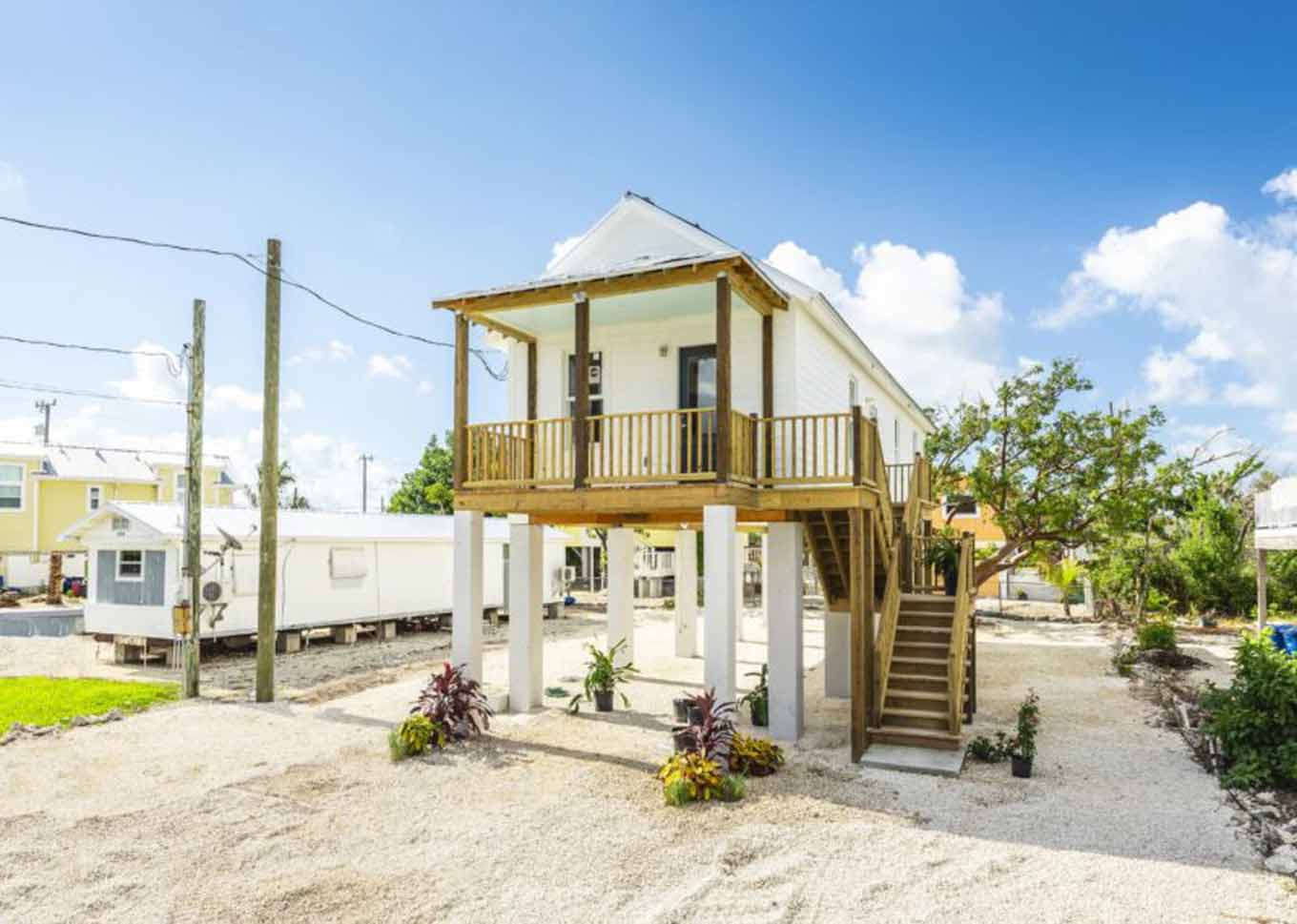
“[The city] needed something that was different, something that was innovative,” Allen said. The city of Houston has allocated $52 million to HCLT to subsidize homes purchased through their Homebuyer Choice Program, making it the largest city-funded CLT in the nation.
Since 2018, the Houston land trust has provided nearly 100 families with subsidies toward market-rate homes. On average, residents pay less than $700 every month on a $75,000 mortgage — less than one-third of the median home price in Houston.
Allen, a former community organizer, said that community-led initiatives like CLTs help build trust within a neighborhood so the nonprofit can incorporate their needs into local initiatives and teach them about resiliency. As part of its post-purchase stewardship programming, HCLT tries to foster confidence by educating its new homeowners on things like solar panels or generators.
“You don’t know what you don’t know,” Allen said. “A CLT can play a major role in getting that information out and connecting people with affordable resources to make sure their home is protected, and they understand the impact of climate change.”
People Over Profit
The six-acre grass lot sandwiched between warehouses in Medford, Oregon, may not seem like much. But once completed, it will showcase the first 3D-printed neighborhood in the nation.
Named the New Spirit Village, the neighborhood will boast 84 affordable (developers said they are aiming for a price point of around $185,000), energy efficient and fire-resistant homes. They will be equipped with heat pumps, solar panels and a 3D-printed concrete structure, which is less flammable.
The neighborhood was designed for the hundreds of families who lost their homes in the 2020 Alameda Wildfire. It’s the latest project supported by Proud Ground, one of the largest community land trusts in the nation, which has housed more than 400 families in two decades.
Diane Linn, executive director of Proud Ground, said CLTs are able to build innovative and sustainable housing because they are driven by their public mission, not profit.
“The land trust could play a piece of the puzzle for recovery and resilience and push the envelope on energy-efficient homes,” Linn said. “For developers and builders, if they can’t make money on it, it’s not going to happen. But we’re not about profit. We’re about affordability and stewardship.”
New Spirit Village will also include a community garden and a resiliency hub, which will act as a community center and evacuation site. The hub will be stocked with a backup battery system, drinking water storage tanks, internet hotspots, fire sprinklers and an air purification system, ready for future wildfires.
“It’s there to give residents a chance instead of running haphazardly for their lives and having to track down the local services they need,” Linn said.
Just outside Seattle, the Homestead Community Land Trust finished construction on a dozen zero-energy, three and four-bedroom townhomes last year; the homes are outfitted with solar panels, low-flow water fixtures and energy-efficient utilities. Last summer, 16 homes opened at a separate development in Seattle’s Leschi neighborhood. Those units were outfitted with all-electric appliances and certified by the Built Green environmental standard, which affirms the highest energy efficiency and environmentally sustainable building materials. In a city where the median price for a home is more than $1.1 million, these homes are priced around $300,00 and are designated for families who make less than 80% of the area’s median income.
“We’re taking more of the preventative approach in all of these things,” said Kathleen Hosfeld, executive director. “And as a result, our folks aren’t experiencing the negative effects of those disasters.”
Homestead also requires that heat pumps and stormwater management technology be a standard in their homes and works with its homeowners to facilitate installing solar panels on dozens of homes.
“We can come together and choose to take land off the speculative market and put affordable, quality-built, environmentally sustainable homes on them,” Hosfeld said. “We can take advantage of this massive investment that needs to be made in housing. And do it right the first time.”
While CLTs can offer one route to create resilient, affordable housing after disasters, Linn said it’s expensive to subsidize and the difficulties in funding make it hard to scale.
“Community land trusts can only grow, and they can only help families if there is money from the federal, state or local governments to fund the gap between what it costs to either buy or build a unit,” Linn said.
Last year, one in 10 homes in the U.S. were impacted by natural disasters, according to CoreLogic. But Linn said that while she wants to believe CLTs can play a role in preparing for or tackling climate change, the investments have to match the scope of the problem.
“The CLT movement certainly has served a lot of families over the course of time nationwide,” Linn said. “But not nearly enough. And not nearly what could really make a difference.”
Every year, on March 8, we celebrate International Women’s Day. This is an opportunity to globally honor the achievements and contributions of women, especially as we continue to fight the discrimination and oppression they face.
As a way to embrace and cultivate the lives and futures of women from all walks of life, we’ve developed a list of inspiring quotes from world-changing women.
Our hope is that these quotes leave you feeling inspired, empowered, maybe a little outraged — and ready to do more good.
You might also like: The best empowering quotes for women — by women
The Best International Women’s Day Quotes & Greetings
Famous Quotes
“There is no limit to what we, as women, can accomplish.”
— Michelle Obama

“Women don’t need to find a voice, they have a voice, and they need to feel empowered to use it, and people need to be encouraged to listen.”
— Meghan Markle

“It would be a thousand pities if women wrote like men, or lived like men, or looked like men, for if two sexes are quite inadequate, considering the vastness and variety of the world, how should we manage with one only?”
— Virginia Woolf, A Room of One’s Own

“As women achieve power, the barriers will fall. As society sees what women can do, as women see what women can do, there will be more women out there doing things, and we’ll all be better off for it.”
— Ruth Bader Ginsburg

“I can promise you that women working together — linked, informed, and educated — can bring peace and prosperity to this forsaken planet.”
— Isabel Allende

“I do not wish women to have power over men; but over themselves.”
— Mary Shelley

“When women lose themselves, the world loses its way. We do not need more selfless women. What we need right now is more women who have detoxed themselves so completely from the world’s expectations that they are full of nothing but themselves. What we need are women who are full of themselves. A woman who is full of herself knows and trusts herself enough to say and do what must be done. She lets the rest burn.”
— Glennon Doyle

“Women should be respected as well! Generally speaking, men are held in great esteem in all parts of the world, so why shouldn’t women have their share? Soldiers and war heroes are honored and commemorated, explorers are granted immortal fame, martyrs are revered, but how many people look upon women too as soldiers?”
— Anne Frank

“There’s something so special about a woman who dominates in a man’s world. It takes a certain grace, strength, intelligence, fearlessness, and the nerve to never take no for an answer.”
— Rihanna

“Women will be hidden no more. We will not remain hidden figures. We have names… It was woman that gave you Dr. Martin Luther King, Jr. It was woman that gave you Malcolm X. And according to the Bible, it was a woman that gave you Jesus. Don’t you ever forget it.”
— Janelle Monáe

“I love to see a young girl go out and grab the world by the lapels. Life’s a bitch. You’ve got to go out and kick ass.”
— Maya Angelou

Inspirational Quotes
“We need to encourage girls that their voice matters. I think there are hundreds and thousands of Malalas out there.”
— Malala Yousafzai

“I think transwomen, and transpeople in general, show everyone that you can define what it means to be a man or woman on your own terms. A lot of what feminism is about is moving outside of roles and moving outside of expectations of who and what you’re supposed to be to live a more authentic life.”
— Laverne Cox
“Dear friends, much pain has been endured in the past, and that pain is no longer designated to hopelessness. It’s time to move the process of reconciliation forward with a little more speed. That is the task. If not now, when? If not us, who?”
— Faith Bandler
“One individual cannot possibly make a difference, alone. It is individual efforts, collectively, that makes a noticeable difference — all the difference in the world!”
— Jane Goodall
“I like being present in spaces where I am not welcome because you do not deserve to feel comfortable just because you’re racist or sexist or small-minded.”
— Scaachi Koul, One Day We’ll All Be Dead and None of This Will Matter
“Whatever women do, they must do twice as well as men to be thought half as good. Luckily, this is not difficult.”
— Charlotte Whitton

Empowering Quotes
“Extremists have shown what frightens them most. A girl with a book.”
— Malala Yousafzai

“Woman must not accept; she must challenge. She must not be awed by that which has been built up around her; she must reverence that woman in her which struggles for expression.”
— Margaret Sanger
“The woman power of this nation can be the power which makes us whole and heals the rotten community, now so shattered by war and poverty and racism. I have great faith in the power of women who will dedicate themselves whole-heartedly to the task of remaking our society.”
— Coretta Scott King
“At some point in a woman’s life, she just gets tired of being ashamed all the time. After that, she is free to become whoever she truly is.”
— Elizabeth Gilbert
“Feminism isn’t about making women strong. Women are already strong. It’s about changing the way the world perceives that strength.”
— G.D. Anderson

“Every woman’s success should be an inspiration to another. We’re strongest when we cheer each other on.”
— Serena Williams
“We know that when a woman speaks truth to power, there will be attempts to put her down… I’m not going to go anywhere.”
— Maxine Waters
“Friends. Sisters. Mothers. Professors. When women affirm women, it unlocks our power. It gives us permission to shine brighter.”
— Elaine Welteroth
“I want to build a community where women of all races can communicate and... continue to support and take care of each other. I want to give women a space to feel their own strength and tell their stories. That is power.”
— Beyoncé

Short Quotes
“Each time a woman stands up for herself she stands up for all women.”
— Maya Angelou

“A feminist is any woman who tells the truth about her life.”
— Virginia Woolf
“We realize the importance of our voice when we are silenced.”
— Malala Yousafzai
“There is nothing stronger than a broken woman who has rebuilt herself.”
— Hannah Gadsby
“I’d rather regret the things I’ve done than regret the things I haven’t done.”
— Lucille Ball
“I am not free while any woman is unfree, even when her shackles are very different from my own.”
— Audre Lorde

On Equality
“We need women at all levels, including the top, to change the dynamic, reshape the conversation, to make sure women’s voices are heard and heeded, not overlooked and ignored.”
— Sheryl Sandberg

“If Black women were free, it would mean that everyone else would have to be free since our freedom would necessitate the destruction of all the systems of oppression.”
— The Cohambee River Collective
“While the issues we prioritize may be different country by country, there is a real consensus that men must play their part if we are to achieve true parity between the sexes. It is also heartening to see that attitudes towards male and female roles are changing. Politicians and business leaders must hear and act on that message. We need to redouble efforts to accelerate progress in tackling gender gaps and increasing female representation in positions of power.”
— Julia Gillard
“I’ve been in so many spaces where I’m the first and only Black trans woman or trans woman period. I just want to work until there are fewer and fewer ‘first and only’s.”
— Raquel Willis
“They cannot stand that a refugee, a Black woman, an immigrant, a Muslim, shows up in Congress thinking she’s equal to them. But I say to them, ‘How else did you expect me to show up?’”
— Ilhan Omar
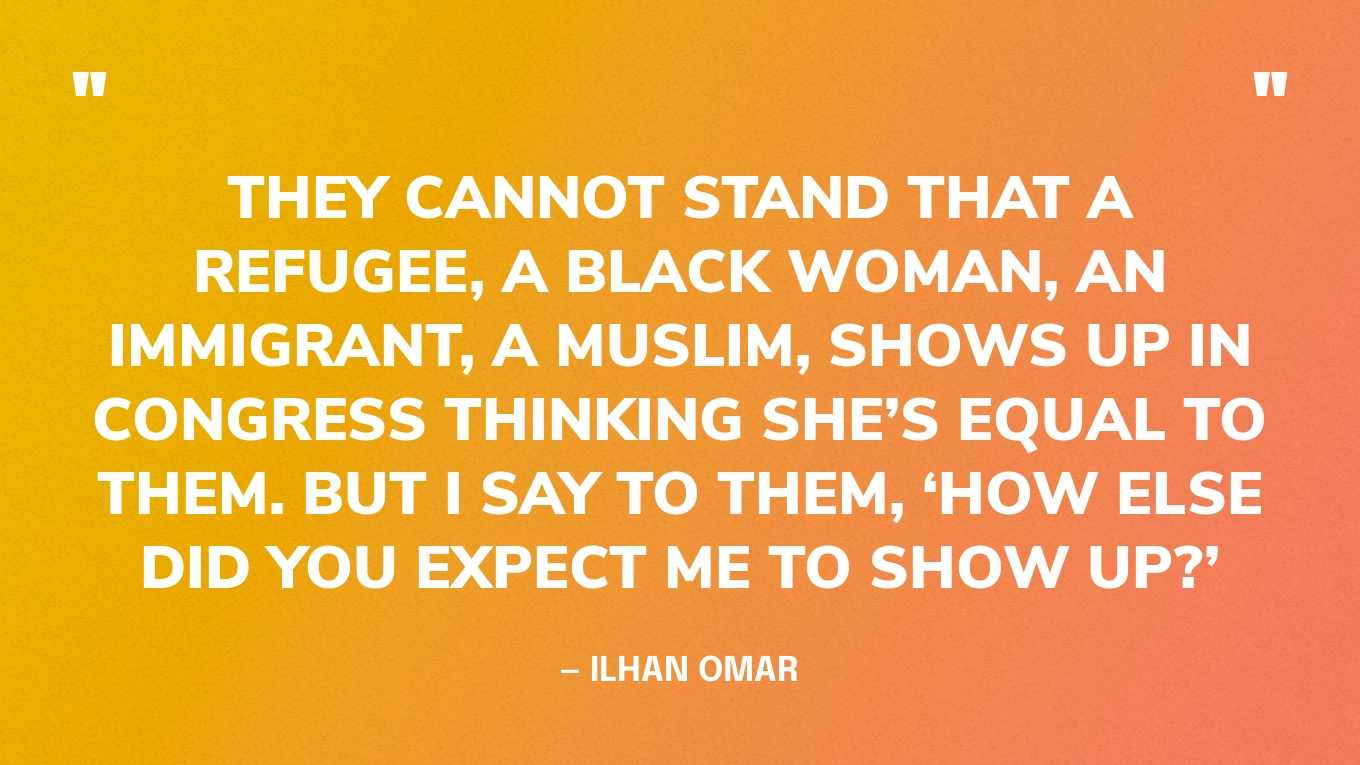
Quotes About Women’s History
“Women should be celebrated every day, but a month dedicated to female empowerment is extremely special. It doesn’t just honor the iconic women who have changed history, but encourages new generations to dream big and know that anything is possible.”
— Molly McCook, in Forbes

“You could make a case that, along with the technological revolution, the most provocative upending destabilizing thrilling change in the course of human history is that we’re finally in it. … We’re here now, women are in the world, and we will not be bullied.”
— Meryl Streep
“This is for the powerful women, the badly behaved women, the women who shaped history with their hands, the women who fought tooth and nail so girls today can read, write, vote, be employed. We are indebted to their sacrifices and it is a reminder that nothing ever comes easy, it must be fought for. For all the women who come after us, for all the little girls growing up in this world, we owe it to them to keep fighting.”
— Nikita Gill
“Women’s History, the essential tool in creating feminist consciousness in women, is providing the body of experience against which new theory can be tested and the ground on which women of vision can stand. A feminist world-view will enable women and men to free their minds from patriarchal thought and practice and at last to build a world free of dominance and hierarchy, a world that is truly human.”
— Gerda Lerner

“So what do people see when they read that well-behaved women rarely make history? Do they imagine good-time girls in stiletto heels or do-good girls carrying clipboards and passing petitions? Do they envision an out-of-control hobbyist or a single mother taking down a drunk in a bar? I suspect that it depends on where they stand themselves.”
— Laurel Thatcher Ulrich
“Though we have more Native women serving in Congress, a woman of color in the vice president’s office, and women making moves across the country, we still have to recognize that the disadvantages that we face are created by a system designed to keep us out, and that, coupled with systemic racism, makes Women’s History Month all the more important.”
— Deb Haaland, in an interview with The New York Times
“History is no longer just a chronicle of kings and statesmen, of people who wielded power, but of ordinary women and men engaged in manifold tasks. Women’s history is an assertion that women have a history.”
— Aparna Basu

Quotes About International Women’s Day
“I’ve spent my entire life in male-dominated fields — first in the military, now in Congress. And this International Women’s Day, allow me to share what I’ve learned.
You don’t need to be ‘one of the guys.’
You are strong, brave and destined to lead. Own it.”
— Senator Tammy Duckworth

“International Women’s Day has always been about gender inequality and discrimination. Gender equity is still not a reality in the world so IWD is a day to raise awareness and demand equity for all people regardless of gender.”
— Jo Luehmann
“To the women before me, my undying gratitude.
To the women beside me, my unwavering loyalty.
To the women after me, all the love and blessings I can bestow.
Enjoy all five generations of us.
Happy International Women’s Day.”
— René Brooks
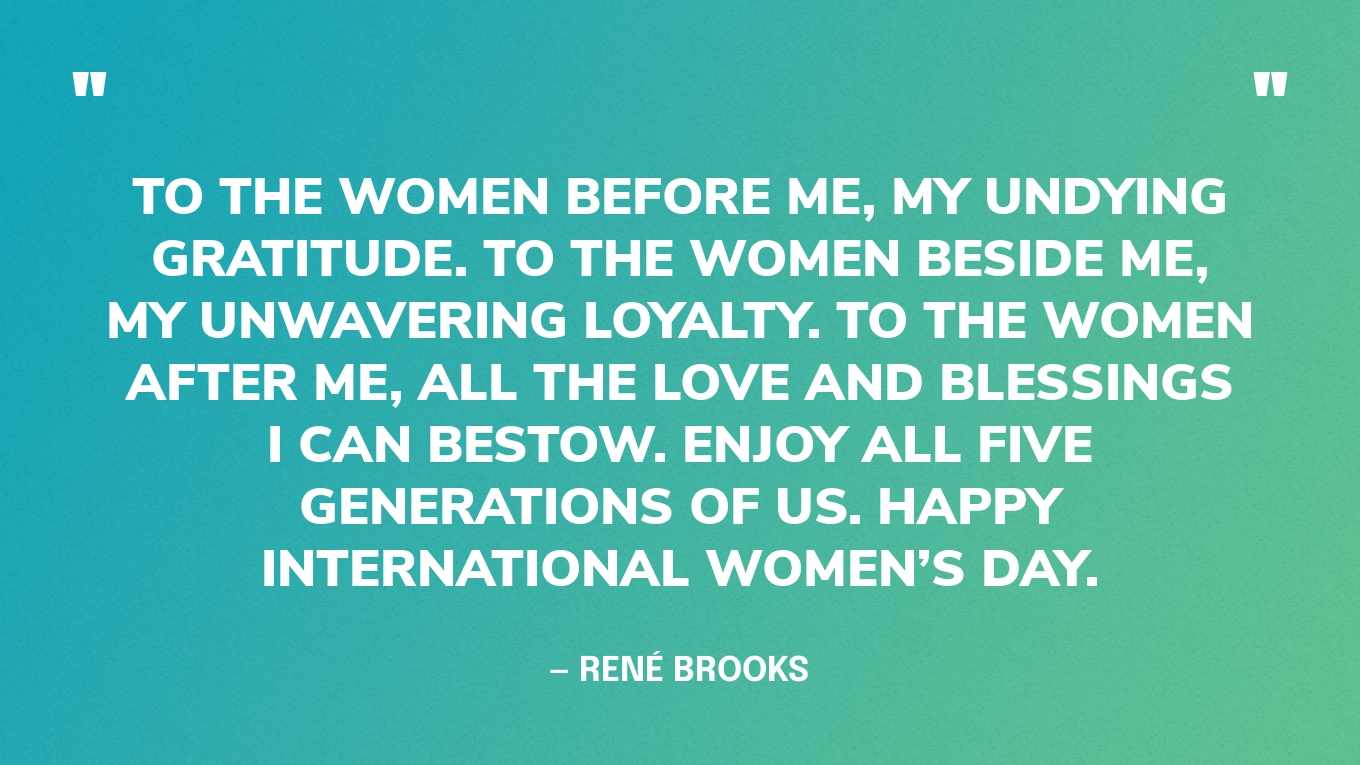
More Quotes
“We must not, in trying to think about how we can make a big difference, ignore the small daily difference we can make which, over time, add up to big differences that we often cannot foresee.”
— Marian Wright Edelman

“I’m not going anywhere. I’m not shutting up. I will always stand up for women and girls, cis and trans.”
— Fae Johnstone
“Women endure entire lifetimes of these indignities — in the form of catcalls, groping, assault, oppression. These things injure us. They sap our strength. Some of the cuts are so small they’re barely visible. Others are huge and gaping, leaving scars that never heal. Either way, they accumulate. We carry them everywhere, to and from school and work, at home while raising our children, at our places of worship, anytime we try to advance.”
— Michelle Obama
“One of the most calming and powerful actions you can do to intervene in a stormy world is to stand up and show your soul.”
— Clarissa Pinkola Estés
“You never completely have your rights, one person, until you all have your rights.”
— Marsha P. Johnson
“The women of today are the thoughts of their mothers and grandmothers, embodied and made alive. They are active, capable, determined and bound to win. They have one-thousand generations back of them... Millions of women dead and gone are speaking through us today.”
— Matilda Joslyn Gage

“Wouldn’t it be nice if Black girls weren’t inundated with negative, sexist comments about Black women? If they were told instead of the many important things that we’ve achieved?... Black women, too often in the shadows of such accomplishments, actually powered the civil rights movement.”
— Megan Thee Stallion
“The most common way people give up their power is by thinking they don’t have any.”
— Alice Walker
“I will have my voice: Indian, Spanish, white. I will have my serpent’s tongue — my woman’s voice, my sexual voice, my poet’s voice. I will overcome the tradition of silence.”
— Gloria E. Anzaldúa
“Do not live someone else’s life and someone else’s idea of what womanhood is. Womanhood is you.”
— Viola Davis
“The problem with gender is that it prescribes how we should be rather than recognizing how we are. Imagine how much happier we would be, how much freer to be our true individual selves, if we didn’t have the weight of gender expectations.”
— Chimamanda Ngozi Adichie

Every day the Good Good Good team collects the best good news in the world and shares it with our community. Here are the highlights for this week!
If you want to get good news in your inbox every day, join the Goodnewsletter — the free daily newsletter designed to leave you feeling hopeful.
The Best Positive News We're Celebrating This Week —
Researchers are creating winter road salts that aren’t terrible for the planet
When the snow falls in winter, it means local governments will start spreading de-icing salts on the roads. Typically a less-refined form of table salt, they can include other compounds and work by lowering the freezing point of water.
In addition to sticking to people’s shoes, clothing hems, and cars, these salts also do extensive damage to autos, infrastructure, and the environment. They cause issues and faster aging in cars, damage roadways and bridges, and more.
But by taking a page from nature — fish, insects, and even some plants have adapted to cold climates by making their own antifreeze agents — materials scientists and researchers are developing effective but more benign antifreeze compounds.
Why is this good news? In addition to the problems we mentioned before, road salts also damage the environment, displacing minerals in soil and groundwater to create conditions where trees cannot take up water through their roots. This causes even further damage (and risk of wildfires) where natural drought conditions already exist.
It’s also bad news for fish and aquatic life, as waterways are especially vulnerable to runoff that contains de-icing salts. It can inhibit fish from spawning and reduce dissolved oxygen levels in the water.
Guinea worm has nearly been eradicated — it once infected 3.5 million people per year
The Carter Center recently announced that “Guinea worm is poised to become the second human disease in history to be eradicated,” having recorded just 12 cases worldwide in 2022. It represents the lowest annual figure since 1986, when the Carter Center began leading global efforts to eradicate Guinea worm disease.
The painful, parasitic disease once infected 3.5 million people per year, mainly among the world’s most vulnerable and poor communities. There are no vaccines or medicines to treat it — the current best treatment is very low-tech: treat the wound and slowly extract the worm over several painful weeks.
Due to the intense pain both of the disease and treatment, infected adults cannot work or provide for their families, and infected kids miss school, falling behind on their education. And while there are usually no long-term complications, infection confers no immunity, so people can get infected repeatedly over their lifetimes, too.
There are currently efforts to fully eradicate the disease, including working with communities to break the transmission cycle.
A study found leaning on “chosen family” can have positive health outcomes for people with estranged family relationships
A series of polls in 2022 found that estrangement isn't a rare phenomenon. Rather, more than a quarter of Americans surveyed were estranged from at least one member of their immediate family (parents, children, spouses, etc.).
This disconnect can happen for a variety of reasons, from discrimination and trauma to a radical disconnect over values. Being disconnected from biological family members leads many to fill those roles with “chosen” family members — friends or even more distant family members.
And a recent study found that these chosen family dynamics have a significant, positive impact on the healthcare experiences of queer and transgender adults, in particular. The authors of the study hope it will lead to more research and renewed focus among healthcare providers to understand and provide care with these dynamics in mind.
An Alabama community is supporting a Black children’s book author after their school district canceled his Black History Month events
For Black History Month, award-winning author Derrick Barnes was booked to appear at three elementary schools in Alabama to read and sign books for the students — until the school districts canceled them. They vaguely cited an inability to reach a contract with Barnes, as well as a complaint from a parent about his “controversial ideas.”
And many parents in the community were looking forward to Barnes’ events. So much so, along with some teachers, they got 140 signatures on a petition demanding transparency from the superintendent and school district for why the events were canceled.
Another parent held a fundraiser to compensate Barnes for one of the events, with any additional money raised going to help prevent the “school-to-prison pipeline.” And another launched a “Derrick Barnes Book Drive” — people bought and donated his books to give to kids in the area and put in little free libraries.
Why is this good news? Alabama is one of a number of states banning Black literature. And in a book landscape that often portrays Black people in the context of slavery or civil rights, Barnes writes about young Black children experiencing what he calls “slice of life” things like going to school or spending time with their family.
All children and especially Black children deserve to hear these stories — and we’re so glad to see this community not only agrees but is putting real action behind that agreement.
A new solar farm in Colorado is pulling triple duty as a prairie restoration project, a carbon sink, and clean power source
Farmland is an ideal candidate for solar farm installations for a number of reasons: the ground is flat, treeless, gets full sun exposure, is accessible, and more. Another lesser-known reason: regenerative agriculture.
Long-practiced by Indigenous peoples, regenerative agriculture prioritizes soil health and water conservation — restoring biodiversity to land that’s been stripped of its nutrients due to commercial farming practices. When you put solar panels on this land, the soil below it gets to rest for about 25 years.
A solar farm doing exactly that just went into commercial operation in Pueblo, Colorado — and along with a sister solar farm nearby, the two are conserving more than 3,000 acres of shortgrass prairie land.
Why is this good news? We’re longtime fans of regenerative agriculture, and while we appreciate it for its ability to restore the health and biodiversity of soil (which produces healthier food for us!), we’ll gladly take another reason to love it. And as the world moves to rapidly switch to renewable energy sources — we love this triply-beneficial approach.
A student-led organization recovered 2,907 pounds of leftover food from a Super Bowl tailgate to donate to a nearby food bank
The Food Recovery Network (FRN) is the largest student-led movement to fight food waste and end hunger in the U.S. — and they recently brought their work to Arizona for the Super Bowl.
At the 2022 game in Los Angeles, FRN saved 2,000 pounds of food from ending up in a landfill, redirecting it to people in need. In 2020, it was 5,000 pounds (pre-pandemic), and their goal this year was 3,000 pounds.
And they nearly made it, recovering 2,907 pounds of food from one of the largest tailgate parties on game day and donating it to the nearby Phoenix Rescue Mission’s food bank.
Why is this good news? Food waste is a massive problem, especially in the U.S., and not just for the Super Bowl. The University of Maryland students who founded FRN more than a decade ago did so after seeing pounds of food go to waste in their cafeteria — they’ve since expanded to 100 chapters and are on a mission to feed families all over the country.
Ordinary citizens are organizing relief efforts for victims of the earthquake in Syria and Turkey
If you ever wondered if the action you take makes a difference for people — we hope these Helpers in Turkey prove to you that they really, truly do.
Alongside larger disaster relief organizations providing important, life-saving aid to people in need are everyday citizens from all walks of life doing ad-hoc organizing to help with recovery efforts.
Working from borrowed office space, they’re finding shelter for people who have lost their homes, distributing meals, coordinating delivery trucks (and even personal vehicles) to bring necessary supplies to hard-hit areas, and so much more.
“We are all here because we feel a real need to do something to help people,” one volunteer said.
More good news of the week —
Shareholders are suing Shell for failing to prepare for a world more reliant on green energy. They say its “flawed” climate strategy puts the company at financial risk as the world transitions to clean energy.
One of the most effective global health programs in U.S. history, PEPFAR has saved 25 million lives in the last 20 years. Launched by President George W. Bush, PEPFAR has provided more than $100 billion in funding for AIDS prevention and treatment.
As millions struggle without electricity Bay Area nonprofit gave solar lanterns to Ukraine. Russia is still targeting and pummeling Ukraine’s power grid with missiles.
In the name of community care, an independent, volunteer-run coalition of scientists, healthcare workers, and advocates created a resource for what to do if you get COVID-19. The guide from the People’s CDC helps us care for our neighbors as healthcare remains inaccessible to so many.
A dad took his son to get a manicure and pedicure after his teacher told him it was “only for girls.” A teacher himself, Christian Shearwood used the incident to start a meaningful conversation about challenging gender norms.
Teen volunteers staff an Oregon crisis support helpline, helping their peers facing mental health challenges. Oregon ranks among the worst states for youth mental illness and access to care, so Portland’s YouthLine is taking a unique approach to helping young people in crisis — peer-to-peer support.
After 178 hours under rubble, a young girl was rescued from under and apartment building. This good news underscores the incredible, unrelenting efforts still underway by rescue workers, rescue dogs, and more.
In just the first month under its new president, deforestation in Brazil’s Amazon rainforest has fallen. Satellite data shows deforestation was down 61% in January compared to January 2022.
After decades of decline in many species due to poaching, populations are making a steady recovery in Uganda. Species like elephants and rhinos are making progress thanks to a series of conservation policies.
An international organization continues to send emergency support to help animals impacted by the earthquake in Syria and Turkey. IFAW is giving $50,000 to local organizations rescuing and caring for injured animals.
Minnesota’s House just passed “universal” school meals, providing free breakfast and lunch to all students. The vote passed 70-58 and ensures all students receive meals, regardless of federal income requirements usually required to qualify.
For the first time since October, all Ukrainians had electricity for 24 hours for three days straight. Russia has been targeting its electric grid, but Ukraine’s defense systems have been able to stop the missiles.
Much sooner than expected, experts think electric vehicles could match the price of gas-powered vehicles this year. A combination of competition, government incentives, and falling prices of raw materials are contributing to the lowering cost.
For the first time in the U.S., New York City is replacing its largest fossil fuel power plant with offshore wind power. The current 27-acre waterfront site is being converted into a clean energy hub that will power one-fifth of the city with offshore wind power.
Once on the brink of extinction, the wood stork has made a huge recovery that could take it off the endangered species list. Officials say the restoration of the bird’s habitat, especially in the Florida Everglades and Big Cypress National Preserve led to a dramatic increase in breeding pairs.
Here’s the thing: Women don’t need empowerment. We already have power. We already have the strength, resilience, and courage to fight the systems that keep us from feeling like we don’t.
But sometimes we just need a little reminder.
For those moments, and for the rallying cries that will lead us all to a more just, equitable future, we’ve compiled a list of quotes that help us all tap into our inherent tenacity and make our voices echo even further.
From world leaders, activists, artists, poets, and fictional characters alike, we hope these quotes leave you feeling energized and encouraged to take on the world. Spoiler alert: it’s already yours.
You might also like: Feminist Quotes | Independent Women Quotes | Women’s History Month Quotes | News About Inspiring Women
The Best Quotes To Empower Women
Famous Quotes
“Each time a woman stands up for herself, without knowing it possibly, without claiming it, she stands up for all women.”
— Maya Angelou
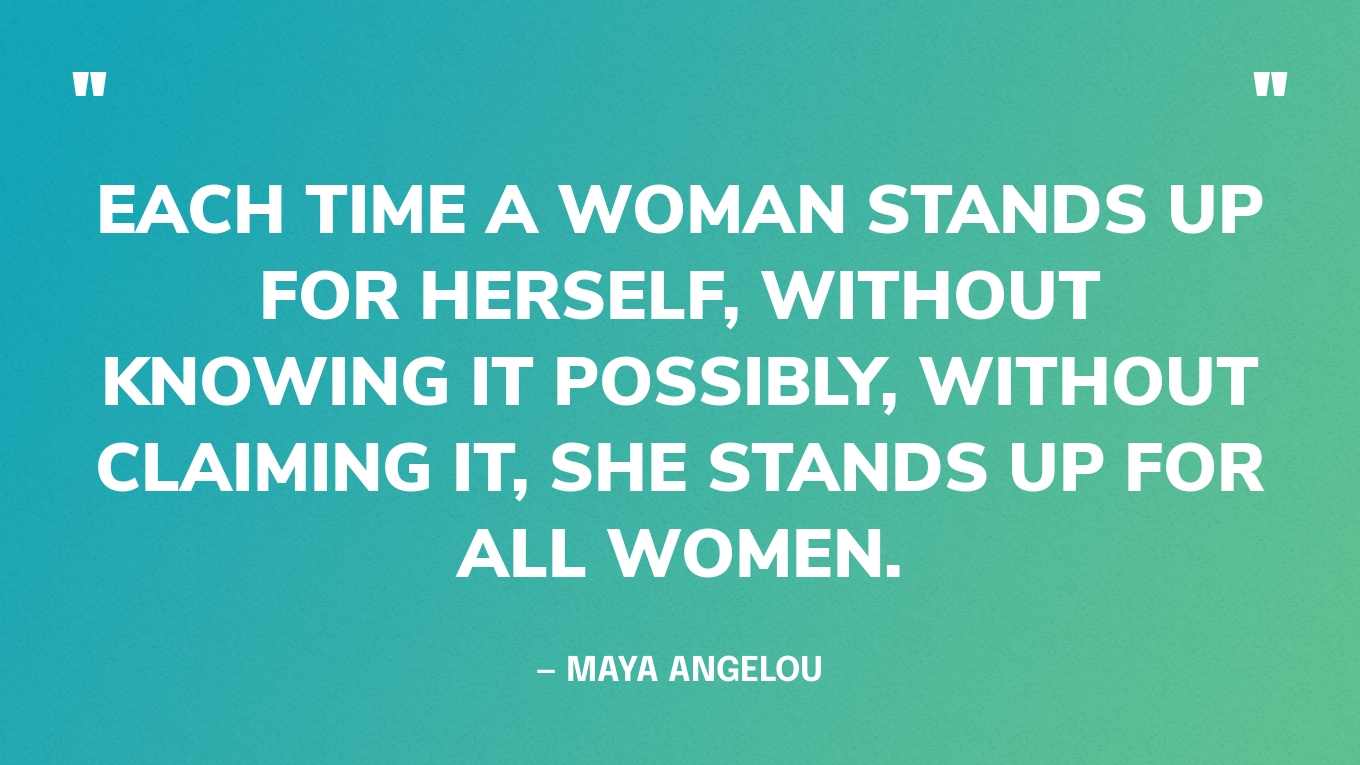
“I’m not going to limit myself just because people won’t accept the fact that I can do something else.”
— Dolly Parton
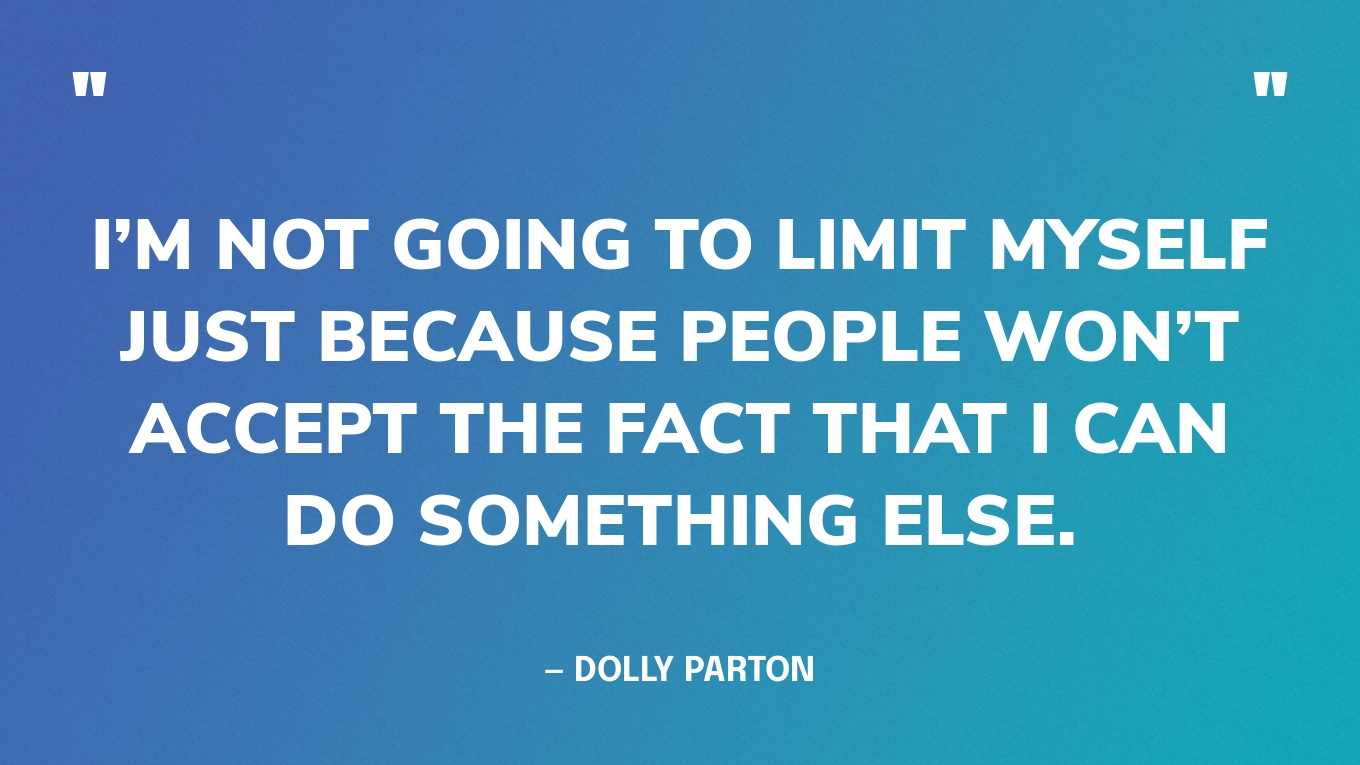
“Women, if the soul of the nation is to be saved, I believe you must become its soul.”
— Coretta Scott King
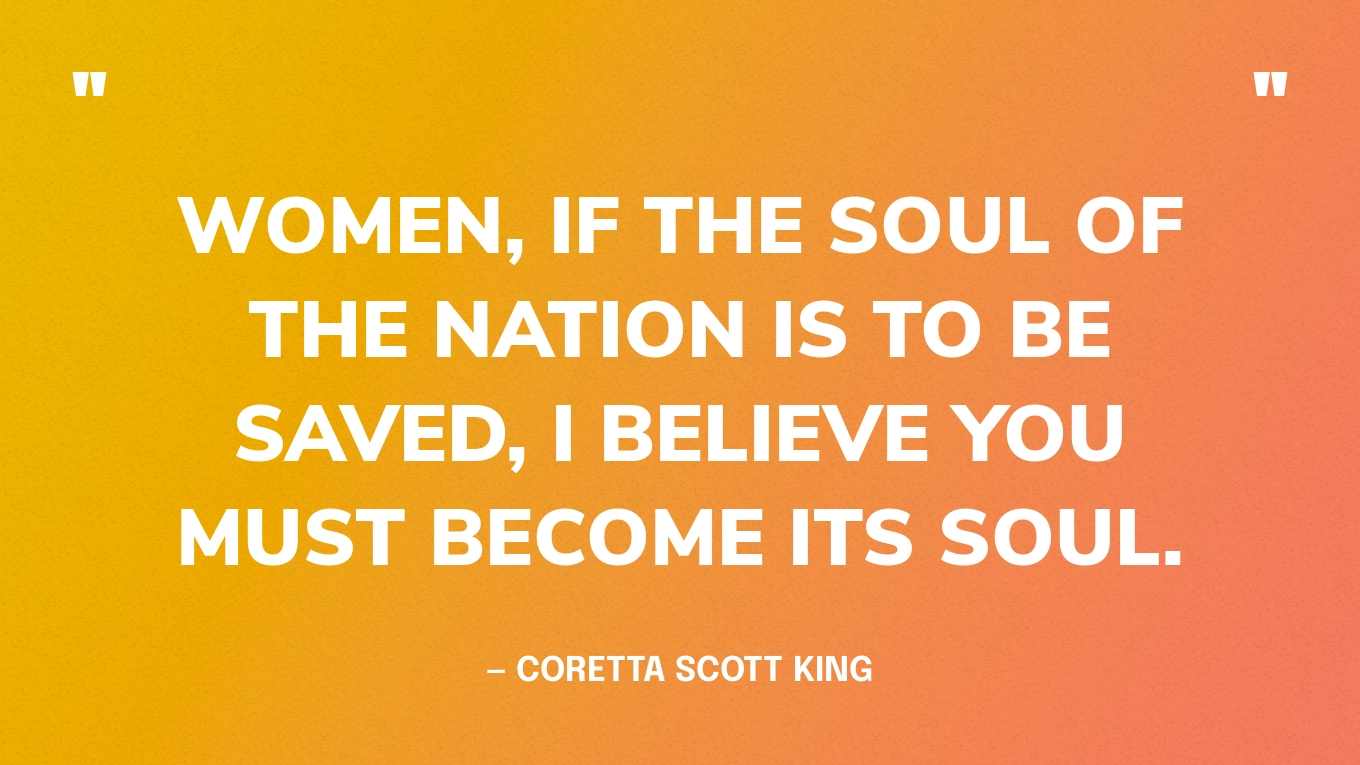
“Women, like men, should try to do the impossible. And when they fail, their failure should be a challenge to others.”
— Amelia Earhart
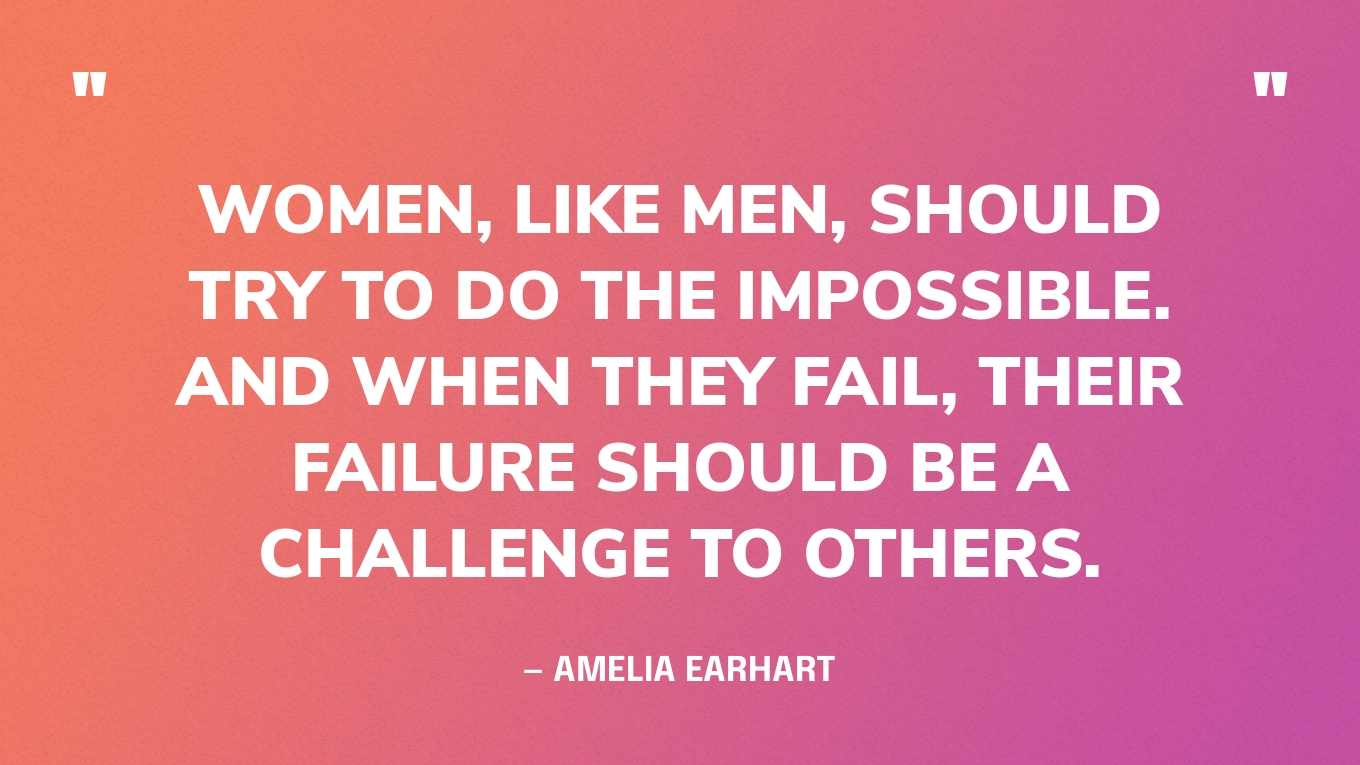
“It’s not about how many times you get rejected or fall down or are beaten up, it’s about how many times you stand up and are brave and you keep on going.”
— Lady Gaga
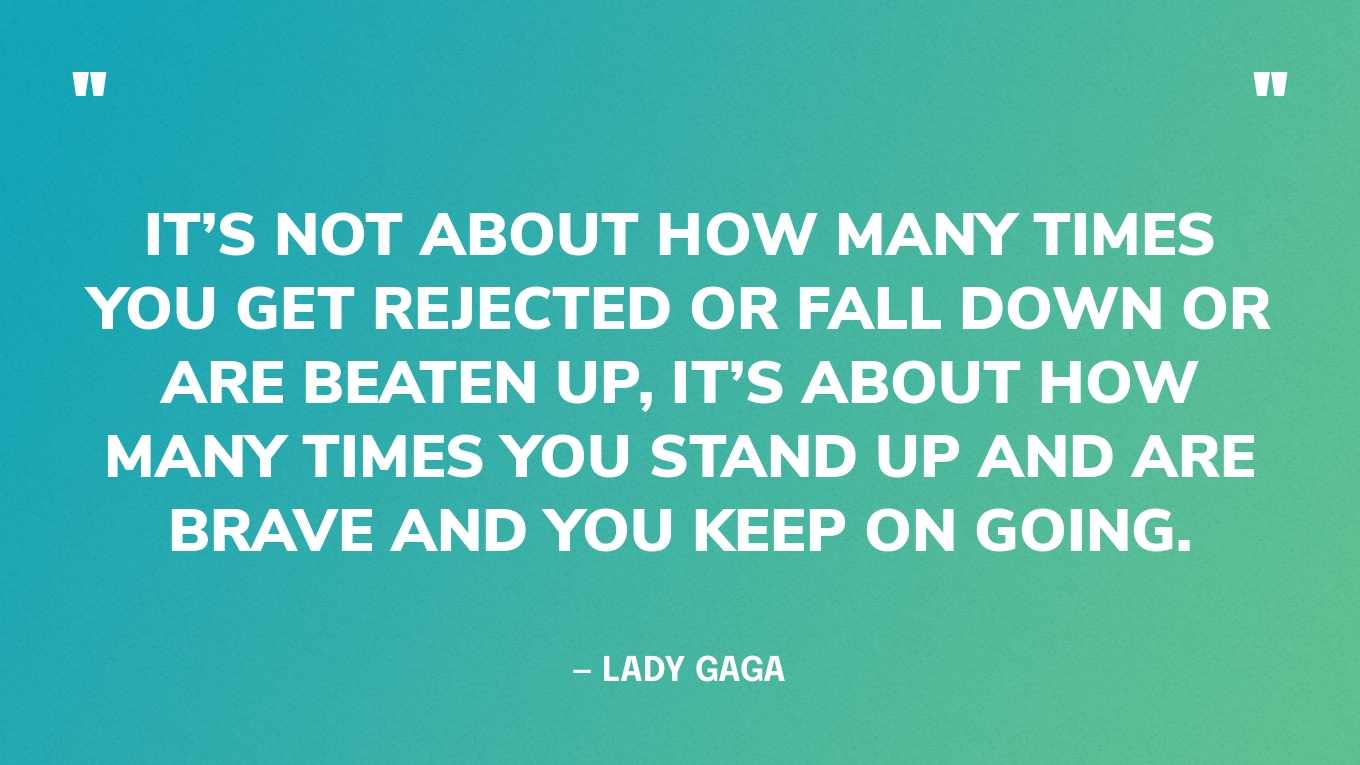
“I have learned over the years that when one’s mind is made up, this diminishes fear; knowing what must be done does away with fear.”
— Rosa Parks
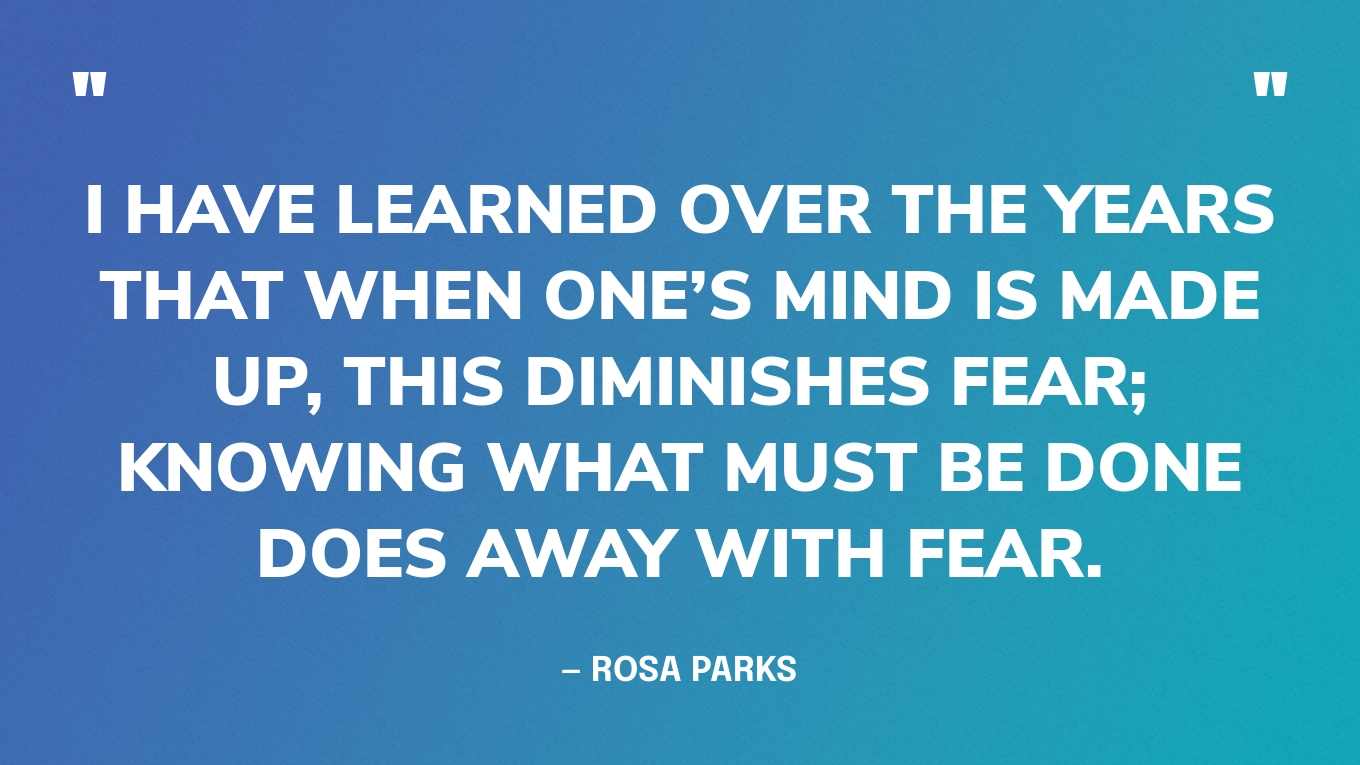
“Women don’t need to find a voice, they have a voice, and they need to feel empowered to use it, and people need to be encouraged to listen.”
— Meghan Markle
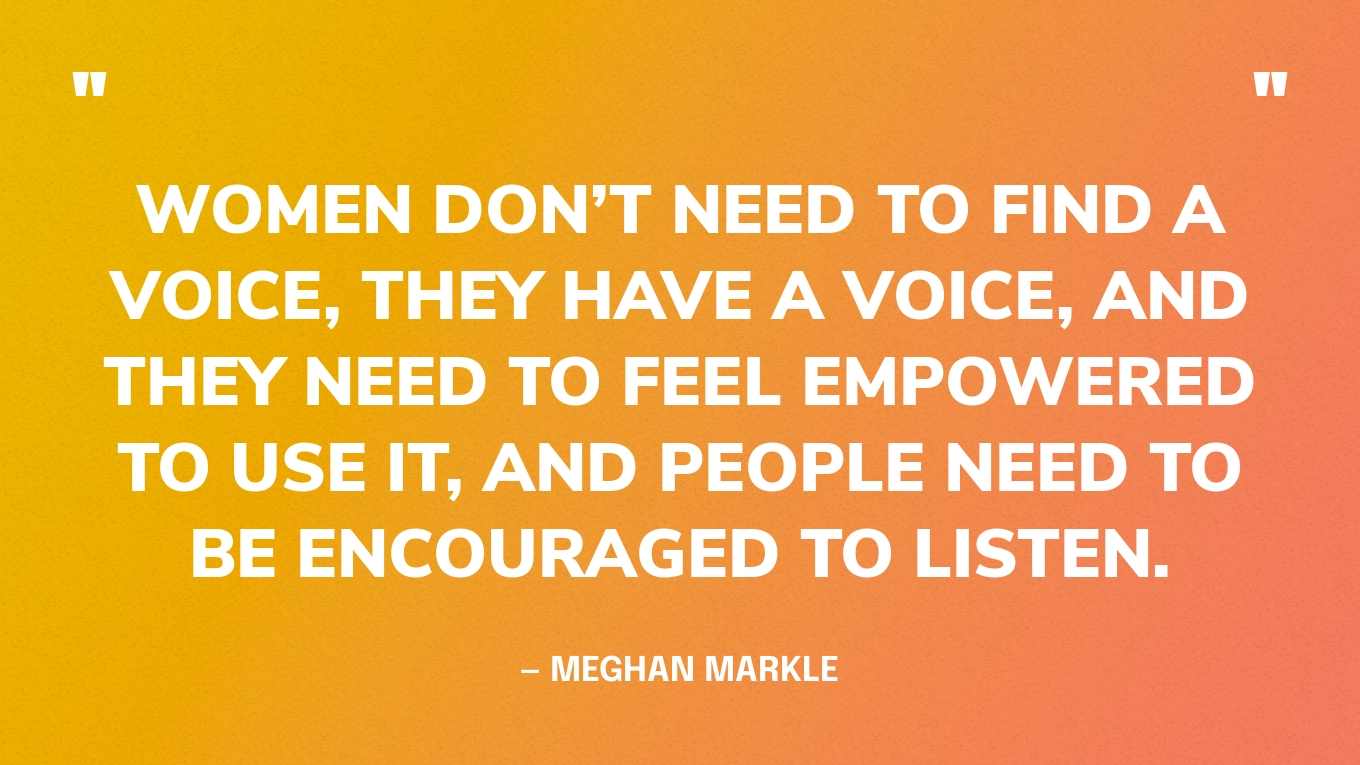
“There’s something so special about a woman who dominates in a man’s world. It takes a certain grace, strength, intelligence, fearlessness, and the nerve to never take no for an answer.”
— Rihanna
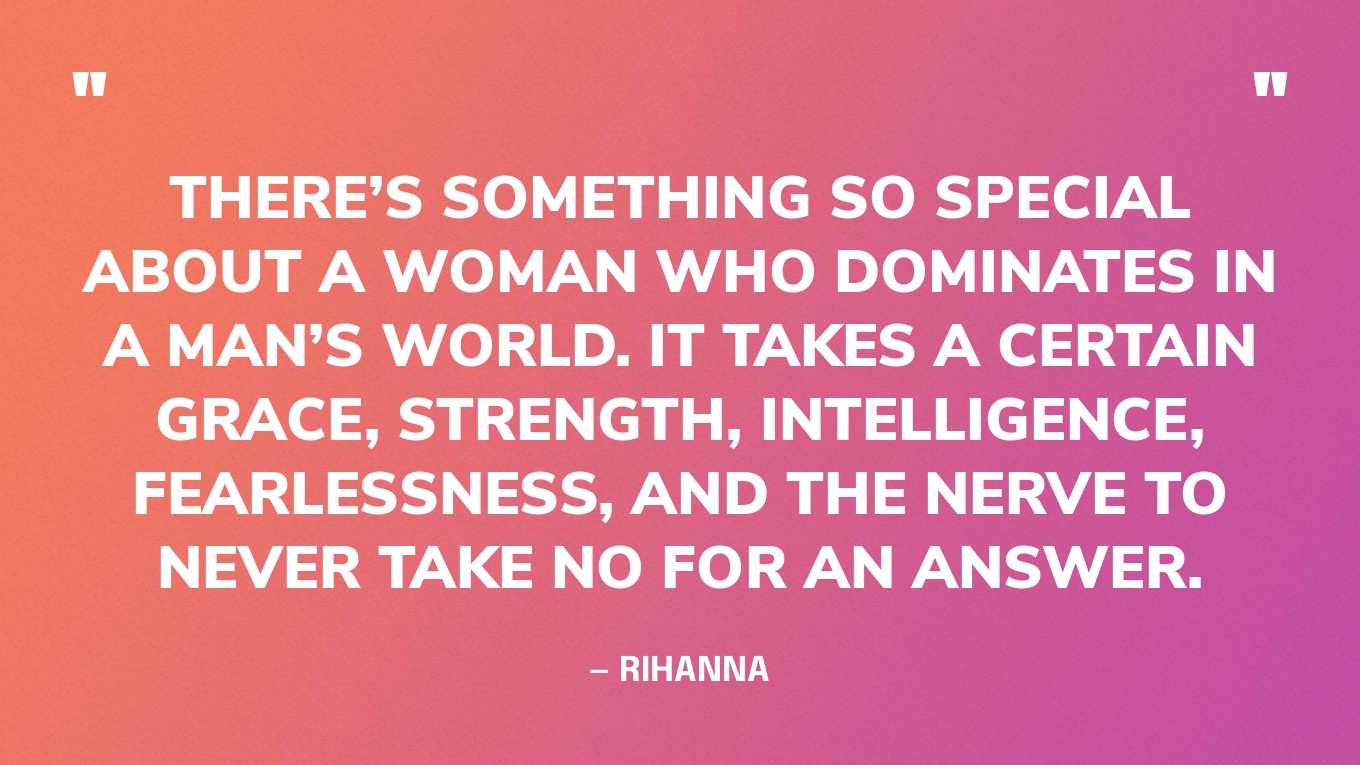
“Women should be tough, tender, laugh as much as possible, and live long lives.”
— Maya Angelou
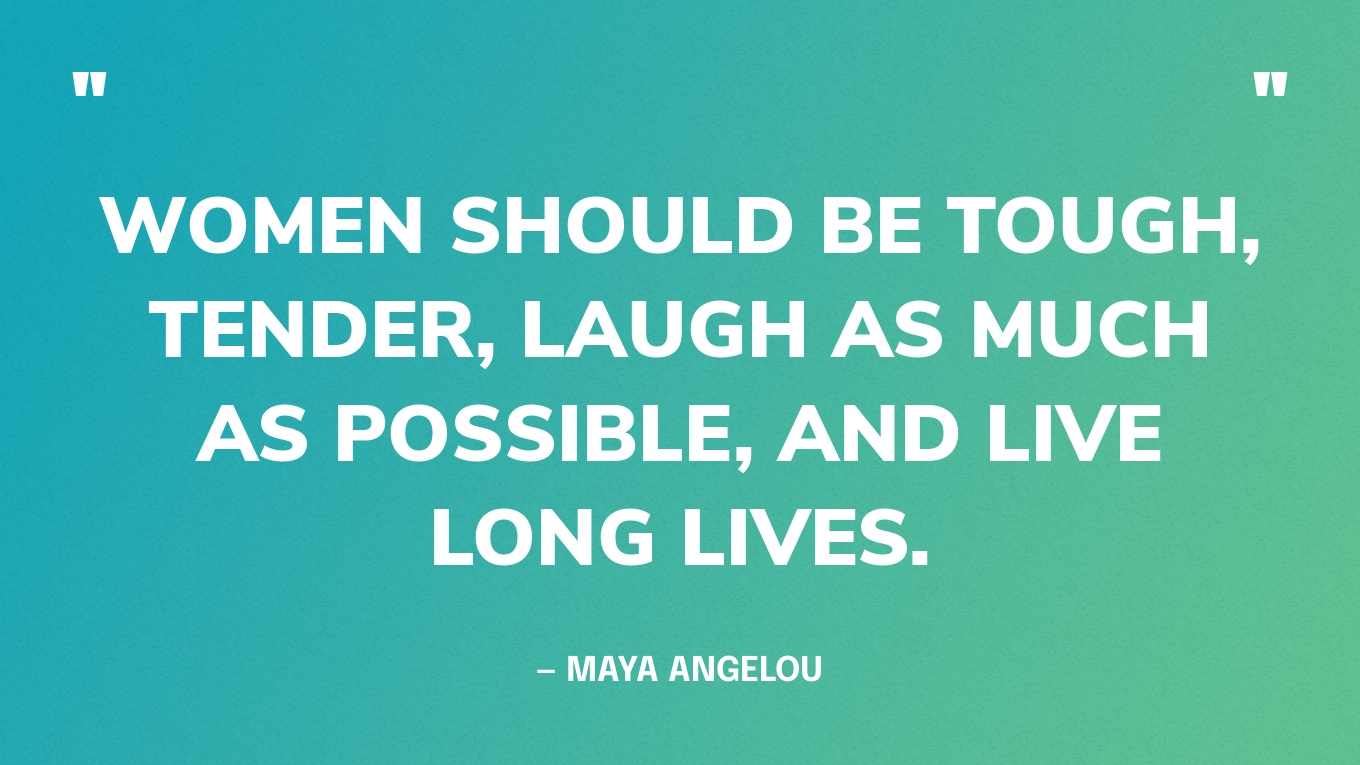
Strong Woman Quotes
“A strong woman is a woman determined to do something that others are determined not to be done.”
— Marge Piercy
“You don’t know the background story of resilience, struggles and strength of beautiful and outgoing women. All you see is what is showcased.”
— Germany Kent
“Anyone can hide. Facing up to things, working through them, that’s what makes you strong.”
—Sarah Dessen, The Truth About Forever
“A strong woman understands that the gifts such as logic, decisiveness, and strength are just as feminine as intuition and emotional connection. She values and uses all of her gifts.”
— Nancy Rathburn
“Though we tremble before uncertain futures, may we meet illness, death and adversity with strength. May we dance n the face of our fears.”
— Gloria Anzaldúa
“We all have an unsuspected reserve of strength inside that emerges when life puts us to the test.”
— Isabel Allende
“The emerging woman… will be strong-minded, strong-hearted, strong-souled, and strong-bodied… strength and beauty must go together.”
— Louisa May Alcott, An Old-Fashioned Girl
→ Read more quotes about staying strong
Inspirational Quotes
“For me, the process of embodying confidence was less about convincing myself of my own worth and more about rejecting and unlearning what society had hammered into me.”
— Lindy West
“When life hands you a difficult situation where you feel undervalued and disrespected, be bold and brave enough to know your worth.”
— Yai Vargas
“I raise up my voice — not so that I can shout, but so that those without a voice can be heard… we cannot all succeed when half of us are held back.”
— Malala Yousafzai
“Don’t be afraid if things seem difficult in the beginning. That’s only the initial impression. The important thing is not to retreat: You have to master yourself.”
— Olga Korbut
“I think it is about time that equipped women began to take on some of the ethical questions which a male-dominated culture has produced and dissect and analyze them quite to pieces in a serious fashion. It is time that ‘half the human race’ had something to say about the nature of its existence.”
— Lorraine Hansberry
“To all the little girls… never doubt that you are valuable and powerful, and deserving of every chance and opportunity in the world to pursue and achieve your own dreams.”
— Hillary Clinton
“Deadly and graceful, poised and ruthless. Quiet and cunning. A queen offers her hand to be kissed, and can form it into a fist while smiling the whole damn time.”
— Elizabeth Acevedo
“The extremists are afraid of books and pens, the power of education frightens them. They are afraid of women.”
— Malala Yousafzai
“A gender-equal society would be one where the word ‘gender’ does not exist: where everyone can be themselves.”
— Gloria Steinem
“I have chosen to no longer be apologetic for my femaleness and my femininity. And I want to be respected in all of my femaleness because I deserve to be.”
— Chimamanda Ngozi Adichie, We Should All Be Feminists
“Sometimes a breakdown can be the beginning of a kind of breakthrough, a way of living in advance through a trauma that prepares you for a future of radical transformation.”
— Cherrie Moraga
“The biggest problem that women have is being ambivalent about their own power… We should be comfortable with the idea of wielding power. We shouldn’t feel that it detracts from our femininity.”
— Elizabeth Wurtzel, Bitch: In Praise of Difficult Women
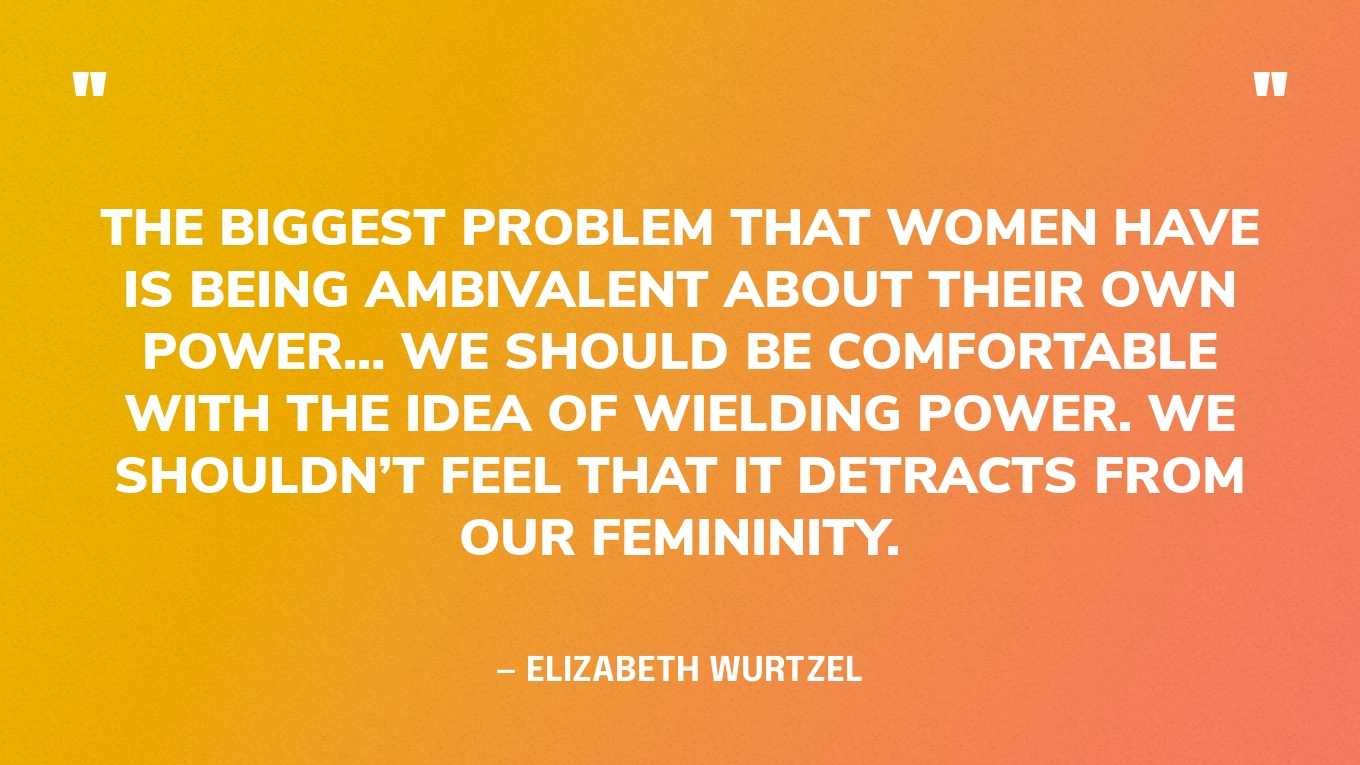
Female Empowerment Quotes
“When women lose themselves, the world loses its way. We do not need more selfless women. What we need right now is more women who have detoxed themselves so completely from the world’s expectations that they are full of nothing but themselves. What we need are women who are full of themselves. A woman who is full of herself knows and trusts herself enough to say and do what must be done. She lets the rest burn.”
— Glennon Doyle
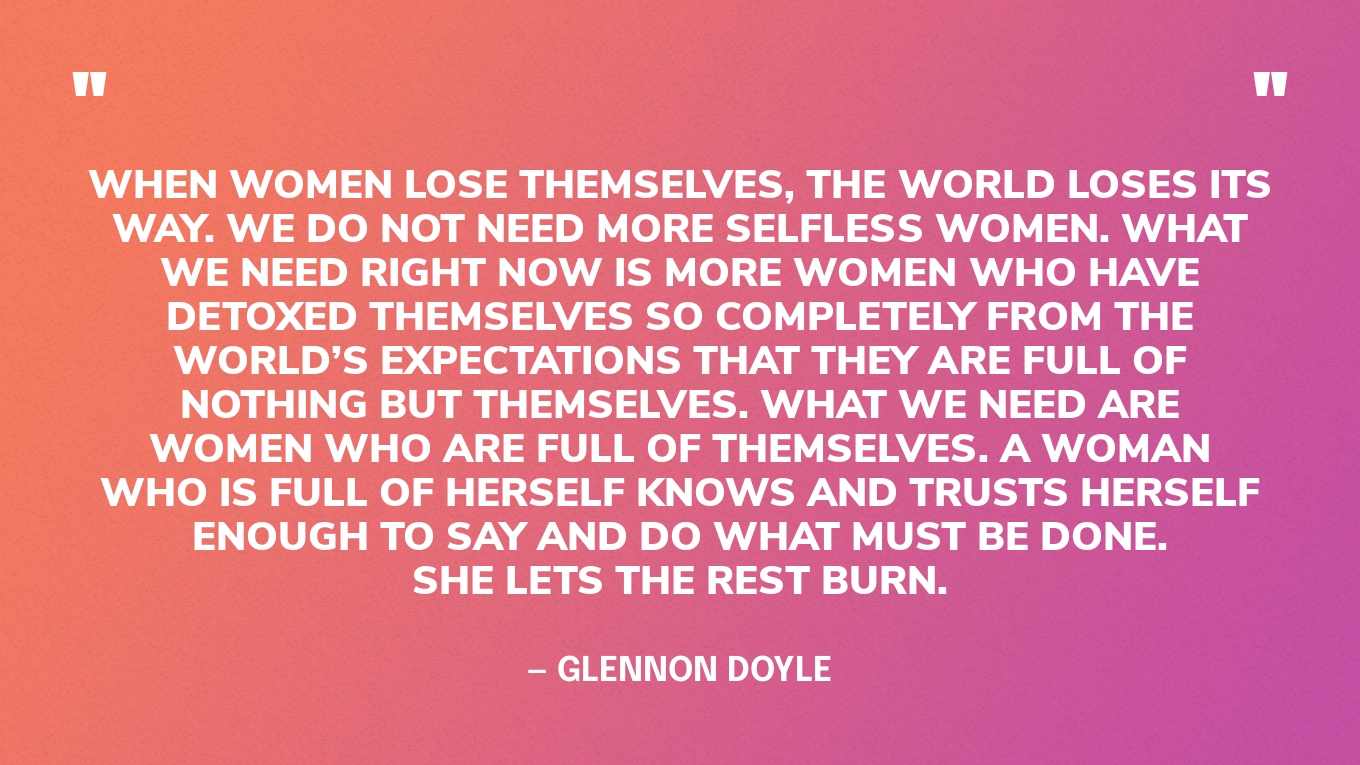
“There is no tool for development more effective than the empowerment of women.”
— Kofi Annan
“If you truly pour your heart into what you believe in, even if it makes you vulnerable, amazing things can and will happen.”
— Emma Watson
“I am a woman
Phenomenally.
Phenomenal woman,
That’s me.”
— Maya Angelou
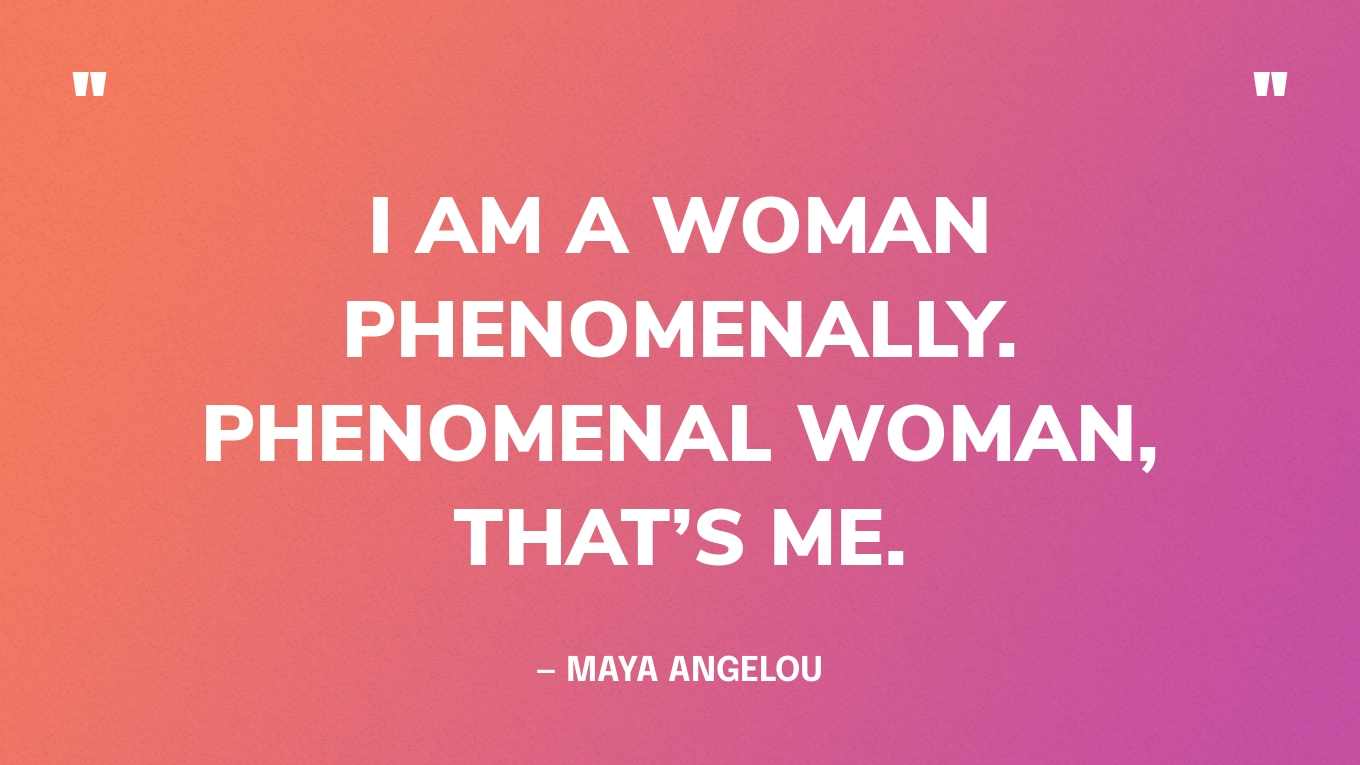
On Freedom
“Freeing yourself was one thing, claiming ownership of that freed self was another.”
— Toni Morrison
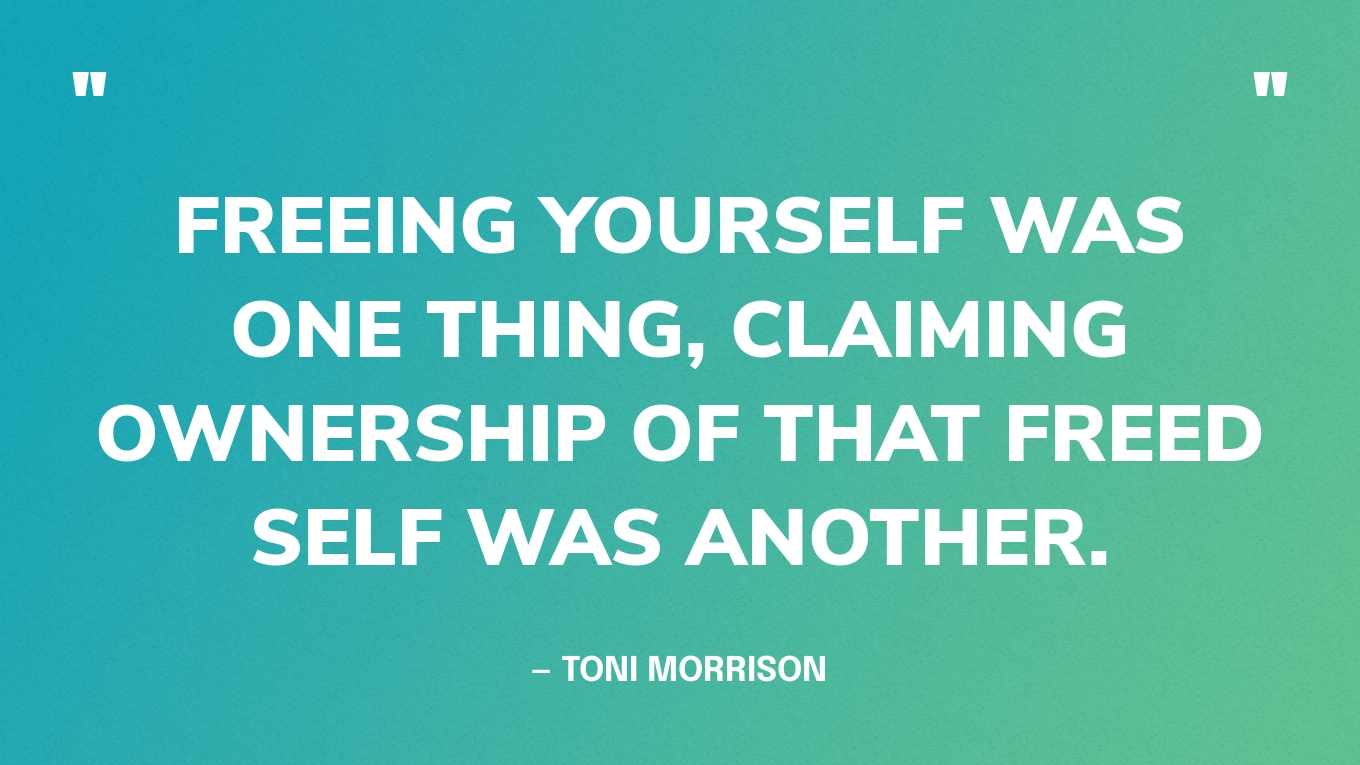
“Freedom is to live with dignity.”
— Manal al-Sharif, Daring to Drive: A Saudi Woman’s Awakening
“Who knows what women can be when they are finally free to be themselves.”
— Betty Friedan
“Imagine how much happier we would be, how much freer to be our true individual selves, if we didn't have the weight of gender expectations.”
— Chimamanda Ngozi Adichie
“It is a blessing to know a free woman. Sometimes she will stop by and hold up a mirror for you. She will help you remember who you are.”
— Glennon Doyle
“Freedom is not being for or against an ideal, but creating your own existence from scratch.”
— Glennon Doyle
“There is no gate, no lock, no bolt that you can set upon the freedom of my mind.”
— Virginia Woolf
“I am not free while any woman is unfree, even when her shackles are very different from my own.”
— Audre Lorde
On Independence
“I will not stay, not ever again — in a room or conversation or relationship or institution that requires me to abandon myself.”
— Glennon Doyle
“A Woman in harmony with her spirit
is like a river flowing.
She goes where she will without pretense and arrives at her destination
prepared to be herself
and only herself”
— Maya Angelou
“I’m not going to continue knocking that old door that doesn’t open for me. I’m going to create my own door and walk through that.”
— Ava DuVernay
“I am a woman with thoughts and questions and shit to say. I say if I’m beautiful. I say if I’m strong. You will not determine my story — I will.”
— Amy Schumer
“A woman is the full circle. Within her is the power to create, nurture and transform.”
— Diane Mariechild
On Growth
“Sometimes you need to scorch everything to the ground, and start over. After the burning the soil is richer, and new things can grow. People are like that, too. They start over. They find a way.”
— Celeste Ng, Little Fires Everywhere
“I always did something I was a little not ready to do. I think that’s how you grow. When there’s that moment of ‘Wow, I’m not really sure I can do this,’ and you push through those moments, that’s when you have a breakthrough.”
— Marissa Mayer
“If you’re one of those people who has that little voice in the back of her mind saying, ‘Maybe I could do [fill in the blank],’ don’t tell it to be quiet. Give it a little room to grow, and try to find an environment it can grow in.”
— Reese Witherspoon
“Change is incremental, and it is sometimes quiet. And it is happening. I promise you it is happening.”
— Glennon Doyle
Feminist Quotes
“Feminism isn’t about making women stronger. Women are already strong, it’s about changing the way the world perceives that strength.”
— G.D. Anderson
“Teach her that the idea of ‘gender roles’ is absolute nonsense. Do not ever tell her that she should or should not do something because she is a girl. ‘Because you are a girl’ is never a reason for anything. Ever.”
— Chimamanda Ngozi Adichie, Dear Ijeawele, or a Feminist Manifesto in Fifteen Suggestions
“I myself have never been able to find out precisely what feminism is: I only know that people call me a feminist whenever I express sentiments that differentiate me from a doormat.”
— Rebecca West
“I embrace the label of bad feminist because I am human. I am messy. I’m not trying to be an example. I am not trying to be perfect. I am not trying to say I have all the answers. I am not trying to say I’m right. I am just trying — trying to support what I believe in, trying to do some good in this world, trying to make some noise with my writing while also being myself.”
— Roxane Gay
“My movement is my movement. When all the dust has settled on the groundbreaking-ness, I’m going to still be doing this. I’m not going to suddenly change. I’m going to still be telling my life story through music. And if that’s body-positive to you, amen. If that’s feminist to you, amen. If that’s pro-Black to you, amen. Because ma’am, I’m all of those things.”
— Lizzo
“I think transwomen, and transpeople in general, show everyone that you can define what it means to be a man or woman on your own terms. A lot of what feminism is about is moving outside of roles and moving outside of expectations of who and what you're supposed to be to live a more authentic life.”
— Laverne Cox
“A huge part of being a feminist is giving other women the freedom to make choices you might not necessarily make yourself.”
— Lena Dunham
“Feminism is for everybody.”
— bell hooks
→ Read more feminist quotes
From Literature and Books
“There is a stubbornness about me that never can bear to be frightened at the will of others. My courage always rises at every attempt to intimidate me.”
— Jane Austen, Pride and Prejudice
“I ask not for any crown
But that which all may win;
Nor try to conquer any world
Except the one within.”
— Louisa May Alcott, The Complete Poetry
“I am not afraid of storms, for I am learning how to sail my ship.”
— Louisa May Alcott, Little Women
“My true potential had more to do with my willingness to struggle than with my past and present circumstances.”
— Hope Jahren, Lab Girl
“When you can’t find someone to follow, you have to find a way to lead by example.”
— Roxane Gay, Bad Feminist
“There’s not a stratum of the world that doesn’t need girls. Maybe we’re devalued precisely because we’re so valuable. The world is too afraid of not being able to obtain and control us to respect our true worth.”
— Xiran Jay Zhao, Iron Widow
“When we police a woman’s affect, when we privilege it or equate it with her actions, with what she actually does, we’re engaging in our most pervasive and yet our most quiet form of sexism, our most quiet form of everyday violence.”
— Toni Jensen, Carry: A Memoir of Survival on Stolen Land
“Agency. Self-determination. Dignity. Solidarity. We could not discount the potential impact of even one such altered perspective on a young girl, her family, and, eventually, on an entire community.”
— Samantha Power, The Education of an Idealist: A Memoir
“It is critical to unearth and understand our stories — both as individuals and as entrepreneurs. Once we do that, make peace with it, and embrace it, not only can we live empowered, transformed, and fulfilling lives, we can help others do that too as models and as guides.”
— Marta Spirk, The Empowered Woman: The Ultimate Roadmap to Business Success
“Give a girl an education and introduce her properly into the world, and ten to one she has the means of settling well, without further expense to anybody.”
— Jane Austen, Mansfield Park
“When my daughters grow up
and look at the trenches
time will have dug on my forehead
I want them to see the wars
other women have fought
so the lines of those after them
wouldn’t be trenches, but poems”
— Valentina Quarta, The Purpose Ladder
“Sometimes just being yourself is the radical act. When you occupy space in systems that weren’t built for you, your authenticity is activism.”
— Elaine Welteroth, More Than Enough: Claiming Space for Who You Are (No Matter What They Say)
“Women have sat indoors all these millions of years, so that by this time the very walls are permeated by their creative force, which has, indeed, so overcharged the capacity of bricks and mortar that it must needs harness itself to pens and brushes and business and politics.”
— Virginia Woolf, A Room of One’s Own
“I was amazed that what I needed to survive could be carried on my back. And, most surprising of all, that I could carry it.”
— Cheryl Strayed, Wild: From Lost to Found on the Pacific Crest Trail
From Women in Power
“Women belong in all places where decisions are being made. It shouldn’t be that women are the exception.”
— Ruth Bader Ginsburg
“Women are leaders everywhere you look — from the CEO who runs a Fortune 500 company to the housewife who raises her children and heads her household. Our country was built by strong women, and we will continue to break down walls and defy stereotypes.”
— Nancy Pelosi
“There will be people who say to you, ‘You are out of your lane’. They are burdened by only having the capacity to see what has always been instead of what can be. But don’t let that burden you.”
— Kamala Harris
“They’ll tell you you’re too loud — that you need to wait your turn and ask the right people for permission. Do it anyway.”
— Alexandria Ocasio-Cortez
“We need women at all levels, including the top, to change the dynamic, reshape the conversation, to make sure women’s voices are heard and heeded, not overlooked and ignored.”
— Sheryl Sandberg
“Always aim high, work hard, and care deeply about what you believe in. And, when you stumble, keep faith. And, when you’re knocked down, get right back up and never listen to anyone who says you can’t or shouldn’t go on.”
— Hillary Clinton
“Our collective experience has shown that when women have the power to make their own choices, good things happen.”
— Madeleine Albright
“A woman with a voice is, by definition, a strong woman.”
— Melinda Gates
Short Quotes
“There is no force more powerful than a woman determined to rise.”
— W.E.B. Dubois
“There is no limit to what we, as women, can accomplish.”
— Michelle Obama
“Everything is within your power, and your power is within you.”
— Janice Trachtman
“If you ask a woman who she is, she’ll tell you who she serves and sometimes what she does. But that isn’t the whole story.”
— Glennon Doyle
“We may encounter many defeats but we must not be defeated.”
— Maya Angelou
“It took me quite a long time to develop a voice and now that I have it, I am not going to be silent.”
— Madeleine Albright
“I never dreamed about success. I worked for it.”
— Estée Lauder
“I do not wish women to have power over men; but over themselves.”
— Mary Wollstonecraft
“I have met myself and I am going to care for her fiercely.”
— Glennon Doyle
“Everything is within your power, and your power is within you.”
— Janice Trachtman, Catching What Life Throws at You: Inspiring True Stories of Healing.
“We all have purpose even if we’re still striving to understand what that is.”
— Angela Bassett
“I am no longer accepting the things I cannot change. I am changing the things I cannot accept.”
— Angela Davis
“You never completely have your rights, one person, until you all have your rights.”
— Marsha P. Johnson
More Quotes
“A powerful woman is a heat-resistant and storm-bracing caliber. There is nothing she cannot handle.”
— Gift Gugu Mona
“Black women have had to develop a larger vision of our society than perhaps any other group. They have had to understand white men, white women and black men. And they have had to understand themselves. When black women win victories, it is a boost for virtually every segment of society.”
— Angela Davis
“I’ve been in so many spaces where I’m the first and only Black trans woman or trans woman period. I just want to work until there are fewer and fewer ‘first and only’s.”
— Raquel Willis
“A woman who is willing to be herself and pursue her own potential runs not so much the risk of loneliness, as the challenge of exposure to more interesting men — and people in general.”
— Lorraine Hansberry
“Respect, Love, and Value yourself. Always remember to be good to yourself by taking care of yourself. Make yourself a priority and know that it’s okay. Don’t feel guilty for loving yourself, first! You’re just as important as anybody else.”
— Stephanie Lahart
“I do realize the importance of having the bravery to live as who you are and I feel like a lot of people don’t have that bravery. Maybe by me opening my big fat mouth like I usually do and stepping up and owning who I am, maybe it might inspire somebody else to do the same.”
— Michelle Rodriguez
“It takes a little bit of bravery to step out, to be like, okay, I don’t look like anybody else around here. I am making the conscious decision to present myself the way I want to today.”
— Hunter Schafer
“Sometimes people try to destroy you, precisely because they recognize your power — not because they don’t see it, but because they see it and they don’t want it to exist.”
— Janet Mock
“Hear me as a woman
Have me as your sister
On purpled battlefield breaking day,
So I might say our victory is just beginning,
See me as change,
Say I am movement,
That I am the year
And I am the era
Of the women.”
— Amanda Gorman, Won’t You Be My Sister
We can all agree that we quite like an underdog story. We especially like an underdog story that involves bucking corporate, for-profit entities with no regard for a community, and a starting-from-the-bottom hero’s journey fueled largely by a group of individuals coming together to make a difference — both for the community, and people around the world.
And just like the Richmond Greyhounds of Ted Lasso fame — this one’s got us believing.
In early February, AFC Wimbledon Women announced a new team sponsor: Partners In Health
AFC Wimbledon Women is the women’s and girls’ teams for the AFC Wimbledon club, which has a storied history — one that quite poetically aligns with the story of nonprofit Partners In Health. And one that John Green is quite the fan of.
Green is a longtime supporter and sponsor of AFC Wimbledon
Green is a longtime sponsor of the AFC Wimbledon men’s team, which is one of the few professional soccer teams (and professional sports teams in general) in the world owned by its fans.
And to understand how Green became a sponsor of the women’s team, we need to take a brief journey into history.

In 2002, league officials relocated the team, then called Wimbledon F.C. about 70 miles north to an entirely new town. It’s a familiar occurrence in the U.S., where teams change cities relatively frequently — not so in England, and especially not for soccer. It did not go over well with fans.
Instead of accepting their football club-less fate, Wimbledon fans took matters into their own hands and established their own — renaming it AFC Wimbledon. And they did something a little different to ensure this “new” team wouldn’t ever again be, in their words, “at the mercy of private owners with their own egotistical agendas.”
The team is now owned entirely by its supporters through The Dons Trust and overseen by an executive board elected by the fans.
Green (a storyteller in his own right) was drawn to this story, and in a segment on VICE Sports, told fans their support was “a testament to the power of individuals over corporations, over wealthy people, over greed… of individuals who care about something, who care about an institution” to make this team a reality.
A new start for AFC Wimbledon also meant starting from the very bottom of the league. The team went on to get promoted six times in 13 seasons, going from the ninth level of the league to the third.
Here’s the deal: Once you make it to the fourth level in the Football League, teams need more money and sponsors in order to compete. The fans showed up yet again — including one across the pond that even the players hadn’t heard of (yet): John Green.
John and his brother Hank had already been creating YouTube videos for Crash Course and vlogbrothers at this point, but Hank also started a YouTube channel called “hankgames” to upload gaming videos where he’d play and generate ad revenue from people watching.
Well, John started uploading videos of himself playing FIFA, representing which team? You guessed it: AFC Wimbledon. Despite being a “quite terrible” FIFA player (sorry John, but the internet agrees), the videos got millions of views. (They likely tune in less for John’s playing skills and more for the story he created around “his” AFC Wimbledon FIFA team — including two forwards named “John Green” and “other John Green.”)
Green’s videos started making quite a bit of money from ad revenue, so he called AFC Wimbledon and asked if he could support the team by giving them the money as a sponsor.
After a bit of confusion and a lot of “but why?” from the team, they of course agreed. The team’s kits (that’s British for uniforms) were soon emblazoned with a “DFTBA: Nerdfighteria” crest on the shorts. At one point, they even named an entire section of the stadium the “John Green seats.”
Partners in Health becomes a sponsor of AFC Wimbledon Women
A year after AFC Wimbledon was formed, they also established both women’s and girls’ teams — AFC Wimbledon Women. Despite some ups and downs over the years, the team played in front of a record crowd at the club’s home stadium, Plough Lane last season.
This brings us to today, with John Green once again putting his support behind the inspiring club alongside producing partner, British writer, video blogger, social media manager, and online personality Rosianna Halse Rojas.
And this time, they’re supporting the women’s team and an incredible organization doing lifesaving work for women and girls’ health around the world.
Rosianna and I are very excited to announce our new sponsorship of AFC Wimbledon's women's team (@afcw_women). The team will wear @PIH's logo on the back of their shirts. https://t.co/6Ny2YCDktM
— John Green (@sportswithjohn) February 9, 2023
Starting this season, thanks to John and Rosianna, AFC Wimbledon Women will wear the Partners In Health logo on the back of their jerseys — raising awareness for the organization during every match of the season.
“We are both very excited to sponsor AFC Wimbledon Women and join the many supporters of this fantastic club. The team is going from strength to strength with a brilliant squad and relentless support behind the scenes,” said John and Rosianna in a joint statement.
“It’s clear how much everyone has poured into this community and how much care has been at the heart of it all. We’re so grateful to everyone at AFC Wimbledon Women for the warm welcome and we can’t wait to see what the rest of the season brings.”
Partners In Health is a global health and social justice organization responding to the “moral imperative to provide high-quality health care globally to those who need it most.”
Working in 12 countries, Partners In Health operates within the belief that injustices lead to poverty and sickness, and that health is a human right — and no human is less deserving of that right than another.
You might also like: The best quotes from Partners In Health founder Dr. Paul Farmer
And just like John has been a longtime supporter of the Dons, the Green brothers have been longtime supporters of Partners in Health. Currently, they are working together to combat the maternal and child mortality crisis in Sierra Leone by raising $25 million over five years to build a teaching hospital for maternal health in the country.
The Green brothers are helping reach this fundraising goal through other projects like the Awesome Socks Club, Awesome Coffee Club, Project for Awesome livestream, and more.
And now: through the sponsorship of a team who knows a bit about coming together to make a change, overcoming “the powers that be,” and fighting through even the grimmest of circumstances.
Eight in 10 people see climate change as a “major threat” to their country, according to a 2018 Pew Research Center survey. We know food production is responsible for one-quarter of the world’s greenhouse gas emissions, according to data published in the journal Science.
“Eating local” is a common piece of advice, but research shows that while reducing your food’s transport distance does indeed reduce your carbon footprint, better advice would be to pay special attention to what you’re eating, not where it’s from.
Greenhouse gases from transportation make up just a small portion of the emissions from food. Other sources of greenhouse gases include land use, farming, animal feed, processing, retail, and packaging. In fact, land use and farm-stage emissions account for more than 80 percent of the footprint for most foods, according to Science.

And there are massive differences between foods: For example, producing a kilogram of beef emits 60 kilograms of greenhouse gases, whereas peas emits just 1 kilogram.
Animal-based foods tend to have a higher carbon footprint than plant-based foods, and among meats, poultry and pork have lower carbon footprints but are still higher than most plant-based foods.
Whether meat products are farmed and processed locally or shipped from the other side of the world generally matters very little for total emissions because the products are such high greenhouse gas emitters to start.
A study in Environmental Science & Technology showed that substituting less than one day per week’s worth of calories from beef and dairy products to chicken, fish, eggs, or a plant-based alternative reduces greenhouse gas emissions more than buying all your food from local sources.
Reducing meat consumption is also more sustainable than meat alternatives in most scenarios.

The data is clear: If you want your diet to play a part in preventing further damage to our planet, you are far better off eating plants than meat, regardless of where your meat is from.
This article was originally published in The Food Edition of the Goodnewspaper: the monthly print newspaper filled with good news. This issue first ran in August 2020. You can get your own Goodnewspaper by becoming a subscriber.
Header illustration by Carra Sykes for the Goodnewspaper.
In 48 hours, a celebration of community, fandom, and doing good for the world raised a total of $3,069,995.33 for charity. This is just the latest feat in the sixteen-year legacy of the Project for Awesome.
The Project for Awesome, or P4A, as its viewers know it, is an annual livestream project for charity hosted by Hank and John Green. The 2023 P4A provided no shortage of the goofy antics and heartwarming moments that have become its reputation — as countless people tune in, create inside jokes, and raise money for organizations making a meaningful difference.
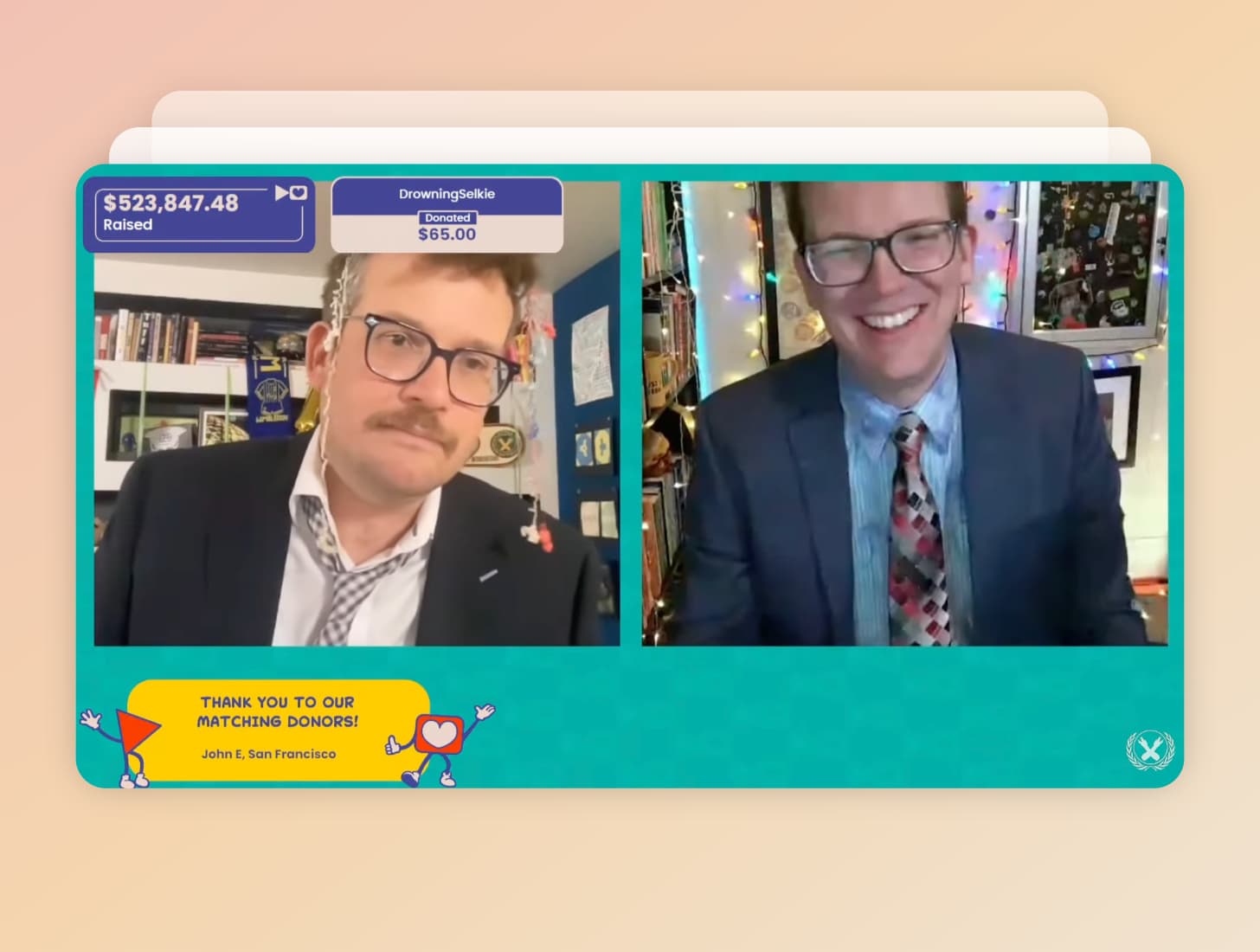
"There's nothing guaranteed about a better world… but I think it's possible."
“There’s nothing guaranteed about a better world… but I think it’s possible,” said John. “And that’s why the Project for Awesome is so important to me personally. Because it always comes at the perfect time for me somehow; it comes at a time when I need to know that we can choose a better world together.”
What is the Project for Awesome?
The first P4A took place in 2007, during Hank and John Green’s earliest years of YouTube fame. Since then, as the Green brothers have grown more famous as authors, educational content creators, TikTokers, and even sock spokespeople, the P4A’s popularity has risen, too.
What began as a modest, lighthearted project for the Green brothers’ YouTube viewers – known in the fan community as Nerdfighters – is now an annual project yielding millions each year.
The P4A, at its core, is a 48-hour live stream to raise money for charity.
"Every year, people from all over the world come together to raise money and awareness to make the world a better place."
“Every year, people from all over the world come together to raise money and awareness to make the world a better place,” Hank explained.
Although charity live streams have become more common since its debut, the P4A maintains elements that make the event unique and engaging.
One of these elements is the ability to claim “perks” in exchange for donations. Each year’s perks include reliable favorites like exclusive podcast episodes and commemorative coins but also one-of-a-kind artwork, at times inspired by inside jokes from the stream.
The 2023 perks list even included a hand-made quilt created by a community member — and actor Ryan Reynolds donated and signed an Adventure Time watch he wore in Deadpool, which was auctioned off for $9,876.54.

In addition to donating and receiving perks, viewers can submit a charity for consideration to be a beneficiary of the project. During the stream, viewers can vote for charities to benefit from the money raised.
“Regardless of whether you can donate, you help decide where the money we’re raising right now is going to go,” said John. “That’s really important. It’s arguably more important than raising the money — making sure we send it to the right places.”
The stream also features a variety of special guests, including content creators, authors, representatives from charities, and even wild animals.
As of this year, P4A events have raised more than $20 million dollars.
“I find hope in weekends like this — but also in seeing all the places and all the times when people are collaborating together to make the world suck less,” said John.
The 2023 P4A in Action
This year’s P4A began with John and Hank livestreaming together in suits and ties and ended with Hank wearing a crab hat and John’s family drawing all over his face with sharpies. In between, dozens of members of the Green cinematic universe took turns hosting and co-hosting segments of the livestream.

Segments featured Hrishikesh Hirway of Song Exploder, engineer Destin Sandlin, musician Tessa Violet, The Gregory Brothers, and more than a dozen more beloved personalities.
Throughout the event, P4A-related memes filled Twitter and Reddit.

Among the most notable moments in the event were seemingly food related: Hank “cronching” a lemon, Hank dipping a Dr Pepper-flavored Peep into a can of Dr Pepper-flavored beans, Hank cracking an egg on his head, and a recurring joke about hummus. Hank sang a number of parodies of songs… related to, mostly, food. Again, all for charity.
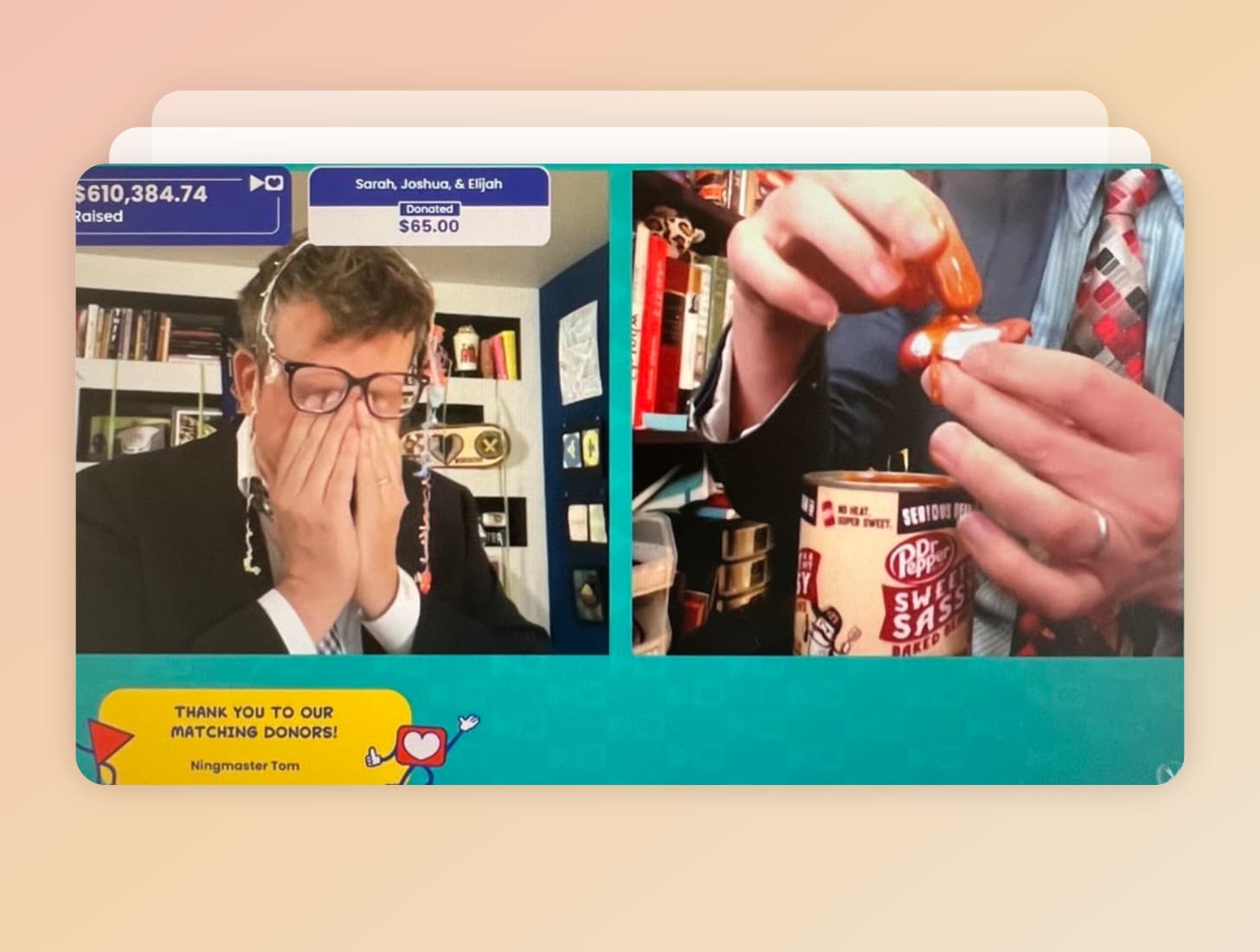
P4A reached $1 million raised in the first two hours — and ended the event with $2.85 million raised. But Nerdfighters were not content. Donations continued pouring in after the stream ended, surpassing $2.9 million raised by the end of Sunday.
With the $3 million milestone so close, the community wasn’t content to stop. On Monday morning, with $53,000 needed to reach the new target, Hank tweeted, “Seriously contemplating restarting the livestream if it looks like we might get past $3M.”
On Monday evening, Hank tweeted that an anonymous donor had pledged $20,000 in matching funds to try to reach $3 million. Within hours, the community reached more than $3,005,000.
Who benefits from the P4A?
When a viewer donates or selects a perk during the P4A, the money is donated directly to the Foundation to Decrease World Suck. The FTDWS is a nonprofit organization founded by Hank and John specifically for the P4A. Rather than supporting a single cause, the Foundation distributes funds raised among various charities.
Each year, money raised during the first 24 hours of the P4A is split between Partners in Health and Save the Children, two global healthcare-focused nonprofit organizations. The Greens have longstanding partnerships with these organizations, including their ongoing commitment with PIH to building, staffing, and maintaining a teaching hospital in Sierra Leone.
In one of the first segments of the livestream, John was joined by Dr. Joia Mukherjee, the chief medical officer at Partners In Health.
“We’re grateful to the whole community — each and every one of you, whatever you’re able to do — just paying attention to these issues… that’s enough,” she said.
"We're grateful to the whole community — each and every one of you, whatever you're able to do — just paying attention to these issues… that's enough."
Money raised during the second half of the stream is split among various charities submitted and voted on by P4A viewers and Nerdfighters throughout the stream. Voting allows each viewer to promote causes with personal meaning to them while maintaining the collective, communal experience of watching the stream together.
In an April 20, 2023 email to supporters, Hank and John announced the winners of the vote:
- American Library Association
- Animal Wonders
- Asian Americans United
- Audre Lorde Project
- Camp Lilac
- Center for Reproductive Rights
- Earthjustice
- Ecology Project International
- Fandom Forward
- Good Food Institute
- Habibi.Works
- Hear Your Song
- Legacy Youth Leadership
- Mermaids UK
- NaNoWriMo
- National Center for Transgender Equality
- No Means No Worldwide
- Not Forgotten
- Other People Fund
- Prison Book Program
- Project Heal
- She’s The First
- Sustainability Matters
- The Ocean Cleanup
- The Trevor Project
- Thirst Project
- This Star Won't Go Out
- UNHCR
- Uplift - Online Communities Against Sexual Violence
- Wikimedia Foundation
Decreasing world suck beyond the P4A
Hank, John, and Nerdfighteria’s contributions to charity go far beyond the P4A. Through various outlets, including the Awesome Socks Club and the Awesome Coffee Club, the Greens and their online community have pledged to raise over $30,000,000 for their Sierra Leone project with Partners in Health. While this recent work is the community’s landmark project, Decreasing World Suck has been the unofficial mission of Nerdfighteria since its origin.
"Take a moment to reflect on it and celebrate it and feel that shared sense of endeavor — that magic that you have when a lot of people's love is oriented in the same direction and the thing that connects you to them is that your love goes toward the same places."
“What we get to share together is very special and like everything in this world, it’s temporary and let’s not take it for granted,” John said at the end of the livestream.
“Take a moment to reflect on it and celebrate it and feel that shared sense of endeavor — that magic that you have when a lot of people’s love is oriented in the same direction and the thing that connects you to them is that your love goes toward the same places.”
The 2023 P4A is yet another demonstration of the power of community. At the end of the 48-hour stream, viewers and participants had raised a grand total of $3,069,995.33.
Although the P4A stream has ended for 2023, it is not too late to get involved with this year’s project. The P4A website will remain live through Monday, February 21, to make donations and claim perks via Tiltify — the fundraising platform used for the annual event.
"The community does a really great job making the experience of the P4A what it is… It's the reason why the P4A ultimately works."
“This has been a great Project for Awesome — not because of Hank or me — but because of the extraordinary people who come together every year to make it work. And it’s truly, truly inspirational to me,” John said in the final hours of the event.
“The community does a really great job making the experience of the P4A what it is… It’s the reason why the P4A ultimately works.”
No matter what side of the political spectrum you land, it’s fair to say most Americans are tired of political fundraising emails.
But, of course, we’re always happy to see those emails do a bit more good.
When John Fetterman — the Democratic Senator of Pennsylvania — voluntarily checked into Walter Reed Medical Center to receive in-patient care for clinical depression last week, his team quickly worked to build support instead of shame.
Fetterman suffered a stroke near the end of his campaign in May 2022, and while post-stroke depression is common in about one-third of patients, Fetterman’s chief of staff, Adam Jentleson, shared in a statement that the senator has experienced depression on and off throughout his life.
He certainly isn’t alone. And he and his office are making sure others have the same kind of access to care.
Following the news of his hospitalization, Fetterman’s email subscriber list received a memo asking for donations — not for his campaign, but for two mental health nonprofits.

“Millions of people struggle with depression every day, and too often, people don’t reach out for help. Seniors, veterans, and millions of people who face the stigma that comes with addressing our mental health can go years without getting needed mental health care,” the email reads. “We’re glad John is setting an example for all of us and we hope that his bravery will encourage people around the country who need help to seek it, too.”
Then, supporters are encouraged to click a link that would split their donation between the National Alliance on Mental Illness and the Pennsylvania Mental Health Consumers’ Association. 100% of donations will go directly to these two organizations.
In 2021 and 2022, Fetterman raised more money than almost any other campaign for U.S. Senate, which means his email list size is likely among the largest of Democratic senators. Email sends are usually optimized for campaign fundraising and the choice to use it to fundraise for an outside organization is uncommon.
How is John Fetterman’s transparency about mental health good news?
Aside from mobilizing a huge supporter base to support mental health organizations, the news about Fetterman’s mental health is transformational in a number of ways.
Those who have lived with mental health conditions for years know that a story like this would have been unheard of just a few years ago. As a prominent political figure — someone who objectively has a lot of power and influence — openly disclosing this experience, Fetterman is doing a service for himself, while also extending his service for the American people.
“When somebody like Sen. Fetterman is transparent about having a clinical mental health condition and about getting inpatient treatment, it’s hugely powerful,” Pooja Lakshmin, a psychiatrist and clinical assistant professor at George Washington University School of Medicine told Vox.
“Talking about it really helps. When you see something like this in the news, it gives folks permission to share that story with a friend, to bring it up in a text chat.”
And it’s not just powerful for the general public. Fetterman’s transparency has also encouraged other lawmakers to speak out.
Michigan state representative Noah Arbit tweeted about his experiences with anxiety, depression, and ADHD, calling Fetterman’s press release “as profoundly impactful as any bill a U.S. Senator could introduce.”
Minnesota Senator Tina Smith also opened up online: “Seeking help when you need it is a sign of strength, not weakness, something that John is demonstrating for all of us,” she tweeted.
President Joe Biden himself even praised Fetterman’s agency in seeking care, and Pennsylvania Congresswoman Susan Wild — who lost her partner to suicide in 2019 — emphasized how this experience in no way impacts Fetterman’s legitimacy as a lawmaker.
“Rather than not being able to serve the people of Pennsylvania, I would contend that there are Pennsylvanians and Americans everywhere who feel less stigmatized, less of an odd-man out and recognize that they too share a disease and illness that many other people have,” Wild told CBS News. “I would actually argue it makes him more able to relate to Pennsylvanians, to his constituents.”
Although it’s important to embrace and reflect on the impact of the senator’s choice in seeking support, many Americans also simply hope that he receives the time and care he needs — not just to serve others — but to heal and thrive with his family.
“After what he’s been through in the past year, there’s probably no one who wanted to talk about his own health less than John,” Fetterman’s wife, Gisele Barreto Fetterman tweeted. “I’m so proud of him for asking for help and getting the care he needs.”
What are some ways I can take care of my own mental health?
At Good Good Good, we know that news like this can bring up some big feelings and lead us to get more curious about our own mental health care. We’ve created resources to remind readers that everything is going to be okay. Check them out:
Have access to mental health resources on hand.
If you or someone you love is experiencing a mental health crisis, or just needs some additional support, first check out this list of mental health resources to always have at the ready.
Find a therapist that’s right for you.
Mental health care (and all healthcare) can be incredibly inaccessible for many. And even if it’s accessible to you, it may be hard to find the right provider.
Check out this comprehensive guide to finding a therapist to get started.
Read good news about mental health.
Fetterman isn’t the only advocate in this space. In fact, there are so many amazing leaders who are passionate about mental health. As we always like to remind folks: Look for the helpers.
Check out some phenomenal mental health activists to lift your spirits and find community in all the big, scary feelings.
Practice proactive self-care.
Whether you’re looking for ways to practice self-care outside of bubble baths and face masks; want a helpful app that can help you on your self-care journey; or need some guidance to build a personalized self-care kit, there are self-care resources for you.
It was February 24 of 2022 when Russian president Vladimir Putin initiated an attack on Ukraine, spurring an ongoing conflict that has impacted the entire world.
A year later, the war rages on. While the Ukrainian military has taken Russia by surprise and steadily held on to its defense, millions of Ukrainians have suffered at the hands of the Russian military (including over 30,000 civilians who have died) and continue to need support.
As the conflict reaches this pivotal anniversary and has unfortunately faded from the mainstream conversation, this tragic and ongoing humanitarian crisis and devastation must be confronted.

At Good Good Good, we know that hope is fuel. Our team works to research, vet, and share authentic good news and action steps that help readers feel hopeful and empowered to make meaningful change in the world.
There is certainly no lack of heartbreaking news from the war in Ukraine, and it is vital that we all stay informed about the current events in Eastern Europe. However, we hope that “looking for the helpers” will give you the encouragement you need to do your part, and the hope we all need to celebrate the resilience at the heart of the war in Ukraine.
Read on about some amazing helpers who can help us turn our heartbreak into fuel as we continue to support the people of Ukraine.
You might also like: How To Help Ukraine Now — 1 Year Later
Here are the good news stories that gave us hope in Ukraine over the past year
Ukrainians came together to defend their country
Although it is truly horrific that Russia’s invasion forced everyday civilians into a warzone, the strength of community and collective humanity in Ukraine is truly astonishing.
Whether we point to the civilian medic wearing her high heels into a combat zone; the volunteer operation that came together in an old industrial complex to manufacture camouflage gear and body armor; or the women who traveled home to Ukraine at the start of the war to contribute in whatever ways they could — we celebrate countless stories of the human spirit.
People around the globe protested in support of Ukraine
Upon the invasion, many Russian citizens risked their safety and freedom to protest the conflict in Ukraine, but people across the globe showed up to protest in their own communities, too.
The weekend after the invasion, thousands took to the streets in neighboring European countries, as well as Japan, Iran, Australia, and the United States.
Reports show that the largest rally happened in Germany, as over 100,000 people gathered in Berlin to protest the invasion. Other areas around the world showed up in enormous numbers, as well.
30,000 rallied in Tbilisi, Georgia, which was the victim of a Russian invasion in 2008. Over 15,000 protesters lined the streets in Amsterdam. Thousands gathered in various city centers across the United Kingdom.
While these large movements have dissipated, anti-war protesters in Russia continue their fight.
Russia’s anti-war movement rages on — albeit quietly
According to the Washington Post, Russia’s anti-war movement shows a weak street-level resistance, but protests go beyond the traditional displays of defiance.
Since many anti-war protesters have been jailed and drafted into the war, anti-war Russians must move with stealth if they want to stay safe — and have an impact. These movements manifest through disseminating accurate information about the war, acts of sabotage, acts or violence, resistance art — helping Ukrainian refugees.
Networks like Vesna and Feminist Anti-War Resistance work tirelessly to dodge the Kremlin — all while standing against it.
Aid agencies rushed to help Ukrainians
Upon Russia’s invasion in Ukraine, major efforts from international aid organizations launched into action. Whether it was bringing in essential supplies, facilitating refugee safety, providing medical care, or feeding civilians a warm meal, here are a few statistics that celebrate the work of these aid providers over the last year.
- World Central Kitchen has served over 200 million meals across 9,000 distribution sites through its #ChefsForUkraine program
- The International Committee of the Red Cross provided access to clean water to 10,300,000 Ukrainians, as well as provided continued care to some 200,000 people with diabetes, cardiac conditions, and asthma.
- The Global Empowerment Mission helped place 13,624 individuals in temporary housing, and relocate over 38,700 people.
President Volodymyr Zelenskyy has led Ukraine with loyalty and hope
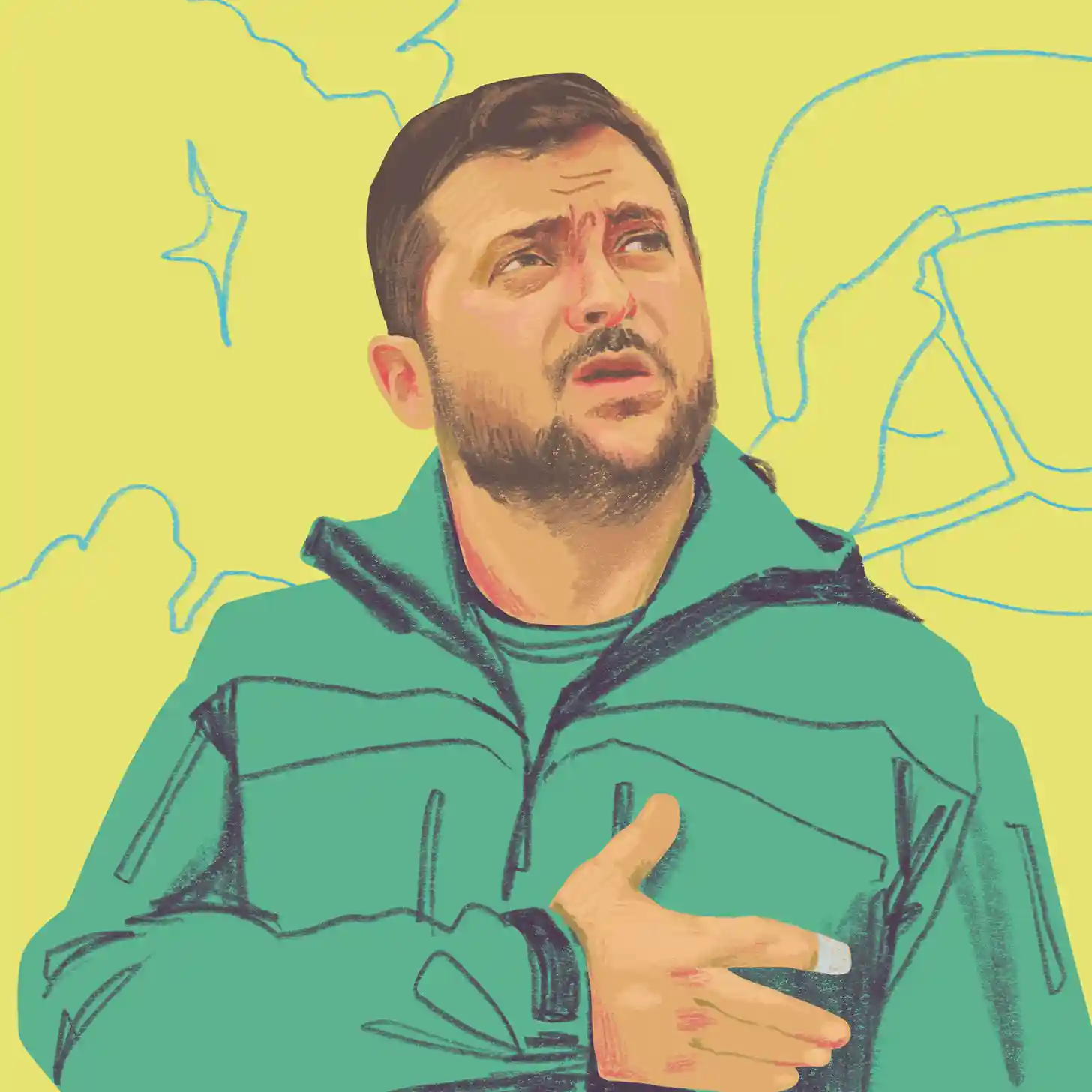
Ukraine President Volodymyr Zelenskyy’s unfailing allegiance to his country has made headlines for the last year. At the start of the war, he turned down President Biden’s offer to evacuate (he said “I need ammunition, not a ride”).
These days, he simultaneously works to rebuild the nation while demanding support from ally countries.
While it is certainly not easy to be a country’s leader during war, and Zelenskyy has and will make mistakes, his character and determination have a ripple effect on all Ukrainians.
“I am here. We are not putting down arms,” he said in a video at the start of Russia's invasion. “That is it. That’s all I wanted to tell you. Glory to Ukraine.”
Countries are decoupling from fossil fuels to reduce reliance on Russian oil
While we already know we need to globally eliminate our dependence on fossil fuels, it’s especially true when it comes to getting them from Russia. 60% of Russia’s exports are oil and gas.
One major response to the invasion of Ukraine was for countries in Europe and around the world to divest from fossil fuel projects in Russia and turn to renewable energy projects. Even before the military invasion, in response to Russia’s buildup of troops around Ukraine, Germany stopped the approval of Nord Stream 2 gas pipeline that would bring natural gas from Russia to Europe.
Later, Germany announced it would be accelerating its clean energy transition plans so the country would reach 100% renewable energy by 2035 — 15 years ahead of schedule.
Additionally, Australia, Britain, the United States, and Canada imposed bans on Russian oil purchases in the spring of 2022.
Nearly a year following the invasion, the European Union announced that it is cutting off imports of Russian oil products.
Companies have divested from and cut operations in Russia
Over 1,000 companies publicly announced that they would curtail operations in Russia. Many — like Adidas, Aldi, McDonald’s, and Starbucks — have exited or wound down their operations entirely.
Check out Yale’s complete list (and rankings) of global companies and their relationship to Russia.
Similarly, some fossil fuel and oil companies have also made divestments from Russia.
While we’re hesitant to ever celebrate oil and gas companies doing good for the planet — both because their overall efforts to transition to renewable energy pale in comparison to their investment in fossil fuels, and because of decades of hiding the truth about the damage they were doing to the planet — it is genuinely good news to see both BP and Shell make significant exits from investments and ventures in Russia.
Helpers around the world opened their homes to refugees
Millions of Ukrainians fled their homes at the start of the war, and while the massive scale of this refugee crisis overwhelmed the world in a mere few days, countries (and individuals) around the world were ready to welcome them with open arms.
For example, Poland took in more than 1.6 million Ukrainian refugees, with countries like Germany, Czechia, and Italy closely following in numbers.
Online platforms also became a safe haven for refugees, as folks turned to Host A Sister, Ukraine Take Shelter, Host4Ukraine, and Refuge Booking to find a place to stay. Unlike initiatives on Airbnb, many of these places hosted refugees free of charge and helped shelter minority communities who were otherwise discriminated against in their journey to safety.
Solar microgrids kept Ukraine’s hospitals running
One of Russia’s main targets (besides innocent civilians) has been fuel sources and power grids in Ukraine. When the crisis began in the area, American renewable energy experts Will Heegaard and Paul Shmotolokha were quick to take action to ensure Ukrainians could maintain power.
The duo sent LED lighting equipment and headlamps to hospitals and then expanded the program to include portable solar microgrids.
Unlike diesel generators, which are usually the route to emergency backup power, solar microgrids can produce and store energy independently from the main grid without relying on fossil fuels.
Heegaard and Shmotolokha were able to save lives by delivering these solar battery systems to over 13 hospitals in cities all over Ukraine.
Helpers of all kinds worked quickly to keep Ukrainians fed
When fleeing your country under the threat of a missile attack, you’re likely not going to pack the whole kitchen pantry in your backpack. For displaced Ukrainians, having access to food exactly where they are was pivotal in maintaining their health and safety.
Chef José Andrés and his nonprofit World Central Kitchen arrived almost immediately on the scene in Ukraine back in February 2022. Since then, his relief crew has provided over 200 million meals and the organization’s #ChefsForUkraine program has partnered with a large network of Ukraine’s restaurants to continue the good work.
This couple created a nonprofit to build homes for internally displaced Ukrainians
Patricia (Tuscia) Shmorhun Hawrylyshyn and her husband John Shmorhun have had a whirlwind marriage that took them around the globe for work, but when they landed in Ukraine 20 years ago, they decided to stay put — even in the face of war.
With their NGO backgrounds, the two put their heads together and called in their engineering-savvy friends to help house the internally displaced people in their communities. This was the birth of their nonprofit: MoveUkraine.
Read more about their story and how MoveUkraine is working to rebuild with rubble.
Families have been reunited with their loved ones
While many Ukrainians are still experiencing displacement or have relocated to an entirely new country, some families have returned to their homes or have reunited with loved ones.
When Russian troops retreated from Kherson in November of 2022, they left massive destruction in their wake, as Ukrainians were without power and water — but not without each other. Families reunited in Kherson and the surrounding villages, and although the fighting could still be heard in the nearby areas, they were able to rejoice.
Similarly, a number of children who were deported into Russia were reunited with their families in November. Ukrainian officials say over 16,000 children have been deported, and while just over 300 have been returned, the fight for their safety continues.
People kept living, celebrating, and connecting — despite the war
As much as the war has brought destruction and terror to Ukraine, its people continue to live their lives, connect with one another, and celebrate milestones as they normally would. This insistence on normalcy becomes a form of resistance. Where the Russian government threatens to destroy, Ukrainians choose joy.
Take this wedding planner, for example, who has adapted her events to blackouts and curfews, because more people are getting married in Kyiv. The city registered 9,120 marriages in the first five months after Russia’s attack on Ukraine, compared with just 1,110 over the same period in 2021.
Sports have gone uninterrupted, too. In October 2022, Ukraine began its new football season in spite of the war, and players from both teams wore jerseys sporting the same insignia: “Ukraine will win.”
In terms of winning outside of the war, Ukrainians have been doing that, too. The country won the Chess Olympiad last year, as well as the Eurovision Song Contest.
Ukrainian artists used their skills to support their neighbors through Etsy
Creativity has been a tool for Ukrainian solidarity since the start of the war. Thousands of Etsy sellers took to the global artisan marketplace to raise funds for Ukraine through digital downloads.
“I try to fulfill orders whenever possible,” one seller, Yulia Kosareva said. “Creativity helps [me] not to think about this horror. I am very grateful to all my customers for their support and willingness to wait, as the constant air danger sirens leave me little time for work, but I constantly work when I have the opportunity.”
Learn more about Yulia and the efforts of artists to raise funds and keep creating during war.
Children have benefited from education and arts programs to heal from the trauma of war
Children’s mental health is already fragile, but a war-time environment makes it even more important to prioritize mental health, education, and healing for young ones.
One way Ukrainian children have been able to access mental health care is through the healing power of art. Nonprofit Ukulele Kids Club has created the Ukuleles For Ukraine initiative with the World Federation of Music Therapy's Global Crisis Intervention team. Together, they provide instruments and music therapy to children in Ukraine and Ukrainian refugees across Europe.
Similarly, the charity UA Kids Today emerged in March 2022 to encourage children to tap into the therapeutic benefits of drawing. The organization has an online gallery to view submitted artwork, and while the creations of young ones is a healing tool, they also serve as a way to honor and protect cultural heritage.
The War Childhood Museum has also developed a traveling exhibition throughout Europe, chronicling the experience of children in the war.
Artists and activists are preserving Ukrainian culture at home and abroad
Speaking of which, cultural preservation is at the heart of war-time activism. As Russia threatens to erase an entire culture through the destruction of land and life, they also threaten to erase Ukrainians from history.
And that will not do.
Ukrainians across the globe have shared their cultural traditions with new, safe communities and introduced the world to so many special, unique practices that will surely stand the test of time. Museums have also gotten in on the action, working to protect and preserve artifacts.
Ukrainian animals have been rescued and re-homed
In October 2022, a pride of lions was airlifted from Ukraine and brought to the Wild Animal Sanctuary in Colorado. Nine adult lions and two cubs were rehomed in the sanctuary as part of the world’s largest warzone lion rescues in history.
“We are thankful we could get all the lions out in time and save them,” Pat Craig, Executive Director of the Wild Animal Sanctuary said. “They will live out the rest of their lives in pristine, large, natural habitats.”
Similarly, the International Fund for Animal Welfare helped rescue four lion cubs from Ukraine and brought them to their new safe havens at the Wildcat Sanctuary in Sandstone, Minnesota.
People around the world traveled to Ukraine to volunteer on the front lines
Although any assistance, like donations, raising awareness, and fighting disinformation, makes a difference for Ukrainians, some folks made it their mission to get to the front lines of the conflict to help.
Agatha Williams is a queer metal fabricator from Denver who grew up in foster care, and when the conflict arose in Ukraine, decided to leave the U.S. for the first time to serve as a front-line aid worker.
They teamed up with a small team, self-titled the Renegade Relief Runners, delivering 4,000 pounds of food, repairing hospital generators, and reaching small areas international aid organizations likely couldn’t reach.
“The collective diversity of those who came her to Ukraine to help push back against Russia has been strengthened because we found each other as a team, and thanks to our individual identities, we’ve been able to accomplish much of what we’ve set out to do so far,” Drew Luhowy, a member of the Renegade Relief Runners team said.
Another Denver do-gooder, retired cop Snow White (yes, that’s her name!) traveled as a volunteer with World Central Kitchen, packaging and distributing meals for refugees on the border of Ukraine and Poland.
“It is humbling to do this work, but I am thankful to be able to make a difference,” she told CBS News. “You’re doing something other than sitting at home wishing you could do something.”
Helpers worked to bring aid to Holocaust survivors
Ukraine is home to a large number of Holocaust survivors, who carry a storied past in the nation that was once occupied by Nazis. For many Holocaust survivors, it was especially traumatizing to be forced to leave their home country once again.
All the way in Los Angeles, at the start of the war, paralegal Julia Entin spent days on the phone connecting Holocaust survivors with trusted support groups to be rescued out of war zones. Entin is a daughter of a Holocaust survivor and refugee from the former Soviet Union, and from her headset and laptop in California, untangled webs of grassroots organizations, taxi and bus operators, and the vulnerable community themselves to find safety.
Coincidentally, many found refuge in Germany, where President Frank-Walter Steinmeier hoped to welcome these survivors with warmth and care.
While many were wary and still hope to return home to Ukraine, they are comforted knowing that they have found safety — even if the place they are staying right now is temporary.
“In 1941, we fled from the Germans. Now we faced war once more, and now we have come to the Germans so they will protect us. This is the paradox,” Ukrainian refugee Larisa Pogosava told PBS NewsHour. “So maybe there is no such thing as permanent friends or permanent enemies.”
The world continues to help Ukraine
As the war between Russia and Ukraine continues, people and organizations all across the globe are looking to help. We are looking for the helpers and continue to provide ways to take action against war and human rights atrocities.
It’s almost unfathomable that it’s been a full year since the news first broke that Russia had invaded Ukraine — and that this invasion would devolve into a full-on war, bolstered by some of the most heinous human rights atrocities in recent history.
Unfortunately, it’s also difficult to balance the ongoing current events in Ukraine with every other tragedy, geopolitical relationship — and heck, our own mental health — on any given day.
As we reach the one-year mark of the war, we reflect on the pain and trauma Ukrainians have endured, mourn the loss of those killed in senseless and unnecessary violence, and do what we can to help.
At Good Good Good, we always encourage readers to engage with the news intentionally and to find balance between self-care and community.
We also believe that if you have the privilege to be learning about injustice through the news, you have the responsibility to do something to help.
We’ve compiled the best good news coming out of Ukraine — because it truly is hard to know how to deal with constant bad news.
And we’ve created this resource to help you be a part of the good news — the ultimate guide of ways to meaningfully support Ukrainians.
But first, here is a brief (and we mean brief) overview of what is going on in Ukraine now:
What’s going on in Ukraine a year after Russia’s invasion?
While daily military operations can make it difficult for the average person to track the latest tactical updates between Russia and Ukraine, we are able to understand the human rights implications of this war. The facts are staggering:
- As of January 30, 2023, the Office of the UN High Commissioner for Human Rights has recorded 18,657 civilian casualties in Ukraine, including 7,110 killed and 11,547 injured.
- As of January 2023, the International Organization for Migration estimates that about 5.4 million people — at least 55% of whom are women — are still trying to find safety in different parts of Ukraine. 58% of all internally displaced people have been displaced for six months or more.
- Since February 2022, some 5 million children have been displaced inside and outside Ukraine.
- The United Nations (UN) estimates that 18 million people in Ukraine will require life-saving humanitarian assistance in the coming months, 9.8 million of whom are women and girls. Additionally, about 9.3 million people across Ukraine urgently need food and livelihood assistance.
As the UN urges peace upon the one-year anniversary, President Biden made a historical visit to the area and promised new military aid, and Ukraine forces continue to maintain resilience, it’s clear that even if the war were to end imminently, the profound impact of this violence will last indefinitely.
How you can still help and support Ukraine now:
Stay informed with reliable information
Even if Ukraine has faded from mainstream Western media since last February, and Russia is persistent in its disinformation campaigns, it is still fairly easy to stay up-to-date on the news out of Eastern Europe.
The best way to stay informed is by consuming news from independent Ukrainian news organizations, as well as long-standing, trusted international news sources.
We’ll outline a few great options below, but you can also follow along with CNN fact-checker Daniel Dale’s Twitter list of 100 Ukraine-focused journalists.
The Kyiv Independent
The Kyiv Independent is a Ukrainian English-language media outlet, created in November 2021 by journalists who were fired from the Kyiv Post for defending editorial independence. Although a new outlet, the publication is led by longtime journalists who report on war, politics, and business in Ukraine.
“Ukraine needs on-the-ground English-language journalism of the highest quality, and our community needs a news source it can trust,” the Kyiv Independent’s Patreon profile reads. “We vow to serve as the true, independent global voice of Ukraine.”
The Kyiv Independent is funded independently by donors and supporters via Patreon and GoFundMe.
UKRPravda News
UKRPravda News was co-founded in 2000 by Georgiy Gongadze, a prominent journalist and film director who was assassinated the same year. Partially funded by the International Renaissance Foundation — an organization dedicated to promoting democracy in Ukraine — UKRPravda News investigates political officials who abuse their power and pioneers the freedom of information in Eastern Europe.
Zaborona Media
Zaborona Media is an independent media outlet reporting on social trends and culture in post-socialist countries in Eastern Europe. Reporters cover challenges faced by societies and individuals fighting for their freedom. Zarborona shares profiles on LGBTQ+ soldiers, explores the urban challenges before and after the invasion, and gives a deep look into the lives of human rights defenders in 2022.
“We talk about social challenges, freedoms, and security boundaries, about people who stand up for fundamental rights and change how the world can be organized,” the Zarborona website reads. “We talk about what others are silent about.”
Zarbonara is funded by readers on Patreon, grants from international organizations, and partnerships with groups like Open Society Foundation, Free Press Unlimited, National Endowment for Democracy, and Journalismfund.eu.
Reuters
Reuters is the world’s largest multimedia news provider and is seen by billions of people every single day. The news agency was founded in 1851 and has remained true to its standards and values of independence, integrity, and freedom from bias.
Reuters shares numerous daily updates from Ukraine, and its journalists have risked their lives providing timely and unbiased coverage to readers during this conflict.
Associated Press
The Associated Press is an independent global news organization dedicated to factual reporting. The AP was founded in 1846 and is a reliable source for speedy, accurate, unbiased news.
AP’s team operates in 250 countries around the globe, covering all kinds of global news, including regular updates from Ukraine, where Russian forces have continued to fight members of the free press.
AP has established the Emergency Relief Fund to support journalists and their families who are affected by crisis and disaster.
Support local organizations making a difference in Ukraine
While it’s always great to help international aid agencies, supporting on-the-ground grassroots efforts led by Ukrainians is the best way to use your funds.
There are experts in international nonprofits who are able to connect with people across the globe, but the fact of the matter is that no one knows the needs of Ukrainians better than Ukrainians.
When these locally-based organizations are given the means to execute their missions, they have better opportunities to support their neighbors, rebuild their communities, and find peace and healing during and after the war. Here are the best locally-based organizations and initiatives you can support in Ukraine:
Vostock-SOS
Humanitarian aid for victims of military aggression
Vostock-SOS volunteers provide a number of support services: finding shelter for internally displaced persons, assisting in evacuation from conflict zones, and collecting and distributing humanitarian aid supplies.
Since the start of the war, Vostock-SOS has helped over 25,000 people evacuate from the front lines and donated over 2,800 tons of supplies.
Charity Foundation for Stabilization Support Services
Humanitarian aid for civilians
Charity Foundation for Stabilization Support Services is a coalition of nearly 100 dedicated people in Ukraine who have experience in coordinating humanitarian organizations since 2015.
The organization was first developed in 2016 to promote the rights of migrants and veterans, and since the conflict began in 2022, has pivoted to providing ongoing humanitarian support and supplies, as well as assistance in emergency transportation.
In the past year, the organization has distributed 158,981 individual emergency humanitarian kits, enrolled 5,858 people in cash assistance programs, provided 14,957 individuals with counseling, and more.
→ Donate to Charity Foundation for Stabilization Support Services
Lifeline Ukraine
Mental health support
Mental health is always important, but it’s especially important — and at-risk — during times of crisis. Originally founded to support veterans and their families, Lifeline Ukraine is a 24/7 suicide hotline supporting Ukrainians.
MoveUkraine
Housing support for internally displaced Ukrainians
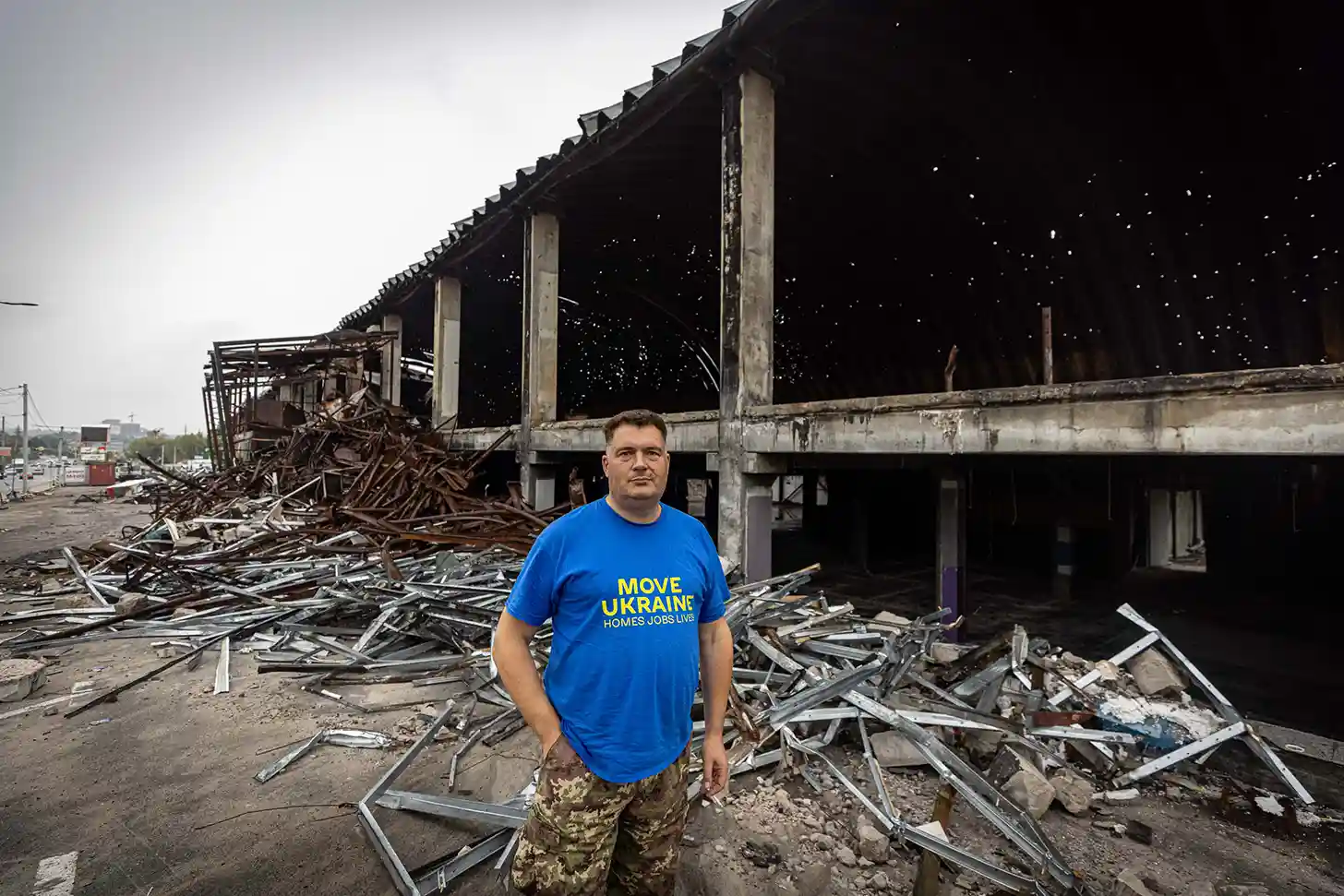
Founded in response to the ongoing internally displaced population crisis in Ukraine, MoveUkraine is an NGO with the mission of helping Ukrainian families rebuild their homes, lives, and communities.
By working swiftly to provide sustainable housing communities and jobs for Ukrainian families in the country’s safe zones, MoveUkraine has raised over $700,000 to house over 8,000 people in emergency shelters in Western Ukraine. Additionally, the organization delivers 60 tons of food and medicine to people in need per week.
Jewish Joint Distribution Committee
Jewish humanitarian relief
The Jewish Joint Distribution Committee (JDC) is the leading global Jewish humanitarian organization. Although the nonprofit has a global reach, its team has been on the ground in Ukraine.
JDC has spent the last year supporting the vital needs of European Jewish communities by helping folks integrate into local Jewish institutions and programs; staffing border crossings to assist refugees; delivering nonsectarian humanitarian aid; and arranging special medical transport for Jewish elders who need accommodations.
→ Donate to the Jewish Joint Distribution Committee
Future For Ukraine
Support for women, children, and military members
Future For Ukraine is an organization that works to support Ukrainians and cultivate the future of the country as an independent state. Specifically focusing on the needs of women, children, and wounded people, Future For Ukraine has achieved a lot in a short time.
In June, the organization opened its first Children Hub, which is a network of centers that helps Ukrainian children and immigrants in Poland with adaptation, development, and psychological support. It also includes specific spaces for Ukrainian children on the autism spectrum.
Future For Ukraine also covers operation costs for military members with complex bone fractures, as well as the implementation of prosthetic devices.
The organization also distributes humanitarian aid — specifically items for women, like menstrual hygiene products and cosmetics. Lastly, its Gidna fund provides free, anonymous, professional psychological care to women who are survivors of sexual abuse by Russian servicemen.
→ Donate to Future For Ukraine
Kyiv School of Economics
Providing safe education
The Kyiv School of Economics has launched an initiative to provide safe bomb shelters for children in Ukraine so they can return to school and receive an education, despite the war.
The campaign aims to provide 100 Ukrainian schools with safe and high-quality shelters.
→ Donate to the Kyiv School of Economics
Insight
LGBTQ+ support
At the start of this conflict, community organizer and author Adam Eli tweeted: “In times of war, marginalized people are always hit first. This includes queer people, especially trans people.”
Insight is a Ukrainian public organization that provides legal, psychological, and medical support to LGBTQ+ folks. In 2022, Insight was able to provide 428 transgender Ukrainians with hormonal treatments, as well as assist in legal consultations for 1,064 that covered gender-affirming healthcare, violence, and more.
Happy Paw
Animal welfare
Happy Paw is a nonprofit dedicated to solving the problems of homeless animals in Ukraine. The charity helps owners find lost animals, sterilizes domestic animals of people in need & holds lectures on humane treatment of homeless animals.
In the past year, the organization has sterilized over 8,100 stray dogs and cats to help prevent further homeless animal crises and environmental challenges. In November 2022, the organization shared that it has assisted 84 shelters with an average of 220 animals in each, meaning Happy Paw assists as many as 12,000 dogs and 6,500 cats living in shelters each day.
Razom for Ukraine
Humanitarian aid and strengthening democracy
Razom is an emergency response organization in Ukraine with a focus on strengthening democracy. Aside from providing necessary aid to folks across the country, Razom educates about politics with civic leaders, activists, and elected officials in Ukraine and the U.S.
In the first month of the war, the organization distributed over 218 tons of supplies and continues to provide critical support to this day.
“Razom means ‘together’ in Ukrainian and serves as a constant reminder of the community that it takes to create, build, and do,” the organization’s website reads.
Support organizations that help women — the primary demographic of displaced Ukrainians
Women make up 55% of internally displaced people within Ukraine (totaling approximately 2.95 million women), putting them at an increased risk of multiple forms of violence, like conflict-related sexual violence, sexual exploitation, abuse, and trafficking.
As many male family members are fighting on the front lines of the war, women and children are vulnerable to the war crimes waged against civilians and are placed in living situations that present a number of other risks to violence and abuse, as well as a lack of essential medical resources, food, and power.
Ukrainian Women’s Fund
The Ukrainian Women’s Fund (UWF) is a feminist organization that aims to provide equal opportunities across genders, fight gender-based violence, improve women’s access to resources, and more.
Upon Russia’s invasion in February 2022, the UWF rapidly shifted to meet Ukrainian women’s wartime needs. In that time, the organization has issued over 124 grants to partnerships and coalitions supporting Ukrainian women.
“The war in Ukraine may be changing the women’s/feminist movement, but it’s not stopping it,” the UWF website reads. “We know the civil society organizations, partnerships, and coalitions that supported Ukrainian women so effectively during peacetime are also best placed to help women now caught in the crisis of war. We seek to support them to implement effective and systematic solutions.”
UWF aids partners in collecting and distributing humanitarian aid, creating shelter, coordinating the transit of displaced people and volunteers, recording crimes, organizing medical and psychological support, and creating systems to collect and transmit life-saving information.
→ Donate to Ukrainian Women’s Fund
Women’s Perspectives
Women’s Perspectives is an NGO that was established in 1998 with the mission to uphold women’s rights in all areas of life; including gender policy, combating violence against women, increasing opportunities for women in the economy, and promoting women’s participation in decision-making processes in Ukraine.
Prior to the war, Women’s Perspectives had helped more than 9,000 clients, conducted sociological research, and provided legal, educational, and informational support to women across the country.
Now in the face of war, Women’s Perspectives has prioritized providing shelter for women and children in the eastern regions of Ukraine. This includes 160 square meters of office space to use as shelter; food and personal hygiene essentials; psychological counseling and art therapy; and facilitating safe, long-term residence in Ukraine or abroad.
→ Donate to Women’s Perspectives
Urge your elected officials to prioritize Ukraine and confront the impact of this war
Staying engaged with Ukraine in the news is extremely important in knowing the political landscape of the United Nations and other ally countries. Upon the one-year anniversary of Russia’s invasion, U.S. President Joe Biden made a visit to Kyiv to speak with Ukraine President Volodymyr Zelenskyy.
“You remind us that freedom is priceless; it’s worth fighting for, for as long as it takes,” Biden remarked. “And that’s how long we’re going to be with you, Mr. President: for as long as it takes.”
This sign of the United States’ allyship provides optimism, though we know the support of other nations must not only come in the form of military aid, but humanitarian relief, as well.
One way to stand with Ukraine is to contact your representatives (whether you’re American or from any other country) and demand they prioritize the people of Ukraine. Some specific calls to action for your elected officials include:
- Reaffirm support for host countries that have taken in a high influx of Ukrainian refugees by providing funding and long-term support.
- Prioritize funding for locally-based organizations in Ukraine working to help internally displaced people through the full spectrum of humanitarian, social, and developmental response.
- Recognize the importance of gender-responsive interventions for predominantly-female displaced populations by supporting the organizations already doing this work.
- Continue to develop a “worldwide” integrated humanitarian response, which recognizes that the impacts of this war extend far beyond Europe.
Support refugees in your community
Volunteer with local initiatives that welcome and support refugees in your community. Visit Welcoming America’s resource to learn more and get started.
You can also check out our guide to the best refugee organizations to support in all 50 states!
Donate humanitarian supplies
As of January 2023, the International Organization for Migration (IOM) assessed the needs of Ukraine’s internally displaced communities to understand their needs.
According to the latest report, the most prevalent needs of displaced folks are cash or financial support (75%), clothes, shoes or other non-food items (47%), medicine and health services (37%), food (32%), hygiene items (29%), and accommodations (17%).
While cash donations surely make the most impact from afar — both for folks who simply need more access to financial resources, and for the organizations serving displaced Ukrainians — if you are in a position to effectively donate humanitarian supplies, that’s a great way to help.
To do this, start by visiting ShortageUA, a website that provides lists of necessary items that you can purchase and donate individually. From there, you can package your items safely and follow directions from Help Ukraine Center to correctly ship the supplies.
Mobilize your community for good
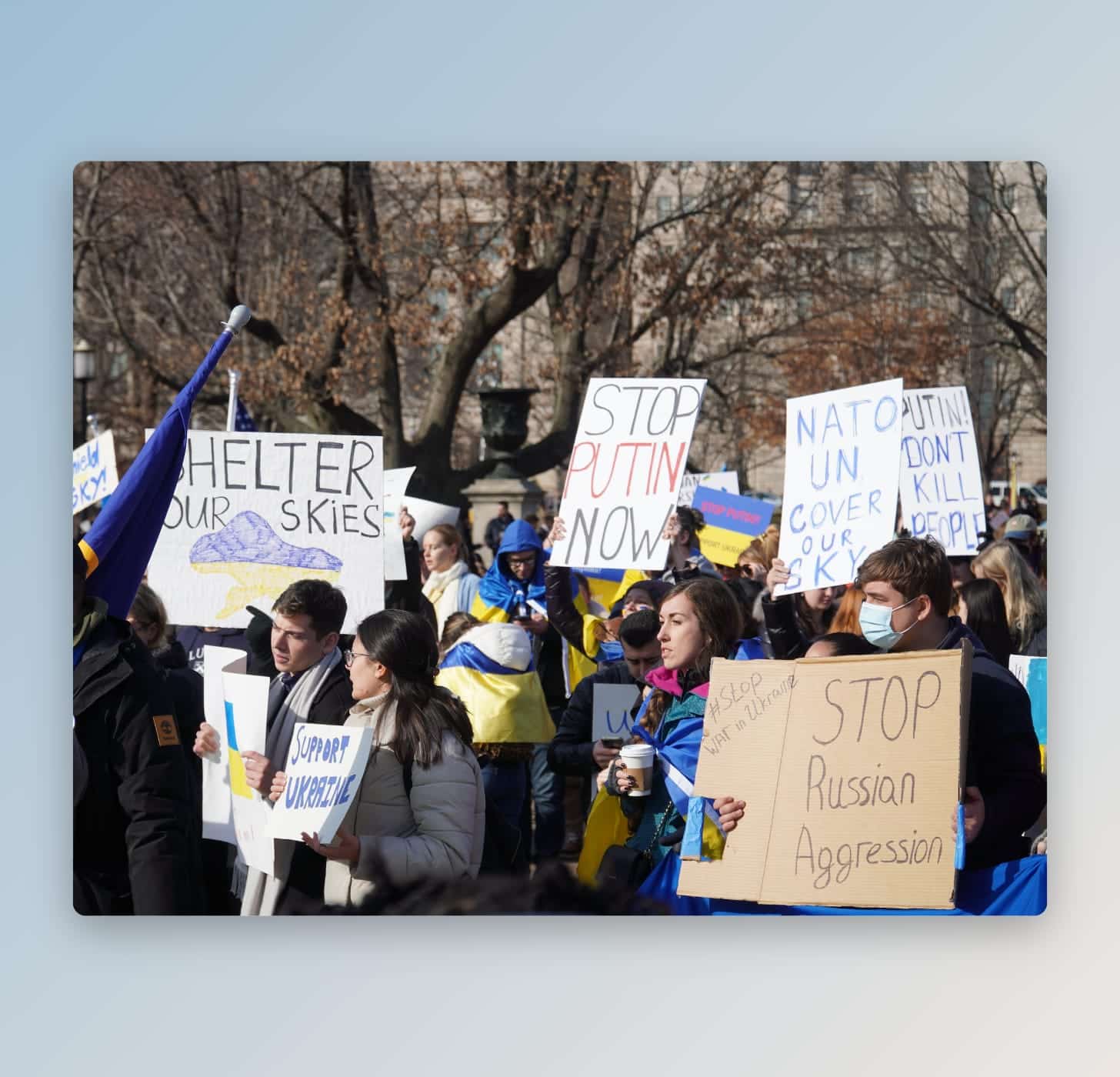
Connect with your own community to help communities abroad! Whether you host a benefit concert or fundraiser event, help plan a demonstration, connect with refugee organizations in your area, or simply spread the word, you can do your part for Ukraine right where you are