If you’re looking for positive words you can use to describe someone, we’re here to help.
As lovers and sharers of positive news (we publish good news online, in our free newsletter, on our positive podcast, and our beautiful monthly Goodnewspaper) and so we’re always thrilled to help fill the world with more positivity.
We’ve compiled the best positive words you can use to describe someone — all in a simple and easy-to-scroll guide.
No matter why you’re seeking out nice and kind words, may this list help you (and the person you’re describing) feel more positive.
And, of course, don’t forget that you can explore more positive words (organized by first letter) — A | B | C | D | E | F | G | H | I | J | K | L | M
N | O | P | Q | R | S | T | U | V | W | X | Y | Z
The Ultimate List of Words To Positively Describe Someone
We’ve curated the ultimate list of positive adjectives and descriptors that you can use to describe someone. This list is organized in alphabetical order, to make things easy to scroll through.
Positive Adjectives That Start with A
- Abundant
- Accomplished
- Accountable
- Active
- Activist
- Adaptable
- Admirable
- Adventurous
- Affable
- Affectionate
- Agile
- Agreeable
- Alert
- Alluring
- Ally
- Altruistic
- Amazing
- Ambitious
- Amiable
- Amicable
- Amusing
- Angelic
- Animated
- Artistic
- Assertive
- Assuring
- Astute
- Athletic
- Attentive
- Attractive
- Authentic
- Awesome
→ Read more positive adjectives that start with A
Positive Adjectives That Start with B
- Balanced
- Beautiful
- Benevolent
- Blissful
- Bodacious
- Bold
- Bookish
- Bookworm
- Bountiful
- Brainy
- Brave
- Breathtaking
- Bright
- Brilliant
- Buoyant
- Boundless
Positive Adjectives That Start with C
- Calm
- Candid
- Capable
- Careful
- Caring
- Celebrated
- Centered
- Challenging
- Champion
- Charismatic
- Charitable
- Charming
- Chatty
- Cheeky
- Cheerful
- Cheery
- Cherished
- Chic
- Chilled
- Chivalrous
- Civil
- Classy
- Clean
- Clever
- Comforting
- Committed
- Communicator
- Compassionate
- Competent
- Confidant
- Confident
- Conscientious
- Considerate
- Consistent
- Content
- Controlled
- Cool
- Cool-headed
- Cooperative
- Courageous
- Courteous
- Crafty
- Creative
- Cuddly
- Curious
- Cute
Positive Adjectives That Start with D
- Daring
- Dear
- Decisive
- Dedicated
- Delectable
- Delightful
- Detail-oriented
- Determined
- Devoted
- Difference-maker
- Diligent
- Diplomatic
- Discreet
- Donor
- Driven
Positive Adjectives That Start with E
- Eager
- Earnest
- Easy-going
- Eccentric
- Effusive
- Electric
- Emotional
- Empathetic
- Empathic
- Empowered
- Empowering
- Enchanting
- Encouraging
- Endearing
- Energetic
- Engaged
- Enlightened
- Enlivened
- Enough
- Enterprising
- Entertaining
- Enthusiastic
- Entrepreneurial
- Ethical
- Euphoric
- Excellent
- Exceptional
- Exciting
- Exotic
- Experienced
- Expert
- Exuberant
Positive Adjectives That Start with F
- Fabulous
- Fair
- Faithful
- Famous
- Fantastic
- Fascinating
- Fast
- Fastidious
- Fearless
- Flexible
- Flowing
- Focused
- Forgiving
- Foxy
- Frank
- Friendly
- Fun
- Funny
Positive Adjectives That Start with G
- Generous
- Genius
- Gentle
- Genuine
- Giving
- Glamorous
- Glowing
- Good
- Good Neighbor
- Goofy
- Gorgeous
- Graceful
- Gracious
- Grand
- Grateful
- Great
- Gregarious
Positive Adjectives That Start with H
- Handsome
- Happy
- Hardworking
- Healthy
- Heartwarming
- Helper
- Helpful
- Hero
- Hilarious
- Hip
- Honest
- Hopeful
- Humanitarian
- Humble
- Humorous
- Hysterical
Positive Adjectives That Start with I
- Idealistic
- Illuminated
- Imaginative
- Impartial
- Inclusive
- Incomparable
- Incredible
- Independent
- Industrious
- Ineffable
- Ingenios
- Innovative
- Inspirational
- Inspiring
- Integral
- Intellectual
- Intelligent
- Intentional
- Interesting
- Intuitive
- Inventive
- Invigorated
- Involved
- Irresistible
Positive Adjectives That Start with J
- Jaunty
- Jazzed
- Joy-giving
- Jolly
- Jovial
- Joyful
- Joyous
- Jubilant
- Judicious
- Juicy
- Just
Positive Adjectives That Start with K
- Keen
- Kid-like
- Kind
- Kind-hearted
- Kindred
- King
- Knowledgeable
Positive Adjectives That Start with L
- Leader
- Listener
- Lively
- Living
- Loud
- Lovable
- Loved
- Lovely
- Loving
- Loyal
- Lucky
Positive Adjectives That Start with M
- Magical
- Magnanimous
- Magnificent
- Marvelous
- Masterful
- Mediator
- Methodical
- Meticulous
- Mindful
- Miraculous
- Modest
- Motivated
- Motivating
- Motivational
Positive Adjectives That Start with N
- Natural
- Neat
- Nice
- Noble
- Notable
- Nifty
- Nurturing
Positive Adjectives That Start with O
- Obliging
- Open
- Open-minded
- Optimist
- Optimistic
- Opulent
- Orderly
- Organized
- Original
- Outgoing
- Outstanding
Positive Adjectives That Start with P
- Passionate
- Patient
- Peaceful
- Perfect
- Perky
- Persistent
- Philosophical
- Pioneering
- Poetic
- Placid
- Playful
- Pleasant
- Poised
- Polite
- Positive
- Powerful
- Practical
- Precious
- Pretty
- Proactive
- Prosperous
- Provocative
- Punctual
Positive Adjectives That Start with Q
- Qualified
- Quality
- Queen
- Quick
- Quick-minded
- Quick-witted
- Quiet
- Quotable
Positive Adjectives That Start with R
- Radiant
- Radical
- Rational
- Ready
- Realistic
- Reassuring
- Receptive
- Refreshed
- Relatable
- Relaxed
- Reliable
- Relieved
- Remarkable
- Reserved
- Resilient
- Resourceful
- Respected
- Revered
- Reverent
- Romantic
Positive Adjectives That Start with S
- Sacred
- Safe
- Saintly
- Satisfied
- Scrumptious
- Secure
- Self-assured
- Sensational
- Sensible
- Sensitive
- Serene
- Sexy
- Sharing
- Sharp
- Shimmering
- Shining
- Shrewd
- Silly
- Simple
- Sincere
- Skilled
- Smart
- Snazzy
- Sociable
- Soulful
- Soulmate
- Special
- Spectacular
- Spiritual
- Splendid
- Stalwart
- Steady
- Stellar
- Stoic
- Straightforward
- Strategic
- Striking
- Strong
- Studious
- Stunning
- Sturdy
- Successful
- Super
- Supportive
- Sustained
- Sweet
- Sympathetic
Positive Adjectives That Start with T
- Talented
- Team-player
- Thankful
- Thinker
- Thorough
- Thoughtful
- Thrilled
- Thriving
- Tidy
- Tolerant
- Tough
- Tranquil
- Transparent
- Triumphant
- Trusting
- Trustworthy
- Trusty
Positive Adjectives That Start with U
- Ultimate
- Unassuming
- Unbelievable
- Understanding
- Unique
- Unlimited
- Unreal
- Unselfish
- Upbeat
- Uplifting
Positive Adjectives That Start with V
- Valorous
- Valuable
- Valued
- Versatile
- Vibrant
- Victorious
- Virtuous
- Vivacious
Positive Adjectives That Start with W
- Warm
- Warmhearted
- Welcoming
- Well-versed
- Whole
- Wholesome
- Willful
- Willing
- Winner
- Wise
- Witty
- Wonderful
- Wondrous
- Worthy
Positive Adjectives That Start with X
There aren’t any amazing or commonly-used positive adjectives that start with X in English.
Positive Adjectives That Start with Y
- Yielding
- Young-at-heart
- Youthful
- Yummy
Positive Adjectives That Start with Z
- Zappy
- Zealous
- Zesty
Plus, explore more positive words articles:
- Positive Words That Start with A
- Positive Words That Start with B
- Positive Words That Start with C
- Positive Words That Start with D
- Positive Words That Start with E
- Positive Words That Start with F
- Positive Words That Start with G
- Positive Words That Start with H
- Positive Words That Start with I
- Positive Words That Start with J
- Positive Words That Start with K
- Positive Words That Start with L
- Positive Words That Start with M
- Positive Words That Start with N
- Positive Words That Start with O
- Positive Words That Start with P
- Positive Words That Start with Q
- Positive Words That Start with R
- Positive Words That Start with S
- Positive Words That Start with T
- Positive Words That Start with U
- Positive Words That Start with V
- Positive Words That Start with W
- Positive Words That Start with X
- Positive Words That Start with Y
- Positive Words That Start with Z
- and…
- Positive Words To Describe Someone
- Positive Words From A-Z
- Positive Character Traits
You might also like:
In August 2021, two wildfires surrounded the Northern Cheyenne Indian Reservation in central Montana. By August 11, more than 175,000 acres were ablaze, and all residents of Lame Deer, the largest town on the reservation, were asked to evacuate.
Several communities lost power and cell service, and the local Boys and Girls Club set up door-to-door food delivery. Some of those forced to evacuate were staff at Covenant Tribal Solar Initiative, a nonprofit that supports tribal communities’ transition to solar power and the development of renewable energy workforces.
Wildfires like those surrounding Northern Cheyenne — which may get worse because of climate change — exemplified the urgent need for Covenant’s work.
About one-quarter of U.S greenhouse gas emissions come from electricity, so transitioning to renewable energy like solar power is an important part of reducing the nation’s overall emissions.
Climate change is already affecting tribal communities across the U.S. — affecting the ability to gather traditional foods and medicines, drinking water quality in rural communities, and more. In places like Montana, climate change-driven warmer temperatures, drier soils, and reductions in snowpack may make fire season worse.
For tribes like those Covenant Solar works with, the switch to solar power is urgent to mitigate the long-term impacts of fossil fuels. But it is also a way to strengthen tribal self-determination through workforce development and energy independence from often exploitative, non-Native-run utilities.
“We are disrupting the broken fossil fuel-based energy system,” says Covenant Solar founder Cheri Smith. “This is economic development with really high human impact.”
Both Northern Cheyenne and the Standing Rock Sioux Reservation, where Covenant Solar works, are on the front lines of the fight for a renewable energy future to combat climate change. At Northern Cheyenne, the battle was against coal mining.
In 2016, after years of organizing by community members — including by Vanessa Braided Hair, Covenant Solar’s advocacy and community engagement manager — Arch Resources (then called Arch Coal) withdrew its application to mine 1.3 billion tons of coal at Otter Creek, near the reservation.
At Standing Rock, the battle is against the Dakota Access oil pipeline, part of which runs under the Missouri River on the reservation. In summer 2016, thousands of activists, known as water protectors, gathered along the Cannonball River to protest the construction of the pipeline.
Oil began flowing in May 2017, though activists continue to call on President Biden to shut down DAPL. During the 2016 protests, Cody Two Bears, one of the co-founders of Covenant Solar, helped organize a fundraiser to get 300 kilowatts of solar power installed on the reservation.
Today, Covenant Solar is using the solar panel purchased with donated funds as a demonstration project and training opportunity.
“The majority of solar work being done on reservations don’t address core issues of poverty and lack of an economy,” Smith says. “[These one-off projects] are fine, but oftentimes what happens is when systems are donated, they’re dumped there and then the donor goes away, and the tribe is left with a hulking mess.”
Not all tribes have the staff, technical knowledge, or funding to operate or maintain the specialized machinery solar energy requires. That’s why Covenant Solar is taking a different approach.
The company is not interested in short-sighted solar installation projects. It wants to create a self-reliant, renewable energy economy that lasts long past the media buzz. And that’s no small task.
“This is a first-of-its-kind approach. There’s no template,” Smith says. “Our long-term goal is return to self-determination and restoration of hope.”
A Replacement for Fossil Fuels
Robert Blake, founder of the Minneapolis-based solar installation company Solar Bear and the nonprofit Native Sun Community Power Development, has a similar vision. He is developing a solar microgrid on the Red Lake Reservation in Minnesota, where he is a member.
Like Northern Cheyenne and Standing Rock, the Red Lake Reservation faces a similar fossil fuel fight. Enbridge Energy’s Line 3 pipeline expansion, proposed in 2014, would cross three reservations as well as wetlands in Minnesota where tribes hold treaty rights to hunt, fish, and gather wild rice.
Indigenous people and environmental activists have been protesting the expansion for years, with action ramping up in the past few months. Between November 2020 and August 2021, more than 700 protesters were arrested.
Blake believes tribes are key to the United States reaching its climate goals, and that investment in renewable energy is an essential part of that puzzle.
“Those old fossil fuel forces have a stranglehold on our system,” Blake says. “There’s no way we’re going to get off of fossil fuels unless we have something else on the market.”
Covenant Solar and Native Sun both take a systems-based approach to renewable energy development. In addition to solar installation, workforce development and technical training are key aspects of their work — with a long-term goal of establishing tribally owned solar utilities.
Today, Covenant Solar is helping develop three megawatts of solar power at Northern Cheyenne that will provide power for utilities, homes, and businesses. The dozen solar panel installers Covenant Solar trained at Northern Cheyenne are now going to other tribal communities in the Great Plains to train tribal community members to be solar installers and get jobs in the field of renewable energy.
Though these projects may seem small-scale — a megawatt here, a few kilowatts there — they represent a large chunk of the solar economy in their states. Montana, where the Northern Cheyenne Reservation, has six utility-scale solar installations that generate 17 megawatts of electricity.
The installation under development with Covenant Solar would bring that total to 20 megawatts. North Dakota, where the Standing Rock Reservation is, has zero utility-scale solar installations.
But tribal lands also possess immense potential: Tribal lands in the lower 48 have an estimated 17,600 billion kilowatt hours per year of solar energy potential. That’s a staggering 4.3 times the U.S.’s total electricity generation in 2020, only 2.3% of which came from utility-scale solar electricity.
On the Red Lake Reservation, Native Sun is working to install 17 megawatts of solar power, including five megawatts on tribal buildings and a 12-megawatt solar farm. The reservation already has 67 kilowatts of solar power helping power its government building and 240 kilowatts on its job training center.
Like Covenant Solar, an important part of the work at Red Lake is workforce development to ensure that community members are in charge of installation, operations, and ongoing maintenance of the solar panels.
Native Sun also partners with the Minnesota Department of Corrections to train local formerly incarcerated people in solar installation and site evaluation.
“We need our own electricians, our own people servicing our communities,” Blake says. “Energy runs the entire community. We really need to have our own tribal utilities.”

A History of Exclusion
Energy development on tribal land has long been stymied by federal regulations.
When the Rural Electrification Act passed in 1936 to expand electricity to rural communities throughout the nation, tribes were not expressly discriminated against, but bureaucratic barriers made it nearly impossible for tribes to access loans.
Barriers persist to this day. Federal government approval to develop energy projects on tribal land can be a long and confusing process. The type of regulatory oversight depends on the size of the project, who is funding it, and where the tribe is.
That oversight may come from the Bureau of Indian Affairs, the Bureau of Land Management, the Office of Natural Resources Revenue, or the Environmental Protection Agency.
In 2005, the Energy Policy Act established Tribal Energy Resource Agreements, or TERAs, which were meant to increase regulatory control held by tribes themselves over their own energy resources.
But tribes have identified several problems with TERAs.
First, not all tribes qualified: the Secretary of the Interior had the discretion to determine whether tribes had the capacity to manage energy resources.
Further, TERAs allowed tribes to take over certain approval activities previously performed by the federal government, but did not allow tribes to perform any “inherently federal functions.”
What constitutes an “inherently federal function” has never been defined. All of these issues mean that since 2005, not a single tribe has entered into a TERA, though several have tried.
In 2018, Congress responded to these issues by passing amendments updating TERA regulations to restrict the Secretary of the Interior’s ability to reject a TERA and to remove the requirement for the secretary to judge tribal energy development capacity. The Department of the Interior has yet to implement these new regulations.
“The majority of tribes—especially those in the plains states where energy-related poverty is especially rampant—don’t have the resources to navigate these barriers to renewable energy development,” Smith says.
That’s where Covenant Solar comes in.
Founded by a mix of tribal community leaders and renewable energy experts, Covenant Solar’s team provides pro bono consulting to tribal governments.
“When the size and scope of a project triggers regulatory scrutiny, we are there as a buffer and trusted subject matter expert to ensure that the best interests of a tribe are upheld,” Smith says.
Working with nontribal-run utilities is rarely easier than dealing with lengthy regulatory processes. In the Great Plains, where Covenant Solar works, reservations often face discriminatory utility pricing, Smith says, with monthly rates as often twice or three times the Montana average of 11.53 cents per kilowatt hour.
Blake sees the same issue in Minnesota. “The system is set up to prey on our tribal communities,” he says. “They’re like predatory lenders. It’s predatory servicing! There are so many fees on top of fees.”
Solar power run by tribal communities themselves thus offers the opportunity to reinvest the money saved on utilities back into their communities. “This is a self-determination issue,” Blake says.
“Red Lake spends about $40 million [annually] off the reservation for the electricity bill. We’re trying to cut that in half. What would $20 million in our community look like?” That kind of investment could go a long way on a reservation with an average income of $10,236 per capita and a poverty rate of 36.3%.
Smith agrees. “In a home that’s stricken by poverty, if you can eliminate a big percentage of that electric bill, those savings go to food, to medicine, to clothing,” Smith says.
“If you offset that for the tribal government itself, you can get better services, better medical infrastructure, better safety infrastructure.”
Tribally run renewable energy has the potential to positively impact the entire tribal economy. Smith sees it as “truly momentous and hopeful work.”
Getting utility companies to agree to support a tribal microgrid has not been easy for Native Sun.
The company’s interconnection agreements — required approval from the utility company to connect to the electrical grid — often stalled out, Blake says.
Because the tribe is one of the local utility co-op’s largest customers, the company stands to lose a lot of money if the tribe creates its own energy system.
“They don’t want us using batteries. They don’t want us using solar,” Blake says. “They want us to be dependent on them, and they put up all kinds of barriers.”
Another issue Native Sun ran into was what to do with the excess energy that their new solar farm will produce.
First, they proposed selling it back to the local utilities co-op, a common practice called “net metering.” The utility co-op refused. Instead, the tribe will charge its extra energy to a 40-kilowatt battery, using a system called solar-plus-storage.
While this will benefit the community — they plan to use their solar batteries to power lights for evening events like pow wows and basketball games — it also means the tribe is losing out on potential revenue generation from its solar energy.
“There’s not a lot of [outside] interest in seeing tribal nations transition into these renewable energy microgrids,” Blake says.
Taking Back Power
Because so many of these roadblocks come down to policy decisions, it’s clear that tribes need a seat at the table when it comes to managing energy resources.
One way Covenant is making its work self-sustaining is by creating a revolving fund in which tribal communities contribute some of the money they earn from solar power, while other tribes can pull money out to develop their own solar installations.
Right now, Covenant’s projects are funded by a combination of tribal funds, Department of Energy grants, and individual donations. Smith estimates the revolving fund will be solvent in three to five years.
This will create a tribal solar energy ecosystem and ensure tribes aren’t reliant on chasing down short-term, external grants or donations for their solar energy infrastructure, which would threaten the stability and long-term sustainability of these projects.
Beyond tribally run utilities, Blake thinks tribes should also create tribal utility commissions that work alongside public utility commissions.
In the U.S., public utility commissions are state-run bodies meant to regulate companies that provide public services, such as electricity, natural gas, and water.
By forming tribal utility commissions, Blake hopes tribes will have a greater say in policies that directly impact tribal communities’ ability to develop economically, address climate change, and strengthen their self-determination.
Not all tribes see it that way, and development or sale of oil, coal, and natural gas resources still offer strong economic incentives.
The Crow Tribe, for example, which lies just west of the Northern Cheyenne Reservation, signed a deal with Cloud Peak Energy Inc. in 2013, allowing them to mine 1.4 billion tons of coal from the reservation.
The Council of Energy Resource Tribes estimates that traditional energy sources in Indian Country — including oil, natural gas, and coal — could generate $1.5 trillion in revenue.
But investment in fossil fuels isn’t a long-term solution: U.S. fossil fuel use declined by 9% in 2020 and research shows that fossil fuels are a vulnerable and declining industry.
For Blake and Smith, this is all the more reason to create renewable energy economies. The fossil fuel industry won’t last forever, and tribal communities can be part of a climate-conscious solution today.
“We need to stop fossil fuel from encroaching,” Smith says. “But, what’s next? This is the ‘what’s next.’”
This article was originally published by YES! Magazine
Individuals, families, universities, companies, and civic organizations all have important roles to play in the sustainability movement. There are countless ways to combat material waste to keep it out of oceans, landfills, and other trash deposits, from recycling and bringing along reusable totes, to installing solar panels and driving hybrid cars
When it comes to making an impact on a larger scale, looking at which cities have particularly eco-engaged citizens, companies, and local governments reveals just how much of an impact environmental initiatives can have.
It turns out that not all cities are equal in their sustainability efforts. Seventy-four percent of Americans agree that the country should do whatever it takes to protect the environment, according to 2016 polling data. But certain places are more likely to follow this thought with considered action.
A careful analysis of how green behaviors vary geographically reveals that some cities are far more concerned with environmental friendliness than others. Using a WalletHub study, Stacker listed the 100 greenest cities in the United States according to a handful of metrics, which are explained in detail here.
WalletHub determined the greenest cities in America for 2018 by comparing the 100 largest cities in the nation across 26 key indicators in four categories: environment, transportation, energy sources, and lifestyle and policy.
These indicators include air quality, greenhouse gas emissions, the share of commuters who walk and bike to work, the share of electricity from renewable sources, community garden plots per capita, and others.
They graded each of these 26 metrics on a 100-point scale (with a score of 100 representing the greatest practices and policies), then each city’s total green score was determined through a weighted average across all indicators.
Read on to see how your city compares to the nation’s most environmentally friendly:
#100. Baton Rouge, LA
- Total score: 36.07 (down 0.36 from 2017; 2017 rank: #99)
- Environment rank: #95 (2017 rank: #92)
- Transportation rank: #95 (2017 rank: #97)
- Energy sources rank: #93 (2017 rank: #95)
- Lifestyle & policy rank: #99 (2017 rank: #86)
Although Baton Rouge isn’t famous for its environmental prowess, the city was recently designated as a Tree City by the Arbor Day Foundation. The award recognizes cities that have dedicated civic resources to urban forestry, including spending resources on planting new trees. The city lost its Tree City status for decades, but regained the honor in 2018.
#99. Corpus Christi, TX
- Total score: 36.53 (up 0.12 from 2017; 2017 rank: #100)
- Environment rank: #100 (2017 rank: #97)
- Transportation rank: #81 (2017 rank: #72)
- Energy sources rank: #43 (2017 rank: #46)
- Lifestyle & policy rank: #82 (2017 rank: #88)
The Port of Corpus Christi is making strides toward sustainability with its Environmental Management System. For 10 years in a row, the port has received the highest level of certification for its operations and systems.
#98. St. Louis, MO
- Total score: 39.53 (down 5.69 from 2017; 2017 rank: #71)
- Environment rank: #80 (2017 rank: #54)
- Transportation rank: #80 (2017 rank: #83)
- Energy sources rank: #84 (2017 rank: #82)
- Lifestyle & policy rank: #54 (2017 rank: #42)
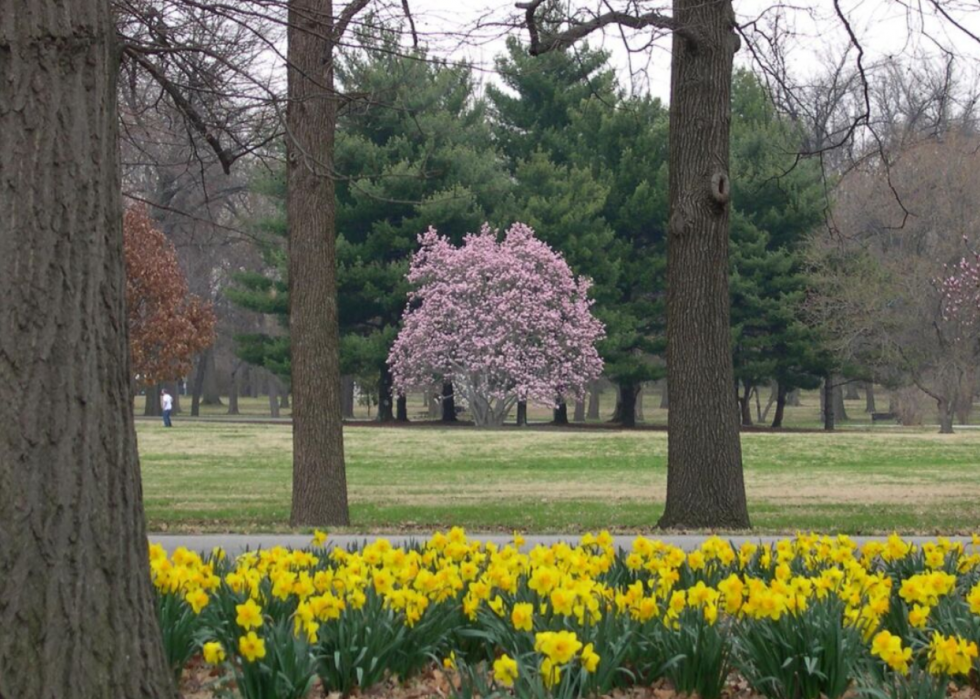
St. Louis is famous for its green spaces. Forest Park, in the center of the city, was built for the 1904 World’s Fair, and is lovingly maintained by prominent civic organization Forest Park Forever. Elsewhere in the city, a butterfly house and a botanical garden furthers the city’s commitment to the environment.

#97. Toledo, OH
- Total score: 40.31 (up 1.52 from 2017; 2017 rank: #94)
- Environment rank: #81 (2017 rank: #89)
- Transportation rank: #83 (2017 rank: #80)
- Energy sources rank: #100 (2017 rank: #100)
- Lifestyle & policy rank: #47 (2017 rank: #18)
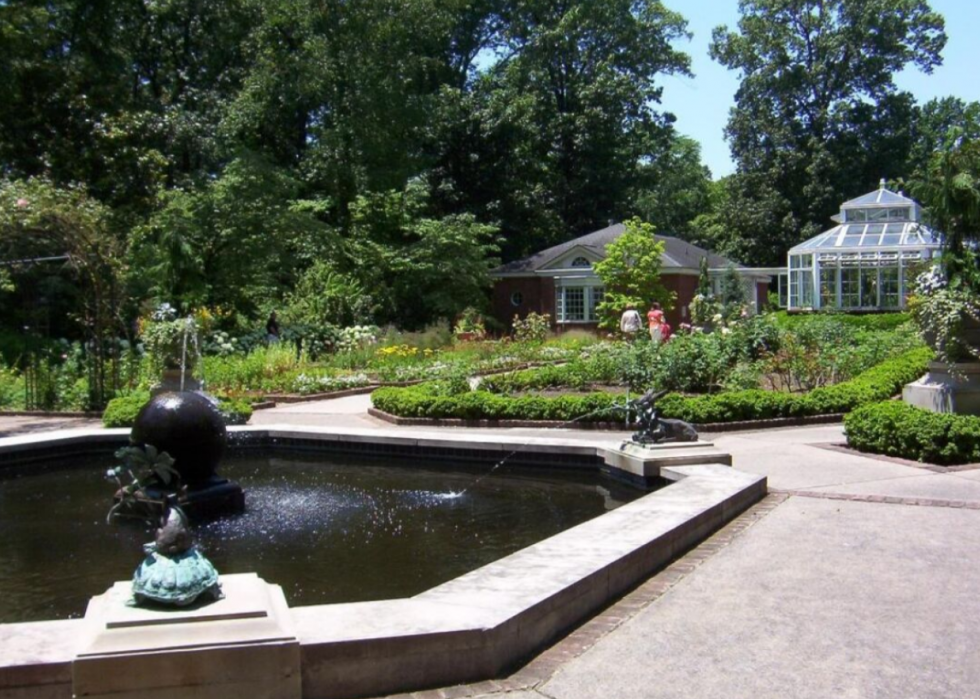
Among Toledo’s sustainability projects is Living Green Saving Green, a public-private partnership that outfits pre-existing residential properties with eco-friendly fixtures like low-flow toilets and shower heads and programmable thermostats. The program helps show the financial benefits of making sustainable improvements.
#96. Memphis, TN
- Total score: 40.98 (up 0.13 from 2017; 2017 rank: #89)
- Environment rank: #64 (2017 rank: #78)
- Transportation rank: #63 (2017 rank: #98)
- Energy sources rank: #87 (2017 rank: #73)
- Lifestyle & policy rank: #100 (2017 rank: #51)
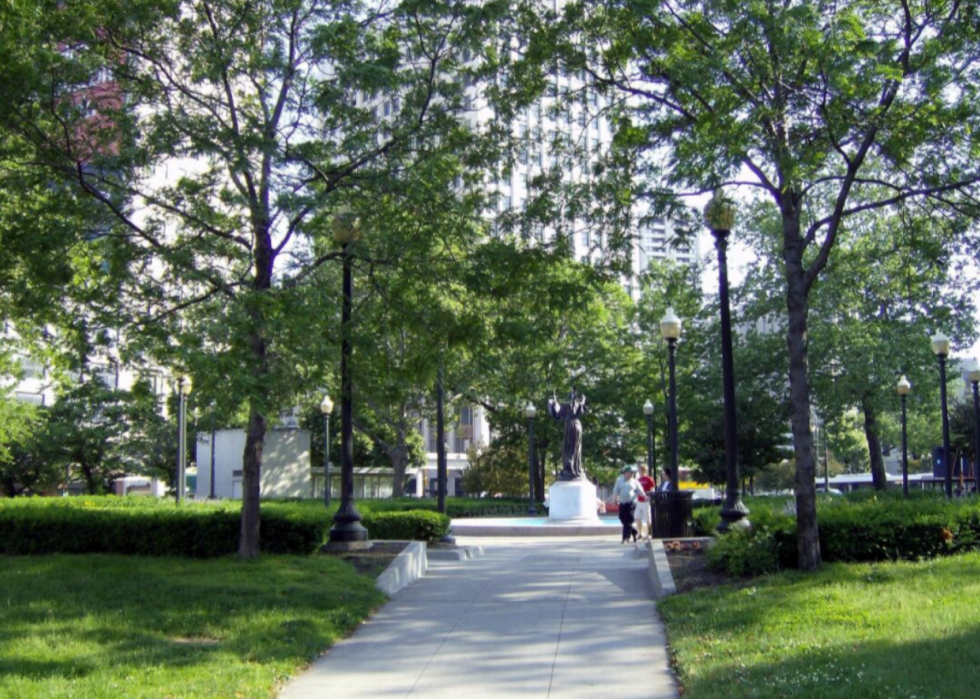
Greenbox Memphis is among Memphis’ many eco-friendly organizations. The company provides a no-waste system for people to move homes or offices, eliminating the need for cardboard boxes and other materials. Another is Go Green, a group of Memphis Zoo employees who work to make the zoo more eco-friendly and educate patrons on environmental sustainability.
#95. Detroit, MI
- Total score: 41.57 (up 0.53 from 2017; 2017 rank: #88)
- Environment rank: #73 (2017 rank: #72)
- Transportation rank: #36 (2017 rank: #33)
- Energy sources rank: #94 (2017 rank: #94)
- Lifestyle & policy rank: #85 (2017 rank: #89)
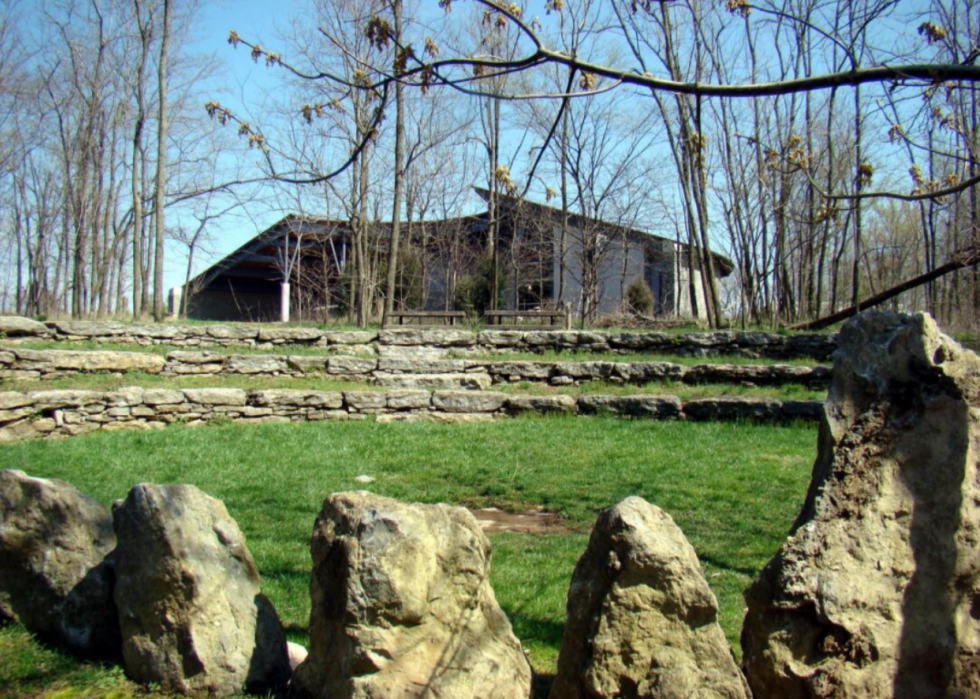
Detroit is experiencing a renaissance, including a new green district. The neighborhood includes buildings designed or equipped to consume less energy and water and produce fewer greenhouse gas emissions. Over 3 million square feet of the city have been dedicated to this project.
#94. Lexington-Fayette, KY
- Total score: 41.83 (up 2.39 from 2017; 2017 rank: #93)
- Environment rank: #89 (2017 rank: #93)
- Transportation rank: #74 (2017 rank: #69)
- Energy sources rank: #91 (2017 rank: #92)
- Lifestyle & policy rank: #50 (2017 rank: #26)
Lexington-Fayette has made efforts in recent years to become more environmentally friendly. Residents clean up river banks together on weekend mornings, making it into a social event by having picnic lunches along the river. There’s even a local radio show every Monday morning dedicated to the discussion of eco-friendly living.
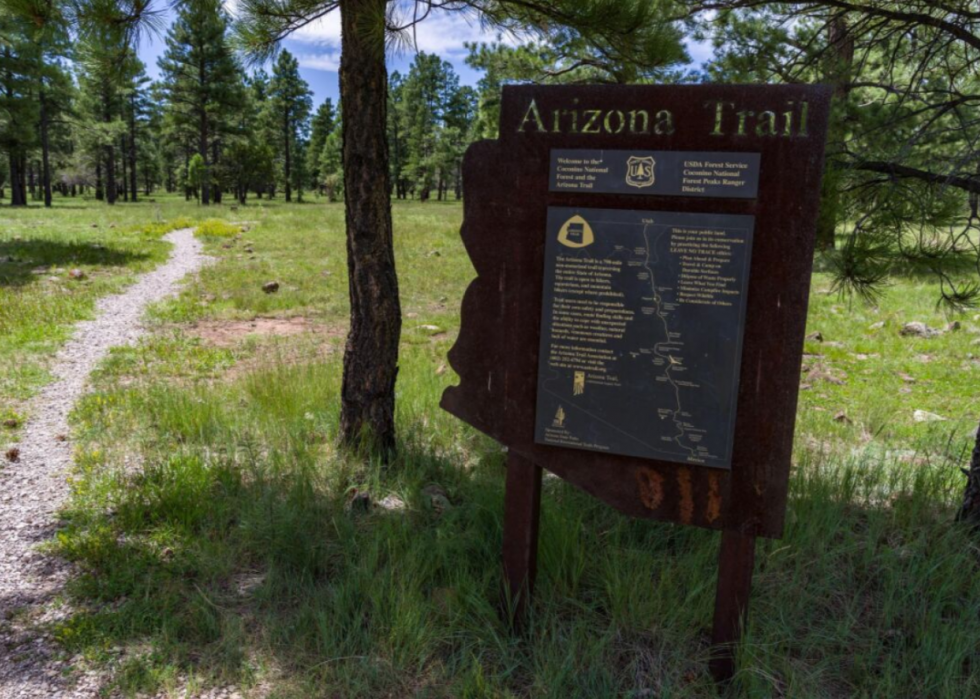
#93. Mesa, AZ
- Total score: 41.97 (down 2.50 from 2017; 2017 rank: #76)
- Environment rank: #91 (2017 rank: #71)
- Transportation rank: #84 (2017 rank: #76)
- Energy sources rank: #56 (2017 rank: #57)
- Lifestyle & policy rank: #78 (2017 rank: #69)
The city of Mesa has taken several sustainability measures in recent years, like educating citizens on how to collect and store rainwater. The city also provides credits for installing solar energy in commercial and residential buildings.

#92. Cleveland, OH
- Total score: 42.02 (up 2.56 from 2017; 2017 rank: #92)
- Environment rank: #86 (2017 rank: #87)
- Transportation rank: #34 (2017 rank: #32)
- Energy sources rank: #86 (2017 rank: #84)
- Lifestyle & policy rank: #53 (2017 rank: #65)
Cleveland has an ambitious municipal-sustainability plan that includes reducing landfill waste, lowering water consumption and costs, and streamlining the city’s sustainability groups to make each more effective. The city already has successes under its belt, including a plastic bag recycling initiative, and an influx of bicycle riders after the creation of a citywide bike map.
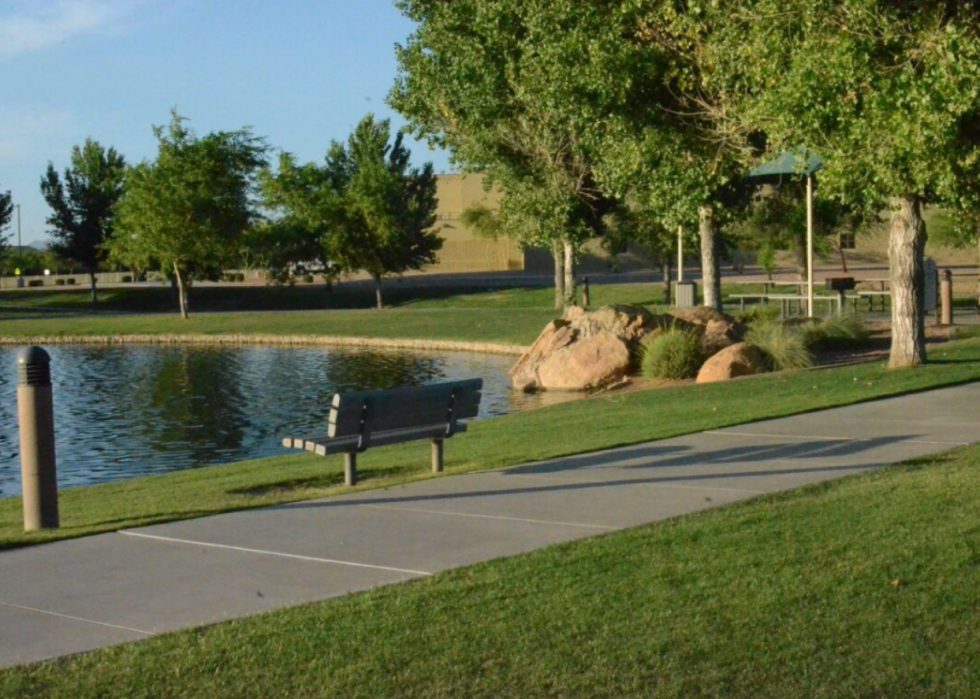
#91. Gilbert, AZ
- Total score: 42.21 (up 1.90 from 2017; 2017 rank: #90)
- Environment rank: #76 (2017 rank: #88)
- Transportation rank: #99 (2017 rank: #94)
- Energy sources rank: #56 (2017 rank: #57)
- Lifestyle & policy rank: #83 (2017 rank: #46)
Gilbert has been a leader in the public-private partnership space, creating a designation awarded to businesses that display a commitment to the environment, including reducing pollution, water conservation, and waste reduction. The program also works with businesses to help reduce their eco-footprints.

#90. Jacksonville, FL
- Total score: 42.38 (up 4.60 from 2017; 2017 rank: #98)
- Environment rank: #41 (2017 rank: #74)
- Transportation rank: #94 (2017 rank: #92)
- Energy sources rank: #83 (2017 rank: #90)
- Lifestyle & policy rank: #93 (2017 rank: #96)
The city of Jacksonville has a particularly notable cadre of sustainability-oriented brands, especially for a city of its size. From companies pioneering plastic container and wrap alternatives to local beekeepers and purveyors of glass straws, Jacksonville has something for everyone looking to make an environmentally friendly upgrade.
transportation methods at shopping centers and offering education programs for its residents on everything from how to conserve water at home
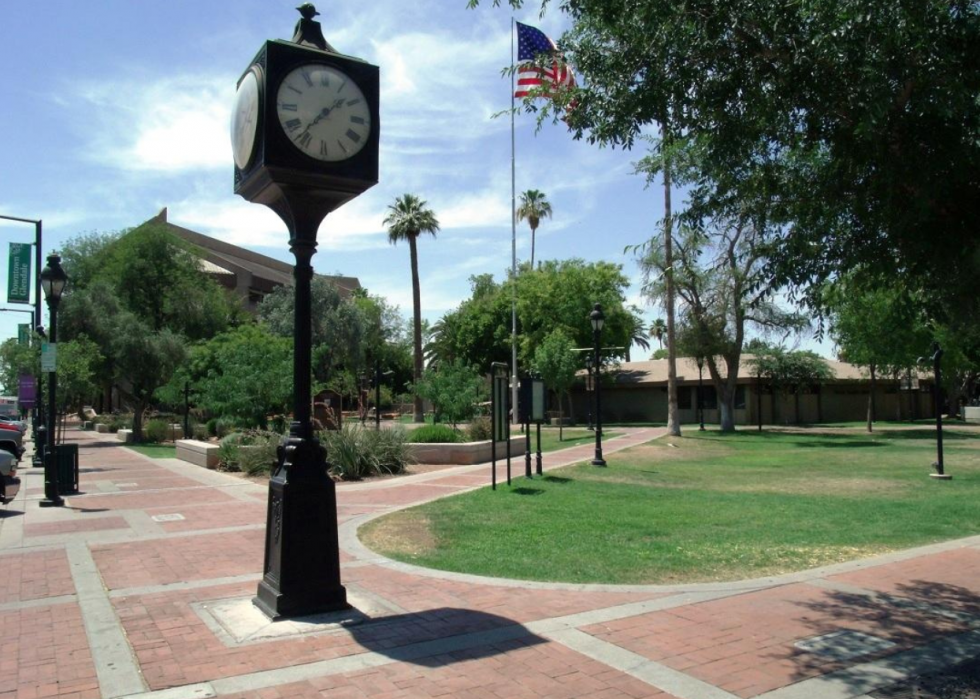
#89. Glendale, AZ
- Total score: 42.53 (down 2.40 from 2017; 2017 rank: #74)
- Environment rank: #77 (2017 rank: #67)
- Transportation rank: #88 (2017 rank: #82)
- Energy sources rank: #56 (2017 rank: #57)
- Lifestyle & policy rank: #88 (2017 rank: #68)
Glendale is supporting sustainability with several initiatives. Among these are using alternative methods of transportation at shopping centers and offering education programs for its residents on everything from how to conserve water at home to how to reduce overall energy consumption.
#88. Louisville, KY
- Total score: 42.55 (up 4.53 from 2017; 2017 rank: #97)
- Environment rank: #85 (2017 rank: #96)
- Transportation rank: #60 (2017 rank: #62)
- Energy sources rank: #85 (2017 rank: #87)
- Lifestyle & policy rank: #33 (2017 rank: #27)
Louisville has taken strides in recent years to reduce its carbon footprint. Among its initiatives is the city’s new green taxi fleet comprising hybrids that reduce carbon emissions. The city has also pledged to reduce carbon emissions in the city by 80% over the next 30 years.
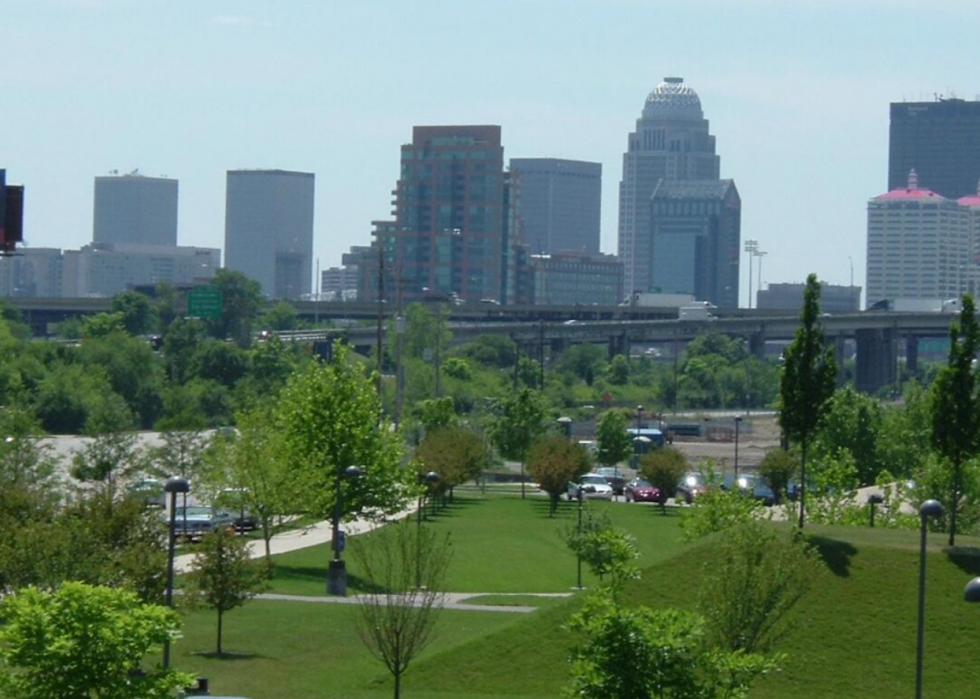
#87. Columbus, OH
- Total score: 42.76 (down 3.05 from 2017; 2017 rank: #69)
- Environment rank: #62 (2017 rank: #51)
- Transportation rank: #45 (2017 rank: #42)
- Energy sources rank: #79 (2017 rank: #81)
- Lifestyle & policy rank: #79 (2017 rank: #79)
Two Columbus neighborhoods—Dublin and Westerville—have been called out as two of the most eco-friendly neighborhoods in the country, with miles of bike and leisure paths, ambitious and successful recycling programs, and farm-to-table restaurants that eschew factory-farmed meats.
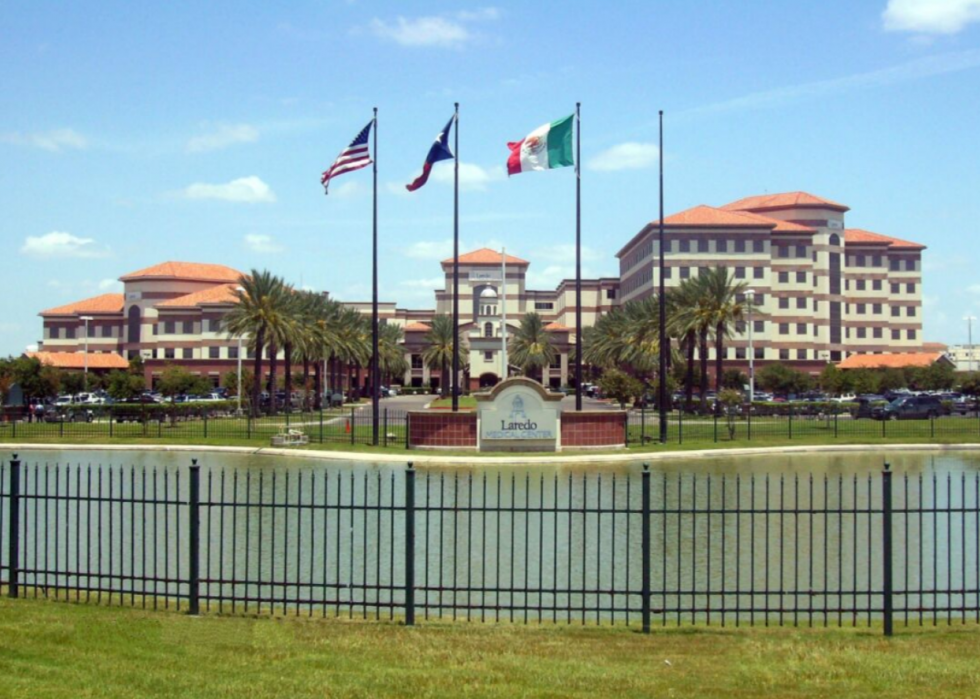
#86. Laredo, TX
- Total score: 43.43 (up 1.39 from 2017; 2017 rank: #86)
- Environment rank: #90 (2017 rank: #95)
- Transportation rank: #72 (2017 rank: #67)
- Energy sources rank: #43 (2017 rank: #46)
- Lifestyle & policy rank: #90 (2017 rank: #6)
The city of Laredo is becoming more sustainable. The city recently got its first electric charging station through a partnership with Tesla, and numerous civic organizations are beginning to collaborate and organize around ways to make their city more eco-conscious.
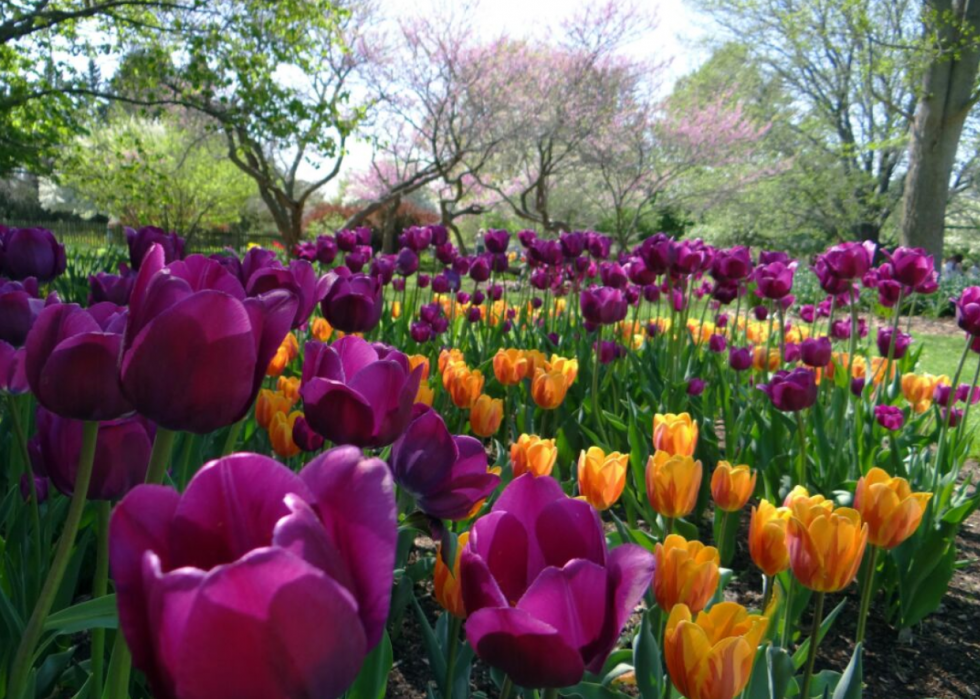
#85. Fort Wayne, IN
- Total score: 43.68 (down 2.43 from 2017; 2017 rank: #68)
- Environment rank: #54 (2017 rank: #44)
- Transportation rank: #79 (2017 rank: #75)
- Energy sources rank: #80 (2017 rank: #83)
- Lifestyle & policy rank: #81 (2017 rank: #75)
Fort Wayne is slowly but surely becoming more sustainable. Among its recent initiatives are a biking organization that’s attracting cycling enthusiasts around the region, and a new focus on the city’s public transportation infrastructure.
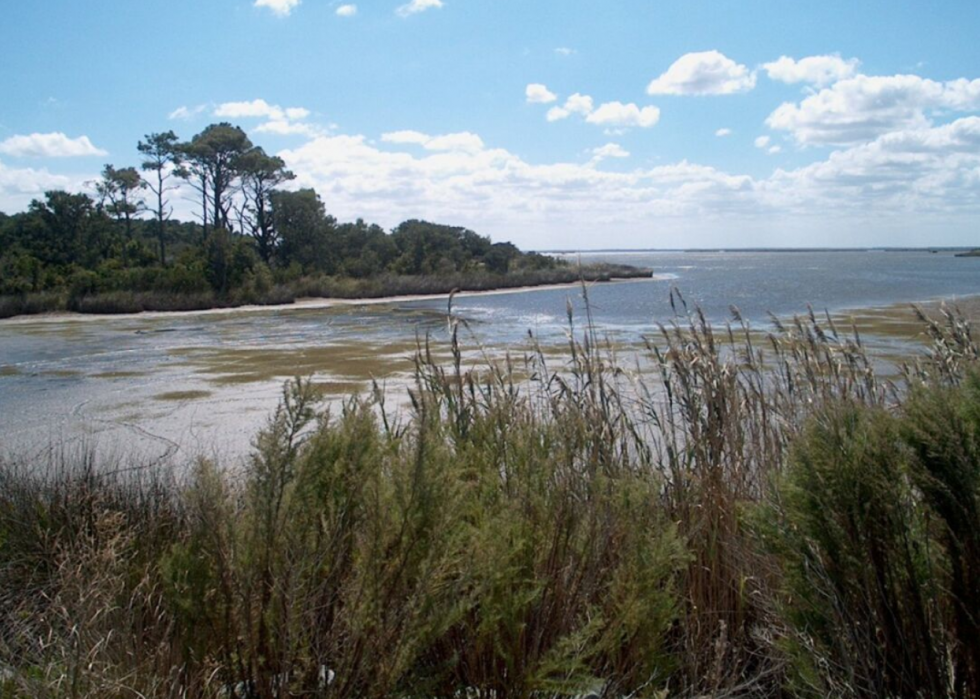
#84. Virginia Beach, VA
- Total score: 43.94 (down 5.69 from 2017; 2017 rank: #54)
- Environment rank: #3 (2017 rank: #4)
- Transportation rank: #98 (2017 rank: #96)
- Energy sources rank: #90 (2017 rank: #89)
- Lifestyle & policy rank: #66 (2017 rank: #20)
Virginia Beach is taking a proactive approach to sustainability. Its convention center was the first in the country to become LEED gold certified, and several restaurants, shops, and events have committed to meaningfully reducing waste and promoting sustainable practices among their patrons.

#82. Dallas, TX
- Total score: 44.46 (up 1.35 from 2017; 2017 rank: #85)
- Environment rank: #72 (2017 rank: #66)
- Transportation rank: #69 (2017 rank: #99)
- Energy sources rank: #54 (2017 rank: #56)
- Lifestyle & policy rank: #86 (2017 rank: #64)
Dallas began its Environmental Management System in 2004, which laid the groundwork for the steady progress the city has made. Dallas’ efforts at curbing carbon emissions and promoting green energy were recognized this year, when its mayor was awardedthe Climate Leadership Award at the 87th annual Conference of Mayors.
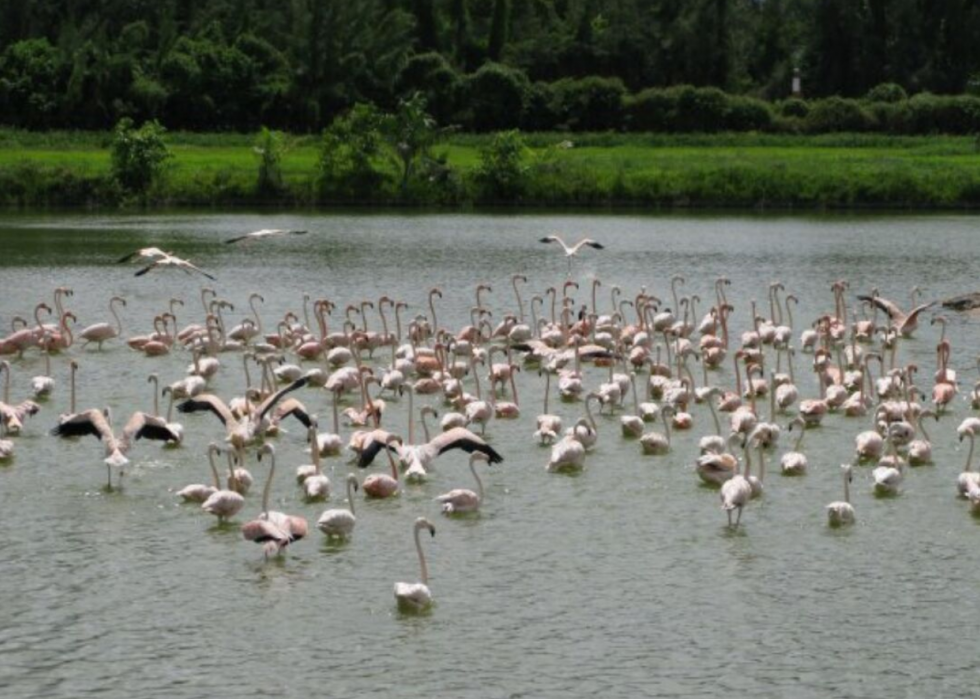
#82. Hialeah, FL
- Total score: 44.46 (down 3.86 from 2017; 2017 rank: #60)
- Environment rank: #52 (2017 rank: #47)
- Transportation rank: #87 (2017 rank: #87)
- Energy sources rank: #96 (2017 rank: #96)
- Lifestyle & policy rank: #44 (2017 rank: #4)
Hialeah has implemented several sustainability initiatives recently, including working to pass a Green Enterprise Grant for small businesses, as well as planting city gardens and implementing biodiesel shuttle buses.
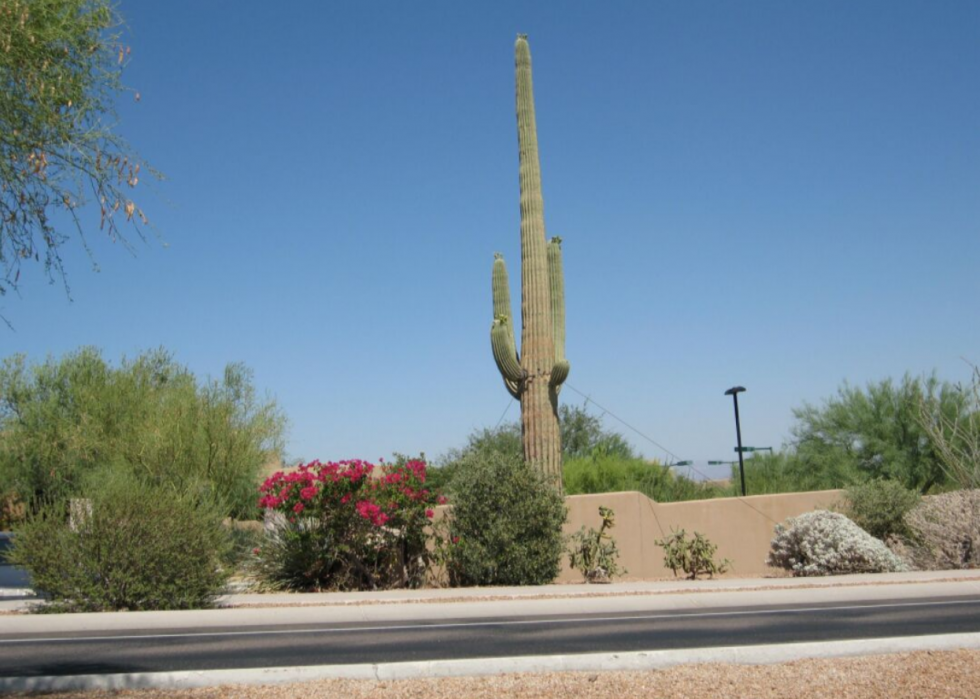
#81. Chandler, AZ
- Total score: 44.57 (up 0.49 from 2017; 2017 rank: #80)
- Environment rank: #78 (2017 rank: #75)
- Transportation rank: #91 (2017 rank: #88)
- Energy sources rank: #56 (2017 rank: #57)
- Lifestyle & policy rank: #52 (2017 rank: #52)
One of Chandler’s primary eco-claims to fame was its status as the first city in Arizona to recognize solar energy systems in its municipal zoning codes. The city’s water management system has also been designed with conservation at the forefront, which is particularly significant in a desert city.
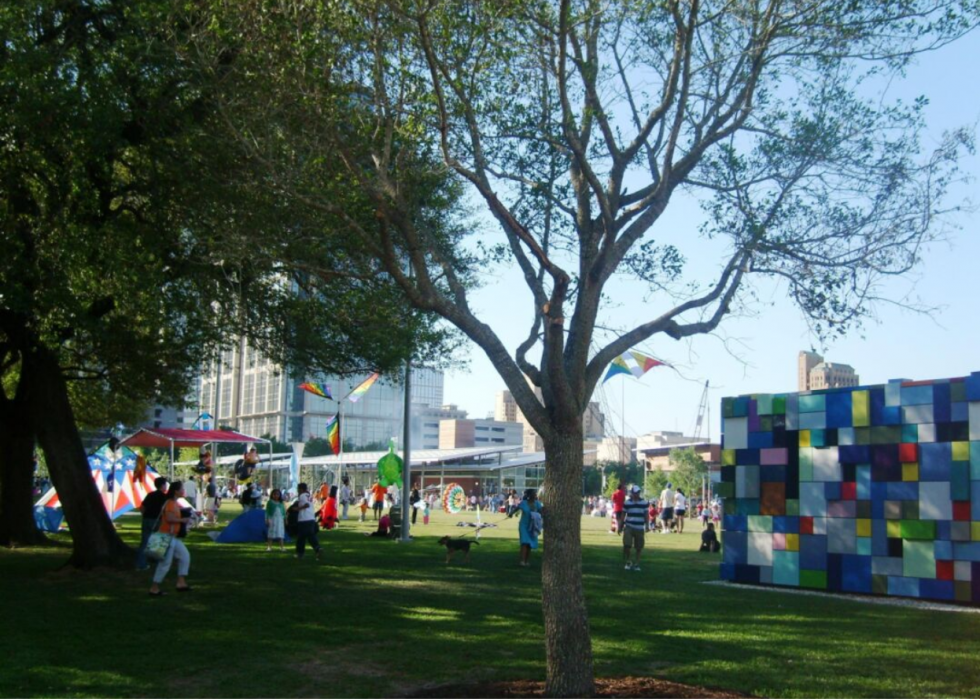
#80. Houston, TX
- Total score: 44.79 (up 3.09 from 2017; 2017 rank: #87)
- Environment rank: #65 (2017 rank: #83)
- Transportation rank: #85 (2017 rank: #79)
- Energy sources rank: #53 (2017 rank: #55)
- Lifestyle & policy rank: #70 (2017 rank: #77)
Houston has committed to achieving the standards set forth by the Paris Climate Accord by 2050. The city has invested heavily in green energy and was the #1 municipal user of green energy in 2017.
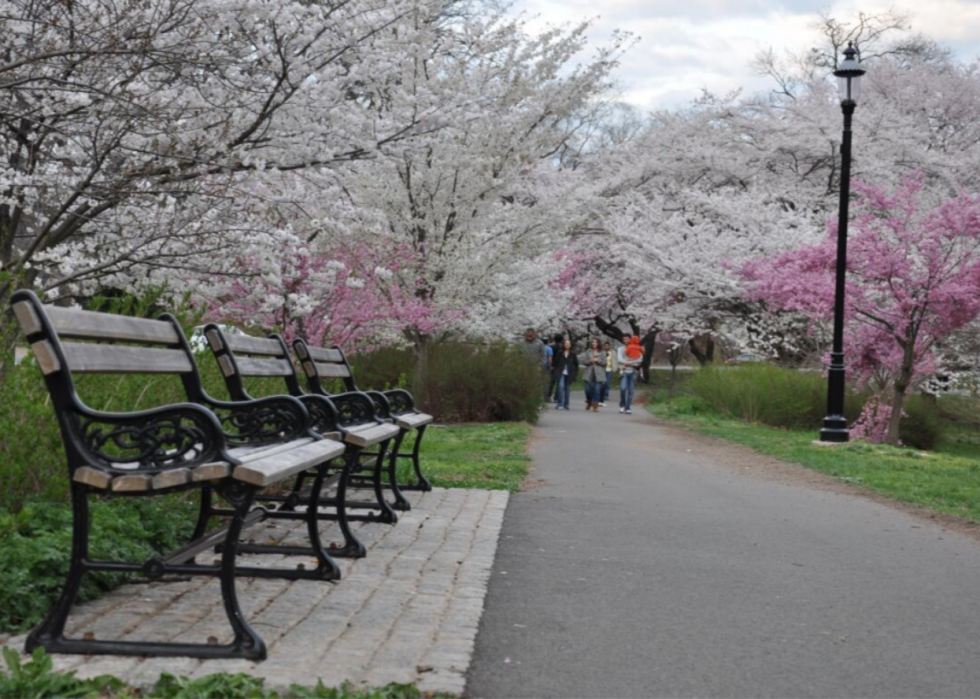
#79. Newark, NJ
- Total score: 44.81 (up 1.17 from 2017; 2017 rank: #81)
- Environment rank: #71 (2017 rank: #80)
- Transportation rank: #61 (2017 rank: #53)
- Energy sources rank: #75 (2017 rank: #74)
- Lifestyle & policy rank: #51 (2017 rank: #47)
Newark has been hard at work on its Sustainability Action Plan for years. As part of the plan, the city has built catch basins for rainwater, and organized tree-planting drives and community-outreach events.

#78. Oklahoma City, OK
- Total score: 45.14 (up 5.57 from 2017; 2017 rank: #91)
- Environment rank: #87 (2017 rank: #94)
- Transportation rank: #59 (2017 rank: #58)
- Energy sources rank: #42 (2017 rank: #44)
- Lifestyle & policy rank: #96 (2017 rank: #87)
Oklahoma City encourages its citizens to be eco-friendly by incentivizing them. Among the cities initiatives is the Green Home Loan, which can be used to install sustainable home upgrades, including energy-efficient windows and doors.

#77. Fort Worth, TX
- Total score: 45.16 (up 0.21 from 2017; 2017 rank: #73)
- Environment rank: #61 (2017 rank: #62)
- Transportation rank: #76 (2017 rank: #71)
- Energy sources rank: #52 (2017 rank: #54)
- Lifestyle & policy rank: #80 (2017 rank: #85)
Fort Worth has green-lit several projects focused on environmental sustainability. Among them is a program to make the city friendlier to bikers, and one which aims to conserve water by offering public education programs and irrigation evaluation.

#76. St. Petersburg, FL
- Total score: 45.33 (up 6.76 from 2017; 2017 rank: #96)
- Environment rank: #48 (2017 rank: #82)
- Transportation rank: #82 (2017 rank: #77)
- Energy sources rank: #96 (2017 rank: #96)
- Lifestyle & policy rank: #59 (2017 rank: #97)
Several factors make St. Petersburg a green city. These include over 40 miles of bicycle trails and a city bike share program. It was also the first Florida city to build a LEED gold-certified home. The city is also known for having eco-conscious citizens, making it an attractive city for like-minded people and businesses to call home.
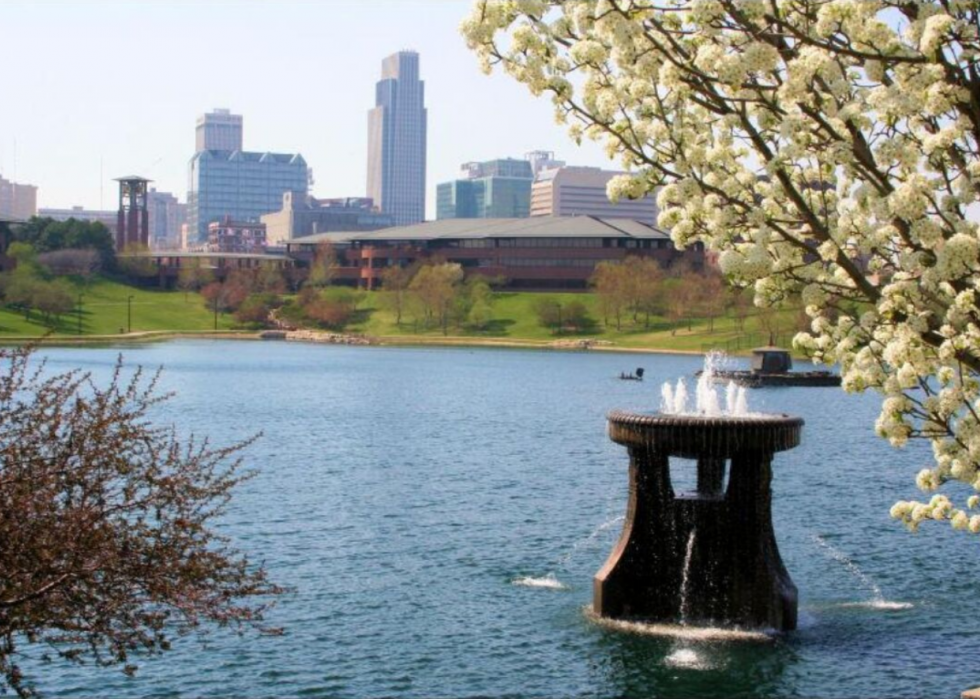
#75. Omaha, NE
- Total score: 45.67 (up 1.25 from 2017; 2017 rank: #78)
- Environment rank: #56 (2017 rank: #52)
- Transportation rank: #41 (2017 rank: #81)
- Energy sources rank: #69 (2017 rank: #70)
- Lifestyle & policy rank: #91 (2017 rank: #78)
Omaha is so committed to sustainability that its own utilities industry pitched in to save the environment. The provider decided that it would rather sell less of its own products than contribute to pollution.

#74. Arlington, TX
- Total score: 45.85 (up 0.68 from 2017; 2017 rank: #72)
- Environment rank: #22 (2017 rank: #25)
- Transportation rank: #100 (2017 rank: #100)
- Energy sources rank: #43 (2017 rank: #46)
- Lifestyle & policy rank: #89 (2017 rank: #94)
The state of Texas is a major producer of oil, but the city of Arlington is leading the transition to renewables. The city has started a public-private partnership to retrofit over 10,000 of the city’s streetlights with LEDs. In just the first six months of the program, the city reduced its energy consumption by 45%.

#73. Chicago, IL
- Total score: 45.94 (down 3.56 from 2017; 2017 rank: #55)
- Environment rank: #79 (2017 rank: #38)
- Transportation rank: #44 (2017 rank: #41)
- Energy sources rank: #62 (2017 rank: #53)
- Lifestyle & policy rank: #46 (2017 rank: #70)
Chicago has several eco-conscious credits to its name. Among these are its status as the home to more green-certified buildings and rooftops than any other city in the country, including many of its major institutions, like the Art Institute of Chicago. O’Hare Airport is also home to the first airport aeroponics garden, which supplies restaurants with herbs and produce.

#72. Irving, TX
- Total score: 46.31 (down 1.67 from 2017; 2017 rank: #64)
- Environment rank: #50 (2017 rank: #45)
- Transportation rank: #97 (2017 rank: #95)
- Energy sources rank: #43 (2017 rank: #46)
- Lifestyle & policy rank: #91 (2017 rank: #66)
The city of Irving is home to environmental initiatives that are transforming the city across the board. Among them are many public events intended to engage and educate the community, including night hikes, recycling drives, and herb-growing classes. The city is also slowly but surely expanding its number of electric vehicle charging stations to reduce the city’s carbon emissions.
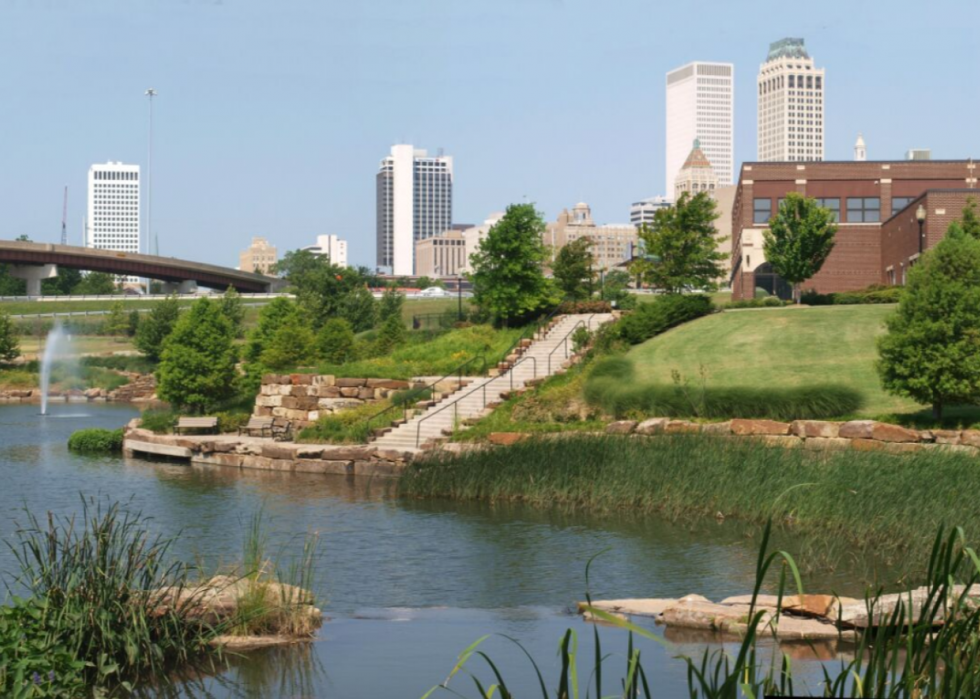
#71. Tulsa, OK
- Total score: 46.45 (up 7.73 from 2017; 2017 rank: #95)
- Environment rank: #99 (2017 rank: #99)
- Transportation rank: #46 (2017 rank: #40)
- Energy sources rank: #14 (2017 rank: #23)
- Lifestyle & policy rank: #98 (2017 rank: #99)
Tulsa has recently experienced a green renaissance. The city’s businesses have undergone a notable shift towards integrating sustainability into their business models in recent years, including the city’s zoo, which reduced its energy consumption by 85% over the course of two years.

#70. Nashville, TN
- Total score: 46.74 (down 2.12 from 2017; 2017 rank: #58)
- Environment rank: #26 (2017 rank: #34)
- Transportation rank: #58 (2017 rank: #49)
- Energy sources rank: #78 (2017 rank: #63)
- Lifestyle & policy rank: #76 (2017 rank: #76)
When it comes to sustainability, Nashville turns trash into treasure. The city transformed a garbage dump into a wildlife preserve. The protected area is home to over 35 species of wildlife.
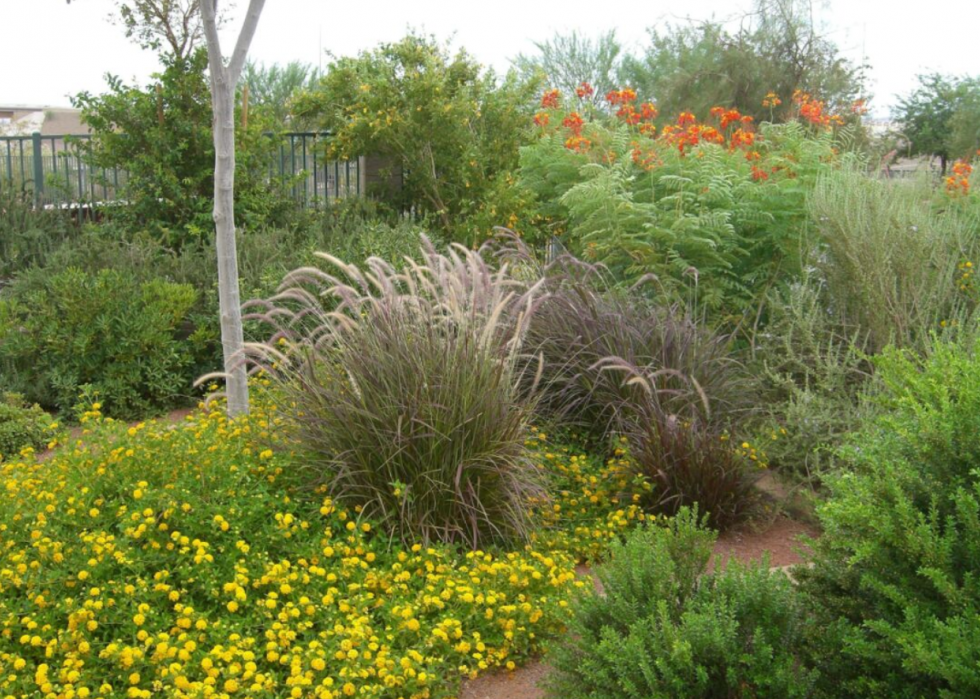
#69. Henderson, NV
- Total score: 46.86 (down 6.69 from 2017; 2017 rank: #33)
- Environment rank: #84 (2017 rank: #23)
- Transportation rank: #89 (2017 rank: #86)
- Energy sources rank: #26 (2017 rank: #29)
- Lifestyle & policy rank: #84 (2017 rank: #62)
The city of Henderson is attempting to build sustainability into everyday life with its Citizens Advisory Committee, which provides feedback and ideas to local government officials. In 2016, the city’s efforts were rewarded, and Henderson was recognized as a community that measurably curbed its environmental impact.
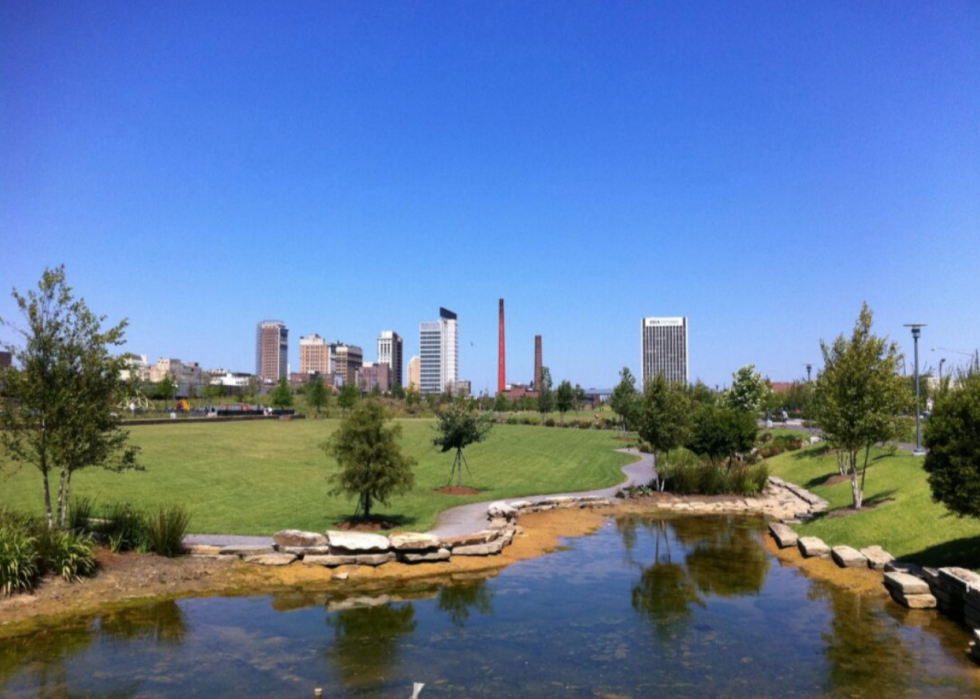
#68. Birmingham, AL
- Total score: 46.87 (up 2.42 from 2017; 2017 rank: #77)
- Environment rank: #18 (2017 rank: #20)
- Transportation rank: #42 (2017 rank: #85)
- Energy sources rank: #95 (2017 rank: #93)
- Lifestyle & policy rank: #39 (2017 rank: #56)
Birmingham is a green hub in Alabama. The city is home to the state’s Green Building Focus and Green Resource Center and has more LEED-certified buildings than any other city in the state. Birmingham has also launched its Healthy Action Partnership, which educates citizens on using public transportation for health and environmental benefits.
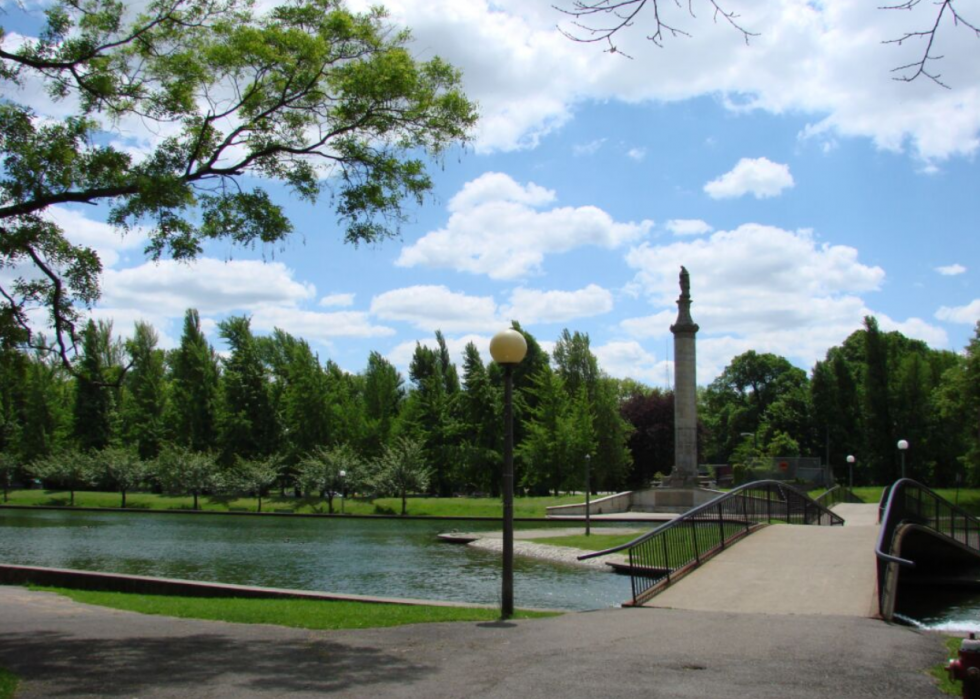
#67. Pittsburgh, PA
- Total score: 46.98 (up 2.08 from 2017; 2017 rank: #75)
- Environment rank: #51 (2017 rank: #81)
- Transportation rank: #49 (2017 rank: #15)
- Energy sources rank: #74 (2017 rank: #72)
- Lifestyle & policy rank: #36 (2017 rank: #63)
Sustainability in Pittsburgh has been a true team effort. The city is home to nonprofit environmental groups, government entities, outdoor sports leagues, and research universities, which all collaborate in lowering the city’s energy consumption. Among the consortium’s successes so far have been LEED-certifying buildings on university campuses.
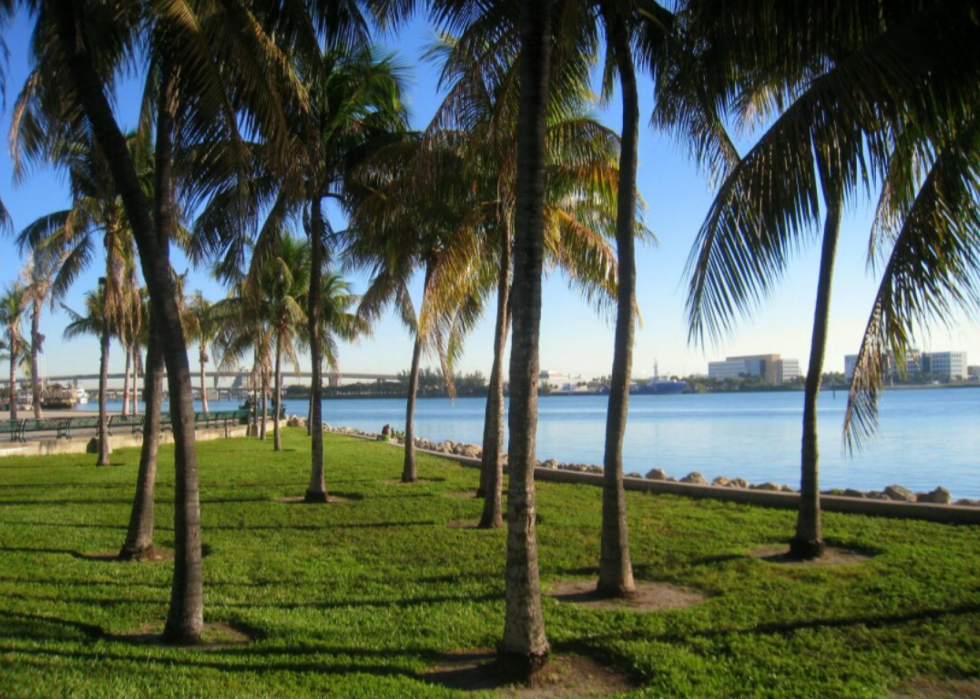
#66. Miami, FL
- Total score: 47.42 (down 3.56 from 2017; 2017 rank: #47)
- Environment rank: #66 (2017 rank: #48)
- Transportation rank: #16 (2017 rank: #17)
- Energy sources rank: #99 (2017 rank: #98)
- Lifestyle & policy rank: #11 (2017 rank: #3)
With its miles of coastline, Miami has been actively committed to fighting climate change for over two decades. The city has implemented a number of environmental education and advocacy programs, and has recently become a hub for monitoring sea level changes, thanks to the Sea Level Solutions Center at Florida University.
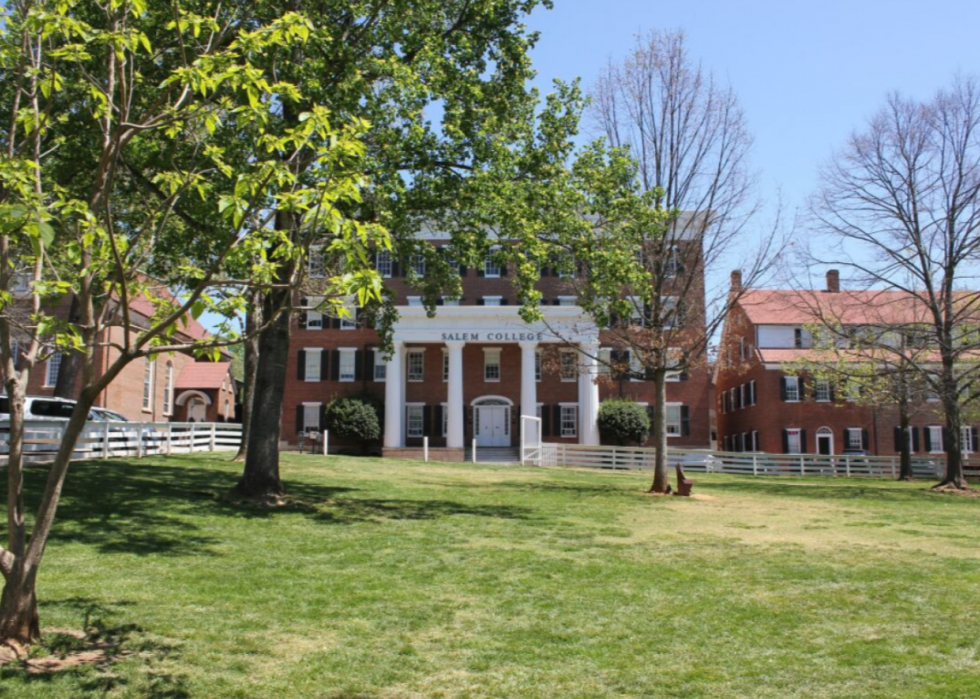
#65. Winston-Salem, NC
- Total score: 47.71 (down 3.27 from 2017; 2017 rank: #46)
- Environment rank: #42 (2017 rank: #27)
- Transportation rank: #77 (2017 rank: #74)
- Energy sources rank: #70 (2017 rank: #77)
- Lifestyle & policy rank: #60 (2017 rank: #41)
Winston-Salem’s sustainability efforts are laser-focused on educating and inspiring the next generation of climate activists. The program, run through the Piedmont Environmental Alliance, goes beyond teaching the basics of recycling and energy conservation, and incorporates eco-stewardship into math and science lessons. The program also teaches older students public speaking skills they can use to spread the message.

#64. Plano, TX
- Total score: 47.85 (up 0.44 from 2017; 2017 rank: #67)
- Environment rank: #53 (2017 rank: #37)
- Transportation rank: #92 (2017 rank: #89)
- Energy sources rank: #43 (2017 rank: #46)
- Lifestyle & policy rank: #42 (2017 rank: #72)
For a city of its size, Plano has many green spaces. The city has a community garden that any resident can join, a nature area dedicated to environmental education and exploration, and the Texas SmartScape Garden. This interactive green space teaches residents how to create drought-resistant gardens and lawns.
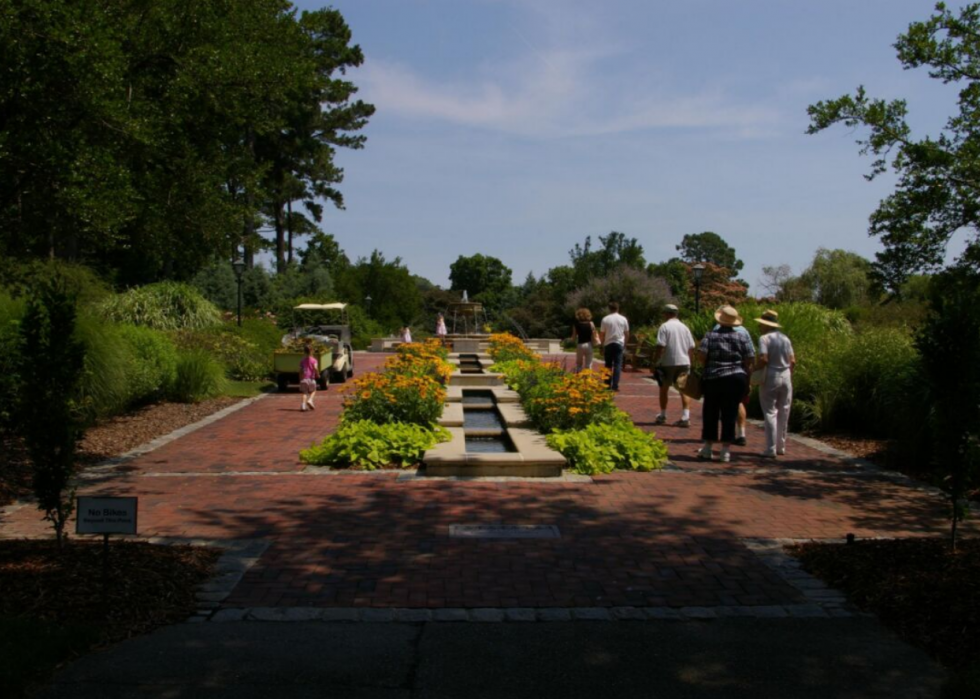
#63. Norfolk, VA
- Total score: 47.92 (down 6.53 from 2017; 2017 rank: #32)
- Environment rank: #29 (2017 rank: #17)
- Transportation rank: #90 (2017 rank: #39)
- Energy sources rank: #88 (2017 rank: #85)
- Lifestyle & policy rank: #48 (2017 rank: #61)
A unique initiative in Norfolk called Global Shapers aims to galvanize Virginia’s emerging sustainability industry. The program's dual aims are to help the environment and prevent the city’s millennials from seeking better employment elsewhere.

#62. Jersey City, NJ
- Total score: 48.13 (down 3.10 from 2017; 2017 rank: #44)
- Environment rank: #63 (2017 rank: #11)
- Transportation rank: #10 (2017 rank: #28)
- Energy sources rank: #98 (2017 rank: #99)
- Lifestyle & policy rank: #55 (2017 rank: #84)
Jersey City residents and community organizations are tackling sustainability on multiple fronts. Among these are a community composting initiative, and drives to increase retrofitting of houses and other buildings with solar panels.
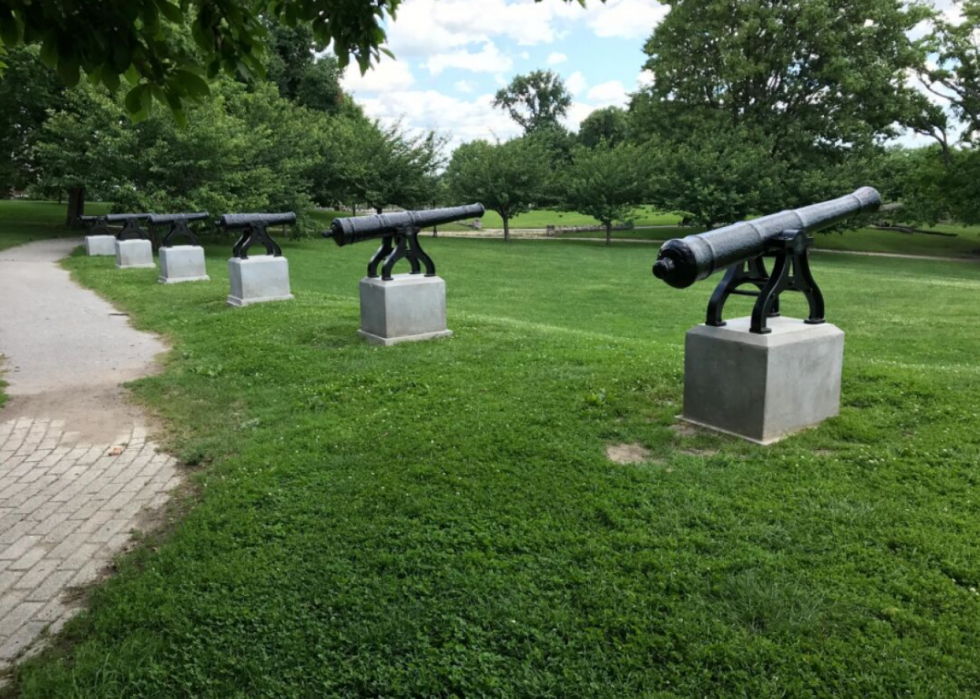
#61. Baltimore, MD
- Total score: 48.16 (down 2.65 from 2017; 2017 rank: #49)
- Environment rank: #92 (2017 rank: #65)
- Transportation rank: #22 (2017 rank: #21)
- Energy sources rank: #55 (2017 rank: #45)
- Lifestyle & policy rank: #22 (2017 rank: #25)
Baltimore has undertaken several unique sustainability projects. These include an overarching Food Policy Initiative that seeks to expand access to healthy food, and an agriculture program intended to expand the production and distribution of locally grown food within the city.
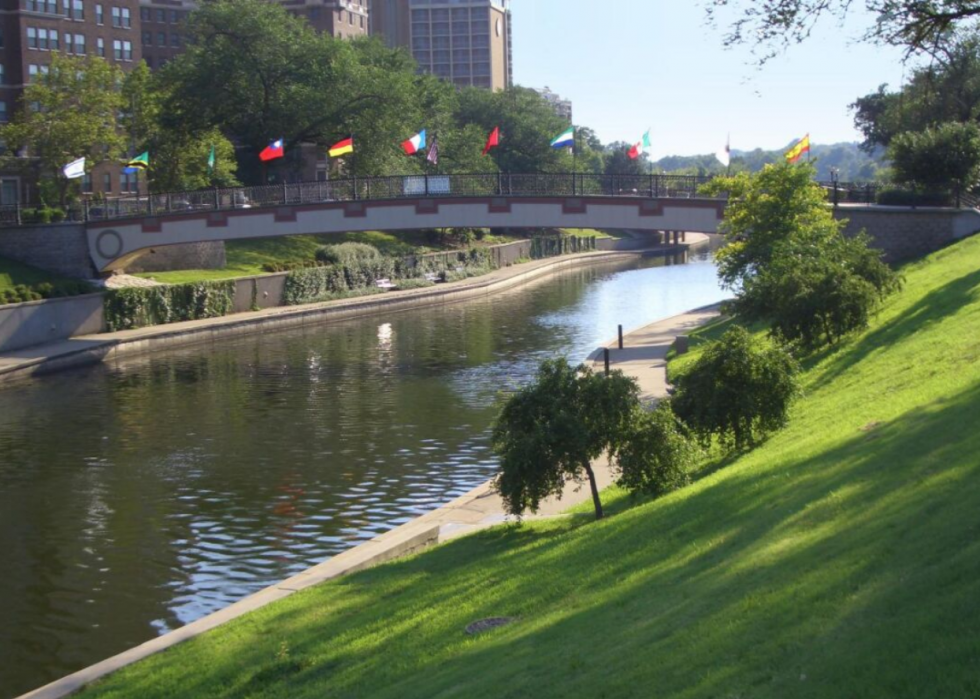
#60. Kansas City, MO
- Total score: 48.29 (up 4.11 from 2017; 2017 rank: #79)
- Environment rank: #45 (2017 rank: #84)
- Transportation rank: #26 (2017 rank: #22)
- Energy sources rank: #65 (2017 rank: #66)
- Lifestyle & policy rank: #71 (2017 rank: #73)
Kansas City’s sustainability focus is aimed at fostering partnerships with businesses. The experts on the city’s Green Business Network work with local companies to make their operations more eco-friendly in a way that also positively impacts their bottom line. The network has assisted in hundreds of sustainability adjustments from local businesses over the past two decades.
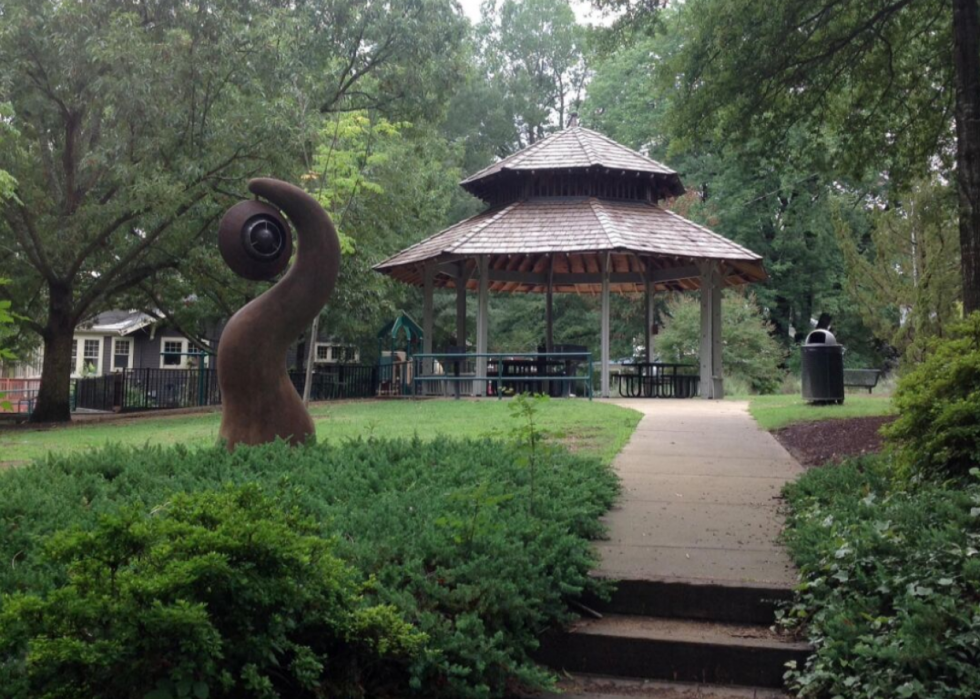
#59. Durham, NC
- Total score: 48.53 (down 1.22 from 2017; 2017 rank: #53)
- Environment rank: #36 (2017 rank: #32)
- Transportation rank: #62 (2017 rank: #54)
- Energy sources rank: #70 (2017 rank: #77)
- Lifestyle & policy rank: #38 (2017 rank: #55)
The city of Durham has been taking strides to reduce its environmental footprint. Recent successes include replacing lights in public places with LED bulbs, installing solar hot water systems, and phasing out city vehicles for a smart fleet. A new green-building policy also requires all new construction to be LEED-compliant.
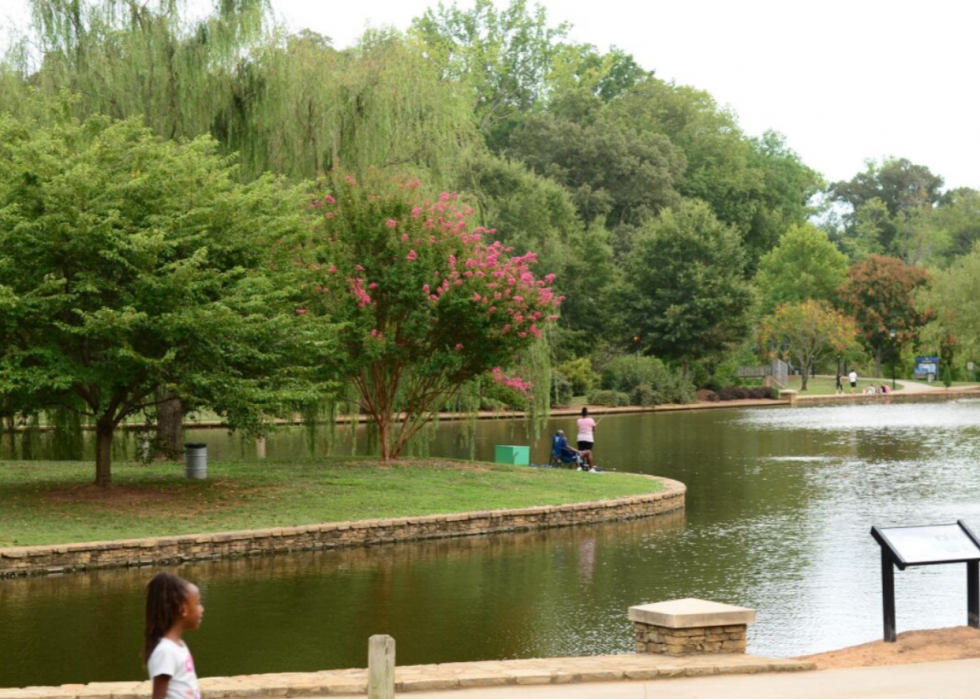
#58. Charlotte, NC
- Total score: 48.56 (down 0.90 from 2017; 2017 rank: #56)
- Environment rank: #15 (2017 rank: #15)
- Transportation rank: #54 (2017 rank: #50)
- Energy sources rank: #82 (2017 rank: #88)
- Lifestyle & policy rank: #56 (2017 rank: #60)
Charlotte can claim several environmental successes. In June 2018, the city voted to remain committed to the standards set forth in the landmark Paris Climate Agreement. A separate energy reduction campaign saved residents a whopping $26 million on their energy bills.

#57. Bakersfield, CA
- Total score: 48.72 (up 5.18 from 2017; 2017 rank: #82)
- Environment rank: #98 (2017 rank: #100)
- Transportation rank: #68 (2017 rank: #56)
- Energy sources rank: #1 (2017 rank: #1)
- Lifestyle & policy rank: #61 (2017 rank: #40)
Bakersfield’s most exciting new sustainability project is the plan for a high-speed rail that will reduce the carbon footprint of commuting, as the city is highly reliant on cars. Another new development in Bakersfield is the Metropolitan Bakersfield Conservation Plan, which seeks to protect the region’s threatened and endangered species.
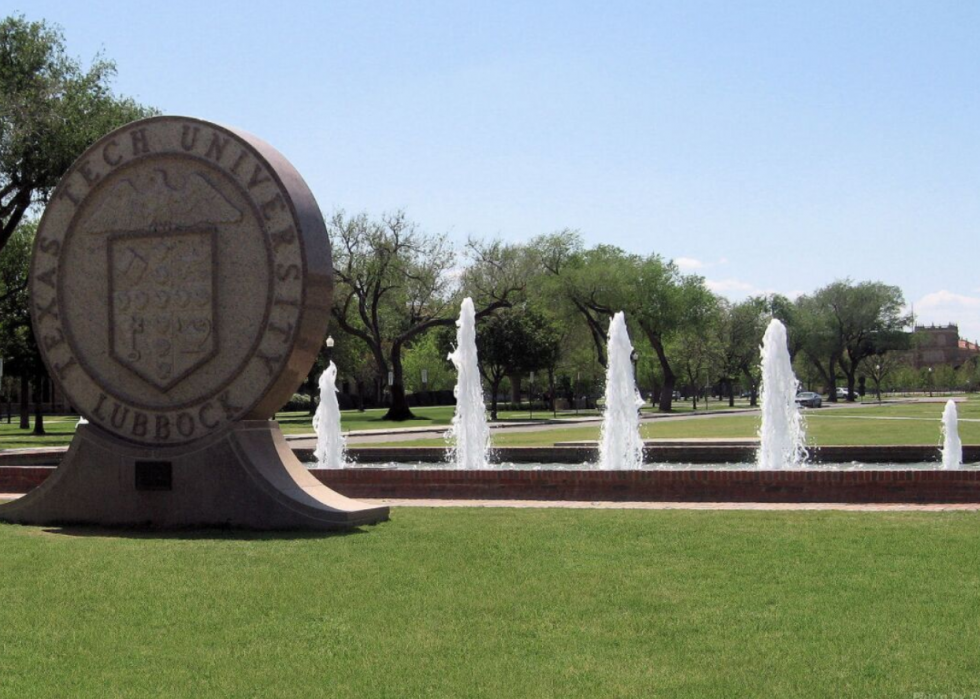
#56. Lubbock, TX
- Total score: 48.9 (down 3.67 from 2017; 2017 rank: #35)
- Environment rank: #60 (2017 rank: #46)
- Transportation rank: #51 (2017 rank: #45)
- Energy sources rank: #43 (2017 rank: #46)
- Lifestyle & policy rank: #74 (2017 rank: #39)
Lubbock is home to one of the country’s leading universities for sustainability and energy efficiency. Texas Tech has integrated sustainability into the core of its business and operations models, decreasing its energy use by 37% since 2000.
#55. Raleigh, NC
- Total score: 49.25 (down 2.41 from 2017; 2017 rank: #41)
- Environment rank: #11 (2017 rank: #16)
- Transportation rank: #75 (2017 rank: #65)
- Energy sources rank: #76 (2017 rank: #76)
- Lifestyle & policy rank: #62 (2017 rank: #37)
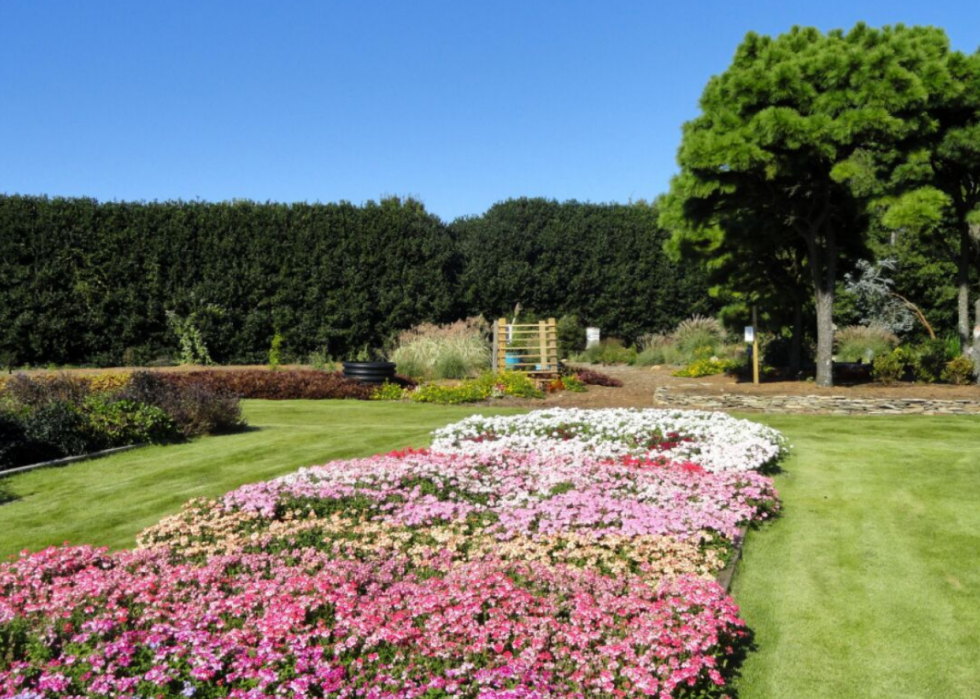
Raleigh’s multi-pronged approach to sustainability includes making buildings more efficient, improving public transportation, reclaiming and recycling, building green spaces, and creating green jobs. The city has been so successful in creating jobs that it was named the #2 fastest-growing clean energy job creator out of the country’s hundred largest metro areas.

#54. Milwaukee, WI
- Total score: 49.52 (down 2.39 from 2017; 2017 rank: #37)
- Environment rank: #70 (2017 rank: #53)
- Transportation rank: #25 (2017 rank: #20)
- Energy sources rank: #73 (2017 rank: #71)
- Lifestyle & policy rank: #15 (2017 rank: #16)
Milwaukee can claim significant initiatives for solar energy, water management, and urban gardening, among other eco-friendly programs. The city offers loans for solar rehabbing, and has taken a strong lead in turning abandoned lots into urban gardens, parks, and orchards.
#53. Wichita, KS
- Total score: 49.54 (up 0.21 from 2017; 2017 rank: #57)
- Environment rank: #43 (2017 rank: #40)
- Transportation rank: #93 (2017 rank: #91)
- Energy sources rank: #33 (2017 rank: #37)
- Lifestyle & policy rank: #95 (2017 rank: #100)
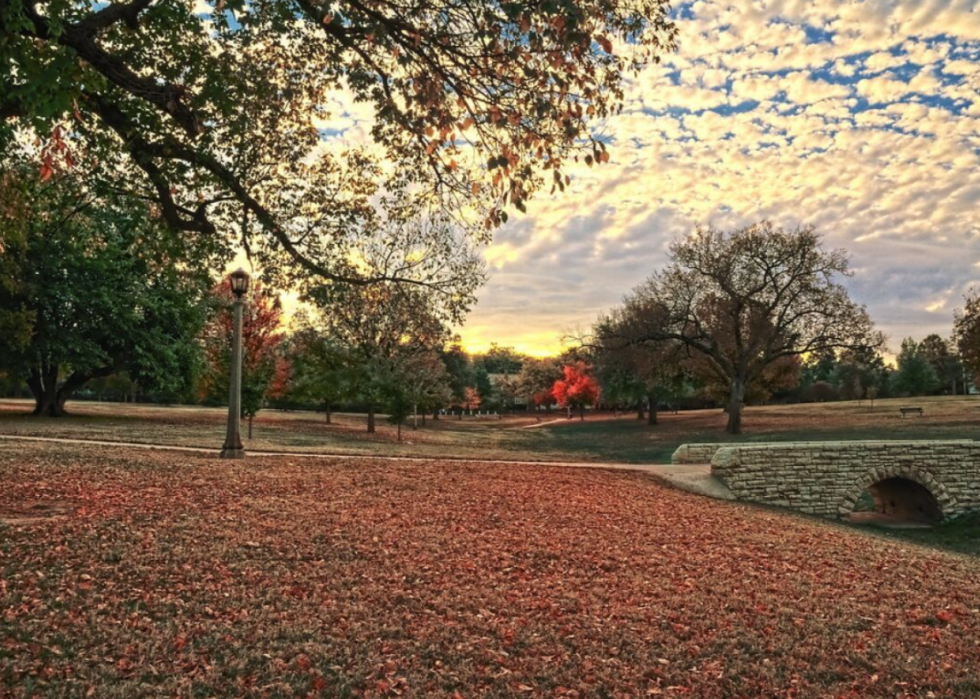
Wichita did not fare well in sustainability studies in the first decade of the 21st century, so the city got to work as the second decade began. Water conservation, natural resource preservation, efficient transportation, and healthy community design are among the city’s priorities. The city was rewarded with a three-star rating, a designation awarded to cities that make measurable improvements in sustainability.
#52. North Las Vegas, NV
- Total score: 49.89 (down 10.79 from 2017; 2017 rank: #15)
- Environment rank: #57 (2017 rank: #5)
- Transportation rank: #86 (2017 rank: #84)
- Energy sources rank: #26 (2017 rank: #29)
- Lifestyle & policy rank: #87 (2017 rank: #38)
North Las Vegas is home to some seriously green companies. For example, Faraday Future, an electric vehicle startup, has set a goal of running its factory primarily on clean energy.
#51. New Orleans, LA
- Total score: 49.95 (down 1.82 from 2017; 2017 rank: #40)
- Environment rank: #21 (2017 rank: #12)
- Transportation rank: #35 (2017 rank: #31)
- Energy sources rank: #64 (2017 rank: #64)
- Lifestyle & policy rank: #94 (2017 rank: #91)
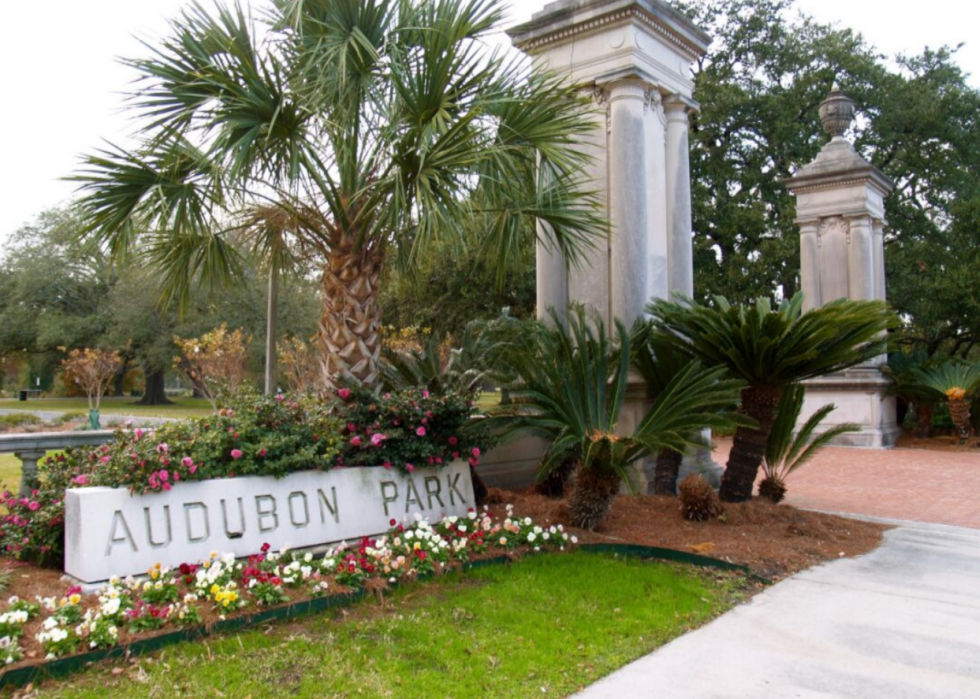
Hurricane Katrina hit New Orleans in 2005, devastating the city. Its one positive effect was serving as the catalyst to make the city a much greener place to live. Homes destroyed by the storm are being rebuilt using the highest ecological building standards. Historic preservation efforts include repurposing material from abandoned buildings into new construction.

#50. Garland, TX
- Total score: 49.96 (up 2.00 from 2017; 2017 rank: #65)
- Environment rank: #27 (2017 rank: #60)
- Transportation rank: #57 (2017 rank: #93)
- Energy sources rank: #43 (2017 rank: #46)
- Lifestyle & policy rank: #97 (2017 rank: #36)
The city of Garland has seen success in its sustainability efforts in recent years. These include initiatives to improve the walkability of its downtown area and launching the city’s light rail system. High-density developments, including multi-level apartments and parking garages, allow more people to live per square foot, reducing the need for gas-guzzling commutes.
#49. Chesapeake, VA
- Total score: 50.36 (down 8.94 from 2017; 2017 rank: #20)
- Environment rank: #1 (2017 rank: #3)
- Transportation rank: #96 (2017 rank: #90)
- Energy sources rank: #88 (2017 rank: #85)
- Lifestyle & policy rank: #77 (2017 rank: #29)
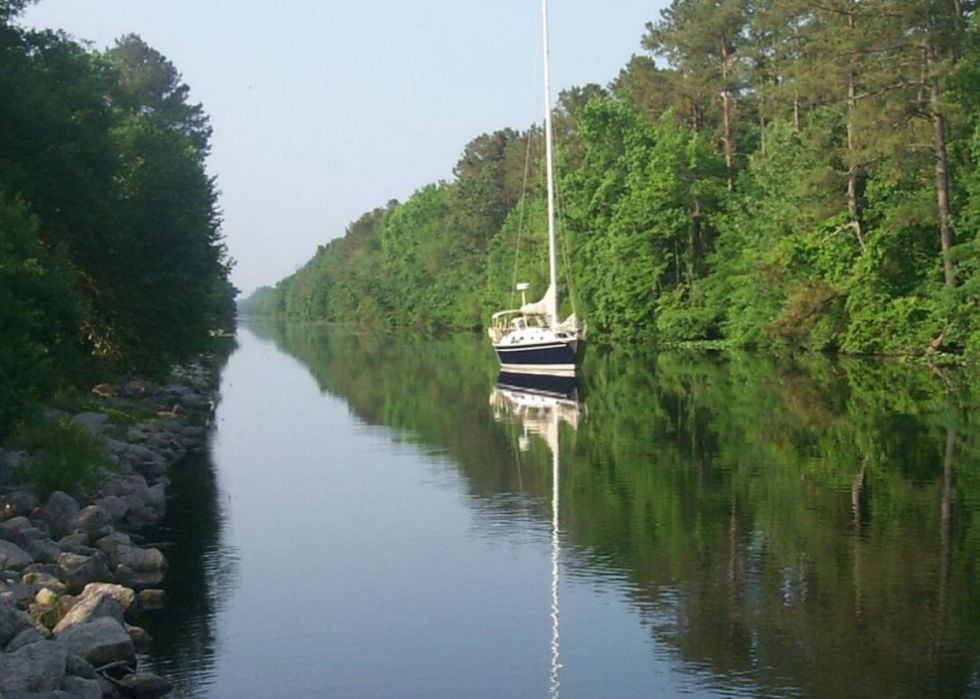
As befits a city on the water, many of Chesapeake’s conservation efforts focus on cleaning and conserving water. The city has ocean-centric summits for grade schoolers, who take the stage with experts to share their findings on water conservation and preservation. Community-building activities based around cleaning waterways provide family friendly fun and a chance to get some exercise in.
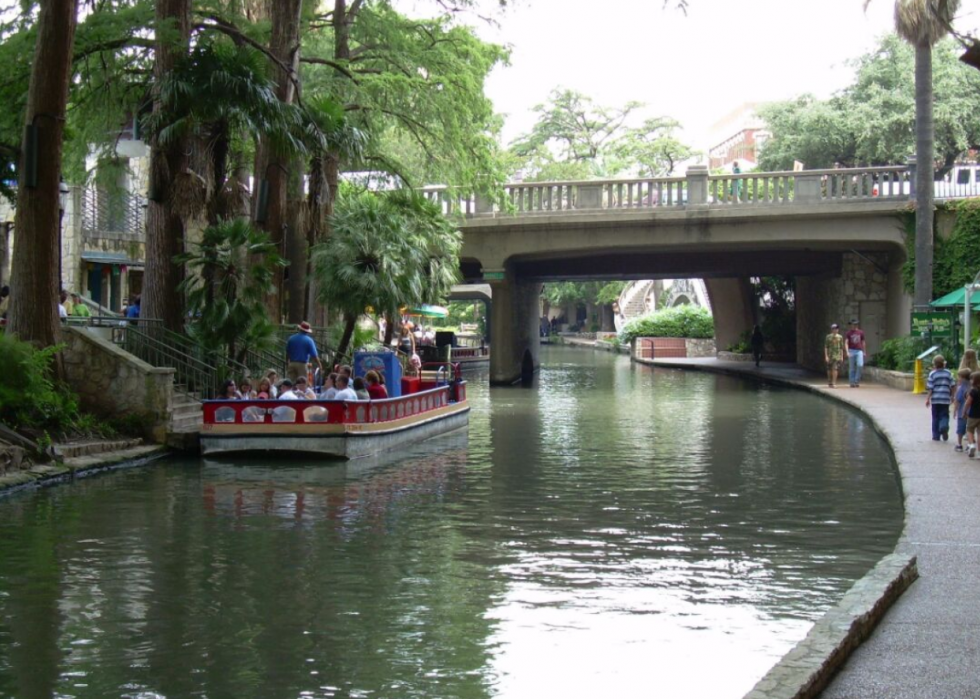
#48. San Antonio, TX
- Total score: 50.77 (up 2.63 from 2017; 2017 rank: #61)
- Environment rank: #47 (2017 rank: #64)
- Transportation rank: #56 (2017 rank: #46)
- Energy sources rank: #38 (2017 rank: #41)
- Lifestyle & policy rank: #68 (2017 rank: #81)
San Antonio’s sustainability plan centers primarily around using less water and more of the abundant sun that washes over Texas. Daily per capita water usage in San Antonio has dropped from 145 gallons in 2011 to 118 gallons in 2015, a success the water company has attributed to its proactive approach to reducing consumption.

#47. Colorado Springs, CO
- Total score: 50.83 (down 0.39 from 2017; 2017 rank: #45)
- Environment rank: #58 (2017 rank: #50)
- Transportation rank: #78 (2017 rank: #70)
- Energy sources rank: #29 (2017 rank: #34)
- Lifestyle & policy rank: #40 (2017 rank: #57)
Colorado Springs is trying to make it easier for its residents to live more eco-friendly lives. The city has partnered with auto dealers to offer rebates for electric car purchases and has developed a task force to determine how smart technology can conserve resources.
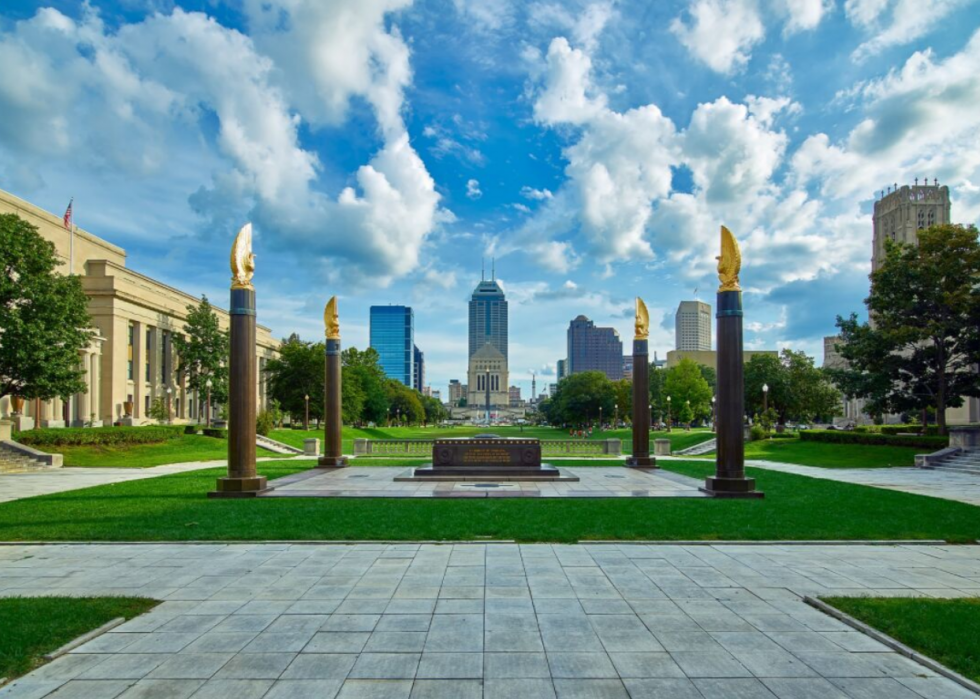
#46. Indianapolis, IN
- Total score: 50.83 (up 3.20 from 2017; 2017 rank: #66)
- Environment rank: #17 (2017 rank: #55)
- Transportation rank: #70 (2017 rank: #61)
- Energy sources rank: #51 (2017 rank: #42)
- Lifestyle & policy rank: #63 (2017 rank: #83)
Indianapolis’ sustainability plan is an ambitious effort to decrease carbon emissions and dispose of waste of efficiently. The city’s biggest achievements have been its Responsible Production and Consumption program, which educates residents on energy efficiency and food waste.
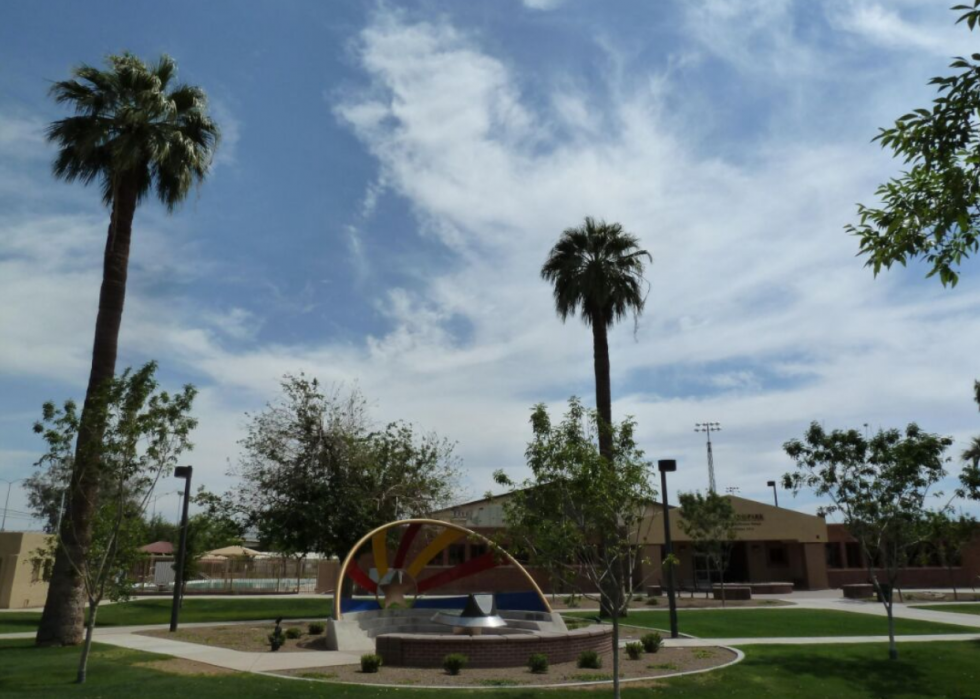
#45. Phoenix, AZ
- Total score: 50.97 (down 0.84 from 2017; 2017 rank: #39)
- Environment rank: #74 (2017 rank: #57)
- Transportation rank: #47 (2017 rank: #38)
- Energy sources rank: #37 (2017 rank: #36)
- Lifestyle & policy rank: #49 (2017 rank: #67)
Phoenix has an abundance of attractions created by citizens with a particular zeal for sustainability. Among the city’s eco-oriented attractions is the famous “Maytag Matilda” — a horse sculpture created with scrap metal —and the Water Works at Arizona Falls, a restored hydroelectric plant that now generates renewable energy.
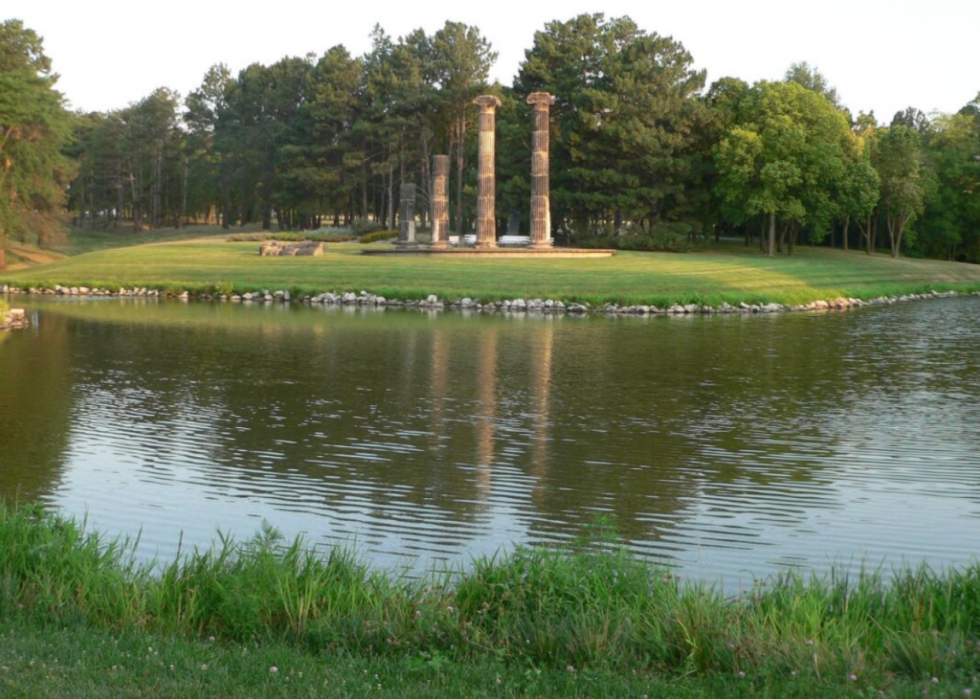
#44. Lincoln, NE
- Total score: 51.08 (down 1.66 from 2017; 2017 rank: #34)
- Environment rank: #40 (2017 rank: #18)
- Transportation rank: #48 (2017 rank: #44)
- Energy sources rank: #50 (2017 rank: #43)
- Lifestyle & policy rank: #73 (2017 rank: #95)
The city of Lincoln has drawn on environmentally engaged residents to advance the city’s sustainability goals. The city commissioned a panel of citizens, called the Sustainable Lincoln Blue Ribbon Leadership Team, to improve the community’s air and water and decrease its waste and energy consumption. The city has also made significant efforts to divert construction and demolition waste and banned the purchase of bottled water with city funds.

#43. Aurora, CO
- Total score: 51.23 (up 1.35 from 2017; 2017 rank: #52)
- Environment rank: #83 (2017 rank: #43)
- Transportation rank: #29 (2017 rank: #73)
- Energy sources rank: #29 (2017 rank: #34)
- Lifestyle & policy rank: #72 (2017 rank: #93)
Aurora is advancing its sustainability goals on multiple fronts. The city’s light rail system reduces the need for many residents to rely on carbon-producing cars. But perhaps most significantly, the city is home to the Aurora Campus for Renewable Energy, North America’s first shared solar technology center of its kind. There, member companies bring their technology for testing and demonstration.
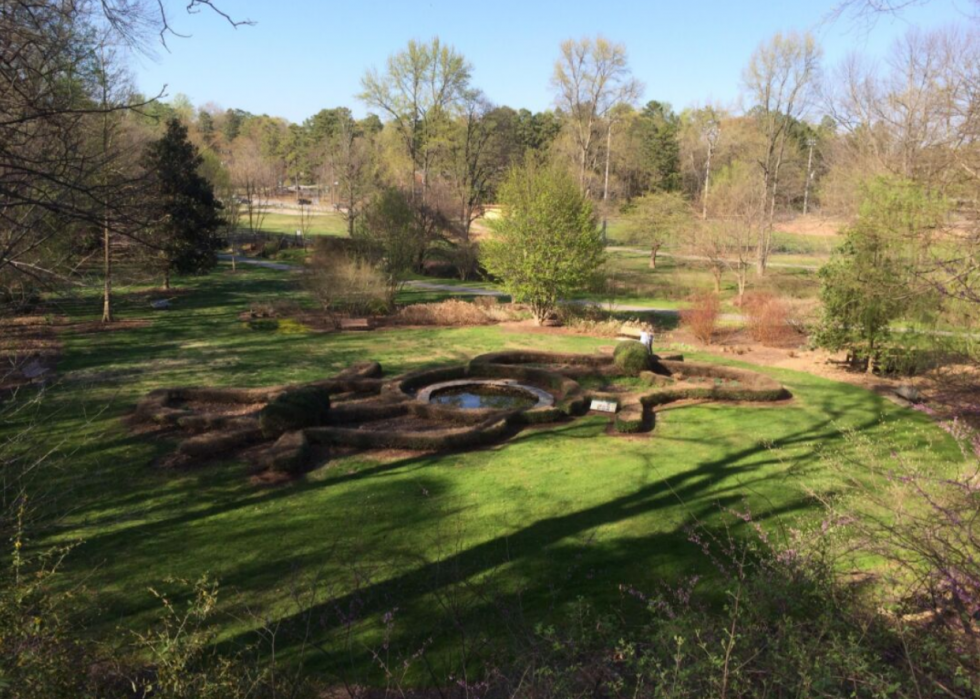
#42. Greensboro, NC
- Total score: 51.32 (up 3.27 from 2017; 2017 rank: #63)
- Environment rank: #20 (2017 rank: #19)
- Transportation rank: #33 (2017 rank: #78)
- Energy sources rank: #70 (2017 rank: #77)
- Lifestyle & policy rank: #65 (2017 rank: #90)
Greensboro stands out for its many green businesses. Among these are the LEED Platinum certified, solar-heated Proximity Hotel, a renovated mill turned into a stylish getaway spot. The city is home to an array of outdoor parks and green spaces, including the Greensboro Arboretum and Tanger Family Bicentennial Gardens.
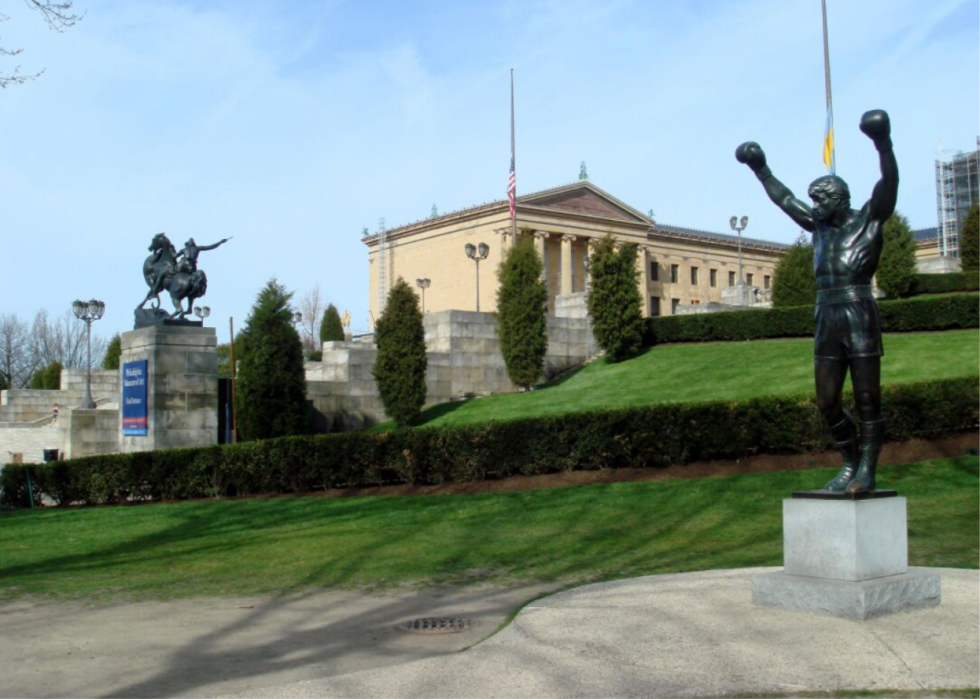
#41. Philadelphia, PA
- Total score: 51.5 (up 1.05 from 2017; 2017 rank: #50)
- Environment rank: #34 (2017 rank: #61)
- Transportation rank: #20 (2017 rank: #14)
- Energy sources rank: #68 (2017 rank: #65)
- Lifestyle & policy rank: #29 (2017 rank: #44)
For eating and drinking, Philadelphia is certainly green. The city’s water department has rain gardens and storm-water planters and is vigilant in keeping urban streams clean. Equally important, some of the city’s most celebrated restaurants feature organic and farm-to-table cuisine, making it easy to eat responsibly.

#40. El Paso, TX
- Total score: 51.55 (up 3.47 from 2017; 2017 rank: #62)
- Environment rank: #12 (2017 rank: #26)
- Transportation rank: #50 (2017 rank: #43)
- Energy sources rank: #63 (2017 rank: #68)
- Lifestyle & policy rank: #64 (2017 rank: #92)
It's hard for a spread-out, car-reliant locale like El Paso to be eco-friendly, but the city is making concerted efforts. Among these are a week-long festival dedicated to the benefits of electric cars, the addition of bicycle lanes to most of the city’s streets, and the development of a rapid transit system to reduce reliance on cars.
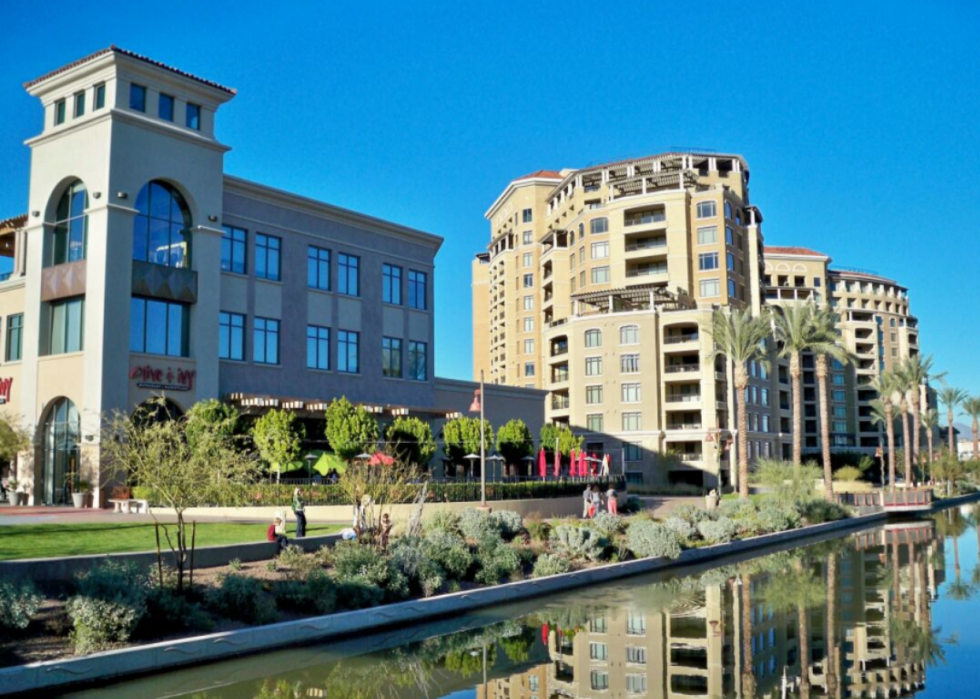
#39. Scottsdale, AZ
- Total score: 51.6 (down 7.14 from 2017; 2017 rank: #21)
- Environment rank: #16 (2017 rank: #13)
- Transportation rank: #64 (2017 rank: #63)
- Energy sources rank: #56 (2017 rank: #57)
- Lifestyle & policy rank: #67 (2017 rank: #5)
Scottsdale takes sustainability seriously. The city has a range of green initiatives, from a campaign to limit tailpipe exhaustion to its low-impact development toolkit, which the city is progressively installing in new construction.
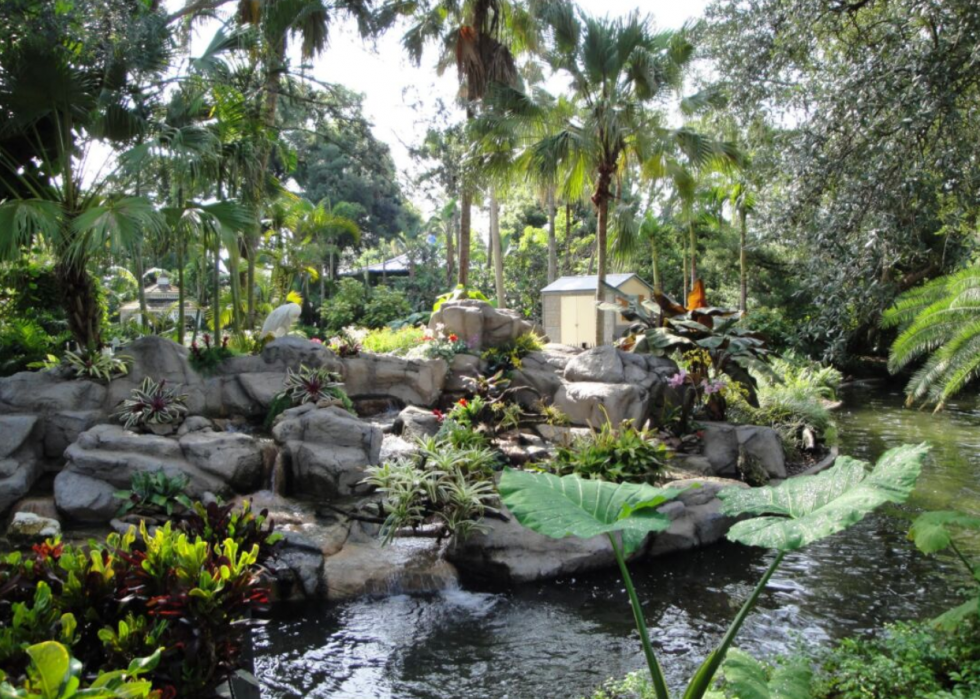
#38. Tampa, FL
- Total score: 51.85 (up 8.35 from 2017; 2017 rank: #83)
- Environment rank: #30 (2017 rank: #76)
- Transportation rank: #21 (2017 rank: #57)
- Energy sources rank: #81 (2017 rank: #80)
- Lifestyle & policy rank: #17 (2017 rank: #45)
Tampa has a host of innovative sustainability solutions, including solar-powered parking pay stations, numerous electric vehicle charging stations, an active urban forestry program, and miles of beautiful greenways and trails for residents and visitors to enjoy.

#37. Boise, ID
- Total score: 52.16 (down 3.28 from 2017; 2017 rank: #29)
- Environment rank: #93 (2017 rank: #68)
- Transportation rank: #18 (2017 rank: #11)
- Energy sources rank: #23 (2017 rank: #21)
- Lifestyle & policy rank: #69 (2017 rank: #82)
One of the most famous elements of eco-friendly Boise is the famous Boise Castle. The grand mansion was designed by a local resident with an Arthurian castle — and the environment — in mind. The floors are all reclaimed wood; the stone is from a local quarry and a geothermal heat pump reduces the energy consumption.
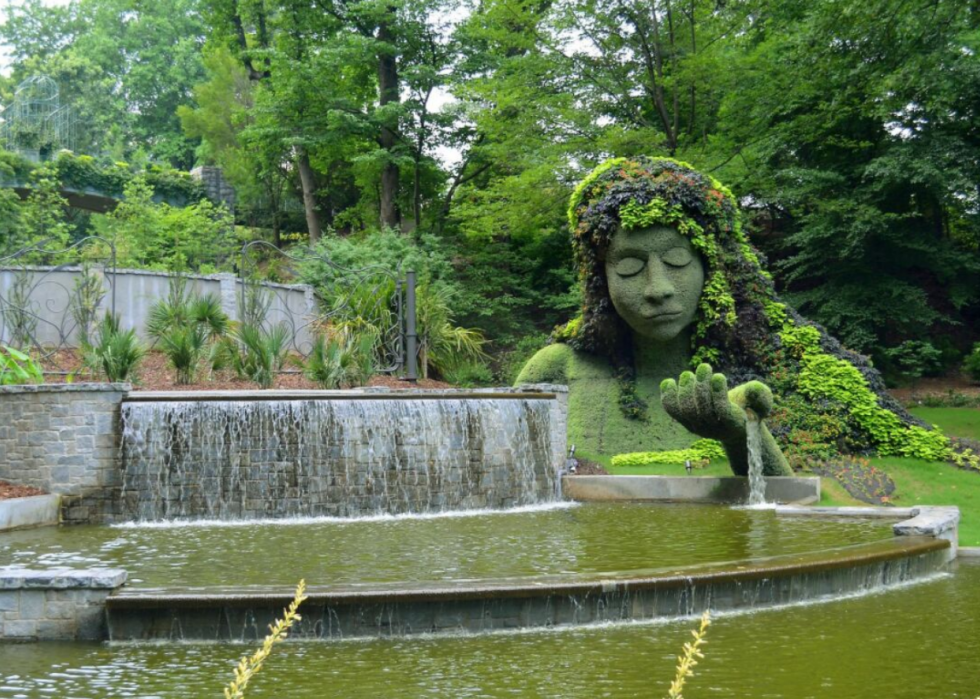
#36. Atlanta, GA
- Total score: 52.32 (up 8.96 from 2017; 2017 rank: #84)
- Environment rank: #49 (2017 rank: #91)
- Transportation rank: #17 (2017 rank: #16)
- Energy sources rank: #66 (2017 rank: #67)
- Lifestyle & policy rank: #13 (2017 rank: #49)
When it comes to eco-friendly office buildings, Atlanta is one of the top cities in the nation. Many of the city’s office buildings are LEED-certified, and the city passed an ordinance in 2015 mandating that commercial buildings measure and publish their energy and water usage.
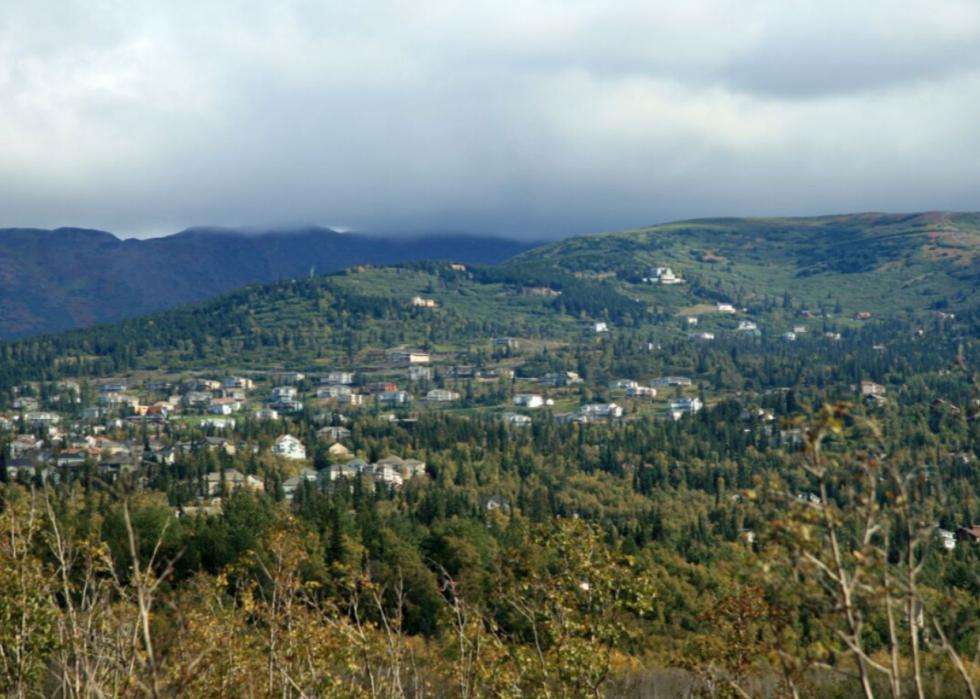
#35. Anchorage, AK
- Total score: 52.34 (down 0.12 from 2017; 2017 rank: #36)
- Environment rank: #23 (2017 rank: #42)
- Transportation rank: #66 (2017 rank: #60)
- Energy sources rank: #34 (2017 rank: #28)
- Lifestyle & policy rank: #45 (2017 rank: #71)
Many of Anchorage’s sustainability practices are centered around keeping energy costs low. Architects and developers are leading the city in this direction all across the city by implementing best practices according to international building code standards.
#34. Las Vegas, NV
- Total score: 52.84 (up 4.02 from 2017; 2017 rank: #59)
- Environment rank: #96 (2017 rank: #85)
- Transportation rank: #15 (2017 rank: #34)
- Energy sources rank: #32 (2017 rank: #27)
- Lifestyle & policy rank: #28 (2017 rank: #53)
“Eco-friendly” and “Las Vegas” may not typically be two phrases that go together, but the city has been making real strides in recent years to change that. A water reclamation project has cut per capita water usage by 37% in just a decade, thanks to its sweeping reforms, which are now studied as a model around the world.
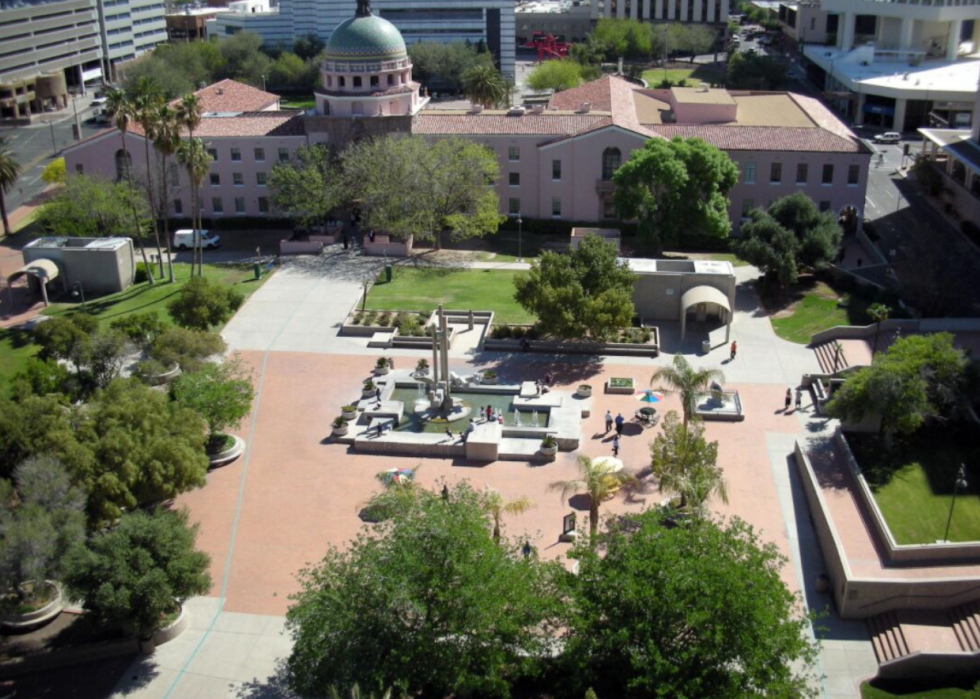
#33. Tucson, AZ
- Total score: 53.22 (up 1.88 from 2017; 2017 rank: #43)
- Environment rank: #33 (2017 rank: #35)
- Transportation rank: #23 (2017 rank: #52)
- Energy sources rank: #56 (2017 rank: #57)
- Lifestyle & policy rank: #58 (2017 rank: #59)
Tucson faces major challenges in being eco-friendly. Nevertheless, the city has jumped the ranks by becoming one of the nation’s 13 solar cities, broadly adopting solar power across its services. The city also ranks low in terms of carbon emissions and particle pollution and has hundreds of miles of trails and bike paths as well as many farmers markets.

#32. Reno, NV
- Total score: 53.37 (down 1.48 from 2017; 2017 rank: #31)
- Environment rank: #55 (2017 rank: #24)
- Transportation rank: #38 (2017 rank: #30)
- Energy sources rank: #26 (2017 rank: #29)
- Lifestyle & policy rank: #37 (2017 rank: #74)
Reno is investing $1.2 billion in its eco-friendly future. The city’s latest development of the world’s first desert biome eco-district, which will transform a series of underutilized lots into a combination of residential, commercial, and office space with plenty of vertical gardens and green areas.

#31. Fresno, CA
- Total score: 53.75 (down 3.31 from 2017; 2017 rank: #26)
- Environment rank: #88 (2017 rank: #77)
- Transportation rank: #40 (2017 rank: #27)
- Energy sources rank: #1 (2017 rank: #1)
- Lifestyle & policy rank: #57 (2017 rank: #28)
The city of Fresno is devoted to investing in solar energy. The city’s municipal services department and airport have installed photovoltaic panels for daily energy use. Solar panels on an unused airstrip provides forty percent of the energy for lights, air conditioning, controls, and tower communications.
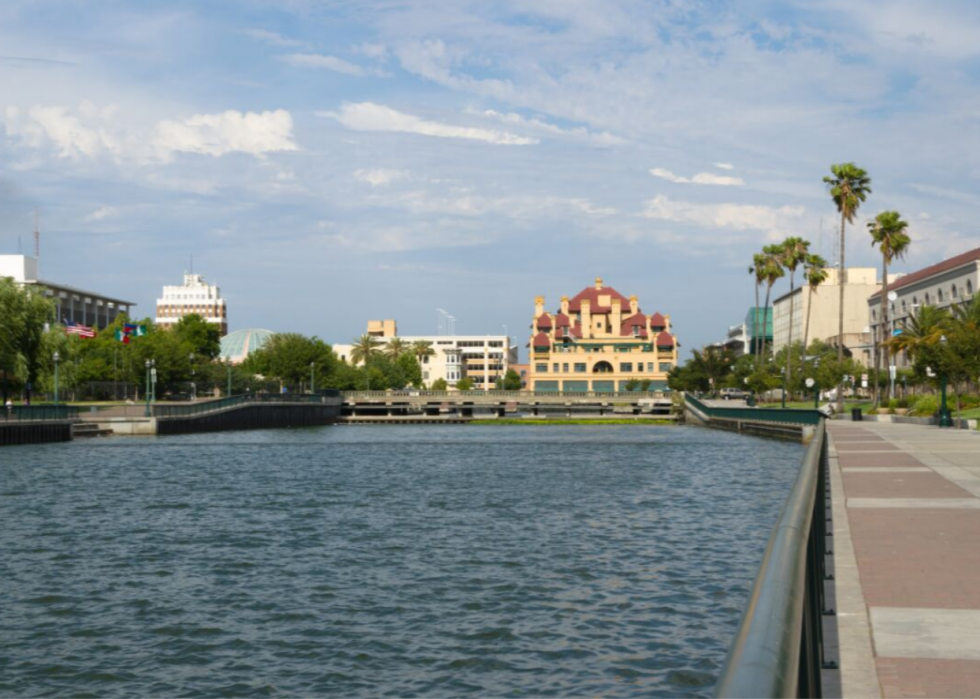
#30. Stockton, CA
- Total score: 54.04 (up 3.19 from 2017; 2017 rank: #48)
- Environment rank: #82 (2017 rank: #86)
- Transportation rank: #65 (2017 rank: #48)
- Energy sources rank: #1 (2017 rank: #1)
- Lifestyle & policy rank: #41 (2017 rank: #58)
Stockton has a vibrant community of eco-conscious citizens who are committed to lessening their environmental impacts. The city has an array of resources for citizens looking to recycle, upcycle, or acquire whatever they need from a pre-existing source. In fact, the city has an abundance of flea markets, antique malls, and thrift markets.
#29. Cincinnati, OH
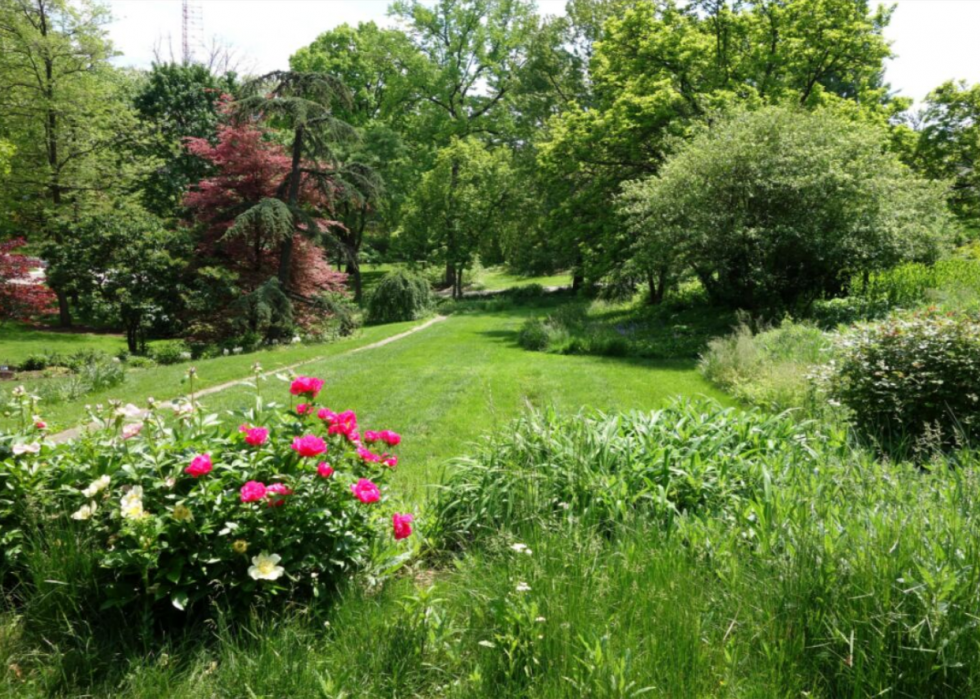
- Total score: 54.2 (up 2.68 from 2017; 2017 rank: #42)
- Environment rank: #8 (2017 rank: #39)
- Transportation rank: #13 (2017 rank: #10)
- Energy sources rank: #92 (2017 rank: #91)
- Lifestyle & policy rank: #18 (2017 rank: #19)
Cincinnati was the first city in the country to offer its residents 100% renewable energy. The city boasts over 5,000 acres in its sprawling parks system, allowing citizens to enjoy natural resources instead of using them up.
#28. Orlando, FL
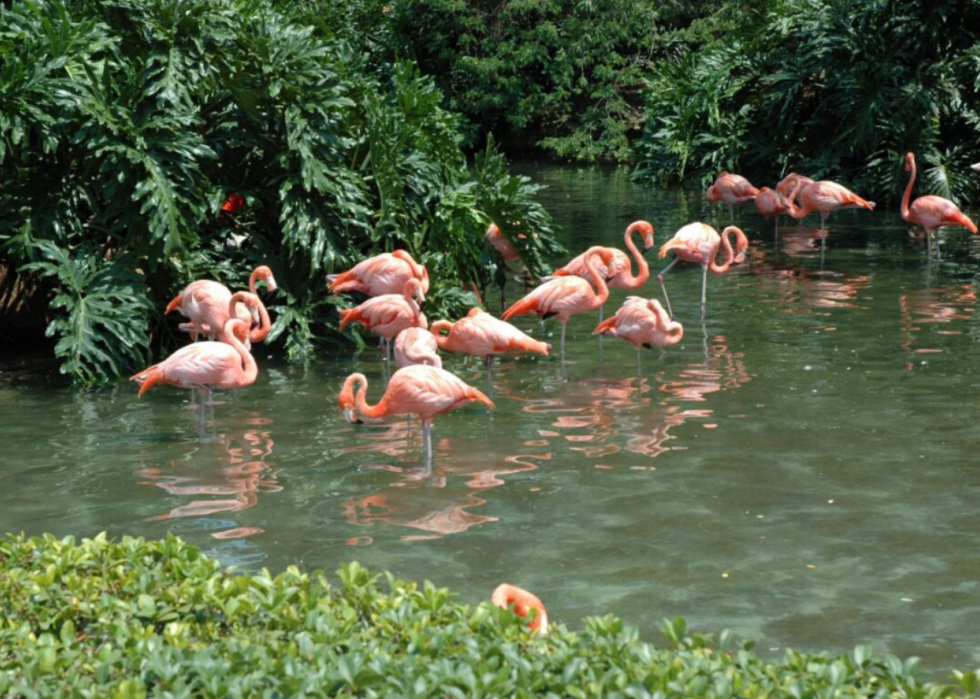
- Total score: 54.65 (up 9.34 from 2017; 2017 rank: #70)
- Environment rank: #39 (2017 rank: #90)
- Transportation rank: #5 (2017 rank: #6)
- Energy sources rank: #77 (2017 rank: #75)
- Lifestyle & policy rank: #6 (2017 rank: #21)
Orlando has an abundance of nature-centric activities to suit any taste. These attractions include ziplining through forests, boat riding through swamps, hang gliding, birdwatching, alligator ponds, and more.

#27. Albuquerque, NM
- Total score: 54.97 (down 2.56 from 2017; 2017 rank: #24)
- Environment rank: #37 (2017 rank: #30)
- Transportation rank: #28 (2017 rank: #66)
- Energy sources rank: #39 (2017 rank: #38)
- Lifestyle & policy rank: #34 (2017 rank: #11)
You needed a car in Albuquerque for a long time, but the city’s efforts to change that have transformed it into a seriously sustainable city. Albuquerque now has a commuter rail service, a robust bus network, and more than 400 miles of bike paths and trails.
#26. Denver, CO
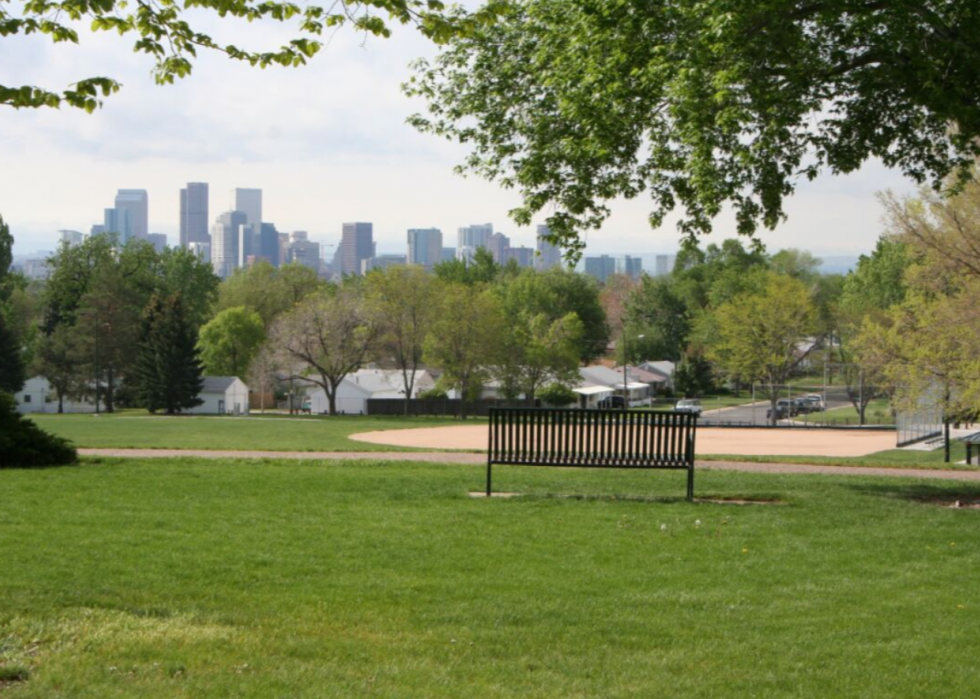
- Total score: 55.12 (up 4.84 from 2017; 2017 rank: #51)
- Environment rank: #97 (2017 rank: #98)
- Transportation rank: #14 (2017 rank: #13)
- Energy sources rank: #22 (2017 rank: #26)
- Lifestyle & policy rank: #27 (2017 rank: #10)
With views of nature all around, it should come as no surprise that Denver is quite green. The city’s taxis are hybrid, and its public vehicles were the first in the country to become a “Green Fleet.” Denver is in the midst of an ambitious campaign to plant 1 million new trees by 2025.
#25. Anaheim, CA
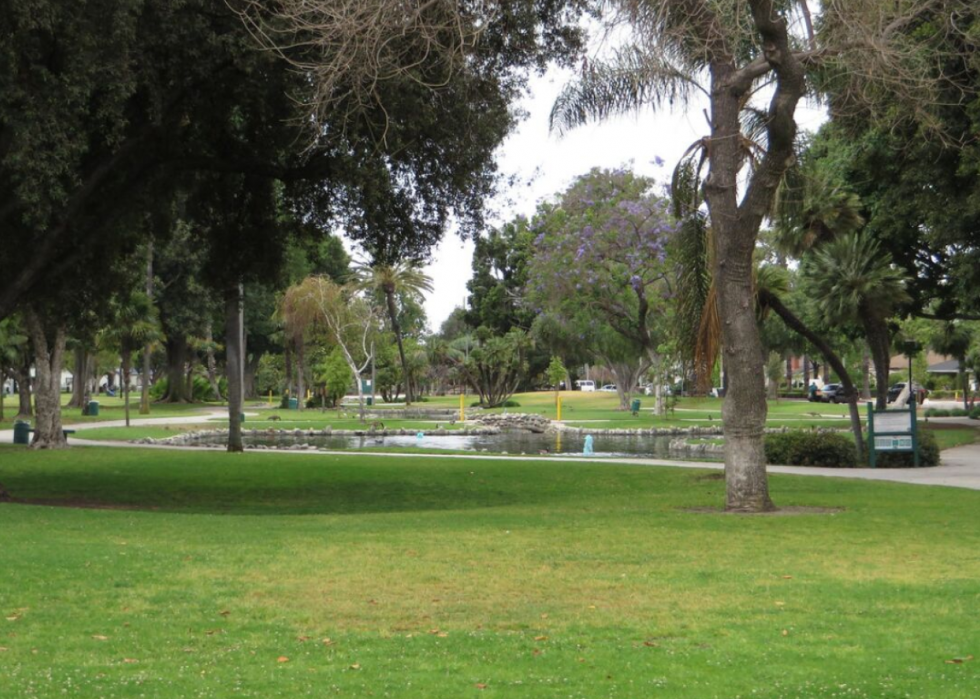
- Total score: 55.38 (down 3.20 from 2017; 2017 rank: #22)
- Environment rank: #68 (2017 rank: #63)
- Transportation rank: #71 (2017 rank: #25)
- Energy sources rank: #1 (2017 rank: #1)
- Lifestyle & policy rank: #35 (2017 rank: #54)
The city of Anaheim is raising its sustainability standards across the board. The city’s convention center leads the nation in resource management and has been awarded the highest designation in that category. Anaheim is considered such an eco-friendly area that the city even plays host to a natural products exposition, where manufacturers and green business owners from around the country come to showcase their wares.
#24. Long Beach, CA
- Total score: 55.87 (down 1.48 from 2017; 2017 rank: #25)
- Environment rank: #75 (2017 rank: #73)
- Transportation rank: #73 (2017 rank: #23)
- Energy sources rank: #1 (2017 rank: #1)
- Lifestyle & policy rank: #25 (2017 rank: #43)
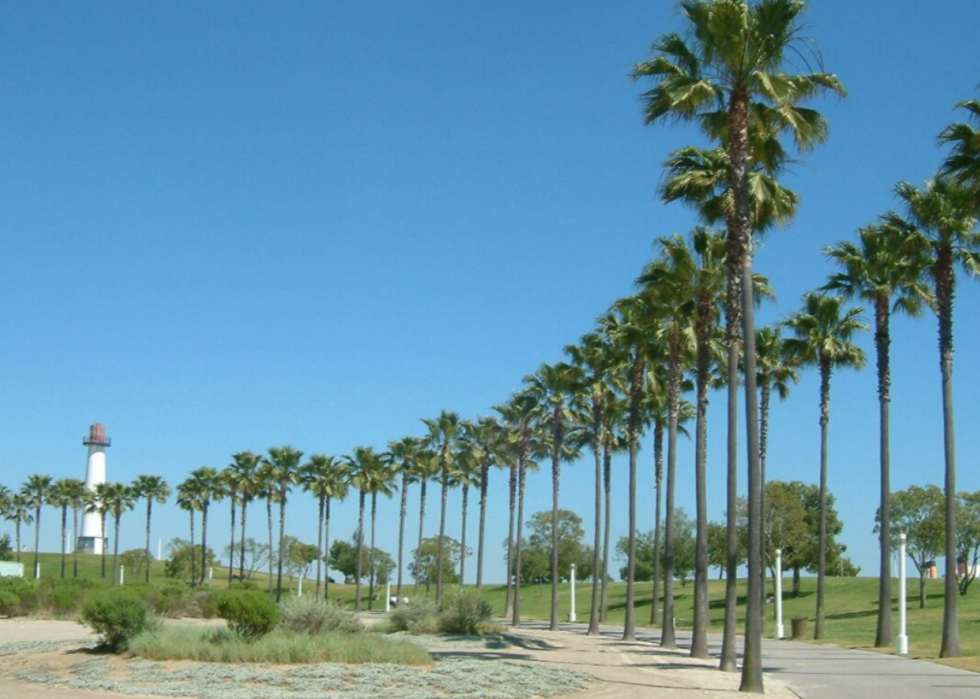
The city of Long Beach is rigorous with its resource management. The city has a Green Purchasing Policy, in which it procures primarily “environmentally preferable products” and encourages (and helps) all of its suppliers and contractors to do the same. The city also has an astonishing number of organic eating options: over 200 restaurants, farms, grocery stores, and farmers markets!
#23. Santa Ana, CA
- Total score: 55.93 (up 4.10 from 2017; 2017 rank: #38)
- Environment rank: #69 (2017 rank: #70)
- Transportation rank: #55 (2017 rank: #64)
- Energy sources rank: #1 (2017 rank: #1)
- Lifestyle & policy rank: #43 (2017 rank: #98)
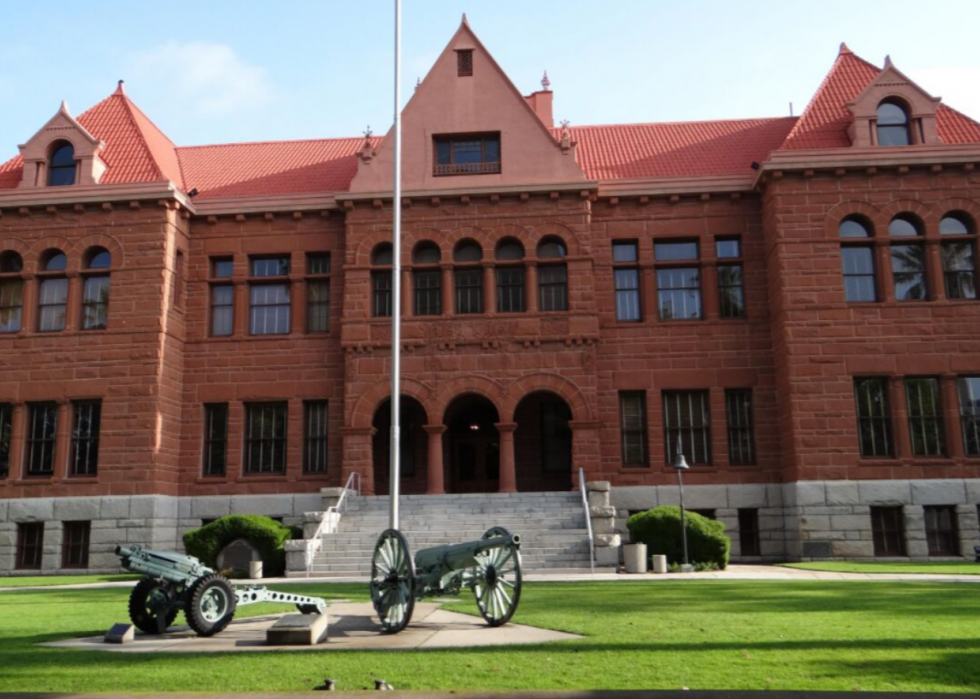
Santa Ana has gone green across the board. The city has a green-vehicle program, swapping out the city’s fleet of cars for hybrid and fuel-efficient alternatives. Santa Ana has also instituted a mandatory 3% cut in water usage.

#22. Riverside, CA
- Total score: 56.13 (up 0.74 from 2017; 2017 rank: #30)
- Environment rank: #94 (2017 rank: #79)
- Transportation rank: #67 (2017 rank: #68)
- Energy sources rank: #16 (2017 rank: #18)
- Lifestyle & policy rank: #14 (2017 rank: #34)
Riverside has several eco-friendly initiatives that have transformed the city into a sustainability leader. Riverside began early, swapping LED bulbs into city lights and building a utility solar project as far back as 2001. In just 10 years, a constellation of initiatives allowed Riverside to divert 69% of its waste from landfills.
#21. New York, NY
- Total score: 58.37 (down 1.79 from 2017; 2017 rank: #16)
- Environment rank: #46 (2017 rank: #29)
- Transportation rank: #31 (2017 rank: #26)
- Energy sources rank: #31 (2017 rank: #25)
- Lifestyle & policy rank: #12 (2017 rank: #35)
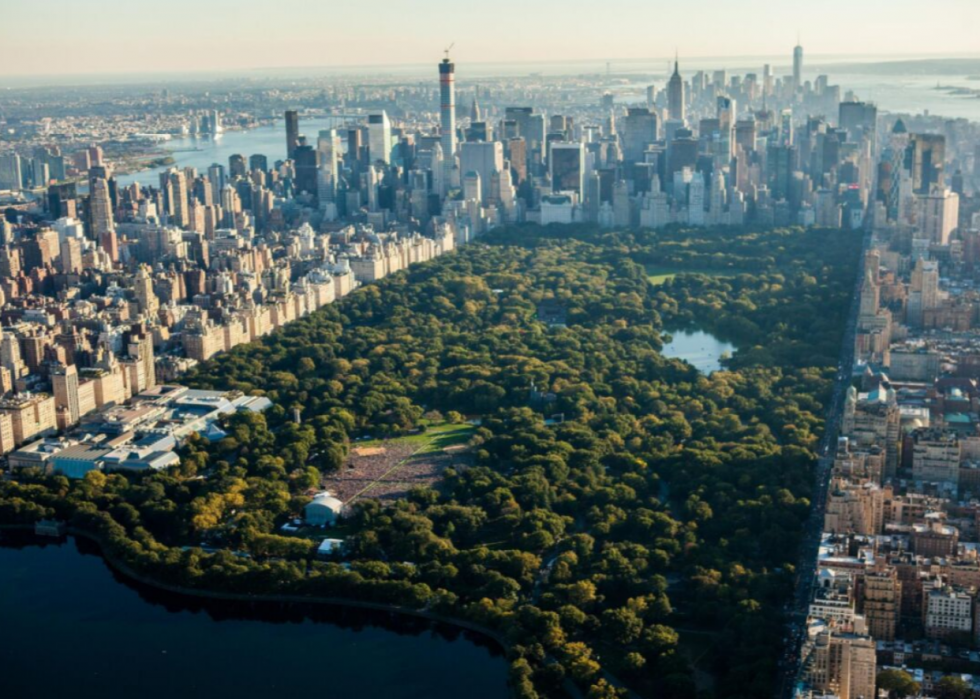
New York City is doing all it can to be more eco-friendly. The city has recently begun providing composting bins, allowing the Department of Sanitation to collect food scraps and yard waste. There are also “stop ‘n swaps” across the city where residents can bring home items they no longer need to trade with others, reducing their eco-footprint by not purchasing new goods.
#20. Austin, TX
- Total score: 58.44 (up 2.76 from 2017; 2017 rank: #28)
- Environment rank: #19 (2017 rank: #41)
- Transportation rank: #32 (2017 rank: #24)
- Energy sources rank: #40 (2017 rank: #40)
- Lifestyle & policy rank: #16 (2017 rank: #31)
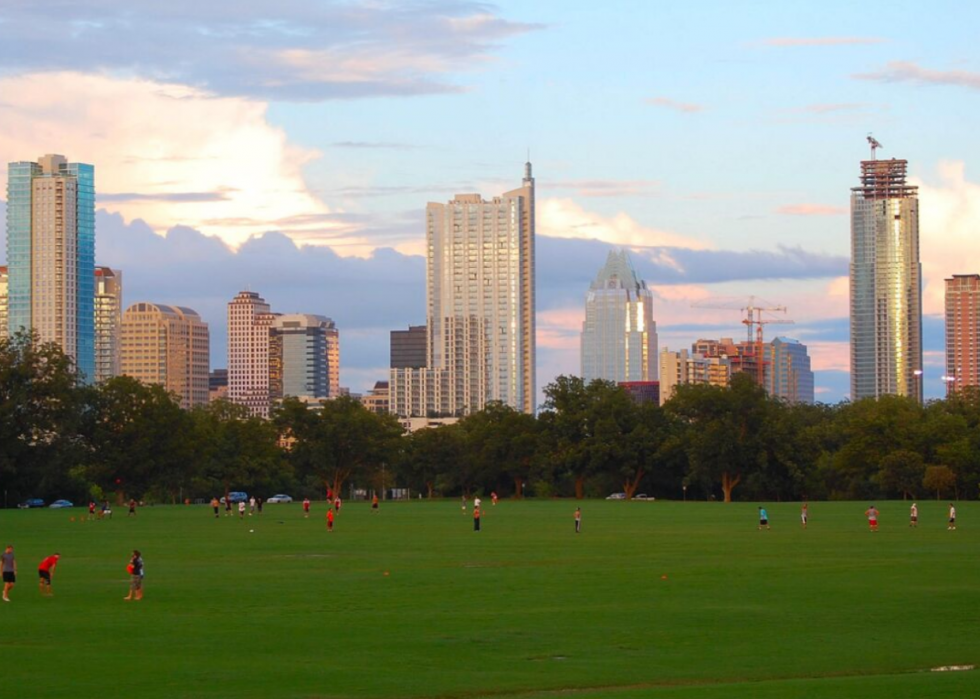
Austin lives up to its status as the greenest city in Texas. The city has one of the highest concentrations of farmers markets in the country and also ranks high in air quality for a car-reliant area. The city actively helps residents plan carpools and biking alternatives to promote healthier air.
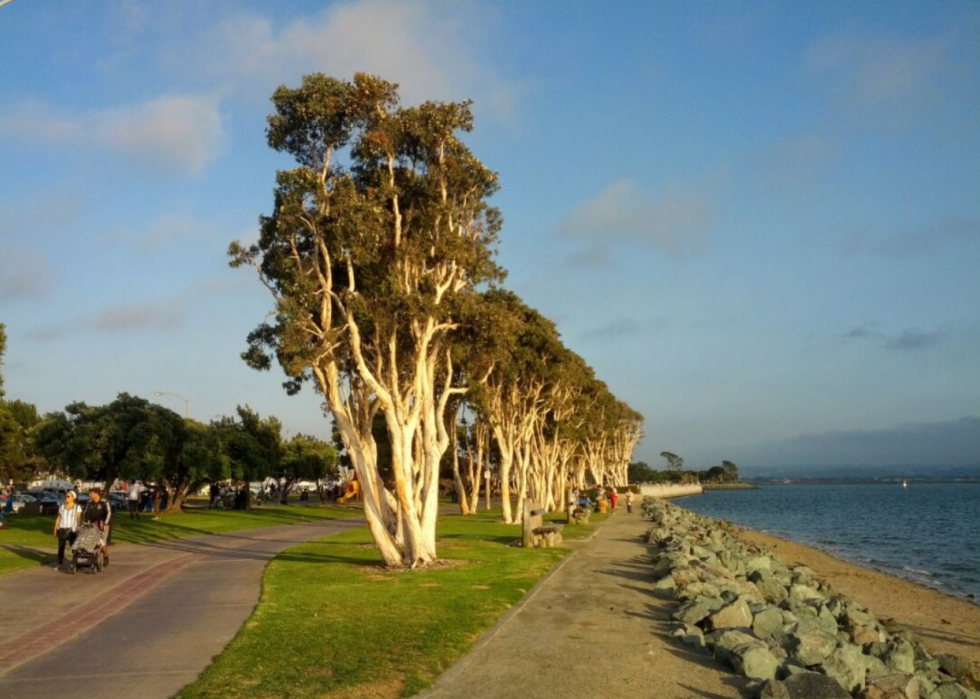
#19. Chula Vista, CA
- Total score: 58.48 (down 1.43 from 2017; 2017 rank: #18)
- Environment rank: #32 (2017 rank: #56)
- Transportation rank: #53 (2017 rank: #47)
- Energy sources rank: #1 (2017 rank: #1)
- Lifestyle & policy rank: #75 (2017 rank: #30)
Chula Vista consolidated its environmental policies under its CLEAN banner to give citizens a streamlined and convenient series of resources. Among these are the city’s free on-site consulting services to business owners looking to reduce their office energy consumption, and numerous recycling drives to help citizens dispose of unwanted items. The city also has over 9,000 acres of green space.

#18. Los Angeles, CA
- Total score: 59.6 (up 0.27 from 2017; 2017 rank: #19)
- Environment rank: #67 (2017 rank: #59)
- Transportation rank: #39 (2017 rank: #36)
- Energy sources rank: #15 (2017 rank: #14)
- Lifestyle & policy rank: #31 (2017 rank: #48)
It’s no small feat for a city as car-reliant as Los Angeles to be ranked so high in terms of sustainability. But Los Angeles was the first in the country to require city buildings be designed with LEED compliance in mind. It also has the highest solid-waste recycling rate of any city in the country. Other claims to environmental fame include a cadre of celebrity chefs at the vanguard of the local and organic food revolution.
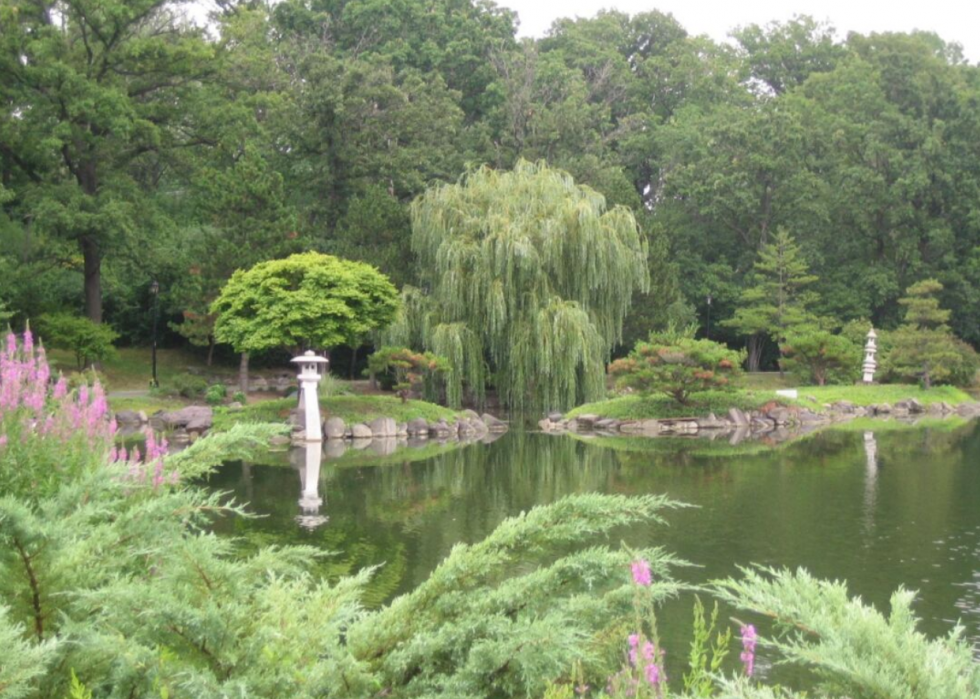
#17. Buffalo, NY
- Total score: 60.35 (up 1.91 from 2017; 2017 rank: #23)
- Environment rank: #28 (2017 rank: #36)
- Transportation rank: #11 (2017 rank: #8)
- Energy sources rank: #35 (2017 rank: #33)
- Lifestyle & policy rank: #26 (2017 rank: #50)
Buffalo is a hotbed of climate activism. The city’s youth marched in a Youth Climate Strike, occupying the space in front of city hall to show their support for sustainable initiatives. The city holds multiple festivals and nature-appreciation events for residents to come do their part to keep the city green.
#16. San Bernardino, CA
- Total score: 60.84 (up 0.75 from 2017; 2017 rank: #17)
- Environment rank: #44 (2017 rank: #49)
- Transportation rank: #37 (2017 rank: #55)
- Energy sources rank: #1 (2017 rank: #1)
- Lifestyle & policy rank: #24 (2017 rank: #22)
The city of San Bernardino is known for its commitment to recycling. The city even received an award from a statewide organization for its “outstanding” commitment to keeping what it consumes and produces out of landfills. The city helps facilitate these efforts by holding Residential Community Dump Days, and mandatory commercial recycling, which has been in effect since 2012 for any business generating over four cubic yards of trash per week.

#15. Boston, MA
- Total score: 60.94 (down 0.43 from 2017; 2017 rank: #14)
- Environment rank: #13 (2017 rank: #8)
- Transportation rank: #7 (2017 rank: #9)
- Energy sources rank: #41 (2017 rank: #39)
- Lifestyle & policy rank: #20 (2017 rank: #32)
Boston is eco-friendly through and through. The city has dozens of Energy Star hotels, excellent public transportation that negates the need for most residents to own a car, a pay-as-you-go biking system, hybrid taxis, countless locavore restaurants, and some of the most beautiful green spaces in the country, including Boston Common.
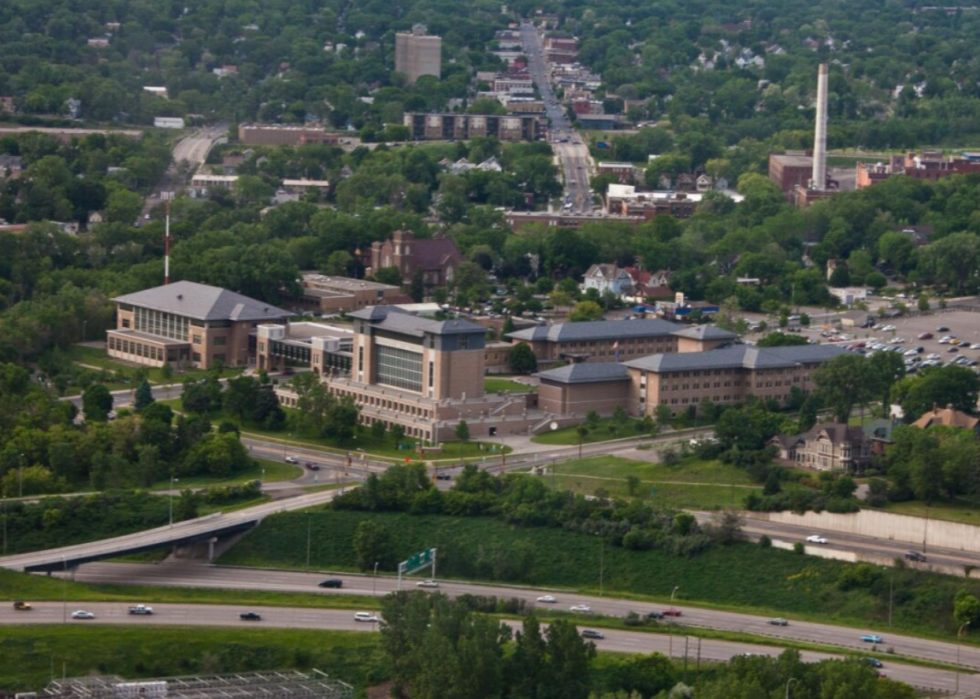
#14. St. Paul, MN
- Total score: 61.1 (up 4.99 from 2017; 2017 rank: #27)
- Environment rank: #31 (2017 rank: #21)
- Transportation rank: #30 (2017 rank: #35)
- Energy sources rank: #25 (2017 rank: #22)
- Lifestyle & policy rank: #8 (2017 rank: #80)
St. Paul is so invested in being eco-friendly that it has an entire district devoted to sustainability. The EcoDistrict is educational and liveable, producing solar and biomass energy, using snow melt technology to keep people walking and out of their cars even in the middle of winter, and providing numerous electric vehicle charging stations.
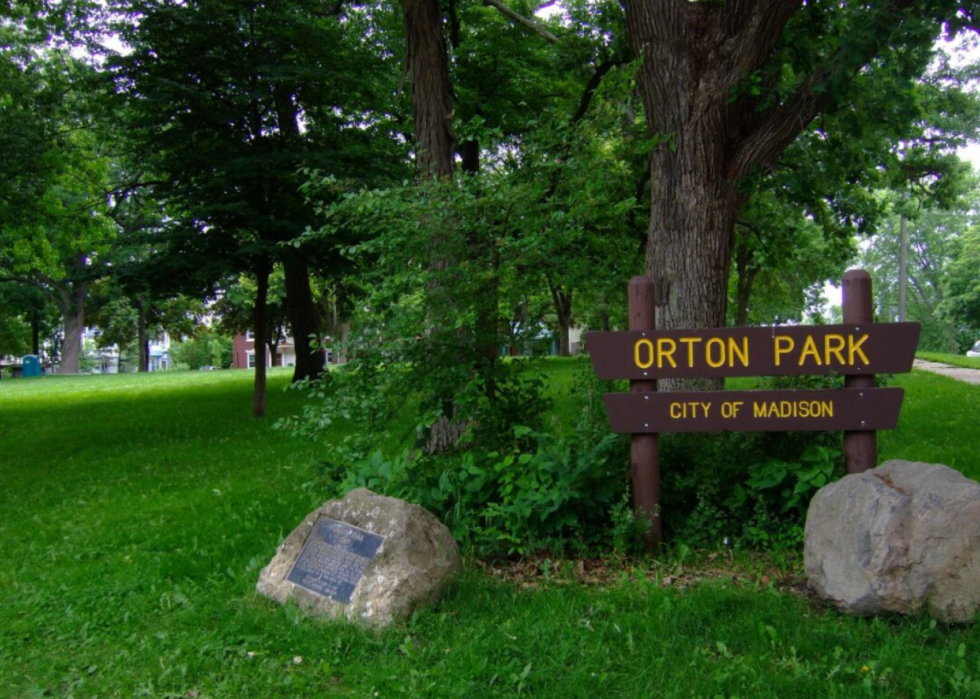
#13. Madison, WI
- Total score: 61.58 (down 0.57 from 2017; 2017 rank: #13)
- Environment rank: #9 (2017 rank: #9)
- Transportation rank: #3 (2017 rank: #2)
- Energy sources rank: #67 (2017 rank: #69)
- Lifestyle & policy rank: #10 (2017 rank: #14)
Among Madison’s other eco-friendly bona fides, the city lays claim to more green space per capita than any other city in the country, with over 200 miles of hiking, biking, and lake trails. The city is in fact home to more bikes than cars.

#12. Minneapolis, MN
- Total score: 62.61 (up 0.13 from 2017; 2017 rank: #12)
- Environment rank: #24 (2017 rank: #58)
- Transportation rank: #1 (2017 rank: #1)
- Energy sources rank: #36 (2017 rank: #32)
- Lifestyle & policy rank: #30 (2017 rank: #9)
One reason Minneapolis ranks so highly is thanks to the extremely green ways it offers its citizens to get around. The city’s bike-share program has over 200 stations, and the city has invested heavily in its infrastructure for walking, biking, light rail, and rapid bus transit.

#11. Oakland, CA
- Total score: 63.83 (up 0.39 from 2017; 2017 rank: #10)
- Environment rank: #14 (2017 rank: #14)
- Transportation rank: #43 (2017 rank: #51)
- Energy sources rank: #1 (2017 rank: #1)
- Lifestyle & policy rank: #23 (2017 rank: #24)
Eco-friendly Oakland reduced its greenhouse gas emissions by double-digits in one decade. The city offers rebates for energy-efficient home updates, and has been awarded a long list of recognitions for its sustainability efforts, including its walkability and green fleet of city cars.
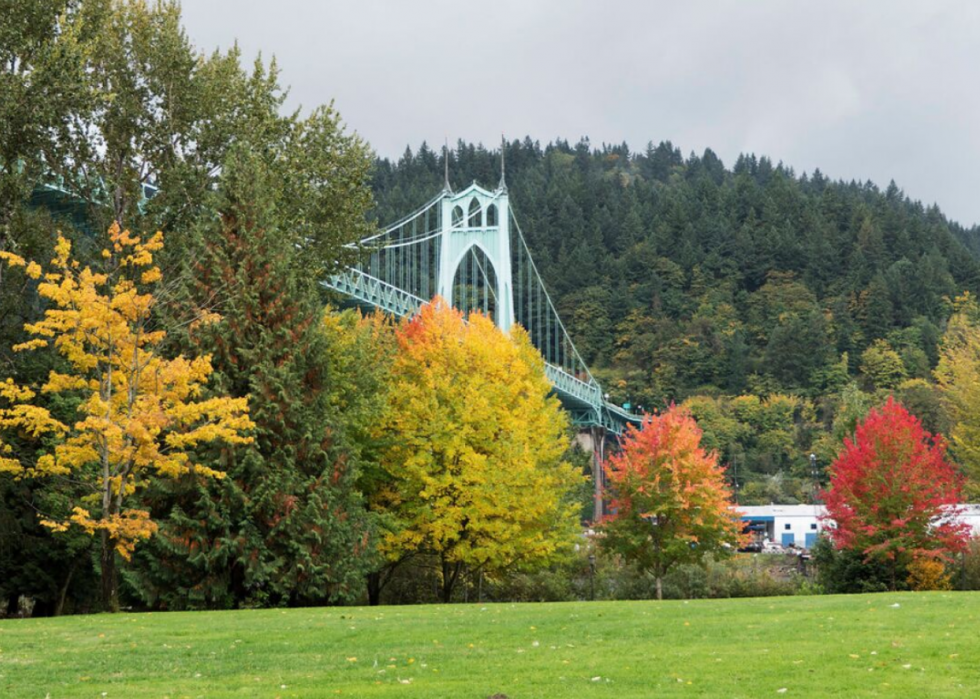
#10. Portland, OR
- Total score: 65.19 (up 0.79 from 2017; 2017 rank: #9)
- Environment rank: #59 (2017 rank: #69)
- Transportation rank: #8 (2017 rank: #4)
- Energy sources rank: #18 (2017 rank: #15)
- Lifestyle & policy rank: #3 (2017 rank: #7)
A range of factors contribute to Portland’s status as one of the country’s most eco-friendly cities. Its excellent public transportation city lowers the need for cars, and its bicycle plan is decades-old and has succeeded in further reducing carbon emissions. Portland actually has the largest percentage of bicycle commuters of major American cities, with 7.2%.
#9. Sacramento, CA
- Total score: 66.06 (down 0.23 from 2017; 2017 rank: #7)
- Environment rank: #38 (2017 rank: #28)
- Transportation rank: #4 (2017 rank: #3)
- Energy sources rank: #19 (2017 rank: #20)
- Lifestyle & policy rank: #9 (2017 rank: #13)
Sacramento’s commitment to energy efficiency extends beyond city operations to all its businesses and residents. The city achieved a 24% reduction in greenhouse gas emissions across municipal operations over just eight years. Sacramento also offers financing for anyone looking to make energy-efficient upgrades to their homes or businesses.

#8. Seattle, WA
- Total score: 66.91 (up 3.56 from 2017; 2017 rank: #11)
- Environment rank: #25 (2017 rank: #33)
- Transportation rank: #12 (2017 rank: #37)
- Energy sources rank: #21 (2017 rank: #17)
- Lifestyle & policy rank: #4 (2017 rank: #15)
It’s no surprise that Seattle ranks highly in terms of sustainability, enjoying 20% canopy cover over public parks and arboretums, low air-conditioner usage, and high standards for cars driven within the city limits. The city also boasts one of the highest concentrations of LEED buildings in the country.

#7. Fremont, CA
- Total score: 67.59 (down 4.47 from 2017; 2017 rank: #3)
- Environment rank: #2 (2017 rank: #2)
- Transportation rank: #52 (2017 rank: #59)
- Energy sources rank: #1 (2017 rank: #1)
- Lifestyle & policy rank: #32 (2017 rank: #12)
The city of Fremont is heavily investing in alternative energy sources. By 2015, the city generated nearly 30% of its energy from renewable sources, and is on track to hit 43.5% by 2020. The city also powers a significant number of homes and businesses using solar energy.

#6. Honolulu, HI
- Total score: 68.41 (down 3.01 from 2017; 2017 rank: #4)
- Environment rank: #5 (2017 rank: #1)
- Transportation rank: #2 (2017 rank: #18)
- Energy sources rank: #24 (2017 rank: #24)
- Lifestyle & policy rank: #5 (2017 rank: #33)
Honolulu is a unique city that offers residents and visitors the opportunity to be surrounded by nature, while most other cities focus on green spaces like parks and preserves. The city loves its farmers markets so much that some are even open at night — turning an errand into a social event.
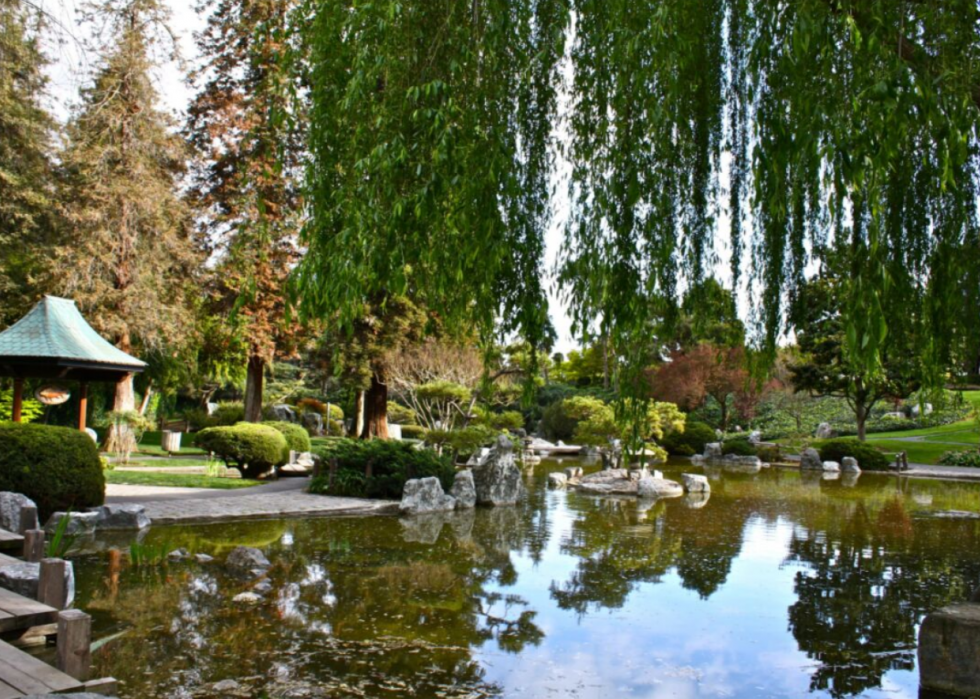
#5. San Jose, CA
- Total score: 68.69 (down 0.17 from 2017; 2017 rank: #5)
- Environment rank: #10 (2017 rank: #10)
- Transportation rank: #24 (2017 rank: #19)
- Energy sources rank: #13 (2017 rank: #13)
- Lifestyle & policy rank: #21 (2017 rank: #23)
San Jose’s sustainability plan has served as a model for other cities, and it’s no surprise with its transit-oriented downtown area. The focus on the city’s urban core also reduces the need for outward development, maintaining ex-burb areas as natural wildlife preserves.

#4. Irvine, CA
- Total score: 68.97 (up 4.05 from 2017; 2017 rank: #8)
- Environment rank: #7 (2017 rank: #22)
- Transportation rank: #27 (2017 rank: #29)
- Energy sources rank: #1 (2017 rank: #1)
- Lifestyle & policy rank: #7 (2017 rank: #17)
Irvine was designed to be green, with over 350 miles of bike paths and trails. The city’s university has been named among the most sustainable in the world and uses solar panels to power the entire school.
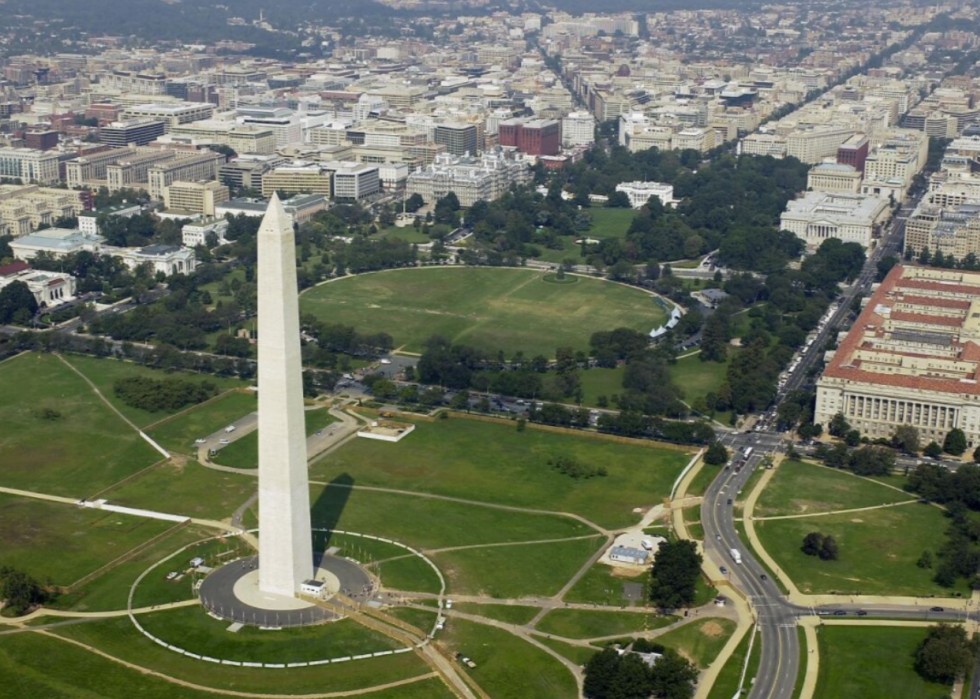
#3. Washington D.C.
- Total score: 70.39 (up 1.66 from 2017; 2017 rank: #6)
- Environment rank: #35 (2017 rank: #31)
- Transportation rank: #6 (2017 rank: #5)
- Energy sources rank: #17 (2017 rank: #16)
- Lifestyle & policy rank: #1 (2017 rank: #2)
D.C. is one of only four cities in the world to have over 100 million square feet of LEED-certified space. Its other eco-friendly credentials include an abundance of farmers markets and farm-to-table restaurants, and the country’s first LEED-certified baseball stadium.
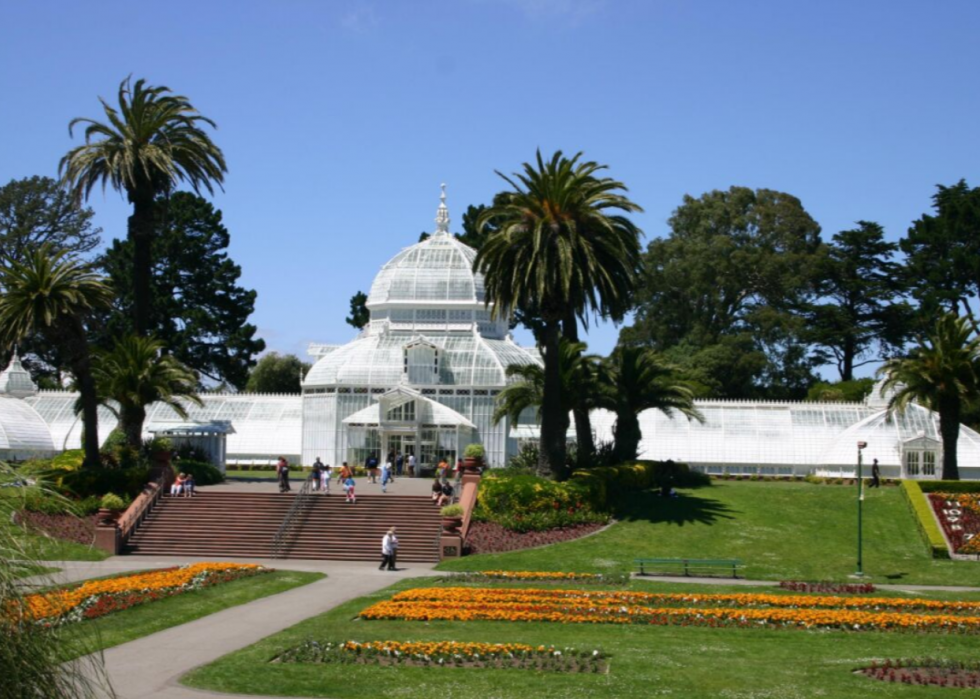
#2. San Francisco, CA
- Total score: 72.14 (down 2.10 from 2017; 2017 rank: #1)
- Environment rank: #6 (2017 rank: #6)
- Transportation rank: #9 (2017 rank: #7)
- Energy sources rank: #20 (2017 rank: #19)
- Lifestyle & policy rank: #2 (2017 rank: #1)
San Francisco has a long relationship with eco-friendliness, and with its record-breaking 77% of municipal recycled waste, composting mandates, and largest public transportation system in the country, it’s no surprise to see it in the #2 spot. Over 60% of the city’s taxis also run on alternative fuel.
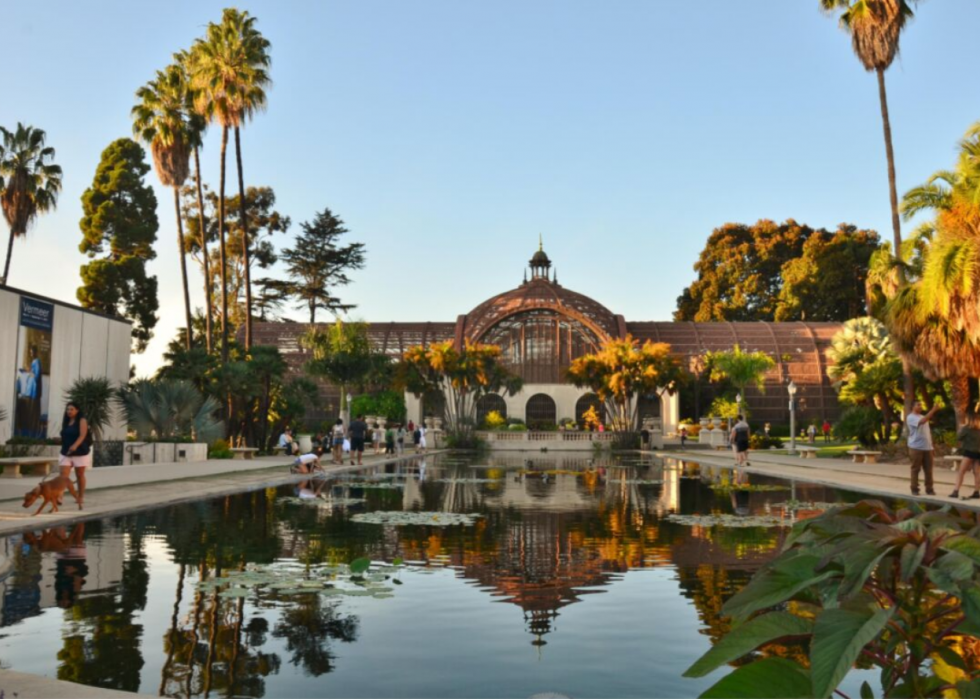
#1. San Diego, CA
- Total score: 72.53 (down 0.37 from 2017; 2017 rank: #2)
- Environment rank: #4 (2017 rank: #7)
- Transportation rank: #19 (2017 rank: #12)
- Energy sources rank: #12 (2017 rank: #12)
- Lifestyle & policy rank: #19 (2017 rank: #8)
San Diego’s #1 spot on the list is well-earned. The sunny California locale is #2 city in the country for solar energy and is one of the nation’s most bike-friendly. A thriving biotechnology industry provides jobs to the local workforce. From local kombucha producers to plant-based meal purveyors, the eco-conscious have an abundance of ways to live and eat well in this sustainable paradise.
This story was originally published by Stacker and republished pursuant to a CC BY-NC 4.0 License.
Every day the Good Good Good team collects the best good news in the world and shares it with our community. Here are the highlights for this week!
If you want to get good news in your inbox every day, join the Goodnewsletter — the free daily newsletter designed to leave you feeling hopeful.
The Best Positive News Were Celebrating This Week —
Beauty company L’Oréal is launching a (world-first!) lipstick tool designed for people with limited mobility
An estimated 50 million people around the world live with limited fine motor skills, making daily tasks like applying lipstick challenging. L’Oréal is helping change that with their new HAPTA device.
It’s the world’s first handheld, super-precise, computerized make-up applicator designed specifically for people with limited hand and arm mobility. Brilliantly, the scientists and engineers applied the same technology used to make utensil stabilizers.
Why does this matter? The beauty industry has made a lot of progress when it comes to diversity (like products for a wider range of skin tones) and inclusivity (creating and marketing products for and to anyone/everyone who wants to wear or use them), but disabled people have continued to be left out of that progress.
And that matters, because an estimated 15% of the world’s population lives with some form of disability — but only 4% of beauty and personal care brands create products specifically for people with disabilities.
A derogatory name for Indigenous women has been removed from five U.S. locations
When she was first named Secretary of the Interior Department, Deb Haaland (the first Native American cabinet secretary in history) promised to remove all derogatory names from public lands — and the department just made good progress on that goal.
Five total locations in California, North Dakota, Tennessee, and Texas were just renamed to remove an “offensive ethnic, racial, and sexist slur, particularly for Indigenous women.”
This is on top of the nearly 650 locations the Interior Department identified and renamed back in September 2022. It also proposed new names, welcomed community feedback, and consulted with tribal nations.
Many of the new names feature Indigenous terms, like the newly named Loybas Hill in California, which translates to “Young Lady.”
Why is this progress important to celebrate? Because words matter, especially when it comes to public places and spaces, which have a duty to be both accessible and welcoming to everyone.
Historically, they haven’t always been — not for Indigenous people (in how they’re named and in acknowledging colonial history), for disabled individuals, for the LGBTQ+ community, for people who can’t afford entry fees, and more.
Urban areas are prioritizing walkability over driveability
You might think of New York City as one of the most walkable, pedestrian-friendly cities out there — but the pandemic still forced it to realize (and change) the ways it was prioritizing driveability over walkability.
Thanks to those changes, New York is on its way to meeting 15-Minute City standards (more on that below!), passing a measure to make pandemic-induced outdoor dining permanent.
The city also adopted an Open Streets concept during the pandemic, allowing streets to be closed to car traffic, giving bikers and pedestrians enough space to travel while maintaining social distance. It’s since made that permanent, too.
The move exemplifies the shifting sentiment away from cars that has had a hold on every American city since the mid-20th century.
What is a “15-Minute City”? The 15-Minute City concept advocates for dense walkability, stating that all people should have access to all the goods and services they would need within 15 minutes of their home. Whether that be on foot, by bike, or by car depends — but it’s still a great concept that puts people at the center of urban transformation.
A rare butterfly found only in Oregon has moved off the endangered species list
The Fender’s blue butterfly has made such a good recovery its status has been changed from endangered to threatened. The butterfly is found only in Willamette Valley in Oregon and was believed to be extinct until it was rediscovered in 1989.
The species’ recovery is thanks to the Endangered Species Act, and the thousands of Kincaid’s lupine plants, which the butterflies depend on, planted in the region to help increase their habitat. were planted to increase their habitat. The plant is also a threatened species.
In 2016, there were an estimated 29,000 Fender’s blues — up from just 4,000 in 2000, when they were first listed as endangered.
What other endangered species have seen recoveries recently?
- In China, endangered Siberian tigers are making a comeback.
- In Uganda and East Africa, the population of endangered mountain gorillas increased by 71% in a decade.
- In the ocean, humpback whales came off the Endangered Species list after being one of the first protected by the Endagered Species Act.
John and Hank Green want to give you college credit for watching YouTube
There’s a chance that in high school, Hank and John Green taught you vital curriculum through Crash Course, their platform dedicated to providing free, high-quality educational content.
Now they want to give you college credit for all those views. Complexly (the company that owns/produces Crash Course), Google, and Arizona State University teamed up to create Study Hall: a platform that provides a path from YouTube to real, transferable college credit.
Study Hall first launched in early, and now you can take your fundamental courses right on the platform — and get real college credit for them.
Why is this such good news? Study Hall will help address some major barriers to entry in the education system: the preventatively high cost, the confusing bureaucracy, and the meat of it — that learning can be hard! And higher education should be accessible for everyone — no matter how they learn.
Urban farmers in Chicago are replacing toxic pollution with fresh, local food
At one point in history, the steel mills in Southeast Chicago allowed its workers to afford to put food on the table — but decades later, the community is paying the cost in the form of high rates of asthma, polluted land and air, and more.
Urban farmers in the area are turning things around with community gardens and green spaces that not only help feed residents — but also serve as a meeting place for people to come together.
The South Chicago Farm, for example, offers farm-fresh food, teaches farm skills, and engages the community. It’s located in a 14-acre public park across the street from a former U.S. Steel Complex.
What’s the nuance? These people and communities should have never been exposed to this level of pollution in the first place. Polluting industries like steel and coal (not to mention a lack of investment in green spaces) disproportionately impact low-income communities and people of color — and reinforce a cycle of poverty and injustice. That’s why it’s so important for our environmental activism to be intersectional.
We’re celebrating these incredible urban farmers ending these cycles (and these tree-planters doing the same!), and let it inspire our work to change the systems that lead to environmental racism.
For decades, a 61-year-old “coral gardener” worked solo to restore reefs — now people are coming to him from around the world for help
Anuar Abdullah is a 61-year-old diving instructor in Malaysia, but when he isn’t teaching diving classes — he’s back out in the water studying, observing, caring for, and reviving coral reefs.
He’s observed coral health and worked to revive them for nearly four decades, the majority of which have been solo. Now, as climate change becomes an ever-apparent threat, governments, corporations, resorts, and others are coming to him for help.
Abdullah has no degree in marine biology or formal training — just a lot of years learning what conditions corals thrive in. And that’s expertise people are flocking to. In just the past decade, thousands have traveled to him to learn how to grow corals, he now has around 700 active volunteers and has already revived around 125 acres of coral reefs.
More good news of the week —
Scientists have developed oils made out of yeast to replace palm oils. You likely don’t go a day without touching palm oil, and its popularity has led to significant, unsustainable deforestation in places like Malaysia and Indonesia.
The FDA now no longer requires all drugs be tested on animals before human trials. While it isn’t banning animal testing altogether, animal activists are still celebrating the news along with some in the pharmaceutical industry who say animal testing can be ineffective and expensive.
After waiting four years, a Dallas community celebrated the demolition of a toxic waste site. A state and federal agency found evidence in 2016 that the company had contaminated the land upon which it sits with arsenic, lead, and other toxic byproducts.
The U.K. has already set both annual and instantaneous wind energy generation records this month. Wind generation has consistently accounted for more than 50% of British electricity, and gas is barely getting out of single digits.
To help conserve its marine biodiversity, France is mapping the genes of underwater species. The country has the world’s second-largest maritime territory and will study 4,500 plant and animal species over the next eight years.
A San Francisco reparations committee proposed a one-time $5 million payment to each Black resident. Eliminating the wealth gap between Black and white Americans is one of the largest challenges we all still face as a nation, and reparations are a key piece of righting that historic wrong.
Already far cheaper than expert predictions, the price of solar panels is set to plunge even more. We’re cautiously optimistic about this news, as we still need to ensure panels are sourced, produced, and recycled sustainably.
Aubrey Plaza’s new thriller movie has no guns in it. “Emily the Criminal” is no less thrilling, either and she told Jimmy Fallon, “I was kind of proud of that, because I don’t think you need guns.” We could not agree more.
Wisconsin now has its first openly LGBTQ+ cabinet secretary. James Bond is a disabled veteran who served in the Marines from 1983 to 1988 and will now head up the state’s Department of Veterans Affairs.
Pennsylvania’s governor removed the four-year college degree requirement for a majority of state jobs. While Hank and John make college more accessible for those who need (or want) it, Josh Shapiro is making jobs that don’t need a degree requirement more accessible, too! Wins all around.
In a strong statement of support for LGBTQ+ rights, Pope Francis called on the world to decriminalize homosexuality. It’s an enormous step forward, particularly in an era that has seen a heartbreaking backlash against LGBTQ advancement in recent years, all over the world.
Two supportive housing projects in New York City are making a way for even more to come. There’s still some figuring out to do (as expected!), but we’re glad to see the effort both being made — and making a difference.
Denmark’s largest bank announced it would end all fossil fuel financing. The bank determined that 99.9% of its own carbon footprint came from financing fossil fuel projects — so it’s not doing it anymore.
The Football Association of Wales just announced it reached an equal pay agreement for its men's and women's teams. Women have historically been underpaid for the same work as the men in football (the soccer kind) — thankfully, that’s changing.
Sierra Leone just enacted a new law to reserve 30% of all leadership posts for women. The law is intended to increase the number of women in decision-making roles in both private and public sectors, five months before presidential elections.
On January 7, 2023, 29-year-old Tyre Nichols was brutally beaten by five Memphis police offers during a traffic stop. Three days later, on January 10, he died in the hospital from his injuries.
The Memphis police department chief said they had not been able to identify or confirm why Nichols was pulled over in the first place.
In the days and weeks that followed, the Nichols family, amidst their grief, demanded the body camera footage from the traffic stop and subsequent beating be released to the public. The Memphis Police Department announced the footage would be released on the evening of Friday, January 27.

In the meantime, all five officers involved were fired and charged with second-degree murder. Subsequently, a sixth officer involved was put on administrative leave, but not charged.
In anticipation of the release of the footage, the department also — in a somewhat unprecedented way — prepared the public for what to expect to see in the video footage, with its police chief describing the contents as “horrifying” and “disgusting,” and city officials described it as heinous and inhumane.
And the Black community prepared to protect itself from witnessing yet another horrifying instance of police brutality. In the days that followed, all around the country, in Memphis and beyond, people came together to protest and demand justice for Tyre — knowing that true justice would be Tyre alive today.
Among their demands, the Nichols family also asked that — in lieu of sharing the horrifying, brutal video of his death — that people would come together to celebrate Tyre’s life.
Nichols had a four-year-old daughter and worked for FedEx. In addition to being an aspiring photographer, Nichols was an avid and dedicated skateboarder.

Before moving to Memphis, Nichols lived in Sacramento, California, where he first started skateboarding. To honor his life, Nichols’ childhood friend, Austin Robert shared a video of him as a 17-year-old — skating around the skate park, or practicing a trick over and over until he got it perfect.
Video: Tyre Nichols Skateboarding (1:43)
“I want him to be remembered as the kid smiling in the skate video and not the kid that was fighting for his life,” Robert told NPR.
In response, the skateboarding community has come together to honor Nichols’ life. In Memphis in particular, skateboarders gathered together to support “one of their own.”
The Memphis skateboarding community is coming together to honor Nichols
At the request of the Nichols family, members of the Memphis skateboarding community gathered outside city hall — with their skateboards in tow — to show their support in anticipation of the release of the video footage.
And earlier in the week, family members, supporters, and — you guessed it — skateboarders gathered for a vigil at Tyre’s local skate park, Tobey Skatepark.
At that vigil, Tyre’s mother encouraged those in attendance to protest peacefully, “I don’t want the burning of our city, tearing up the streets. Cause that’s not what my son stood for. And if you guys are here for me and Tyre, then you will protest peacefully.”
Nichols’ hometown of Sacramento planned vigils and celebrations to honor his life
On Monday evening, skateboarders from Sacramento are holding a candlelight vigil to honor Nichols as an important member of their skating community at Regency Skate Park.
One Sacramento, California skate shop, The Sac Ramp Skate Shop, also announced an event to honor Nichols’ life and mourn his death.
“Let’s really turn up for Tyre. Back alley will open with few obstacles, ramp open. We will stand up together to celebrate his life, and family,” the skate shop posted on Instagram. “All donations and proceeds to the family, bring your board, and a Balloon to release and honor this man.”
Skaters across the United States are honoring Nichols
Beyond Memphis and Sacramento, skaters continue to honor Nichols’ life.
Portland, Oregon is home to Burnside Skatepark — an iconic skatepark built underneath one of Portland’s many bridges, made famous by the Tony Hawk’s Pro Skater video games. Skaters in Portland hosted a vigil at the skatepark on Friday.

Artist Pandhandle Slim painted a skateboard with a quote from Nichols’ mother — and thousands of skateboarders and allies have reposted or shared this art across social media platforms.
“My son was a beautiful soul. He loved skateboarding. He was just his own person. He didn’t follow what everybody else was doing,” it reads.
One activist attended a Black Lives Matter protest on January 29th in in St. Paul Minnesota, carrying a skateboard with ‘TYRE’ spray painted on it, in lieu of a protest sign.
Kanten Russell, a professional skateboarder and skate park designer based in San Diego, honored Nichols in a recent social media post about the BIPOC skateboarding community, saying, “In times like these where challenges are at an all time high for skateboarders of color (Tyre Nichols Rest in Peace 🙏🏽) it is important to help … enthusiastic and ambitious young adults … create skateparks for people of all backgrounds to enjoy the activities we love to do.”
Some Twitter users have even begun tweeting at Activision and Vicarious Visions Studios — calling on the makers of the popular skateboarding video game Tony Hawk’s Pro Skater to add a Tyre Nichols memorial in the game, and donating money to a cause he cared about.
On February 3, Tony Hawk announced that he would donate 50% of the proceeds of autographed photos of himself and BMX rider Rick Thorne to Tyre Nichols' memorial fund.
“My proceeds from these will go to the Tyre Nichols Memorial Fund, which includes plans to build a public skatepark in his honor; as our worlds continue to grieve his loss,” Hawk tweeted. “He was a talented skater among other admirable traits. Let’s keep his legacy alive.”
My proceeds from these will go to the Tyre Nichols Memorial Fund, which includes plans to build a public skatepark in his honor; as our worlds continue to grieve his loss. He was a talented skater among other admirable traits. Let's keep his legacy alive: https://t.co/wHTZfLzqq7
— Tony Hawk (@tonyhawk) February 3, 2023
Why is this good news?
Tyre Nichols is so much more than his brutal murder at the hands of police. And though it was heartbreakingly cut far too short, his life deserves to be celebrated.
People have described him as a “free spirit,” and somebody who always brought people together and tried to make them smile. He was encouraging — to the point of waiting hours with someone working to master a trick — and always making other skateboarders “feel like you could do anything.”

When we see heartbreaking things in the news, it can be easy to disassociate, or try to block it out. It makes sense because it’s really painful to pay attention to — but we’d encourage you to lean into that heartbreak rather than looking away.
It’s important that Tyre’s humanity is not only recognized — but celebrated. So while you don’t have to watch the video of his murder (and absolutely should not, if it will be in any way triggering for you), do pay attention to the things that emphasize our shared humanity.
Watch the videos of him skateboarding, and listen to how this community and his loved ones talk about him and honor his life.
In the throes of the major historical events of recent memory, many of us have embraced the idea of slowing down.
We’re tossing hustle and bustle aside in favor of intentionality and sustainability, carefully untangling our worth from our performance and productivity.
We’re meditating more, making our silly little smoothies, taking hot girl walks, setting boundaries at work, and doing all these new things to sustain ourselves and find healing.
It’s working, right? Much to our chagrin, these structural lifestyle changes make us feel better and allow us to thrive, all while decreasing our output.
So what if we took those guiding principles of regeneration and used them as a template for a new economic model?
What is Doughnut Economics?
The Doughnut is a concept that was first published by Kate Raworth in 2012 and quickly gained popularity. And even though the entire world has yet to catch on, the Doughnut might just be the model to satisfy the cravings of the greater good.
The concept outlines a new economic model to bring us into the 21st century. It displays two concentric rings, setting boundaries for both social foundation and planetary limits, ensuring that humans have the essentials, all while remaining within the Earth’s ecological ceiling.
Doughnut Economics Action Lab (DEAL) describes it as such: “Between these two sets of boundaries lies a doughnut-shaped space that is both ecologically safe and socially just: a space in which humanity can thrive.”
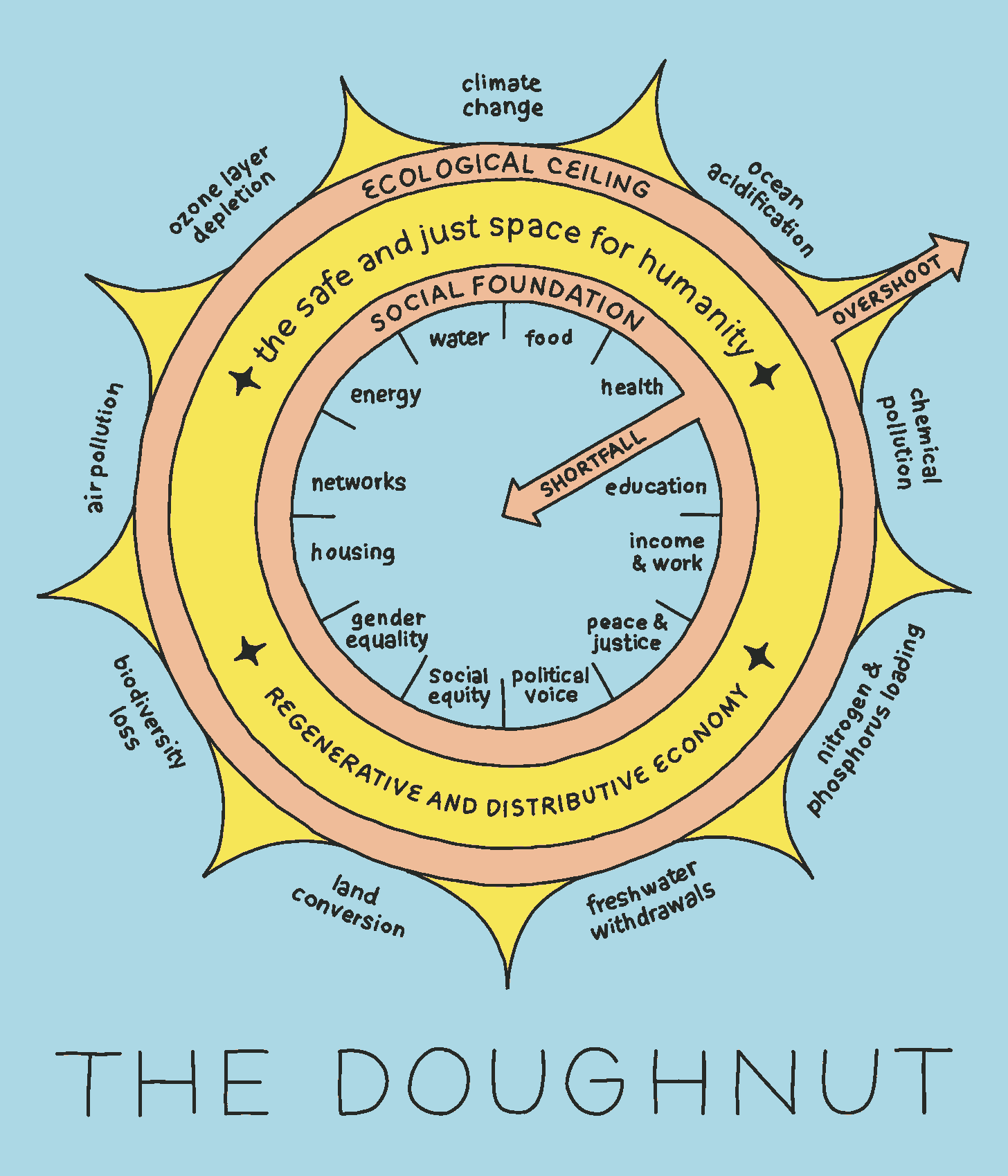
Raworth’s model does not outline policies, as all societies cannot be summed up in one political approach, but it does serve as a new economic mindset.
The Doughnut prioritizes regenerative and distributive design as we face complex climate change and socioeconomic fallout. It encourages nations to stray from endless GDP growth (also referred to as no-growth or slow-growth economies), and move toward a cooperative way of life.
Mass production and overconsumption have led to both a shortfall for social foundations and an overshoot on negative environmental impacts. Perhaps, Raworth believes, the growth has to stop eventually, and in its place, we can appreciate balance.
“Progress on this goal isn’t going to be measured with a metric of money,” Raworth said in her 2018 TED Talk. “We need a dashboard of indicators.”
Those indicators include what’s at the center of that doughnut — essentials like food, water and shelter, social connectedness and justice, ecological regeneration, and dynamic exchanges of goods, services, and labor.
This dashboard of indicators also includes what’s outside of the doughnut — our overshoot — showing climate change, air pollution, biodiversity loss, and more.
The goal is to provide humans with the means to thrive, all within the means of the planet. That’s where the frosting and sprinkles are.
In that energetic, strategically designed center of the doughnut (or, if you’re an “Everything, Everywhere All At Once” fan, perhaps an everything bagel) is opportunity and hope.
“Doughnut Economics recognizes that growth may be a healthy phase of life, but nothing grows forever,” the DEAL website states. “Things that succeed do so by growing until it is time to grow up, mature, and thrive instead.”
How do we implement Doughnut Economics?
So, how does the Doughnut look in practice?
Nations around the globe are already experimenting with new ways forward.
Countries like Japan, Australia, and the Netherlands use immense solar power per person. Major cities like London are working within the concept of circular cities to be both energy efficient and community-centered.
The Doughnut can, of course, take shape through these city, or even nationwide projects, embracing efficient urban planning, legislation, and green growth goals, but DEAL encourages large systems-based thinking for big-picture solutions.
“Doughnut Economics recognizes that economies, societies, and the rest of the living world, are complex, interdependent systems that are best understood through the lens of systems thinking,” the DEAL website states.
DEAL encourages those practicing within the Doughnut model to align with strategic principles: aligning with the goals of regeneration and distribution, seeing the bigger picture, nurturing human connection, and aiming to thrive, rather than to grow.
“The Doughnut’s boundaries unleash the potential for humanity to thrive with boundless creativity, participation, belonging, and meaning,” Raworth ends her TED Talk.
“It’s going to take all the ingenuity we’ve got to get there. So bring it on.”
A version of this article was originally published in The 2022 Money Edition of the Goodnewspaper.
Get your own Goodnewspaper by becoming a good news subscriber today.
You might be familiar with the dopamine hit that comes when making a new purchase; the thrill of finding the perfect thing that will make your life better, your closet more complete, or your mood momentarily lifted.
Gosh, it feels good. But it isn’t good for us — or for the environment.
Overconsumption is an entire way of life, as our social media feeds are filled with influencers whose entire jobs are to sell us things we don’t need for problems we didn’t know we had. Of course, it’s okay to treat yourself every once in a while, and of course, it’s okay to value material possessions, but our cycle of overconsumption is not sustainable, and it’s time for it to end.
Overconsumption happens when our demand for more is met with the ability to produce at a rapid pace, and the endless cycle harms the planet. If our carbon emissions aren’t coming from the factories where we purchase new products, they’re coming from the fuel used to ship our packages, or from the waste we toss in landfills with reckless abandon (to be fair, our emissions are probably coming from all of the above).
And the problem is uniquely American. According to Heal The Planet, sustaining the lifestyle of the average American takes 9.5 hectares of energy, while the worldwide average is 2.7. Additionally, consumption of goods and services has increased by 28% in the last decade.
Whether it’s a TikTok telling you why you need a new trendy water bottle, an Instagram roundup of “dupes” of high-end fashion items that you can buy on the 2-day delivery app that shall not be named, or the confusing Explore page of microtrends that fold in on each other until there are no more trend cycles at all — our shopping habits have tainted our social spaces.
As Gen Z leans into lifestyles that reject capitalism and consumerism and embrace sustainability, we’re inspired by the young people who are “deinfluencing” us online.
The deinfluencing trend is one we can get behind, as TikTok creators rack up millions of views denouncing products they were influenced to buy but never actually used.
Many of these videos are about beauty products (turns out you don’t need 10 foundations, as Twitter user @CambieArt puts it), trendy clothing items, or home goods.
TikTok user @sadgrlswag lists trendy product after trendy product in her video. “I am here to deinfluence you,” she says directly into the camera. “Do not get the Dyson AirWrap. Do not get the Charlotte Tilbury wand. Do not get the Stanley cup. Do not get Colleen Hoover books. Do not get the Airpods Pro Max.”
@sadgrlswag De-influencing you, no more over consumption or else 💣💥! 😡😤 #GenshinImpact34 ♬ original sound - Estef
It almost sounds like a mantra; something to play on repeat when the urge to participate in the overconsumption cycle gets to be a bit too much. It reminds us of a similar trend where beauty vloggers share their empty beauty products to prove that they actually enjoy using them.
Can you imagine a world where we actually use all the things we buy, and only buy the things we know we’re going to use?
What is deinfluencing?
Deinfluencing is a new social media phenomenon where users attempt the opposite of influencer marketing, swaying audiences away from making a purchase that they don’t need. The goal is to prevent overconsumption and remind one another that we don’t need certain products to be valuable or worthy of belonging.
Deinfluencing all boils down to one concept: Buying something is never going to make you a better person, a more sustainable person, or a more well-rounded person.
There are certainly items we can want and need to make our lives easier or more pleasurable, but the reality is that shopping in any way doesn’t exactly make us morally superior, and we really need to stop pretending that it does.
Deinfluencing gives us a window into a life online where we are free to be critical consumers, straying away from the monolith of trends, dupes, and must-haves, in exchange for a lifestyle that hopefully gives us a little more peace of mind (for both the planet and our budgets).
How TikTok has taken to the deinfluencing trend
TikTok’s #deinfluencing tag has over 65 million views, as creators gather to demystify the latest trends and redirect viewers to find products and recommendations for things they actually need.
Elle Grey (@basicofcourse) has a handful of videos on the topic, reminding viewers that “a t-shirt isn’t going to change your life.”
“As a general rule of thumb, I don’t think you need anything from someone that looks like me on TikTok telling you that something you hadn’t heard of 30 seconds ago is an absolute necessity,” she says.

The caption below one of her videos encourages viewers to just be more intentional about their purchases. She says it’s even okay to want a trendy item, but to be sure you actually want it (and not just because TikTok tells you that you should).
“I have no problem with promoting things you truly love… but 2023 is all about lowering the consumption game,” she writes.
Grey is only one of hundreds of creators moving toward this concept of deinfluencing. User @hanayla got a little more personal in her call to consume less, sharing a story about her volunteer work with foster youth. She summarizes a story where she took a young woman experiencing homelessness to the store and asked her to pick out anything she wanted.

Although she helped the girl gather some necessities, the youth Hannah was helping didn’t want anything above and beyond, saying: “There is nothing in this store I could buy that’s gonna make me feel more loved or less alone in this world.”
We all deserve dignity and to have access to the things we need in life, but Hannah’s story reframes how many of us have been influenced to spend money and consume items we truly do not want or need.
Deinfluencing is helping us to be more sustainable
There is a mantra we like to keep in mind when it comes to shopping and sustainability:
The most sustainable thing you can use is the thing you already own.
In the zero-waste and eco-friendly landscape, there are countless products you can shop that claim to reduce your carbon footprint, help you use less single-use plastics, and more. But if you already have a perfectly functioning toilet brush, you really don’t need to buy one with a bamboo handle.
Of course, if you finish your laundry detergent and want to buy a more sustainable option, or your toothbrush is on its last legs and it’s time to invest in a more eco-friendly swap, by all means: have at it! But deinfluencing helps us consider where and how we shop — and how we can be more mindful about what we actually need.
By using up what we already own, shopping secondhand, borrowing from a friend, or even renting a product we won’t use very often, we can dramatically reduce our consumption — and therefore, our waste, emissions, and negative impact on the planet we call home.
How to de-influence yourself:
While TikTok is full of great videos to encourage you to be deinfluenced from the endless stream of products you apparently need, we know the overconsumption conditioning can take hold any time you’re in a store or shopping online.
Here are a few ways to help you think critically about your next purchase:
- Ask yourself how this item fits into your life.
Are you actually in need of a new concealer, or is this one just branded really well? Does your dog need a new harness, or do you just think the green one is cuter than what he has right now? Are your pots and pans not doing the trick, or is this just what your favorite YouTuber cooks with? If there isn’t a clear place for this new product, consider holding off.
- If you really want something, consider how you will discard something else you no longer need.
One approach you can try to take when buying a new item you really want is to exchange it for an older item in your closet or home. If you really want a new coat, you’re going to have to make sure your older one is taken care of. Do you donate it to a nearby shelter? Sell it to someone who is looking for a secondhand jacket? How can you make sure that this purchase doesn’t cause more waste?
- When shopping for clothes, consider using the Cost-Per-Wear Calculator.
This tool is a handy way to consider how often you might wear something and how long it will last you, compared to the retail cost of the item.
- Wait.
Seriously, try counting to 30, putting your phone down and walking away, or asking for a second opinion before you click “add to cart.” If you’re still thinking about something a few days or weeks later, it’s probably something you really want and you can consider buying. Bonus: sometimes this will even allow time for a product to go on sale, and you can be more mindful about your purchases and your finances!
- Make a “stuff I want but don’t need” list.
This is a great final step before actually buying something. Make a spreadsheet or even just a running list in your Notes app of links or products that really caught your attention but don’t make sense for you to buy right now. Maybe you do want to try a new concealer, but you can wait until you use the rest of yours up. Now you have a reference to the new item you want to try, but you didn’t purchase it until you actually needed it. (This also makes a great ongoing holiday wishlist you can return to when someone asks you what you want for your birthday — and that’s what we call a 2-for-1!)
There are a lot of awareness ribbons — trust us, we spent a lot of time putting together this list — and it can be challenging to know which colors are associated with which causes.
Fortunately, we’ve got your back. At Good Good Good we’re all about celebrating the good being done in the world — and helping people make a difference in the world.
And bringing awareness to important issues is a part of both of those!
Variations of awareness ribbons have been used since the middle ages — but they gained significant popularity in the early 1900s when yellow ribbons were given to U.S. soldiers. Since then, awareness ribbons have been used to represent hundreds of causes — most notably pink awareness ribbons for breast cancer and red awareness ribbons for HIV/AIDS.
In this article, we’re specifically diving into what green awareness ribbons mean and what causes they represent:
What do different green ribbons mean?
Green ribbons are most commonly used to show support or raise awareness for individuals struggling with mental health — and have increasingly been used for environmental causes. But they are also commonly associated with leukemia, kidney disease, Lyme disease, and other causes.
Green

- Adrenal Cancer
- Bipolar Disorder
- Bone Marrow Donation
- Bronchiolitis Obliterans
- Cerebral Palsy
- Childhood Depression
- Depression
- Dwarfism Awareness
- Environment
- Eye Injury Prevention
- Fanconi’s Syndrome
- Fibrodysplasia Ossificans Progressiva
- Fighting Climate Change
- Freedom
- Gastroparesis
- Glaucoma
- Growth and Rebuilding
- Kidney Cancer and Disease
- Kidney Donation
- Leukemia
- Literacy
- Living Organ Donation
- Manic Depression
- Mental Health
- Missing Children Mitochondrial Disease
- Nephrotic Syndrome
- Neural Tube Defects
- Neurofibromatosis
- Organ Donation
- Organ Transplant
- Pedestrian Safety
- Primary Sclerosing Cholangitis
- Prune Belly Syndrome
- Safe Driving
- Save Darfur
- Spinal Cord Injury and Research
- Stem Cell Donor and Research
- Tissue Donation
- Traumatic Brain Injury
- Von Hippel Lindau
- Worker Safety
Light Green
- Celiac Disease
- Chronic Pelvic Pain
- Human Papillomavirus
- Sexually Transmitted Diseases
Lime Green
- Duchenne Muscular Dystrophy
- Gastroschisis
- Lyme Disease
- Lymphoma
- Muscular Dystrophy
- Non-Hodgkin’s Lymphoma
- Sandhoff Disease
- Spinal Cord Injuries
Mint Green
- Autosomal Recessive Polycystic Kidney Disease
- Congenital Hepatic Fibrosis
- Genetic Disorders
- Ivemark Syndrome
Sea Green
- Lisps
- Stammering
- Stuttering
Jade
- Hepatitis B
- Liver Cancer
Ready to learn more about awareness ribbons and their meanings?
We’ve collected, curated, and organized hundreds of awareness ribbon colors and their meanings. You can dive into the meaning of every color under the rainbow (plus rainbow ribbons themselves) in our guide to awareness ribbon color meanings.
Queer books are having a moment.
In 2022, sales of LGBTQ+ fiction doubled those of two years prior. Increased mainstream interest in queer stories has transformed what book publishing data analyst Kristen McLean called a once-"niche area of publishing" into a genre-spanning category that is no longer confined to one section of bookstore shelves.
It was truly banner year for queer book releases spanning multiple genres, from "Unwieldy Creatures" and "Before We Were Trans" to "My Government Means to Kill Me" and "Myth of the Wrong Body."
Growth in LGBTQ+ fiction sales is consistent across generations and genres, from young adult and general adult fiction to more specific genre categories, including fantasy, sci-fi, and romance.
This queer literary renaissance flies in the face of coordinated efforts to ban LGBTQ+ books in U.S. schools and libraries.
Preliminary 2022 data from the American Library Association revealed that this year is on track to break records for the most recorded book challenges—and LGBTQ+ books and books about people of color are the most frequently targeted.
Despite the historical bias and censorship efforts levied against it, queer literature has always existed: in the remaining fragments written by the Greek poet Sappho, in the under-the-radar use of euphemisms, and in the vibrant underground zine scene.
The evolution of LGBTQ+ literature reflects changes in cultural attitudes toward queerness over time.
Gone are the days when even the suggestion of homosexuality in a book could be used as evidence with which to prosecute its author.
Milestones in queer history, such as the Stonewall riots, also serve as landmarks in queer literature, shaping and changing what was seen as permissible—even publishable—throughout the last century.
Stacker curated a list of LGBTQ+ books that changed the literary landscape of their time, encompassing more than 100 years of history and varying in terms of their authors, topics, and narrative forms. English-language fiction and creative nonfiction have been included. LGBTQ+ books are defined by the centering of a queer narrative or character, the author identifying as LGBTQ+, or both.
While all of these books are available on Amazon, consider an Amazon alternative like Bookshop.org or Libro.fm.
Explore our guides to online bookstores that aren’t Amazon, Audible alternatives, and Kindle alternatives. Plus, log your TBR list with Goodreads alternatives.
LGBTQ+ Books That Changed History —
1890: 'The Picture of Dorian Gray' by Oscar Wilde

Oscar Wilde's now-classic work went through several iterations—during which it became increasingly censored — before being published as a novel. Publishers dialed down the homoerotic themes contained in Wilde's original manuscript for its first release in the magazine Lippincott's, and both homosexual and heterosexual explicitness were mostly done away with when it was published as a book. Five years later, when Wilde was convicted and incarcerated on charges of homosexuality, "Dorian" was used as evidence against him.
1928: 'Orlando' by Virginia Woolf

Virginia Woolf's "Orlando" played with the gender, sexuality, and linguistic conventions of its time with a gender-fluid, pansexual main character. The book humorously explores the gendered nature of power while undermining the boundaries and structures that hold up gender in the first place. Woolf even experimented with using "they" as a gender-neutral singular pronoun in the book. Inspired partly by Woolf's affair with Vita Sackville-West, "Orlando" is now considered one of the first English trans novels.
1928: 'The Well of Loneliness' by Radclyffe Hall

Thought to be the first lesbian novel published in Britain and the U.S., "The Well of Loneliness" author Radclyffe Hall was an out lesbian and successful British poet.
Despite homosexuality itself no longer being criminalized in England, it was looked down upon as immoral, and published works detailing homosexuality were still subject to the 1857 Obscene Publications Act, which had gotten Oscar Wilde in trouble decades earlier. Hall's publisher was charged with obscenity, and distribution of the book was halted in Britain.
Several prominent authors were prepared to testify in defense of the book at the trial, including Virginia Woolf and E.M. Forster, but to no avail. The book was banned shortly after in the U.K. and wasn't republished in its author's home country until 1954, 11 years after Hall's death.
1936: 'Nightwood' by Djuna Barnes

Running in the same circles as James Joyce and T.S. Eliot, modernist writer Djuna Barnes resisted being labeled a lesbian despite her many affairs with women. Set in the darkly glamorous Paris of the 1920s, Barnes' novel "Nightwood" tells the story of a romantic relationship between two women. Centering themes of exile and unbelonging, the book portrays queerness in a way that defies categorization.
1948: 'The City and the Pillar' by Gore Vidal

One of the first mainstream American novels to explicitly, rather than euphemistically, depict homosexuality, "The City and the Pillar" diverged from tropes and conventional ways of representing gay characters that were popular at the time. Far from treating his gay male characters as effeminate or perverted caricatures, Gore Vidal created characters who fit a more traditional masculine ideal — gay men, in other words, who looked "straight." Vidal, who claimed to have had more than 1,000 sexual encounters by age 25, theorized that all human beings were born bisexual.
1952: 'The Price of Salt' by Patricia Highsmith

Published under the pseudonym Claire Morgan to avoid being associated with lesbian literature, Patricia Highsmith's novel "The Price of Salt" became a queer classic with a cult following—namely because it differed from preceding gay and lesbian fiction in a significant way by giving its characters a happy ending.
Based on Highsmith's own experience in which she became infatuated with a woman who bought a doll from her at Bloomingdale's, the author did not claim responsibility for the book until 1990. Director Todd Haynes adapted the book into the 2015 film "Carol."
1956: 'Giovanni's Room' by James Baldwin

"Giovanni's Room" was one of the first mainstream novels to explicitly interrogate the violence and destruction that can result from shame and internalized homophobia, as well as how these forms of repression can manifest as externalized hatred and misogyny.
Despite the main character's unlikeability, both the protagonist's and the other queer characters' humanity are evident to the reader.
This empathetic treatment was uncommon for its time.
The book risked not being published, with James Baldwin's publishers at Knopf warning him that it would ruin his career since it focused on white characters rather than exploring Black experiences like much of his previous work.
While Knopf subsequently rejected the manuscript, the book was eventually published by another press.
1962: 'A Single Man' by Christopher Isherwood

Christopher Isherwood's "A Single Man" chronicles one day in the life of a college professor grieving the death of his longtime partner. Due to the social climate at the time, he cannot publicly share his struggle, so his sadness is expressed in the mundane aspects of his day.
The book legitimized the realness and depth of queer relationships and the humanity of queer people in a society that still regarded those relationships as taboo and queer people as mentally ill.
Isherwood had his own long-term relationship with the painter Don Bachardy, a legendary partnership that lasted more than three decades and was documented by fellow artist David Hockney.
1971: 'Maurice' by E.M. Forster

E.M. Forster wrote "Maurice" in 1913, nearly 60 years before it was published posthumously. The manuscript, which tells the story of a love affair between two men, sat untouched for most of Forster's career because of the dangers of publishing such material in early and mid-20th-century Britain.
Forster's early life was marked by Oscar Wilde's imprisonment for homosexual behavior and writings, which forced Forster deeper into hiding.
He gifted the manuscript to Christopher Isherwood, and the book was finally published a year after Forster's death.
1978: 'Tales of the City' by Armistead Maupin

Originally published in weekly sections in the San Francisco Chronicle, "Tales of the City" ultimately became nine novels written over more than 30 years.
Armistead Maupin's series centered around queer characters in San Francisco heavily inspired by the people in Maupin's community.
The original serialized format of the stories allowed them to reflect real and important changes in the city and among its queer residents, exposing the joyful and tragic elements of queer life—such as the AIDS crisis in the 1980s—to a mainstream audience.
A PBS television adaptation of the book in the early 1990s was shut down in response to conservative backlash over its depictions of queer relationships. But the show was revamped later that decade and again by Netflix in 2019.
1982: 'The Color Purple' by Alice Walker

Those only familiar with the 1985 Steven Spielberg film adaptation of "The Color Purple" might not have understood the importance of queerness in Alice Walker's original novel.
Spielberg has since admitted to "softening" the lesbian relationship between two central characters in the book, a choice that straightwashed its significant and explicit queer source material. The first book by a Black woman to win a National Book Award and the Pulitzer Prize, "The Color Purple" depicted queer love as healing and human, a refuge from the toxic patriarchal abuse many of Walker's characters face.
1982: 'Zami: A New Spelling of My Name' by Audre Lorde

Poet and activist Audre Lorde created a new genre with "Zami," the biomythography: a combination of history, myth, and biography.
Like many of Lorde's works, the book explores the intersections of her identity as a Black queer woman, unraveling and exposing how racism, homophobia, and sexism are entwined systems of oppression while detailing her own history and arrival at self-acceptance.
The book explicitly claimed queerness and placed it within the political sphere.
1985: 'Oranges Are Not the Only Fruit' by Jeanette Winterson

Jeanette Winterson's debut novel, "Oranges Are Not the Only Fruit," tells the semi-autobiographical story of the author's upbringing in a hyper-religious family in England as she comes to terms with her sexuality.
The book won one of Britain's most prestigious literary awards, the Whitbread Prize, and became one of the first and most popular coming-of-age novels to feature the "coming out" narrative. The book was so popular that, in 1990, the BBC adapted it into a three-part miniseries that went on to win three BAFTAs.
1991: 'The Gilda Stories' by Jewelle Gomez

"The Gilda Stories" is a novel that follows a young Black queer woman through time as she runs from her enslaver in the 1850s South, is taken in by a mysterious group of women, and becomes a vampire. Breaking the boundaries of the predominantly white and straight vampire genre, as well as those of Gothic literature, Jewelle Gomez paved the way for more queer Black speculative fiction and genre writing.
She named Audre Lorde's "Zami" as an inspiration for her writing in her essay "To Grandmother's House I Go," saying: "…along with my affinity for stories embodying 'otherness' in the extreme… [it] enabled me to imagine my fiction within the legacy of U.S. storytelling. The less I tried to fit into the traditional picture (White, American, heterosexual, realism), the easier it was to see myself and write the words that would take their place in our culture."
1993: 'Stone Butch Blues' by Leslie Feinberg

Leslie Feinberg's "Stone Butch Blues" was one of the first novels to explore genderqueerness and the violence faced by trans and gender-nonconforming people in the pre-Stonewall era. The book, a fictionalized account of Feinberg's own life, focuses on hir character Jess as she comes of age, navigates her journey of self-discovery, finds community, and resists police and societal violence against herself and those she loves. Feinberg maintained hir radical politics and activism for trans rights and recognition until hir death in 2014.
2001: 'Edinburgh' by Alexander Chee

"Edinburgh" tells the story of Fee, a young queer boy who experiences sexual abuse and attempts to come to terms with it as he grows up. The novel, inspired by events from Alexander Chee's childhood, parses through the shame, anger, and grief felt by survivors of abuse and shows Fee's journey of coming to grips with his queer identity and the reclamation of his sexuality.
2002: 'Middlesex' by Jeffrey Eugenides

"The Virgin Suicides" author Jeffrey Eugenides' sophomore novel, "Middlesex," is one of the first and most prominent books to center an intersex narrative, winning the Pulitzer Prize and enjoying widespread popularity.
The book's main character, Cal, is raised as a girl but discovers upon hitting puberty that he is intersex and decides later in the story to transition. Eugenides—a straight, cisgender, non-intersex man—has received criticism for his lack of consultation with actual intersex people while writing the book and for ultimately affirming a binary framework of sex and gender. Two decades after "Middlesex," there are still very few books that explore the numerous experiences of intersex people written by intersex authors.
2006: 'Fun Home' by Alison Bechdel

Cartoonist Alison Bechdel wrote and illustrated the graphic memoir "Fun Home" about her childhood, coming out, and navigating her relationship with her father, a closeted gay man. The acclaimed book pioneered the graphic memoir genre and was later adapted into an award-winning Broadway show.
Despite the book's popularity, "Fun Home" has been targeted for its LGBTQ+ content and was one of the most challenged or banned books of 2010-2019, according to the American Library Association.
2007: 'Call Me by Your Name' by André Aciman

A decade before the Oscar-winning 2017 film "Call Me by Your Name," there was André Aciman's novel of the same name that told the story of Elio and Oliver, two young men who meet one summer in the 1980s on the Italian coast and embark on a sensual romance.
The novel began as a simple writing exercise meant to distract Aciman from his main project but soon overtook his imagination. "Call Me by Your Name" is both a coming-of-age and a coming-out story, but it also treats queer love with the type of grandiosity usually reserved for heterosexual romances.
2015: 'A Little Life' by Hanya Yanagihara

Lauded as "the great gay novel" by author Garth Greenwell, "A Little Life" chronicles the often-tragic lives and relationships of a group of four men over several decades in New York City. It is not a novel for the faint of heart; Janet Maslin described it as "trauma-packed" in her New York Times review, while the Washington Post's Nicole Lee wrote that the book "devastates."
The book's representations of queerness received mixed reviews, garnering praise from Greenwell for its complex treatment of the characters' sexual identities — many of which are not clearly queer — while receiving criticism from others, like critic Daniel Mendelsohn, who, writing in the New York Review of Books, said it "revives a pre-Stonewall plot type in which gay characters are desexed, miserable, and eventually punished for finding happiness."
2017: 'Less' by Andrew Sean Greer
"Less," a satirical novel about aging, queerness, and love, won the Pulitzer Prize for fiction to the astonishment of many — including its author, Andrew Sean Greer. One of the few comedic books to win the prestigious prize, Greer noted that he used humor to get closer to emotions that felt inaccessible when approached more severely and straightforwardly.
2017: 'Paul Takes the Form of a Mortal Girl' by Andrea Lawlor

"Paul Takes the Form of a Mortal Girl" has taken on the status of a modern queer cult classic. The book follows the shape-shifting Paul, who can modify his body at will as he embarks on a cross-country, gender-untethered journey.
Full of explicitly queer sex and '90s references, the novel is both subversive and very human. Andrea Lawlor's debut book, "Paul" was originally published by a small press, but after gaining a dedicated following, it was reprinted by Penguin, earning a larger audience. Lawlor won a prestigious Whiting Award in 2020, becoming one of the award's first nonbinary recipients.
2017: 'Freshwater' by Akwaeke Emezi
Akwaeke Emezi's debut novel "Freshwater" blurs genres in multiple ways, blending the spiritual with the psychological, the supernatural with the mundane, and the real with the fictional.
A fictionalized account of Emezi's own experiences, the book also offers multiple understandings of gender and the self, undoing the conventions of the coming-of-age novel and traditional coming-out narratives. In a review for Vox, Constance Grady wrote that the book is "…about finding a home within liminal spaces—between genders, between life and death, between god and human—and finding a way to play within them."
2019: 'We Both Laughed in Pleasure: The Selected Diaries of Lou Sullivan' edited by Ellis Martin and Zach Ozma

"We Both Laughed in Pleasure" is a collection of diaries by trans rights trailblazer and historian Lou Sullivan, who tells the story of his life from his childhood to his death from AIDS complications in 1991. Despite Sullivan's tragic death at 39, the diaries illuminate a life full of joy: the embodiment found in queer love and sex, finding community, gender affirmation, and advocating for his own and others' visibility during a time when language and options for transgender people were minimal.
As one of the first gay trans men to medically transition, Sullivan's documentarian instinct preserved a vital moment in LGBTQ+ history.
2021: 'Detransition, Baby' by Torrey Peters

"Detransition, Baby" is one of the first novels published by an out trans woman through a big-five publishing house. It is also among the first stories to center mostly on trans characters to receive widespread acclaim from mainstream audiences and critics, earning Torrey Peters the distinction in 2021 as the first openly trans woman to be nominated for the Women's Prize for Fiction.
The story revolves around three characters: a trans woman who wants to be a mother, her ex (a trans woman who has detransitioned and lives as a man), and his current girlfriend (a cis woman who he inadvertently gets pregnant).
This story was originally published by Stacker and republished pursuant to a CC BY-NC 4.0 License.
When Abraham Lincoln signed into law the legislation that made the Yosemite Valley the first national park in 1864, it was with the intention that the land will be held for public use and recreation forever.
With the idea that public lands are a trust enshrined to the people being a romantic notion that contrasts with the industrial mandate of the nation, the necessity to vigorously defend the national parks became part and parcel with the parks’ identity.
There are organizations and companies that have taken up this call to defend our public lands. Our partners at Stacker have reviewed the companies and nonprofits that have announced financial or in-kind support of the NPS or the National Park Foundation and have compiled a list of 25 programs and organizations working to save our national parks.
This list is not exhaustive or conclusive; there are hundreds of local, state, and national organizations and companies chipping in toward the fight to save our national public lands.
And of course, as Good Good Good we’ll note that just because a company supports national parks does not mean that they are a sustainable, thoughtful, or otherwise ethical company. In fact, plenty of companies use their support for national parks as a way to take part in greenwashing.
Our public lands are our heritage; it is the part of the national story we are leaving behind for future generations. When they are gone, a part of our shared past will disappear, too.
As Franklin D. Roosevelt once said, “There is nothing so American as our national parks… The fundamental idea behind the parks... is that the country belongs to the people, that it is in process of making for the enrichment of the lives of all of us.”
Keep reading to learn why granola may save your favorite park...
Nature Valley
The granola maker Nature Valley is one of the largest corporate sponsors of the National Park System. The company has committed $3 million over the next three years, which — in part — will improve and repair the trail network.
General Mills
Not to be undone, Minneapolis-based food manufacturer General Mills — the corporate parent of Nature Valley — has opted to work with the National Parks Conservation Association.
For example, for National Park Week 2019, General Mills made a donation to NPCA for every social media post using the hashtag #NVFuelsParkCleanup or #YourParksYourTurn.
The Nature Conservancy
The first nonprofit on this list, the Nature Conservancy is the world’s largest nonprofit conservation group. Starting as the Ecological Society of America in 1915, the group brought together scientists and concerned citizens with the singular goal of saving our open lands.
Located in all 50 states and in 50 countries, the group engages in land conservation, water cleanup funding, and public-private ecological management agreements.
Natural Resources Defense Council
Opting to use litigation to push for ecological protections, the National Research Defense Council is a network of over 2 million supporters and 500 lawyers, advocates, and scientists.
The NRDC has used its legal muscle to push back on controversial projects such as the Keystone XL tar sands oil pipeline — which potentially threatens several crucial aquifers and cross protected lands — and oil and gas drilling off the Alaskan coastline.
The Sierra Club Foundation
One of the best-known conservation groups in the United States, the Sierra Club was the force that led to the creation of many of our national parks, including the Grand Canyon and Glacier National Park.
The Sierra Club has also engaged in political advocacy, such as encouraging the creation of the National Park Service and the enlarging of federal protected tracts, such as Sequoia National Park and Grand Teton National Monument.

National Parks Conservation Association
While most conservation groups offer a large umbrella of protection that includes the national parks, the National Parks Conservation Association is solely committed toward the advocacy of the nation’s recognized wildlands.
A lobbying group with over 1.3 million members and supporters, the association — through its more than a century-long existence — seeks to educate and inform decision-makers and influence legislation toward the protection of the national parks.
Indigenous Environmental Network
For most indigenous or first people, nature is sacred. As it is believed by some that humanity was placed on the planet to live in concert with nature and not necessarily hold dominion over it, protecting the land has deep spiritual necessity.
The Indigenous Environmental Network was created in 1990 to connect concerned indigenous groups and individuals toward engaging in environmental and economic justice.
As many national parks abut or overlap Native American-claimed or allocated lands, the IEN’s efforts to improve the tribes’ capacity to affect change in protections for sacred sites’ land, water, air, and natural resources directly impact the viability and health of the national parks.
Subaru
The Japanese auto manufacturer Subaru has been singular in its love and support of the national parks. Through its “Share the Love,” “Find Your Park,” and “Don’t Fill the Landfills” initiative, the company — since 2013 — has donated nearly $20 million toward the defense of the parks and helped the national parks eliminate over 66 million pounds of waste that would otherwise head to landfills.

Parks Project
Toms Shoes is a for-profit shoe and apparel maker that engages in a “One for One” business model. Basically, for every retail product sold, the company pledges to deliver one pair of shoes to a child in need. While this model has been argued to be practically useless and even exploitative, it does suggest the company’s stance on social justice issues.
One of the projects Toms has inspired is the Parks Project, which encourages volunteerism in the national parks. Created by former Toms staffers, the project maintains a funding and e-commerce platform, where donors can buy project swag or directly donate to support park conservation efforts.
Save the Redwoods League
While the Parks Project started with conservation efforts in the southwestern United States, it now has a nationwide focus. The Save the Redwoods League, however, is more narrowly focused.
Seeking to protect the redwoods and giant sequoias of northern California — which are among the oldest organisms currently alive on the planet — the League, since 1918, has protected nearly 200,000 acres of redwood forests and surrounding ecosystems.
The League has restored forests from logging operations, has established private parks, and has encouraged California legislation to protect the redwoods.

Student Conservation Association
The Student Conservation Association (SCA) provides trail crew opportunities and internships to more than 4,000 young people age 15 and older every year in parks and forests around the U.S.
The organization was founded in 1957; today, it sends more than 600 people each year to national monuments, parks, wilderness areas, military ranges, and lands controlled by the Bureau of Land Management.
Students work with staff at those locations to do everything from build trails and plant trees to clear invasive species and control erosion.
Colorado Open Lands
A Rocky Mountains state, Colorado has an ecology that is both beautiful and — through mineral extraction — the backbone of the state’s economy.
Colorado Open Lands has committed itself to protecting the open lands and waters of Colorado by helping to promote conservation easements. These are agreements with private landowners to yield their lands back to nature once they are done with it and to take protections not to pollute the air, water, and land.
REI
One can argue that it is just good business sense for REI — a leading outdoor activity equipment supplier — to publicly support the national parks. It would naturally encourage business.
Despite this, as a co-op, the company takes its stewardship responsibility seriously. In 2019, REI invested $8.4 million into 431 nonprofits committed to protecting the wildlands and urban outdoor activities recreational areas. This translates to direct support through volunteerism and/or funding to over 5,000 outdoor places.
Nissan
Another Japanese automaker, Nissan — via its “Calling all Titans” initiative — has offered direct support to the National Park Foundation, the American Red Cross, and Habitat for Humanity.
The company has committed support to service projects serving the national park system, including volunteer recruitment and direct fundraising.
As the National Park Service is a federal government agency, direct donations to it would be illegal.
The National Park Foundation is the National Park Service’s charitable arm — created by Congressional charter — that accepts and administers gifts to the National Park System.
Groundwork USA
True advocacy can be found in grassroots movements. It sometimes takes a group of committed citizens to drive true change. One organization driving this type of advocacy is Groundwork USA — the organization is a network of local groups that are committed to improving the ecological welfare of their communities.
The organization — seeking to pursue the intersection of equity and sustainability — offers a framework for funding new projects and a support chain for getting new advocacy ideas rolling.

The Corps Network
Since 1985, the Corps Network offers young adults and veterans the opportunity to work on public land projects. Similar to other corps programs, such as Peace Corps or Teach for America, members of the Corps Network assist in local conservation projects to help strengthen communities, promote conservation, and develop key competencies that would serve them in their lives.
National Park Foundation
As stated earlier, federal agencies and employees cannot receive tips, donations, or direct contributions. While there is no specific regulation that prohibits donations to specific federal organizations (in fact, there are mechanisms in place to allow for direct contributions, such as the donation box on the IRS tax form 1040), any donation given to the federal government can be used by the federal government as it sees fit.
As this may appear unethical, since donations are usually made to serve specific purposes, government agencies usually create special accounts or foundations that have directives to receive donations and use them per the donors’ wishes.
The National Park Foundation is the National Park Service’s donation processor. In 2018, the foundation received more than $57 million in pledges and managed an investment portfolio in excess of $129 million.
National Geographic Society
The National Geographic Society is one of the largest nonprofit scientific organizations in the world. The group has interests in geography, archaeology, natural science, historical and environmental conservation, and world culture.
Started originally as an elite exploration club, the organization has grown to include media ventures — including a film production company that produces documentaries like “March of the Penguins” — a museum, retail stores, and exploration and scientific research funding.
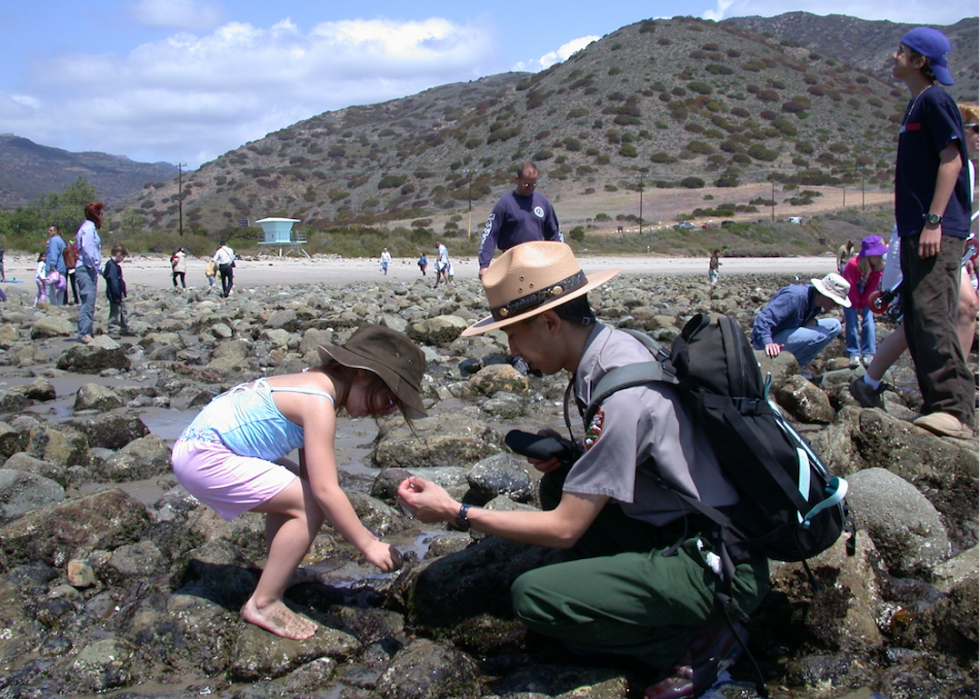
National Recreation and Park Association
The National Recreation and Park Association is committed to the preservation of the nation’s public parks and wildlands. The group believes that recreation is an essential part of the quality of life.
A funding organization, the NRPA seeks public and private partnerships to help promote research, education, and policy initiatives.
Budweiser
Beer brewer Budweiser is a premier member of the National Park Foundation’s “Find Your Park” initiative. Budweiser also participates in the “Keep America Beautiful” campaign, where it pledges a dollar per pledge received.
Budweiser has also committed to converting all of its operations to renewable energies by 2025.
American Express
Bank and credit-card provider American Express has promoted itself to be a responsible corporate citizen for most of the company’s existence. One area that the company supports is sustainability.
The company’s 2025 environmental goals include a reduction of energy use by 35%, water reduction by 10% per employee, and elimination of single-use plastics.
While the company’s philanthropy can be argued to be less about altruism and more about ensuring sound shareholders relations, American Express has still encouraged volunteerism to help protect the national parks through its Serve2Gether initiative.

Coca-Cola
Coca-Cola — like most large corporations — have deeply ingrained philanthropic interests. For the Atlanta-based soft-drink manufacturer, one of these interests is improving the connection between local communities and the national parks.
In 2018, more than 12 million fewer visitors visited the parks compared to 2017. It is enthusiasm that will encourage funding and protection for the park system. Coca-Cola allows users to trade-in product codes for a donation to the National Park Foundation.
Crown Media Family Networks
The corporate parent of the Hallmark Channel and Hallmark Movies and Mysteries, Crown Media Family Networks has been unique among broadcasters about its support of the national parks.
An example of this is the company’s exclusive agreement with the National Parks Foundation to broadcast the National Christmas Tree Lighting (the National Park Service manages all lands in the public trust, including the National Mall, the United States Capitol, and the White House).
L.L. Bean
L.L. Bean has a National Park Collection, a limited collection of T-shirts, bags, and other swag celebrating the National Park Service and its member parks.
For every purchase from the National Park Collection, 20% will be donated to the National Park Foundation.
Union Pacific
The railroad company Union Pacific has always had a special relationship with the national parks. Before the advent of the modern highway, rail was the preferred way to get to the parks — especially in the Western states.
Union Pacific is the largest private donor to Open OutDoors for Kids and has committed to a $3 million partnership with the National Park Foundation through its “Find Your Park” initiative.
This story was originally published by Stacker and republished pursuant to a CC BY-NC 4.0 License.
If you’re looking for positive words, we absolutely have you covered.
As lovers and sharers of positive news (we publish good news online, in our free newsletter, on our positive podcast, and our beautiful monthly print Goodnewspaper)... and so we’re always thrilled to help fill the world with more positivity.
We’ve compiled the best positive words that start with each letter of the alphabet into this simple and easy-to-scroll guide. No matter why you’re seeking out nice and kind words, may this list help you feel more positive.
And, of course, feel free to dive into each of our separate articles of positive words that start with:
A | B | C | D | E | F | G | H | I | J | K | L | M
N | O | P | Q | R | S | T | U | V | W | X | Y | Z
List of Positive Words A-Z
We’ve compiled a table of some of top positive words that start with each letter of the alphabet:
| Abundant | Bubbly | Compassion |
| Artistic | Blithe | Creative |
| Daring | Eager | Fabulous |
| Dynamic | Elated | Friendly |
| Generous | Hopeful | Intriguing |
| Graceful | Humble | Inspiring |
| Joyful | Kind | Lively |
| Jubilant | Keen | Loving |
| Mystical | Nurturing | Optimistic |
| Majestic | Nifty | Outgoing |
| Passionate | Quirky | Radiant |
| Peaceful | Quiet | Respectful |
| Sparkling | Tenacious | Uplifting |
| Sustainable | Trusting | Unshakeable |
| Versatile | Vibrant | Virtuous |
| Welcoming | Wise | Xenial |
| Youthful | Zestful | Zealous |
And we’ve compiled a longer list of more positive words for each letter of the alphabet:
Positive words starting with the letter A
- Abundant
- Accepting
- Acclaimed
- Accomplished
- Achieve
- Achievement
- Acknowledged
- Active
- Activism
- Acts of Kindness
- Admirable
- Adorable
- Adore
- Adventurous
- Affable
- Affectionate
- Affirmations
- Amaze
- Ambitious
- Ameliorate
- Amiable
- Amicable
- Analog
- Angelic
- Animate
- Animated
- Appealing
- Approachable
- April
- Aptitude
- Artistic
- Ascendant
- Aspiring
- Associative
- Assurance
- Athletic
- Attentive
- Attractive
- August
- Aura
- Authentic
- Awareness
- Awesome
→ Read more positive words that start with A
Positive words starting with the letter B
- Balanced
- Bashful
- Bastion
- Beaming
- Beautiful
- Befriend
- Belle
- Beneficial
- Benevolent
- Best
- Bestie
- Big-hearted
- Blessed
- Bliss
- Blissful
- Booming
- Bountiful
- Brave
- Bravery
- Bright
- Brighten
- Brilliance
- Brilliant
- Build
- Buoyant
→ Read more positive words that start with B
Positive words starting with the letter C
- Calming
- Capable
- Care
- Caring
- Celebration
- Champion
- Charitable
- Charming
- Cheerful
- Cherish
- Chivalrous
- Clean
- Clear
- Clever
- Climavore
- Comfortable
- Comforting
- Committed
- Compassion
- Compassionate
- Complement
- Compliments
- Confident
- Congenial
- Conscientious
- Conservation
- Conservationists
- Conserve
- Considerate
- Consistent
- Content
- Contribute
- Cooperative
- Coordinate
- Correct
- Courageous
- Courteous
- Create
- Creative
- Credible
- Cultivate
- Cultivated
- Cure
- Curious
→ Read more positive words that start with C
Positive words starting with the letter D
- Dancer
- Daring
- Dazzle
- December
- Decided
- Defender
- Delightful
- Dependable
- Deserving
- Develop
- Devoted
- Differentiate
- Dignify
- Diligent
- Direct
- Disciplined
- Discover
- Discreet
- Display
- Distinguished
- Diva
- Diversify
- Diversity
- Divine
- Dolly
- Donation
- Donor
- Down To Earth
- Dreamland
- Dreamy
- Dutiful
→ Read more positive words that start with D
Positive words starting with the letter E
- Eager
- Earnest
- Ease
- Easy-going
- Ecstatic
- Educated
- Education
- Efficient
- Elated
- Electrifying
- Elegant
- Elicit
- Empathetic
- Empathy
- Energetic
- Engaging
- Enhance
- Enlightened
- Enrich
- Entertain
- Entertaining
- Enthusiastic
- Establish
- Ethical
- Evolve
- Exalt
- Exceed
- Excellent
- Excite
- Exemplary
- Exhilarating
- Expand
- Experienced
- Experiment
- Expert
- Explore
→ Read more positive words that start with E
Positive words starting with the letter F
- Fabulous
- Facilitate
- Fair
- Faith
- Faithful
- Fanatic
- Fancy
- Fantastic
- Fantasy
- Fascinating
- Fate
- Fearless
- February
- Feel-good
- Feminism
- Fervent
- Festive
- Festivities
- Fiancee
- Fierce
- Fine
- Finesse
- Fitness
- Flags
- Flamboyant
- Flawless
- Flourish
- Focused
- Fondness
- Forgiving
- Forthright
- Frank
- Friction-maxxing
- Friendly
- Fruit
- Fulfill
- Fun
- Fun-loving
→ Read more positive words that start with F
Positive words starting with the letter G
- Gain
- Gallant
- Gameplan
- Genealogy
- Generate
- Generous
- Gentle
- Gentleman
- Genuine
- Gift
- Giveaway
- Giving
- Giving Back
- Glamorous
- Glee
- Glorify
- Glorious
- Glowing
- Good
- Good Good Good
- Good News
- Gorgeous
- Grace
- Graceful
- Gracious
- Grammy
- Grateful
- Gratify
- Gratitude
- Great
- Groom
- Grow
- Guardian
→ Read more positive words that start with G
Positive words starting with the letter H
- Hallelujah
- Handful
- Happiness
- Happy
- Harmonious
- Harvest
- Heal
- Healthy
- Heart
- Heaven
- Heir
- Help
- Helper
- Helpers
- Helpful
- Hero
- Heroic
- Heroism
- High-minded
- Highlight
- Hilarious
- Hobby
- Holidays
- Hone
- Honest
- Honor
- Honorable
- Hope
- Hopeful
- Hospitable
- Hug
- Humorous
- Hyper
→ Read more positive words that start with H
Positive words starting with the letter I
- Ideal
- Illuminate
- Imaginative
- Impartial
- Impress
- Improve
- Inaugurate
- Incisive
- Inclusive
- Increase
- Independent
- Indigenous
- Indulge
- Industrious
- Infuse
- Ingenious
- Innovative
- Inquisitive
- Inspire
- Inspiring
- Integrate
- Integrity
- Intelligent
- Intensify
- Intuitive
- Invaluable
- Inventive
- Investigate
- Invigorating
- Inviting
- Irresistible
→ Read more positive words that start with I
Positive words starting with the letter J
- Jacked
- January
- Java
- Jazz
- Jeez
- Jelly
- Jellyfish
- Jettison
- Jewel
- Jig
- Jiggle
- Job
- Join
- Joker
- Journal
- Jovial
- Joy
- Joyful
- Jubilant
- Jubilee
- Juggler
- Juicy
- July
- June
- Jurassic
- Justice
- Justify
- Juvenile
→ Read more positive words that start with J
Positive words starting with the letter K
- Kabab
- Kaleidoscope
- Kangaroo
- Karate
- Karma
- Keen
- Keep
- Kickstart
- Kidding
- Kids
- Kimono
- Kind
- Kindergarten
- Kindness
- Kindred
- Kiss
- Kitten
- Kitty
- Knight
- Know
- Knowledgeable
- Kudos
- Kwanzaa
→ Read more positive words that start with K
Positive words starting with the letter L
- Laugh
- Laughter
- Leader
- Leading
- Learn
- Legend
- Legendary
- Leisure
- Leisurely
- LGBTQ+
- Liberate
- Lifesaver
- Light
- Lighten
- Lighthearted
- Likable
- Likely
- Lineage
- Lion
- Lively
- LOL
- Longevity
- Lovable
- Love
- Lovely
- Low-cost
- Loyal
- Luck
- Lucky
- Lullaby
- Luminous
- Lustrous
- Luxurious
- Lyrics
→ Read more positive words that start with L
Positive words starting with the letter M
- Maestro
- Magic
- Magnificent
- Maiden
- Majestic
- Make
- Mama
- Manners
- March
- Marvel
- Marvelous
- Masterpiece
- Mature
- Maximize
- May
- Meaningful
- Medicine
- Melody
- Memento
- Mend
- Mercy
- Meritorious
- Merry
- Meticulous
- Migrate
- Mindfulness
- Modern
- Mojo
- Mood
- Morale
- Motivated
- Muse
- Musical
- Mutual
- Mutual Aid
- Mysterious
→ Read more positive words that start with M
Positive words starting with the letter N
- Native
- Natural
- Nature
- Neat
- Necessary
- Nectar
- Neighbor
- Nest
- New
- News
- Newspaper
- Nice
- Nifty
- Noble
- Nominated
- Nonprofit
- Non-violence
- Nook
- Nourish
- November
- Nubile
- Nurture
- Nurturing
- Nutrient
- Nuzzle
→ Read more positive words that start with N
Positive words starting with the letter O
- Oasis
- Obedient
- Objective
- Observant
- Obtain
- October
- Omnipotent
- Omnipresent
- Onward
- Open-heartedly
- Open-minded
- Opportune
- Optimism
- Optimistic
- Optimum
- Opulent
- Orderly
- Organized
- Original
- Outdone
- Outperform
- Outstanding
- Overachiever
- Overcome
- Overjoyed
- Overture
→ Read more positive words that start with O
Positive words starting with the letter P
- Pacifism
- Passionate
- Patient
- Patiently
- Peace
- Peaceful
- Peacekeeper
- Peppy
- Perceive
- Perceptive
- Perfection
- Perform
- Perky
- Persevering
- Persist
- Persistent
- Pertinent
- Placate
- Playful
- Pleasant
- Plentiful
- Poised
- Polite
- Positive
- Positivity
- Practical
- Pragmatic
- Praising
- Precise
- Prevail
- Pride
- Professional
- Progress
- Protective
- Proud
- Prune
- Pure
- Purify
→ Read more positive words that start with P
Positive words starting with the letter Q
- Quaint
- Qualified
- Queen
- Queenlike
- Queenly
- Quell
- Quick-acting
- Quick-minded
- Quick-moving
- Quick-thinking
- Quick-witted
- Quickness
- Quiet
- Quintessential
- Quip
- Quotable
- Quotes
→ Read more positive words that start with Q
Positive words starting with the letter R
- Rad
- Radiant
- Raise
- Rapturous
- Reaffirmation
- Realization
- Reclaim
- Reflect
- Refreshing
- Regain
- Rehabilitate
- Reinforce
- Rejoice
- Reliable
- Relinquish
- Remarkable
- Renew
- Repair
- Replace
- Resolve
- Resourceful
- Respectful
- Responsible
- Restore
- Retain
- Reverent
- Revitalize
- Revive
- Reward
- Ribbons
- Rich
- Righteous
- Rizz
- Robust
- Romantic
→ Read more positive words that start with R
Positive words starting with the letter S
- Safe
- Sanctify
- Sane
- Sanitary
- Sapid
- Sassy
- Satisfying
- Savor
- Scholarly
- Scrumptious
- Secure
- Seductive
- Self-care
- Selfless
- Sensible
- Sensitive
- Sentimental
- September
- Serene
- Serviceable
- Sharp
- Sincere
- Skilled
- Smooth
- Snappy
- Solid
- Spontaneous
- Strong
- Stunning
- Stylish
- Successful
- Supportive
- Sustain
- Sustainable
- Sustainability
- Sympathetic
→ Read more positive words that start with S
Positive words starting with the letter T
- Tacos
- Tactful
- Tailor-made
- Tailored
- Talented
- Tang
- Tangible
- Tasteful
- Teeming
- Teens
- Telegenic
- Tenacious
- Tenacity
- Tender
- Tenderhearted
- Terrific
- Thankful
- Thanks
- Therapeutic
- Therapy
- Thinker
- Thorough
- Thoughtful
- Thrift
- Thrilling
- Thrills
- Time-saving
- Timeless
- Timely
- Tireless
- Togetherness
- Tolerant
- Top-quality
- Tranquil
- Transform
- Treasure
- Trustworthy
- Truthful
→ Read more positive words that start with T
Positive words starting with the letter U
- Unafraid
- Unabashed
- Unbiased
- Unbound
- Unbreakable
- Unclouded
- Unconditional
- Uncorrupted
- Undamaged
- Understandable
- Understanding
- Unify
- Unselfish
- Unshaken
- Unspoiled
- Unsurpassed
- Unwavering
- Upbeat
- Uplifting
- Uplift
- Upright
- Upstanding
- Useful
- Utile
- Utilize
- Utmost
- Uttermost
→ Read more positive words that start with U
Positive words starting with the letter V
- Valiant
- Validate
- Valor
- Valorous
- Valuable
- Valued
- Vanguardist
- Vast
- Vegetables
- Vehement
- Venerable
- Venerate
- Venture
- Veracious
- Verdurous
- Verify
- Versatile
- Versatility
- Versed
- Verve
- Veteran
- Viable
- Vibrant
- Victorious
- Vigilant
- Vigor
- Virtue
- Virtuous
- Visionary
- Vivid
→ Read more positive words that start with V
Positive words starting with the letter W
- Wanted
- Warm
- Warmly
- Watchable
- Watchful
- Wealthy
- Weighty
- Welcome
- Welcoming
- Well-advised
- Well-balanced
- Well-behaved
- Well-done
- Well-educated
- Well-intentioned
- Well-liked
- Well-made
- Well-mannered
- Well-rounded
- Well-suited
- Whacky
- Wheeze
- Whimsy
- Whimsical
- Whimsically
- Wholehearted
- Wholeheartedly
- Wholesome
- Whopper
- Willing
- Wise
- Witty
- Wonder-filled
- Wonderful
→ Read more positive words that start with W
Positive words starting with the letter X
- X-axis
- X-factor
- X-ray
- X-ray Fish
- X-rayed
- X-rays
- Xalam
- Xanthocomic
- Xanthophyll
- XC Mountain Biking
- XC Running
- XC Skiing
- Xebec
- Xenial
- Xenium
- Xenization
- Xenocracy
- Xenocrat
- Xenodochium
- Xenodochy
- Xenoglossy
- Xenolalia
- Xenology
- Xenomania
- Xenophile
- Xeriscape
- Xerox
→ Read more positive words that start with X
Positive words starting with the letter Y
- Y’all
- Yabba-dabba-doo
- Yahoo
- Yare
- Yay
- Yearn
- Yeehaw
- Yeet
- Yellow
- Yep
- Yield
- Yip
- Yippee
- Yoga
- Yogi
- Yolo
- Young
- Yours
- Yourself
- Youth
- Youthful
- Yum
- Yummy
- Yummylicious
- Yup
- Yuppie
→ Read more positive words that start with Y
Positive words starting with the letter Z
- Zany
- Zeal
- Zealous
- Zealousness
- Zen
- Zenned
- Zephyr
- Zest
- Zestful
- Zesty
- Zing
- Zinger
- Zingy
- Zipless
- Zippier
- Zippy
- Zooty
→ Read more positive words that start with Z
Frequently Asked Questions
What are some positive short words?
- Joy
- Love
- Peace
- Hope
- Bliss
- Brave
- Kind
- Calm
- Cheer
- Trust
- Smile
- Glee
What are some unique positive words?
- Uplifting
- Refreshing
- Serene
- Serendipity
- Splendid
- Enchanting
- Alluring
- Invigorating
- Jubilant
- Radiant
- Joyful
- Whimsical
- Amiable
- Radiant
- Euphoric
What are some uplifting words?
- Joyful
- Radiant
- Blissful
- Jubilant
- Exuberant
- Energetic
- Enthusiastic
- Free-spirited
- Optimistic
- Vivacious
- Resilience
- Fearless
- Courageous
- Magnanimous
- Generous
- Compassionate
What are some optimistic words?
- Hopeful
- Bright
- Motivated
- Encouraged
- Inspired
- Rejuvenated
- Upbeat
- Courageous
- Determined
- Intrigued
- Ambitious
- Daring
- Self-assured
- Assertive
- Amicable
What are some happy words?
- Joyful
- Blissful
- Cheerful
- Beaming
- Smiling
- Glowing
- Grinning
- Optimistic
- Hopeful
- Content
- Lively
- Vibrant
- Amiable
- Energetic
- Excited
What are some positive nouns?
- Hero
- Helper
- Donor
- Joy
- Love
- Peace
- Hope
- Bliss
- Smile
- Gifts
- Charity
What are some synonyms of positive?
- Assured
- Bright
- Brightsiding
- Buoyant
- Cheerful
- Confident
- Encouraged
- Expectant
- Happy
- High
- Hopeful
- Hoping
- Idealistic
- Joyful
- Looking on the Bright Side
- Looking Through Rose-colored Glasses
- Merry
- On Cloud Nine
- On Top of World
- Optimistic
- Promising
- Ray of Sunshine
- Rose-colored
- Rosy
- Sunny
- Tusting
- Upbeat
- Uplifting
- Utopian
More positive words that start with…
A | B | C | D | E | F | G | H | I | J | K | L | M
N | O | P | Q | R | S | T | U | V | W | X | Y | Z
You might also like:
- The best positive quotes
- The best quotes about toxic positivity
- The best positive news sites
- The best positive affirmations
- The best positive words to describe someone
More lists:
Every day the Good Good Good team collects the best good news in the world and shares it with our community. Here are the highlights for this week!
If you want to get good news in your inbox every day, join the Goodnewsletter — the free daily newsletter designed to leave you feeling hopeful.
The Best Positive News We're Celebrating This Week —
For the first time in history, a Navajo woman was elected as Speaker of the Navajo Nation Council
Crystalyne Curley, who represents Tachíí/Blue Gap, Many Farms, Nazlini, Tsélání/Cottonwood, and Low Mountain, just made history as the first woman to head the Navajo Nation Council.
Curley will be the Council’s 25th Speaker and will serve in the role for two years. Curley’s family, along with other Navajo Nation leaders celebrated her historic election.
“It’s just such an amazing day for the Navajo people,” President Buu Nygren said.
Why does this matter? While not a solution in and of itself, representation matters at all levels of government and leadership — from the federal to the local to the tribal level, and women have historically been underrepresented in these positions.
Curley has promised to lead “with love and compassion and respect for one another” — also something we could use a little more of in our governing bodies these days.
In Niger, researchers have cut the number of postpartum blood-loss deaths in half
Blood loss is the leading cause of maternal deaths in low-income nations — and Niger is no exception. Now, researchers working with Niger’s health ministry say they’ve successfully reduced the number of blood-loss deaths post-birth (a.k.a. postpartum hemorrhage, or PPH) in half.
They achieved it through a simple three-step process that includes a low-cost drug, and it could help produce similar results in other countries around the world.
Over the six-year research period in Niger, an estimated 1,417 fewer women died from PPH than otherwise would have. Now, PPH accounts for one in 10 maternal deaths in Niger — down from more than three times that when the project first began.
While we’ve come a long way in improving maternal health globally, we still have a ways to go. We’re celebrating this and more efforts around the globe to prioritize maternal health.
The skateboarding community is coming together to honor the life of Tyre Nichols — and call for justice
On January 7, 2023, 29-year-old Tyre Nichols was brutally beaten by five Memphis police offers during a traffic stop. Three days later, on January 10, he died in the hospital from his injuries.
While Nichols’ family’s demands included publicly releasing the body camera footage (which it was on Friday evening) — they also asked the public to come together to honor and remember Tyre’s life.
And a big part of his life was skateboarding. In response, the skateboarding community — from Memphis to his hometown of Sacramento — came (and continues to come) together to do just that.
In addition to a vigil held at a local skate park, the Memphis skate community gathered outside city hall in anticipation of the video release.
Why is this good news? Tyre Nichols is so much more than his brutal murder by police. And though it was heartbreakingly cut far too short, his life deserves to be celebrated. While you don’t have to watch the video of his murder (and absolutely should not, if it will be in any way triggering for you), do pay attention to the things that emphasize our shared humanity.
A startup invented a porta-potty that converts waste into high-quality fertilizer
While not promising to transform the overall experience of using a port-a-potty, the Vermont-based startup Wasted wants to at least turn the waste involved into something good.
The founders created a port-a-potty that can make usable, high-quality fertilizer out of the waste generated by their portable toilets — it can even be used in agriculture settings. Thinking even bigger, they want to create a “circular sanitation system” that’s adapted to the climate era.
They’re starting with the humble port-a-potty and plan to deploy 200 of their toilets in the next nine months to construction sites, small businesses, and even venues around Burlington, Vermont.
Why is this good news? Currently, human waste goes to… well, waste. And there’s potential for it to replace chemical fertilizers that have devastated agricultural soil.
Additionally, much of our existing sanitation infrastructure is ill-equipped for the climate crisis, so much so that flooding has rendered sewage treatment centers inoperable and released raw sewage into waterways. And as climate migration is expected to pick up as more crises reach our communities — a portable sanitation solution could become even more necessary than a centralized one.
Niche sports, like quidditch (for real!) are championing social justice causes
According to the United States’ Quidditch Team website, quidditch is a sport “rooted in providing a safe space for people of all backgrounds to come together.”
Giving back is a running (flying?) theme for U.S. Quidditch. When J.K. Rowling began publicly making transphobic tweets in 2020, the U.S. Quidditch league came out in public support of trans and gender-non-conforming people within their community — and worldwide.
And along with other niche sports like roller derby and disc golf, quidditch teams have also advocated for the Black Lives Matter movement and issues pertaining to marginalized communities.
Why are niche sports championing these causes? While we're solidly in the camp that all sports platforms should take a stand in this way, niche sports — and the communities around them — are unique. Since fewer people are aware of them, they aren’t inundated with negativity (like trolling from extreme sports fans) and policing in the same way that large-scale, popular sports such as rugby or football are.
Gemma Styles is helping people around the world prioritize activism and social justice — and their mental health
Gemma Styles is a writer, podcaster, and mental health advocate who helps her millions-strong platform learn about various social issues — and use that knowledge to do good.
She also offers a unique perspective as someone diagnosed later in life with ADHD, and invites her audience to prioritize their own mental health as she does her own.
On her podcast, Instagram, and other platforms, Styles explores topics like feminism, climate action, housing insecurity, and more; all following a through-line of mental health, activism, and self-care in the digital age.
How does mental health intersect with activism and social media? As Gemma says, “the new niche of social media activists who grow a platform by talking about all these issues we have will talk more about burnout and climate anxiety and, you know, getting really bogged down and overwhelmed by the work that they do.”
In a hopeful turn of events, a 9-year-old scientist was honored by Yale University for her work to eradicate an invasive insect from her hometown
In a somewhat unprecedented move for the university, Yale honored 9-year-old Bobbi Wilson for her work to eradicate the invasive spotted lanternfly from her New Jersey hometown.
It was also a hopeful, inspiring turn of events for the young scientist, who just a few months ago was reported to the police by a neighbor as a “suspicious” person. Bobbi was reported for spraying a (perfectly safe) homemade repellant to kill the lanternflies feeding on the trees near her home. The incident sparked a (necessary) conversation around racial bias and profiling of Black children.
Yale helped “turn the trajectory” of that day, though, as Bobbi’s dad said. Bobbi and her family were invited to the university to meet other Black woman scientists, attend an event honoring and recognizing her work, and have her personal lanternfly collection cataloged in Yale’s Peabody Museum.
More good news of the week —
Scientists found the least costly way to efficiently capture carbon to date. Their system converts captured carbon into one of the world’s most widely used chemicals: methanol and could help make carbon capture more affordable and widespread.
A business in Southern California found a way to reuse and recycle water to combat the state’s drought. Their system takes all of the water that goes through the sink drains in the restrooms and reuses it to flush toilets and water the rooftop planters.
Helsinki, Finland’s first trial of giving free period products at schools was a major success. Participants reported that the trial normalized menstruation and encouraged debate around the topic of period poverty.
For the first time, the German government recognized the LGBTQ+ victims of the Nazi regime. The country has historically set the standard for acknowledging and repairing past wrongs, and we’re glad this has finally been acknowledged, too.
Researchers are turning problematic sea algae into an alternative for another problematic material: plastic. Outbreaks of seaweed and microalgae clog up waters and “suffocate” marine environments.
After he passed away, an Alabama town learned a farmer had been secretly paying his neighbors’ pharmacy bills. Hody Childress donated $100 a month to cover the prescription costs for people who couldn’t afford them.
Tribal solar projects are bringing climate solutions, self-determination, and energy independence. The projects are disrupting the “broken” and often exploitative fossil-fuel-based energy system that’s disproportionately impacted tribal communities.
Colombia announced it will no longer approve new oil and gas exploration projects. The country wants to move away from fossil fuels toward a more sustainable economy.
Scientists in the U.K. found a way to reduce the carbon emissions of making steel by 90%. This is incredibly good news since the iron and steel industry accounts for 9% of global emissions.
President Biden restored protections to the Tongass National Forest in Alaska. The region will once again be protected from logging and road building.
A family’s tragedy is shining a light on the desperate need for more maternal and postpartum health care. Moms who have struggled with similarly severe postpartum mental health issues are sharing their stories alongside donations to the family.
The five national parks along Lake Superior will be the first in the nation to fully decarbonize. The parks’ “ambitious game plan” will completely decarbonize all buildings and vehicles, eliminating greenhouse gas emissions in the atmosphere.
The public health emergency for mpox ends Tuesday in the U.S. as the number of cases drops dramatically. The average number of daily cases of mpox (formerly known as monkeypox) is now in the single digits, after peaking at about 450 cases per day in August.
For the first time ever, wind and solar were the European Union’s top electricity source in 2022. Together, the two provided a record one-fifth of the EU’s electricity in 2022 – more than gas or nuclear.
Researchers developed a solution that prevents synthetic fabrics from shedding microplastics in the washing machine. This is good news, but we also need to address the root issue: the two-thirds of (mostly fast fashion) clothing made with synthetic materials.
As we know, a large majority of the globe is made up of countries that have claimed and stolen land from Native communities. Colonization and imperialism have obliterated the lives of Indigenous peoples across the globe, and along with countless human rights atrocities, have caused heinous destruction of sacred lands, waters, and wildlife.
Indigenous communities have long been guardians of the planet, fighting for rightful land ownership, tending to the earth through ancient knowledge and spiritual practices, and working collaboratively to find a peaceful way forward.
As we continue to experience a pivotal moment in the environmental justice movement, Indigenous knowledge and resistance are of utmost importance.
“For our people, protecting the environment surpasses the issue of preserving lands, livelihoods, wildlife, and water,” writer Kaitlin Grable shares in an essay for Greenpeace. “There is a spiritual and religious component unique to Indigenous environmentalism since many of our ancestral and traditional practices are tied to the natural world.”
Because of this deep interconnectedness, Indigenous environmentalism leads the way for regeneration and progress against climate change.
Whether it’s the long-held stewardship of complex ecological systems, or the inherent reverence for the natural world, Indigenous peoples from all parts of the globe are cultivating a climate-forward future.
While no community of people should have to fight for their health, safety, and sovereignty, this article is our way of standing in solidarity with and celebrating just a handful of triumphs for and by Indigenous peoples in the past year.
“We are not complacent, we are not hopeless, and we are not giving up,” Grable writes. “Indigenous people are a necessary part of the solution, and many people beyond our spheres recognize the need for inclusion of our nations.”
Climate Victories From The Past Year Giving Us Hope
Land Was Returned To South Australian Wirangu People
In December of 2022, more than 5,000 square kilometers (a bit over 3,000 square miles) of land on South Australia’s west coast were given back to the Wirangu people.
As a part of this, the former police station in the area will also be transferred to the Wirangu people to build a cultural center.
Although this is a major win for Australia’s Indigenous community, it was bittersweet, as the claim to get the Native title was first filed in August of 1997, and none of the original claimants were alive to see the return of the land.
Canada’s First Indigenous-Owned Bioenergy Facility Opened
In northwestern Saskatchewan, the Meadow Lake Tribal Council (MLTC) Bioenergy Centre celebrated its first year in operation as Canada’s first Indigenous-owned bioenergy facility.
The MLTC is made up of nine First Nations and became the owner of the NorSask sawmill in 1998.
However, the sawmill was known for its air-polluting wood waste, and it wasn’t until this past year that the new and improved carbon-neutral facility took its place.
Now, the wood waste is combusted through a closed-loop system that produces heat and energy for roughly 5,000 homes in the area.
The U.S. Renamed Hundreds Of Places That Used Slurs Against Native American Women
The U.S. Department of Interior, led by Secretary Deb Haaland, changed the names of over 650 geographic sites and five communities across the country, removing a racist slur harmful to Indigenous women.
This renaming initiative started in early 2022 when Haaland created a Derogatory Geographic Names Task Force.
“This is the first of many necessary steps toward preserving the truth about Indigenous American history and facilitating healing between the Indigenous communities and both state and federal governments,” Romain Rain Tree, a member of the Dunlap Band of Mono Indians and Choinumi Tribes in one of the renamed areas, said.
“This is not just a new name for a community. This is acknowledgment of the first stewards of the land and a recognition that we are still here.”
Brazil Appointed The First Indigenous Woman To Lead New Ministry of Indigenous Peoples
At the end of 2022, Brazil’s President-elect Luiz Inácio Lula da Silva announced that Sônia Guajajara will head up a new Ministry of Indigenous Peoples, with a mandate to oversee policies ranging from land demarcation to healthcare.
The first Indigenous woman to lead in this capacity, Guajajara is an environmentalist leader of the main umbrella group for Brazil’s many Indigenous tribes and a member of the Amazon Guajajara.
A Wildlife Crossing In Montana Built With Indigenous Knowledge Has Drastically Reduced Collisions
In 2000, the Confederated Salish and Kootenai tribes collaborated with the Montana Department of Transportation to design and build one of the largest networks of wildlife highway crossings in the U.S.
By using Indigenous knowledge provided by tribal wildlife ecologists, recent studies show that animal collisions have declined by 71% and more than 22,000 animals use these wildlife crossings annually.
Canadian Government And Conservation Leaders Agree To Preserve Over 185,000 Acres Of The Incomappleux Valley
In partnership with local governments, Indigenous groups, a forest company, and the Nature Conservancy of Canada, a deal was made to protect 75,000 hectares (a bit over 185,000 acres) of the Incomappleux Valley.
The valley is a rare inland temperate rainforest full of lakes, wetlands, lichen species, bears, and endangered plant and fungal species. It’s also home to a substantial number of old-growth trees, some ranging in age from 800 to 1,500 years.
“The conservation community and people who live in the area understand what an important and unique region this is,” Environment Minister George Heyman said. “They’ve been calling for its protection for many years.
Ownership Of A California Redwood Forest Was Returned To Ten Native American Tribal Nations
Ten Native American tribal nations, which form the InterTribal Sinkyone Wilderness Council, were granted ownership of 215 hectares (532 acres) of California’s redwood forest in January 2022.
The land was donated by the Save the Redwoods League, which believes that the best way to restore and protect the land is to return it to Indigenous stewardship.
Together, the league and the council have developed a 30-year conservation plan to protect endangered species in the area, as well as eliminate commercial timber operations, fragmentation, development, and public access.
Resistance From A Gwich’in Committee Led To The Exit Of An Oil Company From The Arctic Coastal Plain
In November 2022, Knik Arm Services became the second oil company to cancel its oil and gas lease in the largest wildlife reserve in America, the Arctic National Wildlife Refuge. This move came following fierce opposition by the Indigenous Gwich’in committee and environmental groups in the area.
Although the Arctic is still for sale for oil development, this is a great step in the right direction to protect the land.
Tribal Solar Power Projects Are Creating Jobs And Reducing Emissions
As oil pipelines threaten to destroy sacred tribal lands, Indigenous problem solvers are ready to create a new kind of power. By reducing reliance on fossil fuels and investing in clean energy, leaders like Solar Bear and Indigenous Energy Initiative take a systems-based approach to renewable energy development.
These two organizations make solar installation more accessible and provide workforce development and technical training in their communities, proving that an Indigenous-led future fueled by solar energy is at our feet.
Landmark Deals In Canada Give Indigenous Communities More Power Over The Land
At the start of 2023, the Yaq̓it ʔa·knuqⱡi ‘it (YQT), an Indigenous community in southeastern British Columbia, signed an unprecedented agreement with the mining company NWP Coal Canada, giving Indigenous leadership “veto power” over proposed projects.
The company committed to a “content-based environmental assessment,” requiring YQT’s permission for any mining projects to move ahead.
Similarly, the Blueberry River First Nations also announced its own historic agreement with provincial leaders in British Columbia, which includes protections for wildlife, a halt to logging in old-growth forests, and new compensation for the community (including a $200 million restoration fund from the government).
Additionally, any new resource extraction projects will be limited by the First Nations in how much land can be disturbed.
“For a long time, First Nations were put aside, not engaged with or listened to,” Chief Judy Desjarlais said. “Today marks a new direction. First Nations will be participants in all stages of development. Blueberry now has a say every step of the way.”
A version of this article was originally published in The 2023 Environment Edition of the Goodnewspaper.
Get your own Goodnewspaper by becoming a good news subscriber today.
While longtime Indigenous practices, good ole community organizing, and personal and political commitments to our planet are constantly at work fighting climate change, new technologies are also rapidly emerging.
Whether we look to global clean energy experts or small, local logistics managers, helpers of all kinds have their hands in healing the earth, one idea at a time.
There are truly too many brilliant solutions to count, but here are five exciting climate breakthroughs that give us hope to keep up the fight.
Hope-Inducing Environmental Breakthroughs To Celebrate
1. Nuclear Fusion
In late 2022, scientists studying fusion energy at Lawrence Livermore National Laboratory in California announced a major breakthrough.
The goal of fusion energy is to reproduce the power of the sun in a laboratory (sounds like a supervillain movie at first, we know!), and these scientists proudly shared that they had their first fusion reaction in a laboratory setting that actually produced more energy than it took to start the reaction. This production of energy is called “ignition,” and it took 192 lasers to achieve.
While it’s a bit confusing for a layperson to understand (we’re still trying to wrap our heads around it), what you need to know is: if fusion can be deployed on a large scale, it can offer an emissions-free source of power, reducing natural gas and global warming through clean energy.
Experts admit it will take a long while before fusion is available in a widespread way, but for now, this breakthrough shows great promise.
2. 3D-Printed Coral Reef Restoration
Archireef, a Hong Kong startup by coral ecologist David Baker, has created the world’s first 3D-printed artificial reef tiles to help rebuild the world’s reefs. The tiles, which were invented with Baker at Hong Kong University, are made from non-toxic, pH-balanced, and biodegradable terracotta.
They’re printed using biomimicry patterns that secure coral fragments and placed on the sandy bottom of a protected bay.The hexagonal designs are highly adaptive to any coral species, landscapes, and ecosystems, and 95% of the coral planted in these tiles has survived for the past two years.
Baker told CBS News that he came up with the idea after thinking: “Why not tile the sea floor like we would tile a kitchen or bathroom floor?”
While the project is still getting its sea legs (ha-ha), Baker and his team have seen excellent results in Hoi Ha Wan Marine Park thus far.
3. Waste-Eating Water Drones
Created by Dutch company RanMarine, meet the WasteSharks. These aquatic drones capture waste in waterways before they get to the ocean, holding up to 160 liters of trash (a little over 350 pounds). Inspired by the whale shark, which catches prey while swimming with a wide-open mouth, these drones gather trash close to the shore before it breaks down and becomes difficult to collect in the wide expanse of the ocean.
The company has already partnered with a number of cities, municipalities, ports, marinas, waste managers, and action groups to look after ports, harbors, beaches, rivers, and dams.
4. Plant-Based Produce Spray
Westmoreland Topline Farms, a cucumber grower in Ontario, Canada was looking for a way to ditch individually plastic-wrapped produce. Working with Apeel Sciences, experts created an edible and tasteless plant-based spray that extends the natural shelf life of a cucumber and removes the need for plastic packaging.
By using this plant-based spray, one load of the farm’s cucumbers removes the equivalent of 100,000 plastic straws out of the system, according to CBC News.
5. Shark Deterrent Fishing Technology
FishTek, a marine engineering company, has tested a gadget called the SharkGuard, which emits a pulse to repel sharks away from fishing gear. The device is clipped onto the line next to a baited hook and sends out a short pulse every two seconds, overstimulating the shark’s nose and mouth and preventing them from getting caught on the line.
The Guardian reported on a study that found the gadget reduced the number of blue sharks accidentally caught by commercial fishing fear in a tuna fishery in the Mediterranean by 91%. The technology will likely need to undergo more engineering to ensure options are available for a wide array of fisheries and shark species, though FishTek hopes the device will be commercially available by 2024.
A version of this article was originally published in The 2023 Environment Edition of the Goodnewspaper.
Get your own Goodnewspaper by becoming a good news subscriber today.
Every month at Good Good Good, we plan upcoming good news content for our Instagram, Goodnewsletter, Goodnewspaper, podcast, website, and more. Our work is always centered on hopeful stories about people making a difference in the world — and action steps on how each of us can join in with that good work.
With so many holidays, awareness days, education weeks, and activism months happening all year long, we’ve been slowly collecting all of these events in a private internal calendar for years.
We made our Monthly Cause Awareness Calendar publicly available earlier this year. We’ve also published:
- The Ultimate Calendar of Heritage Months
- Disability Awareness Days Calendar
- LGBTQ+ Pride Days, Weeks, & Months Calendar
- Animal & Pet Awareness Calendar
- Mental Health Days & Awareness Months Calendar
- Environmental & Sustainability Holidays Calendar
- HIV/AIDS Awareness Days & Months Calendar
- Cancer Awareness Days & Months Calendar
- Black & African American Holidays Calendar
And now we’re publishing our guide to United Nations International Days!
Our hope is this resource will help you or your organization bring attention to these important days all year long.
Where applicable, we’ve included resources around highlighted holidays — usually in the form of good news around particular topics, relevant quotes or resources, or action steps on how to make a difference. We encourage you to share them if you find them helpful.
We’ve worked hard to make this the most comprehensive and well-organized collection of UN holidays and international days and weeks on the internet. Always double-check dates, as organizers may occasionally change dates and details.
At the end of this article, we’ve also included a breakdown of the United Nations’ International Years and International Decades.
Bookmark this page and revisit it as often as you need. We’ll continue to update it and add to it over time.
A Complete List of International Holidays
January
Days
World Braille Day - January 4
International Day of Education - January 24
International Day of Commemoration in Memory of the Victims of the Holocaust - January 27
February
Days
World Wetlands Day - February 2
International Day of Human Fraternity - February 4
International Day of Zero Tolerance to Female Genital Mutilation - February 6
World Pulses Day - February 10
International Day of Women and Girls in Science - February 11
International Day for the Prevention of Violent Extremism as and when Conducive to Terrorism - February 12
World Radio Day - February 13
World Day of Social Justice - February 20
Read and share this collection of the best social justice quotes
International Mother Language Day - February 21
Weeks
World Interfaith Harmony Week - February 1 to 7
Read and share good news stories about faith
March
Days
World Seagrass Day - March 1
Zero Discrimination Day - March 1
World Wildlife Day - March 3
Read and share the ultimate guide on how to celebrate World Wildlife Day
International Day for Disarmament and Non-Proliferation Awareness - March 5
International Women’s Day - March 8
Read and share the ultimate guide on how to celebrate International Women’s Day
International Day of Women Judges - March 10
International Day to Combat Islamophobia - March 15
International Day of Happiness - March 20
Read and share happy news stories about happiness
French Language Day - March 20
International Day for the Elimination of Racial Discrimination - March 21
Read and share good news about racial justice
World Poetry Day - March 21
International Day of Nowruz - March 21
World Down Syndrome Day - March 21
International Day of Forests - March 21
Read and share good news about trees and forests
World Water Day - March 22
World Meteorological Day - March 23
World Tuberculosis Day - March 24
International Day for the Right to the Truth concerning Gross Human Rights Violations and for the Dignity of Victims - March 24
International Day of Remembrance of the Victims of Slavery and the Transatlantic Slave Trade - March 25
International Day of Solidarity with Detained and Missing Staff Members - March 25
Weeks
Week of Solidarity with the Peoples Struggling Against Racism and Racial Discrimination - March 21 to 27
Read and share this collection of antiracism resources
April
Days
World Autism Awareness Day - April 2
International Day for Mine Awareness and Assistance in Mine Action - April 4
International Day of Conscience - April 5
International Day of Sport for Development and Peace - April 6
Read and share sports good news
World Health Day - April 7
Read good news about health and read these quotes about public health
International Day of Reflection on the 1994 Genocide Against the Tutsi in Rwanda - April 7
International Day of Human Space Flight - April 12
World Chagas Disease Day - April 14
Chinese Language Day - April 20
World Creativity and Innovation Day - April 21
International Mother Earth Day - April 22
Explore our guide on how to celebrate Earth Day. Plus: Read and share these inspiring and motivating Earth Day quotes
World Book and Copyright Day - April 23
English Language Day - April 23
Spanish Language Day - April 23
International Day of Multilateralism and Diplomacy for Peace - April 24
World Malaria Day - April 25
International Delegate’s Day - April 25
International Chernobyl Disaster Remembrance Day - April 26
World Intellectual Property Day - April 26
International Girls in ICT Day - April 28
World Day for Safety and Health at Work - April 28
International Jazz Day - April 30
Weeks
World Immunization Week - April 24 to 30
May
Days
World Tuna Day - May 2
World Press Freedom Day - May 3
Vesak, the Day of the Full Moon - 1st Full Moon of the ancient Lunar Month of Vesakha
World Portuguese Language Day - May 5
Time of Remembrance and Reconciliation for Those Who Lost Their Lives During the Second World War - May 8 and 9
International Day of Argania - May 10
International Day of Plant Health - May 12
World Migratory Bird Day - 2nd Saturday of May
International Day of Families - May 15
International Day of Living Together in Peace - May 16
International Day of Light - May 16
Read and share the best quotes about light and quotes about darkness and light
World Telecommunication and Information Society Day - May 17
World Bee Day - May 20
Listen to this podcast episode about saving the bees
International Tea Day - May 21
World Day for Cultural Diversity for Dialogue and Development - May 21
International Day for Biological Diversity - May 22
International Day to End Obstetric Fistula - May 23
International Day of UN Peacekeepers - May 29
World No-Tobacco Day - May 31
Weeks
UN Global Road Safety Week - Week-long biennial event in May
Week of Solidarity with the Peoples of Non-Self-Governing Territories - May 25 to 31
June
Days
Global Day of Parents - June 1
World Bicycle Day - June 3
Read about the cities where bike commuting is growing fastest in the U.S.
International Day of Innocent Children Victims of Aggression - June 4
World Environment Day - June 5
Read and share good news about the environment
International Day for the Fight Against Illegal, Unreported, and Unregulated Fishing - June 5
Russian Language Day - June 6
World Food Safety Day - June 7
World Oceans Day - June 8
Read and share this guide on how to celebrate World Oceans Day
World Day Against Child Labour - June 12
International Albinism Awareness Day - June 13
World Blood Donor Day - June 14
World Elder Abuse Awareness Day - June 15
International Day of Family Remittances - June 16
World Day to Combat Desertification and Drought - June 17
International Day for Countering Hate Speech - June 18
Sustainable Gastronomy Day - June 18
International Day for the Elimination of Sexual Violence in Conflict - June 19
World Refugee Day - June 20
Read and share ideas about how to celebrate World Refugee Day
International Day of Yoga - June 21
International Day of the Celebration of the Solstice - June 21
International Widows’ Day - June 23
United Nations Public Service Day - June 23
International Day of Women in Diplomacy - June 24
Day of the Seafarer - June 25
International Day Against Drug Abuse and Illicit Trafficking - June 26
United Nations International Day in Support of Victims of Torture - June 26
Micro, Small, and Medium-sized Enterprises Day - June 27
Support our small business (and get good news) by subscribing to the Goodnewspaper
International Day of the Tropics - June 29
International Asteroid Day - June 30
International Day of Parliamentarism - June 30
July
Days
International Day of Cooperatives - 1st Saturday of July
World Kiswahili Language Day - July 7
World Population Day - July 11
World Youth Skills Day - July 15
Nelson Mandela International Day - July 18
Read and share the best quotes by Nelson Mandela
International Moon Day - July 20
World Chess Day - July 20
World Drowning Prevention Day - July 25
World Hepatitis Day - July 28
International Day of Friendship - July 30
World Day Against Trafficking in Persons - July 30
August
Days
International Day of the World’s Indigenous Peoples - August 9
International Youth Day - August 12
World Humanitarian Day - August 19
Learn about how to celebrate World Humanitarian Day and read and share the best humanitarian quotes
International Day of Remembrance and Tribute to the Victims of Terrorism - August 21
International Day Commemorating the Victims of Acts of Violence Based on Religion or Belief - August 22
International Day for the Remembrance of the Slave Trade and Its Abolition - August 23
International Day Against Nuclear Tests - August 29
International Day of the Victims of Enforced Disappearances - August 30
International Day for People of African Descent - August 31
Weeks
World Breastfeeding Week - August 1 to 7
September
Days
International Day of Charity - September 5
International Day of Police Cooperation - September 7
International Day of Clean Air for Blue Skies - September 7
International Literacy Day - September 8
International Day to Protect Education from Attack - September 9
United Nations Day for South-South Cooperation - September 12
International Day of Democracy - September 15
International Day for Interventional Cardiology - September 16
International Day for the Preservation of the Ozone Layer - September 16
World Patient Safety Day - September 17
International Equal Pay Day - September 18
International Day of Peace - September 21
International Day of Sign Languages - September 23
International Day for the Total Elimination of Nuclear Weapons - September 26
World Tourism Day - September 27
World Maritime Day - Last Saturday of September
International Day for Universal Access to Information - September 28
International Day of Awareness of Food Loss and Waste - September 29
Read our extensive guide to how to reduce food waste
International Translation Day - September 30
October
Days
International Day of Older Persons - October 1
World Habitat Day - 1st Monday of October
International Day of Non-Violence - October 2
World Teachers’ Day - October 5
World Cotton Day - October 7
World Post Day - October 9
World Mental Health Day - October 10
Read our guide on how to celebrate World Mental Health Day, explore good news articles about mental health, read and share the best mental health quotes, and utilize our mental health resources
International Day of the Girl Child - October 11
World Migratory Bird Day - 2nd Saturday of October
International Day for Disaster Risk Reduction - October 13
International Day of Rural Women - October 15
World Food Day - October 16
Read and share all of our good news about food
International Day for the Eradication of Poverty - October 17
Read and share the best quotes about poverty and helping the poor
United Nations Day - October 24
World Development Information Day - October 24
World Day for Audiovisual Heritage - October 27
World Cities Day - October 31
Weeks
World Space Week - October 4 to 10
Disarmament Week - October 24 to 30
Global Media and Information Literacy Week - October 24 to 31
November
Days
International Day to End Impunity for Crimes Against Journalists - November 2
World Tsunami Awareness Day - November 5
International Day for Preventing the Exploitation of the Environment in War and Armed Conflict - November 6
World Science Day for Peace and Development - November 10
World Diabetes Day - November 14
World Day of Remembrance for Road Traffic Victims - November 16
International Day for Tolerance - November 16
World Day of Remembrance for Road Traffic Victims - 3rd Sunday of November
World Philosophy Day - 3rd Thursday of November
World Day for the Prevention of and Healing from Child Sexual Exploitation, Abuse, and Violence - November 18
World Toilet Day - November 19
Africa Industrialization Day - November 20
World Children’s Day - November 20
World Television Day - November 21
International Day for the Elimination of Violence Against Women - November 25
International Day of Solidarity with the Palestinian People - November 29
Day of Remembrance for all Victims of Chemical Warfare - November 30
Weeks
International Week of Science and Peace - November 9 to 14
World Antibiotic Awareness Week - November 18 to 24
December
Days
World AIDS Day - December 1
Read and share our resources and good news about HIV/AIDS
International Day for the Abolition of Slavery - December 2
International Day of Persons with Disabilities - December 3
International Day of Banks - December 4
International Volunteer Day for Economic and Social Development - December 5
World Soil Day - December 5
International Civil Aviation Day - December 7
International Day of Commemoration and Dignity of the Victims of the Crime of Genocide and of the Prevention of this Crime - December 9
International Anti-Corruption Day - December 9
Human Rights Day - December 10
Exlore our collection of good news stories about human rights
International Mountain Day - December 11
International Universal Health Coverage Day - December 12
International Day of Neutrality - December 12
International Migrants Day - December 18
Arabic Language Day - December 18
International Human Solidarity Day - December 20
International Day of Epidemic Preparedness - December 27
International Years
2026: International Year of Rangelands and Pastoralists
2025: International Year of Glaciers’ Preservation
2024: International Year of Camelids
2023: International Year of Dialogue as a Guarantee of Peace
2023: International Year of Millets
2022: International Year of Sustainable Mountain Development
2022: International Year of Basic Sciences for Sustainable Development
2022: International Year of Glass
2022: International Year of Artisanal Fisheries and Aquaculture
2021: International Year of Peace and Trust
2021: International Year of Creative Economy for Sustainable Development
2021: International Year of Fruits and Vegetables
2021: International Year for the Elimination of Child Labor
2020: International Year of Plant Health
2020: International Year of the Nurse and the Midwife
2019: International Year of Indigenous Languages
Read about the efforts of one group to help preserve their Indigenous language through music
2019: International Year of Moderation
2019: International Year of the Periodic Table of Chemical Elements
2017: International Year of Sustainable Tourism for Developmen
2016: International Year of Pulses
2015: International Year of Light and Light-based Technologies
2015: International Year of Soils
2014: International Year of Solidarity with the Palestinian People
2014: International Year of Small Island Developing States
2014: International Year of Crystallography
2014: International Year of Family Farming
2013: International Year of Water Cooperation
2013: International Year of Quinoa
2012: International Year of Cooperatives
2012: International Year of Sustainable Energy for All
2011: International Year for People of African Descent
2011: International Year of Chemistry
2011: International Year of Forests
Read and share the best quotes about trees and learn about how we have more trees now than ever
2010: International Year of Youth
Read about kids making a difference and teen activists
2010: International Year for the Rapprochement of Cultures
2010: International Year of Biodiversity
2010: International Year of the Seafarer
2009: International Year of Reconciliation
2009: International Year of Natural Fibres
2009: International Year of Human Rights Learning
2009: International Year of Astronomy
2009: Year of the Gorilla
2008: International Year of Planet Earth
2008: International Year of Languages
2008: International Year of Sanitation
2008: International Year of the Potato
Read about the unique way potato farmers are conquering a devastating worm with banana paper
2007-2008: International Polar Year
2006: International Year of Deserts and Desertification
2005: International Year of Microcredit
2005: International Year for Sport and Physical Education
2005: International Year of Physics
2004: International Year to Commemorate the Struggle Against Slavery and its Abolition
2004: International Year of Rice
2003: Year of Kyrgyz Statehood
2003: International Year of Freshwater
2002: United Nations Year for Cultural Heritage
2002: International Year of Mountains
2002: International Year of Ecotourism
2001: United Nations Year of Dialogue among Civilizations
2001: International Year of Volunteers
2001: International Year of Mobilization Against Racism, Racial Discrimination, Xenophobia, and Related Intolerance
2000: International Year of Thanksgiving
2000: International Year for the Culture of Peace
1999: International Year of Older Persons
1998: International Year of the Ocean
1996: International Year for the Eradication of Poverty
1995: United Nations Year for Tolerance
1995: World Year of Peoples’ Commemoration of the Victims of the Second World War
1994: International Year of the Family
1994: International Year of Sport and the Olympic Ideal
1993: International Year for the World’s Indigenous People
Read and share good news articles about Indigenous people and Indigenous activists to follow and learn from
1992: International Space Year
1990: International Literacy Year
1987: International Year of Shelter for The Homeless
Learn how to create a homeless care package and read and share the best quotes about homelessness
1986: International Year of Peace
1985: Year of the United Nations
1985: International Youth Year: Participation, Development, Peace
1983: World Communications Year; Development of Communication Infrastructures
1982: International Year of Mobilization for Sanctions Against South Africa
1981: International Year for Disabled Persons
1979: International Year of The Child
1978/1979: International Anti-Apartheid Year
1975: International Women’s Year
Read and share quotes about women — from our collection of Women’s History Month quotes
1974: World Population Year
1971: International Year for Action to Combat Racism and Racial Prejudice
1970: International Education Year
1968: International Year for Human Rights
1967: International Tourist Year
1965: International Co-operation Year
1961: International Health and Medical Research Year
1959/1960: World Refugee Year
Read and share our good news stories about refugees and support a nonprofit in your state that supports refugees
International Decades
2022-2032: International Decade of Indigenous Languages
Read about one group of artists using music to help preserve their Cherokee language
2021-2030: United Nations Decade of Healthy Aging
2021-2030: Fourth International Decade for the Eradication of Colonialism
2021-2030: Second Decade of Action for Road Safety
2021-2030: United Nations Decade on Ecosystem Restoration
2021-2030: United Nations Decade of Ocean Science for Sustainable Development
2019-2028: Nelson Mandela Decade of Peace
Read and share the best Nelson Mandela quotes
2019-2028: United Nations Decade of Family Farming
2018-2028: International Decade for Action “Water for Sustainable Development”
2018-2027: Third United Nations Decade for the Eradication of Poverty
Read and share quotes about the eradication of poverty
2016-2025: United Nations Decade of Action on Nutrition
Read and share quotes about hunger and feeding the poor
2016-2025: Third Industrial Development Decade for Africa
2015-2024: International Decade for People of African Descent
2014-2024: United Nations Decade of Sustainable Energy for All
2011-2020: Third International Decade for the Eradication of Colonialism
2011-2020: United Nations Decade on Biodiversity
2011-2020: Decade of Action for Road Safety
2010-2020: United Nations Decade for Deserts and the Fight Against Desertification
2008-2017: Second United Nations Decade for the Eradication of Poverty
2006-2016: Decade of Recovery and Sustainable Development of the Affected Regions
2005-2015: International Decade for Action, “Water for Life”
2005-2014: United Nations Decade of Education for Sustainable Development
2005-2014: Second International Decade of the World’s Indigenous People
2003-2012: United Nations Literacy Decade: Education for All
2001-2010: International Decade for a Culture of Peace and Non-violence for the Children of the World
Read and share Martin Luther King Jr.’s best quotes about nonviolence
2001-2010: Decade to Roll Back Malaria in Developing Countries, Particularly in Africa
2001-2010: Second International Decade for the Eradication of Colonialism
1997-2006: Decade for The Eradication for Poverty
1995-2004: Decade for Human Rights Education
1994-2004: Decade of the World’s Indigenous People
1993-2003: Third Decade to Combat Racism and Racial Discrimination
1991-2000: Second Industrial Development Decade for Africa
1991-2000: Second Transport and Communications Decade in Africa
1991-2000: United Nations Decade Against Drug Abuse
1991-2000: Fourth United Nations Development Decade
1990-2000: International Decade for the Eradification of Colonialism
1990-1999: United Nations Decade of International Law
1990-1999: International Decade for Natural Disaster Reduction
1990s: Third Disarmament Decade
1988-1997: World Decade for Cultural Development
1983-1993: Second Decade to Combat Racism and Racial Discrimination
1983-1992: United Nations Decade for Disabled Persons
1981-1990: International Drinking Water Supply and Sanitation Decade
1981-1990: Third United Nations Development Decade
1980-1990: Second Disarmament Decade
1980s: Industrial Development Decade for Africa
1976-1985: United Nations Decade for Women: Equality, Development, and Peace
1973-1983: Decade to Combat Racism and Racial Discrimination
1971-1980: Second United Nations Development Decade
1970s: Disarmament Decade
1960-1970: United Nations Development Decade
Explore More Events:
- Heritage Months Calendar
- Top Awareness Days & Months Calendar
- Environmental & Sustainability Days & Months Calendar
- Disability Awareness Days & Months Calendar
- LGBTQ+ Pride Days & Months Calendar
- Animal & Pet Awareness Calendar
- Mental Health Days & Awareness Months Calendar
- Black & African American Holidays Calendar
Black History Month is a time to celebrate the achievements, contributions, and rich cultural heritage of African Americans.
In recognition of this important heritage month, we’ve curated a collection of beautiful quotes about Black history, the Black experience, and Black History Month. These quotes come from prominent figures in Black history as well as today’s activists, leaders, and creators — and serve as a testament to the strength, resilience, creativity, determination of the Black community.
We hope you’ll not only read and share these quotes during February — but also all year long.
Of course, don’t forget to explore our guide on ideas for how to thoughtfully celebrate Black History Month this year.
The Best Black History Month Quotes
Famous Quotes
“Even if it makes others uncomfortable, I will love who I am.”
— Janelle Monáe

“For Africa to me... is more than a glamorous fact. It is a historical truth. No man can know where he is going unless he knows exactly where he has been and exactly how he arrived at his present place.”
— Maya Angelou
“The cost of liberty is less than the price of repression.”
— W.E.B. Du Bois
“I refuse to accept the view that mankind is so tragically bound to the starless midnight of racism and war that the bright daybreak of peace and brotherhood can never become a reality… I believe that unarmed truth and unconditional love will have the final word.”
— Martin Luther King Jr.
“I am America. I am the part you won’t recognize. But get used to me. Black, confident, cocky; my name, not yours; my religion, not yours; my goals, my own; get used to me.”
— Muhammad Ali

“This is our national truth: America would not be America without the wealth from Black labor, without Black striving, Black ingenuity, Black resistance.”
— Nikole Hannah-Jones

“For to be free is not merely to cast off one’s chains, but to live in a way that respects and enhances the freedom of others.”
— Nelson Mandela

“Change will not come if we wait for some other person or some other time. We are the ones we’ve been waiting for. We are the change that we seek.”
— Barack Obama
Quotes About Black History
“The thing about black history is that the truth is so much more complex than anything you could make up.”
— Henry Louis Gates

“While history is what happened, it is also, just as important, how we think about what happened and what we unearth and choose to remember about what happened”
— Nikole Hannah-Jones
“We should emphasize not Negro History, but the Negro in history. What we need is not a history of selected races or nations, but the history of the world void of national bias, race hate, and religious prejudice.”
— Carter Woodson
“Black history isn’t a separate history. This is all of our history, this is American history, and we need to understand that. It has such an impact on kids and their values and how they view black people.”
— Karyn Parsons
“We must never forget that Black History is American History. The achievements of African Americans have contributed to our nation’s greatness.”
— Yvette Clarke
Inspirational Quotes
“If we accept and acquiesce in the face of discrimination, we accept the responsibility ourselves and allow those responsible to salve their conscience by believing that they have our acceptance and concurrence. We should, therefore, protest openly everything... that smacks of discrimination or slander.”
— Mary McLeod Bethune
“Whatever we believe about ourselves and our ability comes true for us.”
— Susan L. Taylor
“Almost always, the creative dedicated minority has made the world better.”
— Martin Luther King Jr.
“Bringing the gifts that my ancestors gave, I am the dream and the hope of the slave. I rise. I rise. I rise.”
— Maya Angelou
“The battles that count aren’t the ones for gold medals. The struggles within yourself — the invisible, inevitable battles inside all of us — that’s where it’s at.”
— Jesse Owens
“I had reasoned this out in my mind; there was one of two things I had a right to, liberty, or death; if I could not have one, I would have the other; for no man should take me alive; I should fight for my liberty as long as my strength lasted, and when the time came for me to go, the Lord would let them take me.”
— Harriet Tubman
“Every time you state what you want or believe, you’re the first to hear it. It’s a message to both you and others about what you think is possible. Don’t put a ceiling on yourself.”
— Oprah Winfrey
“If you know whence you came, there is really no limit to where you can go.”
— James Baldwin
“We all require and want respect, man or woman, black or white. It’s our basic human right.”
— Aretha Franklin
From Black Women
“As Black women, we’re always given these seemingly devastating experiences — experiences that could absolutely break us. But what the caterpillar calls the end of the world, the master calls the butterfly. What we do as Black women is take the worst situations and create from that point.”
— Viola Davis

“One thing is clear to me: We, as human beings, must be willing to accept people who are different from ourselves.”
— Barbara Jordan
“I had no idea that history was being made. I was just tired of giving up.”
— Rosa Parks
“I am a feminist, and what that means to me is much the same as the meaning of the fact that I am Black; it means that I must undertake to love myself and to respect myself as though my very life depends upon self-love and self-respect.”
— June Jordan
“I need to see my own beauty and to continue to be reminded that I am enough, that I am worthy of love without effort, that I am beautiful, that the texture of my hair and that the shape of my curves, the size of my lips, the color of my skin, and the feelings that I have are all worthy and okay.”
— Tracee Ellis Ross

Short Quotes
“The time is always right to do what is right.”
— Martin Luther King Jr.
“You really can change the world if you care enough.”
— Marian Wright Edelman
“My humanity is bound up in yours, for we can only be human together.”
— Desmond Tutu
“Freedom is never given; it is won.”
— A. Philip Randolph
“Never be limited by other people’s limited imaginations.”
— Mae Jemison
“Character is power.”
— Booker T. Washington
“Be as you are and hope that it’s right.”
— Dizzy Gillespie
“Hate is too great a burden to bear. It injures the hater more than it injures the hated.”
— Coretta Scott King
“Activism is my rent for living on the planet.”
— Alice Walker
“The soul that is within me no man can degrade.”
— Frederick Douglass

On Love
“Darkness cannot drive out darkness; only light can do that. Hate cannot drive out hate; only love can do that.”
— Martin Luther King, Jr.

“Just don’t give up what you’re trying to do. Where there is love and inspiration, I don’t think you can go wrong.”
— Ella Fitzgerald
“The price of hating other human beings is loving oneself less.”
— Eldridge Cleaver
“You’ve got to learn to leave the table when love’s no longer being served.”
— Nina Simone

On Education
“If we are truly a great nation, the truth cannot destroy us.”
— Nikole Hannah-Jones

“Won’t it be wonderful when black history and Native American history and Jewish history and all of U.S. history is taught from one book. Just U.S. history.”
— Maya Angelou
“A man without knowledge of himself and his heritage is like a tree without roots.”
— Dick Gregory
“Education is the most powerful weapon which you can use to change the world.”
— Nelson Mandela
On Leadership
“I have learned over the years that when one’s mind is made up, this diminishes fear.”
— Rosa Parks

“The impatient idealist says: ‘Give me a place to stand and I shall move the earth.’ But such a place does not exist. We all have to stand on the earth itself and go with her at her pace.”
— Chinua Achebe
“Don’t let anything stop you. There will be times when you’ll be disappointed, but you can’t stop.”
— Sadie T. M. Alexander
“The most common way people give up their power is by thinking they don’t have any.”
— Alice Walker
“You are where you are today because you stand on somebody’s shoulders. And wherever you are heading, you cannot get there by yourself. If you stand on the shoulders of others, you have a reciprocal responsibility to live your life so that others may stand on your shoulders. It’s the quid pro quo of life. We exist temporarily through what we take, but we live forever through what we give.”
— Vernon Jordan

For Students
“If there is a book that you want to read, but it hasn’t been written yet, you must be the one to write it.”
— Toni Morrison

“One of the lessons that I grew up with was to always stay true to yourself and never let what somebody else says distract you from your goals. And so when I hear about negative and false attacks, I really don’t invest any energy in them, because I know who I am.”
— Michelle Obama
“Hold on to your dreams of a better life and stay committed to striving to realize it.”
— Earl G. Graves, Sr.
“Dreams are lovely but they are just dreams. Fleeting, ephemeral, pretty. But dreams do not come true just because you dream them. It’s hard work that makes things happen. It’s hard work that creates change.”
— Shonda Rhimes
“Life has two rules: Number 1, never quit! Number 2, always remember rule number one.”
— Duke Ellington
“If everything was perfect, you would never learn and you would never grow.”
— Beyoncé
Quotes About Black History Month
“Black History Month is not simply asking, ‘How can I remember and learn about Black people?’ It is all of us asking, ‘How can we love Black people by seeing them, hearing them, and creating a world where Black people feel loved, inspired, and protected?’”
— Danté Stewart
“Black History Month is a time to honor, learn about, and celebrate the history, contributions, and accomplishments of Black communities in the United States. It is also a time to honor and acknowledge the sacrifices made by Black people today as we continue to fight for equality.”
— Tjada D'Oyen McKenna
“If the only time you think of me as a scientist is during Black History Month, then I must not be doing my job as a scientist.”
— Neil deGrasse Tyson
“I don’t want a Black History Month. Black history is American history.”
— Morgan Freeman
“During Black History Month, I’m reminded yet again of the ways that the struggle for civil rights is interwoven with the struggle for workers’ rights.”
— Tom Perez
“Black History Month must be more than just a month of remembrance; it should be a tribute to our history and reminder of the work that lies in the months and years ahead.”
— Marty Meehan
Black Excellence Quotes
“I was raised to believe that excellence is the best deterrent to racism or sexism.”
— Oprah Winfrey
“We need to internalize this idea of excellence. Not many folks spend a lot of time trying to be excellent.”
— Barack Obama
“Have a vision of excellence, a dream of success, and work like hell.”
— Dr. Samuel DuBois Cook

More BHM Quotes and Captions
“Defining myself, as opposed to being defined by others, is one of the most difficult challenges I face.”
— Carol Moseley-Braun
“In recognizing the humanity of our fellow beings, we pay ourselves the highest tribute.”
— Thurgood Marshall
“We cannot make up for all the lives lost and dreams snatched, for all the suffering endured. But we can atone for it. We can acknowledge the crime. And we can do something to try to set things right, to ease the hardship and hurt of so many of our fellow Americans.”
— Nikole Hannah-Jones
“It’s important for us to also understand that the phrase ‘Black Lives Matter’ simply refers to the notion that there’s a specific vulnerability for African Americans that needs to be addressed. It’s not meant to suggest that other lives don’t matter. It’s to suggest that other folks aren’t experiencing this particular vulnerability.”
— Barack Obama
“One day our descendants will think it incredible that we paid so much attention to things like the amount of melanin in our skin or the shape of our eyes or our gender instead of the unique identities of each of us as complex human beings.”
— Franklin Thomas
“Racism is man’s gravest threat to man — the maximum of hatred for a minimum of reason.”
— Abraham Joshua Heschel
“As we celebrate Black History Month, I encourage you to learn more about African American history, culture, and contributions. I also encourage you to support Black-owned businesses and Black-led organizations fighting for civil rights in your own community.”
— Tjada D'Oyen McKenna
“You’re not to be so blind with patriotism that you can’t face reality. Wrong is wrong, no matter who does it or says it.”
— Malcolm X
“I knew then and I know now, when it comes to justice, there is no easy way to get it.”
— Claudette Colvin
“There are still many causes worth sacrificing for, so much history yet to be made.”
— Michelle Obama
A painful, parasitic disease that once infected 3.5 million people per year is tantalizingly close to being eradicated.
On January 24, 2023, The Carter Center, a nonprofit founded by former U.S. President Jimmy Carter, announced that “Guinea worm is poised to become the second human disease in history to be eradicated,” having recorded just 12 cases worldwide in 2022. It represents the lowest annual figure since 1986, when the Carter Center began leading global efforts to eradicate Guinea worm disease.
"Guinea worm is poised to become the second human disease in history to be eradicated."
— The Carter Center
I have been working as a parasitologist for over two decades. I know the suffering that parasitic diseases like Guinea worm infections inflict on humanity, especially on the world’s most vulnerable and poor communities.
My own research on African sleeping sickness – a deadly disease caused by a parasite carried by tsetse flies – has shown me how difficult it is to fight these diseases.
Thanks to a massive global effort, Guinea worm is now almost gone. However, humanity has been tantalizingly close to fully eradicating Guinea worm for many years. To take the final step from almost gone to fully eradicated is not easy, but with patience and vigilance, it is possible.
A painful and persistent parasite
Guinea worms are parasitic nematodes that infect humans and a few other animals. They live in ponds, rivers and creeks all across Africa but are mostly endemic to sub-Saharan Africa.
A Guinea worm infection is a nasty experience. The worm mainly infects people after they drink water that is contaminated with tiny crustaceans called copepods that are infected with worm larvae.
Most people don’t realize they are infected for about a year – roughly the time it takes for the larvae to burrow their way out of the stomach and into the abdominal cavity, develop into adults and mate. Once the females mature into pregnant worms, the horror show begins.
The pregnant worms must get back to the water to give birth, so they crawl down to the lower leg or foot. Once there, they burrow out through an incredibly painful blister in a process that can take weeks. The intense pain causes people to plunge their leg into water to get relief, and this is when the worm expels her larvae, starting the cycle anew.
There are no vaccines or drugs for Guinea worm. The current best treatment is very low-tech: treat the wound and slowly extract the worm over several painful weeks.
Due to the intense pain, infected adults cannot work or provide for their families. Infected kids miss school and fall behind on their education.
Though there are usually no long-term complications, infection confers no immunity, so people can get infected repeatedly over their lifetimes, too.
Path to eradication
Guinea worm is awful, so I welcome any news of removing it from the list of diseases that affect people.
But alongside hope, a healthy dose of realism is needed: Eradicating any disease is difficult. So far, humanity has succeeded only with smallpox, which was eradicated with the help of vaccines in the late 1970s after 200 years of effort.
A disease like Guinea worm is a distinctly different challenge. Eradication will not come from a medical solution like a pill or vaccine. Instead, people will have to change their behavior. The ideas are simple, but that does not mean this will be easy.
The Guinea worm eradication program has employed a two-part strategy to interrupt the Guinea worm’s transmission cycle:
The first part was to prevent people from getting infected from contaminated water and food. The program launched educational campaigns, ran surveillance programs and distributed millions of tools – like filtration cloths, filters and chemical water treatments – for people to secure clean water.
The second part of the plan was aimed at preventing reintroduction of the parasite into the environment. Again, education programs were a key component, but so were Guinea worm treatment centers. These centers acted as places where infected people and their families could receive care, food and shelter during the long treatment process. By giving infected people a place to stay, treatment centers prevent a person from putting their leg into a body of water and inevitably releasing the larva.

A difficult last step
Since the eradication effort began in the mid-1980s, annual Guinea worm infections have fallen from the millions down to the dozens. But the final push to zero has been difficult and slow. In 2015, there were just 22 recorded cases, but infections have stayed in the low double-digits since then.
The massive drop in Guinea worm cases showed that this strategy was working, but there was a complication. In 2020, researchers discovered that a Guinea worm outbreak in the Central African country of Chad was driven by infected dogs, adding a new set of challenges to interrupting the transmission cycle. This led to public health officials returning to the field, increasing surveillance and urging people to report and contain infected dogs.
These many eradication efforts since 2015 have slowly brought case numbers down to the current record low of 12 total cases.
As the world approaches zero cases of Guinea worm disease, the laborious epidemiological detective work of chasing down infection reports and finding hidden water sources gets tougher.
Some of the few remaining communities affected by Guinea worm are nomadic or very remote. And as Guinea worm infections grow rare, vigilance can wane and people revert to their old ways, opening the door for Guinea worm to reemerge.
The final push to full eradication will be a challenge that requires patience and faith on the part of institutions and governments supporting the effort. But it also requires that millions of people living in endemic areas do what they can to break the transmission cycle and kick Guinea worm out for good.

A powerful 7.8 magnitude earthquake shook Syria and Turkey at 4:17 am local time on February 6. This was followed by a 7.5 magnitude earthquake and dozens of aftershocks.
The quakes collapsed thousands of buildings, killing more than 2,100 people so far, according to the New York Times. With freezing temperatures and snow on the ground, survivors are left without food, water, and warm shelter.
The humanitarian crisis is compounded by years of war and conflict, poor structural integrity for buildings, an ongoing refugee crisis, and economic concerns.
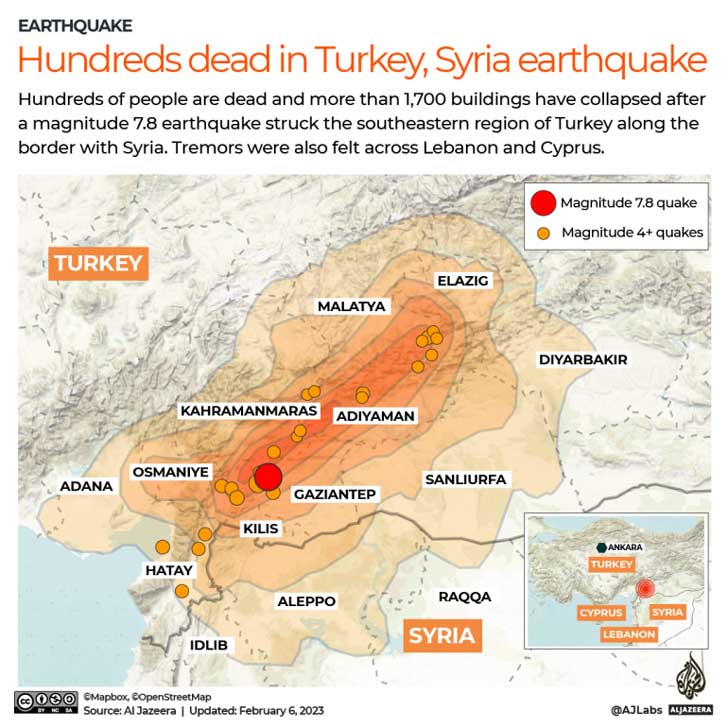
At Good Good Good, our mission is to help readers feel more hopeful and do more good. We’re actively working to compile a list of the best action steps you can take to make a difference for earthquake victims in Turkey and Syria.
We’ve also created an article dubbed ‘Hope in the Heartbreak: How To Respond To Tragic News & Events’ — which dives into our recommended process for processing bad news:
- Mourn — It’s okay to mourn and feel a true sense of empathy around the heartbreak.
- Look for the Helpers — Mister Rogers reminds us that there is good news out there, if only we can seek it out.
- Take Action — When we take action, it makes a difference in the lives of others and reminds us that we are not powerless.
Take a moment to process the news, then read on to celebrate the organizations and individuals making a difference, then, if you’re able, get involved and make a difference.
How to help the victims of the earthquake in Turkey and Syria
Donate
The International Blue Crescent Relief and Development Foundation
Great for: Specialized disaster response in conflict zones
The International Blue Crescent Relief and Development Foundation (IBC) is a relief organization that has had “Special Consultative Status” with the Economic and Social Council of the United Nations since 2006. They have a long track record of providing emergency relief after natural disasters and in conflict zones.
According to IBC, the organization has already begun relief efforts in the cities of Gaziantep, responding to Gaziantep and Kahramanmaras, the epicenter of the disaster; Hatay, where significant damage has been reported; Kilis, serving Northern Syria; and Diyarbakir, Malatya, and Sanliurfa.
They say their most urgent needs at this moment are:
- Tents
- Heaters for the tents
- Tens of thousands of blankets
- Thermal clothing
- Ready-to-eat food
- Basic first-aid kits
You can learn more about IBC’s emergency response efforts and make a donation on the Global Giving website.
The Union of Medical Care and Relief Organisations
Great for: Emergency medical support
Since 2012, the Union of Medical Care and Relief Organisations (UOSSM) has provided emergency medical relief and healthcare services to Syrians (inside Syria and in neighboring Turkey as refugees) who have been affected by the war and humanitarian crises in Syria.
UOSSM plans to provide shelter, medical aid, food, and sources for heat in the short-term, and to continue their efforts in the region long-term.
You can learn more about UOSSM’s emergency response efforts and make a donation at their website.
Mercy Corps
Great for: Clean water, sanitation, and hygiene support
As you’re reading this, Mercy Corps is already responding in the region where this tragedy happened. The organization has a long track record of providing aid and support in the region, having worked in Syria since 2008 providing things like food, water, shelter, sanitation, and other assistance to displaced Syrians.
In response to the earthquake, Mercy Corps is meeting immediate needs for clean water, sanitation, and hygiene support.
You can donate to support their efforts via their website.
CARE
Great for: Food and shelter from winter weather
For 75 years, CARE has provided aid to some of the world’s most vulnerable people. Alongside their partners, they work in 111 countries, impacting more than 174 million people around the world through 1,600 projects.
A key piece of their humanitarian work is crisis and disaster response ensuring the essential needs of people impacted are met.
Immediately following the news of the earthquake, CARE jumped into action to rush emergency aid including food, shelter, hygiene kits, warm weather supplies, and cash assistance.
You can help them provide these essential needs with a donation at Care.org.
The White Helmets
Great for: Grassroots Syrian emergency response
The White Helmets is a grassroots volunteer group that activates immediately in risky situations, especially during conflict, saving over 100,000 lives over the past five years. Named for their noticeable white helmets, this group rescues folks from rubble, fixes electrical grids, clears roads, and even removes unexploded weapons from civilian areas.
This earthquake is no exception.
The three-time Nobel Peace Prize-nominated team is once again mobilizing with life-saving support. Donate what you can via the group’s website.
IHH Humanitarian Relief Foundation
Great for: Emergency food bundles, support for Syria’s refugee camps
A Turkish NGO that has long provided humanitarian relief in the face of war, conflict, hunger, and climate disasters, the IHH Humanitarian Relief Foundation is currently preparing and distributing emergency food bundles and serving hot soup from its mobile kitchen for those affected by the earthquake.
IHH donations will go to immediate humanitarian relief, especially as cold weather impacts rescue activities. You can make a donation via their website.
Turkish Red Crescent
Great for: First aid and social services
The Turkish Red Crescent is part of the International Red Cross and International Red Crescent, delivering emergency aid and social services in times of conflict and crisis.
As of early in the morning on February 6, the Turkish Red Crescent has directed its support to five mobile kitchens, and 71 catering vehicles, 38 emergency response vehicles, and has distributed over 1,100 tents, and nearly 18,000 blankets. to help the team of staff and volunteers keep up the momentum.
Syrian American Medical Society
Great for: Emergency medical support
The Syrian American Medical Society (SAMS) is a medical relief organization working on the front lines of crisis relief in Syria — and has quickly stepped into action following the earthquake.
According to a press release, SAMS has evacuated two hospitals and transferred patients to protect them from the damage caused by the earthquake. While SAMS doctors continue to provide emergency medical care, they are overwhelmed with patients and have an immediate need for trauma supplies and a comprehensive emergency response from its partners.
You can make a donation via their website.
Save The Children
Great for: Emergency response for children
Quick to respond in crisis, Save The Children supports the most at-risk group: children. Already on the ground, Save The Children is helping affected communities with emergency kits, including blankets and winter clothing.
You can donate to The Children’s Emergency Fund via their website.
Advocate
Call for government aid
Hospitals and medical facilities in Turkey and Syria are already overwhelmed (and were struggling before the earthquake) and will need support to continue to function and save lives during this crisis.
UOSSM is calling on world governments to release funds to respond to this tragedy.
U.S. Senator Chris Murphy says, “The United States stands ready to help in the rescue efforts.”
You can help ensure that funds are released quickly and effectively by calling your elected leaders and telling them this is important to you. This is valuable and important even after a decision has been made to provide funding and support, as it encourages leaders to react quickly for future tragedies.
Follow our guide on how to call your elected officials.
Donate blood
According to Daily Sabah, in January, blood reserves in Turkey had already fallen below the minimum level of 50,000, to only 35,000 units. If you’re in Turkey, you can donate blood with the Turkish Red Crescent.
If you’re based in other locations around the world, you can donate blood through the International Federation of Red Cross and Red Crescent.
Stay Informed
Consume local news
Stick with reliable sources about the earthquake — which includes local news outlets.
- A News is a world news outlet based in Turkey, providing live updates from Syria and Turkey — as well as international aid efforts.
- Daily Sabah is a Turkish publication providing nationwide and international coverage.
Visit reputable and reliable global news sources
We know it can be hard to stay informed and to consume the news intentionally in times of crisis. One way to do this is to choose reliable global news sources to trust for big-picture updates.
- The BBC is a great source to find ongoing coverage of the earthquake.
- Al-Jazeera shares timed updates by the hour (and sometimes, by the minute) of global events and crises.
Read and share good news
At Good Good Good, when crisis strikes, we help readers “look for the helpers.” In addition to the emergency responses from nonprofits and organizations listed above, here are a few glimpses of hope within the heartbreak:
- Israel is sending humanitarian aid to the disaster epicenter, including to Syria: its old enemy
- Several more countries and governing bodies are stepping up to help, including: China, the EU, Germany, Greece, India, Iran, Italy, NATO, Norway, Poland, Qatar, Spain, Russia, Ukraine, the UN, the UK, the U.S., and the W.H.O.
- Watch this video of a recovery worker rescuing a young girl
- Consider sharing this article with others on social media or via email.
This is a developing story — we will continue to update this article as we have more information
You might also like:
- The best humanitarian quotes from famous world-changers
- How to help the victims of the Monterey Park Lunar New Year Shooting
In disasters like the 7.6 magnitude earthquake and 7.5-magnitude aftershock that struck Syria and Turkey on February 6, 2023, international cooperation on satellite imaging plays a crucial role in the rescue and recovery efforts.
Such data enables humanitarian aid to better deliver water and food by mapping the condition of roads, bridges, buildings, and – most crucially – identifying populations trying to escape potential aftershocks by gathering in stadiums or other open spaces.
Related: How To Help Earthquake Victims in Syria and Turkey

To quickly turn the eyes of satellites toward the affected areas, the Turkish Disaster and Emergency Management Authority (AFAD) requested the activation of the international charter on “Space and Major Disasters” at 4:04 a.m. local time. The United Nations did so for Syria at 11:29 local time.
In the meantime, 11 space agencies got ready to operate the most appropriate optical and radar satellites. For France, these are the optical satellites Spot, Pléaides and Pléiades Neo (medium, high and very high resolution), which will provide the first images as they pass over the area. Radar satellites will complement the optical information, as they also operate at night and through clouds, and can image landslides and even very small changes in altitude.
Every year, millions of people around the world are affected by disasters, whether natural (cyclone, tornado, typhoon, earthquake, landslide, volcanic eruption, tsunami, flood, forest fire, etc.) or man-made (oil pollution, industrial explosions, and more).
Unfortunately, the intensity and frequency of these disasters are increasing with climate change, creating more and more victims, damaged homes, and devastated landscapes.
Anatomy of a disaster
The international charter on “Space and Major Disasters” defines a disaster as a large-scale, sudden, unique and uncontrolled event, resulting in loss of life or damage to property and the environment, and requiring urgent action to acquire and provide data.
The charter was created by the National Space Research Centre and the European Space Agency in 1999, soon joined by the Canadian Space Agency.
Today, 17 member space agencies have joined forces to provide free satellite imagery as quickly as possible over the disaster area.
Since 2000, the charter has been activated 797 times in more than 154 countries. It has since been complemented by similar initiatives from Europe (Copernicus Emergency) and Asia (Sentinel Asia).
Almost three quarters of the activations of the charter are due to weather phenomena: storms, hurricanes and especially floods, which alone account for half of the activations.
In these sometimes unforeseen crisis situations, when the ground is damaged or flooded and roads are impassable, land-based resources are not always able to analyse the extent of the disaster and organise relief and humanitarian aid in the best possible way.
By capturing the situation from space, with very high resolution, satellites provide crucial information quickly.
In some cases, the charter cannot be activated. This can be because the subject matter is outside the scope of the charter (wars and armed conflicts) or because space imagery is sometimes of little interest (in the case of heat waves and epidemics), or because the phenomenon evolves slowly and over a long time span (droughts).
Satellite data in response to crises around the world
As soon as a disaster occurs, satellites are programmed to quickly acquire images over the affected areas. More than 60 satellites, optical or radar, can be mobilised at any given time.
Depending on the type of disaster, different satellites will be mobilised, based on pre-established crisis plans – among them: TerraSAR-X/Tandem-X, QuickBird-2, Radarsat, Landsat-7/8, SPOT, Pleiades, Sentinel-2 among others.

Optical images are similar to photos seen from space, but radar images can be more difficult to interpret by non-experts. So following the disaster, satellite information is reworked to make it easier to understand.
For example, the images are transformed into impact or change maps for rescue workers, flood alert maps for the public, and mapping of burnt or flooded areas with damage estimates for decision-makers.
Collaborative work between field users and satellite operators is essential. Progress has been made thanks to innovations in Earth observation technologies (notably the performance of optical resolutions – from 50 to 20 metres and now 30 centimetres) and 3D data processing software, but also thanks to the development of digital tools that can couple satellite and in situ data.
The needs of the field have also contributed to the evolution of the charter’s intervention processes in terms of delivery time and quality of the products delivered.
Reconstruction after disasters
Emergency management is of course essential, but it is equally vital for all affected countries to consider reconstruction and the future. Indeed, the “risk cycle” posits that reconstruction, resilience and risk prevention all play an important role in the return to normality.
While disasters cannot be predicted, they can be better prepared for, especially in countries where they are recurrent. For example, residents could benefit from earthquake-resistant construction, the creation of safe gathering places or relocating to living areas to safe locations. Learning survival skills is also crucial.
Several initiatives, called “reconstruction observatories”, have been carried out after major disasters – two examples are Haiti in 2021 and in Beirut after the 2019 port explosion.
The aim is to coordinate satellite images to enable a detailed and dynamic assessment of damage to buildings, roads, farms, forests and more in the most affected areas, to monitor reconstruction planning, to reduce risks and to monitor changes over a three- to four-year time horizon.
This article was originally published in French

We live in a car-centric society. According to the Ascent, a finance and investing blog by Motley Fool, over 22% of American households have three or more cars. Many of us need a reliable vehicle to get us where we need to be — but our cars are not cutting it.
A typical passenger vehicle emits 4.6 metric tons of carbon dioxide per year, according to the EPA, and while purchasing an electric or hybrid vehicle is becoming more accessible, most of us can’t just surrender our 2003 Toyota to buy a new car in the name of climate activism.
Additionally, many city infrastructures in the U.S. are not built with public transit in mind. (Check out our rankings of the cities that are.) It’s frustrating, and it keeps us in a cycle of paying outrageous gas prices, harming the environment, and still sitting in traffic.
Whether your motivation is to save money (and according to The Discourse, going car-free saves us all money — see below), to take better care of the planet, or to simply get moving, it’s actually easier than you might think to get around without a vehicle.

If you’re ready to take a few small steps towards reducing your transportation footprint — or you’re ready to ditch your car entirely — here are some options to get you moving in the right direction.
The Best Ways To Get Around Without Owning a Car —
Carpool
Bring your bestie to work! (Or to the bar, or to the park, or anywhere).
No, really, if you live or work close to a friend, consider carpooling around town. You can take turns, contribute to gas or car payments, and have a sing-along on your way to work. Plus, it saves you time, money — and emissions.
Take public transit

While many cities have outdated or inadequate public transportation options, some really are quite robust. Just because you’ve never taken the city bus before doesn’t mean it isn’t a solid option.
Look into getting a bus pass, riding a streetcar, planning your subway or train commute, or even using a city bike. Many cities also offer discounted or free transportation fares for students, veterans, seniors, and children.
Cycle

We know this one’s tough if the weather is unpredictable in your area, or if there aren’t safe bike lanes or sidewalks in your neighborhood.
However, on days you can bike to your destination, by all means, go for it. Even if you don’t have a bike or don’t know how to ride one, you can check out a local bike shop or community cycling program to learn more and get comfortable behind the handlebars.
Walk
Honestly, is there anything better than a brisk walk? Even if you live in an area with unpredictable weather, consider bundling up, getting a durable umbrella, or lacing up your hiking boots to walk to your next destination.
Jog
This one might be more of an acquired taste, but if you like to run recreationally (or heck, competitively!), you might consider throwing your sneakers on as a mode of transportation, too. Just don’t blame us if you show up to work a little sweaty in July.
Ride-share

Lyft, Uber, and other ride-sharing apps are a great way to get where you’re going when you don’t have a car. While fees and tips do add up, there are a number of incentives for discounts and perks (like travel miles with airlines!). If you want to plan ahead, you can also take a peek at fare estimates specific to your location.
Bonus points if you can carpool with a ride-share journey and split the cost among friends or strangers!
Taxi

Take a taxi: the OG Uber. Whether you’re a city slicker who is a pro at hailing a cab, or you’re more of a suburban dweller who is more prepared to call a car, either option is another way to get around without your own immediate transportation.
Scooter
Electric scooter brands like Lime, Spin, and Bird have appeared from coast to coast. Take advantage of these for-rent scooters and ride them from place to place.
Be sure to download the app of choice, have your payment method ready, stick to the assigned route of the scooter, and practice safety!
Get an electric bike
If you’re ready to bike across town but don’t want to break a sweat, you might opt for an electric bike. While this is more of an investment, it’s an eco-friendly switch that could save you a lot of cha-ching in the long run.
In fact, Austin, Texas is now doubling rebates for electric bike owners. (Friendly reminder to see if your local government has incentives for green transportation, too!)
Plus: Studies show that electric bikes are 21% more fun than pedal bikes.
Bike-share
If you’re not ready to take the leap of buying your own e-bike, you can likely find some for rent in your city. Bike-sharing options like Lime and Divvy are available in most major cities, and some places have local options, too. A quick Google search should get you where you’re going in no time!
In fact, you might even be able to check out a bike-sharing pass as a unique offering from your local library.
Rent a car for the day

If you have a longer journey on your agenda or need to get somewhere quickly, you can definitely rent a car. A myriad of options are available for car rental companies, and you won’t have to worry about the regular maintenance and upkeep of a vehicle of your own.
Rent a car for the hour
You can also rent a car just for an hour or two! Check out car-sharing services like Zipcar, Free2move, or Getaround. Perfect for running an errand here or there!
Car-share
Car-sharing is a lot like renting a car, but can be a more consistent method of transportation with less of the hassle. Using services like Zipcar, you can simply upload your driver’s license, get approved, and drive on demand. In most cases, you can pick up a car in one location and drop it off easily in another, all using a monthly membership and hourly rate.
Turo is another great car-sharing option, similar to Airbnb. Find a car, select a protection plan, book your trip, and borrow a car from a host near you.
Rollerblade
Strap on your blades, velcro your elbow pads, secure your helmet, and hit the road! Rollerblading or rollerskating is another fun (albeit high-energy) mode of transportation.
Skateboard

Avril Lavigne said it best: “See ya later, boy.” Even if you wouldn’t categorize yourself as a Sk8r Boi, if you have a skateboard, longboard, or penny board, you can move through your area quickly and enjoy your surroundings while you’re at it.
Move to a bigger city
If you’re set on changing your transportation lifestyle and have the means, consider moving to a bigger city. Of course, this option isn’t for everyone, but places like New York City, Chicago, or Portland have robust public transit options.
By moving to a place that prioritizes and funds these services — or has a great culture of cycling and strong urban infrastructure — you’ll be much more likely to embrace a car-free life.
Move to a small town
Conversely, small towns can also be a more viable option for navigating life without a car. For folks who grew up in a small town, it’s common to see folks walking just about anywhere — commuting to work, or even carrying groceries down the block.
Utilize delivery services
If you’re not someone who can easily carry your groceries up the neighborhood hills or from bus stop to bus stop, you can utilize delivery services for almost anything these days.
From food to dry cleaning (or even asking a friend to pick up something on their way home), delivery services are definitely an option for those little errands many of us rely on our cars to complete.
Although there are usually fees associated with these services (and you should definitely tip well!), they pale in comparison to the fees of owning and maintaining a car.
Make your voice heard
Are many of these options still not accessible for you? We understand. Anything from poor accommodations for people with disabilities, to a lack of investment in city buses or bike lanes can prevent folks from being able to move about town.
As nonprofit Mode Shift Omaha says: “Everyone should have a choice in how they get around, no matter who they are.”
Start by speaking with your city council or mayor, getting involved with a transportation equity initiative in your community, or even by using bike lanes, paths, or public transit more frequently to show your elected officials that alternative modes of transportation are indeed needed and utilized.
A version of this article was originally published in The 2023 Environment Edition of the Goodnewspaper.
Get your own Goodnewspaper by becoming a good news subscriber today.