Many people associate a fresh snowfall with pleasures like hot chocolate and winter sports. But for city dwellers, it can also mean caked-on salt that sticks to shoes, clothing hems, and cars.
That’s because as soon as the mercury dips below freezing and precipitation is in the forecast, local governments start spreading de-icing salts to keep roads from freezing over.
These salts are typically a less-refined form of table salt, or sodium chloride, but can also include other compounds, such as magnesium chloride and potassium chloride. They work by lowering the freezing point of water.
De-icing salts also do extensive damage to autos, infrastructure, and the environment. And cities use them in enormous quantities — nearly 20 million tons per year in the U.S. Snowbelt cities in Canada, Europe, and Japan also use de-icing salts heavily.
But new options are in the works. I am a materials scientist seeking solutions for our overly salted sidewalks by analyzing ways in which the natural world deals with ice.
Fish, insects, and even some plants have learned to adapt to cold climates over hundreds of thousands of years by making their own antifreeze agents to survive subfreezing temperatures.
By taking a page from nature, my colleagues and I hope to develop effective but more benign antifreeze compounds.
Harmful impacts of salt
As many drivers know too well, road salt reduces cars’ lives by speeding up the rusting process. A 2010 study estimated that the use of de-icing salts costs U.S. drivers US$23.4 billion dollars nationwide yearly in vehicle damage due to corrosion.
Road salts also damage the surfaces we drive on. They contain chlorine ions — atoms with a negative charge — that alter the chemistry of water and make it more corrosive when it comes in contact with materials like concrete and steel.
As a result, road salts increase existing strains on aging structures. De-icing salts have contributed to bridge failures and cause cracking and other forms of weathering in highway surfaces.
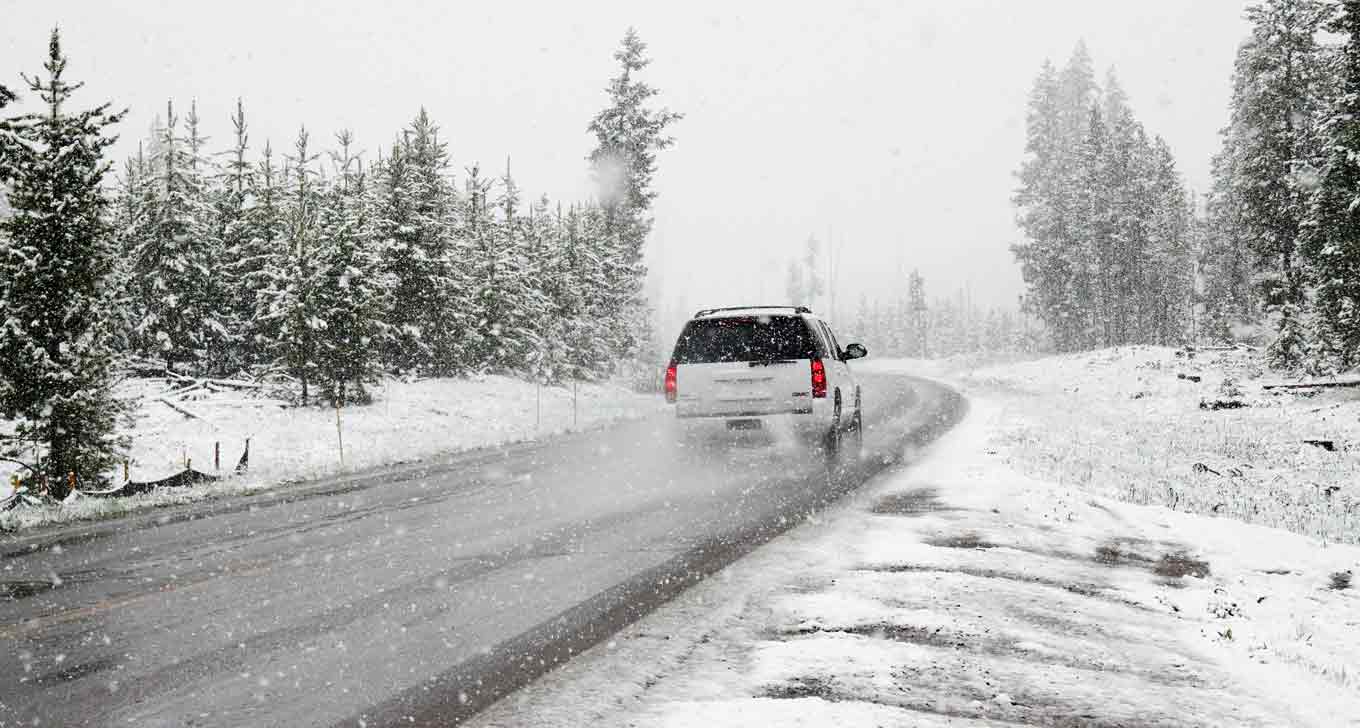
De-icing salts have widespread effects in nature too. If you drive along a forested road after a long snowy winter, you may notice that trees next to the road look a little more brown than the others.
That’s because road salts displace minerals in soil and groundwater, creating a condition known as physiological drought.
This means that trees cannot take up water through their roots even if it is freely available in the soil. When natural drought conditions already exist, in such places as Colorado, physiological drought can increase the risk of wildfires by making plants more prone to ignition.
Streams, rivers, and lakes are especially vulnerable to water runoff that contains de-icing salts. Chlorine from the salt can inhibit fish from spawning and reduce dissolved oxygen levels in the water, which harms fish and other aquatic life.
Salt-laden runoff can also promote the growth of dangerous cyanobacteria, also known as blue-green algae. Some forms of blue-green algae produce toxins that can sicken humans or animals that consume them in drinking water.
Natural antifreezes
An alternative de-icing option should be nontoxic and break down into benign components – but not too quickly, or its effects won’t last. To see why this is important, consider propylene glycol, which is used to de-ice aircraft.
Propylene glycol is preferred for this purpose because it is less toxic than the ethylene glycol that keeps your car radiator from freezing up.
But propylene glycol’s effects are short-lived, so aircraft typically can wait for only a limited period between de-icing and takeoff.
This is also why propylene glycol is rarely sprayed on roadways and surfaces. Furthermore, although it is generally classified as safe for humans, it can still be deadly for aquatic life.
What about natural alternatives? Scientists have found insects and spiders in Alaska that create antifreeze proteins in their bodies that lower the freezing point of water by a few degrees. And some fish, like the Antarctic toothfish (Dissostichus mawsoni), create antifreeze glycoproteins that prevent the blood in their veins from freezing in the coldest waters on Earth.
Most of these glycoproteins are delicate structures that break down quickly in the harsh outside world. But my colleagues and I are learning how to make our own antifreeze compounds through imitation. Our first challenge is to learn how the natural versions work so we can re-create them.
While there’s still much we don’t understand, we are using advanced computer modeling to see how antifreeze proteins interact with water molecules.
Other scientists have discovered that fish antifreeze glycoproteins contain two main segments, and that certain sections are more essential than others.
Specifically, small compounds called hydroxyl groups, which consist of hydrogen and oxygen atoms, do most of the work.
These small compounds lock into place with water molecules, like a key in a lock, to prevent ice from forming. They are also part of most critical sections of the proteins that bind to the surface of any developing ice crystals and prevent them from getting bigger.
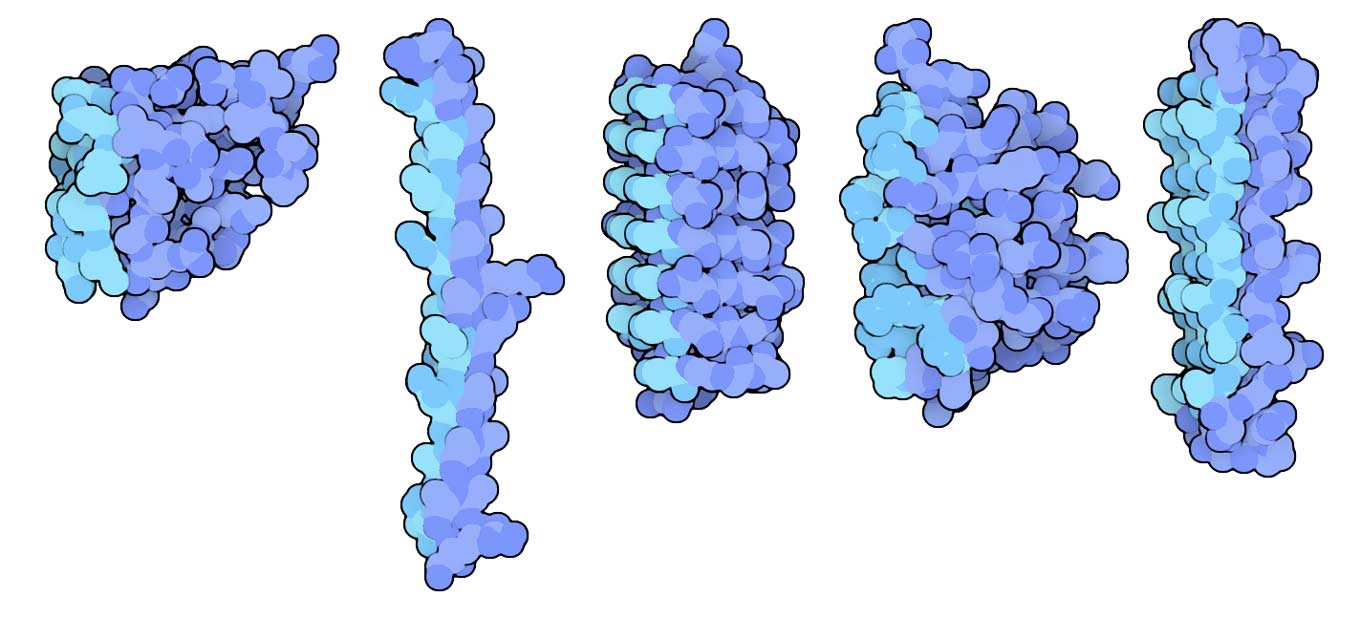
Antifreeze proteins are natural polymers – enormous long molecules consisting of smaller repeating molecules, like links in a chain.
Re-creating these compounds is no easy task, but we can create our own synthetic versions in a lab, starting with polyvinyl alcohol, or PVA.
This is a simple, inexpensive compound that is nontoxic to humans and aquatic life and is a common ingredient in many everyday personal care products.
PVA contains the same hydroxyl groups as those found in fish antifreeze proteins. Using a bit of chemical engineering, we can change where those hydroxyls are located in the polymer structure, making it more like the compounds that fish produce.
In the future, we may be able to change PVA from an everyday compound into an ice-fighting substance that can be used just about anywhere.
Because PVA doesn’t degrade too quickly, it has the potential to work on surfaces that need to stay ice-free, such as roads, sidewalks and handrails. Its long chemical structure makes it suitable for shaping and adapting into sprays or coatings.
Someday cities may rely in winter on nontoxic spray-on antifreezes that won’t stain your clothes or corrode your car.
Northern California has some of the strongest offshore winds in the U.S., with immense potential to produce clean energy. But it also has a problem. Its continental shelf drops off quickly, making building traditional wind turbines directly on the seafloor costly if not impossible.
Once water gets more than about 200 feet deep – roughly the height of an 18-story building — these “monopile” structures are pretty much out of the question.
A solution has emerged that’s being tested in several locations around the world: wind turbines that float.
In California, where drought has put pressure on the hydropower supply, the state is moving forward on a plan to develop the nation’s first floating offshore wind farms.
On Dec. 7, 2022, the federal government auctioned off five lease areas about 20 miles off the California coast to companies with plans to develop floating wind farms.
The bids were lower than recent leases off the Atlantic coast, where wind farms can be anchored to the seafloor, but still significant, together exceeding US$757 million.
So, how do floating wind farms work?
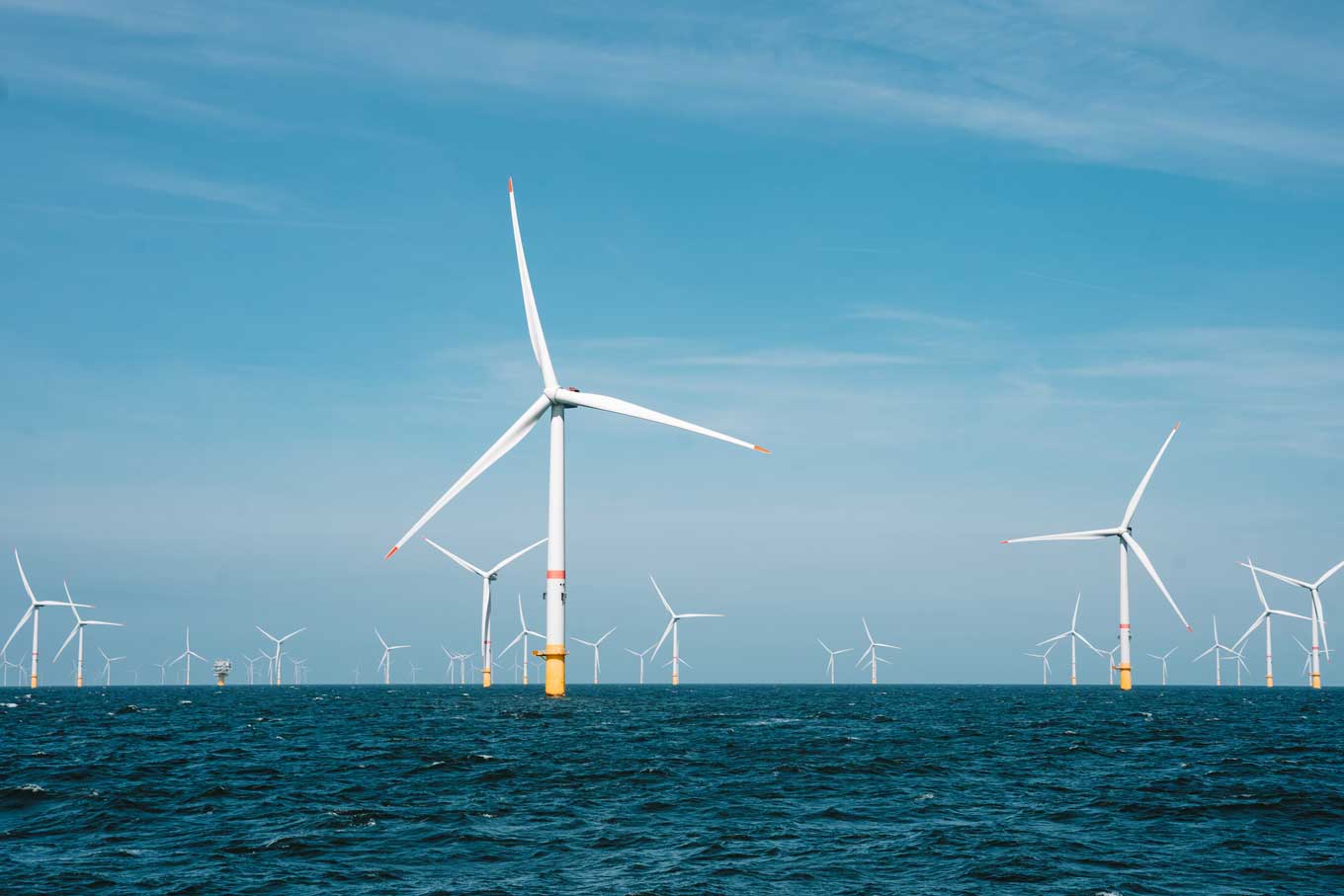
Three main ways to float a turbine
A floating wind turbine works just like other wind turbines — wind pushes on the blades, causing the rotor to turn, which drives a generator that creates electricity.
But instead of having its tower embedded directly into the ground or the seafloor, a floating wind turbine sits on a platform with mooring lines, such as chains or ropes, that connect to anchors in the seabed below.
These mooring lines hold the turbine in place against the wind and keep it connected to the cable that sends its electricity back to shore.
Most of the stability is provided by the floating platform itself. The trick is to design the platform so the turbine doesn’t tip too far in strong winds or storms.

There are three main types of platforms:
- A spar buoy platform is a long hollow cylinder that extends downward from the turbine tower. It floats vertically in deep water, weighted with ballast in the bottom of the cylinder to lower its center of gravity.
It’s then anchored in place, but with slack lines that allow it to move with the water to avoid damage. Spar buoys have been used by the oil and gas industry for years for offshore operations.
- Semisubmersible platforms have large floating hulls that spread out from the tower, also anchored to prevent drifting. Designers have been experimenting with multiple turbines on some of these hulls.
- Tension leg platforms have smaller platforms with taut lines running straight to the floor below. These are lighter but more vulnerable to earthquakes or tsunamis because they rely more on the mooring lines and anchors for stability.
Each platform must support the weight of the turbine and remain stable while the turbine operates. It can do this in part because the hollow platform, often made of large steel or concrete structures, provides buoyancy to support the turbine.
Since some can be fully assembled in port and towed out for installation, they might be far cheaper than fixed-bottom structures, which require specialty vessels for installation on site.
Floating platforms can support wind turbines that can produce 10 megawatts or more of power — that’s similar in size to other offshore wind turbines and several times larger than the capacity of a typical onshore wind turbine you might see in a field.
Why do we need floating turbines?
Some of the strongest wind resources are away from shore in locations with hundreds of feet of water below, such as off the U.S. West Coast, the Great Lakes, the Mediterranean Sea and the coast of Japan.
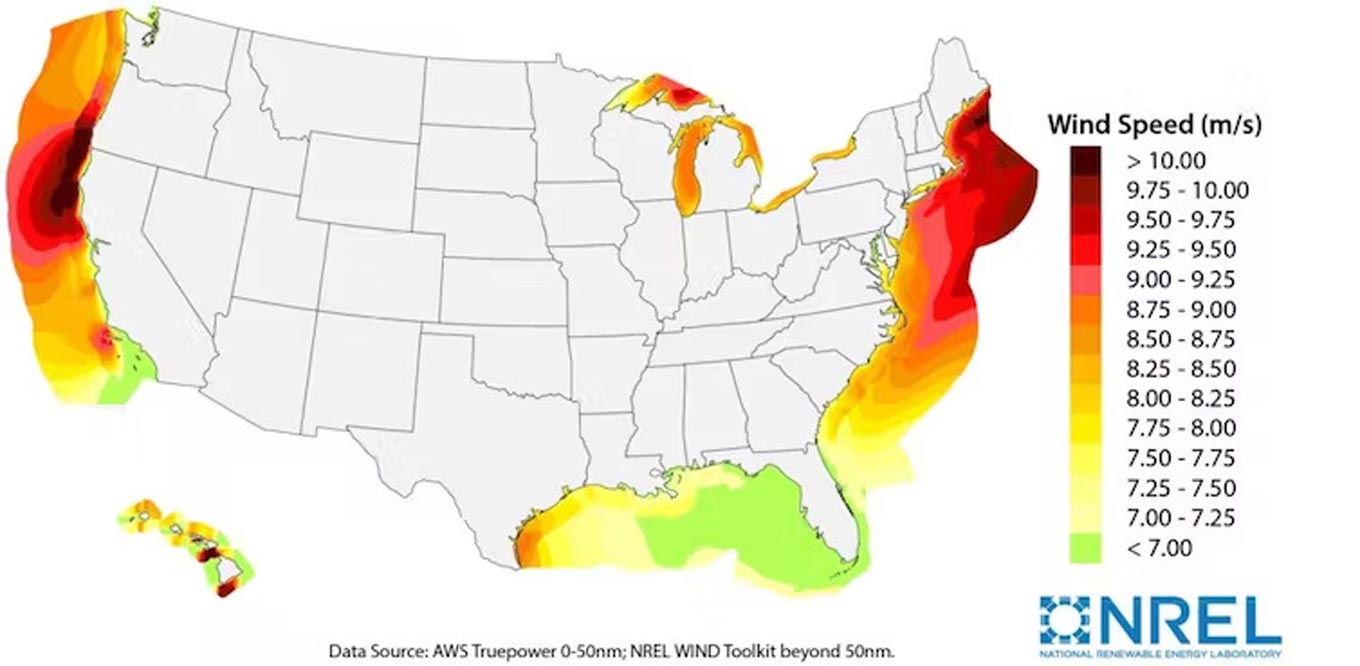
The U.S. lease areas auctioned off in early December cover about 583 square miles in two regions — one off central California’s Morro Bay and the other near the Oregon state line.
The water of California gets deep quickly, so any wind farm that is even a few miles from shore will require floating turbines.
Once built, wind farms in those five areas could provide about 4.6 gigawatts of clean electricity, enough to power 1.5 million homes, according to government estimates.
The winning companies suggested they could produce even more power.
But getting actual wind turbines on the water will take time. The winners of the lease auction will undergo a Justice Department anti-trust review and then a long planning, permitting and environmental review process that typically takes several years.


Globally, several full-scale demonstration projects with floating wind turbines are already operating in Europe and Asia.
The Hywind Scotland project became the first commercial-scale offshore floating wind farm in 2017, with five 6-megawatt turbines supported by spar buoys designed by the Norwegian energy company Equinor.
Equinor Wind US had one of the winning bids off Central California. Another winning bidder was RWE Offshore Wind Holdings. RWE operates wind farms in Europe and has three floating wind turbine demonstration projects.
The other companies involved — Copenhagen Infrastructure Partners, Invenergy and Ocean Winds — have Atlantic Coast leases or existing offshore wind farms.
While floating offshore wind farms are becoming a commercial technology, there are still technical challenges that need to be solved. The platform motion may cause higher forces on the blades and tower, and more complicated and unsteady aerodynamics.
Also, as water depths get very deep, the cost of the mooring lines, anchors and electrical cabling may become very high, so cheaper but still reliable technologies will be needed.
But we can expect to see more offshore turbines supported by floating structures in the near future.
Every day the Good Good Good team collects the best good news in the world and shares it with our community. Here are the highlights for this week!
If you want to get good news in your inbox every day, join the Goodnewsletter — the free daily newsletter designed to leave you feeling hopeful.
The Best Positive News We're Celebrating This Week —
Helping cut both emissions and car traffic, companies are incentivizing employees to commute to work by bike, train, or other sustainable means
In the U.K., a government initiative to get more people out of cars allows employees to spread out the cost of a new bike over 12 months, and save up to 40 percent since payments come directly out of salaries and aren’t taxed. Over 1.6 million from over 40,000 different employers have taken advantage of it since it first rolled out in 1999.
This is part of a wider trend and shift in how people commute, as both companies strive to reach self-imposed carbon reduction goals, and workers demand their employers become more environmentally minded.
In the U.S., Lyft implemented an employee parking fee for those who commute by car and use the money to subsidize more sustainable transportation costs for employees who didn’t drive to work.
Conservation efforts from a coalition of organizations has led to the dramatic increase of wildlife in Europe in the last 50 years
Millenia of hunting, exploitation, and habitat loss, especially in the last 500 years, drove many animals in Europe to near extinction by the 1950s, with some species completely wiped out.
Now, thanks to widespread conservation efforts by individuals, conservationists, and governments, wildlife populations are dramatically increasing — with animals like the European bison growing in population by an average of over 16,000%, and red deer by an average of 331%.
It’s an encouraging reminder that though human activity was to blame for the declining numbers in the first place — human activity can also help bring about change for the better, too.
The ozone layer is on track to be restored entirely for most of the world by 2040
Increased use of ozone-depleting chemicals — like chlorofluorocarbons (CFCs) — in the 1980s led to the rapid and alarming depletion of the ozone layer, which protects people from the sun’s harmful ultraviolet rays.
Almost as rapidly, countries around the world came together to implement the Montreal protocol in 1989, to phase out and eventually eliminate 99% of the chemicals from use.
And now, scientists say that swift action is paying off — the latest UN report has the ozone layer on track to be completely restored over much of the world by 2040, except only for the polar regions.
The depletion of the ozone layer was once the most significant crisis facing humanity — and the unified, global response “shows us what can and must be done as a matter of urgency to transition away from fossil fuels” in the face of the climate crisis.
The inventor of the Steadicam for video cameras used the technology to develop a smooth-riding wheelchair for people with low mobility
For folks with lower levels of mobility, typically their only options are walkers and wheelchairs. Seeing a need for something in between those options, inventor Garrett Brown got to work on a solution.
Brown is the inventor of the Steadicam, a lightweight, hand-held stabilizing device that gives video camera operators a steady hand when capturing shots with a lot of motion. He applied that same technology to help people with disabilities move more smoothly, too.
Brown’s customers say it’s given them freedom and autonomy, and one of his Zeen chairs was even requested by the Vatican to reportedly help Pope Francis get around more smoothly. He’s made and distributed about 100 so far.
A dog is helping detect, protect, and save Australia’s endangered koala population
Max is a dog with a nose for one thing: koala poo. Max’s trainers are part of a program researching how many koalas live on private properties in this particular region of Australia.
Max helps their efforts by finding poo on the ground, which helps the program determine both how many koalas there are, how healthy the population is, and if they’re carrying any threatening diseases.
Max’s work, and that of his trainers, is incredibly important in protecting and saving koalas in Australia as they face increasing drought and wildfires due to climate change. The area he’s searching is on higher ground and could provide safe refuge for the animals if it’s protected and conserved.
An 18-year-old just became the youngest Black mayor in U.S. history — and he wants to revive his struggling Arkansas town
Hoping for some new energy and an optimistic outlook on their struggling town, residents of Earle, Arkansas elected 18-year-old Jaylen Smith to be their new mayor.
Since the 1900s, Earle’s population has dropped nearly in half, businesses have left, a faulty drainage system floods the town each time it rains, it has no supermarket, and so on. Instead of leaving too, Smith asked “Why should I have to go somewhere else to be great when I can be great right here in Earle, Arkansas?”
Smith ran primarily on getting a supermarket back into the town, as well as tearing down dilapidated buildings, lifting the community’s morale, patching up streets, and more.
And while not everyone was convinced of his qualifications, residents were ready for his fresh ideas to get their town back to where they knew it could be.
A Central Florida town just opened a community center where a charcoal plant used to pollute a Black neighborhood
For three decades, West Ocala was home to a charcoal plant, which spewed soot all over the homes of its African American residents. And for years, resident Ruth Reed fought to have the plant closed — until it finally did in 2006.
The city purchased the property in 2018, knocked down the plant, and in its place built the Mary Sue Reid Community Center at Reed Place — named after two women who fought for the positive change, Reed and a longtime City Council member.
The new center has a gymnasium, library branch, gathering spaces, and more — and needless to say, much cleaner air.
More good news of the week —
After vanishing over a century ago, grey wolves are thriving again in California. Scientists confirmed a grey wolf pack gave birth to eight pups in the spring, a “really great sign” of the wolves’ health.
The West Point military academy is removing all Confederate symbols from its campus. Robert E. Lee was superintendent of the school before he turned on the U.S. military to command the confederate army.
The new federal spending bill includes funds to improve access to health care for Native Americans. Inadequate funding for Native Americans’ health services has been a longtime problem, so this is a much-need and celebrated addition to the bill.
Plastic pollution on Australian beaches has decreased by nearly one-third since 2013. The country implemented several different initiatives at the local level to determine which was most effective at reducing pollution.
The U.S. just approved the world’s first vaccine to help protect declining honey bees. Critical for biodiversity and conservation, humans also depend on honey bees to pollinate a large portion of our food supply.
A new bill gives long-sought water and land rights to five Native tribes in Arizona. The tribes have been working to secure these rights for years, allowing them to develop infrastructure to both conserve and transport water, and protect the sacred resource.
The U.S. Department of Agriculture extended funding to smaller-scale farmers for climate mitigation and emissions reduction. The department is now investing a total of $3 billion in climate-friendly farming, critically supporting small farmers.
A new analysis shows that wind and solar could generate more energy than nuclear and coal this year. Production is already outpacing predictions, though natural gas continues to be a primary source of energy.
Using hydrogen and UV light, scientists destroyed 95% of two kinds of toxic “forever chemicals” in 45 minutes. Chemicals like these have been widespread in waterways around the world, risking both human health and biodiversity.
3M announced it would stop making "forever chemicals" by 2025. The PFAS chemicals are found in coated takeout containers, stain-resistant furniture, and so much more, and have been found in food sources and waterways.
In response to the Taliban’s ban on women learning, universities in the U.K. are offering free courses to Afghan women. As long as they have internet access, both women and girls will be able to study more than 1,200 courses from top institutions.
A new vaccine was developed that simultaneously kills and prevents brain cancer. The unique approach both eliminates existing brain tumors and trains the immune system to prevent them from coming back.
The largest landfill solar farm project is being built in New Jersey. The farm contains 56,000 panels and is projected to power more than 4,000 households, and is an example of what the more than 10,000 closed landfills in the U.S. could also become.
Researchers in China created a device that can split seawater to produce hydrogen. Transparently, the science behind this one is a bit over our heads, but they overcame a lot of obstacles to develop a less carbon-intensive, inefficient way to produce hydrogen.
A study on long COVID cases found that the majority of patients make a full recovery within 12 months. A year is still a long time, but only about 25% of patients who develop long COVID have symptoms that last longer than a year.
There are countless awareness ribbons and it can be a bit confusing to know what each of them means. Whether you’re trying to decipher what a ribbon displayed on a bumper sticker or T-shirt means — or if you’re planning out how you can advocate for a cause that’s important to you — we’ve got your back.
At Good Good Good we’re all about celebrating the good being done in the world — and helping people make a difference in the world. And bringing awareness to important issues is a part of both of those.
We’ve put together the ultimate guide to awareness colors and their meanings. This particular guide is exclusively focused on cancer awareness ribbons and their colors — though you can explore our complete guide to every awareness ribbon color and their meanings in our other article.
Beyond awareness ribbon colors and their meanings for every form of cancer, we also included a number of causes that are associated with cancer, caused by cancer, or potentially lead to cancer.
Based on our research, this list is the most comprehensive and up-to-date list of its kind on the internet. However, it’s always worthwhile to double-check against official organizations — as symbols and colors can change over time or may vary regionally.
Cancer Awareness Ribbon Colors and Meanings —
Blue Ribbons
Blue
- Anal Cancer
- Colitis
- Colon Cancer
- Colorectal Cancer
- Crohn’s Disease
- Epstein-Barr Virus
- Familial Polyposis
- Myositis
Light Blue
- Lymphedema
- Men’s Health
- Behcet’s Disease
- Prostate Cancer
- Scleroderma
Dark Blue
- Colon Cancer
- Colorectal Cancer
Navy Blue
- Colon Cancer
- Colorectal Cancer
- Crohn’s Disease
- Mastocytosis
- Rectal Cancer
Pale Blue
- Achalasia Disease
Denim
- Hereditary & Genetic Diseases
- Jeans for Genes
Periwinkle
- Eosinophilic Disorders
- Esophageal Cancer
- Gastric Cancer
- Pulmonary Hypertension
- Small Intestine Cancer
- Stomach Cancer
Royal Blue
- Transverse Myelitis
Teal
- Cervical Cancer
- Myasthenia Gravis
- Obsessive-Ovarian Cancer
- Ovarian Cancer
- Polycystic Kidney Disease
- Polycystic Ovarian Syndrome
- Trigeminal Neuralgia
- Uterine Cancer
- Vulvar Cancer
- Metastatic Breast Cancer
Turquoise
- Dysautonomia
- Renal Cell Carcinoma
→ Explore more blue ribbon meanings in our complete guide
Purple Ribbons
Purple
- Arnold Chiari Malformation
- Chronic Pancreatitis
- Colitis
- Crohn’s Disease
- Cystic Fibrosis
- Fibromyalgia
- Fibromyalgia in Men
- Gastrointestinal Cancer
- Leiomyosarcoma
- Lupus
- Macular Degeneration
- Pancreatic Cancer
- Rett Syndrome
- Sarcoidosis
- Sjogren’s Syndrome
- Thymoma Cancer
- Thyroid Cancer
- Anal Cancer
- Bladder Cancer
Lavender
- All Cancers
- Gynecological Cancer
- Rett Syndrome
Orchid
- Testicular Cancer
Plum
- Caregivers
Violet
- Hodgkin’s Disease
- Testicular Cancer
Orange Ribbons
- Kidney Cancer
- Leukemia
- Lupus
- Melanoma
- Prader-Willi Syndrome
- Reflex Sympathetic Dystrophy Syndrome
- Spinal Cancer
→ Explore more orange ribbon meanings in our complete guide
Red Ribbons
Red
- Blood Cancers and Disorders
- Lymphoma
- Head & Neck Cancer
Pink
- Breast Cancer
- Thyroid Cancer
Maroon
- Multiple Myeloma
Peach
- Endometrial Cancer
- Uterine Cancer
- Vaginal Cancer
Burgundy
- Hereditary Hemochromatosis
- Head & Neck Cancer
- Multiple Myeloma
Amber
- Appendix Cancer
→ Explore more red ribbon meanings in our complete guide
Green Ribbons
Green
- Adrenal Cancer
- Childhood Depression
- Depression
- Kidney Cancer and Disease
- Kidney Donation
- Leukemia
- Living Organ Donation
- Neural Tube Defects
- Neurofibromatosis
- Organ Donation
- Organ Transplant
- Primary Sclerosing Cholangitis
- Von Hippel Lindau
- Anal Cancer
- Gallbladder/Bile Duct Cancer
Emerald Green
- Liver Cancer
Lime Green
- Lymphoma
- Non-Hodgkin’s Lymphoma
Mint Green
- Autosomal Recessive Polycystic Kidney Disease
- Congenital Hepatic Fibrosis
Jade
- Hepatitis B
- Liver Cancer
→ Explore more green ribbon meanings in our complete guide
Yellow Ribbons
Yellow
- Adenosarcoma
- Alternative Medicine
- Bladder Cancer
- Bone Cancer
- Ewing’s Sarcoma
- Liver Cancer
- Liver Disease
- Myxoid Liposarcoma
- Osteosarcoma
- Sarcoma
→ Explore more yellow ribbon meanings in our complete guide
Neutral Colored Ribbons
White
- Bone Cancer
- Bone Disease
- Community Support
- Osteoporosis
- Retinoblastoma
- Cervical Cancer
- Lung Cancer
→ Explore more white ribbon meanings in our complete guide
Black
- Accidents
- Grief
- Melanoma
- Mourning
- Primary Biliary Cirrhosis
→ Explore more black ribbon meanings in our complete guide
Grey
- Alpha-1 Antitrypsin Deficiency
- Brain Cancer
- Brain Tumors
→ Explore more grey ribbon meanings in our complete guide
Gold
- Alveolar Rhabdomyosarcoma
- Childhood Cancer
- Embryonal Rhabdomyosarcoma
- Neuroblastoma
- Osteosarcoma
Pearl
- Lung Cancer
- Mesothelioma
- Waldenstrom’s Macroglobulinemia
Multicolored Ribbons with Two Colors
Pink & Blue
- Male Breast Cancer
Blue & Red
- Congenital Heart Defects and Disease
- Pulmonary Fibrosis
Black & White
- Carcinoid Cancer
- Neuroendocrine Tumors
Black & White Zebra-patterned Ribbon
- Neuroendocrine Cancer
Red & White
- Head and Neck Cancer
- Oral Cancer
- Squamous Cell Carcinoma
Burgundy & Ivory
- Laryngeal Cancer
- Oral Head and Neck Cancers
- Oral Squamous Cell Carcinoma
- Pharyngeal Cancer
- Throat Cancer
Red & Yellow
- Hepatitis C
Blue & Green
- Anal Cancer
- Pseudotumor Cerebri
Purple & Green
- Anal Cancer
Teal, Green,& Pink
- Melastatic Breast Cancer
Purple, Blue, & Marigold
- Bladder Cancer
Pink & Teal
Teal, Pink, & Blue
- Thyroid Cancer
Burgundy & White
- Head & Neck Cancer
Teal & White
- Cervical Cancer
Multicolored Ribbons with Three Colors
Marigold, Blue, & Purple
- Bladder Cancer
Pink, Purple, & Teal
- Thyroid Cancer
Ribbons of Cancer, in Alphabetical Order
| Cancer | Color |
| All Cancers | Lavender |
| Achalasia Disease | Pale Blue |
| Adenosarcoma | Yellow |
| Adrenal Cancer | Green |
| Alpha-1 Antitrypsin Deficiency | Grey |
| Alveolar Rhabdomyosarcoma | Gold |
| Anal Cancer | Purple & Green |
| Appendix Cancer | Amber |
| Arnold Chiari Malformation | Purple |
| Autosomal Recessive Polycystic Kidney Disease | Mint Green |
| Behcet’s Disease | Light Blue |
| Bladder Cancer |
Purple, Blue, & Marigold
|
| Blood Cancers and Disorders | Red |
| Bone Cancer | White |
| Bone Disease | White |
| Brain Cancer | Grey |
| Brain Tumors | Grey |
| Breast Cancer | Pink |
| Carcinoid Cancer | Black & White |
| Caregivers | Plum |
| Cervical Cancer | Teal & White |
| Childhood Cancer | Gold |
| Childhood Depression | Green |
| Chronic Pancreatitis | Purple |
| Colitis | Purple |
| Colon Cancer | Navy Blue |
| Colorectal Cancer | Dark Blue |
| Community Support | White |
| Congenital Heart Defects and Disease | Blue & Red |
| Congenital Hepatic Fibrosis | Mint Green |
| Cystic Fibrosis | Purple |
| Dysautonomia | Turquoise |
| Embryonal Rhabdomyosarcoma | Gold |
| Endometrial Cancer | Peach |
| Eosinophilic Disorders | Periwinkle |
| Epstein-Barr Virus | Blue |
| Esophageal Cancer | Periwinkle |
| Ewing’s Sarcoma | Yellow |
| Familial Polyposis | Blue |
| Fibromyalgia | Purple |
| Gallbladder/Bile Duct Cancer | Green |
| Gastric Cancer | Periwinkle |
| Gastrointestinal Cancer | Purple |
| Grief | Black |
| Gynecological Cancer | Lavender |
| Head & Neck Cancer |
Burgundy & White
|
| Hepatitis B | Jade |
| Hepatitis C | Red & Yellow |
| Hereditary & Genetic Diseases | Denim |
| Hereditary Hemochromatosis | Burgundy |
| Hodgkin’s Disease | Violet |
| Jeans for Genes | Denim |
| Kidney Cancer | Orange |
| Kidney Cancer and Disease | Green |
| Kidney Donation | Green |
| Laryngeal Cancer |
Burgundy & Ivory
|
| Leiomyosarcoma | Purple |
| Leukemia | Orange |
| Liver Cancer | Emerald Green |
| Living Organ Donation | Green |
| Lung Cancer | Pearl |
| Lymphedema | Light Blue |
| Lymphoma | Lime Green |
| Macular Degeneration | Purple |
| Male Breast Cancer | Pink & Blue |
| Mastocytosis | Navy Blue |
| Melanoma | Black |
| Metastatic Breast Cancer |
Teal, Green,& Pink
|
| Men’s Health | Light Blue |
| Mesothelioma | Pearl |
| Metastatic Breast Cancer | Teal |
| Mourning | Black |
| Multiple Myeloma | Maroon |
| Myasthenia Gravis | Teal |
| Myositis | Blue |
| Myxoid Liposarcoma | Yellow |
| Neural Tube Defects | Green |
| Neuroblastoma | Gold |
| Neuroendocrine Cancer |
Black & White Zebra-patterned Ribbon
|
| Neuroendocrine Tumors | Black & White |
| Neurofibromatosis | Green |
| Non-Hodgkin’s Lymphoma | Lime Green |
| Obsessive-Ovarian Cancer | Teal |
| Oral Cancer | Red & White |
| Oral Head and Neck Cancers |
Burgundy & Ivory
|
| Oral Squamous Cell Carcinoma |
Burgundy & Ivory
|
| Organ Donation | Green |
| Organ Transplant | Green |
| Osteoporosis | White |
| Osteosarcoma | Gold |
| Ovarian Cancer | Teal |
| Pancreatic Cancer | Purple |
| Pharyngeal Cancer |
Burgundy & Ivory
|
| Polycystic Kidney Disease | Teal |
| Polycystic Ovarian Syndrome | Teal |
| Prader-Willi Syndrome | Orange |
| Previvor | Pink & Teal |
| Primary Biliary Cirrhosis | Black |
| Primary Sclerosing Cholangitis | Green |
| Prostate Cancer | Light Blue |
| Pseudotumor Cerebri | Blue & Green |
| Pulmonary Fibrosis | Blue & Red |
| Pulmonary Hypertension | Periwinkle |
| Rectal Cancer | Navy Blue |
| Reflex Sympathetic Dystrophy Syndrome | Orange |
| Renal Cell Carcinoma | Turquoise |
| Retinoblastoma | White |
| Rett Syndrome | Lavender |
| Sarcoidosis | Purple |
| Sarcoma/Bone Cancer | Yellow |
| Scleroderma | Light Blue |
| Sjogren’s Syndrome | Purple |
| Small Intestine Cancer | Periwinkle |
| Spinal Cancer | Orange |
| Squamous Cell Carcinoma | Red & White |
| Stomach Cancer | Periwinkle |
| Testicular Cancer | Orchid |
| Throat Cancer |
Burgundy & Ivory
|
| Thymoma Cancer | Purple |
| Thyroid Cancer | Purple |
| Thyroid Cancer |
Pink, Purple, & Teal
|
| Transverse Myelitis | Royal Blue |
| Trigeminal Neuralgia | Teal |
| Uterine Cancer | Peach |
| Vaginal Cancer | Peach |
| Von Hippel Lindau | Green |
| Vulvar Cancer | Teal |
| Waldenstrom’s Macroglobulinemia | Pearl |
Always make sure to double-check the ribbon color with specific nonprofits to ensure that the current ribbon color is up to date. Sometimes organizations and causes rebrand, pivot away from using ribbons, or introduce a new component to the ribbon. Some causes have several different awareness ribbon colors.
Frequently Asked Questions
What color awareness ribbon is used for all cancers?
The awareness ribbon color for all cancers is lavender — though some organizations use different variations of the color purple.
How many cancer ribbons are there?
We’ve compiled more than 150 different awareness ribbons representing different cancers and experiences related to cancer.
More ways to bring awareness to important issues:
One of the most iconic memories of the first lockdown of the pandemic is the sound of applause echoing across our cities and towns each week as the people of Britain said thank you to the NHS and all key workers doing essential work in challenging times.
That “clap for carers” reveals a lot about how we value the work done by ourselves and others. Work is not just something we do to put food on the table. It does – or at least can – mean much more than that.
Work provides many things over and above the monthly paycheck: status and identity, community and social connection, doing tasks that we find stimulating, and the opportunity to make a positive contribution to society. All of these things make work feel meaningful.
My research explores how paid work is experienced as meaningful compared to the other activities people do in their everyday lives.
I also identify the types of job in which people experience the most meaningfulness and explore how these results can be explained by the particular qualities of different occupations.
The research uses the American Time Use Survey, which collects data on how people in the US spend their time. The survey asks people not only to report what activities they did in a given day, but how meaningful they felt these activities were on a scale of 0-6.
For the average American, work is not the most meaningful thing they do in their everyday lives. In fact, it is significantly less meaningful than many other activities classified in the survey, including caring for family members and others, volunteering, sport and exercise, and religious and spiritual activities.
However, work is significantly more meaningful than shopping, housework, and leisure activities.
You might like: The Most Meaningful Jobs in America, Ranked
What jobs are the most meaningful?
This picture changes when we take into account the type of paid work that people do. People in community and social service occupations (which includes social workers, counselors, and clergy) experience the most meaningfulness in their work.
The other top-ranking occupations are: healthcare practitioner and technical occupations; education, training and library occupations; and, perhaps surprisingly to some, legal occupations.
More broadly, people working in the non-profit sector and self-employed people report significantly more meaningfulness in their work than those employed in private sector for-profit firms.

These results suggest that jobs where people have more control over their work tend to be more meaningful.
However, the type of good you produce also matters. Jobs where the main output is helping others with important aspects of their lives (for example, their health, education, or legal problems) are also the most meaningful.
I found similar results for the UK, using the Annual Population Survey and the Skills and Employment Survey. There is a significant correlation between occupations deemed worthwhile and those where there is a high level of organizational commitment.
This suggests that employees who believe in what their organization is doing and are committed to the mission of their employer are also those who find their work meaningful.
Meaningful does not always mean pleasurable
Another interesting finding from the American data is that you do not have to enjoy something to find it meaningful.
Even though their work is meaningful, people working in the health and education professions are ranked lower than average in terms of how pleasurable their work is relative to their other daily activities.
More strikingly, on this indicator for “pleasure” (which combines assessments of happiness, sadness, stress, tiredness, and pain), the legal profession is by far the lowest-ranked occupation of all. This implies that work can be difficult, stressful, or tiring but at the same time meaningful.
Nevertheless, community and social services occupations are both the most meaningful and the most pleasurable of all occupations, showing that it is possible to have the best of both worlds.
Why we clap for carers but don’t pay for them
As we emerge from the pandemic and life gets back to normal, the clap for carers will soon become a fading memory. But what have we learned about the true value of work?
In 2021, the UK government was widely criticized for offering a 1% pay rise to NHS staff in England and freezing pay for other public sector workers. The prime minister cited budgetary constraints, but maybe there are more basic laws of supply and demand at play.
When work is meaningful, then that becomes a reward in itself and generous pay offers are not prioritized to motivate people and retain staff.
In contrast, less meaningful work has no such intrinsic value, so a monetary reward is needed to get people to do these jobs.
This of course leads to the perverse situation where the most socially useful jobs are those that are paid the least. It may seem unfair but it’s the reality of how the labour market works.
The Confederated Salish and Kootenai tribes collaborated with the Montana Department of Transportation to design and build one of the largest networks of wildlife highway crossings in the U.S.
— Previously known as one of Montana’s most dangerous roads, Highway 93 was upgraded to include 42 wildlife crossings that were built based on Indigenous traditional knowledge and values.
— According to a 2015 study, animal collisions declined by 71%.
— Today, more than 22,000 animals use these wildlife crossings annually, camera traps show.
In 1989, when the Montana Department of Transportation proposed a plan to address safety concerns on Montana’s notoriously dangerous Highway 93, their answer was to expand it to five lanes. Including a passing lane, the highway would run through the entire Flathead Indian Reservation, growing by more than 90 kilometers (56 miles) across sovereign Indigenous land.
Watch the full documentary of this story:
Community tribal members raised concerns about how such a road could pose more danger, not just for wildlife, but also for children and school buses that cross the highway. The protection of wildlife is also part of a generational duty that tribes take upon themselves to maintain a healthy ecosystem and nurture the connection to their culture.
So they came up with a different plan.
“Because this was happening on a stretch of road that passed through a sovereign nation… they had this veto card in their hand to be able to say, ‘No, we’re not doing that. That’s not how we do things here,’” said Michael Jamison, campaign director of the National Parks Conservation Association.
Working in partnership with an architectural firm in Seattle, Jones & Jones, the Salish and Kootenai tribes used Indigenous knowledge provided by tribal wildlife ecologists to design safe highway crossings for wildlife and people. The plan included 42 crossings. At the end of 2000, the MDT signed a memorandum to begin working with the tribes on the improved highway.
Today, the results speak for themselves.
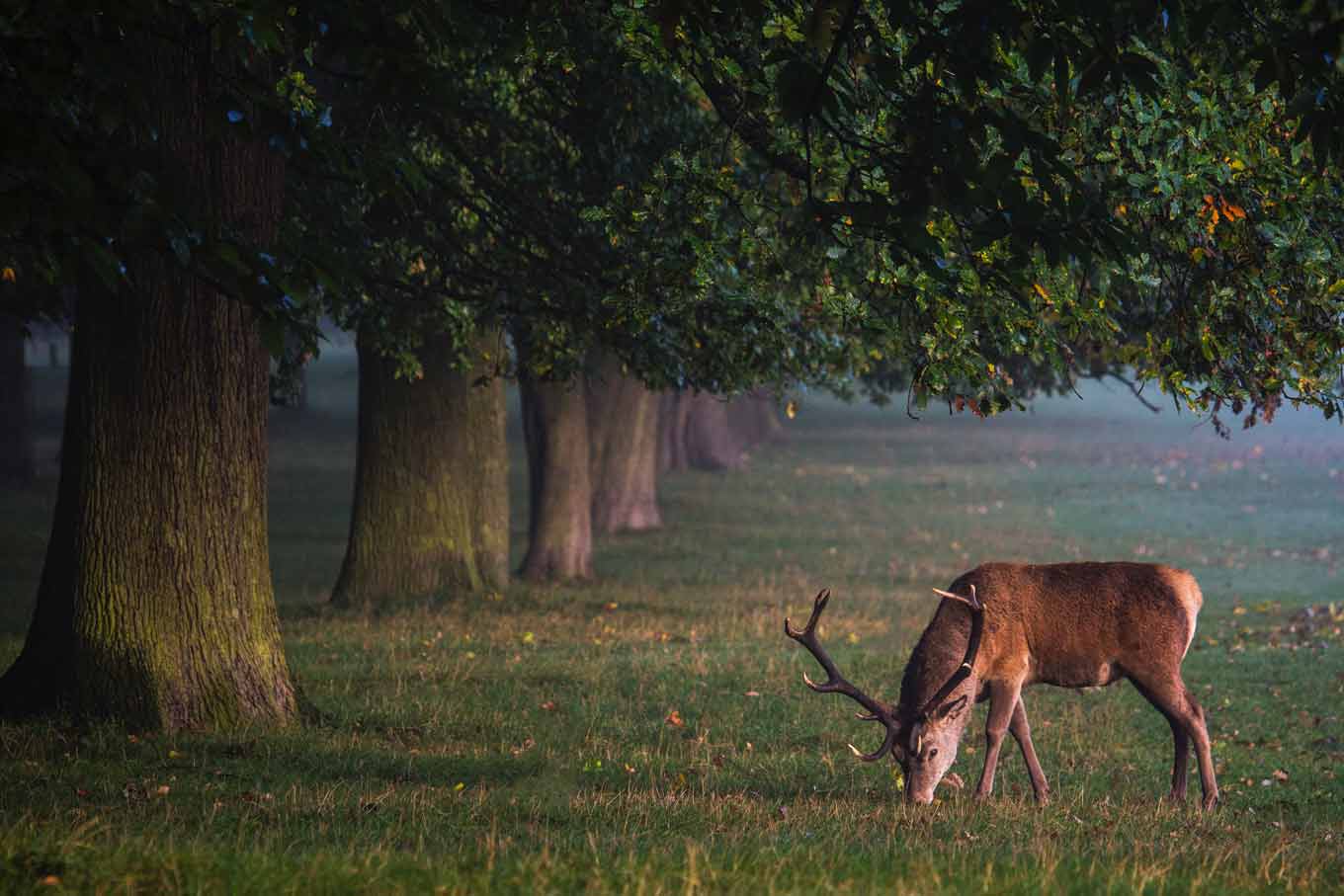
Camera traps placed along 29 crossings confirm that more than 22,000 animals use the crossings annually.
“Within two years, our tribal department and wildlife department put up cameras and saw with astonishment how much they were used by these animals,” said Tony Incashola, former director of the Selis Qlispe Culture Committee. “The fatality on the highways was reduced tremendously.”
A 2015 study found that road collisions had been reduced by 71%.
Road experts and tribal leaders interviewed by Mongabay point to highway crossings as not just a success for safety and wildlife, but for forging working relationships and practices that can be applied in tackling other challenges.
“With a bit of compromise, a bit of creativity, and a bit of extra elbow grease,” Jamison said, “you can actually solve much bigger problems that have to do with culture, meaning and values.”
Jake Poznak, co-owner of Moonrise Izakaya, a Japanese restaurant on Manhattan’s Upper West Side, could have easily been a statistic of the COVID-19 pandemic.
According to the National Restaurant Association, more than 100,000 restaurateurs across the country had to close their businesses because of the pandemic.
After the first wave, when restaurants began to reopen, the city helped restaurants build outdoor dining enclosures that take up spots on the street otherwise reserved for parked cars.
Expanded outdoor dining in the midst of the COVID-19 pandemic was a lifeline for Poznak, the business, and the vibrancy of the neighborhood.
“Without outdoor dining, we would be out of business,” Poznak says. “I was shocked that all winter, people were willing to get on the sidewalk. I have one of these street enclosures.”
Outdoor dining provided a lifeline for restaurants like Poznak’s. But consumers have come to want the sidewalk build-outs to become a permanent part of New York City’s urban landscape, rather than turning them back into street-side parking.
That appreciation is something Poznak has seen firsthand, and he says that keeping outdoor seating has a long-term value. “I intend to completely apply or to keep a tree enclosure permanently,” he says.
Poznak’s experience is indicative of how prioritizing improved walkability and pedestrian access to businesses over traffic and parking has helped many struggling businesses stay afloat. In part, that’s why cities around the country are starting to embrace an urban planning concept called the “15-Minute City.”
The 15-Minute City concept emboldens dense walkability, stating that all people should have access to all the goods and services they would need within 15 minutes of their home.
The specifics of the meaning are subject to debate, such as whether that be 15 minutes by bike or on foot. Regardless, the emphasis is on multi-modal transportation options that are more built for the person than the car.
The Roots of New Urbanism
The concept of pedestrian-centered planning has been centric to the New Urbanism movement for decades. New Urbanism advocates for more walkable cities with responsible mixed-use development — a design concept in which developers build housing, shopping, essential services, and work opportunities within close proximity, sometimes on the same properties.
These developments also typically are built around walkable streets that prioritize pedestrians over cars, but also provide easy access to public transportation.
New York is well on its way to meeting 15-Minute City standards, particularly as it comes to outdoor dining. The City Council passed a measure in the fall to make outdoor dining permanent.
The city also adopted an Open Streets concept during the pandemic, allowing streets to be closed to car traffic, giving bikers and pedestrians enough space to travel while maintaining social distance.
On April 29, the City Council voted to make the Open Streets program permanent, too.
The move exemplifies the shifting sentiment away from cars that has had a hold on every American city since the mid-20th century.
New York is the standout example for a more pandemic-induced move in this direction in the United States — following in the footsteps of Paris, where the idea of the 15-Minute City first caught on.
In the fall of 2020, Paris Mayor Anne Hidalgo centered her successful re-election campaign around becoming a 15-Minute City. She has since appointed a commissioner to lead the initiative in the sprawling but transit-friendly, walkable city.
Developing the 15-Minute City concept across the region essentially means that Paris will have several hubs rather than a single more condensed cityscape, what Parisian city officials are calling a “city of proximities.”
Much like Paris, New York is geographically spread out, but generally walkable. The Big Apple has vast transit options as a whole, but there are several pockets of the city where that is just not the case.
According to Politico, Shaun Donovan, the former Housing and Urban Development Secretary under President Obama, has taken a page out of Hidalgo’s playbook, and plans to make the 15-Minute City concept a major part of his platform in his campaign to be the city’s next mayor.
Car Country
But for New York, which is one of the most walkable cities in the United States, that does not seem far-fetched. Many of the nation’s other large cities aren’t exactly known to embrace pedestrian infrastructure over appealing to the car.
The idea that residents of America’s most sprawling metropolises would give up their cars has been seen as a pipe dream by urbanists from coast to coast.
It seems otherwise absurd to think that most residents of notoriously sprawling Houston, for example, would opt for a bus pass rather than those car keys.
It’s no surprise that for decades the car has been a symbol of personal, unencumbered freedom.
That has since changed. Teens are driving less and, in some cases, opting not to get their driver’s license at all. According to the Wall Street Journal, in 2019 only about 25% of teens obtained their driver’s license at age 16. That’s down from about 50% in 1983.
The COVID-19 pandemic has expanded the desire to move past reliance on cars for mobility far beyond those who would have otherwise been new drivers. In part, these developments have helped the concept of a 15-Minute City to pick up steam.
The pandemic has essentially given cities an opportunity to try out elements of this concept that make sense in their unique contexts.
“Cities have had to respond to the pandemic very quickly, and they have a set of tools that allow people to go outside and make better use of outdoor space,” says Rob Steuteville, senior communication adviser for The Congress For New Urbanism (CNU), a group advocating for sustainable and walkable cities. Steuteville is also the founder and executive director for the advocacy group Better Cities and Towns, a nonprofit organization that educates people about how to make cities more sustainable and livable.
Known for its almost nonexistent zoning, Houston is a city where the idea of a 15-Minute City is more of an uphill battle, but it’s far from off the table. The layout of Houston is actually fairly conducive to this.
While the city is sprawling, it has multiple urban centers, unlike most other cities. Downtown Houston, the Texas Medical Center, Uptown Houston, Greenway Plaza, and Westchase all act as concentrated urban cores with sprawling neighborhoods intertwined between them.
It’s kind of like the U.S.’s northeast corridor, with major walkable hubs like New York and Philadelphia separated by densely populated, but not exactly walkable suburbs. Except that in Houston, this phenomenon is all within the city limits.
Houston does have a history of urban planning successes, but they didn’t come easily. Urban rail, for example, has been on and off the table for decades in Houston. In 2004, the city introduced the Metrorail, which at its inception connected two large dense urban cores, the Texas Medical Center and Downtown Houston.
The red line quickly became the single most highly used light rail line in the United States. The system has since grown with an expansion of the red line, as well as two newer lines that connect with it.
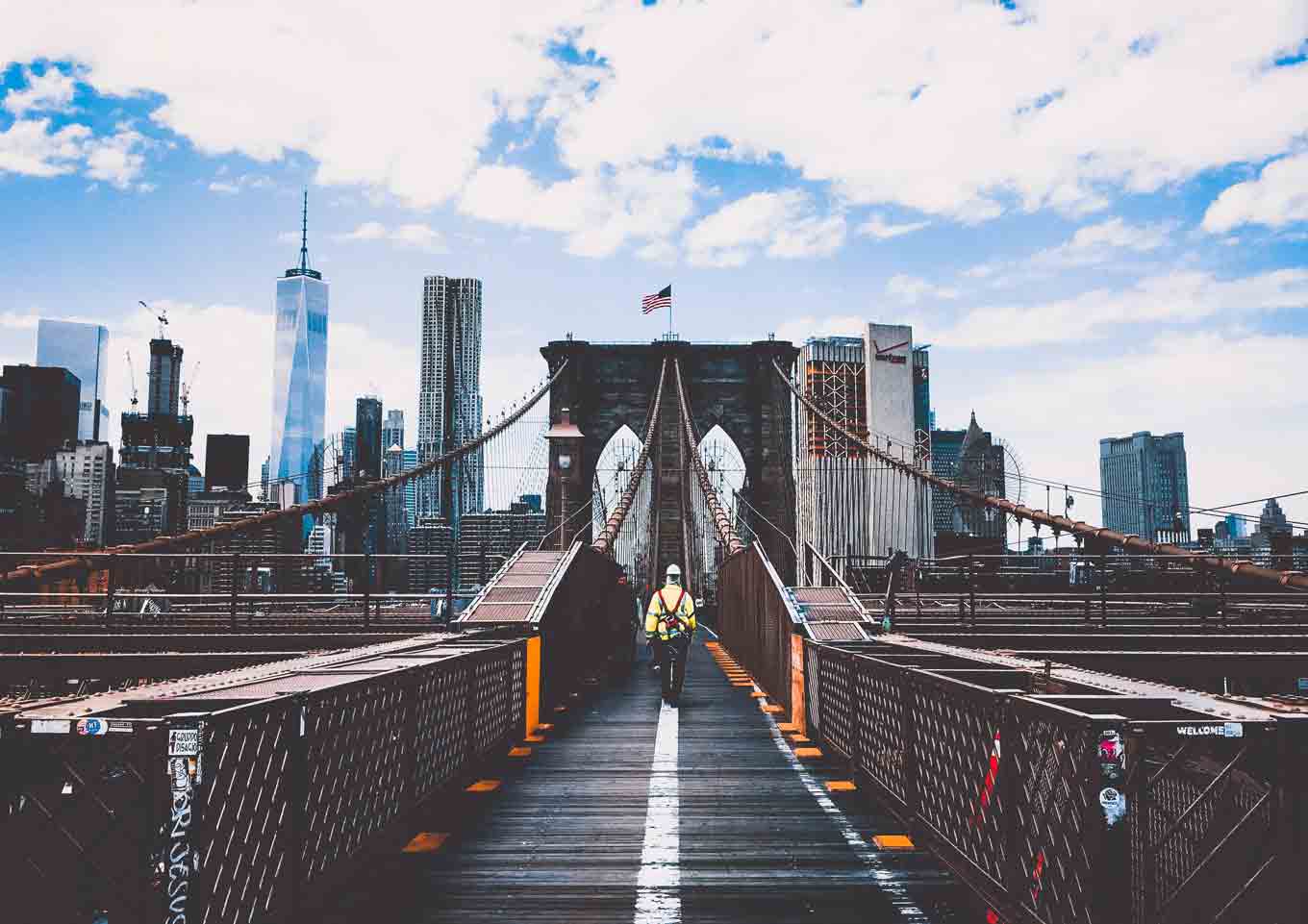
Then when the pandemic set in, Houston, like many other cities, embraced the open streets concept, at least for a short period of time.
Even in the hot and humid summers the Gulf Coast is infamous for, people were out walking and biking, transporting themselves without a car.
While the city did not renew this pilot program, the result has had a lasting effect. More Houstonians are now embracing life without a car.
According to Bloomberg News, biking has taken off in the Bayou City, as well as in other cities known for sprawl, like Los Angeles, and in the Texas cities of Austin, San Antonio, and Dallas.
“Visually you can tell that there are more people walking and biking than ever,” says Adam Greenfield, a grassroots organizer in Austin. “You go to any bike shop, and they don’t have bikes for you and they won’t have any for a while. They are low on parts, and you are going to have to wait. That’s a pretty big sign,” Greenfield says.
Throughout the pandemic, he has been deeply involved in “actual urbanism” efforts — that’s when a city’s residents embrace urbanism practices at a grassroots level, often without government help or approval.
Greenfield and other residents in Austin’s East Cesar Chavez neighborhood found old 51-gallon juice barrels and made them into makeshift bollards in the street. They painted the road to make curb extensions and even added some benches to the space.
While the city quickly asked them to remove the installation, the move invoked interest in the community to prioritize pedestrians over cars.
The city came in and removed those installations after a day, however, so the focus has shifted to having the city create a program to allow activists to create these kind of projects, Greenfield said.
Pop-Up Infrastructure
The market research firm NPD group shows that the growth in cycling is a trend, with bike purchases surged 75% in the early days of the pandemic, bringing in a staggering $1 billion in sales in the April 2020. Sales for bikes under $200 jumped by 203%.
According to a study from McKinsey, this is not a temporary move by consumers pegged to the pandemic, with two-thirds of respondents saying they will continue to walk or bike as part of their daily commute when life returns to “normal.”
Pop-up parks and outdoor cafes taking over the streets, as they are in New York City, are often referred to as “parklets.” Parklets have been considered a stable tool in the tactical urbanism playbook, and now have become a mainstay in city streets across the country.
“A lot of what you’ve seen around the country with outdoor cafes that have been put in, the pop-up parks, the streets that have been partially closed off creates more pedestrian space — that’s a big trend cities are making use of and they really needed during the pandemic,” Rob Steuteville says.
“What has been interesting is to see how much cities develop policies that were supposed to be temporary. Now mayors have shown that this was a way to test and experiment,” says Helene Chartier, Head of Zero Carbon Development for C40 Cities, a coalition of cities around the globe focused on tackling issues like climate change.
Several cities are taking action. Following New York’s move, in March 2021, San Francisco Mayor London Breed introduced legislation that would make parklets permanent fixtures in the city — a move that expands outdoor dining options and in turn facilitates more walkable neighborhoods.
Open streets concepts have also proved to be successful over the long term. In the early days of the pandemic, the city of Seattle launched its Stay Healthy Streets program, closing more than 25 miles of city streets to through traffic to give that space back to pedestrians and bikers.
In May 2020, Mayor Jenny Durkan announced that many of those closures would become permanent.
Not only do these moves improve the health and economy of American cities, but they have also allowed for social connection in a time when people have been largely isolated from each other.
“Fifteen-minute cities are not just about walking and cycling. It’s about the connection you want and a place to socialize,” Chartier adds.
Returning to a Post-Pandemic World
The next step will be to translate the growing momentum into holistic 15-Minute City policies for after the pandemic.
The mayors of cities such as New Orleans and Austin, among others, have expressed interest in adopting policies as part of the C40 Cities Climate Leadership Group.
Portland, Oregon, was the early adopter of these concepts. In 2010, the city introduced its 20-Minute Neighborhoods program — essentially the same concept as the 15-Minute City.
The program is intended to support 90% of all Portland residents with more walkable and bikeable infrastructure by 2030, and has been included in the city’s Climate Plan.
Detroit also has a plan in place. First introduced by Mayor Mike Duggan in 2016, Detroit’s 20-Minute Neighborhood concept is an effort to revitalize the city’s lower east side.
The plan calls for all residents to be within 20 minutes of transit, parks, retail, and essential services, and at least 20 minutes from “blight,” which is defined as “blighted buildings, derelict streetscapes, nor crumbling infrastructure.”
Creating a holistic policy is not as simple as expanding sidewalks, or replacing a parking lot with a park or a grocery store. Cities must reform their existing land use codes.
The Congress for New Urbanism is closely working with cities around the country to reform those codes.
“The big problem with cities are the 20th century zoning codes, parking requirements, and things that prevent people from building the housing that they need in 15-minute cities,” Steuteville says.
Intercity transportation is also gaining more attention and promises to supplement more walkable 15-minute cities (or 20-minute neighborhoods).
As part of the Biden administration’s jobs and infrastructure proposals, Amtrak is looking to expand its rail capacity.
The proposal also touts the possibility of government-funded high speed rail in the United States. However, in the narrowly divided Senate, the president’s plan faces an uphill battle getting passed.
In some regions, the private sector has stepped in, and plans are already 20th century.
In Texas, there is a project underway to connect Houston and Dallas in roughly 90 minutes: The privately owned Texas Central Railroad is planning a 240-mile high-speed line between the two cities.
It was approved by the U.S. Department of Transportation in 2020 and, according to the Texas Tribune, is expected to break ground this year.
Meanwhile Virgin Trains USA is actively involved in several rail projects around the country including possible projects in California, and Brightline plans to expand its Florida network from the Miami area to Orlando.
Transportation to and from airports also may soon be less reliant on cars. Other companies, including United Airlines, are investing in air taxi technology that would improve access to airports directly from city centers.
With local infrastructure and intercity transportation, the future urban landscape is promising to look a lot different from today.
Only time will tell, but a city built around 15-minute travel via non-motorized transportation is one that can upend the way planners think about neighborhoods and mobility, and may ultimately render cars unnecessary in all aspects of personal transportation.
This article was originally published by YES! Magazine
It’s estimated that around one billion people globally have a mental or substance use disorder.
These statistics alone — gathered by Our World in Data — in no way paint a complete picture of the realities associated with global mental health. As a result of cultural stigmas, lack of access, affordability, and discrimination, countless people are excluded from, silenced, or deterred from accepting mental health support.
With such a staggering amount of people estimated to be living with mental health conditions, it’s clear that something needs to be done.
The good news is that activists are lending their voices and experiences to create solutions. These leaders are fighting for inclusive policies, increased affordable mental health access for underserved communities, and ways to replace misconceptions with understanding.
We’ve gathered some (of the many) people who are creating safe spaces and making a difference within their communities and around the world.
Famous mental health advocates creating safe and inclusive spaces —
Jamie Tworkowski
Jamie Tworkowski’s life drastically altered in 2006 when it was discovered that his friend, Renee Yohe, was struggling with drug addiction and self-harm.
As a way to help pay for Renee’s treatment, Tworkowski posted her story on MySpace and began selling t-shirts.
Renee’s story resonated with thousands across the internet with similar stories of addiction and recovery. What followed was the birth and movement of To Write Love on Her Arms (TWLOHA), a non-profit dedicated to presenting hope and finding help for people struggling with depression, addiction, self-injury, and suicide.
Since 2006, TWLOHA has responded to over 200,000 messages from people in 100 countries and donated three million dollars to mental health treatment and recovery programs.
Tworkowski is also a New York Times bestselling author of “If You Feel Too Much” and continues his work of encouraging, informing, and investing in mental health treatment and recovery.
Taraji P. Henson
Taraji P. Henson, Golden Globe and SAG Award-winning actress known for her iconic roles in “Empire” and “Hidden Figures,” has been open about her struggles with anxiety and depression.
After struggling to find Black therapists to help herself and her family, Henson began to recognize the clear barriers blocking many within the Black community from seeking mental health support — including cost.
Henson decided to do something about it by launching the Boris Lawrence Henson Foundation — an organization named after her father, a Vietnam war veteran who suffered from mental illness.
The foundation aims to bring much-needed access to mental health resources to urban schools, reduce the recidivism rate in prisons, and increase the number of Black therapists in the field.
At the end of 2020, Henson took her work a step further by teaming up with Tracie Jade in creating a Facebook Watch Series, Peace of Mind with Taraji, centered around educating the public on mental health and ending the stigma attached to it — particularly within the Black community.
Naomi Osaka
Four-time Grand Slam champion and tennis star, Naomi Osaka, shocked fans around the world when she withdrew from the French Open in May 2021 — she was 23 years old at the time. The reason? To protect her mental health.
Her bold (yet deeply relatable) care for her well-being put a much-needed spotlight on mental health within the sports industry. In an Instagram post, Osaka shared her struggles with depression and anxiety with her fans.
“The truth is that I have suffered long bouts of depression since the U.S. Open in 2018, and I have had a really hard time coping with that,” she wrote.
Her words and struggles resonated with countless people around the world.
Today, Osaka is focusing her efforts on continually incorporating self-care into her daily routine (her go-to practices include journaling and meditation), empowering young girls through her organization Play Academy, and her new children’s book, “The Way Champs Play,” a book about celebrating girls in sports.
The Confess Project of America
Lorenzo Lewis spent most of his childhood and teen years at his aunt’s barbershop, where he soaked up the playful banter, laughter, and hushed conversations between barbers and their clients. Lewis’s intimate connection with barbershops later resurfaced in his late 20s when he worked as a juvenile case worker.
Many of the kids he worked with were Black students suffering from trauma, depression, and other mental illnesses. “Since African American boys and men had little access to therapy, why not bring therapy to them,” Lewis thought.
The solution: The Confess Project of America, a national organization training barbers and stylists to become mental health advocates. The organization is the largest nonprofit committed to building a safe space for Black boys, men, and their families to address their mental health — creating awareness and breaking stigmas within the Black community.
Since its founding in 2016, The Confess Project of America has supported over 1,900 barbers who have then gone on to reach over 2.2 million people — a year. The organization is currently in 48 cities and 28 states across the U.S., according to its site.
Barbers receive formal training around active listening, validation, stigma reduction, and communication and are also taught to recognize subtle changes in personality (like withdrawal or changes in grooming). While many provide counsel, they also direct clients to resources — like therapy, a pastor, or suicide prevention services — if needed.
“Barbershops are an institution in African American communities and known for social change agents as far back as the Civil Rights era,” Lewis shared in an interview with Today.
→ Learn more about The Confess Project
Inês Mália Sarmento
Inês Mália Sarmento is a young Portuguese artist and mental health and disability advocate fighting for inclusive global health policies.
Sarmento was one of over 200 youth advocates who joined experts and policymakers at the first annual Mental Health Week in Athens in 2022 to demand equal partnership in shaping mental health policies and services.
“I feel very privileged to be here, but I shouldn’t feel that way,” Sarmento shared in her address at the event. “I should be able to feel comfortable, and this shouldn’t be a privilege. It should be a norm.”
As a disabled and autistic person, Sarmento is continuously urging local and world leaders to create mental health systems free of stigma and discrimination. She is also a member of the Pan-European Mental Health Coalition, a group consisting of experts, activists, and representatives of international organizations.
The young mental health activist uses her voice and intersectional experience to create global visibility for long-overlooked issues facing millions worldwide.
Maggie Rose Macar
While coping with the death of a close friend to suicide, Maggie Rose Macar began to notice the barriers that existed for people like herself who were seeking affordable mental health services.
“I had such difficulty coping with the loss of my friend that I almost didn’t recognize myself,” Macar shared with Medium. “Surrounded by stigma, I must have secretly contacted 50–60 therapists through extensive online searching with only one to respond.”
Although this professional typically charged $150 per session, he went on to offer $10 sessions — simultaneously providing Macar with the space to cope and ignite her passion to address a very real gap in the mental health system.
This passion soon motivated her to create a nonprofit with the goal of normalizing asking for help and offering young people the opportunity to access affordable mental health services.
Due to the extremely high demand of people seeking accessible mental health support during the COVID-19 pandemic, Macar’s organization soon transitioned into the founding of zant., a mental health app connecting people (particularly college students) with highly-skilled specialists offering support in areas such as trauma, recovery, stress and burnout, eating disorders, and more.
The young CEO is not only creating systems for those who are traditionally excluded from receiving mental health services but doing it in the heavily male-dominated tech industry.
Macar hopes to leverage technology as a suicide prevention tool — making sure that there are no roadblocks for those who need help.
Alegra Kastens
Alegra Kastens (@obsessivelyeverafter) is a licensed marriage and family therapist, obsessive-compulsive disorder (OCD) advocate, content creator, and founder of Center for OCD, Anxiety and ED. She specializes in treating OCD, anxiety, body-focused repetitive behaviors, body dysmorphic disorder, and eating disorders.
As someone who lives with OCD, Kastens’s work to provide treatment, education, and advocacy is deeply personal. “There are misconceptions about many illnesses, but OCD seems to be one of the most misunderstood of them all,” she shared with Made of Millions.
Beyond the important work and support she provides to her clients, Kastens serves an online community of over 95 thousand followers by posting reliable research-based OCD and anxiety content. She also offers online workshops aimed at providing helpful resources for people overcoming the shame and guilt typically attached to mental health disorders.
Kasten has become a voice for those seeking to find acceptance and power over something that is all-consuming. “I understand firsthand the relentlessness of the disorder and how painfully it holds one’s life captive,” she shared.
“I also understand that relief and recovery are real with a large dose of evidence-based treatment and an equally large dose of willingness.”
At the intersection of social justice and the world of professional sports is niche sports.
But what is a niche sport? It’s a particular activity enjoyed by a very small demographic, or “niche” set of people — hence the name. There are niche sports for almost anything you can think of, ranging from table tennis to frisbee golf to bowling.
Niche sports have gradually become more and more popular — with platforms such as Twitch and Discord uniting likeminded audiences to watch and connect.
While all sports provide some degree of escapism, niche sports — and the communities around them — are unique. Because of the low exposure and the accessibility of niche sports, they aren’t as expensive to participate in.
And since fewer people are aware of them, they aren’t inundated with negativity (like trolling from extreme sports fans) and policing in the same way that large-scale, popular sports such as rugby or football are.
It isn’t surprising that niche sports have become places to champion social justice causes because of the unique communities.
According to the United States’ Quidditch Team website, quidditch is a sport “rooted in providing a safe space for people of all backgrounds to come together.” Niche sports have made advocating for and championing social justice the forefront of their activity.
In 2016, the quidditch team at the University of Massachusetts gave back to the community by teaching young children how to play the sport as a way to encourage exercise and bonding with other kids.
Michael Ferro, the president of UMass Quidditch at the time, told Amherst Wire, “[The children] had a great time and we had a blast. It’s awesome we could give back to the community and have a fun time while doing it.”
Charity is a running theme for U.S. Quidditch. When J.K. Rowling began publicly made transphobic tweets in 2020, the U.S. Quidditch league came out in public support of trans and gender-non-conforming people within their community — and worldwide.
In a statement posted on their website in June 2020, the U.S. Quidditch league said, “It is paramount that we continue to uplift and amplify the voices of trans and gender nonconforming people in quidditch.”
Quidditch teams have also advocated for the Black Lives Matter movement and issues pertaining to marginalized communities. The Major League Quidditch website encouraged donations to racial justice organizations all throughout 2020 — and they published posts on social media recognizing Juneteenth and drawing attention to Asian American and Pacific Islander Heritage Month.
But giving back isn’t just limited to quidditch. Many roller derby organizations — another niche sport — stood in support of the Black Lives Matter movement in 2020 and continue to do so today.
In particular, Providence Roller Derby released a statement acknowledging the role that whiteness had played in their sport — including the fact that “roller derby is an overwhelmingly white sport” — while also providing a list of places for people to donate to anti-racist organizations.
For niche sports like disc golf, social justice movements are important and integral. The Professional Disc Golf Association released a statement on their website acknowledging that their sport was “heavily skewed towards white men” while empathizing its commitment to expanding the game to broader communities, including Black, Indigenous, Brown, and other minorities and underrepresented folks.
Other institutions within disc golf, such as apparel provider Wander Disc Golf, pledged to donate $1 from every purchase to the organization Black Lives Matter.
Social justice causes and niche sports appear to be irrevocably entwined now, perhaps because of the small size of these sports, which makes it easier for them to push for change and advocate for important causes without being on the receiving end of vitriol and hatred, as so often happens in more well-known sports with larger followings.
Even though bigger sports institutions like the National Football League have recently come out in support of LGBTQ+ players, it hasn’t always been supportive of social justice causes.
As the world pivots to greater awareness of the issues and struggles of those within it (such as racism and ableism), niche sports lead the way to set an example of how activities can do good beyond just fun.
This article was first published in The Sports Edition of the Goodnewspaper in August of 2021. You can join thousands of people who receive a monthly Goodnewspaper by becoming a subscriber.
Black History Month is an annual celebration in the United States that recognizes the history, culture, and contributions of Black Americans every February.
The awareness holiday has been a target of President Donald Trump's rollbacks of Diversity, Equity, and Inclusion programs, making it more important than ever to intentionally show up for Black communities.
Of course, we don’t need an awareness holiday to embrace and honor Black history, but this month provides an opportunity to reconcile with the past, pave the way for a more just future, and celebrate all the amazing figures who have taken their place in the annals of Black History.
The truth is, many of us are woefully unaware of the depth, breadth, and relevance of Black history. While we still work to remind our loved ones and colleagues that the need for racial justice is as present and persistent as ever, it’s also difficult for us to comprehend just how recently so much of Black history has taken place.
While we look at black-and-white images from the Civil Rights Movement like a long-lost period in American history, we must remember that some of our parents and grandparents watched these events unfold — only a single century after the abolition of slavery in the United States.
In fact, It wasn’t until 1976 that Black History Month was officially recognized. So, it’s safe to say we have a lot of work to do — as a society, and as individuals.
By the way, some of the links in this article (like books!) are affiliate links, which means if you make a purchase after clicking a link, we may earn a commission at no extra cost to you. Thank you!
While it’s important to learn more about and uplift the experiences of Black folks every single day, it’s helpful to have somewhere to start. We’ve created a guide on how to thoughtfully honor Black History Month this year:
Activities & Ideas to Honor Black History Month
Learn
Watch a documentary about the Black experience.
Here are a few films for recommended viewing this month:
- Summer of Soul (Hulu)
- Let The World See (Hulu)
- The 1619 Project (Hulu)
- The Loving Story (Max)
- Freedom Riders (PBS)
- 13th (Netflix)
- Who Killed Malcolm X? (Netflix)
- Is That Black Enough For You? (Netflix)
Add some new podcasts to your queue.
While there are countless amazing podcasts by Black producers and creators, here are a few that stand out for Black History Month listening:
- Historically Black
- 1619
- Black History Buff
- Noire Histoir
- Witness Black History
- Code Switch
- Seizing Freedom
Read books written by Black authors.
Whether you want to continue your anti-racism syllabus, enjoy the classic poetry and prose of Audre Lorde, or you’re looking for a new novel, add some Black writers to the top of your reading list ASAP.
As always, here are a few speedy suggestions to get you started:
- “Four Hundred Souls: A Community History of African America, 1619-2019” by Ibram X. Kendi and Keisha N. Blain
- “Rest Is Resistance: A Manifesto” by Tricia Hersey
- “Sister Outsider: Essays and Speeches” by Audre Lorde
- “Grand Union: Stories” by Zadie Smith
- “All about Love: New Visions” by bell hooks
- “Bad Feminist” by Roxane Gay
- “Call Us What We Carry: Poems” by Amanda Gorman
- “Hitting a Straight Lick with a Crooked Stick: Stories from the Harlem Renaissance” by Zora Neale Hurston
- “Carry on: Reflections for a New Generation” by John Lewis
- "Parable of the Sower" by Octavia E. Butler
- "Let This Radicalize You: Organizing and the Revolution of Reciprocal Care" by Kelly Hayes and Mariame Kaba
Pick a handful of Black leaders throughout history and learn more about them.
While we’re always in favor of learning more about folks like Rosa Parks, Martin Luther King Jr., or Malcolm X, we urge you to spend some time this Black History Month learning about lesser-known helpers in history.
Some options could include Claudette Colvin, another activist who refused to give up her seat to a white passenger on a bus; Shirley Chisholm, the first Black congresswoman in America; or Bayard Rustin, a close advisor to Martin Luther King Jr. and a leader in both civil and gay rights.
Visit a Black or African history museum.
Nearly every major city has its own Black history museum or historical site. Even if you can’t find one near you, perhaps there’s a local museum that hosts a collection of Black history archives during the month of February. Make it a priority to visit one of these spots and learn more about Black history on a local scale.
Another great option is to check out the Black History 101 Mobile Museum, which has toured the country with a diverse, interactive exhibition for 30 years.
Take a virtual museum tour.
If you can’t make it out to a museum, look no further than the virtual information hubs from the National Museum of African American History and Culture. The museum hosts a virtual Searchable Museum, where you can explore a number of exhibitions and stories — all from the comfort of your own home.
Explore Black history archives.
There is so much Black history that has been filtered for mainstream viewing (ahem, whitewashed) that, sometimes, you really need to dig deep and do your own research.
Check out BlackPast to find a robust catalog of Black historical documents, speeches, newspapers, magazines, and more, all detailing the history of Black folks in North America.
The National Archives is also a great place to learn more.
Lastly, if you’re interested in more localized Black history, visit your local library to access archives in your own community.
Take Action
Support Black-owned businesses.
Folks, it’s time to spend your dollars like it’s June 2020. In fact, why don’t you make a habit of supporting Black-owned businesses all the time?
We encourage you to shop Black-owned for the fun stuff, but also to find Black retailers and service providers you can support with many of your regular purchases, too. Maybe you can hire a new accountant for tax season, find a new shop to buy your skincare products, or even stop into a local market to shop your produce.
We created a guide on places to find Black-owned businesses that you can support both within your community and around the country.
Eat at a Black-owned restaurant.
This Black History Month, we are embracing flavor. Stop into your favorite Black-owned restaurants, buy some gift cards to give or use in the future, and invest in good food made by good folks.
Not sure where to find a new eatery? EatOkra is an app and website that connects “foodies to Black restaurants and culinary events while amplifying the dining experience for and by Black communities.”
Tip well, and be sure to keep coming back.
Donate to Black-led organizations and nonprofits in your community.
Keep Black history alive and do your part to support Black folks in your community today by making a donation. Any amount you can give is meaningful, and if you can, setting up a recurring donation can make a huge impact, all while saving you time in the long run.
While we highly recommend finding a small and local grassroots organization to support in your area, here are a few other organizations you can fund this February:
- Equal Justice Initiative
- Color of Change
- Colorlines
- The Confess Project of America
- The King Center
- Malcolm X Memorial Foundation
- NAACP
- The Audre Lorde Project
- Sister Song
- The Loveland Foundation
- Black Lives Matter at School
- Anti Police-Terror Project
- Thurgood Marshall College Fund
- Black Outside
- Black Artists & Designers Guild
- Marsha P. Johnson Institute
Redistribute your wealth through mutual aid.
Eliminating the wealth gap between Black and white Americans is one of the largest challenges we all still face as a nation. Although a systemic adoption of reparations is necessary for Black Americans, we can all do our part to redistribute wealth in our own communities.
Find a mutual aid fund in your community or donate directly to an individual (or individuals) this Black History Month.
Find ways to be a more active member of your community.
Just like mutual aid, community organizing and care work are longstanding types of activism that center the needs of marginalized folks and invite us to provide practical and personalized support.
Become a better neighbor. Offer time, money, a meal, a letter of recommendation, or even childcare, to help a Black friend or community member (with their consent — we’re not white savior-ing, people!). Show up to rallies. Host community letter-writing parties to your representatives. Engage with your people to make the world a better place.
Do your part to change policy.
There are a myriad of injustices Black folks continue to face across the country, and our political systems are part of the problem.
Whether it’s contacting your representatives, testifying at a hearing for a bill in your state senate, attending a city council meeting, hosting a rally or event, or volunteering with advocacy groups, we can all do our part.
Keep your eyes on policies, budgets, or discussions that include:
- Police funding or police violence (you can even zoom into specific ideas like no-knock warrants)
- Reproductive justice and maternal mortality
- Mass incarceration or the justice system as a whole
- Wage increases or wealth inequality
- Inclusive and accurate history curriculum in schools
- General issues of equality (like workplace discrimination, accessible urban planning, food deserts, etc.)
- Affordable housing or intervention for folks facing housing insecurity
- Gender-affirming care and LGBTQ+ rights
- And more!
Celebrate
Attend a Black History Month event or parade.
There are bound to be any number of events, learning opportunities, celebrations, and more in your community throughout February. Find one, bring your family and friends, and connect!
If you can’t make it out or want to try a virtual option, the Library of Congress and other national organizations have a variety of panels, live streams, digital exhibits, and more you can add to your calendar.
Create a playlist of music by Black artists to share and enjoy.
Beyonce is great, but y’all, there are so many Black artists and musicians you surely haven’t met yet. Add your favorites to a playlist, gather recommendations from friends, or check out a curated selection on TIDAL.
Enjoy a TV show made by Black creators.
There is so much good TV at the tips of our fingers that sometimes it feels impossible to leave the couch. This also means it’s literally that easy to bump a show created by a Black writer/producer/director to the top of your watch list. Here is a quick (but not comprehensive) list of recommendations for your viewing pleasure.
TV shows to watch:
- Abbott Elementary (ABC, Hulu, HBO)
- Queens (Hulu)
- Lovecraft Country (HBO)
- Woke (Hulu)
- I May Destroy You (HBO)
- Colin in Black & White (Netflix)
- Black-ish (Hulu)
- Grown-ish (Hulu)
- Atlanta (Hulu)
- Insecure (HBO)
At Work
Invest in DEI initiatives.
Workplace actions must go beyond observing Black History Month. If you want to help ensure that your good intentions are actually helping, it’s going to take ongoing expertise and anti-racism work, even if that's not always the popular thing to do.
Consider hiring an Inclusion, Diversity, and Equity specialist, or check out the resources from The Diversity Gap, an organization that coaches race-conscious leaders and teams — including their podcast and book. And always be sure to support Employee Resource Groups — or start your own!
Highlight Black History Month in your company newsletter.
If your brand or company sends a newsletter to customers or team members, this is a great way to inform folks about Black History Month in a thoughtful way.
Create a section where you highlight historical figures, give folks tips for how to celebrate, share ways to give back to Black folks in your community — and maybe even share this article as a resource! (If you use stock photos, check out our guide to diverse stock photos.)
Host a team building and learning event or book club.
One of the best ways to celebrate Black history is by embracing and enjoying cultural touchstones like books, films, art, music, and more. Get your company book club fired up with a new read, host a Lunch & Learn discussion event, or a service project with a nonprofit partner.
Hire a Black creative or artist — for a year-long contract.
If you’re planning a marketing campaign or project that would require the help of an outside agency or designer, hire a Black creator!
However, it’s super important to hire diverse freelancers outside of special months like Pride or Black History Month, so maybe take this time to plan ahead and scout some artists to hire out later in the year. Most importantly: Respect their contracts, pay on time, and pay well.
Hire a Black historian or speaker to visit.
Hear directly from an expert who can share more about local Black history and lead thoughtful discussions. This is a great option for schools and community organizations, as well as workplaces!
Cater meals from Black-owned restaurants.
If your company hosts a weekly lunch or provides meals to remote employees, a fantastic way to add some depth to this practice is by including food from Black-owned restaurants!
Perhaps you can offer gift cards to every employee, cater a meal once a week from a different Black-owned establishment in your area, or partner with a restaurant to cater for the company once a month for the rest of the year.
Become a corporate member of the NAACP.
The NAACP is an amazing and long-standing organization dedicated to the fight against systemic racism and injustice. Anyone can become a member for an annual (or lifetime!) fee, but your entire company can become a partner, too.
While this is as simple as making a donation, really embrace your membership by accessing resources, connecting with other values-aligned organizations, and helping your team members take action.
Volunteer with and/or match donations for a Black-led organization.
Connect with a local Black-led nonprofit or a chapter of a national organization and see how you can volunteer as a team during Black History Month (and the rest of the year, too).
Additionally, you can provide a list of nonprofits that your employees can support — and match their donations to make an even bigger impact.
Recognize the need for rest.
While some small companies may not be able to offer increased time off to employees, consider what you can do to improve the lives of your team members — especially Black folks.
While wealth equality and robust policies are vital to racial justice, reparations also take the form of paid time off and financial compensation that affirms the work and contributions folks provide to your organization.
Tricia Hersey of The Nap Ministry does an amazing job of helping us untangle our need for rest from the web of capitalism and white supremacy.
For Kids / Students At School
Talk to your kids or students about race.
For children of all racial backgrounds, Black History Month conversations can be both celebratory (hooray for Michael Jordan!) and serious (What is oppression and how does it harm our neighbors today?).
It can be really challenging to strike a balance and get the ball rolling, so definitely consider exploring the National Museum of African American History & Culture guide to talking about race.
The Smithsonian also has a great list of books to turn to when having these conversations.
Be intentional about your language.
In those conversations about race, it is so important to be mindful of the language you use. TikTok creator Naomi O’Brien (@readlikearockstar) explains this so well:
“When you are talking to your students about why Black people were facing segregation, be really mindful about using phrases like ‘they couldn’t go to school because they were Black, they couldn’t drink out of the water fountain because they were Black’ because if the reason is because they were Black, then what is the solution to that? To stop being Black,” O’Brien explains. “We need to shift our language.”
O’Brien urges educators and parents to reframe those sentences, like: “They couldn’t go to school because there were racist people and racist laws that were stopping them from going to school. There is nothing wrong with being Black. Being Black isn’t the problem.”
These simple changes can make an enormous difference in a child’s understanding of Black history.
Read books and poems by Black writers — and then discuss them.
Gathering around for story time? Assigning a syllabus of reading materials for the semester? Grabbing books from the library for bedtime stories? Assign, encourage, and read aloud books and poems by Black writers and about race.
Not sure what to add to your reading list? The New York Public Library has a great information hub for Black History Month that includes a Black liberation reading guide for kids, teens, and adults.
Give presentations about Black historical figures.
A great way to celebrate this month is to assign students a research project on Black folks that have made history.
Make sure to help students brainstorm figures they might not already know about and make the project fun! Is there an art project component? Can students collect items that represent their historical figure? The possibilities are endless.
Decorate your classroom.
Whether it’s through student-made projects like the one mentioned above, or an engaging bulletin board, this is a great opportunity to decorate your classroom with helpful materials.
Maybe students can make their own protest signs as they learn about the Civil Rights Movement, or they can create their own portraits and make a mini Black history museum.
Plan a meaningful field trip.
If you have a Black history museum or historical site in your area, plan a field trip! This is a great way for students to learn more and facilitate a relationship between students and the world outside of their school-time bubble.
Have a movie day.
Movie days are a win for teachers and students alike, so add one to your lesson plans this month! If your students are really good or ace their Black history projects, you can even have popcorn and snacks while you watch and discuss "Hidden Figures" (or any other age-appropriate film or documentary).
On Social Media
Follow Black creators — and amplify their work.
Black History Month — like every awareness holiday — isn’t about you as an ally. Don’t post on social media about all the amazing things you’ve done to uplift the Black community.
Instead, quietly listen, learn, and support Black voices by amplifying their content. If you have a large platform, you can do creator takeovers or Q&As, too!
Share helpful information and images.
If you do plan to post specific content about Black History Month, make sure you’re sharing accurate historical information, helpful resources, or advocacy action items. Later has a great guide for celebrating Black History Month on social media.
At Home
Have important conversations with your loved ones.
Activism happens in the Senate and in the streets, but it also happens at our kitchen tables or on FaceTime. Embrace the weird, vulnerable feelings and have important conversations with the people in your lives.
Direct them to helpful resources to learn more about Black history, call them in and talk about why language matters, and discuss why they might support certain political candidates. These conversations do change minds and hearts, even when it feels easier to avoid them.
We do understand that this often takes a lot of emotional energy, so be sure you feel confident and comfortable with your boundaries when you engage with folks who might be more willing to pick a fight than learn something new.
Don’t leave your anti-racism work behind after February.
We hope that this guide is a helpful starting point — or a refresher — for your Black history awareness and anti-racism efforts.
But we also hope that you will keep the momentum going after Black History Month. It’s important to celebrate the progress we’ve made, reconcile with our shortcomings, and delight in our communities, but we know that racism doesn’t just disappear after one month of recognition.
Practice any of these items year-round, allocate financial resources to make ongoing donations, and continue to do your part in the fight for racial justice 365 days a year.
Frequently Asked Questions
Why do we celebrate Black History Month?
Black History Month is an annual celebration of the contributions and achievements of Black Americans and an opportunity to recognize their integral role in American history. It’s a time to more deeply understand the complex history of the nation and how we will continue to progress toward justice.
Why is February Black History Month?
February is Black History Month because in its original iteration, as “Negro History Week” in 1926, the Association for the Study of American Life and History chose the second week of February to coincide with the birthdays of Abraham Lincoln and Frederick Douglass.
What are some good quotes for Black History Month?
Whenever you’re sharing quotes — especially during events like Black History Month — it’s important that you understand the context and purpose it was originally intended for. Don’t use quotes out of context, and make sure you’re using quotes only when the message would align with the mission and values of their authors.
With that being said, we’ve curated some incredible collections of quotes that you should absolutely explore:
- Best Black History Month quotes
- Best quotes about activism
- Best quotes about social justice
- Best Martin Luther King Jr. quotes
- Best Coretta Scott King quotes
- Best Nelson Mandela quotes
- Best Desmond Tutu quotes
- Best Amanda Gorman quotes
- Best Maya Angelou quotes
- Best Bryan Stevenson quotes
- Best Marsha P. Johnson quotes
- Best John Lewis quotes
What do the colors of Black History Month represent?
Four colors commonly represent Black History Month: black, red, green, and yellow. Black represents the resilient people who we honor and affirm; red symbolizes the blood of innocent Black lives lost throughout history; green symbolizes the rich natural resources of Africa, and yellow represents optimism, justice, and equality for all.
Next month is Women’s History Month — explore our guide full of activities and ideas to celebrate
Every day the Good Good Good team collects the best good news in the world and shares it with our community. Here are the highlights for this week!
If you want to get good news in your inbox every day, join the Goodnewsletter — the free daily newsletter designed to leave you feeling hopeful.
The Best Positive News We're Celebrating This Week —
Federal incentives are (finally) helping make solar power accessible and more affordable
In 2021, the Biden Administration released a set of ambitious clean energy goals. Though they might seem out of reach, one of the fastest and easiest pathways to reaching the targets is through solar power (and we’re not talking about Lorde’s third studio album).
Thanks to federal policies like the Solar Investment Tax Credit, rapidly declining solar costs, and increasing demand across the private and public sectors, there is now enough solar capacity to power over 20 million American homes.
What's the nuance? The process of getting rooftop solar is perhaps the biggest hindrance to everyday people taking advantage of these incentives — and it's honestly still a bit expensive for the average person to take on (Megan here, speaking from experience!).
The nonprofit Solar United Neighbors is stepping in to help people navigate the purchasing and installation process through community-based solar cooperatives. And luckily, the price of solar continues to defy expectations and fall increasingly rapidly.
The death rate from cancer in the U.S. has fallen by 33% since 1991, with an estimated 3.8 million deaths averted
A new report shows the rate of cancer deaths in the U.S. has steadily and continually declined over the last three decades, falling by a total of 33% since 1991. That equates to an estimated 3.8 million lives saved.
The report credits advancements in treatment, earlier screenings and detection, and less smoking with the decline in deaths. Notably, there was a 65% drop in cervical cancer rates among women in their early 20s from 2012 to 2019, which coincides with when HPV vaccines were rolled out.
How can we keep the progress going? The report estimated there could be nearly 2 million new cancer cases in the U.S. in 2023, along with more than 600,000 deaths — still a heartbreakingly high number of individuals, families, and communities impacted by this disease.
The report detailed how the rate of cancer cases and deaths rose rapidly in the 20th century largely due to lung cancer from smoking. Public information campaigns about the dangers of smoking were rolled out, and now we’re seeing their benefit!
While it’s largely in the hands of incredible scientists to develop new, better treatments (like vaccines!), each of us can continue to fight for better access to screenings and early detection (like healthcare for all!).
Uganda’s worst Ebola outbreak in two decades is now officially over
Just four months ago, the first cases of Uganda’s worst ebola outbreak in two decades were reported. The country quickly implemented control measures like lockdowns, contact tracing, and more. After repoting no new infections in more than forty days, it officially declared an end to the outbreak.
Unfortunately, since the outbreak began in September, 56 people died from the virus, and there were 142 confirmed infections. Uganda’s health minister said the key to ending the outbreak was “our communities who understood the importance of doing what was needed to end the outbreak, and took action.”
Who else is helping end Ebola?
- Survivors: In the Congo, Ebola survivors are helping raise awareness, fight misinformation and stigma around the virus.
- Humanitarians: Partners in Health is working to end Ebola and more of the world’s most infectious diseases.
Brooklyn took an approach to stopping gun violence that doesn't involve police or incarceration — and it’s working
The Brownsville neighborhood in east Brooklyn used to be a hub for drug use and violence. It was a poorly-lit dead-end road with no overlooking windows, little car traffic, and historically suffered from some of the highest rates of gun violence and violent crime in the city.
Now, it’s home to a public plaza with tables and chairs, lush plants and trees, plenty of lighting and a colorful mural reading “Brownsville Stronger Together.”
As Brownsville, so Brooklyn. The borough addressed the pandemic-era surge in gun violence with a strategy that would have once been a nonstarter: using police and incarceration as a last resort. And it’s working — while crime is on the rise in the rest of New York City, it’s continued to decrease in Brooklyn.
What are some other ways to prevent gun violence without involving law enforcement?
- Gun buyback programs. Technically these do involve law enforcement (but they don't have to!), so it's important that they’re hosted with trust and transparency, but buybacks not only help reduce the sheer number of guns in communities — they’re massively popular.
- Suing gun manufacturers. This is about accountability for those who have contributed most to ongoing gun violence in our communities, largely by lobbying against gun safety and control measures that a majority of the public support.
- Advocate for safe storage in your circle of influence. Among other ways to individually take action to prevent gun violence, this approach helps normalize conversations around gun safety and responsible gun ownership.
A California-based nonprofit provides free pet care for people experiencing homelessness or housing vulnerability
For over a decade, Dr. Kwane Stewart provided free veterinary care, treatment, and support to the pets of individuals experiencing homelessness or housing vulnerability.
Then in 2020, he founded an entire nonprofit organization out of the work called Project Street Vet. Stewart walks areas of high homelessness, like Skid Row in Los Angeles, looking for pets and pet parents in need of care.
The organization prioritizes a no-judgment approach, ensuring that pets and people are assisted with no questions asked, providing care like free exams, vaccines, flea and tick medications, supplies, and even emergency help.
What other organizations are helping dog owners in need?
Praline’s Backyard is a cage-free, anxiety-free pet boarding facility that cares for the pets of domestic abuse survivors, and Dogs on Deployment provides military members with a national network of volunteers to care for their pets while they're away on service commitments.
Sierra Leone’s first-ever Heat Officer is helping the country’s capital adjust to (and thrive again in) warming temperatures
The pristine beaches, lush forests, and green landscapes Freetown, Sierra Leone’s new (and first-ever!) Heat Officer Eugenia Kargbo grew up have been replaced with ever-expanding urban development.
To make her city liveable in the face of climate change (and the heat waves, extreme temperatures, and extreme weather events that come with it) — she’s working to bring those spaces back.
Kargbo was inspired to get into public service following a landslide in the capital that killed over 1,100 people, when she realized things really needed to change if Freetown and its residents were going to survive.
She’s got her work cut out for her, but she’s already installed public gardens and canopies over open market vendors — and she’s got her sights set on white-painted roofs to reflect heat, public fountains, and a lot more trees.
More good news of the week —
Argentina approved a law to permanently protect one of the region's last remaining truly wild areas. The land and sea of the Mitre Peninsula have the country’s most important carbon sink, holding more than 30% of the world’s kelp forests.
A critically endangered rhinoceros gave birth to a calf at the Kansas City Zoo. Only 740 eastern black rhinoceroses are left in the wild, and their horn makes them a popular poaching target.
A pop-up clothing market in Chicago is filling the gap for extended sizes large and up. Many retail stores don’t carry extended or plus sizes for people to try on in-store, and the Thick Mall is helping meet that need.
Arizona's governor extended LGBTQ+ employment protections to state employees and contractors. Governor Katie Hobbs signed the legislation prohibiting discrimination based on sexual orientation or gender identity on her first day in office.
A motel in Portland is being converted into a temporary shelter for people transitioning into permanent housing. The shelter will fit up to 40 people and is just the kind of housing solution we need to see more of in our communities.
A cellular mapping study could be a breakthrough in both diagnosing and treating endometriosis. Endometriosis impacts an estimated 190 million people (10% of people who menstruate!) globally, causing often chronic and debilitating pain.
The 988 suicide and crisis lifeline has seen a rise both in use and in funding in its first five months. The lifeline has received 1.7 million calls, texts, and chats, reduced its wait time from minutes to seconds, and is working to provide specific care for LGBTQ+ youth and Native communities.
Toyota announced plans to convert older, gas-powered car models into electric vehicles by swapping parts. While an exciting development for converting vehicles that already exist, critics say the company is avoiding a larger issue: its hesitancy to embrace fully-electric vehicles.
For the first time in nearly 45 years, no rhinos were poached in the Indian state of Assam. Between 2000 and 2021, as many as 191 rhinos were poached in Assam, two were killed in both 2020 and 2021, and none were in 2022.
A steel recycler in Portland, Oregon just became the world’s most sustainable company. Steel is considered “one of the world’s dirtiest sectors,” but Schnitzer Steel knocked a literal wind turbine manufacturer out of the top spot (no excuses for the rest of us, eh?).
The “extreme” drought status has been eliminated for most of California. We’re in no way celebrating what it took for it to happen, but we are glad for the state’s residents who have been living in a historic, ongoing drought.
Hawaii is providing free preschool for all three- and four-year-olds. After trying for decades, the state announced a plan to achieve universal preschool by 2032, joining a small group of states to do so.
In a continuously evolving world, it’s tough (and, yes, overwhelming) to keep track of the latest news, insights, and tools available to us — especially when it comes to the climate movement.
When climate change is consistently left out of relevant reporting or centered around climate doom, it's hard to truly grasp the actual state of our planet and how we can help.
And though scouring the internet for factual, hopeful news is definitely one way to stay in the loop, it can quickly become a second job. That’s where newsletters come in.
These weekly (sometimes daily) digests do all the hard investigative work for you!
So, whether you want to understand climate change, struggling to stay hopeful, or need assistance finding resources to help you make a difference within your own corner of the world, there’s a sustainability newsletter for you.
We’ve gathered some of the most informative and inspiring email newsletters seeking to support fellow environmentalists.
By the way, some of the links in this article may be affiliate links — which simply means we may get to make money at no cost to you. As always, all our recommendations are genuine, unbiased, and based on our actual experiences. Thanks for your support!
Looking for more great newsletters? Explore our curated list of the best newsletters on the internet.
Climate Change Newsletters Helping Us Stay Informed — and Hopeful
Inside the Movement

Inside the Movement is a weekly newsletter and actionable toolkit helping people stay informed with the latest videos, research, and stories about the climate movement.
Each week, Inside the Movement gathers the most significant news and resources out there for its subscribers to learn and take action.
→ Subscribe to Inside the Movement
HEATED

HEATED is a weekly newsletter that equips subscribers with the knowledge needed to help understand and combat climate change. Climate journalist Emily Atkins unmasks the role that some industries (ahem, fossil fuel, we’re looking at you) continue to play to block climate action. Through original reporting and investigations, Atkins exposes and explains the forces behind past and present inaction — and how to press on.
Changeletter by Soapbox Project

Changeletter by Soapbox Project is a bite-sized, actionable sustainability newsletter for climate change advocates who want to make a difference on issues like climate change but don't know how and where to start.
This weekly newsletter sends 3-minute (seriously, only three minutes!) climate action plans on a monthly topic, which are broken down into simple micro steps (Read, Listen, Act, and Reflect) to inspire subscribers to keep fighting.
→ Subscribe to Changeletter by Soapbox Project
Unwrinkling Roundup
Unwrinkling Roundup is a newsletter focused on the intersection of fashion, the environment, ethics, and faith (with some poetry peppered in!). Written by independent reporter Whitney Bauck — who contributes to the Financial Times, The New York Times, The Washington Post, and more — this newsletter uses unconventional angles to report on all things fashion, climate, and religion.
→ Subscribe to Unwrinkling Roundup
The Goodnewsletter

Well, of course, we have to include our free daily email, The Goodnewsletter, on this list! Our team of good news journalists gathers, reports, and shares the top good news stories of the day — an overwhelming about being centered around climate optimism.
→ Subscribe to The Goodnewsletter
Pathfinder: Uplifting Climate Stories

Pathfinder: Uplifting Climate Stories is a weekly newsletter spotlighting good climate news and the steps we can take towards caring for our planet.
Written by scientist and climate communicator, Alaina Wood (you might know her as @thegarbagequeen on TikTok or Instagram), this newsletter gathers the most important weekly stories in climate while inspiring a safer, healthier, and more just world.
→ Subscribe to Pathfinder: Uplifting Climate Stories
Volts

Volts is a Substack newsletter highlighting clean energy news and its intersection with politics. Twice a week (give or take), climate journalist David Roberts tracks the latest policy changes, trade publications, and research reports, as well as shares exclusive interviews with industry professionals.
While many are (rightfully) overwhelmed with the state of our planet and politics, Roberts’s newsletter reminds its subscribers: the transition away from fossil fuels to clean, carbon-free energy is underway — and it is accelerating every day.
Climate Brief
Climate Brief is a weekly newsletter that focuses on the transition to clean energy in the United States and around the world.
In five minutes or less, get an overview of what matters in climate business, tech, and policy — with the opportunity to dive deeper on the topics you’re most interested in.
Refind

Refind is a dynamic newsletter that curates personalized content based on your interests. While you can pick any topics for Refind to deliver to your inbox, they have some incredible pre-curated themes around renewable energy, nature, climate change, and future cities.
As you click on articles you find interesting, Refind’s algorithm does all the hard work of finding more articles and videos they know you’ll like from experts in relevant fields — helping subscribers become a little more informed about themselves and inspired by the world around them.
Gemma Styles is a writer, podcaster, and mental health advocate who uses her platform to help an audience of over 9 million learn about various social issues and use that knowledge to do good.
Her podcast “Good Influence with Gemma Styles” explores topics like feminism, climate action, housing insecurity, and more; all following a through-line of mental health, activism, and self-care in the digital age.
Gemma is a good influence herself, sharing authentic stories about living with ADHD (and all the fun mental health experiences that come with it) on her blog, pod, and Instagram.
Combining style (ha-ha) and action, she also has her own line of glasses — Gemma Styles Eyewear — some of which donate back to mental health research through her work as an ambassador with MQ Mental Health Research.
I am truly delighted to have had the opportunity to chat with Gemma about her work in the mental health world, connect about being women with ADHD, and revel in the beauty of doing good together.
This interview has been edited for length and clarity.
A Conversation with Gemma Styles
Kamrin Baker, Good Good Good: So, hi, I’m Kamrin! When I started at Good Good Good, a friend of mine messaged me and was like: ‘Gemma Styles follows Good Good Good on Instagram.’
And I knew we had to do something. So I’m so excited to have you today. We really admire you and all the work you do.
Gemma Styles: That’s so nice. I appreciate you having me. Thank you.
KB: Let’s jump right in! I’m curious how your platform online has helped you personally navigate your own mental health journey.
GS: I think it’s a funny one with social media and having a sizable platform because I think there’s definitely some positives and negatives to it, which is probably the case for social media and mental health as a whole.
There have been instances, especially several years ago now, where I would start talking about mental health or would first kind of mention something, and just having a really positive response from people is something really lovely.
And I don’t take it for granted, because I’ll be honest, that even in the past year or so, I’ve done other work which has involved me kind of talking about mental health to a broader audience rather than just my own audience.
And it is a bit of a reminder that in general society, human beings aren’t always as open or as aware or kind of as clued up in the mental health space as I think. Sometimes it can be a bit easier to think that everyone is informed about mental health now that huge strides have been made.
So, that in itself has just made me appreciate the community that I do have all the more.
KB: Definitely. How have you seen that evolve? When I think of people who talk about mental health earlier on, on the Internet, I think of you and Zoella, these women sharing their experiences online. How have you seen that change over the last almost decade?
GS: Obviously, there are some people, probably myself included, who talk about mental health a lot. But I do think it’s much easier now to think of people who talk about mental health, and it’s easier to talk about now, I would say.
I’m very aware that I say that as somebody whose mental health background is mainly in depression and anxiety. I know that’s not necessarily the case for people with other mental health conditions.
I think it’s always quite important to recognize that when we have these conversations, because I don’t want it to be like, ‘oh, well, it’s all fixed now,’ because as far as wider mental illnesses go, I’m aware that the ones that I deal with are quite ‘palatable’ in the wider conversation.
KB: That definitely makes sense. It also leads into my next question. You’ve talked a lot more in the last year about your diagnosis with ADHD. I’m also a late-in-life diagnosed ADHD person.
GS: Congratulations!
KB: Thank you, thank you. I loved your podcast episode with Ellie Middleton about neurodiversity. Can you tell me a little bit more about your experience as a woman with ADHD who was diagnosed late in life? How has that opened your eyes to how we can support people getting the right care at the right time?
GS: It’s funny you mentioned Ellie, because I saw a post that she’d put up recently that was saying one of the reasons it’s so affirming to get a neurodivergent diagnosis is because — especially if you’ve gotten to the point where you are someone who’s being diagnosed later in life — you have spent so many years just feeling quietly like there’s something wrong with you and looking at everyone existing and working and maintaining relationships and doing all of these things — and finding it really difficult, and not understanding why.
And that’s been interesting for me because I’ve been dealing with mental health issues, and thinking: ‘maybe it’s this, maybe it’s that.’ But I always did sort of feel that way.
It’s both funny and kind of frustrating now that I think back to conversations that I’ve had with a general practitioner and with the therapist that I used to see — I think I was on medication at the time — saying ‘I feel better, but I don’t feel like I think I’m supposed to feel like.’
KB: Yes, like, it still doesn’t seem right. I’m still not there.
GS: Yes, like, I’m not as sad as I was, but I thought that all of this other stuff would get easier, and it hasn’t, and I didn’t understand why. So even just in that respect, I think there is something massively affirming about just having a diagnosis and kind of being able to understand yourself a little bit better.
I feel like I don’t want to kind of talk about this with any degree of authority because it’s still been less than a year since I was diagnosed.
But even just in the way that I speak to myself — and it’s still really frustrating, don’t get me wrong — but it’s a lot easier to beat myself up a little bit less.
It’s not that I’m a useless, terrible, lazy human being. Actually, there is a reason why I find these things difficult. And even though that’s annoying, at least I know what it is now.
KB: Having the words to describe it is so empowering. That being said, part of my ADHD experience was seeing content online that explained all these symptoms that prompted me to ask more questions.
And I think people are quick to maybe call it a trend right now when it’s often that we just have more information. With that in mind, how can we be more thoughtful about talking about mental health online?
GS: I think if we’re going into conversations and talking about anything mental health-related as a trend in quite that derogatory tone, I don’t think that’s helpful.
If you’re someone who thinks about mental health in that context, even when you’re not affected by any of those things, just think twice about it and realize that maybe you’re not the person who knows the most about that thing — which is something that, in general, we’re not very good at doing in the world at the moment.
But I mean, people can talk about ADHD being a trend, but I was diagnosed at the age of 31 and the symptoms and everything are things that I’ve been dealing with for like the past 20 years. It was there. And I’m sure that’s the case for a lot of other people, too.
People will talk about things like anxiety as a trend, too. And equally, I think if you look at it statistically, there is an upward trend in the data of how many people are affected by mental health conditions.
We don’t need to dismiss out of hand why we see mental health conditions becoming more prevalent, but you do have to maintain quite a level of nuance when you have these conversations.
KB: I mean, yeah, we have to understand culturally why people are experiencing these things.
GS: Yeah, exactly. There’s a massive cost-of-living crisis. These things cause anxiety.
KB: It doesn’t take away from the severity of mental health issues, but it does make them understandable, to come to these conversations with nuance.
With that in mind, you seem to have a pretty lovely audience online. But even with all those people, how do you make your platform feel more like a community than a one-way channel? And what does that journey look like?
GS: I hope that is what people feel that it is. I think I’ve tried to do that in different ways, over the past few years, I feel like I do ask for people’s opinions quite a lot.
When you look at podcasting, for example, I’ve always found it really important to have quite a lot of audience participation involved in that way. In all the episodes, there are questions from the audience, as well as questions from me, because as much as it’s my podcast and I get to ask the questions, I’m aware that I am just one person, so I am only going to have my perspective on things.
I think in terms of it being a community feeling as well, I don’t tend to treat Instagram like a website. I try not to, even though it is a professional platform for me, I try not to overly curate it to the point that it is too polished a version of me, even though everyone does that to a certain extent.
It’s always one of my favorite things if I meet someone for the first time and we kind of talk a bit, and then they say, ‘oh, you’re exactly how I thought you would be, following you online.’ And that’s always my favorite thing to hear. Because I’m like, well, that’s good, that means that I am giving off an accurate representation of myself.
I really like it when people think that I give off an accurate representation of myself because it makes me feel like I’m doing my job well by not pretending to be someone else.
Everyone’s relationship with social media is different. I don’t take it for granted that people follow me and engage with things that I say and things that I post and all the rest of it.
I will just never, ever be in the headspace where I’m like, ‘well, I’m great and I’ve got loads of great stuff to say. So of course they should be following me. Of course they should.’ That’s just not how I feel about anything ever.
I’m always like, ‘thank you so much, glad to have you. What do you want to tell me?’
I think people — especially if they’ve followed me for a while — know that if I’m talking to them, if I’m in the comments section, if I’m posting stuff, it’s because I want to be there. Because sometimes I’m not. Sometimes I will dip out because my mental health isn’t great or I’m just busy doing other stuff or, like, I’m being a human being.
KB: Why is community important to mental health? I know you have a “Do Good” page on your website with ways people can maybe take a bad day and make someone else’s day better. How do you see that in action, and how do you think it impacts mental health?
GS: Yeah, that page of the website is an example of just small, good actions that you can do and put out into the world. It is something that I believe can have a real sort of positive effect for people. There are a lot of studies that show helping other people with acts of kindness is actually really good for your own mental health, as well.
You know, even if you’re doing it for a selfish reason, it’s good all around. You’ll feel better, and hopefully you’ve done something good for the world.
In general, community in mental health is so important, not least for the reason that it’s really lonely sometimes. I think something a lot of different people with different mental health conditions have in common is that it can just be really rubbish, and tiring, and boring, and lonely trying to deal with mental illness.
As much as there’s something to be said for tips and things, like ‘try this and try that, and like, oh, make a nice cup of tea and hang eucalyptus in your shower and do all of these, like, cute, Instagramm-y things,’ there’s a space for that, but equally, a lot of it, it’s just not cute at all.
Sometimes you just feel so much better for hearing somebody mirror your experience and knowing that you’re not alone in it, even when you are alone in it in that present moment.
And maybe there isn’t anyone around that you can talk to. Or maybe you’re just in a place where you are isolating yourself either intentionally or because you’re just trying to survive and live and get through whatever patch you’re dealing with. But I think relatability and community are enormously valuable.
KB: Yeah, when I think about it personally, I feel like it reduces shame. It makes me realize even if I’m not super connected to someone, like seeing them say something like, oh, ‘I have executive dysfunction issues. I haven’t washed my dishes in three days,’ I’m like, ‘yeah, oh my gosh, I’m not a failure.’ It turns a lonely experience into a human experience, and I think that’s what’s so validating about it.
GS: Oh yeah, I really agree with that.
Sometimes when I’m just really, like, staring around and despairing at my own life and like, ‘why am I just staring at this pile of mess and not cleaning it up and feeling so much better about myself?’ And then you see someone else is also doing it and you’re like, well, ‘sucks for us both.’
KB: Looks like I’m not the only one! We talked about this a bit earlier, but mental health is very much at the intersection of a lot of activism and social justice work. In this decade of mental health work you’ve been doing, how have you found that to be true and what does that look like?

GS: I think the reason why mental health seems to come into everything is that we — rightly more so in recent years — have been a little bit more person-focused when we look at activism.
I’m well aware that there are activists who have come decades and decades before, but I think the new niche of social media activists who grow a platform by talking about all these issues we have will talk more about burnout and climate anxiety and, you know, getting really bogged down and overwhelmed by the work that they do.
It’s showing up and doing this incredible and really important work, but also then having the bravery to open up and say, ‘this is really hard.’
I know people are looking up to me thinking like, ‘oh, well, they know what they’re doing and they’ve got all the answers.’ But actually, this is really hard for me, as well.
And I’m just one person in this space. The reason why you see mental health at the intersection of everything is that all of the people who are doing this work are also dealing with their own mental health.
Not that everyone who is involved in activism has mental health conditions, but every person on the planet has their own mental health landscape that they have to take care of.
I can’t end up doing an episode of the podcast without talking to someone about mental health as part of it, no matter what the topic is. Whoever you’re talking to about a particular topic is also a person who’s trying to deal with that topic.
I think the best thing about bringing the mental health conversation into those other conversations is that you realize that you’re talking to a person about something, and they’re not a mouthpiece, or a spokesperson, or an icon of a particular thing.
Even if they do hold all those positions, it’s still just a person dealing with things. And I think that helps us connect to each other a bit more, and hopefully makes these areas of activism and work feel a bit more accessible to people.
I think as much as we can put people on pedestals and look at the incredible work that people are doing, it does make them feel a bit unreal and a bit sort of ethereal.
Talking about mental health as part of these conversations makes you realize that they are just people and you’re also a person, which means you can also get involved and you can also be of use in all of these arenas.
KB: I love that. That resonates with me a lot too, because that’s kind of the foundation of Good Good Good, that there are these massive challenges in the world, but when we focus on creative solutions and action steps, we’re not expecting things to be perfect, but moving in a direction of hope. Aside from your podcast, what are some other projects you’re working on that give you that energy?
GS: You know, I’m just vibing. I’m doing my best.
But really, aside from the podcast, I’m working with Kenmark on my sunglasses line, and those are out in the world. I just released a pack of happy, cheerful designs on the Template app you can use on various social media things, and I am working on a big project I can’t tell anyone about yet.
I’m also continuing to work with MQ Mental Health Research, which is a charity I’m an ambassador with. What I like to do as part of that is use my platform to inform people of the mental health research landscape and make people aware of how they can get involved with more things.
Whether that is through fundraising, or even working with studies by just filling out an online questionnaire. There is research going on all the time, and I love to be able to disseminate that information a bit better and help people get involved with that research.
I mean, even you and I have been talking about ADHD and we’re both women who weren’t diagnosed as children, and that was possibly a reality for us because, as women, the data doesn’t reflect us as much.
The further you cross into different intersections, the further people away are from the data set. So, for lots of different conditions and lots of different people, the more data we can have is only going to be a good thing because it will hopefully stop us from slipping through the net in the future.
KB: This is always my final question no matter who I’m talking to: What is giving you hope these days?
GS: People.
I just meet a lot of really nice people, in real life or in the online communities we’ve been talking about. There are just so many lovely people who really care, and that genuine kindness and caring does make me feel really inspired in the face of a lot of the opposite going on in the world.
There’s that old saying, like ‘look for the helpers,’ and that genuinely does make me feel quite hopeful.
A version of this article was originally published in The 2023 Mental Health Edition of the Goodnewspaper.
Get your own Goodnewspaper by becoming a good news subscriber today.
On Saturday, January 21, as Lunar New Year celebrations were winding down for the night, a gunman entered the Star Ballroom Dance Studio in Monterey Park, California, and opened fire, killing 11 people and wounding nine others.
Unimaginably, the night could have gotten even worse, if not for the heroic actions of 26-year-old Brandon Tsay. The gunman left Star Ballroom drove to the Lai Lai Ballroom & Studio with the intent to cause even more violence there. Instead, he was confronted and disarmed by Tsay, who was working in the lobby office.
Note: About an hour after this mass shooting, a gunman opened fire in a Louisiana nightclub, wounding a dozen people and bringing the harsh, heartbreaking reality of consistent and persistent gun violence in America into even sharper focus.
Not only was this the 33rd mass shooting in the U.S. in the just first 23 days of the year (not a typo), it’s impacting a community which has been victim to an ever-increasing rise in violence, hate, harassment, and attacks in the last few years.
Between March 2020 and March 2022, there were nearly 11,500 anti-Asian hate incidents reported to Stop AAPI Hate’s reporting center. Two in three (67%) of the incidents involved harassment, such as verbal or written hate speech or inappropriate gestures.
Asian Americans make up more than 65% of Monterey Park’s population, and the city is a remarkable, thriving place of refuge for Asian immigrants in particular.
And it’s heartbreakingly now the latest to be impacted directly and devastatingly by America’s gun violence epidemic.
As you hold space for empathy in the midst of this heartbreaking news, we offer a gentle reminder: The privilege of experiencing a tragedy through the news rather than first-hand comes with the responsibility to use that privilege for good.
Here are some ways to turn your heartbreak and grief for the Monterey Park and AAPI community, as well as all those who have tragically been victims of gun violence, into action.
How to help the AAPI community and those affected by the Monterey Park shooting
Support the Monterey Park community
Donate to the Monterey Park fund
Start by doing what you can to directly support the Monterey Park community members who were most affected by this violent tragedy. GoFundMe is home to a verified donation campaign for you to contribute to and share widely.
→ Donate to the Monterey Park fund on GoFundMe
Donate to and volunteer with Compassion in SGV
Twitter user @bingsoojung was quick to round up some extremely helpful resources for the AAPI community in the Los Angeles area, and we will be sharing a few of their recommendations here.
First is Compassion In SGV, an all-volunteer organization created to support and protect AAPI folks in San Gabriel Valley. Community members can request a chaperone or volunteer to be a chaperone to help AAPI folks stay safe. Now more than ever, community members will need support in their neighborhood.
→ Donate to Compassion in SGV
Donate to Asian Pacific Counseling & Treatment Centers
Also shared by @bingsoojung on Twitter, the Asian Pacific Counseling & Treatment Centers (APCTC) was the very first Los Angeles mental health treatment center developed to help AAPI community members with their unique needs and access a wide range of mental health services.
The over 100 APCTC team members will undoubtedly be hard at work to support the AAPI community in the grieving and healing of this tragic event.
Donate to Chinatown Service Center
Also shared by @bingsoojung on Twitter, Chinatown Service Center is a healthcare and community center in LA’s Chinatown that provides a myriad of services and resources to its community. In the aftermath of this shooting, the center has on-call behavioral health support available.
Donations can be made financially or through a hot meal program.
→ Donate to Chinatown Service Center
Eat a meal with MAMA
Part of uplifting communities affected by violence is to continue to take part in joy, celebration, and connection. Lunar New Year is a significant cultural celebration for Chinese Americans, and it deserves to not be destroyed by an act of violence.
One way to preserve this valuable holiday is through food. MAMA is a small local business in the LA area “dedicated to preserving immigrant culture through food.” If you’re in LA, look for ways to support MAMA, including its upcoming Year of the Rabbit celebration in Downtown LA.
→ Support MAMA
Support the AAPI community in the short-term
Donate to Stop AAPI Hate
There is no doubt that this event has impacted the AAPI community in tragic, devastating ways. Stop APPI Hate is on a mission to “advance equity, justice, and power by dismantling systemic racism and building a multiracial movement to end anti-AAPI hate.
Share mental health resources for AAPI folks
The trauma that comes with a violent event like this is unfathomable, and even folks who do not live in Monterey Park will need increased support in the days and weeks to come. Crisis Text Line has resources about coping with gun violence, as well as immediate text-line support from trained crisis counselors.
To Write Love On Her Arms has compiled a list of AAPI mental health resources, as well.
→ Get help from Crisis Text Line
→ Explore AAPI mental health resources
Be thoughtful in supporting your friends in the AAPI community
Sometimes, we just need to be there for the people in our lives, and when we don’t share the same identities or experiences as them, it can be challenging to know how to support them.
But we also know that asking “what can I do to help?” isn’t very helpful — and, in fact, puts more emotional labor on the shoulders of our loved ones who are grieving or in crisis.
Here are a few ideas of what to say or do for your AAPI friends during this time:
- “There is space for you in my heart and in my home if you need someone to be with.”
- “I’m going to pick up [insert comfort food here]; can I get you some, too? I can just drop it off on your doorstep; no interactions necessary.”
- “I can offer some childcare or stop by to do your dishes if the world feels too overwhelming right now. I’m available any time today after work; text me any emoji and I’ll be there in a jiff!”
- “I know you must be processing a lot right now, so don’t at all feel obligated to prioritize our friendship this week. Take your time to respond to my texts, or don’t at all. I’ll be here whenever you’re feeling up for it.”
- “I know you must be processing a lot right now, and while I don’t at all expect you to prioritize our friendship, know that I am happy to be a strong and reliable support system for you as long as you need.”
- “I am holding you close today.”
Support the AAPI community in the long-term
Help end violence against AAPI communities
One great way to take action to end violence against AAPI communities is to take bystander intervention training. These trainings will help prepare you to intervene and deescalate in a moment of conflict or crisis.
We have also compiled a guide of helpful ways to support the AAPI community (during AAPI heritage month and all year long).
Fight to end gun violence
Learn, donate, and take action to end gun violence
Though we’ve made some good policy progress recently to reduce gun violence, we still have so much to do to change this heartbreaking (and uniquely American) reality.
We have compiled a guide full of ideas to stop gun violence. From getting involved in policy change, to hosting a gun buyback event, there are a variety of ways to do your part to end senseless gun violence.
→ Take action to stop gun violence
Mental health is an essential aspect of overall well-being and should be given the same attention and care as physical health. Mental illness affects one in five people in America each year — and can have a profound impact on an individual's life.
At Good Good Good, we take mental health seriously — celebrating mental health activists, advances in psychological and medical support, opportunities for proactive self-care, and more conversations about mental health that help destigmatize mental illnesses.
Over the course of years, the Good Good Good team has slowly collected our favorite mental health-related quotes and we’re sharing the curated list all in one place for the first time. Dive into these quotes about mental health:
Please know that asking for help is a sign of strength — not weakness. If you’re in a crisis, please dial 988 to reach the Suicide & Crisis Lifeline. If you’re looking for professional help or looking for specific support, we encourage you to use Good Good Good’s Mental Health Resources Guide. You can also text HOME to 741-741 to instantly connect with a trained crisis counselor, 24/7, for free.
Explore these quotes about mental health —
Famous Quotes
“What mental health needs is more sunlight, more candor, and more unashamed conversation.”
— Glenn Close

“We would never tell someone with a broken leg that they should stop wallowing and get it together. We don’t consider taking medication for an ear infection something to be ashamed of. We shouldn’t treat mental health conditions any differently.”
— Michelle Obama

“There is hope, even when your brain tells you there isn’t.”
— John Green

“There is no normal life that is free of pain. It’s the very wrestling with our problems that can be the impetus for our growth.”
— Fred Rogers

“You are not alone. You are seen. I am with you. You are not alone.”
— Shonda Rhimes

“You don’t have to control your thoughts. You just have to stop letting them control you.”
— Dan Millman

“You, yourself, as much as anybody in the entire universe, deserve your love and affection.”
— Buddha

Short Quotes
“The best way out is always through.”
— Robert Frost

“If there is no struggle, there is no progress.”
— Frederick Douglas
“Nothing can dim the light that shines from within.”
— Maya Angelou
“Death will come for all of us but let us fight to live.”
— Jamie Tworkowski, If You Feel Too Much
“If you are broken, you do not have to stay broken.”
— Selena Gomez, in her acceptance speech at the AMAs
“Your worst enemy cannot harm you as much as your own unguarded thoughts.”
— Buddha
“Not until we are lost do we begin to understand ourselves.”
— Henry David Thoreau
“If you’re going through hell, keep going.”
— Winston Churchill
Positive Quotes
“Vulnerability sounds like truth and feels like courage. Truth and courage aren’t always comfortable, but they’re never weakness.”
— Brené Brown

“In the middle of winter I at last discovered that there was in me an invincible summer.”
— Albert Camus
“When you take care of yourself, you’re a better person for others. When you feel good about yourself, you treat others better.”
— Solange Knowles

→ Read more ‘everything will be OK’ quotes
For Kids
“Mental health problems don’t define who you are. They are something you experience. You walk in the rain and you feel the rain, but, importantly, you are not the rain.”
— Matt Haig

“You are not your illness. You have an individual story to tell. You have a name, a history, a personality. Staying yourself is part of the battle.”
— Julian Seifter
“Love belongs to the people who feel they are not enough. Love belongs to the kids who grow up wondering why they’re different. Love belongs to the person reading this right now. Love is for everyone.”
— Erin Kingham

Self Care Quotes
“Self-care is one of the active ways that I love myself. When you can and as you can, in ways that feel loving, make time and space for yourself.”
— Tracee Ellis Ross

“As you grow older, you will discover that you have two hands, one for helping yourself, the other for helping others.”
— Maya Angelou
“Slow, deep breathing is important… It’s like an anchor in the midst of an emotional storm: the anchor won’t get rid of the storm, but it will hold you steady until it passes.”
— Russ Harris
“Rest and self-care are so important. When you take time to replenish your spirit, it allows you to serve others from the overflow. You cannot serve from an empty vessel.”
— Eleanor Brownn

By Famous People
“The advice I’d give to somebody that’s silently struggling is, you don’t have to live that way. You don’t have to struggle in silence. You can be un-silent. You can live well with a mental health condition, as long as you open up to somebody about it, because it’s really important you share your experience with people so that you can get the help that you need.”
— Demi Lovato

“Women have to take the time to focus on our mental health — take time for self, for the spiritual, without feeling guilty or selfish. The world will see you the way you see you, and treat you the way you treat yourself.”
— Beyoncé, in an interview with Elle
“I found that with depression, one of the most important things you can realize is that you’re not alone. You’re not the first to go through it, you’re not gonna be the last to go through it,”
— Dwayne “The Rock” Johnson
“People feel so much shame about [mental health], so if, by talking about it, I can even have an impact on one person, that would be awesome”
— Sophie Turner, in an interview with Net-A-Porter
“Anything that’s human is mentionable, and anything that is mentionable can be more manageable. When we can talk about our feelings, they become less overwhelming, less upsetting, and less scary.”
— Fred Rogers

“I think it’s really important to take the stigma away from mental health… My brain and my heart are really important to me. I don’t know why I wouldn’t seek help to have those things be as healthy as my teeth.”
— Kerry Washington, in an interview with HuffPost
“Part of my identity is saying no to things I don’t want to do… I check in with myself throughout the day and I say, ‘Do I really want to do this?’ and if the answer is no, then I don’t do it. And you shouldn’t either.”
— Lady Gaga
“What I love about therapy is that they’ll tell you what your blind spots are. Although that’s uncomfortable and painful, it gives you something to work with.”
— Pink

From Literature
“Promise me you’ll always remember: You’re braver than you believe, and stronger than you seem, and smarter than you think.”
— Christopher Robin

“Better not to give in to it. It takes ten times as long to put yourself back together as it does to fall apart.”
— Finnick Odair
“And sometimes I have kept my feelings to myself, because I could find no language to describe them in.”
— Marianne Dashwood
“I am not afraid of storms for I am learning how to sail my ship.”
— Amy March
“Happiness can be found even in the darkest of times, if one only remembers to turn on the light.”
— Albus Dumbledore

Funny
“Almost everything will work again if you unplug it for a few minutes, including you.”
— Anne Lamott

“I told my psychiatrist that everyone hates me. He said I was being ridiculous — everyone hasn’t met me yet.”
— Rodney Dangerfield
“When we remember we are all mad, the mysteries disappear and life stands explained.”
— Mark Twain

Take Care of Your Mental Health Quotes
“Your mental health is everything — prioritize it. Make the time like your life depends on it, because it does.”
— Mel Robbins

“If we start being honest about our pain, our anger, and our shortcomings instead of pretending they don’t exist, then maybe we’ll leave the world a better place than we found it.”
— Russell Wilson
“Allow yourself the things you need right now. Whether that’s space, rest, support, or something else, know that you are not a burden for taking care of yourself.”
— TWLOHA

It’s Okay To Not Be Okay Quotes
“It is okay to have depression, it is okay to have anxiety and it is okay to have an adjustment disorder. We need to improve the conversation. We all have mental health in the same way we all have physical health.”
— Prince Harry

“It’s ok not to be okay, but it’s not okay to stay that way.”
— Perry Noble
“It’s okay to not be perfect and not to have everything figured out. It’s okay to feel things that are shameful, hate, and feel guilty. I feel like the message we’ve tried to stand by, is that it’s basically okay to have scars and to show them. To show that you’ve been through all sorts of things and have come out a different and better person because of it.”
— Hayley Williams
“It’s okay, you know? It’s okay to be you. It’s okay to just not be okay. It’s okay to not be okay.”
— Kristen Stewart
“It’s healthy to admit you’re not ok. ‘It’s ok not to be ok’ it’s brave. But don’t let it win. Be sad. Have your moment, your day, or week. Then do something about it and be happy. For yourself.”
— Jessie J

Strength Quotes
“If you were born with the weakness to fall, you were born with the strength to rise.”
— Rupi Kaur

“My dark days made me stronger. Or maybe I already was strong, and they made me prove it.”
— Emery Lord
“Many survivors insist they’re not courageous: ‘If I were courageous I would have stopped the abuse.’ ‘If I were courageous, I wouldn’t be scared’… Most of us have it mixed up. You don’t start with courage and then face fear. You become courageous because you face your fear.”
— Laura Davis
“Being vulnerable is actually a strength and not a weakness — that’s why more and more mental health is such an important thing to talk about. It’s the same as being physically sick. And when you keep all those things inside, when you bottle them up, it makes you ill.”
— Cara Delevingne
“The strongest people are not those who show strength in front of the world but those who fight and win battles that others do not know anything about.”
— Jonathan Harnisch
“I hope you live a life you are proud of. If you find that you are not, I hope you have the strength to start all over again.”
— F. Scott Fitzgerald
“To anyone out there who’s hurting — it’s not a sign of weakness to ask for help. It’s a sign of strength.”
— Barack Obama
“If you can’t fly, run. If you can’t run, walk. If you can’t walk, crawl, but by all means, keep moving.”
— Martin Luther King, Jr.

→ Read more ‘stay strong’ quotes
On Darkness & Light
“There is a crack in everything, that’s how the light gets in.”
— Leonard Cohen
“It’s so much darker when a light goes out than it would have been if it had never shone.”
— John Steinbeck
“The shadow is the greatest teacher for how to come to the light.”
— Ram Dass
“I will love the light for it shows me the way, yet I will endure the darkness because it shows me the stars.”
— Og Mandino
“It is during our darkest moments that we must focus to see the light.”
— Aristotle
→ Read more quotes about darkness, quotes about light, and quotes about light in the darkness
Suicide Quotes
“Sometimes even to live is an act of courage.”
— Lucius Annaeus Seneca

“Don’t give up. Don’t give up on your story. Don’t give up on the people you love. Hope is real. Love is real. It’s all worth fighting for.”
— Jamie Tworkowski, If You Feel Too Much
“You can’t see the future coming — not the terrors, for sure, but you also can’t see the wonders that are coming, the moments of light-soaked joy that await each of us.”
— John Green
“The bravest thing I ever did was continuing my life when I wanted to die.”
— Juliette Lewis
“Life is waiting for you. You might be stuck here for a while, but the world isn’t going anywhere. Hang on in there if you can. Life is always worth it.”
— Matt Haig, Reasons to Stay Alive

→ Read more quotes about suicide
Depression Quotes
“Depression is being colorblind and constantly told how colorful the world is.”
— Atticus, Lvoe.: Poems, Epigrams & Aphorisms
“Depression is so exhausting. It takes up so much of your time and energy, and silence about it, it really does make the depression worse.”
— Andrew Solomon, in his TED Talk, Depression, The Secret We Share
“My depression isn’t something that I suffer from, but it’s not something that I’m cured of. It’s just a thing I have to manage. And so the more I learn about it, the more I learn about myself, the more I learn about my traumas and triggers, the better I am at being proactive and heading it off before it can, you know, cause a lot of damage.”
— John Moe, in a podcast
“The opposite of depression is not happiness, but vitality.”
— Andrew Solomon, The Noonday Demon: An Atlas of Depression
“If more people understand the reality of mental illness and get disabused of the Hollywood myths about it, the stigma about getting help will diminish, and then we’ll live in a healthier society.”
— John Moe, The Hilarious World of Depression
→ Read more quotes about depression
More Quotes & Captions About Mental Health
“Feelings come and go like clouds in a windy sky. Conscious breathing is my anchor.”
— Thich Nhat Hanh

“The most beautiful people we have known are those who have known defeat, known suffering, known struggle, known loss, and have found their way out of the depths. These persons have an appreciation, a sensitivity, and an understanding of life that fills them with compassion, gentleness, and a deep loving concern. Beautiful people do not just happen.”
— Elisabeth Kübler-Ross
“There is so much pain in the world, and most of these people keep theirs secret, rolling through agonizing lives in invisible wheelchairs, dressed in invisible bodycasts.”
— Andrew Solomon
“We are not our trauma. We are not our brain chemistry. That’s part of who we are, but we’re so much more than that.”
― Sam J. Miller
“Sometimes you climb out of bed in the morning and you think, I’m not going to make it, but you laugh inside — remembering all the times you’ve felt that way.”
— Charles Bukowski
“Mental health affects every aspect of your life. It’s not just this neat little issue you can put into a box.”
— Shannon Purser

“If you know someone who’s depressed please resolve to never ask them why. Depression isn’t a straightforward response to a bad situation; depression just is, like the weather. Try to understand the blackness, lethargy, hopelessness and loneliness they’re going through. Be there for them when they come through the other side. It’s hard to be a friend to someone who’s depressed, but it is one of the kindest, noblest and best things you will ever do.”
— Stephen Fry
“Take a shower, wash off the day. Drink a glass of water. Make the room dark. Lie down and close your eyes. Notice the silence. Notice your heart. Still beating. Still fighting. You made it, after all. You made it, another day. And you can make it one more. You’re doing just fine.”
— Charlotte Eriksson
You might also like…
…some hope: Explore our list of 30+ reasons why everything will be okay and quotes about hope
…some self-care: Check out 101 self-care ideas & the best self-care quotes (that aren’t all toxic positivity… ugh)
…some good news: We send daily emails filled with good news and even better — a monthly snail mail Goodnewspaper
…some opportunities to make a difference: Learn how to help somebody struggling with suicide, how to ask hard questions (because they matter), & how to celebrate Mental Health Awareness Month and Suicide Prevention Month
You might know Hank and John Green from TikTok, from their best-selling books, or their vlogbrothers YouTube channel — but at one time or another, they were probably teaching you vital curriculum in high school through Crash Course, their platform dedicated to providing free, high-quality educational content.
Now, Hank and John have announced a big partnership with Study Hall: a platform that provides a path from YouTube to real, transferable college credit.
Crash Course, Arizona State University, and Google partnered to create Study Hall
Along with Complexly (the company that owns and produces Crash Course), Google and Arizona State University have partnered to help solve some major barriers to entry in the education system.
According to Hank, they focused on three main concepts: The cost that prevents people from pursuing higher education, the confusing bureaucracy of higher education, and the meat of it: That learning can be hard!
First launched in early 2020, Study Hall offers guides to, well, studying, as well as learning how to navigate college and higher education systems (because, let’s be real, no one’s parent’s actually knew how FAFSA works).
Today, in a statement, it was announced that you can now take your fundamental courses right through Study Hall. (!!!)
To begin, the platform is offering English Composition, US History, College Math, and Human Communication.
“Our college fundamentals courses exist to guide students through classes they’re likely going to need to take in their early college, to decrease the number of people failing and either needing to retake classes or drop out,” Hank tweeted.
All the videos are available to watch for free, but if viewers would like to enter a class with classmates and a faculty member it costs $25.
Then, you can even up the ante and get real college credit, paying $400 to receive credit that can be accepted by Arizona State University — or at any of the hundreds of institutions that take ASU credit. (That’s roughly a third of what it costs an in-state student at a state university).
“Our college foundations series gives you a chance to actually take college classes online and earn credit from a top university at a fraction of the cost,” Hank says in a video announcement. “Study Hall gives you access to college courses on YouTube, and the best part is that you don’t pay for the course credit until you’re satisfied with your grades.”
The first four courses will launch on March 7 of this year, and folks who register before the launch date will get a discounted rate of $350 per course credit.
“We’re excited because ASU and Crash Course are two of the most compelling partners that we could have chosen to work with on this,” Katie Kurtz, managing director and global head of learning for YouTube said in a statement. " It speaks to the power of their mission to democratize access to educational content, and both partners have a long track of doing that.”
How to sign up for Study Hall
To start earning college credits with Study Hall, all you have to do is start by just watching videos on the Study Hall YouTube channel. For real, it’s that easy.
If you’re feeling good and ready to dive deeper, you can then visit GoStudyHall.com to pay the fee to begin faculty-led coursework. Just like you would in any other course, you’ll then engage in projects and assessments, work with other classmates, and get instruction and feedback from faculty members.
Each course can be taken more than once, and you only pay for your credits when you feel satisfied with your grade.
Making higher education accessible to all
Chances are, if you’ve been a student in the last decade, you’ve turned to Crash Course to help you study anything from biological polymers to political economies. Over the last 10 years, the channel has amassed over 1.6 billion views, “transforming the traditional textbook model,” with free and engaging videos.
Study Hall is an extension of this mission, developed to create a response to the overwhelming student debt crisis in America. Like Hank outlines in the announcement of this new program, there is over 1.75 trillion dollars of student debt in America held by around 43 million Americans.
Something’s gotta give, and Study Hall hopes to be part of the solution.
Although there is still a fee for these fundamental courses with ASU, the cost is significantly reduced and helps democratize the future of higher education.
“We want people to help people make good decisions and to lower the cost, especially in the early portion, so that people can get this info and this knowledge without taking big, dangerous risks,” Hank said in a statement. “Everything you can do to lower the barrier, even a millimeter here or a millimeter there, is so valuable because there are so many people trying to better their lives.”
By meeting learners where they are (on YouTube), this platform brings accessibility to the forefront, and hopefully, makes learning less scary.
Doing more good with Hank and John Green
Besides reshaping the future of higher education, Hank and John Green do a lot of good in other ways every single day.
Their two social enterprise companies, Awesome Socks Club and Awesome Coffee Club, were developed to help build a hospital in Sierra Leone.
Fundraising efforts also extend to the annual Project for Awesome, which has raised over $17 million over the last 15 years; and Pizzamas, an annual internet “holiday” that raises funds for Partners in Health through the sales of limited edition merchandise.
You have a big heart. In fact, your heart is so vast, and full, and expansive that you have room for all the people in your life — and Mother Nature.
Not only are you bored of the mass-assembled goodies, too-sweet chocolates, and poorly cared-for flowers that you might normally find in stores for Valentine’s Day, but you also know that they’re not good for the planet.
Plus, the people you love deserve tokens of appreciation that are thoughtful, unique, and special — and you just can’t find that in the aisles of your nearest drug store.
We’re here to make the shopping trip a little easier on you.
Whether you’re looking for a gift for the love of your life, your best friend, the cutie you just started seeing, yourself — or even your pets — we’ve rounded up some great options to consider this Valentine’s Day.
While you’re at it, check out our guide to sustainable Valentine’s Day celebrations, too!
By the way, some of the links in this article are affiliate links, which means if you make a purchase after clicking a link, we may earn a commission at no extra cost to you. Thank you!
The best eco-friendly Valentine’s Day gifts for every type of love
For Your Significant Other or Spouse
Date Night Subscription
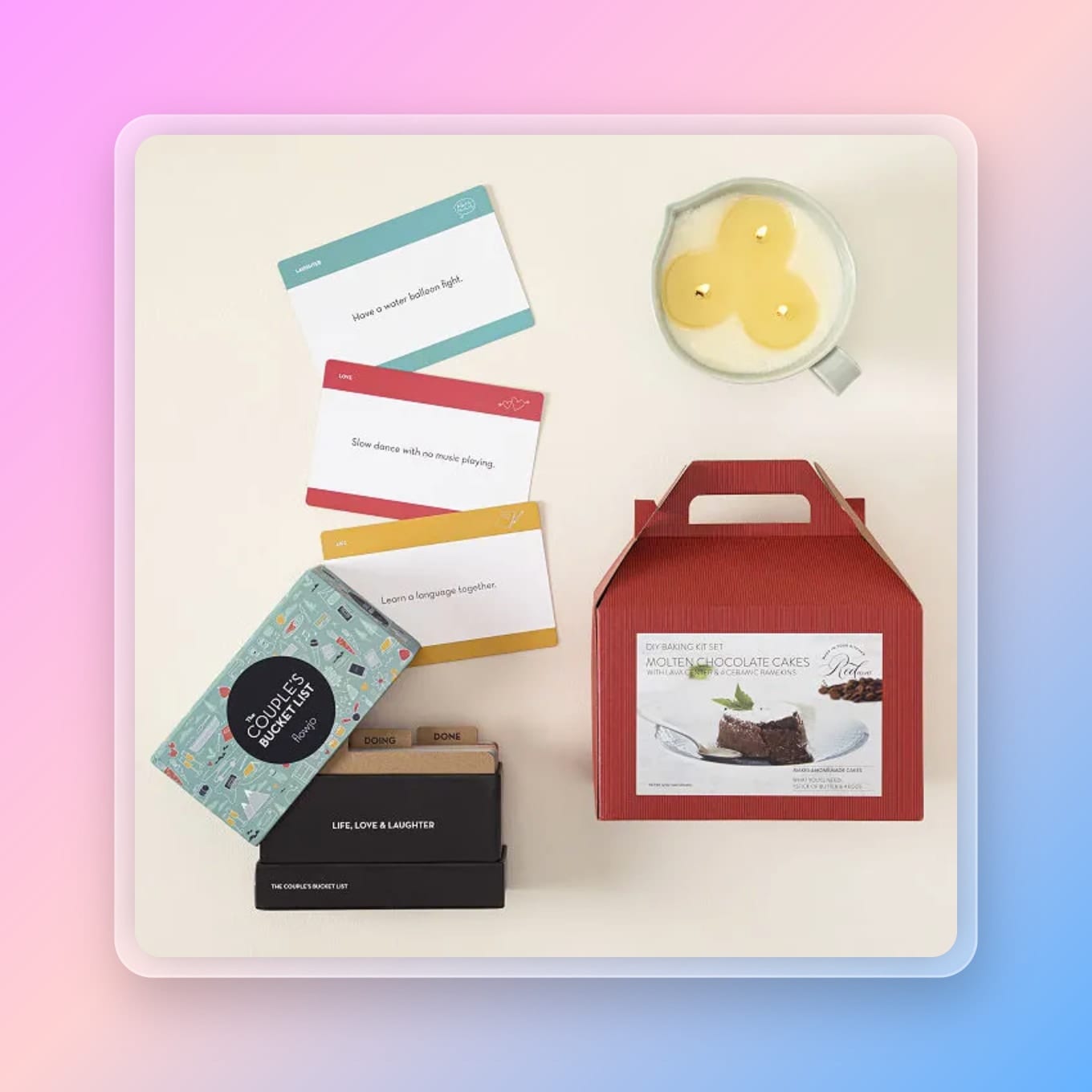
What’s more eco-friendly than a gift you can experience? And what’s more difficult than figuring out what to do for date night after nearly a decade of “I don’t know, what do you want for dinner?” with the person you love most in this world?
We get it. Try out this date night subscription! It’s filled with various kits that include recipes, painting projects, massage oils, and more. Pick from a three- or six-month subscription.
→ Shop date night subscriptions from Uncommon Goods
Baroque Freshwater Pearl Earrings

This one will be sure to bring out their pearly whites. If you’re looking for a meaningful jewelry piece, these Baroque Freshwater Pearl Earrings from Brilliant Earth are stunning.
Plus, Brilliant Earth is known for its responsible sourcing, use of recycled precious metals and CarbonFree commitment, so you can feel good knowing your purchase won’t hurt the planet — and will make your person feel so very special.
→ Shop pearl earrings from Brilliant Earth
Solar-Powered Watch

I firmly believe that every good couple is made up of opposites. For me and my partner, I’m perpetually early, and he’s perpetually late. It’s just the nature of things. Both of us could definitely benefit from a good watch.
Solios makes watches that use solar energy, so all you have to do is use your watch as usual, and it’ll recharge at light speed (haha, get it?) without any batteries. They’re also made with recycled and sustainable materials, like cork “leather,” recycled stainless steel, and cork packaging. The company also gives back to the Rainforest Trust and the Make-A-Wish Foundation.
Pssst… you can also check out our full roundup of eco-friendly watches, if you want to find some other options!
→ Shop solar powered watches from Solios
Love Oil

Seduce your sweetie with some sexy essentials. Good Clean Love, a certified B Corp, makes intimate hygiene products and personal lubricants made with 100% natural, vegan, and cruelty-free ingredients.
The Origins Love Oil enhances the pleasures of touch and aroma with exotic natural aphrodisiac fragrances. It’s made with therapeutic-grade essential oils and no synthetic fragrances, parabens, or hormone disruptors.
Pssst… you can also check out our full roundup of eco-friendly lubes, if you want to find some other options!
→ Shop Love Oil from Good Clean Love
Eco-Friendly Lingerie

Lingerie is arguably one of the more personal items you can buy, so we can’t point you in the perfect direction for everyone, but we do know that buying a quality item goes a long way.
Cosabella makes size inclusive and eco-friendly lingerie. All handcrafted in Italy from start to finish: take your pick from undies and bustiers, to teddies and bralettes.
→ Shop lingerie from Cosabella
Artifact Uprising Photo Album

Call me a hopeless romantic, but one of the most special gifts is a beautiful cherished memory. Book a photo session with a local photographer, order some photo prints — or create a beautiful photo album.
Artifact Uprising is a great place to buy photo prints (made from recycled paper), or to order a custom photo album made with premium materials (like linen and ultra-thick paper).
Capture your favorite shots from your wedding, from your vacations over the years, or a mix of all of your favorite photos, and save them in an heirloom to admire for a lifetime.
→ Shop custom photo albums from Artifact Uprising
For Yourself
Bamboo Pajamas

Self-care isn’t only about bubble baths and snuggly blankets — but feeling comfortable sure doesn’t hurt! These pajamas from Cozy Earth — available in both men’s and women’s options — are made with OEKO-TEX certified viscose from bamboo, and will have you feeling soft and luxurious all night long.
→ Shop bamboo pajamas from Cozy Earth
Soy Candle

Hey, everybody loves a good candle. But we don’t love when candles are made with toxic chemicals that can harm our homes or the environment. P.F. Candle Co. makes vegan, cruelty-free, and phthalate-free candles that are produced using 100% domestically-grown soy wax. Try the Teakwood & Tobacco scent!
Pssst… you can also check out our full roundup of eco-friendly candles, if you want to find some other options!
→ Shop candles from P.F. Candle Co.
Maude Vibe Solo Massager

Valentine’s Day is the perfect excuse to feel the love — and we mean feel the love. Maude’s Vibe is the perfect solo massager for self-pleasure without harming the planet. The three-speed device is used with FDA-grade silicone, water resistant, latex-free, phthalate-free, and comes with a canvas pouch for storage and travel.
Maude’s package is also 100% recyclable (and made from pre- and post-consumer recycled content), so all you have to do is embrace the good vibes.
Pssst… you can also check out our full roundup of eco-friendly sex and intimacy products, if you want to explore more options!
→ Shop the Vibe solo massager from Maude
→ Explore our full review of all Maude sex toys
Chocolate Tasting Experience Box

If you know us, you know we’re big fans of a consumable gift. Who said that gift had to be for anyone but yourself?! This chocolate tasting box from jcoco is the real deal. Each bar includes information about the fermentation, drying and roasting times, and its unique flavor notes. The box also has a chocolate tasting wheel with steps to taste your chocolate using all five senses.
The best part? The company is carbon neutral, and every purchase helps fight hunger in the United States.
Personalized Stationery

Call us corny, but what better act of self love is there than writing yourself a love letter? We’re serious; grab yourself some eco-friendly stationery, twist open your favorite pen, and sit down and lay it all on the line. You might even find that this can become a regular practice.
Or… you’ll just have some super cute note cards with your name on them for all your other correspondence. It’s a win either way.
Pssst… you can also check out our full roundup of sustainable stationery, if you want to find some other options!
→ Shop personalized stationery from Minted
For Your Best Friends or Galentines
Hoop Earrings

Dainty jewelry is trendy for a reason! It works with everything, y’all. Get a pair of staple hoops from Mejuri for your bestie (and maybe a pair of your own to match, we’re just throwing that out there).
Mejuri focuses on traceability and transparency in all of its craftsmanship, and over 80% of its gold is from recycled sources, while the remaining 20% is newly mined gold that comes from responsible RJC-certified sources.
→ Shop hoop earrings from Mejuri
Mimosa Sugar Cubes

Here’s a toast to your ride or die! Have your Galentine’s or Palentine’s brunch in style with a fancy little drink. These sugar cubes are super easy to use and will elevate any glass of bubbly into a mimosa or bellini cocktail.
Handmade by Cubism, a small woman-owned business in Phoenix, you can take your pick between the Citrus Trio or the Peaches & Berries Trio for the best love potion of your life.
→ Shop Mimosa Sugar Cubes from Uncommon Goods
Heart-Shaped Balm & Ceramic Dish

We all have a pal who needs a little extra pampering. This perfect combo gift includes a handmade lotion-filled moisturizing balm (that comes in five scents, like lavender, lemongrass, or fresh linen) and a matching heart-shaped ceramic dish.
→ Shop handmade heart-shaped balm and dish from Uncommon Goods
Wool Slippers

There will be no cold feet this February! Help your BFF keep their toes warm with these wool clog slippers from Parachute Home. Made with all natural wool shearling, they’re fluffy and still breathable, and might be the new work from home staple your sweet friend needs.
Parachute is also Climate Neutral certified and works on a number of carbon offset projects every year.
→ Shop wool slippers from Parachute Home
For Your New Boo
Endangered Species Chocolate

So you’ve been seeing someone special for a little while, but you don’t want to just cop out with a heart-shaped box of chocolates (that doesn’t usually even taste that good to begin with?). Try Endangered Species Chocolate instead!
This chocolate is made with Fair Trade certified, vegan ingredients — and the company donates 10% of its annual net profits to conservation organizations. Do good and impress your new flame all at once!
Pssst… you can also check out our full roundup of vegan and plant-based chocolate bars, if you want to find more options!
→ Shop Endangered Species Chocolate from Amazon
Custom Four-Across Game

It’s Connect Four… but with your own unique twist. This game is a great way to add a little healthy competition — and a special heirloom gift — to your relationship. Each set is personalized with hand-carved details, like your names, anniversary date, or a sweet message.
Hand made in Greensboro, North Carolina, these long-lasting, perfectly individualized gifts are made with maple wood.
Pssst… you can also check out our full roundup of conversation cards for couples, if you want to find some other game options!
→ Shop the Custom Four-Across Game from Uncommon Goods
Aphrodisiac Cooking Class

An experiential gift you can eat afterwards? Now, that’s a good gift.
This Aphrodisiac Cooking Class will teach you and your honey how to make dinner, dessert, and drinks with aphrodisiac properties. A romantic evening in the kitchen (that surely has the potential to lead to an evening in the bedroom), this is a great way to connect on a whole new level.
→ Book your Aphrodisiac Cooking Class from Uncommon Goods
Houseplant Duo

Flowers are so last year. Surprise your cutie with a pair of potted plants! Add some oxygen into their atmosphere, and enable their green thumb.
The Sill has a houseplant duo option that you can either pair off and share, or gift them both to your boo. (You can also add a cute little heart-shaped ceramic plant accessory, too).
→ Shop houseplants from The Sill
For Your Furry Friend
Savvy Doggy Dog Bed

Every pooch needs a place to land at the end of a fun day frolicking in a field or sniffing for treasure.
What better way to show your pup you love them than providing them the most comfortable place to relax? Savvy Rest has created the Savvy Doggy bed, made with natural latex and GOTS-certified organic cotton, for the best dreams a dog can imagine.
Pssst… you can also check out our full roundup of eco-friendly dog beds, if you want to find some other options!
→ Shop the Savvy Doggy dog bed from Savvy Rest
Wool Cat Toys

Plastic-free cat parents, we couldn’t forget about you! Not that your cat has any plans to show you increased affection on Valentine’s Day, you can still spoil them with some new toys.
These wool balls are made from 100% organic and cruelty-free certified New Zealand wool and are completely biodegradable. Plus, they’re handmade in Nepal by women living with disabilities (earning fair wages in an ethical facility).
→ Shop Friendsheep’s organic wool cat toys from EarthHero
A Matching Outfit From Dog Threads

We can confidently say that there is no stronger love than the love between a human and their dog. And what is a better way to demonstrate that love than with a matching outfit? Dog Threads has your backs; from comfy jammies, to plush robes, to trendy crewnecks.
Dog Threads also has great sustainability practices, using 100% recycled packaging, and upcycling scrap fabric to create donated dog beds. Even better, each purchase donates to an animal rescue nonprofit to help shelter pets in need.
→ Shop matching ‘fits from Dog Threads
Organic Catnip

Your cat can have a little Valentine’s gift… as a treat. Stock up on some organic catnip from Friendsheep! This tin of catnip is 100% USDA certified organic and harvested at the peak of season, completely free of pesticides, toxic fertilizers, or sprays.
This natural herb will keep your cat’s animal instincts sharp and stimulated — and the tin it comes in is completely reusable or recyclable, too.
→ Shop organic catnip from EarthHero
If you’re looking for some more pet-related gifts, you can check out our gift guide for animal lovers, full of products that are good for the planet and give back!
And lastly, you might also love our gift guide for environmentalists.
In an exclusive interview with Associated Press reporter Nicole Winfield, published this morning, Pope Francis said homosexuality should not be a crime and called upon all countries with such laws — 67 of them in total — to decriminalize.
There are currently three majority-Catholic countries that criminalize homosexuality: Burundi, Kiribati, and Saint Lucia.
There are also a few countries with a substantial Catholic population that criminalize homosexuality, Rwanda (49.5%) being the most prominent in this group.
Francis was intentional about making a distinction between homosexuality being a “sin” — which he believes it to be — and being a criminal act, which he believes it should not be.
This is arguably the strongest statement of support for LGBTQ rights from Francis since the beginning of his papacy. Over the years, he has periodically made headlines with his openness on topics of sexual morality.
The most famous example was in 2013 when Francis said to a reporter: “If a person is gay and seeks God and has good will, who am I to judge?”
In 2018, Francis urged the parents of gay children to maintain their relationships and love them and “not throw them out of the family.”
In 2020, he sent a handwritten note of praise to a Carmelite nun in Argentina who opened a permanent safe house for transgender women, noting: “God, who didn’t attend seminary and didn’t study theology, will reward you generously. I pray for you and your daughters.”
In 2021, he made clear his support for same-sex civil unions as a logical compromise against same-sex marriages.
Throughout his tenure, the Pope has attempted to traverse a tricky middle-ground between maintaining support for traditional Catholic views on sexual morality and expanding access to the Church for LGBTQ people and condemning abuse toward them.
This has brought substantial criticism from both sides of the debate; social conservatives believe he’s overstepping his bounds and many social progressives reject his efforts as not nearly enough.
As a trans woman and Christian, I think the Pope’s actions have been great in the context of how substantially worse he could be.
I don’t expect the Catholic Church to change its official views on LGBTQ identities in my lifetime, but it would be nice if we could all offer a baseline of respect for each other. In my humble opinion, Francis has certainly exceeded expectations.
I take the Pope at his word when he maintains that being LGBTQ is sinful (I firmly disagree, of course), but I respect that he has been steadfastly committed to:
1) a clear separation of Church and State on these matters and 2) encouraging the inclusion of LGBTQ people in the Church. It is especially meaningful when he insists that LGBTQ people are entitled to a family, even if that family structure is imperfect in the eyes of traditional Catholics.
I’ll be honest with you folks: this is a great thing, and I’m pretty exhausted with some progressives who, beyond being unsatisfied, have attempted to downplay the Pope’s efforts on LGBTQ equality.
This morning’s announcement is an enormous step forward, particularly in an era that has seen a heartbreaking backlash against LGBTQ advancement in recent years, all over the world.
Some people deeply struggle with the very simple concept that demanding total and complete change overnight is not only damn near impossible but can be enormously counterproductive, especially in response to a moment of progress. It comes across as performative and naïve.
Do I love that Francis has described transgender people like me as “lepers”, as though I am diseased and in need of specific ministry? No, of course not, but I’m also not gonna let that get in the way of meaningful progress.
When the Pope says something that is likely to reduce violence and discrimination against my community, I’m gonna loudly praise it and hope anyone within earshot has their heart softened.
Lost in most of the discussion on this morning’s news will be the significant matter of continuity in papal leadership. There are currently 124 cardinal electors (that is, cardinals who are presently eligible to vote in a papal conclave), and Francis has created 81 of them. A new pope is elected with 2/3 of eligible cardinal electors, so a current threshold of 83 if all eligible voters were to participate in a conclave today.
That doesn’t mean the next pope is likely to be as progressively attuned as Francis, but he has undoubtedly made it highly unlikely that his successor will be a hard conservative in the mold of Benedict XVI.
Bottom line: don’t buy the nonsense view that this isn’t a big deal or that it won’t be helpful to LGBTQ people. Folks throwing out such criticism are allowing the perfect to be the enemy of the good at a time in history when there’s not been much good to go around.
Let the good flourish and plant more seeds.
This article was originally published in Charlotte’s Web Thoughts, a newsletter focused on politics, religion, culture, and humor — from a Christian trans woman. Subscribe to Charlotte’s Web Thoughts today.
Header photo courtesy of the Catholic Church England and Wales / © Mazur & CatholicNews.org.uk / (CC BY-NC-ND 2.0)
These days, many of us are leaning into leisure. And it’s about time! Since we all need a well-rounded sleep schedule to feel our best and truly take care of ourselves, it’s important to prioritize rest in any way we can.
But first? We need the right bedding to find comfort and serenity — and not at the expense of the planet.
Of course, if you’re content with the linens you already have gracing your personal nap paradise, there’s no need to buy anything new! (The most sustainable thing you can buy is always… nothing!)
However, if you’ve been in the market for some new bedding, we want to make it easier for you to find something that meets your needs and doesn’t harm the planet in the process.
Read on for some more information about securing the most sustainable sheets, our recommendations for eco-friendly bedding brands, and of course, some really cute pictures of our dogs taking naps.
You might also like our deep-dives on other eco-friendly bedroom products:
- Sustainable Bed Frames
- Sustainable Mattresses
- Sustainable Mattress Toppers
- Sustainable Dog Beds
- Sustainable Pillows
- Sustainable Weighted Blankets
By the way, some of the products and links in this article are partners and affiliates, which means we may earn a commission at no extra cost to you. Everything in this article was independently and honestly written by the Good Good Good team. Thank you for your support!
What should I look for in sustainable bedding?
Okay, so you’ve already got the sustainable bed frame, you’ve topped it off with an eco-friendly mattress — even your pup has a planet-forward doggy bed — it’s time to put the cherry on top.
As with any environmentalist-friendly shopping, when it comes to finding the best bedding for your lifestyle and values, you’ll want to do your research.
Materials
Just like your other sustainable home goods, eco-friendly bedding is made with materials that do not contain any toxic chemicals or harm the planet during harvesting. Lots of mass-manufactured bedding is made with conventional cotton and polyester fibers that use lots of pesticides and chemicals — and that’s the stuff of nightmares.
Additionally, bedding companies that switch to simply using organic cotton end up using about 90% less water than conventional cotton crops.
Some great alternative materials to look for include:
- Organic hemp
- Organic linen
- Eucalyptus
- Organic cotton (with sub-categories like percale, sateen, jersey, and flannel)
- Organic latex
- Tencel, Lyocell or another fabric made with wood fibers
- Bamboo (if made with closed-loop processes)
Of course, you’ll also want to be sure that any colorful bedding you want to purchase is also made with non-toxic dyes.
Certifications
Most eco-friendly bedding brands will be certified by any number of environmental protection organizations. These are endorsements from independent organizations that ensure rigorous standards of sourcing and manufacturing.
Keep your eyes peeled for the following certifications and endorsements as you shop:
- Global Organic Textile Standard (GOTS)
- OEKO-TEX
- MADE SAFE
- Forest Stewardship Council (FSC)
- GreenGuard Gold
Environmental Impact
Companies with an emphasis on people and planet will often have environmental impact initiatives in place to practice ethical business.
Look for transparent information about carbon offsets, thoughtful packaging, partnerships with environmental nonprofits (like 1% for the Planet), or brands that are Climate Neutral certified (like us!).
Social Impact
Chances are, if a brand wants to take care of the planet, it also wants to take care of the people that work on the planet, too. Look for high standards of supply chain and labor management, thoughtful charitable initiatives, and statuses like B Corp and Fair Trade certifications.
Our favorite eco-friendly bedding brands
The brands you see listed in this section sent members of our team some bedding samples to review for this article. (Our reviews are always honest. Receiving free products for testing never impacts our writing — and brands don’t get any influence on our writing or editorial process.)
Savvy Rest

What’s good: Savvy Rest is a certified B Corp that works to make sleep safer. With natural latex mattresses, and GOTS and Greenguard Gold certified textiles and bedding, the brand is focused on ensuring the highest quality products, all while considering health impact, materials re-use, renewable energy, water stewardship, social fairness, and more.
Another great aspect of Savvy Rest’s business model is its Safe Sleep Pillow program, which donates organic pillows to local domestic violence organizations to provide the most restful and reliving experience to women and children upon their arrival to a shelter or new home.
Bedding options:
- Organic Sateen Cotton Sheets
- Organic Cotton Throw Blanket
- Organic Duvet Inserts
- Also: Pillows, Mattresses, Mattress Protectors, Mattress Toppers, Crib Mattresses, Furniture, Pet Beds
Johnathan’s thoughts: Savvy Rest kindly sent me the Organic Kapok Pillow, the Organic Waterproof Mattress Protector, and a lovely Organic Cotton Throw Blanket. All my pieces came in little canvas bags with buttons that can be reused, which I loved. The quality of all three of the items is amazing.
The top flat part of the mattress protector is a flannel-like material that feels so soft.
The cotton blanket is fantastic and has a heavy weight to it but is relatively thin. It’s soft and thick enough to keep you warm, but not like a fluffy blanket that can get too hot. The size is massive, and the natural cotton color would totally go great with any colored sheet set.
The organic Kapok pillow is a customizable pillow. You can unzip the inside cover case and remove stuffing to achieve the ideal plushness, and the Kapok material inside the pillow is so soft and fluffy, but the overall pillow is very firm and plush upon arrival.
Overall, the quality of everything is so high, and I love how luxurious everything feels — a great reminder that everything is natural organic cotton.
→ Shop all organic bedding from Savvy Rest
Pssst... you can get 20% off all Savvy Rest products when you use code GOOD20.
Saatva

What’s good: Saatva was founded on the belief that “everyone deserves healthy and restorative sleep on a quality bed.”
All of Saatva’s bedding options use a variety of thoughtfully-sourced materials that are OEKO-TEX certified, so you can rest easy knowing they meet the highest health and environmental safety standards.
The brand sources Fair Trade and certified organic materials, like 100% organic cotton, 100% Belgian linen, or natural percale cotton. Saatva also adheres to ethical labor standards and plants trees with Evertreen, meaning your purchase can contribute to reforestation efforts, too!
Bedding options:
- Organic Sateen Sheets
- 100% Linen Sheets
- Percale Cotton Sheets
- Flannel Cotton Sheets
- Organic Cotton Quilt
- Diamond Knit Blanket
- Cotton & Viscose Quilt
- Waffle Knit Blanket
- Weighted Blanket
- Down Alternative Comforters
- Organic Cotton Duvet Covers
- Also: Pillows, Mattresses, Mattress Toppers, Bed Frames
Jessica’s thoughts: I have been so happy with the Organic Sateen Sheet Set from Saatva! I was pleasantly surprised by how long and deep these sheets are.
The fitted sheet easily fits over my mattress and topper, without any issues of it popping off (which I did experience with my previous sheet set). The bedding has held up great after several washes and has only gotten cozier and softer with each wash.
I also loved that there were very minimal packing materials for shipping. A little extra bonus surprise was that the sheets were packaged in a simple cardboard box and a nice white tote that I’m eager to repurpose for a DIY project in the future.
→ Shop sustainable bedding from Saatva
Antipodean Home

What’s good: Antipodean Home is a 100% regenerative organic bedding brand born out of New Zealand.
What’s different about Antipodean, compared to other brands, is its commitment to sourcing its materials from farms that use regenerative methods of agriculture to remove excess carbon from the atmosphere.
This approach, which uses tools like cotton crop rotation and natural composting, avoids harmful chemicals while actively improving soil health — leading to a richer ecosystem and cozier sheets.
From there, organic wool and cotton is used to make comfortable and eco-friendly bedding that has natural temperature-regulating and anti-microbial features.
Bedding options:
- Organic Wool Comforter
- Regenerative Organic Cotton Sheets
- Regenerative Duvet Set
- Merino Wool Duvet Inserts
- Sustainable Bedding Set
Meghan’s thoughts: Antipodean Home sent me the Regenerative Organic Cotton Sheets and the timing couldn’t have been better. I’d had the same standard cotton sheets since college and it was past time that I treated myself to new sheets.
The box came in a compact, recyclable box (that my cat quickly turned into a new toy) nestled next to a four-pack of organic wool dryer balls for future laundry cycles. (This comes as a gift with any sheet set purchase.)
The sateen woven sheets are incredibly soft to the touch and are a lot more breathable than the cotton sheets I was stuck with before. I have fibromyalgia so there are some days when I can’t get out of bed, and these organic cotton sheets make a world of difference.
My first night sleeping on the sheets was genuinely the best sleep I’ve had in months. The queen set comes with two pillowcases, a fitted sheet, and a flat top sheet.
One note is that their pillow cases are much bigger than my standard-sized pillows, but it was easy enough to tuck the four extra inches in on itself and make it work.
→ Shop regenerative bedding from Antipodean Home
Cozy Earth

What’s good: Perhaps best known for its comfy pajamas (that are apparently on Oprah’s Favorite Things list!) Cozy Earth has a number of other bedding items that will make your next catnap, well, cozy.
Made with OEKO-TEX certified materials and using a closed-loop system, Cozy Earth utilizes viscose from bamboo, as well as linen, and mulberry silk that is free of toxic chemicals and dyes, to offer a luxurious line of bedding staples.
Bedding options:
- Bamboo Sheets, Comforter & Duvet Cover
- Linen Sheets & Duvet Cover
- Pillowcases
- Silk Comforter
- Bamboo Throw Blanket
- Also: Bamboo Mattress Pad, Baby Bedding
Kamrin’s thoughts: Cozy Earth sent me a Bamboo Sheet Set, as well as a Bamboo Comforter. They are both lightweight, cooling, and silky-soft!
The comforter was honestly a little smaller and thinner than I anticipated (I’d recommend the extra-fill option for colder climates), but it’ll be the perfect item for summer nights. The sheets, on the other hand, are soft and breathable no matter the weather.
I also love that they both came in canvas packaging that I can reuse when storing the sheets or for nearly any other purpose.
→ Shop super-soft sustainable linens from Cozy Earth
Nest Bedding

What’s good: Nest Bedding carries a wide variety of carefully sourced bedding options that will help you get some shut-eye and practice sustainability all at once.
The brand is Fair Trade, FSC, OEKO-TEX, and Ceti-PUR certified, and shoppers can have their pick of materials like organic cotton, tencel, silk, and more.
Bedding options:
- Organic Cotton Sheets
- Bamboo Sheets
- Tencel Sheets
- Pure Silk Comforter
- Soft Wool Comforter
- Weighted Blanket
- Waffle-Knit Throw Blanket
- Also: Pillows, Mattresses, Mattress Protectors, Dog Beds, Bed Frames
Jessica’s thoughts: Nest sent me the Sateen Organic Cotton Sheet Set & Pillowcases. I have been so happy with these sheets. So far, they’ve held up great after washes and are only getting cozier.
Of course, I’m also thrilled that they’re Fair Trade certified and organic, something that puts my mind at ease when sleeping on them every night. I’ve had issues in the past with other sheets popping off easily with our added mattress topper on, but these have stayed snug and I haven’t had to adjust them at all once I’ve put them on.
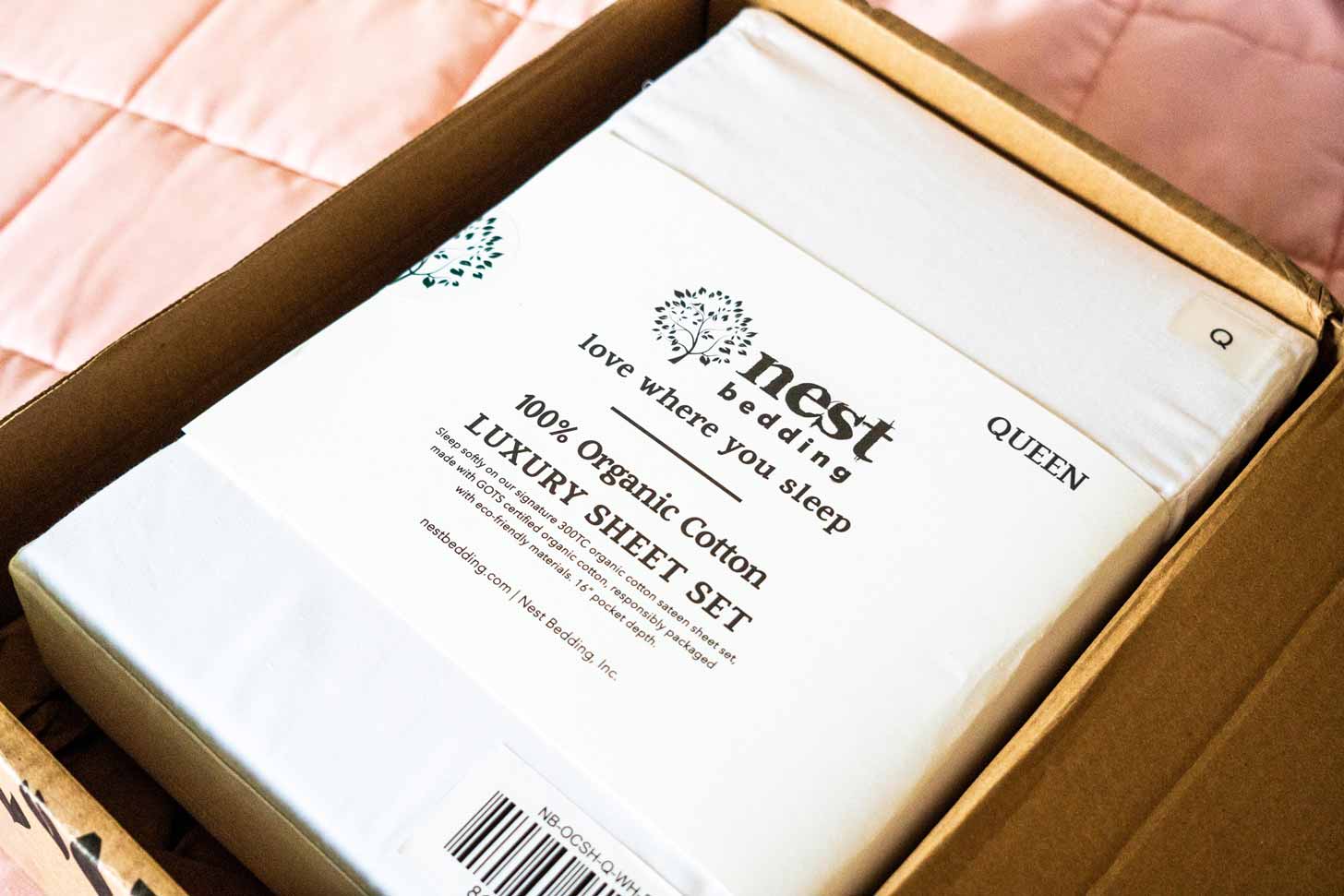
One unique note is that the top sheet is a few inches longer than a standard option, but we’re not complaining!
→ Shop all bedding from Nest Bedding
Other sustainable and organic bedding brands to shop
While Good Good Good team members haven’t gotten a chance to enjoy these bedding brands (yet), we’ve spent time reading reviews, researching claims and certifications, and compiling some other great options for our readers.
Absolutely consider these sustainable and non-toxic bedding options as you’re shopping:
Avocado Green Mattress

What’s good: Upon its founding, the leaders of Avocado Green Mattress decided: “Natural, safe, and responsible will be our mantra.” Avocado aims to raise the bar for sustainable brands — and as a B Corp and Climate Neutral certified company, with products certified by GOTS — it’s walking the walk.
In addition, Avocado works with 1% for the Planet to donate one percent of its annual revenue to environmental organizations.
Bedding options:
- Organic Cotton Sheets, Duvet Covers & Pillowcases
- Linen Sheets & Duvet Covers
- Hemp Sheets & Duvet Covers
- Alpaca Wool Throw Blankets
- Also: Pillows, Mattresses, Mattress Protectors
→ Shop all non-toxic and eco-friendly bedding from Avocado Green
Brentwood Home

What’s good: Brentwood Home, which is owned by Avocado, has one simple mission: to do better. The brand prioritizes this through using inventive and eco-conscious materials, and ensuring reliable standards with trusted certifications (like Fair Trade, FSC, Green Guard, GOTS Organic, Recycling Claim Standards, and more).
Additionally, Brentwood Home is Climate Neutral certified. Not only does the brand offset emissions produced from shipping, but also the full carbon footprint of business activities, from resource extraction to finished product delivery. That’s what we like to see! (Or, should we say that’s what we like to sleep?)
Bedding options:
- Organic Cotton Sheets
- Organic Cotton Pillow Cases
- Linen Throw Blankets
- Waterproof Mattress Protector
- Also: Activated Charcoal Pillows, Wedge Pillows, Kids Bedding, Mattresses, Dog Beds
→ Shop all bedding from Brentwood Home
Pact

What’s good: Pact simplifies your staples, creating planet-forward clothing, bath, and bedding products. The brand is certified organic, Fair Trade, and carbon neutral, and you can even measure the exact impact of every product you buy with Pact’s partnership with SimpliZero.
On each product page, you will find an overview of how much water is saved with organic materials, how many pounds of carbon offset are measured, and how many people made this product by working in Pact’s Fair Trade factories. We love this transparent approach that shows how much of a difference you can make with just one purchase.
Bedding options:
- Percale Sheets & Pillowcases
- Jersey Sheets, Duvet Covers, Pillowcases & Shams
- Sateen Sheets, Duvet Covers & Pillowcases
- Organic Cotton Quilted Comforter
→ Shop all organic bedding from Pact
Coyuchi

What’s good: Coyuchi makes bedding to the highest ethical and sustainability standards, utilizing a circular business model and only sourcing organic materials.
The brand is certified by GOTS, GOLS, Fair Trade, and Made Safe, also championing climate nonprofits as a partner with 1% for the Planet.
Coyuchi’s circular model is complete through its 2nd Home recycling program, which encourages shoppers to recycle their textiles through the company — and then purchase products made with those recycled materials! Since the start of the 2nd Home program, Coyuchi has diverted over 43,000 pounds of textile waste from landfills.
Bedding options:
- Percale Sheets, Pillowcases & Duvet Covers
- Linen Sheets, Pillowcases, Shams & Duvet Covers
- Sateen Sheets, Pillowcases, Shams & Duvet Covers
- Jersey Sheets & Pillowcases
- Flannel Sheets, Pillowcases, Shams & Duvet Covers
- Fully Recycled Cotton Blanket
- Also: Pillows, Mattress Pads and Toppers
→ Shop all bedding from Coyuchi
Parachute Home

What’s good: Parachute is a sleek and stylish home company (like, I will have peaked when I finally have a complete Parachute bedroom set) that prioritizes ethics and responsibility.
A Climate Neutral certified company that utilizes circular programs, partners with Fair Trade and GOTS certified manufacturers, uses thoughtfully-selected textiles, and has long-term goals for sustainability — Parachute is a prime option to fulfill your bedding needs.
Bedding options:
- Linen Sheets, Pillowcases, Duvet Covers & Quilts
- Sateen Sheets, Pillowcases & Duvet Covers
- Brushed Cotton Sheets, Pillowcases & Duvet Covers
- Percale Sheets, Pillowcases & Duvet Covers
- Also: Pillows, Mattresses, Mattress Toppers, Duvet Inserts
→ Shop all natural bedding from Parachute Home
Eucalypso

What’s good: Eucalypso is a female-founded bedding company that uses Tencel Lyocell textiles derived from eucalyptus. Because of this, the materials actually absorb carbon from the environment, and you end up with sheets that feel naturally soft and cooling to the touch. Plus, they’re biodegradable and compostable!
The brand is ISO Standard, OEKO-TEX, and PEFC and FSC certified, and products are created in a closed-loop process where nearly all water and solvents are reused and recycled.
Bedding options:
→ Shop all bedding from Eucalypso
Evenfall

What’s good: Evenfall is a Fair Trade certified, woman-owned company that creates OEKO-TEX certified hemp bedding. The low-impact and naturally regenerative textile is a great alternative to cotton while still providing peak comfort.
Hemp is also a carbon negative material, which means it absorbs more than it produces. Cozy and carbon-negative? It’s a win-win!
Bedding options:
→ Shop all hemp bedding from Evenfall
Buffy

What’s good: Buffy only uses the good stuff in its bedding products; Eucalyptus lyocell, soft hemp, recycled plastic fluff, and even buttons made from Corozo nuts.
The brand also offsets all carbon emissions from freight and customer shipments, encourages donating used textiles, and although the company is rather new, it outlines long-term goals for a closed-loop business model and takeback program.
Bedding options:
- Cloud Comforter
- Breeze Comforter
- Linen Sheets, Pillowcases & Duvet Covers
- Percale Sheets & Duvet Covers
- Eucalyptus Lyocell Sheets, Pillowcases & Duvet Covers
- Also: Pillows
The Citizenry

What’s good: The Citizenry is a small-batch brand on a mission to improve how companies create and sell global goods. Working with artisan partners around the world, the brand is Fair Trade certified and committed to increasing wage and equity standards one craftsman at a time.
You can even learn more about the individuals behind every single artisan community The Citizenry works with.
The items sold by The Citizenry are also certified organic, non-toxic, and cruelty-free, embracing materials and systems that are good for the people who make them and the lands they inhabit.
Bedding options:
- Stonewashed Linen Sheets, Quilts, Pillowcases & Duvet Covers
- Organic Cotton Sheets, Quilts, Shams & Duvet Covers
- Alpaca Blankets
- Wool Blankets
- Linen Blankets
- Organic Cotton Blankets
- Also: Pillows, Duvet Inserts
→ Shop all bedding from The Citizenry
Boll & Branch

What’s good: Boll & Branch makes quality bedding items that are 100% traceable from farm to finish. What does that mean? The brand works directly with family-owned farms and factories to ensure its organic cotton and non-toxic materials are sourced and manufactured sustainably and ethically right until you make your bed.
The Fair Trade certified company has purchased over 5.3 million pounds of fair trade organic cotton and has paid over $880,000 in additional wages to farmers and factory workers to sustain fair wages and invest in their communities.
Bedding options:
- Organic Cotton Sheets, Quilts, Duvet Sets, Pillowcases & Shams
- Alpaca Blankets
- Organic Cotton Knit Blankets
- Also: Pillows, Mattresses, Duvet Inserts
→ Shop all organic bedding from Boll & Branch
Takasa

What’s good: Takasa is a Canadian bed and bath company that brings more mindfulness to the products we use every day. A BC Benefit Company (essentially Canada’s version of a B Corp) that plants a tree for every purchase and uses materials that are GOTS certified, Takasa is well on its way to total carbon neutrality.
Takasa uses Fairtrade cotton to offer sateen, flannel, and percale bedding options that look as fresh as they feel.
Bedding options:
- Percale Sheets, Pillowcases & Duvet Covers
- Sateen Sheets, Comforters, Pillowcases & Duvet Covers
- Flannel Sheets & Duvet Covers
- Organic Cotton Quilted Comforter
- Also: Pillows, Duvet Inserts
→ Shop all bedding from Takasa
SOL Organics

What’s good: SOL Organics creates “textiles with integrity.” The brand uses 100% organic, long-staple cotton, grown from non-GMO cotton seeds, ensuring customers get the best bedding, all while prioritizing better farming practices.
The brand is GOTS, OEKO-TEX, and Fair Trade certified and is committed to fair labor practices from start to finish for every product.
Bedding options:
- Percale Sheets, Pillowcases, Shams & Duvet Covers
- Sateen Sheets, Pillowcases, Shams & Duvet Covers
- Flannel Sheets & Duvet Covers
- Linen Sheets, Pillowcases & Duvet Covers
- Also: Down Comforters, Pillows
→ Shop all bedding from SOL Organics
Tuft & Needle

What’s good: Tuft & Needle creates bedding that helps you rest a little easier with textiles that are free from harmful chemicals. Tuft & Needle partners with One Tree Planted and Out of the Closet.
Bedding options:
- Percale Sheets
- Percale Quilt
- Hemp Sheets
- Linen Sheets
- Jersey Sheets
- Recycled Yarn Throw Blanket
- Also: Pillows, Crib Bedding, Mattresses
→ Shop all bedding from Tuft & Needle
Baggu

What’s good: While you may know Baggu for its signature reusable totes, puffy laptop cases, or cross body bags, the brand is also a great destination for a handful of sustainable bedding options.
With colorful and whimsical designs, the brand creates a wide range of products using recycled materials and minimal waste designs. In fact, Baggu’s Throw Quilt is made with deadstock fabrics from designs’ past.
Bedding options:
→ Shop all home goods from Baggu
Organic Mattresses, Inc.

What’s good: Organic Mattresses, Inc (OMI) was one of the very first organic bedding and mattress companies in the U.S. With certifications from GOTS, GOLS, and Greenguard, the sustainable manufacturing and craftsmanship of all its products is evident.
Bedding options:
- Organic Cotton Sheets
- Organic Wool Comforter
- Cotton Thermal Blanket
- Also: Pillows, Mattresses, Mattress Toppers
Plover
What’s good: Plover is (cheekily) redefining what it means to be “good in bed.” The brand creates textiles and home goods for folks who simply don’t want to sacrifice fun, colorful patterns, or their eco-friendly values.
Combining playful designs with ethical manufacturing and certified organic cotton textiles, Plover makes saving the planet fun.
Also: The brand donates $10 of every blanket sale to Save The Children, so no child has to go without the comfort of a warm bed.
Bedding options:
- Organic Cotton Quilts
- Organic Cotton Duvets
- Organic Cotton Sheet Sets
- Organic Cotton Pillowcases
- Also: Baby Bedding
→ Shop all bedding from Plover
Anchal

What’s good: Anchal is a sustainable social impact nonprofit funded through the sale of handmade bedding and apparel by female artisans.
By providing education, skills and design training, health services, and long-term employment to women who have left exploitative environments, Anchal creates a regenerative community — all while reforming traditional textile manufacturing practices.
All the textiles used by Anchal’s community of artisans are certified organic and fair trade cotton. Designs blend contemporary themes with traditional techniques, sometimes even using vintage saris in production.
Bedding options:
→ Shop all handmade bedding from Anchal
Every month at Good Good Good, we plan upcoming good news content for our Instagram, Goodnewsletter, Goodnewspaper, podcast, website, and more. Our work is always centered on hopeful stories about people making a difference in the world — and action steps on how each of us can join in with that good work.
With so many holidays, awareness days, education weeks, and activism months happening all year long, we’ve been slowly collecting all of these events in a private internal calendar for years.
We made our Monthly Cause Awareness Calendar publicly available earlier this year. We’ve also published:
- The Ultimate Calendar of Heritage Months
- Disability Awareness Days Calendar
- LGBTQ+ Pride Days, Weeks, & Months Calendar
- Animal & Pet Awareness Calendar
- Mental Health Days & Awareness Months Calendar
- Environmental & Sustainability Holidays Calendar
- HIV/AIDS Awareness Days & Months Calendar
- Cancer Awareness Days & Months Calendar
And now we’re publishing our guide to Black and African American holidays!
Our hope is this resource will help you or your organization bring attention to these important days — not just around MLK Day, Black History Month, and Juneteenth — but all year long.
Black and African American holidays are an important way to celebrate and honor the rich history and culture of the Black community. The holidays included in this guide recognize the contributions and achievements of Black leaders, activists, and thinkers — as well as the ongoing struggle for equality and justice.
Where applicable, we’ve included resources around highlighted holidays — usually in the form of good news around particular topics, relevant quotes or recommendations, or action steps on how to make a difference. We encourage you to share them if you find them helpful.
We’ve worked hard to make this the most comprehensive collection of Black and African American days and months on the internet. Always double-check dates, as organizers may occasionally change dates and details.
Bookmark this page and revisit it as often as you need. We’ll continue to update it and add to it over time.
Major Black Holidays
Martin Luther King Jr. Day
3rd Monday in January
This national holiday marks the birthday of Dr. Martin Luther King Jr. Dr. King is, of course, best known for his role in the Civil Rights Movement and his use of nonviolent civil disobedience to fight for the rights of African Americans and poor people. This day came to be celebrated as a federal holiday thanks to the tireless work of his wife, Coretta Scott King.
→ How To Celebrate Martin Luther King Jr. Day
→ The Best Martin Luther King Jr. Quotes
→ The Best Coretta Scott King Quotes
Black History Month
February 1 - February 28
This annual observance recognizes the contributions and achievements of Black Americans throughout history. It was first officially recognized by the United States government in 1976, and is celebrated in February to coincide with the birthdays of Abraham Lincoln and Frederick Douglass.
→ How To Celebrate Black History Month
→ The Best Black History Month Quotes
Juneteenth
June 19
Short for “June nineteenth,” Juneteenth marks the day in 1865 when Union troops arrived in Galveston, Texas and announced that all enslaved people in Texas were free. This was more than two years after the Emancipation Proclamation was issued by President Lincoln, marking the end of slavery in the United States.
Kwanzaa
December 26 - January 1
This holiday was created in the 1960s as a way to celebrate and honor African American culture and heritage. It is based on African harvest festivals and is celebrated with a series of seven principles, or Nguzo Saba, which focus on values such as unity, self-determination, and collective work and responsibility.
Independence Days for African Countries
For people with a personal connection to various African countries and cultures, it’s common to celebrate the anniversary of claiming independence from colonial powers.
We’ve collected a table of independence days for a number of African nations:
| Country | Indep. Day | Indep. From |
| Algeria | Jul 5, 1962 | France |
| Angola | Nov 11, 1975 | Portugal |
| Benin | Aug 1, 1960 | France |
| Botswana | Sep 30, 1966 | UK |
| Burkina Faso | Aug 5, 1960 | France |
| Burundi | Jul 1, 1962 | Belgium |
| Cape Verde | Jul 5, 1975 | Portugal |
| Cent. African Republic | Aug 13, 1960 | France |
| Chad | Aug 11, 1960 | France |
| Comoros | Jul 6, 1975 | France |
| Democratic Republic of Congo | Jun 30, 1960 | Belgium |
| Djibouti | Jun 27, 1977 | France |
| Egypt | Feb 28, 1922 | UK |
| Equatorial Guinea | Oct 12, 1968 | Spain |
| Eritrea | May 24, 1991 | Ethiopia |
| Eswatini (Swaziland) | Sep 6, 1968 | UK |
| Ethiopia | Mar 2, 1896 | Italy |
| Gabon | Aug 17, 1960 | France |
| The Gambia | Feb 18, 1965 | UK |
| Ghana | Mar 6, 1957 | UK |
| Guinea | Oct 2, 1958 | France |
| Guinea-Bissau | Sep 24, 1973 | Portugal |
| Ivory Coast | Aug 7, 1960 | France |
| Kenya | Dec 12, 1964 | UK |
| Lesotho | Oct 4, 1966 | UK |
| Liberia | Jul 26, 1847 | American Colonization Society |
| Libya | Dec 24, 1951 | UK |
| Madagascar | Jun 26, 1960 | France |
| Malawi | Jul 6, 1964 | UK |
| Mali | Sep 22, 1960 | France |
| Mauritania | Nov 28, 1958 | France |
| Mauritius | Mar 12, 1968 | UK |
| Morocco | Nov 18, 1955 | France |
| Mozambique | Jun 25, 1975 | Portugal |
| Namibia | Feb 9, 1990 | South Africa |
| Niger | Aug 3, 1960 | France |
| Nigeria | Oct 1, 1960 | UK |
| Rwanda | Jul 1, 1962 | Belgium |
| São Tomé & Príncipe | Jul 12, 1975 | Portugal |
| Senegal | Apr 4, 1960 | France |
| Seychelles | Jun 29, 1976 | UK |
| Sierra Leone | Apr 27, 1961 | UK |
| Somalia | Jul 1, 1960 | UK |
| South Africa | May 31, 1910 | UK |
| South Sudan | Jul 9, 2011 | Sudan |
| Sudan | Jan 1, 1956 | UK |
| Tanzania | Dec 9, 1961 | UK |
| Togo | Apr 27, 1960 | France |
| Tunisia | Mar 20, 1956 | France |
| Uganda | Oct 9, 1962 | UK |
| Zambia | Oct 24, 1964 | UK |
| Zimbabwe | Apr 18, 1980 | UK |
All Black and African American Holidays and Observances
January
Last Day of Kwanzaa - January 1
Learn about what Kwanzaa means for Black Americans
Anniversary of Emancipation Proclamation - January 1
Haitian Independence Day - January 1
George Washington Carver Day - January 5
Martin Luther King Jr.’s Birthday - January 15
Read the best quotes (beyond ‘I have a dream’) from Martin Luther King Jr.
Martin Luther King Jr. Day - 3rd Monday of January
Learn about how to meaningfully celebrate Martin Luther King Jr. Day
Civil Rights Day - 3rd Monday of January
Learn about and watch the 50 most essential civil rights speeches in American history
February
Black History Month - February
Learn about how to intentionally celebrate Black History Month with these ideas and activities
Rosa Parks’ Birthday - February 4
National Black HIV/AIDS Awareness Day - February 7
Read good news about progress in the fight against HIV/AIDS
Black Love Day - February 13
Frederick Douglass Day - February 14
W. E. B. Du Bois Day - February 23
March
Crispus Attucks Day / Boston Massacre Day - March 5
Harriet Tubman Day - March 10
Anniversary of the first Black Newspaper in America - March 16
International Day for the Elimination of Racial Discrimination - March 21
Read Good Good Good’s collection of racial justice articles and good news stories
April
National Minority Health Month - April
Black Maternal Health Week - April 11 - April 17
Pan-African Week - Last week of April
Jackie Robinson Day - April 15
Emancipation Day - April 16
May
African Liberation Week - Week-long event in May
John Lewis Day of Action - May 8
Read the best quotes from John Lewis
Anniversary of the School Desegregation Ruling - May 17
Malcolm X’s Birthday - May 19
Read the best quotes about justice from Malcolm X
Malcolm X Day - 3rd Friday of May
Africa Day - May 25
June
African American Music Appreciation Month - June
National Black Family Cancer Awareness Week - Week-long event in June
Loving Day - June 12
African New Year / Odunde Festival - 2nd Sunday of June
Juneteenth - June 19
Learn about how to thoughtfully celebrate Juneteenth
July
BIPOC Mental Health Month - July
Explore our guide to mental health resources and our guide to mental health apps and resources for Black Americans
African Women’s Liberation Week - July 16 - July 27
Nelson Mandela Day - July 18
Read the best quotes from Nelson Mandela
Maafa Commemoration - July 19
Buffalo Soldiers Day - July 28
August
Marcus Garvey Day - August 17
Emmett Till Day - August 28
Learn about how to protect Emmett Till’s memorials and read this essay from his cousin
September
Enkutatash / Ethiopian New Year - September 11 or September 12
School Desegregation in Little Rock, AR - September 25
October
Black History Month in the United Kingdom - October
Jerry Rescue Day - October 1
Anniversary of Thurgood Marshall being sworn into the Supreme Court - October 2
Black Entrepreneurs Day - October 14
Explore our guide to finding Black-owned businesses to support
Black Poetry Day - October 17
Explore our collections of quotes and poems from Maya Angelou and Amanda Gorman
November
Umoja Karamu Celebration - 4th Sunday of November
December
Anniversary of Rosa Parks’ Arrest - December 1
Explore our collection of Rosa Parks quotes — including quotes about her arrest
International Day for the Abolition of Slavery - December 2
Karamu Ya Imani (Feast of Faith) - December 31
Kwanzaa - December 26 - January 1
Learn about what Kwanzaa means for Black Americans