A new study published by Florida State University researchers sheds new light on male green sea turtles.
The research, which followed male green sea turtles off the coast of Brazil, revealed groundbreaking discoveries about their migration strategies, which will support future conservation efforts for the marine creatures.
Male green sea turtles have been more mysterious to researchers, as they are harder to study than females, who regularly return to the same place to lay their eggs, allowing researchers to predict their movements, tag, and monitor them over time.
Males, however, rarely return to land after entering the water as hatchlings, leaving researchers with major gaps in understanding their behavior.
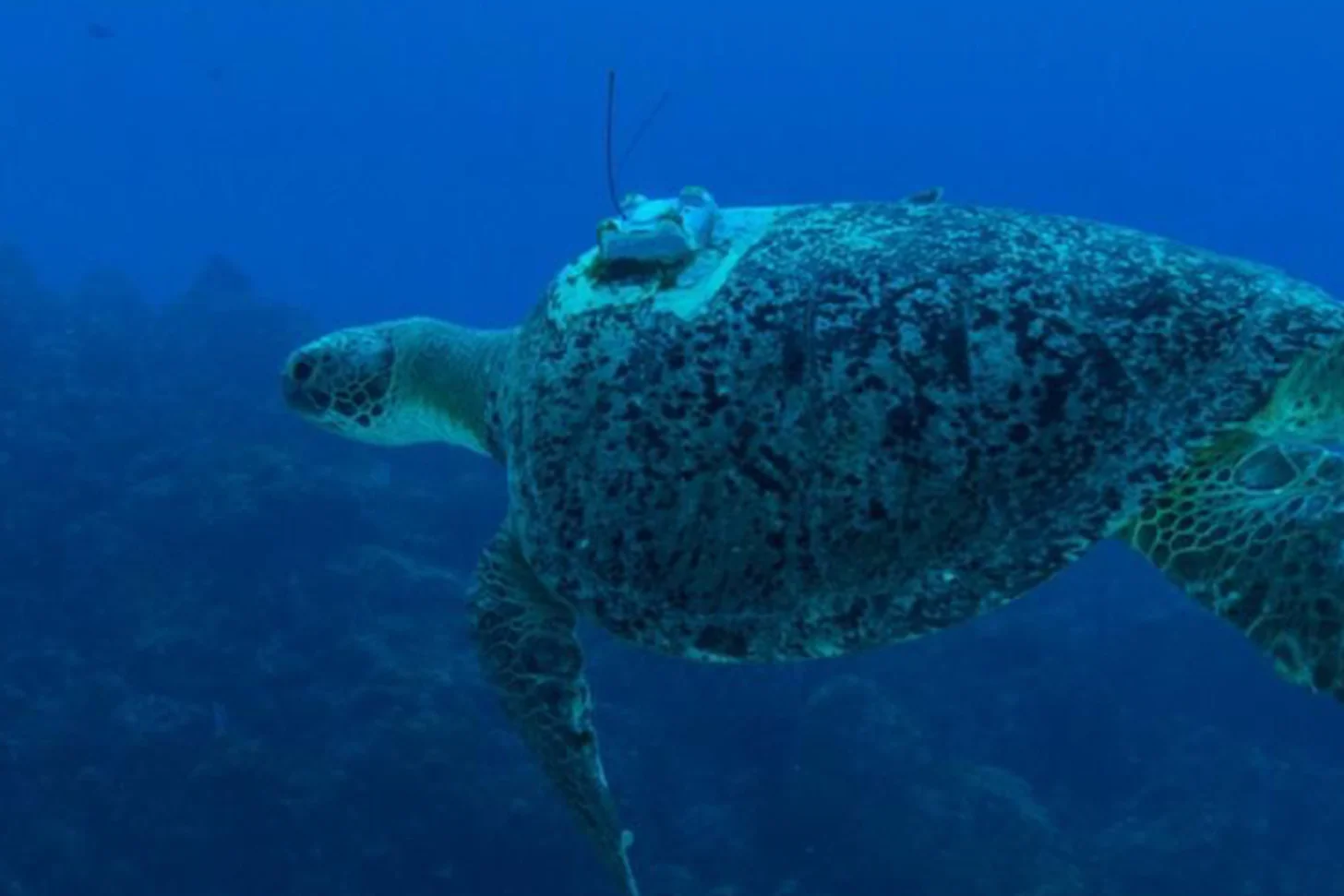
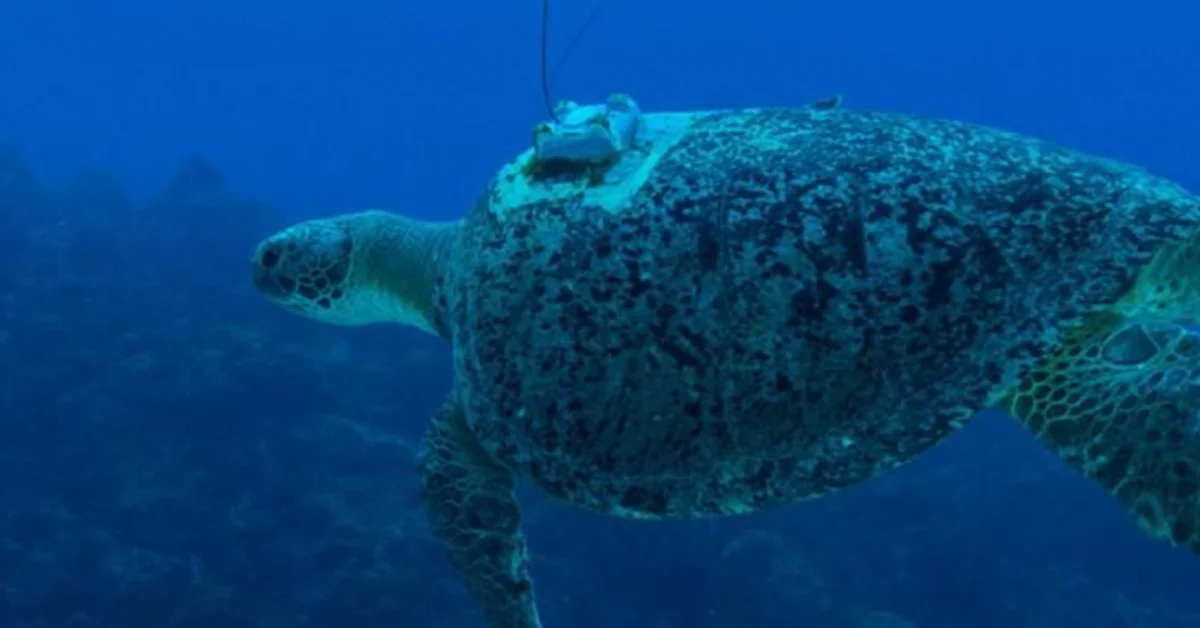
To make these latest discoveries, FSU researchers followed the same group of adult male turtles during breeding season, which occurs from late spring into early summer, from 2019 to 2022. They used satellite tags to collect data on this group of turtles.
Researchers observed two different migration behaviors: After breeding, about 80% of tagged turtles migrated about 180 to 620 miles to different foraging grounds, while 20% stayed in the same breeding area year-round.
“Many turtles undertook long-distance migrations, with some migrating for almost a month,” Armando Barsante Santos, one of the study’s co-authors and a postdoctoral researcher in the Marine Turtle Research, Ecology and Conservation Group at FSU, said in a statement.
“Their sense of navigation is impressive, and identifying paths they use during their oceanic migrations is essential for conservation management.”
For the duration of the study, satellite tags collected data on the turtle’s vertical movement, like how often they dove into the water, how deep, and for how long.
The 20% of turtles that stayed in the same breeding area made frequent and short daytime dives and long dives at night. Migrating turtles, on the other hand, displayed a variety of dives, which the researchers believe is an effort to minimize the risk of predators and reduce energy associated with migration.
This study also provides more nuance to the population balance of sea turtles.
Temperature can impact the sex of a sea turtle. Cooler incubation temperatures produce male hatchlings, while warmer temperatures produce females. As temperatures increase across the globe, more females are hatching, altering the population balance of sea turtle species overall.
“We’re interested in understanding how many female turtles one male can breed with and how males’ behavior can buffer these environmental changes,” Santos said.
“Knowing how many males are needed for a population to be resilient is important information that’s hard to obtain since males aren’t easily accessible for study.”

Ultimately, the research doesn’t just provide the world with more information about male green sea turtles; it can be used to better understand where these turtles live and thrive, improving conservation outcomes.
“Assessing the overlap between key habitats, such as migratory corridors and areas of high turtle density, and … human-made or -connected threats is crucial for redefining conservation strategies in the region,” Professor of Oceanography and Environmental Science Mariana Fuentes, another co-author and leader of the MTREC group, told the university.
“[It] can minimize the mismatch in important areas for sea turtles and marine protected areas in Brazil.”
Santos added that this kind of research provides experts with a “three-dimensional” understanding of the marine environment, which “gives us more details about how susceptible turtles might be to certain fishing gear or vessel strikes, for example.”
“With different fishing gear used at the water’s surface, in the middle water, and at the bottom of the ocean, we need to know how turtles’ use of the area overlaps with these layers,” Santos concluded.
“This can inform strategies that harmonize the use of [the] environment between humans and turtles, including enhancing the effectiveness of the marine protected areas that currently cover more than a quarter of Brazil’s waters.”
You may also like: One of the world's rarest sea turtles was found stranded 5,000 miles from home. He's finally on his way back
Featured Image: Courtesy of Thiege Rodrigues/All Angle Images