When Daniel Zhang was nine years old, his grandmother was diagnosed with stage 3 pancreatic cancer.
Daniel and his grandma were close — and their shared language was games. She taught him mahjong before he could even shuffle a deck of cards.
Following her diagnosis, Daniel accompanied his parents on trips to the hospital for six long months. He watched as she lost her hair and grew weaker during chemotherapy treatments, and failed to grasp why something that was supposed to be helping her appeared to be hurting her at the same time.
Years later, when Zhang was 15, his grandfather was diagnosed with cancer too. He remembered the confusion on his younger sister’s face as she grappled with the same questions that he’d once had.
So, he read the medical reports and tried to translate their grandfather’s cancer into something his seven-year-old sister could understand.
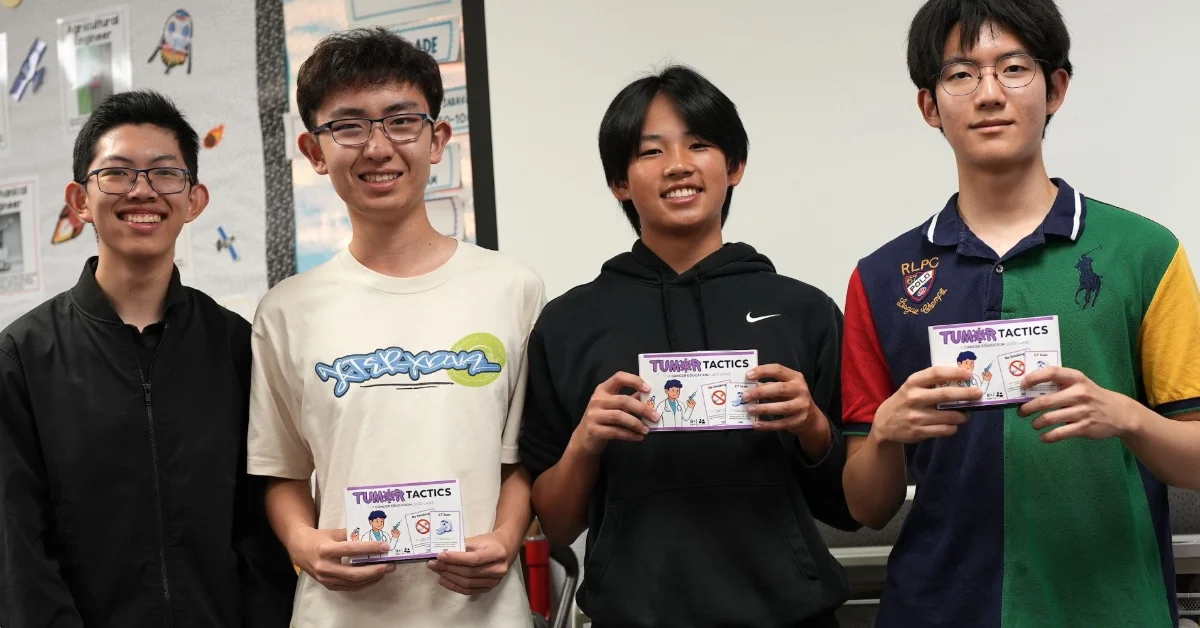
That need he felt — to break down something as unimaginable and painful as cancer into something kids could wrap their head around — would inspire Zhang to create a new card game: Tumor Tactics.
“In Tumor Tactics, each player becomes a doctor treating three tumors: lung, colon, and skin cancer,” Zhang told Good Good Good. “The goal is to cure all three before anyone else! A typical game takes around 30 minutes, and on each turn, you can play a treatment card, use a utility card, and draw a new card.”
Zhang designed the game alongside his friend and classmate, Zachary Tou, whose great-aunt went through cancer treatment as well.
The teens, now 17, had both grown up playing Pokémon and Yu-Gi-Oh! and were excited to bring those game mechanics to life in a new, meaningful way.
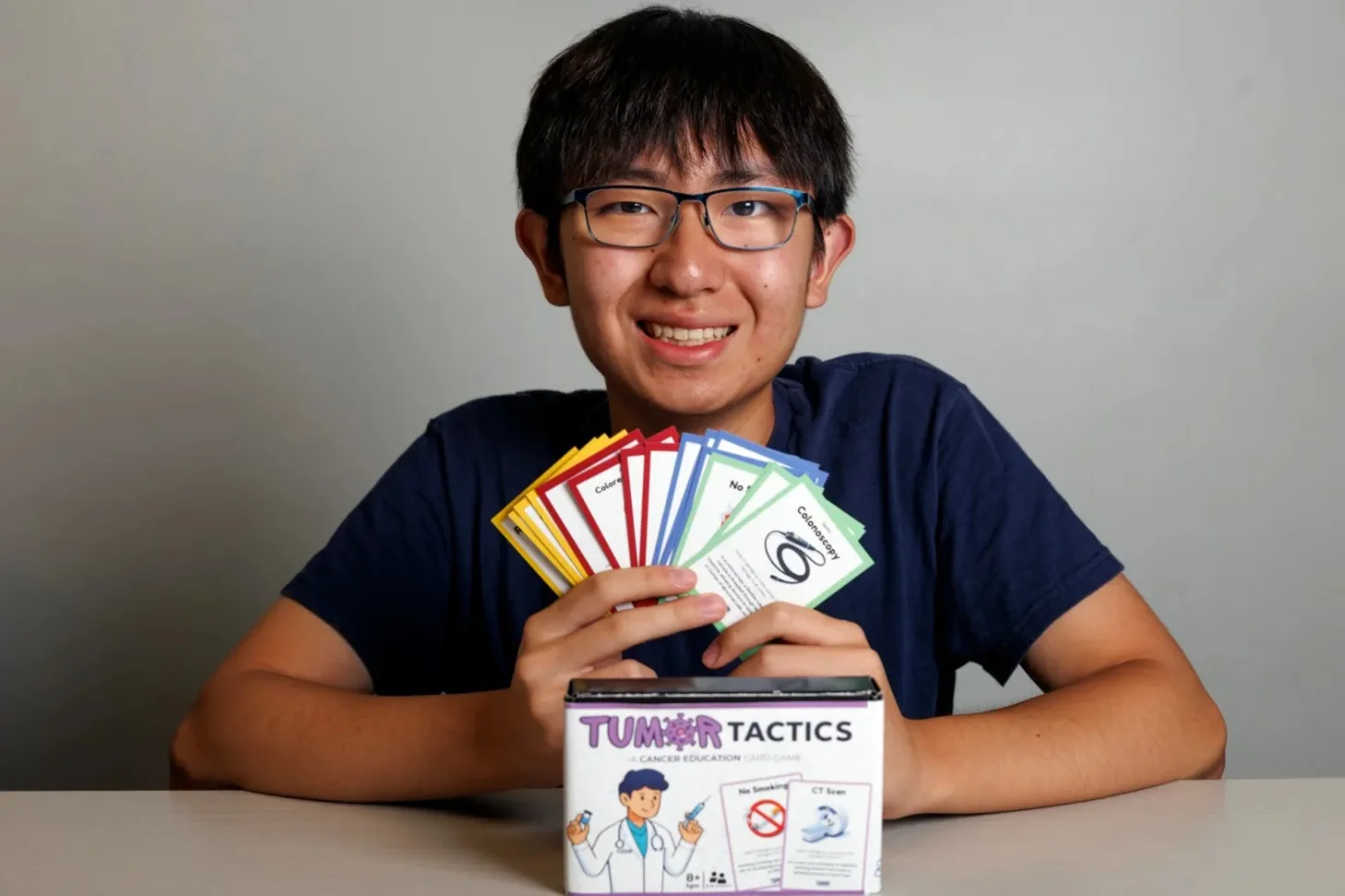
“For example,” he said, “chemotherapy can be a really powerful treatment, but you have to roll a die to determine how effective it is, and you might have to skip your next turn to recover from its side effects.”
“Meanwhile, your tumors can progress to more advanced stages, making them harder to treat, and even a tumor you’ve already cured can relapse! The fun part is figuring out which treatments to use and when while balancing the different risks and tradeoffs.”
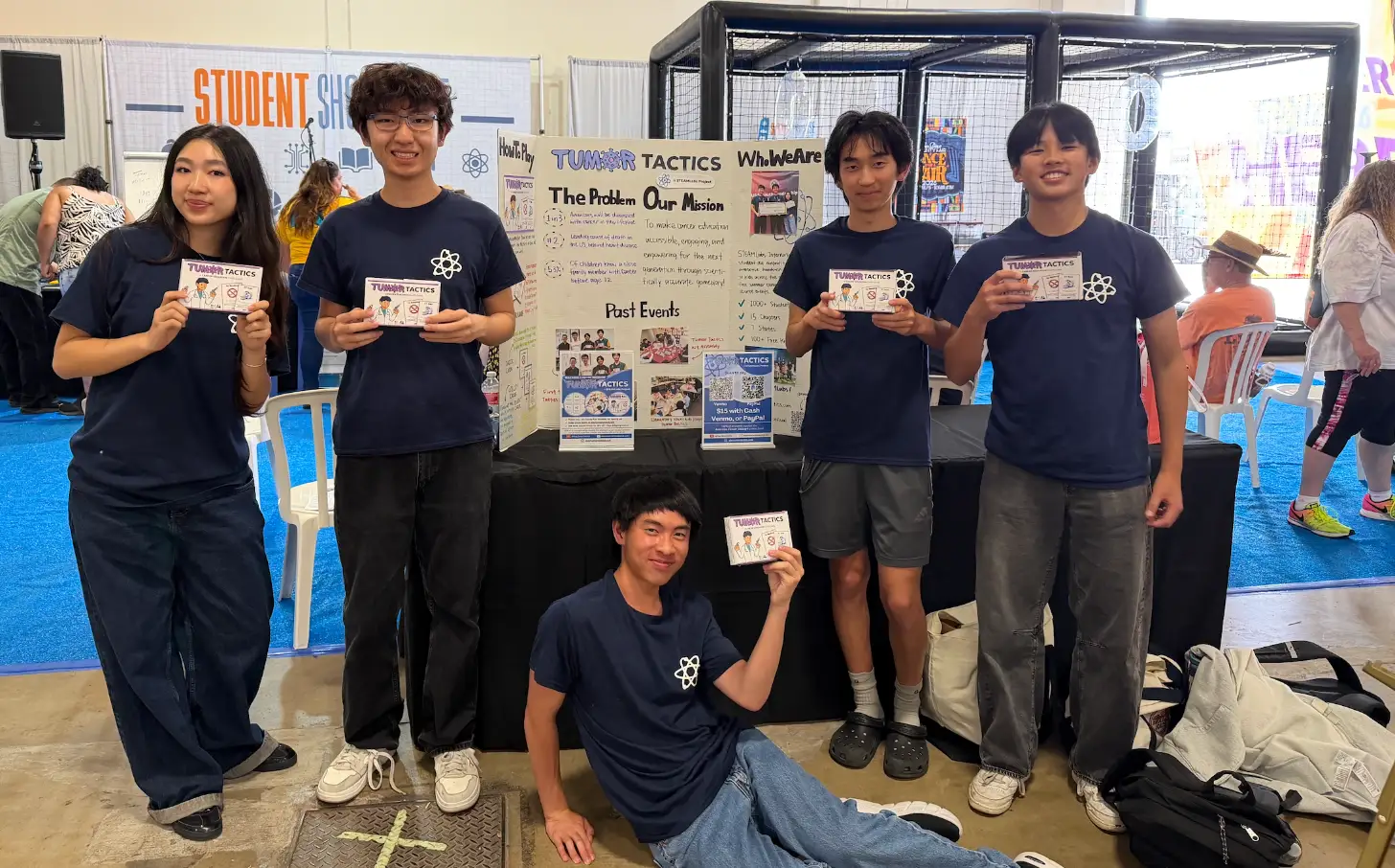
Today, Tumor Tactics isn’t just a card game. It’s a student-led nonprofit leading educational workshops in the San Diego community.
“Our biggest focus is teaching kids about different cancer treatments, how they work, and their specific side effects,” Zhang said. “We introduce chemotherapy, radiation therapy, immunotherapy, targeted therapy, surgery, screening, and prevention, along with concepts like tumor progression, treatment resistance, and recurrence.”
“For example, chemotherapy can be effective at killing cancer cells, but it can also damage healthy cells and cause side effects like fatigue, nausea, and hair loss. We also teach kids that different cancers respond differently to different treatments, so they have to think about which treatment makes sense for each tumor rather than just playing their strongest card.”

Zhang and Tou designed the game for kids ages eight and up — but in real-world classrooms, it’s reaching an even wider range of students. The two teens have been leading educational workshops in public schools across San Diego, engaging students from kindergarten through eighth grade.
“No prior biology knowledge is needed, and younger students can usually pick up the game pretty quickly with a little guidance from our high school volunteers,” Zhang said. “We’ve also found that older students tend to learn the mechanics more independently and naturally start helping younger students understand the game, which has been really cool to see.”
Above all, Zhang and Tou wanted to keep Tumor Tactics as factual as possible, while also keeping it fun and engaging. Zhang said that honoring scientific accuracy was the “hardest part” of game design.
“Zach and I spent a ton of time researching different cancer treatments, their mechanisms, side effects, and how they work against different cancers,” he said. “Some of the resources we referenced include the National Cancer Institute, the American Cancer Society, and Cancer Research UK, which have really helpful information about cancer biology and treatment options.”
They also had a helping hand from their own households.
“Zach’s mom is a physician, and my dad is an immunologist, so both of them reviewed the game’s scientific content and helped us make sure the biology behind the treatments and cards was accurate,” Zhang told Good Good Good. “Our AP Biology teacher also reviewed the game and gave us feedback.”
But the duo’s work is far from done; they are still looking for ways to make the game even better.
“We’ve also been reaching out to healthcare professionals at institutions including UC Davis Health, Mayo Clinic, and Golisano Children’s Hospital at UVM Health for additional feedback,” Zhang said.

“We’ve already received some really helpful suggestions from UC Davis about making the game more appropriate for children affected by cancer, and we’re continuing to seek feedback from healthcare professionals to improve the game.”
To date, Tumor Tactics has gone through nearly 20 iterations as its creators work to strike the right balance between accuracy and accessibility.
“Obviously, something like rolling a die or skipping a turn can’t fully represent real cancer treatment,” Zhang said, “but it gives kids a way to understand concepts like treatment uncertainty and side effects, which we can then explain in more detail during our workshops.”
Throughout their game-making journey, Zhang has been constantly surprised by the children they meet.
“During our first workshop at Deer Canyon Elementary, Zach and I thought we had already figured out all the different strategies and card combinations, but the kids immediately started discovering new ones we hadn’t even considered,” he said.
“They were also asking really thoughtful questions about the biology, like whether they could combine different treatments or use diagnostic scans to identify tumors before they progressed.”
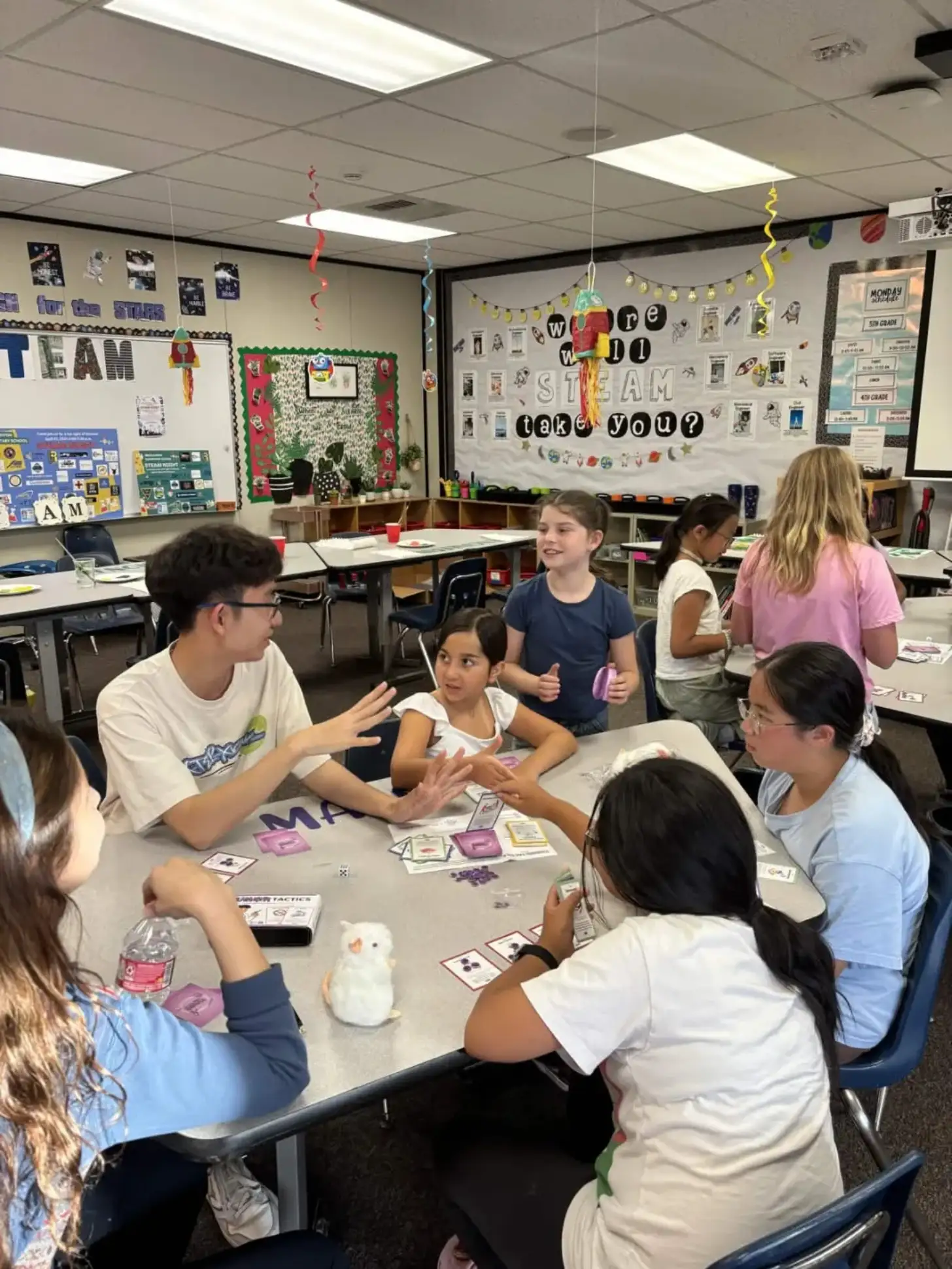
At the end of all of their workshops, Zhang and Tou always leave room for an open discussion with students.
“I was really surprised by how many students wanted to share their own experiences with cancer in their families,” Zhang said. “Some talked about their grandparents, parents, or other relatives going through treatment, and it was really touching to see how much they wanted someone to listen and help them understand what was happening.”
“That’s honestly been one of the most meaningful parts of this entire project for me.”
You may also like: In this new heist video game, players return museum artifacts stolen from African countries
Featured Image: Courtesy of Daniel Zhang