When Campbellsville, Kentucky resident Venitia purchased her new home, she didn’t know it would come with a new backyard friend.
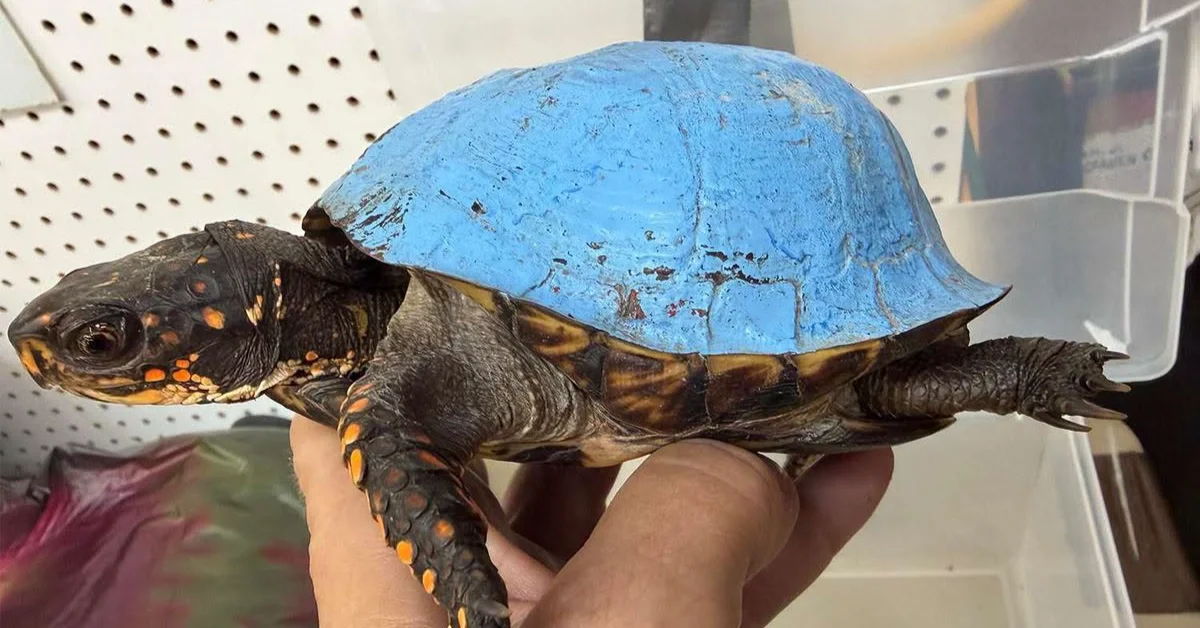
After moving in, she discovered an Eastern box turtle living in her backyard — but it didn’t look how it should. The turtle was covered in a thick layer of bright blue paint.
According to a neighbor, the previous resident of the property had intentionally painted the turtle blue — along with other area turtles in red and white.
Venitia called Wilderness Trail Wildlife Center in London, Kentucky and then brought the turtle to their facilities about two hours away, where experts would evaluate the turtle and see what they could do to help.
They named the turtle Pickett.
“The blue paint is not simply sitting loosely on her shell. It is extremely hard and firmly bonded to the scutes, so removing it isn’t as simple as peeling or scrubbing it off,” the rehab center wrote on Facebook upon introducing Pickett to its online community.
“Trying to scrape, sand, or aggressively remove it could damage the shell underneath. Because we don’t know what type of paint was used, we’re also not going to experiment with harsh paint removers or solvents.”
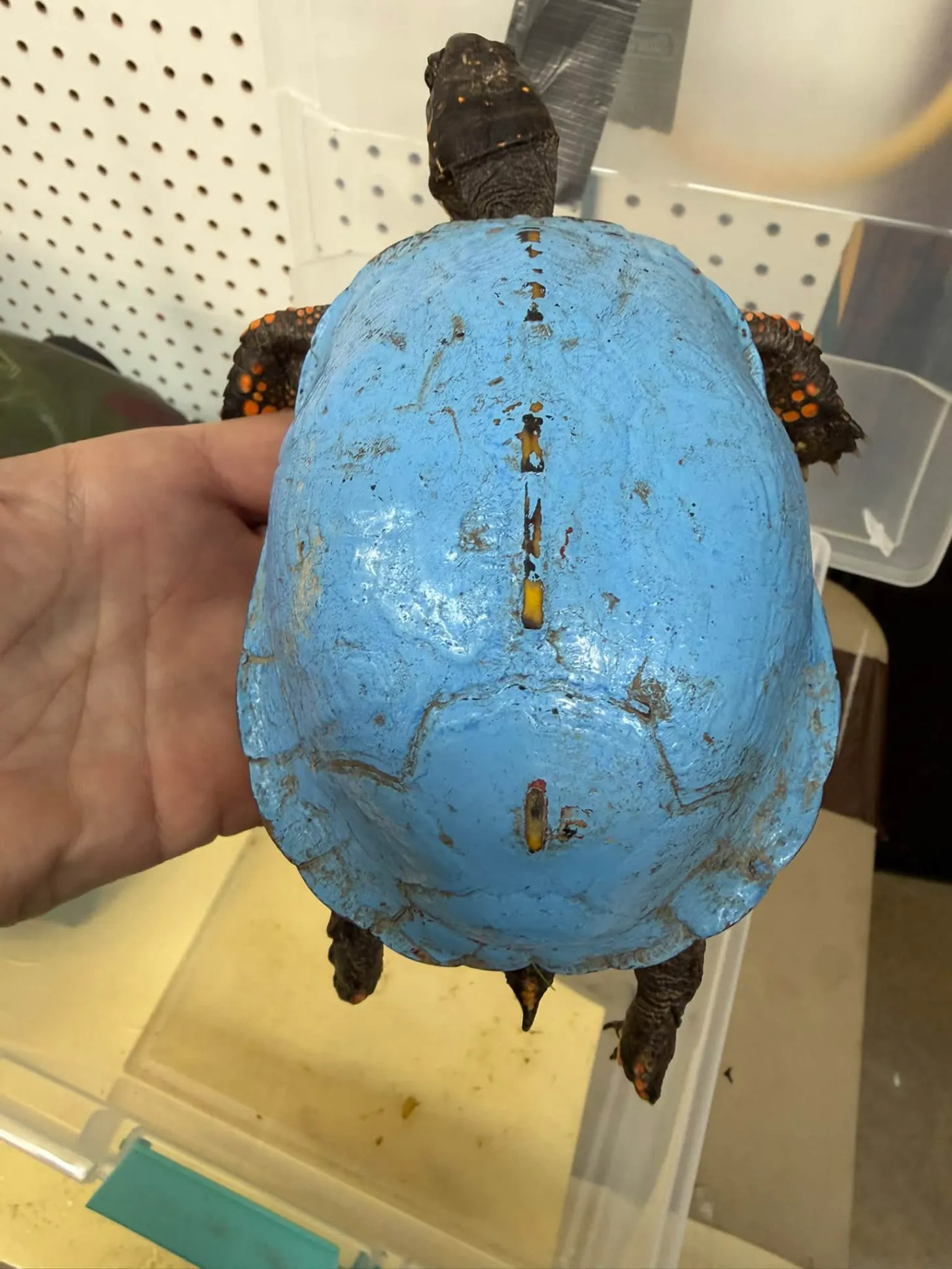
After learning the paint may have been on Pickett’s shell for about two years, the rehab team also quickly discovered that there was a red layer of paint underneath the blue. This would not be a quick fix.
“Putting paints and chemicals that were never intended for an animal onto that shell is simply not something we should be doing to wildlife,” licensed wildlife rehab specialist Tonya Poindexter told Popular Science, emphasizing that a shell is part of the turtle’s body and skeletal system and it grows and mends itself along with its owner.
It’s a miracle that the turtle had survived so long with the painted shell for another reason, too.
“There’s also a very important survival issue for a wild Eastern box turtle: camouflage,” Poindexter said. “Their natural brown, yellow, and orange patterns blend beautifully with leaves, soil and the dappled forest floor. That’s part of their protection. Covering that natural camouflage with bright blue or red paint can make an animal that normally almost disappears into its surroundings stand out dramatically.”
On Facebook, Poindexter wrote more pointedly: “A turtle’s shell is NOT a blank canvas.”
In the days following Pickett’s arrival at the facility, Poindexter and team have worked tirelessly to try to remove the paint.
To do so, rescuers are soaking the turtle in warm water as an expert scrubs her shell in small areas with a toothbrush covered in Dawn dish soap. For tougher-to-remove spots, they use small amounts of mineral spirits while maintaining airflow to Pickett’s face so she doesn’t inhale any fumes. That is then followed by a thorough wash and rinse.
It’s a tedious and time-consuming process.
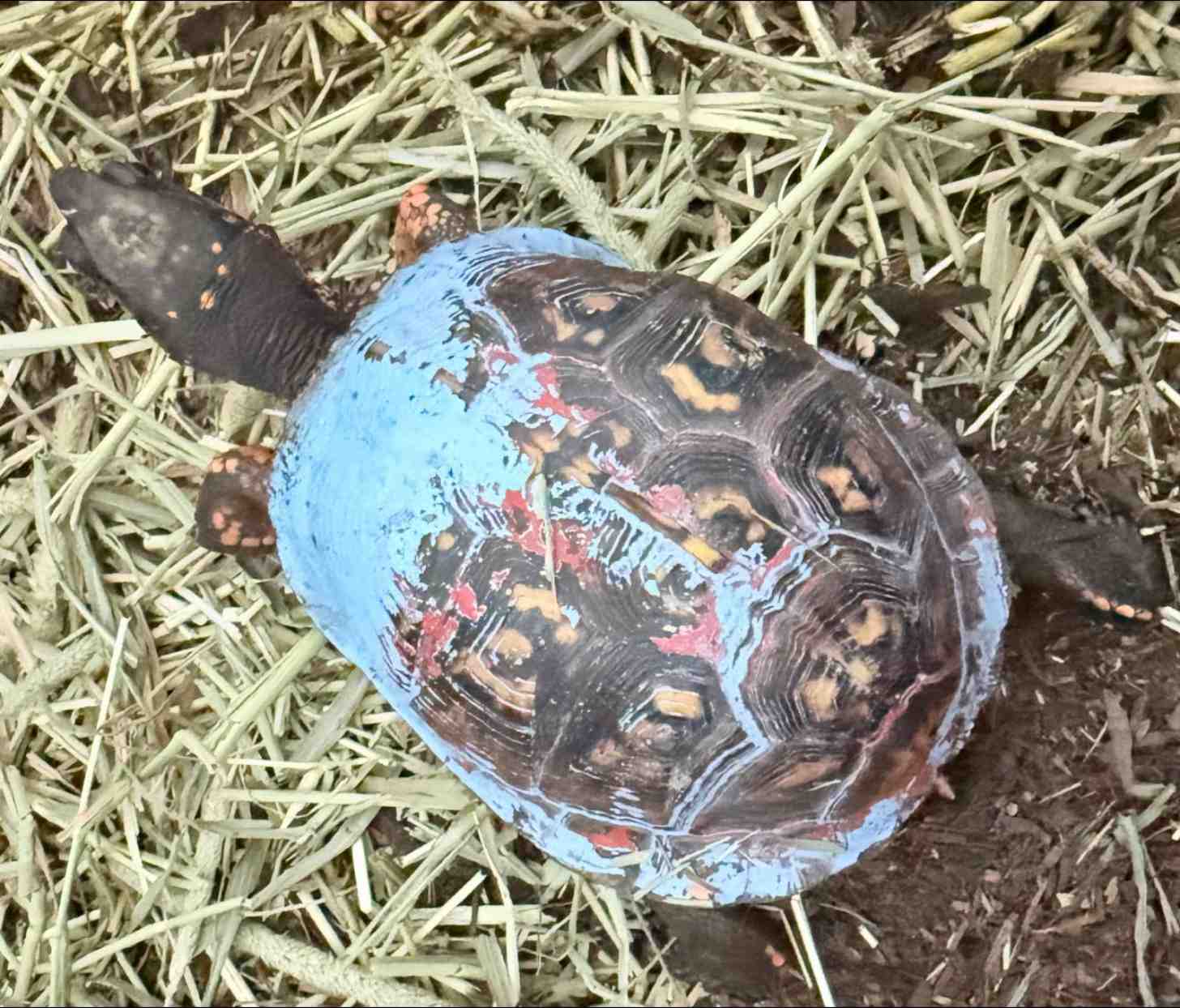
“Our awesome wildlife rehabilitator Etta Lynn Denny has been patiently working with her every day,” the facility shared in an update post. “This is not something we can rush. We’re removing only a little paint at a time, taking great care not to damage her living shell underneath.”
The good news is that Pickett is handling things well, reportedly eating, drinking, and “acting like a box turtle should” as she continues to get cleaned off.
After about six days of effort, about half of the paint seemed to have been cleared from Pickett’s shell.
She’s not out of the woods yet, but as soon as all of the paint is removed, Venitia will return to pick up the turtle and return her to the same area where she was found.
“And that part matters,” the Wilderness Trail Wildlife Center cautioned. “Eastern box turtles have small home ranges and strong homing instincts, so whenever possible, a rehabilitated box turtle should be returned to the area it came from — not relocated somewhere that simply looks like good turtle habitat.”
With a bit more time and TLC, Pickett’s natural camouflage will be restored — but Poindexter emphasized one other piece of education: cleaning a turtle like this is a job for experts.
“This isn’t something I recommend people try themselves. Solvents can be irritating and potentially harmful. If someone finds a wild turtle covered in paint, glue, tar, or another chemical, I would recommend contacting an experienced licensed wildlife rehabilitator or veterinarian rather than experimenting with chemicals or trying to scrape it off,” she told Popular Science.
Most of all, she hopes Pickett’s story reminds people to let nature be wild.
“I’d love for people to remember one simple thing from her story,” Poindexter concluded, “Eastern box turtles are already beautifully painted — by nature.”
You may also like: A stranded sea turtle got wedged between jagged rocks. Three men came together to save it from drowning in a viral video
Featured Image: Wilderness Trail Wildlife Center/Facebook