Over two decades ago, the University of California, San Diego created what is now known as ALERTCalifornia, a natural-disaster and wildfire response network that monitors over 1,200 trail cameras across the state.
Through the years, animals like golden eagles have made cameos on the high-elevation equipment.
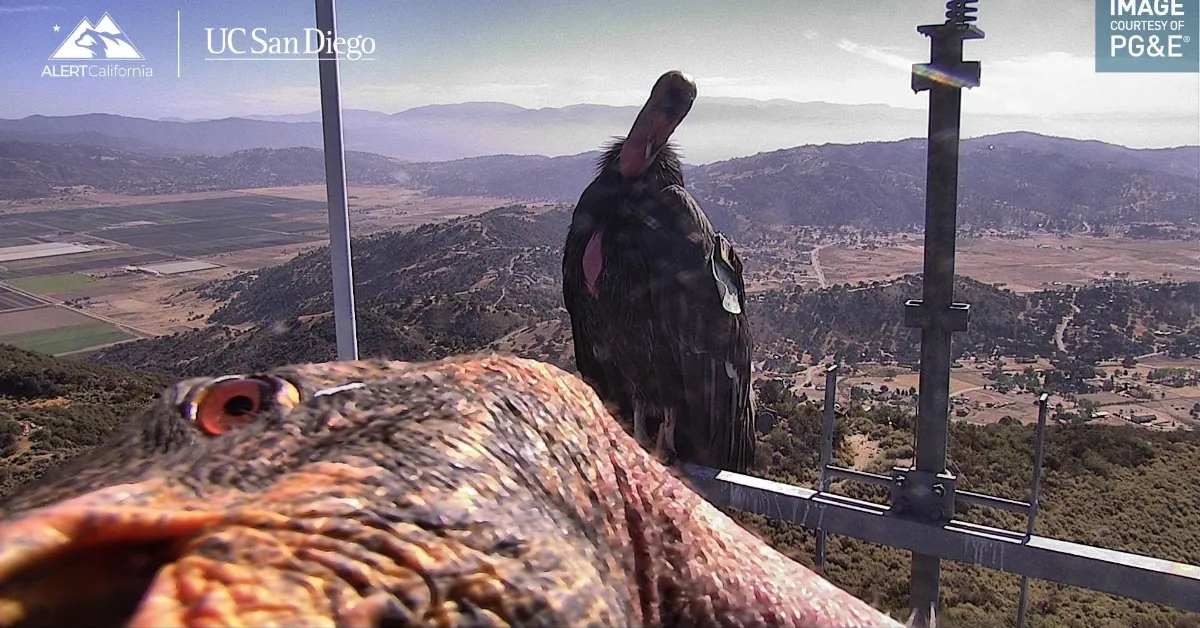
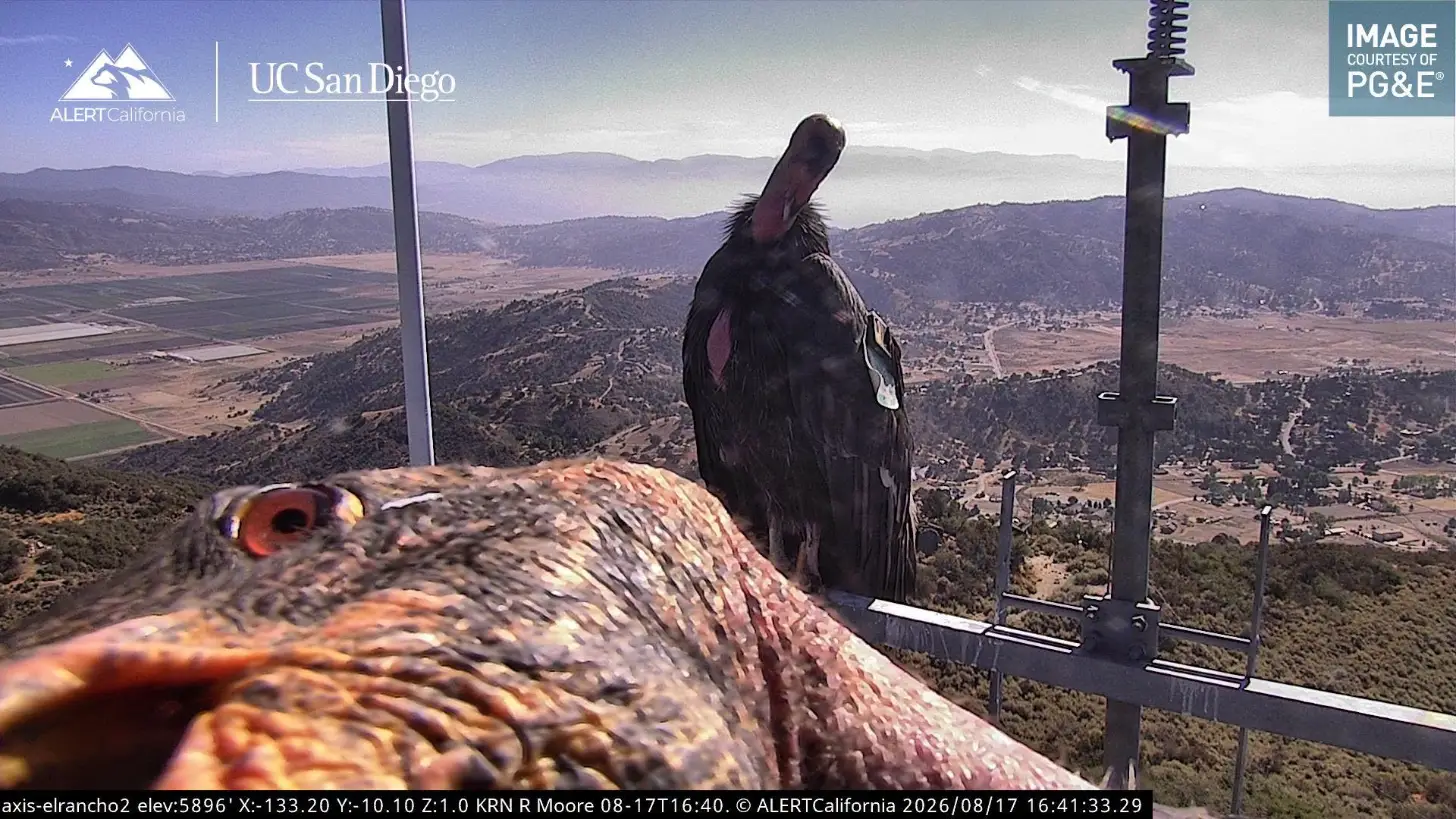
On August 17, ALERTCalifornia shared a snapshot from their “El Rancho” trail camera in which two California condors could be seen — one pecking at the camera with curiosity while the other posed in the background.
“Now that’s a great selfie!” one Facebook user said.
“He’s showing off!” another said with a laughing emoji.
“They’ve been up there quite a bit lately,” one person noted. “A couple weeks ago, there were over 20 condors.”
The image was a delight to conservationists who have been trying to revive the critically endangered species, which boasts a massive wingspan of 10 feet.
Four decades ago, the birds were almost wiped out completely by poaching, habitat loss, and lead poisoning. The last of which was due to condors scavenging the carcasses of hunted animals, which were filled with ammunition. The birds would then incidentally ingest lead as they ate, unknowingly passing it on to their chicks.
By 1982, only 22 California condors were estimated to remain in the wild.
To prevent their extinction, the United States Fish and Wildlife Service started the California Condor Recovery Program. Over the course of five years, all 22 birds were taken into wildlife refuges for a captive breeding program.
Then conservationists crossed their fingers, hoping for the best.
In 1988, a chick was born at the San Diego Zoo Safari Park, becoming the first California condor in the world to ever be bred and hatched in a zoo.
That first chick, Molloko, alleviated a lot of fears that the California condor couldn’t be bred in a zoo.
“After 1988, when she hatched … we had more and more success,” Ron Webb, lead wildlife care specialist at the San Diego Zoo Safari Park, told KTLA 5.
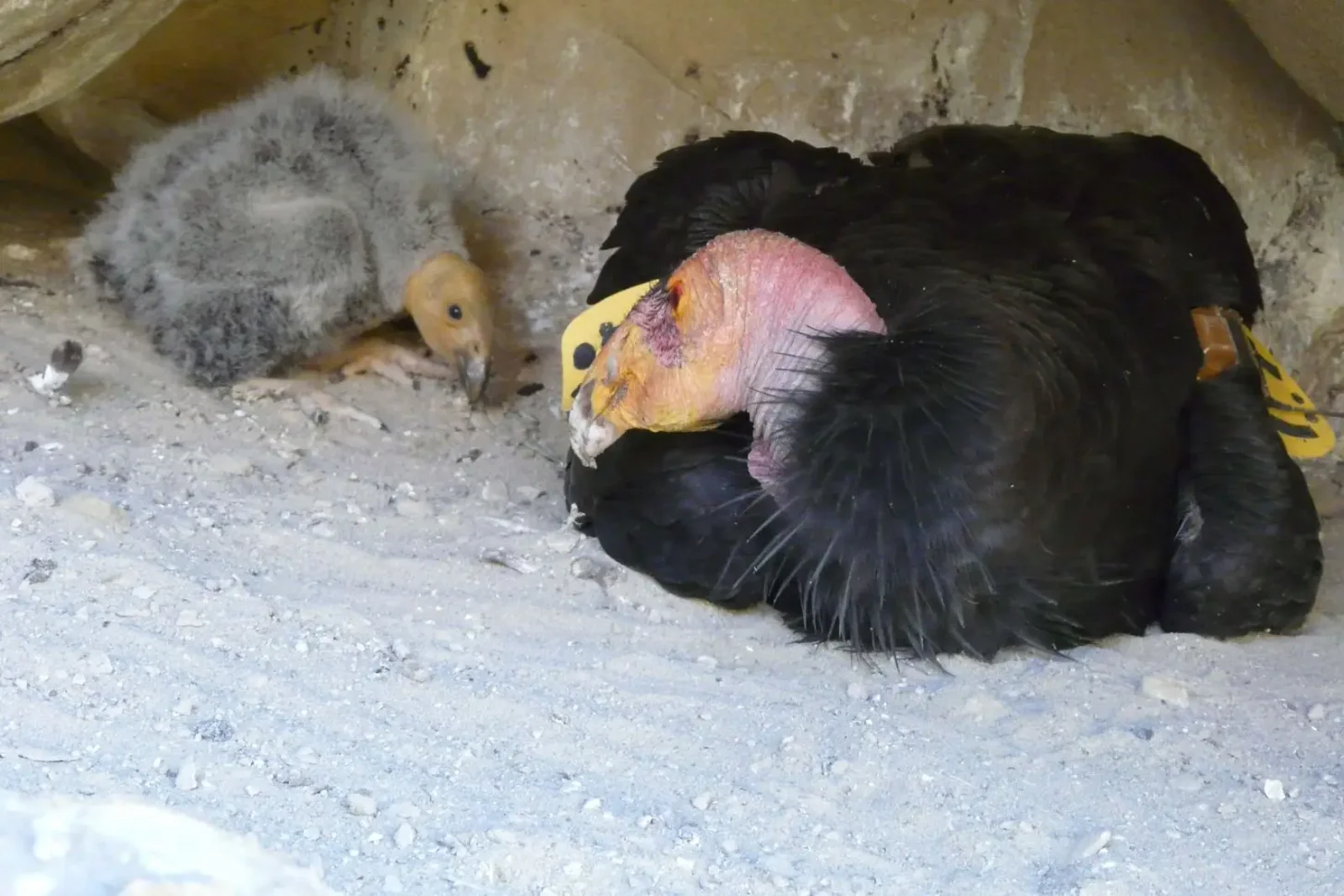
That captive breeding program would go on to become the saving grace for the species. Today, more than 500 California condors can be found worldwide — and roughly half of them fly free.
“We are seeing condors breeding in the wild and pairing up, and finding their own food, and doing everything that they need to do to be successful,” said Nicole Weprin, a wildlife biologist with the U.S. Fish & Wildlife Service.
You may also like: This photographer left trail cameras in a remote Kenyan forest for months. He uncovered a hidden 'wildlife highway'
Featured Image: ALERTCalifornia