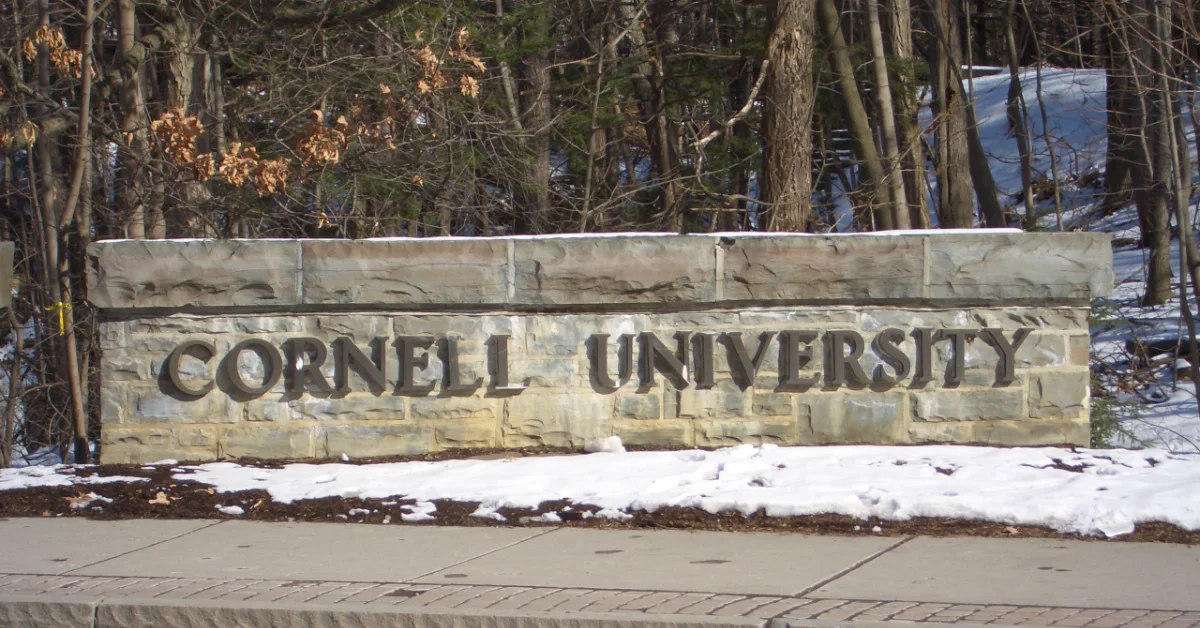
On September 18, The Cornell Daily Sun — the independent, student-run newspaper at Cornell University in Ithaca, New York — published a story that would rock the nation.
A woman, anonymized with the name Jane Doe, had just filed a lawsuit, “alleging that she was gang raped after being coerced into consuming drugs by several men at the Chi Phi fraternity house at Cornell in 2024,” the Sun reported.
Jane Doe is suing Cornell University, several Chi Phi fraternity organizations, seven current and former students, several sorority organizations, the former president of Cornell’s Chi Phi chapter, a local bar, and several unnamed individuals.
Three days after the Sun broke the story, its editorial board published a scathing editorial about how the university failed the plaintiff, titled “Cornell Won’t, We Will.” At the top of the article, the paper listed the seven names of the Chi Phi members accused of gang raping Jane Doe.
In the days that followed, more details emerged about the case, and numerous public figures and local officials have spoken out about the mishandling of the student’s initial Title IX report. New York investigators also reopened a criminal investigation.
This week, Jane Doe’s attorney, Thomas Giuffra, gave a brief interview to CNN’s Jake Tapper.
“I think she wants accountability,” Giuffra told Tapper after being asked what his plaintiff wanted out of the lawsuit.
“Her life has been destroyed. She’s a woman who comes from a small town. She was not somebody who was a legacy or somebody who was from a wealthy family. This was her dream,” the attorney said about Jane Doe’s academic enrollment at Cornell. “And it was taken away from her at a young age and in just a horrific fashion. She’s not even in college anymore. She is barely hanging on.”
“One of the things that I think hasn’t come out is she wanted to leave the university and go home and heal,” Giuffra continued. “And her parents, who had paid thousands and thousands of dollars for her to attend Cornell, tried to get their money back. And Cornell said, no, you have to stay in school. So she spent an entire semester in the campus where she saw these guys on a fairly regular basis, and that is just horrifying to me.”
This detail has stood out to thousands — including Cornell’s Student Assembly Representative at Large Myshay Causey.
“What bothers me the most about this situation is how often victims end up losing out on their education in search of justice,” Causey said in a recent social media video.
“Reporting often comes with the risk of being socially ostracized, targeted, academically falling behind, and being stuck at the same university reliving your trauma. This is a systemic issue that we see happening time and time again in cases like this.”

Causey’s solution? Creating an “inter-Ivy League guaranteed transfer” program for victims of sexual assault, which she calls “similar to witness protection programs and military expedited transfers.”
“We have a systemic issue in the way that we handle sexual assaults. And that’s more than just us failing to punish abusers. That’s also the way that we fail to properly support victims,” Causey continued in her video. “I want to create a system where never again are victims the ones risking their own education by speaking up.”
She calls the plan #WelcomingJaneDoe.
Causey understands that this is a complex system that cannot be built overnight, though with a position on the student assembly representing Cornell’s approximately 16,000 undergraduate students, she hopes to affect change.
“My position gives me the ability to introduce and help pass legislation, advocate directly with administrators, and meet with Cornell staff about student concerns,” she told Good Good Good in an email.
“It also gives me the institutional legitimacy to represent Cornell students in conversations beyond campus, including the national conversations I am now having with representatives and supporters at universities across the country.”
So far, she has a six-page plan drafted with five phases that would eventually result in the transfer program’s implementation.
Those phases include, as quoted from a PDF Causey shared with Good Good Good:
- Reaching out to and organizing student representatives, student governments, alumni organizations, survivor advocacy groups, administrators, staff, legal professionals, survivors, and other stakeholders from Ivy League universities and institutions across the country to build a national coalition focused on educational continuity for survivors of sexual assault
- Hosting meetings with participating institutions and stakeholders to understand differences in admissions, credit transfer, financial aid, housing, academic programs, survivor support, and other institutional processes, and use this information to develop a practical framework for supporting survivors who choose to transfer
- Organizing petitions, surveys, and other forms of student engagement under #WelcomingJaneDoe to demonstrate support across participating universities and create awareness and institutional pressure around the need for educational continuity
- Working with participating student representatives and institutions to develop and pursue coordinated policies that establish meaningful transfer pathways for survivors of sexual assault, allowing survivors to continue their education at participating institutions without being forced to sacrifice their academic progress or opportunities
- Reassessing the effectiveness of institutional action based on the response and implementation of participating universities and determining whether additional measures, including broader state or federal legislation establishing baseline protections for educational continuity, are necessary
Causey said the idea has not yet formally been introduced as a resolution for Cornell to pass, as she first wants to build relationships across universities and develop a feasible plan that works before bringing it under formal consideration.
But her idea is not the only way members of Cornell’s student government have responded to the Jane Doe story.
On October 1, the student assembly held a public hearing for students to speak directly to their representatives about the issue. The New York Times called it a “fiery public meeting.”
“We also unanimously passed Resolution 15, ‘Institutional Transparency and Accountability in the University’s Response to Sexual Assault,’ which calls for greater accountability and transparency from Cornell, the release of information related to sexual assault and this case, and a task force to reassess Cornell’s sexual assault response processes and fraternity and sorority life,” Causey told Good Good Good.
“The Assembly has also passed resolutions addressing consent training on campus and providing free counseling for survivors of sexual assault. These resolutions are currently pending confirmation from the administration.”
Eeshaan Chaudhuri, the student body president, echoed the organization’s support for students like Jane Doe.
“We’re absolutely ashamed of the events that happened on campus,” Chaudhuri said, according to The New York Times. “I think we’ve made it abundantly clear for the past couple of days that we as a campus community stand with victims of sexual violence.”
Causey — who went viral for inviting Kamala Harris to her high school graduation last year — has her sights set on change far beyond her own campus.
“I’m proud of the work the student assembly is doing to push Cornell toward meaningful change,” she told Good Good Good.
“My hope is that #WelcomingJaneDoe can take that work one step further by changing the system beyond Cornell. Since this issue gained national attention … I think it’s fitting that a nationwide solution could also begin here.”
If you or someone you know has experienced sexual assault, you can reach the free and confidential National Sexual Assault Hotline, RAINN, by calling 1-800-656-4673 or using its online chat feature.
Featured Image: Claude-Étienne Armingaud/Wikimedia Commons (CC BY-SA 3.0)