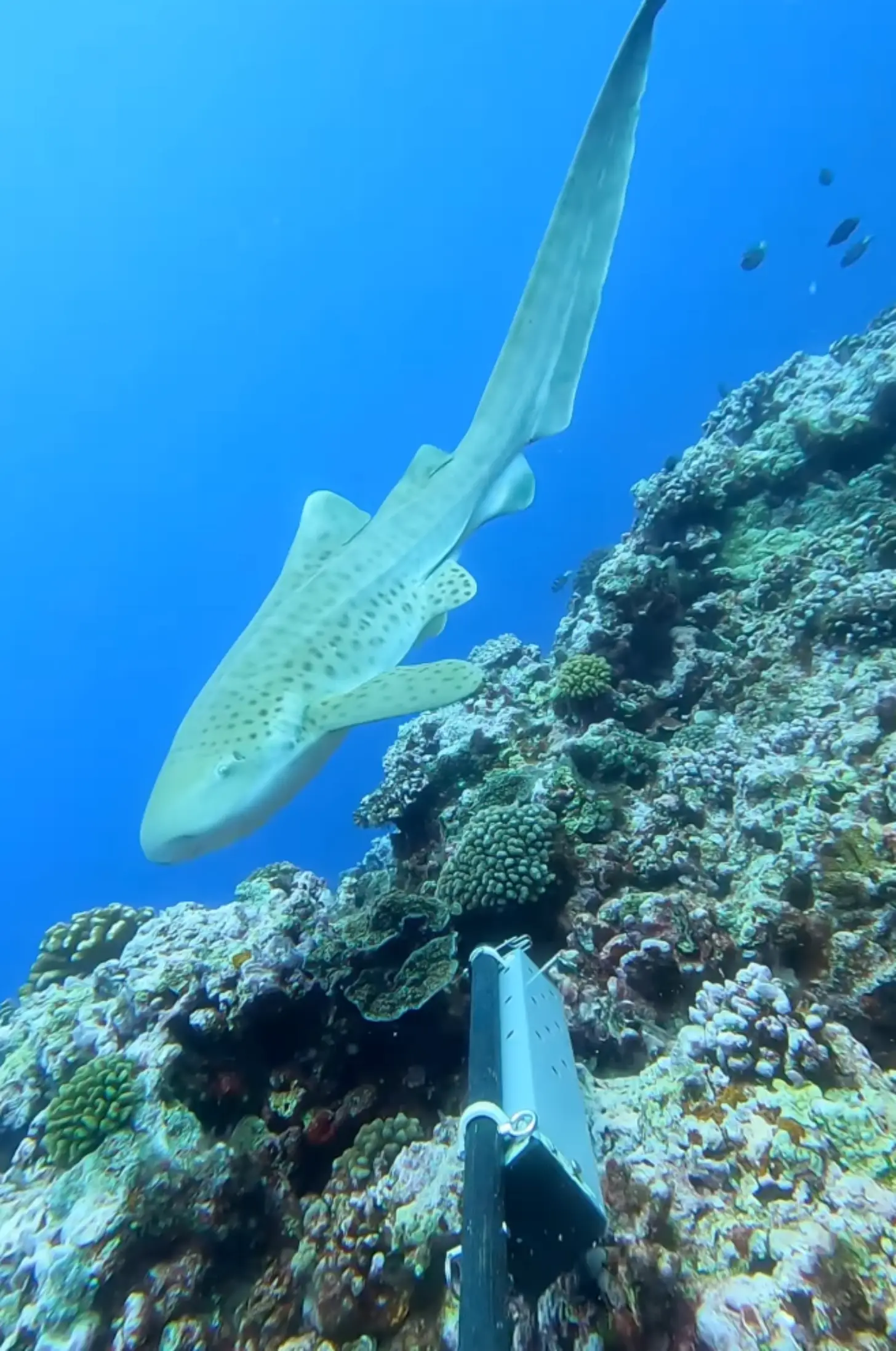
To study the secret life of marine animals, National Geographic scientists regularly deploy Baited Remote Underwater Video, or BRUVs.
Simply put, a BRUV is like a GoPro with fish food attached to it.
“The systems are left on the seabed to record marine wildlife for an hour at a time to capture footage of marine wildlife without the presence of divers,” Jett Walker, a scientist with National Geographic Pristine Seas, told Discover Wildlife.
On August 11, National Geographic Pristine Seas took to Instagram to share its latest BRUV footage.
“In this #POVBRUV series, we leave the humans behind and watch what happens,” the research team posted.
The video, which marked the first BRUV deployment in Samoa, included a shocking spectacle: a “beautiful” leopard shark, also known as a zebra shark.
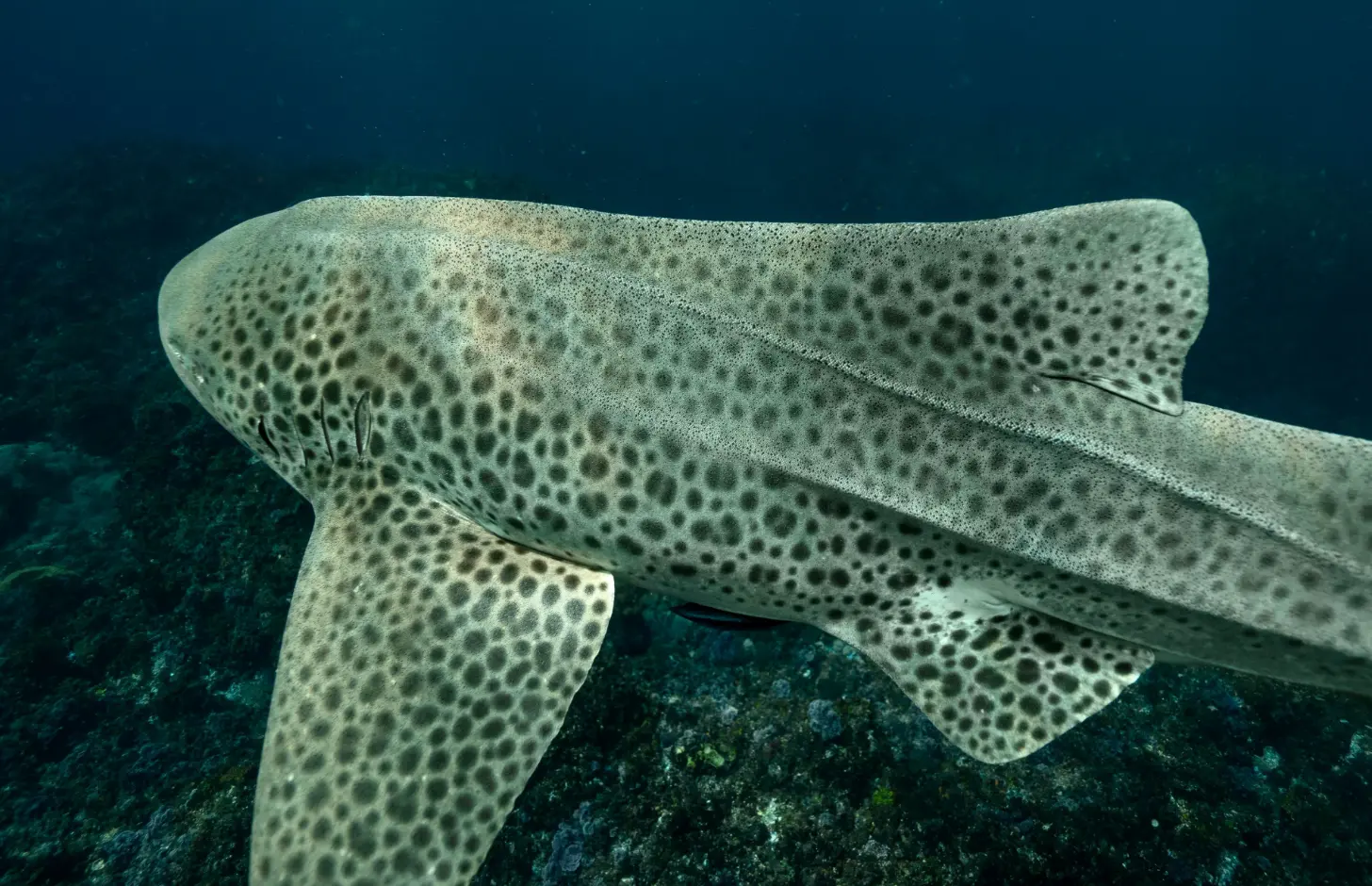
“These carpet sharks are slow-swimming predators that eat gastropods and bivalve mollusks,” National Geographic Pristine Seas wrote. “They frequent sandy bottoms but can also be found on coral reefs, as we observed here.”
“What a great way to start our time in Samoa!” It added.
In his interview with Discover Wildlife, Walker underscored just how incredible that moment was.
“Leopard sharks are globally endangered and are rarely documented in this part of the Pacific,” Walker explained. “Although older checklists and databases have suggested that the species occurs in Samoa, those reports lacked independently verifiable evidence such as photographs, video, or a specimen.”
This means that the National Geographic Pristine Seas had just captured the first on-camera sighting of a leopard shark in Samoan waters.
“A single camera deployment can reveal something entirely unexpected and add an important piece to our understanding of a species’ distribution,” Walker said.
National Geographic Pristine Seas was founded in 2008 by Enric Sala, a famed marine ecologist and conservationist. The initiative, which blends wildlife conservation and filmmaking, has led 45 scientific expeditions.
The evidence unearthed across nearly three decades of underwater explorations has sparked the creation of 28 marine reserves around the globe.
“When we take government leaders down hundreds of meters underwater in our submersible, for example, we can open a window to their world that they’ve never seen before,” Sala told National Geographic. “You can see the awe and pride on their faces.”
Altogether, the initiative has led to the protection of more than 2.5 million square miles of ocean.
Sala said: “The ocean provides us with the oxygen we breathe, moments of wonder, jobs, and food for people around the globe — making it essential to protect.”
You may also like: Endangered 'walking pinecone' mammal spotted after 24-year absence
Featured Image: National Marine Sanctuaries (CC BY 2.0)