Every day the Good Good Good team collects the best good news in the world and shares it with our community. Here are the highlights for this week!
If you want to get good news in your inbox every day, join the Goodnewsletter — the free daily newsletter designed to leave you feeling hopeful.
The Best Positive News We’re Celebrating This Week —
Kazakhstan just released its first tiger into the wild, 70 years after they were last seen
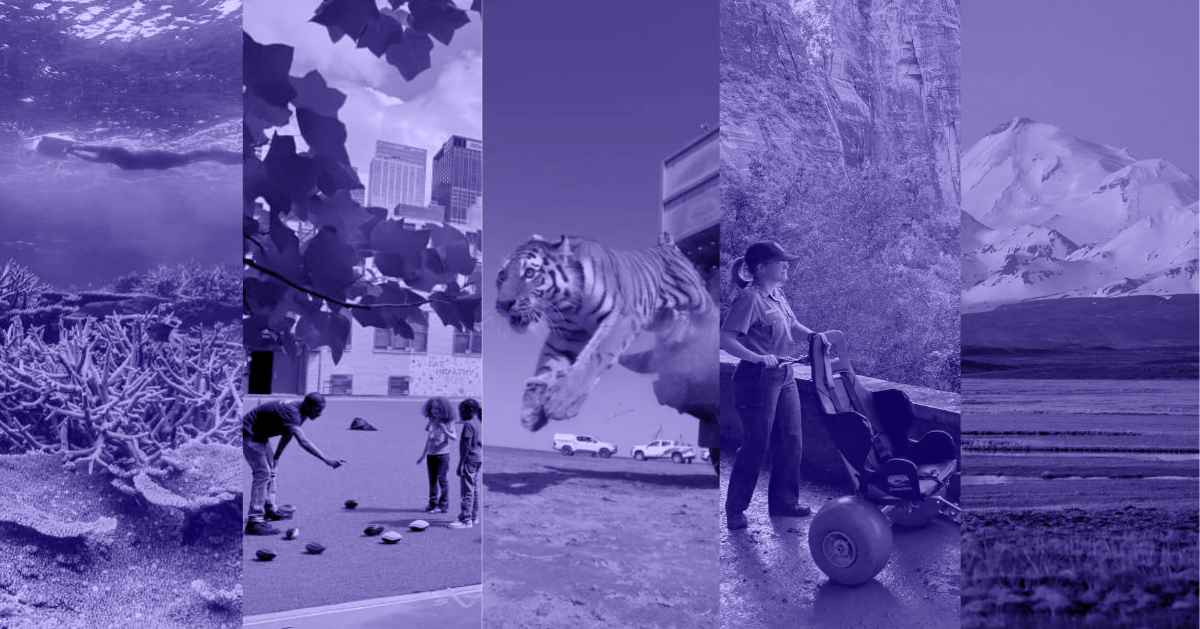
At the end of July, an adult female Amur tiger called Umit — which means “hope” in Kazakh — leapt from her cage on the back of a pickup truck as she was released into the wilderness of a 1.1 million-acre nature reserve in southeastern Kazakhstan.
It’s the first time in the 70 years since they were wiped out that a wild tiger will roam in the country.
The reserve was established in 2018 to create the conditions for the tigers’ return to the wild, including efforts to increase the population of their natural prey, such as Bukhara deer and kulan. The preparations took over a decade.
Good to know: The area where Umit was released was actually once inhabited by the extinct Caspian tiger. The Kazakh government chose to release Amur tigers after research showed their genetic makeup was almost identical to that of Caspian tigers, which went extinct due to habitat loss and hunting by humans.
After a weeklong rescue effort, over 60 cats have been saved from an abandoned sailboat: ‘They’re incredibly resilient’
→ Read more
Loggerhead sea turtles are having a record nesting season on the East Coast, especially Florida
A nearly 10-mile stretch of Florida beach just north of West Palm Beach is seeing a record number of loggerhead sea turtle nests, with just over 13,000 total nests. It’s a huge jump from nearly a decade ago, in 2007, when there were only around 3,600.
Experts credit both the Endangered Species Act and state laws for supporting the loggerheads’ comeback.
Just up the coast, Georgia is expected to see more than 4,000 nests, breaking a nearly 40-year record. In North Carolina, nests have already reached the same numbers as last year, and the nesting season still isn’t over.
→ Read more
A new movement is turning school playgrounds into green spaces and community centers
The nonprofit Trust for Public Land has helped hundreds of schools across 26 U.S. states transform their playgrounds from an expanse of unshaded blacktop into shady, green oases both for students and the community.
It’s part of the nonprofit’s larger vision to ensure everyone in the country can get to a quality park within a 10-minute walk of their home.
Beyond adding color with murals and painted basketball courts, and other natural elements — like climbing boulders and tree stumps — the redesigns all have climate change in mind, with green spaces, rain gardens, and more to mitigate climate impacts and keep temperatures cooler.
Even better: Trust for Public Land isn’t coming in and redesigning the spaces on their own. Students survey each other and work together to decide what they want on their playground, and administrators, custodians, recess monitors, and afterschool caretakers weigh in, too: “The users are the designers.”
You may also like: Good News: Tiny urban green spaces can cool cities and save lives
Humans used to kill lions in this African village. Now, they get health benefits in exchange for saving big cats
→ Read more
Deforestation in Brazil’s Amazon reached its lowest level in 13 years
New satellite data revealed that deforestation in the Brazilian Amazon is at a 13-year low, with 1,110 square miles deforested between August 1, 2025, and July 31, 2026, 36% lower than the previous 12-month period.
It’s also 55.6% lower than the average area deforested in the last decade.
The country has pledged to eliminate all illegal deforestation by 2030, and has continually made progress toward achieving that goal.
The Great Barrier Reef is finally showing “signs of recovery” after dramatic declines
The Great Barrier Reef, which has been widely heralded as the Earth’s “largest living structure,” spans over 1,400 miles off the coast of Queensland, Australia — the size of a small country. For the past 15 years, the health of the coral reef has fluctuated dramatically, but a new report from the Australian Institute of Marine Science found “promising signs of recovery,” with coral cover actually increasing in several regions.
From 2025 to 2026, the northern reef’s coral cover increased from 30% to 35.1%, while the central reef’s coral cover increased from 28.6% to 31.6% — both above long-term averages.
Although climate change and coral bleaching remain very real threats, Australian scientists now have verifiable proof that the reef is becoming more resilient over time.
Even better: In early 2026, after a marine heatwave posed mass coral bleaching threats, a huge monsoon arrived just in time. The cloudy, rainy weather cooled the reef, giving the coral time to grow their symbiotic algae and survive another bleaching event.
→ Read more
You may also like: Satellite imagery and AI help uncover an Ireland-sized addition to global coral reefs
Researchers tracked sea turtles in the ocean with satellite tags. It revealed something they had never known before
→ Read more
Wind and solar have now overtaken fossil fuels for electricity generation in Germany
New data revealed that wind and solar generated 44% of Germany’s electricity in 2025, overtaking fossil fuels. This milestone puts the country on track to fully phase out coal “much sooner” than originally planned.
Germany introduced its landmark renewable energy law in 2000, and has since seen its share of wind and solar generation skyrocket. At the same time, coal fell from supplying more than half of its electricity to just 21%.
The country first aimed to eliminate coal entirely by 2038, but is now expected to do that even sooner.
A federal judge halted a major land deal in Izembek National Wildlife Refuge
In 2025, Interior Secretary Doug Burgum, serving the Trump administration, approved a land exchange involving 490 acres of Alaska’s Izembek National Wildlife Refuge.
The deal involved the construction of a road connecting the remote town of King Cove to an airport for emergency evacuations. However, 10 miles of that road would cut directly through the refuge’s protected wetlands.
On August 18, Judge Sharon Gleason sided with environmental groups and Alaska Native groups, ruling that the Interior Department’s land exchange violated several federal laws, including the Endangered Species Act and the Alaska National Interest Lands Conservation Act.
Why is this good news? Izembek’s wetlands are home to one of the world’s largest beds of eelgrass, which feeds a quarter-million migratory birds every fall and provides refuge for more than 200 species, from brown bears to Pacific salmon. Alaska Natives have argued that construction would disrupt not just the environment but also the lives of local tribes, who subsist from the land through hunting and fishing.
→ Read more (Gifted link)
A photographer left trail cameras in a remote Kenyan forest for months. He uncovered a hidden ‘wildlife highway’
→ Read more
‘Bearded, burly’ trans men are entering women’s restrooms in Kansas to protest the state’s anti-trans bathroom ban
In early August, three self-described “bearded, burly” transgender men wearing yellow “Compliance Crew” shirts used the women’s bathrooms at a municipal water park in a Kansas town.
Part of a protest group, the men were acting in compliance with a new anti-trans bathroom ban in the state — requiring people to use the bathroom that matches the sex listed on their birth certificate — to bring attention to the “absurdity” and unintended consequences of the new law.
Putting their own safety at risk in an effort to protect others, the police were called on the men, who then had to provide “uncomfortable descriptions” of their bodies and genitalia to the officers.
→ Read more
Zion is now the first national park to offer an all-terrain wheelchair for public use
Zion National Park just took a huge step toward making the parks more accessible to disabled visitors, debuting the first all-terrain wheelchair lending program for the public.
National parks around the U.S. have accessibility equipment, but it’s owned by nonprofits. Zion is now the first to own the equipment, and four others are reportedly “making steps” to do so, too.
The wheelchair is made by Extreme Motus, and cofounder Ryan Grassley has been taking his best friend, who has cerebral palsy, on adventures with it for the past seven years and has been advocating for their availability at national parks for years, too.
What’s the nuance? The lending program is available to guests on a first-come, first-served basis, with no reservations, which people have pointed out could make it difficult for disabled people to plan their visit to the park around the wheelchair’s availability.
→ Read more
The Trump administration wants to scrub national park history. Meet the librarians preserving it anyway
Cities across Latin America have reached a historic milestone of 10,000 electric buses
In mid-August, during Latin America’s largest transport and mobility event, the International Council on Clean Transportation announced that cities across the region officially had over 10,000 electric buses in operation.
The historic milestone was reached after 80 cities in 13 Latin American countries prioritized the electrification of their bus fleets, with Santiago, São Paulo and Bogotá leading with more than 7,000 electric buses in operation across the three cities.
The operation of these buses is estimated to avoid more than 10 million tonnes of CO2 emissions every year, with officials calling it a “turning point in the decarbonization of public transport.”
More good news of the week —
Trail cameras capture a litter of cougar kittens, the first babies seen in Minnesota in over a century. Experts believe the litter could indicate a growing population of the big cats in the region.
Scientists transformed sheep’s wool into a new material that helps regrow damaged bone. Researchers at King’s College London believe the agricultural byproduct holds great promise in regenerative medicine.
Scotland has officially banned glue traps, after years of advocacy from animal rights campaigners. With the law now in full effect, it is illegal to buy, possess, or use a glue trap, which often proves deadly to birds, bats, and fox kits.
After the first full year of a maternal RSV vaccination campaign in the U.K., newborn ICU admissions dropped by 50%. The program is offered to women from 28 weeks of pregnancy to protect newborns, who are at higher risk of severe illness from RSV.
New York City is on track to record its fewest reported rat sightings since the pandemic. Rat sightings are down 22% in the first seven months of 2026 compared to a year earlier, a drop attributed to a “war on rats” campaign initiated by former mayor Eric Adams.
After conservationists released wild bison in Romania, plant biomass in the region increased by 30%. The bison herds have been roaming the Tarcu Mountains for a decade, aiding the growth of grass, shrubs, and flowers along the way.
A new report found that a late summer monsoon led to “signs of recovery” in the Great Barrier Reef. Cycles of disturbance and recovery threaten to turn the reef’s colorful coral gardens into algal-dominated seascapes — then back again — and these cycles are becoming more volatile as our world warms.
Independence County in Arkansas voted unanimously to pass a five-year data center moratorium. The latest and longest to pass in the state, the county also passed a three-year moratorium on wind turbines, pushing back on projects approved behind-the-scenes without input from residents.
Niger restored five million hectares of grassland without planting any trees. 33 African countries committed to the African Forest Landscape Restoration Initiative to jointly restore 129 million hectares of degraded land by 2030, an area larger than Germany and France combined.
Europe’s largest battery is now online in Scotland. “Coalburn 1 will enhance the flexibility and resilience of the UK electricity system, support the integration of more renewable power, and contribute to lowering costs for consumers.”
A new vaccine could eliminate a major cause of a deadly diarrheal disease. While it’s made the headlines in the U.S. recently, around the world, diarrhea is a constant, deadly threat — over 1 million people die from illnesses related to it every year, nearly half children under age 5.
Restoring habitats and mitigating floods, “horizontal levees” could protect coastal cities and wildlife from rising seas. Most levees look like steep, barren embankments or riprap-clad seawalls, designed to prevent flooding by adding extra feet of height — this new kind of levee has the same impact, with wider benefits.
After 38 years, passenger trains are running between Finland and Sweden again. After several decades on hold, parts of the route have also now been electrified, making it possible to travel by electric train all the way from Helsinki to Haparanda.
A community fund in an Idaho town is helping farmworkers fight extreme heat and wildfire smoke. The fund first began in 2020 to help farmworkers with COVID-19-related expenses, since undocumented workers could not receive stipends for medical or other necessities.
A city in Poland unveiled benches made from recycled beverage cartons. Białystok currently recycles 53% of its municipal waste, and the composite material also has potential use cases in construction and transport.
Scientists have successfully trialed “fridge-free” vaccines in patients for the first time. (May require login) Currently, most vaccines need to be refrigerated or frozen, and around half are wasted every year, primarily because they become unusable when they get too hot or too cold.
The Columbus Zoo celebrated the first birthdays of its two Asian elephant calves by launching an awareness month. Their birthday celebration will highlight the calves’ growth and development, their role as ambassadors for an endangered species, and conservation efforts to protect the species.
A nonprofit in Atlanta is helping refugee women find strength and healing in the outdoors. The Refugee Women’s Network comes into these women’s lives in the months and years after resettlement, when government resources are gone, but people are still rebuilding their lives.
Notoriously hard to spot in the wild, two critically endangered California condors just photobombed a trail camera. ALERT: California has over 1,200 cameras set up across the state to monitor wildfires. Two condors took an interest in one trail camera high above a mountaintop.
A startup is matching Bay Area students in need of housing with boomer homeowners who have rooms to spare. The students trade their time to support retired homeowners who need a little extra help — and get a cheap place to stay.
Olivia Rodrigo paid for a fan’s final semester of college, and kept it a secret for over a year. The fan, Jamie Causey, a University of Alabama graduate, posted a video on TikTok sharing the incredible story, which she kept to herself for more than a year.
With humpback whale entanglements on the rise, Oregon is trying innovative “rope-free crab traps.” The Oregon Fish and Wildlife Commission adopted new rules to enforce a vessel monitoring system and to begin testing pop-up gear in a state crab fishery.
An NHS clinic-on-wheels is helping more UK women get screened for cervical cancer. There are just over 4 million women in England who are not up to date with their cervical screening, and that number is rising.
New Jersey approved 16 agrivoltaics projects totaling over 52 megawatts. The first in its Dual-Use Pilot Agrivoltaics program, each project will pair solar generation with active farming, including soybeans, hay, grains, vegetables, fruit, and livestock.
Australia is working to catch 5,000 of the world’s smallest penguins to vaccinate them against bird flu. Capturing wildlife to vaccinate them is difficult, particularly because the bird flu vaccination requires they be caught twice, for two doses.
Bamboo tiny homes in Myanmar survived a 7.7 magnitude earthquake, and they were built for the price of a smartphone. The simple one-room homes could be a new blueprint for scalable disaster housing.
The first test flight of the largest all-electric aircraft used just $5 of electricity. The flight lasted nearly half an hour and comes at a time when jet fuel prices have skyrocketed because of the U.S. war with Iran.
Conservationists created a “coastal corridor” in Florida designed to preserve and support vulnerable marine life. It replicates the state’s wildlife corridor, an 18 million-acre project that provides a safe, contiguous habitat where rare or threatened land-based species can flourish.
A farmer had six words for an AI company’s offer to buy her land for $26 million. The family initially agreed to sell the land, but when they learned that the property would be used for data centers fueling artificial intelligence, they issued a six-word response.
A personalized mRNA-based cancer vaccine succeeded in a large, late-stage trial among high-risk patients with melanoma. The individualized vaccine, paired with an existing immunotherapy, is the first and only combination regimen to demonstrate potential to extend melanoma patients’ lifespans.