June 8 is World Oceans Day! This annual celebration is an opportunity to unite around our love and dedication to this blue planet, providing a day to celebrate the beauty of nature, encourage conservation, and take action to restore and protect our oceans.
Our oceans cover the majority of the planet, but only a tiny portion of these waters have been explored and studied. Humans rely heavily on the bounties of the deep blue, but it still receives little attention or care from us.
Whether it’s relief from plastic pollution, overfishing, offshore drilling, acidification, or habitat destruction, natural marvels as vast and beautiful as our oceans sure deserve better.
No matter if you’re a regular beach dweller, a seafood aficionado, or just a loving steward to Mother Earth, let’s celebrate World Oceans Day by getting to know the blue planet a little bit better.
While it’s important to learn more about and do our part to restore and protect the ocean every single day, it’s helpful to have somewhere to start. We’ve created a guide on how to celebrate World Oceans Day this year.
By the way, some of the links in this article (like books!) are affiliate links, which means if you make a purchase after clicking a link, we may earn a commission at no extra cost to you. Thank you!
Activities and Ideas: How To Recognize World Oceans Day
Learn
Learn more about the ocean (and the threats it faces).
The ocean is what makes Earth, well, Earth! Since our oceans cover 70% of Earth’s surface, and our planet is the only planet in our solar system that is definitely known to contain liquid water, it makes us pretty unique.
The ocean contains about 1.35 billion cubic kilometers of water, which adds up to be about 97% of all the water on the planet. (So I guess we’re saying my dog can’t possibly drink it all.)
This water has a major impact on how we exist here on Earth, too, providing us with oxygen, while absorbing carbon from our atmosphere.
Additionally, the ocean is home to countless species, many of which we have yet to truly study (or discover!), and they live in five different life zones within the ocean. The ocean’s currents are vital to humanity, influencing weather, food chains, and even our gravitational pull in the solar system.
For thousands of years, people have also depended on the ocean for trade and commerce, food, and energy. While there are plenty of opportunities to explore renewable marine energy, humans have caused a lot of harm through fishing, mining, drilling, pollution, and global warming.
The ocean might seem boundless, but it really is a finite resource — one we need to survive.
“Although the ocean is vast, it is more easily polluted and damaged than people once thought,” a National Geographic article reports. “It requires care and protection as well as expert management. Only then can it continue to provide the many resources that living things — including people — need.
Watch documentaries about the ocean.
Documentaries are a great way to dive deeper (ha-ha) into the great body of research about the ocean. World Ocean Day provides the perfect excuse to sit down and enjoy an informative film about the seven seas:
- Wonders of The Ocean (National Geographic)
- The Blue Planet: A Natural History of the Oceans (Apple TV)
- Giants of the Deep Blue (Disney+)
- A Plastic Ocean (Amazon)
- Chasing Coral (Netflix)
- Mission Blue (Netflix)
- Secrets of the Whales (Disney+)
- Ocean with David Attenborough (Disney+)
- Our Oceans with Barack Obama (Netflix)
Read books about the ocean.
If you’re itching for more marine media, stop into your local library, or shop these book selections:
- “The Sea Around Us” by Rachel Carson (Bookshop) (Amazon)
- “Tides: The Science and Spirit of the Ocean” by Jonathan White (Bookshop) (Amazon)
- “The Blue Wonder: Why the Sea Glows, Fish Sing, and Other Astonishing Insights from the Ocean” by Frauke Bagusche (Bookshop) (Amazon)
- “War of the Whales: A True Story” by Josh Horowitz (Bookshop) (Amazon)
- “The Soul of an Octopus: A Surprising Exploration into the Wonder of Consciousness” by Sy Montgomery (Bookshop) (Amazon)
- “The Reef: A Passionate History: The Great Barrier Reef from Captain Cook to Climate Change” by Iain McCalman (Bookshop) (Amazon)
- “We Are The Ocean” by Paul Watson, illustrated by Sarah Borg (Bookshop) (Amazon)
- “The Big Book of the Blue” by Yuval Zommer (Bookshop) (Amazon)
Read good news about the ocean.
Part of the fun of celebrating the ocean also means celebrating good news about the ocean. We’re all about good news at Good Good Good — and we create all kinds of Goodnewspaper editions centered around some of the big topics of our time! These include our annual Environment Edition and Animals Edition, and even our Water Edition!
Plus, we have a whole library of good climate news stories (specifically ocean good news stories!) and good news stories about water to keep you inspired, too.
- Ocean Cleanup in new TED Talk: 'We can clean up the Great Pacific Garbage Patch in 5 years' time'
- This innovative map tracks the ocean to help save it
- Scientists employ sea lion 'camera crews' to map uncharted ocean ecosystems
- YouTubers raised $30 million to remove 30 million pounds of trash from the ocean
- Combat diving veterans are using their skills to help restore the oceans
- Conservation efforts are saving humpback whales
- New 7-mile-long underwater sculpture park invites snorkelers to save coral reefs
- Scientists want to 'fertilize the oceans like farmers fertilize crops.' These tiny organisms are helping them
- A new website calculates how many marine animals are saved every time you pick up trash
- Living near the ocean might actually help you live longer, new study finds
Oh! And we have an entire collection of good news stories about sea turtles!
Share quotes about the ocean.
We curated the ultimate collection of quotes about the ocean. Dive in — and share your favorites on World Oceans Day to help people engage with the important holiday.
Take Action
Urge your elected officials to take care of the ocean.
The good news is that the UN has finally adopted a treaty aimed at protecting marine biodiversity and expanding restrictions on human activities that cause harm. The goal is to protect 30% of the planet’s oceans by 2030.
However, it’s up to individual countries to ratify the treaty and adopt these policies (that would limit commercial fishing, drilling, and more) in their own domestic laws.
It’s up to us to make sure the United States is one of those countries. Call your elected officials and urge them to ratify the UN High Seas Treaty to protect international waters and improve life on Earth for us all!
Donate to organizations that protect our oceans.
Do your part to help fund efforts to restore and protect our oceans. There are so many large and local organizations to choose from, and any amount you can give is meaningful.
If you can, setting up a recurring donation can make a huge impact, all while saving you time in the long run.
Here are a few nonprofits to keep in mind this World Oceans Day:
- Oceana
- Surfrider Foundation
- Ocean Conservancy
- Marine Conservation Institute
- Coral Reef Alliance
- Billion Oyster Project
- The Ocean Cleanup
- Great Barrier Reef Foundation
- Gili Eco Trust
- Greenwave
- Seacology
- Wild Oceans
Participate in a beach clean-up.
While you can certainly keep oceans and waterways clean by thoughtfully eliminating waste, cutting down on single-use plastics, and recycling with care, there’s still so much trash to clean up in our oceans!
If you live near a beach, coast, or other waterway, consider participating in a beach clean-up! You can find an interactive map of nearby coastal clean-ups from the Ocean Conservancy, find a chapter of the Surfrider Foundation near you, or learn more about team and solo clean-ups from the Ocean Blue Project.
Regardless of whether you can make it out with your trash bucket in gloves on World Ocean Day, we always urge you to find a local clean-up crew (or hit the wilderness yourself!) any day of the year.
Attend a World Oceans Day event.
Want to gather with other like-minded ocean protectors? There are loads of World Oceans Day events taking place around the globe!
Register to watch the UN’s virtual World Oceans Day event, with a packed lineup of brilliant speakers, or explore a map of official World Ocean Day events taking place in countries around the world.
Frequently Asked Questions
Why do we celebrate World Oceans Day?
World Oceans Day is celebrated to honor the beauty and mystery of the ocean, all while engaging the public to take action to protect the ocean and its diverse marine life. Through education, action items, and celebrations around the globe, it’s a day dedicated to protecting our blue planet.
What is the theme of World Oceans Day 2026?
World Oceans Day 2026's theme is “REIMAGINE: Beyond the world we know, a new relationship with our ocean” The UN is using this theme as an opportunity to encourage people to move from "passive beneficiaries" to "active guardians" of the ocean.
Why is the ocean so important?
Our oceans are vital to life on Earth. They help us regulate the climate, generate the oxygen we breathe, and offer us foundational resources that maintain our economies, food production systems, and transportation. The ocean also supports countless species of marine life.
What are the five oceans?
For most of history, there have been four named oceans: The Atlantic, Pacific, Indian, and Arctic. That being said, many countries — The U.S. included — that now recognize the Southern (or Antarctic) Ocean as the fifth ocean. The Southern Ocean was recognized by the International Hydrographic Organization in 2000.
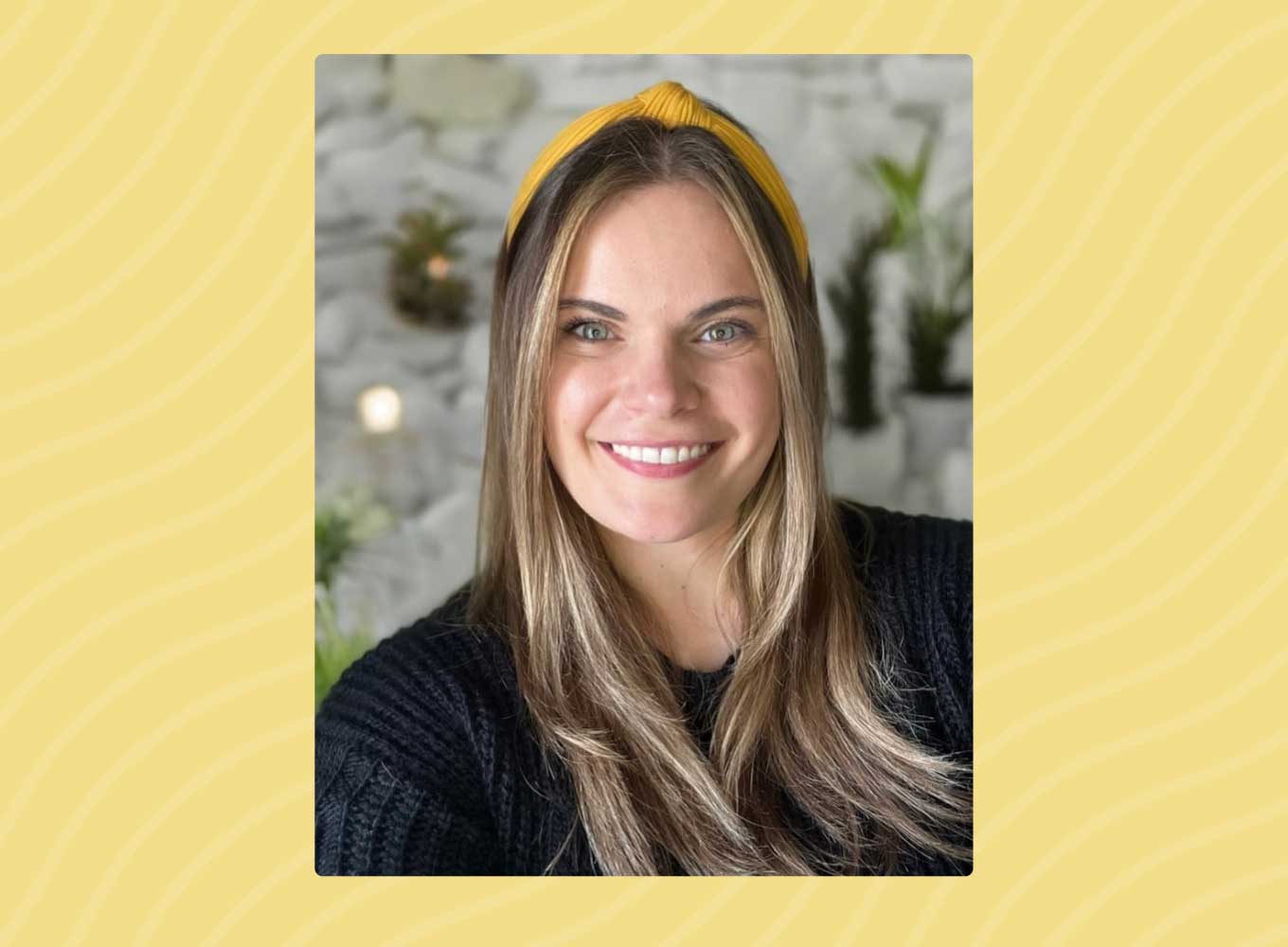
When Amanda Ahlenius became a mother to two girls, she realized just how much she had to learn from the other women in her life. Motherhood became more of a collective, communal journey than she ever expected.
“How much could we learn from each other if we all shared the random things that the women in our lives taught us?” Ahlenius asked in what became a viral TikTok.
Garnering over 80,000 likes, the comment section filled with tips from other users.
“Cut both ends of the tomato paste can and push one side all the way through so you don’t have to scrape it out,” one commenter wrote.
“My MIL [mother-in-law] taught me to put three bags in the trash can at once to minimize reloading the bag every time,” another added. “I swear it saved my marriage.”
“My grandma taught me that a dollar bill is six inches,” someone chimed in. “So if I ever need to measure something and don’t have a ruler, I can just use a $1 bill!”
Regardless of how helpful these hints are, domestic labor, homemaking, being a stay-at-home mom — whatever you want to call it — has always been looked down upon.
Regardless of a mother’s career ambitions, if she stays home with her children, if she hires additional caretaking help, or if she seemingly executes it all perfectly on social media, the myth of “having it all” has pervaded our culture — and devalued women’s labor.
Estimates from a 2021 survey from Salary.com calculate that if stay-at-home-moms were paid for their labor in accordance with real-time market prices of all the jobs they do, they’d be making at least $184,820 per year.
Despite that financial sum, women are also often left without resources (ahem, paid parental leave or universal childcare), meaning they have relied on centuries of generational wisdom to best care for their families.
Back to Ahlenius. The mother of two decided to continue sharing nuggets of wisdom from her grandmother — and other grandmothers — on TikTok, chronicling the valuable information to help even more folks navigate the confusing, ego-less terrain of motherhood.
@amanda_ahlenius1 Replying to @ursycooks ♬ Aesthetic - Tollan Kim
“As a child, my mom, grandmas, aunts, teachers all gave me tidbits of advice I always just brushed off or didn’t pay too much attention to,” she said in a video. “Nowadays, I wish I could go back and really listen to the advice they were trying to give me.”
She alludes to all the knowledge that we never quite document in classroom textbooks: how to make sure your house always feels cozy and smells good, how to really get those stubborn stains out of clothes, and how to manage working while raising a family, among them.
“Then I realized, we all have tidbits of information from our grandmas or other women in our lives,” she continued.
So Ahlenius began crowd-sourcing — this time in a more organized way than the comment section. She opened a Google Form for TikTok viewers to submit tips from their grandmas (or aunts, teachers, neighbors, you name it!), and while the tips became a series of videos on TikTok — they also became a published book: “Grandma Knows Everything.”
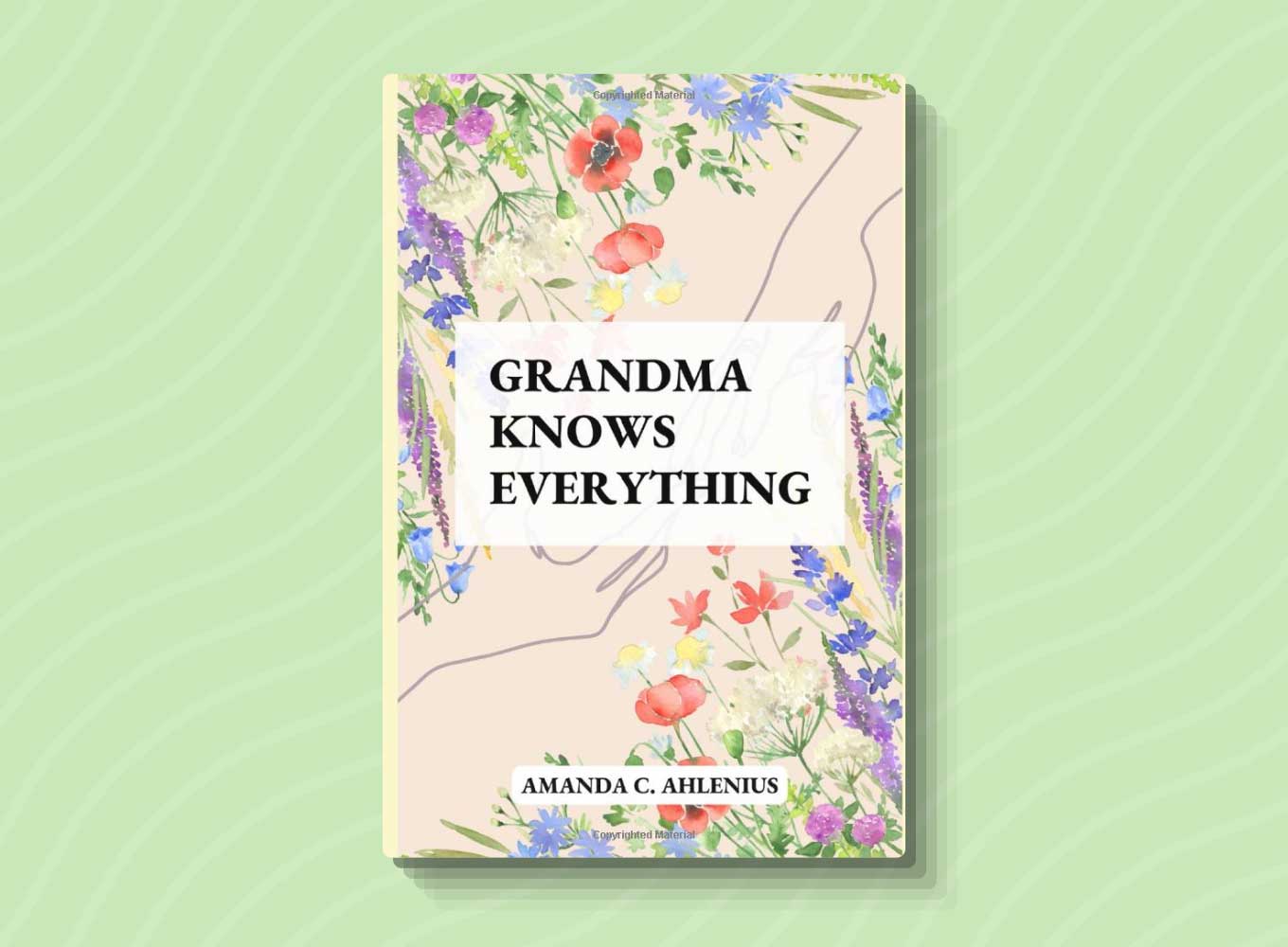
She hopes that the book becomes a staple in the lives of women everywhere, encouraging folks to jot down notes in the margins, add their own secrets, and pass it through generations, like those before us have always done.
One TikTok commenter says it best: “I’m a huge proponent of old wives’ tales. The wives would know; they did everything.”
Ahlenius also turned the dialogue into a Facebook group, where others could share their tips and tricks in real time.
There are currently about 1,400 members, sharing their stories, embracing the familial knowledge they may not have ever received, and creating an ongoing network of maternal laborers who don’t take each other for granted.
“As young girls we’re taught to compare and compete,” Ahlenius writes in the group’s description. “It’s not until we’re older and wiser that we realize we have a lot to give each other, starting with the things our grandmas once taught us.”
Diapers, maternity clothes and menstrual products are one step closer to becoming sales tax-free in Texas after the House passed a bill repealing the “tampon tax” Tuesday.
If the bill becomes law, Texas will join the slim majority of states that have nixed the sales tax on menstrual products, as well as diapers for adults and children, baby wipes, breast milk pumping products, baby bottles and maternity clothes.
The House voted 129-14 to pass Senate Bill 379, which already passed the Senate.
The bill is identical to House Bill 300, which the House passed earlier this session but had stalled in the Senate in favor of that chamber’s version of the bill.

State Rep. Donna Howard, an Austin Democrat who has been pushing this legislation for years, said Monday that “imitation is the sincerest form of flattery” about the near identical bill authored by State Sen. Joan Huffman, R-Houston, in the Senate.
“The Texas House can proudly say that we are so supportive of Texas families that we have passed meaningful sales tax relief for them twice this session,” she said.
Gov. Greg Abbott has said he supports repealing the tax.
While Democratic lawmakers have been pushing this legislation for years, it emerged as a bipartisan priority this session as Republicans sought to shore up support with women after the near-total banning of abortion.
“After four sessions and the speaker making it a priority…we now are able to pass tonight a bill that will bring tax relief to many Texas families,” Howard said Tuesday.
In his opening remarks in January, House Speaker Dade Phelan noted how rare it is for a single parent in Texas to be able to afford child care, health care, transportation and housing.
“How can we improve their lives and their children’s futures? Tax-free diapers, wipes and other child care supplies would be a great start,” he said.
The bill is expected to cost the state about $227 million in general revenue funds over the next two years.
On Monday, Howard noted that the bill was coming to the House at the start of “Period Poverty Awareness Week,” meant to raise awareness about the indignities suffered by people who cannot afford menstrual products.
Nationally, 2 in 5 women have said they’ve struggled to buy period products, and 1 in 4 teenage girls have missed class as a result.
Volunteer menstrual equity groups, mostly led by teenagers, have popped up around Texas in recent years to distribute free period products and advocate for lowering the cost burden of monthly supplies.
You might also like: Meet the Texas Teens Who Fought To Repeal the 'Tampon Tax'
This story by Eleanor Klibanoff, was originally published by The Texas Tribune, a nonprofit, nonpartisan media organization that informs Texans — and engages with them — about public policy, politics, government and statewide issues.
Editor’s note: This article was originally published on May 3, 2022. As of May 24, 2023, the Texas House has voted to pass a repeal of the tampon tax.
On a Friday afternoon last March, Sahar Punjwani ran a familiar errand — buying tampons, pads and panty liners. But this time, she was joined by lawyers from a prestigious Houston law firm.
“It was weird because we were all crowded into the aisle together, and they were just watching me, waiting for me to hand them my receipt,” Punjwani recalls.
That receipt showed that Punjwani had spent $21.56 on menstrual products — and $1.78 on sales tax.
Texas is one of 26 states that charges sales tax on menstrual products, something Punjwani and her organization, the Texas Menstrual Equity Coalition, have been fighting for years to change.
That visit to the pharmacy, and the $1.78 in sales tax it generated, was the first step in a new challenge that the group says they’re prepared to take all the way to the state Supreme Court.

Though the whole group is behind this new effort, it was Punjwani’s receipt that had to be submitted as evidence, and her name that had to lead the legal filings, because she was the only member of the group’s leadership that was legally an adult at the time.
Punjwani, now 20, said it’s not surprising to her that this effort to repeal the sales tax for menstrual products is being led by a group of teenagers. In her experience, there’s still a lot of stigma around discussing periods among older generations.
“I think that’s translated into a lot of frustration with my peers over not being able to talk about something that is so natural,” she said.
“We’ve learned, from social media and other things, to translate that frustration into activism and actual results.”
Combating period poverty
Punjwani grew up in Houston in an immigrant family in which menstruation and periods were seen as a taboo subject.
When she was a junior in high school, she saw an Instagram post from a national period equity advocacy organization advertising a policy boot camp for young people.
During the training, she learned about how sales tax contributes to “period poverty,” a lack of affordable, accessible menstrual products for low-income people.
Period poverty is widespread in the United States: 1 in 5 teens cannot afford menstrual products, according to a study from the national advocacy group Period, and 84% have either missed class or know someone who has missed class due to insufficient menstrual supplies.
People who use alternative menstrual supplies, like rags and paper towels, are at heightened risk for infection, and there are negative mental health impacts of not being able to afford proper sanitary supplies.
Several states have repealed their sales tax on menstrual products in recent years, but as Punjwani learned in the training, Texas has not.
In this training, Punjwani met other Texas teens who were as outraged by this as she was — like Zoe Kass.

Kass, now 18, first got involved with this issue while volunteering in the obstetrics clinic at Ben Taub Hospital in Houston. Some of the patients she interacted with couldn’t afford menstrual products or were forced to sacrifice other necessities to pay for pads and tampons.
Kass co-founded The Period Pact Houston, which raises money to donate menstrual supplies to school nurses in the Houston area. She’s also known for filling the women’s restroom at her school with pads and tampons, earning her the nickname “the period girl.”
“There was one day that I dropped a box of tampons down the stairs and this boy caught them and his eyes went really wide,” she said. “I was like, well, we’re fighting stigma one scared teenage boy at a time.”
Many of the young Texans who met during the policy boot camp were already doing these donation drives and fundraisers in their own communities. But they wanted to think bigger.
They started meeting regularly in summer 2020, eventually titling their group the Texas Menstrual Equity Coalition.
And their first target? The sales tax on menstrual products.
“A lot of people go their whole lives buying menstrual products and never realize they’re paying taxes,” said Punjwani.
“And then there are people who are very conscious of that, and that’s who is going to benefit the most from this.”
Legislative efforts
The coalition started working with state legislators, including Rep. Donna Howard, D-Austin, who has filed a bill to make menstrual supplies tax-exempt every session since 2017.
None of those bills ever made it out of committee. But in early 2021, Kass got the call: Howard’s bill was going before the state House Ways and Means Committee, and she was being asked to testify.
Kass and another member of the coalition skipped virtual school for the day, drove to Austin, sat in front of a panel of state legislators and talked about their periods.
She said it was empowering to get a chance to speak to elected officials, “especially because I can’t even vote for them yet.”
But she also knew there was very little chance the bill would pass, a sentiment she said some of the legislators conveyed very clearly.
“Not all of them, but some of them definitely saw us and treated us as little girls,” she said. “We’re basically their kids’ ages in a lot of cases, and what right do we have to tell them how it is?”
She said she left the hearing “proud but annoyed.”
The Legislative Budget Board estimated the sales tax reduction would cost Texas roughly $42 million over the two-year budget cycle. The bill didn’t advance to the House floor.
But the coalition was already working on another angle to repeal the tax, starting with Punjwani’s receipt for $1.78.
Challenging the comptroller’s office
As part of their legislative advocacy work, the coalition met with the Women’s Health Caucus, where they first discussed the idea of bringing a legal challenge to the tax on menstrual supplies.
Kass asked her dad if he knew any lawyers who could help them explore this avenue, and he connected them with prestigious Houston law firm Baker Botts.
“When we started digging into sales tax … regulations promulgated by the comptroller, we saw that there was really this inequity going on in the tax treatment of menstrual products,” said Baker Botts associate Laura Shoemaker McGonagill.
Baker Botts agreed to take the case pro bono, which is how they all ended up in the tampon aisle at a store in Houston, watching Punjwani buy menstrual products.
They then submitted that receipt to the Texas comptroller’s office, requesting a refund on the sales tax she’d paid — and a determination that all menstrual products should be similarly tax-exempt.
Their argument is that menstrual products qualify as “wound care dressings,” which the tax exemption regulation defines as a product that “absorbs wound drainage, protects healing tissue, maintains a moist or dry wound environment (as appropriate), or prevents bacterial contamination.”

“We view this inequitable application of wound care dressings as discrimination on the basis of sex,” said Shoemaker McGonagill. “For example, gender-neutral products, like Band-Aids, are tax-exempt and feminine hygiene products are not.”
She also pointed out that over-the-counter male libido enhancers are tax-exempt under a separate regulation.
“Just as a basic layperson looking at this, I think most people would say managing a monthly menstrual flow is much more important and medically necessary to yourself and to others, compared to libido enhancers,” Shoemaker McGonagill said.
In February, the comptroller’s office rejected Punjwani’s request for a refund; she filed an appeal and requested a hearing. If that appeal is denied, they plan to take the case to the courts.
Shoemaker McGonagill said working with the young women behind this movement has been one of the more inspiring experiences of her career.
“When I think back to what I was doing when I was 17 or 18, I was not advocating for change at a legislative level,” she said.
“We’ve just been blown away by them from the very beginning. They’re very thoughtful. They have good insight. And I think they’re working really hard to remedy the situation through every avenue available to them.”
The fight goes on
While this case wends its way through the administrative system, Kass, Punjwani and their peers are still working to advance understanding about period inequities in their community.
Punjwani is now a sophomore at the University of Chicago, where she has run menstrual supply donation drives alongside other advocacy work. In her own family, she has seen firsthand the power of talking openly about these issues.
“I have two younger sisters and they know now that this isn’t something you have to be quiet about or use code words for,” she said. Her sister has started running similar donation drives at her high school, too.
Kass is finishing up her senior year of high school, still stocking the bathrooms and, through her AP government class, learning a lot more about the process she has been participating in.
“It’s just been funny, we’ve been talking about lobbyists and Supreme Court cases and the Ways and Means Committee, and it’s like, oh, I testified to them,” she said. “And now working with the lawyers to try to understand the tax code and all that.”
When she joined that policy training a few years ago, she said she never would have imagined she’d be taking on the state’s tax code on behalf of all menstruating people.
“This is the result of a lot of people trusting us and having confidence in us and taking us seriously,” she said.
“And if we’re successful, I think it really sets a precedent for other states. Because if Texas can do it, so can everywhere else.”
This story by Eleanor Klibanoff, was originally published by The Texas Tribune, a nonprofit, nonpartisan media organization that informs Texans — and engages with them — about public policy, politics, government and statewide issues.
“We’ve braved the belly of the beast / We’ve learned that quiet isn’t always peace, / and the norms and notions of what ‘just is’ / isn’t always justice.
And yet the dawn is ours before we knew it. / Somehow, we do it. / Somehow, we’ve weathered and witnessed / A nation that isn’t broken, but simply / unfinished.”
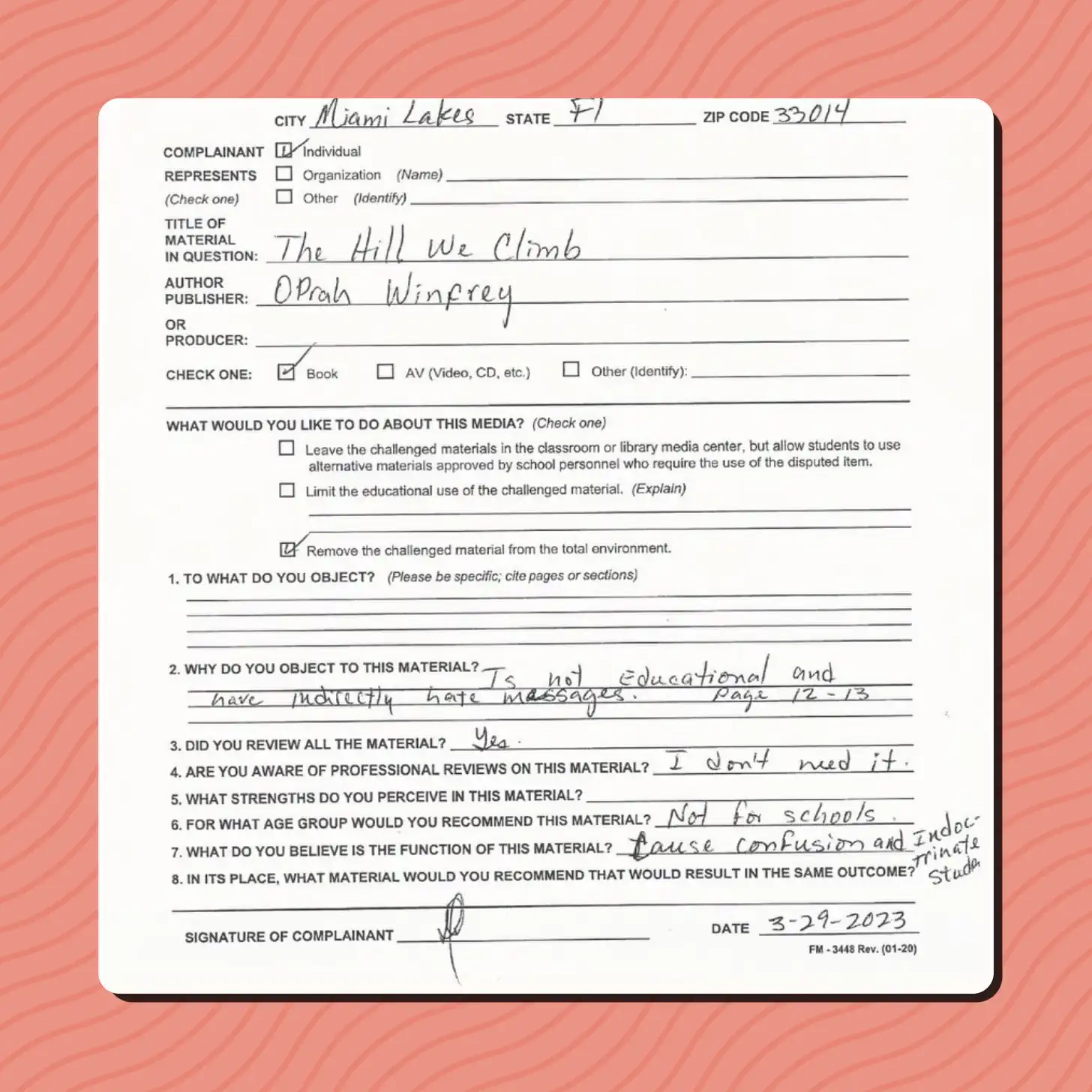
This is the excerpt from Amanda Gorman’s poem “The Hill We Climb,” which led to her iconic book being banned from elementary-aged students at Bob Graham Education Center after a single parent complaint in Miami Lakes, Florida.
The poem, which was read at President Joe Biden’s inauguration, was published as a short book in 2021. Now, it’s been deemed by one Florida parent as a message of “confusion and indoctrination.”
Gorman, who took to social media yesterday to share that she was “gutted” over this complaint, was quick to fight back, adding an Instagram fundraiser to her post.
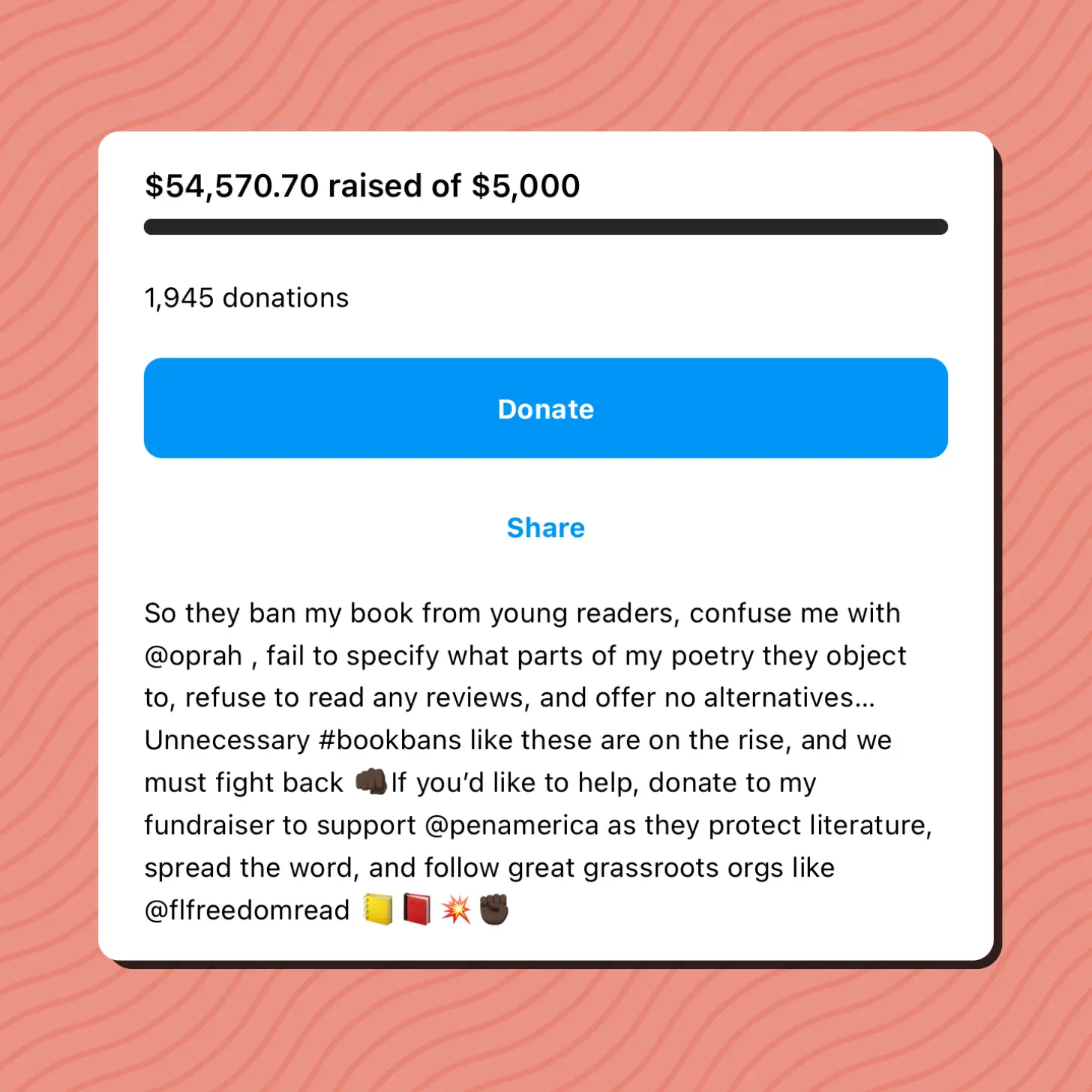
Within hours, it raised over $50,000 (and counting) for PEN America, an organization that promotes free speech and fights book bans across the country.
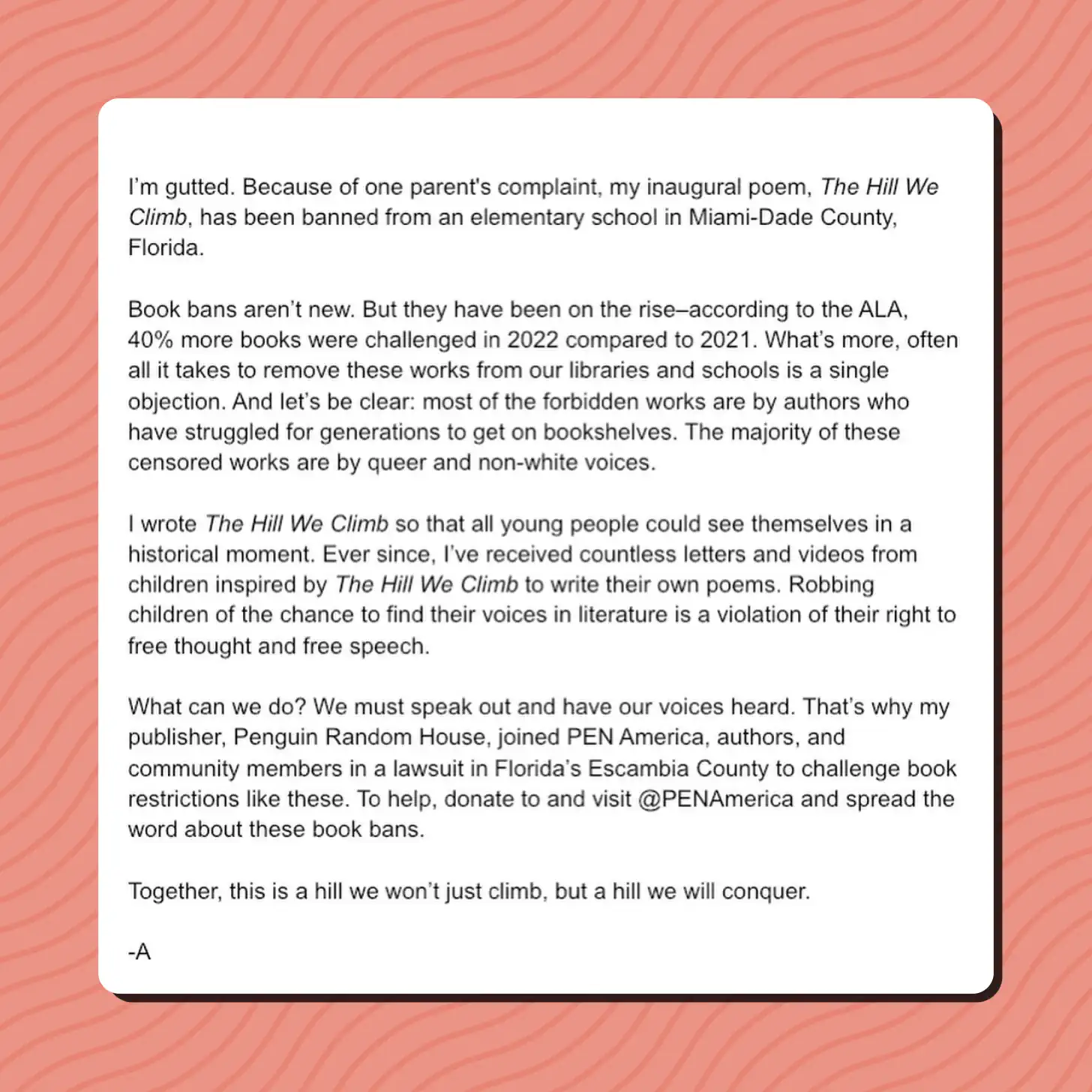
Along with the fundraiser, Gorman, and her publisher Penguin Random House, will join PEN America and other authors in a lawsuit to challenge book restrictions.
Gorman also educated her social media audience on the rising issue of book bans, citing a statistic from the American Library Association that calculates a 40% increase in book challenges from 2021 to 2022.
“Often all it takes to remove these works from our libraries and schools is a single objection,” she wrote in her statement. “And let’s be clear: most of the forbidden works are by authors who have struggled for generations to get books on shelves. The majority of these works are by queer and non-white voices.”
Gorman, and the Florida Freedom To Read Project, also shared a photo of the submitted complaint, which actually confuses her for Oprah Winfrey as the author of the poem, and states that pages 12 and 13 “indirectly” include “hate messages.”
That one complaint was quickly drowned out by supporters of Gorman’s work — including swaths of teachers and parents — who commented to show their support and denounce the attempt to censor the poet’s writings.
(Though the Florida school has maintained that the book will only be accessible to middle school-aged students and up.)
“I am a Florida Civics teacher and I open every school year with this magnificent poem,” one commenter wrote. “It is an outstanding exploration of our American democracy and a beautiful piece of poetry to use in all classroom settings. I will continue to do so without question and if they want to stop me they can come and drag me out of my classroom!”
“I just taught a lesson on ‘The Hill We Climb’ poem last week to my seventh graders using it as a mentor text and comparing it to Dr. King’s and Maya Angelou’s works,” another teacher chimed in. “The responses were incredible. I’m so grateful for the inspiration you’re giving young people.”
“Just want you to know that [I] and 4 classes of middle schoolers illustrated your poem and created a mural from ‘The Hill We Climb’ in Maryland,” said another.
Thousands of other comments flooded the post, with parents, teachers, and advocates from every corner of the country sharing their joyful experiences with the poem.
And clearly — many of them were also motivated to donate to Gorman’s fundraiser, which initially had a goal of raising $5,000, and quickly surpassed that — tenfold.
The poet, whose works have been inspired by the iconic (and often banned) voice of Maya Angelou, is prepared to take up the fight against unnecessary and discriminatory book bans.
“We must speak out and have our voices heard,” she shared. “Together, this is a hill we won’t just climb, but a hill we will conquer.”
How can I fight book bans?
Good Good Good has compiled a whole guide to fighting book bans, but here are a few quick tips to get help you take action:
Read banned books.
It really can be as simple as that! Between Gorman, John Green, and George M. Johnson, there are plenty of amazing authors with thoughtful, diverse works that deserve a place on library shelves.
If you’re in an area where it’s difficult to access these books, check out the Books Unbanned program from the Brooklyn Public Library, which allows anyone in the country (ages 13-21) to access digital versions of these banned books for free.
Support activists by speaking up.
Support Gorman (and all the other authors out there whose works are being censored) by expressing your outrage with school districts and cities that enact these book bans. Call or send letters to school boards expressing the importance of free speech — or hey, maybe even run for an elected school board position yourself so you can be part of the solution.
Another great way to show support is by sending supportive letters, emails, or comments to authors of banned books.
Make banned books more accessible to young people.
Can you donate some banned books to a community in need? Can you donate a few dollars to an organization like PEN America or the Florida Freedom to Read Project? Maybe you can host your own banned book club or reading party in your area!
Any little bit counts to make sure people have access to these vital works.
By now, you’ve surely become familiar with the acronym LGBT, which stands for Lesbian, Gay, Bisexual, and Transgender. It’s a great start, but it doesn’t quite encompass the vast, diverse spectrum of gender and sexuality.
Actually — one single word, label, or letter probably can’t ever encompass the full expanse of complex human ideas like gender and sexuality!
But labels do help us identify how we feel, connect with other people in our communities, and find a sense of belonging and comfort in our individual lives, bodies, and experiences.
After all, we’re all just little organisms on a floating rock in space, so it’s no wonder we’re just trying to make sense of everything as we go along.
These labels can be tricky because we never want to reduce people down to a single letter of the alphabet or make sweeping generalizations about a group of people — that’s part of the beauty of the queer community: there is so much diversity and human expression to celebrate!
That being said, it’s helpful to have shared vocabulary to help us figure out our own identities, empathize with others, and get a fuller, richer picture of all of us silly little earthlings.
Still want to know more? We figured. There’s a lot to unpack! Let’s go through this new alphabet together. Here is a guide to the acronym LGBTQIA+ —
What Does LGBTQ+ Stand For?
‘LGBTQIA+’ represents a vast and inclusive spectrum encompassing Lesbian, Gay, Bisexual, Transgender, Queer/Questioning, Intersex, Asexual identities, with the plus sign acknowledging additional identities beyond these categories. This evolving acronym captures the richness of the diverse community.
At Good Good Good, we use the acronym LGBTQ+ in accordance with AP Style — and also to acknowledge and celebrate folks who identify with other labels, like “queer.” With the help of information from The Center and GLAAD, we’ll break it down a little further:
L - Lesbian
A lesbian is someone who identifies as a woman whose physical, romantic and/or emotional attraction is to other women.
Some lesbians might also call themselves “gay” or refer to themselves as “gay women.” It’s all the same vibe!
G - Gay
“Gay” has become a blanket term to describe a person attracted to the same gender. Historically, the term referred to someone who identified as a man and was attracted to other men.
B - Bisexual
A person who is bisexual is attracted to more than one gender. Similarly, someone who is pansexual is attracted to someone regardless of gender.
Sometimes, folks will use the term “bi+” to encompass both bisexual and pansexual labels. While some individuals might use these terms interchangeably, some may also prefer to stick to one or the other to best describe their experience.
Bisexuality has historically been considered the attraction to both cisgender men and women, but there truly is a lot more nuance to keep in mind.
T - Transgender
“Transgender” is an umbrella term for people whose gender identity or gender expression differs from the gender they were assigned at birth.
There are lots of terms that might be used under this umbrella, including “non-binary,” “gender non-conforming,” or others.
It’s important to note that trans people have a wide array of different experiences. Some trans folks may physically transition with the help of gender-affirming care like hormones or procedures to bring their body to better alignment with their gender identity. However, not all trans people can or will pursue those options, and they’re still trans!
A transgender identity is not defined by physical appearance or medical procedures, and folks are valid in whichever ways they choose to express their identities.
Q - Queer
“Queer” is a large umbrella term that is not necessarily exclusive to any single identity and encompasses people whose sexual orientations are not exclusively heterosexual.
Although anyone in the LGBTQ+ community might call themselves queer, the queer label often includes folks who are nonbinary, gender fluid, or gender non-conforming, too, identifying beyond more binary terms like “gay” or “lesbian.”
“A wide array of LGBT people and other sexual minorities call themselves queer as a more expressive and expansive umbrella term for their sexualities and genders,” Tyler Ford said in a video for Them.
It’s also important to note that this word was long used as a slur toward the LGBT community and has more modernly been reclaimed as a way to describe oneself. However, it is still not always universally accepted within the LGBTQ+ community, so it’s important to be thoughtful when using this term.
Q - Questioning
Sometimes, the Q in LGBTQ+ can mean “questioning,” a term used to describe someone who is questioning their relationship to sexual orientation and gender identity. This term is often used in settings addressing young people.
This is a great time to remind you to ask people how they describe themselves before labeling their sexual orientation!
What Does IA Stand for in LGBTQIA?
You’re doing great; here are a few more letters that are important to know!
I - Intersex
The I in LGBTQIA+ stands for “Intersex.” This term is used to describe people born with reproductive or sexual anatomy and/or a chromosome pattern that cannot be classified as “male” or “female.” It can also reflect someone who doesn’t identify with a specific gender.
A - Asexual
Someone who identifies as asexual is someone who does not experience sexual attraction. Occasionally shortened to “ace,” this term can also include folks who are demisexual (someone who experiences some sexual attraction, but only in certain situations).
In a similar vein, aromantic folks are also often connected to ace individuals, as someone who does not experience romantic attraction.
PS… the A does not stand for ‘ally.’ Sorry, y’all, you don’t get your own letter.
What Does the Plus Sign Stand for in LGBTQIA+?
Plus Sign - Humans Are Infinitely Interesting
It’s not about math! We promise there’s no algebra involved here. The plus sign in LGBTQIA+ represents those who do not identify with one of the aforementioned letters in the acronym.
The plus sign alludes to folks who might be agender (someone who does not identify with having a gender), polyamorous (someone who is consensually in a relationship with multiple people), pansexual (someone who is attracted to people regardless of their gender), or any manner of other identities.
Basically, the plus sign is there to help remind us that there is always more room to widen the spectrum of gender and sexuality, and that it’s nearly impossible to contain humans to any handful of terms.
It’s almost like an arrow that points infinitely toward the immense breadth of the human experience (if you want to get all poetic about it).
What Does LGBTQ2S+ Stand For?
LGBTQ2S+ is an acronym that stands for Lesbian, Gay, Bisexual, Transgender, Queer or Questioning, and Two-Spirit.
“Two-Spirit” is a term used in the Native American and Indigenous communities, referring to someone who has both a masculine and feminine spirit, or as an umbrella term to define the sexual, gender or spiritual identity among Indigenous peoples.
What Does LGBTQQIP2SAA Stand For?
If you want to be as inclusive as possible (and have lots of time, energy, and space to write or type it out), LGBTQQIP2SAA is a full acronym for the queer community. It includes Lesbian, Gay, Bisexual, Transgender, Queer, Questioning, Intersex, Pansexual, Two-Spirit, Androgynous, and Asexual identities.
More LGBTQ+ Terms To Know
If you’re looking for a full glossary of LGBTQ+ terms, we’d encourage you to explore resources like GLAAD’s Media Reference Guide or the UC Davis LGBTQIA Resource Center glossary! But here are a few more crash-course-style vocab words to know:
- Closeted: Someone who is not open about their sexual orientation
- Coming Out: A lifelong process of self-acceptance (and often, disclosure of one’s identity with others)
- Cisgender: Aligning with the gender you were assigned at birth
- Deadnaming: Calling a person by a name they no longer use
- Fluid: A term that alludes to someone’s gender identity changing over time
- Non-binary: A term used to describe someone whose gender identity or gender expression falls outside the binary of man or woman
- Unlabeled: Anyone who prefers to exist without labels or descriptions in regard to their sexual preferences, gender identity, or gender expression
Why Did the Original Term Change?
For a long time, “gay” and “lesbian” were the only words used to describe people who weren’t heterosexual. It wasn’t until the 1990s when “bisexual” and “transgender” were added to the acronym to create a more inclusive term for the community as a whole.
Still, the acronym left other groups out, and now we continue to expand and enrich these labels to be as inclusive as possible — just like we’ve done with Pride flags.
(LGBTQIA+ is kind of like how we use BIPOC to represent Black, Indigenous, and People of Color to refer to other marginalized groups in certain contexts. Sometimes it just makes sense to include all members of certain communities in our language!)
What If I Don’t Identify with Any of These Letters?
That’s totally OK, too. As humans, our identities and experiences are always evolving and changing, and as much as these terms can help us, sometimes they can add to the confusion, too.
You don’t have to force yourself into any box or label that doesn’t feel right, and there are lots of words and terms out there that might fit you even better, but just aren’t as widely used (yet!).
Like we mentioned earlier, there are countless resources and guides beyond this one that can help you make sense of you. All you need to know right now is that you belong just as you are.
It doesn’t need to be Pride Month to see lots of different pride flags waving brightly in the wind celebrating the diverse range of identities and experiences among the LGBTQ+ community.
While most of us are well aware of the significance of the rainbow symbols that grace the skies, there are actually a lot more pride flags than you might realize!
These banners might represent that somewhere is a safe, affirming space for a specific group of people; that someone is celebrating their identity (or the identity of a loved one); or might even be an emblem of resistance against homophobia or transphobia.
These flags represent feelings of power, belonging, comfort, and safety; wrapping LGBTQ+ folks in the pride and joy of community. So, it’s important to know what these flags mean, how you might want to use them, and how to respect them during Pride and beyond.
Let’s get to it!
By the way, we’ve also included some links to be able to buy these flags — and some of the links may include affiliate links, which means we may earn a commission at no extra cost to you.
We’ve provided links to Flags For Good, which donates a portion of each Pride flag sale to LGBTQ+ nonprofits and has a fully carbon neutral production and distribution process. Use our links to save 10% off your entire order.
(We’ve also included links to Amazon for accessibility purposes.)
Everything in this article was independently and honestly written by the Good Good Good team.
Every LGBTQ+ Pride Flag & Their Meaning
Gilbert Baker Pride Flag
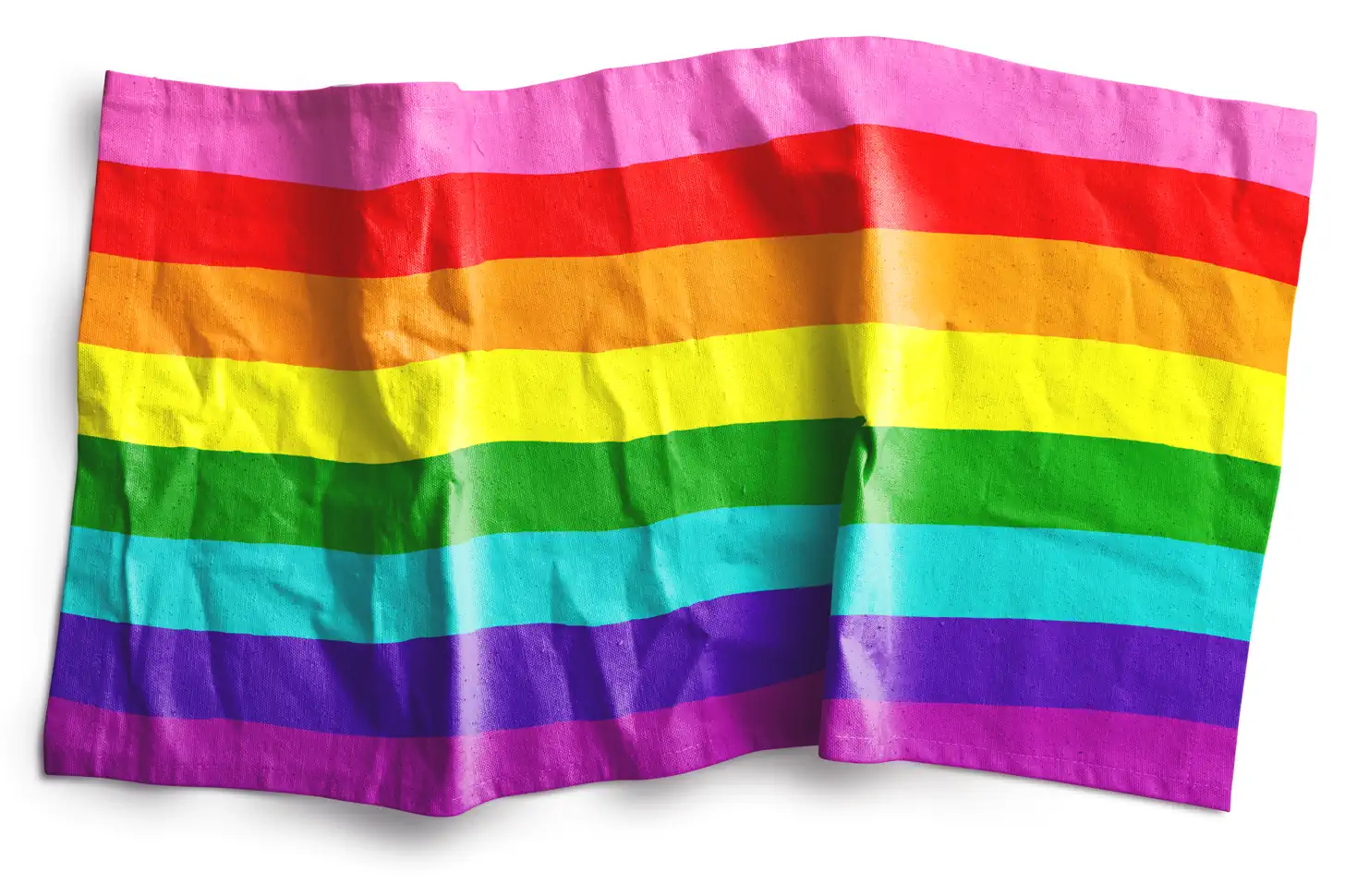
Designed by Gilbert Baker in 1978, the “original” Pride Flag offers a distinct symbol for the LGBTQ+ community to represent and celebrate their diverse identities.
The flag originally included eight colors, each capturing a different element of the LGBTQ+ experience and the importance of unity within the community. Two colors were later removed — hot pink and turquoise — for price and practicality reasons.
Designer: Gilbert Baker
Created: 1978
Colors & Meanings:
- Hot Pink: Sexuality
- Red: Life
- Orange: Healing
- Yellow: Sunlight
- Green: Nature
- Turquoise: Magic and art
- Indigo: Serenity and harmony
- Violet: Spirit
Get a Flag: Flags For Good | Amazon
→ Learn more about the Gilbert Baker Pride Flag
6-Color Rainbow Pride Flag
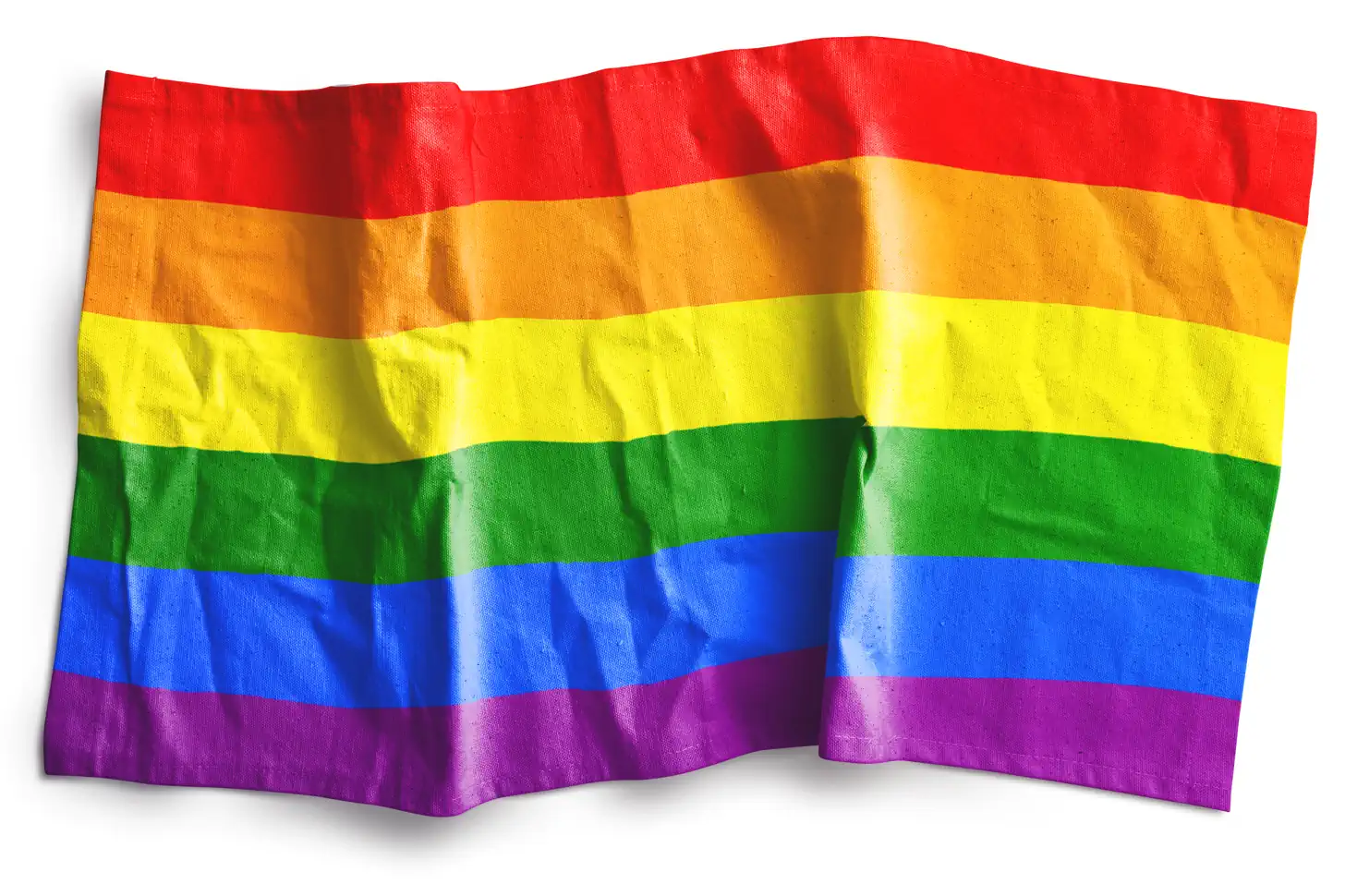
Designed by Gilbert Baker in 1978, the 6-Color Pride Flag, or Rainbow Flag, is the subsequent rendition of his original design with two fewer colors, again, for the sake of price and practicality.
While the Rainbow Pride Flag is still widely used as an overarching rainbow symbol for the community as a whole, there are a variety of newer iterations from other designers that are considered to be more inclusive.
Designer: Gilbert Baker
Created: 1978
Colors & Meanings:
- Red: Life
- Orange: Healing
- Yellow: Sunlight
- Green: Nature
- Blue: Serenity and harmony
- Purple: Spirit
Get a Flag: Flags For Good | Amazon
→ Learn more about the Rainbow Pride Flag
Progress Pride Flag
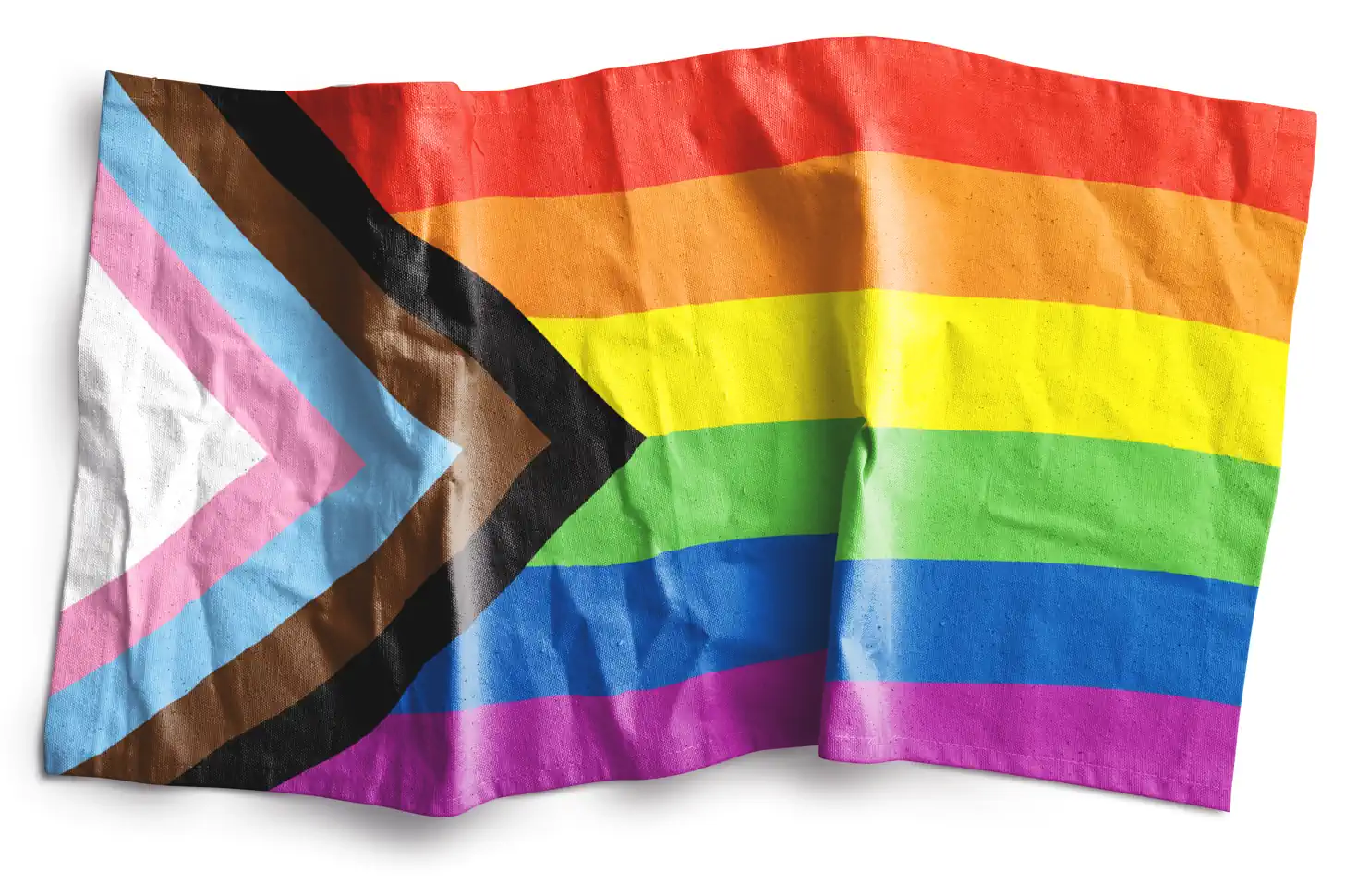
Born from a desire to create a more inclusive symbol, the Progress Pride Flag emerged in 2018, designed by non-binary artist Daniel Quasar.
This flag harmoniously blends the iconic rainbow flag with the colors of the Transgender Pride Flag and additional stripes representing LGBTQ+ communities of color.
The flag serves as a reminder of the ongoing journey toward greater unity, love, and acceptance, while still recognizing the importance of continuing the fight for equal rights across diverse intersections of the LGBTQ+ community.
“The trans flag stripes and marginalized community stripes were shifted to the Hoist of the flag and given a new chevron shape,” Quasar outlines on their website. “The arrow points to the right to show forward movement, while being along the hoist edge shows that progress still needs to be made.”
Many people, businesses, and organizations have swapped their original Rainbow Pride Flags for the Progress Pride Flag in recent years, as an effort to symbolize further inclusion across the wide spectrum of identities and experiences of the queer community.
Designer: Daniel Quasar
Created: 2018
Colors & Meanings:
- Black and Brown: Representing LGBTQ+ people of color, acknowledging their experiences, contributions, and struggles within the community.
- Light Blue and Pink: Derived from the Transgender Pride Flag, representing trans individuals; light blue symbolizes trans men and boys, and pink symbolizes trans women and girls.
- Red: Life
- Orange: Healing
- Yellow: Sunlight
- Green: Nature
- Blue: Serenity and harmony
- Purple: Spirit
Get a Flag: Flags For Good | Amazon
→ Learn more about the Progress Pride Flag
Philadelphia More Color More Pride Flag
In 2017, the city of Philadelphia took part in a citywide “More Color More Pride” campaign and created its own new Pride flag. A take on the traditional six-color Rainbow Pride Flag, the design added two new stripes to represent LGBTQ+ people of color.
The flag was designed with the intention to call for change and demand inclusion for both LGBTQ+ and BIPOC communities in Philadelphia. The flag has since been adapted, similarly to the Progress Pride Flag, as a symbol of increased inclusion and diversity.
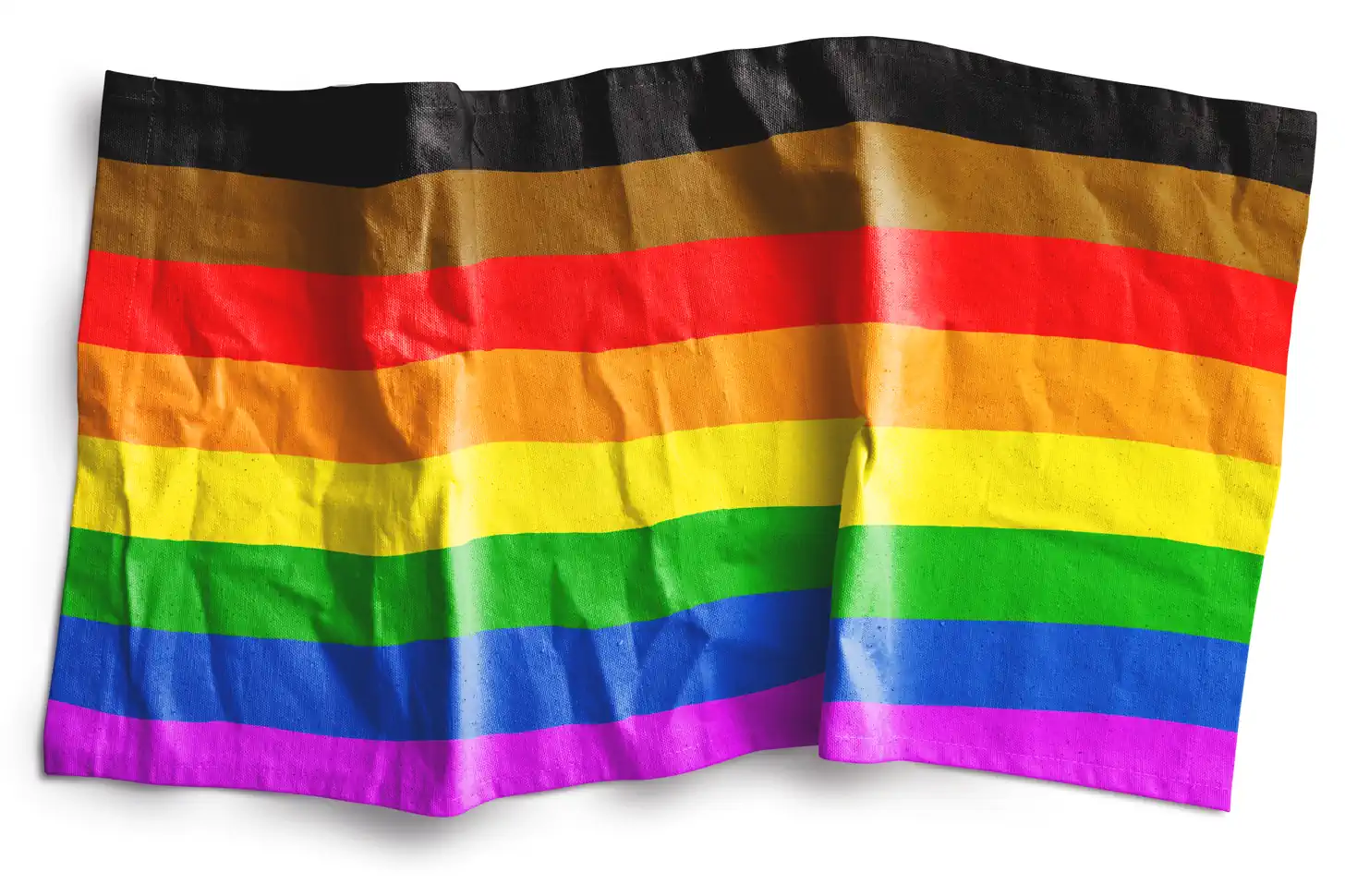
Designer: Philadelphia’s Office of LGBT Affairs and design agency Tierney
Created: 2017
Colors & Meanings:
- Black and Brown: Representing LGBTQ+ people of color, acknowledging their experiences, contributions, and struggles within the community
- Red: Life
- Orange: Healing
- Yellow: Sunlight
- Green: Nature
- Blue: Serenity and harmony
- Purple: Spirit
Get a Flag: Flags For Good | Amazon
→ Learn more about the Philadelphia Pride Flag
Queer Pride Flag
Lesser known than other rainbow flags, the Queer Pride Flag represents every aspect of queerness — especially as the “queer” label becomes more widely used and celebrated.
Although the origins of its design are not entirely known, the Queer Pride Flag emerged in 2015.
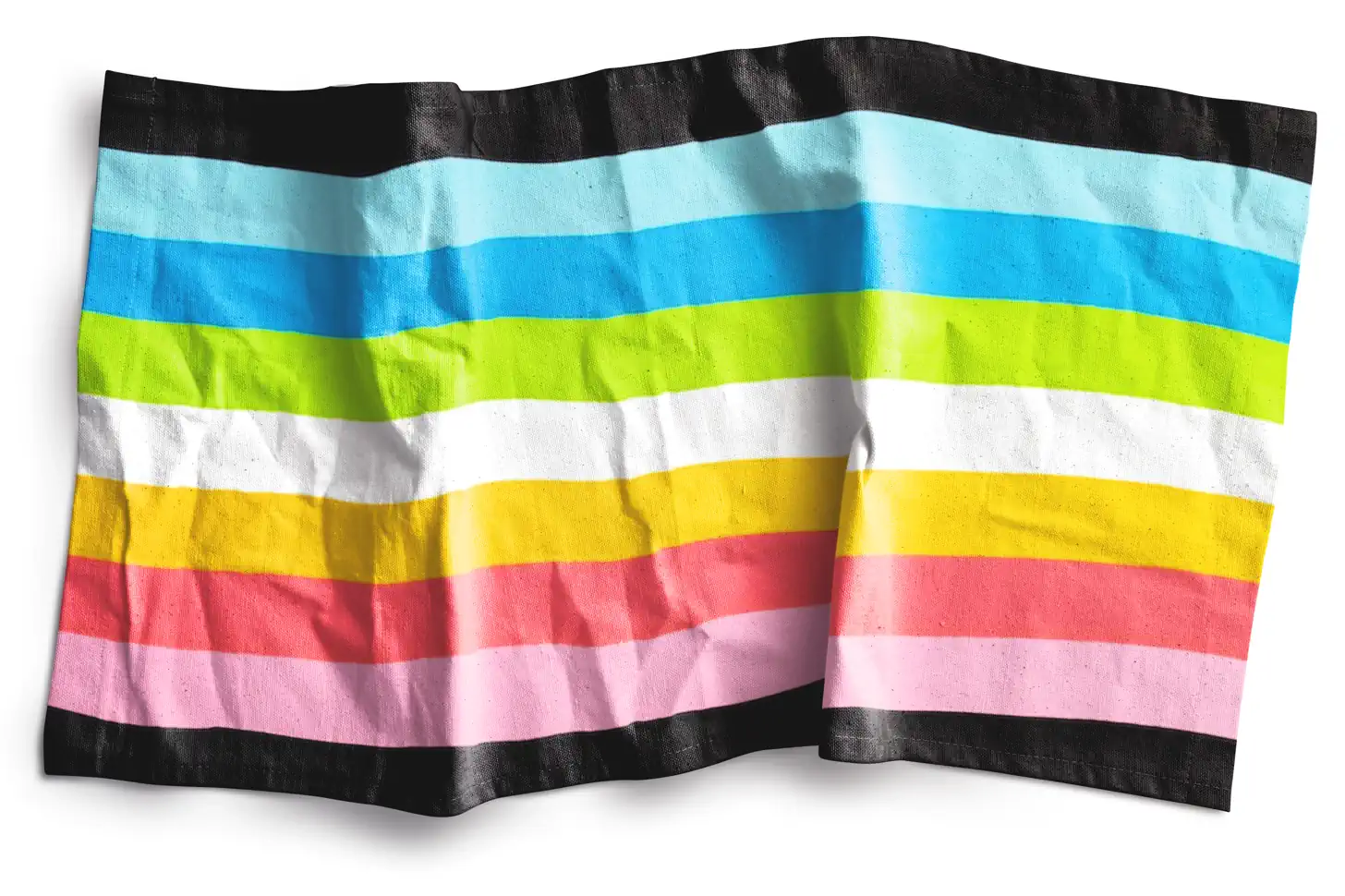
Designer: Unknown
Created: 2015
Colors & Meanings:
- Black: Represents the asexual, aromantic, and agender communities
- Blue: Represents same-gender attraction
- Green: Represents non-binary and gender nonconforming individuals
- White: Represents the asexual, aromantic, and agender communities
- Orange: Represents non-binary and gender nonconforming individuals
- Pink: Represents same-gender attraction
Get a Flag: Flags For Good | Amazon
→ Learn more about the Queer Pride Flag
Lesbian Flag
With its striking array of warm colors, the Lesbian Flag, designed by Emily Gwen in 2018, beautifully captures the spirit of the lesbian community.
From shades of orange to pink, the flag conveys the diversity, of lesbian experiences, while pointing to values of love, visibility, and advocacy within the community.
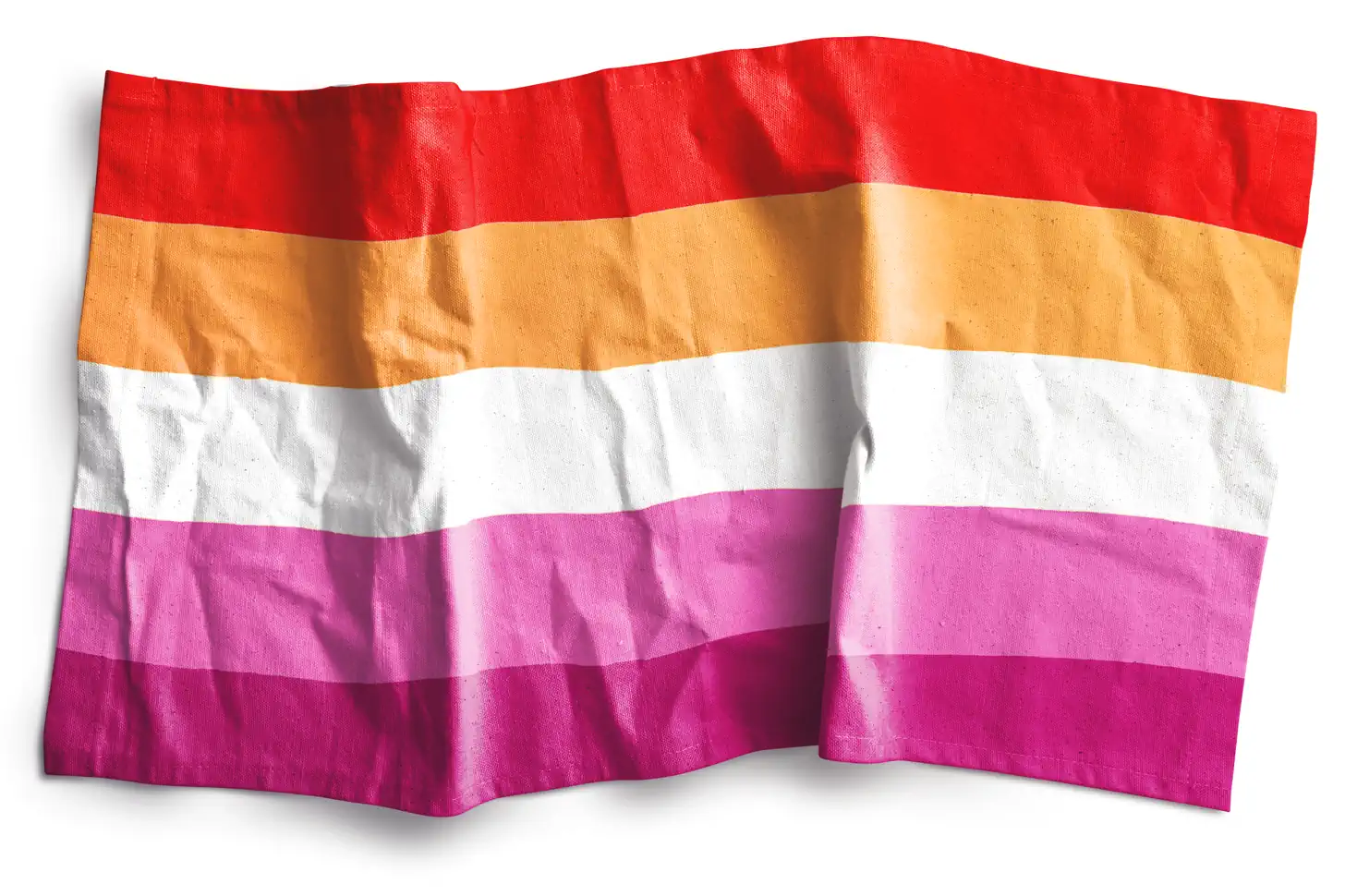
Designer: Emily Gwen
Created: 2018
Colors & Meanings:
- Dark Orange: Gender nonconformity
- Orange: Independence
- Light Orange: Community
- Pink: Unique relationship to womanhood
- Dusty Pink: Serenity and peace
- White: Solidarity with other marginalized LGBTQ+ communities
Get a Flag: Flags For Good | Amazon
→ Learn more about the Lesbian Pride Flag
Trans-Inclusive Gay Men’s Pride Flag
The Trans-Inclusive Gay Men’s Pride Flag — sometimes called the Men-Loving-Men Pride Flag, is a newer iteration of the Pride Flag, assumed to have been designed in 2017 by Tumblr user @gayflagblog. While cisgender, white gay men have long been at the center of gay rights movements, once the Rainbow and Progress Pride Flags became more umbrella symbols for the community as a whole, demand grew for a more specific flag for men who love men.
It started off as a five-colored flag and later became designed with seven colors to include a broader spectrum of LGBTQ+ men.
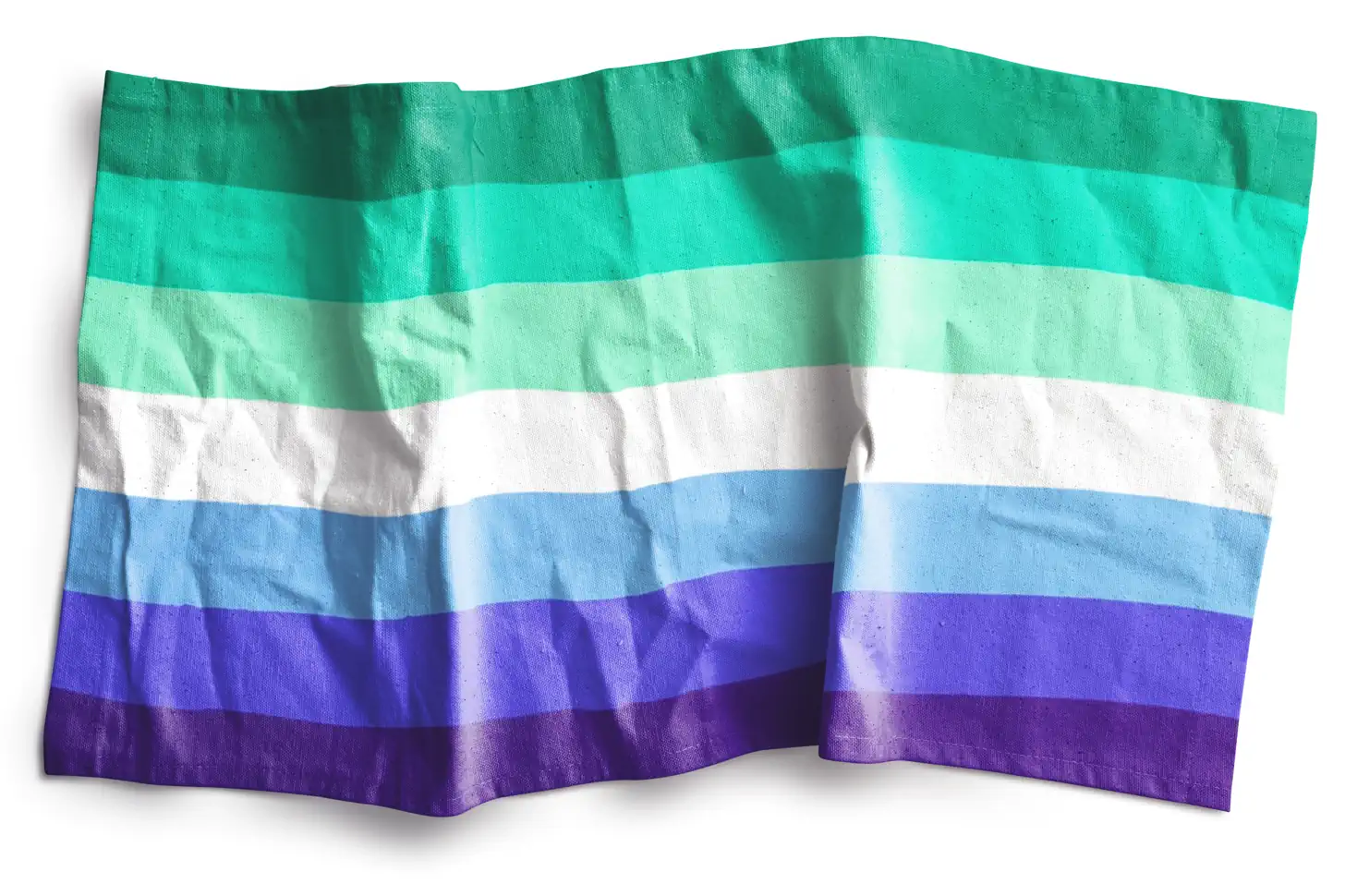
Designer: Tumblr user @gayflagblog
Created: 2017
Colors & Meanings:
- Dark Green: Community
- Teal: Healing
- Light Green: Joy
- White: Gender-nonconforming, non-binary, and transgender men
- Blue: Pure love
- Purple: Fortitude
- Indigo: Diversity
Get a Flag: Flags For Good | Amazon
→ Learn more about the Gay Men’s Pride Flag
Bisexual Flag
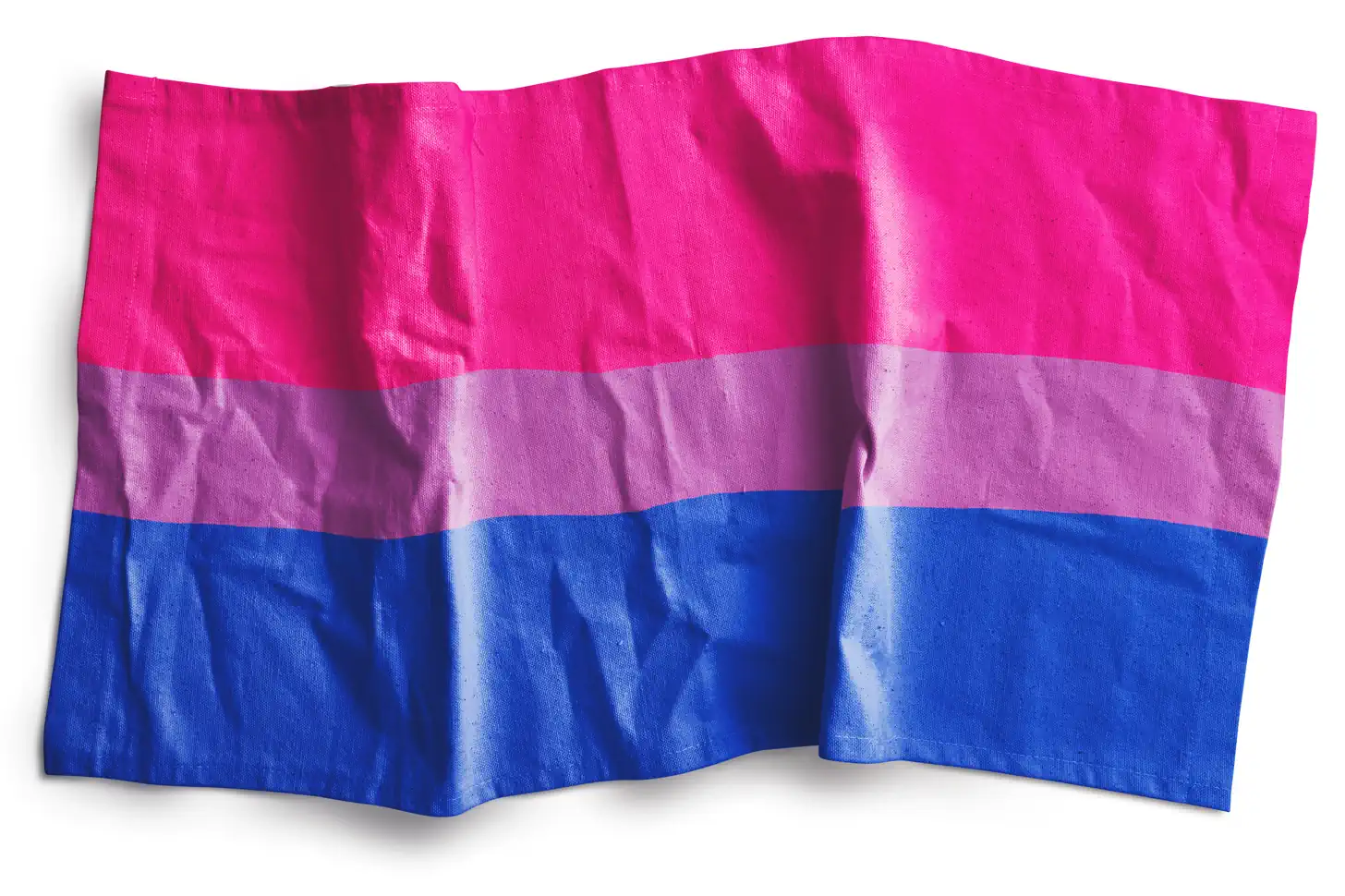
The Bisexual Pride Flag was designed in 1998 by Michael Page to celebrate the bisexual community within the LGBTQ+ spectrum.
The flag’s three stripes signify the diverse range of attractions experienced by bisexual individuals, with the outer colors representing attraction to the same and different genders, and the middle color representing attraction across the gender spectrum.
Designer: Michael Page
Created: 1998
Colors & Meanings:
- Magenta: Represents attraction to the same gender
- Lavender: Represents attraction across the gender spectrum, as a mix of magenta and royal blue
- Royal Blue: Represents attraction to a different gender
Get a Flag: Flags For Good | Amazon
→ Learn more about the Bisexual Pride Flag
Transgender Flag
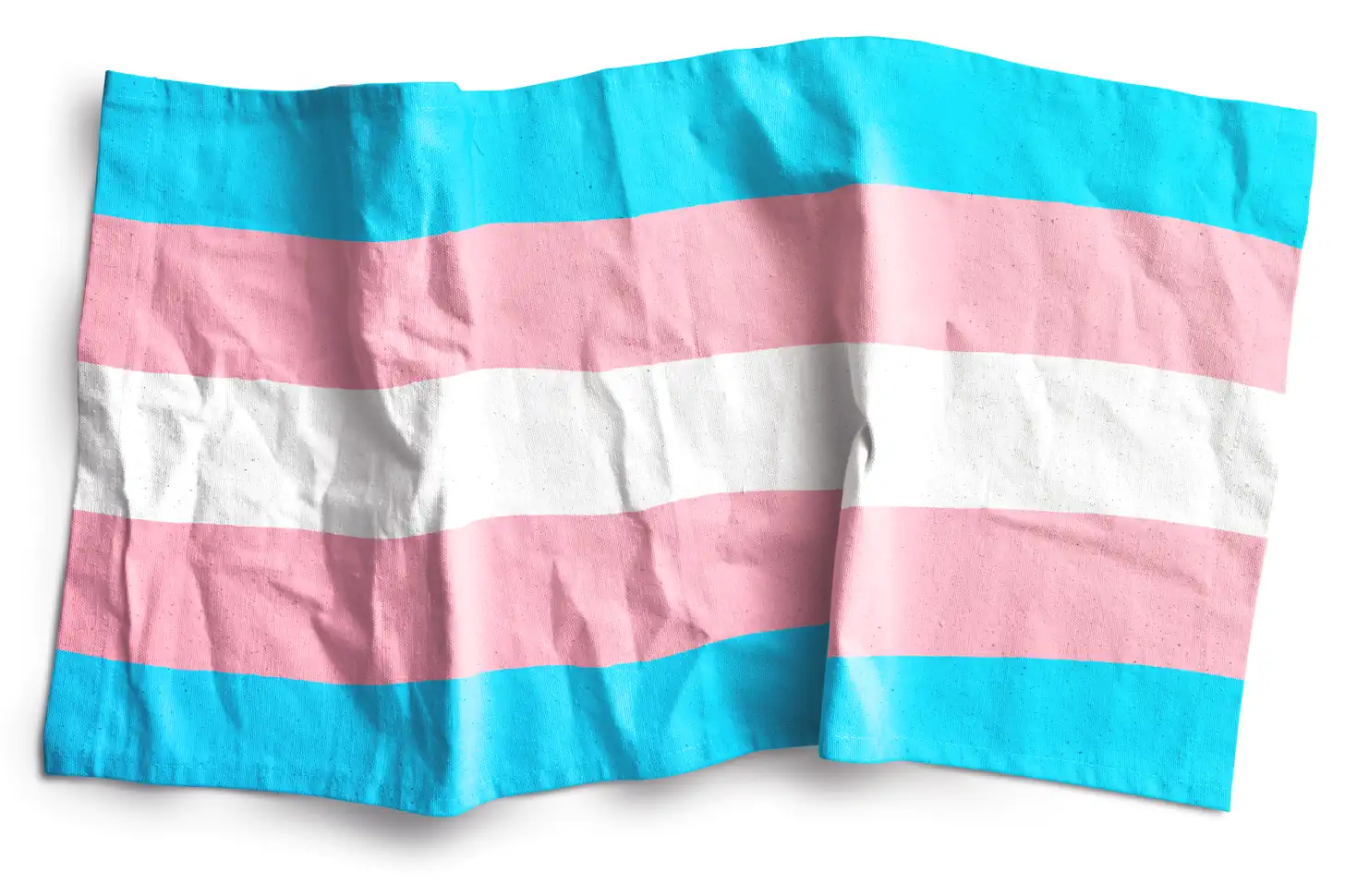
Created by trans woman Monica Helms in 1999, the Transgender Pride Flag was designed to provide the transgender community with a distinct symbol to represent and celebrate their unique identities within the LGBTQ+ community.
The flag’s five stripes include the traditional colors for baby boys and girls, while the central white stripe acknowledges those who are transitioning, non-binary, or identify outside the gender binary.
Designer: Monica Helms
Created: 1999
Colors & Meanings:
- Light Blue: Represents the traditional color for baby boys, symbolizing trans men and boys
- Light Pink: Represents the traditional color for baby girls, symbolizing trans women and girls
- White: Represents those who are transitioning, non-binary, or identify outside the gender binary
Get a Flag: Flags For Good | Amazon
→ Learn more about the Transgender Pride Flag
Nonbinary Flag
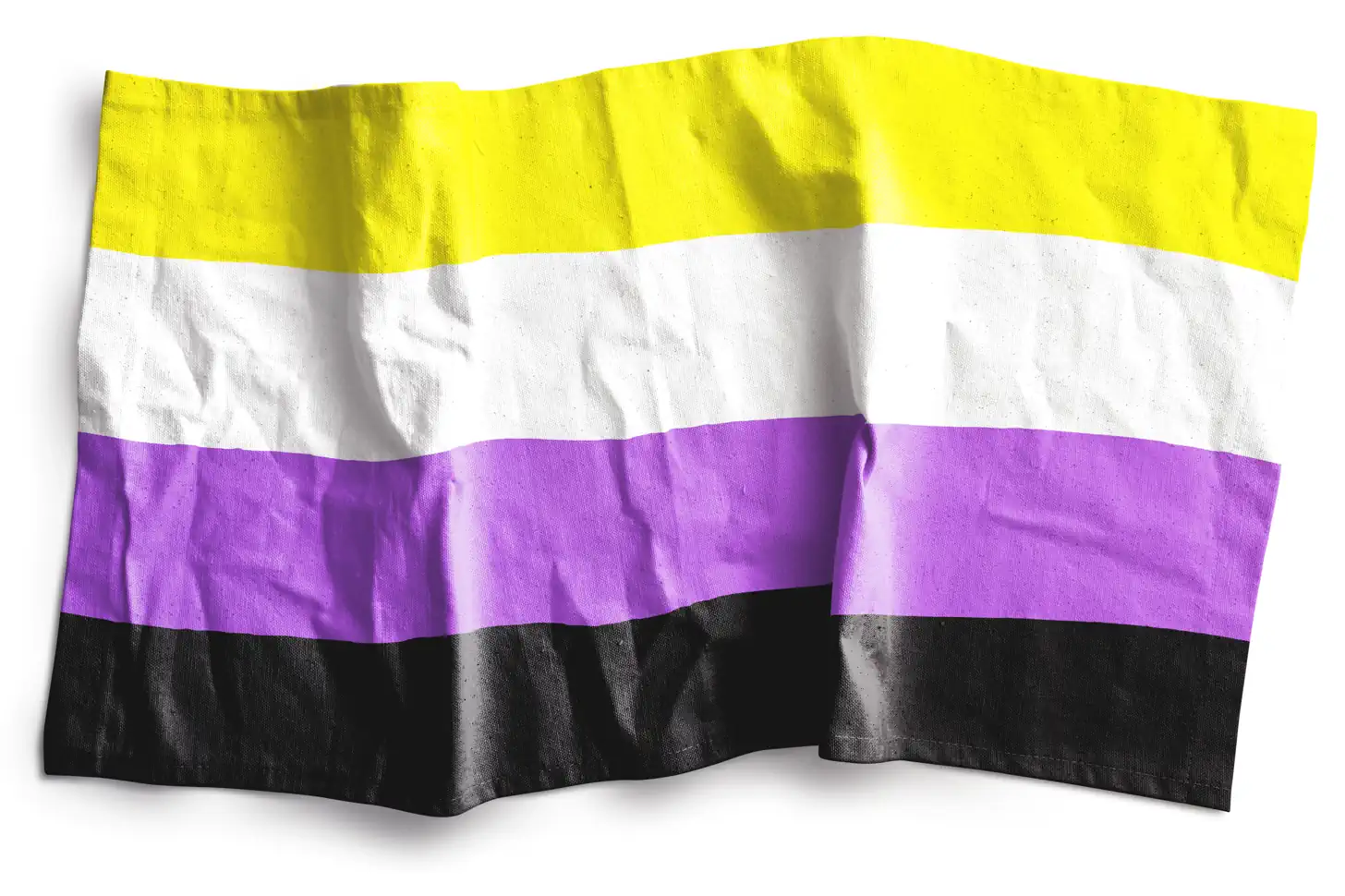
Created and shared on Tumblr by Kye Rowan in 2014, the Nonbinary Pride Flag provides a distinct symbol for nonbinary individuals.
The flag’s four colors capture the wide range of nonbinary experiences, including gender outside the binary, a mix of multiple genders, the absence of gender, and the community’s interconnectedness.
Designer: Kye Rowan
Created: 2014
Colors & Meanings:
- Yellow: Represents those who identify outside the traditional gender binary
- White: Represents those who identify with a mix of multiple genders
- Purple: Represents those who identify without any gender (agender)
- Black: Represents the interconnectedness of all nonbinary individuals within the community
Get a Flag: Flags For Good | Amazon
→ Learn more about the Nonbinary Pride Flag
Intersex Flag
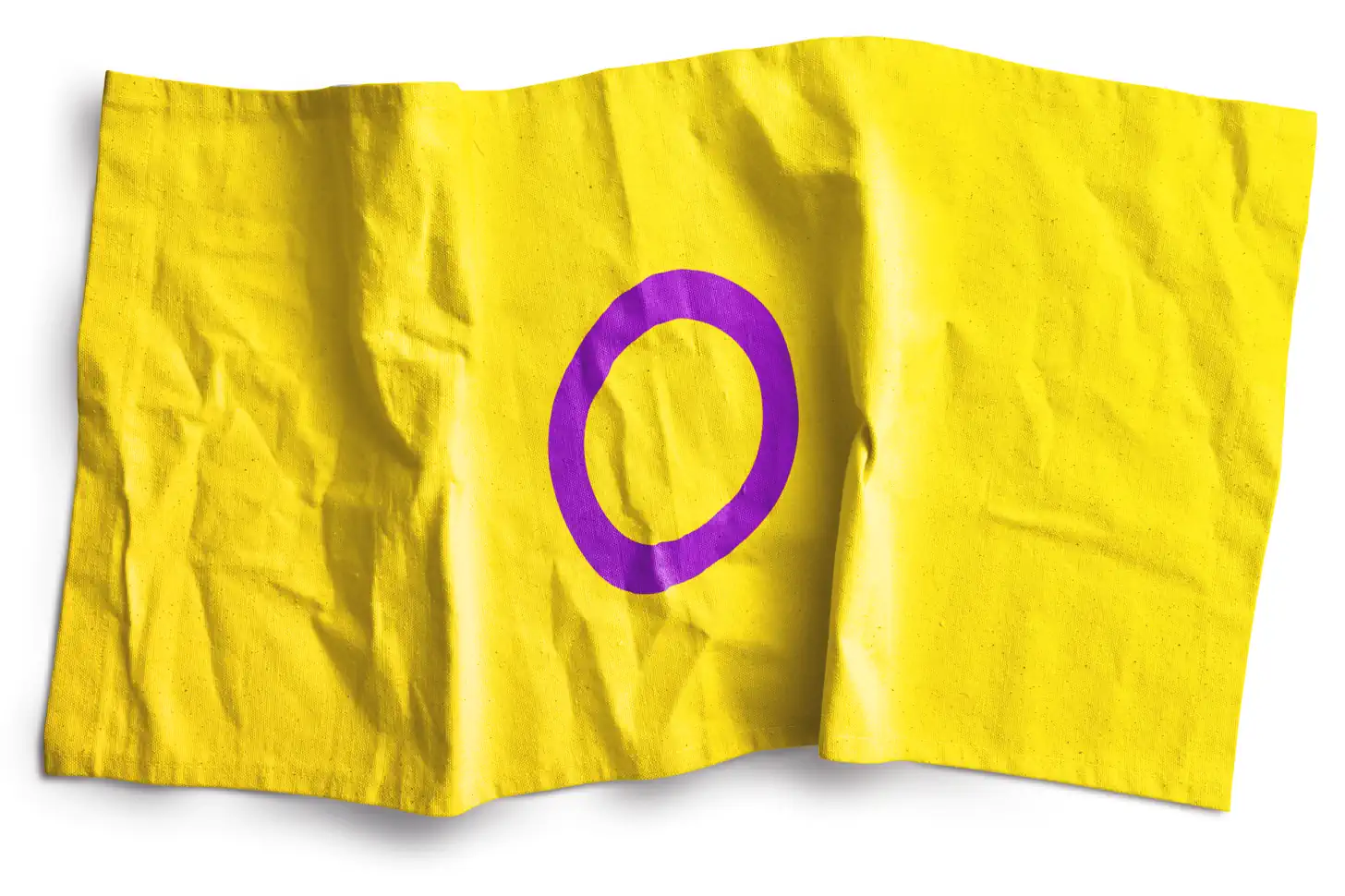
The Intersex Pride Flag was designed by Morgan Carpenter in 2013 to create a unique symbol for the intersex community that was not based on traditional gender symbols.
The flag features a purple circle on a yellow background, representing wholeness and inclusivity, as well as the unique and diverse experiences of intersex individuals.
“There is no commonly understood symbol or flag, even within intersex communities. Many attempts have seemed derivative, of a rainbow flag, of gender stereotypes, gendered pink and blue colors, of transgender symbols, or an infinity symbol used by some bisexual groups,” Carpenter wrote about the design.
“This is one attempt to create something that is not derivative, but yet is firmly grounded in meaning.”
The flag serves as a powerful reminder of the importance of visibility, recognition, and advocacy for the intersex community, emphasizing their resilience and ongoing fight for bodily autonomy and human rights.
Designer: Morgan Carpenter of Intersex Human Rights Australia
Created: 2013
Colors & Meanings:
- Yellow: Represents visibility and the need for recognition of the intersex community
- Purple Circle: Symbolizes wholeness, inclusivity, and the diverse experiences of intersex individuals
Get a Flag: Flags For Good | Amazon
→ Learn more about the Intersex Pride Flag
Asexual Flag
The Asexual Pride Flag was designed in 2010 by the Asexuality Visibility and Education Network (AVEN) to represent the diverse identities within the asexual community, each color symbolizing a specific aspect of asexuality.
The flag’s four stripes represent a range of asexual experiences, including asexuality, demisexuality, graysexuality, and their connection within the community.
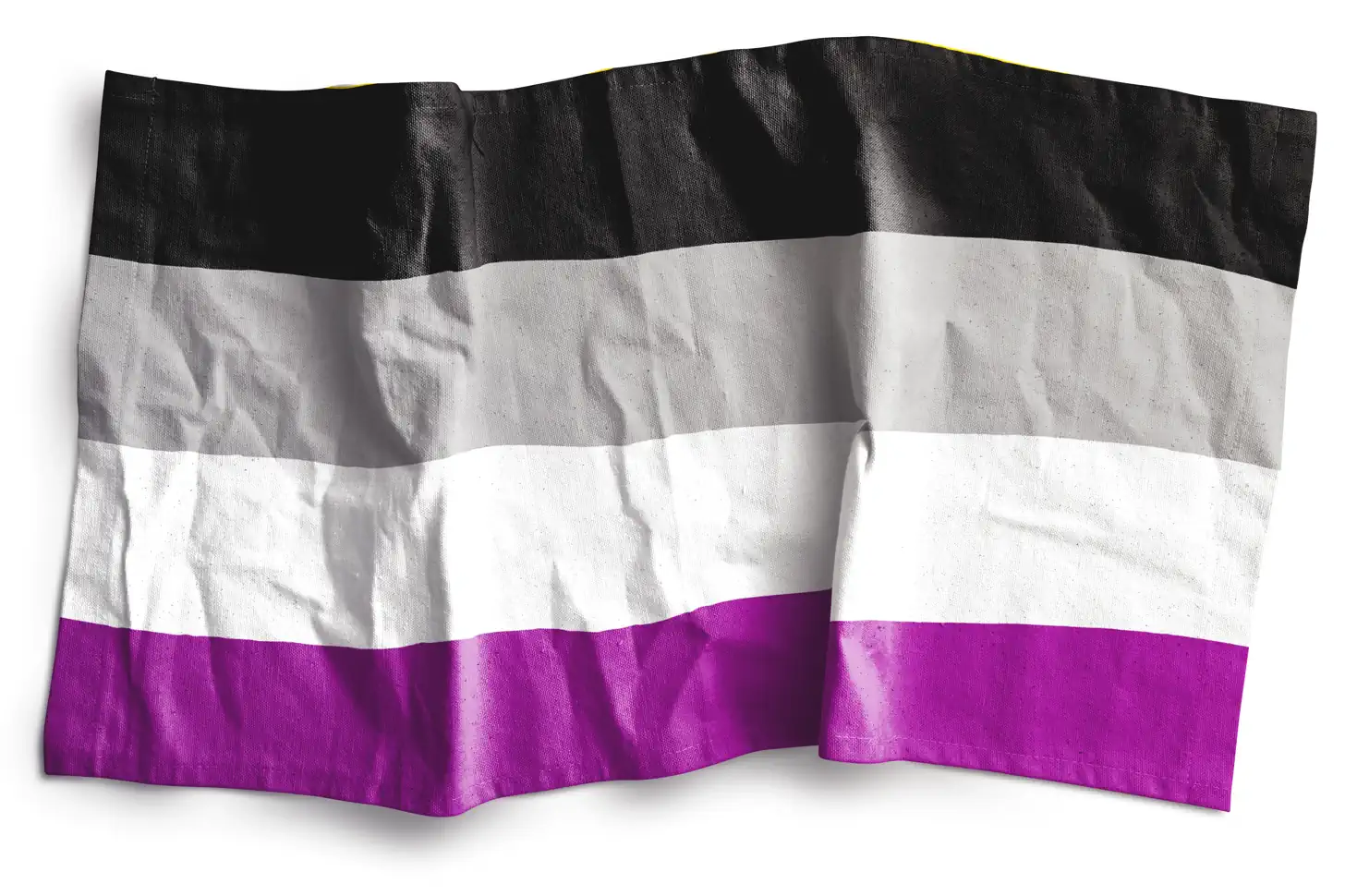
Designer: Asexuality Visibility and Education Network (AVEN)
Created: 2010
Colors & Meanings:
- Black: Represents asexuality
- Gray: Represents graysexuality (people who experience sexual attraction rarely or under specific circumstances)
- White: Represents demisexuality (people who only experience sexual attraction after forming a deep emotional connection)
- Purple: Represents the importance of community and solidarity among asexual individuals
Get a Flag: Flags For Good | Amazon
→ Learn more about the Asexual Pride Flag
Pansexual Flag
The Pansexual Pride Flag is believed to have been designed by an anonymous Tumblr user and began appearing online in 2010. It has since grown in prominence around the world.
The flag’s three stripes represent the diverse range of attractions experienced by pansexual individuals, encompassing attraction to all genders or regardless of gender.
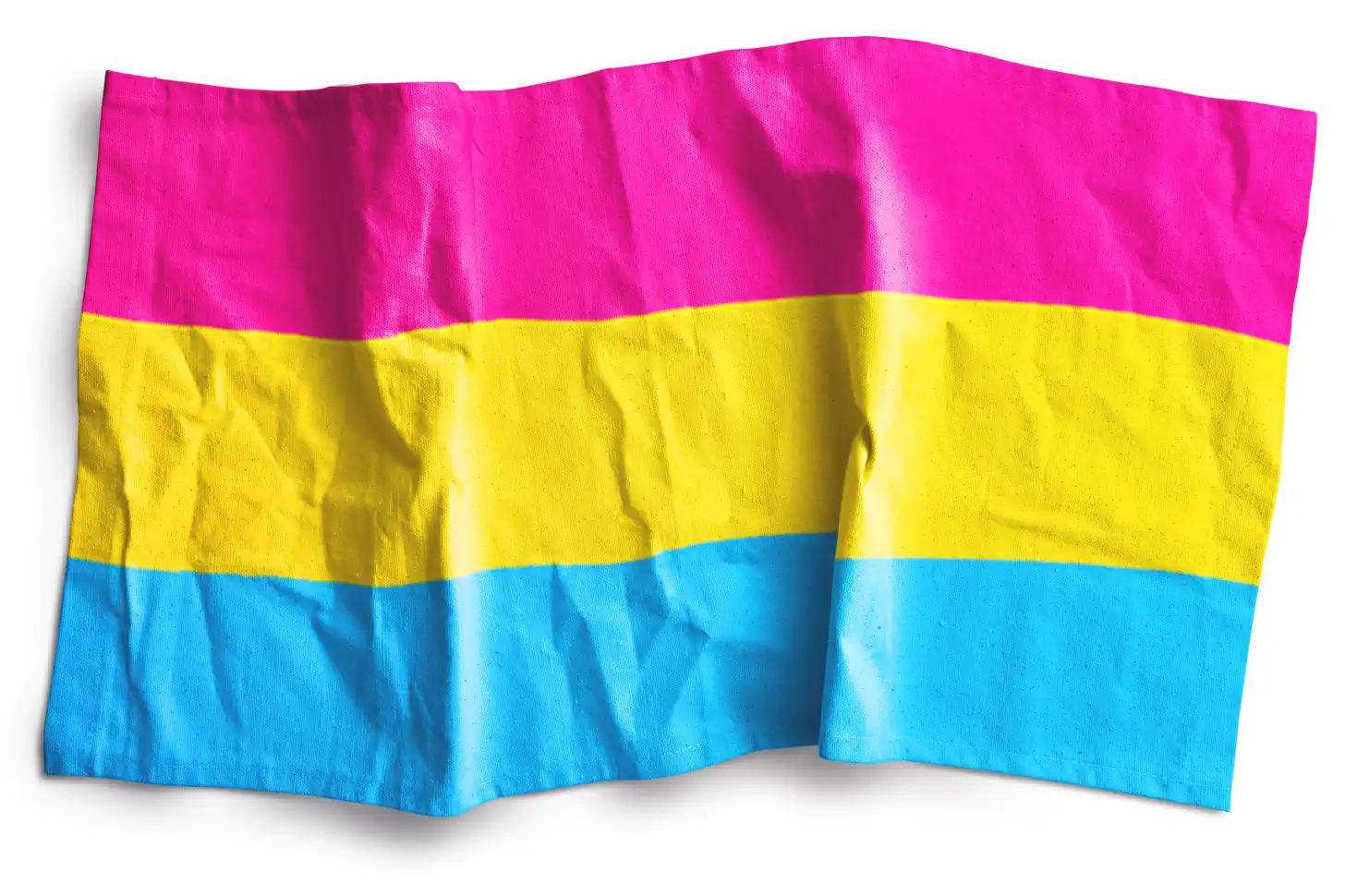
Designer: Jasper V., an anonymous Tumblr user
Created: 2010
Colors & Meanings:
- Magenta: Represents attraction to the same gender (or attraction to those who identify as female)
- Yellow: Represents attraction to genders outside the traditional binary
- Blue or Cyan: Represents attraction to a different gender (or attraction to those who identify as male)
Get a Flag: Flags For Good | Amazon
→ Learn more about the Pansexual Pride Flag
Abrosexual Flag
Posted anonymously on DeviantArt as early as in 2013, the Abrosexual Pride Flag offers a distinct symbol for those whose sexuality is fluid and fluctuates between different sexualities.
The flag’s five colors capture the fluid nature of abrosexual experiences, reflecting the changing attractions and orientations that individuals may experience over time.
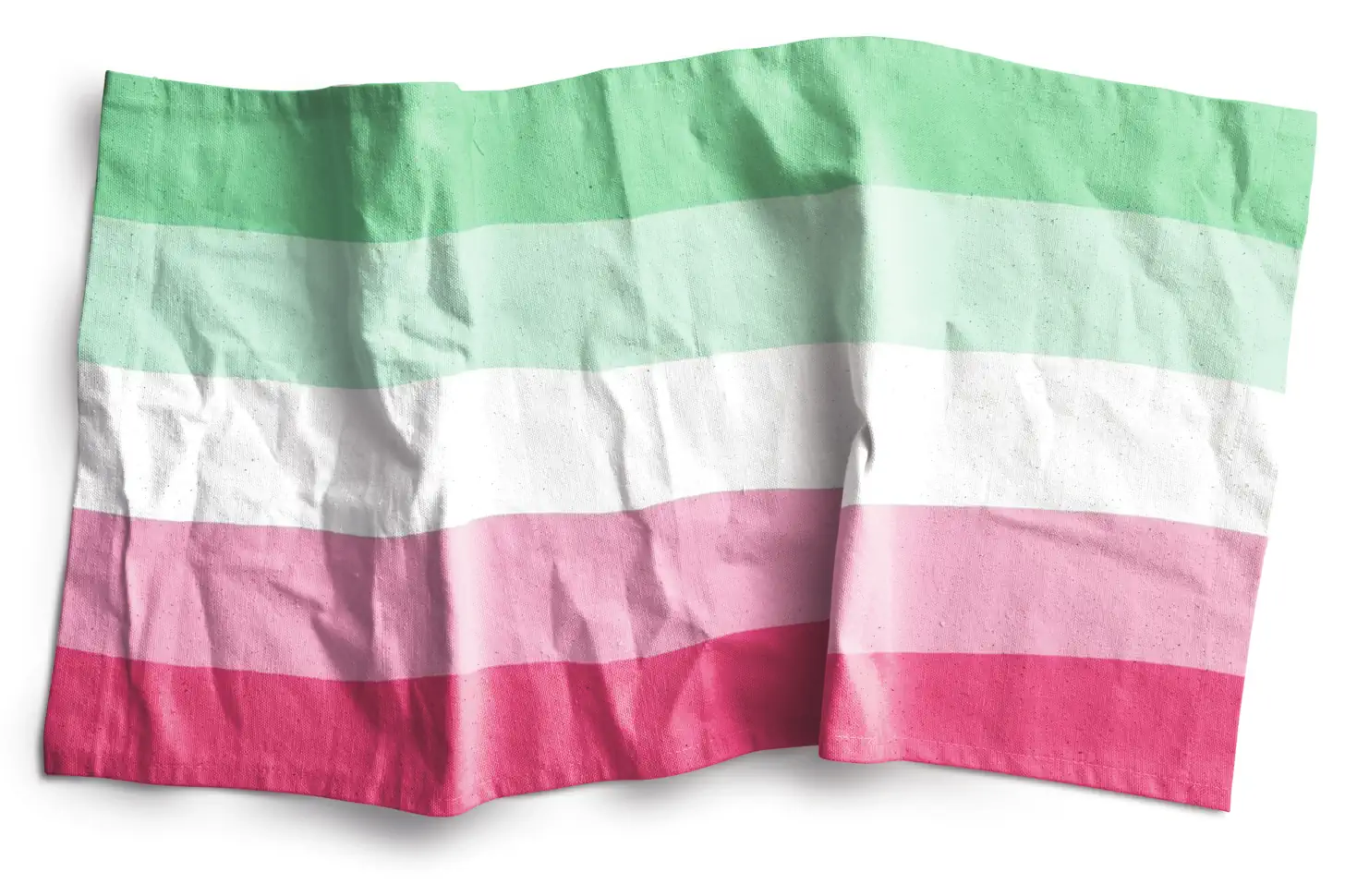
Designer: Unknown
Created: 2016
Colors & Meanings:
- Green: Represents attraction to all genders
- White: Represents the in-between fluidity of attraction
- Pink: Represents attraction to the same gender
Get a Flag: Amazon
Drag Pride Flag
Designed by Veranda L’Ni for the Austin International Drag Foundation in 2016, the Drag Pride Flag offers a distinct symbol for drag performers.
The flag’s colors are purple, white, and blue and includes a crown and stars in the center.
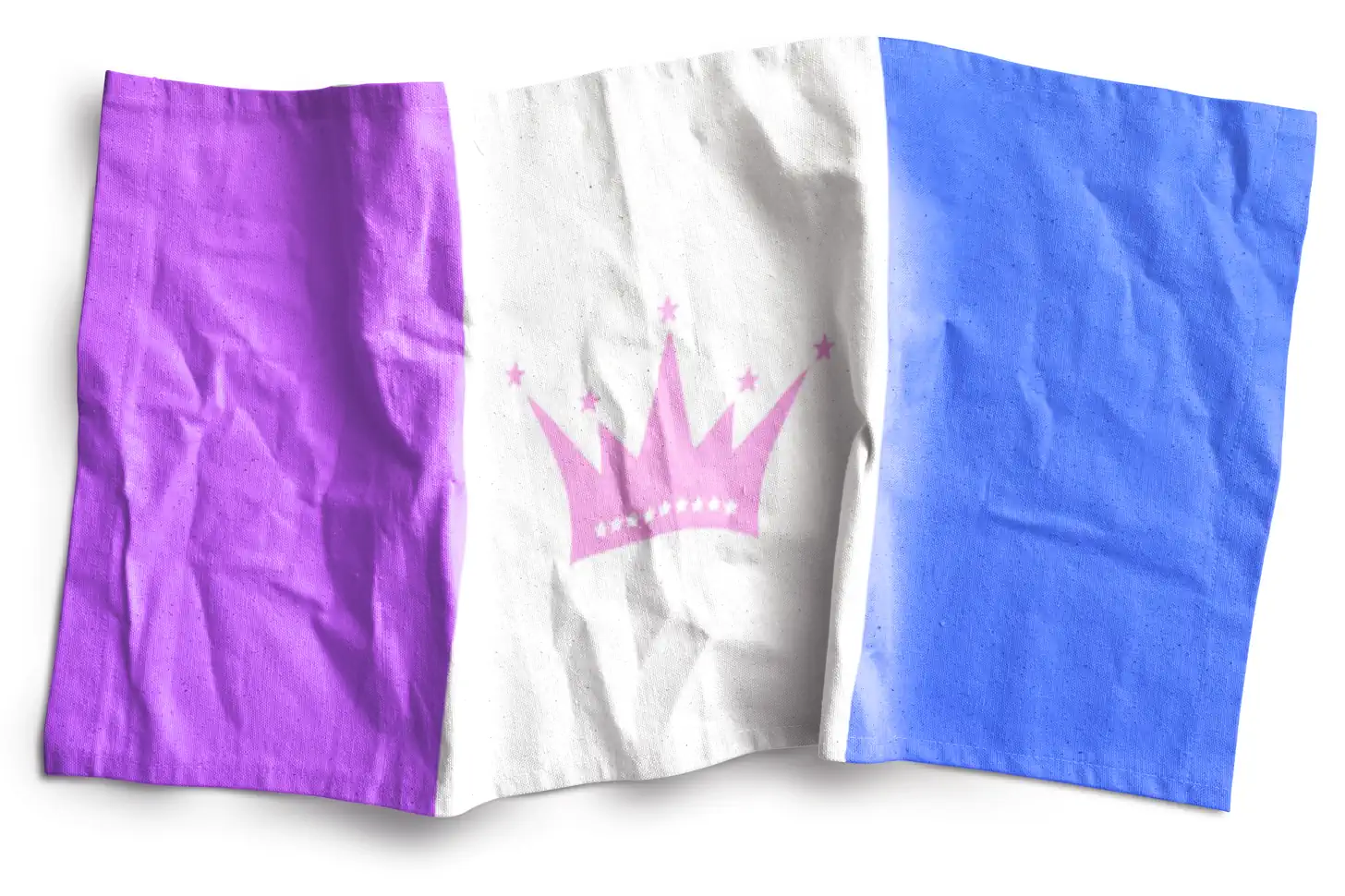
Designer: Veranda L’Ni
Created: 2016
Colors & Meanings:
- Purple: Represents the passion for drag performers all share
- White: Represents the blank slate that is a performer’s body and face to create the characters they become
- Blue: Represents self-expression and loyalty
- Crown: Represents leadership in the community
- Stars: Represent the many different forms of drag
Get a Flag: Flags For Good | Amazon
→ Learn more about the Drag Pride Flag
Genderqueer Pride Flag
Designed by Marilyn Roxie in 2011, the Genderqueer Pride Flag offers a distinct symbol for the genderqueer community while taking aesthetic inspiration from lesbian, bisexual, and pansexual flags, utilizing horizontal bars of color with special meanings..
The flag’s three colors — lavender, white, and green — capture the wide range of genderqueer experiences and provide visibility and interconnectedness in the genderqueer community.
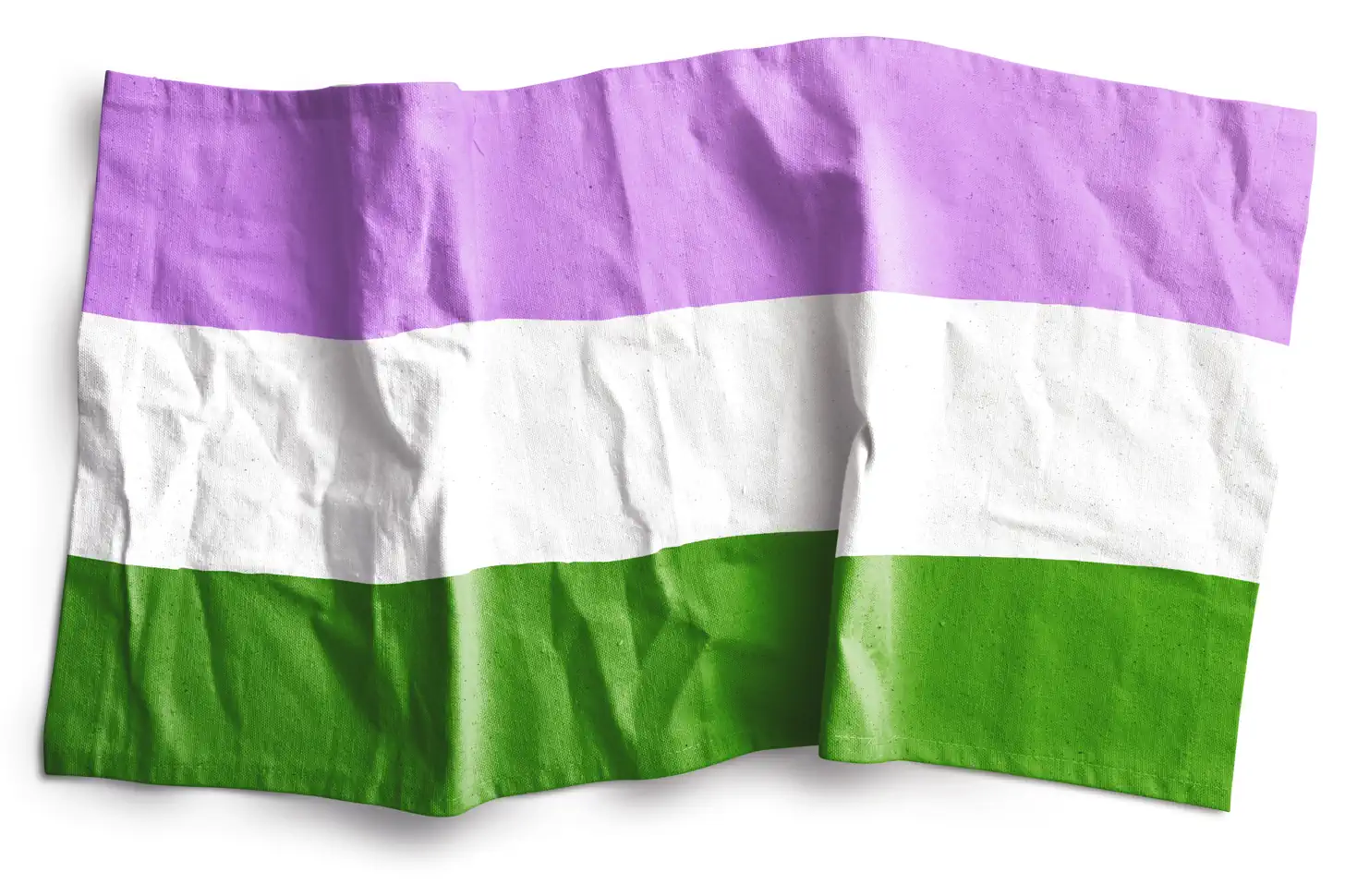
Designer: Marilyn Roxie
Created: 2011
Colors & Meanings:
- Lavender: Represents androgyny, as well as the combination of both masculine and feminine characteristics
- White: Represents those who identify as agender or genderless, having no gender or a neutral gender
- Green: Represents those who identify as non-binary or outside the traditional gender binary, symbolizing growth and renewal
Get a Flag: Flags For Good | Amazon
→ Learn more about the Genderqueer Pride Flag
Two-Spirit Flag
Designed by anonymous Tumblr user 2Sanon in 2016, the Two-Spirit Pride Flag combines symbols of both Indigenous and LGBTQ+ communities.
The two feathers signify masculine and feminine energies, while the circle indicates oneness. The symbol is usually placed atop a Rainbow Pride Flag, but it can also be seen over transgender, nonbinary, or Progress flags.
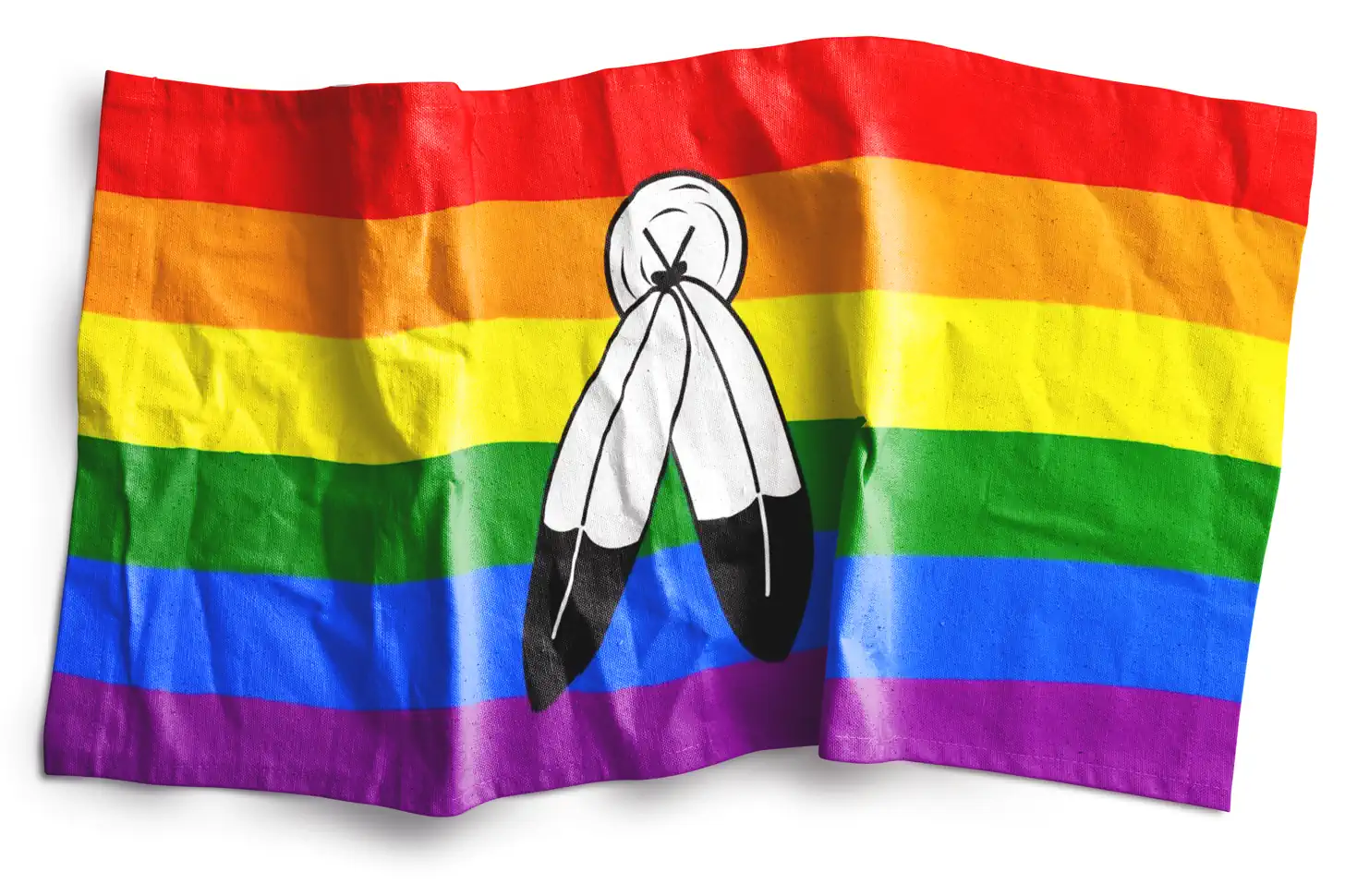
Designer: 2Sanon on Tumblr
Created: 2016
Colors & Meanings:
- Rainbow: Represents the connectedness of two-spirit individuals within the broader LGBTQ+ community
- Two Feathers: Symbolize the blending of masculine and feminine spirits, as well as the spiritual nature of two-spirit individuals within their Indigenous communities
Get a Flag: Flags For Good | Amazon
→ Learn more about the Two-Spirit Pride Flag
Genderfluid Pride Flag
The Genderfluid Pride Flag was designed in 2012 by JJ Poole to create representation for those whose gender identity and/or gender expression fluctuates throughout life.
The flag’s five stripes represent the diversity and fluidity of genderfluid experiences, with individuals transitioning between different gender identities over time.
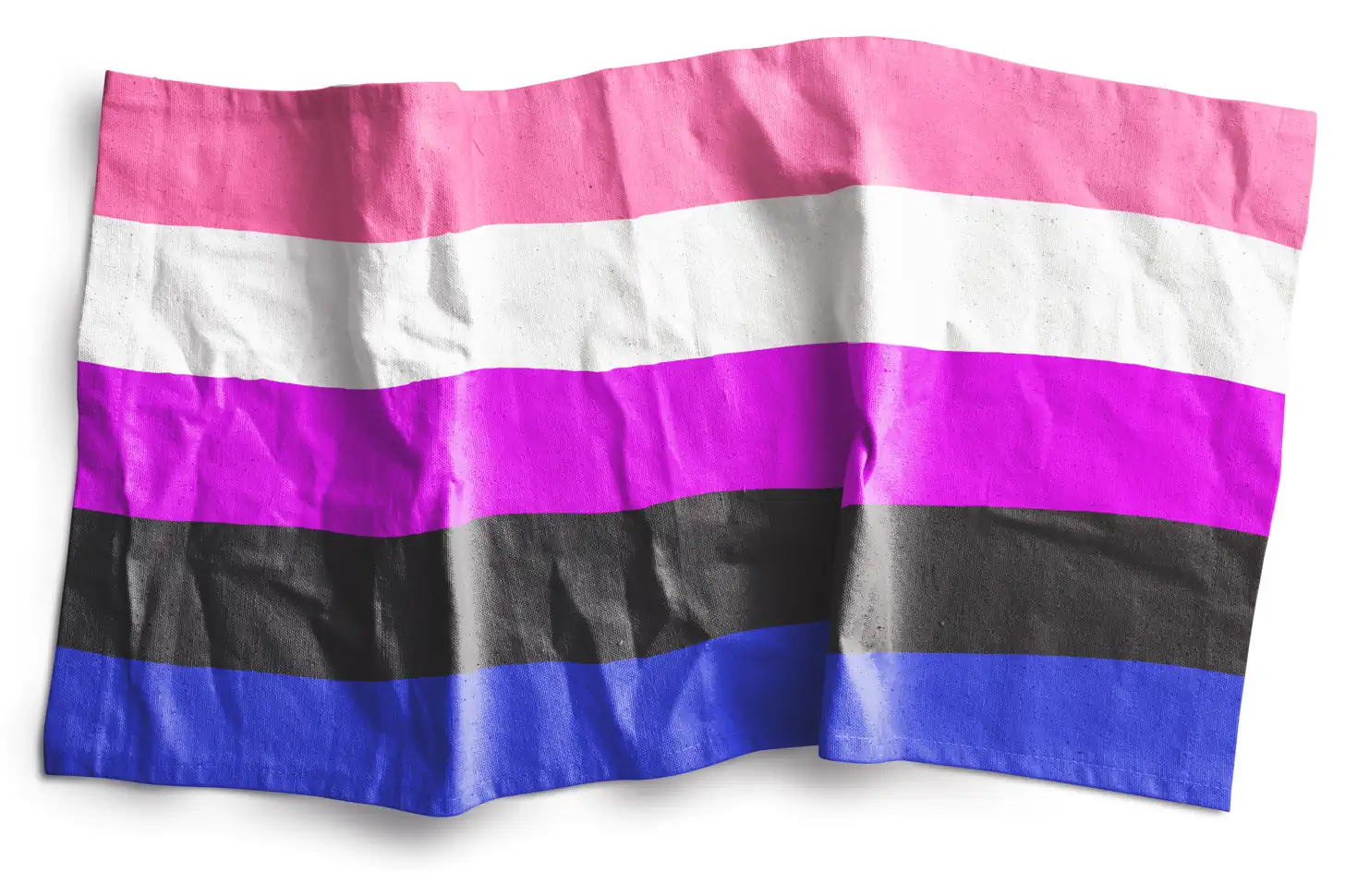
Designer: JJ Poole
Created: 2012
Colors & Meanings:
- Pink: Represents femininity and the fluidity experienced by those who identify as female at times
- White: Represents the lack of gender, as well as the fluidity experienced by those who identify as agender or genderless at times
- Purple: Represents both masculinity and femininity, as well as the fluidity experienced by those who identify as both or a mix of male and female at times
- Black: Represents all genders, as well as the fluidity experienced by those who identify as all or multiple genders at times
- Blue: Represents masculinity and the fluidity experienced by those who identify as male at times
Get a Flag: Flags For Good | Amazon
→ Learn more about the Genderfluid Pride Flag
Agender Pride Flag
Designed by Salem X in 2014, the Agender Pride Flag offers those who identify as agender — which means not identifying with any particular gender — a symbol to feel more connected and affirmed in their sense of self.
The flag’s seven colors capture the essence of gender absence or neutrality, reflecting the experiences of individuals who do not identify within the gender binary.
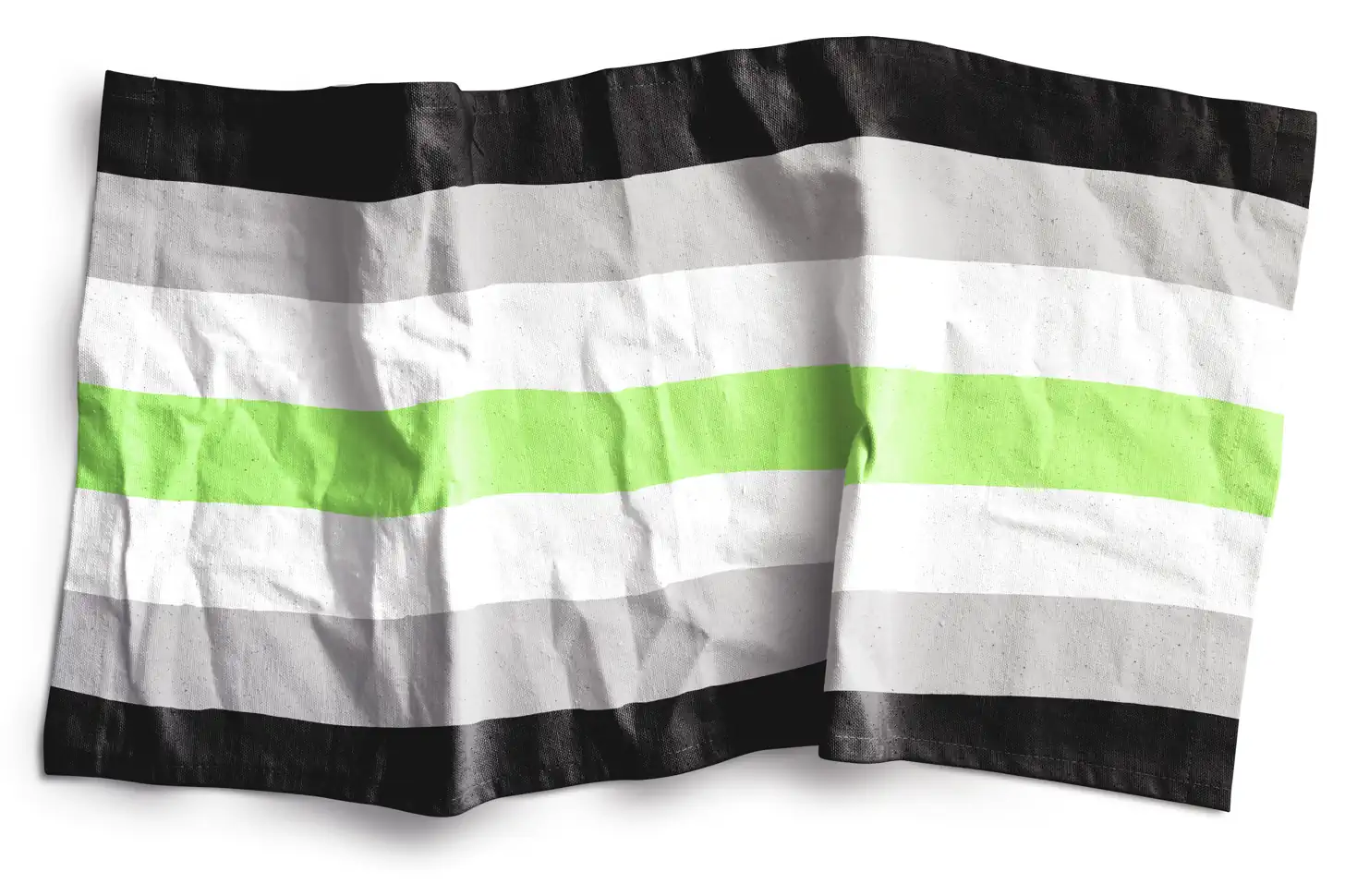
Designer: Salem X
Created: 2014
Colors & Meanings:
- Black: Represents the absence of gender, as well as the resilience and strength of the agender community
- Gray: Symbolizes partial gender, as well as the fluidity experienced by those who identify as partially gendered or gender-neutral
- White: Represents gender neutrality and the experience of identifying as neither male nor female
- Green: Symbolizes non-binary gender identities, emphasizing the importance of inclusivity and acceptance within the LGBTQ+ community
Get a Flag: Flags For Good | Amazon
→ Learn more about the Agender Pride Flag
Intersex-Inclusive Progress Pride Flag
The Intersex-Inclusive “Progress” Pride Flag was designed in 2021 by Valentino Vecchietti, an intersex activist, to create a more inclusive symbol within the LGBTQ+ community.
This flag incorporates elements of the original Progress Pride Flag, designed by Daniel Quasar in 2018, and adds a circle with the intersex flag colors to represent intersex individuals.
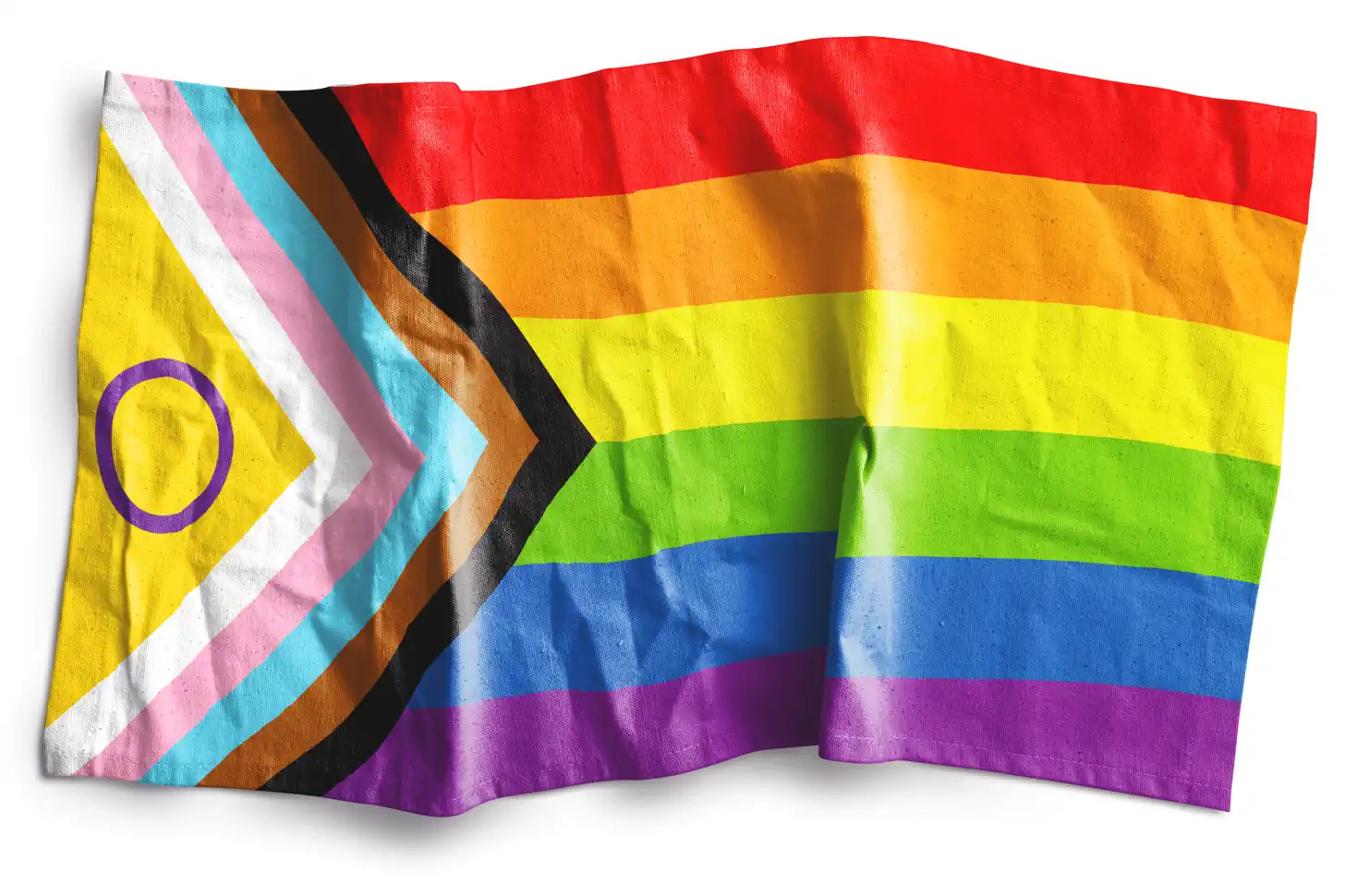
Designer: Valentino Vecchietti of Intersex Equality Rights UK
Created: 2021
Colors & Meanings:
- Black and Brown: Representing LGBTQ+ people of color, acknowledging their experiences, contributions, and struggles within the community
- Light Blue and Pink: Derived from the Transgender Pride Flag, representing trans individuals; light blue symbolizes trans men and boys, and pink symbolizes trans women and girls
- Intersex Circle: Yellow circle with purple circle inside, representing intersex individuals and their unique experiences
- Red: Life
- Orange: Healing
- Yellow: Sunlight
- Green: Nature
- Blue: Serenity and harmony
- Purple: Spirit
Get a Flag: Flags For Good | Amazon
Polysexual Pride Flag
The Polysexual Pride Flag was designed in 2012 by an anonymous Tumblr user to create a unique symbol for the polysexual community within the LGBTQ+ spectrum.
The flag’s three stripes represent attraction to multiple, but not all, genders, emphasizing the diverse range of gender identities that polysexual individuals may be attracted to.
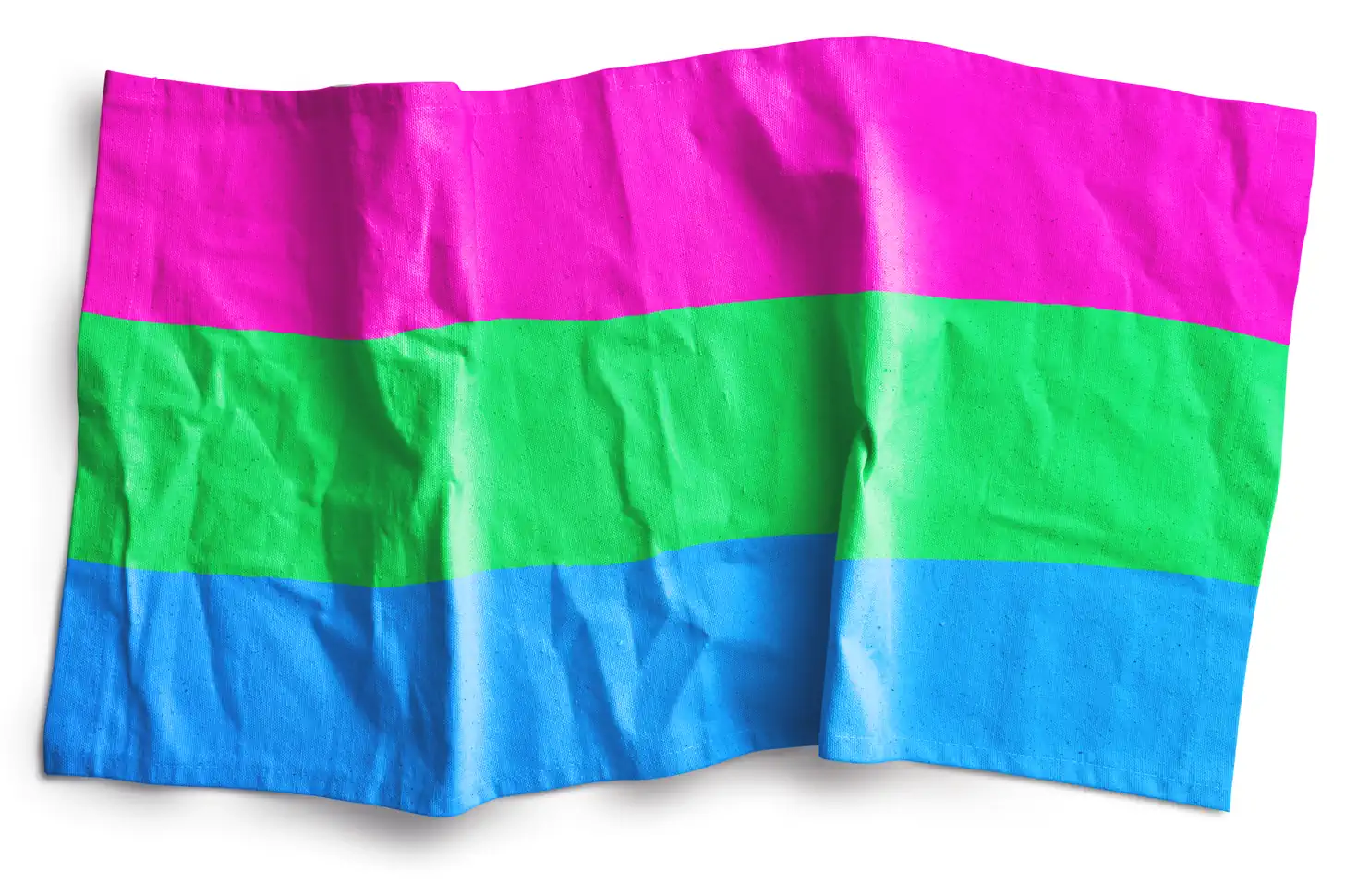
Designer: Anonymous Tumblr user
Created: 2012
Colors & Meanings:
- Pink: Represents attraction to female-identified or feminine individuals
- Green: Represents attraction to non-binary, genderqueer, or gender nonconforming individuals
- Blue: Represents attraction to male-identified or masculine individuals
Get a Flag: Flags For Good | Amazon
→ Learn more about the Polysexual Pride Flag
Demisexual Pride Flag
The Demisexual Pride Flag was designed in 2010 by an anonymous user on the Asexuality Visibility and Education Network (AVEN) to create a symbol representative of demisexual folks; those who only develop sexual attraction after forming a deep emotional connection with another person.
The flag’s four colors represent the unique experience of demisexual individuals and take inspiration from the Asexual Pride Flag design, implementing white, purple, and gray bars with a black triangle on the left-hand side.
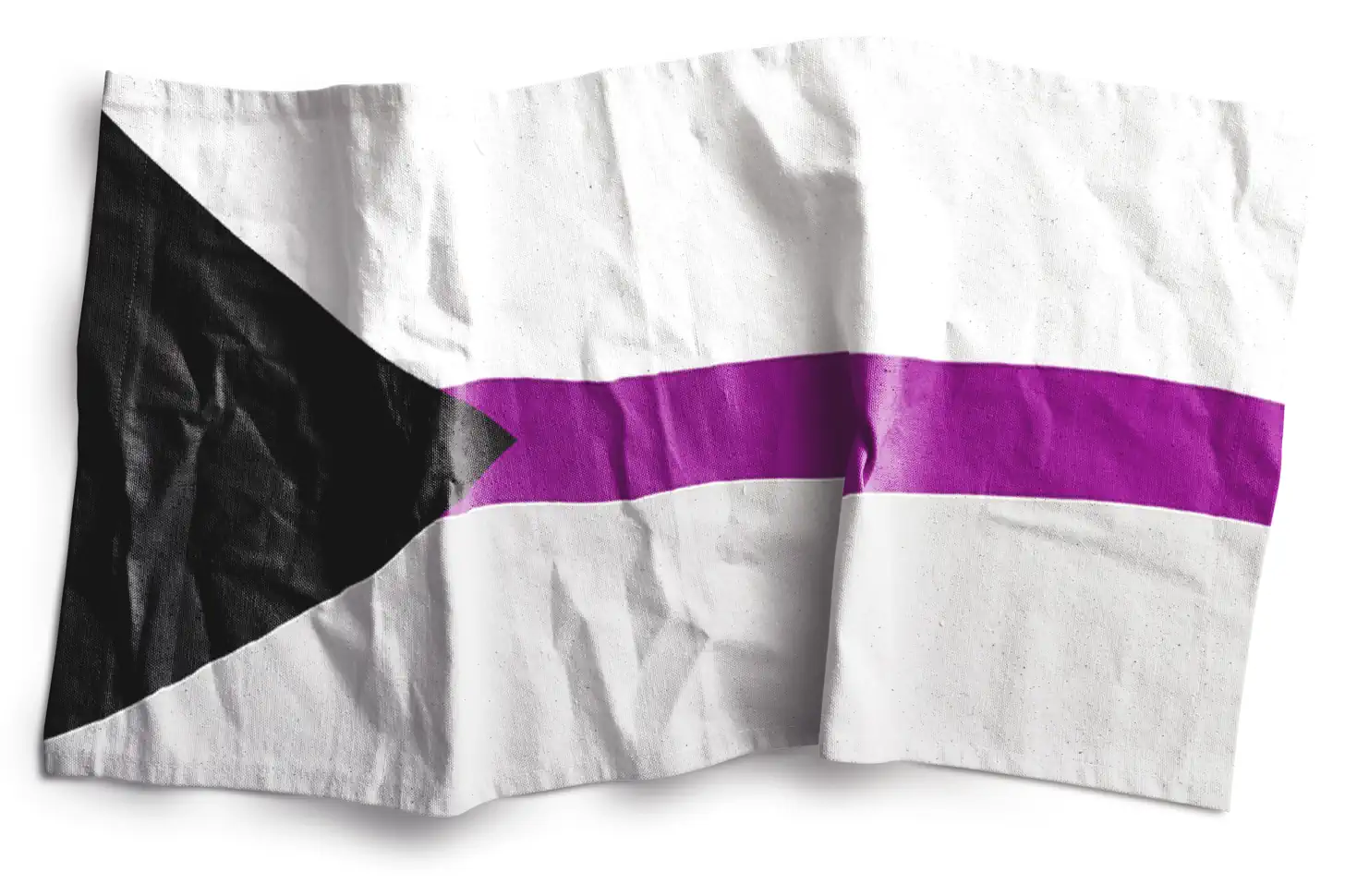
Designer: Anonymous AVEN user
Created: 2010
Colors & Meanings:
- Black: Represents asexuality, acknowledging the spectrum of asexual identities
- White: Represents sexuality, symbolizing the spectrum of sexual identities
- Purple: Represents community, highlighting the importance of connections and support within the LGBTQ+ community
- Gray: Represents the unique experiences of demisexual individuals, who only experience sexual attraction after forming a deep emotional connection
Get a Flag: Flags For Good | Amazon
→ Learn more about the Demisexual Pride Flag
Aromantic Pride Flag
The Aromantic Pride Flag was designed in 2014 by Tumblr user @cameronwhimsy to create a unique symbol for the aromantic community within the LGBTQ+ spectrum.
The flag’s five stripes represent the unique experience of aromantic individuals, who do not experience romantic attraction to others.
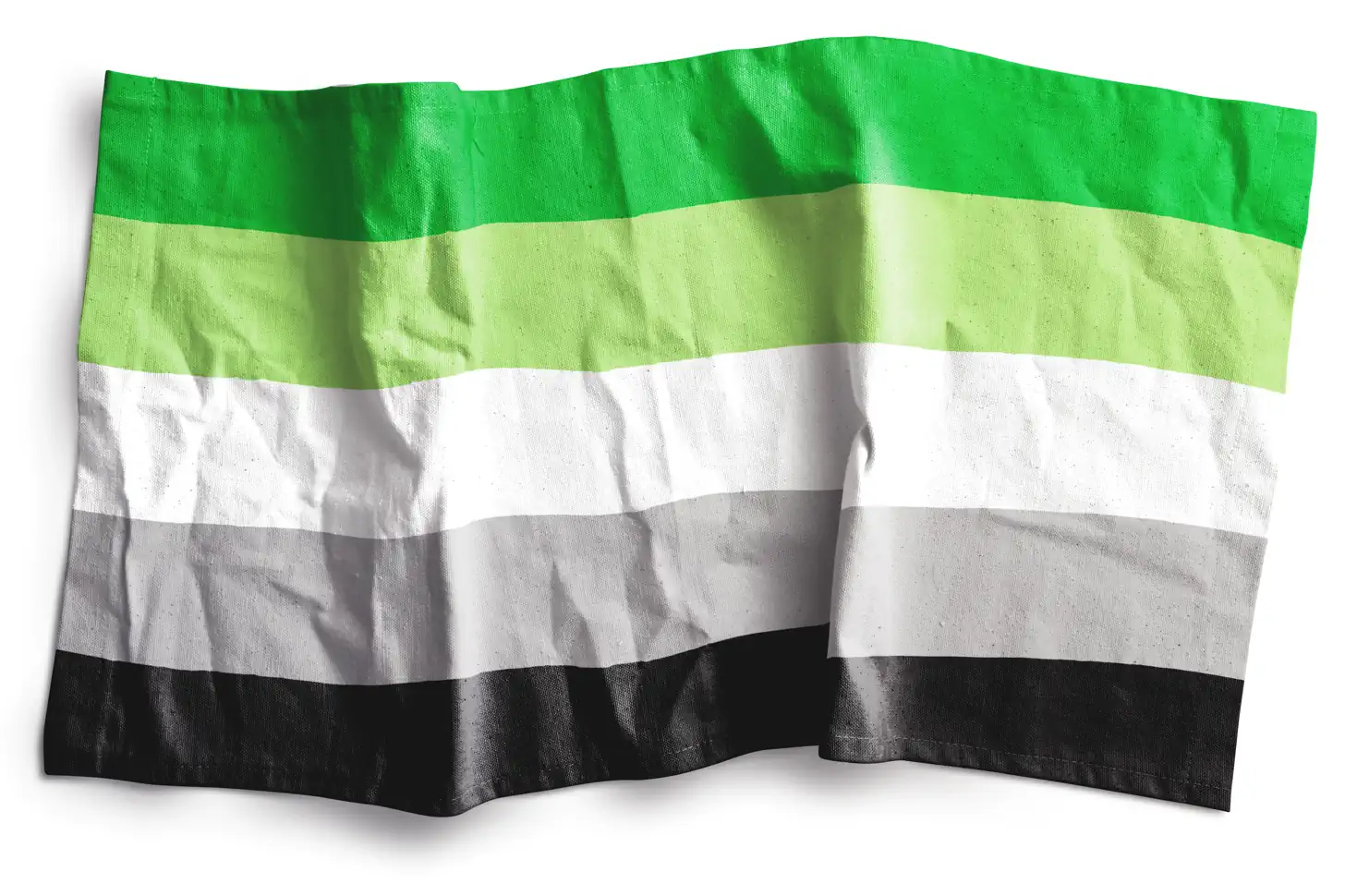
Designer: Tumblr user @cameronwhimsy
Created: 2014
Colors & Meanings:
- Green: Represents aromanticism
- Light Green: Represents the aromantic spectrum
- White: Represents friendship and platonic love, as well as queer platonic relationships
- Gray: Represents gray-aromantic individuals, who may experience romantic attraction in limited or specific circumstances
- Black: Represents the broader spectrum of romantic and sexual orientations, acknowledging the diversity of identities within the LGBTQ+ community
Get a Flag: Flags For Good | Amazon
→ Learn more about the Aromantic Pride Flag
Demigender Pride Flag
Designed by an anonymous Tumblr user in 2014, the Demigender Pride Flag represents those who partially identify with a specific gender or genders.
The flag’s three colors capture the essence of demigender experiences, reflecting the wide variety of gender identities.
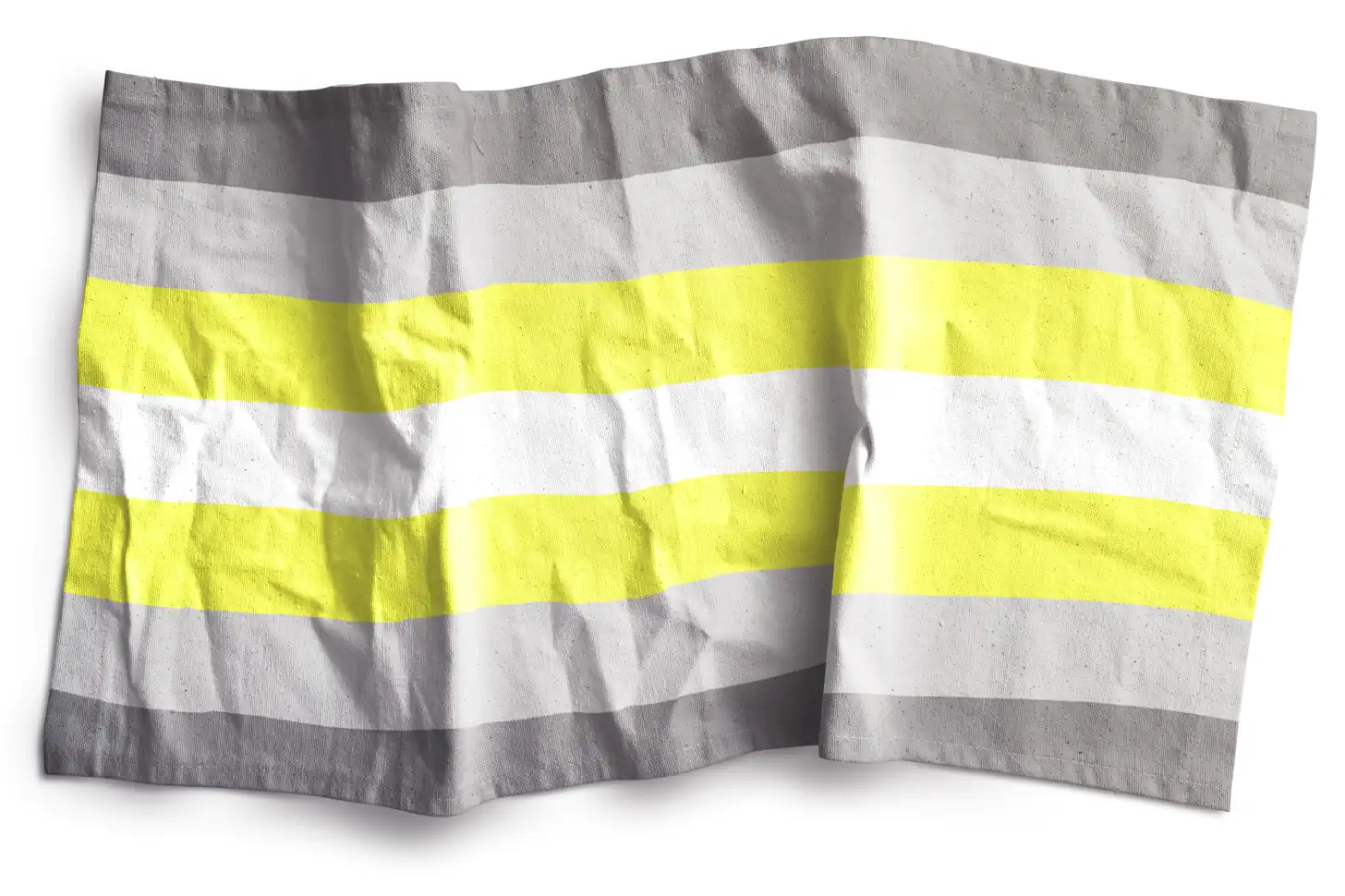
Designer: Anonymous Tumblr user
Created: 2014
Colors & Meanings:
- Yellow: Represents non-binary and genderqueer individuals, acknowledging the spectrum of non-binary and genderqueer identities
- White: Represents the experience of partial identification with a specific gender, symbolizing the spectrum of demigender identities
- Gray: Represents the absence of gender, symbolizing the spectrum of agender identities and the diversity of demigender experiences
Get a Flag: Amazon
→ Learn more about the Demigender Pride Flag
Androgyne Pride Flag
The Androgyne Pride Flag was designed in 2014 by an anonymous Tumblr user.
The flag’s three vertical stripes represent the unique experience of androgynous individuals, who express or identify with both masculine and feminine characteristics.
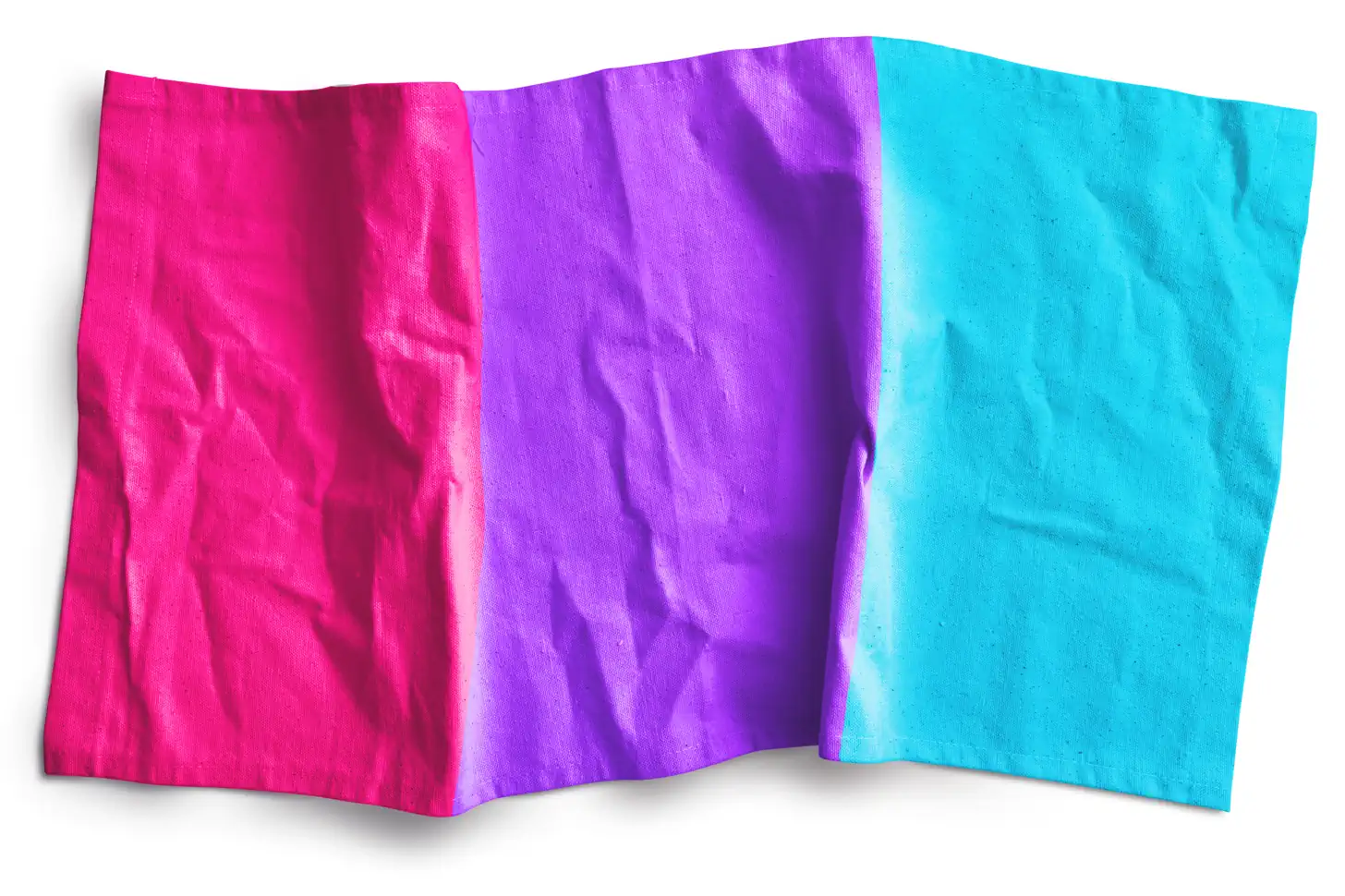
Designer: Anonymous Tumblr user
Created: 2014
Colors & Meanings:
- Pink: Represents femininity, acknowledging the spectrum of female-identified and feminine-presenting individuals
- Purple: Represents androgyny as a combination of the two colors
- Blue: Represents masculinity, acknowledging the spectrum of male-identified and masculine-presenting individuals
Get a Flag: Amazon
→ Learn more about the Androgyne Pride Flag
Frequently Asked Questions
What are the 5 main pride flags?
Every Pride flag is important to the communities that they represent, but there are some Pride flags that are more commonly displayed. According to Michael Green, the founder of Flags For Good, the five most popular Pride flags in 2023 were:
- Progress Pride Flag
- Intersex Progress Pride Flag
- Trans Pride Flag
- 6-Stripe Rainbow Pride Flag
- Bisexual Pride Flag
Where can I buy LGBTQ+ Pride flags?
You can buy LGBTQ+ Pride flags from various outlets, including Amazon, eBay, and Etsy. Flags For Good is an especially noteworthy source that not only sells diverse Pride flags but also contributes part of its earnings to LGBTQ+ causes.
How many Pride flags are there?
It’s hard to pinpoint an exact count of Pride flags because the LGBTQ+ spectrum is vast and constantly developing. However, there are more than 30 distinct flags that symbolize the various identities, orientations, and intersections included in this community.
What are the different LGBTQ+ holidays, weeks, and months?
Various holidays, weeks, and months are celebrated in the LGBTQ+ community. These include Pride Month in June, LGBTQ+ History Month in October, Transgender Day of Visibility in March, and the International Day Against Homophobia, Transphobia, and Biphobia in May, plus National Coming Out Day in October.
→ Explore our complete guide to LGBTQ+ awareness days and pride months
What are the different LGBTQ+ awareness ribbon meanings?
In the LGBTQ+ community, different awareness ribbons hold unique meanings. The rainbow ribbon signifies LGBTQ+ pride, the lavender ribbon is for queer awareness, the pink, blue, and white ribbon symbolizes transgender pride, and the red ribbon is universally recognized as a symbol for AIDS awareness.
→ Explore our complete guide to awareness ribbon colors and meanings
Why is pink not in the Pride flag?
The original Pride flag, designed by Gilbert Baker, did include pink. However, due to production difficulties and the unavailability of hot pink fabric at the time, the pink stripe was removed, resulting in the commonly seen six-color version of the flag.
Where is the original Pride flag?
The original Pride flag, created by Gilbert Baker in 1978, does not exist in its entirety today. However, a fragment of it is housed at the GLBT Historical Society in San Francisco. In honor of the 20th anniversary of the flag’s creation in 1998, Baker recreated his eight-color design using identical methods.
What are some rainbow Pride flag books?
A: Some notable books about the rainbow Pride flag include “Pride: An Inspirational History of the LGBTQ+ Movement” by Stella Caldwell, “Pride Colors” by Robin Stevenson, “Rainbow: A First Book of Pride” by Michael Genhart and Anne Passchier, and “LGBTQ+ Pride Flags: and What They All Mean” by Matt Haslam.
Artists possess an unparalleled power to transform the world, infusing it with beauty and goodness through their creative endeavors.
Your work can transcend cultural, political, and social boundaries, fostering understanding and unity, and often inspiring change for the better.
Affirmations are a fabulous tool in our self-care practices — and especially powerful for artists. They help us build self-belief, reduce stress, and increase our emotional resilience as we deal with all of the resistance we face as artists.
They’re also kind of fun to find, create, and fine-tune to fit our own unique circumstances and help us feel supported and grounded as we all navigate the delicate terrain of our individual mental health.
As lovers and sharers of creativity (we publish meaningful good news online, and make a gorgeous monthly print Goodnewspaper), we’re big positive affirmation enthusiasts and have helped collect some affirmations specifically for fellow creatives.
Explore our main article of The Best Positive Affirmations and all of our other collections of positive affirmations:
- Positive Morning Affirmations
- Positive Affirmations for Kids
- Positive Affirmations for Men
- Positive Affirmations for Artists
- Positive Affirmations for Anxiety
- Motivational Positive Affirmations
- Self-Confidence Positive Affirmations
- Short Positive Affirmations
- Self-Care Affirmations
- Affirmation Quotes
As you delve into these affirmations for creatives, don’t think about what you could create — just focus on being present. And then move toward creation as it feels natural. Don’t put any pressure on yourself. Hold onto what feels good, and release what doesn’t.
This is a list designed to make your affirmation practice less overwhelming, and we hope we leave you feeling more hopeful and confident. Let’s get to it!
10 Reminders & Affirmations for Creativity
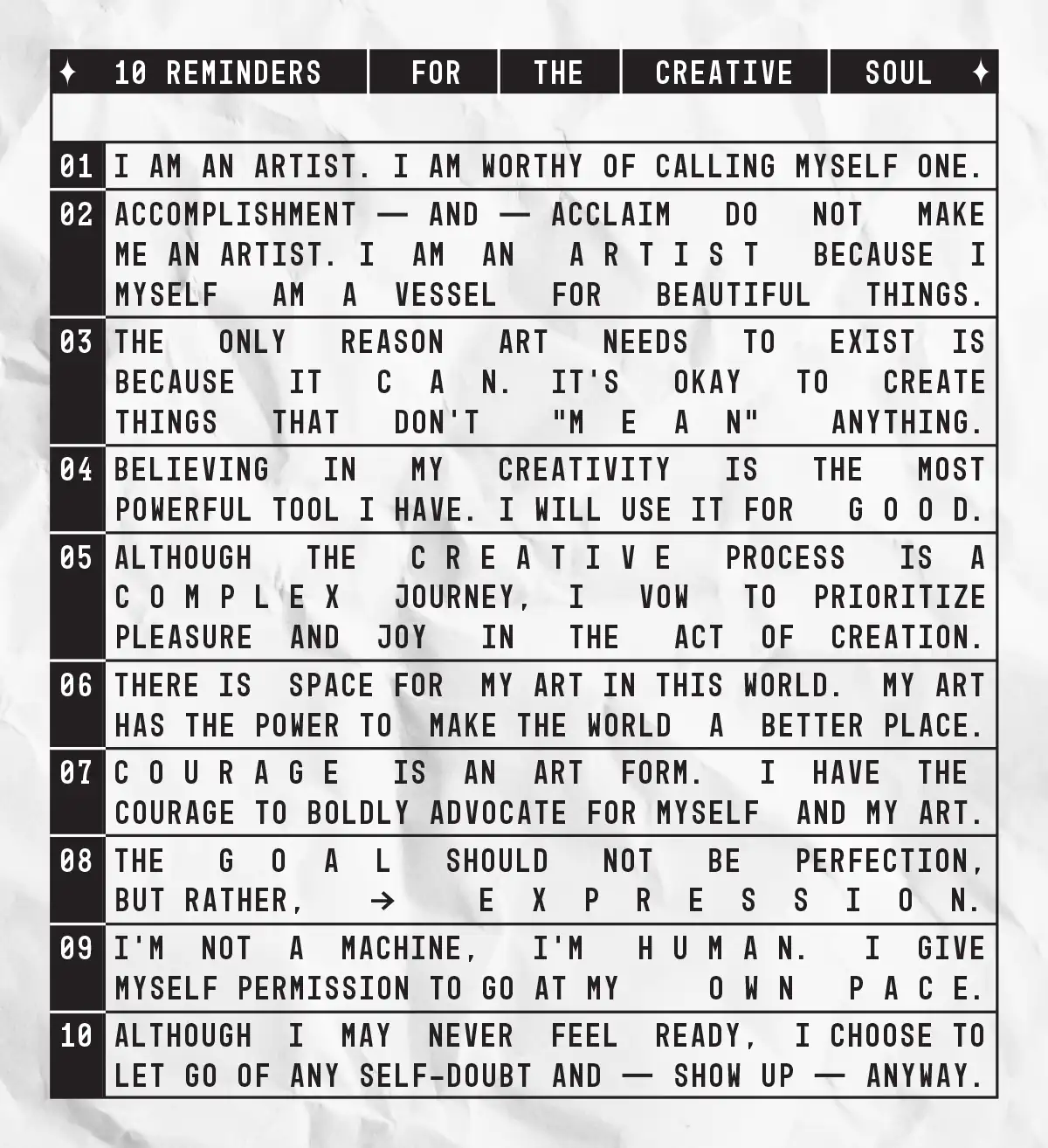
I am an artist. I am worthy of calling myself one.
Accomplishment and acclaim do not make me an artist. I am an artist because I myself am a vessel for beautiful things.
The only reason art needs to exist is because it can. It’s okay to create things that don’t mean anything.
Believing in my creativity is the most powerful tool I have. I will use it for good.
Although the creative process is a complex journey, I vow to prioritize pleasure and joy in the act of creation.
There is space for my art in this world. My art has the power to make the world a better place.
Courage is an art form. I have the courage to boldly advocate for myself and my art.
The goal should not be perfection, but rather, expression.
I’m not a machine, I’m human. I give myself permission to go at my own pace.
Although I may never feel ready, I choose to let go of any self-doubt and show up anyway.
Every day the Good Good Good team collects the best good news in the world and shares it with our community. Here are the highlights for this week!
If you want to get good news in your inbox every day, join the Goodnewsletter — the free daily newsletter designed to leave you feeling hopeful.
The Best Positive News We’re Celebrating This Week —
The Kansas Humane Society raised $8,000 by selling “feet pics” on social media
With platforms like OnlyFans making adult content creation more accessible, memes about “selling feet pics” have become commonplace online — and the Kansas Humane Society took a page from that book.
They created a social media fundraising campaign, playfully named “OnlyPaws,” where they would share “toe bean” photos of dogs, cats, and other cute critters in the shelter to help them reach their fundraising goals.
For every $100 they raised, the human society would post “a collection of our spiciest toe beans” from animals living in the shelter. And it worked — the shelter raked in over $8,000 throughout the campaign, far surpassing their original fundraising goal.
Why is this good news? The OnlyPaws fundraiser brought laughs and support alike, truly providing relief for the shelter pets in a time of overwhelm and overcrowding. Also serving as a call to adopt these especially good-looking pets, the shelter encouraged community members to adopt or foster — or just make sure to take good care of all the animals in their community.
Thanks to a series of literacy reforms, kids' reading scores have soared in Deep South states
In 2013, Mississippi was ranked the second-worst state for fourth-grade reading — in 2022, they were up to 21st. Louisiana and Alabama were two of just three states to see an improvement in fourth-grade reading during the pandemic.
The success in these states, which have long struggled with compounding issues like poverty, is now serving as a model for others — and their literacy laws are a starting point. These states passed reforms that emphasize phonics and early screenings for kids who may be struggling.
All three states also trained thousands of teachers in the “science of reading,” which include the most proven, research-backed methods of teaching kids how to read. They have literacy coaches to support teachers in implementing training (especially in schools struggling more than others) and work to catch reading deficiencies as early as kindergarten so kids can receive extra support.
And their methods are proving effective. Now, more states are adopting similar policies to help support students. We love to see states investing in young people — it makes a difference!
→ Read more
From California to North Carolina, new bike share programs are making it easier for folks to adopt green transportation
Around the U.S., biking is gaining popularity as a car-free mode of transportation, and new bike share programs are making it even easier. With a bike share program, a fleet of typically branded bikes is available in a city to be rented for short trips.
Members of a bike share program enjoy the benefits of not having to worry about bike parking at home or work, theft, or repairs. The programs also allow one-way bike trips and can step in as a first- and last-mile extender to help folks get to public transportation.
In the Twin Cities, hundreds of thousands of bike trips have been logged through the Nice Ride Minnesota bike share program. And Charlotte Joy Rides has hundreds of bikes in its fleet and even featured local artists’ work on some newer bikes.
Why is this good news? Bike share programs have so many benefits to both people and the planet. For the planet, they reduce CO2 emissions, car congestion, air pollution, noise pollution, and more.
And for people, as we saw during the pandemic, biking grew in popularity as a way to reduce stress, get outside, and get exercise.
An international group is connecting members of the LGBTQ+ community with allies for emotional support
In a recent TikTok, Alex Jiggs asked with tears in her eyes: “Can you rent a parent? Like, is there a program where you can pay, to just like, have a parent for a bit?”
Her post reached real-life, stand-in parent Dan Blevins — and he comes with experience in this arena. Blevins first went viral in January 2021 when he put out a bat signal to LGBTQ+ folks who needed a stand-in parent at their weddings.
And that initial call has now turned in to a thousands-strong, global network called Stand In Pride. The group connects members of the LGBTQ+ community to other members and allies for emotional support, “or to physically stand in at live events like weddings or graduations.”
Why is this good news? Everyone on earth deserves a loving, caring support system — some of us may find it in our biological families, but others do not.
Stand In Pride exists to help those in need of a “chosen family,” and in a time where the LGBTQ+ community continues to face political attacks, accepting adults (and folks of all ages) are more vital than ever to the safety and well-being of queer youth.
The Texas House just passed a bill to repeal the state’s ‘tampon tax’ on menstrual products and diapers
Lawmakers in Texas are celebrating Period Poverty Awareness Week by taking a step toward making diapers, maternity clothes, and diapers tax-free. Democratic lawmakers have been pushing this legislation for years, as have groups of teen advocates.
On Tuesday, the House voted 129-14 to pass a bill repealing the “tampon tax” Tuesday, and it’s already passed in the Senate. Governor Greg Abbott has expressed his support for the bill, too.
If the bill becomes law, Texas will join the slim majority of states that have nixed the sales tax on menstrual products, as well as diapers for adults and children, baby wipes, breast milk pumping products, baby bottles and maternity clothes.
Why is this good news? Nationally, 2 in 5 women have said they’ve struggled to buy period products, and 1 in 4 teenage girls have missed class as a result. Lawmakers have also had the opportunity to bring much-needed attention to the unaffordability of child care, health care, transportation, and housing for parents.
→ Read more
A new indoor, vertical farm is bringing fresh food and more jobs to the city of Compton
Indoor vertical farm company Plenty just held a grand opening celebration for its newest location in Compton, California. Hailed as “the world's most technologically advanced indoor vertical farm,” it’s expected to grow up to 4.5 million pounds of leafy greens every year — in the space of a city block.
The farm can produce so much because of its unique architecture that results in up to 350 times the yield per acre of a traditional farm. In addition to requiring less land, building the farm indoors allows it to use less water and grow produce without pesticides.
And it’s not just a win for the planet — it’s good news for people, too. Everyone who works at the indoor vertical farm live in the surrounding community. Their fresh, locally-grown produce is already for sale in local grocery stores.
Why is this good news? Aside from making local, fresh food accessible to more people, conventional farming and agricultural practices have taken a toll on the production capacity of our soil. By 2050, it’s estimated that demand for food will increase by 50%, but 90% of all soil will be eroded and degraded. Vertical farming alternatives allow time for that soil to rest, heal, and restore.
Teens in Texas led the charge in taking on the state’s ‘tampon tax’ — and they just won big
Texas is one of 26 states that charges sales tax on menstrual products, something now-20-year-old Sahar Punjwani and her organization, the Texas Menstrual Equity Coalition, have been fighting for years to change.
And it’s an important effort, as period poverty is widespread in the United States: 1 in 5 teens cannot afford menstrual products, and many miss class due to insufficient menstrual supplies. There are also negative physical and mental health impacts of not being able to afford proper sanitary supplies.
The coalition started working with state legislators, including Rep. Donna Howard, who has filed a bill to make menstrual supplies tax-exempt every session since 2017. They’d been unsuccessful — until this week, when the Texas House passed their bill repealing the “tampon tax” on menstrual supplies, diapers, and other essentials.
More good news of the week —
The Rhode Island Senate overwhelmingly passed a bill to make lunch free for all students all public schools. If passed in the House, the bill would eliminate the burden of collecting lunch debt, and end the stigma associated with getting a free lunch.
Worried about their grandkids’ future, more seniors in Canada are taking climate action. Groups like Seniors for Climate Action Now! and Grand(m)others Act to Save the Planet are protesting and focusing their action on fossil fuel funders.
Australia’s iconic platypus has been reintroduced to the country’s oldest national park. The milestone is part of a landmark conservation project after the mammal disappeared from the area around 50 years ago.
Brazil’s environment agency blocked an offshore oil drilling project planned near the mouth of the Amazon River. Environmentalists had warned of the project’s impact on the area, which is home to swaths of mangroves and a coral reef.
After posting record profits, Singapore Airlines paid its staff a bonus of about eight months’ salary. The bonus is thanks to “a long-standing annual profit-sharing bonus formula that has been agreed with our staff unions.”
Needle-free COVID vaccination trials are currently taking place in Cambridge. The technology, which uses a jet of air to administer the vaccine, would be a booster aimed at both the current and related coronaviruses that could threaten a future pandemic.
New Zealand prioritized free prescriptions, childcare, public transportation, and more in its latest budget. The new budget is intended to help address the rising cost of living many people in the country are facing.
The United Nations just released a report on the impacts of plastic pollution — and a road map to take emergency action. From production cuts and more reuse of plastic products — it aims to reduce the trillion pounds of plastic pollution by 80% by 2040.
An Indigenous community in Brazil has recovered nine species of native bees that died out in the region. Native bees are sacred to the Guarani, and some Brazilian plants can only be pollinated by them specifically.
Thanks to brain and spine implants, a paralyzed man can now walk naturally again. Researchers say the implants provide a “digital bridge” between his brain and his spinal cord, bypassing injured sections and enabling him to walk.
A new bill in Colombia that recognizes migrants displaced by climate disasters is being hailed as a “life-saver.” If passed, it would be the first law of its kind in Latin America and the Caribbean, where up to 17 million people could become climate migrants by 2050.
Closing a loophole, imports of ivory from hippos, orcas, and walruses will be banned in the United Kingdom. The new legislation closes a loophole in the 2018 Ivory Act and will protect the endangered species from poaching.
For the first time, investment in solar power will overtake oil production this year. According to the IEA, for every dollar invested in fossil fuels this year, 1.7 will go into clean energy — just five years ago, the ratio was one-to-one.
Bangladesh has eliminated lymphatic filariasis, also known as elephantitis. Bangladesh has been working since 2001 to address the infection, which usually occurs in childhood and results in painful and disfiguring physical manifestations appearing later in life.
A school district in Canada rejected a call to remove certain books on sexuality and gender identity from the library. Citing the “errors and untruths” in the request to set up a library book review and removal committee, the district voted 6-1 to reject the request.
Meet the house that diapers built.
Researchers have designed and erected a house that has shredded, disposable diapers mixed into its concrete and mortar.
A single-story home of about 36 square meters can pack nearly 2 cubic meters of used diapers into its floors, columns and walls, the team reports May 18 in Scientific Reports.
Using recycled diapers as composite building materials would not only shrink landfill waste but also could make such homes more affordable, the team says, a particular need in developing countries like Indonesia where the demand for low-cost housing far outstrips the supply.
Indonesia’s urban population has increased by about 4 percent per year in the last three decades, and more of its people are moving to urban centers.
Over two-thirds of Indonesians are expected to live in urban areas by 2025, says environmental engineer Siswanti Zuraida of the University of Kitakyushu in Japan.
That population boom is putting a heavy strain on both housing demand and waste management, says Zuraida, who is originally from Indonesia. Used disposable diapers mostly pile up in landfills or get incinerated, adding to a growing waste problem.
The materials used to build a house, meanwhile, particularly those needed to shore up its structural integrity, are often the biggest barrier to making homes affordable.
So researchers have previously examined the possibility of using a wide variety of unconventional materials that could also save costs.
These materials included many that would otherwise pile up as waste, such as the husks of rice grains or fly ash, the fine residue left over from the combustion of pulverized coal.
Disposable diapers, as it happens, contain a lot of potentially useful building material, such as wood pulp, cotton, rayon and plastic.
Zuraida and colleagues assessed how much of the sand, gravel and other traditional building materials used in mortar and concrete could be replaced by diapers — washed, dried, sterilized and shredded — without reducing the strength of the structures.
They created six different samples of concrete and mortar by mixing different proportions of diaper material with cement, sand, gravel and water.
Crushing the samples in a machine let the researchers test how much weight each could bear.
The team then went on to design — and then build — a small, single-story, two-bedroom, one-bathroom home based on the maximum amount of diaper waste they calculated they could use.
Recycled diapers could replace up to 27 percent of the traditional materials used in load-bearing structural components like columns and beams without losing significant strength, the team found.
For buildings with more floors, that fraction is somewhat less: A three-story home could use up to 10 percent disposable diapers in its load-bearing structures, the team calculated.
As for nonstructural components like wall partitions or garden paving blocks, shredded diapers could replace up to 40 percent of the sand.
Despite the need for more affordable housing, there are significant hitches that stand in the way of adopting diapers or other low-impact nonconventional materials, Zuraida says.
Diapers’ plastic components would have to be separated from the organic fibers, a complicated recycling process currently available only in developed nations. And Indonesia’s building regulations restrict construction materials to concrete, bricks, wood and ceramics — materials that also bear a high cost in terms of carbon emissions.
“Thinking about how to use waste for other purposes is an excellent idea,” says chemist Christof Schröfl of Technische Universität Dresden in Germany.
But there may be limits on the ultimate environmental friendliness of repurposing used diapers in buildings, he says, due to the existing challenges of separating and sanitizing diapers in waste.
“It’s maybe worthwhile to start thinking about ways to replace single-use diapers” with something less frequently disposed of.
This story was originally published by Science News.
“We’ve all heard the story about girls’ education. It goes like this,” Angeline Murimirwa started her 2023 TED Talk. “To end poverty, educate a girl. To tackle climate change, educate a girl. To solve the health crisis, educate a girl. It seems like girls’ education is the closest thing we have to an actual silver bullet.”
Murimirwa is the CEO of CAMFED (Campaign for Female Education), an organization serving girls and young women in impoverished areas in rural Africa.
“There’s just one problem,” she continued. “When you send a girl to school without radically reshaping the support structures around her, you’re just putting a diploma in her hand — if she gets that far — and slotting her right back into a world of poverty and inequality.”
CAMFED is the organization that does the radical reshaping.
It starts with a model that gives young women a comprehensive support system, including financial and material support, as well as holistic coaching — right in their school communities. CAMFED then enables the transition into work opportunities, through mentorship and a robust alumni network: the CAMFED Association (CAMA).
Murimirwa knows firsthand that girls living in poverty need more than a seat in front of a blackboard — that this network of support is vital to ongoing success.
She attended secondary school in Zimbabwe thanks to CAMFED, and when she graduated in 1998, she became a founding member and the first elected Chair of CAMA.
“I was one of the first girls supported through school by CAMFED, and, at that time, there was no sisterhood of young women graduates forging the way ahead of us,” Murimirwa told Good Good Good. “Together with 400 others, I co-founded the CAMFED Association after we experienced the feeling of graduating into an ‘abyss.’”
Although Murimirwa just recently took on her CEO role at CAMFED in January 2023, she’s been building the organization relentlessly since she graduated 25 years ago. These days, the CAMA now has over 250,000 members.
“Rather than despair about the uncertainty the future held, we resolved to support each other to find jobs and opportunities, as well as doing what we could to support the girls still coming through school,” she said. “I know that my sisters will show up for me no matter what.”
Part of the magic of CAMFED, she said, is that 30 percent of its staff is made of former clients who have been educated and uplifted through the organization’s programming.
“I stand alongside incredible individuals, all of whom have dedicated their lives to lifting others as they rise.”
CAMFED and the Audacious Project
CAMFED has a storied history, funding the education of over 1.6 million girls in secondary schools alone across Zimbabwe, Zambia, Ghana, Tanzania, and Malawi. CAMFED’s 7,000 government-partnered schools show staggering results.
The CAMFED model has led to a sharp increase in school progression and completion for girls, with rates three times higher than comparison schools. Plus, 95 percent of students reported boosted self esteem, as well as delays in the age at which they marry and have children.
But — Murimirwa knows the blueprint created by CAMFED and CAMA must be replicated to sustainably educate more and more young women across the continent.
Luckily, CAMFED’s work is being supported by The Audacious Project, TED’s collaborative funding enterprise that helps launch bold solutions to some of the world’s biggest challenges.
With the help of this grant funding, CAMFED will be able to execute its strategic plan — Vision 2030 — which will enable more girls to complete secondary school and transition to livelihoods and leadership.
Murimirwa outlined the goals of this strategic plan, and the monumental funding from The Audacious Project, which will ultimately lead to the educational success of 5 million girls across Africa.
- Implementing a comprehensive financial and social support system targeted at the most marginalized girls, bolstered by support of CAMA volunteer “Learner Guides.”
- Enabling graduates to transition to secure livelihoods and leadership through invitation to CAMA. Many existing Association members are trained as Transition Guides, Business Guides, and Agriculture Guides to help build networks of mentorship. Each CAMA “sister” supports another three girls’ education.
- Partnering with governments to embed “what works” in national school systems, ensuring that all the needs of girls are met.
While much of these initiatives have been the bedrock of CAMFED since 1993, it’s more vital than ever that this work is accelerated, Murimirwa said, as pressing matters of climate change and global health both impact and rely on girls’ education.
“The disruption to schooling caused by the COVID-19 pandemic has exacerbated existing inequities in education access and success, especially for the most marginalized girls,” she said. “And climate change is threatening livelihoods across our partner communities. So, our work, including in climate education, couldn’t be more important.”
Why is this good news?
CAMFED’s track record of success over the past three decades makes the organization the perfect candidate for Audacious Project funding — and has the potential to not only level the playing field for women in Africa, but also to introduce solutions to issues like climate change and health crises.
Of the quarter of a million members in CAMA, 68,000 leaders belong to decision-making bodies, allowing for a ripple effect of mentorship, as well as a tangible shift in gender norms across their communities.
Murimirwa names just a handful of those women leaders.
There’s Fiona Mavhinga, who became the first lawyer in the CAMA sisterhood and has been joined by thousands of others, fighting for the end of child marriage and the investment in gender equality.
Then, there’s Primrose Mandishona, who uses her lived experience with a disability and her expertise in rehabilitation, to mentor other future healthcare professionals and serve as CAMFED Zimbabwe's Special Education Needs and Disability Officer.
And lastly, there’s Lucia Punungwe, who was inspired by her experiences with CAMFED to become a math teacher at the school she herself attended, mentoring hundreds of other women joining the teaching profession in the region.
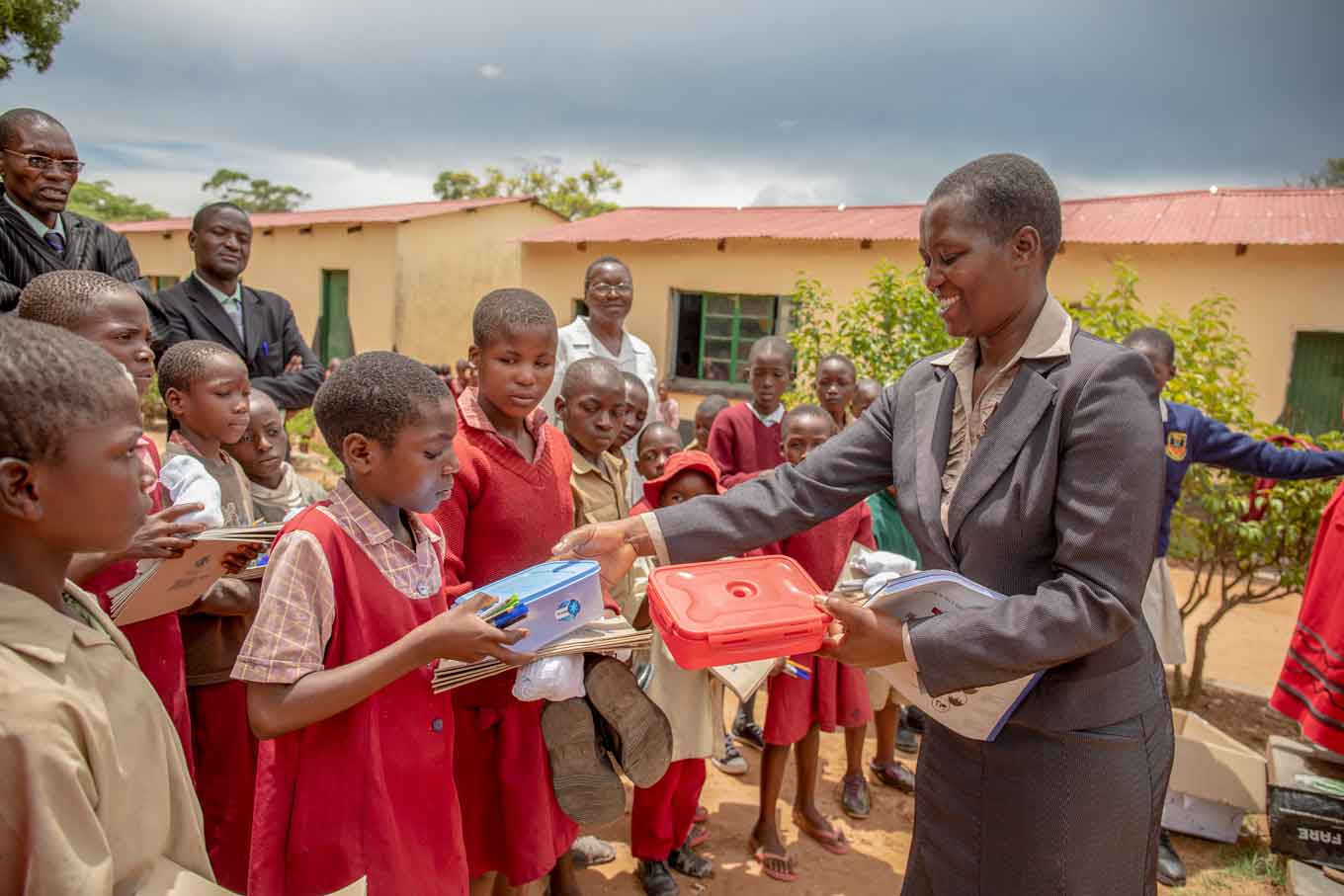
Through this enormous sisterhood, strategic programming, and ongoing partnerships forged through CAMFED, the organization takes the fundamental principles of community care and multiplies them rapidly to reach as many young women as possible.
“Having built a movement of women leaders with deep expertise, … having created a blueprint, youth-led model that provides social support and mentorship, … having gained global recognition for our model — because it’s one of partnership and accountability — means that we can overcome the toughest challenges and really change the systems that are stacked against rural girls,” Murimirwa said.
While the work is ongoing (and, at times, overwhelming), Murimirwa feels energized by the boundless support of both the Audacious Project and her fellow sisterhood of CAMA members (one of which has even been her go-to dressmaker for speaking events!).
“Believe me when I tell you that girls’ education is the silver bullet,” Murimirwa concluded at the end of her TED Talk, “But only if you do it right.”
In a world where we’re constantly being bombarded with messages about the importance of physical health (cue those pesky detox ads and “that girl” influencer messages), it’s easy to forget about another — equally as vital — part of our health: our mental health.
In the United States alone, 1 in 5 adults lives with a mental illness, which means that roughly 44 million people are navigating conditions like anxiety, depression, bipolar disorder, and schizophrenia on a daily basis.
Yet, because of cultural stigma, lack of access, affordability, and discrimination, many feel (or are) actively excluded, silenced, and hindered from reaching or accepting mental health support.
The good news is that more professionals in the field are offering resources for millions of folks to begin the process of caring for their mental well-being.
One of the most powerful and accessible resources? You guessed it: Books.
Whether you’re personally affected by a mental illness or want to learn more to support loved ones, there are countless resources out there to help.
We’ve narrowed that long list to help you get started.
It’s important to note that while these books discuss anxiety, depression, and other mental health topics, they aren’t a substitute for professional help.
If you’re feeling troubled by any of these books — or need some support in general, we encourage you to check out our collection of mental health resources. Take good care!
By the way, some of the links in this article are affiliate links, which means if you make a purchase after clicking a link, we may earn a commission at no extra cost to you. Thank you!
The Best Mental Health Books for Empowerment and Healing
“Make Your Bed: Little Things That Can Change Your Life...And Maybe the World” by Admiral William H. McRaven

Admiral William H. McRaven’s viral commencement speech at The University of Texas at Austin in 2014 inspired millions with its simple but moving message: “If you want to change the world, start off by making your bed.”
His now-bestselling book “Make Your Bed” expands on that core message by sharing principles he learned during Navy SEAL training that can help anyone overcome challenges and ultimately inspire action — one small step (like making your bed) at a time.
“What Happened to You?: Conversations on Trauma, Resilience, and Healing” by Bruce D. Perry, M.D., Ph.D. and Oprah Winfrey

“What Happened to You?” is the ultimate tag-team collaboration between psychiatrist and neuroscientist Bruce D. Perry, M.D., Ph.D. and the queen of media, Oprah Winfrey.
Through conversations with diverse groups of people, they unpack trauma’s impact on the human mind and body.
With their combined wisdom (and some light-hearted humor), Perry and Winfrey remind us that while trauma is an extremely serious issue, it’s not the end of anyone’s story.
“It Didn’t Start with You: How Inherited Family Trauma Shapes Who We Are and How to End the Cycle” by Mark Wolynn

Author Mark Wolynn takes us on a journey through the mysteries (and legacies) of family trauma and how it can shape our lives in unexpected ways.
Through engaging storytelling and relatable examples, Wolynn shows how unresolved traumas from past generations can be passed down to us — affecting everything from our relationships to our physical health.
But there’s hope for change. Wolynn also offers practical tips and techniques for breaking the cycle of inherited trauma and creating an alternative future for ourselves, our families, and future generations.
“What My Bones Know: A Memoir of Healing from Complex Trauma” by Stephanie Foo

Stephanie Foo seemed to have it all — a dream job as a radio producer at This American Life and a loving partner. But behind closed doors, she was struggling with panic attacks. Eventually diagnosed with complex PTSD, a condition caused by repetitive trauma, Foo realized that her past was still impacting her health, relationships, and career.
Frustrated by the lack of resources available, she set out to explore innovative therapies and even delved into the effects of immigrant trauma. In “What My Bones Know,” Stephanie Foo courageously shares her personal story and meticulous research.
Through interviews with experts and her own experiences, she offers a glimpse into the lasting grip of the past and how trauma can reverberate across generations. This empowering memoir reminds us that while we may not be able to completely leave our traumas behind, we can learn to navigate life with resilience and reclaim control.
“This Is Your Brain on Food: An Indispensable Guide to the Surprising Foods that Fight Depression, Anxiety, PTSD, OCD, ADHD, and More” by Uma Naidoo, M.D.

Foodies, we found a good one for you. In “This Is Your Brain on Food,” Uma Naidoo, a Harvard-trained psychiatrist and nutrition expert, offers a comprehensive guide to the connection between food and mental health.
Naidoo delves into the latest research on how specific foods can help (or harm) the brain and provides practical advice on how to use food to alleviate a wide range of mental health conditions, including depression, anxiety, PTSD, OCD, ADHD, and more.
Naidoo’s book emphasizes the importance of a holistic approach to mental health and shows how food can be a powerful tool in achieving emotional balance. With its accessible and engaging style, this book provides a feast’s worth of information that can help readers make informed choices about what they eat — ultimately improving their mental and physical well-being.
“Hope and Help for Your Nerves: End Anxiety Now” by Claire Weekes
Whether you’re struggling with social anxiety, phobias, or everyday worries, “Hope and Help for Your Nerves” is the ultimate anxiety guide.
Like a wise and caring friend, Weekes’ approach is refreshingly honest and straightforward — she doesn’t promise a quick fix, but instead offers a realistic and empowering path towards anxiety relief.
With her guidance, readers are provided tools to identify and manage the patterns and triggers that often lead to feelings of anxiety or anxiety attacks.
“The Politics of Trauma: Somatics, Healing, and Social Justice” by Staci K. Haines

In “The Politics of Trauma,” author Staci K. Haines explores the intersections between trauma, healing, and social justice. Drawing on her experiences as a somatic therapist and activist, Haines argues that trauma is not just an individual problem but a societal one.
She shows how systems of oppression —like racism and sexism — can cause trauma and perpetuate cycles of violence and injustice.
Through personal stories, case studies, and practical exercises, Haines offers a holistic approach to healing from trauma and creating social change.
She encourages readers to use somatic practices, such as breathing and movement, to connect with their bodies and address the root causes of trauma. She also discusses the importance of community and collective action in creating a more just and equitable world.
“Maybe You Should Talk To Someone: A Therapist, HER Therapist, and Our Lives Revealed” by Lori Gottlieb

Curious about what really goes on in a therapist’s office? “Maybe You Should Talk To Someone” by Lori Gottlieb is a fascinating memoir that takes readers behind the scenes of therapy — both as a therapist and as a patient.
With humor, empathy, and insight, Gottlieb presents a deeply personal look at the challenges and rewards of helping people navigate their lives.
She weaves together the stories of four very different clients: a young newlywed diagnosed with a terminal illness, a senior citizen threatening to end her life, a twenty-something who can’t stop hooking up with the wrong guys, and a narcissistic Hollywood producer. The result is a relatable exploration of the human experience.
“Burnout: The Secret to Unlocking the Stress Cycle” by Emily Nagoski, Ph.D. and Amelia Nagoski, DMA

“Burnout: The Secret to Unlocking the Stress Cycle” by Emily Nagoski, Ph.D. and Amelia Nagoski, DMA offers a fresh perspective on managing stress and regaining your energy.
Drawing on the latest scientific research and their own experiences, the Nagoski sisters provide practical tools and strategies for navigating the many challenges of modern life.
Whether you’re a student, a busy professional, or simply someone looking to live a more fulfilling life, “Burnout” aims to help readers move past the seemingly endless stress cycles we’re accustomed to and find ways to reach happier and healthier lifestyles.
“The Highly Sensitive Person: How to Thrive When the World Overwhelms You” by Elaine N. Aron, Ph.D.

Do you have a sensitivity to noise, light, and other stimuli? Or perhaps a deep emotional reaction to the world around you? If the answer is yes and yes, we’re right there with you. (For real, we’ve got a handful of neurodivergent folks on our team!)
“The Highly Sensitive Person” by Elaine N. Aron, Ph.D., offers a unique perspective on what it means to be a highly sensitive person (HSP) and provides practical tools for managing the challenges that come with it.
Aron draws on years of research and clinical experience to provide an in-depth understanding of what it means to be an HSP and how to navigate a world that can be overwhelming for sensitive people.
She also provides helpful strategies for managing the challenges that come with being an HSP, including self-care, boundary-setting, and communication skills.
“The 7 Habits of Highly Effective People: Powerful Lessons in Personal Change” by Stephen R. Covey

Whether you’re looking to improve your relationships, advance in your career, or feel a little more fulfilled, “The 7 Habits of Highly Effective People” is like a personal trainer for your mind, helping you develop the inner qualities and habits you need to succeed in any area of your life.
This isn’t quite your average self-help read, though. Covey uses relatable stories and practical exercises to make his teachings something you can actually put into action in your own life.
“Healing the Trauma of Abuse: A Women’s Workbook” by Mary Ellen Copeland, M.A., M.S. and Maxine Harris, Ph.D.

If you’ve experienced abuse, “Healing the Trauma of Abuse” by Mary Ellen Copeland, M.A., M.S. and Maxine Harris, Ph.D. is a comprehensive guide to help women of all ages and backgrounds process their experiences of abuse and develop coping strategies for moving forward.
Copeland and Harris draw on decades-worth of experience as trauma and mental health experts to provide a safe and supportive space for women to explore their emotions, set boundaries, and build resilience.
With its step-by-step exercises, journaling prompts, and practical tools, this book offers a compassionate and empowering approach to recovery.
“Healing Through Words” by Rupi Kaur

You might recognize the name Rupi Kaur from her #1 New York Times bestselling books “milk and honey,” “the sun and her flowers,” and “home body.”
Kaur’s latest book release offers guided poetry writing exercises to help explore trauma, loss, heartache, love, family, healing, and celebration of the self.
The interactive book is divided into four sections: “hurting,” “loving,” “breaking,” and “healing,” each of which delves into different stages of the healing process — encouraging readers to use the power of language to transform pain into beauty.
“Future Tense: Why Anxiety Is Good for You (Even Though It Feels Bad)” by Tracy Dennis-Tiwary, Ph.D.

Many of us who seek to create a positive impact in the world struggle with the all too real, paralyzing, and uncomfortable feeling of anxiety.
Anxiety researcher and author, Tracy Dennis-Tiwary, Ph.D., presents us with a powerful new framework for reimagining and reclaiming the confounding emotion as the advantage it evolved to be: an emotion that protects us and strengthens our creativity.
By clarifying the latest research in psychology and neuroscience — including her own — Dennis-Tiwary shows how we can acknowledge the discomfort of anxiety and see it as a tool, rather than something to be feared.
“Permission to Come Home: Reclaiming Mental Health as Asian Americans” by Jenny Wang

“Permission to Come Home” by Jenny Wang dives deep into the unique struggles that Asian Americans face when it comes to mental health, providing a warm and supportive space for readers to explore these issues and find healing.
From navigating the pressures of the “model minority” myth to dealing with the shame and stigma surrounding mental illness, Wang draws on personal experiences and those of others within the Asian American community to offer a comforting and empowering guide to reclaiming mental health.
“Unf*ck Your Brain: Getting Over Anxiety, Depression, Anger, Freak-Outs, and Triggers with Science (5-Minute Therapy)” by Faith Harper

“Unf*ck Your Brain” by Faith Harper is a no-nonsense guide on how to cope with a slew of mental-health issues that are hell-bent on controlling the lives of millions of people around the world.
The author, a licensed therapist and psychologist, provides a five-minute therapy approach that offers simple and effective strategies to help you overcome anxiety, depression, anger, and other “negative emotions” that may be holding you back.
The book is grounded in science and draws on the latest research in neuroscience, psychology, and trauma therapy to help readers better understand their brain and how to work with it, rather than against it.
“Turtles All the Way Down” by John Green

From John Green, the #1 bestselling author of “The Fault in Our Stars” and “The Anthropocene Reviewed,” comes an incredible story about the inner workings of a teenage girl’s mind as she struggles with obsessive-compulsive disorder (OCD).
Throughout the novel, Aza’s experiences with mental illness are depicted in a raw and honest way, highlighting the challenges of living with OCD and its impact on relationships, sense of self, and overall well-being.
The book is a powerful read that brings us into the mind of a character trying to cope with a world that feels out of her control.
“The Unapologetic Guide to Black Mental Health: Navigate an Unequal System, Learn Tools for Emotional Wellness, and Get the Help You Deserve” by Rheeda Walker, Ph.D.

“The Unapologetic Guide to Black Mental Health” by Rheeda Walker, Ph.D., is a comprehensive and empowering resource for Black folks seeking ways to navigate the mental health system, prioritize their emotional well-being, and advocate for a more inclusive and equitable care system.
Through personal anecdotes, research-backed insights, and practical tools, Walker guides readers through the unique challenges that Black people face when it comes to mental health, including the impact of racism, historical trauma, and societal stigma.
“Attached: The New Science of Adult Attachment and How It Can Help You Find — and Keep — Love” by Amir Levine

If you’ve ever wondered why some people seem to have a knack for finding and maintaining healthy, happy relationships while others struggle to make it past the first date, “Attached” by Amir Levine might have some answers.
This book explores the science behind adult attachment styles and how our individual styles can influence how we approach relationships.
Based on years of research and clinical experience, the book provides insights into the three main attachment styles – anxious, avoidant, and secure – and offers practical advice for navigating and building healthy relationships.
“Reasons to Stay Alive” by Matt Haig

If you’ve ever dealt with depression, then you’ll likely connect with Matt Haig’s story (you might recognize him from his bestselling books “The Midnight Library,” and “Notes on a Nervous Planet”).
Haig shares his personal journey of overcoming depression through writing, reading, and the support of his loved ones.
With an oddly refreshing mix of humor and motivation, he uses his deeply personal and universally relatable experiences to offer hope and encouragement to anyone struggling with their mental health.
“Rest Is Resistance: A Manifesto” by Tricia Hersey

Ever feel the unconscious urge to shame yourself for resting? Tricia Hersey, founder of The Nap Ministry — an organization examining the liberating power of naps — is here to change that for you.
Informed by her experience in theology, activism, and performance art, “Rest Is Resistance” is a call to action and a field guide for the sleep-deprived justice seekers seeking ways to liberate themselves from the “grind culture” and reclaim it as a radical act of self-care and resistance.
“Emotional First Aid: Healing Rejection, Guilt, Failure, and Other Everyday Hurts” by Guy Winch, Ph.D.

In a world that often prioritizes physical health over emotional health, Guy Winch argues that we need to take care of both to live a fulfilling life.
Through case studies, real-world examples, and practical exercises, “Emotional First Aid” offers readers the tools they need to heal from common emotional wounds, like rejection, guilt, failure, and loneliness.
But it’s not just about healing from emotional wounds. Winch emphasizes the importance of preventing emotional injuries from causing long-term damage. He draws from research in psychology to explain why these everyday hurts can be so difficult to overcome and offers strategies to promote emotional resilience.
“Stop Overthinking: 23 Techniques to Relieve Stress, Stop Negative Spirals, Declutter Your Mind, and Focus on the Present (The Path to Calm)” by Nick Trenton

Hello, over-thinkers, this one’s for you!
From identifying and recognizing our inner anxieties to focusing on relaxation and action, author Nick Trenton offers powerful ways to stop ruminating and dwelling on negative thoughts.
He provides scientific approaches to refocus the way we think and feel about ourselves — freeing up our minds from overthinking and allowing us to live in the present moment.
“Girl in Pieces” by Kathleen Glasgow

“Girl in Pieces” is a young adult novel by Kathleen Glasgow that follows the journey of a teenage girl named Charlie as she navigates life on the streets, struggling with addiction and self-harm, and attempting to rebuild her life with the help of newfound friends and a support system.
Throughout the book, Charlie’s story highlights the devastating impact of childhood trauma and the importance of mental health care and advocacy.
The book sheds light on the realities of mental illness and the challenges faced by those who have experienced trauma, while also celebrating the resilience and strength of the human spirit — emphasizing the importance of self-care and self-love.
The global estimation of people with mental health or substance use disorders is around one billion — yes, one billion. These statistics in no way capture the entire picture, though.
Cultural stigma, lack of access, affordability, and discrimination all play a part in excluding, silencing, or hindering people from reaching or accepting mental health support.
As this issue continues to gain recognition as a crucial aspect of our overall well-being (there’s more mental health good news than ever before!), documentaries have become a powerful visual tool for us to explore the complexities and spectrum of mental health, while also celebrating its breakthroughs.
Before you add any of these documentaries to your queue, it’s important to note that some cover very triggering topics, like sexual assault, abuse, and suicide. Online resources like Unconsenting Media and DoesTheDogDie help viewers avoid issues they’re not quite ready to explore yet.
(And, as always, if you’re feeling troubled by any of these documentaries — or need some support in general, we encourage you to check out our collection of mental health resources. Take good care!)
In advocating for the mental health of others, we hope you, too, are advocating for yourself.
We’ve gathered some of the best documentaries out there that offer a unique and often intimate look into the lives of individuals, families, and organizations working toward breaking existing stigma and misconceptions surrounding mental health.
From the impact of trauma and addiction to the struggles faced by young people, these films not only provide a look into the human experience, but they also serve as an important message of hope and healing for those who may feel alone in their struggles.
By the way, some of the links in this article are affiliate links, which means if you make a purchase after clicking a link, we may earn a commission at no extra cost to you. Thank you!
Mental Health Documentaries To Stream Right Now
Selena Gomez: My Mind & Me (2022)

“My Mind & Me” offers an intimate look into the life of Selena Gomez, a singer, actress, and mental health advocate who has struggled with bipolar disorder, anxiety, and depression. The film spans over six years and takes viewers on a journey through Gomez’s ups and downs as she navigates managing her mental health.
The documentary also features interviews with mental health experts, advocates, and Gomez’s friends and family members who have supported her along the way.
With its message of hope and self-acceptance, “My Mind & Me” aims to promote a greater understanding and awareness of mental health issues while encouraging viewers to seek help and support when needed.
How to watch: Apple TV
The Me You Can’t See (2021)
Co-creators and executive producers Oprah Winfrey and Prince Harry, The Duke of Sussex, present the multi-part documentary series, “The Me You Can’t See,” which features stories on the current state of mental health and emotional well-being in the greater zeitgeist.
The series includes candid interviews with mental health advocates, experts, and guests such as Lady Gaga, Glenn Close, and San Antonio Spurs’ DeMar DeRozan, alongside people from around the world living with mental health challenges — including the co-creators themselves.
This series aims to transcend culture, age, gender, and socioeconomic status to destigmatize a highly misunderstood subject and offer hope to viewers struggling with mental health.
How to watch: Apple TV
Nadiya Hussain: Anxiety And Me (2021)
You might recognize Nadiya Hussain from “The Great British Baking Show” and her epic 2015 win. However, it’s her mental health advocacy efforts that have us rooting for her.
In Hussain’s documentary, she helps break down the misconceptions surrounding anxiety disorders and documents her own journey as she undergoes cognitive behavioral therapy (CBT) — exploring the root causes of her anxiety and how it has affected her personal and professional life.
Throughout the documentary, Hussain meets with mental health experts and individuals living with anxiety disorders to learn more about the condition and how to cope.
The documentary is a powerful reminder that mental health issues can affect anyone, regardless of age, background, or social status, and that seeking help is a sign of strength, not weakness.
How to watch: YouTube
Light In The Darkness – Living Well After Trauma (2019)
Six out of every 100 Americans suffer from PTSD at some point in their lives, and “Light In The Darkness – Living Well After Trauma” aims to give viewers a better grasp of what it’s like to live with this disorder — as well as reasons to hope.
Through intimate interviews and raw footage, the film explores the profound impact of trauma on our mental health and well-being and how people can find healing from it.
While it centers on stories of hope and resilience, the film also offers valuable information and resources for those struggling with trauma or mental health issues.
Hiding in Plain Sight: Youth Mental Illness (2022)
“Hiding in Plain Sight: Youth Mental Illness” shines a light on the often-ignored issue of mental illness among young people. The film follows the stories of 20 young Americans as they navigate their way through anxiety, depression, and bipolar disorder.
The film explores the impact of mental illness on young people and their families, as well as the struggles they face in seeking help.
It also highlights the need for increased investment in mental health services and resources to ensure young people receive the care and support they need to lead happy and fulfilling lives.
How to watch: PBS
Lost Angels: Skid Row Is My Home (2010)
“Lost Angels: Skid Row Is My Home” delves into the lives of those living in Los Angeles’ Skid Row. It exposes the dire need for comprehensive mental health and social services to aid individuals grappling with addiction, mental illness, and poverty. The film also focuses on the challenges organizations face in providing care and support.
The documentary offers a rare and intimate glimpse into the lives of people often overlooked and ignored by society. It humanizes the struggles of this population, compelling us to confront our own internal biases and perceptions.
By highlighting the hardships faced by those living on Skid Row, the documentary aims to foster greater empathy and awareness about the struggles of individuals experiencing mental health issues.
How to watch: Prime Video
Notable Mentions
- Life, Animated (Prime Video)
- My Depression: The Up and Down and Up of It (Tubi)
- Unstuck: An OCD Kids Movie (Vimeo)
- Robin Williams: Come Inside My Mind (Prime Video | HBO Max)
- How to Change Your Mind (Netflix)
- Boy Interrupted (Prime Video | HBO Max)
- Thin (Prime Video | HBO Max)
- Wildcat (Prime Video)
- Stutz (Netflix)
- The Anonymous People (Prime Video)
Water is one of the most essential resources we have on this planet, yet it’s often taken for granted.
While about 71% of the earth’s surface is covered by water, only 3% is freshwater.
Freshwater is typically found in glaciers, lakes, reservoirs, ponds, rivers, streams, wetlands, and groundwater. Though despite only covering 3% of the Earth’s surface, these habitats are actually home to 10% of all known animals and up to 40% of all known fish species, according to World Wildlife Fund.
It provides us with drinking water, sustains our crops through irrigation, and generates power through dams. However, the alarming disappearance of these freshwater habitats is putting these essential services and billions of people at risk of losing access to clean and safe water.
As we face the growing issue of water scarcity and climate change, it’s now more important than ever to raise awareness about the vital role water plays in our daily lives — and the urgent need for action.
The best way to do this is through the power of storytelling, particularly documentaries.
Documentaries have the unique ability to inform and inspire, while illuminating critical political, social, and economic factors at play, and engaging audiences through visual media.
From Flint, Michigan to the global water crisis, these documentaries provide a platform for grassroots organizations and frontline communities to show us the firsthand devastation that we may not be exposed to in our day-to-day lives.
But documentaries also show us hope.
From showcasing innovative solutions, grassroots movements, and resilient individuals fighting for more sustainable and equitable futures, it’s time for us all to join in on these efforts and give water the rightful attention it deserves.
We’re highlighting some of the best water documentaries that are helping us become a little more informed, inspired, and motivated to fight for a safer and cleaner world for all.
By the way, some of the links may include affiliate links, which means we may earn a commission at no extra cost to you. Thank you!
Top Documentaries On Clean Water, Oceans, and Sea Creatures To Stream
Brave Blue World: Racing to Solve Our Water Crisis (2020)
“Brave Blue World” explores the global water crisis and highlights scientific and technological strides being made that can help solve our planet’s water crisis.
Narrated by the one and only Liam Neeson, the film features scientists, engineers, and activists from around the world, including actor Matt Damon, co-founder of Water.org, and actor and musician Jaden Smith, co-founder of 501CThree.
By challenging commonly held assumptions about water and exploring alternative water futures, the documentary aims to change how viewers think about water and inspire action toward ensuring access to clean water and safe sanitation services while protecting the environment.
How to watch: Netflix
There’s Something in the Water (2019)
Directed by Elliot Page and Ian Daniel, this Canadian documentary delves into environmental racism and water pollution that exists for Black Canadian and First Nations communities in Nova Scotia — and the fearless women at the forefront of ending it.
Based on Ingrid Waldron’s eye-opening study, the film takes us to rural areas of the province — primarily Indigenous and Black communities — plagued by long-hidden toxic fallout caused by industrial development.
How to watch: Prime Video
A Plastic Ocean (2016)
Many of us know plastic’s devastating effects on our oceans, waterways, and sensitive (yet wildly resilient) inhabitants. “A Plastic Ocean” follows a devoted team of researchers, journalists, and divers that take a deep dive (pun most definitely intended) into the realities of pollution’s impact on marine life and its ecosystems — including entanglement, ingestion, and habitat destruction.
The film highlights the urgent need for action to address this issue and provides viewers with steps we can take to reduce our use of plastic and protect the oceans. A perfect watch for World Oceans Day and all year long.
How to watch: Prime Video | Apple TV | Peacock
Mission Blue (2014)
Emmy award-winning documentary “Mission Blue” follows Dr. Sylvia Earle, a marine biologist and environmentalist, on her fascinating lifelong mission to protect the world’s oceans.
Narrated by Dr. Earle herself, the film highlights her early days as a deep-sea diver and works as a leading advocate for ocean conservation.
The documentary showcases the beauty and diversity of our oceans while highlighting the devastating impact of human activity on marine ecosystems. Through Earle’s personal journey and tireless work, the film highlights the urgent need to protect and preserve the oceans and the creatures that call them home.
It’s a powerful call to action and an inspiring reminder that we all have a role in protecting our planet’s most precious resources.
How to watch: Netflix
Chasing Coral (2017)
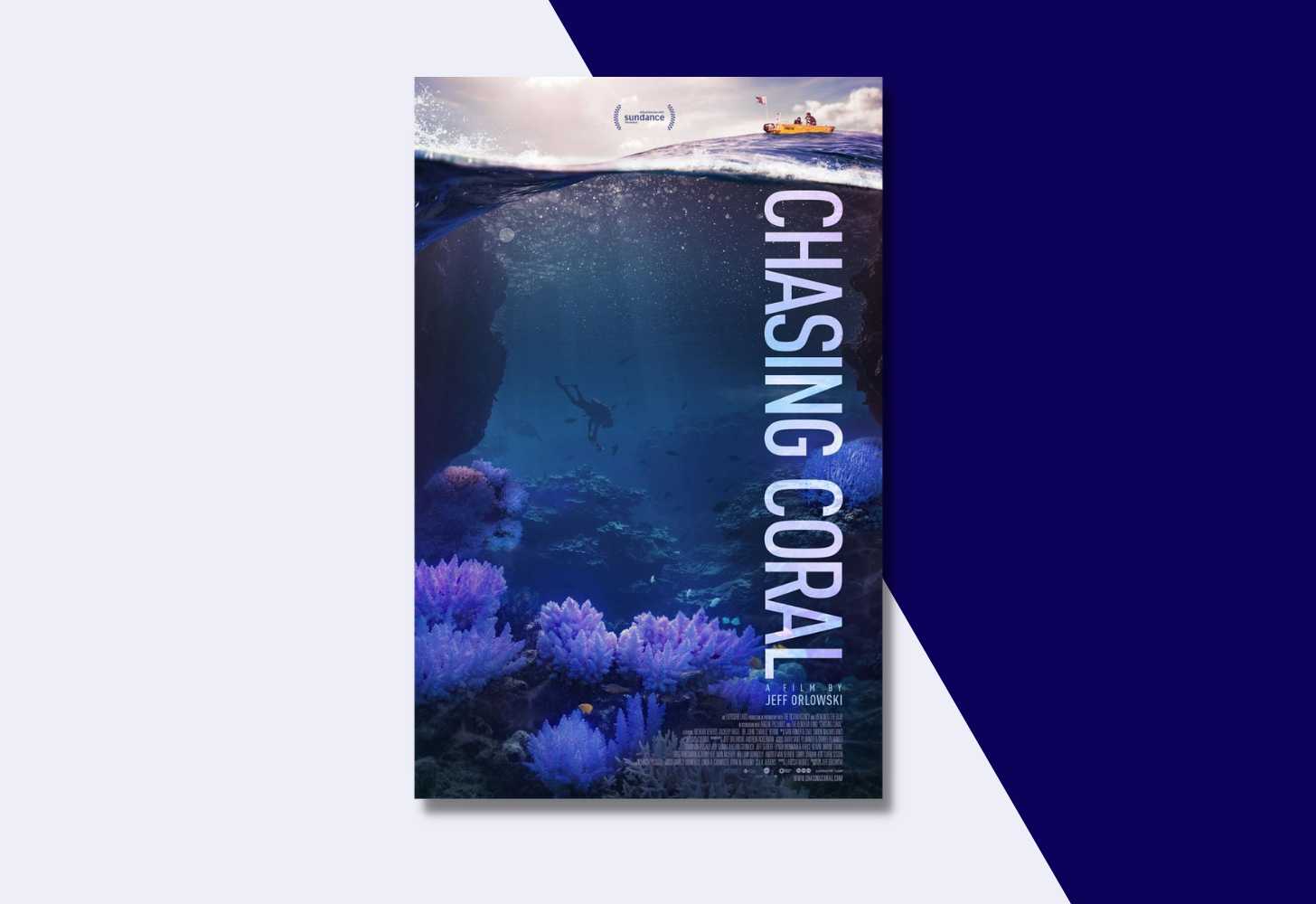
Often called “the rainforests of the sea,” coral plays a massively critical role in protecting our oceans — and its ecosystems. “Chasing Coral” is a visually stunning and emotionally inspiring documentary that shines a light on the devastating impact of climate change on coral reefs worldwide.
The film features a team of dedicated divers, photographers, and scientists who are on a mission to document the disappearance of these vital ecosystems, and to raise awareness about the urgent need for action.
Despite the grim reality of coral bleaching, the film also highlights the resilience of these creatures and the potential for recovery with the right interventions.
Through this captivating journey, “Chasing Coral” shows that it is not too late to save the reefs, and that there is hope for a sustainable future for both these ecosystems and the people who depend on them.
How to watch: Netflix
Flow: For Love of Water (2008)
This award-winning documentary explores the critical issue of water scarcity and its impact on people around the world. The film highlights the struggles faced by communities who lack access to clean and affordable water and the powerful corporate interests that often stand in the way of solutions.
Through interviews with experts, activists, and everyday people affected by the water crisis, the film exposes the alarming reality of water privatization and the commodification of this precious resource.
With stunning visuals and a powerful message, “Flow” urges viewers to take action to protect our water and to demand access to this basic human right for all. The film is a call to action for individuals, communities, and policymakers to come together to ensure that water remains a public trust, rather than a commodity to be exploited for profit.
How to watch: Prime Video
FLINT (2020)
Filmed over five years, “FLINT” is the gripping story of the largest water poisoning disaster in American history, as seen through the eyes of those living in Flint, Michigan.
Through interviews with residents, activists, and experts, the film exposes the failures of government officials and the systemic racism that allowed the crisis to unfold and persist for so long.
“FLINT” also showcases the resilience and strength of the community, as residents come together to demand accountability and fight for justice. It serves as a powerful message and reminder of the importance of clean water and the devastating consequences that come when basic human rights — like access to clean water — are denied.
How to watch: Prime Video
Every month at Good Good Good, we plan upcoming good news content for our Instagram, Goodnewsletter, Goodnewspaper, podcast, website, and more. Our work is always centered on hopeful stories about people making a difference in the world — and action steps on how each of us can join in with that good work.
With so many holidays, awareness days, education weeks, and activism months happening all year long, we’ve been slowly collecting all of these events in a private internal calendar for years.
We made our Monthly Cause Awareness Calendar publicly available earlier this year.
We’ve also published:
- Heritage Months Calendar
- International Days Calendar
- Environmental & Sustainability Calendar
- LGBTQ+ Pride Calendar
- Black Holidays Calendar
- Women Holidays Calendar
- Animal Awareness Calendar
- Pet Holidays Calendar
Plus, these articles tangential to healthcare days and months:
- Health Awareness Calendar
- Mental Health Awareness Calendar
- Disability Awareness Calendar
- Cancer Awareness Calendar
- HIV/AIDS Awareness Calendar
And now we’re publishing our guide to healthcare-related holidays.
Our hope is this resource will help you, your coworkers, and your organization bring attention to important healthcare roles — not just around big mainstream holidays — but all year long.
Where applicable, we’ve included resources around highlighted holidays — usually in the form of good news around particular topics, relevant quotes or recommendations, or action steps on how to make a difference. We encourage you to share them if you find them helpful.
We’ve worked hard to make this the most comprehensive collection of healthcare-related days and months on the internet — including celebrations for as many healthcare professions as we were able to track down.
Of course, always double-check dates, as organizers may occasionally change dates.
And bookmark this page so you can revisit it as often as you need. We’ll continue to update it and add to it over time.
Healthcare-Related Awareness Months, Weeks, and Dates
January
Days
National Pharmacist Day - January 12
National IV Nurse Day - January 25
National Activity Professionals Day - 4th Friday of January
National Pediatrician Day - January 28
Weeks
National Activity Professionals (NAP) Week - Week-long event in January
National Certified Registered Nurse Anesthetists (CRNA) Week - Week-long event in January
February
Days
National Women Physicians Day - February 3
National Black Women Physicians’ Day - February 8
National Caregivers Day - 3rd Friday of February
Critical Care Transport Nurses Day - February 18
Rare Disease Day - Last day of February
Weeks
PeriAnesthesia Nurse Awareness Week (PANAW) - 1st full week of February
Ambulatory Care Nursing Week - 2nd week of February
National Certified Anesthesiologist Assistant Week - 3rd full week of February
American College of Obstetricians and Gynecologists (ACOG) National Wellness Week - Week-long event in February
Pride in Foodservice Week - Week-long event in February
Cardiovascular Professionals Week - Week-long event in February
Phlebotomists Recognition Week - Week-long event in February
March
Days
National Hospitalist Day - 1st Thursday of March
Employee Appreciation Day - 1st Friday of March
National Dentist’s Day - March 6
Abortion Provider Appreciation Day - March 10
Registered Dietitian Nutritionist Day - 2nd Wednesday of March
National Certified Nurses Day - March 19
World Social Work Day - 3rd Tuesday of March
Match Day - 3rd Friday of March
National Doctors’ Day - March 30
National Medical Billers Day - Last Thursday of March
Anesthesia Tech Day - March 31
Weeks
Dental Assistants Recognition Week - 1st full week of March
National School Social Work Week - 1st full week of March
Patient Safety Awareness Week - 2nd full week of March
National Pulmonary Rehabilitation Week - 2nd full week of March
Healthcare HR Professionals Week - 3rd full week of March
GI Nurses & Associates Week - 3rd week of March
World Doula Week - Last full week of March
Anesthesia Tech Week - Week-long event in March
Healthcare Information Professionals Week - Week-long event in March
Months
Music Therapy Month
Child Life Month
National Athletic Training Month
National Social Work Month
April
Days
National Employee Benefits Day - Varies every year
World Health Day - April 7
Hospital Admitting Clerks Day - 1st Friday of April
Radiological and Imaging Nurses Day - April 12
National EMT and Paramedic Appreciation Day - April 15
National Healthcare Decisions Day - April 16
National Death Doula Day - April 20
Administrative Professionals Day - Wednesday on the last full week of April
DNA Day - April 25
World Day for Safety and Health at Work - April 28
World Immunology Day - April 29
Weeks
National Cancer Registrars Week - 1st full week of April
National Public Health Week - 1st full week of April
World Health Worker Week - 1st full week of April
Wound, Ostomy, and Continence (WOC) Nurse Week - 3rd full week of April
Neurodiagnostic Week - 3rd full week of April
Health Informational Professionals Week / HIP Week - April 18 to 24
Administrative Professionals Week - Last full week of April
Medical Laboratory Professionals Week - Last full week of April
Patient Experience Week / PX Week - Week-long event beginning on the last Monday of April
Transplant Nurses Week - Week-long event beginning on the last Monday of April
National Healthcare Volunteer Week - Week-long event in April
Children’s Hospitals Week - Week-long event in April
National Osteopathic Medicine Week - Week-long event in April
Occupational Health Nurses Week - Week-long event in April
Months
Counseling Awareness Month
National Volunteer Month
Occupational Therapy Month
May
Days
International Day of the Midwife - May 5
National Nurses Day - May 6
National Student Nurse Day - May 8
National Third Shift Workers Day - 2nd Wednesday of May
National Receptionists Day - 2nd Wednesday of May
National School Nurse Day - Celebrated on the Wednesday of National Nurses Week
International Nurses Day - May 12
Florence Nightingale’s Birthday - May 12
National Employee Health and Fitness Day - 3rd Wednesday of May
National Speech Pathologists Day - May 18
Critical Care Wear Blue Day - 3rd Friday of May
National Accounts Receivable Day - May 19
World Family Doctor Day - May 19
International Human Resources Day - May 20
International Clinical Trials Day - May 20
Emergency Medical Services Day - Observed annually on the 1st day of Emergency Medical Services (EMS) Week
National Emergency Medical Services for Children (EMSC) Day - Observed annually on the Wednesday of Emergency Medical Services (EMS) Week
National Medical Coders Day - May 23
International Day of Action for Women's Health - May 28
Weeks
National Hospital Week - 1st full week of May
North American Occupational Safety and Health Week - 1st full week of May
National Nurses Week - May 6 to 12
Healthcare Technology Management Week - 2nd full week of May
National Medical Transcriptionists Week - 2nd full week of May
Healthcare Documentation Integrity Week - 2nd full week of May
Neuroscience Nurses Week - 3rd week of May
National Emergency Medical Services (EMS) Week - Last full week of May
National Skilled Nursing Care Week - Week-long event in May
Months
Critical Care Recognition Month
Global Employee Health and Fitness Month
National Cancer Research Month
National Critical Care Awareness Month
Oncology Nursing Month
June
Days
National Healthcare Recruiter Recognition Day - 1st Tuesday of June
World Blood Donor Day - June 14
Nursing Assistants Day - June 17
National Career Nurse Assistants Day / National CNA Day - Thursday on the 2nd full week of June
Weeks
Revenue Integrity Week - 1st week of June
Hand Therapy Week - 1st full week of June
National Nursing Assistant Week / CNA Week - Week-long event that starts from the Thursday of the 2nd full week of June
Health Care Risk Management Week - 3rd week of June
Months
National Safety Month
July
Days
International Paramedics Day - July 8
World Plastic Surgery Day - July 15
International Self-Care Day - July 24
Learn about how to celebrate International Self-Care Day. Plus: Explore more self-care articles
National Intern Day - Last Thursday of July
System Administrator Appreciation Day - Last Friday of July
Weeks
National Therapeutic Recreation Week - 2nd full week of July
August
Days
National Medical Dosimetrist’s Day - 3rd Wednesday of August
World Humanitarian Day - August 19
Learn about how to celebrate humanitarians who risk their lives to care for people in our World Humanitarian Day guide — plus, check out our curated list of humanitarian quotes
International Day of Medical Transporters - August 20
National Surgical Oncologists Day - August 22
Health Unit Coordinators Day - August 23
Weeks
National Health Center Week - 2nd full week of August
International Assistance Dog Week - Week-long event that starts from the 1st Sunday of August
Health Unit Coordinator Recognition Week - August 23 to 29
September
Days
National Pediatric Hematology and Oncology Nurses Day - September 8
World Physical Therapy Day - September 8
National Emergency Responders Day - September 11
Neonatal Nurses Day - September 15
National Working Parents Day - September 16
National Addiction Professionals Day - September 20
World Cancer Research Day - September 24
National Food Service Employees Day - September 25
World Pharmacists Day - September 25
Human Resource Professionals Day - September 26
International Safe Abortion Day - September 28
Weeks
National Clinical Nurse Specialist Recognition Week / CNS Week - September 1 to 7
National Air Ambulance Week (NAAW) - 1st full week of September
Vascular Nurses Week - 2nd full week of September
National Assisted Living Week - 2nd full week of September
Nephrology Nurses Week - 2nd full week of September
Environmental Services Week - 2nd full week of September
National Neonatal Nurses Week - September 11 to 17
National Rehabilitation Awareness Week - 3rd week of September
National Surgical Technologists Week - 3rd full week of September
National Advanced Practice Provider Week / APP Week - Last week of September
Nursing Professional Development Week - Week-long event in September
Months
Urology Awareness Month
October
Days
National Custodial Workers Recognition Day - October 2
Travel Nurses Day - October 12
Clergy Appreciation Day - 2nd Sunday of October
National Emergency Nurses Day - 2nd Wednesday of October
World Hospice and Palliative Care Day - 2nd Saturday of October
National Pharmacy Technician Day - 3rd Tuesday of October
Medical Assistants Recognition Day - 3rd Wednesday of October
World Occupational Therapy Day - October 27
National First Responders Day - October 28
International Orthopaedic Nurses Day - October 30
Weeks
National Health Care Supply Chain Week - 1st full week of October
Healthcare Food Service Workers Week - 1st full week of October
National Midwifery Week - 1st full week of October
Customer Service Week - 1st full week of October
Pediatric Nurses Week - 1st week of October
National Primary Care Week - 1st week of October
National Physician Assistant Week - October 6 to 12
Medical Student National Advocacy Week - October 10 to 14
Sterile Processing Professionals Week - 2nd full week of October
Dialysis Technician Recognition Week - 2nd full week of October
National Case Management Week - 2nd full week of October
Emergency Nurses Week - 2nd full week of October
Healthcare Security and Safety Week - 2nd full week of October
National Healthcare Quality Week - October 15 to 21
International Infection Prevention Week - October 15 to 21
Medical Assistants Recognition Week - 3rd full week of October
National Pharmacy Week - 3rd full week of October
National Patient Account Management Week - October 18 to 24
Pastoral Care Week / Spiritual Care Week - Last full week of October
National Respiratory Care Week - Last full week of October
National Healthcare Facilities and Engineering Week - Last week of October
Red Ribbon Week - October 23 to 31
National Orthopaedic Nurses Week - Week-long event in October
Perinatal Nurses Week - Week-long event in October
Months
Clergy Appreciation Month
Medical Ultrasound Awareness Month
National Chiropractic Health Month
National Disability Employment Awareness Month
National Orthodontic Health Month
National Pharmacy Month
National Physical Therapy Month
November
Days
National Biologic Coordinators Day - November 1
World Radiology Day - November 8
International Pathology Day - 2nd Wednesday of November
Operating Room Nurse Day - November 14
National Education Support Professionals Day - 3rd Wednesday of November
Computer Security Day - November 30
Weeks
Medical-Surgical Nurses Week - November 1 to 7
Urology Nurses and Associates Week - 1st week of November
National Radiologic Technology Week (NRTW) - 1st full week of November
Allied Health Professionals Week / National Allied Health Week - 1st full week of November
Forensic Nurses Week - 1st full week of November
National Patient Transport Week - 1st full week of November
National Nurse Practitioner Week - 2nd full week of November
Perioperative Nurse Week - 2nd full week of November
National Medical Staff Services Awareness Week - Week-long event in November
Months
National Family Caregivers Month
National Hospice and Palliative Care Month
National Home Care and Hospice Month
National Medical Science Liaison Awareness & Appreciation Month
December
Days
World AIDS Day - December 1
Read and share our good news coverage about HIV/AIDS
Giving Tuesday - 1st Tuesday after Thanksgiving
(Takes place in December in 2024, 2025, and 2026)
Read and share our article on ideas for how to celebrate Giving Tuesday
International Volunteer Day - December 5
Is this list missing a holiday or awareness week/month? Let us know. We want to ensure this list is comprehensive and inclusive.
More Awareness Calendars: All Awareness Holidays | Heritage Months | International Days | Animals | Pets | Environment & Sustainability | LGBTQ+ | Black & African American | Women | Mental Health | Health | Healthcare | Disability | Cancer | HIV/AIDS
Awareness Days & Months: January | February | March | April | May | June | July | August | September | October | November | December
Rae McDaniel is a licensed therapist, certified sex therapist, gender specialist, coach, educator, and author. They are the founder and CEO of Practical Audacity, a Gender & Sex Therapy practice in Chicago, and recently published their first book: “Gender Magic: Live Shamelessly, Reclaim Your Joy & Step Into Your Most Authentic Self.”
Their work explores the freedom we can find when we look at gender and sexuality from a lens of curiosity and compassion — fighting shame and uplifting pleasure in the process.
We sat down to chat with Rae about their work, the nuances and playfulness of gender, and about the resilient, energetic nature of hope.
This interview has been edited for length and clarity.
A Conversation with Rae McDaniel
Kamrin Baker, Good Good Good: Let’s start with something straightforward. Can you give us a brief overview of who you are and what you do?
Rae McDaniel: My name is Rae McDaniel, and I’m a nonbinary gender and sex therapist based out of Chicago. I’m also the author of “Gender Magic,” a speaker, and a transgender diversity and inclusion educator.
Kamrin: Could you tell me a little bit more about your background and how you got into this line of work?
Rae: Absolutely. It's a windy road, so buckle up. I grew up as the adopted child of Southern Baptist missionary parents — fundamentalist, very conservative. I didn't come out as nonbinary until much later in my life, until I was in grad school.
My journey up until that point was going to a very conservative college in rural Texas, where my best friends were the theater kids, who were some of the only out-ish gay kids on campus. Don't know why I was drawn to them. It's a total mystery.
Kamrin: Yeah, who’s to say?
Rae: Who’s to say?!
But I saw them struggling with their identities, with coming out, with relationships. And at the same time, I was falling in love with psychology.
So I decided that I wanted to become a therapist to work with the LGBTQ+ population. I went up to Chicago for grad school and focused pretty much all of my work on that, and that has been my career for the past 10-plus years.
Along the way, I found out a couple of things. Number one: I really loved working with trans and non-binary folks. Again, total mystery as to why. No clue.
And I also found that I developed a love of sex therapy and helping people have pleasure in their bodies, helping people have relationships that felt really good to them.
I was able to take everything that I had been learning academically, everything that I was learning from my own personal journey, and reading a shit-ton of research from all different fields and poured it into creating the Gender Freedom Model, which became a peer-reviewed journal article.
Then, over a period of a few years, that became the basis of “Gender Magic,” my first book.

Kamrin: Could you delve a little bit more into what gender freedom is?
Rae: I define gender freedom as the ability to name and express your gender in whatever way feels authentic to you, regardless of your identity.
So, regardless if you are trans, nonbinary, or cisgender, gender freedom is for everyone.
No matter who you are and how you identify now, we were all put in a box when we were born, typically in a box labeled male or female. And along with that came a lot of cultural expectations, a gender manual, if you will, that may or may not feel like it fits you.
But, regardless of whether or not you identify as cisgender or trans or nonbinary, it is worth looking at that manual and critically questioning, “Does this really feel like it is the most lit-up, authentic version of me possible?”
And if not, how do I want to shift how I show up in the world so that I am more aligned with my biggest and best self?
Kamrin: I love that. I saw a TikTok recently that I’m sure you’re familiar with or either practice in your work, where someone who does diversity and inclusion work said a big question they always ask is “How do you know what gender you are?”
It’s a question cis people, like myself, probably have never pondered before. And I think that’s such a good example of finding that curiosity.
So, I’d love to know a bit more about how you’ve seen everyone, regardless of identity, benefit from exploring gender with that open curiosity?
Rae: I think it always benefits us to look at whatever expectations society and culture have put on us and say, “Does that actually fit who I feel like I am?” And that is applicable across many, many categories of our lives, including gender.
The other thing about bringing curiosity to gender identity, to gender exploration, and how we express our gender to the world, is that I think in our society, we often view gender as a Very Serious Thing, Trademark.
It's so wrapped up in our sense of identity.
And what I found is when people can just relax with gender and let themselves be curious about what feels good and what doesn't, without it having to be this big life-changing thing, necessarily, people just have a lot more freedom to exist and to be present in their lives.
I'll give you a couple of examples from cis folks that I know. One of my close friends is a cisgender man, has a couple of kids, very masculine presenting generally. He was telling me this story of that he had a little date night with his young daughter, and she wanted to put makeup on him.
And he let her, and they just had the best time with her putting makeup on him. And guess what? It meant absolutely nothing for his gender identity.
He just had this connecting moment with his daughter that he wouldn't have had if there was this manual that was active in him saying “I can't be a man” or “I can't be masculine if I allow myself to play with gender in this moment with my daughter.” And that would have been a big shame.
Kamrin: Yes. Wow. I love that.
Rae: Another example, one of my friends was talking to me after reading an advanced copy of “Gender Magic,” and she — a cisgender female, a queer woman, a bisexual woman — said she asked herself for the first time all those questions about gender.
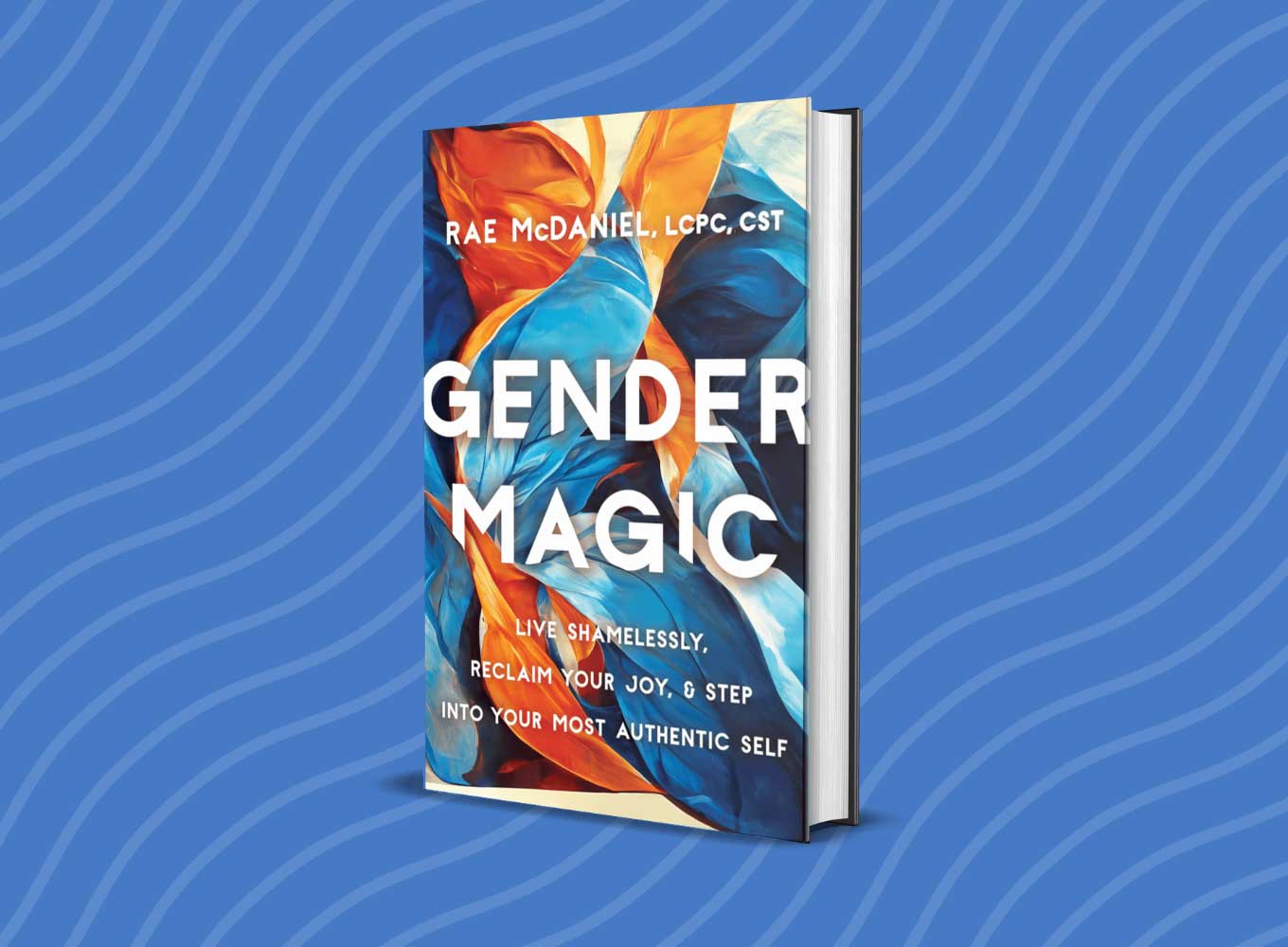
You know, “How do I identify? Is how I express myself congruent?” And her answer was yes. And her answer was, “Yes, I identify as a cisgender woman. Yes, I love wearing makeup and heels and dresses.”
And even though nothing changed in how she presented, she knew that she was doing it with more intention, and it gave her more freedom to even dive deeper into those parts of herself.
Kamrin: Yes. I feel like sometimes we’ll hear the line “I don’t wear makeup for men, I wear makeup for me,” and it’s like, let’s dive deeper into what that even means. I think that level of exploration and empowerment can be important for anyone. Having that space to explore is so important.
So, tell me a little bit more about how your work brings that freedom and joy and pleasure to people? And how does that start to unpack and remove those feelings of shame and self-doubt?
Rae: I really, really love the mission of The Goodnewspaper that moves away from toxic positivity and ignoring all the real conversations but really diving into “What is the good? What can we see here? What can we experience while not ignoring the reality of the world that we live in?”
My work is very aligned with that.
It starts with these mindsets of gender exploration being a part of self-growth for everyone and something that is to be celebrated like any other part of self growth. It starts with self-efficacy, believing that you have agency over your life and actually taking steps so that you feel more agency over your life.
Now, we know that there are a lot of very real systemic barriers for trans and nonbinary folks to be able to live as their most authentic self. And I'm not ignoring that. But I am saying there are ways that you can have agency despite the systemic oppression that is happening. And we can explore what those are.
The last piece of the mindset is self-love and self-compassion, which might sound trite, but it sounds trite because it's true. You can't have one without the other.
It’s about situating gender exploration — and gender transition, if that's something that you want — as something that is about you, where your measure of success is not how other people perceive you, but is how you feel about yourself.
Building on top of that is getting folks moving. I don't mean leaping into something that you are really scared of, or that feels overwhelming to you, or that you are so uncertain of that it causes you very, very intense anxiety.
But taking little tiny steps — smaller than you think — toward something that you are curious about, toward making changes in how you present your gender.
I also talk a lot about focusing on pleasure and finding joy throughout the process because those things are muscles. It's very easy to get bogged down in all of the hard things that are very true about exploring gender in our world today.
But connecting to joy and pleasure reminds you of the why. If every single step feels like a slog through the mud, why are we doing this? We're doing this to be able to live and not only to be able to survive — which is a baseline — but to actually thrive.
How do I build in thriving every single step of the way? How do I develop a community and a support group that is going to see me for who I am and respect me for who I am right now? How can I have moments of joy when it comes to exploring my gender right now? How can I get to know my body and develop some compassion and some kindness for a body that may or may not be the way that I want it to be?
When it comes to removing shame, what I’ve found is that people who want to explore their gender, or transition their gender, they try to tend to live up here [points to brain]. And they live up here for a really long time. And that is super anxiety-provoking.
What I encourage people to do is take those tiny steps to gather more data. Every time you take a step and you’re like “Okay, gut check. Do I like this? Do I not? Do I want to take another step?” you’re building a connection to your body, to your intuition, to your gut.
Another one that’s really obvious, but I have to say it, is finding your people. So much research shows that having a support system is the number one mitigator of distress. And the great news in our world today is that we have the internet, which means that no matter where you live, there is access to people who will see and affirm you for who you are right now.
Finding role models, whether they are big or small. And then speaking to a trusted person, letting somebody in on what’s going on in your brain, whether that’s a friend or family member, or a professional like a therapist.
One of the other important things is understanding where shame is coming from, especially for folks who identify as nonbinary or trans, or even stepping out of general gender conformity, is understanding that we live in a world where that has been historically punished and is still punished in many ways. And that shame is not yours. It's not about you. It's about the world outside not being supportive of your identity.
So being able to name that can also help people release that.
Kamrin: I love what you said about how this exploration of gender is the same thing as any other self-identity or self-growth journey. We make it such a big thing, but it’s just like any other way we journey through life all the time. It doesn’t have to be the most intimidating thing on the planet.
Rae: That’s part of gender freedom, too, is realizing that gender isn’t actually that big of a deal in the sense that we should all have room to play with it. It doesn’t have to mean everything that we make it mean or be so serious or big.
Kamrin: I think it's common, too, in those boxes of gender that we've already been assigned, to be like, “Oh, I feel like a woman," when really, you mean that you feel empowered.
Like, that’s not my gender. That’s a feeling. And I can connect those things, and they can have a relationship, but am I feeling empowered because of the genitals I have? Or is it because of a feeling I’m experiencing? I think untangling all of that is really cool and really necessary.
Rae: I love that you said that. I could go on a soapbox forever about how we assign genders to just values or qualities or energy. Being strong does not make you masculine. Being soft or kind or compassionate does not make you feminine. Those are just qualities of human beings. And we all have them in varying amounts, and we do not need to assign them a gender.
Kamrin: I love that so much. Obviously, it’s been ingrained in us, but I love how we can detach all of that and realize how we are all just different, and that’s a baseline we can return to.
You spoke to this idea of naming the shame and how it’s not really ours; it’s the systemic injustices. With everything going on in the world, with so much hate directed toward trans and nonbinary folks in particular, how does that cultivation of hope become part of the resistance? Can you speak to that a little bit?
Rae: I love this question so much. I spoke to it a little bit earlier in that it reminds us of our why. When we cultivate hope and pleasure, it takes us out of, “I'm working toward this thing” and into “I am embodying this thing now as much as I can, while I am also working toward a better world where we can all be free and safe and taken care of.”
I'm a huge Audre Lorde fan, and in particular, her writings “The Uses Of The Erotic.” In it, she talks about eroticism, not as this exclusively sexual thing, but as creative energy, as connective energy, as this feeling of aliveness and pleasure.
And once we feel that, we are much more unwilling to accept a world where we don't feel that way, where other people are not allowed to feel that way. And I have found that to be true.
So if we're cultivating hope and pleasure, we are also staking a claim. And I refuse to live in a world where people cannot feel hope and pleasure. Therefore, I am activated to create that world.
Often, it means creating that world within our smaller communities. It refills our cup. It lets us rest. And it gives us the ability to have more of that creative energy, that aliveness, because we're not pouring from this empty cup. We’ve taken the time to be unproductive, to have pleasure for its own sake. It reminds us that we are worthy just for existing.
It also teaches you to be wary of the things that take away hope and pleasure. So, it’s important to know what is happening in the world and to be active in combating that hate.
It's not about burying your head in the sand, but it is allowing yourself to say, “I'm going to engage with all this hard stuff, this super real stuff,” and then, “I'm going to stop doom-scrolling, and then I'm going to put it down, and I'm going to play with my kids. I'm going to have dinner with my community. I'm going to take my dog on a walk and enjoy nature.”
We have to live along the way. Hope reminds us of that.
Kamrin: I love that so much. It’s giving me chills! I think it’s so beautiful how we can hold awful, scary things in our hands and still say “No, I believe there’s a better world.” And I love how people can come together in community to cultivate that. It’s expansive. It makes you want to find and make that better world. It’s a motivator for sure.
Rae: That’s in line with research, too! This is based off of the book “Burnout” by Emily Nagoski, where she mentions a study about mice and cheese.
Essentially, they put two groups of participants in an experiment, and they each got a paper maze, like, a coloring sheet of a mouse trying to make it through the maze.
One of them has a mouse that's running away from a scary owl. The other one has a mouse that is running toward this yummy piece of cheese at the end. And they found that the experimental group with the cheese made it through the maze faster and with less distress.
What that tells us is that both of the groups made it through the maze, but the ones who were operating out of fear, out of what they were running away from, had a much harder time getting there.
Versus those who were focused on what they were running toward, and the vision of whatever the cheese is for them, they had a much better time getting to the end. They did it faster.
They did it from a much more grounded place, and the outcome was the same. So why would we choose to not have our movements be rooted in things that also give us pleasure and joy and connection if the outcome is going to be the same?
Kamrin: In line with that cultivation of hope, I want to ask you the question I ask everyone I interview: What is giving you hope right now?
Rae: I’m based out of Chicago, but I was in New York recently, and I went to a rally for trans youth that was put on by trans youth. It was a big march led by high school youth, and it was just a really beautiful experience.
It was obviously a very serious topic, but there was a crowd of 700 queers and allies, so we’re having fun.
There’s this sense of joy there, even in the midst of something that felt very serious. And I love seeing this next generation stand up and say “this is not a world that we are going to accept.”
Think of a time when you’ve felt soothed by nature. Perhaps you’ve walked along a quiet path, covered in luscious trees, inhabited by boisterous birds.
Maybe you’ve spent some time by a body of water, listening to the waves lap, or the trickle of a stream in the distance.
Those feelings of serenity are not just part of your personal experience — they’re science.
Researchers have associated nature sounds with a decrease in the body’s sympathetic response, which causes our fight-or-flight signals to go off, and an increase in the parasympathetic response, which helps the body relax and function normally.
And underneath all of those layers of birdsong, babbling brooks, and burrowing squirrels, there is a frequency of sound we hear outdoors that helps us find our zen: Green noise.
What is green noise?
Green noise, according to Dr. Alex Dimitriu, the founder of Menlo Park Psychiatry & Sleep Medicine, is a particular subset of white noise, and sounds similar to the sound of running water, or wind, which can be quite soothing, and does occur naturally outdoors.
White noise is all frequencies, whereas other subsets or spectrums of noise have different pitches that can be more or less pleasant to our ears, depending on our individual preferences.
“Different types of noise, whether pink, white, brown, or green, share in common the sound of static noise, or random frequencies,” Dimitriu explains. “They each differ, however, in whether the random noise has more treble (higher pitch), or more bass (lower pitch.)”
Green noise has a lower frequency at 500 Hertz and sounds more akin to nature soundscapes, whereas white noise might sound more like a humming fan at a higher tone.
“Many of us have experienced the relaxing sound of rain, a flowing river, or a humming fan — all of which are essentially noise generators, but of slightly different types,” Dimitriu says.
Green noise can even encompass those other types of noise, like brown noise, which emulates deeper, thunderous tones, or pink noise, which sounds like falling rain.
No matter the gradient of color or the array of soundscapes, green noise can be identified by its connection to the natural world.
What are the benefits of green noise?
Research has primarily shown that white noise was helpful in getting people to sleep sooner, and ongoing studies into various types of noise continue to show benefits across our listening ears.
Because of the natural elements of green noise, it can create a calming effect and also help with sleep, Dimitriu said.
Most research has explored white noise, which can help improve concentration and help us relax — that’s a big reason why you’ll hear ocean waves in the background of a guided meditation, or why “Box Fan Sound” has over 145 million listens on Spotify!
Evidence also suggests that various types of sounds can be helpful for folks with ADHD, as having background noise can reduce mind-wandering, help improve focus, and even boost dopamine.
Amy Sarow, a Doctor of Audiology, and Audiology Lead at Soundly, says that while there’s not a large body of research on green noise, one theory about why people find this sound particularly relaxing is because babies begin hearing in the womb around 19 weeks, and the low-frequency portion of the cochlea forms first.
Thus, connecting us back to that safe, cozy atmosphere of the womb might make green noise especially soothing. This is similar to how weighted blankets or deep pressure therapies remind our nervous system of what it’s like to be swaddled.
Dimitriu warned, however, that it’s important to remember that along with frequency, volume matters, too. The goal is not to drown out one’s thoughts, but rather, provide a background track.
All in all, green noise is no more helpful than any other frequency of white noise, and it’s all up to personal preference.

“Green noise sounds natural, and many people may be drawn to it for this reason,” Dimitriu said.
“However, besides white noise for insomnia, or brown noise for ADHD, there is no strong evidence that one type of noise is better than the other. I believe they can all be helpful, and it really is a matter of personal preference, and likely that all types of noise will have a positive effect.”
If you plan to use green noise as a method to help you sleep, Dimitriu encourages other sleep hygiene practices, too, like regular bed and wake times, turning off technology, and more.
“If you do use a noise generator, be sure it doesn’t get you playing on your phone when you should be winding down for sleep,” he urges.
How to listen to green noise
Spotify
There are loads of Spotify playlists, albums, and tracks out there for you to find your ideal green noise soundscape. Feel free to turn it on before bed, while you’re studying, or even as you try to relax from a stressful day.
→ Listen to green noise on Spotify
Apple Music
Similarly, you can find recordings and playlists full of relaxing green noise on Apple Music — along with all kinds of other “colors” of noise!
→ Listen to green noise on Apple Music
YouTube
Your home for hours of recorded sound frequencies, YouTube is a great place to find green noise videos — some lasting for as long as 12 hours! Find a favorite, turn that baby on, and sink into a relaxing slumber.
→ Listen to green noise on YouTube
Meditation apps
Meditation apps like Calm are also great places to find green noise soundscapes. While you may have to pay or sign up for a free trial to access these, meditation apps also provide a number of other soundscapes and resources to explore.
→ Listen to green noise with the Calm app
Earth.fm
While Earth.fm does not provide specific “green noise” playlists, it is a hub for nature sounds from across the globe! Seriously, users can record nature sounds and upload them for your enjoyment.
If you’re looking for something a tad bit livelier than a green noise sound generator, but you still want to feel soothed, this is a great option for you!
From chirping cicadas, to storms in the mountains, you can tune in and hear the vast array of sounds from our natural world.
→ Listen to nature sounds on Earth.fm
Frequently Asked Questions
Is green noise good for sleep?
Green noise helps block distracting sounds, create a calm and serene environment, and encourage relaxation, which all helps us fall asleep. That being said, green noise is no more important for sleep hygiene than any other kind of noise, and it all depends on your personal preference.
White noise vs. Green noise
White noise has equal intensity at all frequencies, giving it a constant "shhh" sound, like that of a fan or even a vacuum cleaner. Green noise has a lower frequency and is often compared to sounds found in nature, like wind, water, or rustling leaves.
Brown noise vs. Green noise
Green noise has a frequency of 500 Hertz, while brown noise has an even lower, deeper pitch. Brown noise is steady, like a rolling thunder or rumbling waterfall. Green noise has a more balanced spectral density, however, which may make it seem more soothing and less intrusive to some listeners.
Pink noise vs. Green noise
Green noise is a subset of pink noise, which also emulates natural soundscapes. Pink noise creates a more steady sound, like that of a constant rainfall, rather than the less balanced green noise, which might sound more like a “pitter patter.”
Every day the Good Good Good team collects the best good news in the world and shares it with our community. Here are the highlights for this week!
If you want to get good news in your inbox every day, join the Goodnewsletter — the free daily newsletter designed to leave you feeling hopeful.
The Best Positive News We’re Celebrating This Week —
By sharing crowd-sourced life hacks from past generations, a TikToker is empowering women and building community
When Amanda Ahlenius became a mother to two girls, she realized just how much she had to learn from the other women in her life. Motherhood became more of a collective, communal journey than she ever expected.
In a now-viral TikTok, Ahlenius asked her audience to share the “random things” the women in their lives taught them — and the comments were filled with helpful tips.
She kept sharing the nuggets of wisdom from her own and other grandmothers on TikTok, chronicling the valuable information to help others embrace the familial knowledge they may not have ever received, and create an ongoing network of maternal laborers who don’t take each other for granted.
Why is this good news? Estimates calculate that if stay-at-home moms were paid for their labor in accordance with real-time market prices of all the jobs they do, they’d be making at least $184,820 per year. And often left without supportive resources, women have relied on centuries of generational wisdom to best care for their families — and Ahlenius is bringing attention to both.
Over the past 10 years, solar energy has grown by 33% on average every year in the United States
As of 2021, there is enough solar capacity installed in the country to power 23 million American homes. In 2021 alone, the amount of solar home energy increased by 32%.
The continual annual growth in solar energy is thanks to a number of factors, including lower costs for systems, growing environmental consciousness around the environmental implications and impacts of energy development and use, and increased awareness of the cumulative energy savings solar offers.
On the cost-per-system side, solar installation costs have dropped by 60% over the last 10 years, increasing accessibility and demand for panel systems. The average residential solar panel system went from costing around $40,000 in 2010 to $20,000 currently.
And solar isn’t just helping consumers save money or manufacturers sell panels — it’s creating jobs. As of 2021, over 255,000 Americans are employed in the solar market across 10,000 companies spanning every single state.
Construction students in Michigan just built a home that provides both affordable housing and hands-on experience
Over the past seven months, 26 second-year construction students at Oakland Schools Technical Campus-Northeast have been working hard to build a 1,368-square-foot house.
In building the home, students get hands-on experience and real-life preparation for the workforce — and once moved to its final destination, the house will be available to folks applying for affordable housing in the future.
Affordable housing is something that communities around the U.S. are in desperate need of right now, and Michigan is no exception. The state recently announced a plan to boost the affordable housing inventory available in the state.
The school aims to have students complete a new house every year.
→ Read more
A teenager created an app that helps people safely and discreetly discover their gender identity
A time of self-exploration and discovery, during the pandemic (and quarantine, specifically), some found labels that fit our sexual orientations better, while others began experimenting with new pronouns in safe living environments with loved ones.
During that time, Josh Tint recognized that there was still people questioning their identities who didn’t have an outlet for that natural experimentation. He wanted to create a space where folks could explore their name and pronouns “in a simple, discreet, stress-free environment.”
So, he developed the app Discover Me, and when he was 19 years old, launched it in Apple’s App Store. The interface is simple: it lets users “try on” different names and pronouns, swiping left or right to choose what feels right for them. Since its launch in 2022, the app has been downloaded and used by over 2,000 people.
Why is this good news? Discover Me comes at an especially poignant time, where transgender and gender-nonconforming people are put especially at risk, through oppressive policies and bans on gender-affirming care nationwide. Now more than ever, they need resources to “express their pride,” Tint said.
A flower that only grows in York was just brought back to life, becoming the first de-extinction in Britain
When it was first discovered in 1979, York groundsell was the first new plant species to evolve in Britain in 50 years. The flowers were dismissed as “weeds,” and after excessive application of a weedkiller, it disappeared from York in 1991.
The three plants that researchers kept in pots at the University of York quickly died, too — but they did produce seeds, which were then stored at Kew’s Millenium Seed Bank. (Queen Charlotte fans, anyone?)
The conservation organization Natural England — which has spent 30 years funding efforts to revive the most threatened native species — got to work on a de-extinction plan. And it worked. Back in February, more seeds were planted around the city, and for the first time in 32 years, they just started blooming their colorful yellow flowers.
Why is this good news? Humanity is meant to live in harmony with nature — not to destroy it. The combined efforts of researchers, conservation organizations, and communities to bring this plant back to life should inspire all of us to protect nature — before it disappears at all!
→ Read more
Organizations around the world are helping bring gender equality to the music industry
For women and gender non-conforming folks in the music industry, paving the way takes a lot more effort than their cis, male counterparts. In 2022, women made up 12.8% of songwriters, 22.3% of artists, and 2.8% of producers in the music industry.
While there are countless programs, nonprofits, resources, and organizations working to equalize the music industry, we wanted to highlight a few that work hard to make gender equality sound like music to our ears.
🎶 At Suffragette Records in Australia, you won’t have to spend hours sifting through vintage vinyl to find women artists — because every album is by women or gender non-conforming artists.
🎶 Amplify Her Voice is a global community of over 300,000 working to advance women’s music careers through educational, networking, and creative opportunities.
🎶 In 2023, all-male acts make up 64% of music festival lineups, and Book More Women refuses to accept that. The platform removes all-male music acts from festival lineup posters to visually show how few women musicians are on the bill.
More good news of the week —
The North Face strongly defended and renewed its support for working with drag queen Pattie Gonia. The company faced backlash similar to other recent national brands for its “Summer of Pride” campaign but responded like true LGBTQ+ allies.
The average price of emissions-free electricity in Finland recently slipped into the negatives during the day. The oversupply of electricity was mainly due to spring flooding, which is super-charging hydropower production.
Indigenous-led bison repopulation projects are helping the animal live and thrive again in Alberta. A bison reintroduction project at Banff National Park started in 2017 with 16 animals, and will likely end the calving season with around 100 this year.
Communities are getting creative with affordable housing solutions, helping people experiencing chronic homelessness, elderly individuals, and more.
Community land trusts are making housing more affordable — because the land is owned by the community.
Local governments are partnering with churches to turn their empty, underused real estate into much-needed housing for their communities.
Community- and volunteer-driven pet food banks are popping up around the UK for pet owners in need. An animal welfare organization found that 42% of pet owners are finding it difficult to finance pet care bills due to the country’s economic crisis.
Texas just signed the CROWN Act into law, prohibiting hairstyle discrimination based on race. It passed with bipartisan support including a vote of 143-5 in the House and 29-1 in the Texas Senate and was quickly signed into law by the governor.
A lottery winner in North Carolina is pledging to use his winnings to fund classrooms in his native Mali. Souleymane Sana’s dream is to open a dance school in his home country, but for now, is using his winnings to get more students in school.
A Republican Senator voted against a Louisiana ban on gender-affirming care after learning it’s safe and effective. With that vote, Louisiana became the only Southeastern state and one of only four states with Republican trifectas or legislative supermajorities to defeat such a ban in its legislature.
Making history, Latvia just elected the first openly gay head of state in Europe. Latvia elected Edgars Rinkēvičs as its new president, who came out in a tweet in 2014 and advocated for improving the legal status of same-sex relationships.
After their high school canceled their LGBTQ+ play — students put it on anyway. The teens raised nearly $84,000, booked an outdoor theatre, rehearsed for two and half weeks, and performed “Marian” for about 1,500 people.
A groundbreaking new blood cancer treatment developed at a medical center in Israel has a 90% success rate. The “unprecedented achievement” treats the second-most common type of blood cancer, which has long been considered incurable.
Courageous volunteers in Ukraine have saved hundreds of animals from war zones in the country. This past winter, Kyiv Animal Rescue Group began launching rescue missions in Eastern Ukraine, which has been heavily shelled amid Russia's full-scale war.
Leaders in Somalia agreed to introduce direct universal suffrage in local elections next summer. The country hasn’t held one-person, one-vote elections nationwide since 1969, when dictator Siad Barre seized power.
It all started in 2016 when Sophie Sandberg began chalking the sidewalks of New York City with phrases and quotes that had been hollered at folks on the street — otherwise known as catcalls.
She began documenting the colorful chalk renderings on Instagram, working to bring attention to the daily harassment women — and other marginalized communities — face.
All entries in the library of catcalls are submitted from followers and community members, and Sandberg chalks them, word for — often gross and explicit — word, at the location where they were said.

Each quote includes the hashtag #StopStreetHarassment and a tag to Sandberg’s increasingly popular social media account: @CatcallsOfNYC.
“Chill out,” a chalk rendering begins, “You seemed like the easy type.”
“He said ‘hey princess,’ and then told me to smile when I walked on the other side. 14 years old,” one drawing reads.
While many chalk writings document street harassment, others focus on issues of injustice.
“My mom almost died during a miscarriage after I was born,” an anonymous writing shares. “The abortion saved her life.”
“The fight against patriarchy is global and intersectional,” another reads, in solidarity with the women of Iran. “Rest in peace Mahsa Amini.”
Regardless of the content, all chalkings have one thing in common: They seek systemic change ending gender-based violence.
Change Sandberg couldn’t make alone.
Quickly, her artistry spiraled into a full-on movement: Chalk Back. This youth-led grassroots international organization is now the hub of street harassment stories from around the globe.
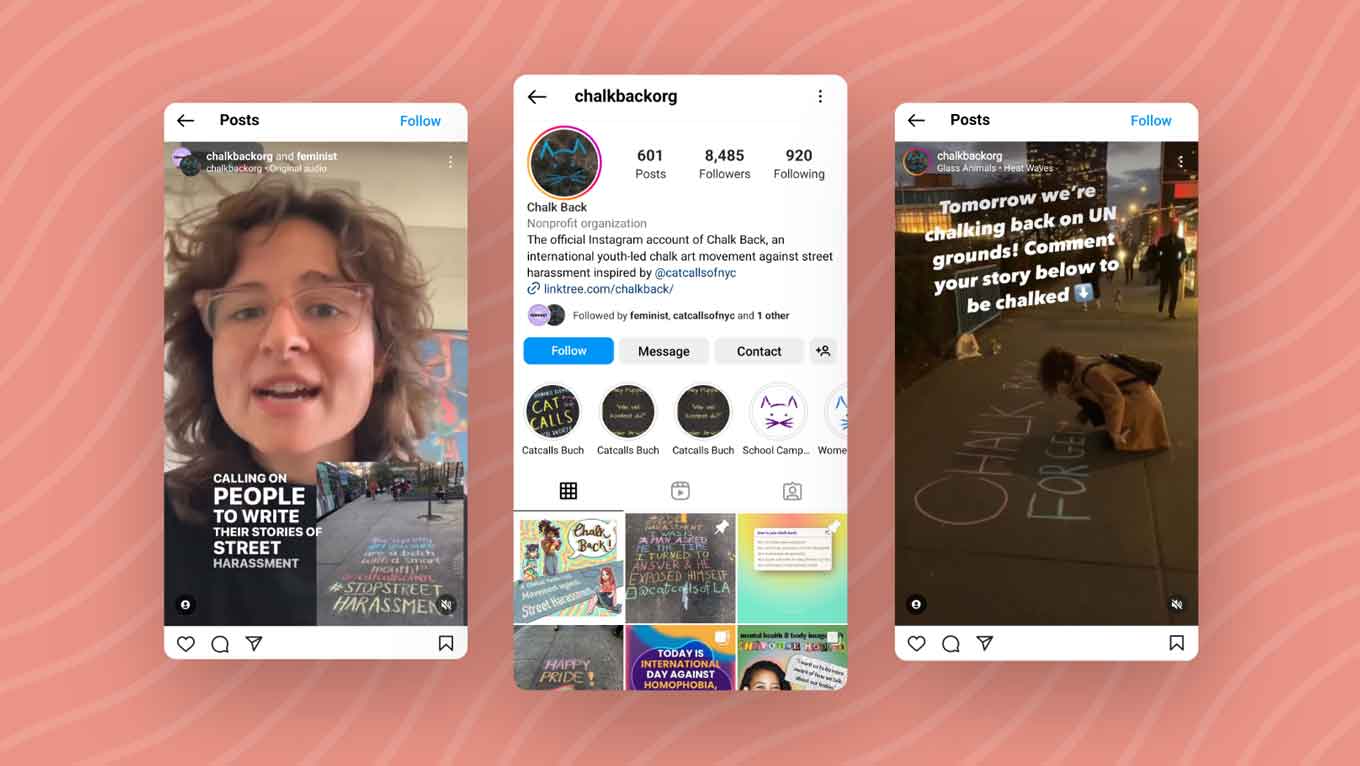
The organization, led by Sandberg, builds upon her existing work, with public chalk and art displays, digital media campaigns, and ongoing education.
Chalk Back is made of a growing collective of over 150 activists who run Instagram accounts similar to the original concept, sharing stories within a specific city or university campus. In 2021 alone, the organization reached over 12 million people through its various social media accounts.
From busy European cities, to small college communities, the organization spans six continents, 49 countries, and 10 cities, and is composed entirely of youth activists.

While street harassment is pervasive across countries, it also often leads to further violence and harm against marginalized communities.
In fact, a study from California State University reported that nearly 25 percent of women who were catcalled said the verbal harassment led to inappropriate touching, and 20 percent said it led to being followed by the harasser, whether their words were confronted or ignored.
By displaying these catcalls in public spaces, onlookers are forced to confront these daily threats.
“All people should be able to be carefree and move without concern on the streets; not just those who are socially privileged,” Janna, one of the moderators of @CatcallsOfBochum said in a blog post.
“If they get bothered by the chalking and start feeling uncomfortable, that’s exactly what people experience during catcalling. When the catcalls are out and visible on the street, everyone has to face this problem; not just the ones who have experienced the harassment.”
In order to continue chalking, the organization uses the Safecity app to gather reports of street harassment, allowing for easier transmission of messages, as well as providing a cautionary tale to other users about where harassment has taken place.
Followers are also always welcome to message Chalk Back’s Instagram account, or other verified regional profiles, to help share their stories with the world.

Between virtual educational events, chalking marathons, creative works about harassment, and more, Chalk Back has created a multitude of online spaces where these stories are forced into the light, and young people are able to reclaim their safety and communities.
“Accountability, to me, means calling a thing by its name — no mitigating the effect,” Karimot, the founder of @CatcallsOfNigeria, said in a blog post. “Letting the world see it the way it is.”
Patched jeans. Taped glasses. Reupholstered furniture.
For those of us eager to be more sustainable with the items we use on a daily basis, one of the best places to start is by repairing things or giving them a second life.
However, if you aren’t savvy with a sewing machine, or some fancy tools aren’t always accessible to you, it can be intimidating — or sometimes impossible — to make simple fixes and extend the lifespan of some of these random goods.
Enter: Morley Kert. He’s a maker, fixer, and content creator who takes viewers along on his various projects and designs, all from his tiny apartment workshop. ”
Inspired by popular fix-it YouTuber Van Neistat, Kert decided he wanted to take his beloved 3D printer on a field trip to offer free 3D-printed repairs in public spaces.
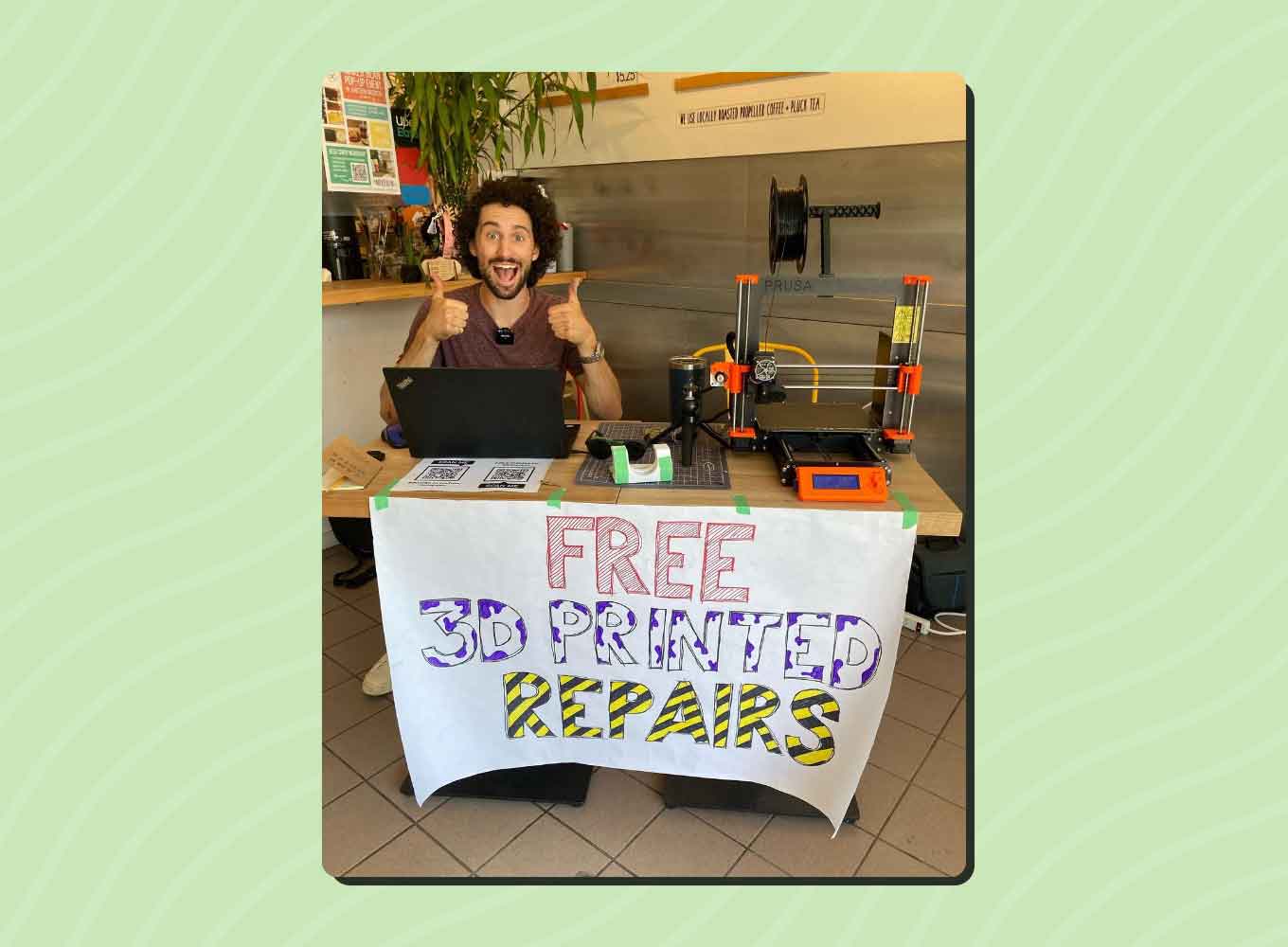
The first time he offered his services was last summer at the Maker Bean Cafe in Toronto. The perfect location — a coffee shop with laser cutting and 3D printing services and workshops — Kert set up shop with a “Free 3D Printed Repairs” sign, his laptop, tools, and printer, and waited for his first “customer.”
Quickly, community members trickled in. A pair of sunglasses rejuvenated by a simple, perfectly-carved piece of filament. A water bottle lid that no longer snapped shut, quickly fixed with a new clasp.
While Kert was mostly tasked with small, simple fixes, they are not insignificant.
@morleykert Free repair for a stranger #3Dprinting #DIY #repair ♬ original sound - Morley Kert
“I’m very interested in not throwing things away,” one community member said in Kert’s recap video of the event. “Of course, everything that is designed nowadays is designed to be thrown away. It can be something as silly as a knob on a fan, and the whole thing ends up in the garbage. Why throw all that away?”
Kert considered this first free fix event a success, but he was excited to level up. A few months later, he was ready to take his repair station to a public park.
Building a wooden cart and a protective enclosure for his printer, he wheeled his off-grid 3D printing setup to the local park — powered by a portable power station and solar panel.
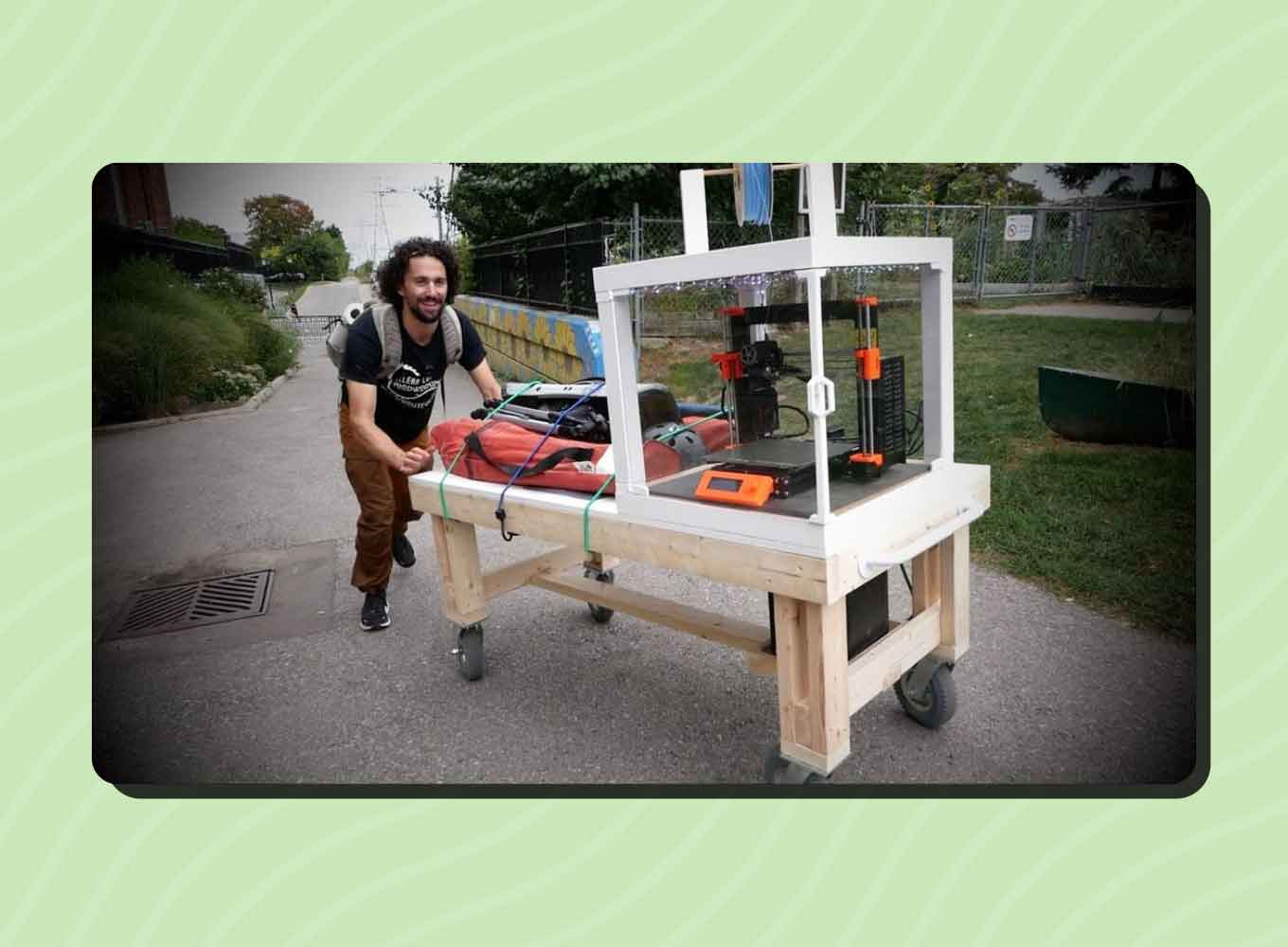
This time, the stakes were a little higher. He fixed an immersion blender, a (very expensive) hair dryer, music stands, and even a part for a bicycle.
“You are pretty amazing,” a commenter wrote on TikTok. “I love all the things you are fixing and keeping out of the landfills.”
“Example of steps to a post-scarcity, circular economy future!” another rejoiced.f
“This is, in my opinion, one of the most powerful applications of 3D printing,” another person chimed in. “Repair instead of replace!”
While each free repair event proves to have its own challenges (like keeping a solar panel in direct sunlight all afternoon), Kert tinkers on. He recently hosted one of his signature free repair stations in London.
And when he’s not rolling the 3D printer across the world, he’s sharing more videos of turning “trash to treasure,” making fixes for his own possessions, and using his creativity for good.
“Ever since I was a young kid, I’ve loved to tinker, build, modify, take things apart (and maybe not put them back together again), invent, design, engineer, create art, make videos, and learn new skills,” Kert writes on his website.
“I thrive on the challenge of building projects with limited tools and space. I believe that not having something can be a wonderful source of creativity and inspiration.”