Malaria is the seventh leading cause of death in Rwanda, leading to a widespread community effort to protect families and communities from the disease.
That community effort is comprised mostly of local women caregivers, who dedicate their time and care to treat 55% of malaria cases in the area — even more than doctors and nurses within the region.
However, this willingness to step up has historically come at the expense of their own economic growth, as circumstances demand they prioritize these impactful community care efforts over consistent work.
But there is hope on the horizon.
In 2017, the Society for Family Health Rwanda and the Rwanda Ministry of Health partnered with SC Johnson and Raid to create the Certified Care program.
Certified Care provides official certification and livable wages to this unofficial community of health workers in the area, allowing them to do the work they’ve spent their lives doing (this time, building a career in the process), all while contributing to the efforts to eradicate malaria.
“They know what they’re doing,” Manasseh Gihana Wandera, Executive Director of Society for Family Health Rwanda, said in a video. “They just need the paper certification.”
This year, the collaborating organizations have announced a milestone of 10,000 certifications.
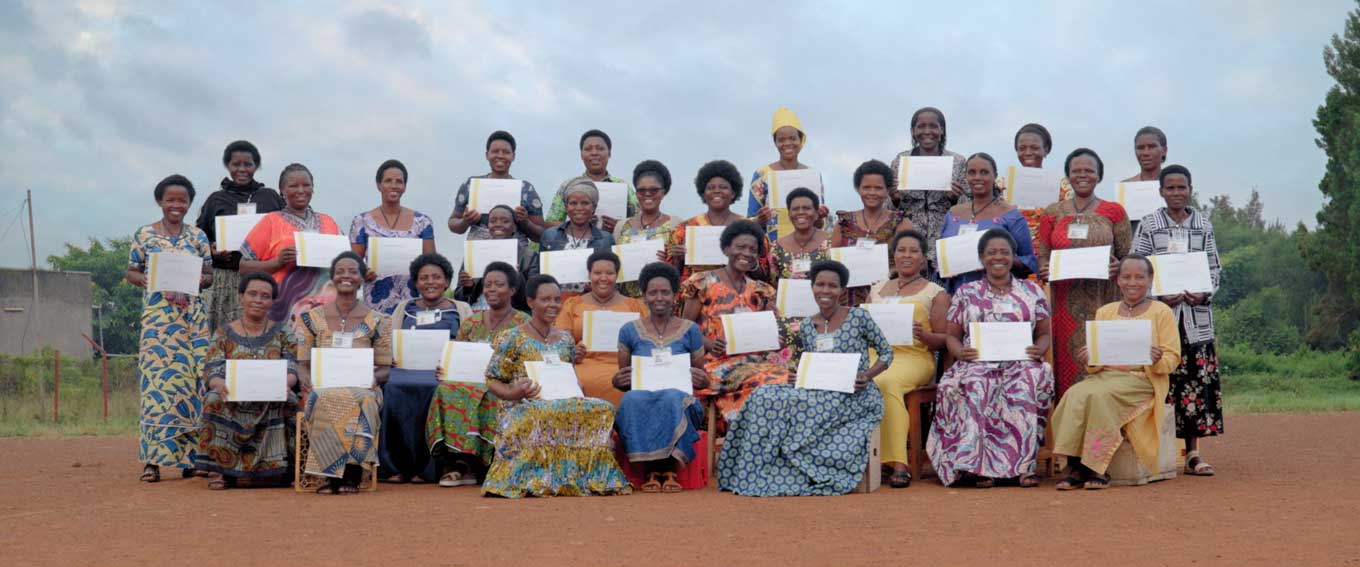
“These Community Health Workers know what needs to be done to help their communities, as most have been doing this all their lives,” Wandera continued. “Their contributions deserve to be recognized, and this certification allows for that to happen. They are heroes of their communities.”
This corporate partnership has also led to the construction of nearly 70 health clinics across Rwanda, addressing malaria, as well as other public health issues like HIV/AIDS, family planning, nutrition, and access to clean water.
SC Johnson and Raid shared a number of stories from the women on the front lines of malaria eradication.
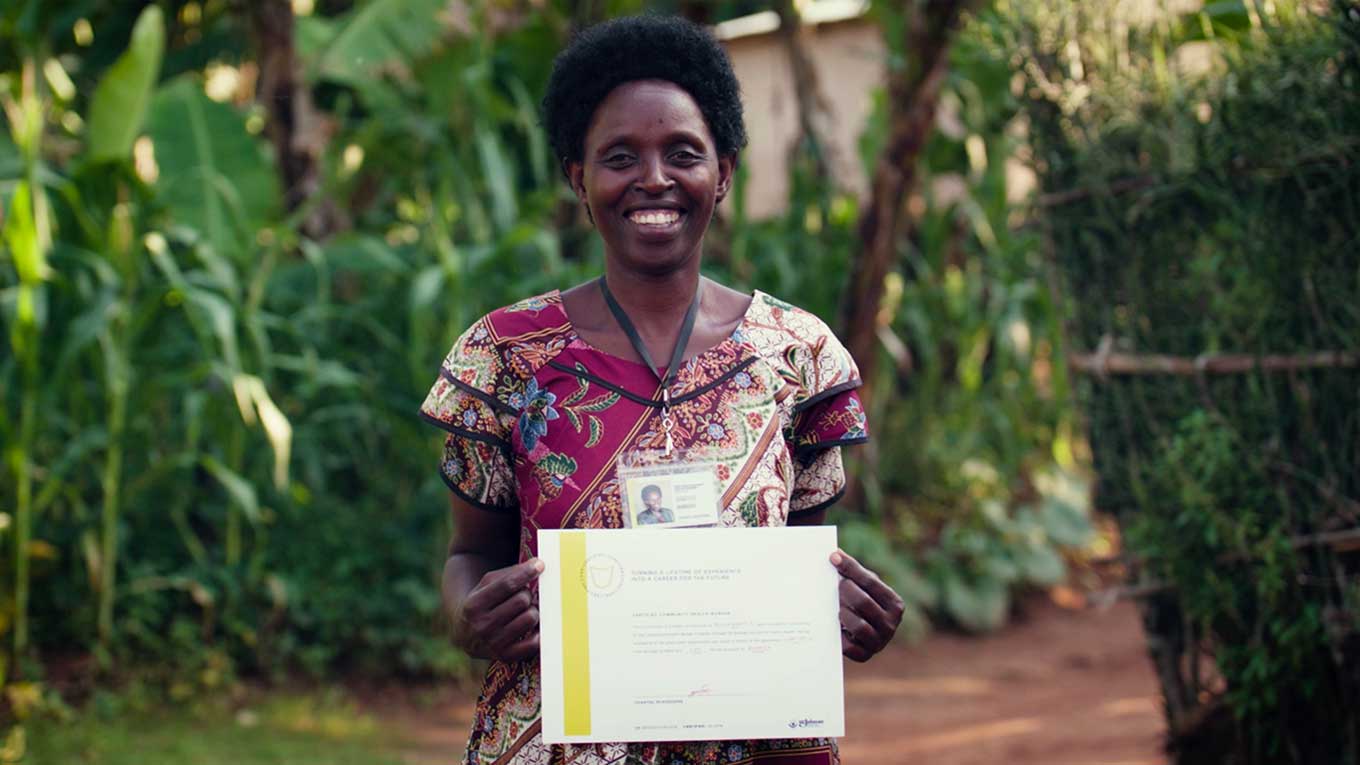
There’s Chantal Mukashema, who has been a community health worker for 15 years and found that the Certified Care program has also helped other women with literacy skills as a result of their training.
The income she has received through her work as a now-certified practitioner has allowed her to buy sewing machines, train over 25 women, and open a women’s clothing store in her area.
Or take Olive Mukandayisenga, who has been treating people in her community for over 23 years. Her own son had malaria several times, first when he was seven months old. His many bouts with the disease caused him to become malnourished and prevented even more economic opportunity, since he couldn’t work on the family’s farm.
Now, her son is 20, and Olive is a certified care worker who tests and treats other children facing malaria.
“In the past, when one of my family members had malaria, I would have to skip work and tend to them,” she said.
“Becoming certified for the work I’ve been doing and earning a livable wage now means I can maintain my family’s farm and keep my family happy and healthy, all while protecting myself and my future.”
Header image courtesy of SC Johnson
Every day the Good Good Good team collects the best good news in the world and shares it with our community. Here are the highlights for this week!
If you want to get good news in your inbox every day, join the Goodnewsletter — the free daily newsletter designed to leave you feeling hopeful.
The Best Positive News We’re Celebrating This Week —
A new ad campaign from Budweiser is helping save public basketball courts in Brazil from demolition
Right now, public street basketball courts all over Brazil are under threat of being displaced by development. In an effort to protect these important public spaces for communities, Budweiser partnered with Brazilian rap star Rincon Sapiência on a clever new ad campaign.
The "Unbreakable Courts" ad campaign features a new Sapiência song, which begins with the rapper reflecting on his time growing up playing basketball and lamenting about the courts’ destruction. Then the lyrics take a legal turn, as he calls out the country’s cultural heritage laws as a tool people can use to protect them.
This campaign educates people about the laws and how any site with cultural significance has some protection from demolition. The campaign’s website then connects communities with artists to paint a mural on the court of their choice — which gives it that protection.
Why is this good news? While we understand that the needs of a community change and evolve over time, this campaign gives folks the opportunity to save an important part of their community — and it does so in a beautiful, creative way. We love some creativity for good!
A foldable cup is revolutionizing the disposable plastic takeout industry
Single-use plastics are finally starting to disappear from the market, as everywhere from local communities, to states, and entire countries implement single-use plastic bans and regulations. But often, we find ourselves looking to grab a quick coffee to-go, only to discover we forgot our reusable container.
That’s where The Good Cup comes in. The Good Cup is a foldable vessel that's like a mini takeout container for hot and cold drinks.
And the best part? The Good Cup is fully recyclable and repulpable, made with compostable paper and recyclable bio-based coating. It can be composted at home or sent to recycling facilities — where the paper can be recycled up to seven times before heading back to the Earth.
Why is this good news? We’ve all experienced the sensory nightmare of drinking from a disintegrating plastic straw, and strawless “compostable” plastic and paper cups are often still made with materials and chemicals that harm the planet.
The Good Cup offers a viable alternative, and if one million 12-ounce Good Cups are used, nearly 10,000 pounds of plastic would be saved.
A Texas House committee just advanced a bill that would raise the minimum age to purchase semi-automatic rifles
Amidst the daily occurrence of gun violence in the U.S., it can be difficult to celebrate anything related to guns right now — much less something seemingly small like a bill making it out of committee. And that’s fair, we feel it and understand the hesitancy.
But this news coming out of a state that has done nothing but loosen its gun regulations gives us hope because we know a fundamental truth: the most meaningful positive change happens incrementally, step by seemingly small step.
A gun safety bill making it out of committee for a full vote by the legislature is one of those small, incremental steps that add up to really significant change.
And while Texas House Bill 2744, which would raise the minimum age to purchase certain semi-automatic firearms to 21, faces an admittedly tough battle to becoming law — the fact that it’s facing the battle means there’s hope left. And it’s thanks to months of advocacy from activists, survivors, and specifically families and relatives of the Uvalde school shooting victims.
→ Read more
Greece is making nearly 200 beaches more accessible for beachgoers with limited mobility
Vacationers and residents with limited mobility can now enjoy the sea and beaches of Greece thanks to the installation of water-access ramps. More than 200 Seatrac ramps will be installed throughout Greece, as well as neighboring countries like Italy and Cyprus.
The ramps allow folks with limited mobility to independently bypass the sand, “drive” themselves down to the water, and enjoy a swim in the Mediterranean. They’re also completely solar-powered.
The installation of the ramps begins this month and the company who created them expects them to be up and running for “high beach season” through October.
Why is this good news? So much of the world is designed with one type of person in mind: those without any kind of mobility issues. But that’s not the reality for so many folks — and everyone deserves the independence and dignity of navigating streets, buildings, beaches, parks, and more on their own! Spaces should be designed with people of all abilities in mind.
Hydro Flask just donated $25,000 to The Outdoorist Oath to support their efforts to make the outdoors more inclusive
The Outdoorist Oath is a year-old organization created in collaboration with environmental justice leaders Pattie Gonia, Teresa Baker, and José González with a simple mission: “A commitment to Planet, Inclusion, and Adventure.”
The Oath is essentially a workshop where people can better understand and be agents of change in protecting the planet and making the outdoors a diverse and inclusive place — over 2,200 folks have taken it so far. And they’ve been so successful, participants have sought out more, continued learning, connection, and programming.
Since The Outdoorist Oath provides its events for free — it needs support. And thanks to Hydro Flask, a stainless steel water bottle brand — it just got a big boost. Alongside its new “Let’s Go Together” line of beverage containers, Hydro Flask is also making a $25,000 donation to The Outdoorist Oath.
Why is this good news? By bringing a large, corporate platform together with a grassroots movement, the collaborative efforts of inclusive environmental advocacy expand even further. Or as González told us, “The statement ‘Let’s Go Together’ is a very tangible way to practice inclusion and spaces of welcoming and belonging.”
Scientists just reintroduced 5,000 critically endangered snails to the French Polynesian Islands
In what’s believed to be the largest-ever release of any species that is extinct in the wild, scientists just reintroduced critically endangered Polynesian tree snails to the French Polynesian Islands.
The snails were nearly wiped out in the 1960s after French authorities brought two invasive snail species to the islands — one as a food source, which escaped captivity and multiplied, destroying the local ecosystem.
For the past three decades, scientists and conservationists have been working at zoos in the United Kingdom and the U.S. to keep them from disappearing. They’ve been slowly reintroducing them over the past nine years, but the most recent reintroduction of more than 5,000 was a significant milestone in conservation.
Why is this good news? The snails are less than an inch in size, and while they're small and maybe not the cutest creatures to look at — they have a huge impact on the local ecosystem. By eating fungi and decaying plants, they help keep the forest healthy.
It's also an encouraging reminder to protect, nurture, and care for endangered species — because hope is never lost.
→ Read more
A man in Finland has restored around 80 areas of ecologically critical peatlands in his home country
About a century ago, nearly a third of Finland was covered in peatlands, which are wetland ecosystems that are one of the planet’s largest and most important carbon sinks. These pristine areas were strip-mined for fuel or drained.
On a mission to restore these critical ecosystems, Tero Mustonen started in his own backyard and worked to restore a peat mine in his village that was polluting nearby waterways and killing fish. Since that first project, he’s restored about 80 peatland areas across Finland. It's a massive success story in ecological restoration.
Importantly, Mustonen’s organization, the Snowchange Cooperative, also partners with Sámi Indigenous and Finnish rural communities on an “approach that supports traditional knowledge and Sámi rights.” The cooperative has expanded its restoration globally, now working in places like Alaska, northern Russia, Polynesia, and New Zealand.
More good news of the week —
New York will require the state’s public power provider to generate all of its electricity from clean energy by 2030. The new legislation is a major step toward making utilities publicly owned and will scale up the state’s renewable energy production.
Researchers developed a new tool for optimizing irrigation on farms to help farmers use less water. The smart agriculture tool leverages data and modern technologies to boost crop yields while conserving natural resources.
More than 100 businesses in Omaha shared their opposition to a law banning gender-affirming care for trans youth. Their letter is similar to a Greater Omaha Chamber statement urging lawmakers to focus on economic and workforce development instead of debating divisive policies.
A new foster care program in England is helping match LGBTQ+ kids with supportive queer families. They’ve already placed more than 60 young people with caring families, and also offer training and encouragement for more queer families to adopt.
A transgender youth soccer coach started a youth soccer program to give local kids an inexpensive chance to play — and they gave him a place to belong. Kaig Lightner founded the Portland Community Football Club to teach soccer to mostly first- and second-generation immigrant youth.
California just became the first state to adopt emissions regulations for trains. The new rules would increase the use of zero-emissions technology and reduce chemicals that contribute to smog, which could improve air quality near railyards and ports.
A Seattle program is building energy-efficient tiny homes in residents’ backyards for folks experiencing homelessness. The Block Project works with homeowners to build the 230-square-foot homes, which are constructed by volunteers.
A family in Mexico gave up fishing to monitor and protect sea turtles instead. The Kino Bay Turtle Group keeps an eye on sea turtles in the La Cruz Lagoon, rescues any that become entangled, and educates the public about their importance.
A Massachusetts senator introduced a bipartisan bill to improve climate-related mental health services. The legislation would fund a $36 million pilot program for mental health care specifically for communities on the frontlines of climate change.
For the first time ever, British wind farms generated more electricity than gas in the first quarter of 2023. Almost a third of Britain’s electricity, 32.4% came from wind farms compared with 31.7% from gas-fired power plants.
Germany is relaxing its regulations for solar power installations after the country already set a new installation record this year. The country added 2.7 gigawatts of solar power capacity in the first three months of the year, putting it on track to beat its 9-gigawatt target for the year.
Prioritizing the will of the voters over his party, one Republican senator in Nebraska voted to protect reproductive rights. While Senator Merv Reipe’s colleagues may not agree with his decision, voters are making their support loud and clear.
Moms are ‘leading the charge’ and asking for gun reform legislation for Mother’s Day. The viral social media campaign #PhoneCallsNotFlowers is helping moms and their loved ones call their reps and push for gun background checks.
The FDA just officially ended its ban on blood donations from gay and bisexual men. Long seen as discriminatory, the eased restrictions could also help ease blood shortages by opening up blood donation to more people.
Airbnb is helping some of its hosts pay to install heat pumps at their properties. The $2,500 cash rebates will initially help hosts in Massachusetts (especially those with older homes) electrify and improve efficiency in their spaces.
COVID-19, which kept workers and students alike at home and severely hampered mobility for those dependent on public transit, prompted many Americans to dust off the bicycles in their garages or buy new ones as a way of getting out of their homes, exercising, and reducing stress levels while adhering to social distancing guidances. Others took up walking as a means of exercise and exploration.
This resulted in people discovering — in ways they perhaps had never realized before — just how bikeable and walkable their neighborhoods really were.
Despite inner-city infrastructure development traditionally adopting a mixture of public transportation and vehicle-use roadways, many cities have begun to prioritize dedicated bicycle lanes and safety measures to offer better mobility options and quality of life.
Cycling infrastructure investments to increase the safety and security of bike-lane networks in cities like Austin, Texas; New Orleans; and Portland, Oregon, have grown exponentially in recent years.
The League of American Bicyclists found that, since 2005, there has been a 46% increase nationwide in bike commuters, and the cities where bike commuting has risen the most — Seattle, Washington D.C., and the aforementioned Portland and New Orleans being just a few examples — are also among those cities making the greatest investments in growing and securing their bike networks.
Of course, within any given city, some areas are more bike-friendly than others.
Velotric drew on data from WalkScore to rank U.S. neighborhoods that are far more bikeable than the cities they're part of might suggest.
The analysis was limited to 10 U.S. cities and to avoid duplicates, only the highest-scoring neighborhood from a city was included. Walk and transit scores relative to these neighborhoods and their cities are also included.
The Bike Score methodology accounted for several factors, among them the preponderance of bike lanes and road connectivity as well as the existence of hills and other topographic features.
Some patterns emerged: Most are old neighborhoods. Several are on the National Register of Historic Places.
A few are very close to university campuses, where many students rely on bikes for transportation, and most are near — or simply are — downtown.
In all cases, the following bike havens are rich in culture and rife with things to do and sights to see, all easily accessible on two wheels.
Bike Friendly Neighborhoods (in Cities Without Great Bike Infrastructure)
#10. Downtown (Winston-Salem, North Carolina)
- Neighborhood bike score: 73 (43.8 points greater than Winston-Salem)
- Neighborhood walk score: 79 (56.5 points greater)
- Neighborhood transit score: Not available
While not as big as San Diego, Winston-Salem — home to several colleges and universities — is a large enough city as a whole that most residents prefer to have cars, and car commuting is the norm.
However, the downtown neighborhood has prioritized bike-friendliness by adding bike racks in public places and onto public transportation, adding bike lanes to streets, and improving nonstreet routes — like the popular Long Branch Trail — called greenways.
Visitors who would like to explore the city on two wheels can rent a bike through the city's bike share program, which has 22 stations located throughout the downtown area.
Old Salem's historic streets, myriad shops and restaurants, museums, and even the Black Mountain Chocolate Bar are all accessible by bike.
#9. Gaslamp (San Diego, California)
- Neighborhood bike score: 87 (44 points greater than San Diego)
- Neighborhood walk score: 97 (43.7 points greater)
- Neighborhood transit score: 81 (43.7 points greater)
San Diego calls to mind surfers pedaling to the beach on cruiser bikes, but this beach city is also a big city–America's eighth most populous at nearly 1.4 million — and not as bike-friendly as you might think.
Fortunately, the Gaslamp Quarter, in the very heart of San Diego, is an exception. For $20, you can rent a basic hybrid bike for four hours to explore the Quarter; another $10 gets you one all day.
You can also rent a high-end road bike or e-bike and cruise the 6 miles north along the waterfront from the Quarter to Liberty Public Market.
Many of the beautifully restored 19th-century Victorians in the historic district have been turned into lively restaurants and other businesses.
The neighborhood serves as a shopping and dining destination by day and a hotel and nightlife district lit by — yes — gas lamps after dark.
#8. Cabbagetown (Atlanta, Georgia)
- Neighborhood bike score: 87 (45.3 points greater than Atlanta)
- Neighborhood walk score: 83 (35.3 points greater)
- Neighborhood transit score: 61 (17.3 points greater)
Whether Cabbagetown got its name from the cabbages residents who once lived there grew in their yards or the time a cabbage truck reportedly spilled its load on a street corner, the neighborhood doesn't deserve the goofy name.
The historic district east of downtown Atlanta has much to offer today. A lively art scene has taken hold, fueled by the conversion of a sprawling 19th-century cotton mill into Fulton Cotton Mill Lofts — quite possibly the largest collection of residential artists' lofts in America.
Street art adorns walls leading to the Krog Street Tunnel, which connects the district with the Inman Park neighborhood.
Restaurants in the district, notably the popular Carroll Street Cafe, serve up plenty of cuisine choices and evening entertainment.
The neighborhood can easily be toured on two wheels; bike and e-bike rentals are available at the Atlanta Bicycle Barn located nearby.
#7. Fairmount (Fort Worth, Texas)
- Neighborhood bike score: 84 (45.4 points greater than Fort Worth)
- Neighborhood walk score: 67 (32.1 points greater)
- Neighborhood transit score: 41 (19.4 points greater)
It's not always easy living in a National Historic District because of the restrictions placed on homeowners wanting to remodel, but the owners of historic homes in Fort Worth's Fairmount National Historic District take great pride in them.
In fact, pride of ownership runs so deep in Fairmount that "Yard of the Month" is an honor that neighbors covet.
Located 2 miles south of downtown, the district features dozens of historic houses in architectural styles that range from Prairie-style and Dutch Revival to Craftsman and Queen Anne.
The quiet district is quite bikeable, unlike many car-centric Texas cities. It's also quite affordable — the median home price is $416,000, steep by Fort Worth standards but a steal for admirers of historic homes.
More than 4 in 5 homes in the district were built before 1940, making it one of the most concentratedly historic U.S. neighborhoods.
#6. College Park (Raleigh, North Carolina)
- Neighborhood bike score: 85 (45.7 points greater than Raleigh)
- Neighborhood walk score: 60 (28.7 points greater)
- Neighborhood transit score: 47 (17.6 points greater)
Raleigh's College Park neighborhood (sometimes called East College Park) is named for the 105-acre Saint Augustine's University campus, which straddles its border.
Saint Augustine's is a historically Black private Christian college that opened just after the Civil War to train newly emancipated African American teachers.
The neighborhood is somewhat pricey ($514,000 median home price) and getting pricier (17.6% increase year over year). Recent street and sidewalk paving in the district make it even more bike- and pedestrian-friendly than in the past.
A bike lane on East Jones Street leads cyclists to downtown Raleigh, only a few blocks away, or riders can follow any number of greenway paths or country road loops that tour the city.
#5. Third Ward (Charlotte, North Carolina)
- Neighborhood bike score: 77 (45.7 points greater than Charlotte)
- Neighborhood walk score: 72 (45.6 points greater)
- Neighborhood transit score: 67 (39.6 points greater)
The average home price of $281,000 in Charlotte's Third Ward is certainly reasonable when you consider it has enough going for it to earn an A+ grade and rank #6 among 163 Charlotte neighborhoods, according to Niche.
About 4 in 5 residents have a college degree, and the average household income is just over $93,000. Located just northeast of downtown Charlotte, the district encompasses one of the city's largest public parks, Frazier Park.
Walking paths meander through the park, and the Irwin Creek Greenway path leads walkers and cyclists downtown.
Restaurants serving everything from Irish to Turkish fare, as well as two museums (Bechtler Museum and Mint Museum), give residents and visitors plenty to eat and admire.
#4. Old West Durham (Durham, North Carolina)
- Neighborhood bike score: 85 (47.4 points greater than Durham)
- Neighborhood walk score: 80 (49.7 points greater)
- Neighborhood transit score: 51 (23.5 points greater)
The welcoming message fronting the Old West Durham Neighborhood Association website says it all: "Our neighborhood remains a collection of quiet, tree-lined streets where the front porch is still used for visiting with neighbors."
That can be said of many neighborhoods, especially in the South, but not so much in tech hubs like Durham.
The city's top bike shop, Durham Cycles, is found in this historic neighborhood and rents hybrid and mountain bikes and e-bikes on which riders can explore the nearby Duke University campus or head south for 22 miles on the multi-use American Tobacco Trail. Or you can stick to the Old West neighborhood, whose motto is: "Diversity, Harmony, Community."
#3. Downtown (Indianapolis, Indiana)
- Neighborhood bike score: 91 (48.2 points greater than Indianapolis)
- Neighborhood walk score: 81 (50 points greater)
- Neighborhood transit score: 59 (34.1 points greater)
Downtown areas are usually not very bikeable, but downtown Indianapolis is an exception. Downtown Indy has been a leader among U.S. city-based organizations in promoting downtown housing to ensure a safe and lively urban core — and the stats that prove it's working: over 25,000 downtown residents (including many Indiana University–Purdue University Indianapolis students), a 97% occupancy rate, median home prices that have soared to $431,000 (single-family homes) and $317,000 (condos), and a crime rate that has dropped for three consecutive years.
If that's not enough to show why it's so attractive to residents and visiting out-of-towners, there are also 440 restaurants and bars, 8,500 hotel rooms, and for outdoor lovers, more than 340 acres of green space.
Bike-share rides and Lime scooters are available throughout the downtown area.
Residents and visitors can stop by one of the 50 Pacers Bikeshare stations or rent an e-bike or hybrid bike at Wheel Fun Rentals to follow the Indianapolis Cultural Trail.
#2. Necko (Columbus, Ohio)
- Neighborhood bike score: 96 (48.3 points greater than Columbus)
- Neighborhood walk score: 71 (29.8 points greater)
- Neighborhood transit score: 52 (21.8 points greater)
Columbus is best known as a university town, and the Necko neighborhood is right next to The Ohio State University and its 61,000-strong on-campus student body.
No wonder then that more than half of residents are students. The presence of all those students contributes to making it more bikeable, walkable, and generally safer than most Columbus neighborhoods.
Its proximity to the campus inspires more than a third of residents to walk to work or school, and the neighborhood's number of bike commuters is in the 96th percentile.
The best way to check out the area is to rent a CoGo bike (only $2.25 per ride or $8 per day) from one of the Necko district's Neil Avenue CoGo stations.
#1. Columbia Heights (Lexington-Fayette, Kentucky)
- Neighborhood bike score: 96 (50.3 points greater than Lexington-Fayette)
- Neighborhood walk score: 87 (52.7 points greater)
- Neighborhood transit score: 76 (49.4 points greater)
The University of Kentucky is right next to the Columbia Heights neighborhood, and Woodland Park (the #1 park in Lexington) is only a block away.
Home prices in the neighborhood average around $240,000 and a population density of 12,400 residents per square mile keeps the Heights bustling for residents, students, and visitors alike.
More than a third of the neighborhood's residents are students, many of whom bike to campus, and even nonstudents can take advantage of the cultural offerings at the university.
Anyone seeking evidence that this is a close-knit community need look no further than the Oct. 23, 2022, Facebook community page post by the Columbia Heights Neighborhood, which assured residents that a missing dog was alive and well and safely in the hands of Animal Control awaiting a reunion with its owner.
This story was originally published by Stacker and republished pursuant to a CC BY-NC 4.0 License.
Moms deserve a world where they are celebrated all the time; showered with love, meaningful gifts, spa treatments, and more.
In order to get to a place where they might possibly have an opportunity to relax, however, it is vital that moms (and all parents) are also supported by equitable child care, healthcare, labor policies — and the peace of mind that their children are free from gun violence.
This year, thousands of moms are mobilizing against gun violence — the leading cause of death in children and teens in the U.S. — through a viral social media campaign #PhoneCallsNotFlowers.
The campaign is led by lawyer and journalist Emily Amick of For Facts Sake, a nonprofit that aims to drive political action through social media.
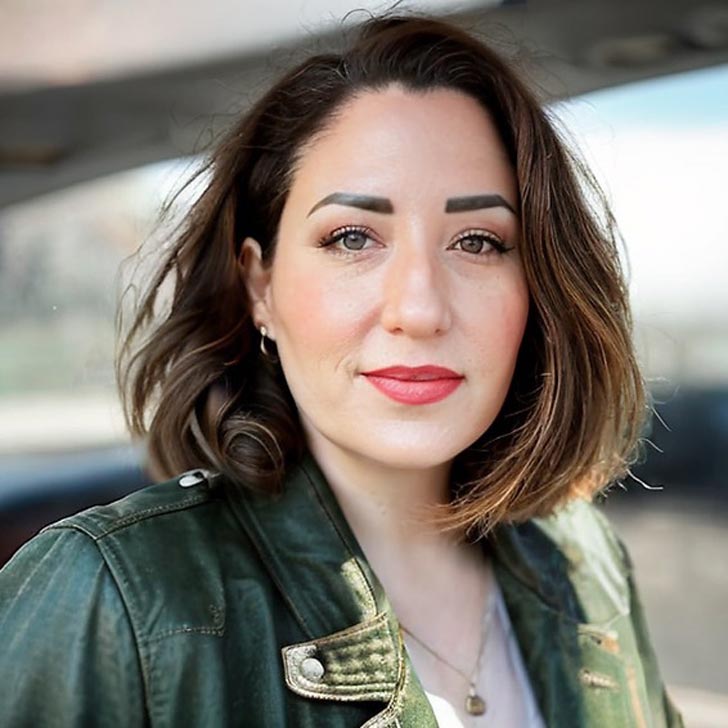
#PhoneCallsNotFlowers empowers parents (and the people who love them) to call their representatives and demand they support legislation that requires background checks on all gun sales.
“I hear from moms everyday who are worried about sending their kids off to school, worried about going to the mall and parades — and don’t know what to do,” Amick told Good Good Good in an email.
“The idea behind #PhoneCallsNotFlowers is to call more people into political action and for all of us who love moms to say, ‘we are standing with you in this fight.’”
The Instagram post that kicked off the campaign encourages callers to specifically ask for support of the Bipartisan Background Checks Act of 2023 in both the House and Senate — a policy of which the majority of Americans are in support.
For Facts Sake makes taking action simple, providing a brief to-do list, resources for finding the phone numbers of one’s federal elected officials, a script for calling said officials (we promise, it really is as easy as a couple of sentences!), and then a call to action, which encourages users to share a screenshot of their call logs on Instagram.
In fact, the organization’s Instagram account is accepting “collab” requests for any posts that encourage people to take action under the #PhoneCallsNotFlowers campaign.
While thousands have already taken on the challenge, Amick is hopeful the momentum will continue over Mother’s Day weekend.
“I think we’re going to see more posts over the weekend and into Monday, especially from all the folks who are giving the gift of action to the mamas in their life,” she said.
Now, if you really want to impress your mom, you’ll send the roses and call your representatives, but the fact of the matter is that moms (specifically moms of color) have historically been on the frontlines of the gun violence epidemic — and we need to carry some of the load with them.
“So many people have been doing the work for a long time, and they are already deeply engaged in making a difference in their community,” Amick said. “I think what’s most important is to find a sustainable way to make civic engagement a daily habit.”
A phone call, theoretically, should be the domino effect for change.
“For some people, that means joining advocacy groups or local chapters of organizations, getting involved pushing for state-level legislation or gun sense candidates,” Amick continued.
“For others, it means speaking out in the public square — online or in their community — running for elected office, or working to make sure their community reflects their values.”
For those who have already been dedicated to gun safety efforts, this campaign serves as a dose of hope that others, too, are done with the tragedy, heartbreak, violence, and collective trauma caused by mass shootings.
“Your voice has value and we need you. The vast majority of Americans support common-sense gun reform, but right now our politics are controlled by a very loud majority,” Amick said.
“Every day I hear from someone who has called their reps for the first time, and they tell me they feel energized and empowered to fight for political change. All these small actions will add up to big changes.”
Header image courtesy of For Facts Sake
Every month at Good Good Good, we plan upcoming good news content for our Instagram, Goodnewsletter, Goodnewspaper, podcast, website, and more. Our work is always centered on hopeful stories about people making a difference in the world — and action steps on how each of us can join in with that good work.
With so many holidays, awareness days, education weeks, and activism months happening all year long, we’ve been slowly collecting all of these events in a private internal calendar for years.
We made our Monthly Cause Awareness Calendar publicly available earlier this year.
We’ve also published:
- Heritage Months Calendar
- International Days Calendar
- Environmental & Sustainability Calendar
- LGBTQ+ Pride Calendar
- Black Holidays Calendar
- Animal Awareness Calendar
- Pet Holidays Calendar
Plus, these articles tangential to health days and months:
- Healthcare Recognition Calendar
- Mental Health Awareness Calendar
- Disability Awareness Calendar
- Cancer Awareness Calendar
- HIV/AIDS Awareness Calendar
And now we’re publishing our guide to health awareness holidays.
Our hope is this resource will help you or your organization bring attention to these important issues — not just around the primary awareness months — but all year long.
Where applicable, we’ve included resources around highlighted holidays — usually in the form of good news around particular topics, relevant quotes or recommendations, or action steps on how to make a difference. We encourage you to share them if you find them helpful.
We’ve worked hard to make this the most comprehensive collection of health-related days and months on the internet. Always double-check dates, as organizers may occasionally change dates.
Bookmark this page and revisit it as often as you need. We’ll continue to update it and add to it over time.
National Health Awareness Months & Dates
January
Days
World Braille Day - January 4
Paget’s Awareness Day - January 11
Moebius Syndrome Awareness Day - January 24
World Leprosy Day - Last Sunday of January
Weeks
No Name-Calling Week - Week-long event in January
Months
Cervical Health Awareness Month
Learn about the women fighting in court for access to HPV vaccines
Dry January
Mental Wellness Month
Read and share quotes about mental health
National Birth Defects Prevention Month
National Blood Donor Month
National Glaucoma Awareness Month
National Radon Action Month
National Stalking Awareness Month
Self Love Month
Create a permanent reminder that loving yourself is important... with a mental health tattoo
Thyroid Awareness Month
February
Days
National Women Physician Day - February 3
Time to Talk Day - 1st Thursday of February
World Cancer Day - February 4
While too many people die from cancer every year, it’s worth celebrating the rapid rate at which cancer deaths are decreasing
International Epilepsy Day - 2nd Monday of February
National Wear Red Day - February 5
Give Kids a Smile Day - February 5
National Black HIV/AIDS Awareness Day - February 7
Safer Internet Day - February 8
World Day of the Sick - February 11
World Cholangiocarcinoma Day - February 12
National Donor Day - February 14
Congenital Heart Defects Awareness Day - February 14
International Childhood Cancer Day - February 15
National Random Act of Kindness Day - February 17
Try one of our recommended random acts of kindness
World Day of Social Justice - February 20
Explore the best quotes about social justice
National Heart Valve Disease Awareness Day - February 22
World Encephalitis Day - February 22
HIV Is Not A Crime Awareness Day - February 28
Rare Disease Day - February 28
Weeks
African Heritage and Health Week - February 1 to 7
White Cane Week - 1st week of February
Tinnitus Awareness Week - 1st full week of February
National School Counseling Week - 1st week of February
Congenital Heart Defect Awareness Week - February 7 to 14
Heart Failure Awareness Week - February 14 to 20
National Condom Week - February 14 to 21
National Eating Disorders Awareness Week - Last week of February or 1st week of March
Months
AMD / Low Vision Awareness Month
American Heart Month
Gallbladder and Bile Duct Cancer Awareness Month
Jewish Disability Awareness & Inclusion Month
International Prenatal Infection Prevention Month
Low Vision Awareness Month
National Cancer Prevention Month
National Children’s Dental Health Month
March
Days
Disability Community Day of Mourning - March 1
Self-Injury Awareness Day - March 1
Zero Discrimination Day - March 1
World Teen Mental Health Day - March 2
World Hearing Day - March 3
Triple Negative Breast Cancer Awareness Day - March 3
International HPV Awareness Day - March 4
Read this good news story about women fighting for access to the HPV vaccine
Dissociative Disorder Awareness Day - March 5
Emetophobia Awareness Day - March 5th
Insomnia Awareness Day - 1st Monday following the change to daylight saving time
University Mental Health Day - 1st Thursday of March
Explore and share the best mental health newsletters
Breast Implant Illness Awareness Day - March 8
National Women and Girls HIV/AIDS Awareness Day - March 10
World Kidney Day - 2nd Thursday of March
National Trisomy 18 Awareness Day - March 18
World Sleep Day - March 19
National Native American HIV/AIDS Awareness Day - March 20
International Day of Happiness - March 20
Read and share good news about happiness
World Down Syndrome Day - March 21
Anal Cancer Awareness Day - March 21
World Tuberculosis Day - March 24
U.S. National Cerebral Palsy Awareness Day - March 25
American Diabetes Alert Day - March 26
Purple Day for Epilepsy - March 26
Learn about different awareness ribbon colors and their meanings
Amniotic Fluid Embolism (AFE) Awareness Day - March 27
TWLOHA Day - March 29
World Bipolar Day - March 30
Weeks
National Eating Disorders Week - Last week of February or 1st week of March
World Glaucoma Week - 2nd full week of March
National Poison Prevention Week - 3rd week of March
Creative Arts Therapies Week - Week-long event in March
Read this good news story about the art therapist using TikTok to help people
National Sleep Awareness Week - Week-long event in March
Patient Safety Awareness Week - Week-long event in March
Brain Awareness Week - Week-long event in March
National Drugs and Alcohol Facts Week - Week-long event in March
Months
Brain Injury Awareness Month
Cerebral Palsy Awareness Month
Color Therapy Month
Colorectal Cancer Awareness Month
Deep Vein Thrombosis (DVT) Prevention Awareness Month
Developmental Disabilities Awareness Month
Endometriosis Awareness Month
Essential Tremor Month
Kidney Cancer Awareness Month
Multiple Sclerosis Awareness Month
Myeloma Action Month
National Bleeding Disorders Awareness Month
National Colorectal Cancer Awareness Month
National Development Disabilities Awareness Month
National Endometriosis Awareness Month
National Kidney Month
National Traumatic Brain Injury Awareness Month
National Trisomy Awareness Month
Red Cross Month
Save Your Vision Month
Self-Injury Awareness Month
Trisomy Awareness Month
April
Days
World Autism Awareness Day - April 2
Learn about why autistic people don’t support World Autism Awareness Day
Hypoxic Ischemic Encephalopathy Remembrance Day - April 4
National Alcohol Screening Day - Thursday of the 1st full week of April
Bohring-Opitz Syndrome Awareness Day - April 6
World Health Day - April 7
Explore and share quotes about public health
Cushing Disease Awareness Day - April 8
Teal Day (For Counselors) - April 8
RAINN Day - April 8
Day of Silence (for LGBTQ+ Youth) 2nd Friday of April
Learn how to support and advocate for LGBTQ+ youth
National Youth HIV/AIDS Awareness Day - April 10
Parkinson’s Disease International Awareness Day - April 11
World Breathing Day - April 11
Read about the power of breathwork on mental health
Functional Neurological Disorder (FND) Awareness Day - April 13
World Hemophilia Day - April 17
Congenital Diaphragmatic Hernia Action Day - April 19
Acute Myeloid Leukemia (AML) Awareness Day - April 21
World Meningitis Day - April 24
World Malaria Day - April 25
Read the good news about the new malaria vaccine that could save millions of lives
World Wish Day - April 29
International Guide Dog Day - Last Wednesday of April
National Therapy Animal Day - April 30
Weeks
National Public Health Week - 1st week of April
National Oral, Head, and Neck Cancer Awareness Week - 1st full week of April
National Young Adult Cancer Awareness Week - 1st week of April
Porphyria Awareness Week - April 10 to 17
Oral, Head, and Neck Cancer Awareness Week - April 11 to 17
National Youth Violence Prevention Week - Week-long event in April
Every Kid Healthy Week - Week-long event in April
National Infertility Awareness Week - Last full week of April
World Immunization Week - Last full week of April
Food Allergy Awareness Week - Week-long event in April or May
National Minority Cancer Awareness Week - 3rd week of April
National Volunteer Week - 3rd week of April
Learn from Crisis Text Line about the best strategy for effective volunteering
World Primary Immunodeficiency (PI) Week - April 22 to 29
Months
Alcohol Awareness Month
Autism Acceptance Month
Counseling Awareness Month
Follow our guide to learn how to find a counselor that works for your needs and your budget
Cushing Disease Awareness Month
Esophageal Cancer Awareness Month
Irritable Bowel Syndrome (IBS) Awareness Month
Limb Loss and Limb Difference Awareness Month
National Autism Awareness Month
National Cancer Control Month
National Child Abuse Prevention Month
National Counseling Awareness Month
This is the perfect month to start counseling! Learn how to find a therapist.
National Donate Life Month
Learn about how donating life can be an impactful way to give back to your community
National Facial Protection Month
National Minority Health Month
National Oral, Head, and Neck Cancer Awareness Month
National Parkinson’s Awareness Month
National Sarcoidosis Awareness Month
Occupational Therapy Month
Oral Cancer Awareness Month
Paralyzed Veterans Across America Month
Sarcoidosis Awareness Month
Sexual Assault Awareness and Prevention Month
STI Awareness Month
Stress Awareness Month
Testicular Cancer Awareness Month
May
Days
Melanoma Monday - 1st Monday of May
PPP (Postpartum Psychosis) Awareness Day - 1st Friday of May
World Maternal Mental Health Day - May 3
World Asthma Day - May 5
International 5p Syndrome Awareness Day - May 5
International Day for Osteogenesis Imperfecta - May 6
National Children’s Mental Health Awareness Day - May 7
World Ovarian Cancer Awareness Day - May 8
World Red Cross & Red Crescent Day - May 8
Ependymoma Awareness Day - May 10
World Lupus Day - May 10
International Awareness Day for Chronic Immunological and Neurological Diseases (CIND) Day - May 12
International Mucopolysaccharidoses (MPS) Awareness Day - May 15
Women’s Check-Up Day - 2nd Monday of May
Global Accessibility Awareness Day - 3rd Thursday of May
HIV Vaccine Awareness Day - May 18
National Asian and Pacific Islander HIV/AIDS Awareness Day - May 19
Global Accessibility Awareness Day - May 19
Mental Health Action Day - May 19
Learn about the people working to support mental health around the world
World AiArthritis Day - May 20
International Behcet’s Disease Awareness Day - May 20
International Blue Cone Monochromacy Awareness Day - May 20
World Meditation Day - May 21
World Preeclampsia Day - May 22
International Day to End Obstetric Fistula - May 23
National Schizophrenia and Psychosis Awareness Day - May 24
Learn more about Schizophrenia and other commonly misunderstood mental disorders
World Thyroid Day - May 25
National Senior Health and Fitness Day - May 27
World Multiple Sclerosis Day - May 30
World No Tobacco Day - May 31
Weeks
National Physical Education and Sport Week - May 1 to 7
North American Occupational Safety and Health Week - 1st week of May
Deaf Awareness Week - 1st full week of May
Children’s Mental Health Awareness Week - 1st week of May
Brain Injury Awareness Week - 2nd week of May
Food Allergy Awareness Week - Week-long event in April or May
Brain Tumor Action Week - Week-long event in May
Face Equality Week - Week-long event in May
Mental Health Week - Week-long event in May
National Eosinophil Awareness Week - Week-long event in May
Neurodiversity Celebration Week - Week-long event in May
National Women’s Health Week - Week-long event that begins on Mother’s Day
National Stuttering Awareness Week - 2nd week of May
Months
ALS Awareness Month
American Stroke Awareness Month
Apraxia Awareness Month
Arthritis Awareness Month
Better Speech and Hearing Month
Bladder Cancer Awareness Month
Borderline Personality Disorder Awareness Month
Brain Tumor Awareness Month
Celiac Awareness Month
Cystic Fibrosis Awareness Month
Ehlers-Danlos Syndrome (EDS) Month
Fibromyalgia Awareness Month
Healthy Vision Month
Hepatitis Awareness Month
High Blood Pressure Education Month
Huntington’s Disease Awareness Month
Lupus Awareness Month
Lyme Disease Awareness Month
Read the good news about the new mRNA vaccine that may offer protection against Lyme
Melanoma / Skin Cancer Detection and Prevention Month
Mental Health Awareness Month
Read Good Good Good’s comprehensive guide on ideas and activities for celebrating Mental Health Awareness Month
Mobility Awareness Month
Multiple Sclerosis Awareness Month
Myositis Awareness Month
National Asthma and Allergy Awareness Month
National Cancer Research Month
National Celiac Disease Awareness Month
National Clean Air Month
Learn about the WHO air pollution guidelines aiming to improve health
National High Blood Pressure Education Month
National Melanoma / Skin Cancer Detection and Prevention Month
National NF (Neurofibromatosis) Month
National Osteoporosis Awareness and Prevention Month
National Teen Pregnancy Prevention Month
Older Americans Month
Oncology Nursing Month
UK Maternal Mental Health Awareness Month
June
Days
National Say Something Nice Day - June 1
National Cancer Survivors Day - 1st Sunday of June
Learn about Dr. Hadiyah-Nicole Green changing the way America treats cancer
World Eating Disorders Action Day - June 2
HIV Long-Term Surivors Awareness Day - June 5
World Brain Tumor Awareness Day - June 8
Listen to our podcast interview with cancer survivor and Olympic figure skater, Scott Hamilton
Family Health and Fitness Day - June 12
International Albinism Awareness Day - June 13
World Blood Donor Day - June 14
CDKL5 Worldwide Awareness Day - June 17
Autistic Pride Day - June 18
World Sickle Cell Day - June 19
World Kidney Cancer Day - 3rd Thursday of June
Global Day of Recognition of ALS/MND - June 21
Dravet Syndrome Awareness Day - June 23
Neuropathy Action Awareness Day - June 23
World Vitiligo Awareness Day - June 25
World Drug Day - June 26
National HIV Testing Day - June 27
PTSD Screening Day - June 27
World Scleroderma Awareness Day - June 29
Arthrogryposis Awareness Day - June 30
Weeks
Men’s Health Week - Begins 1 week before Father’s Day
Hidradenitis Suppurativa (HS) Awareness Week - First full week of June
Infant Mental Health Awareness Week - June 10 to 16
Learning Disability Week - June 20 to 26
Hellen Keller Deafblind Awareness Week - Last week of June
National Black Family Cancer Awareness Week - Week-long event in June
Months
Alzheimer’s and Brain Awareness Month
Read about this music program supporting people with Alzheimer’s
Antiphospholipid Antibody Syndrome (APS) Awareness Month
Audiobook Appreciation Month
Audiobooks are a great accessibility tool — check out our recommendations for the best audiobook platforms (that aren’t Amazon’s Audible)
Cancer Immunotherapy Awareness Month
Cancer Survivors Month
Read about how cancer deaths are rapidly decreasing
Cataract Awareness Month
Hemiplegic Migraine Awareness Month
Men’s Health Month
Migraine and Headache Awareness Month
Myasthenia Gravis Awareness Month
National Aphasia Awareness Month
National Congenital Cytomegalovirus Awareness Month
National Migraine and Headache Awareness Month
National Safety Month
National Scleroderma Awareness Month
PTSD Awareness Month
Read about how one veteran, Richard Casper, is using art and music to help others with PTSD
Scoliosis Awareness Month
July
Days
Panic Attack Awareness Day - July 10
GIST Awareness Day - July 13
National Leiomyosarcoma Day - July 15
Glioblastoma Awareness Day - 3rd Wednesday of July
Zero HIV Stigma Day - July 21
World Sjogren’s Day - July 23
National Seasonal Affective Disorder (SAD) Day - July 24
Samaritans Awareness Day - July 24
International Self-Care Day - July 24
Learn how to celebrate International Self-Care Day. Plus: Explore the ultimate list of self-care ideas and this collection of inspirational self-care quotes
Americans with Disabilities Act Anniversary - July 26
World Hepatitis Day - July 28
Gastroschisis Awareness Day - July 30
Weeks
Birth Trauma Awareness Week - Week-long event in July
Months
BIPOC Mental Health Month
Explore these Black mental health resources
Cord Blood Awareness Month
Disability Pride Month
Read and share Good Good Good’s complete guide to celebrating Disability Pride Month — written by activist Daphne Frias
Fragile X (FXS) Awareness Month
Healthy Vision Month
Juvenile Arthritis Awareness Month
Minority Mental Health Awareness Month
National Cleft and Craniofacial Awareness and Prevention Month
Sarcoma and Bone Cancer Awareness Month
UV Safety Awareness Month
August
Days
World Lung Cancer Day - August 1
Esther Day - August 3
Read and share this guide about how to celebrate Esther Day
National Nonprofit Day - August 17
Southern HIV/AIDS Awareness Day - August 20
National Senior Citizens Day - August 21
National Surgical Oncologist Day - August 22
Read about other inspiring frontline heroes
National Faith HIV/AIDS Awareness Day - August 28
Grief Awareness Day - August 30
International Overdose Awareness Day - August 31
Wear It Purple Day - Last Friday of August
Weeks
World Breastfeeding Week - August 1 to 7
National Health Center Week - 2nd week of August
Months
Appendix Cancer Awareness Month
Children’s Eye Health and Safety Month
Don’t Be a Bully Month
Read and share Hank Green’s iconic quote about bullying
Gastroparesis Awareness Month
National Breastfeeding Month
National Immunization Awareness Month
Psoriasis Action Month
Spinal Muscular Atrophy Awareness Month
Stevens-Johnson Syndrome (SJS) Awareness Month
Summer Sun Safety Month
World Cancer Support Month
September
Days
World Duchenne Awareness Day - September 7
International Fetal Alcohol Spectrum Disorder Awareness (FASD) Day - September 9
R U Ok Day - September 9
Learn how to ask the hard mental health questions that could save a life
World Suicide Prevention Day - September 10
Read about student advocates taking the lead to curb campus suicide
National Celiac Disease Awareness Day - September 13
World Sepsis Day - September 13
National Sober Day - September 14
World Lymphoma Awareness Day - September 15
National HIV/AIDS and Aging Awareness Day - September 18
Usher Syndrome Awareness Day - September 19
World Alzheimer’s Day - September 21
World Chronic Myeloid Leukemia (CML) Day - September 22
International Day of Sign Language - September 23
Sport Purple for Platelets Day - September 24
World Cancer Research Day - September 24
National Previvor Day - Last Wednesday of September
Listen to our podcast interview with Paige More, founder of The Breasties
International Ataxia Awareness Day - September 25
World Lung Day - September 25
Mesothelioma Awareness Day - September 26
National Gay Men’s HIV/AIDS Awareness Day - September 27
World Rabies Day - September 28
National Women’s Health and Fitness Day - September 29
World Heart Day - September 29
Limb Girdle Muscular Dystrophy Awareness Day - September 30th
Weeks
National Suicide Prevention Week - Week-long event in September
Read our guide to Suicide Prevention Week activities & explore the best quotes about suicide prevention
National Folic Acid Awareness Week - 2nd week of September
National Hereditary Breast and Ovarian Cancer Week - Last week of September
International Week of the Deaf - Last week of September
National Disability Voting Rights Week - Week-long event in September
Months
Achalasia Awareness Month
Alopecia Awareness Month
Blood Cancer Awareness Month
Childhood Cancer Awareness Month
Read this good news story about how Instagram-famous “Doug the Pug” gives back to kids with cancer
Craniofacial Awareness Month
Gynecologic Cancer Awareness Month
Healthy Aging Month
Leukemia, Lymphoma, and Hodgkin’s Lymphoma Awareness Month
Microplastic Awareness Month
Mullets For Mental Health Month
Read this good news story about the Australians sporting mullets to raise money for mental health research
National Alcohol & Drug Addiction Recovery Month
National Atrial Fibrillation Awareness Month
National Childhood Obesity Awareness Month
National Cholesterol Education Month
National Food Safety Education Month
National Guide Dog Month
National Hydrocephalus Awareness Month
National Recovery Month
National Self-Care Awareness Month
Practice self-care with these self-care ideas and get inspired by these self-care quotes
National Sickle Cell Month
Newborn Screening Awareness Month
National Suicide Prevention Month
Read and share this guide on how to help someone who’s contemplating suicide — and read about how suicides fell when gay marriage was legalized
Orthostatic Tremor Awareness Month
Ovarian Cancer Awareness Month
Pain Awareness Month
Listen to our podcast interviews with Ruthie Lindsey and Grace Theisen about their experiences dealing with chronic pain
Polycystic Ovary Syndrome (PCOS) Awareness Month
Peripheral Artery Disease (PAD) Awareness Month
Prostate Cancer Awareness Month
Sepsis Awareness Month
Sexual Health Awareness Month
Spinal Cord Injury Awareness Month
Sports Eye Safety Month
Thyroid Cancer Awareness Month
World Alzheimer’s Month
October
Days
Dermatillomania Awareness Day - October 1st
Disabled Authors Day - October 2nd
Read and share the best books about disabilities — written by disabled authors
National Depression Screening Day - Thursday of the 1st full week of October
Depression Awareness Day - Thursday of the 1st full week of October
World Day of Bullying Prevention - October 5
American Veterans Disabled for Life Awareness Day - October 5
World Cerebral Palsy Day - October 6
World Hospice and Palliative Care Day - 2nd Saturday of October
National Depression Screening Day - October 7
International Trigeminal Neuralgia Awareness Day - October 7
Team Margot Stem Cell and Bone Marrow Awareness Day - October 7
PANDAS/PANS Awareness Day - October 9
World Mental Health Day - October 10
Explore our guide to activities to celebrate World Mental Health Day — and, of course, explore Good Good Good’s collection of mental health resources
Metastatic Breast Cancer Awareness Day - October 13
World Thrombosis Day - October 13
World Sight Day - October 13
Learn about the app Be My Eyes — a free app that connects people who are blind or experience low vision with sighted volunteers for assistance
World Sight Day - October 14
Pregnancy and Infant Loss Awareness Day - October 15
Blind Americans Equality Day - October 15
National Latinx AIDS Awareness Day - October 15
World Food Day - October 16
National Mammography Day - 3rd Friday of October
Read about Senator Amy Klobuchar’s mission to ensure women don’t skip their mammograms (like she did)
World Pediatric Bone and Joint Day - October 19
World Osteoporosis Day - October 20
International Stuttering Awareness Day - October 22
Learn about STAMMA, an organization helping end the stigma around stuttering
Breast Reconstruction Awareness (BRA) Day - 3rrd Wednesday of October
Disability Mentoring Day - 3rd Wednesday of October
World Polio Day - October 24
Hydrocephalus Day - October 25
World Psoriasis Day - October 29
World Stroke Day - October 29
Weeks
BPD Awareness Week - October 1 to 7
Trichotillomania Awareness Week - October 1 to 7
Dyslexia Awareness Week - Begins on the 1st Monday of October
Mental Illness Awareness Week - 1st week of October
Explore the best mental health shirts that give back to charity
OCD Awareness Week - 2nd week of October
Read our guide on how to support someone with OCD
Malnutrition Awareness Week (UK) - Week-long event in October
Bone and Joint Health National Action Week - Week-long event in October
International Infection Prevention Week - 3rd week of October
Male Breast Cancer Awareness Week - 3rd week of October
National Health Education Week - 3rd week of October
Respiratory Care Week - Last week of October
Dyspraxia Awareness Week - Week-long event in October
International Epidermolysis Bullosa Awareness Week - October 25 to 31
Months
ADHD Awareness Month
Explore Good Good Good’s resource guide — featuring the best podcasts, blogs, and TikToks about ADHD
Breast Cancer Awareness Month
Listen to Good Good Good’s interview with Paige More, founder of The Breasties
Colon Cancer Awareness Month
Depression Awareness Month
Listen to our podcast interview with John Moe, a comedian fighting depression with humor — and read about the U.S. decreasing depression stigma for the first time
Domestic Violence Awareness Month
Down Syndrome Awareness Month
Dyslexia Awareness Month
Audiobooks are a great accessibility tool for people with dyslexia — explore our guide to the best audiobook apps
Dwarfism Awareness Month
Dysautonomia Awareness Month
Eczema Awareness Month
Eye Injury Prevention Month
Health Literacy Month
Healthy Lung Month
Home Eye Safety Month
Learning Disability Awareness Month
Liver Cancer Awareness Month
Medical Ultrasound Awareness Month
National ADHD Awareness Month
Explore Good Good Good’s resource guide — featuring the best podcasts, blogs, and TikToks about ADHD
National Breast Cancer Awareness Month
National Bullying Prevention Month
National Dental Hygiene Month
National Depression and Mental Health Screening Month
Listen to our podcast interview with John Moe, a comedian fighting depression with humor — and read about the U.S. decreasing depression stigma for the first time
National Disability Employment Awareness Month
National Down Syndrome Awareness Month
National Physical Therapy Month
Pregnancy and Infant Loss Awareness Month
Raynaud’s Awareness Month
Selective Mutism Awareness Month
Spina Bifida Awareness Month
November
Days
International Stress Awareness Day - 1st Wednesday of November
International Day Against Bullying and Violence - 1st Thursday of November
Aicardi Syndrome Awareness Day - November 8
World Neuroendocrine Cancer Awareness Day (NET Cancer Day) - November 10
World Usability Day - November 11
Veterans Day - November 11
Explore these Veterans Day ideas and use this holiday as an opportunity to support disabled veterans
World Pneumonia Day - November 12
World Kindness Day - November 13
Explore the best ideas to celebrate World Kindness Day and try one of these ideas for random acts of kindness
World Diabetes Day - November 14
World Pancreatic Cancer Day - 3rd Thursday of November
World Vasectomy Day - 3rd Friday of November
World Ohtahara Syndrome Awareness Day - November 15
World Prematurity Day - November 17
World Wide STOP Pressure Ulcer Day - November 17
Great American Smokeout - November 19
National UTI Awareness Day - November 21
World COPD Day - 3rd Wednesday of November
International Survivors of Suicide Loss Day - Saturday before Thanksgiving
Read this good news story about the mom who created uplifting signs in response to suicides in her community
National Family Health History Day - November 25
Giving Tuesday - 1st Tuesday after Thanksgiving
Learn how to volunteer with or donate to HIV/AIDS organizations for Giving Tuesday (and explore more ideas to make a difference) and share these Giving Tuesday quotes
Weeks
National Stress Awareness Week - 1st week of November
GERD Awareness Week - Week-long event in November
UK Self Care Week - Week-long event in November
Learn about how to practice proactive self care instead of reactive self care
Months
American Diabetes Month
Bladder Health Month
COPD Awareness Month
Dercum’s Disease (Adiposis Dolorosa) Awareness Month
Diabetic Eye Disease Month
Diabetes Awareness Month
Epilepsy Awareness Month
Lung Cancer Awareness Month
Movember
National Alzheimer’s Disease Awareness Month
National Carcinoid Cancer Month
National Epilepsy Awareness Month
National Family Caregivers Month
National Healthy Skin Month
National Marrow Awareness Month
National Hospice and Palliative Care Month
National Pet Cancer Awareness Month
Read about famous veterinarians making a difference
National Stomach Cancer Awareness Month
Pancreatic Cancer Awareness Month
December
Days
World AIDS Day - December 1
Read all of Good Good Good’s good news stories of progress in the fight against HIV/AIDS
International Day of Persons with Disabilities - December 3
Explore our calendar of disability awareness days and weeks
International Day of Epidemic Preparedness - December 27
Weeks
AIDS Awareness Week - 1st week of December
National Influenza Vaccination Week - 1st week of December
Months
Constipation Awareness Month
HIV/AIDS Awareness Month
Seasonal Affective Disorder Awareness Month
Is this list missing a holiday or awareness week/month? Let us know. We want to ensure this list is comprehensive and inclusive.
More Awareness Calendars: All Awareness Holidays | Heritage Months | International Days | Animals | Pets | Environment & Sustainability | LGBTQ+ | Black & African American | Mental Health | Health | Disability | Cancer | HIV/AIDS
Awareness Days & Months: January | February | March | April | May | June | July | August | September | October | November | December
Over the past 10 years, solar energy has experienced growth of 33% on average every year in the United States. As of 2021, there is enough solar capacity installed in the country to power 23 million American homes.
To get a bead on this clean energy trend, Stacker investigated how solar home energy has grown in the U.S. over time using data from the Energy Information Administration and other sources.
Year-over-year growth can be explained, in large part, by the accumulation of several factors, including lower costs for systems, growing environmental consciousness around the environmental implications and impacts of energy development and use, and increased awareness of the cumulative energy savings solar offers.
Federal and state-level incentives, such as the Federal Tax Credit for Solar Photovoltaics, have bolstered affordability and accessibility, particularly for private residential consumers.
The Biden administration's Inflation Reduction Act, signed into law in August 2022, included various benefits designed to urge homeowners to "go solar," including expanding the aforementioned federal solar tax credit from 26% to 30%.
The act could provide the momentum needed to keep solar energy on the rise in the U.S., despite recent indications of a plateau; fewer homeowners have considered installing solar energy systems over the past 12 months, despite the growth of the last decade.
Solar-based cash flow isn't just going toward consumers saving money on energy bills or manufacturers selling panels.
Solar energy is growing as an industry unto itself, creating jobs for hundreds of thousands of workers, both domestically and abroad.
As of 2021, over 255,000 Americans are employed in the solar market across 10,000 companies spanning every single state.
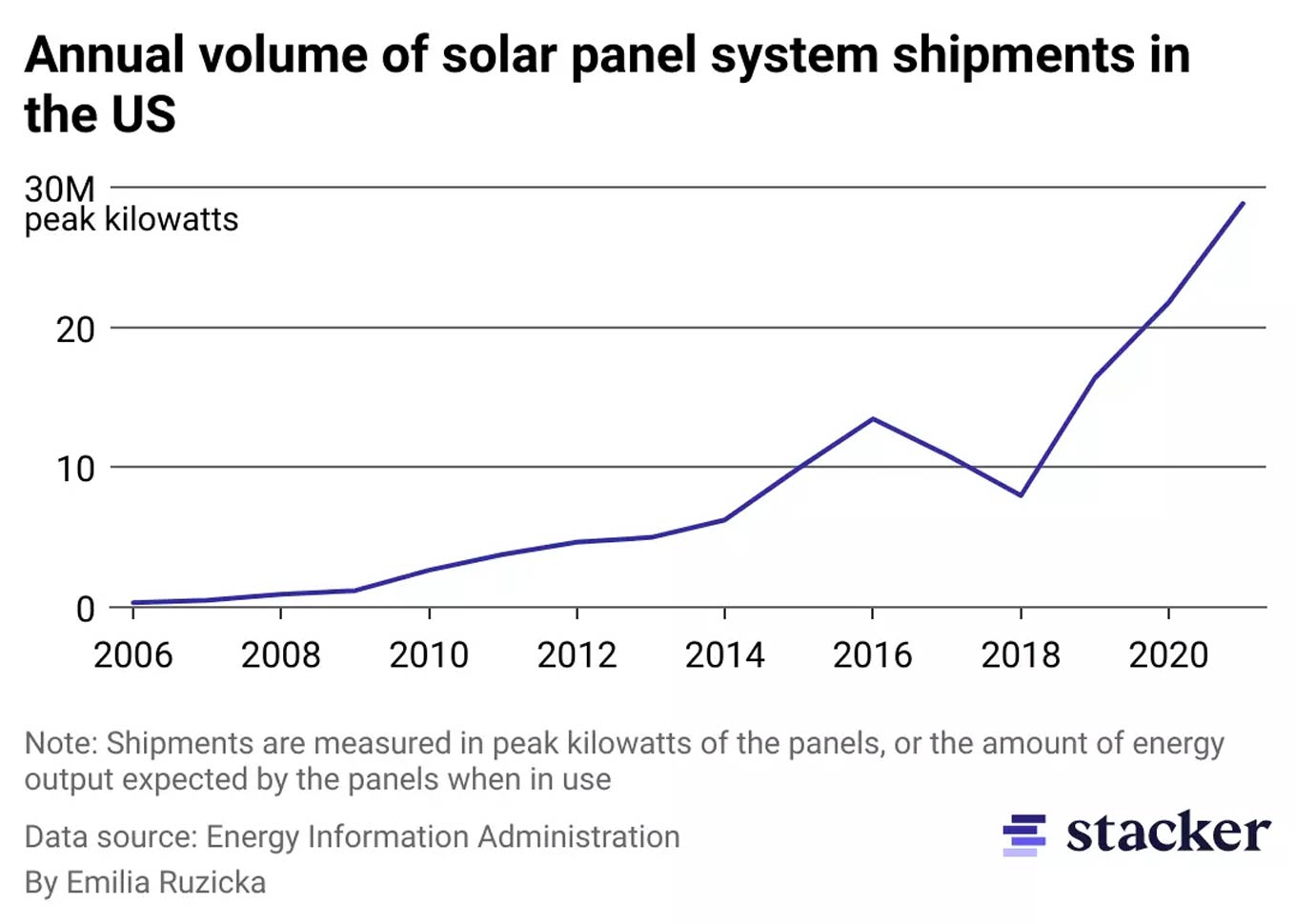
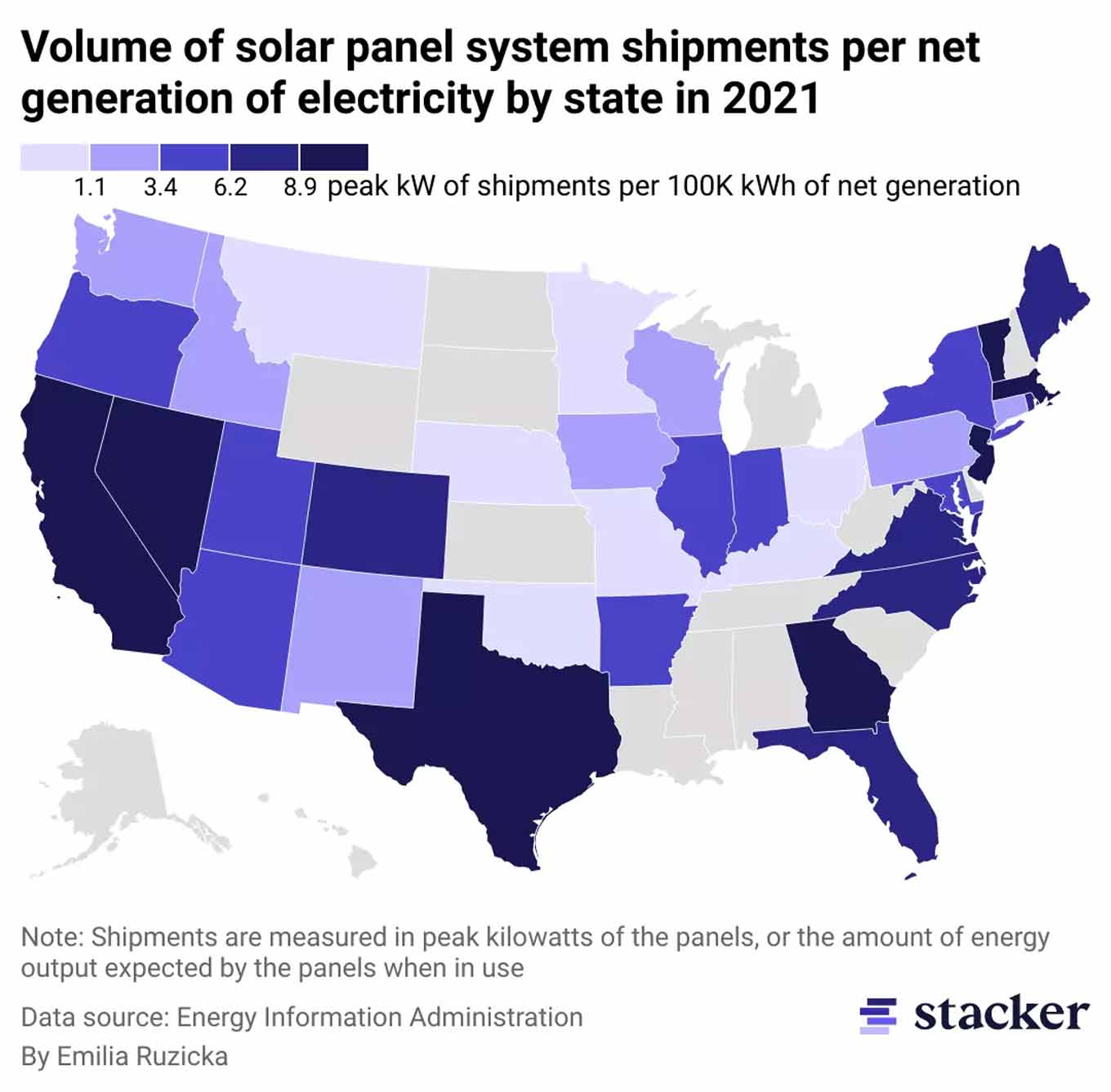
The volume of solar panel system shipments in the US, as measured by capacity, has increased more than tenfold during the last decade
The falling cost of solar paneling over the past decade has rapidly increased demand for the systems amongst both private and commercial consumers, leading to a spike in shipments.
Shipments of solar panel systems, as tracked by the EIA, are measured by the amount of energy the panels are expected to emit in peak kilowatts once installed.
Despite the larger upward trend, however, shipping constraints and supply chain blocks over the past 18 months have presented challenges.
While a June 2022 executive order from President Biden paused tariffs on solar imports from Southeast Asia through 2024 — ostensibly increasing shipments — it came on the heels of the Uyghur Forced Labor Prevention Act of 2021, which delayed the deployment of panels due to heightened restrictions toward and more stringent measures against any and all imports potentially produced through forced labor.
The Inflation Reduction Act, on the other hand, which provided lucrative tax incentives on solar energy systems, has helped 2023 growth projections for supply and shipment.
In 2021, five states — California, Texas, Florida, Georgia, and Illinois — made up nearly half of all U.S. shipment destinations for solar panels, which reached a record high of 28.8 million peak kilowatts that year.
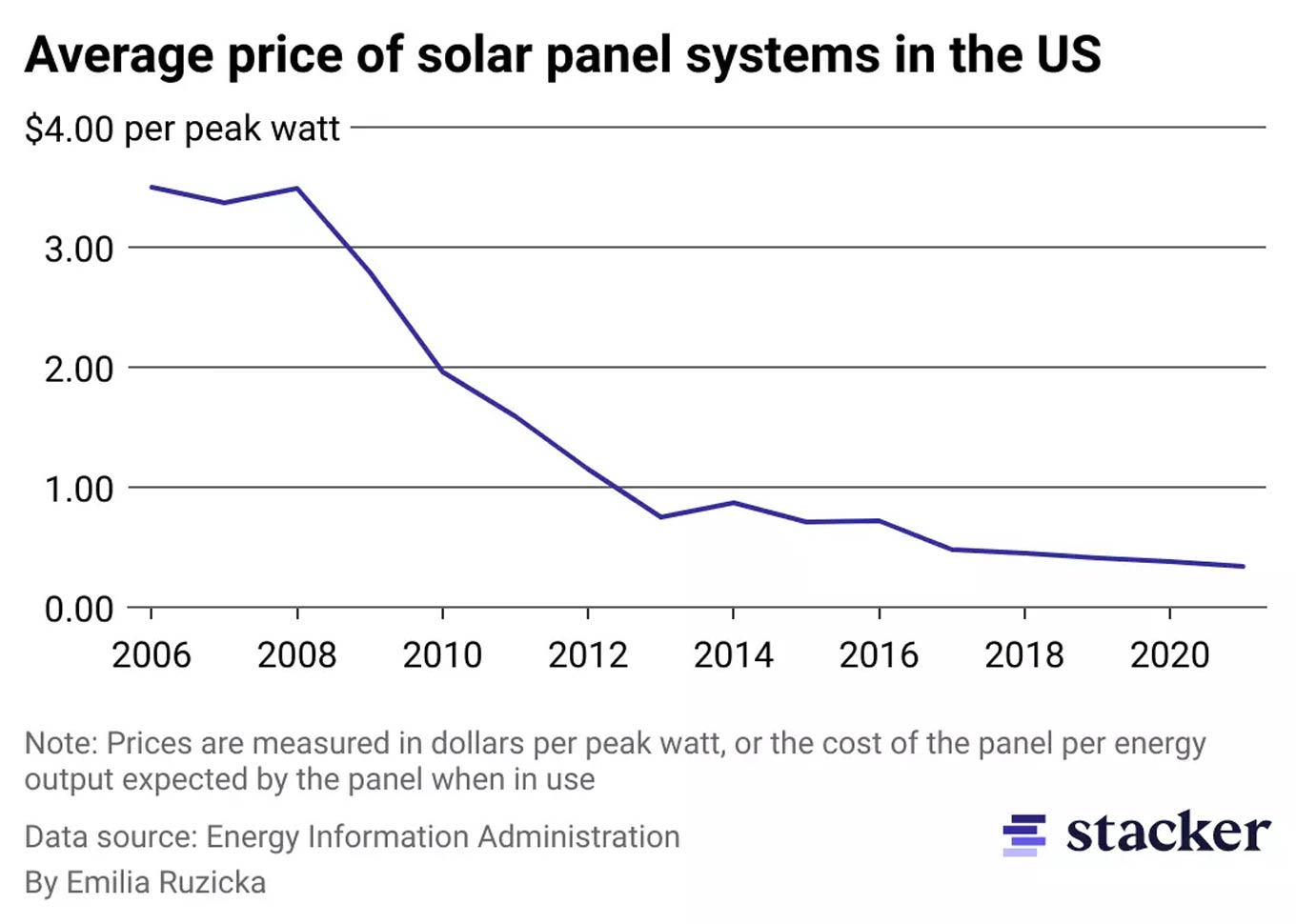
Solar panel systems now cost less than 10% of the price per peak watt compared to 2006
Over the past 10 years, solar installation costs have dropped by 60%, dramatically increasing accessibility and demand for panel systems.
The average residential solar panel system went from costing around $40,000 in 2010 to $20,000 currently.
Federal and state solar tax credits have made solar energy systems even more affordable, particularly for private residential consumers.
Though soft costs — including permits and inspection — remain relatively high in the U.S., programs such as Solar Automated Permit Processing, or SolarAPP, aim to stabilize these prices.
Additionally, solar energy systems are perceived to offer not only current, but also proactive savings.
When asked about their motivation to install or consider installing solar panels, 92% of homeowners cited saving money on future energy bills as a primary reason.
Recent legislation to invest in clean energy gives taxpayers a 30% tax credit to "go solar"
Besides the measures couched in the Inflation Reduction Act, the Biden administration also expanded legislation directed towards combating climate change and increasing renewable energy, which offers further incentives for consumers to invest in the solar market.
The legislation increased the federal tax credit for solar energy from 26% to 30% through 2032 on any new solar installation for a house, houseboat, mobile home, condominium, or cooperative apartment.
There is no cap on the amount that can be claimed relative to the cost of installation.
Additionally, solar consumers can often claim state tax credits as well.
Though solar markets are still largest on the West Coast, panels are being installed across the country
California has long led the country in adopting solar-centric energy systems, importing 5.09 million peak kilowatts of solar energy in 2021.
Western states are generally more receptive to switching over to solar energy, with 62% of residents in the Pacific U.S. having seriously considered or already installed systems in their homes.
California is followed closely by Arizona and Texas as the top solar electricity-generating states.
However, this trend is progressively spreading eastward, with states along the Atlantic Coast now close to matching the West Coast in solar energy capacity. Massachusetts, New York, New Jersey, Virginia, North Carolina, South Carolina, Georgia, and Florida all exceed 1,000 megawatts of capacity, with many going beyond 4,000 megawatts.
This story was originally published by Stacker and republished pursuant to a CC BY-NC 4.0 License.
The word decompose means “to separate into constituent parts or elements or into simpler compounds,” according to Merriam-Webster.
Biodegradation is a similar process, but one that is defined by elements that can be broken down into innocuous parts by the action of living things like worms or microorganisms.
All non-living things are eventually broken down into simple molecules by the elements, microorganisms, and the ravages of time, but some things take significantly longer to decompose than others.
When a person throws something in the garbage, the discarded item seems to be out of their life forever.
However, the item’s journey to elemental breakdown or decomposition has just begun. Organic materials, like that leftover salad someone couldn't quite finish, can return to the earth in a matter of days — but the plastic the salad was packaged in can stay put for thousands of years.
It’s important to note that many variables affect decomposition, and the timelines stated in this article are derived from averages or amalgamations based on large samples.
Decomposition rates can vary dramatically based on factors like temperature, moisture, exposure to sunlight and the elements, the presence or lack of microorganisms, and whether the object is buried or exposed.
Similarly, not all items — plastic bottles, for example — are made in the same way or with the same materials; so, they're likely to have varied decomposition rates.
While decomposition rates are inherently inexact, it is a topic worth discussing considering that 14 million tons of plastic trash are dumped into the ocean every year.
In a world overflowing with discarded things, knowing how long trash will hang around is important.
Our partners at Stacker looked at how long it takes for some common things that people throw away to decompose. Continue reading on to find out for yourself below:
How Long Does it Take For _____ To Decompose?
Explore this table of how long it takes common items to decompose — and then scroll down below to learn more about each:
| Item | Decomposition Time |
|---|---|
| Cigarette butts | 18 months to 10 years |
| Monofilament fishing line | 600 years |
| Plastic bags | 10-1,000 years |
| Foamed plastic cups | 50 years |
| Straws | 200 years |
| Wet wipes | 100 years |
| 6-pack holders | 450 years |
| Tin | 50 years |
| Tires | 2,000 years |
| Nylon fishing nets | 40 years |
| Nylon fabric | 30-40 years |
| Plastic bottles | 450 years |
| Cotton T-shirts | 6 months |
| Wool socks | 1-5 years |
| Synthetic fabric | Over 100 years |
| Aluminum cans | 80-100 years |
| Vegetables | 5 days to 1 month |
| Orange peels | 6 months |
| Banana peels | Up to 6 months |
| Hairspray bottles | 200-500 years |
| Rope | 3-14 months |
| Sanitary pads and tampons | Over 25 years |
| Cotton gloves | 3 months |
| Latex gloves | Several months to several years |
| Thread | 3-4 months |
| Paper waste | 2-6 weeks |
| Iron | Several years |
| Food waste | Several months to several years |
| Shoes | 25-40 years |
| Rubber boot soles | 50-80 years |
| Cardboard | 2 months |
| Train tickets | 2 weeks |
| Canvas | 1 year |
| Paper towels | 2-4 weeks |
| Waxed milk cartons | 3 months |
| Non-waxed cartons | 5 years |
| Disposable diapers | 500 years |
| Rubber bands | Up to 1 year |
| Painted boards | 13 years |
| Lumber | 10-15 years |
| Plywood | 1-3 years |
| Batteries | 100 years |
| Ink cartridges | 450-1,000 years |
| Leather | 50 years |
| Plastic bottle caps | 10-500 years |
| Apple cores | 2 months |
| Polyurethane seat cushions | 1,000 years |
| Glass | Over 1 million years |
| Aluminum foil | Never |
| Styrofoam | Never |
Cigarette butts: 18 months to 10 years
Cigarette butts just might be the most common litter on planet Earth. Smokers consume about 5 trillion cigarettes every year, and a huge percentage of them wind up flicked out of car windows or dropped on the street where they wash into storm drains and eventually into the ocean or other waterways.
Cigarette filters contain slowly degrading plastic cellulose acetate, and butts are believed to represent a third of all litter in America; they are the most common litter found on America's beaches.
Monofilament fishing line: 600 years
According to the South Carolina Department of Natural Resources, monofilament fishing lines are especially hazardous because they ensnare marine animals and other wildlife during their long, slow road to decomposition.
Although monofilament fishing lines can be partially recovered and reused, the process for doing so isn't widely used.
Plastic bags: 10–1,000 years
Consumers in recent years have become more aware of the environmental hazard posed by plastic bags, but plastic bags are still one of the most common pollutants. Although they can break down in as little as a decade, the commonly discarded thin plastic bags can endure for as long as 1,000 years.
Foamed plastic cups: 50 years
Foamed plastic cups decompose faster than most plastic waste. Even so, these plastic cups can be expected to endure for half a century before they finally break down and rejoin nature.
Straws: 200 years
Since they are essentially unnecessary (for most people) and rarely make it into the recycling bin, plastic straws have become a top target of environmentalists hoping to reduce plastic waste.
Americans use millions of straws daily, which can remain on the earth for two centuries after being tossed in the garbage.
Wet wipes: 100 years
Wet wipes are popular for quickly removing makeup, changing babies' diapers, and making house cleaning a snap. The problem is they contain polyester-based plastic that's virtually indestructible; they take a century to break down after they're tossed in the garbage or flushed down the toilet.
6-pack holders: 450 years
Even when the circles on plastic six-pack holders are cut, they still pose a major threat to wildlife, as they often wind up in the ocean. The thin plastic can holders take nearly half a millennium to break down.
Tin: 50 years
According to Electronics Recyclers International, tin can take half a century to break down in a landfill. Tin is used to make food cans, but it's also a common component of computers and other electronics.
Tires: 2,000 years
The South Carolina Department of Natural Resources estimates that tires can take two millennia to revert back to nature.
They're also laden with heavy metals like lead, oils, and other pollutants that contaminate the environment as they break down.
About 280 million tires are discarded every year in the U.S. alone, of which 30 million are retreated or reused, putting 250 million into scrap.
Nylon fishing nets: 40 years
Nylon fishing nets can be reused but can't be fully recycled. When lost or intentionally cut, they present a major hazard to marine animals and other wildlife that become entangled in them both in the water and on the shores.
Nylon fabric: 30–40 years
Nylon fabric is often used for sports equipment like jerseys and mesh shorts, but it's also found in arts and crafts supplies. Frequently trashed, the material takes decades to decompose.
Plastic bottles: 450 years
Pollution from plastic bottles is a global problem, but in the United States alone, more than 60 million bottles are thrown away instead of being recycled every day.
They wind up in landfills, incinerators, oceans, parks, streets, and other public spaces. One of the easiest items to recycle, plastic bottles take hundreds of years to decompose.
Cotton T-shirts: 6 months
T-shirts are one of the most common items in the so-called fashion waste category of pollution, which accumulates when people throw old clothes away instead of donating them, swapping them, or recycling them. The common cotton T-shirt can decompose in six months.
Wool socks: 1–5 years
Like T-shirts, old wool socks are often presumed to be un-donatable and are therefore tossed in the garbage. Unlike cotton T-shirts, they linger in landfills for up to five years.
Synthetic fabric: over 100 years
Unlike naturally occurring wool and cotton, synthetic fabrics like lycra and polyester can take centuries to break down. The vast majority of fashion waste can be donated or repurposed into things like dog beds or cleaning rags instead of being thrown in the garbage.
Aluminum cans: 80–100 years
Aluminum cans only start to break down after 80 to 100 years and will only fully decompose after several centuries. Unlike many other materials, aluminum can be recycled an unlimited number of times, making it one of the most critical and widely repurposed recyclables.
Vegetables: 5 days to 1 month
Vegetable matter breaks down quickly — in less than a week in some cases. This, along with the excellent nutrient content contained within decaying vegetable matter, makes veggie scraps perfect for composting.
Orange peels: 6 months
Fruits, particularly highly acidic ones, can take longer than vegetables to break down. Self-contained and easy to eat on the go, oranges account for more scrap waste than most fruits, and they also take longer to decompose.
Banana peels: up to 6 months
Billions of bananas are consumed every year, and like oranges, their peels don't decompose for several months. Also like oranges, banana peels are perfect for composting or tossing in the garden.
Hairspray bottles: 200–500 years
Aerosol bottles, like the kind that contain hairspray, are a common sight in landfills across the world. A single bottle can remain intact for a period as long as the Roman Empire before it decomposes.
Rope: 3–14 months
Common rope can take a little more than a year or a single season to decompose, depending on the materials used to make it. Natural materials like hemp decompose faster than synthetic materials like the kind used to produce climbing rope.
Sanitary pads and tampons: over 25 years
About 7 billion tampons and 12 billion sanitary pads are discarded every year in the United States alone, most of which contain plastic in the lining or applicator.
The cotton portion decomposes fairly quickly, but the low-density polyethylene plastic takes decades to break down. Never flush plastic applicators, as they can end up in the ocean.
Cotton gloves: 3 months
Common cotton gloves can break down in as little as three months; however, that rate is contingent on the gloves being 100% cotton. The biodegradation rate increases dramatically with the inclusion of synthetics like those used for waterproofing and insulation.
Latex gloves: several months to several years
Latex gloves break down fairly quickly, provided they're made from natural latex rubber. Like all synthetic rubber, synthesized latex can take years, decades, or longer to decompose.
Thread: 3–4 months
From furniture to clothing and car interiors to suitcases, threads are everywhere — including in the world's landfills. Thread is thin and light, but it piles up fast; it also decomposes relatively quickly.
Paper waste: 2–6 weeks
Paper waste takes only about a month — or a few weeks, give or take — to break down in landfills, but the problem is volume and quantity. Even though it's one of the most commonly recycled materials, paper waste takes up more space in landfills than most other products.
Iron: several years
All metal breaks down differently, but iron oxidizes at a fairly rapid rate. People know oxidation as rust — the brownish-colored, flaky stuff that's often mistakenly blamed for tetanus infections. Over the course of several years, iron will oxidize completely, particularly in coastal areas that are damp and coated with saltwater residue.
Food waste: several months to several years
Americans waste 40% of all the food they purchase every year — approximately 119 million tons worth more than $400 billion. Depending on how it's disposed of and what it contains, food waste can break down in a few months or remain in a state of partial preservation for years.
Shoes: 25–40 years
Leather shoes take a quarter-century or more to decompose. Like virtually all wearable leather products, shoes contain chemicals, dyes, and additives that can leach into the water and soil as the leather breaks down.
Rubber boot soles: 50–80 years
Unlike the shoe itself, rubber soles, particularly those fixed to the bottom of heavy boots, can take more than half a century to decompose. Except for a few environmentally conscious brands, virtually all shoe companies use slow-decaying synthetic rubber to make boot soles.
Cardboard: 2 months
Aside from recycling, cardboard can be composted, used as garden mulch, or repurposed creatively as craft material or pet bedding. It breaks down fairly quickly when it's exposed, but tightly packed cardboard can endure for years.
Train tickets: 2 weeks
Many paper train tickets are made from a coated material that contains more than just paper. Millions of train tickets are printed every year, and virtually all of them are thrown away. People can contribute to a cleaner planet by hanging onto their tickets and recycling them at home.
Canvas: 1 year
Highly durable and versatile, plain-woven canvas is used to make everything from painting surfaces and handbags to clothing and sails. Assuming it's not treated with chemicals, canvas will break down in about a year, but heavy canvas decomposes slower than light canvas.
Paper towels: 2–4 weeks
In the U.S. alone, more than 13 billion pounds of paper towels are disposed of every year. Around 51,000 trees would be needed to replace the number of paper towels Americans use every day. Switching to reusable cloth wipes will help lower that statistic.
Waxed milk cartons: 3 months
Many recycling plants don't accept paper-plastic hybrid cartons, resulting in millions of tons of packaging waste being dumped in landfills every year. Waxed cartons, used to hold liquids like milk, have a lower packaging-to-product ratio, so they decompose quicker than their non-waxed counterparts.
Non-waxed cartons: 5 years
Like their waxed counterparts, non-waxed cartons often wind up on the trash heap because consumers believe — correctly or incorrectly, depending on the municipality — that they can't be recycled. Since they require more materials to produce, non-waxed cartons can linger for five years before they decompose.
Disposable diapers: 500 years
Disposable diapers can't be recycled for obvious reasons, and the average baby goes through up to 10,000 of them before being potty trained. The third most common consumer item found in landfills, disposable diapers represent 30% of all non-biodegradable waste.
Rubber bands: up to 1 year
Once thrown away, the sulfur in rubber bands begins to decay, and the rubber bands themselves will begin to break down. They'll generally be gone in a year, depending on the composition of the rubber, but rubber bands that are stretched break down much faster than those that are not.
Painted boards: 13 years
Painted boards, like the kind that get thrown away to replace a section of fence, can take more than a dozen years to decompose; however, the paint can degrade much slower, leaching hazardous toxins into the environment.
Lumber: 10–15 years
Lumber is heavy and solid and can take more than a decade to break down. Some lumber, like the kind that is used for outdoor applications, is treated with chemicals that can slow the process of decay and bleed chemicals into the earth.
Plywood: 1–3 years
Plywood breaks down much faster than solid lumber, but it's not a completely natural process. Plywood contains glue that can decompose at a much slower rate than the wood plies it bonds together.
Batteries: 100 years
Common household alkaline batteries are safe to throw away. However, rechargeable batteries, car batteries, and other industrial types must be disposed of according to federal guidelines.
Ink cartridges: 450–1,000 years
The ink cartridges from printers are a double-edged sword. Not only do they take centuries to decompose, but they also leak toxic chemicals as they break down. Most recycling plants won't accept them, but major office supply stores encourage customers to return the empty ones for proper disposal.
Leather: 50 years
Leather comes from animal hides, but it is not a natural product. The tanning process involves treating the hides with a soup of chemicals, particularly if the leather was designed to be water-resistant. That means leather leaches chemicals and other toxins into the earth as it breaks down over half a century.
Plastic bottle caps: 10–500 years
Bottle caps previously had to be separated from plastic bottles before they could be recycled, as caps and bottles are made from two different types of plastic.
However, advancements in the industry mean that bottle caps can now be kept on for recycling. Bottle caps are made from high-density polyethylene and polypropylene, which can now be recycled.
Apple cores: 2 months
Apple cores don't take quite as long as banana peels and oranges to decompose.
However, they remain intact longer than denser fruits and vegetables and have higher water content. Once tossed into the garbage, an apple core takes about eight weeks to biodegrade.
Polyurethane seat cushions: 1,000 years
Polyurethane cushions, commonly found in car seats and home furniture, are made by injecting a foam mixture into molds; however, once they hit the garbage heap, they remain as is for centuries.
Glass: over 1 million years
Since it breaks so easily, people tend to think of glass as fragile, but it's actually one of the most durable materials on Earth, at least in terms of decomposition. Relics from the earliest days of glass-making in 2000 B.C. Egypt still exist, and experts theorize that a glass bottle would take 1 million years or more to fully decompose on its own.
Aluminum foil: never
Americans throw away enough aluminum foil every year to build a fleet of aircraft, and that's a sad statistic for two reasons:
First, aluminum foil is easily and completely recyclable. Secondly, these thin, foldable, metallic sheets never fully break down.
Styrofoam: never
In the world of landfill-clogging waste from America's throwaway culture, there is Styrofoam, and there's everything else.
More than 3 million tons of polystyrene products are produced in the U.S. every year, the vast majority of which are one-and-done, single-use throwaway products.
Styrofoam is efficient and inexpensive, but making it requires the use of fossil fuels and dangerous chemicals.
Virtually no communities allow it to be included in recycling. It is not biodegradable, so it never decomposes.
Americans throw away 25 billion Styrofoam coffee cups alone every year — enough to circle the earth 436 times.
This story was originally published by Stacker and republished pursuant to a CC BY-NC 4.0 License.
As biking continues to gain popularity in the United States, several programs across the country make it easier for people to hop on and head to their destination.
A bike share program is one way people can utilize bikes.
“A bike sharing program consists of a fleet of typically branded bicycles that can be rented for short trips,” said Ralph Buehler, professor and Chair of Urban Affairs and Planning at the School of Public and International Affairs at Virginia Tech Research Center.
“There are two main types of bike sharing systems: docked systems where bikes have to be checked out and checked in at a docking station. There are also dockless bike share systems, where bikes can be parked and checked out all over the city or a service area — typically with an app.”
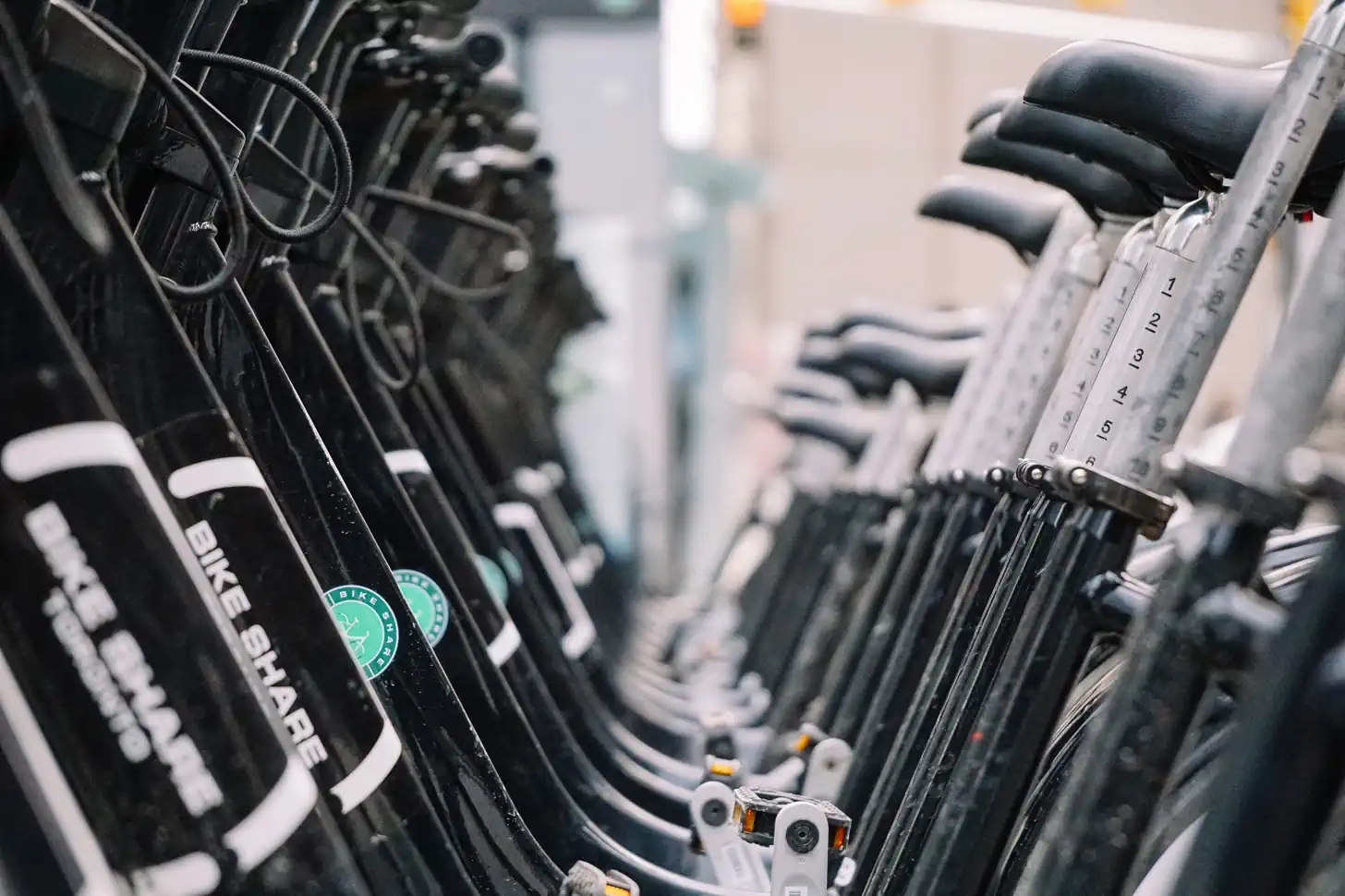
Buehler said there are several benefits: members do not have to worry about bike parking at home or work because they can store the bike in docking stations or in the street. They do not have to worry about theft and repairing bicycles.
Moreover, bike share allows one-way bike trips, where individuals can make the other trip by car, transit, or other modes. Bike share can also be used as a first and last-mile extender to public transport.
“For a community, bike share can help reduce driving and CO2 emissions,” he said.
“Bike share is one element in a group of travel modes (walking and transit) that allow people to get around town without a car--avoiding traffic congestion, noise pollution, air pollution, and traffic danger posed by cars.”
Buehler noted that the pandemic drastically increased the use of bikes at its height, for exercise, stress relief, and being outside.
“In the longer term, cycling levels generally increased from 2019 to 2021, mainly due to growth in cycling for recreation and exercise,” he said. “In contrast, daily trips to work and education declined because of remote working and learning.”
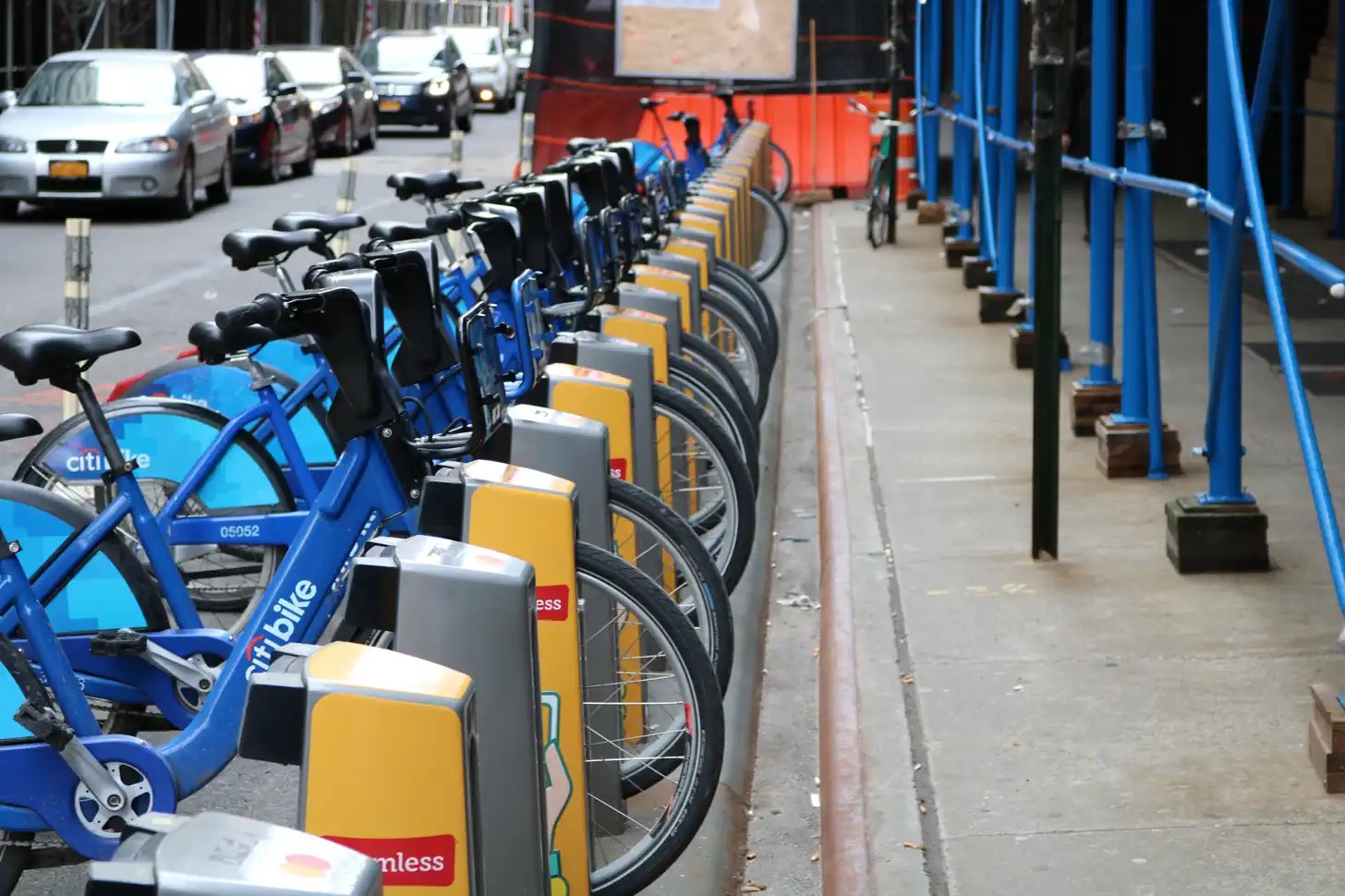
More cycling has been facilitated by increases in government support of cycling, both in funding as well as in infrastructure.
Bikeway networks were expanded and improved, usually with protected cycling facilities that separate cyclists from motorized traffic, he said. Other pro-cycling measures included restrictions on motor vehicles, such as reducing speed limits, excluding through traffic from residential neighborhoods, banning car access to some streets, and reallocating roadway space to bicycles.
“Car-restrictive measures became politically possible due to the COVID-19 crisis,” he added. “The cities that made these changes permanent saw the most sustained growth in cycling. Others saw declines again.”
Below are some bike share programs making progress toward greater environmental use and ease of use for residents:
Bike Share Programs Around the United States
Redding, California
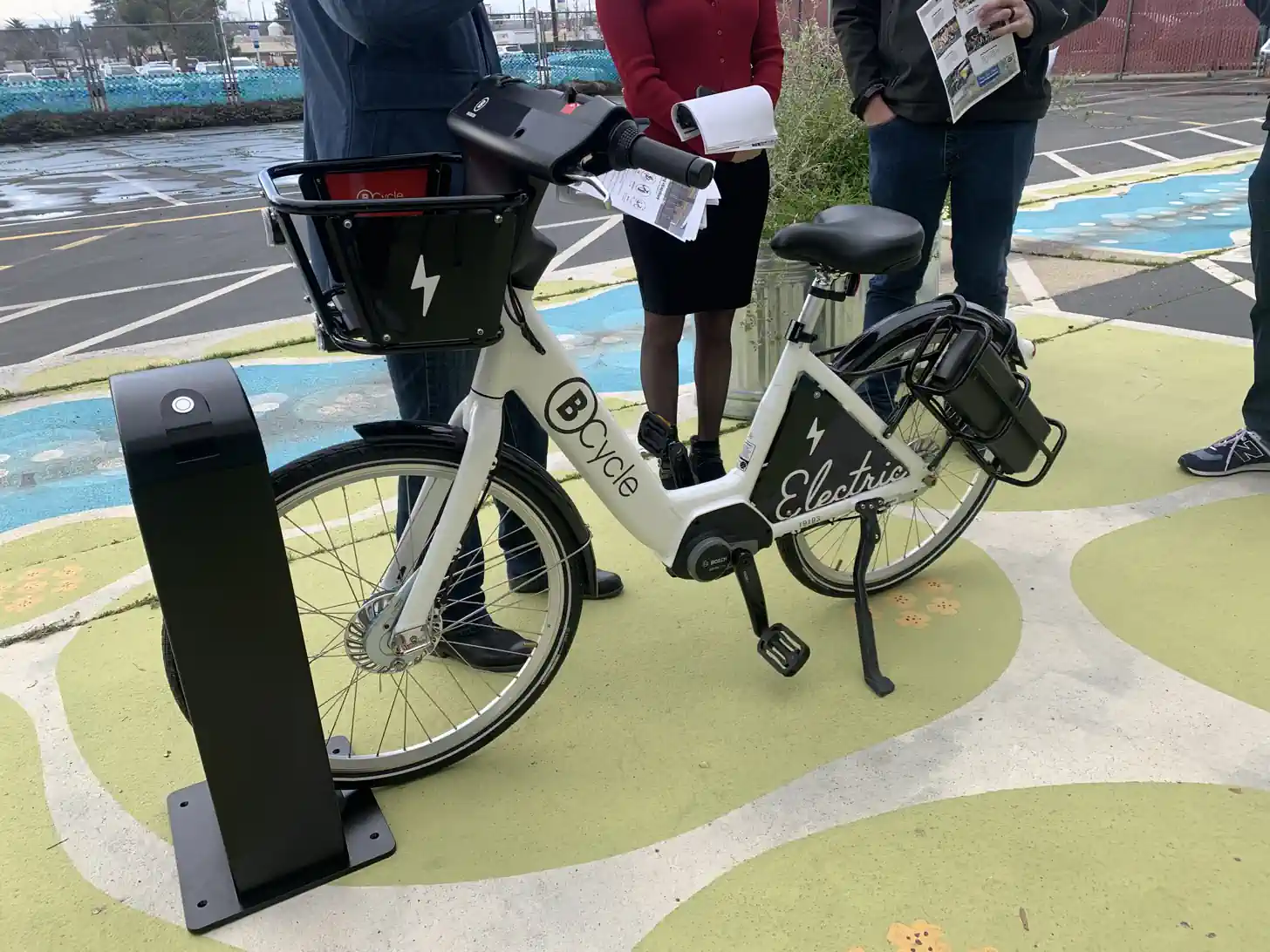
On May 12, the city of Redding launched a secured, indoor public bike parking and the Redding Bike Share system at the new Shasta Bike Depot.
While increasingly common in large U.S. cities, public bike garages and bike share systems are still rare in small cities like Redding.
Even more rare is the kind of public, private, and nonprofit partnership that has embraced the Shasta Bike Depot as an integral element of community revitalization.
The Shasta Bike Depot is part of the $111 million mixed-use residential project called California Place being built in partnership by K2 Development Companies, the City of Redding, and The McConnell Foundation.
Redding Bike Share provides electric bikes for errands, commuting, and recreation, much the way public transit provides seats on a bus. Over the summer, Redding Bike Share will deploy 70 bikes from 25 locations in downtown and surrounding neighborhoods.
The Twin Cities
In Minnesota, Minneapolis and St. Paul have bike sharing programs. To date, hundreds of thousands of trips have been logged through Nice Ride Minnesota, a nonprofit program. Nice Ride Minnesota boasts several benefits, including helping eliminate vehicle congestion, less dependence on fossil fuels, better interactions with the city and people, and a sense of civic pride. It started in 2010.
Lyft operates Nice Ride Minnesota via the local subsidiary Motivate Minnesota. Lyft is the largest bike share operator in the U.S.
Washington D.C.
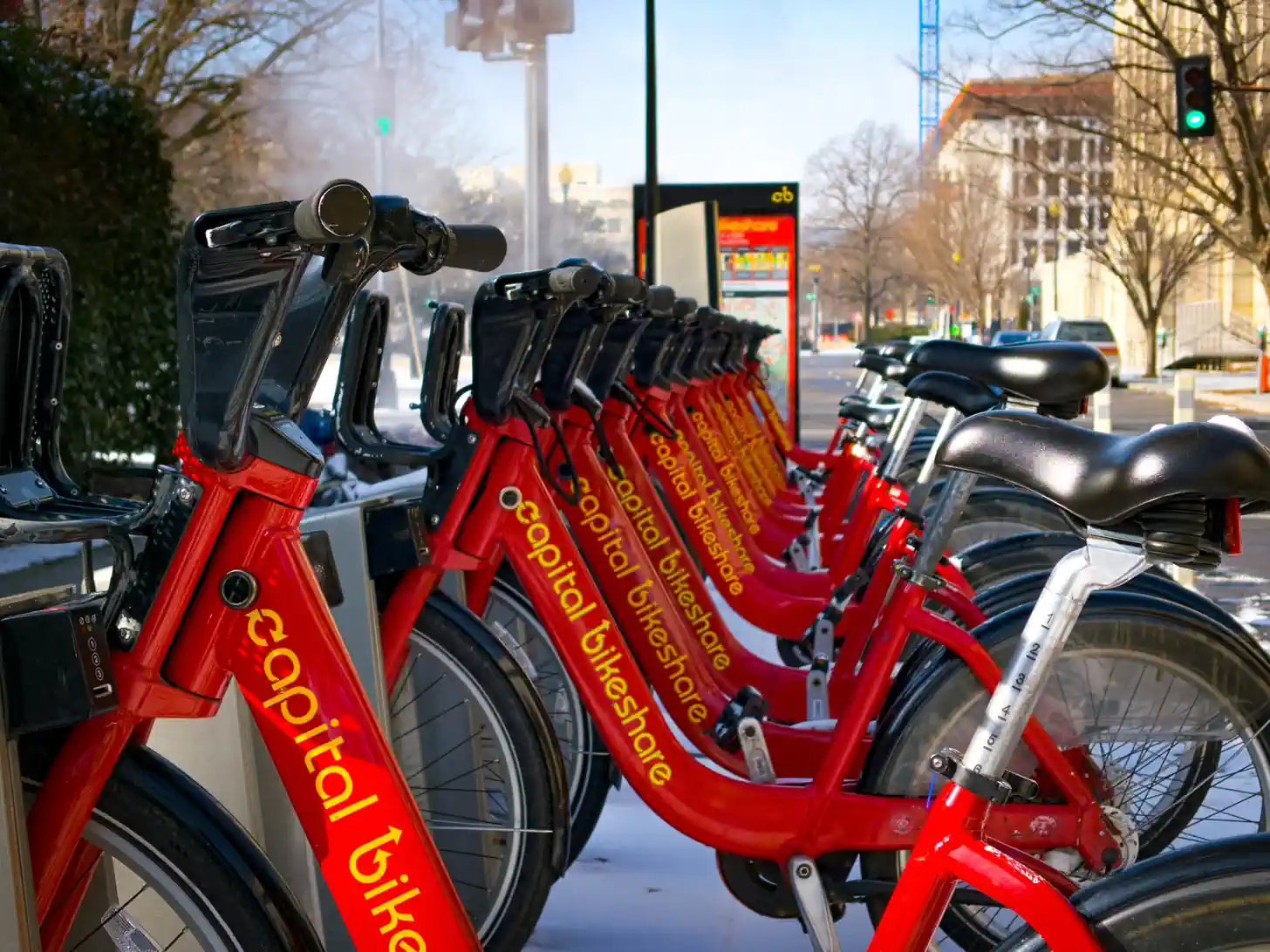
More than 5,000 bikes and more than 700 stations make up Capital Bike Share in Washington D.C. and surrounding areas. There are seven jurisdictions within the system.
The program offers traditional bikes as well as pedal-assisted ebikes. There is an ebike with a front LED light and reflective paint for those riding after the sun goes down.
In March, Capital Bike Share announced it was adding up to 850 new ebikes to the program. The new bikes feature an adaptive design with a single-gear transmission and have a more powerful motor. They also include safety sensors to self-monitor parts, including brakes and batteries.
The new ebikes last longer too. The battery lasts 60 miles on a single charge.
Charlotte, N.C.
Charlotte Joy Rides is Charlotte’s nonprofit bike share system that launched in 2012. It includes 343 bikes and 34 stations spread throughout Center City. The program started with 200 bikes and 20 stations, so it was one the largest bike providers in the Southeastern U.S. at its launch.
Local developers, grants from the Federal Transportation Administration, and the City of Charlotte made the program possible.
Seven Charlotte artists have added their mark to new bikes. The bikes come in three speeds and have automatic lights to keep people safe.
Chicago
Divvy is a fast way to get around and see Chicago and Evanston. In addition to the ease of getting around, people report saving money using Divvy versus other transportation methods.
Divvy is a program of the Chicago Department of Transportation. Funding for the program initially came from federal grants. The program expanded to Evanston in 2016.
Divvy is operated by Lyft, which also has similar programs in Boston, Columbus, Ohio, and Portland, Oregon, among other locations.
Almost daily, more headlines about climate change — how it exacerbates natural disasters, impacts tourism, threatens species with extinction, or creates cultural shifts due to sea level rise or drought impacts on local economies — hit the news media.
The Intergovernmental Panel on Climate Change's latest report, released on March 20, 2023, both summarizes the previous five years' findings and offers a renewed warning on the degree to which greenhouse gas emissions must be curbed if there is any hope of meeting the Paris Agreement's goal of capping global warming close to 1.5 degrees Celsius (2.7 degrees Fahrenheit).
According to the report, "emissions need to be reduced by at least 43% by 2030 compared to 2019 levels, and at least 60% by 2035" to meet that target. And right now, that's looking like a lofty goal: There is a more than 50% chance that the 1.5-degree threshold will be reached, if not exceeded, by 2040.
As more of a spotlight is shone on these pressing issues, so, too, appear myriad associated buzzwords — from fossil fuels and carbon to biofuels and ozone. And as the climate change conversation becomes increasingly ubiquitous and complicated, it's helpful to grasp some of its most significant terms, starting with the definition of "climate change" itself.
Stacker compiled 25 terms related to climate change, their meanings, and their significance in the context of today's warming climate. This gallery is not inclusive (thousands of terms relate to the climate change discussion) but is meant as a starting point to better understand what is arguably shaping up to be the most pressing issue of the near — and distant — future.
At its most fundamental, climate change refers to new weather patterns sustained over time—decades to thousands or even millions of years—because of fluctuations in Earth's climate system which includes its atmosphere, biosphere, cryosphere, hydrosphere, and lithosphere. The planet has undergone many significant (and natural) climate changes over the past 4.5 billion years, including ice ages and global melts.
About 12,000 years ago, the climate reached stable temperatures hospitable to humans. The resulting farming and settling that occurred led to a need for fuel to power newly invented machines; people found it in coal. But as the coal burned, it released the carbon it held.
Then came the oil industry in 1859, when Edwin L. Drake drilled the first oil well.
All that burning of fossil fuels for industry and transportation—and methane from livestock and the burning of natural gas — has sent much higher levels of emissions into the atmosphere than ever before, fueling a period of global warming that is happening faster than at any time in the past 2,000 years.
After thousands of years with average temperatures barely fluctuating by more than a degree Celsius, many experts agree that the world will likely experience three degrees of warming by the end of this century.
That's because, for the first time, we're seeing what civilization's effect on Earth's climate system is and how it affects all of us.
Here are some key words and definitions to know about climate change and the environment —
Weather
Weather is the state of the atmosphere at any given time and place over a limited period — minute to minute, day to day, or week to week, for example. Weather can fluctuate wildly over the course of a month or year, and such fluctuations are becoming more frequent and more intense as global temperatures rise.
Climate
Climate refers to average weather patterns over long periods of time. Weather trends are indicative of larger climate patterns when the trends can be charted over at least a 30-year span.
Ice Sheet
Ice sheets are continental glaciers exceeding 50,000 square kilometers (about 20,000 square miles). In one 24-hour period in August 2019, Greenland's ice sheet lost 11 billion tons of ice. While it's normal for the ice sheet to lose some ice every summer (and regain some in the winter), 2019's melt season came almost a full month early and was exacerbated by record-high temperatures.
Global Warming
Global warming, an increase in average global surface temperature over an extended period, is one aspect of climate change (the two terms should not be used interchangeably). Today's global warming is attributed to high emissions, including CO2, methane, and chlorofluorocarbons.
Carbon Dioxide
The chemical compound carbon dioxide (one part carbon and two parts oxygen) is a gas produced by respiration and the burning of carbon and other organic compounds. Plants absorb CO2 during photosynthesis, making the gas a fundamental component of all life on Earth. CO2 traps heat radiating off Earth's surface in the atmosphere, making the planet habitable for plant and animal life to thrive.
Excessive CO2 in the atmosphere creates a "greenhouse effect" attributed to today's warming climate. By studying air bubbles trapped in ice, NASA scientists have confirmed that today's CO2 levels exceed CO2 levels of the past 400,000 years.
PPM
Parts per million, or ppm, is the mass ratio between a pollutant and the air, soil, water, bodily fluid, or other solution. The latest CO2 measurement by NASA in February 2023, for example, showed levels at 419 ppm. For reference, CO2 levels in various ice ages were roughly 200 ppm and 280 ppm during periods of a milder climate. CO2 levels in 2013 exceeded 400 ppm for the first time ever recorded; left unchecked, that ratio is expected to exceed 1,500 ppm and signal an uncharted climate never before inhabited by human life.
Methane
Methane is a natural gas comprising one carbon and four hydrogen atoms. It releases less CO2 than other fossil fuels when burned but is roughly 30 times as powerful as CO2 in trapping heat in the atmosphere, making it an even greater climate change threat.
The amount of methane released into the atmosphere has more than doubled in the past 250 years because of forest fires, natural gas fracking, and mass-produced cattle for meat, which accounts for 20% of global warming, according to Yale Environment 360.
Emissions
Emissions refer to the expulsion of something — most commonly gases or radiation. When it comes to climate change, emissions might refer to smog over high-density cities like Los Angeles or greenhouse gases released by vehicles. President Joe Biden is seeking to switch American drivers from gas guzzlers to cars that run on electricity, combating climate change through the creation of cheaper electric vehicles, in addition to tax credits and rebates to incentivize the transition.
COP and UNFCCC
Conference of the Parties is the decision-making entity of the United Nations Framework Convention on Climate Change, an environmental treaty that took effect in May 1992. Annual meetings of the COP (begun in March 1995) negotiate the Kyoto Protocol, review the state of climate change and how countries are dealing with it, and decide to implement aspects of the convention. Today, every country in the world is part of the UNFCCC with the goal of drafting and meeting climate goals. A UNFCCC report in August 2019 outlined how various countries are reacting to its mandates and looked at the status of support for countries in achieving different climate goals, while a 2021 virtual meeting emphasized the need for swift action on the part of the world's governments.
Tillage
Tillage refers to a variety of methods for preparing to plant crops, whether by turning over soil, raking it, or digging into topsoil. Because tillage disturbs the top layers of soil, tilling large swaths of land can decrease water absorption, subject topsoil to being blown or washed away by wind and rain, and disrupt a soil's ability to hold nutrients and microbes. Tillage and the use of fertilizers have been blamed for the loss of as much as a third of all arable land in the past 40 years, making past calamities like the Dust Bowl more likely in the future.
Fossil Fuels
Fossil fuels are any natural fuels, such as coal, petroleum, and natural gas, made up of fossilized remnants of organisms that lived millions of years ago. Humans grew dependent on fossil fuels during the Industrial Revolution; fossil fuels today are found in 96% of everyday items, from plastics to heating fuel. Mining and drilling for fossil fuels — not to mention the act of burning them for fuel — send high levels of CO2 into the atmosphere, exacerbating global warming. Meanwhile, coal-fired power plants are responsible for up to 35% of mercury and two-thirds of sulfur dioxide emissions in the United States.
Ocean Acidification
The ocean absorbs some 30% of the CO2 from the atmosphere; so increases in atmospheric CO2 lead to increases of CO2 in the ocean water. An excess of CO2 in the ocean leads to the lowering of pH in the water — meaning the water becomes more acidic. This is ocean acidification. This change in acidity can dissolve the shells or skeletons of marine life and make fish less capable of spotting predators. Scientists also believe ocean acidification will negatively affect popular seafood supplies, hurting ecosystems and economies around the world.
Particulate Matter
Particulate matter refers to airborne pollutants that can be inhaled and negatively impact health. Think dust, smoke, soot, and microscopic drops of liquid. The two types that are typically monitored are PM-10 and PM 2.5. PM-10 includes aerosols that are 10 micrometers or less in diameter and PM-2.5 refers to finer particles no larger than 2.5 micrometers in diameter. PM-2.5 causes the biggest risk to humans as it can be inhaled deep into human lungs and even enter the bloodstream.
INDC
Intended nationally determined contributions, or INDCs, are an agreed-to lessening of greenhouse gas emissions under the United Nations Framework Convention on Climate Change (UNFCCC). Countries worldwide adopted such agreements at the UNFCCC Conference of the Parties in December 2015 in Paris, specifically looking at actionable climate goals under the Intended Nationally Determined Contributions. These goals dovetail with already-arrived-at goals of the Paris Agreement, including reaching net-zero emissions before 2100 and keeping the global average temperature from rising 2 degrees Celsius.
Sea Ice
Sea ice is frozen ocean water that floats on the ocean's surface. How much area it covers fluctuates throughout the year. In Antarctica, it has the greatest extent in September and the smallest in February. The start of 2023 represented the lowest levels of sea ice on record for that time of year.
IPCC
The Intergovernmental Panel on Climate Change (IPCC) is an intergovernmental body of the United Nations, dedicated to providing the world with an objective, scientific view of climate change; its natural, political, and economic impacts and risks; and possible response options.
Greenhouse Gas
Greenhouse gases are gases that trap heat in Earth's atmosphere creating a "greenhouse" warming effect. The primary greenhouse gases in the atmosphere are water vapor, CO2, methane, nitrous oxide, and ozone.
Global Average Temperature
NASA's Goddard Institute for Space Studies data show that the Earth's global temperature has increased since 1880 by about 2 degrees Fahrenheit, or a little more than 1 degree Celsius. Global average temperatures in 2017 rose 1.62 degrees Fahrenheit (0.9 degrees Celsius) above the 1951 to 1980 mean.
The global mean surface air temperature for that period was estimated at 57 F (14 C), according to GISS. That means the planet's average temperature has increased by about 0.8° Celsius (1.4° Fahrenheit) since 1880, according to the surface temperature in 2017 at 58.62 F (14.9 C) and according to GISS's ongoing temperature analysis.
Biofuels
Biofuels are produced from biomass — plant matter, algae, and animal waste, for example — rather than by the slow geological processes involved in the formation of fossil fuels, such as oil. Liquid biofuels can help meet transportation fuel needs. In April 2021, the U.S. Department of Energy announced a $61.4 million initiative for technologies producing low-cost and low-carbon biofuels, which will help get America to a net-zero emissions economy by 2050.
Pre-Industrial Levels of CO2
Pre-industrial levels of CO2 refer to the CO2 concentration in the atmosphere before the Industrial Revolution. Scientists estimate these pre-industrial levels were about 280 PPM, well below where we are today. Today, atmospheric CO2 levels are at their highest point in more than 800,000 years.
Ozone
Ozone in the Earth's stratosphere keeps living things on the planet safe from radiation associated with health problems like skin cancer. The use of products like aerosols has been shown to deplete this gaseous layer, which inspired the signing of the Montreal Protocol, a global agreement to gradually stop the use of products that negatively affect the ozone layer.
Sea Level Rise
As global temperatures rise, so too does sea level — glacial ice melts adding more volume to the ocean and the ocean water expands as it warms. Global sea levels are rising by about 3.3 millimeters per year — 30% more per year than in the early 1990s. Close to 40% of the U.S. population lives in highly populated coastal areas, putting almost half of Americans and their homes at risk from erosion, flooding, and storms — all exacerbated by global warming. Cities like Miami already are bracing for an anticipated sea-level rise of more than 6 feet by 2100, which would put the south Florida counties of Monroe, Miami-Dade, and most of Broward underwater.
Algal Bloom
Harmful algal blooms are spikes in algae in waterways that can be spotted by the discoloration of the water it inhabits and its prevalence along shorelines. They can be toxic to animals and suck the oxygen out of the water, killing fish and other marine life.
Renewable Energy
Just like it sounds like, renewable energy is energy generated from renewable resources, such as the sun, geothermal heat, rain, tides, or wind. Renewables are the fastest-growing source of energy in the U.S., increasing 90% from 2000 to 2020, and accounted for more than 20% of the net U.S. electricity generation in 2018. President Biden's infrastructure plan makes renewables a key component of America's energy economy.
Mitigation
Mitigation is done to reduce the intensity of something; in the case of climate change, this could be anything from planting trees to decrease levels of CO2 in the atmosphere to harnessing renewable energies to decrease humans' reliance on fossil fuels. In August 2019, the cities of Austin, Texas, and Seattle, Washington, passed ordinances designed to mitigate climate change. Seattle established its own iteration of the Green New Deal and Austin declared a climate change emergency.
This story was originally published by Stacker and republished pursuant to a CC BY-NC 4.0 License.
Transgender folks are under attack. Plain and simple: it is dangerous to live outside the gender binary in America right now. In the most recent tally, the ACLU has tracked over 460 anti-LGBTQ+ bills introduced in state legislatures across the country this year.
Whether those bills attempt to ban gender-affirming care, exclude trans youth from participating in sports, criminalize drag performers, or even punish teachers who simply share accurate and affirming information in schools, it’s bleak.
Some of these bills will be shot down, and fortunately, many other bills have been introduced across the U.S. to protect and defend trans and gender non-conforming people, but the impact of hateful legislation has already had widespread impacts on individual humans, caused harm to democracy, and continues to foster a disturbing influx of transphobia in communities far and wide.
What we need now more than ever is a deeper understanding and empathy for trans folks. Nebraska Senator Megan Hunt, who was the state’s first openly LGBTQ+ state senator, and is a mother to a transgender son, has been a vocal advocate in the fight against her own state’s ban on gender affirming care for minors.
(She has worked tirelessly to filibuster for nine straight weeks alongside her colleagues in an attempt to kill the bill, and is the co-founder of the Don’t Legislate Hate PAC, a fund to help elect more representatives who fight for LGBTQ+ equality across the board.)
As Nebraska’s legislative session comes to a fever pitch, Hunt asked on Twitter: “Transgender friends, what do you wish lawmakers understood about what it’s like to be you?”
The responses came flooding in.
Trans folks share what they wish lawmakers knew:
Lawmakers simply do not need to be involved in personal medical decisions.
Many folks in Hunt’s replies expressed that, at the end of the day, they just want to be left alone to make choices with their doctors and loved ones with autonomy.
They want the ability to access gender-affirming care without political interference.
How much joy there is in finally being in my real body. And that’s all I want. Not their love, respect or attention. Just to be allowed to feel the joy of modern medicine being able to resolve my medical issue.
— Definitely Not Elon Musk he/him😂🇺🇦🏳️⚧️ (@jyg08) May 16, 2023
that my medicine is medicine
— Shuli Elisheva (@ShuliElisheva) May 16, 2023
They could stop trying to tell doctors how to do medicine. That'd be a great start
— spiritplumber (@spirit_plumber) May 16, 2023
Trans people are literally just people.
An overarching theme that folks wanted to convey was that trans people are the same as the rest of us; just folks who want to exist comfortably in the world, take care of their families, and go about their lives.
We are boring "regular" people.
— Jessica Clarice יִסְכָּה🏳️⚧️✡ (@JeSStradiol) May 16, 2023
We are parents.
We work at normal jobs doing normal tasks. If we hadn't become fodder for culture wars,we would be unnoticed by most.
We just want to live our lives, raise our kids.
We are just as religious, if not more,than those who hate us.
Transgender people are multifaceted and have so much going on besides just being transgender. We're not a monolith.
— Mia Moore (@StopTweetingMia) May 16, 2023
Most people who transitioned as adults wish they could have started earlier.
Restricting our access to the means of transition will never help us or "protect us"
I’m literally just a regular dude. I just happen to need testosterone injections to get my testosterone. Being trans is not important unless other people make it important.
— AJ Waters (the J stands for Jorts) (@A_J_Waters) May 16, 2023
living here in Florida. I just wish they saw us and understood that we are human.
— Crystal Mafia (@MobCrystal) May 16, 2023
Im forced to be an activist for my own existence daily it feels and its so hard
I'm just a writer, who happens to be trans and disabled. All I want is a pretty simple life in peace, safe place to rest my head at night, a loving and supportive wife, maybe a dog and cat, and my basic needs met, including healthcare (gender affirming care and otherwise).
— Lexa Black (@TheLexaBlack) May 16, 2023
That I want a life not unlike most people: To raise my daughter, marry my girlfriend and grow old together, and to be left alone to be who I am without a constant legal or social knife at my throat.
— Lilliana Kendra 💍Engaged💍 (@lillianakendra) May 16, 2023
i want what everyone wants, to live peacefully, to love and be loved
— nines/nick 🎗️☀️ (@ninestailedfox) May 16, 2023
That I am a regular human being. Im no different than any other person, we all have different stories and pasts. I’m just a kid that wants to help people by doing my part as a firefighter, I want to help the environment, I like fishing, art, reading, being a Christian. I’m human.
— Dylan (@dylan_ev05) May 16, 2023
Trans people have always existed.
As much as politicians might want to convince you that there is some sort of “epidemic” of trans folks, it’s simply not true. Trans folks have existed throughout history and have only recently begun to feel safe enough to be their authentic selves.
That we have always existed
— A Trans Ancient History YouTuber Named Sophie (@SBElikeswords) May 16, 2023
We're older than Islam. Older than Christianity. Older than Judaism. Older than the very concept of civilization itself
So long as humans have existed, so have we. And so long as humans continue to exist, so will we
That I have always been trans, even though I only transitioned four years ago. It may seem like there are a lot of trans people all of a sudden, but we have always been here. It's only recently that so many of us felt like we could be accepted as ourselves.
— Erin Reed (@ErinInTheMorn) May 16, 2023
Being trans is not a choice.
LGBTQ+ folks might know the silly t-shirt slogan: “If being gay was a choice, I’d be gayer.”
Trans folks don’t choose to be trans — full stop. While many trans folks who have access to gender affirming care will share that they are happy and liberated in their authentic identities, the work it takes to get there is a major, life-threatening undertaking.
Trans people do not choose to be born in the wrong bodies. They do not choose to be persecuted in the name of some political agenda. They simply exist.
I didn't ask or choose to be trans. Most people are born in the right body. I was not. My brain nagged at me every single day, and I tried to suppress it for over 40 years until it became unbearable. I had to accept my true self, or I would have gone mad, or I'd be dead.
— Rosie 🏳️⚧️🏴 (@MoonRoseVT) May 16, 2023
No one chooses to become a second-class citizen. If it were actually a choice, no one would join a minority that’s hated just for existing or to have their rights and safety threatened on the regular.
— Dr Andrea Grover (@AndreaKGrover) May 16, 2023
Also we pay a lot of taxes and are fine upstanding citizens too.
Being trans isn’t a “lifestyle choice”. It’s our very existence. Without access to medical care, without affirmation of who we are, doesn’t make us any less trans. Being trans is NOT indoctrinated. It doesn’t come from the outside. It is within us and awakens when it’s time comes
— Former Representative Stephanie Byers (@ByersForKansas) May 16, 2023
It's an innate part of who we are. You can try to deny its existence, ban our healthcare, and limit our social expression, but it won't change the fact we're still trans.
— ✨ Sabrina 🏳️⚧️🔆 (6 Months on HRT 💊) (@sabrinastarnite) May 16, 2023
I tried repressing it since I was about 13, but it only made me hate myself, until I finally accepted it.
Gender-affirming care drastically improves the quality of life of trans folks — and accessing that care is a decision that is not taken lightly.
Research from nearly all notable medical organizations shows that gender-affirming care leads to a significantly lower risk of suicidal ideation. It is literally life-saving.
In addition to that, gender-affirming care allows people to not only survive, but to thrive. Feeling confident and comfortable in one’s body allows them to have goals for the future, have deep and meaningful relationships, and more. This care is vital to the futures of trans people, and banning it is an act of violence that attempts to erase and eradicate trans folks from society.
coming out to parents at 26 already felt nearly impossible. if care is banned, coming out to supportive parents means uprooting the entire family. some kids will stupidly, selflessly choose the despair of the closet over feeling like a burden. it will kill. it would've killed me.
— Corinne Green (@gaynarcan) May 16, 2023
that i’m happy. i wasn’t ‘coerced by doctors to transition’, i wasn’t ‘indoctrinated into a cult’, i’ve always known i was in the wrong body and FINALLY getting to be myself has had a more significant positive impact on my entire life than anything else
— fern (@orb400) May 16, 2023
The almost immediate resolution of conflict within my brain once starting HRT. It felt right.
— Rachel Denise 🏳️⚧️🟧 (@RachelSagirl) May 16, 2023
Gender affirming care literally saves lives. We aren’t “groomed” to be trans. It’s something we know about ourselves from a very young age; We just aren’t always empowered with the knowledge to vocalize it. Transitioning has enabled me to live a life I never knew was possible.
— bargain bin harley quinn (@TeganCantEven) May 16, 2023
The labor we go through to fully understand ourselves, we take the time to make sure. I know I questioned everything before I started hrt at 40, before any surgeries, these are not light decisions.
— Elspeth (@PrinceEldymion) May 16, 2023
That transitioning was an enormous act of faith that was undertaken after a long period (for me) of discernment after consultation with no less than clergy, doctors, nurses, psychologists, lawyers, friends, and family.
— R. Alison Mason 🕵️♀️👩🏻💻👩🎓 (@knowerofsecrets) May 16, 2023
That coming out and being my true & authentic self saved my life. I was hiding who I really was and I acted in evil hypermasculine ways that hurt the people that I loved. HRT has made me the happiest & healthiest (mentally, emotionally & physically) person I can be.
— Pantyhose Priestess (@KXPriestess) May 16, 2023
Trans children know who they are — and we need to believe them.
Trans youth, like adults who are reconciling with their gender identities, know who they are. By creating a culture of acceptance and affirmation, young trans kids have better outcomes to live a safer, happier, healthier life.
When kids tell you they are trans...
— Joséphine ✡ יוספה בתיה (@JosieBrendaA) May 16, 2023
...they *know* it.
It's not a fad or a phase.
And yes, even at age 4.
Mom of trans teen here. I would add that living as your authentic self is very hard and takes courage. Imagine being so sure of that identity that you are willing to endure the hate and ignorance. The rest of us need to support them. Period!
— MaBarrett (she/her) (ma/mom/momma) (@CovfefeBarrett) May 16, 2023
Identity is personal and should not be used as a political scapegoat. In fact, it’s really exhausting when it is.
Like any other marginalized groups who have been forced to defend their existence for the sake of political gain, trans folks are really sick of being used as bargaining chips on the debate floor.
That being a pawn in political games is more stressful than anything I live on a daily basis.
— jadyn. (@itsJadynNow) May 16, 2023
That I’ve had to accept I’ll never get to go back to Arkansas to see my family and friends back home.
That hrt aided in getting me off all anxiety/depression meds and saved my life.
I wish more Democrat lawmakers understood that's it's really demoralizing to watch the people who are supposed to have our backs completely ignore the issue (outside of a few notable exceptions like yourself).
— Samantha (@Bithlord2) May 16, 2023
I feel like I'm fighting for my life ...1/2
I wish they understood that personal identity is precious as it defines the scope of our life experience.
— Kira-rah Terpsichore (@Maa_Kali_Fenrir) May 16, 2023
The authority of identity shouldn't belong to the government - it should belong to the individual as life is our truest belonging.
We must define ourselves to be free.
That we spend so long trying to accept ourselves, and now we have to answer to every politician that has some hateful rhetoric up their sleeve. We just want the freedom to exist as peacefully as possible and it wasn’t until they started throwing tantrums that all eyes shifted.
— LinkasaurusRex (@LinkasaurusRex_) May 16, 2023
There truly is no hidden “trans agenda,” and there’s a lot of harmful disinformation out there.
Politicians are desperate for people to believe that trans folks are a danger to society. These misconceptions cause a lot of harm and put trans folks in danger themselves. The truth is, there is no “trans agenda,” besides simply staying alive.
The obvious:
— Left Hand News (@LeftHandNews) May 16, 2023
That we’re not pedophiles.
We are not hurting children.
We are not a cult.
We are not a social contagion.
We are not trying to “destroy” anything except bigotry against us and to live in the public sphere unafraid.
We will not be complicit in our own eradication.
No one "chooses to be trans"; it's not a lifestyle or a fetish, it's simply who we are.
— Ramona Jade (@LadyRamonaJade) May 16, 2023
It's not about "invading women's spaces" or "turning all the children trans", all we want is for our bodies to align with our brains and our souls
That we have no "agenda." That we only want to be left alone and not treated as political footballs.
— Dee Paolina 🏳️⚧️ (@DeePaolina) May 16, 2023
We're a large, diverse group of individuals with a diverse range of beliefs. We're not an "ideology," or even a "movement."
— Alex Thomas 🍓🍇🍋 (@alexlikesmice) May 16, 2023
That we are not evil, and that transitioning is something we can't not do, and honestly, we're not hurting anyone. 💗💙🤍🏳️⚧️🏳️⚧️🏳️⚧️🏳️⚧️🏳️⚧️
— Gali Jaffe (@APinkGoddess) May 16, 2023
Trans folks fear for their safety every single day.
Trans people are at an increased risk of violence every day — reports show that at least 32 transgender folks were fatally attacked in the U.S. in 2022.
Legislation that attempts to criminalize trans folks only increases this risk of violence. While that in and of itself is a major cause for concern, it also forces trans people to be on high alert, to protect themselves, instead of living, thriving, and contributing to their communities.
This kind of trauma, fear, and risk can have lifelong consequences — contributing to the overall health and wellbeing of trans folks, where they choose to live, and how they exist in community with others.
That so much of our lives revolve around trying to avoid hostile treatment from people who think we shouldn't exist.
— Valkyrie Thunderbitch (@ValkyrieLadyK) May 16, 2023
I already struggle with self image and just want to be happy but I live scared of every lifted truck cat calling me and then getting mad after they realize
— Joan (She/Her) (@LaCroixGoblin) May 16, 2023
It's the fear. The fear of loosing jobs / social standing once you're out.
— Void_Trans 🏳️⚧️ (@void_trans) May 16, 2023
I'd like them to realize how fucking terrifying it all is.
— Alexandria 🔞 (@BanjoFrogAlex) May 16, 2023
Trans people fear that their lives will be turned upside down in the wake of these laws.
While the threat of violence and harassment are at the forefront of the minds of trans folks, they also fear that they will have to relocate to places where they feel safe and affirmed — even if they don’t want to leave their communities.
Even worse, some folks are worried their children will be taken from them, or their families split apart, simply because they are trans.
I'm a normal woman. I walk my dog, talk to the neighbors, stress about dentist appointments, etc.
— Sylvia is Unambiguously Queer (@EthelTheCutie) May 16, 2023
I love where I live, I love my family, and I live in constant fear that one election could force me to uproot my entire life.
That we, like anyone else, care for our families more than anything in the world.
— Echo's Chamber 🏳️⚧️ (@L_Y_N_K_S) May 16, 2023
That now, more than ever, we're terrified those families will be ripped away from us or worse.
Transphobic legislation doesn’t make anyone less trans; it just makes them more susceptible to mental health issues and suicide.
Just like banning abortion doesn’t reduce the need for abortion, banning gender-affirming care does not remove the need for it. Trans people will always exist; no matter what the law is. Unfortunately, if the law criminalizes the existence and needs of trans people, all it does is cause further harm, leading to greater risks of suicide.
All trans people deserve to live in a world that is accepting and affirming of who they are. It really is as simple as that.
for 1: MOST trans suicidality is due to EXTERNAL factors like rejection by family/church, bullying/discri etc, NOT inherent self hate. MOST reason for "regret/detrans" is due to SAME, NOT change in genderID. HATE etc causes MOST prob for trans at EVERY STAGE!
— KAMK (@KAMK75756445) May 16, 2023
Being trans is inherit. Kids and adults don’t magically feel incongruence one day. They are trans with or without resources. However, truth is that folks that don’t come out or are stricken from getting treatment are living a miserable life, one that is a count down to death.
— suds (@hand_soapp) May 16, 2023
That if they just try to legislate us out of existence and into an early grave, they're not going to get rid of us, they're just going to be quickly (and starkly) reminded of the quote:
— Netflix & Chilli💜 (@Lupa_Scoville) May 16, 2023
"Those who make peaceful revolution impossible, make violent revolution inevitable."
I wish they'd understand that being trans isn't a mental disorder, and it's not 'curable'. They can subject me to a million horrors, ply me with tortures unending, render my very existence illegal, even drag me out and crucify me on an ash tree, but I will always be a woman.
— Jennifer Kayla | Theogrin (🏳️⚧️ 🦊🦖🐀) (@theogrin) May 16, 2023
Most of us don’t need a reason — like Pride Month or other LGBTQ+ awareness days — to support the LGBTQ+ community. Put simply, LGBTQ+ people are human beings who deserve equal rights, autonomy, and love — just like everyone.
Social acceptance is a huge factor in maintaining the mental health of LGBTQ+ folks; the Trevor Project reports, for instance, that LGBTQ+ youth who felt social support from their family reported attempting suicide at less than half the rate of those who felt low or moderate social support.
Unfortunately, this year especially, LGBTQ+ folks (transgender folks and LGBTQ+ youth in particular) have been subjected to discriminatory legislation, violence, and persecution that no person ever deserves.
Now more than ever, queer folks need unconditional support — and courageous advocacy.
For loving allies (or other LGBTQ+ folks with different experiences), it can feel a little too ambitious fighting it all head-on, trying to figure out how to stand in solidarity and take action all at once. There are over 460 anti-LGBTQ+ in state legislatures around the country this year, for crying out loud!
But, as much as our systems must be changed, our people must be held closer and loved harder.
As much as we need to vote for candidates who prioritize the safety of LGBTQ+ folks, we need to keep our current elected officials from causing more harm.
As much as there are millions of injustices to be confronted, there are millions of people who need help getting through the day as their authentic selves.
If you’re sorting through the heartbreak and rage, trying to find ways to make a meaningful impact on the lives of LGBTQ+ folks, you’ve come to the right place.
We’ve created this guide to help you — and most importantly, the LGBTQ+ folks in your life — inch closer to a better, safer, more liberated future, one action at a time.
By the way, some of the links in this article (like books!) are affiliate links, which means if you make a purchase after clicking a link, we may earn a commission at no extra cost to you. Thank you!
Ways To Be An Ally To LGBTQ+ People
Deconstruct your preconceived notions about gender and sexuality.
The first thing you need to do when working to actively and intentionally support LGBTQ+ folks is understand and question your preconceived ideas about gender and sexuality.
Many of us have been taught deeply binary beliefs about gender identity, and some of us probably hold a number of stereotypes and biases about different groups within the LGBTQ+ community. To be a dedicated and productive ally, you must also be a humble and curious learner.
Here are a handful of resources to get you started on your journey of unpacking all those big ideas about gender and sexuality:
- “LGBTQ Glossary” from John Hopkins University
- “Understanding Gender Identities,” a resource from The Trevor Project
- “Gender and Sexuality 101,” a resource from the Jed Foundation
- “Gender Magic: Live Shamelessly, Reclaim Your Joy, & Step Into Your Most Authentic Self” by Rae McDaniel (Bookshop) (Amazon)
- “Life Isn’t Binary: On Being Both, Beyond, and In-Between” by Meg-John Barker and Alex Iantaffi (Bookshop) (Amazon)
- “Beyond The Gender Binary” By Alok Vaid-Menon (Bookshop) (Amazon)
Make their lives easier.
When the world is a little too keen on making the lives of LGBTQ+ people more difficult, everything you can do to mitigate that has an impact. Here is a (definitely non-comprehensive) list of ideas that can spur some action:
- Offer free child or pet care
- Help with some chores around the house or yard
- Provide meals and comfort food (could you supply a week’s worth of groceries? That would be rad!)
- Just come along on errands to body-double or make the world a little less intimidating
- Offer rides to medical appointments (or anywhere, really!)
- Help someone raise funds for out-of-state care or relocation
- Help someone move (start the engines on those Subarus and pick-up trucks!)
- Help fill out paperwork for name or ID changes (Heck, even just printing off a form can be helpful.)
- Provide post-surgery or medical care support
- Offer pro-bono medical or legal services
- Use your area of expertise to provide free services to LGBTQ+ folks in need (i.e.: Social media consultation for their small business, family photos, grant-writing, etc.)
No matter what you do, your unique skills and support can make a world of difference for someone who feels especially isolated and vulnerable.
Be a safe and affirming person in their lives.
Being a safe and affirming person that your queer friends and loved ones (or even strangers) can trust is vital.
This might look like opening your home to folks who need a place to crash after a protest; providing a safe and welcoming place to recover from gender-affirming procedures; or simply holding space for all the experiences that come with a queer identity (like, not just the fun, clubbing-on-a-Saturday-night experiences).
This sort of affirmation does not just happen overnight; you must build trust and connection with the LGBTQ+ folks in your community by repeatedly showing up and advocating for their safety.
In this current social and political climate, LGBTQ+ lives are at risk — and criminalized — making your solidarity more important than ever.
Celebrate them.
A word many queer people are used to hearing is “acceptance.” While, of course, the deeper connotation of belonging and inclusion is an end-goal of queer liberation, LGBTQ+ people deserve more than tolerance.
They deserve boisterous celebration and appreciation. They deserve joy and praise when they reveal to the world who they truly are. They deserve unequivocal and equal protection under the law. They deserve more than mere permission to exist.
When someone comes out to you, meet them with enthusiasm and delight. If you can’t do that, spend some time unpacking and unlearning why it is difficult for you to whole-heartedly embrace someone’s identity — without making your insecurities their responsibility.
Not only should you respect someone’s pronouns; you should correct others if and when they use the incorrect ones.
When Pride comes around, look to your LGBTQ+ community members to celebrate intentionally.
Think of it like this: If your dearest friend was perpetually prosecuted because of some uncontrollable aspect of their identity — like, say, wearing glasses — you would want to do everything in your power to make sure they feel loved and embraced. How would you throw that “we love you and your glasses so much” party?
To quote a tweet from author Terence Lester, Ph.D.: “‘Everyone is welcome here’ is drastically different from ‘We built this with you in mind.’ People don’t want to go where they are merely tolerated, they want to go where they are included.”
Participate in community care and mutual aid.
Community care and mutual aid are long-standing practices of activism built by queer and BIPOC communities to take care of one another in the face of oppressive systems.
Mutual aid invites us to redistribute wealth and provide direct financial support to members of our communities. Whether it’s a GoFundMe page, a direct Venmo or CashApp transaction, or even the donation of items like binders, gender-affirming clothing, or necessities like food and furniture, use what you can to provide grassroots, direct aid to those in your own neighborhood.
Community care taps into networks of support and connection that bring care work to the forefront of social justice. Meals, post-operative care, or peer-led mental health support, are all examples of this work in action.
Practice actionable allyship.
As we saw through the ripple effects of the Black Lives Matter movement in 2020, allyship has long passed as a performative, inactive relationship to groups of marginalized people. (Perhaps you’re in on the “Talk Valentina, Ally!” meme on TikTok.)
But true allyship — or solidarity — requires ongoing action and holistic community-building. Go beyond just displaying a Pride flag. As you align yourself in connection with queer communities, keep in mind what your role is as an ally, and how it can expand and shift to facilitate justice.
Diversity and inclusion expert A.C. Fowlkes has developed a robust proposal about what it means to be an ally (and we’d consider it required reading).
Be intersectional.
Within the LGBTQ+ community, there are infinite intersecting identities and experiences to be held, accommodated, and celebrated.
From race and class to gender and disability, consider, respect, and honor the overlapping and nuanced experiences of those you love and serve.
We’ll let you in on a little secret… It doesn’t need to be Pride Month or Transgender Day of Visibility to do your part to support, defend, and stand in solidarity with trans folks.
In fact, they really need us to show up all the other days and months of the year — especially as lawmakers across the country attempt to criminalize their very existence.
If you’ve already explored our guide on how to be a supportive and intersectional LGBTQ+ ally, you’re probably also working hard to especially be a safe and supportive person for your trans and non-binary community members, too.
We know it can all be overwhelming, especially when so much is at stake, but your role as an affirming (and probably outraged) figure in a trans person’s life can truly make a world of difference.
It is equally important to show up for trans people in our communities with care and love as it is to show up at our city halls and capitol buildings with protest signs and prepared testimony.
Whether you’re offering assistance to your trans neighbors with everyday tasks, displaying a trans flag, providing financial support, or just getting to know them better — or you’re doing your part to dismantle systems that cause harm to trans folks — the work is necessary and important.
(And hopefully, you’re either doing a little bit of everything, or finding the type of activism that’s perfect for you!)
But when so much work needs to be done, we know it can be intimidating to find your niche. If you’re sorting through the heartbreak and rage, trying to find ways to make a meaningful impact on the lives of trans folks, you’ve come to the right place.
We’ve created this guide to help you — and most importantly, the trans and non-binary folks in your life — inch closer to a better, safer, more liberated future, one action at a time.
How To Support Trans People
Learn about what’s at stake.
According to a 2022 study from the Williams Institute, transgender people make up just about 2% of the total U.S. population. However, just in 2023, at least 45 states have introduced anti-trans bills in their state legislatures. Like we mentioned earlier, the ACLU clocked in over 460 anti-LGBTQ+ bills nationwide this year.
Aside from the very real, very dangerous threats these bills pose for access to life-saving, gender-affirming healthcare, education, athletics, and general equality under the law — they also indicate a larger symptom of hatred across the country.
“These lawmakers want to homogenize the lives that people are living, and they have this very small-minded idea of who people are and how people should look, live their lives, and should think,” Tori Cooper, the director of community engagement for the Human Rights Campaign’s Trans Justice Initiative, told Vox.
“There is an intentional effort to use misinformation and disinformation to deceive folks who don’t know any trans, nonbinary, or queer people personally to perpetuate harm and dissuade folks from living honest and true and accurate lives.”
Protecting trans folks starts by learning about what they face. For example, trans Americans are four times more likely to be victims of violent crime than their cisgender peers. And 86% of trans and nonbinary youth reported negative effects on their mental health because of political debate — nearly half of them seriously considering suicide in the past year.
Trans people are under attack. As difficult as it is to explore and learn about this wave of anti-trans hatred, we all owe it to our trans neighbors and loved ones to stay informed and alert about the attempts to criminalize trans folks.
Advocate against anti-trans legislation.
Supporting trans folks means showing up for them in the voting booth, on hold as you repeatedly call your elected officials, joining in protests, or hosting events to raise awareness and support in your community.
Here are a few specific actions you can take to fight anti-trans legislation in your state or region:
- Call your representatives. Call elected officials who don’t represent you, but deserve to hear from you as a concerned citizen. Call and leave a voicemail after hours if you’re busy during the workday. Call again and again and again.
- Write to your elected officials. Automate an email to send every day, or write a stack of postcards to their office, outlining your concerns.
- Donate to the Don’t Legislate Hate PAC, which helps fund campaigns for candidates who support LGBTQ+ equality.
- Run for office. If you’re outraged right now, or you don’t like the trajectory of where your government is headed, put your hat in the ring.
Not sure about what’s going on in your area? Keep an eye on the Track Trans Legislation map to learn more about the efforts to harm trans folks in your state. (PS, there’s also a script generator on the website, so you can figure out what to say when you contact your representatives!)
Advocate for legislation that expands gender-affirming care.
As awful as the wave of anti-trans legislation is, leaders across the country have introduced bills and enacted laws that protect trans folks and expand gender-affirming care.
Not sure what’s going on in your area? Check out Erin Reed’s anti-trans legislative risk map. It provides insights to help folks understand what’s going on in their states, while also providing an easy-to-read update on legislation across the country.
To help fight these laws, seek out lawmakers and bills in your state that aim to extend these protections — or vote for candidates who care about elevating LGBTQ+ equality.
Similarly to when you’re advocating against a certain policy, you can call or write your elected officials to urge them to vote in favor of these bills, donate to campaigns or groups dedicated to trans liberation and safety — or even write a thank-you note to elected officials who are doing their part to truly represent their LGBTQ+ constituents.
Help fight dangerous misconceptions and disinformation.
Lots of anti-trans talking points include dangerously incorrect beliefs about transgender people (see: the gross misuse of the word “grooming”).
A necessary muscle to strengthen in your advocacy? Having the facts ready, and being able to share them calmly. It’s important to defend trans folks (especially in online spaces) so they don’t have to carry the added burden of justifying their existence all the time.
Be able to explain gender identity, break down the terminology behind some hot-topic gender-affirming healthcare words, and overall, rely on the truths of your relationships with trans folks: That they’re just human beings who deserve respect and autonomy.
This also extends to media coverage of trans folks. If you see a media outlet or reporter make a mistake or use the wrong phrase or pronoun, your right (and responsibility) as a citizen is to (kindly) reach out and request an edit or clarification. Write letters to the editor or share corrections yourself on social media — it takes diligent news consumption to stay informed and inform others.
Have uncomfortable conversations.
That being said, fighting misconceptions also means having conversations that aren’t exactly comfortable. If you are a cisgender person, your privilege and responsibility is taking on those moments of discomfort, so trans folks don’t have to.
If someone you know keeps saying a slur, or seems to conveniently “forget” a classmate’s pronouns, take them aside and talk about why those things cause harm, and why they need to stop. These conversations must include accountability. Lay out your boundaries and your expectations.
Will you no longer spend time with this person if they continue acting in a way that’s harmful to trans folks? Will you have to talk to a superior in your work or school environment? How will you convey that these values are important to you — and to others?
Maybe, you’ll have a great response and can move towards progressive accountability, engaging this person with additional resources or information about how they, too, can be a better ally.
Whether this person is a close family member, or an acquaintance who you just always seem to run into, standing up and simply saying, “it isn’t right to say that” can make an enormous difference.
Take a bystander or conflict intervention course.
Of course, if you’re feeling nervous about conflict (who isn’t?!), a great place to start would be a free bystander intervention training. Right To Be is an organization that offers a number of free online courses that help make those tough interactions a little easier.
From trainings on intervening in street harassment, to showing up as an ally in digital spaces, Right To Be helps equip people with the tools to safely de-escalate hostility in a number of situations.
You can also access specific private training experiences with the organization for a fee.
Donate.
Donating really does make a big impact for organizations leading the charge to protect trans folks.
Your dollars can provide access to gender-affirming care, educational resources, political outreach, and more, having a direct impact on the futures and well-being of trans people right in your community.
Whether you want to help crowd-fund someone’s gender-affirming care, or help provide rent assistance to Black trans folks, there are truly so many places you can donate (Them created a list of organizations in every state that support trans and non-binary folks!).
To get you thinking about where you want to send your donation, here are a few more options we encourage you to consider:
- Point of Pride
- Trans Lifeline
- Transgender Law Center
- National Center for Transgender Equality
- The Trans Latin@ Coalition
- Princess Janae Place
- The Marsha P. Johnson Institute
- Black Trans Travel Fund
- Trans Women of Color Collective
- LGBTQ+ Victory Institute
- OutCare Health
Volunteer.
If donating isn’t super accessible to you, or you want to make your donation even more impactful, volunteer right in your community! Check out a crowd-sourced directory of LGBTQ+ organizations, or search for LGBTQ+ community centers in your area to get started.
Here are a few other great national organizations to volunteer with:
Enable and foster trans joy.
Part of the beauty of activism is embracing the future you’re creating. While there is plenty to be rightfully outraged by, maintaining a healthy level of optimism is key to making progress. As poet Toi Derricotte said: “Joy is an act of resistance.”
Allow trans and non-binary folks the space and freedom to experience the expansive, joyful parts of life, even in a wildly difficult political landscape. Radical change-makers still need dessert, you know?
Where can you be a shepherd of trans joy?
Are you a photographer who can provide free gender-affirming photo sessions? Are you a stylist who can gift some gender-affirming haircuts or shopping excursions? Can you throw a silly “late-in-life-gender-reveal-party” in honor of a loved one’s transition? Perhaps you’re a teacher of a trans child who can slip in an extra 15 minutes of recess or reading time.
Little acts of delight, pleasure, and fun for fun’s sake are truly vital and affirming — and we need more of them.
With platforms like OnlyFans that make adult content creation more accessible, memes about “selling feet pics” have become commonplace online.
Even Harry Styles held up a devoted fan’s poster at a concert last year. “I sold feet pics to be here,” it said, in glittery bubble letters, the singer chuckling as he presented it to the crowd.
And you know what? Her methods worked.
The Kansas Humane Society took a page from that book earlier this year, as they created a social media fundraising campaign, playfully named “OnlyPaws,” where they would share “toe bean” photos of dogs and cats (and other cute critters) in the shelter for reaching fundraising goals.

“Times are TOUGH, and our pets need to pull their weight, so we’re selling their feet pics on the internet,” the first social media caption read.
“For every $100 we raise, we’ll post a collection of our spiciest toe beans from a variety of species. All the money goes right back to caring for our incredibly sexy animals.”
Their methods worked too. The shelter raked in over $8,000 throughout the campaign, praise from uproarious social media users accompanying donations.
“This is peak animal shelter marketing,” an Instagram user commented.
“This is out of control and I love it,” another chimed in.
And the humane society marketing team kept their promise. Toe beans of all varieties filled social media feeds: Dogs, cats, and even “exotic” feet, like the webbed toes of penguins and the talons of birds.
You could practically smell the corn chips through the screen.
While social media managers might call it a risky play, the campaign paid off, toppling the team’s initial goal of raising $2,000 for the paws-itively adorable shelter pets in need.
“We never expected the level of success or recognition we got,” KHS communications director JordanBani-Younes, said on a KWCH 12 News broadcast.
“I [was] raised here and the level of acceptance the community has had for the campaign, just helping us in general, has been phenomenal.”
The OnlyPaws fundraiser brought laughs and support alike, truly providing relief for the shelter pets in a time of overwhelm and overcrowding.
Also serving as a call to adopt these especially good-looking pets, the shelter encouraged community members to adopt or foster — or just make sure to take good care of all the animals in their community.
“It goes toward food, vaccinations, microchipping,” Bani-Younes added on Channel 12. “It all goes back to our animals.”
Header image courtesy of the Kansas Humane Society
As many of us experienced, the pandemic — and quarantine, specifically — proved to be a time of self exploration and discovery.
Some found labels that fit our sexual orientations better, while others began experimenting with new pronouns in safe living environments with loved ones for weeks on end.
But Josh Tint knew that there was still a group of people out there questioning their identities who didn’t have an outlet for that natural experimentation.
“It was such a time of self-reflection,” Tint shared with Good Good Good.
“I had several friends who started to transition or question their gender identity. It made me think of my own experience questioning my gender; it was so frustrating because there were really no good resources for questioning people. I wanted to create something that helped you figure out your name and pronouns for yourself, in a simple, discreet, stress-free environment.”
As a result, Tint developed the app Discover Me, and when he was a 19-year-old sophomore at Arizona State University, launched the app in Apple’s App Store.
Discover Me has a simple user interface; it lets users try on different names and pronouns, swiping left or right (like popular dating apps) to choose what feels right for them.
The app takes a chosen name and pronouns and puts it into sample text, like “Josh can speak three languages. He is very smart!” Users can play around with different options and determine whether they like a name or set of pronouns.
Tint used the app to come to his own conclusions about his gender identity and sexuality, validating that he is a cisgender bisexual man — and now he is a lot more conscious of his gender expression in everyday life.
Since its launch in 2022, the app has been downloaded and used by over 2,000 people.
“I’ve been so overjoyed to see the positive response to Discover Me since its launch,” Tint said.
“I’m glad that the first app I ever made is helping so many people. It’s always so wonderful each time someone leaves a comment about how it helped them personally. Not only that, but by making the project open-source, I’ve been able to interact and connect with other queer developers online, and that’s been an amazing experience.”
Tint’s efforts also led to him winning the Swift Student Challenge, a competition held by Apple’s Worldwide Developer Conference. This scholarship brought him the opportunity to meet Tim Cook and further grow his career in app development.
“I was able to give a demonstration of my app to Tim Cook, who is probably the most visible LGBTQ person in tech right now, and that experience was invaluable.”
Tint said Cook gave him some helpful suggestions and even connected him to LGBTQ+ advocacy groups like The Trevor Project.
Discover Me comes at an especially poignant time, where transgender and gender-nonconforming people are put especially at risk, through oppressive policies and bans on gender-affirming care nationwide. Now more than ever, they need resources to “express their pride,” Tint said.
“I wanted Discover Me to be a very private, and even comforting, experience,” he said. “I know many people that were scared to be open to their friends and family about their gender discovery, either because they did not have a supportive community, or simply because there is such a strong stigma against any form of gender questioning.”
Tint added that it was important to him to make sure that Discover Me keeps all users’ data private, while providing a positive and easy user experience.
“While politicians attempt to repress trans and gender-nonconforming people, technology like Discover Me gives us an avenue to discover ourselves and connect in spite of that,” he said.
As Tint continues his educational career at ASU, he maintains his technological ingenuity, seeking to constantly improve the app and develop others that provide support to folks who need it most.
He is currently working on adding more name samples to Discover Me, even generating “bespoke name samples” with the help of artificial intelligence.
Tint is also working on another app called Decompose Reader, which helps people with ADHD, dyslexia, or visual impairments read articles with improved reading speed and comprehension.
At the end of the day, Tint said, he just wants to help.
“I’m always looking for ways to give tools to marginalized people that tech has consistently ignored or left behind.”
Every day the Good Good Good team collects the best good news in the world and shares it with our community. Here are the highlights for this week!
If you want to get good news in your inbox every day, join the Goodnewsletter — the free daily newsletter designed to leave you feeling hopeful.
The Best Positive News We’re Celebrating This Week —
Reaching a major milestone, 10,000 women have now been certified to fight malaria in Rwanda
Malaria is the seventh leading cause of death in Rwanda, and it’s led to a widespread community effort to protect families and communities from the disease. That community effort is comprised mostly of local women caregivers, who dedicate their time and energy to treat 55% of malaria cases in the area — even more than doctors and nurses in the region.
In 2017, the Society for Family Health Rwanda and the Rwanda Ministry of Health partnered with SC Johnson and Raid to create the Certified Care program.
Certified Care provides official certification and livable wages to this unofficial community of health workers in the area, allowing them to do the work they’ve spent their lives doing, all while contributing to the efforts to eradicate malaria.
Why is this good news? Prior to the certification program, the efforts of women came at the expense of their own economic growth, as circumstances demand they prioritize these impactful community care efforts over consistent work. Certified Care changed that, giving them hope for career and economic advancement — all while helping eradicate the deadly disease.
Scientists just produced a more accurate DNA map that better reflects human diversity
Fun fact: the original human genome that was published two decades ago is mainly based on data from one single person. And while this was helpful information that informed medical research for a while — it’s long past time for an update that better reflects and represents the diversity of humanity.
That update has arrived, and scientists have just released an updated map of all human DNA. They call it the “pangenome” and it’s made up of data from 47 people from Africa, Asia, the Americas, and Europe.
The researchers believe this will transform medical research, leading to new drugs and treatments that work for a much wider range of people, and helping scientists “to better understand how genetic variation influences health and disease and moves us to a future in which genomic medicine benefits everyone.”
A florist in Nashville declined a floral design order for an RNC fundraiser event and asked the party to change gun laws
In preparation for a fundraising event in Nashville later this year, the Republican National Committee reached out to local florist FLWR Shop to provide floral design. They had a large budget — and FLWR Shop owners Alex Vaughan and Quinn Kiesow turned them down.
In a letter, which the shop also posted to Instagram, they explained why they were declining the request — that while they have conservative customers, respect their views, and believe there is room for everyone in America, the party’s stance on common sense gun legislation is “out of step with most Americans.”
They also acknowledged the recent school shooting in Nashville, “Our community has just lost seven people, including three young children, to yet another school shooting. At this moment, I cannot ignore the work that the RNC has done to create this tragedy and so many others just like it.”
FLWR Shop encouraged more people and businesses to decline business from the RNC and Republican politicians until they make meaningful changes to gun laws — which are supported by an overwhelming majority of Americans, regardless of party.
Under a new pilot program, Boston is rolling out free digital libraries at 20 bus stops across the city
Riders waiting to take the bus in Boston may notice something new at their bus stop: a sticker on the ground with a QR code they can scan to enjoy free reading material from the public library.
Twenty bus stops across the city will double as “digital libraries” where riders can borrow audiobooks, eBooks, e-newspapers, and e-magazines. The selection of free resources are meant to be read on-the-go, like poems and short stories, and include options for all ages. It doesn’t require a library card, and there’s no need to download a separate app.
Boston Mayor Michelle Wu said the initiative, which tentatively ends in August, “builds on our efforts to make public transportation more enjoyable, while also connecting our residents to the resources the Boston Public Library already offers.”
→ Read more
Why is this good news? If you’ve been around here any amount of time, you know our love for the public library runs deep. While libraries already give community members access to books and so many other services and resources, this only improves accessibility — by bringing the library right to people, right where they are!
Responding to a Nebraska senator, trans people flooded Twitter with what they wished lawmakers knew about their lives
Plain and simple: it is dangerous to live outside the gender binary in America right now. The ACLU has tracked over 460 anti-LGBTQ+ bills introduced in state legislatures across the country this year.
Nebraska Senator Megan Hunt, who was the state’s first openly LGBTQ+ state senator, and is a mother to a transgender son, has been a vocal advocate in the fight against her own state’s ban on gender-affirming care for minors.
She recently took to Twitter to ask, “Transgender friends, what do you wish lawmakers understood about what it’s like to be you?” And the responses came flooding in: lawmakers don’t need to be involved in personal medical decisions, trans people are literally just people, they have always existed, and so much more.
Why is this good news? What we need now more than ever is a deeper understanding and empathy for trans folks. Senator Hunt opening up the “floor” for trans folks to speak for themselves is an incredibly powerful way to achieve that — and we highly encourage you to take advantage of the opportunity to grow your understanding and empathy by reading their responses.
→ Read more
A beverage maker in Japan created a vending machine that captures CO2 while cooling or warming the drinks inside
In an effort to achieve carbon neutrality by 2050, one of Japan’s leading drink makers, Asahi Group Holdings Ltd. is implementing carbon capture technology in a device most of us have likely encountered: vending machines.
Asahi’s soft drinks arm created and is testing out a new type of vending machine that contains a material that can “absorb” carbon dioxide as it takes in air to cool or warm the drinks inside.
The company is starting by installing around 30 machines in part of Japan — each is expected to absorb an estimated 132 pounds of CO2 (20% of the emissions it produces) every year. It then plans to expand to a replacement program for its 260,000 total machines by 2024.
Why is this good news? Japan has around 4 million vending machines, and while that number is shrinking, they’re still very commonplace in the country. The machines dispense everything from toys to caviar, and beverage dispensing machines make up over half of the market. While capturing 20% of its emissions doesn’t seem like much — it’s significantly better than the current setup!
After her child came out, a small town Australian quickly learned how to be a good LGBTQ+ ally — and is teaching her neighbors, too
When Kirsty Brooks’ child, Xero came out to her, she was immediately supportive and didn’t question their identity or choice. Being from a smaller mining town in Western Australia with little to no LGBTQ+ representation — she did have a lack of knowledge about how to be supportive.
And she immediately sought out more information. Her first Google search led her to the website for the welcoming community of Goldfields Pride. That organization introduced her to workshops she could attend, supportive health care, and more.
She immediately got plugged in and is now working to empower other parents of LGBTQ+ young people, too. Brooks even created a local branch of PFlag, a 50-year-old organization founded to unite families of LGBTQ+ people.
We know that having supportive, affirming parents or loved ones dramatically reduces the risk of suicide among LGBTQ+ young people — so we’re celebrating not only Brooks’ efforts, but her proactivity in bringing other allies in, too!
More good news of the week —
New York City just passed a bill outlawing discrimination based on weight. More than 40% of American adults are considered obese and studies show weight stigma and bias are pervasive, leading to things like lower wages, especially for women.
Taking significant climate action, the EPA proposed first-ever emissions caps on existing power plants. The proposed rules would mark the first time the federal government has restricted carbon dioxide emissions from power plants.
The WHO just announced that mpox is no longer a global health emergency. Mostly confined to developing countries for years, mpox spread across Europe and the U.S. last year, leading to more than 87,000 cases and 140 deaths from 111 countries.
Over the weekend, mothers on six continents peacefully occupied public spaces to demand climate action to protect their children. It was another Mother’s Day campaign intended to highlight the deadly consequences of the status quo.
Illinois just passed a bill to ensure community college credits transfer to public universities. Some higher education institutions currently only count community college coursework as elective credits.
A new pancreatic cancer vaccine is showing promising results in a new trial. The vaccine uses mRNA tailored to each patient’s tumor and may have staved off the return of one of the deadliest forms of cancer in half of those who received it.
The U.S. Supreme Court used the correct name and pronouns for a transgender migrant in a recent court opinion. It feels like the bare minimum, but it really is a landmark decision by the court.
Deforestation in the Amazon is already down 40% so far this year. In April alone, deforestation dropped by 68%, a significant achievement for the country’s new president who promised to decrease deforestation.
Hundreds of students who came to Scotland as migrants will soon be eligible for free tuition. The country extended the free tuition fees in a landmark legal ruling for a migrant student who was two months shy of the prior eligibility requirement.
Striking the largest debt-for-nature deal in history, Ecuador just boosted protections for the Galápagos Islands. The deal effectively wipes out the interest on part of its debt in exchange for its protection of the islands.
Oregon is now the 10th state to ban plastic foam and PFAS in takeout containers. Starting in 2025, a new law will ban the production, sale, and distribution of polystyrene foam cups and takeout food containers — as well as toxic “forever chemicals.”
Three Minnesota Chippewa tribes will now have a stronger voice in managing the Superior National Forest. The forest and tribes made a first-of-its-kind agreement for management of land that was ceded to the federal government nearly 170 years ago.
Effective immediately, the UK has banned animal testing for chemical ingredients used exclusively in cosmetics. It had recently come to light that the UK had been issuing licenses since 2019 in certain circumstances.
The Biden Administration announced a new fund to help make low-income homes more energy-efficient. Nearly $1 billion will go to support communities that historically experienced the worst climate impacts.
An Oregon nonprofit returned 30 acres of undeveloped land near Wallowa Lake to the Nez Perce Tribe. As lake communities in the state are developed, the Wallowa Land Trust wanted to ensure the protection of this natural area — so it returned it to the tribe.
Dan Blevins is a stand-in dad. He responded to a video on TikTok recently where the original poster, Alex Jiggs, asked, tears in her eyes: “Can you rent a parent? Like, is there a program where you can pay, to just like, have a parent for a bit?”
Blevins responded, in his gentle, saccharine Southern accent, receiving over 240,000 likes: “Hi Alex, I’ve been summoned.”
This isn’t his first rodeo.
“I have a group called Stand In Pride, where we connect members of the LGBTQ+ community with other members and allies for emotional support, or to physically stand in at live events like weddings or graduations,” he explained in the video.
Blevins first went viral in January 2021 when he put out a bat signal to LGBTQ+ folks who needed a stand-in parent at their weddings.
“Let’s help spread this message that there’s parents that want to be there for you on your big wedding day, and we’ll be your biggest fans,” he said in that fateful video.
Since then, his network of loving parents has grown exponentially. Stand In Pride’s international Facebook group started small and has now reached nearly 50,000 members in over 60 countries.
“In 2018, I walked my own daughter down the aisle, and just the thought of someone not having that parent at their wedding or in their life was heartbreaking to me,” Blevins said on TODAY.
He was inspired by Sarah Cunningham, the founder of Free Mom Hugs, an organization with a similar approach to connecting affirming volunteer ‘parents’ with members of the LGBTQ+ community.
The impact is immeasurable. Posts in the Facebook group flood folks with support, as they take the brave motion to introduce themselves as individuals distanced from their biological families who need some connection, or as loving family units who can offer that care and community.
And it’s not just weddings or graduations; it’s folks opening up their dining tables on holidays, swapping life advice, or just flexing that muscle of care and consideration in a non-traditional way.
“I don’t have any kids of my own, but I am a great aunt,” one user writes in the group. “Here to offer support to anyone who needs some!”
“In our house, everyone is welcome,” another stand-in family member said in an introduction post. “We have a guest room and lots of love, understanding, and support to give.”
Many of the members are in the LGBTQ+ community themselves.
“I’m here, I’m queer, and I’ll support you wherever you are,” another member added.
No matter the location or circumstances, the thousands of group members adhere to rules of kindness, privacy, and openness.
“Stand In Pride was created to help people just like you find chosen family,” Blevins said in his video addressing Alex. “We have members all over the world; more moms, dads, uncles, aunts, siblings, cousins, grandparents than you can even imagine.”
In a time where the LGBTQ+ community continues to face political attacks, accepting adults (and folks of all ages) are more vital than ever to the safety and well-being of queer youth.
“They’ve all come together for one reason: they have extra love to give, and they want to be there for you,” Blevins said. “And it’s all free of charge.”
June is here — signaling the start of summer and bringing an infectious energy that makes us want to enjoy every moment of longer days and warmer weather! It’s a month of fresh starts, new adventures, and the promise of brighter days ahead.
To help you embrace the beauty of June, we’ve curated a selection of positive and inspiring quotes (and poems) about the sixth month of the year.
And because we’re Good Good Good — we’ve also highlighted the best quotes around June’s awareness months and national days — like Great Outdoors Month, Pride Month, Cancer Survivors Month, Juneteenth, and World Oceans Day. Plus, quotes from inspirational celebrities and leaders with June birthdays.
Whether you’re welcoming summer, celebrating a June birthday, or just looking to add a dose of positivity to kick off the month, these quotes are for you. Scroll all the way through to find some hidden gems.
Here’s to making the most of June!
Explore more monthly quotes: January | February | March | April | May | June | July | August | September | October | November | December
The Best June Quotes —
Famous Quotes About June
“June is the time for being in the world in new ways, for throwing off the cold and dark spots of life.”
— Joan D. Chittister
“If a June night could talk, it would probably boast it invented romance.”
— Bernard Williams
“To read a poem in January is as lovely as to go for a walk in June.”
— Jean-Paul Sartre
“In early June the world of leaf and blade and flowers explodes, and every sunset is different.”
— John Steinbeck, The Winter of Our Discontent
“In June, as many as a dozen species may burst their buds on a single day. No man can heed all of these anniversaries; no man can ignore all of them.”
— Aldo Leopold
“It’s June in January because I’m in love It always is spring in my heart with you in my arms.”
— Leo Robin
“It was June, and the world smelled of roses. The sunshine was like powdered gold over the grassy hillside.”
— Maud Hart Lovelace
“There are moments, above all on June evenings, when the lakes that hold our moons are sucked into the earth, and nothing is left but wine and the touch of a hand.”
— Charles Morgan
“There are two seasons when the leaves are in their glory, their green and perfect youth in June and this their ripe old age.”
— Henry David Thoreau
Quotes for Awareness Holidays in June
A collection of quotes to celebrate June’s awareness months and national days.
→ Explore more of this month’s awareness days in our June calendar
Pride Month
June 1 - June 30
“We have to be visible. We should not be ashamed of who we are.”
— Marsha P. Johnson
“Pride is important because tonight someone still believes they’re better off dead than being themselves.”
— Sterling Graves
“All young people, regardless of sexual orientation or identity, deserve a safe and supportive environment in which to achieve their full potential.”
— Harvey Milk
“When all Americans are treated as equal, no matter who they are or whom they love, we are all more free.”
— Barack Obama
→ Read more quotes about LGBTQ+ pride for Pride Month
→ Read about how to celebrate Pride Month
Gun Violence Awareness Month
June 1 - June 30
“Gun violence feels too big, too powerful to stop. But it’s not too big for you to take some real, meaningful actions. You control what you decide you can live with, and what you can’t. You can choose whether you do something, or do nothing. You are not powerless.”
— Jennifer Rosen Heinz
A mom fighting to protect her children was way more powerful than a gun lobbyist fighting to protect gun manufacturers’ profits.”
― Shannon Watts
“We can choose to be hopeful, try and possibly fail or not be hopeful, give up and definitely fail.”
— David Hogg, cofounder and board member at March For Our Lives
→ Read more quotes about gun violence
Cancer Survivors Month
June 1 - June 30
“Cancer changes your life, often for the better. You learn what’s important, you learn to prioritize, and you learn not to waste your time. You tell people you love them.”
— Joel Siegel
“Life is not a matter of holding good cards, but of playing a poor hand well.”
— Robert Louis Stevenson
“I am not this hair,
I am not this skin,
I am the soul that lives within.”
— Rumi
Great Outdoors Month
June 1 - June 30
“It is good to realize that, if love and peace can prevail on earth, and if we can teach our children to honor nature’s gifts, the joys and beauties of the outdoors will be here forever.”
— Jimmy Carter
“I need to be outside. I need to be in the world and to remember that I am of it.”
— John Green
“Everyone should have access to the outdoors no matter where they live, how much money they have, or what their background is.”
— Deb Haaland
→ Read more quotes about national parks
Immigrant Heritage Month
June 1 - June 30
“Once I thought to write a history of the immigrants in America. Then I discovered that the immigrants were American history.”
— Oscar Handlin
“My dad’s from that generation like a lot of immigrants where he feels like if you come to this country, you pay this thing like the American dream tax: like you’re going to endure some racism, and if it doesn’t cost you your life, well hey, you lucked out. Pay it; there you go, Uncle Sam. I was born here, so I actually had the audacity of equality.”
— Hasan Minhaj
“Not many countries offer second chances. The U.S. gave me that.”
— Jorge Ramos
World Oceans Day
June 8
“The ocean makes me feel really small and it makes me put my whole life into perspective… it humbles you and makes you feel almost like you’ve been baptized. I feel born again when I get out of the ocean.”
— Beyoncé
“Limitless and immortal, the waters are the beginning and end of all things on earth.”
— Heinrich Zimmer
“Because there’s nothing more beautiful than the way the ocean refuses to stop kissing the shoreline, no matter how many times it’s sent away.”
— Sarah Kay
→ Read about how to celebrate World Oceans Day
Juneteenth
June 8
“Juneteenth was never about commemorating a delayed proclamation but about celebrating a people’s enduring spirit.”
— Annette Gordon-Reed
“What I love about Juneteenth is that even in that extended wait, we still find something to celebrate. Even though the story has never been tidy, and Black folks have had to march and fight for every inch of our freedom, our story is nonetheless one of progress.”
— Michelle Obama
“Struggle is a never ending process. Freedom is never really won, you earn it and win it in every generation.”
— Coretta Scott King
→ Read more Juneteenth quotes
→ Read about how to thoughtfully celebrate Juneteenth
World Refugee Day
June 20
“No one puts their children in a boat unless the water is safer than the land.”
— Warsan Shire
“Give me your tired, your poor, your huddled masses yearning to breathe free.”
— Emma Lazarus
“Refugees didn’t just escape a place. They had to escape a thousand memories until they’d put enough time and distance between them and their misery to wake to a better day.”
— Nadia Hashimi
→ Read more refugee quotes
→ Read about how to celebrate World Refugee Day
Quotes from Inspiring People with June Birthdays
Brandi Carlile
June 1
“People in this country who are in positions of privilege must learn to find ways of fighting for the just treatment of others, not by centering and platforming themselves, but by holding up the ones who are suffering.”
— Brandi Carlile
“All of these lines across my face, tell you the story of who I am. So many stories of where I’ve been and how I got to where I am.”
— Brandi Carlile
Abby Wambach
June 2
“Leader is not a title that the world gives to you — it’s an offering that you give to the world.”
— Abby Wambach
“There is a wolf inside of every woman. Her wolf is who she was made to be before the world told her who to be. Her wolf is her talent, her power, her dreams, her voice, her curiosity, her courage, her dignity, her choices — her truest identity.”
— Abby Wambach
Michael J. Fox
June 9
“One’s dignity may be assaulted, vandalized and cruelly mocked, but it can never be taken away unless it is surrendered.”
― Michael J. Fox
“Gratitude makes optimism sustainable. If you’re grateful for the opportunities you have, for what you’ve been given to do work-wise, for the opportunities that exist, you’re optimistic. If you can just find those moments, I always feel that if you flip the coin 100 times, you're going to come up heads 51.”
― Michael J. Fox
E.O. Wilson
June 10
“People would rather believe than know.”
― E.O. Wilson
“Destroying rainforest for economic gain is like burning a Renaissance painting to cook a meal.”
― E.O. Wilson
→ Read more E.O. Wilson quotes
Larry Kramer
June 25
“You’d think one day we’d learn. You don't get anything unless you fight for it, united and with visible numbers. If ACT UP taught us anything, it taught us that.”
— Larry Kramer
“I don’t consider myself an artist. I consider myself a very opinionated man who uses words as fighting tools.”
— Larry Kramer
Helen Keller
June 27
“Alone we can do so little; together we can do so much.”
— Helen Keller
"The true test of a character is to face hard conditions with the determination to make them better."
— Hellen Keller
Inspirational June Quotes
“In these divine pleasures permitted to me of walks in the June night under moon and stars, I can put my life as a fact before me and stand aloof from its honor and shame.”
— Ralph Waldo Emerson, Nature
“Of course, fresh flowers are the answer to any June gloom you may be feeling. Flowers really do solve all problems.”
— Mia Moretti
“Sweet Zephyr! why that sound of woe?
Is not thy home among the flowers?
Do not the bright June roses blow,
To meet thy kiss at morning hours?”
— Felicia Dorothea Hemans, Poems of Felicia Hemans
“I realized
June had never been
just a month
Music…
never just a tremble
on my lips
warmth was never
merely a blanket.”
— Sanober Khan, A touch, a tear, a tempest
“I did have my moments of despair. It was certainly not — it’s not an experience I would like to have again. And then June came along.”
— Edmund Hillary
“What is one to say about June, the time of perfect young summer, the fulfillment of the promise of the earlier months, and with as yet no sign to remind one that its fresh young beauty will ever fade.”
— Hal Borland, Twelve Moons of the Year
“And since all this loveliness cannot be Heaven, I know in my heart it is June.”
— Abba Woolson
June Poems
“Green was the silence, wet was the light, the month of June trembled like a butterfly.”
— Pablo Neruda, 100 Love Sonnets
“The fountain murmuring of sleep,
A drowsy tune;
The flickering green of leaves that keep
The light of June;
Peace, through a slumbering afternoon,
The peace of June.
A waiting ghost, in the blue sky,
The white curved moon;
June, hushed and breathless, waits, and I
Wait too, with June;
Come, through the lingering afternoon,
Soon, love, come soon.”
— Arthur Symons
“At midnight in the month of June,
I stand beneath the mystic moon.
An opiate vapour, dewy, dim,
Exhales from out her golden rim,
And, softly dripping, drop by drop,
Upon the quiet mountain top.
Steals drowsily and musically
Into the universal valley.
The rosemary nods upon the grave;
The lily lolls upon the wave;
Wrapping the fog about its breast,
The ruin moulders into rest;
Looking like Lethe, see! the lake
A conscious slumber seems to take,
And would not, for the world, awake.
All Beauty sleeps! — and lo! where lies
(Her easement open to the skies)
Irene, with her Destinies!…”
— Edgar Allan Poe, The Raven and Other Poems
“June suns, you cannot store them.
To warm the winter’s cold,
The lad that hopes for heaven
Shall fill his mouth with mold.”
— A.E. Housman, A Shropshire Lad
“O suns and skies and clouds of June,
and flowers of June together,
Ye cannot rival for one hour
October’s bright blue weather…”
— Helen Hunt
Summer Quotes
“Summer afternoon — summer afternoon; to me those have always been the two most beautiful words in the English language.”
— Henry James
“Summers had a logic all their own and they always brought something out in me. Summer was supposed to be about freedom and youth and no school and possibilities and adventure and exploration. Summer was a book of hope. That’s why I loved and hated summers. Because they made me want to believe.”
— Benjamin Alire Sáenz, Aristotle and Dante Discover the Secrets of the Universe
“Summer is a promissory note signed in June, it’s long days spent and gone before you know it, and due to be repaid next January.”
— Hal Borland
“I almost wish we were butterflies and liv’d but three summer days — three such days with you I could fill with more delight than fifty common years could ever contain.”
— John Keats, Bright Star: Love Letters and Poems of John Keats to Fanny Brawne
“Summer, after all, is a time when wonderful things can happen to quiet people. For those few months, you’re not required to be who everyone thinks you are, and that cut-grass smell in the air and the chance to dive into the deep end of a pool give you a courage you don’t have the rest of the year. You can be grateful and easy, with no eyes on you, and no past. Summer just opens the door and lets you out.”
— Deb Caletti, Honey, Baby, Sweetheart
“One way of celebrating the Solstice is to consider it a sacred time of reflection, release, restoration, and renewal.”
— Sarah Ban Breathnach
“The beauty of that June day was almost staggering. After the wet spring, everything that could turn green had outdone itself in greenness and everything that could even dream of blooming or blossoming was in bloom and blossom. The sunlight was a benediction. The breezes were so caressingly soft and intimate on the skin as to be embarrassing.”
— Dan Simmons, Drood
Funny Quotes
“A perfect summer day is when the sun is shining, the breeze is blowing, the birds are singing, and the lawnmower is broken.”
— James Dent
“Wine and cheese are ageless companions, like aspirin and aches, or June and moon, or good people and noble ventures.”
— M. F. K. Fisher
“Spring being a tough act to follow, God created June.”
— Al Bernstein
“A cold in the head in June is an immoral thing.”
— L.M. Montgomery
“No price is set on the lavish summer;
June may be had by the poorest comer.”
— James Russell Lowell, The Vision of Sir Launfal
“It is better to be a young June bug than an old bird of paradise.”
— Mark Twain
“I know well that the June rains just fall.”
— Onitsura
“There are two seasons in Scotland: June and Winter.”
— Billy Connolly
Short Quotes
“I wonder what it would be like to live in a world where it was always June.”
— L. M. Montgomery, Anne of the Island
“It is June. I am tired of being brave.”
— Anne Sexton
“All June I bound the rose in sheaves, Now, rose by rose, I strip the leaves.”
— Robert Browning, Men and Women
“Do not the bright June roses blow to meet thy kiss at morning hours?”
— William C. Bryant
“June is the gateway to summer.”
— Jean Hersey
“It is dry, hazy June weather. We are more of the earth, farther from heaven these days.”
— Henry David Thoreau
“And what is so rare as a day in June? Then, if ever, come perfect days.”
— James Russell
More Quotes
“Occasionally I have come across a last patch of snow on top of a mountain in late May or June. There’s something very powerful about finding snow in summer.”
— Andy Goldsworthy
“The end has come, as come, it must, To all things; in these sweet June days, The teacher and the scholar trust, Their parting feet to separate ways.”
— John Greenleaf Whittier, The Complete Poetical Works of John Greenleaf Whittier
“It is the month of June, the month of leaves and roses, when pleasant sights salute the eyes and pleasant scents the noses.”
— Nathaniel Parker Willis
“Guess the worst day of June was the one where I met you.”
— Taylor Swift, You All Over Me
“On this June day, the buds in my garden are almost as enchanting as the open flowers. Things in bud bring, in the heat of a June noontide, the recollection of the loveliest days of the year, those days of May when all is suggested, nothing yet fulfilled.”
— Francis King, The Well-Considered Garden
“May and June. Soft syllables, gentle names for the two best months in the garden year: cool, misty mornings gently burned away with a warming spring sun, followed by breezy afternoons and chilly nights. The discussion of philosophy is over; it’s time for work to begin.”
— H. Peter Loewer
“June has never looked more beautiful than she does now, unadorned and honest, vulnerable yet invincible.”
— Marie Lu
→ Next Up: Best July Quotes
Every year on the 143rd day of the year, people of all backgrounds celebrate 143 Day. 1-4-3 is a code for “I love you,” popularized by the beloved Fred Rogers, an American television personality and writer best known for his children’s TV series “Mister Rogers’ Neighborhood.”
143 Day usually falls on May 23rd, though during leap years — it falls on May 22nd.
While 143 Day has become a popular holiday celebrated across the world honoring Rogers’ legacy, it is especially prominent in Pennsylvania, the birthplace of the cardigan-wearing TV star.
The state of Pennsylvania invented the holiday in 2019 to encourage residents to share acts of kindness statewide, affirming the special, wonderful things about us all.

While Rogers held closely — essentially superstitiously — the sacredness of 143 (he even maintained a 143-pound body weight for decades), it doesn’t take a lot to remind someone you love them.
Rogers even said it himself during a primetime “Neighborhood” Christmas special many years ago:
“I suppose the thing I’d like most to be able to give you is hope,” he addressed viewers. “I hope you’ll be able to look for all the different ways that people have of showing that they love you.”
We’ve collected the most wonderful ways for you to celebrate 143 Day this year →
By the way, some of the links in this article (like books!) are affiliate links, which means if you make a purchase after clicking a link, we may earn a commission at no extra cost to you. Thank you!
How to Celebrate 143 Day
Look for the helpers.
So many people — including us here at Good Good Good — have been heavily influenced by the inspiration of the famous Fred Rogers quote:
“When I was a boy and I would see scary things in the news, my mother would say to me, ‘Look for the helpers. You will always find people who are helping.’”
Our work celebrating good news has always been inspired by Fred Rogers’ passion for filling the world with more love, kindness, and compassion.
And it’s not toxic positivity; it’s about finding the people who are doing what they can to help others, connecting to the people who are in need of a little extra help, and joining them in community to make the world a better, more loving place.
So, we implore you to look for the helpers today (and every day), because, we promise: They’re out there.
Here are some stories about helpers to get you started!
- Healthcare helpers
- Teacher helpers
- Climate justice helpers
- Helpers using art and media for good
- Gun violence helpers
- LGBTQ+ helpers
- Helpers making a difference in government
- Ordinary everyday helpers
And, of course, check out all of our good news stories.
Read and share quotes from Fred Rogers.
Speaking of powerful Mister Rogers quotes, there is no shortage of wisdom from the man himself.
Whether you’re looking for quotes about positivity, quotes about activism, or quotes about generosity, Fred Rogers has said something of note.
In fact, we’ve compiled a list of — get this — 143 Mister Rogers quotes to help you connect with the 143 ethos and honor his legacy.
Read books by and about Fred Rogers.
Of course, if you’re looking for some more long-form Fred Rogers wisdom, he has a whole library of books you can explore, too!
Aside from his own published works, there are also loads of Mister Rogers-related media that tell the story of this unique, kind-hearted man, and help us delve even deeper into the 143 lifestyle now that he has passed on.
Here are a couple of favorites we’d recommend:
- “The Mister Rogers Effect: 7 Secrets to Bringing Out the Best in Yourself and Others from America’s Beloved Neighbor” by Dr. Anita Knight Kuhnley (Bookshop) (Amazon)
- “A Beautiful Day In the Neighborhood: The Poetry of Mister Rogers” by Fred Rogers, illustrated by Luke Flowers (Bookshop) (Amazon)
- “You Are Special: Neighborly Words of Wisdom from Mister Rogers” by Fred Rogers (Bookshop) (Amazon)
- “Life’s Journeys According to Mister Rogers: Things to Remember Along the Way” by Fred Rogers (Bookshop) (Amazon)
Be sure to check out our full list of Mister Rogers books, too!
Be a good neighbor.
Being a good neighbor is more than just bringing over a casserole when the going gets tough (but that’s still great — don’t stop doing that!)
Being a good neighbor, as Mister Rogers showed us, means making a difference. This can look like being a fierce advocate for the causes you believe in, showing up doing whichever types of activism are most purposeful for you, and simply being kind to others.
Introduce yourself to someone new in your town, set up a sharing or borrowing system in your apartment building, or even host an event to delight in the community you call home.
On 143 Day especially, consider what it means to be a good neighbor and how you can be an even better one tomorrow.
It seems like everyone wants to go plant-based these days — and for good reason.
Plant-based eating has been linked to many significant health benefits, including lower blood pressure, body mass index, blood cholesterol, blood glucose levels, lower chronic disease risk, and more.
As of April 2021, the plant-based food industry was worth $7.4 billion, with retail sales expected to increase drastically. And it seems many celebrities are starting to take the hint.
Depending on who you ask, "plant-based" is a different way of saying vegan — meaning the consumer strictly and only eats foods that are derived from plants— or it means consumers avoid foods that aren't from plants.
While some plant-based eaters carry the title loosely, allowing themselves the occasional dairy, meat, or other animal-derived product, others are stricter in their dieting practice — including notable famous people.
Some of your favorite musicians, actors, directors, athletes, and even fashion designers are passionate about following a vegan lifestyle for various reasons. Not just for personal health, but also for other significant reasons, like animal rights and climate change.
So which stars are known for following a plant-based diet on a day-to-day basis?
The team at Thistle compiled a list of 20 celebrities who eat plant-based diets based on their recent media interviews, cookbooks, television shows, and documentaries.
Vegan & Plant-Based Celebrities
Lizzo
Lizzo is not only outspoken about body positivity, but she is also one of the most vocal vegans online. Lizzo transitioned to a plant-based diet in 2020 and has been sharing her vegan journey online with her followers ever since.
Particularly, over on TikTok, she shares videos of herself making delicious vegan foods like vegan Jamaican spicy beef patties and Brussels nachos.
"I'm not a vegan to lose weight, I just feel better when I eat plants," she said in a 2022 interview with Vanity Fair.
Woody Harrelson
Over 30 years into his vegan journey, Woody Harrelson has been following a plant-based diet for health and moral reasons, according to an interview with PETA.
"I don't want to be a part of the exploitation of animals," he said. "It's not just about me not eating meat; it's about not using animals for any purpose."
Sadie Sink
Inspired by Woody Harrelson after they worked together on the film "Glass Castle," Sadie Sink said in an interview with Glamour that she switched to a plant-based diet when she turned 14.
"I had a lot of great vegan influences in my life, and was really inspired to try it out myself," Sink told the outlet. "I think everyone should consider it. It can be pretty intimidating at first, but just take it day by day. Every little choice counts!"
Ariana Grande
"I love animals more than I love most people," Ariana Grande told The Mirror in 2013, adding that she's a "firm believer" in following a plant-based, whole-food diet — specifically for the ways plant-based eating has been linked to a longer life and improved mental health.
However, when it comes to dining out, Grande does admit ordering can feel a bit tricky sometimes. "But I just stick to what I know – veggies, fruit and salad – then when I get home I'll have something else."
Natalie Portman
Known for her iconic roles as Padmé Amidala in "Star Wars" and Jane Foster in Marvel's "Thor," Natalie Portman is also well known for being a plant-based eater. After deciding to go vegetarian when she was 9, Portman went fully vegan in 2011 after reading "Eating Animals" by Jonathan Safran Foer, which focuses on animal rights.
It even seems her co-stars are on board with supporting Portman's plant-based eating lifestyle; in an interview with Capital FM, Portman admitted that her "Thor" co-star Chris Hemsworth wouldn't eat meat on the days they'd have kissing scenes. "And he eats meat like every half hour," Portman explained. "That was so thoughtful."
Billie Eilish
After being raised vegetarian, pop star Billie Eilish told her followers on Instagram that she transitioned to a plant-based diet when she was 12.
"Once I learned about how animals are treated in our industrial food system, I didn't want any part of it," she said via Instagram.
Her particular desire for plant-based eating is focused not just on animal rights but also on climate change. "Shifting our diets towards more plant-based foods can have a major impact on climate change," she told her Instagram followers.
Madelaine Petsch
While Madelaine Petsch may be famously known for her role as Cheryl Blossom on the popular television show "Riverdale," Petsch was also an executive producer of the documentary "Meat Me Halfway," which works to create common ground about plant-based eating to the American dinner table, which heavily relies on meat-centric meals.
"I've been plant-based my whole life," Petsch said in a 2018 interview with People. "Being vegan keeps my body fueled and running smoothly."
Jessica Chastain
After starting out as a vegetarian, actor Jessica Chastain decided to go vegan for health-related reasons — particularly high blood cholesterol. Instead of taking medication, Chastain changed her diet to lower her levels.
After trying a two-week vegan delivery program, Chastain said in a 2017 interview with W magazine that she had "more energy than I've ever had in my life."
And after switching back to her normal eating patterns, the stark difference in how she felt encouraged her to go vegan for good. "Being vegan was not anything I ever wanted to be," she said. "I just really was listening to what my body was telling me."
Alicia Silverstone
Famous for her role as Cher in the iconic '90s film "Clueless," Alicia Silverstone said "as if!" to being a vegetarian and decided to switch to plant-based eating in 1998.
Since then, Silverstone has been an active animal rights and food activist, publishing two books about veganism — "The Kind Diet: A Simple Guide to Feeling Great, Losing Weight, and Saving the Planet" and "The Kind Mama."
"I always bring everything back to diet," she said in a New York Times interview. "When I don't eat well, I don't feel well, and then my moods go all over the place."
Stella McCartney
Influenced by her parents, especially her mother, Linda, who was an outspoken vegan and has a line of vegan foods named after her, Stella McCartney has been an outspoken vegan for over 20 years.
Along with her food choices, McCartney is also passionate about creating luxury fashion with vegan products. Speaking to Vogue in 2019, she said, "[Real leather] kills animals, which no one seems to want to talk about anymore."
Maggie Q
Margaret Denise Quigley — more famously known as Maggie Q — is an actor, passionate animal rights activist, and a plant-based eater of over 20 years.
"When I [gave up meat], my convictions were rooted in animal cruelty and environmental impact," she said in an interview with The Beet. "That's why I gave up meat. Because it wasn't about me and vanity and health, my convictions were very strong."
Mayim Bialik
You probably know actor Mayim Bialik for her recurring role on "The Big Bang Theory," or her stint as the host of "Jeopardy!," but Bialik is also an outspoken vegan who not only cites animal rights as a reason for her going plant-based, but human rights as well.
"We produce economically efficient food, but the question is, at what cost?" Bialik said in a 2016 YouTube video.
"Look how quickly we are to ignore the humans that work in the factories who produce the food that we put on our plates," added Bialik, referring to the sometimes cruel conditions and environments people are made to work under — enduring safety risks, not paying workers a fair wage, and compromising people's civil rights, among other injustices.
Evanna Lynch
"Harry Potter" actor Evanna Lynch is also a candid vegan and even hosted a vegan podcast called "The Chickpeeps."
Her decision to go vegan in 2014 was also thanks to the book "Eating Animals," which opened her eyes to the true nature of meat, egg, and dairy production.
"We live in a society that wants you to forget about the mass slaughter and enslavement of animals and will do everything to make you feel strange for objecting to those things," she said in an interview with the Vegetarian Society.
"So you have to hang on to your core reasons for being veggie and remember your truth because you will encounter naysayers or people who mock this lifestyle."
Venus Williams
After Venus Williams was diagnosed with an autoimmune disease, the famous tennis player decided to switch to a plant-based diet as a way to take care of herself and her athletic performance.
"Once I started, I fell in love with the concept of fueling your body in the best way possible," she told Health. "Not only does it help me on the court, but I feel like I'm doing the right thing for me."
However, Williams is all about keeping things balanced and encourages leaving room for "fun" to motivate you to reach your plant-based eating goals.
"[Eating vegan] doesn't mean you have to be perfect because you do have to have a little fun," she said. "But when you're doing the right things, and you're eating plants, and you're eating live foods, it helps you in your life. I think you feel more energized, and you feel more positive."
Michelle Pfeiffer
Inspired by many documentaries touting the health benefits of plant-based eating, actor Michelle Pfeiffer convinced herself to go vegan after some extensive research.
In an interview with Urbanette Magazine, Pfieffer credited going plant-based for how amazing she looks at her age.
"Eating a vegan diet — it's just so much healthier — and you avoid a lot of toxins that could age your skin and your body," she said. "I really noticed a difference in my skin not too long after switching to fully vegan."
While she admits that vanity was her reasoning at first, Pfieffer has switched her perspective to health and longevity.
Olivia Wilde
Actor-director Olivia Wilde is vocal about animal rights and safety but also says going plant-based is why she glows from the inside out.
"Beyond my desire to boycott the torture factories, I am also way happier when I eat a plant-based diet, and I feel about a thousand times more energetic," Wilde said in an interview with PETA, which crowned her as one of the sexiest vegetarian celebrities in 2010.
Elliot Page
Famously known for his current role as Viktor Hargreeves on "The Umbrella Academy," Elliot Page has been a vegan for over a decade and a very proud animal rights activist. PETA also crowned Page as the world's sexiest vegan in 2014.
In 2011, he tweeted about his confusion surrounding why vegans are made fun of for their decision to go plant-based, questioning why the "inhumane factory farming process regards animals and the natural world merely as commodities to be exploited."
Stevie Wonder
During an interview with AOL in 2016, Stevie Wonder admitted he had been following a vegan diet for over two years. "That's helped my already good-looking self," he said. "I think that eating healthy is important."
His reasoning was both for his health, as well as environmental purposes: "We have to be about making our planet more greener, the urban areas more sustainable for the children. We can't just talk about it, we have to be about it."
Pamela Anderson
After following a vegan diet for over 30 years, Pamela Anderson is set to star in her own cooking show where she will invite various guest chefs to cook plant-based recipes with her on camera. The show is set to air on Food Network Canada in 2024.
However, in an essay she wrote for The Guardian in 2018, Anderson did refer to herself as a "naughty vegan," meaning she isn't so strict with it all the time.
"I eat croissants. I do the best I can, but I'm not a dictator," she wrote. "It's a radical choice to be vegan, so I'm not so strict."
Russell Brand
After being influenced by the 2017 documentary "What the Health," Russell Brand switched to a plant-based diet for health purposes.
Brand is so passionate about veganism that rumor has it he's converting an Oxfordshire pub into a vegan restaurant. He hopes his desire to follow a plant-based diet will someday inspire his kids to do the same.
"My daughters are vegetarian. My wife isn't. I'm vegan," Brand tweeted back in 2019. "When they are old enough I'll explain to them the reality of meat and dairy production as I see it and they can choose for themselves."
This story was originally published by Stacker and republished pursuant to a CC BY-NC 4.0 License.
Volunteers of the Kyiv Animal Rescue Group have been rescuing animals since 2014.
Until winter 2022, the team had rescued animals only in the capital Kyiv and the surrounding region, but in December, they went on their first evacuation mission to the eastern part of the country, which has been heavily shelled amid Russia's full-scale war.
Since then, the volunteers have already launched four missions to evacuate animals from the East: they have gone to Bakhmut twice and neighboring Chasiv Yar twice.
Throughout these missions, they have managed to rescue about 300 cats and dogs and one goat.

“Usually, we drive there in a small group: one or two minibusses with two persons each. We don't take a lot of rescuers because we need as much space in a car as possible to rescue more animals. But removing the animals [from the conflict zone] is not the only problem. It is difficult to comfortably accommodate all of them because all the shelters in the Kyiv region and neighboring regions are overcrowded,” said Mykhailo Storozhuk, a volunteer animal rescuer.
Those who need help are easy to find on the streets. Usually, animals seek out people to feed them.
“There are a lot of different animals on the streets, and we cannot take and accommodate all of them. This is why first of all, we are taking those who won't survive on the street. For example, those animals which lived in someone's home. They are used to warm houses and accessible food. Or animals which have been wounded or seriously ill,” Storozhuk explained.

All the volunteers from the Kyiv Animal Rescue Group have experience in emergency situations or have worked with animals before.
“We've all taken courses and had training. For example, I'm a speleologist and an industrial climber. I can work with ropes, can climb trees, and go underground. The majority of our team worked in animal shelters. Or they are tourists, speleologists, or underground explorers,” the volunteer said.
Usually, volunteers come for several days and work from morning till dark to check each and every corner of frontline towns and save the wounded and weak animals. Storozhuk added:
“We try to take as many animals as possible in a short period of time so we don't stay in a dangerous place for a long time. That is, we come to a point [where an animal is], quickly load it and drive on, because shells are landing there almost every minute. In the first two missions in Bakhmut, we worked almost ten days straight. We spent nights in Slovyansk and went back there in the morning.”
The struggles of displaced people with animals
Due to a shortage of staff, the rescue group can travel only once per month. Mykhailo said that such infrequent trips also have advantages because, during this time, the volunteers can find homes for the animals they evacuated and make room for new ones.
The volunteer explained:
“We rehome animals wherever there is room. Both in private shelters and with volunteers who take one or two animals to their homes. Unfortunately, we have a lot of abandoned animals, because people often leave without knowing where they are going. Often, displaced people cannot find accommodation that allow animals. And even more people are living in shelters, several dozen in one room. Obviously, they cannot take two sheepdogs there.”

But, despite these challenges, there are many pet owners who are keen to get their animals back after they find accommodation themselves.
After finding housing and jobs, many people ask the volunteers to find and bring their animals to safety.
“We gladly evacuate those animals which the owners are ready to take back. We look for them and rescue them. But sometimes, it happens that it is already too late — the owners left an animal with a neighbor, the neighbor evacuated and left the animal with someone else. It is not always possible to find their pets,” Mykhailo says sadly.
But not all the owners are willing to leave without their pets. There are people who refuse to be evacuated because they don't want to abandon their animals.
“There are people who are waiting for their animals to be evacuated. And only after this do they agree to evacuate themselves. There are not many, but these people exist, and this cannot help but make us happy. People tell us that no one wants to evacuate them when they have their cats and dogs, this is why they have to stay. In cases like this, we call for help from volunteers who evacuate the person from war zone and we take the animals ourselves.”
The animals are scared and want to be rescued
The volunteers always take animal food with them because they understand that food scarcity makes it difficult for the locals to feed themselves, let alone their animals.
Usually, they bring about two tons of dry food for homeless cats and dogs. They give it to people to feed their own pets but also the stray animals they encounter.
“Before the trip, we ask everyone concerned to help to collect funds for animal food or to donate it to us. It often happens that neighbors are left with a lot of animals. For example, in one street in Bakhmut, there was an elderly lady who had been feeding all the abandoned animals. There were several dozen of them,” the volunteer said.
The volunteers noticed that animals that have been left in the Donetsk region are very warm to people. They are scared, and they seem to want to be taken from the war zone.

“Cats and dogs which live amid the shelling are very easy to pick up, even though they have just met us. They are kind and affectionate. When you try to catch a stray cat in Kyiv, it is wild and aggressive and won't let you pick it up. And these animals behave as if they are saying: ‘Take us away from here, take us out.’ As soon as we open the carrier and give them food, they run into it,” Mykhailo said.