There are hundreds of national and global holidays dedicated to raising awareness and support for meaningful causes.
At Good Good Good, we aim to help people feel more hopeful and do more good. For years we’ve privately curated a comprehensive list of important cause-themed holidays that we've used for creating content on our popular good news Instagram, our Goodnewsletter, and our Goodnewspaper.
We’re making this list public for the first time, in the hopes it’ll help you or your organization bring attention to important issues.
Where applicable, we’ve included resources (usually good news around particular topics — or action steps on how to make a difference) — and encourage you to share them if you find them helpful.
We’ve also created more awareness calendars with even more:
- Heritage Months Calendar
- International Days Calendar
- Social Media Holidays Calendar
- Environmental & Sustainability Calendar
- Book Holidays Calendar
- Library Celebrations Calendar
- LGBTQ+ Pride Calendar
- Black Holidays Calendar
- Women Holidays Calendar
- Animal Awareness Calendar
- Pet Holidays Calendar
- Mental Health Awareness Calendar
- Health Awareness Calendar
- Disability Awareness Calendar
- Cancer Awareness Calendar
- HIV/AIDS Awareness Calendar
Bookmark this page and revisit it as often as you need. We’ll continue to update it over time.
National Days, Diversity & Inclusion Weeks, and Awareness Months —
January
Holidays
New Year’s Day - January 1st
Read our guide on New Year’s resolutions (and resolutions to help the planet) or explore ideas for your “word of the year”
Martin Luther King Jr.’s Birthday - January 15th
Read the best MLK quotes that go beyond the clichés
Religious Freedom Day - January 16th
Dolly Parton’s Birthday - January 19th
Celebrate the day by reading Dolly Parton’s most inspiring quotes about making the world a better place
International Holocaust Remembrance Day - January 27th
Use and share this guide on how to combat antisemitism in your community and around the world
NASA Day of Remembrance - January 27th
Martin Luther King Jr. Day - Third Monday in January
Get to know how best to celebrate Martin Luther King Day and read quotes from his wife, Coretta Scott King, and his daughter, Bernice King.
Weeks & Months
National Blood Donor Month
National Hobby Month
Explore the ultimate list of hobbies — and our guide to hobbies for women
Cervical Health Awareness Month
February
Holidays
National Freedom Day - February 1st
World Hijab Day - February 1st
World Wetlands Day - February 2nd
National Women Physicians Day - February 3rd
World Cancer Day - February 4th
Learn about the good news about the fight against cancer and meet one doctor changing the way we treat cancer
Rosa Parks Birthday - February 4th
Read and share the best quotes from Rosa Parks
Transit Equity Day - February 4th
National Mail Carrier Day - February 4th
National Day of Women and Girls in Science - February 11th
Get inspired by Afghan girls who are bypassing the Taliban through underground coding classes
Abraham Lincoln's Birthday - February 12th
Shine a Light on Slavery Day - February 13th
Read about one nonprofit that found a creative way to combat human trafficking with a fashion challenge
Valentine’s Day - February 14th
We put together a guide on fun ways to celebrate Valentine’s Day sustainably and a guide to eco-friendly sustainable Valentine’s Day gifts to buy
Anniversary of the Parkland Shooting - February 14th
Read about the Parkland students who became activists and are working to bring an end to gun violence — and also about how to stop school shootings
Random Act of Kindness Day - February 17th
Try one of these ideas for random acts of kindness and read about how to celebrate Random Acts of Kindness Day
World Whale Day - February 19th
Want some good news about whales? Humpback whales are THRIVING!
World Day of Social Justice - February 20th
Check out our curated collection of the best quotes about social justice
Rare Disease Day - February 28th
There’s good news to be celebrated about science’s progress against rare diseases
Weeks & Months
Black History Month
Read these ideas to celebrate Black History Month
March
Holidays
World Compliment Day - March 1st
Learn about the power of compliments and explore the ultimate list of the best compliment ideas
Self Harm Awareness Day - March 1st
India Giving Day - March 2nd
World Teen Mental Health Day - March 2nd
World Wildlife Day - March 3rd
Read and share ideas for how to celebrate World Wildlife Day
Global Day of Unplugging - March 3rd
International Women’s Day - March 8th
Explore and share ideas for how to celebrate International Women’s Day
Ruth Bader Ginsburg’s Birthday - March 15th
Read and share Ruth Bader Ginsburg’s best quotes
Global Recycling Day - March 18th
Fred Rogers’ Birthday - March 20th
Explore the ultimate list of the best quotes from Mister Rogers
World Down Syndrome Day - March 21st
International Day of Forests - March 21st
International Day for the Elimination of Racial Discrimination - March 21st
World Water Day - March 22nd
Check out this collection of the best positive news stories about water
World Tuberculosis Day - March 24th
TWLOHA Day - March 29th
World Bipolar Day - March 30th
International Transgender Day of Visibility - March 31st
Read and share the ultimate guide on how to celebrate International Transgender Day of Visibility
Weeks & Months
Women’s History Month
Explore our guide to activities and ideas for Women’s History Month — and read and share empowering quotes for Women’s History Month
Social Work Month
National Reading Month
Explore our top Good Good Good-approved book recommendations and make sure to shop with independent (non-Amazon) bookstores
Disability Awareness Month
Explore our calendar of disability awareness days and weeks
April
Holidays
April Fool’s Day - April 1
Check out Good Good Good’s article which may or may not be an April Fool’s joke
World Autism Acceptance Day - April 2nd
Jane Goodall’s Birthday - April 3rd
Celebrate Jane Goodall's birthday by reading her most iconic quotes about animals, climate change, and living a meaningful life
Maya Angelou’s Birthday - April 4th
Read and share the best quotes by Maya Angelou
National Library Day - April 6th
Read about the many reasons libraries are important
World Health Day - April 7th
Get inspired by quotes from global health advocate Paul Farmer and read the best positive articles about world health
National Pet Day - April 11th
Read and share the ultimate guide on how to celebrate National Pet Day
International Cli-Fi Day - April 20th
Explore our list of the best “climate fiction” books
Cannabis Justice Day (4/20) - April 20th
Learn about the organizations working to support cannabis clemency
Earth Day - April 22nd
Explore out guide full of activities and ideas to celebrate Earth Day. Plus: Read the best good news stories about climate change and all of Good Good Good’s positive coverage on the environment. And check out our list of the best Earth Day quotes.
World Malaria Day - April 25th
Good news: The new malaria vaccine is poised to save millions of children’s lives
World Penguin Day - April 25th
International Lesbian Day of Visibility - April 26th
Coretta Scott King’s Birthday - April 27th
Get inspired by the best quotes from Coretta Scott King and learn more about her legacy
Global Pay It Forward Day - April 28th
Denim Day - April 29th
Arbor Day - Last Friday in April
Learn about how many trees are on planet earth, read our review of Ecosia (the free tool that plants trees while you surf the internet), explore tree quotes, and read all of our positive tree news.
Independent Bookstore Day - Last Saturday in April
Read and share the complete guide to Independent Bookstore Day celebration ideas. Plus: Learn about the best online bookstores that aren’t Amazon — many of which support local independent bookstores
Weeks & Months
National Volunteer Week - Third Week of April
National Park Week - Week-long Event in April
Read and share our guide on ways to celebrate National Park Week. Plus: Learn about fee-free days at national parks and explore the best products and gifts that give back to national parks
Sexual Assault Awareness Month
Arab American Heritage Month
Read about the best ways to celebrate Arab American Heritage Month
Earth Month
Learn about the history of Earth Month and ideas for how to celebrate Earth Month
May
Holidays
World Press Freedom Day - May 3rd
National Teacher’s Day - 1st Tuesday of May
National Missing and Murdered Indigenous Persons Awareness Day - May 5th
Fair Trade Day - May 8th
Mother’s Day - 2nd Sunday of May
Learn about the viral Mother's Day campaign encouraging ‘phone calls not flowers’
National Do Something Good For Your Neighbor Day - May 16th
International Day Against Homophobia, Transphobia, and Biphobia - May 17th
Mental Health Action Day - May 18th
Learn about the people working to support mental health around the world
Global Accessibility Awareness Day - 3rd Thursday of May
National Rescue Dog Day - May 20th
Read and share these reasons to adopt a rescue dog
World Bee Day - May 20th
“Bee Girl Sarah” is saving the bees and providing education on how others can join in
Eat More Fruits and Vegetables Day - May 21st
Find out which fruits and veggies are in season right now
Harvey Milk Day - May 22nd
Learn from the life of Harvey Milk by reading his quotes
Mister Rogers’ 143 Day - May 23rd
In honor of Mister Rogers’ love for the number 143 — learn how to celebrate 143 Day and check out the 143 best quotes from America’s neighbor
Menstrual Hygiene Day - May 28th
Learn About Composting Day - May 29th
Start by learning about food waste
Weeks & Months
National Nurses’ Week - May 6th-12th
Teacher Appreciation Week - 1st Full Week of May
Read and share ideas for how to celebrate Teacher Appreciation Week
Asian American and Pacific Islander Heritage Month
Read and share ideas for how to celebrate AAPI Heritage Month
Jewish American Heritage Month
Read and share ideas for how to celebrate Jewish American Heritage Month
Mental Health Awareness Month
Read and share ideas for how to celebrate MHA Month
No Mow May
June
Holidays
Global Day of Parents - June 1st
National Gun Violence Awareness Day - June 3rd
Read and share quotes about gun violence
Tiananmen Square Anniversary - June 4th
World Environment Day - June 5th
Intersectional Environmentalist’s Birthday - June 8th
Learn more about intersectional environmentalism and dive into the whole topic in The Intersectional Environmentalist Edition of the Goodnewspaper, guest-edited by Leah Thomas
World Oceans Day - June 8th
Read and share ideas about how to celebrate World Oceans Day
World Day Against Child Labor - June 12th
Pulse Day of Remembrance - June 12th
World Blood Donor Day - June 14th
Global Wind Day - June 15th
Juneteenth - June 19th
Read and share ideas about how to thoughtfully celebrate Juneteenth and read these Juneteenth quotes
World Refugee Day - June 20th
Read and share ideas about how to celebrate World Refugee Day, read quotes by and about refugees, and get inspired by the good being done by and for refugees around the world
#ShowYourStripes Day - June 21st
First Use of LGBTQ+ Pride Flag - June 25th
Learn about the meaning of every LGBTQ+ Pride flag
Weeks & Months
Immigrant Heritage Month
Animal Cruelty Prevention Month
Read and share the best quotes about stopping animal cruelty
Gun Violence Awareness Month
Take action to prevent gun violence in the United States
Pride Month
Get ideas for how to thoughtfully celebrate LGBTQ+ Pride Month
July
Holidays
Canada Day - July 1st
Dive into the best good news from Canada
Independence Day - July 4th
Tom Hanks’ Birthday - July 9th
Global Energy Independence Day - July 10th
Chronic Disease Day - July 10th
Cheer Up the Lonely Day - July 11th
Read these ideas on how to cheer yourself up
Malala Day - July 12th
Read all of Malala Yousafzai’s most inspiring quotes
World Chimpanzee Day - July 14th
Read all of the best quotes from Jane Goodall and learn about famous conservationists
Be Love Day (King Center) - July 16th
World Day for International Justice - July 17th
Read and share from our curated collection of the best quotes about justice
Mandela Day - July 18th
Read all of Nelson Mandela's best quotes
Anniversary of the First Women’s Rights Convention - July 19th
International Self-Care Day - July 24th
Learn how to celebrate International Self-Care Day. Plus: Explore inspiring self-care quotes and try out a few self-care ideas
Emmett Till’s Birthday - July 25th
Learn more about how to honor the life of Emmett Till by supporting his memorials
Anniversary of Americans with Disabilities Act - July 26th
World Rabies Day - July 28th
World Heart Day - July 29th
International Day of Friendship - July 30th
Weeks & Months
Disability Pride Month
Get ideas for how to thoughtfully celebrate Disability Pride Month this year
Plastic Free July
BIPOC Mental Health Month
Explore these Black mental health resources
August
Holidays
Emancipation Day - August 1st
Esther Day - August 3rd
Read and share this guide about how to celebrate Esther Day
International Day of the World’s Indigenous People - August 9th
Get to know Indigenous activists making the world a better place
National Nonprofit Day - August 17th
19th Amendment Ratified - August 18th
World Humanitarian Day - August 19th
Read our guide on ideas for celebrating World Humanitarian Day this year
Remember Slavery Day - August 23rd
Women’s Equality Day - August 26th
Mother Teresa’s Birthday - August 27th
Read and share the best quotes from Mother Teresa
Anniversary of the March on Washington - August 28th
Grief Awareness Day - August 30th
Weeks & Months
National Black Business Month
Explore our guide to finding and supporting Black-owned businesses, restaurants, and more in your community
September
Holidays
Anniversary of the End of World War II - September 2nd
Every Woman Day - September 3rd
International Day of Charity - September 5th
National Food Bank Day - First Friday of September
charity: water’s Birthday - September 7th
Learn about the creative ways that kids are raising money and awareness for charity: water
International Literacy Day - September 8th
Ruby Bridges’ Birthday - September 8th
Civil Rights Act of 1957 - September 9th
R U OK Day - September 9th
World Suicide Prevention Day - September 10th
Read about how to support someone who’s struggling with suicide
9/11 National Day of Service and Remembrance - September 11th
Positive Thinking Day - September 13th
Read this curated collection of positive quotes — and make sure to subscribe to the Goodnewspaper for the best positive news
International Day of Democracy - September 15th
Constitution Day - September 17th
WHO World Patient Safety Day - September 17th
National Cleanup Day - 3rd Saturday of September
World Lymphoma Awareness Day - September 20th
International Day of Peace - September 21st
World Alzheimer’s Day - September 21st
Zero Emissions Day - September 21st
World Car-Free Day - September 22nd
Explore this list of ways to live and commute without a car
Celebrate Bisexuality Day - September 23rd
National Public Lands Day - September 24th
Read and share this guide on how to celebrate National Public Lands Day. Plus: Visit a national park for free today!
World Day of Migrants & Refugees - September 27th
World Rabies Day - September 28th
World News Day - September 28th
Practice better news-consumption habits by learning how to read the news (and don't forget the good news!)
World Heart Day - September 29th
Weeks & Months
Banned Books Week
Read and share our guide to how to fight book bans during Banned Books Week and beyond
Suicide Prevention Week
Explore our guide to Suicide Prevention Week actions and ideas
National Disability Voting Rights Week
National Suicide Prevention Month
Check out the Suicide Prevention Month action guide — and also read and share this collection of the best suicide prevention quotes
Mullets For Mental Health Month
Read this good news story about the Australians sporting mullets to raise money for mental health research
Library Card Sign-up Month
Hispanic Heritage Month - September 15th to October 15th
Get ideas for how to thoughtfully celebrate Hispanic Heritage Month
October
Holidays
National Vegetarian Day - October 1st
Jimmy Carter’s Birthday - October 1st
Read and share the best Jimmy Carter quotes about hope and making a difference
International Day of Non-Violence - October 2nd
Disabled Authors Day - October 2nd
Read and share the best books about disabilities — written by disabled authors
World Animal Day - October 4th
There’s so much animal good news to celebrate! Dive into some of the best stories worth sharing.
World Habitat Day - October 4th
World Teachers Day - October 5th
Read about these famous teachers and educators changing the world and watch these teacher TikToks
Archbishop Desmond Tutu’s Birthday - October 7th
Read and share Desmond Tutu’s most inspiring quotes
World Sight Day - 2nd Thursday of October
World Homeless Day - October 10th
Explore our guide on how to create a homeless care package and share these quotes about homelessness
World Mental Health Day - October 10th
Explore our guide to World Mental Health Day activities & shop mental health shirts that give back to charity
World Inclusion Day - October 10th
International Day of the Girl - October 11th
National Coming Out Day - October 11th
Eleanor Roosevelt’s Birthday - October 11th
Read and share First Lady Eleanor Roosevelt’s most inspiring quotes
International Newspaper Carrier Day - October 12th
A fantastic day to show off your Goodnewspaper
Treat Yo’ Self Day - October 13th
The perfect day to practice some self-care! Check out our self-care ideas, the best self-care apps, and even some self-care quotes.
Spirit Day (LGBTQ+ Youth) - October 15th
World Food Day / World Hunger Day - October 16th
Learn about hunger: How many people die of hunger? Is hunger a winnable war? How can we make a difference? And what quotes can inspire us to stop world hunger?
International Day for the Eradication of Poverty - October 17th
Learn from the leaders at the forefront of fighting poverty and the systemic injustices that cause it by reading quotes about poverty
Pronouns Day - October 21st
International Stuttering Awareness Day - October 22nd
Get to know this organization helping to end the stigma around stuttering
Rosa Parks Death Anniversary - October 24th
United Nations Day - October 24th
World Polio Day - October 24th
Paul Farmer’s Birthday - October 26th
Read about Paul Farmer's inspirational life dedicated to social justice, health equity, and eradicating poverty — and read his best quotes
Hillary Clinton’s Birthday - October 26th
Bob Ross’ Birthday - October 29th
World Psoriasis Day - October 29th
Weeks & Months
Pizzamas - Two-week Event in Fall
Read all about Pizzamas: a unique holiday raising money for charity
Dyslexia Awareness Week - One-week Event in October
Read and share our list of famous celebrities with dyslexia and other learning disabilities
OCD Week - 2nd Week of October
Learn more about obsessive compulsive disorder from our guide: What actually is OCD — and how to make a difference for the people you care about
Hispanic Heritage Month (continued) - September 15th to October 15th
Share these Hispanic Heritage month quotes
National Book Month
Explore our guide to activities and ideas to celebrate National Book Month
Socktober
Explore our guide to history, activities, and ideas to celebrate Socktober
National Co-op Month
AIDS Awareness Month
We’ve made a lot of progress in the fight against AIDS — and that’s worth celebrating!
November
Holidays
World Vegan Day - November 1st
World Adoption Day - November 9th
Yvon Chouinard’s Birthday - November 9th
Learn more about the founder of Patagonia by reading Yvon Chouinard's best quotes about the environment, sustainable business, and adventure
Veterans Day - November 11th
Explore these activities and ideas for how to celebrate Veterans Day
World Pneumonia Day - November 12th
World Kindness Day - November 13th
Explore the ultimate guide for how to celebrate World Kindness Day
World Diabetes Day - November 14th
Bryan Stevenson’s Birthday - November 14th
Read the best quotes from Bryan Stevenson — and learn about his admirable work
International Day for Tolerance - November 16th
Social Enterprise Day - November 17th
Corita Kent’s Birthday - November 20th
Trans Day of Remembrance - November 20th
International Day for the Elimination of Violence Against Women - November 25th
Small Business Saturday - 1st Saturday after Thanksgiving
Explore these creative ideas for how to celebrate Small Business Saturday
Giving Tuesday - 1st Tuesday after Thanksgiving
Read and share our article on how and where to donate for Giving Tuesday (and more ideas)
International Day of Solidarity with the Palestinian People - November 29th
Weeks & Months
Hunger and Homelessness Awareness Week - Week prior to Thanksgiving
Native American Heritage Month
Explore the ultimate guide for how to (meaningfully) celebrate Native American Heritage Month
December
Holidays
World AIDS Day - December 1st
Celebrate World AIDS Day by reading good news about the fight against HIV/AIDS
International Day of Persons with Disabilities - December 3rd
International Volunteer Day - December 5th
Human Rights Day - December 10th
Nobel Prize Day - December 10th
Bill of Rights Day - December 15th
International Day to End Violence Against Sex Workers - December 17th
International Migrants Day - December 18th
Weeks & Months
Dressember
Learn more about how Dressember is using dresses to make a difference
Explore More Events:
Main Awareness Calendars: All Months In Order | All Awareness Holidays | Heritage Months | Awareness Months | International Days | Social Media Holidays
More Awareness Calendars: Animals | Pets | Environment & Sustainability | Books | Libraries | Religion | LGBTQ+ | Black & African American | Hispanic | Women | Mental Health | Health | Healthcare | Disability | Cancer | HIV/AIDS
Awareness Days & Months: January | February | March | April | May | June | July | August | September | October | November | December
Is this list missing a holiday or awareness week/month? Let us know. We want to ensure this list is comprehensive and inclusive.
The affordable housing crisis in the United States has deep roots.
But one approach that’s gaining some traction is to separate homeownership from land prices.
Life in America was not easy. “It was crowded,” Meidan “Abby” Lin says.
In March 2016, Ms. Lin; her husband, Yin Zheng; their young son, Yuchen; and Mr. Zheng’s mother left Fuzhou, China, a bustling coastal city at the mouth of the Min River, for another port half a world away on the Charles River in Boston.
They shared their first apartment in Boston’s Chinatown with another family. During nights in that cramped space, Ms. Lin started dreaming of a place she could call her own. But Boston’s soaring real estate prices seemed to put that dream out of reach. Mr. Zheng works at a restaurant. Ms. Lin works at home.
Then a friend told Ms. Lin about the Chinatown Community Land Trust. The organization was just getting its start, but maybe it could help.

The group was selling apartments at discount prices, and Ms. Lin jumped on the waitlist. But there was only one apartment big enough for her family. “I didn’t think we were able to get it,” she says. All she could do was hope.
Community land trusts, many of them recently founded, are pursuing a novel solution to the nation’s affordable housing crisis: They’re buying their own properties to preserve them as affordable housing in perpetuity and give residents more say over what happens in quickly changing neighborhoods.
That mission has gained new urgency over the past year as homeowners reap the rewards of a red-hot real estate market while renters are hit with steep rent hikes, deepening the divide between the housing haves and have-nots.
Estimates show home values in U.S. metropolitan areas increased a record-breaking 18.8% in 2021. Rents were up by 19.3% over the same period.
“As neighborhoods change and gentrify really fast, the idea of having community control and having more say about how neighborhoods are changing and who’s going to be able to live in the neighborhood over time, from an affordability perspective, I think becomes really important,” says Beth Sorce, who works with community land trusts nationwide at the Grounded Solutions Network, an affordable housing advocacy group.
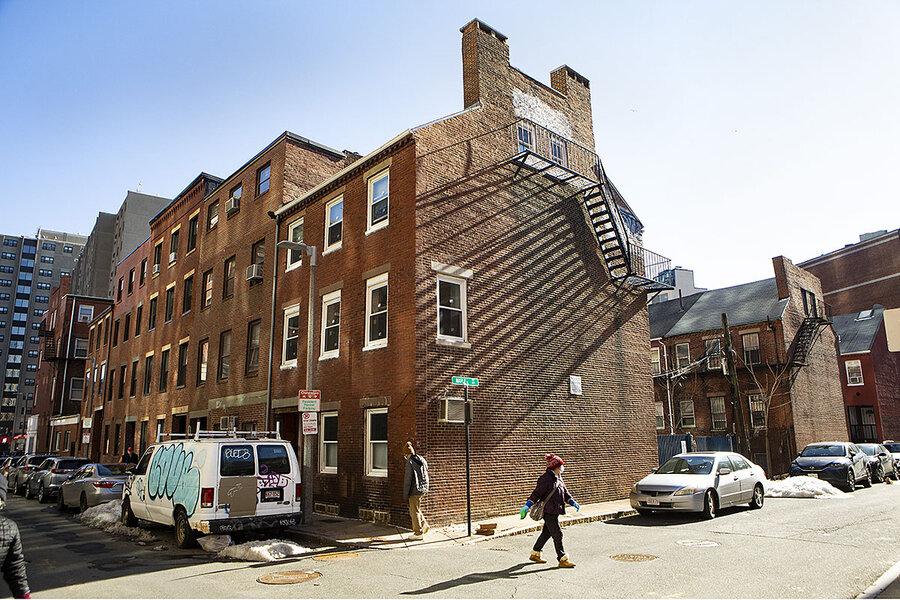
“Breathing space”
Community land trusts have been around for decades, but the trend really began to accelerate after the 2008 recession. In 2019, the Schumacher Center for a New Economics counted 215 land trusts in the U.S. and estimates that there are more than 250 today.
Basically, land trusts raise money from donations, grants, and government funds to buy property. Then they lease the house or apartment to a buyer well below market value, but the trust retains ownership of the land.
This way, occupants typically get an ownership stake in their homes. They build equity over time, but at a rate that is often capped at 1% or 2% a year.
The trust, which is governed democratically by residents and neighbors, can decide to whom the dwelling can be sold and at what price, usually through a covenant in the lease. This ensures the property remains affordable.
The land trust idea was imported to the United States by civil rights activist Charles Sherrod in the early 1970s from the kibbutzim of Israel. Mr. Sherrod saw land trusts as a way for Black Americans to buy agricultural land in the South.
“We don’t always talk about community land trusts as tools of justice, but they are,” says Andre Perry, a housing policy expert at the Brookings Institution.
Dr. Perry’s own research shows that an “intrinsic value of whiteness” persists at almost every step of home buying from the appraisal to the sale. Minorities, but especially Black people, must pay more and get less.
By taking property out of the traditional market, land trusts reduce the discrimination baked into that system and empower communities to actively fight it, Dr. Perry says.
When Susan Saegert, a professor of environmental psychology at the City University of New York, compared homebuyers and renters with land trust homebuyers in several U.S. cities, she found that the land trust buyers were more likely to be minorities, especially single mothers.
Moreover, she found that they received all the social benefits of homeownership – things like stability and a sense of home – without as many costs.

One of the most striking findings was in survey data from Minneapolis, Professor Saegert says. Freed from the stress of constantly worrying about the next rent hike or eviction, land trust homeowners there reported they had more time to pursue their passions.
“They have breathing space,” Professor Saegert says. “They can now imagine a better life than before.”
Innovation needed
In California, justice is what drives Jacqueline Rivera and her fellow housing activists in San Jose. In the heart of Silicon Valley, where even high-paid tech employees struggle to find housing, development was pushing out vibrant Black, Hispanic, and immigrant neighborhoods.
In community conversations Ms. Rivera and her colleagues held around the city in 2018, land trusts kept coming up. Ms. Rivera grabbed hold of the idea, and by 2020 she was heading up the South Bay Community Land Trust.
Success has not come easily, though.
By definition, land trusts do not make profits, and fundraising is the biggest challenge they face. To buy their first property, a fourplex in downtown San Jose, they need to fundraise at least $1 million, on top of the half million dollars they need to pay professional staff and make the organization run.
Speed is a problem, too. Developers snap up properties with cash in a matter of days, while the land trust moves “at the pace of community,” Ms. Rivera says.
Yet, in order to disrupt traditional real estate, land trusts “still have to play in the real estate game,” she adds.
Advocates stress that land trusts are just one tool in a broader approach to the affordability crisis, but it could be a more effective one with government help.
Ms. Sorce, of Grounded Solutions, says state and local governments should invest money in land trusts and change appraisal policies so land trust properties aren’t paying taxes based on their speculative value.
With or without such help, land trusts must innovate to succeed.
“When we think about community land trusts, so many times we think about just the homeownership level,” says Sheldon Clark, who recently served as president of the board of the Douglass Community Land Trust in Washington, D.C. “And that really just doesn’t cover the housing needs that we have.”
Douglass has units it’s maintaining as permanently affordable rentals and other properties set up as cooperatives. They’ve also helped tenants take advantage of a District of Columbia law that entitles them to buy their unit if their landlord plans to sell.
Really, land trust leaders say, homeownership is just one aspect of their focus on what Mr. Clark calls the “big C” in community land trusts: the community.
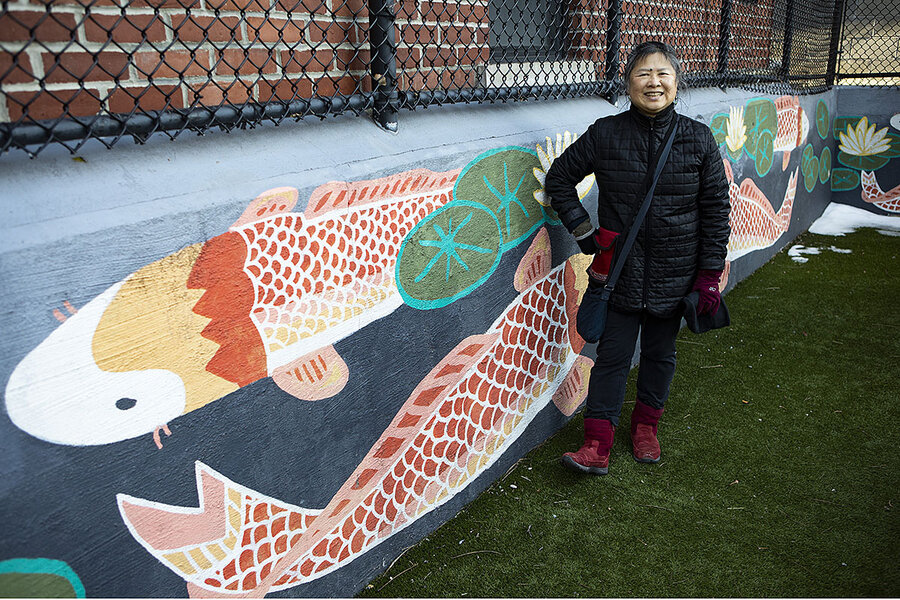
Douglass organized food drives during the pandemic and helps connect residents to credit unions, as many are unbanked. In Boston’s Chinatown, the land trust helped save a local park.
Lydia Lowe, the Chinatown Community Land Trust’s executive director, strides down the narrow streets of the neighborhood she’s fought for since the 1980s with pride and determination.
She points out low-income apartments she’s worked to save from developers on Johnny Court and buildings the land trust is eyeing near the Ding Ho takeout place on Harrison Avenue.
Ms. Lowe has needed plenty of determination since the land trust’s incorporation in 2015. “We couldn’t get anyone to give us property because they’re sitting on a gold mine,” she says.
In 2019 the land trust finally secured two row houses, seven units in total, and set about refurbishing them.
Finally one day in September 2021 the three-bedroom walk-up on Oak Street was ready. After their long wait since moving from China, Ms. Lin and her family opened the door and walked in. They could hardly believe what they saw: three cozy bedrooms, a living room with big windows, and a spacious kitchen.
Most of the apartments on Oak Street in Boston are priced from $600,000 to well over $1 million, according to Zillow. Chinatown Community Land Trust sold Ms. Lin and Mr. Zheng their apartment for about $220,000.
Ms. Lin said homeownership in Chinatown would not have been possible without the land trust.
“I’m here with my husband and my kids. I have my own family. That’s all that matters,” Ms. Lin says. And six years after coming to America, it finally feels like her family has a home.
This story is part of the SoJo Exchange from the Solutions Journalism Network, a nonprofit organization dedicated to rigorous reporting about responses to social problems. It was originally published by The Christian Science Monitor.
2015 saw a drop in terrorist attacks from the previous year, and also a drop in the number of lives taken by terrorist actions. It’s the first time terrorism has gone down since 2012, so this represents a major positive step forward.
There were about 15,000 terrorist attacks in 2015, which is around 2,000 fewer than there were in 2014. 43,000 people were killed by terrorist actions in 2014, compared to 38,000 in 2015.
Terrorism in the West was actually slightly up in 2015, but since the vast majority of terrorist attacks take place in the Middle East and North Africa, which saw the steepest decline, the global number is still down.
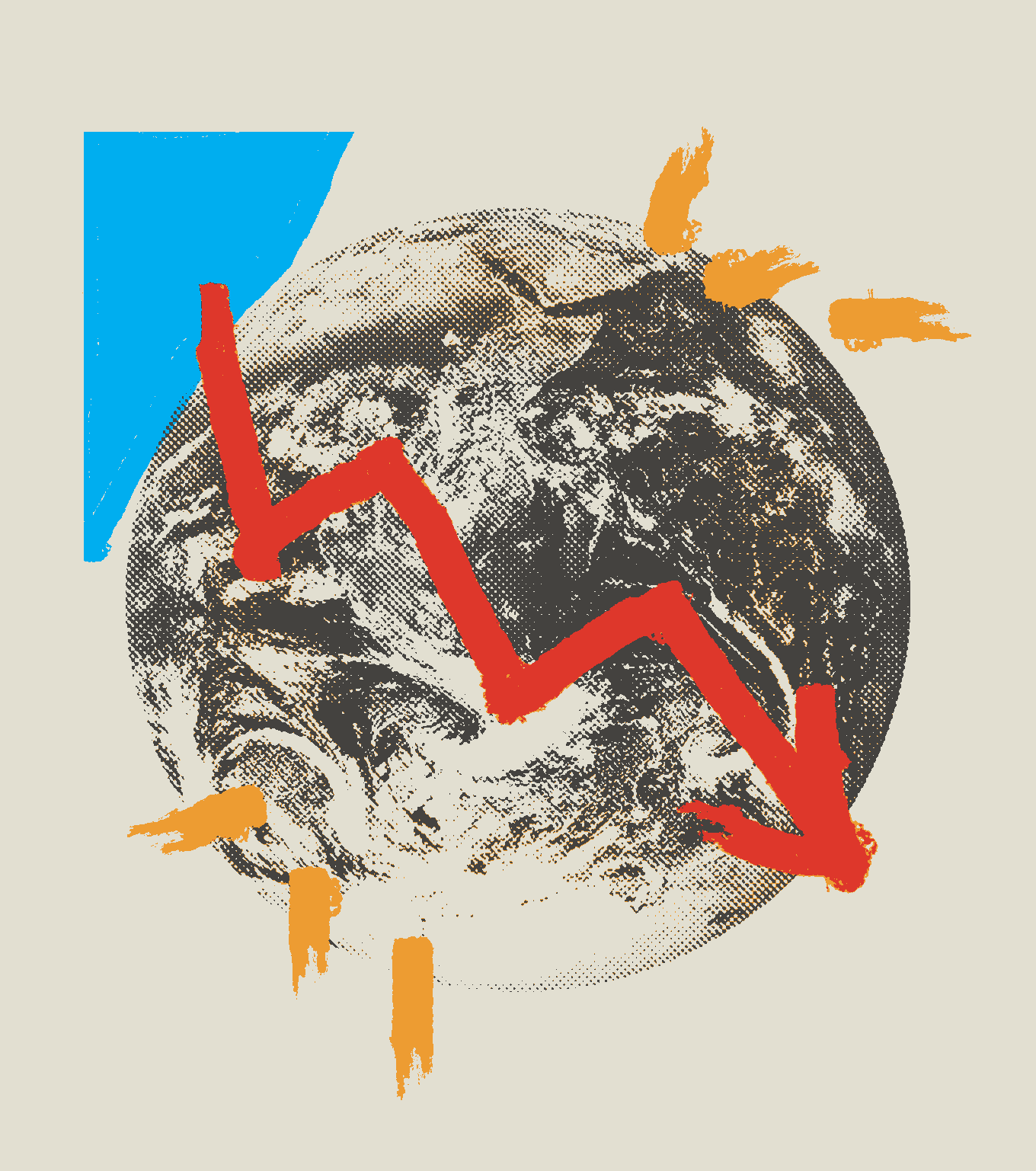
Why did terrorism take a dive? No one’s quite sure. It could be that we’re finally seeing some positive results from years of diplomacy, the product of anti-terrorism security measures worldwide, or just some good luck. It might even be the aftereffect of people banding together in the face of terrorism from Orlando to Oslo, showing a united front in the face of radical extremists.
Most likely, it’s some combination of all those factors, and many more.
Whatever the reason, it makes it more important than ever for people who are talking about terrorism to be smart and avoid fear-mongering.
Analysis of terrorism data in 2016 was not available as of publication, but regardless of what it uncovers, the most recent data reveals an important truth: Terrorism is not getting worse and worse all the time. Sometimes, it actually slows or even reverses course. We’ve all got a part to play in helping it stay that way.
A version of this article was originally published in Issue 01 of the Goodnewspaper in July 2017.
In 1996, a World Food Summit was held with 129 different countries from all over the world, in which they all pledged that they would attempt to halve the number of malnourished citizens within their borders by 2015.
At the time, the number of hungry people in the world was judged to be over 1 billion, so it was a huge undertaking, made even more difficult by unforeseen and unprecedented political unrest and climate change that has affected how easily people can get food. And yet, there’s good news.
According to the Food and Agriculture Organization of the United Nations, a majority of the countries that made the pledge actually achieved their goal. 72 of the countries successfully cut the prevalence of malnourishment by half.

Today, the approximate number of malnourished people in the world is 795 million. That’s a big number, but it’s 216 million fewer than there were 12 years ago.
The number is even more impressive when you consider the fact that the global population has increased by 1.9 billion since 1990, while the number of hungry people continues to shrink. That’s an encouraging trend.
“The near-achievement of the Millennium Development Goal hunger targets shows us that we can indeed eliminate the scourge of hunger in our lifetime,” FAO Director-General José Graziano da Silva said in a statement.
“We must be the Zero Hunger generation. That goal should be mainstreamed into all policy interventions and at the heart of the new sustainable development agenda to be established this year.”
East Asia, Latin America, southeast and central Asia, and various parts of Africa showed the biggest declines in hunger.
Sub-Saharan Africa has seen the least amount of positive growth in nutrition — nearly one in every four people living in that part of the world is undernourished — but the good news is that African countries that invested the most in agricultural infrastructure saw the biggest gains.
The next goal on the horizon is completely eradicating hunger and poverty. That’s a big goal, but the past ten years have proved that it’s a long way from impossible.
A version of this article was originally published in Issue 01 of the Goodnewspaper in July 2017.
In 1992, two lawyers named Peter Neufeld and Barry Scheck were wrestling with a growing problem in the American justice system: the number of people who were convicted on false eyewitness testimony.
Too often, in the heat and panic of the moment, people who witness crimes incorrectly remember certain details and end up convicting the wrong person.
One study found that over 70% of wrongful convictions in the US can be at least partly blamed on incorrect eyewitness testimony.
Scheck and Neufeld’s solution was to found the Innocence Project, a nonprofit legal group that uses sound science like DNA testing to help exonerate innocent people and get them back to their homes and families.
Since then, they’ve helped secure the release of 343 innocent people, 20 of whom were on death row. They’ve also helped bring the right people to justice, using their expertise to land more than 147 real perps behind bars.
Incorrect eyewitness testimony isn’t the only reason innocent people wind up in jail. According to the Innocence Project, about half the cases they’ve gotten involved in also involve bad forensic science and outdated methods of proving someone’s guilt.
Even more concerning, the group says about a quarter of cases they’ve studied involve innocent people who actually plead guilty because they were coerced into it.
To help those people and others, the Innocence Project launched what’s called the Innocence Network, a collective of law schools, journalism schools, and public defenders that team up to help get wrongfully convicted felons out of jail.
They’re working in 26 states and even overseas, in countries like Australia, Ireland, New Zealand, and the UK.
But the group isn’t interested in only temporary solutions, but also real, systemic change.
They have a whole policy team that works with everyone from local leaders to Congress, helping pass laws that make it harder to convict the wrong person and easier to get innocent people out of jail.
A version of this article was originally published in Issue 01 of the Goodnewspaper in July 2017.
Our world is a much better (and biodiverse) place because of animals. And who is better equipped to take care of those animals — and subsequently — our world, than veterinarians?
Veterinary science has become an innovative field — yes, to take better care of our dogs and cats — but also to make breakthroughs that improve the lives of all who inhabit the planet.
Veterinarian scientists are not only improving animal medical treatment, but they’re using incredible approaches to detect diseases, rescue people in crisis, create better conditions for livestock and cattle, and learn more about human health through the animal experience.
Here are some amazing veterinarians who pave the way, inspire us to do more good for animals, and make this world a better place.

Meet these inspiring famous veterinarians who inspire all animal lovers to do good —
Claude Bourgelat

Of course, it’s important to start with the founding father of veterinary medicine: Dr. Claude Bourgelat. He founded the first veterinary school in Lyons, France in 1761 after realizing there were no degree options that would allow people to practice veterinary medicine.
Bourgelat originally wanted to study law, but was deeply interested in horses and horsemanship. He studied under two surgeons and learned about animal pathology, physiology, and anatomy, leading him to found the Royal Veterinary School.
Initially, the school was partly created for students to learn how to treat livestock diseases, but with the help of students and other teachers, Bourgelat continued to build a curriculum through theoretical coursework, like studies in animal osteology, mycology, pharmacology, and more.
Just two years after the school’s founding, Bourgelat would bring his best students to the front lines to combat the ongoing cattle disease, rinderpest. After their success, the school became funded by the state and allowed Bourgelat to scale enrollment, create more veterinary schools, and by 1777, develop standards for the veterinary schools of the future.
Kwane Stewart
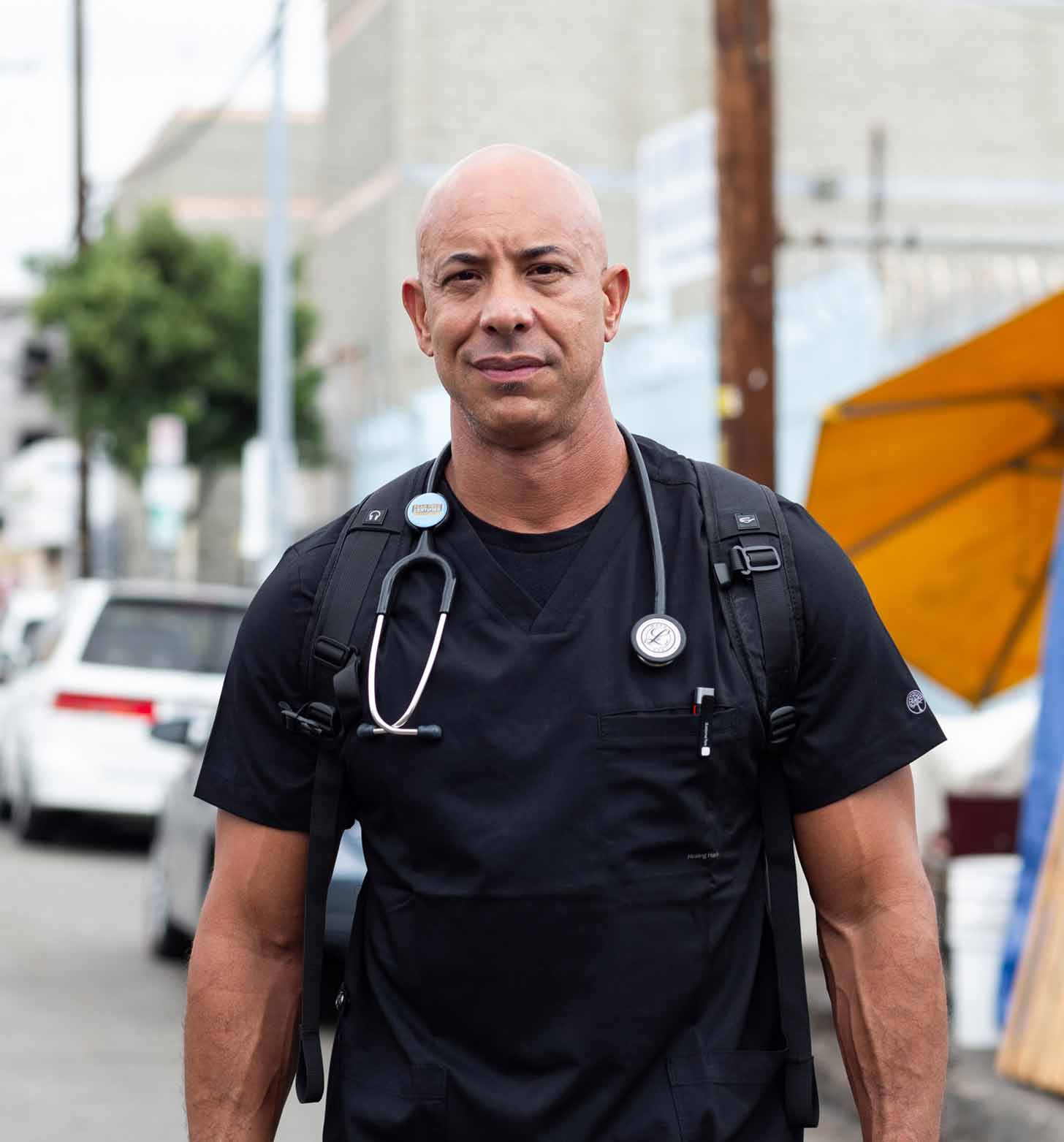
Kwane Stewart is an animal lover who grew up in New Mexico and worked to rescue stray animals. Now he’s a veterinarian who drives around California looking for homeless people with pets. He treats them — for free.
He ran an animal hospital before becoming the county veterinarian for Stanislaus County in Modesto, California, a city less than 100 miles east of San Francisco.
After the recession in 2008, "Modesto got hit especially hard,” Stewart told CNN. “It was ground zero for California as far as job loss and home loss, and people were just dumping their pets in shelters.”
He was used to serving clients who had the means to pay for expensive treatments, but suddenly he was seeing clients who couldn’t afford to help their pets. He described the moment in his career as “enlightening.”
In 2011, after the recession drove the homeless population higher, he set up a table at a soup kitchen with his girlfriend and son, “on a whim.” When people came in to get food, he offered to treat their animals.
"There was something about it that I loved,” Stewart told CNN. “I did it one more time before I decided to just take it to the street and walk to homeless people instead of waiting for them to walk up to me."
For animals who need vaccinations, medicine, or food, Stewart pays for the costs out of pocket. And when animals have more severe conditions that require treatment at a hospital, he sets up GoFundMe pages to cover the procedures.
Amir Khalil

Egyptian veterinarian Amir Khalil isn’t your average vet. He’s the director of project development at the Austrian organization Four Paws International and known as “the war vet” for his unique work helping animals in conflict zones.
"We go to places where the logic doesn't exist," he told NPR. "The government doesn't exist. No one cares. And where no one will believe you are coming to save animals. You see everyone escaping from a city like Mosul, [Iraq], going out. Thousands and thousands. And you are the only car going the other way around. You are going inside."
Khalil has led animal rescue operations and created sanctuaries around the world for more than 20 years.
He spearheaded several impressive rescues: He provided aid for animals in the Baghdad Zoo during the U.S. invasion of Iraq and in Libya’s Tripoli Zoo and in Cairo during the Arab Spring. He ran rescue missions in the Gaza Strip. He evacuated a bear and a lion — the two last survivors of the Montazah Al-Morour Zoo — in Mosul, Iraq in 2017. He rescued 13 animals from the abandoned Magic World Recreational Park near Aleppo, Syria.
He takes the animals from struggling zoos, escorts them through heavily armed checkpoints, and brings them to sanctuaries where they can live out the rest of their lives in comfort. The work is risky and dangerous — he’s had guns put to his head — but life-saving for many of the animals.
Khalil provides animals with medicine, vaccines, and food, desperately needed in areas where political conflict or economic stagnation have driven zoo administrators to their last resort.
A zoo owner in the Palestinian city of Rafah — after the death of four lion cubs who froze overnight — declawed a lioness in an attempt to subdue her and draw more visitors. Khalil worked with authorities to shut down the zoo, rescue the animals, and take them to a sanctuary.
Khalil told NPR that the reality is that “the animal has no passport, has no nationality, and is not a part of the conflict.” He just wants to do what’s necessary to save these animals.
Buster Lloyd-Jones

Buster Lloyd-Jones was an animal lover from a young age and was determined to become a veterinarian, even despite the disappointment of his father. His dream was realized when he enrolled in a training program in animal husbandry, and he would go on to become known as one of history’s most compassionate veterinarians, opening his home to all kinds of animals during World War II.
Lloyd-Jones owned an estate in the UK called Clymping Dene, and as people needed to leave behind their pets as they evacuated wartime conditions, he became the proud foster parent to a menagerie of pets, such as cats, dogs, rabbits, goats, bush babies, parrots, monkeys, and snakes. After the war, he tried to return the pets, but he ended up keeping most of them in his care.
In 1951, he founded Denes, an herbal veterinary product company, and he later wrote an autobiography: “The Animals Came in One by One.”
“Animals have an instinctive wisdom, a deeply ingrained understanding of nature, which man once had,” he wrote in his book. “I gradually began to understand how nature takes care of its own.”
Patricia O’Connor
Dr. Patricia O’Connor became a vet during a time when female vet school graduates were extremely rare. Her work helped inspire a new crop of women veterinarians, but especially those interested in treating zoo animals, as she was the first female zoo veterinarian.
O’Connor founded the American Association of Zoo Veterinarians and practiced as the Chief Veterinarian at New York’s Staten Island Zoo for 28 years.
O’Connor was hired at the zoo on an interim basis during World War II, expecting to be replaced when the war ended and male soldiers returned to the workforce. However, her work at the zoo was invaluable, and although her primary responsibility was medical care for the animals, she also served as a mammal and bird curator, and developed educational programs for the public.
When she was hired, O’Connor was one of 25 women veterinarians in the country, and zoo veterinary medicine was a brand new profession. With 600 regular patients at the zoo, she realized there were no training programs or textbooks for this new form of veterinary science.
In 1955, O’Connor published a comprehensive 465-page bibliography of the most reputable sources on wild animal diseases: “A Bibliography of References to Diseases of Wild Mammals and Birds.” This resource was the first of its kind and is still used today as a launchpad for other researchers.
Mary Knight Dunlap
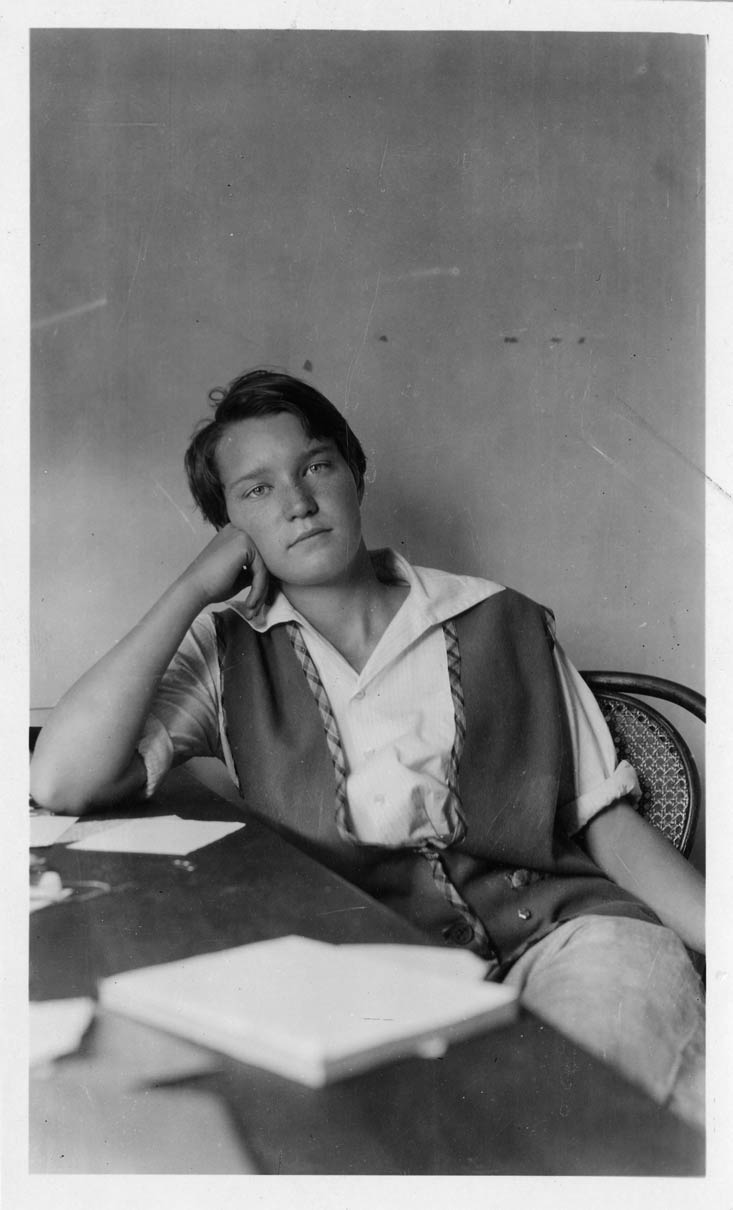
Another pioneer for women veterinarians, Dr. Mary Knight Dunlap founded the Women’s Veterinary Association to create a supportive environment for women veterinarians throughout their careers.
Dunlap wrote monthly bulletins for members, and the association worked to maintain high standards in veterinary medicine, and to act in an advisory capacity to women veterinary students and professionals. The association also went on to advocate for equal pay, parental leave, management, and leadership, and developed an anti-harassment policy.
Although the organization no longer exists in the same form, it now functions as a foundation providing scholarships to veterinary students.
Outside of this work, she was a deeply passionate veterinarian, running a house call practice, caring for zoo animals, working in a toxicology department, and writing numerous publications.
While Dunlap was an excellent veterinarian, her lasting impact is on the fight for gender equity in the veterinary profession. “Through our organization, we should offer guidance and help where it is needed, so that others will avoid our mistakes and most easily find happiness and success,” she wrote in 1947.
James Herriot (AKA James Alfred Wright)

James Alfred Wright — better known as his pen name, James Herriot — has led a number of modern veterinarians to the profession, thanks to his popular book series (often inspired by his own stories), which includes the titles “All Creatures Great and Small” and “All Things Wise and Wonderful.”
Herriot was a British veterinary surgeon, who became a successful author after sharing a number of his stories with the world, inspiring animal lovers all over the world to pursue livelihoods caring for creatures. The books were even turned into a television series.
In Herriot’s obituary, the New York Times describes his stories: “In each of Mr. Herriot’s books, a familiar stage is set: there are mystery illnesses, bad-tempered humans who always come around in the end, fussy owners who imagine their pets have a variety of ailments, and a succession of characters who attract the love of animals in spite of themselves.”
Even despite great success as a writer, Herriot continued to practice veterinary medicine in England until his death in 1995.
Temple Grandin

Dr. Temple Grandin is known for her autism activism, but what many often forget is that she is a renowned animal behavior scientist and animal rights activist, as well.
Grandin is a prominent proponent for the humane treatment of livestock for slaughter and has designed handling systems that minimize pain and fear for animals. She is also currently a faculty member with Animal Sciences in the College of Agricultural Sciences at Colorado State University and has written over 60 scientific papers on animal behavior.
Grandin has also published a number of books, exploring autism, animals, and the overlap between the two topics. Titles like “Thinking In Pictures” and “Animals Make Us Human” are pinnacles of Grandin’s work, teaching humans how to best care for animals, and what they can teach us about human behavior.
“I believe that the best way to create good living conditions for any animal, whether it’s a captive animal living in a zoo, a farm animal, or a pet, is to base animal welfare programs on the core emotion systems in the brain,” she wrote in “Animals Make Us Human.” “... All animals and people have the same core emotion systems in the brain.”
Cindy Otto

Dr. Cindy Otto is the founding director of the Penn Vet Working Dog Center at the University of Pennsylvania School of Veterinary Medicine. Opened in 2012, the center prioritizes education, research, and gathering information to improve the health of the working dog.
Otto had been interested in working dog training since her early education, but she was most inspired to open the center after 9/11, seeking to train dogs to make the world a better and safer place. Otto was part of the FEMA (Federal Emergency Management Agency) Task Force that responded to 9/11, providing veterinary care for the search and rescue dogs who served at Ground Zero.
She has used that experience to continue training and caring for dogs at the center. These canines are trained to prevent terrorism, work with first responders to detect explosives and narcotics, rescue victims of disasters or accidents, and detect medical conditions like cancer and diabetes. Otto’s team at the center also worked on a COVID-19 detection study with dogs to sniff out the virus.
Otto is a board-certified veterinarian and contributes vastly to the field, with over 60 published journal articles, 10 book chapters, and lectures on emergency medicine, disaster medicine, and working dogs.
“These dogs are so valuable,” Otto said in an interview with Big Barker. “How can we look at these dogs? How can we train these dogs? What genetics can we learn about these dogs, to help keep making these dogs better, healthier, more able to do this, in the best way possible?”
David Sisson
Dr. David Sisson has led a revolution in canine cardiac medicine, founding a nonprofit program that came to be called CanPacers. The program uses donated pacemakers to advance research and provide affordable treatment to pet owners.
Sisson’s work took shape when a pacemaker manufacturer came to him about the idea of using outdated pacemakers to develop and improve cardiac treatment in canines. Sisson is a professor of small animal medicine at Oregon State University, where his research focuses on cardiac imaging, cardiac arrhythmias, cardiac biomarkers, valvular diseases in dogs, and repair of congenital heart disease.
His work has been pivotal in diagnosing and treating heart conditions in dogs. Using technology like a CT scanner that can scan a dog’s entire heart in 15 seconds, Sisson aims to build technology that is equal parts innovative and reasonable.
“He believes in developing and using the most advanced technology possible to enhance animals’ lives and health, but at a cost that’s reasonable to clients and to society,” Patricia Rodriguez writes of Sisson’s work for Veterinary Practice News. “In his mind, that means concentrating on minimally invasive, less-expensive techniques for solving problems such as congenital heart defects.”
Timothy Bentley
Director of Purdue University’s Canine Brain Tumor Research Program, assistant professor Dr. Timothy Bentley is an expert in veterinary neurology and neurosurgery. Due to Bentley’s leadership, cutting-edge research has made brain cancer a much easier-to-diagnose condition in canines, allowing for greater discoveries for treatment and diagnosis for both dogs and humans.
Researching diagnosis, surgery, and chemotherapy, Bentley’s teams have learned how to diagnose canine brain cancer with MRIs and approach the condition with vaccine immunotherapy, new surgical techniques, and chemotherapy. Bentley researches topics like biomarkers, treatments for seizure and epilepsy, and strokes.
The research program at Purdue boasts amazing and innovative results, like that of Vanilla Bean, a patient who underwent Canine Glioma Surgery and went into complete remission after the success of the surgery and chemotherapy.
Katrina Warren

Dr. Katrina Warren is a celebrity veterinarian from Australia, who uses her veterinary expertise and media savvy to help pet owners enhance their special bonds with their pets. She is known for her work as a TV presenter and host, currently working as the regular vet for Australia’s TODAY Show, and previously as the host of “Beverly Hills Vet” and “Housecat Housecall” on Animal Planet.
Outside of television, Warren has written a dog training book and training platform called Wonderdog School, offering dog parents a convenient and affordable option for dog training. Warren’s platform also includes informative social media posts, pet loss support, and event offerings for animal lovers everywhere.
Warren is also an ambassador for a number of nonprofits, such as Assistance Dogs Australia, Animal Welfare League NSW, Animals Asia Foundation, National Breast Cancer Foundation, and Lifeline Australia. She lives happily in Sydney with her daughter, cat, and golden retriever.
A version of this article was originally published in Issue 12 of the Goodnewspaper.
You can become a subscriber and get a monthly Goodnewspaper today.
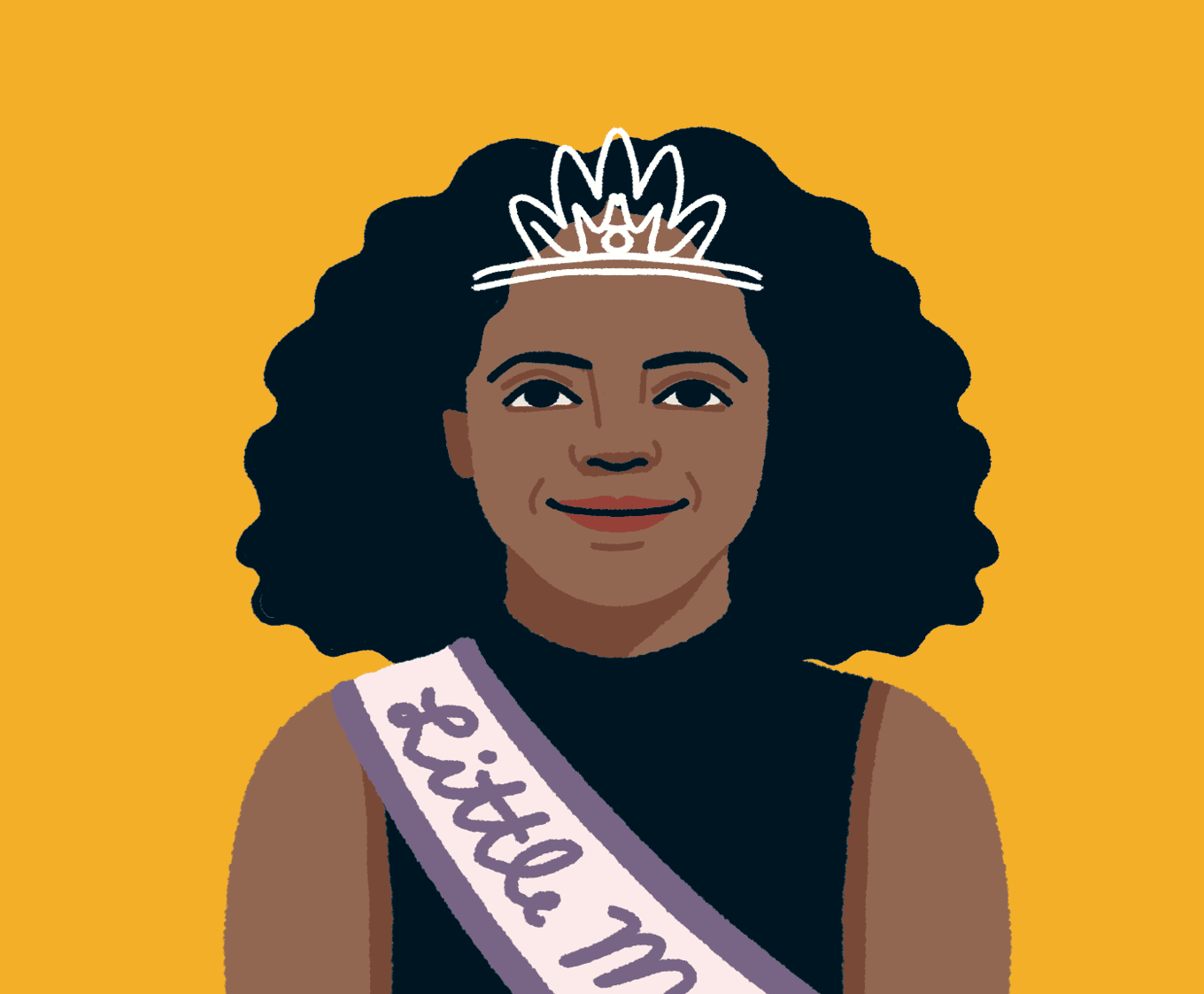
Mari Copeny, best known as “Little Miss Flint,” has spent her entire life fighting the water crisis.
No, that isn't an exaggeration: since she was 12-years-old, the Flint native has been the face of Flint's water crisis — one that's still very much active today.
Starting in 2014, the city of Flint, Michigan made national headlines over its public health crisis when the drinking water became contaminated with lead.
As the story goes, during a budget crisis, Flint changed its water source and failed to apply the correct protection that would prevent lead from pipes from bleeding into the water supply. Experts estimate that approximately 100,000 residents were exposed to the polluted water.
According to WNEM-TV, between “6,000 and 12,000 children were exposed to drinking water with high levels of lead.” Children, not having fully developed immune systems, are particularly at risk for the dangers of lead poisoning. Damages can include a “reduction in intellectual functioning and IQ, an increased chance of Alzheimer's disease, and Legionnaires' disease.”
The crisis grew so great that then-President Barack Obama declared a federal state of emergency for Flint. But in the years that followed, the crisis would continue, prompting its citizens into pushing for legislative change that would bring clean water to the city.
As a result of a situation with life-or-death implications, Mari Copeny’s childhood became one of necessary advocacy. And from there, Little Miss Flint was born.
“Our schools need upgrades. We need roads fixed, we need jobs, we need change,” she said in an interview with Do Something. “We need leaders that have a heart and care about everyone and not just the interests of big business and the top 10 percent. We need to protect dreamers, we need to protect kids in the most vulnerable areas, we need love and for people to care about their communities.”
Needless to say, Little Miss Flint touched the hearts of Americans by appearances on talk shows, interviews with media outlets, and even notably writing to President Obama — who then accepted Mari's invitation to meet with her to discuss the crisis at hand.
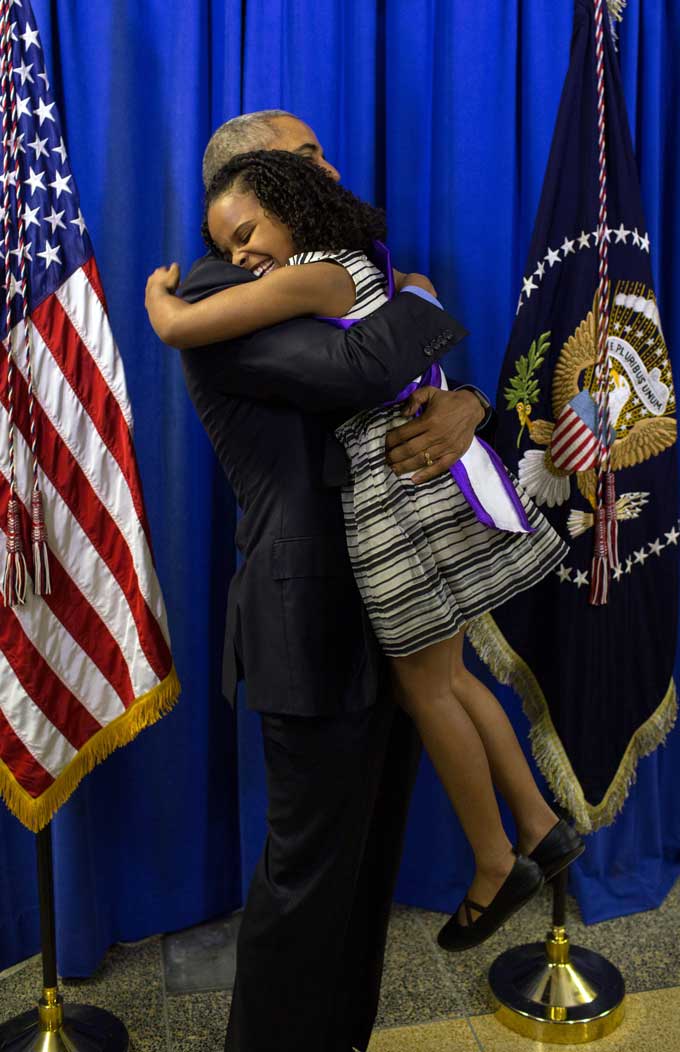
But even as the nation moved on, Mari didn't. To this day, she is still raising awareness for Flint and other towns affected by similar water crises.
“My community is still very much in crisis, and every day I learn of other communities dealing with the same issues. I want to be able to look back and say, ‘Yes, I did my part to fix this,’” Copeny told Nylon.
“Being an activist has given me a chance to have friends from all around the world. I love being able to support other activists and to keep on speaking up on issues that matter the most to me. We are all one big family. I could never just walk away from that.”
But as public as her activism has been, Mari has also stressed the importance of how her childhood has been dedicated to a cause — a cause that, at times, it seems like lawmakers have forgotten about.
Even though the public has been overwhelmingly supportive of the idea of a young child getting involved, it’s important to remember that the water crisis is not her fault, nor her responsibility to fix — something that she has been more and more vocal about.
“It is our responsibility to go to school, do our homework, keep our chores done, and worry about sports and other hobbies,” Copeny told Nylon. “But the fact is, we are being directly affected by so many life-altering issues that, if we don't step up and take the lead now, we may not get a future where we do get to grow up.”
While her advocacy has been invaluable in getting Flint the support it desperately needs (and deserves), it’s also inspired other activists to never stop fighting for their communities.
Copeny’s impact goes beyond just Flint; she’s also a Youth Ambassador for the Women's March on Washington, Equality for HER, and the People's Climate March.
As she grows up, she represents a generation of young people who are no longer waiting around for things to change; instead, they’re taking matters into their own hands and knocking on lawmakers' doors to advocate for their communities.
“Stop acting like you support us when you know that you are going to keep supporting policies that hurt us and put our lives and futures in danger. Start listening to us and make sure that the laws and policies you pass actually prove that you are listening,” she implored to politicians in an interview with Nylon.
“Stop using us kids as photo props because we are fed up with the empty promises and lack of urgency to support us.”
While Little Miss Flint is iconic in her own right, Mari Copeny is an important voice in how to make a real impact while staying true to herself and her community.
A version of this article was originally published in The Water Edition of the Goodnewspaper.
Making the decision to seek therapy is a big step. It can be difficult to know where to start or who to turn to for help, and these days, it can feel as intimidating as finding your life partner when searching for an inclusive, affordable therapist who works well with your needs and mental health goals.
Thankfully, there are tons of resources out there to guide us in this unique, individualized process. Whether you’re just starting your search or feeling stuck trying to make an adjustment in your mental health care plan, we’ve compiled a comprehensive guide to finding a therapist.
What is therapy and how does it work?
Therapy is a process of exploring your thoughts and feelings with a licensed mental health professional. A great therapist can help you gain valuable insights, provide support and guidance when you are facing challenges, help you confront and heal trauma, and give you the tools to create a life you love.
Therapy generally takes place on a weekly basis, but the frequency may vary depending on your needs. Therapists are bound by confidentiality laws, which means that what you discuss in therapy will remain private.
Many people think of therapy as a way to deal with negative life events or mental health challenges. While therapy can be helpful in those situations, it can also be a positive force in your life even when things are going well.
You may approach therapy as preventative care, or as crisis care, and it’s important to evaluate those needs when seeking a therapist.
Do you want someone who will laugh at your jokes and recommend you podcasts? Are you looking for a no-funny-business practitioner who will set you on the right track? A little bit of both? You will need to consider your level of need, the kind of therapist who will guide you through your goals, and what kind of methods will get you there.
It’s a lot, and all of the possibilities can seem overwhelming, so let’s break it down a little more.
How to know if you need therapy
While many would argue that almost everybody could benefit from therapy of some kind, there are certainly a few questions you might ask yourself if you’re seeking specific care for a mental health condition. If you're not sure whether therapy is the right next step for you, here are a few questions to get you started:
- Do you find yourself struggling to cope with day-to-day life?
- Are you regularly overwhelmed by stress or anxiety?
- Do you find it hard to concentrate or focus on tasks?
- Are you drinking or using drugs more than usual?
- Do you feel like you're constantly on edge, or that you're just not yourself?
- Do you have a personal goal you want to achieve, but find yourself getting in the way of making progress?
If any of these questions or concerns ring true for you, therapy may be a good option. Therapy can provide vital support during especially difficult times (like, say, a global pandemic) and can help you to develop healthier coping skills. It can also be a space to explore your thoughts and feelings and to gain a better understanding of yourself.
Ultimately, therapy is about taking care of yourself and finding ways to live a happier, healthier life. You deserve a therapist who can lead you to care, safety, and progress.
Different types of therapists
If you're considering therapy, you may be wondering what kind of therapist is right for you. If you’re just starting on your therapy journey, you may be asking “wait, there are different kinds of therapists?”
We’re not telling you to search for a therapist by their astrological sign or Enneagram type, but rather by their level of expertise.
Are you looking for a diagnosis? General mental health upkeep? A provider who can guide you through a specific event, challenge, or condition?
The first step is to understand the different types of therapists and what they specialize in. Here are some of the most common types of mental healthcare providers:
Psychiatrists
Psychiatrists are medical doctors who can prescribe medication and provide cognitive behavioral therapy — or what is known as “talk therapy.” Many times, psychiatrists will work in collaboration with a therapist or counselor to provide you with medication.
Psychologists
Psychologists have a doctoral degree in psychology and can provide various forms of therapy therapy. While psychologists do similar work to therapists and counselors, they may also do more research and teaching in the field.
Licensed clinical social workers
Social workers have a master's degree in social work and can provide therapy and case management. Social workers may also specialize in helping families or working with other legal systems to take care of their clients.
Marriage and family therapists
Marriage and family therapists have a master's degree in counseling or a related field and can provide therapy to couples and families.
Counselors or therapists
Therapists have a bachelor's or master's degree in counseling and can provide a multitude of therapeutic modalities. Therapists or counselors are usually the most common care providers when starting your mental healthcare journey and may work in tandem with any of the above professionals to get you the support you need.
Different kinds of therapy
Similarly, there are therapists that specialize in specific modalities, identities, diagnoses, and more.
For example, if you're an LGBTQ+ person of faith, you may want to seek out a therapist who specializes in LGBTQ+ issues and has context on your faith tradition. If you're struggling with addiction, you may want to seek out a therapist who specializes in addiction counseling. The important thing is to find a therapist who understands your needs and who you feel comfortable talking to.
Beyond identity, you may also want to consider what kind of therapy would be most beneficial for your needs. It’s okay to not know the best approach when you’re first seeking care, but this (long but not comprehensive) list can give you some insights into how a therapist may provide care.
Cognitive behavioral therapy
Cognitive behavioral therapy (CBT) is the most common type of therapy and is often called “talk therapy.” CBT is used to explore the relationship between a person’s behaviors, thoughts, and feelings, working to uncover harmful or unhelpful thought patterns. The therapist will discuss these thoughts with their client and may use some exercises to work through these thoughts and feelings.
People who experience anxiety disorders, depression, bipolar disorder, eating disorder, schizophrenia, or trauma-related disorders may benefit from CBT.
Dialectical behavior therapy
Dialectical behavior therapy (DBT) is similar to CBT but often incorporates more action steps. DBT focuses on regulating emotions, being mindful, and accepting uncomfortable thoughts. A therapist might use DBT to help a person work through change with tools, practices, and exercises.
DBT has been known to help those suffering from eating disorders, post-traumatic stress disorder (PTSD), substance abuse, or mood disorders.
Eye movement desensitization and reprocessing therapy (EMDR)
Eye movement desensitization and reprocessing therapy (EMDR) is a technique that therapists primarily use to treat people with PTSD or anxiety disorders. It involves recalling a traumatic event while performing specific eye movements, which distract the client from the traumatic memory and helps reprocess their responses.
Exposure therapy
A form of CBT, exposure therapy helps with treatment of fear and anxiety disorders by safely introducing anxiety triggers and putting healing methods into practice.
Therapists might use exposure therapy to help treat obsessive-compulsive disorder (OCD), PTSD, or phobias.
Interpersonal therapy
Interpersonal therapy includes therapists evaluating a person’s social interactions to notice and cope with negative patterns by working with others. Interpersonal therapy includes approaches like family therapy, couples therapy, or group therapy. These settings can help with a number of challenges or conditions and help a person see that they are not alone, offering an opportunity to support each other or heal together.
Creative arts therapy
Art therapies aim to engage clients through modes of creativity like art, dance, music, or poetry. This allows expression through a different medium and can improve cognitive function, emotional strength, self-esteem, and conflict resolution.
These are only a handful of the most popular therapy modalities. A full list can be found via Psychology Today.
Where to find the right therapist for you
Now that you may have identified what you're looking for in a therapy experience, it's time to start your search. If you have health insurance, you might begin by calling your insurance company and ask for a list of in-network providers.
Once you have a list of names, you can research them online, check out their qualifications (education, licensure, etc.) and see if they could be a right fit for you.
In addition, if you have a good relationship with your doctor or primary care provider, asking them for recommendations can be helpful. They know your experiences and can help pinpoint specialists that can support you. This is also helpful if you'll be paying for therapy through insurance.
If you don’t have insurance or are looking for a more detailed approach to finding a therapist, there are a number of free resources you can utilize. We have listed a few below!
Psychology Today
Psychology Today provides the largest known therapy directory online. You can refine your search with a number of specifics, such as zip code, insurance, area of specialty, race, gender, religion, and more.
Inclusive Therapists
Inclusive Therapists is the place to be for those with marginalized identities who face systemic challenges like microaggressions, prejudice, language, or financial barriers. This resource aims to make finding a therapist a simple and safe process, centering the needs of BIPOC and LGBTQ+ individuals, as well as honoring the full neurodiversity spectrum and people of all disability backgrounds.
Inclusive Therapists hand-matches people with therapists to provide identity-affirming and culturally-responsive care.
Mental Health Match
Mental Health Match has a matching tool that helps people efficiently find therapists they can trust, while maintaining privacy and confidentiality. The service asks clients five sets of questions to help find the right therapist in their zip code.
Therapy Den
Created by mental healthcare providers, Therapy Den aims to make the process of finding a therapist easier for everyone involved. Therapy Den allows therapists to list and market themselves, engaging with new clients in a supportive and safe environment. The site is broken down into individual, group, family, couples, teen, and youth therapists, as well as medication management providers.
Open Path Collective
Open Path Collective is a nationwide nonprofit supporting a network of mental health professionals providing in-office and online mental healthcare at a steeply reduced rate.
Clients can search their directory of therapists, refining their search by modality, race and ethnicity, language, and more. Open Path specifically serves clients who lack health insurance or whose health insurance doesn’t provide adequate mental health benefits, offering a choice in affordable care.
Questions to ask when interviewing potential therapists
Once you've found a few therapists that seem like a good fit, it's time to set up an appointment for a consultation. This is a chance for you to meet the therapist and ask any questions you have, and for the therapist to get to know you and see if their treatment approaches would be beneficial for you.
The decision to see a therapist is a very personal one, and it's important to find someone you feel comfortable with.
Here are some questions to keep in mind when you're interviewing potential therapists:
- What is your experience with treating my specific issue?
- What is your treatment approach?
- Do you have any methods that you use to help your clients relax and feel comfortable?
- What are your thoughts on medication?
- What are your rates and do you offer sliding scale options?
- What are your availability and cancellation policies?
- How long do you usually see clients?
Asking these questions will help you get a better sense of whether or not a therapist is a good fit for you. Trust your gut, seek the opinions of those who care about you, and remember that if it doesn't feel like the right fit, there is still a therapist out there for you.
How to pay for therapy
One of the most common concerns people have when starting therapy is how they will pay for it. The cost of therapy can range from $50 to $250 per session, depending on the therapist's training and experience.
There are a few different ways to pay for therapy, including using private insurance, sliding-scale fees, or paying out-of-pocket.
If you have private insurance, your therapist may be able to work with your insurance company to get some or all of the cost of therapy covered.
If you don't have insurance, if your insurance doesn't cover therapy, or if your therapist doesn’t accept insurance, you may be able to find a therapist who offers sliding-scale fees. This means that the therapist charges a lower rate based on your income.
Finally, there are a number of organizations that provide low-cost or free therapy, such as community mental health centers and university counseling clinics.
Don't let the cost of therapy keep you from getting the help you need. With a little research, you should be able to find a therapist who fits both your needs and your budget.
Good Good Good Mental Health Resources:
- The Best Mental Health Podcasts To Help You Learn And Grow
- Good Good Good’s Guide To Mental Health Resources
- Mental Health Apps & Resources Supporting Black Americans
- How to Help Someone Who's Contemplating Suicide
- Asking the Hard Questions Doesn’t Have To Be Scary — And It Could Save A Life
- Get The Mental Health Edition of the Goodnewspaper
- The Best Conversation Card Decks For Deeper Relationships
- Ideas For Mental Health Awareness Month
Mental Health Good News:
- The Best Positive Mental Health News Stories
- A Study Found Suicides Fell When Gay Marriage Was Legalized
- The Story Behind the 'Don't Give Up' Yard Signs Encouraging Neighbors Around the World
- This Social Worker Is Using Sports and Streetwear to Reach People
- Good News: Meet These Frontline Heroes Worth Celebrating
After a student won a refund for the jab against cervical cancer, campaigners are pushing for universal access
— Health officials ordered to refund student for HPV jab
— Campaigners hope case will set precedent for free access
— Economic pain makes buying vaccines unaffordable for many
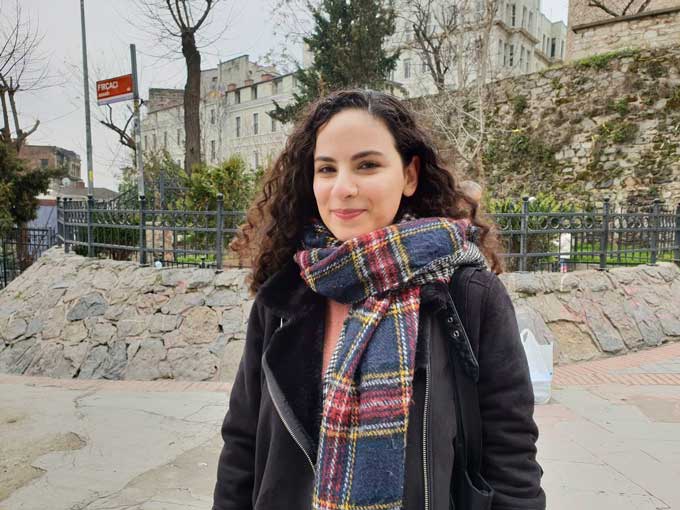
ISTANBUL, April 8 (Thomson Reuters Foundation) - When Turkish university student Yagmur Varkal found out she would have to pay for a vaccine protecting her against cervical cancer, she took health authorities to court to get a refund - winning a landmark victory.
Buoyed by her win last month, other women have since filed legal action to demand free access to vaccines against human papillomavirus (HPV), which more than 100 countries already provide to girls, according to the World Health Organization.
Campaigners in Turkey hope the Ankara court ruling could set a precedent, and pave the way for universal access.
"We're very happy about the outcome. Our legitimate cause has been validated," said Varkal, 24, whose legal fight was backed by the Children and Women First Association campaign group.
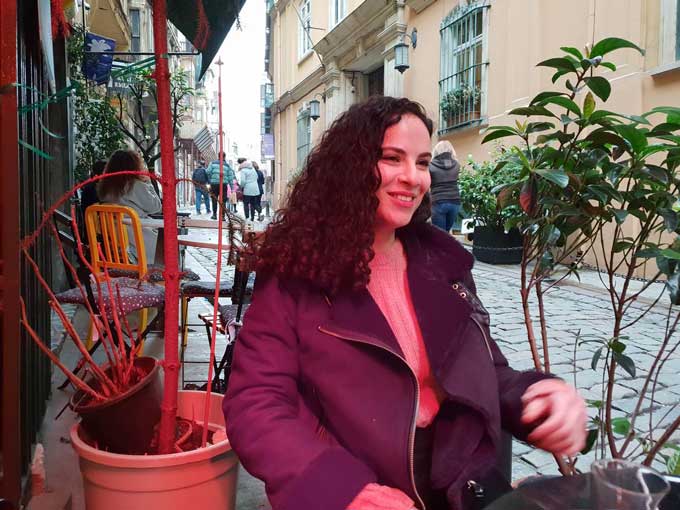
"But we will not stop, our main target is to make sure that the vaccine is available for all girls and boys," Varkal told the Thomson Reuters Foundation.
The Health Ministry did not immediately reply to a request for comment on Varkal's case.
One of the most common sexually transmitted diseases, HPV normally causes no symptoms and goes away on its own. But the virus can cause cancer of the cervix in women and transgender men, as well as cancers of the throat and penis.
Cervical cancer is the fourth most common cancer in women globally, and claims about 1,250 lives in Turkey each year.
Vaccinating girls against HPV can cut cervical cancer cases by about 90%, studies have found, prompting a growing number of countries to offer free vaccination - most commonly for girls aged from nine to 14, when they are most effective.
But Turkey, which has a population of more than 84 million, has yet to include the HPV vaccine on the list of vaccinations it provides without charge.
At the same time, economic woes that have seen inflation reach 20-year highs and the currency halved in value against the dollar over the past year have made paying privately less affordable for many.
At 2,372 Turkish lira ($160) – more than half the monthly minimum wage following the currency collapse – the vaccine is too expensive for most Turkish women and girls.
Conservative Values
Access to HPV vaccines varies across the region. They are routinely provided in 37 of the 53 countries in the WHO's European region, which includes Turkey.
Greece, Armenia, and others fully cover immunization costs, while residents of Ukraine, Azerbaijan, Lebanon, and Iran have to pay for their own vaccines, according to data from the HPV Information Centre, an information hub co-led by the International Agency for Research on Cancer.
Candan Yuceer, a Turkish doctor and member of parliament, estimated that fewer than 1% of Turkish women and girls have been vaccinated against HPV.
"This ratio means that (vaccination) doesn't exist. It's unacceptable to ignore these deaths when thousands of lives could be saved," Yuceer said.
Conservative social values are also a barrier to broadening access to the jabs in Turkey, where public conversations about sex or women's health are typically considered taboo, women's campaigners said.
Zeynep, a 36-year-old woman from Istanbul, said she felt "angry, scared, and upset" after becoming infected with HPV because of the social stigma attached to sexually transmitted diseases.
"Coming from a conservative family, I blamed myself," said Zeynep, who asked not to be identified by her real name.
But after talking with friends, Zeynep realised that many of them had also had the virus.
Class-Action Lawsuit
Activists say Varkal's March 10 victory at an Ankara court over the government-run Social Security Institution, which funds healthcare including vaccines, sets an important precedent that could eventually lead to widespread access to the HPV jab.
More than 25 women have applied to Turkish courts for their own refunds as part of a class-action lawsuit supported by the Children and Women First Association, which has also worked with pharmacists lobbying for free vaccination.
"There is only one goal left before us: a decision must be made by politicians to include the HPV vaccines in the national immunization program," said Cem Kilinc, a pharmacist leading the free vaccination campaign.
Nilda Baltali, of the Children and Women First Association, said that until the vaccine is offered free of charge, women will continue to face a higher risk of cancer.
"Our efforts are for the right to life," she said.
($1 = 14.6678 liras)
This article was originally published by the Thomson Reuters Foundation, the charitable arm of Thomson Reuters, that covers the lives of people around the world who struggle to live freely or fairly.
Workers at Africa’s first all-female mine say their jobs have given them a fresh start and financial independence
— The mine says it is the first in Africa with an all-female staff
— These jobs offer a lifeline to rural women escaping violence
— The project also aims to champion women in mining
At first glance, the Zimbaqua mine in Zimbabwe looks normal: a series of shallow craters dotted with workers in overalls and hard hats toiling to unearth the treasures below.
But a closer look reveals something unusual. In an industry dominated by men, everyone working to unearth prized aquamarine gems from the yellow soil is a woman.
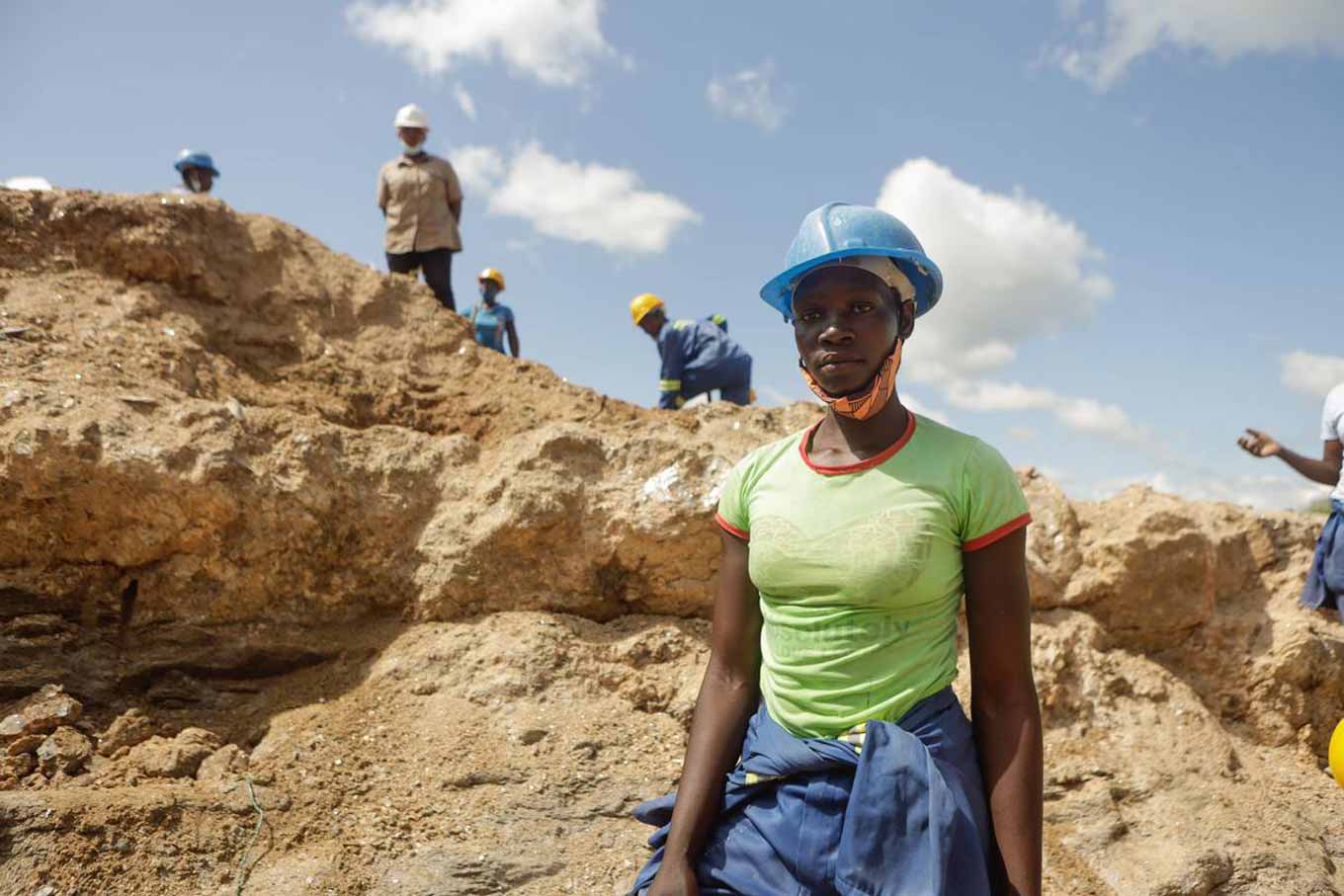
"I no longer have to bother the father of my children because I am paying school fees for the two of my children who are in primary school," said Shupi Kabudura, 33, who became a miner after fleeing an abusive husband with her three children.
"I also buy essentials such as clothes and food."
Kabudura is among about 25 women employed by Zimbaqua, which bills itself as the first mining firm in Africa to be staffed entirely by women.
Many are forging a new life with each other's support after escaping abuse such as rape, domestic abuse, or forced marriage.
About one in five Zimbabwean women said they had suffered violence from their partner in the previous year, found an official 2015 survey, and child marriage remains rife despite being outlawed by the Constitutional Court in 2016.
Women in rural areas are often forced to remain in violent marriages because they rely on their husbands financially, said Rumbidzai Gwinji, a mine manager at Zimbaqua, which is located in the farming area of Karoi in northern Zimbabwe.
"This project has become a solution to women in such situations," she said.
"It has given them choice over the environment and lifestyle they want for not only themselves, but also for their children."
Outnumbered and Abused
Zimbaqua was opened in 2019 by Iver Rosenkrantz, a Danish gem expert who has lived in Africa for more than 15 years, and Zimbabwean Patrick Tendayi Zindoga.
"This (firm) came after realizing that women are not given the same opportunity as men, especially in the mining sector," said Gwinji.
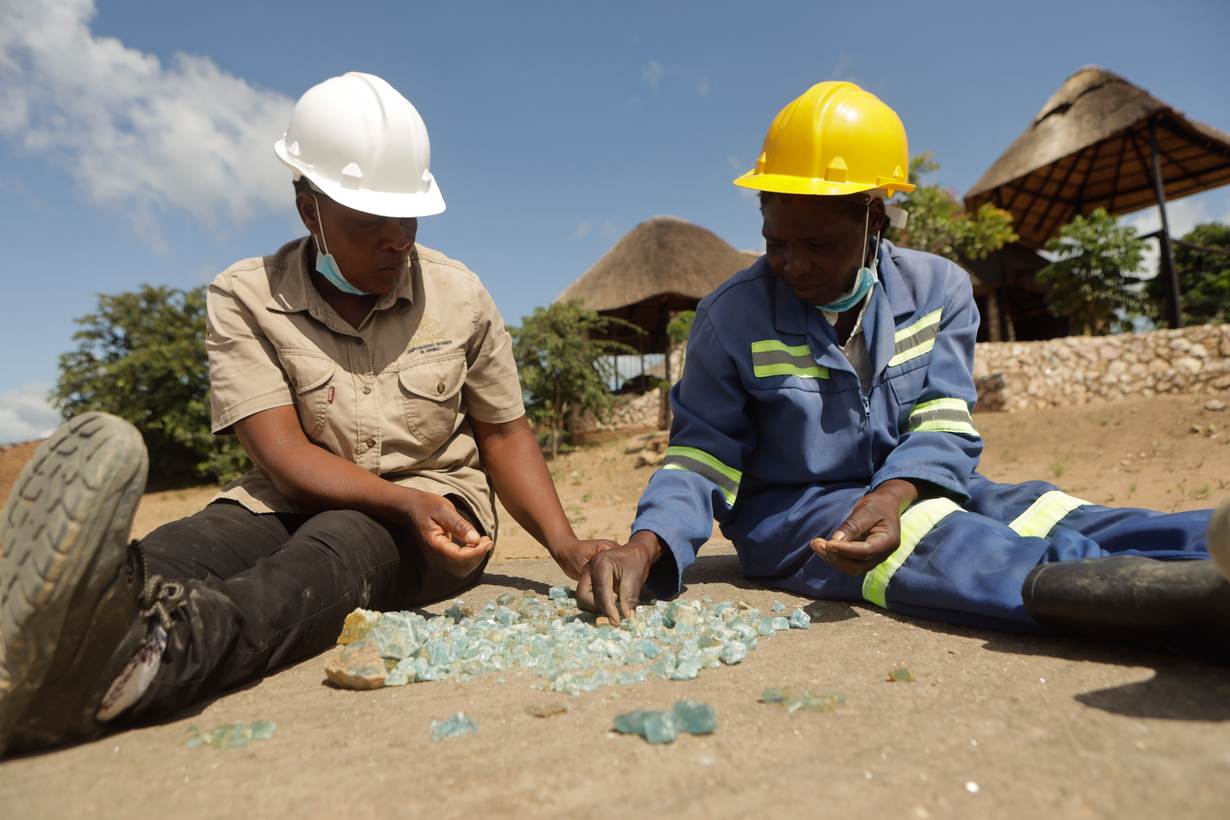
Zimbaqua's workers dig for the mine's rich deposits of aquamarine, a pale blue to light green gem that is highly prized by jewelry designers and collectors around the world.
It is hard labor. The women use hammers to break up rocks and reveal the aquamarine, which is easily visible due to its bright color shining out from the surrounding stone.
In return, they get a decent salary equivalent to about $295 per month.
But they are outliers in an industry that is overwhelmingly staffed by men.
Women make up about 10% of the country's artisanal and small-scale miners, found a 2016 report by the Pact Institute, a Washington D.C.-based development nonprofit.
Neighboring South Africa's mining industry has a similar gender disparity, although the number of women in the industry is growing.
"Women are few in the mining industry due to challenges they face, including verbal abuse and labeling from male counterparts who believe they are of the weaker sex," said Kundai Chikonzo, founder of the Insiza Women In Mining Trust.
Men often do not allow their wives to work as miners, said Chikonzo, and women lack equal opportunities for promotions.
Projects to get more women into the industry can improve women's prospects and boost the wider economy too, she added.
'Safe Haven'
Zimbaqua staff said their jobs had given them financial independence and new hope after they escaped abuse.
Miner Paidamoyo Kuronga, 21, said she had struggled to make ends meet as a single mother to a young daughter until she learned about opportunities at Zimbaqua.
"I was so excited to get my first ever job," she said.
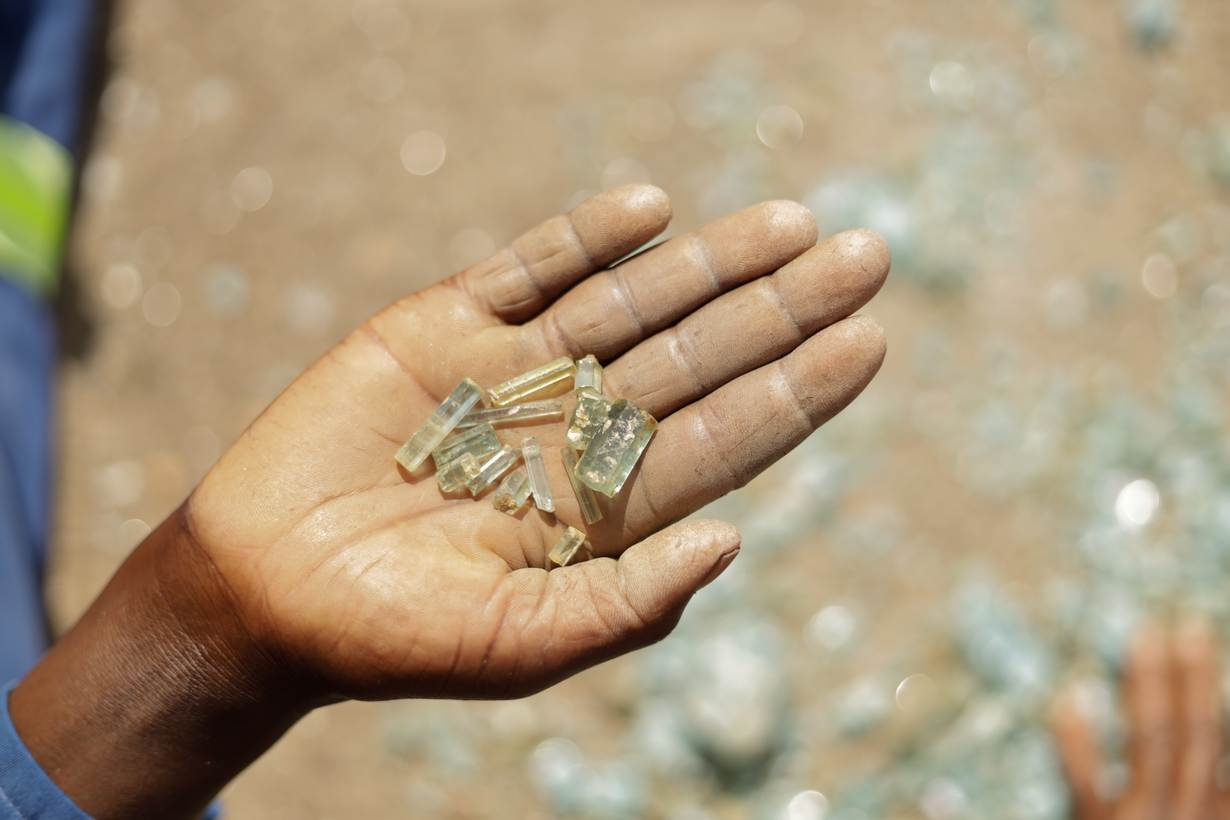
Now, she is considering returning to school for a mining-related course to further her career in the industry.
Gwinji said the mine is working on plans for a daycare center close to the mine for the children of employees.
New mothers working at Zimbaqua are given three months' maternity leave on full pay and get regular breastfeeding breaks when they return, she added.
Workers at Zimbaqua said the mine not only had offered them a fresh start, but represents a beacon of hope for others hoping to escape domestic abuse.
"I know there are other women out there who are experiencing (gender-based violence). I hope our company will grow so that more women can come to this safe haven," said Kabudura.
Reporting by Farai Shawn Matiashe; Editing by Sonia Elks. This article was originally published by the Thomson Reuters Foundation, the charitable arm of Thomson Reuters, that covers the lives of people around the world who struggle to live freely or fairly.
In January 2018, Cape Town declared a national emergency: the city of 4 million people was three months away from running out of municipal water.
The world was stunned. “Day Zero”, as local officials named April 12th, 2018, had been brought on by three consecutive years of poor rainfall. That same day in April was to be the date of the largest drought-induced water failure in modern history, according to Bloomberg.
Yet three years on, the South African city’s dams are now 100% full as of October 2020, and water use restrictions have since been relaxed. Day Zero — the day where Cape Town’s water supply was predicted to be shut off — thankfully never came.
But according to the World Economic Forum, Cape Town was “ripe for a water crisis.” It has a notably dry climate with rapid urbanization and high water consumption.
In 2018, after three years of poor rainfall and the worst droughts on record between 2015 and 2018, the city made the announcement “that drastic action was required to avoid running out of water entirely.”
By working together to understand the situation and overcome it, Cape Town’s residents and businesses managed to stabilize and improve the situation.
Both the city’s management strategies and the public’s water-saving efforts came together to prevent this crisis from ever happening — thanks to people doing things like reusing bath and shower water and the city diverting water from the agricultural sector to supply the city.
It’s important to note that while diverting water from agriculture was never going to be a long-term solution (nor sustainable due to water for agriculture also being in short supply), it successfully bought the city time to formulate a plan to manage what water it did have more efficiently, reported Bloomberg.
Reducing demand was a key priority for the city, so Cape Town worked together with its residents and business owners to limit water usage while it was in shortage.
For example, Cape Town encouraged its citizens to recycle water, so people were instructed to shower for no longer than two minutes. The city also launched a campaign that encouraged people to only flush toilets when necessary that had the slogan of, “If it’s yellow, let it mellow.”
Stricter measures were also introduced, per the World Economic Forum, which restricted what water was used, as well as limiting the volumes people were allowed to use.
Some banned uses of water included swimming pools, washing cars, and fountains. Fines were given out to households that used high volumes of water and the city “significantly hiked tariffs to dissuade people from using a great deal of water and rolled out management devices which set a daily limit on a property’s water supply.”
What was most remarkable about Cape Town was how businesses and residents became wise to water usage in order to save their city.
Notably, the January 2018 announcement alone prompted a 30 percent drop in residential consumption of water (according to the city’s public statistics), but residents and businesses adopted new habits and became more resourceful in sourcing water for the long run.
At the most critical point of the crisis, residents were limited to using only 13 gallons of water per household per day. To put that into perspective, it takes approximately about 1.3-7 gallons of water to flush a toilet.
Thanks to all of these implementations and restrictions — as well as the willingness of residents and businesses to recognize the seriousness of the situation and move to support the city and each other — Cape Town’s worst nightmare never came to be.
This was down to a collective effort between the city and its people to prevent a large-scale disaster caused by climate change and human overuse of water.
As climate change continues to influence weather patterns and increase droughts in some areas and flooding in other areas, there are lessons to be learned from Cape Town. As individuals, it is important for people to be mindful of their water usage, particularly in areas that could be affected by droughts.
While the majority of climate change can be laid at the feet of the one hundred corporations responsible for 71 percent of emissions, it’s up to lawmakers to pass policies that decrease consumption of — and reliance on — fossil fuels and other industries harming the planet.
In the interim, personal responsibility can help people feel more in control about the situation and help avert short-term crises.
For example, doing things like only showering for two minutes, only flushing a toilet when necessary, or collecting rainwater to water lawns and flowers can all make a difference in how much water a household consumes. In turn, this can reduce the energy used up by pumping water around cities and can help reduce individual and collective carbon footprints.
Cape Town and its Day Zero are lessons in humanity and lessons in survival. What Cape Town teaches us is that we can reverse life-threatening situations prompted by climate change by acknowledging the problem and working together as a collective to fix it.
This demonstrates the resourcefulness of humans when we work together — and is an important message for the future of the planet and how we can work to reverse overall climate change.
A version of this article was originally published in The Water Edition of the Goodnewspaper.
You can get your own good news newspaper by becoming a subscriber today.
Converting poop into heat and electricity offers a tantalizing proposition: more waste equals more clean power.

In the summer of 2020, as wildfires burned across more than a million acres in Oregon, workers at Clackamas County’s water treatment facility started calling each other.
From their homes, they could see that the towers of flames were closing in on the wastewater treatment plant. Power was failing all over the state.
If the facility lost power, it could flood the Willamette River with untreated waste, causing untold environmental damage.
In the end, the facility remained powered up and the Willamette was spared. But with wildfires and extreme weather increasingly common, the incident underscored how generating and storing renewable power on site could build resiliency into the system.
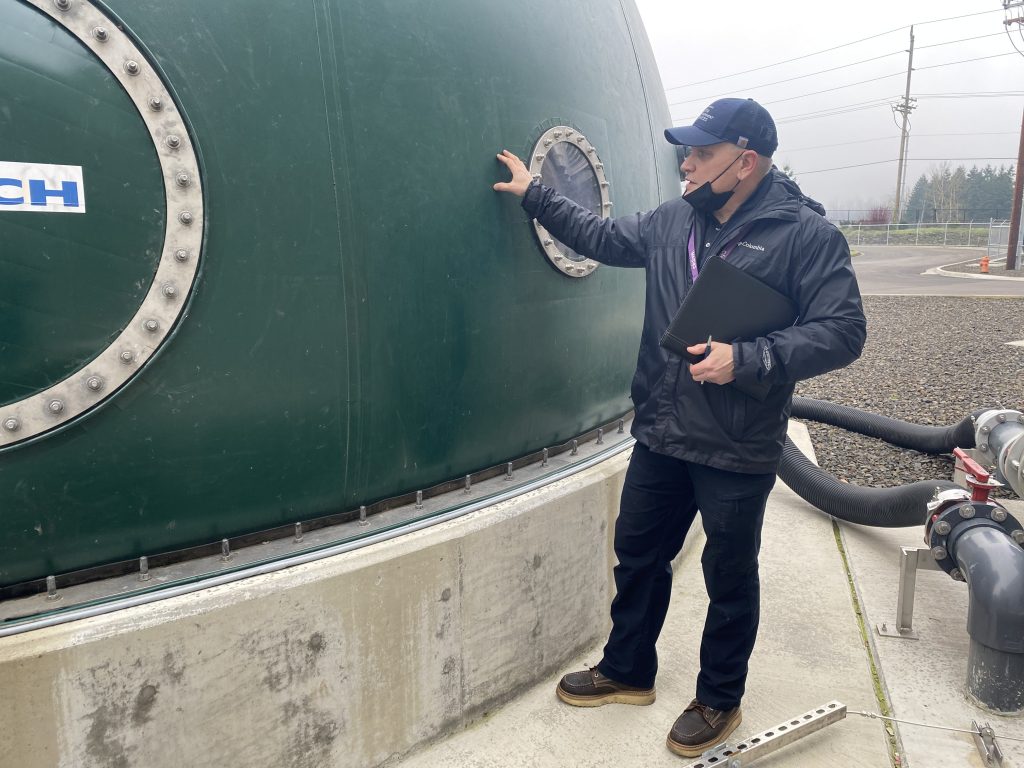
“It’s extremely energy consumptive to treat wastewater,” says Dave Moldal, program manager at Energy Trust of Oregon.
As the region grows in population, the more energy the wastewater plant requires. But what if increasing volumes of wastewater could provide the treatment plant with more energy rather than consume it? That’s exactly what’s been happening at Clackamas County’s Tri-City Water Resource Recovery Facility for the past seven months.
Since August 2021, the plant has been pumping out renewable power produced from methane, a natural byproduct of human waste decomposing in an oxygen-free environment.
Now, this loop of green energy represents a powerful example of how waste can become something we benefit from rather than expend resources disposing of.
By turning human waste into power, wastewater treatment facilities have the potential to become energy generators instead of consumers, while creating clean water that’s returned to the local ecosystem.
A very renewable resource
When wastewater arrives at Clackamas Water Environment Services’ treatment plant, it contains pretty much what you’d expect — human waste, paper, food, soap, sand — plus a random assortment of items that people accidentally flush or drop into drains, like a miniature Stormtrooper helmet, a Pee-wee Herman doll and a rubber elephant, all of which are proudly on display at the facility.
But the individuals who work here don’t consider this to be a mere waste treatment facility. Instead, they see it as a place where clean water and fertilizer for non-food crops is produced. And now, they’ve added a third item to the list of beneficial resources they churn out: green energy.
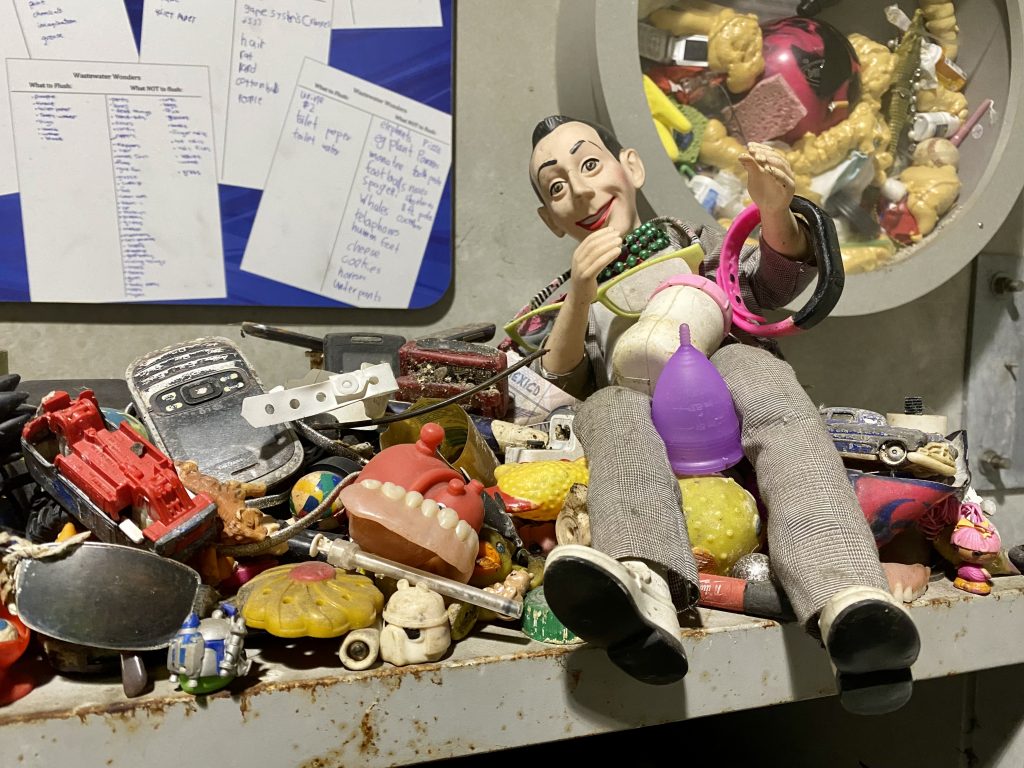
When wastewater arrives, it first must be pumped into the facility. Five motors, each running 100 to 200 horsepower, are needed to lift the flow up into the machinery that will treat it. “That’s a huge energy consumer right there,” explains operations supervisor Darren Eki.
Once the water is pumped up, screens are used to pull out the biggest solids, like paper and rags. “It can cause clogs and damage — all kinds of bad stuff,” says operations manager Greg Eyerly.
“They clog our pumps and cost millions of dollars a year for municipalities. So all of that goes to landfills. This is essentially the only waste product we have.”
Grit is removed next, which includes asphalt, limestone and concrete, as well as eggshells, coffee grounds, seeds, bone fragments and other organic food waste particles.
Up until this point, the water has been moving pretty fast as junk and grit are filtered out. Now it slows through open-air channels where the remaining solids settle to the bottom. About 40 percent of waste is filtered here in this natural process.
Then it’s bacteria’s turn to do the work. In the human stomach, microbes help to break down food. Water treatment plants like Clackamas County’s employ a similar process.
It takes a long time to grow the right kind of microbes, though, so if a treatment facility is starting from scratch, they might borrow some bacteria from another plant to kickstart their own, not unlike a friend might lend you their sourdough starter.
Once those microbes are working, it’s called activated sludge, and it’s a key player in cleaning water. “We’re replicating what happens in nature, but we’re doing it in a matter of hours, rather than days or weeks,” says Eyerly.
“This biological treatment, nobody had that before 1972,” explains capital program manager Lynne Chicoine. That’s when the Clean Water Act was passed, forcing wastewater treatment facilities to do a better job at cleaning the water they released into nearby rivers.
The federal government funded retrofits at many of those facilities around 50 years ago, including this one. “And now a lot of them need to be expanded or upgraded,” says Chicoine. That need for expansion is part of what prompted the plant’s latest upgrades.
While clean water goes in one direction to disinfection, and ultimately, the river, the remaining biomass goes in another, to one of three anaerobic digesters, the newest of which is a 1.3 million-gallon tank that operates like a hulking metal stomach.
Inside, naturally occurring microorganisms further break down organic matter in an oxygen-free environment that allows for the concentrated production of methane.
The methane rises to the top of the digester and is transferred to a new 600 kW lean-burn co-generation engine, which converts it into heat and electricity.
The co-generation engine creates heat for five of the buildings on site and an estimated 4,324 megawatts of electricity, providing about half of the facility’s energy usage.
Chicoine estimates that they’ll save $319,000 on electricity and $99,500 on heat in the first year — savings that will only increase with ever larger volumes of wastewater.
“As our population grows,” she says, “the average annual savings are anticipated to be about $619,000 on power and $191,000 on heat over the life of the engine.”
The solids that settle out of this process don’t go to waste, either. They’re removed to create nutrient-rich fertilizer, which is delivered to farmers in Eastern Oregon who use it on their non-food crops.
Prior to this co-generation system upgrade, the water treatment process still emitted methane, but it was simply burned off — natural energy created and immediately lost.
Overall, it cost about $35 million to add the co-generation system, an expense that’s not financially feasible (or politically attractive) to all cities.
But Eyerly recalls managing a treatment facility in Iowa, where excess methane was burned in flares. “People would drive by and see those flares, and they’d ask me, ‘What’s that?’” And he’d tell them: “That’s a waste of money.”
Energy Trust of Oregon has contributed about $2 million toward the cost of the project. “They didn’t have to install this co-generation system,” says Moldal of the people making decisions at Water Environment Services.
But with wildfires a growing threat to the area’s power supply, the potential energy independence the system creates could prove increasingly critical. The site isn’t set up to run independently on biogas just yet, but Moldal envisions a future where this is the case.
By harnessing the natural production of methane, wastewater treatment facilities can turn one of the worst accelerators of global warming — methane emissions — into renewable energy that reduces local reliance on fossil fuels.
Co-generation systems like Clackamas County’s aren’t yet commonplace, but they’re growing in popularity in the United States, China, Brazil, Argentina and Norway.
“There’s a people element to this,” says Moldal. “If it weren’t for the people here — they had to sell this to their local officials. And thankfully, they said yes.”
This story is part of the SoJo Exchange from the Solutions Journalism Network, a nonprofit organization dedicated to rigorous reporting about responses to social problems. It was originally published by Reasons to be Cheerful — one of our favorite good news sources.
In 2019, the U.S. Census Bureau reported that artists are 3.6 times as likely as other workers to be self-employed. Many of the artists you know and love are, of course, artists, but they’re also accountants, marketing managers, administrative experts, distribution and logistics specialists, and more.
For those who build their livelihoods on creating, their craft is equally tied to their clientele. Finding a new gig, appearing in a new exhibition, or teaching a new class can mean the difference between having a kitchen full of groceries or paying a bill.
And for artists of diverse backgrounds — in an industry that is documented as being 82 percent white, according to a 2019 report from Americans for the Arts — acquiring new business can be even tougher.
People of Craft is a digital directory of creatives of color that showcases their craft in design, advertising, tech, illustration, lettering, art, and more. It was co-created by artists Timothy Goodman and Amélie Lamont.
“It’s time to redefine what a creative looks like,” The People of Craft website reads. Folks can browse the site for creators based on their medium or speciality, as well as their location.
However, diverse creators are still experiencing a barrier to getting hired: tokenism.
Many of us are privy to the “rainbow washing” of corporations and organizations during Pride Month each year, as companies redesign their logos to include a rainbow gradient, and even more disconcerting, many have ties to anti-LGBTQ+ political funding or lobby groups. Even still, some great organizations will hire queer artist for Pride-related projects — and can miss the mark.
Carra Sykes, a queer art director and illustrator, said that it’s all about developing a genuine relationship with the artist.
“If you find an artist talented and they are LGBTQ+, don’t just hire them for the Pride project, there are tons of other opportunities to be given to continue a relationship with an artist,” Sykes said.
“They have so much to offer beyond just their identity. I love making queer art and being hired to make art that celebrates the LGBTQ+ community. Stand out as an ally and do something year-round.”
Pride is not the only occasion when clients seek diverse creators. Illustrator and graphic artist Danielle Coke said that she has had to change her entire approach to projects for holidays like Black History Month or Juneteenth.
“For many Black artists and creators, it can feel exciting to be contacted by a big brand or organization for a gig, but it often can come across as last-minute, and I’ve had a few brands push for rushed timelines and unrealistic expectations around these holidays,” she said.
“It can be very stressful and causes many of us to feel not only undervalued as artists and creators the rest of the year, but also treated as tokens.”
So, how can agencies and partners better support diverse artists?
Hire diverse voices year-round
Events like Pride and Black History Month are supposed to be a time to reexamine and reshape how these communities are treated. Take this time to make a long-term plan for hiring and retaining diverse creative partners. Develop a budget to expand and empower these folks at every possible avenue.
“Creators from historically excluded communities are worthy of inclusion, support, and belonging year-round,” Coke said. “These holidays aren’t opportunities to hire from these groups every once in a while — they’re reminders of why we uplift and support these groups throughout the year.”
Be thoughtful and intentional about how you approach projects
Lots of artists enjoy working on projects that highlight their identities, but the trouble is how the project is approached.
Creators need lead time, resources, equitable pay, and ongoing support to complete projects, and rushed deadlines can create a high-stress project that no longer emboldens the creator that has been hired.
“I do wish clients and brands would prioritize giving artists more space to create, rather than needing the artwork in a few weeks,” Sykes said.
“Be open about your budget and open to adjusting the project scope. It’ll hopefully create a better project experience for you and the artist.”
For every diverse creator you hire, make space for further empowerment
So you’ve hired a diverse creator and developed a considerate project scope — hooray! The best thing you can do now is to further empower them.
Recommend them for future opportunities, center their experience and expertise in the creative process, create an internal directory of their recommended colleagues, encourage others in your industry to prioritize diverse hiring practices, and ensure that you can support the growth of this artist financially, professionally, and socially.
Can you donate to a culturally significant organization of the artist’s choice? How about setting up a retainer contract? Can you provide trauma-informed support and benefits?
Hiring someone is only step one in unraveling a system long-built on the labor of historically marginalized people.
A version of this article was originally published in The Art Edition of the Goodnewspaper.
Get your own Goodnewspaper by becoming a good news subscriber today.
Art has long been at odds with war, as opposing forces of creation and destruction rule humanity.
The Berlin Wall was covered in public art and graffiti. Battle paintings depict the events of the Revolutionary War. Protest signs from recent years are now memorialized in art museums across the country.
In the 1960s, a common phrase echoed as an anti-war mantra: “Make love, not war.” The sentiment was widely used and later influenced artists Bob and Roberta Smith to create their piece: “Make art, not war” in 1997.
"Art is a tool for resistance, yes, but it is also a tool for peace, reconciliation, and healing in response to histories of colonization, violence, and corruption."
Art is a tool for resistance, yes, but it is also a tool for peace, reconciliation, and healing in response to histories of colonization, violence, and corruption.
In fact, populations across the globe have begun reclaiming and reviving art that once stemmed from violence.

The New York Times reports that 90 percent of Africa’s cultural heritage is believed to be located in the west, in major museum collections.
Museums are a public good that often depict meaningful heritage, history, and culture, however, many of them are also an eerie mausoleum dedicated to violent histories of war, imperialism, and genocide.
For example, while the British Museum is home to beautiful European and English treasures, guests can also walk through African and Native American exhibits, only to realize the artifacts and collections do not belong to the ornate hallways, but rather to populations that have been irreparably harmed by British colonialism.
This is why historians are urging museums to return stolen artifacts to their countries of origin. And, good news: they’re doing it.
In 2021, France returned 26 looted artifacts and artworks to the West African nation Benin that were originally seized by soldiers in 1892.
The works included doors of the Palace of Abomey, royal thrones, and warrior dance staffs, and their return signals a future for restitution across Europe.
Other European countries have also begun this process, as select museums in the United Kingdom, Amsterdam, and Germany work to return artifacts to their rightful owners.
Costa Rica archaeologists were also surprised when the Brooklyn Museum returned 1,305 artifacts to the country in the summer of 2021. This included a tombstone of an important leader from a now-extinct civilization that Costa Rican historians had only ever seen in books.
Just like the President of Benin, Patrice Talon, said upon the return of his country’s stolen goods: “This return is a testimony to what we have been, a testimony to that we have existed before.”
The United States also must confront its history of colonization and slavery in its admiration of violent historical figures.
Many states, cities, and government buildings continue to display statues of slave-owning figures and leaders of the Confederacy. These monuments send an ongoing message of dominance and power over Black Americans that must end.
Throughout the Black Lives Matter movement, activists have called for the removal of these confederate monuments, and while it’s taken some time, and has led to continued strife and violence against people of color, lawmakers are beginning to respond.
In Charlottesville, Virginia, a torn-down Robert E. Lee monument will be melted down into metal ingots — raw material that can be used to create new art.
The community will select an artist to create a public piece to go back into the city, hopefully to be completed by 2026, according to Smithsonian Magazine.
Jalane Schmidt, a historian and director of University of Virgina’s Memory Project (a program which studies the memory and violence of white supremacist attacks on Charlottesville in 2017) said: “Our community will confront white supremacy with creativity. Beauty will heal the ugliness of the past.”
Violence is not only being fought through visual art, but in music, as well. A Serbian artist, Nikola Macura, creates musical instruments from discarded war equipment and weaponry.
He finds his materials in military junkyards, a common sight in the area, still recovering from wars in Yugoslavia in the 1990s.
Macura has successfully converted a bazooka and army gas bucket into a cello, created a guitar out of a rifle and helmet, and has assembled a violin from an assault rifle magazine and first aid kit, according to The Jakarta Post.
His goal is to create a full orchestra that can play throughout the region, offering seats to veterans to become musicians.
In a world where it often seems that there is no shortage of fear, violence, and heartbreak, these artists remind us that there is no shortage of beauty, hope, and renewal, either.
A version of this article was originally published in The Art Edition of the Goodnewspaper.
Get your own Goodnewspaper by becoming a good news subscriber today.
Cherokee creators making a contemporary album entirely in the Indigenous language.
With 2,000 fluent Cherokee language speakers still alive, the Cherokee Nation is looking for unique ways to preserve the language.
"An Indigenous language is lost every two weeks around the world,” said Howard Paden, executive director of the Cherokee Nation Language Department.
Cherokee filmmaker and creator Jeremy Charles, in collaboration with nonprofit Horton Records, recently announced the production of a groundbreaking contemporary album of original music performed entirely in the Cherokee language.

The debut album, titled ᎠᏅᏛᏁᎵᏍᎩ (Anvdvnelisgi, pronounced Ah Nuh Duh Nay Lees Gi), represents diverse contemporary genres, including Folk/Americana, Country, Pop, Reggae, Heavy Metal, and Hip-Hop.
ᎠᏅᏛᏁᎵᏍᎩ, which translates to performers in English, is being led by citizens as part of a wide-ranging commitment to preserve and expand the Cherokee language.
The album will be distributed by Horton Records, a non-profit 501c-3 dedicated to providing support and tools for Tulsa-area musicians to broaden their reach, and funding was provided by the Zarrow Families Foundation Commemoration Fund.
"This music will shine a spotlight on Cherokee artists and speakers, and increase exposure to our culture and language on a worldwide scale."
“This music will shine a spotlight on Cherokee artists and speakers, and increase exposure to our culture and language on a worldwide scale,” Charles said.
“Most importantly, we’re hoping this album is an inspiration to Cherokee language learners that will lead to more Contemporary music being made in the future.”
Slated to launch in conjunction with the 2022 Cherokee National Holiday over Labor Day weekend, ᎠᏅᏛᏁᎵᏍᎩ will feature 12 Cherokee emerging and seasoned artists ranging in age from 14 to 50 years. More information about the artists may be found at hortonrecords.org/cherokee.
Lillian Charles (IIA), an eighth-grader at Tulsa’s Carver Middle School and the daughter of the album’s producer, Jeremy Charles, contributed the Goth-pop song, “Circus,” a song she originally wrote in English when she was 12 years old.

“It's an exaggeration of what goes on in my mind because I would describe my mind as a circus. It's always filled with silly stories and characters that I put into songs or short stories,“ she says.
IIA, who knew a few words in Cherokee prior to this project, worked with translators Kathy Sierra and Bobbie Smith to express her lyrics in Cherokee. She was pleased with the results. “There weren’t any revisions, and it really did flow,” IIA, says. “I have realized how beautiful the language is. It's amazing.”
Born and raised in Tahlequah, the capital of the Cherokee Nation, 25-year-old Zebediah Nofire worked with producer Kawnar to find the perfect beats for his hip-hop song, “The Baker.”
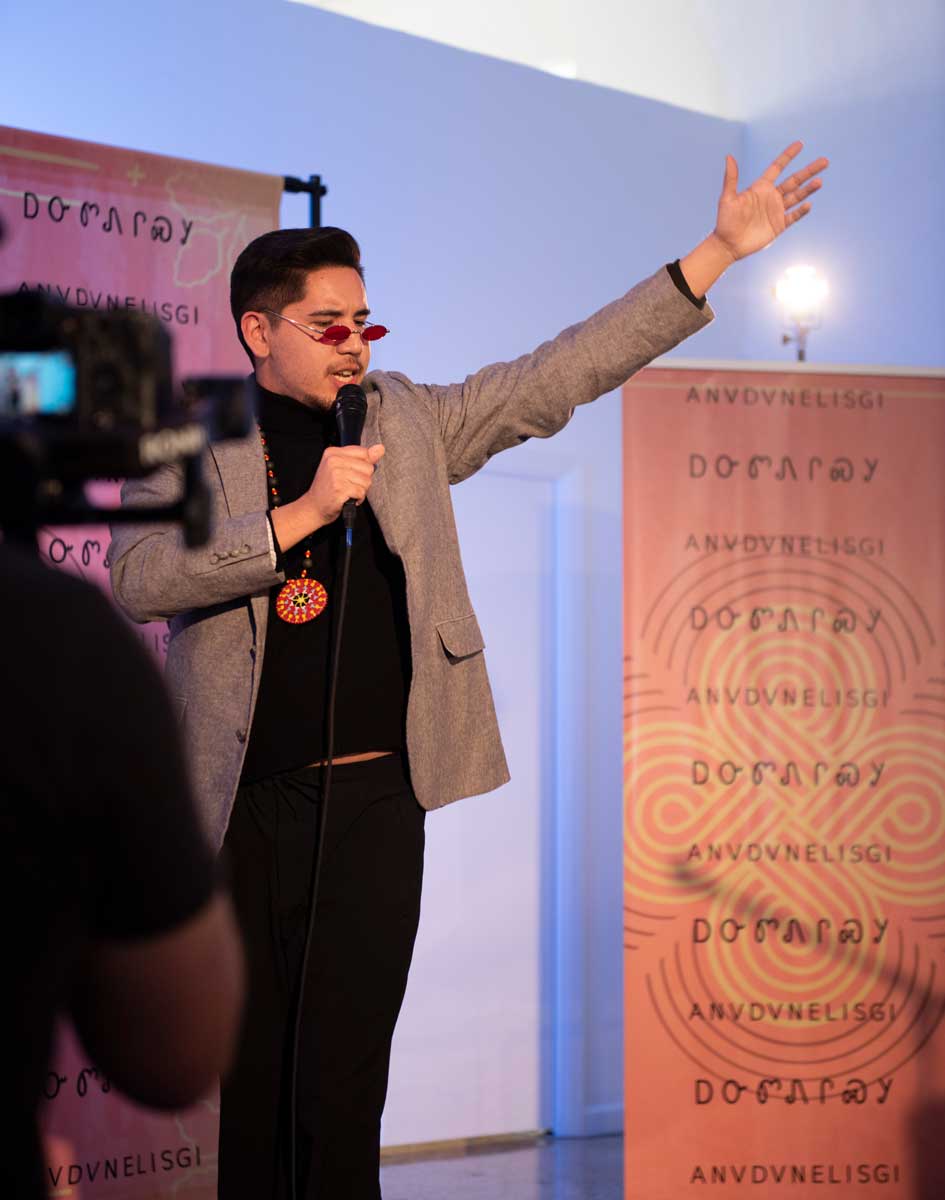
A fan of the genre since childhood, Nofire is a comedian who regularly incorporates original hip-hop parodies in his standup routine. He considers this to be his first “real” musical venture.
A graduate of the Cherokee Language Master Apprentice Program and an employee at the Cherokee Immersion School, Nofire enjoyed the experience of writing lyrics in the language.
“It's the first song I've written in Cherokee, so that was an interesting experience,” Nofire says. “The rhyme schemes are different, and the rhythm of the language is different, so it was really challenging, but fun.”
For Nofire, crafting a Cherokee hip-hop song is not only a chance to express himself musically, but also a chance to show others that the language is contemporary and relevant.
“I think it’s not only the outside people who have put us in a box culturally. I think we have put ourselves in one,” Nofire said. “This project is a good way to show people that we can do different things outside of just hymns, which is about as far as our musical genres go in the Cherokee language. I hope that maybe I'll help get the ball rolling, and someone could say, ‘Hey, I can write a song,’ and it would be good and outside of the genres, as well. I hope to expand different outlets for our culture.”
Although there is a rich history of gospel music in the Cherokee language, original contemporary music performed in the Cherokee language is a rarity. The songs on this compilation album will remind listeners that the Cherokee language endures, and the Cherokee culture continues to thrive and adapt.
While two artists are Cherokee speakers, 10 artists worked with fluent Cherokee speakers over 10 months to develop their language skills for the album.
“The Commemoration Fund is proud to support Horton Records and Jeremy Charles on this historic project. Founded in 2020, the Commemoration Fund was established through the Zarrow Families Foundation to boldly respond to racial injustices in our community. Injustice can be social, political, or economic, but it can also be cultural. Our Board especially seeks to focus its grantmaking on innovative and collaborative projects, and the ᎠᏅᏛᏁᎵᏍᎩ album is a one-of-a-kind collaborative,” said Clarence Boyd, Program Officer of the Commemoration Fund.
“When the Commemoration Fund was presented with the proposal for this project, it was an opportunity to represent many core values within our original mission. Since its inception, this project has captured the Board's interest, and we are so excited to see this come into reality.”
“A lot of people are going to hear the Cherokee language in a new context for the first time. I hope ᎠᏅᏛᏁᎵᏍᎩ will spark an inspiration for Cherokee citizens and artists alike,” Charles added.
“I imagine people singing along as they blast the album in the car, reading along with the lyrics with their headphones on, and it reinforces that being Cherokee is special, and it’s cool. And I hope projects like this will contribute to the Cherokee Nation’s expansive efforts to preserve the language into the future.”
Horton Records will provide artist support, promotion, and distribution of the album. Charles is seeking additional funding to produce future compilation albums, music videos, and full-length releases by individual artists.
“Many artists on the Horton Records label are Cherokee citizens, and we are honored to support both established and emerging Cherokee musicians through the launch of ᎠᏅᏛᏁᎵᏍᎩ,” says Brian Horton, president of the Tulsa-based nonprofit label.
“Our focus has always been: musicians first, community always. We believe this project embodies that.”
You might also like:
Happy Earth Day!
As we celebrate Earth Day this year, may we reflect on the wise words of environmentalists, climate activists, faith leaders, lovers of nature, and the youth of the world.
Read these quotes to get inspired by the opportunity to make the planet a better place — and to get motivated to be a part of creating meaningful change. And go even further by exploring our guides on how to celebrate Earth Day and Earth Month.
PS: Feel more hopeful by checking out our collection of good news about the environment — and all of our other positive climate change coverage.
The Best Inspirational Quotes For Earth Day
Famous Earth Day Quotes
“You cannot get through a single day without having an impact on the world around you. What you do makes a difference, and you have to decide what kind of difference you want to make.”
— Jane Goodall

→ Read more famous Jane Goodall quotes
“We need joy as we need air. We need love as we need water. We need each other as we need the earth we share.”
— Maya Angelou
“Avoiding climate breakdown will require cathedral thinking. We must lay the foundation while we may not know exactly how to build the ceiling.”
— Greta Thunberg
“What do you need to solve the climate crisis? The answer is, everyone.”
— Katharine Hayhoe
“The greatest threat to our planet is the belief that someone else will save it.”
— Robert Swan

“The good man is the friend of all living things.”
— Mahatma Gandhi
“Progress is impossible without change, and those who cannot change their minds cannot change anything.”
— George Bernard Shaw
About Earth Day
“Every day is Earth Day, and I vote we start investing in a secure climate future right now.”
— Jackie Speier

“Earth Day should encourage us to reflect on what we are doing to make our planet a more sustainable and livable place.”
— Scott Peters
“As cheesy as it sounds, truly every day is Earth Day.”
— Ashlan Gorse Cousteau

“If every day were Earth Day we wouldn’t be in the mess we’re in.”
— Neil deGrasse Tyson, on Earth Day in 2022
“Earth day/week/month always is so busy but it's always still such a time of celebration and reverence for the work we do.”
— Isaias Hernandez
“Today is Earth Day. I don't want to end the day without an acknowledgment of the wonder that we actually live here. Okay, there is so much terror seeping around every corner. But there is also beauty, creativity, and life. Look around, we are blessed to be here. Really. Blessed.”
— Danté Stewart
→ Read more sustainability quotes
Short Quotes & Captions
“Those who have the privilege to know have the duty to act.”
— Albert Einstein

“The earth is what we all have in common.”
— Wendell Berry
“I only feel angry when I see waste. When I see people throwing away things we could use.”
— Mother Teresa
Quotes From Native American and Indigenous Leaders
“We are on Earth to take care of life. We are on Earth to take care of each other.”
— Xiye Bastida
“A vibrant, fair, and regenerative future is possible — not when thousands of people do climate justice activism perfectly but when millions of people do the best they can.”
— Xiye Bastida

“When the last tree is cut, the last fish is caught, and the last river is polluted; when to breathe the air is sickening, you will realize, too late, that wealth is not in bank accounts and that you can’t eat money.”
— Alanis Obomsawin, Indigenous filmmaker
“If we truly showed respect for the sacred, we would cease in its destruction and abuse. We would seek consent, rather than taking what does not belong to us. We would not work to destroy that which we don’t understand. Without the sacred, humanity perishes.”
— Ruth H. Hopkins, Great Sioux Nation member
→ Learn about leading Indigenous activists
Quotes From Politicians and World Leaders
“We are the first generation to feel the impact of climate change and the last generation that can do something about it.”
— Barack Obama

“The climate emergency is a race we are losing, but it is a race we can win.”
— UN Secretary-General António Guterres
“A nation that destroys its soils destroys itself. Forests are the lungs of our land, purifying the air and giving fresh strength to our people.”
— Franklin D. Roosevelt
“We can do this. This is the biggest emergent social movement in all of history. We can do this. And if anybody thinks that we don’t have the political will, remember, political will is itself a renewable resource.”
— Al Gore
“Like music and art, love of nature is a common language that can transcend political or social boundaries.”
— Jimmy Carter
“It is our collective and individual responsibility to protect and nurture the global family, to support its weaker members and to preserve and tend to the environment in which we all live.”
— Dalai Lama
→ Read inspiring quotes about national parks
On Nature
“An understanding of the natural world and what’s in it is a source of not only a great curiosity but great fulfillment.”
— David Attenborough

“When we know how to protect all beings, we are protecting ourselves.”
— Thích Nhất Hạnh
“You are not Atlas carrying the world on your shoulder. It is good to remember that the planet is carrying you.”
— Vandana Shiva
“I need to be outside. I need to be in the world and to remember that I am of it.”
— John Green
“Even a wounded world is feeding us. Even a wounded world holds us, giving us moments of wonder and joy. I choose joy over despair. Not because I have my head in the sand, but because joy is what the Earth gives me daily and I must return the gift.”
— Robin Wall Kimmerer, author of Braiding Sweetgrass
“Look deep into nature, and then you will understand everything better.”
— Albert Einstein
“Keep close to Nature’s heart... and break clear away, once in a while, and climb a mountain or spend a week in the woods. Wash your spirit clean.”
— John Muir
→ Read inspiring quotes about nature
→ Read the best quotes about trees
On Taking Action
“When enough people come together, then change will come and we can achieve almost anything. So instead of looking for hope — start creating it.”
— Greta Thunberg

“We need to have a whole cultural shift, where it becomes our culture to take care of the Earth, and in order to make this shift, we need storytelling about how the Earth takes care of us and how we can take care of her.”
— Dr. Ayana Elizabeth Johnson, co-editor of All We Can Save
“Each of us can contribute, though. With our votes, our voices, our food choices, our skills and our dollars. We must overhaul both corporate practices and government policies. We must transform culture. Building community around solutions is the most important thing. I am never going to give up working to protect and restore this magnificent planet. Every bit of habitat we preserve, every tenth of a degree of warming we prevent, really does matter. Thankfully, I'm not motivated by hope, but rather a desire to be useful.”
— Dr. Ayana Elizabeth Johnson, in a TED Talk
“We can't save the planet without uplifting the voices of its people, especially those most often unheard.”
— Leah Thomas
“It’s truly my biggest hope that one day in the future we won’t need to preface ‘environmentalism’ with the word ‘intersectional’; we won’t need to create separate safe spaces and curriculums that seek to be inclusive.”
— Leah Thomas
“When we choose to protect others, we are also protecting ourselves. We cannot achieve climate justice, without uplifting and supporting all communities.”
— Intersectional Environmentalist
→ Learn about intersectional environmentalism
“Do something. Pay your rent for the privilege of living on this beautiful, blue-green, living Earth.”
— Dave Foreman
“I love this beautiful, mysterious, complicated planet we get to call home. I don’t mean any simple, sappy kind of love. I don’t mean anything cute or tame. I mean living, breathing, heart-beating love. Wild love. This love is not a noun, she is an action verb. She can shoot stars into the sky. She can spark a movement. She can sustain a revolution.”
— Mary Annaïse Heglar
“These young people are saying we all have a right to know what is in the air we breathe, in the water we drink, and the food we eat. It is our responsibility to leave this planet cleaner and greener. That must be our legacy.”
— John Lewis
“Now is the time to listen to the people and communities most impacted by the climate crisis, support their initiatives, and take action internally and externally to voice your solidarity.”
— Eric Johnson
→ Read more quotes about justice & quotes about making a difference
On Religion — From Christians, Catholics, Muslims, and Jews
“My faith is an enormous motivator for me to engage as well, because climate change is not just an issue that affects the entire planet, it is one that disproportionately affects those who do not have the resources to cope with this change — those whom we are explicitly told as Christians to care for.”
— Katharine Hayhoe
“For Christians, doing something about climate change is about living out our faith — caring for those who need help, our neighbors here at home or on the other side of the world, and taking responsibility for this planet that God created and entrusted to us.”
— Katharine Hayhoe
“The earth will not continue to offer its harvest, except with faithful stewardship. We cannot say we love the land and then take steps to destroy it for use by future generations.”
— Pope John Paul II
“I believe that Saint Francis is the example par excellence of care for the vulnerable and of an integral ecology lived out joyfully and authentically. He is the patron saint of all who study and work in the area of ecology, and he is also much loved by non-Christians. He was particularly concerned for God’s creation and for the poor and outcast. He loved, and was deeply loved for his joy, his generous self-giving, his openheartedness. He was a mystic and a pilgrim who lived in simplicity and in wonderful harmony with God, with others, with nature and with himself. He shows us just how inseparable the bond is between concern for nature, justice for the poor, commitment to society, and interior peace.”
— Pope Francis, Encyclical Letter Laudato Si’ of the Holy Father Francis on Care For Our Common Home
“Intelligence and conscience should lead us, as our faith commands, to treat all things with care and awe (taqwā) of their Creator, compassion (rahmah) and utmost good (ihsān).”
— Islamic Declaration on Global Climate Change
“We call on all Muslims wherever they may be — to tackle habits, mindsets, and the root causes of climate change, environmental degradation, and the loss of biodiversity in their particular spheres of influence, following the example of the Prophet Muhammad (peace and blessings be upon him), and bring about a resolution to the challenges that now face us.”
— Islamic Declaration on Global Climate Change
“We know all Earth needs not only the joyful human voice but also the healing human hand.”
— A Rabbinic Letter on the Climate Crisis
“We call for a new sense of eco-social justice – a tikkun olam that includes tikkun tevel, the healing of our planet. We urge those who have been focusing on social justice to address the climate crisis, and those who have been focusing on the climate crisis to address social justice.”
— A Rabbinic Letter on the Climate Crisis
→ Read good news about faith communities making a difference
For Kids
“To leave the world better than you found it, sometimes you have to pick up other people’s trash.”
— Bill Nye

“The main solution is so simple that even a small child can understand it. We have to stop the emission of greenhouse gases.”
— Greta Thunberg
“Together we can preserve the forest, securing this immense treasure for the future of all these our children.”
— Chico Mendes
“The environment is where we all meet; where all have a mutual interest; it is the one thing all of us share.”
— Lady Bird Johnson
“Never doubt that a small group of thoughtful, committed citizens can change the world. Indeed, it’s the only thing that ever has.”
— Margaret Mead
Confused about climate change? This young climate NGO is using people’s own languages to deliver the facts.
— Language is an unlikely barrier to climate action.
— But official UN climate information is only translated into six languages.
— Now a group of young activists are spreading the word in 40 countries.
— Using translation and social apps to distribute its materials the group can speak directly to people in 100 languages.

It can sometimes seem that information about climate change is all around us. But what if the messages are not in your language? A group of young activists is tackling this unexpected barrier to climate action.
Established in 2019, Climate Cardinals has 8,000 volunteers in 41 countries, translating and sharing information about the need to take action to tackle climate change in more than 100 languages.
The group says it wants to “make the climate movement more accessible to those who don’t speak English. We aim to educate those who are unaware of climate change and provide them with information on how they can help combat the crisis,” they say.
The group was able to grow its volunteer base rapidly during the COVID-19 lockdowns around the world. It recruited a global network of student translators by offering them the opportunity to earn community service hours when other avenues were closed by the pandemic.

As well as using translation apps, the group uses social apps like WhatsApp and Telegram to distribute its materials, but Kianni says she doesn't want to put her volunteers in danger in countries that impose restrictions on the discussion of climate issues.
Most of the student volunteers have no prior translating experience but say that volunteering with Climate Cardinals is actively improving their language skills, according to the group’s entry which got them to the finals of the annual Shorty Social Good Awards in New York.
Solving the problem of no information
Kianni, an Iranian-American Stanford University student and United Nations Climate Advisor, said she realized the scale of the language barrier when visiting relatives in Iran. “There was very little information about climate change in Iran when I went in sixth grade,” she told Vice.
“I saw how horrible the pollution was - I couldn’t see any stars at night - and I said, ‘Wow, the environment here is so different,’ I really thought it was important for my relatives to know about the disastrous effects climate change was having on Iran.”
When she explained the effects of climate change to her relatives in Farsi, their own language, she realized the importance of providing information to people in local languages around the world.

Climate sources like the Intergovernmental Panel on Climate Change (IPCC) reports are only translated into the six official UN languages. One of Climate Cardinals’ first documents was a climate change glossary defining phrases like “what is climate change” and “what is the Greenhouse Gas Effect” in 100 languages.
Climate Cardinals has already forged partnerships with a range of organizations, including Persian music streaming service Radio Javan and the Arab Youth Climate Movement, which distributes the group’s materials, as well as the United Nations Environmental Program.
This article was originally published by the World Economic Forum and was republished by Good Good Good with permission.
The head man at First-Plymouth Congregational Church is wearing sneakers and jeans for the 11:59 service – a laid-back and come-as-you-are worship.
A breeze blows through the open doors into the high-ceilinged sanctuary of the grand old church, surrounded by stately two-story homes, humble bungalows, and boxy slip-in apartments in one of Lincoln’s most economically diverse neighborhoods.
In the next 35 minutes, senior pastor Jim Keck will quote his mother, baptize a 3-year-old, extoll moral courage, share a short version of the long history of the church, recite the Beatitudes, and segue from the Lord’s Prayer to the church’s newest initiative.
“That moment where we say, ‘Forgive us our debts?’ You see here, in these months, we’re trying to help pay the medical debt in central Lincoln.”
If you have five dollars in your pocket, he says. Ten. Anything you put in the plate, every penny, helps settle the health care debts of our neighbors.
“I hope you have courage this week,” the pastor says. “I hope you hold on to what is good.”
As the congregation files out into the sunny first day of spring, a volunteer waits, shielding the collection plate from the wind to keep its growing pile of cash from flying out the door.
Even though that’s exactly where it’s destined to land.
It started with Juan Carlos Huertas.
Keck had been surfing sermons on Facebook in Spring 2020. Huertas drew him in. Here’s a man passionate about justice and community and the love of Jesus.
Here’s the guy who could help our church write its post-pandemic chapter, Keck thought.
A pastor’s son, like Keck. A church nerd, like Keck.
He invited the Methodist minister from Puerto Rico to preach in Lincoln, eventually luring him away from Louisiana, where he’d served for 16 years.
“We brought him in to be a preacher and an innovator in social justice work,” Keck said.
Huertas came ready.
He and his family moved into a house four blocks from First-Plymouth last summer.
He launched justNeighbors, a way to walk side-by-side with the people of the neighborhood and show their love. They’ve hung out at the corner laundromat offering coffee and snacks, quarters for the washers and dryers, help folding and carting laundry. They’ve carpooled to volunteer at a medical clinic that helps sick Lincolnites with no health insurance. They hope to figure out a way to fill gas tanks.
But first, the two pastors kicked around bigger ideas. The pandemic had shone a light on healthcare and inequity. They knew churches around the country had bought up vast amounts of medical debt.
“But we didn’t want to do that in America at large,” Keck said. “We wanted to help our own neighbors in central Lincoln.”
For the next few months, Huertas dug in. He read as much as he could about medical debt, made cold calls and sent emails, learned all he could about this thorny American issue.
“I lost track of how many people I sat down with,” Huertas said.
The more he learned, the more he realized: “This is an issue with our neighbors.”
It’s easy for people to fall behind on medical bills, he said. To miss payments and end up in collections. Your kid gets sick. You get sick.
“You owe the hospital and the pathologist and the respiratory therapist; people don’t understand the billing process.”
Huertas learned as he went.
He learned there are programs that already address medical debt here. The Lancaster County Medical Society offers deeply discounted rates to patients overwhelmed by medical bills with the help of grants from the Community Health Endowment. Lincoln’s hospitals give millions in charity care; $42 million at Bryan Health alone in 2021.
He learned some patients come to Lincoln’s volunteer-run Clinic with a Heart for care, because they owe debt they can’t pay at their own doctor’s offices.
He learned people living in the cluster of neighborhoods at the city’s core — near First-Plymouth — have a life expectancy nearly 10 years shorter than those living in neighborhoods at the edges.
During his months of research, Huertas tracked down the three debt collection agencies responsible for collecting most of the medical debt near the church.
Only one called back.
They worked out a deal. The debt collector would be a silent partner, providing the church with a small discount on the balance and a list of central Lincoln neighbors with debt. No names. No addresses.
The church had its own rules. The recipients needed to be current on payments, showing good faith on paying down their debt.
Rule 2: The church would give without expectation. No strings attached. No acknowledgement needed.
The project launched in late February, cobbled together with cash from collection plates and seed money from members who knew the roll-out was coming.
A small committee sat down with $8,000 and a list.
A cancer patient unable to work who owed $1,500.
A retiree living on Social Security who owed $300.
A single parent without child support who needed $800 to get out of debt.
Who could they help?
That night they retired the debt of 11 neighbors.
Stephanie Dinger is a member of the committee. She remembers how good that felt.
“You can never get ahead if you have medical bills. To me that is God, to give a hand to someone.”
A form letter from the collection agency went out to each recipient. It included a phone number and an email for First-Plymouth’s justNeighbors project.
It also included the balance of each account: $0.
A few days later, the phone rang at First-Plymouth. On the other end was a woman who’d been chipping away at a $3,000 debt for years.
After her letter arrived, she’d called the collection agency, sure they’d made a mistake.
Keck recounts what she said next: “I don’t even have words to let you know what it feels like. The only thing I can feel is thank you, Jesus.”
Paul Rea has been a bankruptcy attorney in Lincoln for nearly 30 years, long enough to know why his fellow Nebraskans go bankrupt.
“When you look at the typical bankruptcy, the vast majority will have some medical debt, and there’s a significant minority of cases where people have overwhelming medical debt.”
A Harvard study determined that six of every 10 bankruptcies list medical debt as a contributing factor, said Scott Patton, director of development at RIP Medical Debt. “And that’s only for people who can afford to file. There are literally millions of people who can’t afford to file bankruptcy who have medical debt.”
Patton’s employer is a New York-based nonprofit that buys debt at pennies on the dollar and has paid off nearly $7 billion in medical debt across America since 2014.
One in five American households report medical debt, Patton said. A quarter of credit card debt can be traced to medical bills. Medical debt accounts for a staggering $88 billion on credit reports.
“It’s a huge problem,” he said. “It can happen to anyone who has a human body and lives in our country.”
Medical debt is an immense source of stress for those already struggling, said Lori Seibel, president of the Community Health Endowment.
“People are less likely to get care,” she said. “They might just live with a problem or go to the ER because they know they’ll be seen there, which leads to more expensive care.”
Seibel met with Huertas last fall to provide him insight into the demographics around First-Plymouth, and the church’s power as a neighborhood anchor.
But she was skeptical, too, of the church’s grand plan.
“My first thought was, ‘It’s such a huge problem and what can one entity do?’” Seibel said.
Then she thought about being at the ribbon-cutting for a new Head Start the endowment had helped fund, and turning to her board president: Sure, this will help 50 kids; there are 800 on the waiting list.
Her board president replied: But Lori, it’s 50 kids.
“Will they be able to solve every person’s medical debt? No. But for those people they do, it’s life-changing.”
No money blew out the doors of First-Plymouth on the first day of spring.
When church leaders emptied the collection plates from that morning’s service, they counted everything from pennies to $100 bills.
They added that to the cash from the collection plates the first two weekends of March, and all of the mailed-in checks and donations to its online medical debt portal. They arrived at a total: $45,000.
The committee met for a second time on March 22. They looked at a new list.
A food service worker who owed $1,300.
A parent who owed $600.
A renter working and living alone paying down $1,000 debt.
A letter would soon be on its way to 35 households whose medical debt has been erased.
“There’s an energy around this thing,” Keck said. “There’s something about this initiative that has gained a kind of traction I haven’t seen before.”
Collection plate offerings have doubled in the last month.
Trustees are willing to see money that might have otherwise gone into church coffers be collected for this other purpose. Church members have embraced the idea. A debt collector has willingly partnered with First-Plymouth.
“I think it’s a great opportunity for the community to have the help they need,” 25-year-old Leah Kash-Brown said after that 11:59 service. “And a great opportunity to help out the community.”
The church is just beginning.
The campaign will continue until Easter Sunday 2023. Who knows? Maybe they can erase the debt in central Lincoln over the next year. Maybe they can expand their reach to new neighborhoods, and help new people being crushed by the weight of medical debt, Huertas said.
“That would be amazing.”
This story is part of the SoJo Exchange from the Solutions Journalism Network, a nonprofit organization dedicated to rigorous reporting about responses to social problems. It was originally published by Flatwater Free Press.
The Flatwater Free Press is Nebraska’s first independent, nonprofit newsroom focused on investigations and feature stories that matter.
OAKLAND, Calif. — After schools went remote in 2020, Jessica Ramos spent hours that spring and summer sitting on a bench in front of her local Oakland Public Library branch in the vibrant and diverse Dimond District.
Ramos would connect to the library’s Wi-Fi — sometimes on her cellphone, sometimes using her family’s only laptop — to complete assignments and submit essays or tests for her classes at Skyline High School.
Ramos, used to texting quickly, was able to do simple assignments online, so at first her schoolwork was very easy. Then came the five-page papers for her two AP classes. “It was a hassle,” she said. “I was like, this is not for me.”
Ramos’ parents promised to buy her a laptop eventually, but bills mounted and it wasn’t in the family’s budget. Ramos knew there were many kids like her, eager to keep up with school but lacking the technology to do so. To her, it was “heartbreaking.”
“We have this huge digital divide that’s making it hard for [students] to get their education,” she said.
At the start of the pandemic, only 12 percent of low-income students, and 25 percent of all students, in Oakland’s public schools had devices at home and a strong internet connection.
David Silver, the director of education for the mayor’s office, said people talked about the digital divide, but there had never been enough energy to tackle it. Once the pandemic hit, suddenly everyone was paying attention, said Silver, a former Oakland public school teacher and principal.
“You don’t have a computer, you don’t have internet, you can’t even access distance learning,” Silver said. “The 50,000 kids that are in Oakland public schools cannot actually go to school if they don’t have internet and computers. We need to change that.”
Now, two years into the pandemic, Oakland has been able to connect 98 percent of the students in the district. As of February, the city had provided nearly 36,000 laptops and more than 11,500 hot spots to low-income public school students. While some students remain unconnected, Oakland’s effort has emerged as an example of how to tackle a citywide digital divide.
“We were using the crisis as an opportunity to address a moral wrong that needs to be changed forever, not just during the pandemic,” Oakland Mayor Libby Schaaf said. “We can’t afford not to.”
City leaders, including Mayor Schaaf, say a partnership among the district, the mayor’s office, the Oakland Public Education Fund, the nonprofit Tech Exchange, Oakland Promise, and other community-based organizations is behind Oakland’s success.
Oakland’s partnership, known as #OaklandUndivided, launched in May 2020. The ambitious goal: close the city’s digital divide for good by providing all K-12 public school students in Oakland with a computer they could keep, a reliable internet connection and ongoing, multicultural tech support in languages families use.
“Each of these partners were doing their individual work, but we had never been working together,” Mayor Schaaf said. “That’s what Covid inspired us to do to really accelerate — not just having computers be at schools, but having them in the homes. Not just so students could keep learning during the shutdown, but so that the whole family had access to information and resources.”
“We [didn’t] want this to be a Band-Aid fix,” said Jordan Mickens, a Leadership for Educational Equity public policy fellow who served as #OaklandUndivided’s project manager until August 2021.
Oakland has been able to connect 98 percent of the students in the district.
While most schools across the country are fully back in person, students continue to struggle to complete homework assignments or participate in remote learning because they lack adequate internet service and access to a computer at home — a phenomenon commonly referred to as the “homework gap.”
According to a 2021 report from the think tank New America, 1 in 8 children from low-income families don’t have a computer at home, while 1 in 7 lack access to broadband internet.
“The homework gap isn’t new. It’s just been exacerbated by the pandemic,” said Rebeca Shackleford, the director of federal government relations at All4Ed, an education advocacy nonprofit. “There’s kids who sit in McDonald’s parking lots to be able to do their homework, and that’s pretty tragic.”
People have to remember “the pandemic isn’t over,” she said. Disruptions will continue when students have to quarantine after classmates test positive for Covid-19.
Natural disasters, exacerbated by climate change, are also shuttering schools with more frequency. When schools are closed, she said, students “still have to do their schoolwork; they still need access to the internet at home.”
Before the pandemic, the digital divide was often considered a rural problem. But the chaotic effort to get students online during Covid school closures made clear the issue affects Americans living in all kinds of places.
A recent study from EducationSuperHighway, a nonprofit that works with school districts to help close the digital divide, found that affordability was the largest contributing factor.
Though only about 40 miles north of Silicon Valley, home to technology giants such as Google and Apple, Oakland was deeply underconnected when the pandemic shuttered its schools.
When the Oakland Unified School District (OUSD) shut down, its 83 district-run schools and 33 charter schools served more than 49,000 students. Kyla Johnson-Trammell, Oakland’s superintendent, said the first couple of months of the pandemic were a scramble.
“It was all hands on deck. We piecemealed as much as we could in March and April 2020,” she said. Still, she added, there were “just so many stories of kids using their cellphones to complete assignments, to research, or having to figure out how to get to public libraries in order to access devices.”
The district handed out its existing stockpile of loaner devices and hot spots to as many students as possible, said Preston Thomas, OUSD’s chief systems and services officer.
Many of the devices were already 4 to 5 years old. Because the district had been under significant financial pressures for the five years prior to the pandemic, “we hadn’t really invested in our infrastructure around technology,” Thomas said.
The district lacked a system for tracking how many students weren’t logging on to classes for lack of a working computer, tablet, or internet connection at home.
“We didn’t even have infrastructure on tracking devices,” Thomas said. The district relied on individual schools to call families, while its department of research, assessment, and data conducted surveys at individual school sites to find out whether families had an internet connection and computer access.
“Nothing was coordinated,” Thomas said. “Everybody was on the ground doing their absolute best to make sure that kids had access to technology, but it was piecemeal.”
Just before the pandemic, OUSD had begun to identify tech leads at each school, mostly teachers with technology know-how. Once the pandemic hit, the district created the position of distance learning lead, tasked with making sure all students had computers and hot spots.
It helped, Thomas said, that these educators “had technological understanding at their school sites, had the ear of teachers at the school site, and could communicate for their community.”
Jen Bender is an instructional teacher leader and technology coordinator at Castlemont High School, in a historically under-resourced neighborhood in East Oakland. Helping the school with its technology needs had been only a small part of her job before the pandemic. In April 2020, Bender stepped in as the school’s distance learning lead, and finding devices for students became her full-time role.
Bender was fortunate in that many Castlemont students already had school devices when the pandemic hit. Still, by the end of that April, she had handed out every last device on campus, even hunting down lost Chromebooks in the process, and some students, including new immigrant students, were still empty-handed.
In the beginning, schools asked students to come get a device if they didn’t have one. But public transportation was disrupted as the state began to shelter in place, and some students and parents had no way to get to school. Other students’ family members were essential workers who couldn’t make it to school during the school day. The newcomers who didn’t speak English were the hardest to reach.
“We realized we had to start really targeting families,” Bender said. The district pulled in community workers who spoke Spanish and Mam, a Mayan language, and “had them make individual phone calls to families to get them to come in and pick up those devices.”
Bender said calling didn’t always help, especially if a family was moving or in temporary housing. School leaders sent teachers and staff members with computers to students’ homes. Even then, Bender said, they had “very little success, because addresses had shifted.”
As May arrived, district administrators realized that relying on the distance learning leads to understand what was happening on the ground was insufficient, Thomas said.
“We didn’t have a centralized way to track devices for students,” he said. “Like, we had no idea. Every school had their individual Google spreadsheet, and there wasn’t a unifying place where any of us could look.”
"This is truly a once-in-a-generation moment to close the digital divide and one that has united our city."
— Patrick Messac, #OaklandUndivided project manager
District leaders knew they couldn’t confront a problem as massive as the digital divide in Oakland on their own; they were already stretched thin addressing students’ other basic needs, including rising food insecurity.
Johnson-Trammell, the superintendent, and Mayor Schaaf had several conversations about how to tackle technology access and connectivity. As the pandemic unfolded, city officials also saw how deeply the lack of technology access impacted all of Oakland.
Almost every resource and piece of information about Covid-19, including where to get food and how to apply for unemployment benefits, was being provided digitally.
“All the information was on the internet. And I imagined, for a minute, what a mother must feel like who didn’t have an internet connection or a computer,” Mayor Schaaf said. “It was so much bigger than just education. It was literally survival for Oakland families. Technology was the lifeline to information.”
Jordan Mickens, who spent his first year as a teacher at Castlemont High School in 2014, said he vividly remembers the technology divide his students faced compared with those in the wealthy areas surrounding Oakland.
In 2017, he left teaching to work in education technology at Clever, a digital platform for schools. But soon after the pandemic started, the crisis in schools drew him back to working more directly to support students in Oakland, and he became a public policy fellow on the mayor’s education team.
Silver and Thomas had been working to help Johnson-Trammell and Mayor Schaaf come up with an idea for getting a better handle on the communities left out of remote learning: by tapping into the relationships the city and the school district had with various community-based nonprofits already providing direct services in the neighborhoods they needed to reach.
Mickens jumped at the opportunity to come on board when the city hired him to run the new #OaklandUndivided initiative to close the digital divide in June 2020.
The first thing the group did, Mickens said, was to start tracking the number of public school students in Oakland who already had a device and internet service, and those who didn’t.
In August 2020, they launched a “Tech Check” survey to collect that data. The new survey was created to be more comprehensive than the initial individual school-led surveys, and made a point of not relying on yes or no questions.
The survey asked families if all students at home had devices of their own; whether those devices were loans from a school or family-owned; and whether the family was connected to the internet and, if so, how: via broadband, mobile phone, or otherwise.

By May 2021, the campaign had accounted for roughly 70 percent of all Oakland public school students through the survey. Going in, the #OaklandUndivided team had anticipated about 25,000 students would need devices, internet or both, based on the earlier school surveys and census data. The Tech Check survey “opened our eyes,” Mickens said.
Based on the survey results, #OaklandUndivided estimated that 75 percent of K-12 public school students, or almost 40,000, were either disconnected or underconnected, with inadequate internet access.
As another part of the information-gathering effort, #OaklandUndivided tapped into data from the online learning platforms schools were using — Google Classroom and Clever — to see which students were logging in through a computer or mobile phone to access online resources.
By October 2020, the district had created a public-facing tech access dashboard to track student access to computers and broadband, and also make the campaign’s effort more transparent to the community and funders, according to Mickens.
Meanwhile, the #OaklandUndivided leadership team, made up of staff employed by multiple agencies in the partnership, met weekly and launched a fundraising campaign with a goal of $12.5 million to provide the initial devices and hot spots.
The campaign was able to bring in big donors like Twitter’s co-founder and then CEO Jack Dorsey, who pledged $10 million to help meet the goal. As funding came in, the next step was to buy the Chromebooks and hot spots.
There the campaign relied on Tech Exchange, an Oakland-based nonprofit that has been working on closing the city’s digital divide for more than two decades.
The organization has a warehouse and a public-facing Tech Hub that provides residents with free tech support and computer and digital literacy training, as well as refurbishment services.
It also offers training on site at public housing complexes. Tech Exchange trains people from the surrounding communities; hires locals to provide its tech services; and hosts interns from Oakland high schools, who sometimes come back to work for the organization.
Tech Exchange’s role was to put in orders for the devices and get the equipment ready for students. By March 16, 2021 — a year after school closures in Oakland — the partnership had handed out 25,000 Chromebooks to low-income students.
Mickens said distributing the devices — which students could keep permanently — was an experience he will never forget. When he taught at Castlemont in 2014, the school had only one Chromebook cart. “To go from that, to now giving every student their own computer … was incredible to be a part of,” he said.
Tech Exchange became an essential partner in not only getting the devices, but also providing the “culturally competent” tech support that had been promised as part of the #OaklandUndivided mission. Tech Exchange was the “secret sauce” of the initiative, Mickens said.
In July 2020, the #OaklandUndivided campaign team brought in more community-based organizations, including the Latino Education Network and the Oakland branch of the NAACP.
It also added parent and student liaisons who would have a voice in the leadership of the project. High school students including Jessica Ramos, who was recruited by David Silver, her former principal, were invited as student liaisons to help with engagement efforts.
“Community-based organizations, those folks … really have the relationships [with] the Latino/Latina community, the Yemeni community, the African American community,” Johnson-Trammell said. “Typically, without that level of partnership, it’s hard for us as a district to really make sure we’re getting and serving the needs of the most vulnerable.”
The Oakland Reach, a parent-led advocacy group that works with underserved communities, also joined the partnership. Keta Brown, a co-founder of the group, eventually became co-chair of #OaklandUndivided’s family engagement team.
The team got the word out about the new initiative and also helped the coalition identify weak points, including engaging with Black parents.
One of those parents was Bernadette Fenceroy, who has four children in Oakland public schools. Early in the pandemic, they relied on one loaner device and a hot spot that worked sporadically. No one got much learning done, she said.
“It is hard when you have some kids that are on the phone and you can’t get all your information,” Fenceroy said. “And a lot of times [my child] has tutoring. You can’t do it on your phone and have to do it on a laptop or a desktop.”
Fenceroy, who met Brown through the Oakland Reach, had a hard time getting support from her kids’ schools for remote learning during the first year of the pandemic. Brown told her to take the Tech Check survey to see if her family qualified for free devices.
When Fenceroy finally got the call in May 2021 saying her kids’ permanent laptops were ready to be picked up, she almost couldn’t believe it. She took a picture of one device and called Brown: “I think I got it! I think I got the computer.”
Although her kids have devices now, Fenceroy hopes the district and #OaklandUndivided’s members don’t “just drop the ball,” she said. She wants them to stay in touch, make sure the devices are working and let parents know who to call for help if they’re not.
At 10 o’clock on a bright Wednesday morning in May 2021, the blinds were still down at Tech Exchange’s Tech Hub, housed in a small office sandwiched between an apartment complex and an appliance store in Oakland.
But inside, Samuel Aristondo, then Tech Exchange’s bilingual program coordinator, and two colleagues were already fixing devices and taking calls for tech support.
Aristondo spent more than an hour on the phone talking with a Spanish-speaking family new to the city, walking them through the Tech Check survey to get their free laptops.
After he got off the phone, Aristondo still had a list of 300 to 400 students’ families to call. A majority of the families on the list who still remained unconnected were like the one Aristondo reached: They’d been in the U.S. for only a few weeks.
Some weren’t aware their kids could get a free device or, if they had a device, didn’t understand how to log on to Google Classroom or use Zoom.
Aristondo, who is now Tech Hub’s operations manager, understands how hard it can be for some of these families, he said. He grew up in foster care after his parents were deported, and he was a first-generation college student.
After he’s finished helping connect families with technology, he always asks them if they know where to get free food and medical help. “It’s more than just tech support,” he said.
"That is the secret of how to get folks connected. It’' not just blanketing devices and internet. It's social work."
— Seth Hubbert, the former executive director of Tech Exchange
Since the launch of #OaklandUndivided, the Tech Hub office has been busier than usual, helping students, families and even teachers with their #OaklandUndivided devices.
Tech Exchange employees have answered more than 10,000 tech support calls from community members in various languages, according to Mickens.
At 16, Kemish Rosales learned how to fix computers as an intern at Tech Exchange. He has worked there since graduating from nearby Fremont High School in 2013 and is now the Tech Hub coordinator for the nonprofit.
Seeing kids’ smiles when he gives them computers, or the relief on a worried parent’s face when he answers a question, is why he’s never left this job, he said.
“We know the community, we are part of that community,” Rosales said. “We’re all local. That gives us a better understanding of who we’re helping.”
Tech Exchange employees like Rosales have been key to building trust and reaching out to some of the city’s Spanish-speaking community. Seth Hubbert, the former executive director of Tech Exchange, said it’s been critical to make sure that when partners reach out to families, they do so with language and culture in mind.
“That is the secret of how to get folks connected,” Hubbert said. “It’s not just blanketing devices and internet. It’s social work.”
Parents, especially those who may be undocumented, feel comfortable coming to Tech Exchange for help because “it gives them an ease of mind to [hear] familiar voices and [see] familiar faces,” said Rosales, who is a participant in the Deferred Action for Childhood Arrivals (DACA) program.
The #OaklandUndivided project has evolved since its inception. With an influx of federal funding available to schools in response to the pandemic, Oakland is using the opportunity to strengthen the program.
The district received nearly $130 million from the Elementary and Secondary School Emergency Relief (ESSER) Fund, in addition to money from the Emergency Connectivity Fund (ECF), a federal program that has helped schools and libraries provide internet access and connected devices to students and educators during the pandemic.
But those federal funds come with parameters. All the #OaklandUndivided devices handed out in the early days of the pandemic were permanent gifts to families; officials said this was important because a district-managed device has restrictions on its use.
A permanent device could be useful to parents trying to access online resources or pursuing their own educations, or it could follow a student on to college.
The federal ESSER and ECF programs require that any device purchased be owned by the school or the district. So, since Aug. 1 of 2021, all the #OaklandUndivided devices going out have been loaners.
While the district-lent devices will stay with the student for up to five years, the #OaklandUndivided initiative is still trying to keep its promise of providing permanent devices.
“Recognizing the importance of students owning a computer, we are working with Tech Exchange this year to distribute 4,800 refurbished computers to families who have no owned computer,” said Patrick Messac, the current #OaklandUndivided project manager.
The federal funding itself isn’t permanent. The ECF funding, which was originally set to expire this June, has recently been extended until June 30, 2023.
The ESSR funds expire in 2024. Kyleigh Nevis, the devices and operations lead for #OaklandUndivided and OUSD, said the Oakland program is planning for the future and may, for example, switch students on hot-spot plans over to T-Mobile’s Project 10Million, a national program providing free internet to underserved student households.
As of January, the #OaklandUndivided team said, 35,960 families of public school students had received a Chromebook or hot spot or both. Two percent of low-income students remain unconnected. Getting to them will be hard.
For those still “missing,” the district has made a push this year to focus on what it calls high-priority students: those most at risk and with the greatest need, and whom the program still hasn’t been able to reach.
The coalition launched a simplified paper-based Tech Check survey, which is integrated into the back-to-school enrollment process. Students can also fill out the survey in class, to make it easier for families.
Messac said he and others on the team are working with the schools’ data tech leads — as the distance learning leads are now called — to identify those students through updated school rosters and call them.

“We’re just trying to find creative solutions to reach these hardest-to-reach students,” Messac said. As of December, the district had surveyed 6,953 students and handed out an additional 5,835 Chromebooks.
Truancy remains one of the main barriers in reaching out to those missing students, Messac said. Bender, data tech lead at Castlemont High School, has found it challenging to assess the home connectivity of some students because they aren’t coming to school often, or at all.
The district’s office of digital equity and OUSD’s tech equity and access action team, created in 2020, have also been working to figure out why these students aren’t able to attend classes and connect them.
The Oakland district is currently facing a financial crisis, and John Sasaki, director of communications for OUSD, said it plans to close two schools.
Although #OaklandUndivided is a separate program run in partnership with the city that doesn’t rely entirely on funding from the district, the closings could complicate efforts down the road to reach out to students who aren’t connected yet. Messac said the program is working with the district to ensure that if students at the impacted school sites need digital access, those resources will be provided.
As the #OaklandUndivided project enters a new phase, the focus is on building infrastructure to support citywide connectivity by bringing high-speed broadband internet within five years to the estimated 36,951 unconnected households, whether or not they have children in the schools.
“It’s this goal that we believe is absolutely critical to closing the digital divide for good,” Messac said. Oakland launched OAK Wi-Fi, a broadband program, in late 2020 using $7.7 million from CARES Act funding.
The program provides residents living in the most underconnected areas with free access to Wi-Fi across the city.
In another local effort, the recently launched Town Link program will also improve access to digital literacy; and Oakland is getting help from the state to expand broadband infrastructure.
“This is truly a once-in-a-generation moment to close the digital divide and one that has united our city,” Messac said. “It’s going to take a lot of effort at the state and federal level as well, but our coalition will be active until we bring broadband to all of our families.”
#OaklandUndivided is also partnering with national nonprofits. In November, EducationSuperHighway announced that Oakland was the inaugural pilot city for its nationwide initiative to close the affordability gap. The partnership is deploying free Wi-Fi in low-income apartment buildings.
“Oakland has done a terrific job creating a public-private partnership to connect their unconnected,” said Evan Marwell, EducationSuperHighway’s CEO. “That was really an effective thing for a lot of students. It hasn’t been a perfect solution, but was a best-in-class effort [from] around the country.”
Jessica Ramos is now a freshman at the University of California, Berkeley, which provided her with a new laptop when she started classes.
While immersed in college, meeting people, and learning more about herself, she still makes time for Oakland.
Ramos sits on the #OaklandUndivided leadership committee and helps connect students and their families to both the internet and the program. Watching the project grow “has been amazing,” she said.
Ramos wants other cities to use #OaklandUndivided’s model and expand on it to tackle the homework gap.
“With the pandemic, we all saw what we didn’t want to see. With the digital divide, it’s like one of the things that we think [is] so small, but in reality affects so many people,” said Ramos. “That’s what the pandemic brought, a light to all these problems that need to be solved.”
This story is part of the SoJo Exchange from the Solutions Journalism Network, a nonprofit organization dedicated to rigorous reporting about responses to social problems.
This story about closing the digital divide was produced by The Hechinger Report, a nonprofit, independent news organization focused on inequality and innovation in education. Sign up for Hechinger’s newsletter.
This story is a collaboration between the Flatwater Free Press and Nebraska Public Media.
Written by Natalia Alamdari and Melissa Rosales
The half hour before class is one of the most important times of the day for teacher David Beatty.
He picks current events to discuss with his high school students – on a recent Monday morning, it’s the war in Ukraine and the Grammy awards. He gathers books and materials for the day, loading it all into a cart to wheel from room to room.
But the most essential piece of the morning hangs on a bulletin board in the teachers’ lounge: an intake list of the teenagers brought to the Lancaster County Youth Services Center over the weekend.
On this early April Monday morning, there are three new names – three kids entering the juvenile detention center.
“Every single day in detention is different,” Beatty said. “There’s no Groundhog Day here.”
A Lincoln Public Schools teacher, Beatty is one of the five teachers in the Pathfinder Education Program, based in the Lancaster County Youth Services Center, tasked with educating Nebraska youth while they’re detained and awaiting court decisions.
Every year, hundreds of teens move through Nebraska’s four juvenile detention centers in Douglas, Lancaster, Madison, and Sarpy counties.
At all four detention centers, teachers like Beatty educate teens from 7th to 12th grade. Depending on their cases, they stay anywhere from a few weeks to a few months.
The constantly changing group of kids bring different levels of trauma and learning challenges into the classroom.
Beatty and teachers like him at Nebraska’s three other juvenile detention centers serve as one of the last lines of defense against that trauma and those learning challenges. Against sometimes long odds, they try to keep students learning.
“A lot of our students have, for some reason or another, not had a successful school history,” said Randall Farmer, educational director of the program. “I have to get them to want to learn and love learning again, if that’s not part of who they are already.”
Between swigs of coffee, Beatty reads each file for the new students brought in over the weekend, familiarizing himself with their academic and social emotional needs.
By 8 a.m., he gathers his books, projector and dry erase board and wheels them all to the first of four housing units he teaches.
There’s the quarantine unit, where the incoming teens spend 10 days secluded in rooms to prevent the spread of COVID-19 before being put in a housing unit. Beatty and his co-teacher hold lessons through closed glass doors.
There’s the high-security boys’ unit, where the boys come out of their rooms to sit at plastic desks spaced around the common area.
There’s the resource area, used by the two other lower security units. It’s the part of the building that most resembles a classroom, complete with books, computers and posters on the walls.
Each unit is like a one-room schoolhouse. In a 50-minute class period, one student could be learning 7th-grade math while another works on a senior research paper. One student could be eager to earn school credit, while another struggles to crack a book.
Nearly 9 out of every 10 students enter juvenile detention with credits that put them below grade level, said Dave Collins, principal of the education department at the Douglas County Youth Center. Thus, credit recovery – trying to get students back on track to graduate – is a main focus for program teachers.
“A lot of times, some of these kids were the unteachables,” librarian Susan Helming said. “People just pass them on because they can. When you see a senior that comes in here with a first-grade reading level, you’re wondering, how did you get through 12 years of public school? How is that possible?”
For many students, their time in a juvenile detention center could be the first time they get one-on-one attention from their teachers, she said. It’s often the first time a teacher has focused specifically on that student’s learning challenges.
Helming became a teacher at the Douglas County Youth Center after six years working as a guard in the same units where she now teaches.
Editor’s note: A previous version of this story misstated the number of years Helming worked as a guard.
When teens need more individual attention, or time to focus and read in a quiet space, they get sent to her in the library.
Sometimes, that time isn’t just for extra help with reading. When students are struggling to behave in class, one-on-one time with Helming in the library can help calm them down.
Some days, that time to cool down goes smoothly. Others, she ends up with ripped up books.
Some kids are angry, Collins said. Some are defiant. Some are mad at the police. And others are nearly silent.
“A lot of them look scared,” Collins said. “Never been here before.”
Helming has to count her pencils at the start and end of the day to make sure they aren’t being used as weapons. Teachers carry walkie talkies to communicate both with each other and detention officers. Kids in rival gangs can’t be kept in the same unit, and moving students through the halls has to be timed to avoid encounters that could turn into fights.
But the classroom is a judgment-free zone, teachers said.
“I’ve been given a task by the state of Nebraska to teach them. And that’s what I’m going to do,” Helming said. “Some of the most respectful kids I’ve worked with have been in here for murder.”
In both the Lancaster and Douglas County detention centers, students come from all over. Their families have fled violence from countries like Sudan, Syria and El Salvador, ending up in Nebraska. Or they’re locals – some have never set foot west of 72nd Street in Omaha, Helming said.
“If anything is going to link them together, it’s going to be survival,” Helming said. “Some kids are the parents of a family. They’re the ones who are taking charge of their siblings. There’s a lot of survival going on.”
Helming once had a student tell her his mother said she’d wished she’d gotten an abortion.
“Well, I’m glad you’re here,” she replied.
Another girl said she had to choose between staying home and getting raped by her mother’s boyfriend, or running away and having the police called.
“She just looked at me, and she says, ‘I just didn’t feel like getting raped,” Helming said.
Pathfinders staff care for the kids year after year, but they all fall into a certain amount of compassion fatigue, Farmer said. To see a teen leave detention seemingly on the right path and excited about learning – only to have them return a year later – takes a toll on both students and teachers.
“These kids are incredibly valuable,” Beatty said. “They’re going to be productive members of society. But they’ve hit a speed bump in their early life.”
After teaching five classes and grading work, Beatty and his fellow teachers leave for the day. But it isn’t unheard of to walk out to the parking lot and meet a former student, now a grown adult with a spouse and children, Farmer said.
“They’ll say, ‘I wanted to bring them back here to show them where I decided to change my life, and I wanted to thank all of you,’” Farmer said.
This story is part of the SoJo Exchange from the Solutions Journalism Network, a nonprofit organization dedicated to rigorous reporting about responses to social problems.
This story about closing the digital divide was produced by The Hechinger Report, a nonprofit, independent news organization focused on inequality and innovation in education. Sign up for Hechinger’s newsletter.