Every day the Good Good Good team collects the best good news in the world and shares it with our community. Here are the highlights for this week!
If you want to get good news in your inbox every day, join the Goodnewsletter — the free daily newsletter designed to leave you feeling hopeful.
The Best Positive News We’re Celebrating This Week —
A new suicide prevention campaign is raising funds to give 4,000 hours of free counseling sessions to people in need of mental healthcare
In accordance with Suicide Prevention Month and Suicide Prevention Week this week, mental health nonprofit To Write Love on Her Arms (TWLOHA) announced its 12th annual campaign: #NotBetterWithoutYou.
In addition to reminding as many people as possible that they are not a burden, the campaign is aiming to raise $300,000 by September 16th (the end of National Suicide Prevention Week) which will provide over 4,000 hours of free counseling and group therapy sessions for folks in need of mental health support.
From its start in 2006, TWLOHA has donated over $3.5 million directly into treatment and recovery so folks can access mental healthcare when they need it most.
Why is this good news? TWLOHA reports a 72% increase in the number of people applying for financial support to help them receive mental health care, which as led to a waitlist. Mental health struggles and crises can’t wait: by raising these funds, not only will they clear their waitlist, they’ll provide long-term support as folks need it in the future.
Renewable energy sources have been cheaper than fossil fuels for years — and a new report shows they're going to keep getting cheaper
Good news for people and the planet: Renewable energy sources have already been cheaper than fossil fuels for many years — and reports confirm that cost gap is going to keep widening.
For years, the high costs of renewable energy have understandably prevented many — from individuals to energy companies, corporations, and governments — from switching over. Nowadays, it’s a bad investment to not make the switch.
According to a new report from clean energy think tank RMI, by 2030, improvements in technology could cut today’s prices even further — by a quarter for wind, and in half for solar.
These lowering costs have also led to renewables beating fossil fuels on new investment, with 62% of global energy investment projected to be in clean energy technology this year.
Puffin colonies in Maine had their second consecutive successful recovery year — even in the face of climate change
The Audubon Society has spent the past 50 years working to restore Maine’s puffin bird population, and has helped it recover from just a few dozen pairs to as many as 3,000 now.
As climate change continues to raise water temperatures and damage ecosystems, experts worried the puffins’ food supply would be impacted, too. One fish, though, remained abundant, and Maine’s puffins had their second successful recovery year.
Conservation scientists are celebrating the news, and say its a reminder that we still have a lot to learn about how climate change impacts and will continue to impact ecosystems.
Why is this good news? In 2021, due to a lack of food, Maine’s puffins had one of their worst years for reproduction in decades, with only about a quarter of the birds able to raise chicks.
It’s very good news that the birds didn’t have another setback — and that scientists have more information to better prepare for the oncoming impacts of climate change on fragile ecosystems.
Grassroots activists just launched a new pressure campaign to get Danaher to lower the price of life-saving tuberculosis tests
Tuberculosis is the world’s deadliest disease (around 1.6 million people die from TB each year) — and it is entirely curable. That fact alone enrages many around the world, especially author and philanthropist John Green.
“I don’t want to accept a world where we know how to cure Tuberculosis but deny millions of people access to that cure,” Green told us.
To reach the WHO and United Nations’ goal of ending the TB epidemic by 2030, more pharmaceutical companies need to do their part to make healthcare more accessible, especially in countries with a high TB burden.
And now, Green and his online community, Nerdfighteria, just launched a new campaign to back up longtime TB activists and put pressure on a multinational corporation that holds a key to reaching this goal: Danaher.
Why is this good news? Danaher and Cepheid (which is owned by Danaher) created the most helpful diagnostic machine in the world for TB. The machine is fairly affordable, but testing cartridges are less so: about $10 for a regular TB testing cartridge, and about $15 for a multidrug-resistant TB testing cartridge (though both cost the same to manufacture).
With this campaign, Nerdfighteria plans to put the multi-platform pressure on until Danaher agrees to lower that cost to $5 per cartridge — making life-saving TB testing accessible to the people who need it most.
The DOT just announced it will no longer allow the transportation of liquified natural gas by train
For decades, the precedent for transporting liquified natural gas (LNG) by train in the U.S. was that companies had to obtain a special permit to do so. Under the Trump administration, that rule was amended to allow for LNG to be transported by train with no permit, putting communities near rail lines in danger.
Under new DOT regulations, that rule is now reversed: temporarily suspending all transportation of LNG by train while the Pipeline and Hazardous Materials Safety Administration and Federal Railroad Administration evaluate safety parameters.
Recent events like the Ohio train derailment have put rail safety at the forefront of communities’ concerns, and government officials and agencies are taking steps to evaluate the transportation of other harmful chemicals by rail, including LNG.
Why is this good news? According to Earthjustice, just 22 train cars filled with LNG have the same explosive capacity as the Hiroshima atomic bomb. In addition to the climate impacts of continuing to transport fossil fuels, communities near rail lines deserve protection from deadly explosions and harmful gases.
A Spain-based team of emergency response workers and their rescue dogs are helping save lives after Morocco’s earthquake
Last week, a 6.8-magnitude earthquake struck Morocco, killing over 2,600 people and injuring more than 2,500. Those numbers are, heartbreakingly, expected to rise as rescue workers continue their work.
Thousands of people are going without essentials like shelter, food, water, or healthcare. The United Nations estimates that approximately 300,000 people have been affected by the earthquake.
Despite the overwhelming heartbreak of the situation, the Helpers have quickly jumped into action: humanitarian aid groups have mobilized to provide relief to those most impacted.
One of those groups is SAMU, a Spain-based emergency response organization that, with the support of Project HOPE, drove through the night to get a team of 19 people and two search and rescue dogs on the ground in Morocco to look for survivors in those first critical few days.
→ Read more
After years of student protests, New York University announced it will divest from fossil fuels
For years, students at one of the largest private universities in the U.S. have been pressuring the school to divest from fossil fuels — and they just got the response they’d been hoping for.
New York University just formally announced its commitment to “avoid any direct investments” in companies that explore or extract fossil fuels — divesting the school’s $5 billion endowment from coal, oil, and natural gas for good.
The announcement comes after a meeting earlier in the year between NYU’s board of trustees investments committee and the university’s chapter of the Sunrise Movement, a youth-led climate organization. Calls for divestment from students have been occurring since at least 2004.
Why is this good news? For those of us who care about climate action, this ought to be an encouraging reminder that your persistent activism and advocacy does matter and does make a difference. It may not happen as fast as we want (or need!) it to, but it will happen.
Plus, with a larger university making this investment shift, it could lead to even more (larger and smaller) ones following suit.
More good news of the week —
A startup is creating a platform to match neurodivergent adults with jobs that are ideal for their skillset. Some research shows that neurodivergent people can make teams up to 30% more productive when placed in the right environments.
Chicago will take significant steps to prevent and reverse decades of discriminatory land use and development practices. The practices placed the burden of pollution on already underresourced communities, and the city has been ordered to address those impacts and make structural changes.
California just became the first state to declare an official Transgender History Month. California has a long history has an epicenter of trans activism, and starting in August 2024, that will be officially recongized.
The FDA just approved new COVID-19 vaccines to better protect people against the latest virus strains. The new vaccine targets a single omicron variant named XBB.1.5 — replacing those that targeted the original coronavirus strain alongside an older version of omicron.
Two years earlier than expected, an oil giant in China says it’s expecting gasoline demand in China to peak this year. The announcement is significant since it’s made by the industry itself rather than analysts — and it’s largely due to a surge in electric vehicles on the road.
Oregon is turning wastewater into an endless supply of clean energy. By turning human waste into power, wastewater treatment facilities have the potential to become energy generators instead of consumers, while creating clean water that goes back to the local ecosystem.
New research shows heat pumps are twice as effective as fossil fuel heating systems in cold weather conditions. The research dispels misinformation about how more environmentally consious heat pumps perform in below-zero temperatures.
Two women astronomers are finally being recognized for their contributions with asteroids named after them. For decades, 19th-century trailblazers Annie Maunder and Alice Everett’s work went largely unattributed in the industry.
Australia's most populous state just announced a logging ban to protect koalas from being wiped out. The New South Wales government stopped all logging operations in 21,000 acres of forest that are home to 106 “koala hubs.”
After its top two parties both nominated women candidates, Mexico will likely elect its first woman president. Former Mexico City Mayor Claudia Sheinbaum will face opposition candidate Xóchitl Gálvez in the June 2024 presidential election.
High schools across the U.S. are including sustainability and climate jobs in their curriculum. Schools in Missouri, Illinois, Maine, and California are using the career-technical education model to prepare young people for the green jobs of the future before they get out of high school.
The number of people missing after the Maui wildfires dropped to 66 from 385 people. While even one person missing is still too many, the news was celebrated by local authorities, who feared hundreds would never be accounted for.
The world’s largest wind turbine just broke the record for most energy produced in a single day. The Goldwind GWH252-16MW off the coast of China produced 384.1 megawatt hours, enough to power roughly 170,000 homes, 38 million LEDs, or 2.2 million kilometers driven in an electric car.
The IRS will pursue millionaires and large businesses that owe hundreds of millions of dollars in past-due taxes. Thanks to new federal funding and AI research tools, the IRS will address the concerns of those frustrated by “wealthy filers” who don’t pay their taxes on time.
A study in India found that better nutrition can cut the risk of tuberculosis deaths by 60%. This news comes as activists work to improve access to testing and treatment for tuberculosis, a curable disease that still kills 1.6 million people every year.
After a week-long pressure campaign by grassroots activists — led by author and philanthropist John Green — Danaher, the corporation that owns molecular diagnostics company Cepheid, has announced its plans to reduce the cost of tuberculosis testing materials.
Cepheid is the creator of the most helpful diagnostic resource for TB: The GeneXpert machine. While the machine itself is considerably cost-effective, global health advocates have long criticized the high price of its testing cartridges.
This morning, however, The Global Fund to Fight AIDS, Tuberculosis and Malaria; the Stop TB Partnership; and USAID jointly announced a new collaboration with Danaher to provide Cepheid’s Xpert testing cartridges at the price of $7.97, a 20% reduction from the current price of $9.98.
Inspired by the years-long Time For $5 campaign, Green and his online community, Nerdfighteria, elevated the conversation about Danaher’s high-cost cartridges beginning on September 12, after Green shared an impassioned video on his popular YouTube channel. Green’s video received more than 450,000 views.
After a week of organized efforts — including clever memes urging Danaher to reduce the cost of cartridges to $5 — Green, Nerdfighteria, and swaths of long-time global health advocates and nonprofits, are celebrating progress.
“This isn’t the 50% reduction we hoped for, but Danaher is also committing to zero profit in their distribution of standard TB tests to impoverished communities,” Green tweeted. “They will sell the cartridges at cost and bring in an ‘internationally accredited third-party’ to assess prices and adjust them accordingly so that Danaher earns no profit from selling these cartridges. That is a huge deal.”
While the company has not committed to a price change for its extensive multidrug-resistant testing cartridges (which currently cost about $15), this news is being lauded as a step in the right direction by activists.
“I very much welcome Danaher’s commitment which should enable significantly expanded access to the communities most in need,” Peter Sands, Executive Director of the Global Fund, said in a press release. “Reducing the price of these sophisticated TB tests by 20% will give a significant boost to our collective efforts to scale up testing and save lives.”
According to the Global Fund’s press release, the Xpert cartridges are particularly important for the diagnosis of drug-resistant TB. Green clarified on Twitter: “The standard test can test for MDR [multi-drug resistant TB] but not for XDR [extensively drug-resistant TB] or pre-XDR. No movement on that cartridge (yet), which is disappointing. So the work goes on.”
Danaher also shared a press release, announcing the reduction in cartridge prices, and did not include further information on the XDR tests.
Rainer M. Blair, the president and CEO of Danaher said: “Danaher is committed to solving critical healthcare challenges impacting patients around the world. Today’s agreement to provide the Global Fund with ‘at-cost’ TB tests for low- and middle-income countries will help improve the lives of millions of people. TB is the leading cause of infectious disease-related deaths worldwide and accurate, fast diagnosis is the critical first step to effective treatment.”
The release also shared that “recent speculation, based on the analysis of partial information, has significantly understated the cost of [Cepheid’s] TB test cartridges, resulting in considerable overstatement of their profitability.”
This, according to Danaher’s press release, has led to the company’s commitment to receiving an annual third-party assessment in regard to the production and distribution costs of the testing cartridges, as Green outlined in his tweet.
A 2018 analysis estimates it costs between $7.06 and $8.82 to manufacture Cepheid’s cartridges, and a statement from Doctors Without Borders estimates it costs the company less than $5 today in 2023. It is unclear if these numbers are the most accurate current estimate, but activists are hopeful that a third-party assessment will provide more answers — and transparency from Danaher and Cepheid.
Much of the conversation surrounding the profitability of the test cartridges comes from Nerdfighteria. Activated by Green’s leadership and informed by decades of organized advocacy by TB survivors and health organizations, the online community mobilized rapidly earlier this month to spread awareness about Danaher and Cepheid’s overpriced TB tests.
“I think Nerdfighteria is playing a very important part in this push for change, but I want to be clear that we are led every step of the way by far more experienced and knowledgeable activists, including Doctors Without Borders, Partners in Health, and the Treatment Action Group,” Green said in a message to Good Good Good.
“We’ve learned a lot about how to coordinate and use Nerdfighteria’s creativity to push for a more just and equitable world. And we will continue to try to fight injustice where we see it, and where we feel that we can make a difference.”
While this victory isn’t the sweep activists have been angling for, it still makes a big difference.
The Global Fund estimates that around 20 million Xpert cartridges were produced in 2022 alone, and that this new agreement would enable more than five million more tests to be provided to the communities who need them most.
“Almost half of people diagnosed with TB are still diagnosed using the microscope and clinical examination, like hundreds of years ago, while the recommended diagnosis for everyone is the rapid molecular test,” Lucica Ditiu, the Executive Director of the Stop TB Partnership, said in the press release.
“This drop in the Xpert cartridge price is a step forward as we now have two rapid molecular tests below $8, which makes it a bit easier on the already small national budgets for TB. This is not just due to the collective efforts of our three organizations, but also thanks to the efforts of multiple partners, TB survivors, civil society and advocates from the TB and health space as well as simple citizens who care for people with TB.”
As advocates celebrate this news — especially leading up to this week’s United Nations High-level Meeting on the fight against TB — they are also prepared to continue their work.
“This is a very important step toward equitable access for TB tests, but we still have a very long way to go,” Green told Good Good Good. “I remain concerned about the price of Danaher's XDR-TB cartridge, which has not reduced in price and which can identify the most deadly and dangerous strains of tuberculosis.”
Still, activists are energized by hope.
“This has just proven to me how effective grassroots community activism can be,” one Nerdfighter said on Twitter. “I can get cynical sometimes but this gives me faith that things can change.”
Danaher’s announcement is also not the only good TB news to reach advocates in recent weeks. Green shared with Good Good Good that a paper was published recently showing that “adequate nutrition can prevent over a third of TB cases in families where one member has gotten sick.”
“This is an extraordinary finding, and a reminder that TB does not live separate from the world and its social forces,” Green said. “TB is an expression of injustice, and we have to fight that injustice everywhere we see it — from diagnostics to nutrition.”
Header montage photo credits — from left to right: Centers for Disease Control and Prevention (Public Domain); vlogbrothers/YouTube (courtesy); USAID Asia/Flickr (CC BY-NC 2.0); The Global Fund/Vincent Becker (courtesy)

I’m often wary of anything “aesthetic” I see on social media.
However, when I tried my first Maude product, I knew this brand was the real deal. My initial purchase with Maude was a simple body wash, and now, I’ve put all of Maude’s pleasure products to the test to see if they live up to the hype.
For this article, we broke down Maude’s bath, body, and sexual wellness products.
In other articles, we’ve reviewed almost every one of Maude’s products: Review of Maude’s Sex Toys | Review of Maude’s Lubes
We’ll walk through what makes the brand worth shopping, how your everyday choices can make an impact on the planet, and of course, which shave oil we actually really like.
Let’s get to it!
Editor’s Note: We partnered with Maude for this article — with the goal of helping our readers understand the brand’s products and pick the best one(s) for them.
Maude paid a fee to help us bring this article to life and sent our writer, Sam, a few sample products to try out. Additionally, some links in this article are affiliate links, which means we may earn a commission on any purchases you make at no extra cost to you.
However, this article was written independently by Sam, without oversight, talking points, or feedback from the brand. These are Sam’s honest opinions.
Why choose Maude?
Maude is popular for its minimal, picturesque design, but I believe it turns people into brand loyalists by being high-quality and inclusive. It’s clear the company values inclusivity, and is also in the business of taking care of the planet by championing sustainable and ethical business practices.
As a non-binary person, I really appreciated not feeling like my gender was at the forefront of any marketing, like other sexual wellness brands.
I also really value that Maude makes products that are made with safe ingredients for the body and planet alike.
I adore that Maude is a woman-owned and POC-owned brand and I was eager to review all of its products to see if they are just as pleasing as their aesthetic.
Inclusive & Body-Safe
Maude’s ethos, purpose, and philosophy is not only simple; it’s front and center on the website. Maude says: “The sexual wellness industry has historically been gendered, exclusive, and unapproachable. When imagining what a modern intimacy brand could be, we prioritized gender, age, and body inclusion.”
This priority comes through in gender-inclusive language in product descriptions, diverse representation on the website, and beginner-friendly products.
Not only does this make the brand feel safe, but its products themselves are body-safe by using no parabens or skin irritants, and instead opting for gentle formulations that include IFRA-approved fragrances, and FDA-grade and REACH-passed silicone that are tested for safety and quality.
Sustainably & Ethically Made
Maude has also opted against unnecessary secondary packaging and product inserts where possible. Having received a few goodies now, I can confirm that the brand’s packages arrive in simple, discreet packaging that can be recycled.
Additionally, most of the packaging is made from pre- and post-consumer recycled content and is recyclable with standard curbside recycling programs or designated recycling facilities.
Shipping cartons are locally manufactured with 7% pre-consumer recycled content & 39% post-consumer recycled content with a total recycled content of 46%.
Destigmatizing Sex and Intimacy
Ultimately, something I really look for in a sexual wellness brand is the work it does to break down stigmas around sex and intimacy.
I really appreciate that Maude designs products that are just so beautiful you can leave them right on your nightstand — as opposed to something you feel like you have to hide away.
Maude also shares sexual wellness resources on its blog, The Maudern, including content surrounding topics like having sex as we age, breaking down STI stigma, the cultural history of pubic hair, and beginner’s guides to things such as role play.
Lastly, the brand also partners with SIECUS (Sex Ed for Social Change), and Advocates for Youth to support comprehensive sex education standards through advocacy, educational curriculum, and accessibility across the country.
This wealth of knowledge and resources makes Maude not only a brand offering high-quality products, but makes it a true sexual wellness brand that is committed to holistic pleasure.
Some of these links may lead to mature content. Additionally, consult your doctor if you have any allergies or issues with products.
Our honest review of Maude’s self-care and sexual wellness products
Bath & Clean-Up
Wash: Body Wash for Sensitive Skin by Maude
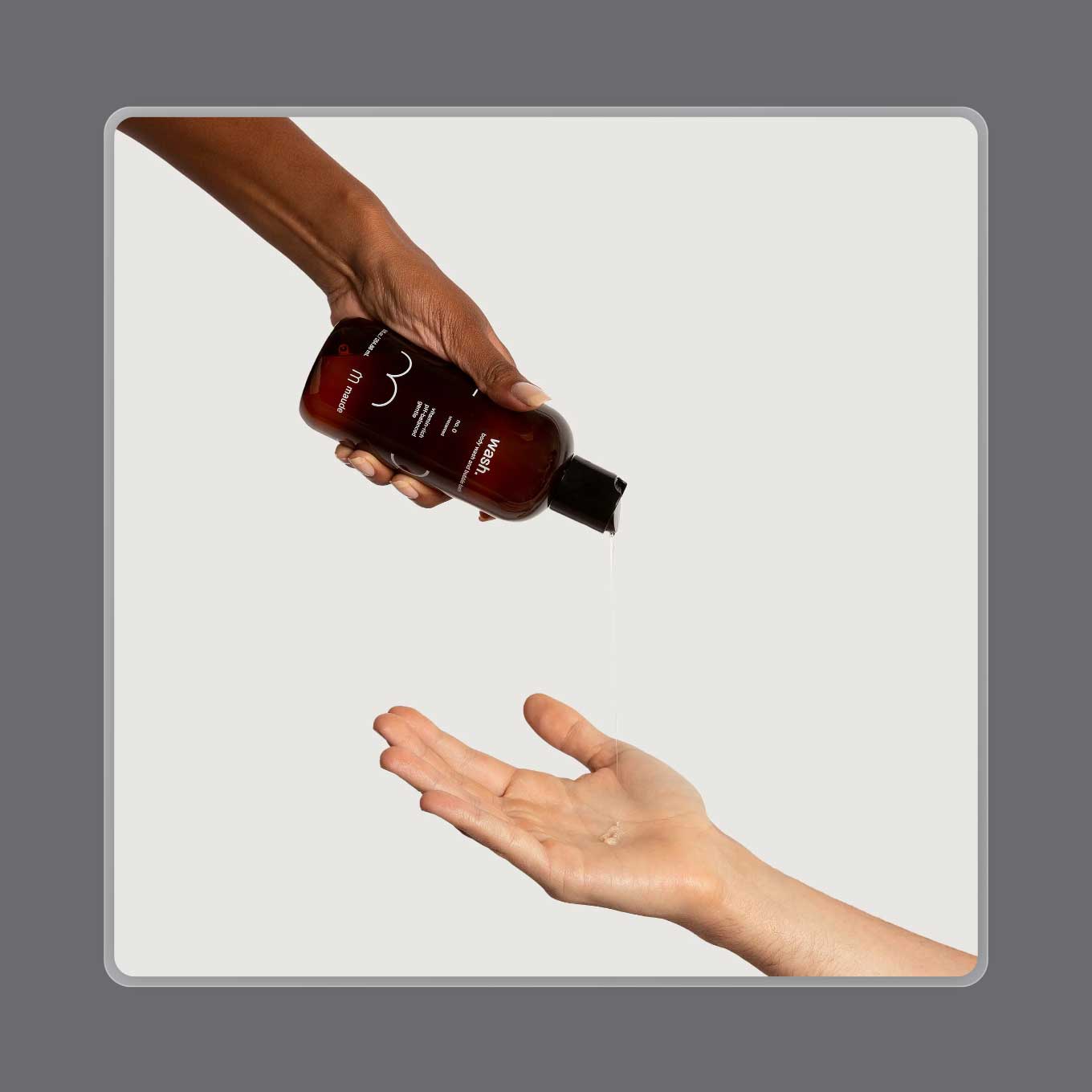
Here’s how Maude describes Wash: A pH-balanced body wash fortified with essential vitamins. This fragrance-free formula gently cleanses skin and intimate areas without any irritation, and doubles as a relaxing bubble bath for one person (or more). Contains omega-3, 6, 0 and vitamins B3, B5, C, and E.
→ Check out Wash from Maude
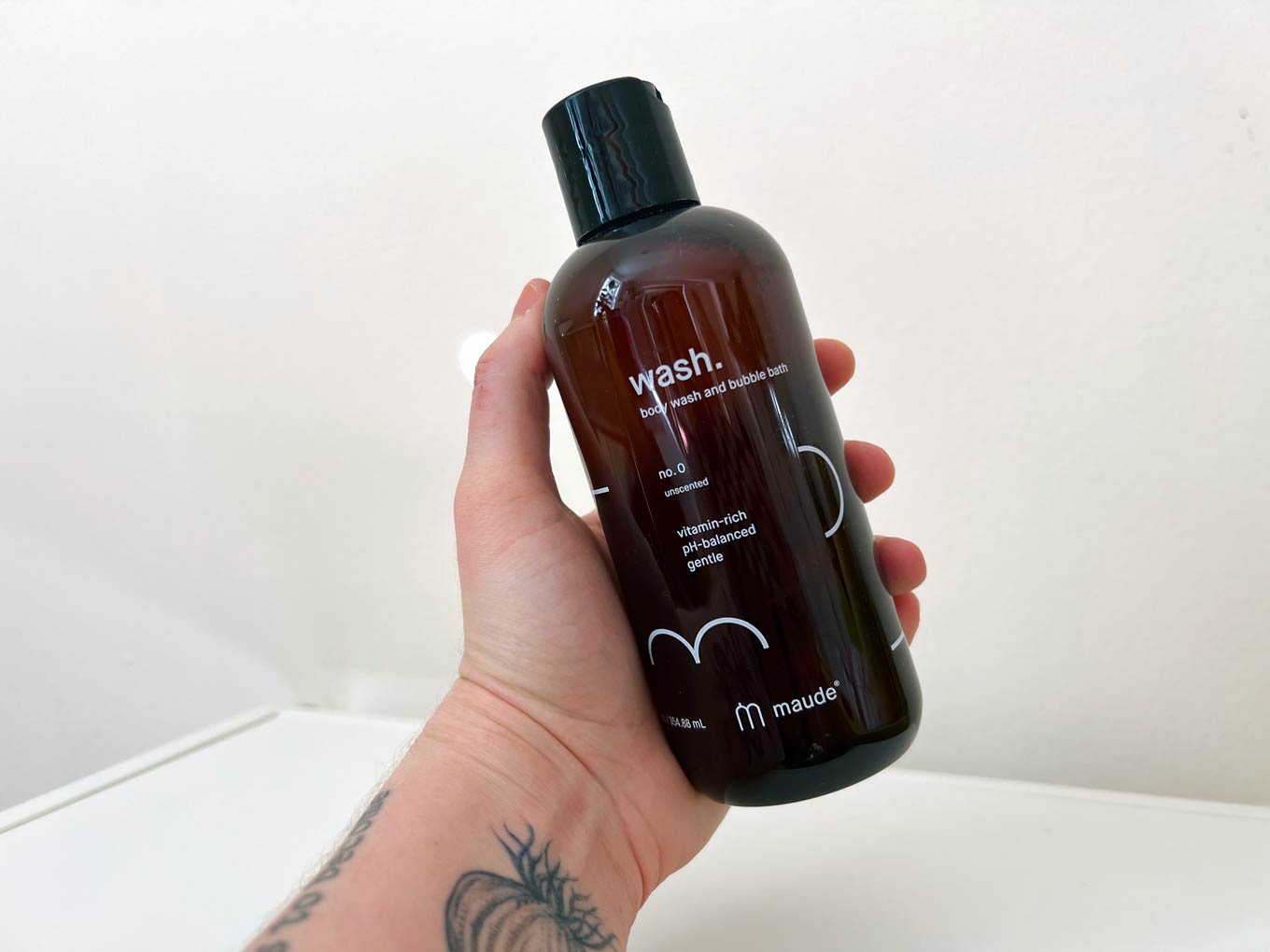
Our review: Wash is the product that started my love for Maude’s wellness items. I was on the search for a fragrance-free product that would look good in my shower, and I found it with Maude. I also love that it can be used to make a bubble bath without any overwhelming scents.
Pros
Doubles as a bubble bath
While I love using wash as a body wash, you can drop a little into your bath and you’ll have all the bubbles you’ll ever want. While it may be on the expensive side for a body wash or bubble bath ($22 for a 12-ounce bottle), you know you’re washing your body with a high-quality product that is pH-balanced to help prevent skin irritation and inflammation.
Cons
Doesn’t leave you smelling a certain kind of way post-shower
Since I reviewed the unscented version of Wash, I really enjoyed that there was no scent-clashing with any of my favorite lotions when lathering up post-shower.
If you’re someone who loves to smell like your favorite scent post-shower, this fragrance-free option won’t be the best option for you. That being said, Wash also comes in three scents if you are interested in that post-shower smell.
Soak: Calming Bath Salts & Soaks by Maude
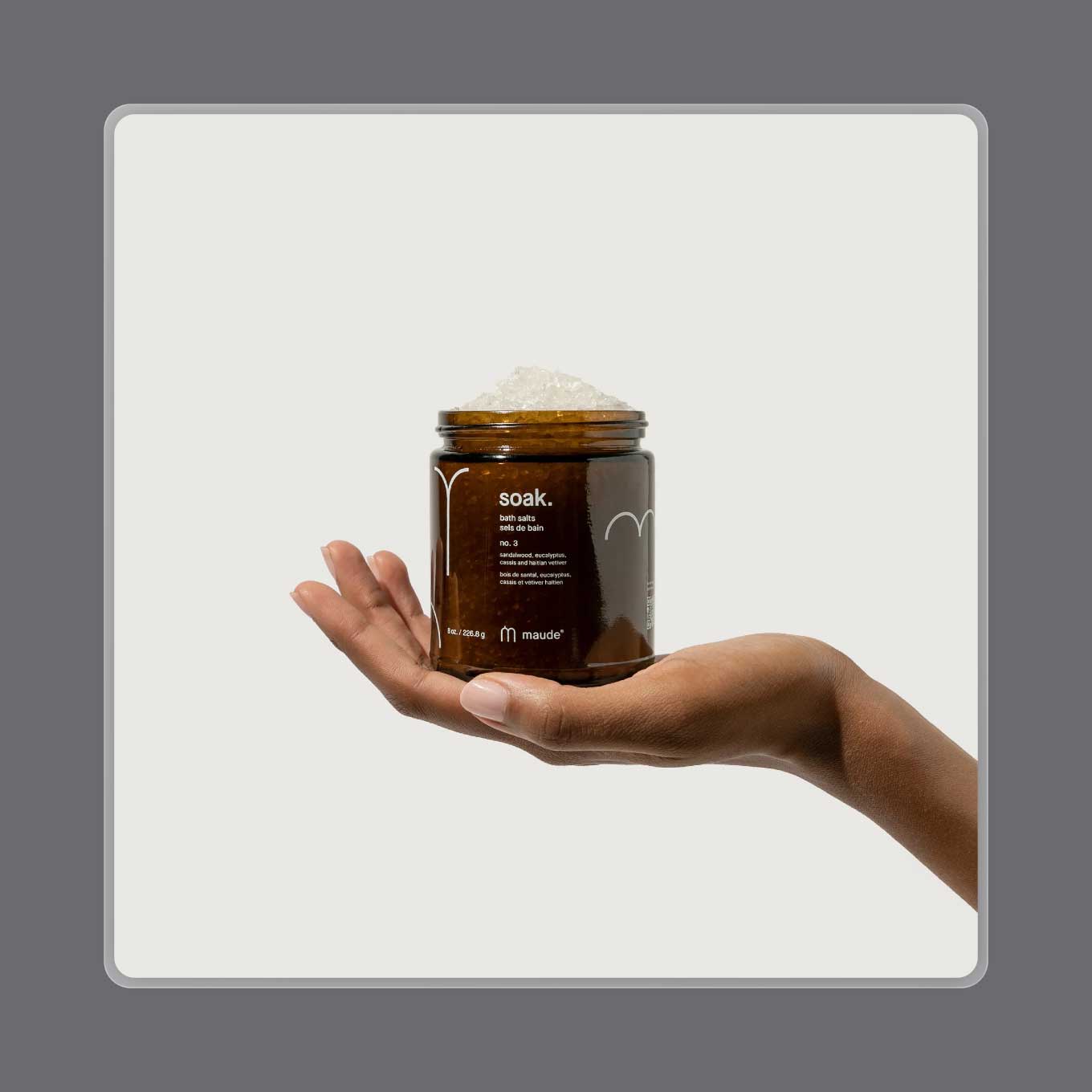
Here’s how Maude describes Soak: Made for solo or partner soaks, this salt blend softens and rejuvenates all bodies. Filled with hand-harvested salt crystals from the Southern Dead Sea, Soak contains nourishing vitamins and minerals like magnesium, potassium, sulfur, zinc and more.
→ Check out Soak from Maude
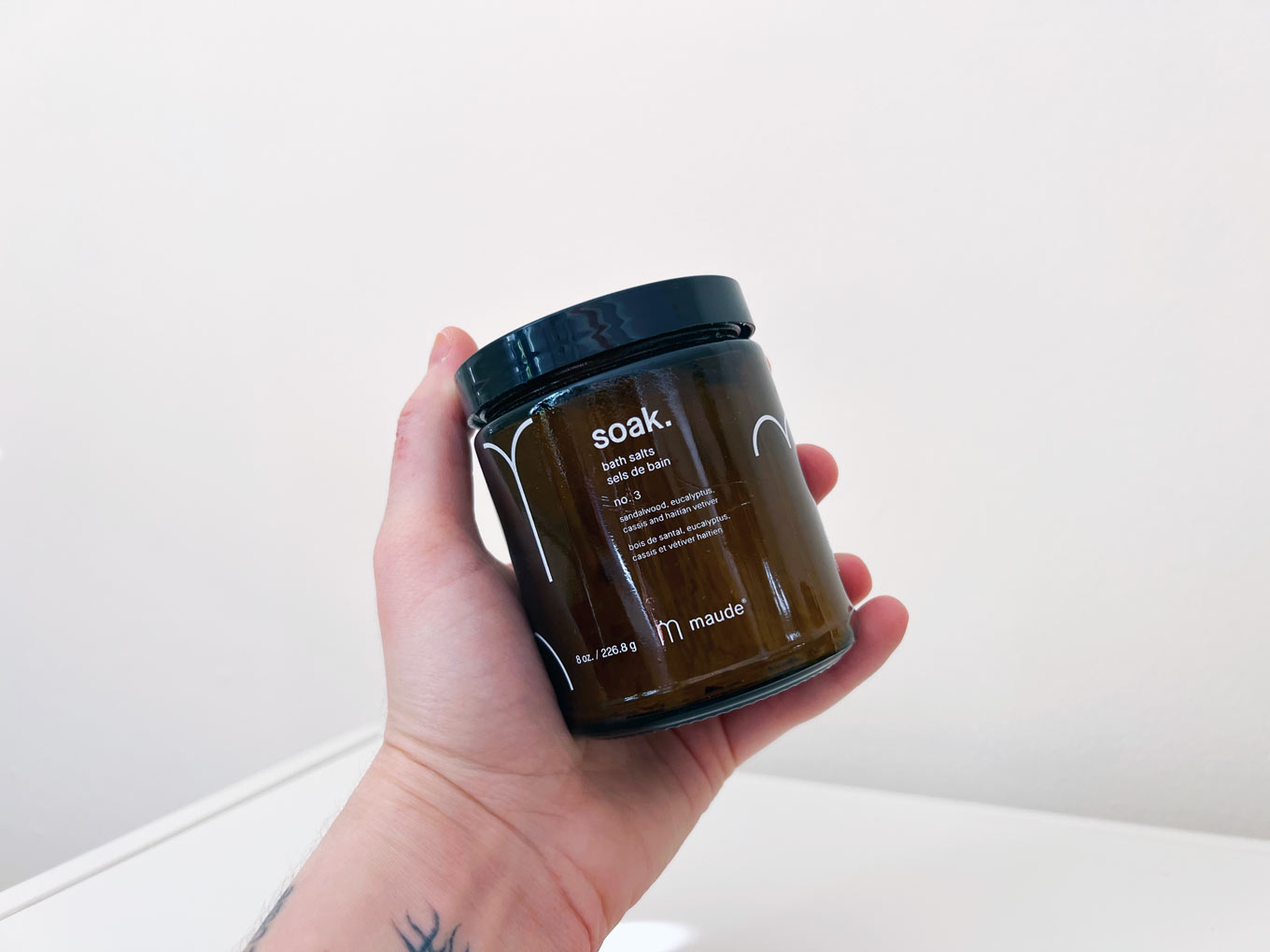
Our review: I’m not typically a bath salt lover, but I am always in love with Maude’s scents. I was sent Soak No. 3, which has scent notes of eucalyptus, sandalwood, cassis, and Haitian vetiver, which I absolutely love. Although the small quantity is a bummer, Soak was a delightful addition to my self-care routine.
Pros
Smells amazing
These bath salts come in three different scents — No. 3: eucalyptus, sandalwood, cassis, and Haitian vetiver; No 2: pink pepper, gurjun balsam, lemon California, and cedarwood Virginia; and No. 1: amber, cedar leaf, lemongrass, tonka bean, and Medjool date.
While I have only smelled No. 3, I am confident in saying these scents are luxurious and sensual as heck.
Cons
Only enough for a couple of baths
Maybe it’s just because I use the epsom salts that come in the giant bags, but it’s hard for me to justify spending $18 dollars on an eight-ounce container, when I can get a seven-pound bag for $12.
If you’re into luxury bath salts that have more complex scents, Soak is wonderful. But I’ll personally be sticking to my lavender bath salts from Target.
Soothe: Ingrown Hair Oil by Maude
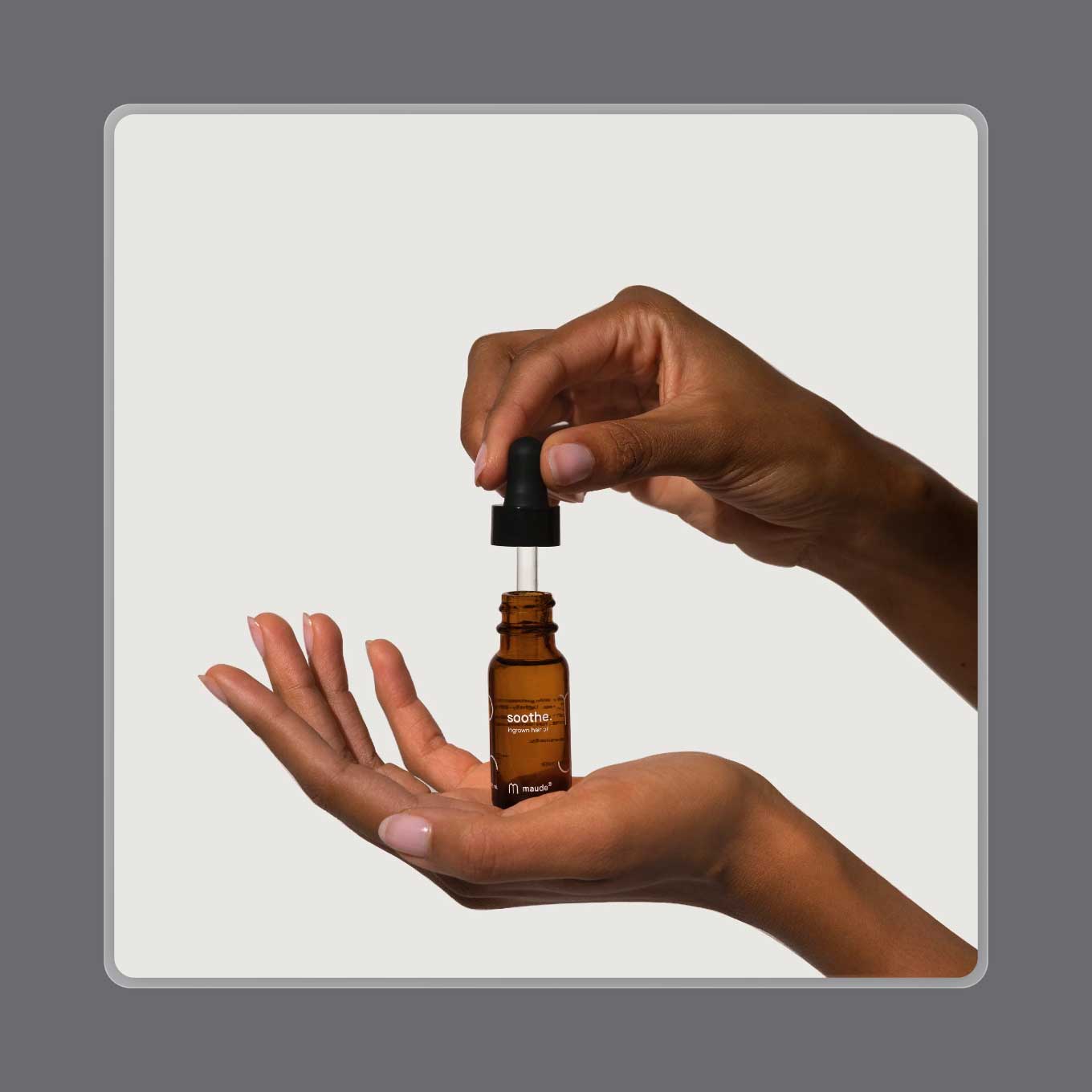
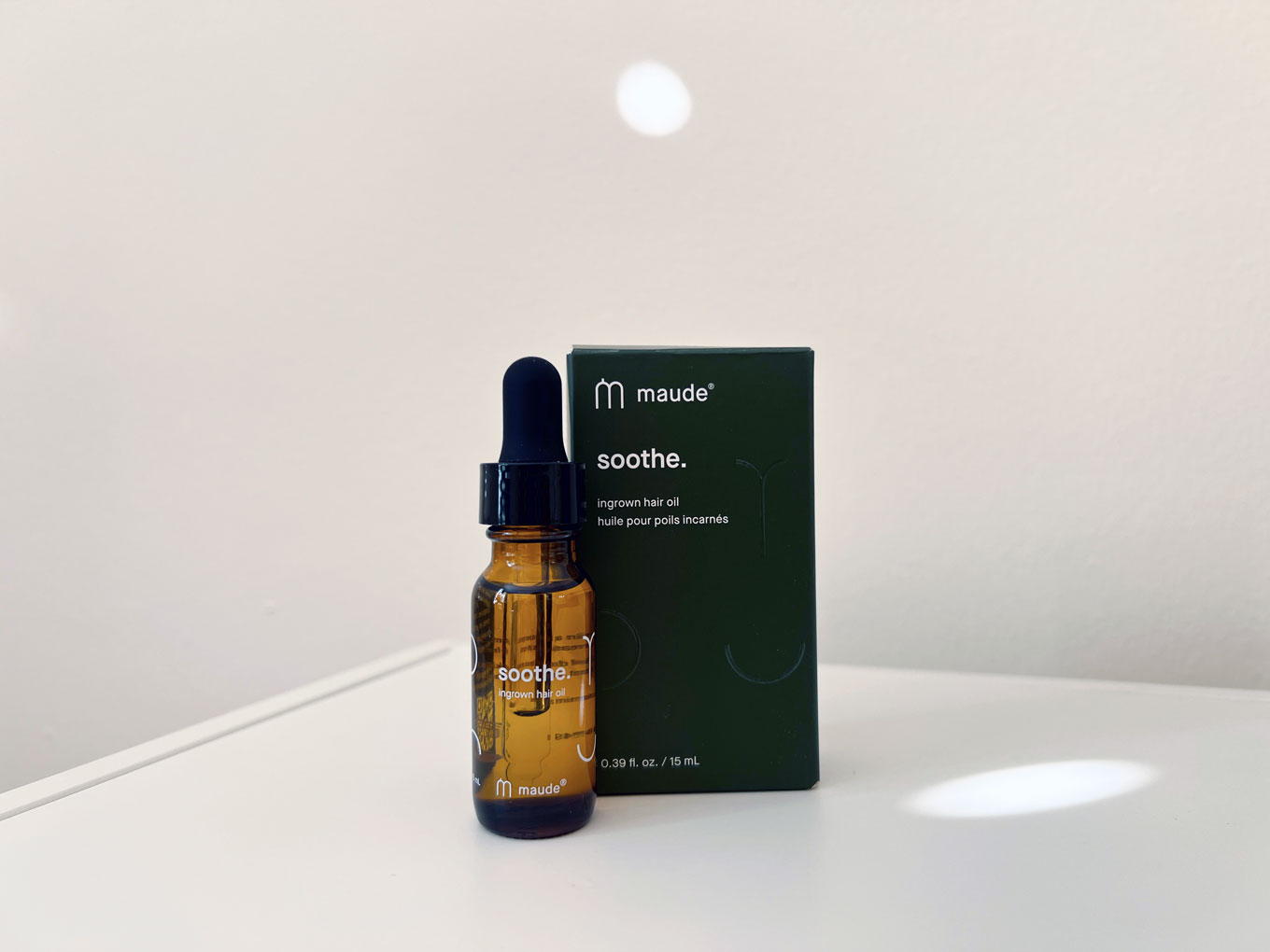
Here’s how Maude describes Soothe: A dermatologist-tested ingrown hair oil formulated to soften skin while soothing irritation. This moisturizing oil blend works to calm existing and prevent future ingrown hairs. Safe for full-body use including intimate areas, legs, underarms, and face. Lightly fragranced with lavender and lemongrass.
→ Check out Soothe from Maude
Our review: I am not prone to ingrown pubic hair so, truthfully, I haven’t used this for its intended purpose, but I did put some on my armpits after I shaved them and was pleased. I am prone to having super itchy skin after I shave, and this really did help with that!
Pros
Luxurious step in your self-love routine
Some may not think an ingrown hair oil is “sexy,” but it sure is sexier than experiencing pain after a shave. While there is no need to shave or change your body for anyone but your own self-preferences, if you experience itchiness, Soothe is a delicately lavender-scented step in a self-love routine.
Cons
Definitely an investment
I say luxurious for a reason. While Maude does say a little of this oil will go a long way, it is $30 for a 0.5 oz. bottle. If you’re prone to ingrown hairs and love an herbaceous scent for a post-shave oil, it could be worth it, as you only need a few drops.
Shave: Moisturizing Oil by Maude
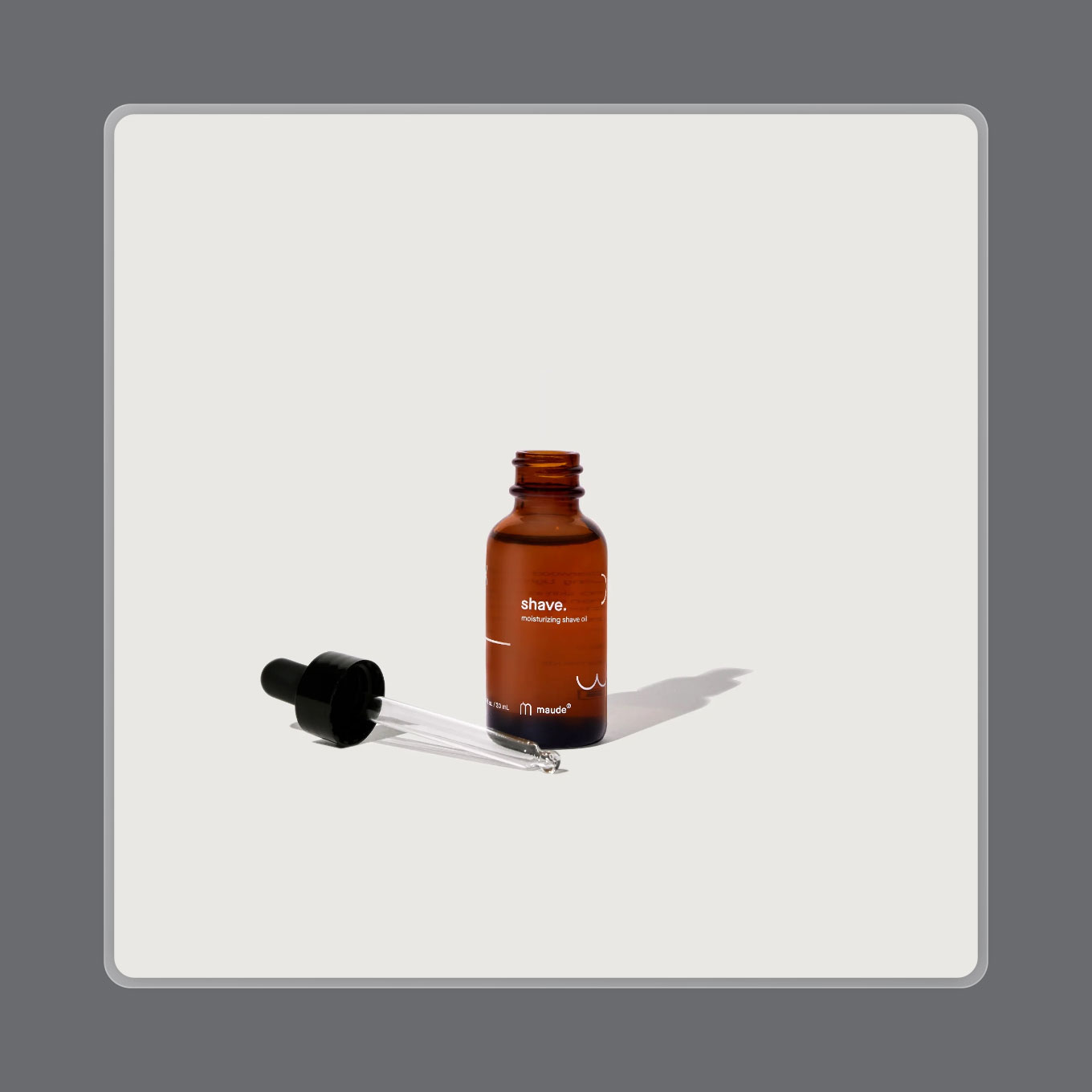
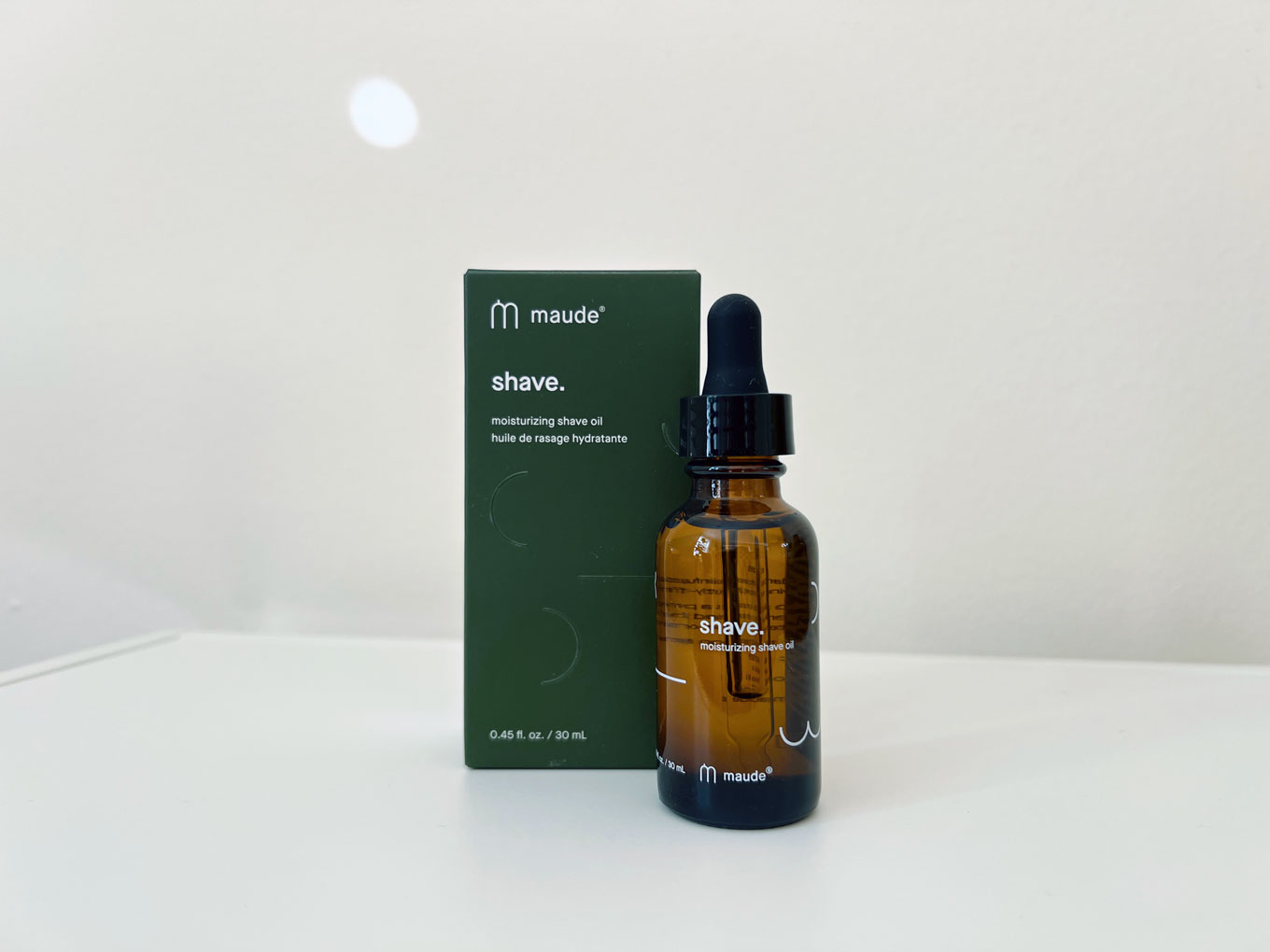
Here’s how Maude describes Shave: A dermatologist-tested, moisturizing oil that can be used pre-shave to protect skin and soften hair or while shaving to enhance glide of razor. Accommodates all levels of hair removal and safe for full-body use, including intimate areas, legs, underarms, and face. Lightly fragranced with cedarwood.
→ Check out Shave from Maude
Our review: I hadn’t ever really heard of a pre-shave oil, so I was excited to try this out. It really did soften my hair, especially on my legs, and I found the post-shave irritation to be almost non-existent on my legs and pubic area. I also found the scent to be delightful!
Pros
Heavenly scent
I am such a sucker for a woodsy scent — and this is maybe one of my favorite scents ever. The cedarwood is just too good. I don’t shave too often because it’s quite honestly so annoying, but the smell makes me want to more often.
Cons
Not a replacement for shaving cream
Maude claims it can be used while shaving, but I found it to be better for a pre-shave step. I personally wouldn’t toss the can of shaving cream just yet, especially since the oil is an investment of $32 for one fluid ounce.
Editor’s note: Maude says a little goes a long way with this product, meaning a small bottle should last a while.
Clean: Fragrance-Free Sanitizer by Maude
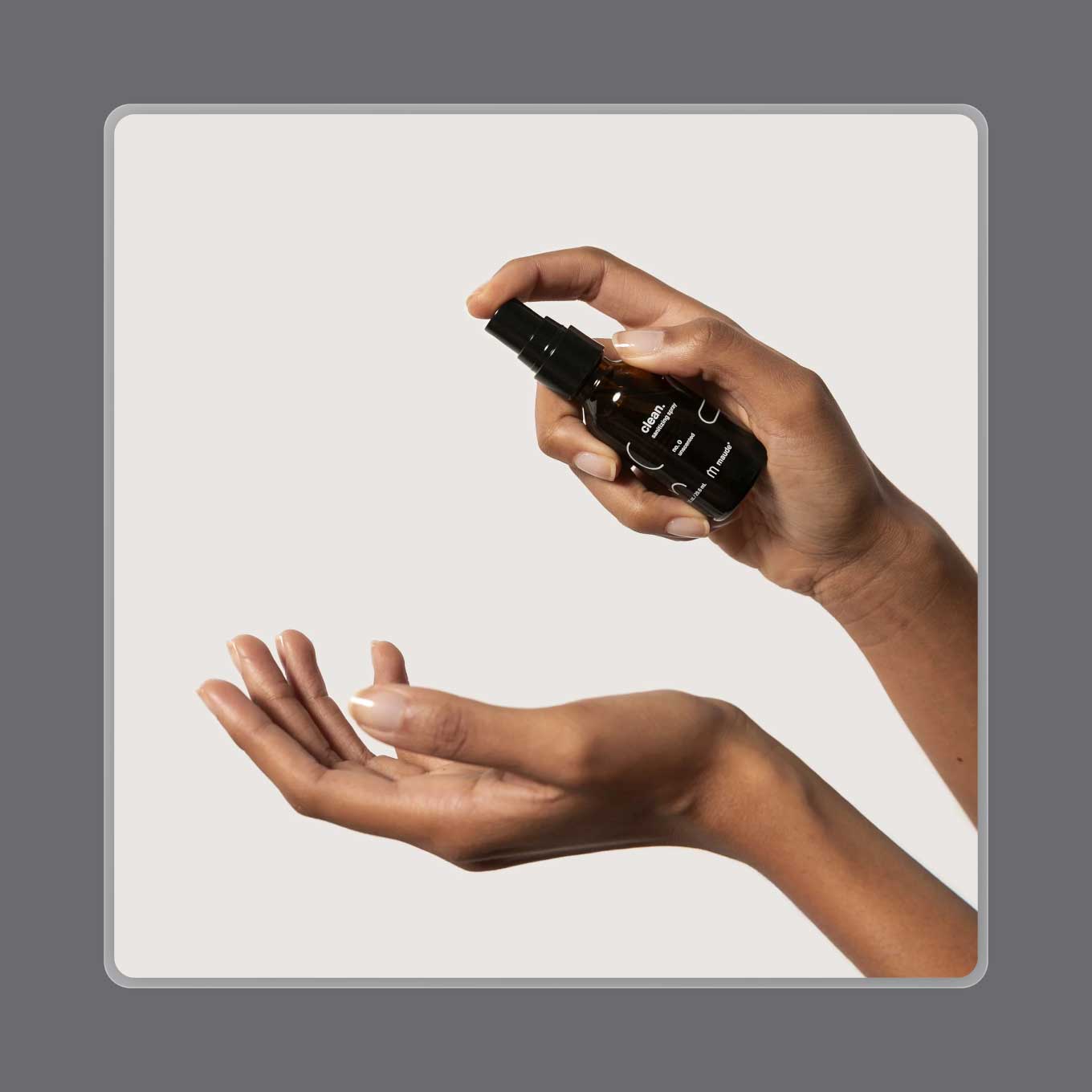
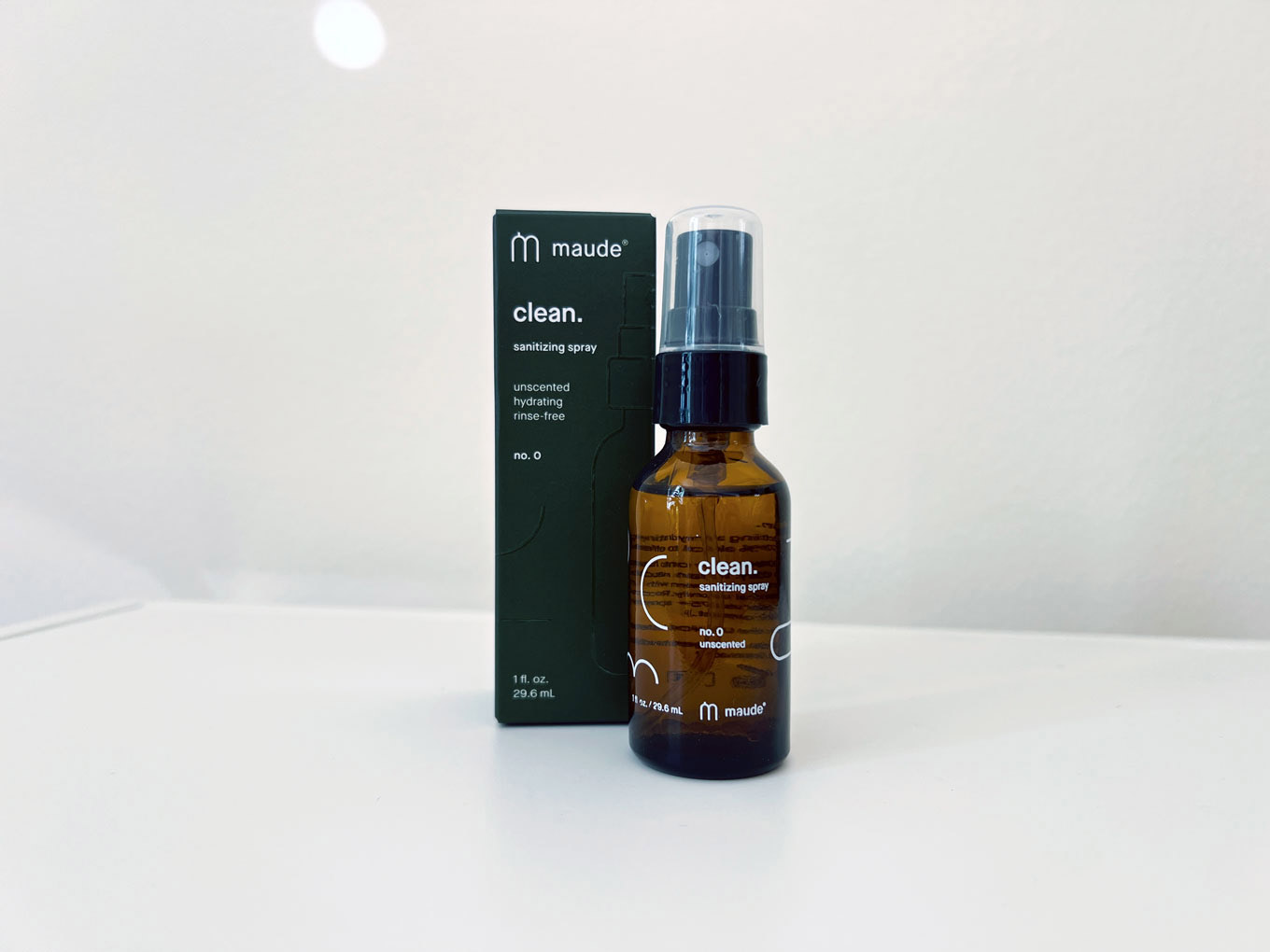
Here’s how Maude describes Clean: This fast-acting formulation blends a hydrating coconut oil to help replenish skin while effectively killing germs with 70% alcohol. Ideal for cleaning hands if water is unavailable. Can also be used as a post-use vibe cleaner. For external use only.
→ Check out Clean from Maude
Our review: This is one of my favorite Maude products. While it can be used for a simple hand sanitizer that doesn’t dry out the hands, I love it as a vibrator cleaner. After a self-pleasure moment, I want an easy clean-up and with a simple spray and wipe. It really doesn’t get any simpler than Clean.
Pros
Simple and affordable
While some may think $10 for a sanitizing spray may be a bit steep, it has 375+ sprays per bottle and is truly the simplest vibe cleaner. It really is as easy as that.
Cons
Isn’t anything special
Let’s be honest, there are other ways to clean your vibrators and there are certainly other hand sanitizers out there, so I’d consider this a “treat yourself” kind of product, or something to try if you are interested in the brand and just want to check out something simple.
Massage
Burn: Soy Massage Oil Candle by Maude
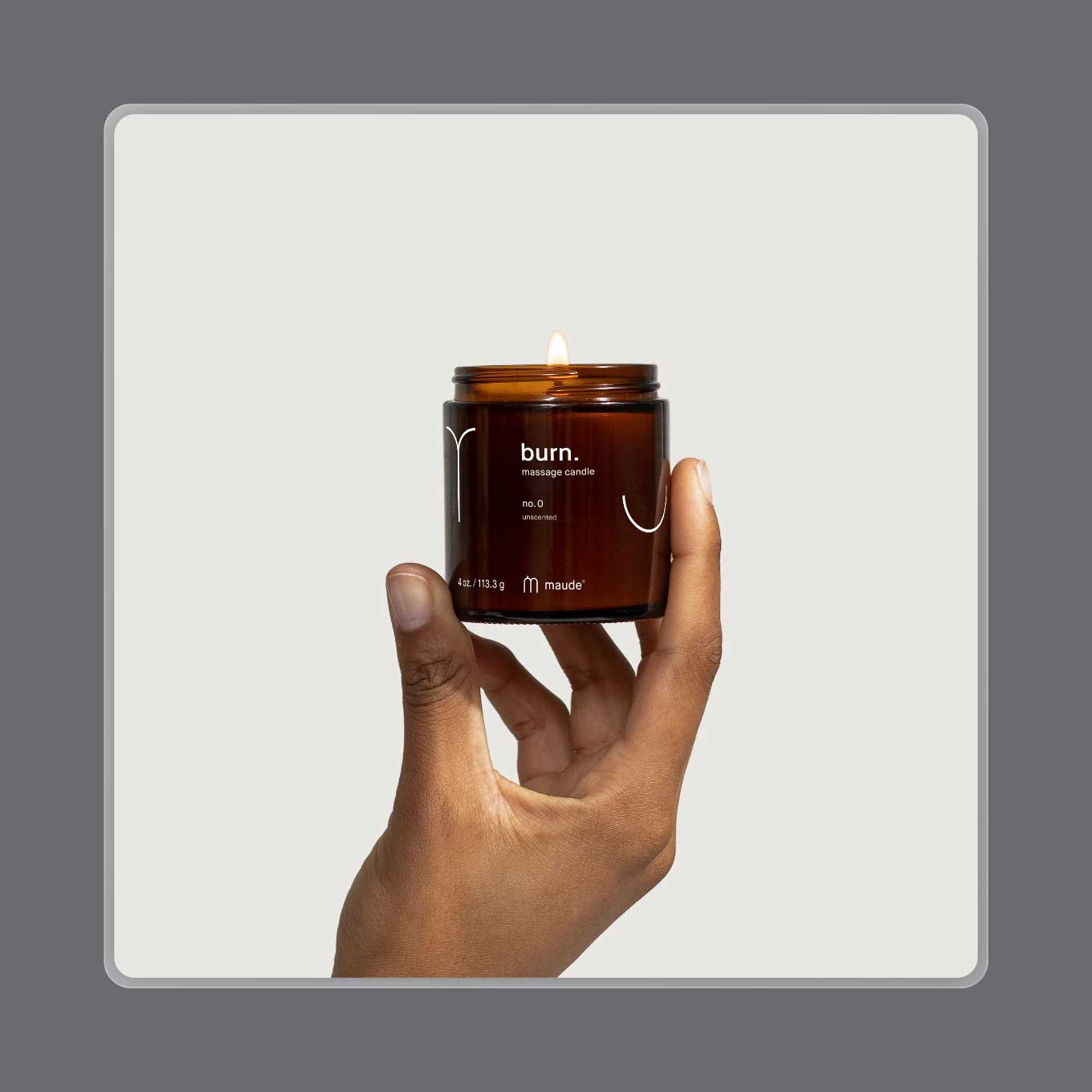
Here’s how Maude describes Burn: Made with skin-softening jojoba and soybean oils, this hand-poured massage candle is unscented and made with a 100% cotton, lead-free wick and cruelty-free ingredients. Once melted and extinguished, it can be poured on the skin. Contains soy.
→ Check out Burn from Maude
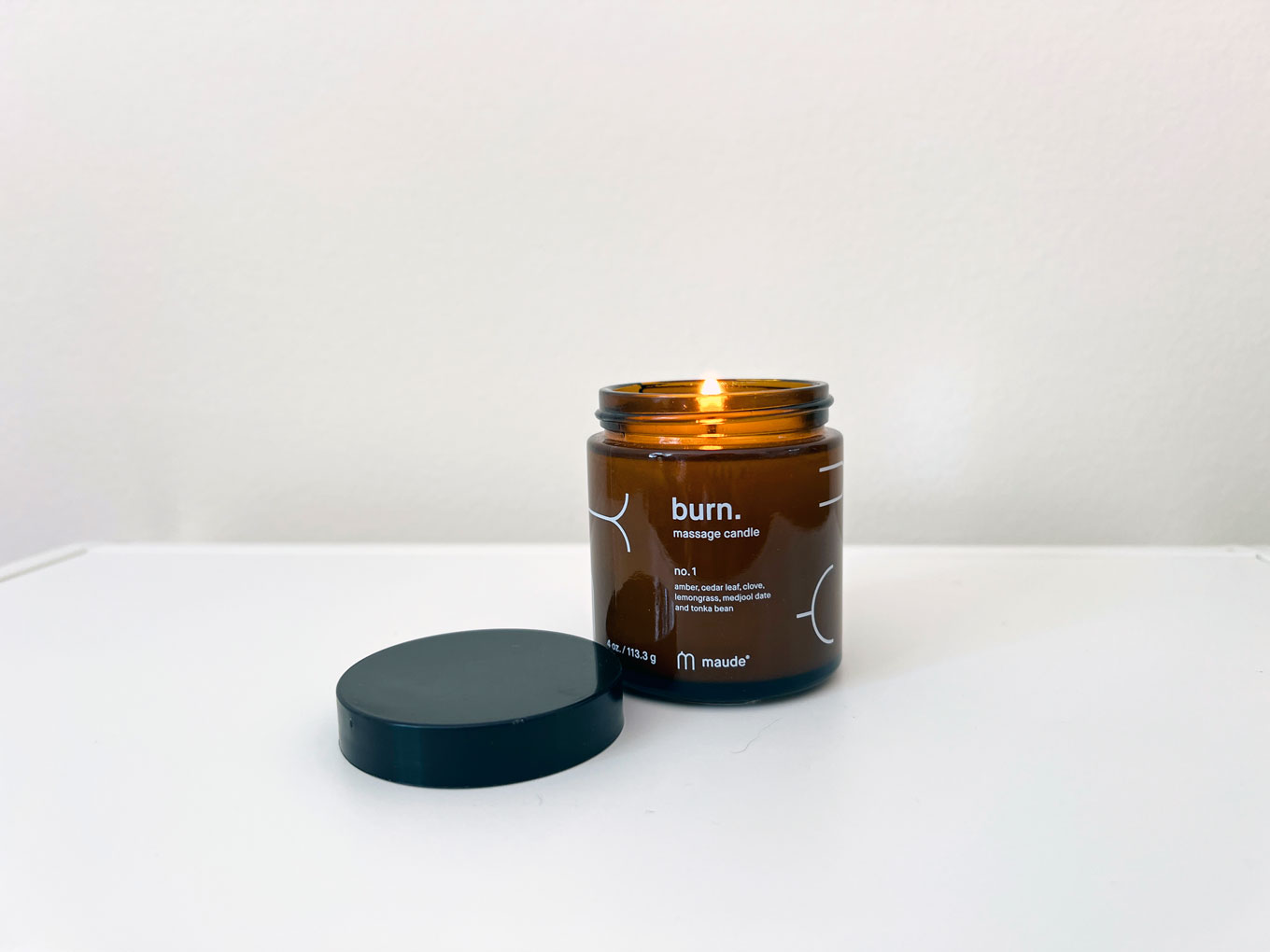
Our review: I was weary of Burn because I don’t really love massage oils to begin with and my weariness was warranted because, as a massage oil, I just didn’t love it. What I did enjoy was the scent, although I don’t think I’d purchase this small of a candle again for the smell alone.
Maude offers four different scents and I got No. 1, which has notes of amber, cedar leaf, lemongrass, tonka bean and medjool date. It’s such a small candle for its price at $30, but I’m glad I got to experience it, even if I won’t be reaching for it as a massage companion again.
Pros
Strong scent
While many of the negative reviews on Maude’s website have to do with the strong and “unpleasant” smell, I found it to be wonderful. So this is a personal pro. The No. 1 scent I received smells like pipe tobacco, which is the type of scent I gravitate towards when I’m lighting a candle, especially when I’m trying to connect with comfy feelings of fall.
Some of the reviews said it smells like, “cigarettes,” so if you aren’t into the musty, earthy scent, skip on the No. 1 scent and opt for their other scents or the fragrance-free version.
Cons
Can be messy
Surprisingly, pouring oil out of a candle isn’t the easiest thing to do. Once you burn it for 10-15 minutes, you can pour the oil-based candle right onto the skin since it has a lower burning temperature, but I found the texture to be less absorbent than I expected and annoying to clean up once it dried.
The candle also burned unevenly, leaving some waste behind without the foil trick.
In Summary
At the end of the day, I do think Maude lives up to the hype! Its products are well-made, safe for the body, and user-friendly. Among all the products I tested out, I remain really impressed with Soak, and Maude’s scented items are truly wonderful.
As I mentioned, I’d pass on Burn, for a more practical alternative, but I still think it’s a great option for some who might want to try out a new luxurious item. Another way to add a little luxury in your life would be to snag the Soothe ingrown hair oil for your post-shave routine.
While I may be weary of the “aesthetic” Instagram ads, I believe Maude lives up to its reputation and is affordable enough that it really is accessible for those looking to dive into a thoughtful and inclusive self-care and sexual wellness brand.
I have become a seasoned pro when it comes to reviewing sex toys.
In fact, as part of Good Good Good’s ongoing series on body-safe and sustainable sex and intimacy products, I’ve tried out my fair share of eco-friendly vibrators.
However, I was really excited to do a deep-dive into one specific sustainable sex brand: Maude.
For this article, we broke down Maude’s sex toys to help you find items that feel good on your body and feel good for the earth.
In other articles, we’ve reviewed almost every one of Maude’s products: Review of Maude’s Lubes | Review of Maude’s Self-Care & Sexual Wellness Products
No matter where you are in your journey to pleasure and intimacy, we’ve got your back. We’ll explore more about what makes Maude sustainable, how we enjoyed the brand’s devices, and which might be the best pick for you.
Editor’s Note: We partnered with Maude for this article — with the goal of helping our readers understand the brand’s products and pick the best one(s) for them.
Maude paid a fee to help us bring this article to life and sent our writer, Sam, a few sample products to try out. Additionally, some links in this article are affiliate links, which means we may earn a commission on any purchases you make at no extra cost to you.
However, this article was written independently by Sam, without oversight, talking points, or feedback from the brand. These are Sam’s honest opinions.
Why choose Maude?
Maude is popular for its minimal, picturesque design, but I believe it turns people into brand loyalists by being high-quality and inclusive. It’s clear the company values inclusivity, and is also in the business of taking care of the planet by championing sustainable and ethical business practices.
As a non-binary person, I really appreciated not feeling like my gender was at the forefront of any marketing, like other sexual wellness brands.
I also really value that Maude makes products that are made with safe ingredients for the body and planet alike.
I adore that Maude is a woman-owned and POC-owned brand and I was eager to review all of its products to see if they are just as pleasing as their aesthetic.
Inclusive & Body-Safe
Maude’s ethos, purpose, and philosophy is not only simple; it’s front and center on the website. Maude says: “The sexual wellness industry has historically been gendered, exclusive, and unapproachable. When imagining what a modern intimacy brand could be, we prioritized gender, age, and body inclusion.”
This priority comes through in gender-inclusive language in product descriptions, diverse representation on the website, and beginner-friendly products.
Not only does this make the brand feel safe, but its products themselves are body-safe by using no parabens or skin irritants, and instead opting for gentle formulations that include IFRA-approved fragrances, and FDA-grade and REACH-passed silicone that are tested for safety and quality.
Sustainably & Ethically Made
Maude has also opted against unnecessary secondary packaging and product inserts where possible. Having received a few goodies now, I can confirm that the brand’s packages arrive in simple, discreet packaging that can be recycled.
Additionally, most of the packaging is made from pre- and post-consumer recycled content and is recyclable with standard curbside recycling programs or designated recycling facilities.
Shipping cartons are locally manufactured with 7% pre-consumer recycled content & 39% post-consumer recycled content with a total recycled content of 46%.
Destigmatizing Sex and Intimacy
Ultimately, something I really look for in a sexual wellness brand is the work it does to break down stigmas around sex and intimacy.
I really appreciate that Maude designs products that are just so beautiful you can leave them right on your nightstand — as opposed to something you feel like you have to hide away.
Maude also shares sexual wellness resources on its blog, The Maudern, including content surrounding topics like having sex as we age, breaking down STI stigma, the cultural history of pubic hair, and beginner’s guides to things such as role play.
Lastly, the brand also partners with SIECUS (Sex Ed for Social Change), and Advocates for Youth to support comprehensive sex education standards through advocacy, educational curriculum, and accessibility across the country.
This wealth of knowledge and resources makes Maude not only a brand offering high-quality products, but makes it a true sexual wellness brand that is committed to holistic pleasure.
Some of these links may lead to mature content. Additionally, consult your doctor if you have any allergies or issues with products.
Our honest review of Maude’s sex toys
Drop by Maude

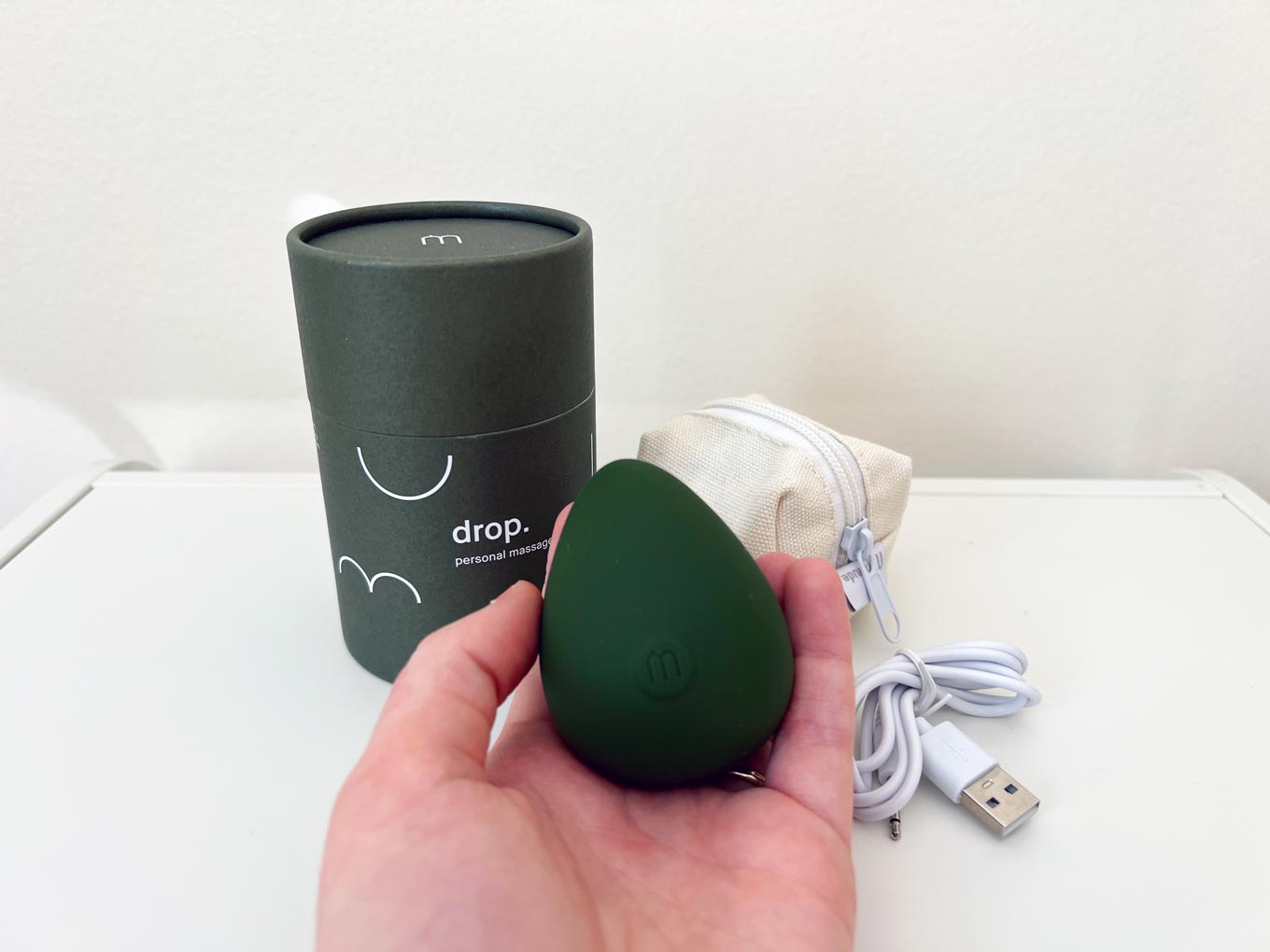
Here’s how maude describes Drop: Drop’s shape rests easily in your palm for versatile all-over external stimulation. Intended as an all-body, erogenous zone body massager—mimicking the ball of a wand without the handle. Our soft-touch drop is made with 100% platinum-grade silicone (RoHs passed / FDA grade) and is a discreet, easy-to-use, 3-speed vibrator. Drop has a battery indicator light that blinks when the battery is low, fades in and out when charging, and shuts off once fully charged.
→ Check out the Drop from Maude
Our review: Maude’s Drop is literally the size of your palm, making it the brand’s smallest toy with the same amount of power as its others. Drop is one of my favorite massagers because it can be used in an intimate setting, as well as on other parts of your body as a gentle massager.
Pros
Small and versatile
The size of Drop is honestly so cute. When you pull it out of the bag, you’ll notice its slight teardrop shape making it the perfect massager for many types of bodies. That said, I also personally love using it on the top of my shoulders or neck for a full-body self-care moment.
Cons
Could cause muscle or joint fatigue
Because of its small shape and size, Drop requires quite a grip. As someone with joint pain issues, I did find it to be quite tiring to hold after a while.
Vibe by Maude

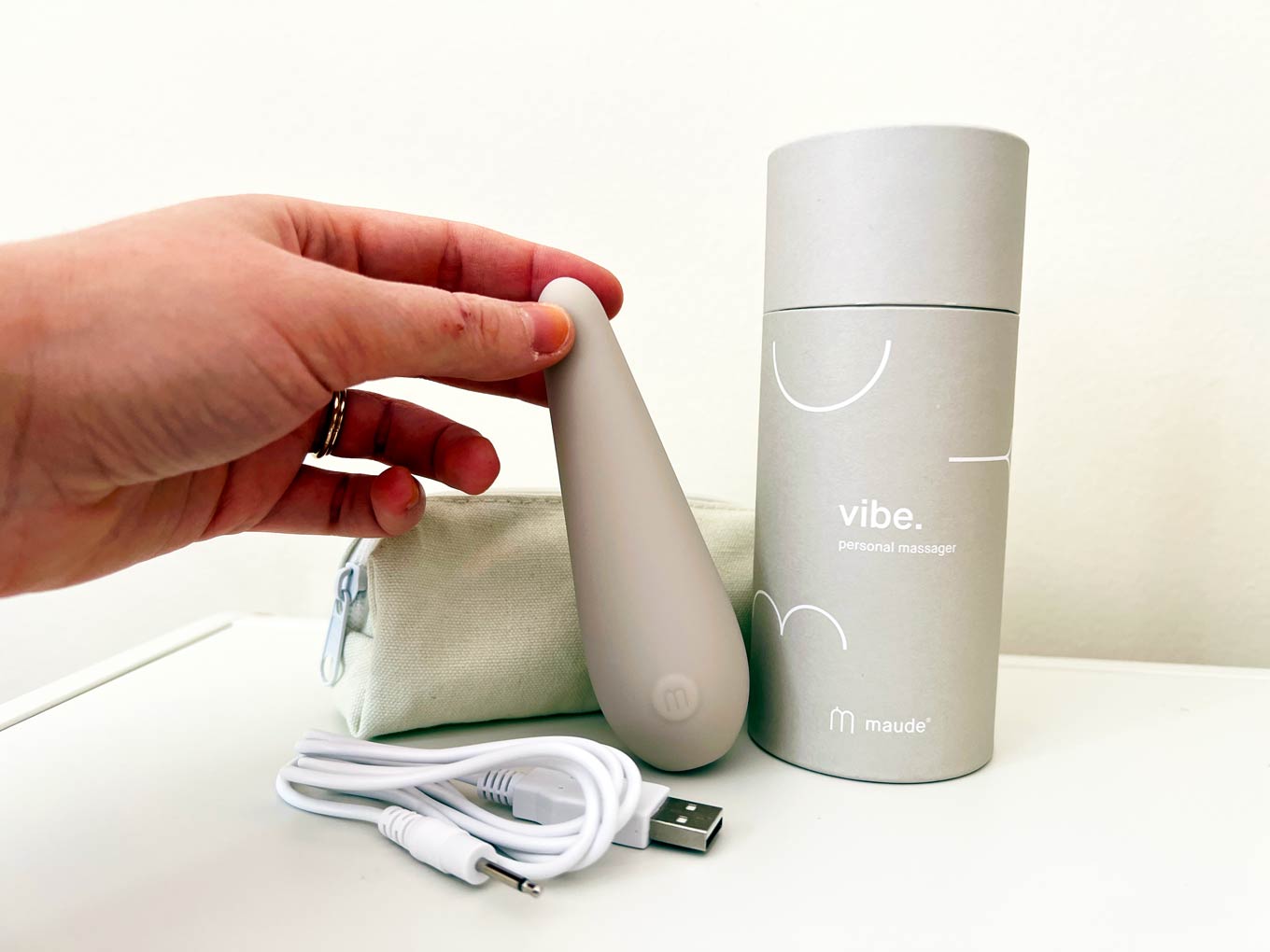
Here’s how Maude describes Vibe: We designed Vibe’s shape and flutter tip in-house for focused external stimulation. Vibe can be used solo or with a partner. Called Best-in-Show by The Strategist and featured in the MoMA Design Store, our signature soft-touch vibe is made with 100% platinum-grade silicone (RoHs passed / FDA grade) and is a discreet, easy-to-use, 3-speed vibrator. With a runtime of up to 2.5 hours and charged via USB, it’s water-resistant, phthalate- and latex-free and can go anywhere.
→ Check out the Vibe from Maude
Our review: Vibe is always a go-to for me. It has enough variety in its settings that I feel like I can play with different sensations, and its size is accessible and travel-friendly. The super soft silicone has a dreamy feel for all areas and is easy on the hand when holding.
Pros
Great for beginners
If you’re just getting into using sex toys or want to explore more self-pleasure, the vibe is a great start.
Maude says Vibe is meant for external stimulation, but as someone with vaginismus, I found it to be helpful to practice internal stimulation because of its smaller cone shape. While it may not have any “bells and whistles” (not that a vibrator needs those), it is super approachable and straightforward.
Cons
Leaves me wanting more intensity
While Vibe’s three vibration settings are quite strong, someone with more experience with other wands might find the vibe to be too gentle.
Spot by Maude

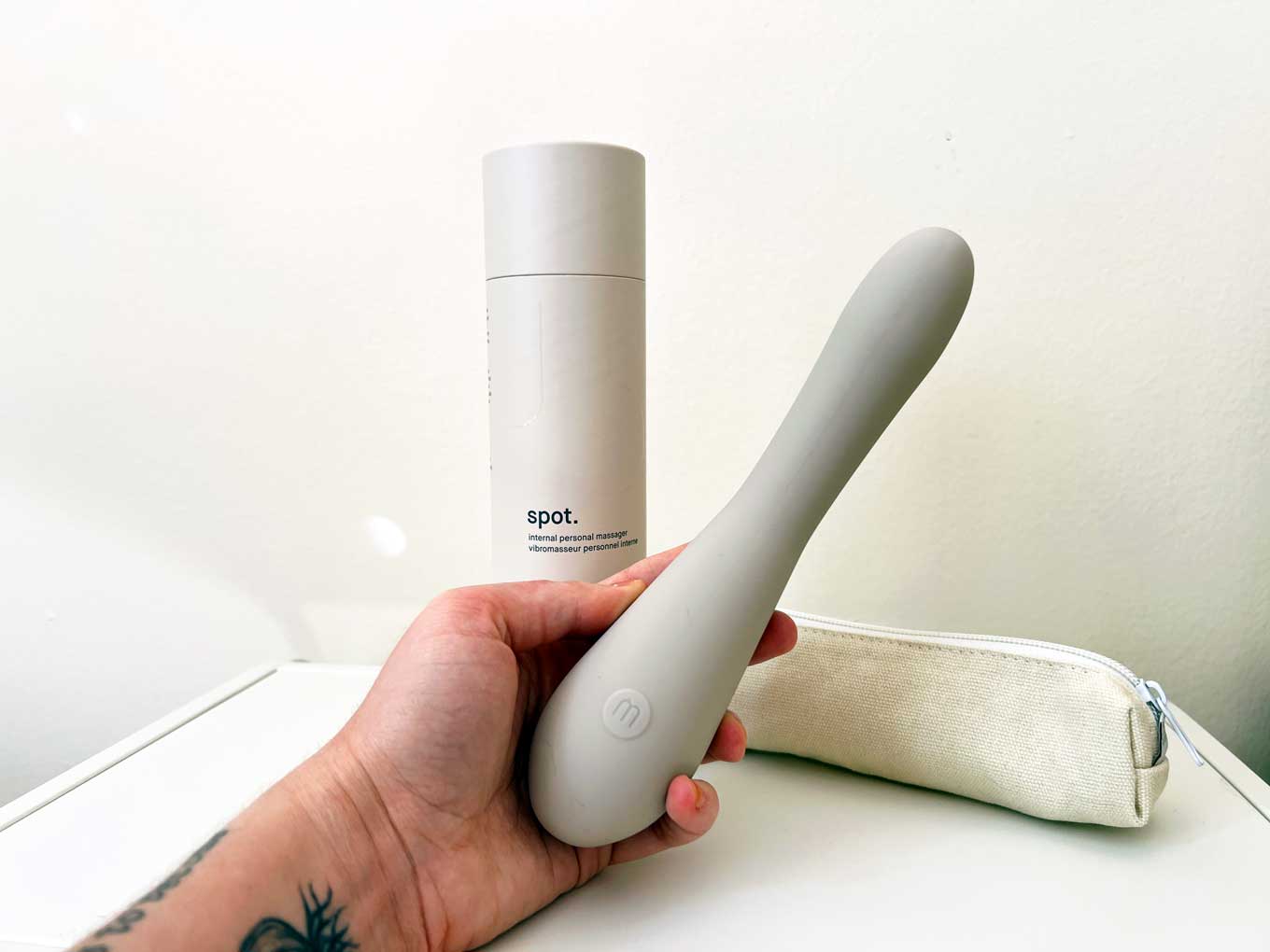
Here’s how Maude describes Spot: Spot is a hand-held, curved vibrator meant for internal stimulation. Intended as a g-spot or p-spot vibrator, it is complete with five speeds. Our soft-touch Spot is made with 100% platinum-grade silicone (RoHs passed / FDA grade) and is a discreet, easy-to-use, 5-speed vibrator. Spot has a battery indicator light that blinks when the battery is low, fades in and out when charging, and shines bright once fully charged.
→ Check out the Spot from Maude
Our review: Spot is best for folks who are looking for a soft and luxurious toy for internal stimulation. With five speeds and a very rumbly sensation, it’s a very versatile toy, which also makes it great for clitoral or external stimulation, in addition to internal pleasure.
As I noted above, I have vaginismus, which makes any kind of penetration painful for me, so I didn’t get to try this toy for its intended use–internal stimulation.
I gave Spt a shot for clitorial stimulation and was not mad about it, but wasn’t totally impressed. It does have five speeds to choose from, which is a welcomed change from Drop and Vibe, so that’s helpful to note!
All of that being said, I personally would grab something else before I grabbed Spot for external self-pleasure.
Pros
Variation in intensity
Spot’s five-speed options make this more of a versatile toy. This may be what someone reaches for when they want to have more variation in stimulation.
Cons
Not great for external stimulation
For people who love g-spot or p-spot stimulation, you’re in luck, because this toy really was made for you. However, if you have any kind of pain when experiencing penetration, you may want to opt for a different toy because the rumbly-ness of the spot left something to be desired for me.
Cone by Maude

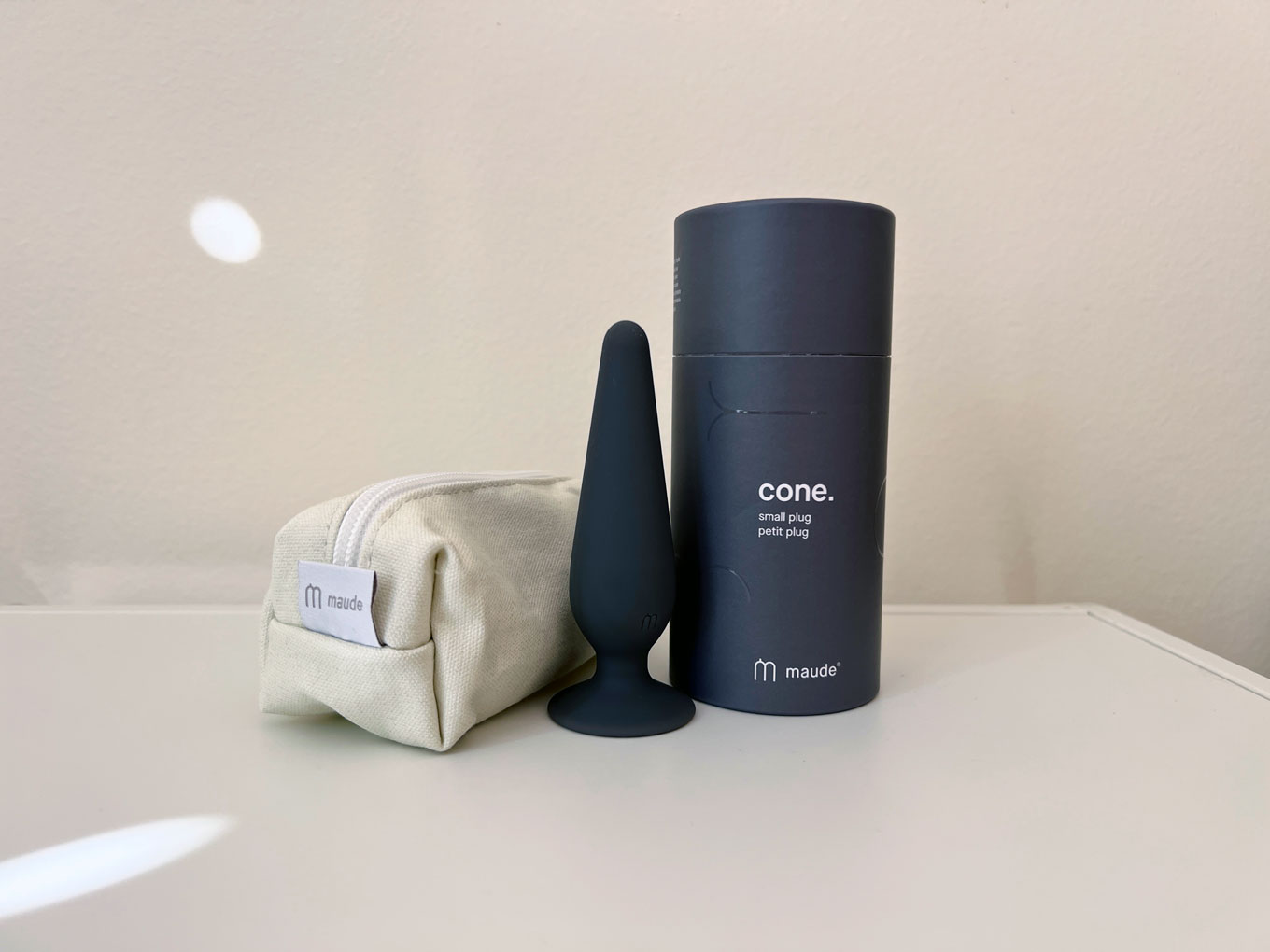
Here’s how Maude describes Cone: Cone is a discreet and easy-to-use butt plug with a tapered shape and flared base. Made of 100% platinum-grade, soft-touch silicone, cone is phthalate- and latex-free, and waterproof
→ Check out the Cone from Maude
Our review: Listen, I would not consider myself someone who enjoys butt play, but for the sake of the experiment, I tried Cone. If you have ever wanted to try a plug but have felt too scared, Maude’s Cone is an approachable and comfortable option. The silicone is silky smooth and its size isn’t intimidating.
Will I be reaching for it again? Probably not. Would I recommend it, though? Absolutely.
Pros
Great for the curious
If you’ve never dabbled in butt plug use before, Maude’s Cone is very approachable. The brand does offer a vibrating option that I’d leave to the more experienced, but it has a properly flared base and a size that isn’t too intimidating. I’d say: If you’re curious, Cone is a good place to start.
Cons
Cannot use silicone-based lube
While this isn’t necessarily a “con,” it does mean that you have to be more mindful of the kind of lube you’re using. Silicone- or oil-based will degrade silicone toys over time, so make sure you are using an aloe- or water-based lubricant, which luckily, maude makes.
In Summary
At the end of the day, I do think Maude lives up to the hype! Its products are well-made, safe for the body, and user-friendly. Among all the products I tested out, I was really impressed by the sex toys, and keep finding myself coming back to Vibe.
I’d personally pass on Cone, but I do think it’s a great way for folks to venture into butt play, and I appreciate how non-intimidating it was to use!
If you’re looking for more internal stimulation, Spot is what you should go for, and if you want something small and discreet that still gets the job done, Drop is your new best friend.
While we all have our preferences, I believe Maude lives up to its reputation and is affordable enough that it really is accessible for those looking to dive into a thoughtful and inclusive sexual wellness brand.
Let’s be real: Sexual lubricant can make or break an intimate moment. And, we’re not always even taught that lube can be an option when it comes to pleasure.
So, consider me a little wary of the “aesthetic” bottle of lube from Maude I was seeing all over Instagram — that could easily become a fixture on your nightstand with your guests being none the wiser.
But, as part of an ongoing series on body-safe and sustainable sex and intimacy products, and my full exploration of the best eco-friendly lubes on the market, I was eager to jump into Maude’s line of lubricants.
For this article, we broke down Maude’s line of lube products to help you find items that feel good on your body and feel good for the earth.
In other articles, we’ve reviewed almost every one of Maude’s products: Review of Maude’s Sex Toys | Review of Maude’s Self-Care & Sexual Wellness Products
We know it’s important to consider the planet with our everyday purchases, but it’s also important to make sure those products are right for you. We’ll give you some more insights into Maude’s business practices, our experience with its lubricants, and what might be the best pick for you.
Editor’s Note: We partnered with Maude for this article — with the goal of helping our readers understand the brand’s products and pick the best one(s) for them.
Maude paid a fee to help us bring this article to life and sent our writer, Sam, a few sample products to try out. Additionally, some links in this article are affiliate links, which means we may earn a commission on any purchases you make at no extra cost to you.
However, this article was written independently by Sam, without oversight, talking points, or feedback from the brand. These are Sam’s honest opinions.
Why choose Maude?
Maude is popular for its minimal, picturesque design, but I believe it turns people into brand loyalists by being high-quality and inclusive. It’s clear the company values inclusivity, and is also in the business of taking care of the planet by championing sustainable and ethical business practices.
As a non-binary person, I really appreciated not feeling like my gender was at the forefront of any marketing, like other sexual wellness brands.
I also really value that Maude makes products that are made with safe ingredients for the body and planet alike.
I adore that Maude is a woman-owned and POC-owned brand and I was eager to review all of its products to see if they are just as pleasing as their aesthetic.
Inclusive & Body-Safe
Maude’s ethos, purpose, and philosophy is not only simple; it’s front and center on the website. Maude says: “The sexual wellness industry has historically been gendered, exclusive, and unapproachable. When imagining what a modern intimacy brand could be, we prioritized gender, age, and body inclusion.”
This priority comes through in gender-inclusive language in product descriptions, diverse representation on the website, and beginner-friendly products.
Not only does this make the brand feel safe, but its products themselves are body-safe by using no parabens or skin irritants, and instead opting for gentle formulations that include IFRA-approved fragrances, and FDA-grade and REACH-passed silicone that are tested for safety and quality.
Sustainably & Ethically Made
Maude has also opted against unnecessary secondary packaging and product inserts where possible. Having received a few goodies now, I can confirm that the brand’s packages arrive in simple, discreet packaging that can be recycled.
Additionally, most of the packaging is made from pre- and post-consumer recycled content and is recyclable with standard curbside recycling programs or designated recycling facilities.
Shipping cartons are locally manufactured with 7% pre-consumer recycled content & 39% post-consumer recycled content with a total recycled content of 46%.
Destigmatizing Sex and Intimacy
Ultimately, something I really look for in a sexual wellness brand is the work it does to break down stigmas around sex and intimacy.
I really appreciate that Maude designs products that are just so beautiful you can leave them right on your nightstand — as opposed to something you feel like you have to hide away.
Maude also shares sexual wellness resources on its blog, The Maudern, including content surrounding topics like having sex as we age, breaking down STI stigma, the cultural history of pubic hair, and beginner’s guides to things such as role play.
Lastly, the brand also partners with SIECUS (Sex Ed for Social Change), and Advocates for Youth to support comprehensive sex education standards through advocacy, educational curriculum, and accessibility across the country.
This wealth of knowledge and resources makes Maude not only a brand offering high-quality products, but makes it a true sexual wellness brand that is committed to holistic pleasure.
Some of these links may lead to mature content. Additionally, consult your doctor if you have any allergies or issues with products.
Our honest review of Maude’s lube line
Maude Shine Organic Personal Lubricant
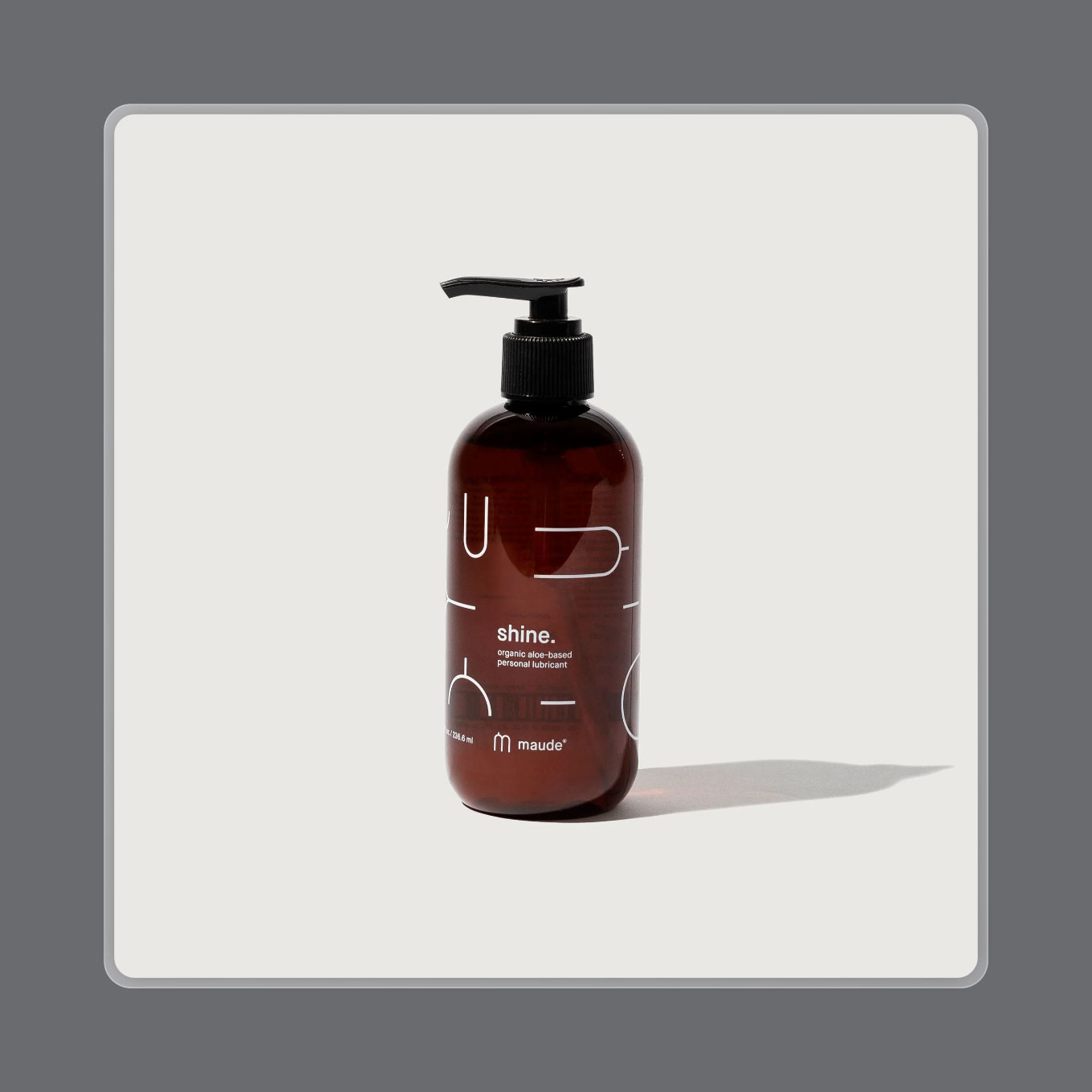
Here’s how Maude describes Shine (Organic): Made with moisturizing aloe, our 100% natural lubricant is organic and ultra-hydrating. The gentle pH-balanced formula is free from glycerin and parabens and manufactured to the ideal osmolality for the body. *Can be used with devices and condoms.
→ Check out Shine Organic from Maude
Our review: I was a big fan of Shine Organic. Full-transparency: the first time I ever tried it, I did experience some stinging, but I did use it a second time, and that went away. This is a great reminder that if something irritates you — even if it’s marketed as a safe item — to stop using it. There’s no shame in doing what’s best and most comfortable for your body.
That said, I waited a while to see if I was just having some other irritation when I experienced the stinging, and I haven’t experienced it since. I like how light this lube feels, but did find that I needed to re-apply the longer I went. I didn’t find it feeling sticky, which is really what I look for in a lube.

Pros
As close to natural as it gets
I am extremely sensitive to any kind of lube so, as I noted before, I did experience some stinging, but that could have been user error or just my own sensitivity, because I’ve never experienced it since.
It really does feel as natural as it gets and doesn’t feel overly sticky, which is my least favorite sensation in a lube.
Cons
A hefty price tag for a smaller amount
For only eight ounces, you’re paying $25, but reviews do say that a little goes a long way so it may last a while for some. I personally found that I had to reapply, so I’m not sure it will last me as long as others, but I do think it’s worth it in the end.
Maude Shine Silicone Personal Lubricant
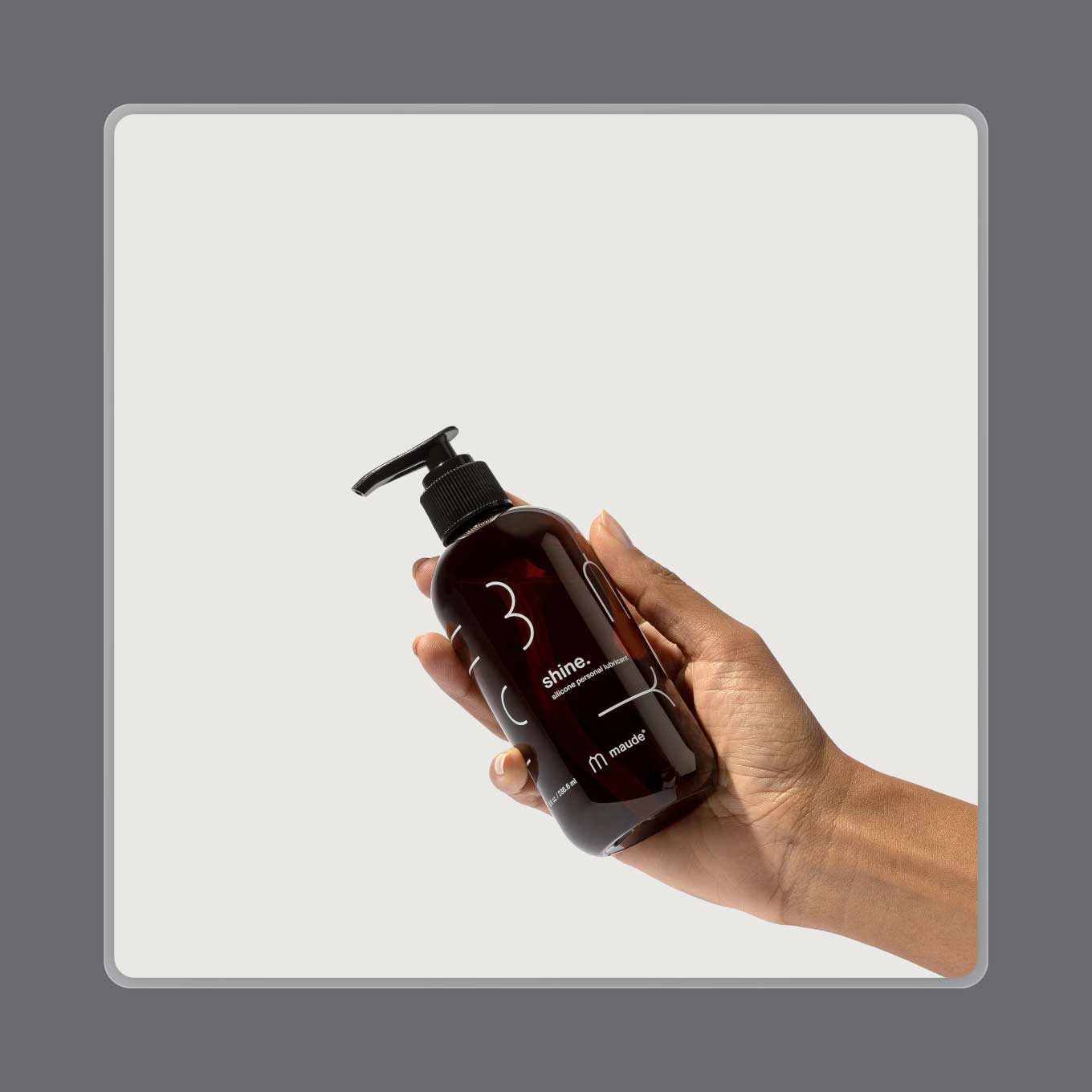
Here’s how Maude describes Shine (Silicone): This paraben-free, FDA-approved formula enhances the ease and comfort of intimate sexual activity with long-lasting lubrication. This hypoallergenic formula is odorless and non-sticky and is compatible with condoms and can be used underwater. Reapply as desired. *Do not use with silicone toys.
→ Check out the Shine Silicone from Maude
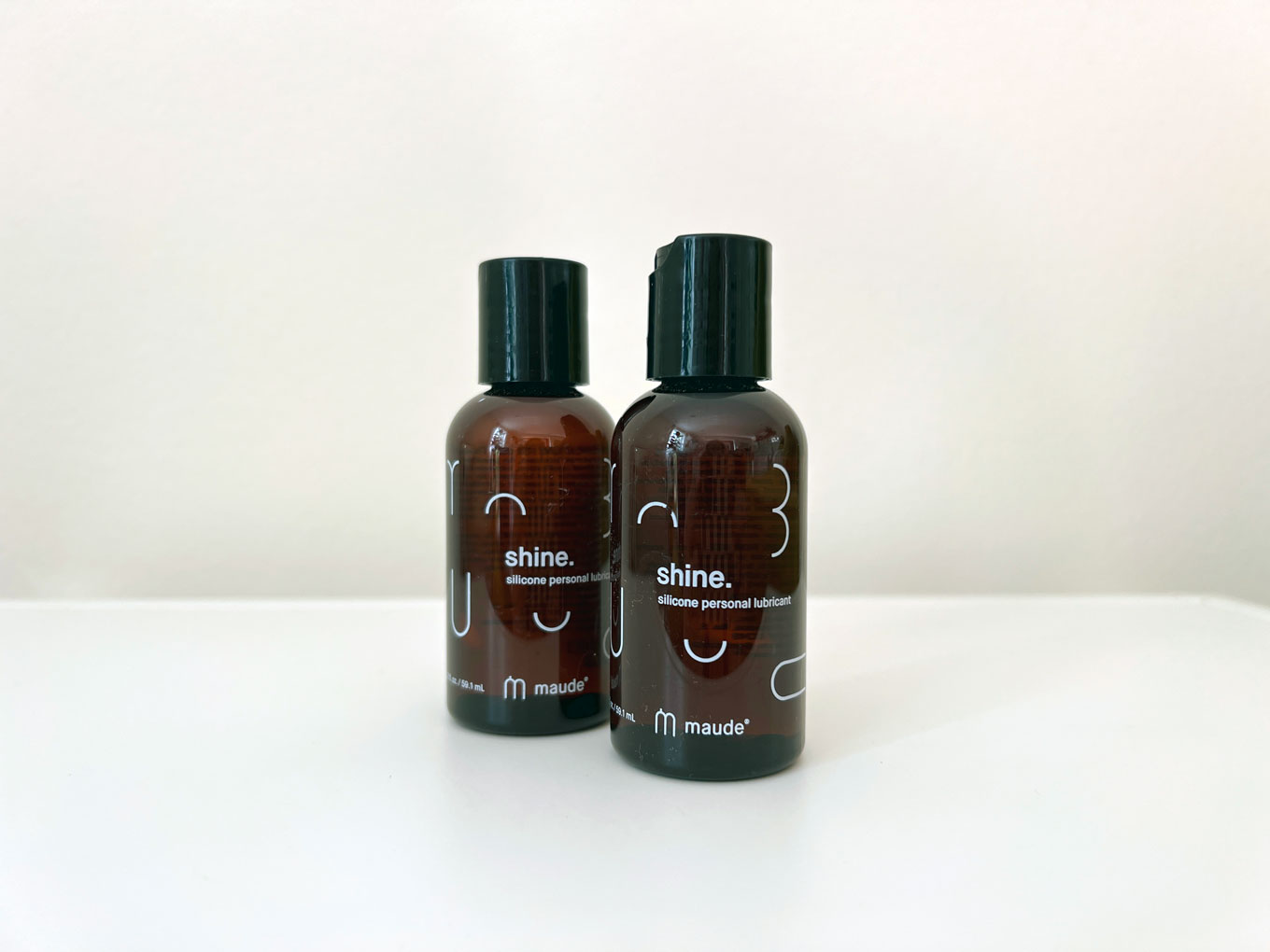
Our review: When you’re looking for a lube for skin-on-skin intimacy or non-silicone toys, Shine Silicone lube is my go-to. It feels light, smooth, and slippery. My favorite part, though, is the fact that none of the Shine products upset my pH balance.
Pros
Slippery, not sticky
Much like Shine Organic, Shine Silicone doesn’t leave a sticky residue behind like some of the other lubes I’ve tried. I did find the silicone lube lasted a tad longer in terms of “slipperiness” than the organic version did, so maybe experiment with what works best.
Cons
Can’t be used with silicone toys
If you’re looking for a lube to use for your sex toys, stay away from Shine Silicone. Silicone lube slowly degrades silicone toys over time. However, if you find you’re sensitive to aloe-based lubes and are just looking for some lube to use with non-silicone toys or just use during skin-to-skin contact, silicone lube can be a good alternative.
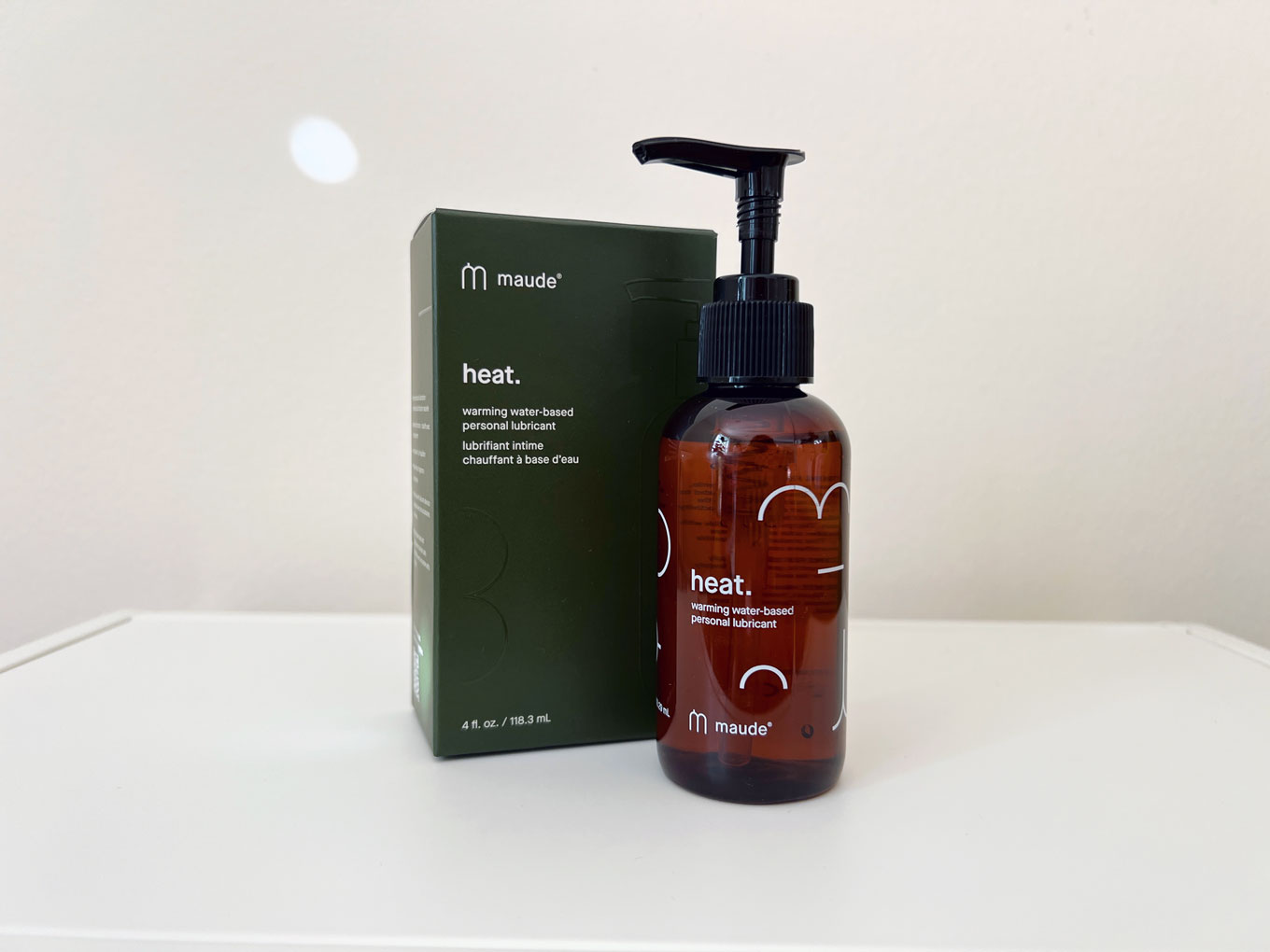
Maude Heat Warming Water-Based Personal Lubricant
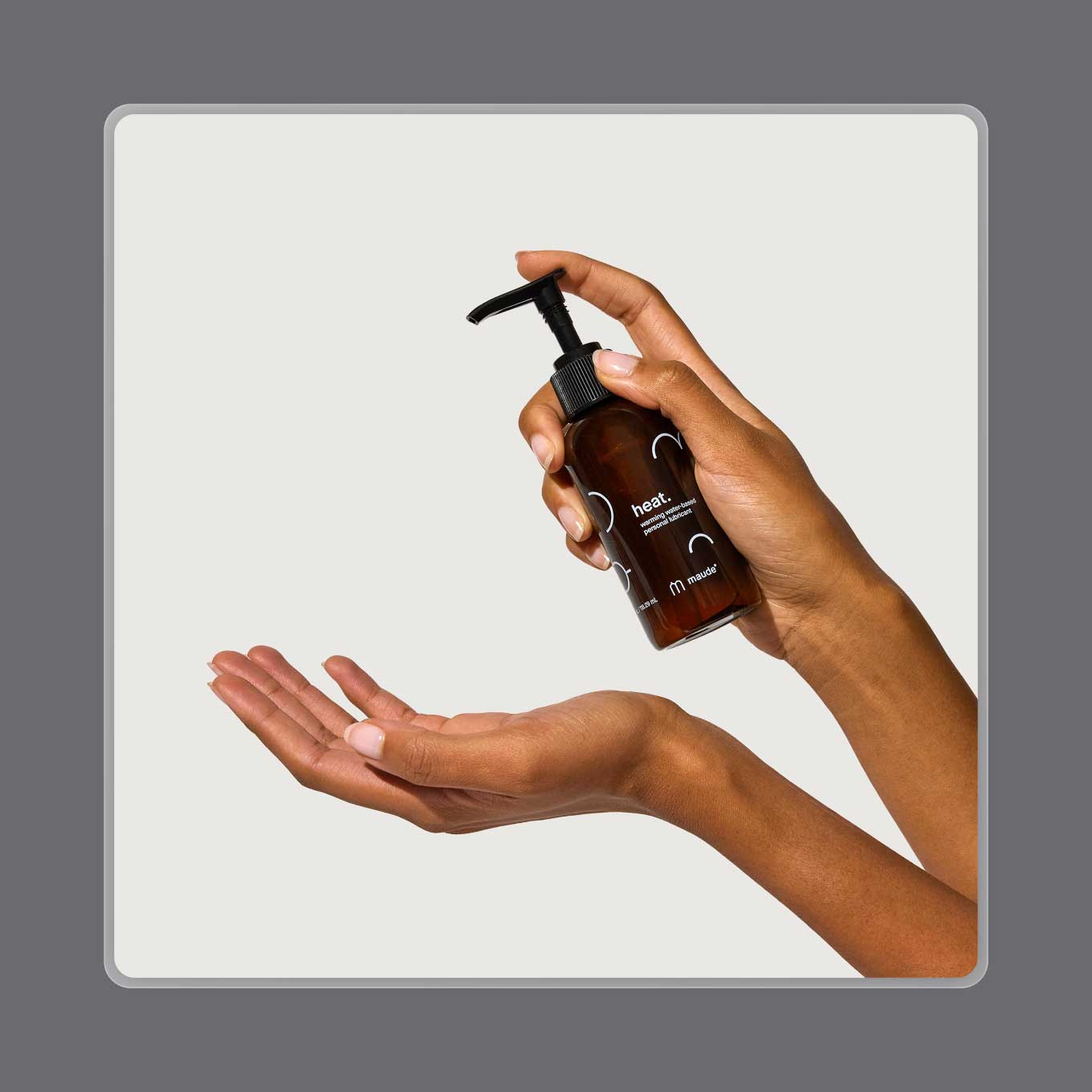
Here’s how Maude describes Heat: Made with a water-based formula, our pH-balanced warming lubricant provides added stimulation. Heat is formulated with a low concentration of capsaicin, and can be used to create a gentle warming sensation that builds with motion. Heat is safe for internal and external use. *Can be used with silicone devices and latex and polyisoprene condoms.
→ Check out Heat from Maude
Our review: Heat is meant to create exactly what it says… heat. While creating the extra slippery environment that lube brings to the table, Maude added a warming element of capsaicin, which is the active compound in chili peppers. Personally, I found it to be more irritating than pleasurable, but the heat is definitely nice at first!
Although my vagina is just too sensitive for any long-term sensation, Heat may still be a very pleasurable option for others!
Pros
Can introduce a different sensation
Introducing Heat can be a great way to incorporate a different sensation into your sex life, and a lube with capsaicin is maybe one of the safer ways to do that, so if you’re looking to switch it up and add some temperature play into routine, Heat is a great option.
Cons
Possibly irritating
Heat is not recommended to those prone to herpes outbreaks, yeast infections, or bacterial vaginosis. I am pretty sensitive to anything that isn’t as close to “natural” as possible, so I don’t love warming lubes. But I get the allure!
In Summary
At the end of the day, I do think Maude lives up to the hype! Its products are well-made, safe for the body, and user-friendly. Among the lubes I tested out, my favorite was definitely Shine Silicone, but Shine Organic certainly does not disappoint.
While I would pass on Heat Lubricant for my own sensitivities, I definitely understand the appeal and think it could make a great, pleasurable addition for others.
While I may be weary of the “aesthetic” Instagram ads, I believe Maude lives up to its reputation and is affordable enough that it really is accessible for those looking to dive into a thoughtful and inclusive sexual wellness brand.

Chances are, if you’re a human being living in the world as part of this vast, diverse global community, you care about other people.
When crises strike, and you are heartbroken by the news — whether the culprit is climate disasters, health inequalities, or violent conflict — there’s a little spark inside you that desperately wishes things were different.
Then, you might feel frozen.
These massive issues are indeed massive. They are big, overwhelming, and often the cause of huge systems — like colonialism, racism, sexism, and more — that many of us had no hand in building. But we do have a hand in dismantling them, and many of these large-scale problems are deeply intertwined with that work — and with each other.
The good news? That means we can solve them.
And solving global issues — or at least confronting them more proactively — starts with knowing about them.
Of course, we’re not asking everyone to become a world-class expert in income inequality or water and sanitation, but it helps to know about the issues we face so we can be part of the solution.
Here is a list of some of the major challenges of our time — and what is being done to change things.
Global Challenges & Their Solutions
Poverty
Poverty is not only a lack of income or resources to live a safe, sustainable life. It intersects with so many other challenges and leads to outcomes like food and water insecurity, health concerns, little to no access to education, and more.
According to the most recent estimates from the United Nations, as of 2015, 10% of the world’s population was in extreme poverty — living on less than $1.90 a day.
The largest areas of the world facing extreme poverty are Southern Asia and sub-Saharan Africa, and the COVID-19 pandemic only made this issue worse, putting millions more below the international poverty line.
While progress has certainly been made in eliminating extreme poverty, projections still show a major percentage of the world’s population in extreme poverty by 2030.
Aside from extreme poverty, about 60% of the world’s population lives on less than $10 US per day. Additionally, the UN shares that about four billion people — a little over half of the global population — do not benefit from any form of social protection or support.
Possible Solutions:
- Universal basic income
- Robust social safety nets
- Ending social marginalization
- Investments in equitable education
- Increased access to food and clean water
- Ending civil wars and armed conflict
Why We Have Hope:
- The number of people in extreme poverty, while still too many, has fallen every decade.
- Organizations and communities are working together to fight period poverty and hygiene poverty.
- New opportunities in the green economy open doors to financial security in areas across Africa and South Asia.
Climate Change
It’s hard to sum up the seriousness of the climate crisis in just a few paragraphs. Scientists and leaders around the globe know that the planet is in grave trouble, giving us specific windows and countdowns to reverse the damage of climate change and save the world.
It’s a big ask.
Whether climate change comes in the form of biodiversity loss, extreme weather events, resource depletion, greenhouse gas emissions, damages to human health, or any number of scary and persistent realities, repairing and restoring the planet should be our top priority.
Seriously, the United Nations calls climate change “the single biggest health threat facing humanity.”
But before your climate anxiety rears its angry head (stay angry, just maybe a little less anxious!), it’s important to note that huge progress is being made.
Whether it’s major corporations beginning to shift their unsustainable practices in alignment with the UN’s Sustainable Development Goals, governments investing in renewable energy or wildlife protections, or simply larger and more accessible cultural awareness about how to be better stewards of the Earth, we can face this.
Possible Solutions:
- Pro-climate policy change
- Access to clean energy for all
- Promotion of sustainable economic growth (perhaps through Doughnut Economics)
- Wildlife conservation
- Ending reliance on fossil fuels
- Halt and reverse deforestation and land degradation
- Landback initiatives
- Social equality and justice
Why We Have Hope:
- The renewable energy sector is on track to hit net-zero goals by 2030.
- Technological developments are working to protect wildlife and monitor human activity at sea.
- The U.S. has passed the largest and most comprehensive climate bill in the country’s history — and climate activists are just getting started.
→ Read more climate good news
Health Inequality
Regardless of whether it manifests as chronic disease, curable illnesses with vastly expensive treatments, or life-threatening epidemics, health inequality is central to the challenges of the global community.
Shaped by poverty and climate change, as well, health inequality leads to a lack of access to basic essentials, medicine, and economic opportunities, especially in developing countries.
While life expectancy has increased cumulatively in the last century, many countries still face high rates of disease and maternal and child mortality.
Haiti continues to face cholera outbreaks. In Sierra Leone, one in 20 women die as a result of pregnancy or childbirth. And the World Health Organization calculates that 10 million people across the globe fall ill with Tuberculosis — a preventable and treatable disease — every year.
That being said, there is a lot to celebrate. As technological improvements, distribution of care, and funding dollars increase, there is hope for the future of global health.
Possible Solutions:
- Clean drinking water and sanitation across the globe
- Improved nutrition and sustainable agriculture
- Equitable access to healthcare
- Equitable resources for healthcare providers to succeed
Why We Have Hope:
- Doctors are using AI to more effectively diagnose and treat tuberculosis.
- Namibia is ahead of schedule in goals to eliminate HIV/AIDS.
- Women in Sierra Leone are getting degrees in neonatal nursing to expand care.
→ Read more health good news
War & Conflict
With violent conflict, wars, and terrorist insurgencies popping up around the globe in places like Sudan, Ukraine, Afghanistan, Somalia, and more, peace feels more and more distant by the day.
Often a result of economic, political, religious, or cultural strife, war is not only detrimental to the soldiers and veterans on the front lines, but also for the civilians, economies, lands, and cultures impacted by violence.
In fact, experts estimate that 90% of wartime casualties are innocent civilians. As of August 2023, at least 940,000 people have been killed by direct war violence in Iraq, Afghanistan, Syria, Yemen, and Pakistan.
The number of people who have been wounded or fallen ill as a result of war is much higher, and these calculations do not include people who have died as a result of destruction, contamination, poverty, or other war-related issues.
The human cost of war cannot be underestimated, and the need for peace is paramount.
Possible Solutions:
- Stopping terrorism
- Strengthening democracy
- Protecting free speech and access to information
- Peace negotiations and treaties
- Economic penalties for aggressors
- Disarmament
Why We Have Hope:
- This nonprofit turns firearms into gardening tools.
- An organization in Ukraine is creatively problem-solving to house civilians who have been displaced within the country due to war.
- A Civil War expert has outlined how to keep America from civil war.
→ Read more good news in response to war and conflict
Displacement
As of the end of 2022, 108.4 million people have been forcibly displaced due to persecution, conflict, violence, or human rights violations, according to the UN Refugee Agency.
Of that number, 35.3 million are refugees, 62.5 million are internally displaced, 5.4 million are asylum seekers, and another 5.2 million are in need of international protection.
What’s even more staggering is that over half of those people come from just three countries: Syria, Ukraine, and Afghanistan. As neighboring countries become generous hosts, others impose strict immigration policies, and more complex challenges present themselves.
Aside from the stress of war, conflict or whatever else may have caused someone to flee their home, they are met with barriers like financial and housing issues, language barriers, lack of access to education or healthcare, and even prejudice and racism.
The trauma of fleeing is often met with the trauma of resettling, which causes further harm and stress for those most in need of safety and stability.
Possible Solutions:
- Strong resettlement support systems
- Safe routes to sanctuary
- The end of trafficking, looting, and violence for refugees seeking asylum
- The end of racism and xenophobia
- Improved international relations and diplomacy
Why We Have Hope:
- This organization is finding creative solutions to housing Ukraine’s internally displaced communities
- A Somali refugee now leads the clinic she visited as a child
- Ukrainian refugee psychologists in Poland are providing mental health help to their peers, which provides them with job opportunities
→ Read more refugee good news
Food Insecurity
According to the World Bank, approximately 9.2% of the world’s population faced hunger in 2022. Moderate or severe food insecurity impacted 29.6% of the global population in 2022. That’s 2.4 billion people.
Hunger has compounding impacts on health, economic well-being, education, and sustainable development. The bottom line? If you can’t nourish your body and mind, you can’t do much else.
Whether caused by climate change, wealth inequality and poverty, inflation, supply chain issues, war, or all of the above, food insecurity impacts people across the globe at staggering rates.
In fact, the United Nations currently shares that we are not on track to reach the goal of Zero Hunger, as part of the UN’s Sustainable Development Goals, by 2030.
That said, people are working hard to turn things around.
Possible Solutions:
- Assistance from initiatives like the World Food Program
- Sustainable agriculture
- Climate resilience
- Gender equality — especially focusing on the women who make up 45% of the global agricultural workforce
- Decreased food waste
- Wealth redistribution
Why We Have Hope:
- Tech startups are doing their part to help feed families and connecting hungry folks to resources with ease
- A teen is fighting food insecurity with hydroponic gardens in communities in Israel and the U.S.
- Government involvement works! Governments and nonprofits likely kept millions of Americans from food insecurity during COVID-19
→ Read more food good news
Water & Sanitation Insecurity
WASH — or water, sanitation, and hygiene systems — are crucial to the health and development of a country.
According to the Centers for Disease Control, 2 billion people lack access to safely managed drinking water at home, 3.6 billion people lack access to safely managed sanitation services, and 2.3 billion lack basic hygiene services, like soap and water, at home — and 670 million have no access to hand-washing facilities at all.
In addition to the universal detriment to health and safety that comes as a result of WASH insecurity, there is also a large-scale impact on gender equality as well.
A lack of adequate sanitation for girls and women impacts menstrual health and often keeps them from attending school. Additionally, women and girls are more likely to be responsible for collecting water for their families, also making it difficult for them to attend school.
Possible Solutions:
- Nature-based solutions like wetland restoration, mangrove conservation, and preserving of flood plains
- Installation of clean water and sanitation systems in areas of need
- Automation of water treatment and processing
- Proper disposal of contaminants
Why We Have Hope:
- Cape Town, South Africa solved its water crisis through community collaboration
- Vending machines in Nairobi provide cheap, clean water in impoverished areas
- Activists are working to ensure that the Navajo Nation has access to clean water
→ Read more good water news
Mental Health
There has been a 13% rise in mental health conditions and substance use disorders worldwide over the past decade, and the WHO estimates that one in eight people in the world live with a mental health condition.
While mental disorders include a wide variety of conditions and experiences, most all can have a substantial impact on all areas of life, like school or work performance, relationships, and community. Unequal access to healthcare further exacerbates these challenges, as well.
The WHO estimates that depression and anxiety cost the global economy $1 trillion each year. Despite the widespread nature of mental health struggles, the global median of government health expenditures on mental health is less than 2%.
Possible Solutions:
- Investment in the improvement and availability of mental healthcare
- Widespread access to effective treatment and care
- De-stigmatization of mental health conditions
- Improved treatment of mental health conditions through effective research
- Implementation of prevention programs
- Improved living conditions on every level
Why We Have Hope:
- Lawmakers are increasing mental health funding
- Advancements like telemedicine and equitable insurance coverage are making mental healthcare more accessible
- Passionate advocates are doing their part to fund mental health research
→ Read more good news about mental health
Gender Inequality
It’s certainly no secret that gender plays a major role in how likely you are to succeed and thrive in the world. Gender inequality encompasses all kinds of compounding issues, like economic opportunity, education, health and survival, and political empowerment, to better understand where women and girls require more support.
About 2.4 billion women of working age are not afforded equal economic opportunity, and 178 countries maintain legal barriers that prevent their full economic participation, according to the World Bank.
Worldwide, 130 million girls are out of school, also according to the World Bank. While enrollment rates and parity with male peers are rising, completion of schooling is still low among girls around the globe.
As far as health and survival, women’s health actually declined in 2021, including sobering data from the pandemic, as well as consistently abysmal maternal health statistics worldwide. This is, of course, not to mention, the increasingly dangerous terrain of reproductive justice in the U.S. and beyond.
Lastly, although women are increasingly present in political conversations, they still pale in comparison to their male peers. As of the beginning of 2023, 11.3% of countries have women Heads of State, and 9.8% have women Heads of Government, according to the UN.
Possible Solutions:
- The end of political persecution of women
- The end of child marriage and sexual harassment
- Expanded economic opportunities — especially in the green economy
- Women’s leadership widely supported
- Protected and expanded access to women’s healthcare
- Removal of barriers to success, like clean water and menstrual hygiene
- Equal human rights and freedoms allowed for all, no matter their gender
Why We Have Hope:
- Women are improving their own health outcomes by entering the medical field in countries like Rwanda and Sierra Leone
- This NGO aims to educate 5 million girls in Africa by 2030
- More women are becoming entrepreneurs than ever before
→ Read more good news about women
Children’s Rights
Children make up about a third of the total human population, and although their human rights — like the right to speak out and express opinions, and the rights to equality, health, education, clean environment, and a safe place to live — are protected in the 1989 United Nations Convention on the Rights of the Child (UNCRC), many still face harm.
(By the way, the UNCRC is the most ratified human rights treaty in the world, and only one member of the UN’s 197 member states hasn’t ratified it — the United States.)
These harms include physical, sexual, or emotional violence or neglect; child labor violations; child marriage; genital mutilation; the recruitment into armed conflict; and more.
In fact, about 1 billion children between the ages of two and 17 are estimated to have experienced physical, sexual, or emotional violence or neglect in 2015, according to the WHO. 152 million children are engaged in child labor, according to World Vision. And, according to UNICEF, 41% of girls in least-developed countries are married before the age of 18.
Possible Solutions:
- End child marriage
- Enable strict consequences for the violation of child labor laws
- Invest in and support policies to protect children
- Ensure access to necessities like clean water, food, and education for all children
- Eradicate poverty
- Reduce violent conflict
- And if you’re the United States… ratify the UNCRC
Why We Have Hope:
- This startup helps people turn their wedding gifts into educational opportunities for girls in need as a way to end child marriage
- Ukrainian refugee children are finding normalcy and development through playrooms in Moldova
- The world has experienced a 59% decline in deaths of children under five since 1990
→ Read more human rights good news
Disability Rights
The WHO estimates that 1.3 billion people in the world — or one in every six people — have a disability.
While having a disability in itself isn’t a bad thing or a moral failing by any means, it significantly impacts one’s quality of life and social status.
Disabled folks face many health inequities that arise from unfair conditions like stigma, discrimination, poverty, social exclusion, a lack of education and employment opportunities, and barriers in the health system.
Additionally, disabled people have twice the risk of developing other conditions, such as depression, asthma, diabetes, and more. Plus, the world is simply not built with disabled folks in mind. For example, disabled folks might find inaccessible transportation up to 15 times more difficult to navigate than able-bodied people.
Possible Solutions:
- Universal and accessible design in cities and buildings
- Improved access and affordability of healthcare
- De-stigmatization of disabled people and disabilities in general
- Policies that ensure equal opportunity in both education and employment
- Widespread willingness to provide modifications and/or accommodations to disabled folks
- Removal of social, physical, communication, and attitudinal barriers
Why We Have Hope:
- “Disability doulas” are helping people with newly diagnosed disabilities
- These popular pharmacy mascot dolls are giving disabled textile workers more career mobility
- Disability activists are making social media a more diverse and educational place
LGBTQ+ Rights
As of 2022, 68 countries criminalize homosexuality worldwide. Most of them are located in the Middle East, Africa, and Asia, and four countries even have legislation that imposes the death penalty for sexual relations between people of the same sex.
Of course, this is an egregious violation of human rights, and all LGBTQ+ folks should be free to love who they love, without the fear of persecution, violence, or death.
Even in the United States, where LGBTQ+ folks have many more freedoms than queer folks in other countries, these freedoms are under attack. In 2023, the ACLU tracked nearly 500 anti-LGBTQ+ bills in state legislatures across the country, many of which aimed to criminalize transgender people or gender-affirming care.
While, globally, the average level of acceptance for LGBTQ+ people has increased since 1980 — especially in western Europe, North America, and Australia — 57 countries and locations have still experienced a decline in acceptance during that time, according to the UCLA Williams Institute.
Possible Solutions:
- Decriminalization of homosexuality (or any LGBTQ+ identity)
- Improved social acceptance of LGBTQ+ folks
- Creation of agencies and initiatives that protect and improve the well-being of LGBTQ+ people
- Increased nondiscriminatory healthcare services, economic security, and financial stability across the board
- Creation of safe, inclusive, welcoming, and affirming schools for LGBTQ+ youth
- Greater access to safe and stable housing for LGBTQ+ folks
Why We Have Hope:
- This nonprofit helps LGBTQ+ people flee persecution
- Transgender fiber artists are using quilts to help tell their stories
- LGBTQ+ legislators in the United States are working hard to protect trans rights
→ Read more good LGBTQ+ news
Education Inequality
A lack of access to education is a large pillar of gender inequality across the globe. According to UNICEF, nearly one in three adolescent girls from the poorest households around the world has never set foot in a classroom.
And we know it matters! According to the World Bank, one additional school year can increase a woman’s earnings by 10-20%.
While global literacy rates have exponentially increased in the last century, education is still widely unequal, and primary school attendance remains a challenge, especially among developing countries.
Another UN Sustainable Development Goal, ‘Every Child Learns,’ aims to provide equitable access to learning opportunities, improved learning and skills for all, and improved learning and protection for children in emergencies and crises.
Possible Solutions:
- Reduced cost of education
- Free or reduced meals for students at school
- Improved resources and pay for teachers
- Improved access to necessities like water and hygiene
- Flexible modes of learning through technology and modern teaching models
- Increased accessibility for disabled students
Why We Have Hope:
- A new program, partly created by Hank Green, is helping to make getting college credits more accessible and affordable
- This school on wheels provides tutoring to students experiencing homelessness
- A school in Uganda is fusing Indigenous and financial education in a new, innovative approach
→ Read more good news about education
Homelessness & Housing Insecurity
While it is difficult to track, the UN estimates that there are approximately 1.6 billion people living in inadequate housing worldwide, with around 15 million being forcibly evicted each year.
Whether caused by war or conflict, climate disaster, skyrocketing cost of living, or the lack of affordable housing in an area, homelessness touches nearly every region of the world.
Poverty and homelessness are closely linked, contributing to a cycle of instability that makes it difficult to find and keep work. Homelessness also impacts personal and public health concerns, occasionally leading to the spreading of disease, substance abuse, and poor mental health.
Countries that have successfully confronted homelessness include those like Finland, which have implemented a Housing First approach.
Possible Solutions:
- Implementation of Housing First policies
- Sustainable building models and city planning
- Improved crisis response
- Permanent supportive housing for vulnerable populations
- Increased employment and income opportunities
Why We Have Hope:
- An African startup is using plastic waste to build affordable housing
- This TikTok-viral Sleep Trailer invention aims to provide affordable and transitional housing
- Creative housing solutions are bringing affordable housing to cities all around the globe
→ Read more housing good news
November is here — ushering in the season of gratitude and stirring a reflective energy that inspires us to cherish each moment of dwindling daylight and the soothing cool breeze!
It’s a month of heartwarming reunions, golden landscapes, and the anticipation of winter’s embrace.
To help you appreciate the wonder of November, we’ve curated a selection of positive and inspiring quotes (and poems) about the eleventh month of the year.
And because we’re Good Good Good — we’ve also spotlighted the best quotes around November’s awareness month and notable days — including Native American Heritage Month, World Kindness Day, Giving Tuesday, and Veterans Day.
Plus, quotes from inspirational celebrities and leaders who were born in the month of November.
Whether you’re getting ready for the holiday season, celebrating a November birthday, or just seeking a splash of positivity to kick-off the month, these quotes are for you. Scroll all the way through to discover some hidden gems.
Here’s to making the most of November!
Explore more monthly quotes: January | February | March | April | May | June | July | August | September | October | November | December
The Best November Quotes
Famous Quotes About November
“November is chill, frosted mornings with a silver sun rising behind the trees, red cardinals at the feeders, and squirrels running scallops along the tops of the gray stone walls.”
— Jean Hersey

“In November you begin to know how long the winter will be.”
— Martha Gellhorn
“Peering from some high window, at the gold of November sunset and feeling that if day has to become night, this is a beautiful way.”
— E. E. Cummings
“November is the most disagreeable month in the whole year.”
— Louisa May Alcott
“The August noon in us works to stave off the November chills.”
— Ray Bradbury
“The thinnest yellow light of November is more warming and exhilarating than any wine they tell of. The mite which November contributes becomes equal in value to the bounty of July.”
— Henry David Thoreau
“It is also November. The noons are more laconic and the sunsets sterner and Gibraltar lights make the village foreign. November always seems to me the Norway of the year.”
— Emily Dickinson
Motivational November Quotes
“The month of November makes me feel that life is passing more quickly. In an effort to slow it down, I try to fill the hours more meaningfully.”
— Henry Rollins

“Let this be the November you always remember. The November you chose to believe there was more to your future than you were able to see. The November where you learned to trust that after everything happened, in time, you would grow in the courage to open up again. And you could look forward to these new unknowns, believing that no matter what would happen, you would still grow. You would still be worthy of love, even though you were made to feel you were not good enough. Let this be the November you chose to rise above. Let this be the November where everything changed, and you decided you were free to heal and never be the same.”
— Morgan Harper Nichols
“Fallen leaves lying on the grass in the November sun bring more happiness than the daffodils.”
— Cyril Connolly
“We mourn the blossoms of May because they are to whither; but we know that May is one day to have its revenge upon November, by the revolution of that solemn circle which never stops — which teaches us in our height of hope, ever to be sober, and in our depth of desolation, never to despair.”
— William Peter Blatty
“November is auspicious in so many parts of the country: the rice harvest is already in, the weather starts to cool, and the festive glow which precedes Christmas has began to brighten the landscape.”
— F. Sionil Jose
“Whenever it is a damp, drizzly November in my soul, I shall recall the memory of warm, sunny, late summer afternoons like this one, and be comforted greatly.”
— Peggy Toney Horton
“This is the month of nuts and nutty thoughts — that November whose name sounds so bleak and cheerless — perhaps its harvest of thought is worth more than all the other crops of the year.”
— Henry David Thoreau
Quotes for Awareness Holidays in November
A collection of quotes to celebrate November’s awareness months and national days.
→ Explore more of this month’s awareness days in our November calendar
Native American Heritage Month
November 1 - November 30
“The success of my journey depended on whether my heart walked forward — toward my people — instead of backward, away from them.”
— Anasazi Foundation, The Seven Paths: Changing One’s Way of Walking in the World
“Celebrating what we hope for together is better than fighting over what we believe separately.”
— Steven Charleston, Ladder to the Light: An Indigenous Elder’s Meditations on Hope and Courage
“When we connect with our ancestors and put their wisdom into action, we are evolving our collective consciousness. We are transporting the ancient truths of our collective past and birthing them into our future. What we create out of those truths extends the wisdom of all those who have gone before us, and it provides a guide for all those who will follow.”
— Sherri Mitchell Weh’na Ha’mu Kwasset
→ Read about how to celebrate Native American Heritage Month
World Kindness Day
November 13
“Be kind, for everyone you meet is fighting a hard battle.”
― Ian MacLaren
“You cannot do a kindness too soon, for you never know when it will be too late.”
— Ralph Waldo Emerson
“I’ve learned that people will forget what you said, people will forget what you did, but people will never forget how you made them feel.”
— Maya Angelou
→ Read about how to celebrate World Kindness Day
→ Explore more quotes about kindness
Veterans Day
November 11
“True heroism is remarkably sober, very undramatic. It is not the urge to surpass all others at whatever cost, but the urge to serve others at whatever cost.”
— Arthur Ashe
“Our nation owes a debt to its fallen heroes that we can never fully repay. But we can honor their sacrifice, and we must.”
— Barack Obama
“But this Veterans Day, I believe we should do more than sing the praises of the bravery and patriotism that our veterans have embodied in the past. We should take this opportunity to re-evaluate how we are treating our veterans in the present.”
— Nick Lampson
→ Read some good news about veterans
→ Read about 8 ideas to celebrate Veterans Day
Thanksgiving
Fourth Thursday in November
“Gratitude is the inward feeling of kindness received. Thankfulness is the natural impulse to express that feeling. Thanksgiving is the following of that impulse.”
— Henry Van Dyke
“Let gratitude be the pillow upon which you kneel to say your nightly prayer.”
— Maya Angelou
“Reflect upon your present blessings, of which every man has plenty; not on your past misfortunes, of which all men have some.”
— Charles Dickens
→ Explore more quotes about gratitude
→ Explore more quotes about Thanksgiving
Small Business Saturday
First Saturday after Thanksgiving
“You never achieve real success unless you like what you are doing.”
— Dale Carnegie
“I never dreamed about success — I worked for it.”
— Estée Lauder
“Make something people want includes making a company that people want to work for.”
— Sahil Lavingia, CEO of Gumroad
→ Explore more quotes about Small Business Saturday
→ Explore more quotes about small businesses
→ Read about how to celebrate Small Business Saturday
Giving Tuesday
First Tuesday after Thanksgiving
“The best way to find yourself is to lose yourself in the service of others.”
— Mahatma Gandhi
“This Giving Tuesday please remember that it’s not about how much you can give. Big things happen when we all chip in a buck or two. And your time is valuable! If you’re able, consider spending a few hours volunteering in your community this season.”
— Chasten Buttigieg
“We all can do a little bit more than we’re doing — and today’s a great day to start. This Giving Tuesday, I invite you to think about what you can do to give back. Is there a program you can support? Do you have anything you want to donate? How do you plan to give back today?”
— Van Jones
→ Explore more quotes about Giving Tuesday
→ Read about how to celebrate Giving Tuesday
Quotes from Inspiring People with November Birthdays
Yvon Chouinard
November 9
“You ask me about the past, you ask me about the future, the only way to be happy is to be living right now.”
— Yvon Chouinard
“The solution maybe for a lot of the world’s problems is to turn around and take a forward step. You can’t just keep trying to make a flawed system work.”
— Yvon Chouinard
“I have a little different definition of evil than most people — When you have the opportunity and the ability to do good and you do nothing, that’s evil. Evil doesn’t always have to be an overt act, it can be merely the absence of good.”
— Yvon Chouinard
→ Explore more Yvon Chouinard quotes
Bryan Stevenson
November 14
“We all have a responsibility to create a just society.”
— Bryan Stevenson
But simply punishing the broken — walking away from them or hiding them from sight — only ensures that they remain broken and we do, too. There is no wholeness outside of our reciprocal humanity.”
— Bryan Stevenson
“Hope is kind of an orientation of the spirit; it’s how you position yourself in places where there’s a lot of despair.”
— Bryan Stevenson, on a podcast
→ Explore more Bryan Stevenson quotes
Bill Nye
November 27
“Everyone you will ever meet knows something you don’t.”
— Bill Nye
“To leave the world better than you found it, sometimes you have to pick up other people’s trash.”
— Bill Nye, Undeniable: Evolution and the Science of Creation
“What happens to other species also happens to us.”
— Bill Nye, Undeniable
Funny November Quotes
“There is October in every November and there is November in every December. All seasons melted in each other’s life.”
— Mehmet Murat İldan
“In November, some birds move away and some birds stay. The air is full of good-byes and well-wishes. The birds who are leaving look very serious. No silly spring chirping now. They have long journeys and must watch where they are going. The staying birds are serious, too, for cold times lie ahead.”
— Cynthia Rylant
“The house was very quiet, and the fog — we are in November now — pressed against the windows like an excluded ghost.”
— Edward Morgan Forster, Howards End
November Poems
“The river this November afternoon rests in an equipoise of sun and cloud. A glooming light, a gleaming darkness shroud. Its passage. All seems tranquil, all in tune.”
— Cecil Day-Lewis
“November’s days are thirty: November’s earth is dirty, Those thirty days, from first to last; And the prettiest things on ground are the paths…”
— Edward Thomas
“November woods are bare and still. November days are bright and good. Life’s noon burns up life’s morning chill. Life’s night rests feet which long have stood.”
— Helen Fiske Hunt Jackson
“Fear not November’s challenge bold. We’ve books and friends, and hearths that never can grow cold. These make amends.”
— Alexander L. Fraser
“And November sad, a psalm. Tender, trustful, full of balm. Thou must breathe in spirits calm.”
— Caroline May
“So dull and dark are the November days. The lazy mist high up the evening curled, and now the morn quite hides in the smoke and haze; the place we occupy seems all the world.”
— John Clare
“Gray November
I’ve been down since July
Motion capture
Put me in a bad light”
— Taylor Swift
Short November Quotes
“November at its best — with a sort of delightful menace in the air.”
— Anne Bosworth Greene
“November’s sky is chill and drear, November’s leaf is red and sear.”
— Walter Scott
“Now in November nearer comes the sun down the abandoned heaven.”
— D. H. Lawrence
“How sad would be November if we had no knowledge of the spring.”
— Edwin Way Teale
“November is secret and silent.”
— Allison Uttley
“Oh how wonderfully you have grown since November of last year.”
— Morgan Harper Nichols
More November Quotes
“November comes, and November goes. With the last red berries and the first white snows. With night coming early and dawn coming late, and ice in the bucket and frost by the gate. The fires burn, and the kettles sing, and earth sinks to rest until next spring.”
— Clyde Watson, Frost by the Gate
“November wind has a sound different from any other. It is easy to imagine the cave of the winds in some mythical Northland where the winds are born and the gods send them out to conquer the quiet air.”
— Gladys Taber
“There comes a time when people get tired of being pushed out of the glittering sunlight of life’s July and left standing amid the piercing chill of an alpine November.”
— Martin Luther King Jr.
“The wind that makes music in November corn is in a hurry. The stalks hum, the loose husks whisk skyward in half-playing swirls, and the wind hurries on… A tree tries to argue, bare limbs waving, but there is no detaining the wind.”
— Aldo Leopold, A Sand County Almanac
“In November, the smell of food is different. It is an orange smell. A squash and pumpkin smell. It tastes like cinnamon and can fill up a house in the morning, can pull everyone from bed in a fog. Food is better in November than any other time of the year.”
— Cynthia Rylant
“I have come to regard November as the older, harder man’s October. I appreciate the early darkness and cooler temperatures. It puts my mind in a different place than October. It is a month for a quieter, slightly more subdued celebration of summer’s death as winter tightens its grip.”
— Henry Rollins
“But there is always a November space after the leaves have fallen when she felt it was almost indecent to intrude on the woods…for their glory terrestrial had departed and their glory celestial of spirit and purity and whiteness had not yet come upon them.”
— L.M. Montgomery
“Don’t wait until the fourth Thursday in November, to sit with family and friends to give thanks. Make every day a day of Thanksgiving.”
— Charmaine J. Forde
“Some of the days in November carry the whole memory of summer as a fire opal carries the color of moon rise.”
— Gladys Taber
“In November, the earth is growing quiet. It is making its bed, a winter bed for flowers and small creatures. The bed is white and silent, and much life can hide beneath its blankets.”
— Cynthia Rylant
“When shriek’d the bleak November winds and smote the woods, and the brownfields were herbless, and the shades. That met above the merry rivulet, were spoil’d, I sought, I loved them still, they seem’d like old companions in adversity.”
— William Cullen Bryant
“It was the best kind of November day. Cold and crisp, but not quite freezing, not icy. Just cold enough that she could justifiably wear all her favorite clothes…”
— Rainbow Rowell
“November with uncanny witchery in its changed trees. With murky red sunsets flaming in smoky crimson behind the westering hills. With dear days when the austere woods were beautiful and gracious in a dignified serenity of folded hands and closed eyes — days full of a fine, pale sunshine that sifted through the late, leafless gold of the juniper trees and glimmered among the grey beeches, lighting up evergreen banks of moss and washing the colonnades of the pines.”
— L.M. Montgomery
“The wild November comes at last beneath a veil of rain. The night wind blows its folds aside, her face is full of pain. The latest of her race, she takes the Autumn’s vacant throne. She has but one short moon to live and she must live alone.”
— R.H. Stoddard
“It was one of those early November mornings that are as beautiful as any in spring. There was gold everywhere, drifts of it on the elm tree, flakes of gold under our feet, gold dust on the hedges, liquid gold in the refracted falling light.”
— Elizabeth Goudge, The Dean’s Watch
Yesterday, President Biden announced the American Climate Corps, a new climate jobs training program tailored to helping young people find jobs in the green economy.
The White House says the program could place 20,000 people in jobs in its first year, on projects like restoring land, improving natural disaster resiliency, deploying clean energy, and more.
Modeled after a program that provided jobs for millions during the Great Depression, all program participants will be paid, and most jobs don’t require previous experience.
The creation of the Climate Corps has been a key demand from activists and environmental groups, like the youth-led Sunrise Movement and Evergreen Action.
In fact, the creation of this program makes good on an executive order President Biden signed during his first week in office.
The question is, how — nearly three years into his presidency — did environmental activists achieve this win?
A Look Into the Making of the American Climate Corps
Policy expert and marine biologist Ayana Elizabeth Johnson shared a little more into the “policymaking tenacity” behind the Climate Corps on her Instagram, following the news from the Biden Administration.
She told the story of how the concept of a civilian Climate Corps was proposed by Washington governor Jay Inslee during his presidential campaign — a program modeled after FDR’s New Deal (much like other elements of the proposed Green New Deal).
After Inslee dropped out of the race, the concept was picked up by Sen. Elizabeth Warren — and then Biden, when he won the primary in 2020.
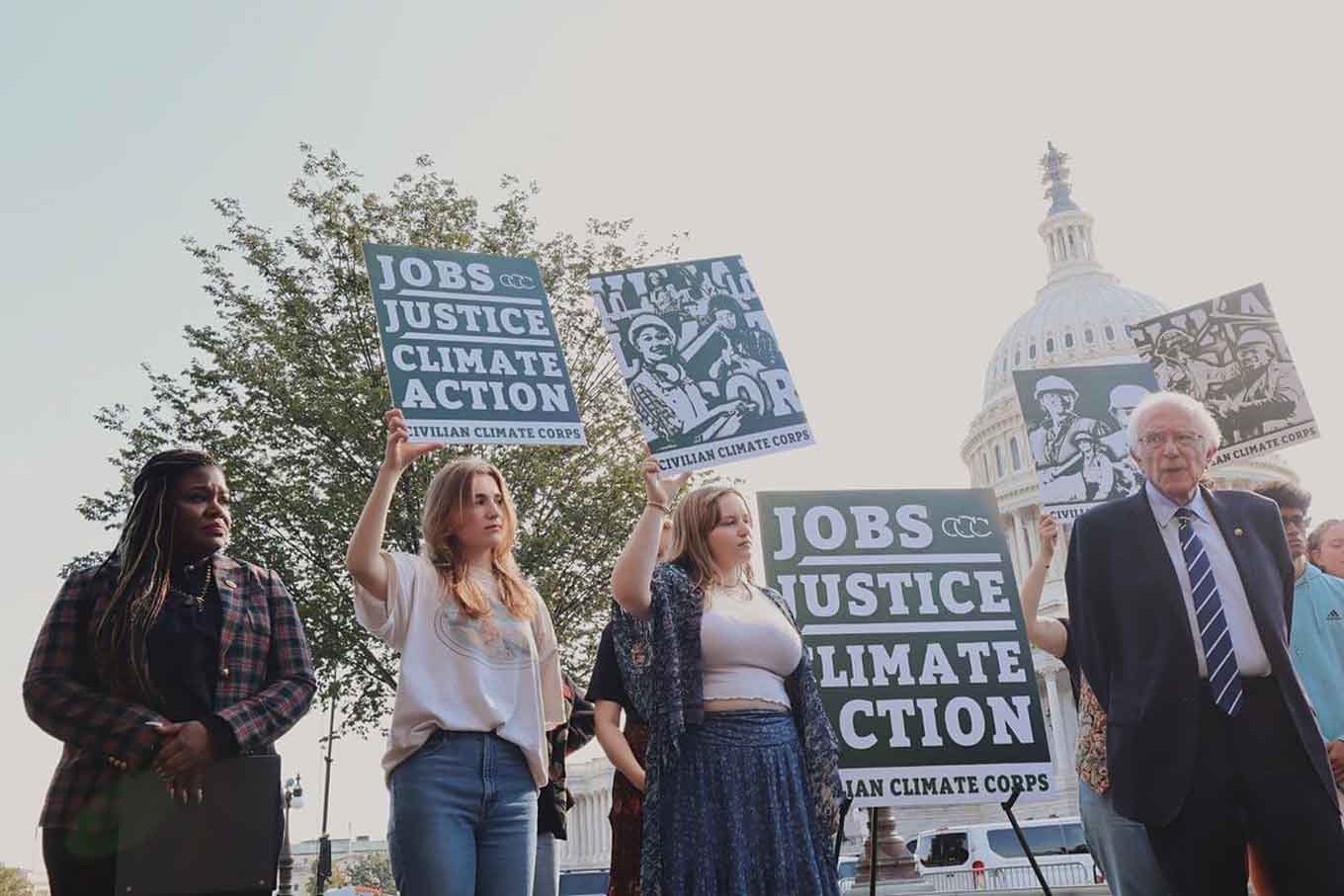
Activists continued to put pressure on elected officials and, in 2021, joined Massachusetts Sen. Ed Markey and New York Representative Alexandria Ocasio Cortez to introduce a civilian Climate Corps into federal legislation.
The program was part of Biden’s Build Back Better bill but was cut in the final hour from what became known as the Inflation Reduction Act — still the most ambitious climate policy in the country’s history.
“How job training became partisan and controversial is beyond me!” Johnson wrote in her Instagram caption.
“But the White House climate team never gave up on this dream to train a generation of Americans for green jobs. And neither did activists.”
The Sunrise Movement also shared a detailed timeline of the activism that led to this big news. It was just this month, in September 2023, that young activists ramped up their efforts and rallied over 50 other national climate organizations to send a letter to the Biden administration, calling for the establishment of the Climate Corps.
“This didn’t happen overnight. We began the fight for a Climate Corps in 2020 and spent the last three years organizing our communities, protesting, building coalitions, and pushing our leaders to stand with our generation,” the organization shared in an Instagram post.
“After years of demonstrating and fighting for a Climate Corps, we turned a generational rallying cry into a real jobs program that will put a new generation to work stopping the climate crisis. This win is proof that together we can win real policies that will improve people’s lives.”
Despite not having the billions of dollars to get this program off the ground at the scale activists dream of, the White House will work with Americorps to create and implement this program, Johnson shared, and hopefully, as the concept is proven, Congress will provide funds to ramp it up.
“Let this be a lesson to all of us,” Johnson said. “Long game. Don’t quit on big ideas.”
What Are the Benefits of the American Climate Corps?
The work it takes to adapt to and prevent the worst impacts of the climate crisis is extensive — and it’s going to take a lot of people to make it happen. The American Climate Corps acknowledges that reality — and proposes a solution that is good for the planet, the economy, and its people.
“We need millions of people, especially young people, employed to do the essential work of averting climate catastrophe and building a fair and equitable new economy,” Varshini Prakash, Sunrise Movement’s executive director, who has advised the White House on climate issues, told reporters.
The jobs created from the Climate Corps program will build more resilient communities and develop much-needed green infrastructure. This includes jobs that contribute to the restoration of natural spaces, improved forest health, and scaled installation of electric infrastructure like heat pumps, solar panels, and electric car chargers.
Plus, the program, which would help the country rebuild from the overlapping crises of the pandemic, climate change, racial injustice, and income equality, is extremely popular, according to Evergreen Action.
In 2021, Data for Progress found that 77% of voters supported creating a Climate Corps, including 87% of Democrats and 65% of Republicans, making it one of the most popular climate policies in recent memory.
Prakash continued: “I am thrilled to say that the White House has been responsive to our generation's demand for a Climate Corps and that President Biden acknowledges that this is just the beginning of building the climate workforce of the future.”
Header image courtesy of Alexandria Ocasio-Cortez/Instagram
Picture all the clothes you’ve bought in the last year. Or decade. Even your lifetime. Some stayed in your closet rotation, others were donated, and a few may have ended up in the trash can after too many stains, rips, tears, and missing buttons.
That clothing trash — duplicated in every household — adds up.
The United States Environmental Protection Agency measured the amount of discarded clothing and textile materials generated from 1960 until 2018.
Across half a century, the number of textiles that ended up in landfills leapt drastically up from 1.7 million tons to 11.3 million tons. And that number only keeps growing.
So how do we help diminish clothing waste and help heal the planet? That’s what Rachel Ceruti asked herself when she created Reclypt in 2021.
Reclypt is a New York City-based business that strives to educate consumers on circular fashion, diminish waste through upcycling, and bring fashion lovers and activists together at clothing swaps.
Recylpt first started as a fashion marketplace for upcycled fashion, selling upcycled clothing from other small businesses. Then over time, Ceruti began joining forces with friends and community partners to teach mending basics like sewing, embroidering, embellishing, and repairing clothes.
“At Reclypt, we believe style lasts longer with community,” Ceruti said in an interview with CanvasRebel Magazine this past June. “The Reclypt community is the driving force behind everything we do; from the upcycled fashion community to the DIY repair community.”
Thus, Reclypt’s Mending Club was born. These days, the Mending Club takes on many forms, gathering all over New York City at pop-up happy hours and skill-sharing spaces.
“This can look like a ‘mending 101’ class at a cafe in Brooklyn, an ‘upcycling workshop’ at a Venture Capital firm in Manhattan, a ‘swap and mend’ event for a local runners group, or a clothing swap at a vintage store in Queens,” Ceruti told CanvasRebel.
Ceruti knows it can be hard not to feel defeated about the state of clothing waste. Fast fashion, cheap clothing, and a diminishing second-hand clothing market can make it difficult to feel confident about ethical consumption.
“I see you out there, thrifting, donating, re-selling. It’s all well and good, but all of that ends up in landfills.” Ceruti explained in an Instagram video last summer. “There are just too many clothes. It’s estimated that 20% of clothes are never worn.”
The circular fashion economy is built to offset waste and pollution.
In addition to creating a constant flood of clothing waste, the fashion is also responsible for up to 10% of global pollution, according to the article “The Environmental Price of Fast Fashion” published by Nature Reviews Earth & Environment.
The article also estimated that the fashion industry is only second to aviation as the largest industrial polluter in the world and consumes 1.5 trillion liters of water a year.
Issues like these drive Ceruti to inform the public and strive towards a “Circular Fashion Economy.”
For decades, fashion has been made from synthetic materials, designed and produced, sold and worn, and shipped off to decompose for up to 200 years. As Ceruti pointed out, even donated materials are at risk of ending up in landfills.
In a circular fashion economy, clothes are created sustainably through material sourcing like unused “deadstock” fabric from warehouses and recycled clothing. Circular fashion is designed to last longer and be mended when needed. At the end of its use, the clothes are repaired, re-sold, or exchanged again.
Reclypt’s growing success can be attributed to its dedication to accessibility, forming community partnerships, and practicing transparency when it comes to compensating mentors and panelists fairly.
The Mending Club helps people look at thrifting and clothes shopping in a new light. And the love is spreading.
“Such a fun day!!! Swap til ya drop!” Instagram user @indigostylevintage exclaimed on a post about a swap meet-up in Brooklyn.
“I am so ready to spend the day surrounded by green life and community,” another commenter, @sincerelytri, said beneath a post advertising an upcycling event in Williamsburg, Brooklyn.
“Wow, I absolutely love seeing this,” user @recycle2riches commented on a recent Instagram video of a Mending Club montage. “Keep going!”
Header image courtesy of Reclypt
Even when you work with someone every day, it can be hard to pinpoint a perfect present for your employees and coworkers.
When 40% of corporate gifts end up in landfills each year, there’s added pressure to find a thoughtful gift that the recipient actually needs in their office or home.
We scoured the web and found the best eco-friendly gifts for your coworkers, and did our homework to ensure that these businesses are creating ethical, environmentally-friendly products and donating to good causes around the world.
Whether you need a birthday gift for your cubicle mate or you’re looking for a sweet surprise to ship your favorite Slack chat, we’ve got you covered.
By the way, some of the products and links in this article are affiliates, which means we may earn a commission at no extra cost to you. Everything in this article was independently and honestly written by the Good Good Good team. Thank you for your support!
Explore more eco-friendly gift guides: Best Eco Friendly Gifts | Inexpensive | For Him | For Her | For Mom | For Kids | For Coworkers
Eco-Friendly Gift Picks for Your Coworkers or Employees
Bee’s Wrap

It’s easy for lunch clutter to cause a tupperware pile-up in the office sink. Bee’s Wrap is a reusable and biodegradable alternative to plastic wrap that helps keep food fresh without wasting plastic.
Bee’s Wrap comes in an assorted three-pack of wraps in sizes small, medium, and large — all in a variety of beautifully illustrated designs.
What’s good:
- Each wrap can last up to a year or longer and is 100% home-compostable after use
- The “vegan” option is made from responsibly sourced beeswax or plant-based wax, certified organic plant oil and cotton, and tree resin
- The brand partners with non-profit organizations like Sustainable Coastlines Hawaii and Parley to actively remove plastic from the oceans and coastlines
Shop: Amazon | Earth Hero
Grosche Stainless Steel Bottle

If you’re gunning for the title of World’s Best Boss, Grosche has you covered with their line of stainless steel bottles (that you can customize with a company logo).
Each bottle comes with an Infuser that can be used for infusing tea leaves, coffee grounds, or fruit. The insulated body keeps hot drinks warm for 12 hours and cold drinks cool for an entire day.
What’s good:
- Since 2010, Grosche has begun water purification installations in South Sudan, Uganda, Malawi, India, Pakistan, and The Philippines
- Groshe is B Corp-certified
Explorer Cold Brew Coffee

Everyone takes their coffee a different way, but Explorer’s Cold Brew Coffee might just unite the whole office. The organic, fair-trade, and sustainably sourced coffee comes in an array of bundles, sizes, and levels of caffeine.
And for the coffee abstainers in your office space, Explorer also sells Chai teas and drink-enhancing “elixirs.”
What’s good:
- An LGBTQ+ owned, sustainable business
- Explorer offsets all shipping emissions
- Through a partnership with charity: water, every box of cold brew sold provides clean water access to an individual in need for a month
Shop: Amazon | Explorer Cold Brew
Stasher Reusable Silicone Sandwich Bag

Stasher’s endlessly reusable platinum silicone bags help divert thousands of single-use plastic baggies from ending up in landfills.
They’re perfect for anyone bringing lunch to the office, or taking brownies home from the office holiday party. They’re also safe to use in the microwave, dishwasher, freezer, and even in the oven.
What’s good:
- Plastic-free packaging
- 1% For the Planet member
- Carbon-neutral shipping
- Although the bags are meant to last a lifetime, they can be safely disposed of through Stasher’s repurposing program
Shop: Amazon | EarthHero | Stasher
Aya Paper Co. Slim Refillable Pen

Finding a working pen at the office can sometimes feel impossible, especially when low-ink pens get mixed in with a fresh supply. These sleek, high-quality pens from Aya Paper Company are refillable for reuse so you’ll never have to toss them away.
Also, they come in black and gold designs, complete with motivating inscriptions about intention and manifestation to help you ride out a midday slump.
What’s good:
- A Black-owned, sustainable business with “the well-being of the earth” always at the forefront of their mission
- 100% recycled products
- Carbon-neutral shipping on all orders
Shop: Aya Paper Co.
FinalStraw Reusable Straw

Most modern workplaces have caught on to the environmental dangers of single-use plastics, but some bamboo and paper straws never seem to last.
Thankfully, FinalStraws, which are made from a combination of silicone and stainless steel, provide a more comfortable, long-lasting alternative.
Each straw comes with a telescoping cleaning brush to keep it clean for repeated use. And although some straws can be annoying to carry to and from the office, these straws are collapsible and easy to attach to a pair of car keys.
What’s good:
- Plastic-free packaging
- Comes with a case made from post-consumer recycled plastic
- FinalStraw is “1% For the Planet” certified and donates at least 1% of its annual revenue to environmental organizations
Shop: FinalStraw
Confidant Hardcover Notebook

Baronfig publishes a line of notebooks designed for planning, recipe-keeping, gaming, coding, and everything in between.
Their best-seller, the Confidant, is a clothbound hardcover notebook that comes in three varying sizes. It’s the perfect gift for the coworker with thoughts spilling out of their head faster than they can write them down.
What’s good:
- For every Confidant notebook sold, Baronfig plants a tree
- The company pledges to “leave the earth better than we found it”
- Baronfig is a small business that is 100% employee-owned
Shop: Baronfig
→ While you’re at it, check out the best self-care journals and planners!
BiEnergo Rice Husk Coffee Cup

Cut down on coffee cup waste with this portable coffee cup made out of rice husks from BiEnergo. Although some eco-friendly coffee cups can err on the delicate side, the rice husk coffee cup is leak-proof, dishwasher safe, and microwavable.
Plus, it can be customized with an office logo (or after-office trivia team name).
What’s good:
- Made from renewable resources
- Each cup is compostable and can dissolve within two years of being put in the ground
- Free of BPA, melamine, and other toxins
Shop: BiEnergo
October has served as Pregnancy and Infant Loss Awareness Month since 1988. The national campaign brings awareness to child loss and seeks to support parents who have lost their babies to stillbirth, miscarriage, SIDs, and other medical complications.
In a recent episode of “An Army of Normal Folks” podcast host Bill Courtney sat down with Gina Harris to discuss nonprofit Now I Lay Me Down to Sleep. The organization uses a global network of 1,700 volunteer photographers to provide free photo sessions with families at times of astounding grief.
“They provide remembrance portraits for parents experiencing the death of a baby,” Harris told Courtney. “There’s photographers who volunteer their time and go into hospitals to capture the only moments parents spend with their babies.”
Now I Lay Me Down to Sleep was founded in 2005 by Cheryl Haggard after the death of her infant son Maddux. When her six-day-old son passed away from myotubular myopathy, Haggard tried to take pictures of her son on her personal camera.
“I saw our tear stained cheeks, our red swollen eyes, our forced smiles, and the fear in our faces as we looked into the camera,” Haggard said. “The color images bring back the reality of that day.”
Haggard’s husband then called on a professional photographer to come take a black-and-white photo session of their child. From there, Haggard understood the importance of creating lasting memories for parents in similar circumstances and created Now I Lay Me Down to Sleep.
“That night was the worst night of my life,” Haggard said in a video about the organization’s history. “But when I look at the images, I am not reminded of my worst night. I’m reminded of the beauty and blessings he brought.”
Two years later, Harris and her husband were warned that there were complications with their son’s birth and she was given the heart-wrenching decision to carry their child to term or terminate early.
At the time, a close friend suggested that Harris look into Now I Lay Me Down to Sleep.
“At first I thought, why would you do that?” Harris recalled in her interview with Courtney. “But I went to the website and saw these gorgeous photographs and I thought, I should at least get it done. I don’t have to look at them, but this will be my only opportunity.”
When Harris’ son David arrived stillborn in 2007, Now I Lay Me Down to Sleep provided her and her family with a free family portrait and remembrance session.
“[The photographs] were, and still are, the best gift we could have been given,” Harris said. “They are treasured.”
After her experience, Harris realized that she was less alone than she realized. She began working for the non-profit organization and eventually became their Chief Executive Officer.
Although Harris’ story is remarkable, it is only one snapshot into a larger community of individuals who have suffered from infant loss.
Women of color are disproportionately affected by infant loss.
According to the Centers for Disease Control and Prevention, Women of Black, Native Hawaiian, and Pacific Islander descent are twice as likely to have stillborn infants as non-Hispanic white women.
“A lower quality of maternal health care, socioeconomic factors, and structural racism in healthcare closely tie to racial disparities in maternal and infant deaths,” reported National Institutes of Health writer Leona Bedrossian.
Pregnancy and Infant Loss Awareness Month presents an opportunity for community networks to increase accessible prenatal care across the country and reduce infant and maternal mortality rates.
In 2020, the National Institute of Child Health and Human Development launched the IMPROVE initiative (Implementing a Maternal Health and Pregnancy Outcomes Vision for Everyone) to raise funds for specialized maternal care and eliminate disparities in healthcare access.
“IMPROVE will provide a diverse range of new research opportunities,” said Janine A. Clayton, M.D., the NIH Associate Director for Research on Women’s Health. “Whether you’re studying fundamental science, leading clinical studies, conducting population research, or developing new technologies, there is an opportunity to help women and families across the country.”
Infant mortality rates are hard to track.
According to UNICEF, 1.9 million babies were recorded as stillborn in 2021, and those numbers may only reflect a portion of real-life data.
The World Health Organization estimated that half of all newborn deaths and nearly all stillborn babies are never given a birth or death certificate and therefore never get “registered, reported or investigated by the health system.”
“Having those photographers doesn’t document death, it captures love,” Harris explained to Courtney. “It documents David’s existence, that he existed. He was stillborn, he never received a birth certificate. But he existed. He lived inside of me.”
The grief families go through every day is immeasurable. But organizations like Now I Lay Me Down to Sleep and their network of volunteer photographers are providing a new way for parents to honor their infants.
“For the parents who lose a baby, whether they’re stillborn or they die shortly after birth, a lot of times people don’t fully understand the magnitude,” Harris expressed. “But these photographs absolutely show, this baby was real, this baby was mine.”
Header image courtesy of Now I Lay Me Down To Sleep
It’s been a big week for global health activists fighting to end tuberculosis.
TB, the world’s deadliest infectious disease, is completely curable — but still plagues middle and low-income countries around the globe, killing 1.6 million people every year.
Activists see it as a disease of injustice and have committed their lives and careers to making diagnostics, treatment, and care more accessible to those who need it most.
That work includes a recent victory in the diagnostics world. After a strategic pressure campaign by activists, Danaher, the parent company to molecular diagnostics subsidiary Cepheid, reduced the price of its GeneXpert TB testing materials by 20%. And this comes after another successful campaign organized against Johnson & Johnson.
While this news is not the home-run activists were hoping for (their goal was a 50% reduction in price, including diagnostic materials for extensive drug-resistant TB), it marks a major step in the right direction.
The news, which hit the airwaves Tuesday morning, came ahead of a United Nations High-Level Meeting on the fight against tuberculosis in NYC, taking place today, Sept. 22.
In the days between, however, activists have not let up. In New York, educational events and celebratory rallies have marked the arrival of global health specialists and advocates in the Big Apple.
On Wednesday, a group of authors — including New York Times best-seller and TB fighter John Green, and Vidya Krishnan, who wrote the book “Phantom Plague: How Tuberculosis Shaped Human History” — gathered to discuss creating a TB-free world.
Yesterday I had the honor of sitting with these exceptional authors & humans @VidyaKrishnan @johngreen & Handaa Enkh-Amgalan to talk about creating a #tuberculosis free world@DrIanWeissman @paimadhu @sanghyuk_shin @TBAlliance @We_Are_TB @cdmitpih @jgershman @McGill_TB @CDC_TB pic.twitter.com/YIUtTiOABF
— Maria Smilios (@MariaSmilios) September 21, 2023
And on Thursday afternoon, countless TB activists gathered in New York’s Battery Park to celebrate the recent milestone — and continue the conversation.
“We are here this week because there is a UN High-Level Meeting on tuberculosis happening in New York,” Shailly Gupta, the communications advisor of MSF Access, said in a video, shared by Doctors Without Borders.
“So people all over the world, TB champions, TB activists, civil society working on TB, have gathered here to make their voices heard.”
#PeopleOverProfits
— Doctors w/o Borders (@MSF_USA) September 21, 2023
Thanks to your voices, years of public pressure came to fruition this week w/ a 20% price drop in TB GeneXpert tests!
Amazing energy from TB activists in Battery Park yesterday.
Latest from @Shaillytweeting @johngreen @StijnDx b/c the fight isn't over: pic.twitter.com/V32rpIrYo5
Activists joined together to welcome Danaher’s price reduction and continue the work left to be accomplished.
“I’m really excited by the progress that has been made in lowering the price of the standard TB cartridge, but we also know, Danaher, you can do better!” Green says in the video.
“TB remains one of the deadliest infectious diseases. One in three people don’t get diagnosed,” Gupta continued. “Access to these life-saving drugs and tools remain extremely, extremely limited.
That evening — the eve before the UN meeting — the rallies continued, as activists gathered in Times Square.
“TB Proof members Peter and Phumeza joined other TB Activists at the End TB rally at #TimesSquare NYC this eve of the #2023TBHLM. Together sending a powerful message of “nothing about us, without us” #policieswithpower #endtb #UNGA2023 #UNHLM” - @TBProof pic.twitter.com/0fUgEwhFqa
— Phumeza Tisile 🏳️🌈 (@Ptisile) September 22, 2023
Phumeza Tisile, a TB survivor and global health activist shared photos and video from the rally on Twitter.
“Together sending a powerful message of ‘nothing about us without us.’”
You might also like: Artificial Intelligence Takes on the World’s Deadliest Infectious Disease
Header image courtesy of Doctors Without Borders
Hannah Ritchie is a data scientist and science communicator working on the largest problems that shape our world, and how to solve them.
She lives in the UK and serves as a researcher at the Oxford Martin Programme in Global Development, at the University of Oxford — and is well-known as the Deputy Editor and Lead Researcher at Our World in Data.
Our World in Data is essentially a treasure trove of well-researched data, covering a broad spectrum of global issues. The platform tackles topics like poverty, disease, climate change, and inequality with a research-driven approach. It cuts through the noise and provides statistics and data visualizations that inform and empower.
Our World in Data doesn’t just point out what's wrong with the world; it offers readers the tools to understand the problems deeply and identify where change is possible. It’s data for good.
Hannah was invited to give a TED Talk at TED2023 — which was just released online today. We’ve embedded it here:
While in Vancouver, British Columbia for the conference, I got to sit down with Hannah for a conversation about human progress, media, positive news, and ways to make a difference.
This interview has been edited for length and clarity.
In Conversation with Hannah Ritchie
Branden Harvey, Good Good Good: Hannah, I’ve followed you on Twitter for quite some time now and I just love Our World in Data.
My background was as a humanitarian photographer. I had no business being in the world of media. I was just really interested in these inspiring stories of people making a difference in the world, and I was getting the job of documenting it. So all of my experience was anecdotal. And we started Good Good Good to share those anecdotal good news stories of people creating amazing solutions to the world’s biggest problems.
And then I discovered the work of Our World in Data and found it so compelling to think about the world beyond anecdotes.
Since then, we as an organization have fallen in love with the way that we can just zoom out and look at things through the lens of data and history — and I think that’s such a compelling way of feeling more hopeful about the world.
I’m curious about your background and your journey of becoming interested in data and then somewhere along that way, finding that the data oftentimes pointed towards progress.
Dr. Hannah Ritchie, Our World in Data: My background is very much environmental science. I did environmental degrees and I definitely didn’t see myself as a data scientist.
I did science, but I wasn’t specifically looking at data.
I think as I said in my TED Talk, I was very much in the camp of doomsday.
I was just doing environmental stuff. I thought the world was falling apart, all the environmental trends were going in the wrong way. And I was watching the news a lot. I just extrapolated that all of the human progress metrics were going in the same direction.
Poverty was rising, hunger was rising, child mortality and health was getting worse — because I never looked at the data, I was just looking at the news.
These stories seem to be getting more and more frequent. I was like, “well, obviously it’s going up.”
Then I discovered the work of Hans Rosling. And then I was like, “Okay, I don’t have a good tune on the world and I need to start looking at the data to get in that tune.”
So then that led me to turn my human metrics upside down. And then I thought, maybe if I apply the same to environmental data, I might get a slightly different picture from what I’ve been taught or what’s coming through in the media.
So then when I took a step back, looked at the really long-term picture, looked at this pace of change, etc. — I started to see a lot of the environmental trends were maybe not exactly as I perceived coming from the media or my classes.
Branden: I’m curious how you perceive yourself. Because with a background in the more technical side of things — I could imagine that you see yourself with the identity of a researcher.
But by focusing on these stories that are being under-told, you’re essentially playing a countercultural role as well.
As a result, I see you as somebody who is on the forefront of sharing good news — even though you may not.
I’m curious if you ever feel like you do serve that role.
Hannah: I think on a personal level, I put myself in the good news camp. It makes me quite uncomfortable because I see myself as a scientist.
I think I view it as I’m not trying to tell good news stories. I’m just trying to tell the truth. And I use the data to understand the issues and try to tell what’s really going on.
I think they are a big part of my reputation and credibility comes from the fact that I’m going to be honest about what the data shows. I’m not going to blow up the truth and say everything’s fine and nothing’s going to line in bad as happening, or we’re just going to sweep into the future and make amazing progress.
But at the same time, I’m not going to just pile on the idea that everything’s getting worse because that’s not what the data says and that’s not true.
So I try to see myself as a truth-teller or showing what the data shows us.
And I think the point is that in environmental camps, that’s often quite counter to the culture because I think environmentalists have been battling for a long time to try to get people to take these issues seriously.
I think that to some extent has pushed us into believing that telling any good news is bad because then people might get complacent about it and they might think, “Oh, everything’s fine. We don’t need to worry about the environment anymore.”
And I think that’s how we’ve ended up with this culture where all of the environmental news is negative.
So I’m trying to push back a bit against that and say it’s fine to say that these are problems and we don’t need to underplay them. But it’s also fine to admit that we’re making progress.
Actually, for environmentalists, that’s a good thing. That means they’re being successful.
If we’re starting to make progress, then people are taking them seriously and trying to develop solutions.
Branden: Do you have a favorite story of that where you go, “This was bad news for a long time — we could see it in the data — and the world became aware of that bad news. Then, we did something about it, and now we can see that trend reverse?”
Hannah: There are some big ones there. One of the biggest and most obvious is the ozone layer — where that was just the dominant environmental problem actually before my time.
Branden: I remember growing up and just hearing about how it that was “the biggest problem.”
Hannah: Yes. And then the world got together and we’ve slashed emissions by more than 99%. And while the ozone layer is not completely recovered — because that will take time — our emissions of these substances that deplete the ozone layer are basically zero.
And now it’s just a waiting game to wait for those on there to recover. But that problem is essentially solved.
The other big one is — and it’s not a completely solved problem — the progress in many countries in the world on air pollution.
Their air pollution levels — especially in rich countries, but now also in many of many low-income countries — has completely plunged.
You’re talking about falling 70%, 80%, 90% in a really short space of time. And that’s because people have taken it seriously.
Branden: Wow, that’s so compelling. This is so interesting because I was just talking with Steve [Long], but in your TED Talk, one of the metrics that you shared was how crop yields have skyrocketed, and produced more food on the same amount of land. And I’m curious, what has contributed to that growth in yield? Where is that progress coming from?
Hannah: There are a couple of variables. One is better seed varieties and crop varieties, which is what Steve was covering in his talk.
Another big one has just been historically, the problem with agriculture and the struggles of farmers was getting enough nutrients in the soil at the right time.
Because there you were just relying on natural organic inputs and they were often just not there exactly when you needed them.
We pretty much solved that with synthetic fertilizers, which gets a bad rap in environmental discussions because everyone thinks fertilizers are bad and there are definitely bad elements to it. You get run off, it goes into rivers and pollutes land.
But the key point there is there is a trade-off that by putting fertilizers on the soil, you increase yield, you can use less land, you’re not encroaching on forests.
So there’s a way of using fertilizers in a better way, a more efficient way where you’re saving land, but you also have less of the negative impacts as well.
So, seed varieties, fertilizers, irrigation, being able to put water on the soil when you need it, all of these can contribute to increased crop yields.
Branden: Interesting. I don’t have this question written down, but I’m very curious about your thoughts on so many pieces of data, so many things happening in the world are interconnected.
How do you think about pragmatism in the fight for progress?
I think it would be fair for a lot of people to be like, I think fertilizers are bad always, we should never use them. But also it’s like, well, if your goal is X, Y, and Z, this solves X, Y, and Z. It just has a problem for A.
How do you think about pragmatism?
Hannah: I think one of the problems and one of the barriers to us actually deploying a lot of really good solutions is that people are looking for the absolute perfect solution that has zero impacts.
And the reality is there’s basically none of those solutions.
All of our solutions are going to come with a little bit of impact.
But the point is, many of the impacts of these technologies are much, much, much less than burning fossil fuels.
So for example, one of the pushbacks on solar energy or batteries or wind energy is that you’re going to need some minerals. And that’s true, you need minerals. But the point is the amount of minerals you have to mine to produce solar or wind or batteries is way less than what we’re mining for fossil fuels. And that’s not including the air pollution that comes from fossil fuels and the climate impacts that come from fossil fuels.
So actually, a lot of the problems in deploying these solutions are that people are looking for the perfect one and there’s not a perfect one.
Branden: Yeah, it’s always interesting to think about — on the advocacy side — how are people able to say, “This is good, but it’s not “best” — but it’s worth pursuing,”
It’s a hard marketing thing because it’s smart people talking to smart people.
So you have to acknowledge those problems, but sometimes when you acknowledge the problems, you lose that momentum. Even just in the conversation, you may lose a little bit of momentum.
Hannah: I think one thing that is similar for us for our work at Our World in Data. One of the problems that we have is — within environmental metrics and also in human progress metrics — we will see declines in child mortality or declines in poverty rates or improvements in health.
People assume that by acknowledging that there’s been progress, we’re saying that it’s fine — or that you don’t care that millions of children die.
Of course, the point is that you need to study these signs of progress to understand how that happens.
Why was there a dramatic decline in child mortality? Once you understand that, then you can stop the five million children that are dying today from dying because you can replicate those processes that went correctly to where you got to do.
The common phrase we use around data is that three statements can be true at the same time: The world is still awful. The world is much, much better. And the world can be much better. The point is that on most issues, all three of those statements are true at the same time. I need to be able to hold all of those statements at the same time.
Branden: You talked about this a little bit, and I know this is one of the questions after your TED Talk: You said that the conversation has shifted from climate denialism to climate doom.
If you had effectively a megaphone that could reach every single person who’s experiencing climate doom, what’s the one thing that you would say to help those people not feel so cynical and overwhelmed by climate change?
Hannah: I think it’s that there are lots of really good people working on this problem and you’re not alone in feeling this way.
I used to experience climate doom and I felt like at the end of my environmental degrees, I spent all this time studying, investing loads into getting these degrees.
At the end, I was actually ready to just quit doing environmental stuff anymore because I thought that it was basically pointless because I would never make any progress.
I think at the time I felt like I was in a really small niche where people actually cared and most of the world didn’t care.
I don’t think that’s true.
Even if you don’t see them, there are so many people working on these problems in different areas, whether that’s engineering or activism or politics or economics.
There are so many people working on these problems and we are making progress on them so that you’re not alone in feeling that way.
Branden: I love the idea of affirming that and then reminding people that there are so many people working on it.
And it’s so true, especially this week at TED.
I’m curious, does the data say anything about whether individual action leads to larger change or if it’s more effective to focus on the larger systemic change and allow that to have an impact on individual actions? This is a big debate and conversation that I continue to see.
Hannah: I think the truth is it’s not one or the other.
I think when it comes to individual action, I think we fall into the trap, or at least I definitely fell into the trap and I see a lot of people fall into the trap of really trying to completely optimize their lives with every single decision to have a low environmental impact.
I think to that extent, it’s overwhelming and many of the decisions you make just don’t make a difference.
When you look at your individual lifestyle, you’re probably talking about five choices, five big buckets that make up most of your environmental or carbon impact, and those should be the focus.
And then there are probably 99 others that you’re really stressed and stuff you are trying to optimize, but actually don’t make a difference.
So it’s about focusing on the few things that make a big difference. But where I think there’s no trade-off is that I think a lot of individual action then leads into systemic action.
I think there there’s two big buckets.
One is obviously political, so it’s how you vote, not just who you vote for, but politicians need to cater to the overall sentiment of the population.
And if the overall sentiment of the population is that climate change is a big deal, then whether they care about climate change or not, they have to pretend to care about climate change and put those actions in practice.
So there is where it’s shifting government focus onto action.
I think the other big thing is the technological change and markets and the products we buy and innovations are there to fill markets that they think exist.
By buying a low-carbon product or buying an electric vehicle rather than a petrol vehicle or a meat substitute rather than a burger, you’re basically signaling to the market that there are loads of people who really want this product.
And then innovators come and innovate in this space because there’s such a big market for you to gather. So by doing that one, you bring new products into the market, but you also make those products much, much cheaper, which then brings more people into the market in low-income countries.
So it’s about one political action, but also signaling to these technological changes that there’s a big market for this.
Branden: That’s how I think about individual action. The idea that I get to “punish” the bad company by not buying their product, and I get to reward a good company — which is probably smaller, scrappier, working their way up.
And eventually, the smaller good company can either compete on a bigger scale or the big company will shift and make that pivot.
Hannah: You see that with petrol and digital car companies, most of them are shifting a lot of their models to electric because of the markets there and they’ve realized that’s where people are heading.
They are the early adopters of electric cars, even though they were expensive.
They’re getting cheaper, but they were expensive five years, a decade ago.
Early adopters were really pushing that cost curve down for everyone else.
Branden: You mentioned five buckets for personal decisions. Do you have five buckets that you already know of, or are you just saying more generally? Or just that it’s probably more like five decisions instead of 5,000 decisions?
Hannah: Yeah, I think just some of the big ones are:
1. What you choose to eat. The biggest way to cut your carbon footprint is to eat less meat and dairy, especially beef, which has the largest impact.
2. The next is about driving. If you own a car, that’s going to be by far your biggest carbon impact. So they are either driving less or shifting to an electric vehicle makes a big difference.
3. For most people, flying is going to be a big one.
4. The next big one is going to be heating your home. There is stuff like insulation, heat pumps, et cetera.
5. And then the other big one, which is for many people is not practical, but for people that own a house or can renovate is their electricity source. So installing solar panels, for example. I rent a flat, so it’s just not feasible for most people. But for those that can, then that’s also the big one.
Branden: So, we’ve been hearing a lot about “negative tipping points” that could cause rapid, catastrophic damage to the planet. But I’ve also been hearing more talk about “positive tipping points” that could signal exponential improvements.
We’re at this conference where people are sharing a lot of really exciting ideas.
I’m curious what positive data points you are looking at, paying attention to, and hoping pop up in the future that you’re most excited about and also feel maybe most possible.
Hannah: I think a lot of them are already happening. The big ones in energy or just the plunging costs of solar and wind.
I think, again, you need to look at the data to understand just the magnitude of how much the stuff is scaling. I did an article recently looking at the numbers — and China gets a bad rep for the amount of coal that it burns, and no doubt it burns a lot of coal — but the rate that China is deploying solar and wind is just mind-blowing.
China now has enough solar and wind to power meet all of the electricity needs of India. In the last year or this coming year, China could deploy enough solar and wind to cover the whole of the UK’s electricity use in one year.
That’s actually done in one year.
People just don’t have a sense of how quickly this stuff is moving.
Branden: Wow. I’m also curious... when you start to see data like that — when it starts to pick up — there almost becomes this global competition. Do you feel like Western countries and especially the United States are going to also experience that level of ramping and speeding up, or is that a harder fight?
Hannah: I think China — just based on its political system — is just very good at moving very quickly where other countries would fall behind.
But I think the key point there is that we should be looking at countries like China that are deploying this stuff really quickly and saying, “What are the barriers to other countries scaling this stuff quickly?”
There’s just loads of scope for countries to really set the lead on the pace of this change, but also break barriers of what people thought were possible.
I think one of the arguments I often hear on climate change from smaller countries...
The UK, for example, emits just 1 % of the global emissions. So it’s common for countries like that to say, “Oh, we’re so small. Nothing we do makes a difference. China emits X number, or X more than us. Why should we even make that difference?”
But I think they are a key point is that even smaller countries, especially rich countries, can completely break barriers down of what we thought was possible.
A good example there is Norway. No one has really scaled electric cars yet, so we don’t really know. Can a country run mostly on electric vehicles? Like, what happens if you do? In Norway, something like 90% of new sales of cars in Norway are now electric.
It’s just, like, everyone that’s buying a new car in Norway is basically an electric car. It is setting a model of how you can scale electric vehicles to a country.
So other countries can no longer use the excuse of like, “It’s not possible,” because Norway has shown that it’s possible.
Branden: It’s honestly so energizing to think about being that catalyst. It reminds me a little bit of the early adopters for electric cars... and to be a Norwegian citizen and be like, “Oh, we are the catalyst that’s going to create the ripple effect for all these way bigger countries.”
I think that’s very exciting. And I would love for more people to get to see themselves play that role — because nobody, no individual person, and no individual group is doing everything.
China may have an outsized impact. The United States has an outsized impact. But me as a person, I’ve got a small impact. So reframing is huge.
Hannah: The example I like to use there is the Roger Bannister four-minute mile. No one had done a four-minute mile. Even experts believed this was not possible.
He ran it. And as soon as he ran it, loads of people started running a four-minute mile because they now understood that it was possible.
Branden: The embarrassing thing is in my mind, I immediately went to, “Oh, yeah, that’s also just like that guy who did the hot dog eating competition.” [Laughs] I don’t remember the stat — the average number of hot dogs eaten was something like 20, and then he came in and doubled that. And people were like, “Are you kidding me?” And now everybody is competing on that level... (And maybe they shouldn’t be.) [Laughs]
Hannah: [Laughs]
Branden: That’s so American of me that I’m like, “Let me pivot to the hot dog-eating competition.” I’ll pivot back now.
What do you feel most hopeful about based off of your work — especially imagining 20 years in the future — if trends continue how you hope that they do and how you imagine that they will, what does a better, more hopeful future look like?
Hannah: I think for me, what I’m optimistic about is that a lot of the positive trends in these technologies or these changes — they have so many positive byproducts.
They look at renewable energy, for example, as just about tackling climate change.
But the point is it reduces air pollution, it reduces the amount of materials made to mine. Cheap renewable energy, which we’re working towards, will allow many poor people to gain access to electricity, and rural communities can access electricity.
I think the point is that so many of these positive developments have so many branches of improvement that, as I said in my TED Talk, historically, it was about the environment versus human progress.
But the point is, we’re very much at the hub of bringing these together.
And I think that’s what I’m optimistic about.
Branden: My final question is — for folks who are reading about this, for folks who watch your TED Talk — if people feel inspired and want to go out and take one action to either shift the way that they see the world or shift the way that they participate in changing data in the ability that they can, what’s one action step that you would encourage somebody to take?
Hannah: This might be controversial because I’m speaking to a news reporter, but: Read less news, look at more data, especially recent data.
Focus less on the absolute number and look more about the rapid change over time.
So, like, electric vehicles: You might see it’s only 14% of sales, but, like, every year that’s doubling. All of that growth has basically come in the space of three years.
And so, look at the rate of change. I think my key one would be to pass on the news that we’re not doomed and we shouldn’t give up.
We will be doomed if we give up. That’s my point.
So you can’t afford to give up and there are amazing reasons to keep going.
Every day the Good Good Good team collects the best good news in the world and shares it with our community. Here are the highlights for this week!
If you want to get good news in your inbox every day, join the Goodnewsletter — the free daily newsletter designed to leave you feeling hopeful.
The Best Positive News We’re Celebrating This Week —
Local creatives, businesses, and community members are coming together to feed unhoused folks in Austin
Like many community service projects and social good enterprises, Free Lunch ATX was born out of the COVID-19 pandemic. What started out with Rice Krispie treats has since evolved into a menu of daily meal options and consistent, reliable support for Austin’s homeless community.
In addition to support from local businesses and restaurants, as well as volunteers from the surrounding community, Free Lunch ATX is supported through subscribers to their quarterly “zine” — a collaborative effort that showcases local photography, musicians, and even recipes from local chefs.
And their operations have grown to include a small edible garden, Free Fridge ATX — where anyone in the community can drop off meals and other food items, and more.
Why is this good news? In addition to putting the power of community organizing on clear display, Free Lunch ATX’s operations always center the dignity and integrity of the community they serve — it provides “more than just sustenance; it's about nourishing their spirits and fostering a sense of dignity and autonomy.”
Solar panel installations are already on track to break both global and U.S. records this year
Thanks to a “perfect storm” of policy, incentives, and plummetting costs, new solar panel installations are breaking records not only in the U.S. — but around the world. And it won’t be slowing down anytime soon.
According to the latest report from BloombergNEF, global solar installations are expected to increase by 56% in 2023. The majority of that growth comes from China, which is expected to make up half of new solar projects by 2024, with the U.S., South America, and the EU growing quickly behind them.
China is expected to cross the 500-gigawatt mark of installed capacity by the end of the year, and double that to 1 terawatt by the end of 2026. Total solar capacity in the U.S. is nearly 160 gigawatts today, and will grow to about 209 in 2026.
So, while we need to continue to work much faster in the U.S. and around the world to meet global carbon reduction targets through the energy transition — this is a very good progress report.
To kick off a global climate summit, an estimated 75,000 people gathered in New York City to protest and demand an end to fossil fuels
This week is Climate Week in New York City, and climate activists around the world are making their voices heard about what they’d like to see happen this week.
An estimated 75,000 people — led and organized by students and young people — flooded the streets of Manhattan for the March to End Fossil Fuels. Specifically, protesters called on President Joe Biden to end new fossil fuel projects, phase out existing ones, and declare a climate emergency.
The grassroots pressure was met with pressure from a global entity: the UN, which is hosting a special climate summit to pressure world leaders to do more to cut emissions. And while the tens of thousands marched in Manhattan — millions more were marching worldwide, too.
Why is this good news? A new UN report found countries are falling short of meeting the emissions reduction targets needed to limit warming to 1.5 degrees Celcius above pre-industrial levels — the amount needed to avoid the worst impacts of climate change.
While young people shouldn’t have to take their future into their own hands in this way — in doing so, they’re holding leaders accountable and demanding real, meaningful change.
→ Read more
In response to a week-long pressure campaign from John Green and activists, Danaher just lowered the cost of life-saving tuberculosis tests
Danaher and Cepheid have just announced plans to lower the cost of their life-saving tuberculosis tests. The announcement comes in collaboration with global health organizations The Global Fund to Fight AIDS, Tuberculosis and Malaria, the Stop TB Partnership, and USAID.
It also comes exactly one week after John Green and his online community, Nerdfighteria built on the longtime advocacy work of these organizations and launched an online pressure campaign to get the companies to lower the price of the tests.
While they didn't achieve the 50% reduction in cost they initially called for, Green and activists are celebrating that Danaher announced a 20% cost reduction in its Xpert testing cartridges, from $9.98 per test to $7.97, and that it will provide The Global Fund with ‘at-cost’ TB tests for low- and middle-income countries.
What’s the nuance? While the activists and organizations acknowledged this important, key step that will give millions of people access to life-saving testing and treatment, more needs to be done. For example, the price reduction doesn’t apply to the test cartridges that identify the most deadly strains of tuberculosis.
The White House just unveiled the American Climate Corps program, which will provide climate jobs for 20,000 people in its first year
Modeled after a program that provided jobs for millions during the Great Depression, the White House just unveiled a new jobs training program that it says will provide jobs for 20,000 people in just its first year.
This time: the jobs are all climate-related. Workers in the American Climate Corps would be trained for jobs including restoring land, improving community resilience to natural disasters, and clean energy deployment. All program participants will be paid, and most jobs don’t require previous experience.
The creation of the climate corps makes good on an executive order President Joe Biden signed during his first week in office. It was also a key demand for the administration from activists and environmental groups, like the youth-led Sunrise Movement.
Why is this good news? The work that both adapting to and preventing the worst impacts of the climate crisis (in the U.S. and around the world) is extensive — it’s going to take a lot of people, and it needs to happen quickly. The American Climate Corps acknowledges this reality, and puts a necessary focus on the urgency of getting people, especially young people, into these jobs.
Pennsylvania just announced it will become the 24th state to implement automatic voter registration
According to Pennsylvania Gov. Josh Shapiro, there are 1.7 million eligible in the state — who are not registered. Hoping to improve that number, the state announced it will become the latest to implement automatic voter registration at its Department of Motor Vehicles.
Now, unless they opt-out, everyone who goes to the DMV to get a new or renewed driver’s license will automatically also be registered to vote. Since the National Voter Registration Act in 1993, states have been required to offer voter registration at the DMV — but only 24 states (now including Pennsylvania) do it automatically.
Pennsylvania’s secretary of state estimates that in the first year of the program alone, tens of thousands of new voters would be registered.
Why is this good news? In a 2021 study, researchers found that automatic voter registration increased registrations, as well as the number of people actually voting by more than 1%. Voting is essential to a healthy, thriving democracy, and when states have additional steps, processes, or paperwork required to vote, it discourages voter participation. This move by Pennsylvania encourages it.
Young activists have been pushing for a Climate Corps in the U.S. for over 3 years — and they just got it
On Wednesday, President Biden announced the American Climate Corps, a new climate jobs training program designed to help young people find jobs in the green economy — 20,000 jobs in its first year, all in climate-related fields.
The news is good progress in the fight against climate change, and it’s been years in the making, largely thanks to young people and environmental organizations who never gave up on it. The concept of the corps has been picked up by elected officials like Washington governor Jay Inslee, Sen. Elizabeth Warren, and President Joe Biden — and activists kept the pressure on.
It was introduced (and eventually cut from) legislation in 2021, and just this month, in September 2023, young activists ramped up their efforts yet again. They rallied over 50 other national climate organizations to send a letter to the Biden administration, calling for the establishment of the Climate Corps.
It didn't happen overnight — but thanks to their efforts, it did happen.
More good news of the week —
A large energy company just partnered with a solar panel recycling company to recycle its end-of-life panels. Plus, SOLARCYCLE’s recycling technology extracts of 95% of the value from recycled panels — the industry standard, which is currently below 50%.
A partnership between Philadelphia and local organizations is using freshwater mussels to clean the city’s water. A single freshwater mussel can filter up to 15 gallons of water each day, removing pollutants like nitrogen, bacteria, and some metals.
At the G20 summit, India launched a global biofuel alliance to help boost the use of cleaner fuels. The U.S. and Brazil are also founding members, the alliance would help accelerate global efforts to meet net zero emissions targets.
In a “heroic rescue,” about 40 people in Berlin lifted a bus to save a young man trapped under a wheel. An 18-year-old fell down while running to catch the bus as it pulled away, and passengers and passersby quickly came together to help.
A volunteer seaweed removal program has led to up to 600% coral regrowth off the coast of Magnetic Island in Australia. Volunteer citizen scientists have been helping remove macroalgae at two reef sites since 2018, and it’s led to significant regrowth compared to sites where no macroalgae were removed.
California is suing major oil companies for downplaying the risks of fossil fuels for people and the planet. If the state wins, the companies will also have to pay into a fund to cover the cost of recovery efforts after devastating storms and fires.
Olivia Hill made history as the first openly transgender person ever elected to Nashville’s Metro Council. Four other women were elected to the council in the recent runoff election, so more women will serve on Nashville's next Metro Council than ever before, too.
Oregon just received $58 million from the Inflation Reduction Act to plant trees in neighborhoods to reduce the risk of extreme heat. It’s part of a larger project from the Department of Agriculture giving out more than $1 billion to 385 projects nationwide.
A new study found that switching to working from home can reduce a person’s carbon footprint by 50%. The study also found that hybrid schedules where people work remotely for two to four days a week could also cut emissions by 11 to 29%.
The largest urban heat island in Dallas will be turned into a large, dedicated green space, including a 10-acre park. The Texas Trees Foundation used data from temperature sensors to redesign the area for optimal human health and thermal comfort.
India’s parliament approved a landmark bill to reserve one-third of seats for women in its lower house and state assemblies. The bill is aimed at boosting the participation of women in government, which has been disproportionately low for decades.
Bhutan just announced a “milestone achievement” after seeing a 39.5% increase in its snow leopard population. Snow leopards are a protected species threatened by habitat loss, poaching, climate change, and more — but conservation efforts are having a positive impact.
An Instagram post from Taylor Swift drove record-breaking web traffic to the Vote.org voter registration website. On National Voter Registration Day, Vote.org said it registered over 35,000 new voters, a 23% jump from last year — as well as a 115% increase in 18-year-olds registering.
A new U.S. mapping project is helping protect communities from the risks of extreme heat. The NOAA’s heat maps combine satellite imagery, air temperature, and humidity data collected by volunteers to help implement cooling solutions based on each community’s needs.
Nearly 70 countries just signed the first-ever treaty to protect the international high seas. While they still need to also ratify it, the United States, China, Australia, Britain, France, Germany, and more raised hopes that the UN High Seas Treaty will come into force soon and protect threatened ecosystems.
In Park City, Utah, a brand new state-of-the-art ski and snowboard facility will cater to the needs of adventurers with disabilities.
The National Ability Center, a nonprofit that provides adaptive recreation and outdoor adventures for disabled individuals and families, is celebrating the opening of The McGrath Mountain Center at Park City Mountain.
The NAC has provided countless adventures in its nearly 40-year history, but the 9,400-square-foot Mountain Center is certainly a monumental upgrade, compared to its humble beginnings in a double-wide trailer decades ago.
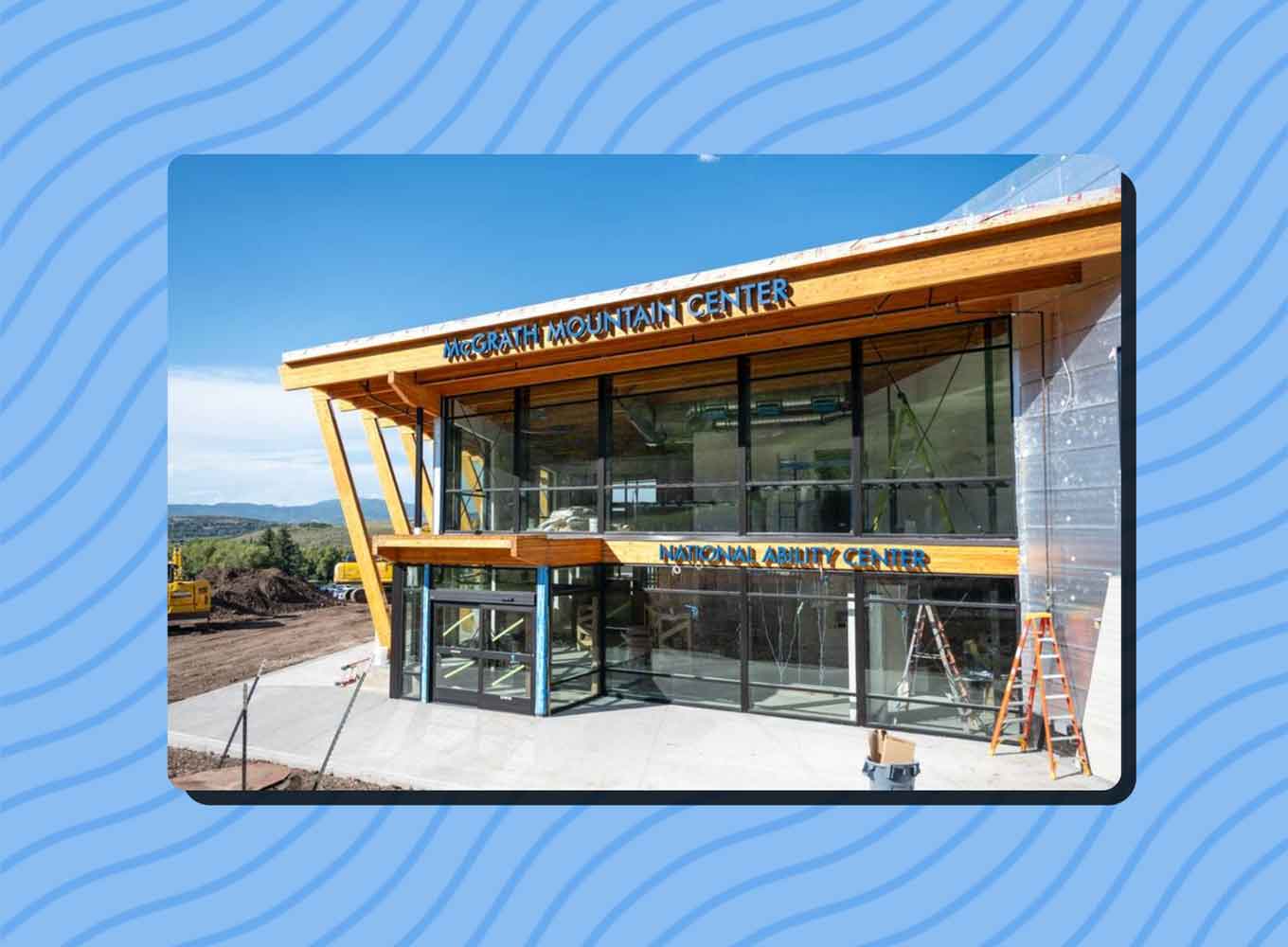
The NAC is known for its ski and snowboard lessons, and although those will be a focal point of the new facility, this space will elevate the organization’s offerings with improved programs and year-round seasonal activities and events.
Thanks to a historic land lease donated by Vail Resorts, and the support of the McGrath Family Foundation, the NAC team can now continue its important work on an even larger scale.
Plus, it can be hard to have ADA-compliant accommodations in a trailer in the mountains. So, it’s the small upgrades that mean the most — especially to Tracy Meier, the chief program and education officer at the NAC, who has been with the organization for over 21 years.
“We are excited to just have enough space for all of our adaptive equipment, which has been stored in storage sheds adjacent to the double-wide [trailer]. We also have plenty of room for our participants to sit inside to put on their snow gear,” Meier told Good Good Good.
“Our new center also has 6 accessible restrooms which were not in our past location. We are so pleased to have a new center that can serve our participants in a quality manner.”
These restrooms are especially important, as the NAC long relied on public restrooms, which were a short walk from the existing center.
Additionally, this new home base will provide adequate indoor space to properly fit participants in adaptive equipment, and will even have an artificial surface that will help transition participants directly onto the snow.
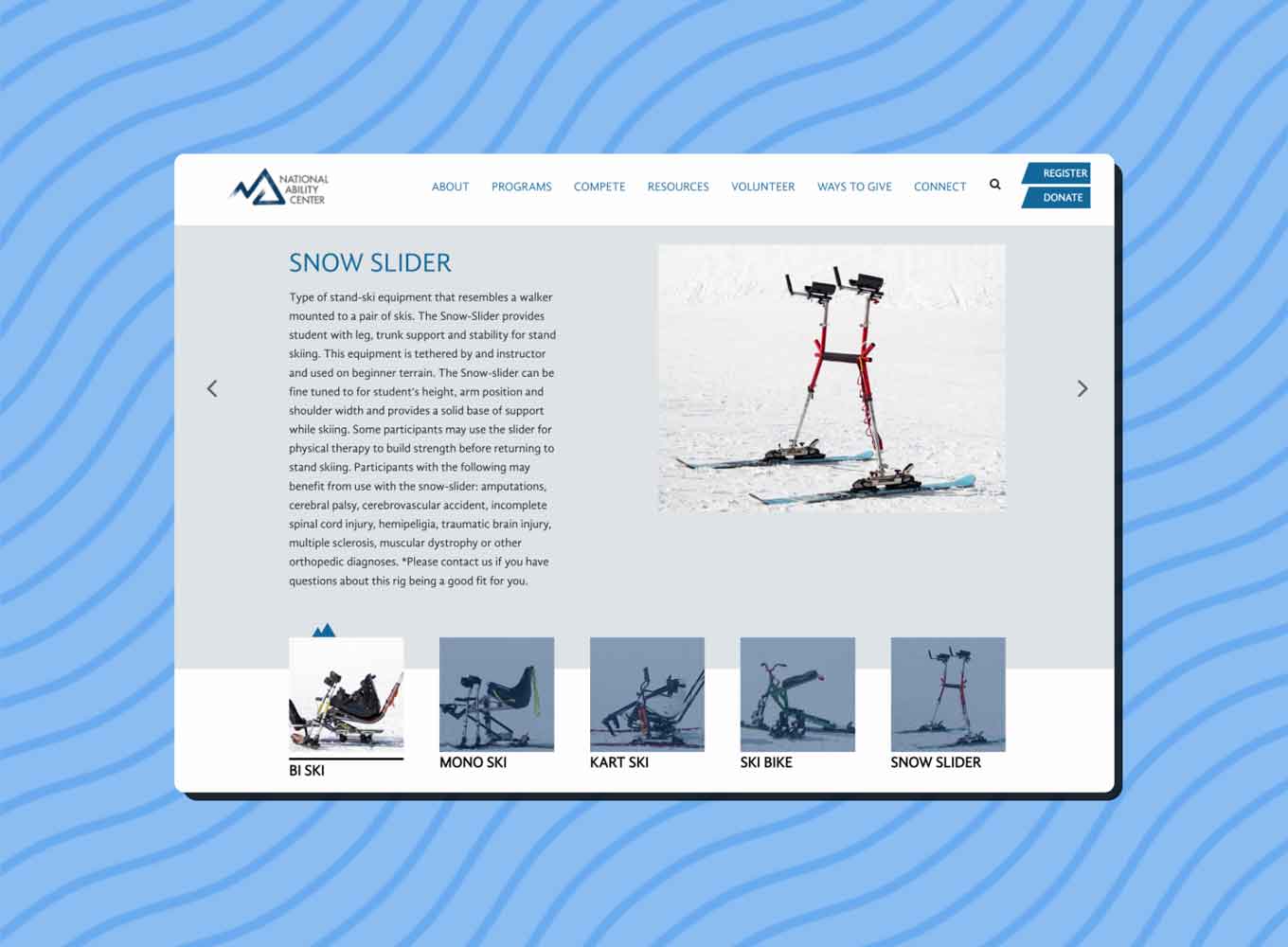
Separate locker rooms for instructors and adaptive competitive athletes, laundry facilities, specialized sensory rooms, and multi-purpose training and education rooms are also an exciting upgrade.
NAC’s co-founder Meeche White has witnessed the growth of the organization and is excited to welcome adventurers to the new facilities.
“Having a new mountain center completes my original vision for the evolution of our facilities,” White said in a press release. “After seven years of planning, I am thrilled to celebrate this joyous occasion with the community.”
That community is made up of a wide range of participants, such asveterans, competitive adaptive athletes, and children and families who engage in self-esteem and skill-boosting camps.
NAC also offers support in other activities, like adaptive horseback riding, cycling, archery, water sports, indoor rock climbing, and more.
Spaces like this new mountain center allow the organization to reach more people and provide meaningful and dignified outdoor adventures to all.
“Our NAC family draws from decades of experience working with people of all abilities, harnessing the power of specialized equipment, techniques, teaching methods and over 1,900 volunteers,” the NAC website reads.
“We are the seekers and explorers, the fun-makers and adventurers. We believe life doesn’t stop unfolding just because we have a disability.”
Header image courtesy of the National Ability Center
Although the Dominican Republic has one of the fastest-growing economies in Latin America — and is the most popular tourist destination in the Caribbean — nearly one in three people still live below the poverty line.
This also leads to significant inequities, especially in healthcare for low-income women and children. In fact, the country has one of the highest neonatal mortality rates in the region — and maternal mortality is on the rise.
It’s also important to keep in mind that the country has one of the highest rates of adolescent pregnancies in Latin America, where adolescents account for about 23% of all pregnancies in the country every year. (And 75% of those pregnancies are unplanned.)

“We usually see between 15 and 20 pregnant adolescents each day,” Ruth Zettouri, head of the Department of Adolescents and nurse at Hospital El Almirante in Santo Domingo, shared with Project HOPE, a global health and humanitarian organization.
“The biggest challenges are how they will care for themselves during pregnancy — including nutrition — and how they will care for the baby after giving birth. For non-pregnant patients, the biggest challenge is addressing the taboos they have regarding family planning. Many do not know much about the subject.”
Project HOPE has invested in a number of supports to help change the future of women’s health in the Dominican Republic.
In order to change health outcomes for low-income women and girls, education is paramount.
One part of this work is Project HOPE’s post-graduate education program on obstetrics and neonatal care for nurses with the Dominican Republic’s Ministry of Health.
The program, which launched in April 2017, with assistance from faculty at the University of Miami’s Jackson Memorial Hospital, empowers nurses with training to save lives and teach others how to better care for themselves and their families.
Since the start of the program, Project HOPE and its partners have trained over 435 hospital staff members across the country and helped 11 new nurses get NICU assignments at San Lorenzo de los Mina Maternity.
The education program hinges on Project HOPE’s “5 Stars” model, which encourages the completion of essential health services for women throughout pregnancy and the first five years of their child’s life.
As part of the 5 Star Mothers program, the organization has developed a mobile app that will share this valuable information with expectant mothers in an easy-to-follow digital format, as well as provide a vital link between medical practitioners and their patients.
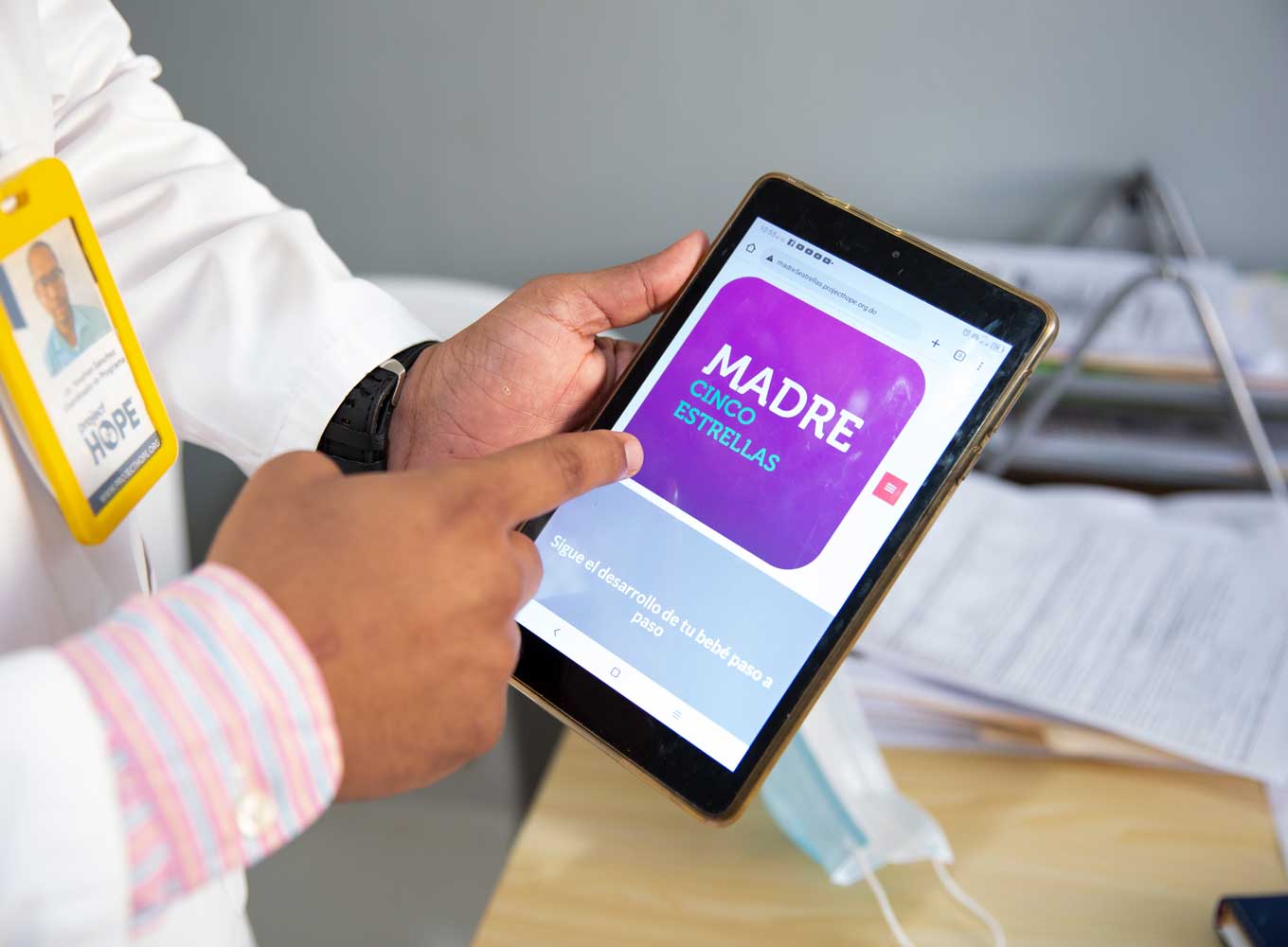
In addition to this program, Project HOPE is working to improve health education among the Dominican Republic’s youth.
A spin-off of the existing initiative is the 5 Star Youth program, which trains health workers on sexual and reproductive health and contraception in Santo Domingo, La Vega, and La Altagracia. The program will soon expand into lectures on family planning and decision-making in public high schools in La Vega.
Similarly to the 5 Star Mothers program, an accompanying mobile app is being developed to reach youth across the country.
“The hope is to inspire teenagers to identify their dreams, set goals, build plans to achieve them, and be able to increase their knowledge to make informed, healthy, and age-appropriate decisions,” Adriana Wanderlinder, program manager for Project HOPE, shared in a blog post.
The success of both of these programs depends on a nationwide network of skilled and dedicated health workers.
“I loved the training,” Zettouri, the department head at the hospital in Santa Domingo, said. “We learned a lot of things we didn’t know. What I liked the most is that we are going to be able to work with adolescents in their environment, through technology and digital applications. I want them to learn to be able to take care of themselves.”
Header image courtesy of Marie Arago/Project HOPE
Trick-or-treating on Halloween is a beloved tradition for kids across the country, but for children with food allergies, going door-to-door asking for candy is simply not an option.
Fortunately, the Teal Pumpkin Project provides a safe alternative to keep candy away from kids that could potentially be life-threatening.
What is the Teal Pumpkin Project?

Teal is the color of food allergy awareness. With a teal plastic pumpkin or teal-painted pumpkin, neighbors can let trick-or-treating families know that your house is safe to stop at on Halloween night.
The program inspires neighbors to offer food alternatives like toys, trinkets, and games to hand out to costumed kids.
The Teal Pumpkin Project began in 2013, when the Food Allergy Community of East Tennessee sought to make trick-or-treating more inclusive.
In the last decade, the project has spread to communities all over the country.
Millions of children in the US have food allergies.
Food allergies are more prevalent than some people may assume. In a 2021 NCHS data brief by the CDC, it was estimated that about 4 million U.S. children have food allergies.
According to the Asthma and Allergy Foundation of America, the most common food allergies in children are milk, eggs, and peanuts - ingredients which are all common in the majority of seasonal food products like candy bars and sweet snacks.
Lisa Gable, the CEO of the Food Allergy Research & Education (FARE), told NPR that although “1 in 13 children” have food allergies, they are often isolated by their peers or excluded from certain activities on Halloween.
"It's a complex disease that causes a great deal of stress for kids and parents," Gable said. "Teal Pumpkin can make [Halloween] stress-free."
Parents of kids with allergies can use teal pails to raise awareness.
Parents of kids with food allergies can purchase a teal trick-or-treat pail — available at many major retailers, including Target and CVS) — to signal to neighbors that their child has a food allergy.
Before stepping out on Halloween night, parents can also ensure that their child’s friends and accompanying adults are aware of any food allergies so that candy stays out of the teal pail and doesn’t get swapped around with other treats.
Communities can make trick-or-treating inclusive in a few easy steps.

For neighbors looking to participate and help keep kids safe, they can place a teal pumpkin — whether plastic or painted — on their doorstep to signify that they have candy alternatives.
For anyone doing a no-contact Halloween, it is important to ensure that any food bowls and non-food bowls left on the porch are clearly marked and kept separate to prevent them from mixing.
Examples of non-edible treats include small games, fidget spinners, stickers, glow sticks, vampire teeth, wind-up toys, toy cars, arts and craft kits, and much more.
For 2023, the Teal Pumpkin project partnered with CVS locations across the country to provide over 100 non-food treat options, many of which are under $5.
The Teal Pumpkin Project continues to grow each year.
For those looking to keep their community informed, FARE has a list of free resources on its website, including signs, posters, and flyers that can be printed off and shared with neighbors to spread the word.
For teachers and parents who want to raise awareness to their kids ahead of the holiday season, FARE also has printable activities and coloring pages geared towards children to get them excited about the Teal Pumpkin project.
As awareness for the project grows each year, people can continue keeping Halloween inclusive for every child in their community.
Life is a journey of both beauty and challenges.
During times of pain — whether emotional or physical — healing becomes paramount. Healing is a deeply personal process, often accompanied by introspection, acceptance, and the passage of time. It’s a transformative experience that reshapes our understanding of ourselves and the world around us.
Throughout history, countless thinkers, writers, spiritual leaders, and survivors have shared their insights on healing. Their words provide solace, understanding, and guidance for those navigating their own paths of recovery. They offer reminders that even in our most vulnerable moments, we are not alone — and that healing is not only possible but is also a testament to human resilience.
Whether you’re facing emotional wounds, mending from physical pain, or supporting someone else in their healing journey — these curated quotes offer a comforting hand.
Dive into this collection of healing quotes. May they serve as a balm for your soul, reminding you of the innate power you possess to heal, grow, and transform:
The Best Quotes About Healing
Famous Quotes
“Healing yourself is connected with healing others.”
— Yoko Ono
“As soon as healing takes place, go out and heal somebody else.”
— Maya Angelou
“We are healed of a suffering only by experiencing it to the full.”
— Marcel Proust
“Everybody has losses — it’s unavoidable in life. Sharing our pain is very healing.”
— Isabel Allende
“We cannot ignore our pain and feel compassion for it at the same time.”
— Brené Brown, The Gifts of Imperfection
“No matter what happens, or how bad it seems today, life does go on, and it will be better tomorrow.”
— Maya Angelou
“Heaven knows we need never be ashamed of our tears, for they are rain upon the blinding dust of earth, overlying our hard hearts. I was better after I had cried, than before — more sorry, more aware of my own ingratitude, more gentle.”
— Charles Dickens, Great Expectations
Inspirational Quotes
“Love one another and help others to rise to the higher levels, simply by pouring out love. Love is infectious and the greatest healing energy.”
— Sai Baba
“My scars remind me that I did indeed survive my deepest wounds. That in itself is an accomplishment. And they bring to mind something else, too. They remind me that the damage life has inflicted on me has, in many places, left me stronger and more resilient. What hurt me in the past has actually made me better equipped to face the present.”
— Steve Goodier
“Our sorrows and wounds are healed only when we touch them with compassion.”
— Buddha
“I began to see how giving a voice to my struggles and being honest opened up the door for recovery. I learned to celebrate my victories and navigate challenges with the support of people who were on a similar journey. I learned to treat that journey — with all its ups and downs — with grace and compassion. Here, I learned that healing happens together, in the raw and messy places of our hearts and our stories.”
— Brianna Bulman, on the TWLOMA blog
“Every struggle in your life has shaped you into the person you are today. Be thankful for the hard times, they can only make you stronger.”
— Keanu Reeves
“There is magic in life again, and my healing is a testament to it. In fact, I think there is magic in healing, too. A reminder to myself to open my heart again, trust love one more time again, love the small things all too greatly again.”
— Kady Braswell, on the TWLOHA blog
“Instead of being ashamed of what you’ve been through, be proud of what you have overcome.”
— Dr. Phil
On Healing Grief
“There is beauty in the journey, regardless of the outcome. Let’s grieve and hope, and fight together.”
— Marie White
“Give sorrow words. The grief that does not speak whispers the o’re-fraught heart, and bids it break...”
— William Shakespeare, Macbeth
“What we once enjoyed and deeply loved we can never lose, for all that we love deeply becomes part of us.”
— Helen Keller
“Whatever comes, we let it be as it is. When we do this, we come to see, in this moment or the next, our emotions always moving. The word emotion has its roots in the Latin movere and emovere meaning “to move through” and “to move out”. Our emotions move in us, move through us and move between us. And when we allow them to move freely, they change, perhaps scarcely and perhaps gradually — but inevitably.”
— Joanne Cacciatore, Bearing the Unbearable: Love, Loss, and the Heartbreaking Path of Grief
“Grief can be the garden of compassion. If you keep your heart open through everything, your pain can become your greatest ally in your life’s search for love and wisdom.”
— Rumi
“We’re expected to go back to work immediately, keep moving, to get on with our lives. But it doesn’t work that way. We need time to move through the pain of loss. We need to step into it, really to get to know it, in order to learn”
— Elisabeth Kübler-Ross, On Grief and Grieving: Finding the Meaning of Grief Through the Five Stages of Loss
“Every one of us is losing something precious to us. Lost opportunities, lost possibilities, feelings we can never get back again. That’s part of what it means to be alive.”
— Haruki Murakami, Kafka on the Shore
On Healing Trauma
“In general, the ability to make sense of tragedy and then find benefit in it is the key that unlocks post traumatic growth.”
— Jonathan Haidt, The Happiness Hypothesis
“So often survivors have had their experiences denied, trivialized, or distorted. Writing is an important avenue for healing because it gives you the opportunity to define your own reality. You can say: This did happen to me. It was that bad. It was the fault & responsibility of the adult. I was — and am — innocent.”
— Ellen Bass & Laura Davis, The Courage to Heal
“I had no idea that mothering my own child would be so healing to my own sadness from my childhood.”
— Susie Bright
“Justice is not Healing. Healing cometh only by suffering and patience, and maketh no demand, not even for Justice.”
— J.R.R. Tolkien, The Silmarillion
“The reason why you need emotional support is because it’s important for survivors to be heard. To be understood. To be able to express yourself without fearing criticism or harsh judgment. To be validated for your pain, suffering, and loss. For others to be there for you to encourage you, especially if you’re having a bad day or feeling triggered.”
— Dana Arcuri, Soul Cry: Releasing & Healing the Wounds of Trauma
“I have come to the conclusion that human beings are born with an innate capacity to triumph over trauma. I believe not only that trauma is curable, but that the healing process can be a catalyst for profound awakening — a portal opening to emotional and genuine spiritual transformation. I have little doubt that as individuals, families, communities, and even nations, we have the capacity to learn how to heal and prevent much of the damage done by trauma. In so doing, we will significantly increase our ability to achieve both our individual and collective dreams.”
— Peter A. Levine, Healing Trauma: A Pioneering Program for Restoring the Wisdom of Your Body
“As every therapist will tell you, healing involves discomfort. But so is refusing to heal. And over time, refusing to heal is always more painful.”
— Resmaa Menakem
“Your world has fallen apart before. Time and time again and the rest of the world has still kept going despite the fact that you are broken. And after thinking you will never recover, never get up off the floor again, you have, dusted yourself off and carried on. If you have survived your world shattering, over and over again, and you are still here, a bit damaged, a bit broken but still here — you should be proud of yourself. Because that is no small thing.”
— Nikita Gill
Short Quotes
“Awareness is the first step in healing.”
— Dean Ornish
“I think that little by little I’ll be able to solve my problems and survive.”
— Frida Kahlo
“Time heals all wounds.”
— Stephen King, Hearts in Atlantis
“The best way out is always through.”
— Robert Frost
“The way you help heal the world is you start with your own family.”
— Mother Teresa
“I am not what happened to me. I am what I choose to become.”
— Carl Jung
“Can I see another’s woe, and not be in sorrow too? Can I see another’s grief, and not seek for kind relief?”
— Sir William Blake
“One of the hardest things was learning I was worth recovery.”
— Demi Lovato
“It’s when we start working together that the real healing takes place.”
— David Hume
More Quotes
“Healing is a different type of pain. It’s the pain of becoming aware of the power of one’s strength and weakness, of one’s capacity to love or do damage to oneself and to others, and of how the most challenging person to control in life is ultimately yourself.”
— Caroline Myss
“Hope is a funny thing because in a way it’s everywhere. Like, people will say ‘Everything happens for a reason’ or ‘It will all work out in the end’ — which are very hopeful sentiments — it’s just that they’re also, you know, bullshit. And for me anyway, they just don’t hold up in the face of real suffering. But I’ll tell you what does hold up for me. There’s an Emily Dickinson poem that starts out, ‘Hope’ is the thing with feathers - That perches in the soul - And sings the tune without the words - And never stops - at all.’
And you’ll notice that Emily Dickinson doesn’t say that one never stops hearing the song of hope — only that it doesn’t stop playing.
I’m really sorry that you’re in so much pain, and your pain is real, but the song of hope is still singing. And I know you can’t hear it, but someday soon you will.”
— John Green
“In many cases, people hold on so tightly to their past pains to avoid letting go of the “excuses” and the fear of having to be accountable for their life.”
— Yvonne Pierre
“As my sufferings mounted I soon realized that there were two ways in which I could respond to my situation — either to react with bitterness or seek to transform the suffering into a creative force. I decided to follow the latter course.”
— Martin Luther King Jr.
“Meditation can help us embrace our worries, our fear, our anger; and that is very healing. We let our own natural capacity of healing do the work.”
— Thich Nhat Hanh
“The secret of change is to focus all of your energy not on fighting the old, but on building the new.”
— Socrates
“I think music in itself is healing. It’s an explosive expression of humanity. It’s something we are all touched by. No matter what culture we’re from, everyone loves music.”
— Billy Joel
“People are afraid to heal because their entire identity is centered around the trauma they’ve experienced. They have no idea who they are outside of trauma and that unknown is terrifying.”
— Ebonee Davis
“Healing is a matter of time, but it is sometimes also a matter of opportunity.”
— Hippocrates
A new nationwide poll surveyed thousands of Generation Z voices and yielded some surprising results.
The web survey poll, developed by Gallup and the Walton Family Foundation, was conducted in spring 2023 from a sample of 3,114 subjects across fifty states and the District of Columbia.
Based on questions related to health, schooling, and personal fulfillment, results found that 76% of Gen Z are optimistic about the future and 82% believe they’ll achieve their goals.
The study defined Gen Z as those born from 1997 to 2011, a generation that encompasses 12-year-olds through adults approaching their thirties. Here are some of the most significant findings from the poll —
Young people with mentors poll higher for optimism.
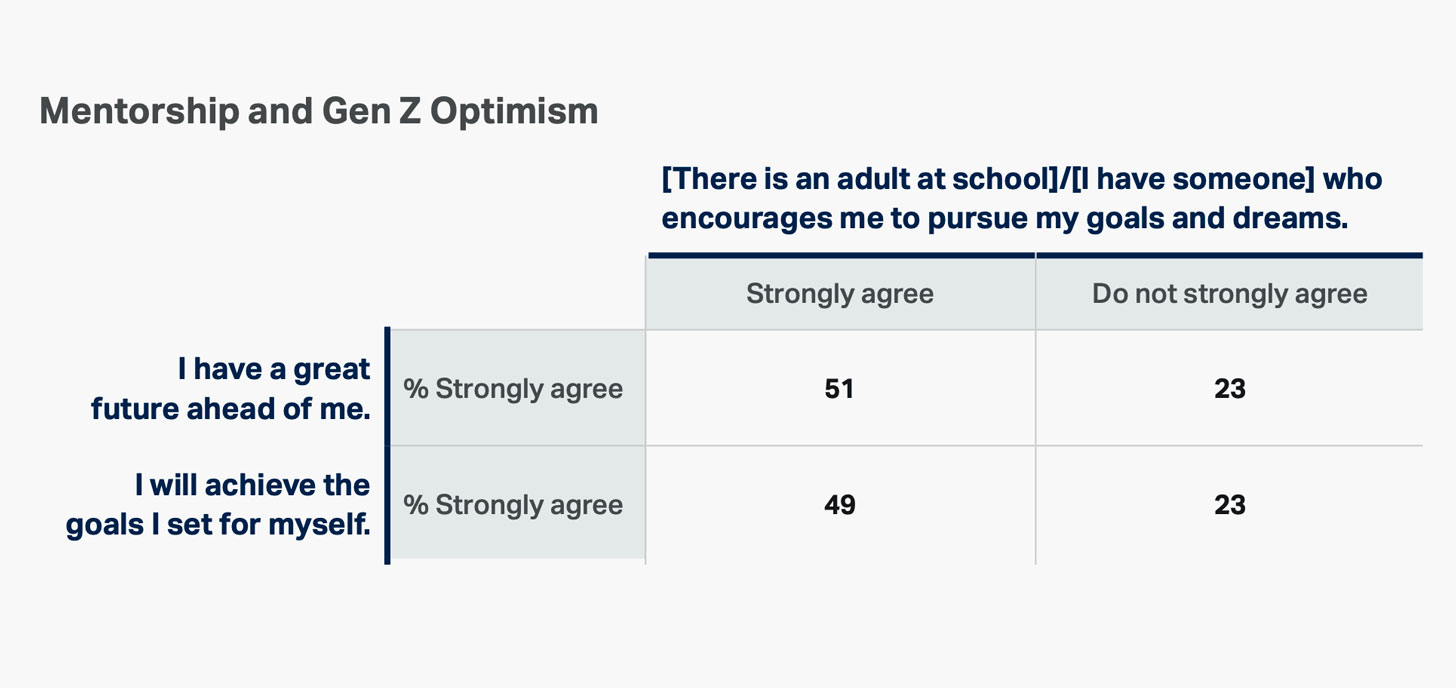
The study showed that an overwhelming majority of Gen Z-ers are optimistic about the future, especially ones who had a role model in their life encouraging them to chase their ambitions.
Out of those surveyed, 32% of Gen Z said they had an adult actively supporting them in their lives. The poll showed that individuals with a mentor were more than twice as likely as their peers to believe they had a bright future ahead of them.
School-age teenagers also said that they currently felt supported in the classroom. 71% said that someone praised them for doing a good job in the last seven days and 76% of Gen Z-ers reported having a best friend at school.
Gen Z has ambition — despite feeling unprepared.
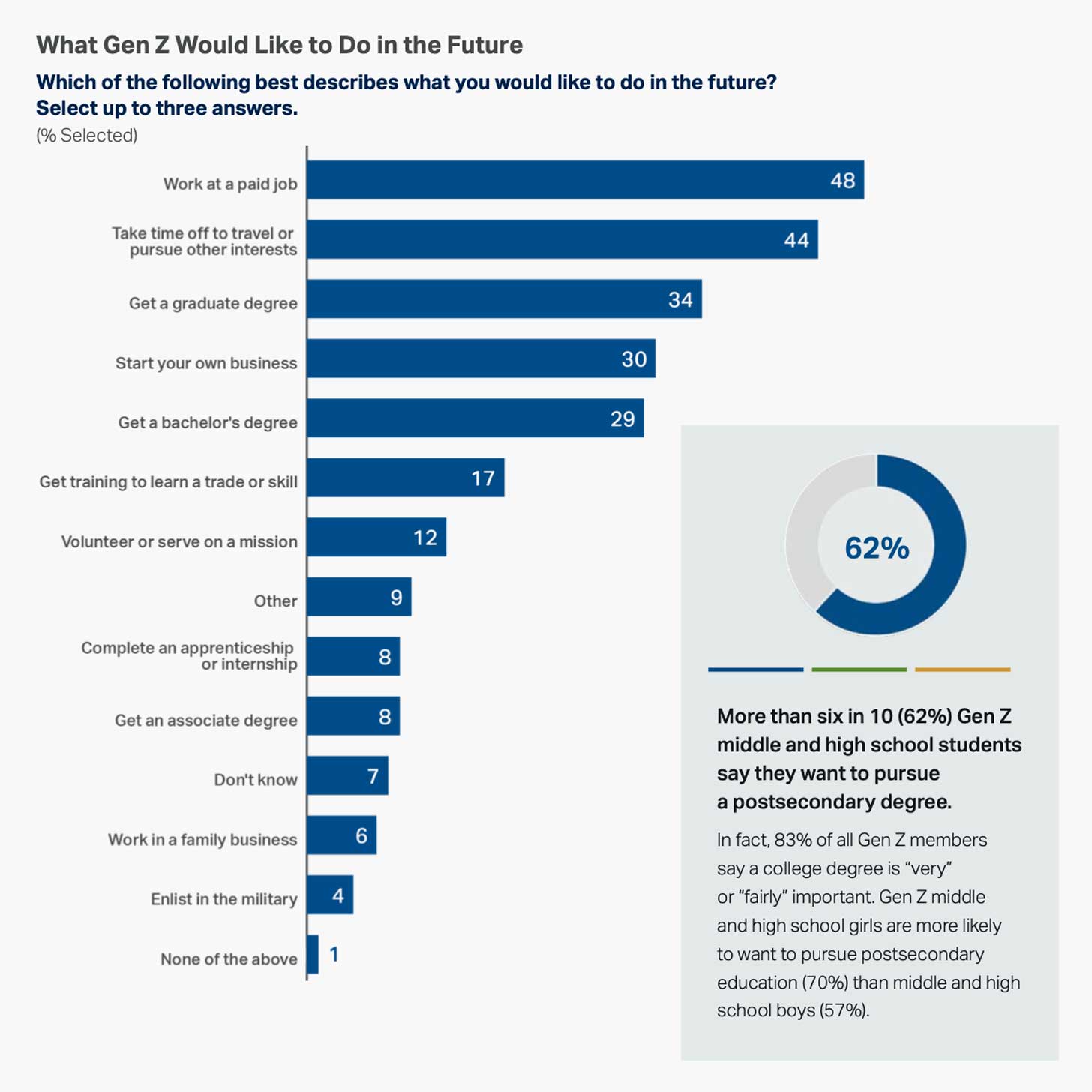
The Gallup poll also revealed that young Gen Z-ers are striving for a higher education.
In fact, 62% of middle school and high school students expressed the desire to pursue a collegiate or postsecondary degree.
Although the generation has high reports of ambition and optimism, only 44% reported that they felt prepared for their future.
Fortunately, the study also expressed that “feelings of being prepared for the future” trended upwards again for college-age Gen Z members.
Young Black Americans trend higher for optimism than their peers.
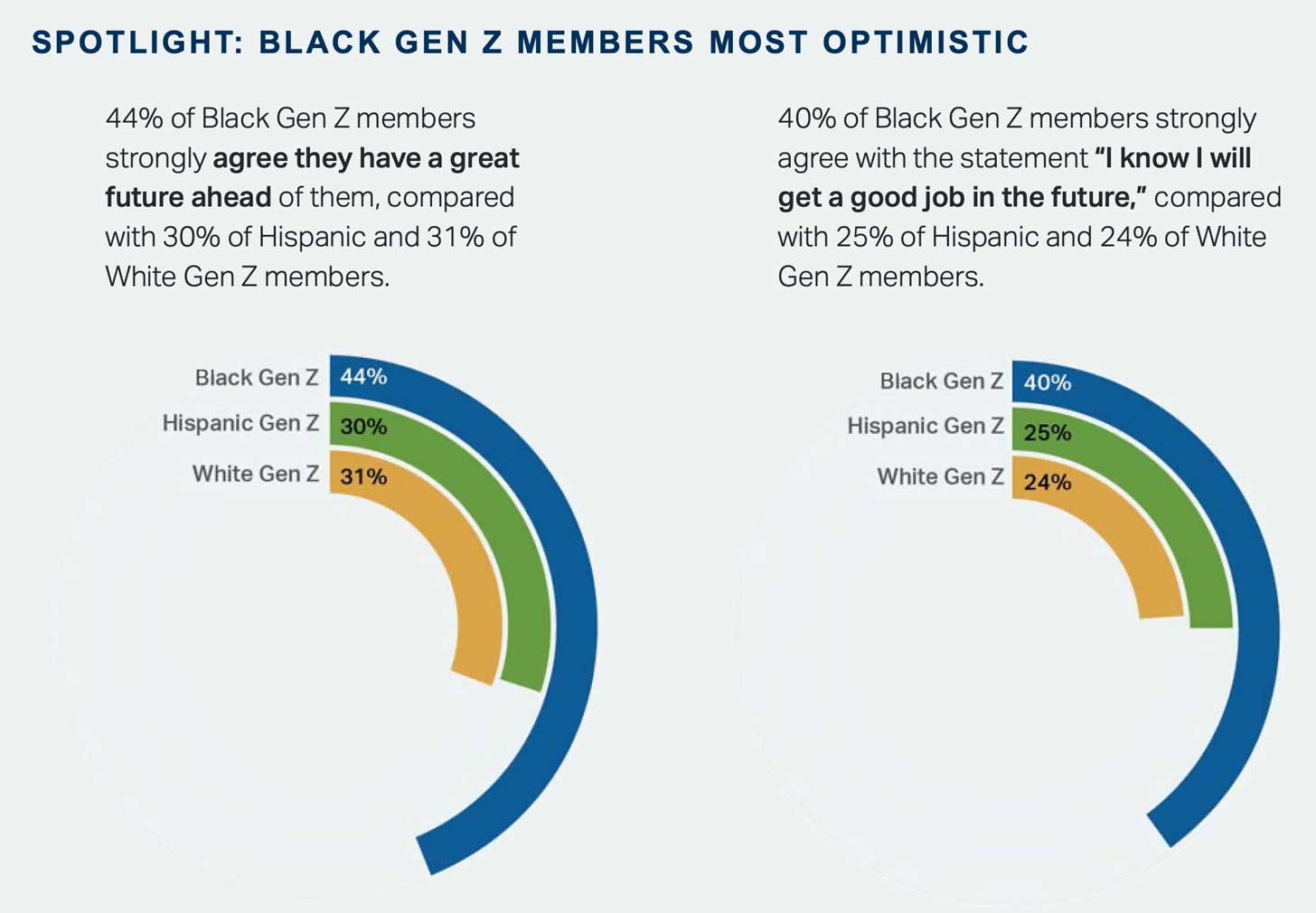
Overall, Gen Z individuals that identified as Black reported high numbers of optimism.
As illustrated in the poll, 44% of Black Gen Z-ers strongly agreed that they had a great future ahead of them. This statistic is in comparison to 30% of Hispanic and 31% of White Gen Z members who said the same.
Furthermore, 41% Black Gen Z members said that they want to start their own business one day and 40% strongly agreed with the statement: “I know I will get a good job in the future.”
Despite overt positivity, many Gen Z-ers struggle with mental health.
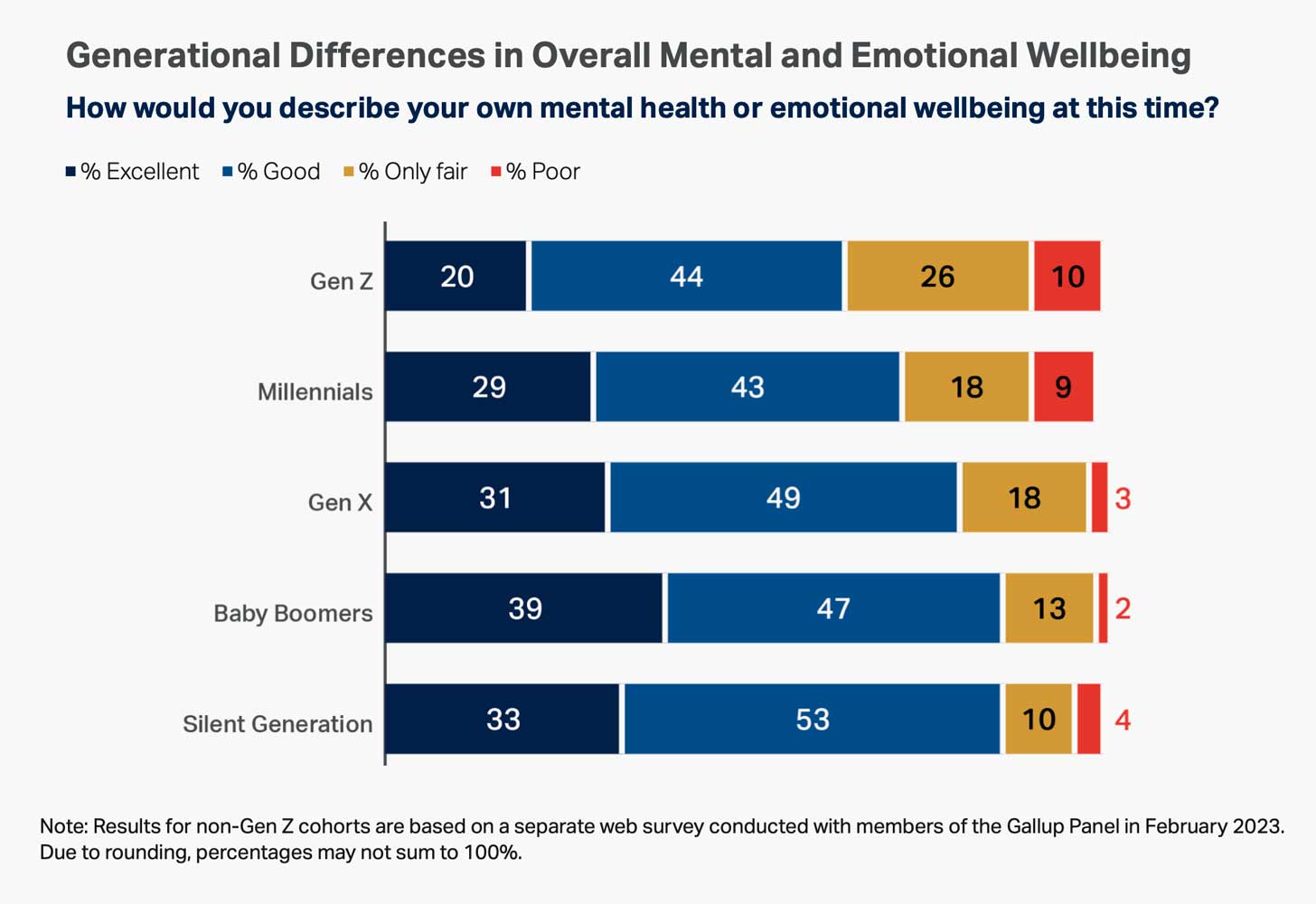
The study also reported that Gen Z struggles more with mental health than millennials did when they were polled at the same age a decade prior.
In 2013, 52% of millennials aged 18-26 years old rated their mental health as “excellent.” In this new study, only 15% of Gen Z in the same age group reported the same.
The study estimated that low mental wellbeing is due in part to the anxiety that teenagers harbor for gun-related violence. In fact, 40% of Gen Z students reported worrying about gun violence at their school to a moderate or severe degree.
In spite of Gen Z reporting poor mental health across the board, the study posited that “more than three in five Gen Z members” who rated their mental health as “only fair” still had optimism for the future.
The National Forest Foundation is a nonprofit organization that aims to protect and preserve National Forests and Grasslands.
Since it was chartered by Congress in 1992, the NFF has been a leading force in reforestation efforts — and 2023 has proved to be a landmark year for the organization.
The NFF has made huge strides in reforestation. In the past year, the organization has planted over 8 million trees — of 25 different species — and reforested over 21,000 acres of land.
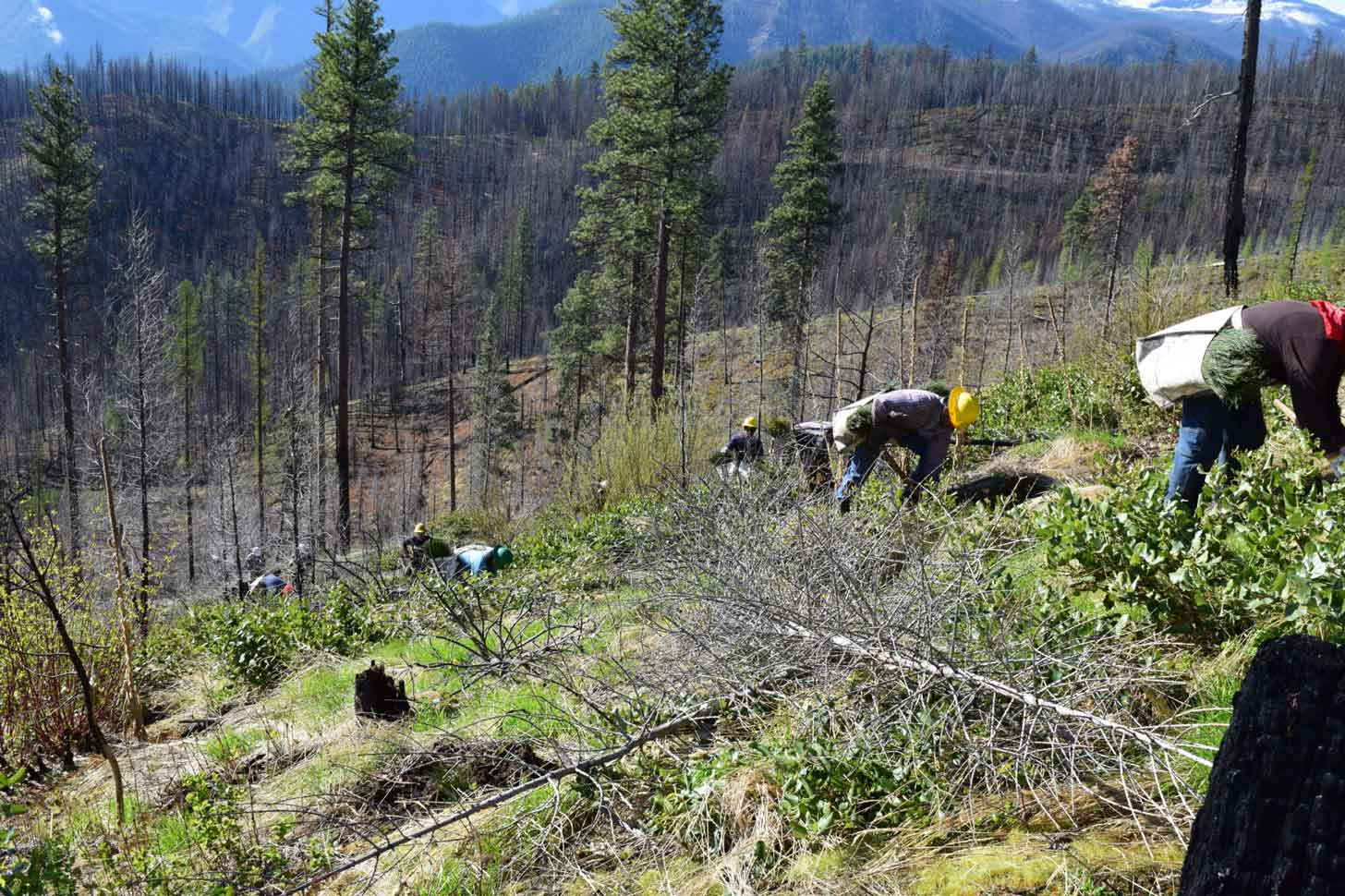
In a blog post on their website, NFF Reforestation Program Manager Monica Perez-Watkins explained that 21,000 acres is akin to “roughly 198,450 NBA basketball courts worth of public lands.”
Pest infestations, drought, and wildfires make it difficult for forests to regenerate on their own, which is why NFF’s grant work is so vital. Tree planting and reforestation efforts lead to cleaner air, cleaner water, and healthier ecosystems.
Additionally, NFF also aids in wildfire prevention. Again, in the past year, the organization raised $117 million towards fire mitigation in the North Yuba Landscape of the Tahoe National Forest. The mitigation efforts involve reducing a large number of trees to prevent wide-spread forest fires.
When trees grow too closely to one another, they are forced to compete for resources. This leads to weakened trees that take to wildfires like kindle.
Droughts and record-high temperatures place forests at higher risk for wildfires, but intentional tree cuttings can help prevent catastrophe.
In an interview with CBS News this past summer, NFF Program Manager Matt Millar explained that forest-thinning can sometimes be alarming, even though it means progress.
“People will have to get used to seeing a less dense forest because that's a healthy forest,” Millar told CBS News. “But right now, they're pretty dense and pretty crowded, and I think that's mistakenly thought of as being normal.”
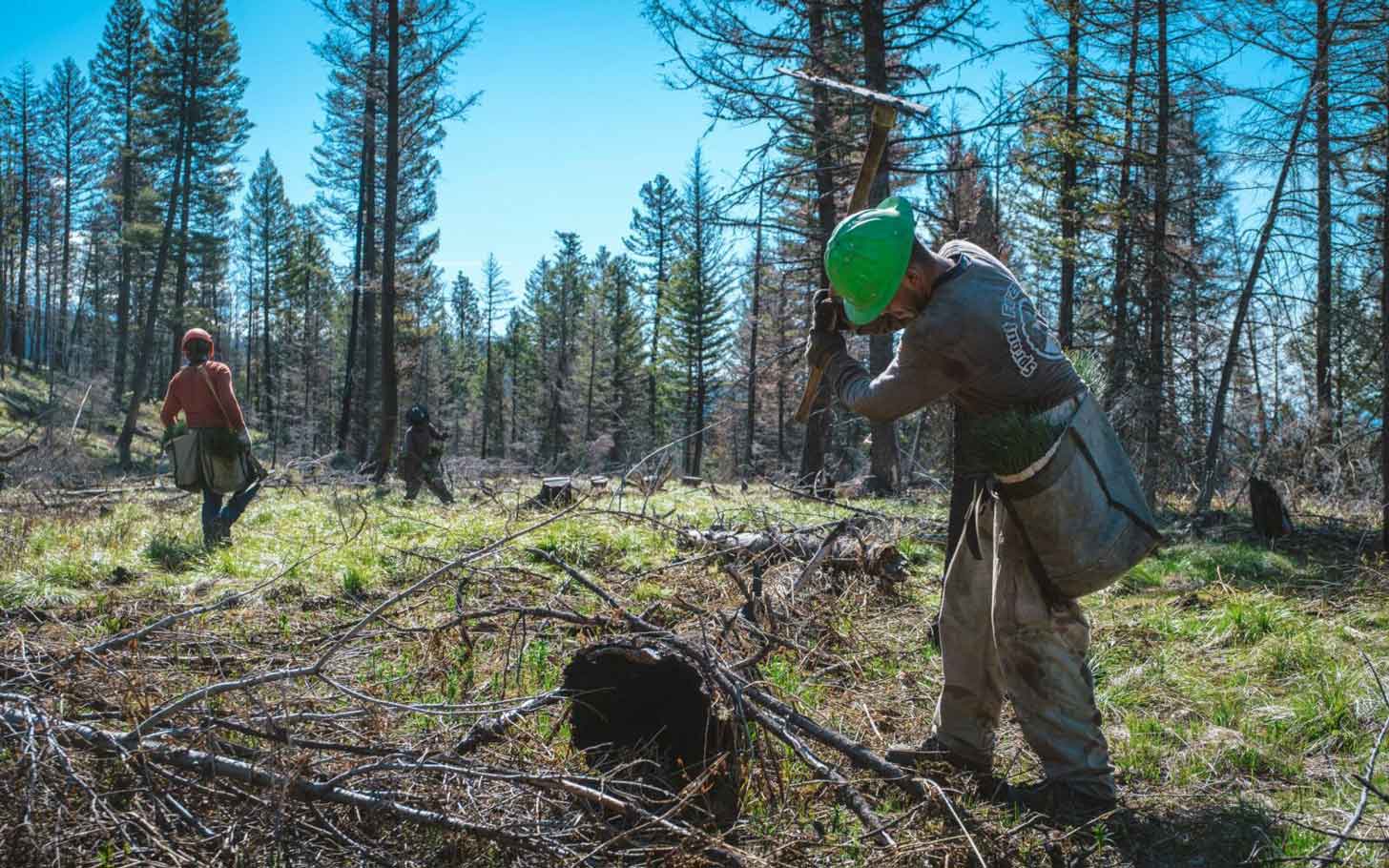
Overall, 2023 has been a busy year for the foundation.
In August alone, the foundation helped raise $1 million to make the Highline trail in Arizona more accessible to hikers, funded a restoration project to save a population of salmon in Alaska, and provided a grant for llama-riding wildlife preservers to comb through the backcountry of Colorado.
In addition to recent fundraising efforts, the NFF continues working with the US Forest Service to provide 193 million acres of woodlands to the public.
Amidst growing worry for environmental loss and climate disasters, NFF gives tree-huggers hope for a healthier, happier planet.